Twitter as a Transport Layer
Platform
Dmitry Namiot Lomonosov Moscow State
University
dnamiot@gmail.com
AINL-IMSW FRUCT 2016
• Information systems in post-SMS time
• How to replace SMS as a main information
channel for mobile users
• Interactions between mobile users and
applications
• Internet services as data delivery channels for
mobile users
About
Contents
Introduction
SMS deployment
Non-SMS interactions
T411 model
Performance and Reliability
Introduction
• SMS is a traditional solution for
information services on mobile networks
• Built-in client, always on
• Easy to use
• Built-in billing
• Growing price
• Telecom based solution: how to get a
number?
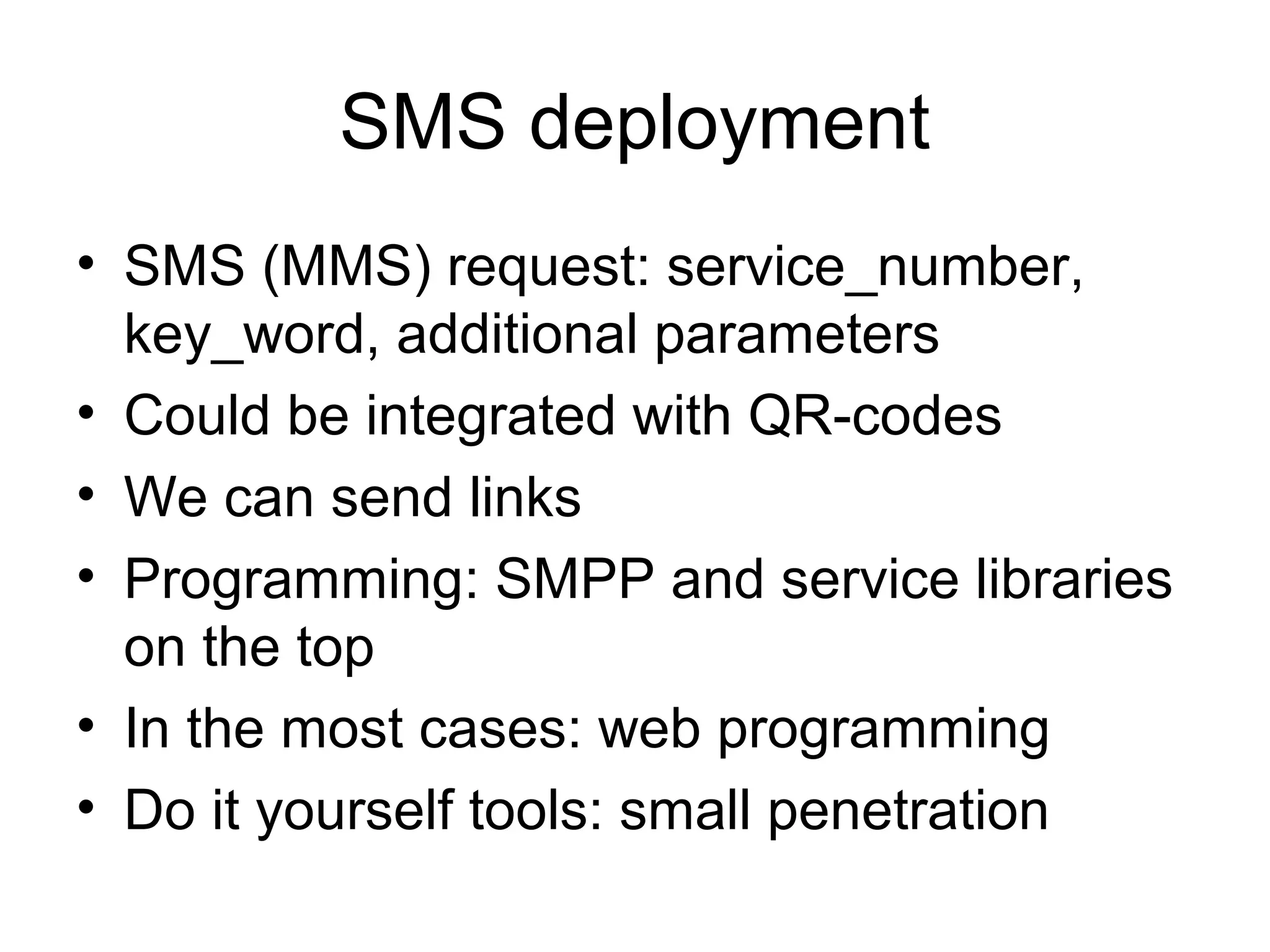
SMS deployment
• SMS (MMS) request: service_number,
key_word, additional parameters
• Could be integrated with QR-codes
• We can send links
• Programming: SMPP and service libraries
on the top
• In the most cases: web programming
• Do it yourself tools: small penetration
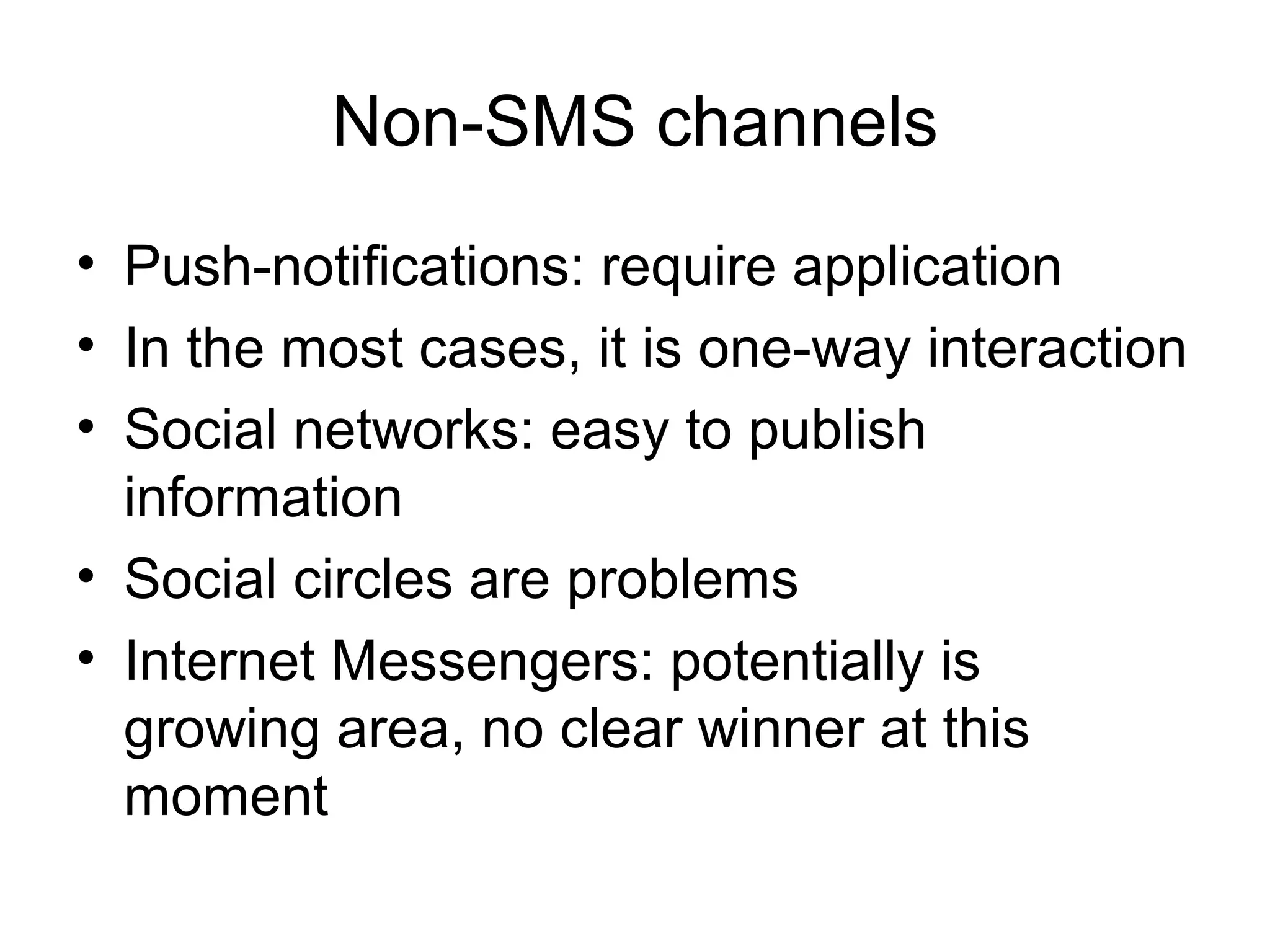
Non-SMS channels
• Push-notifications: require application
• In the most cases, it is one-way interaction
• Social networks: easy to publish
information
• Social circles are problems
• Internet Messengers: potentially is
growing area, no clear winner at this
moment
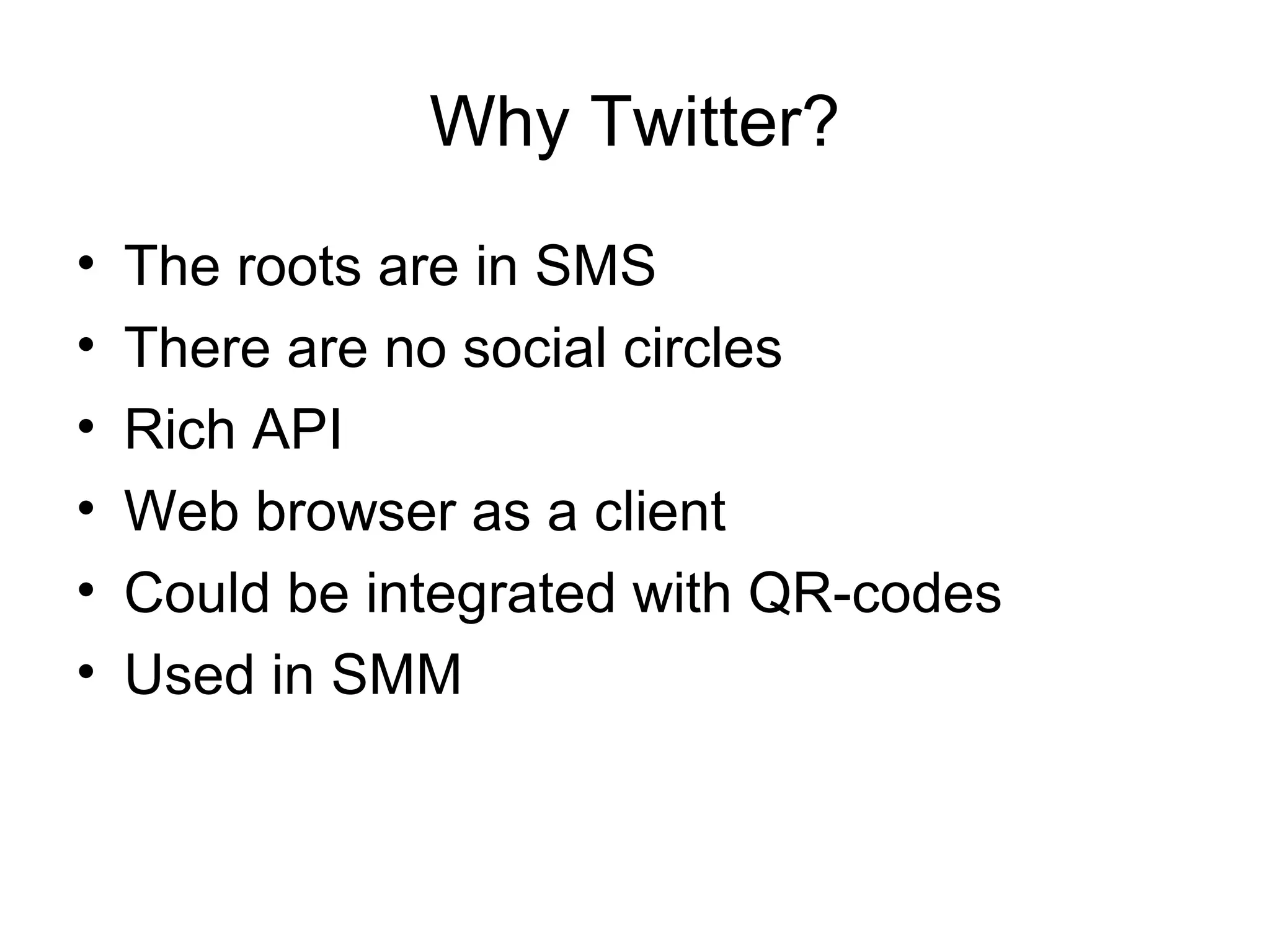
Why Twitter?
• The roots are in SMS
• There are no social circles
• Rich API
• Web browser as a client
• Could be integrated with QR-codes
• Used in SMM
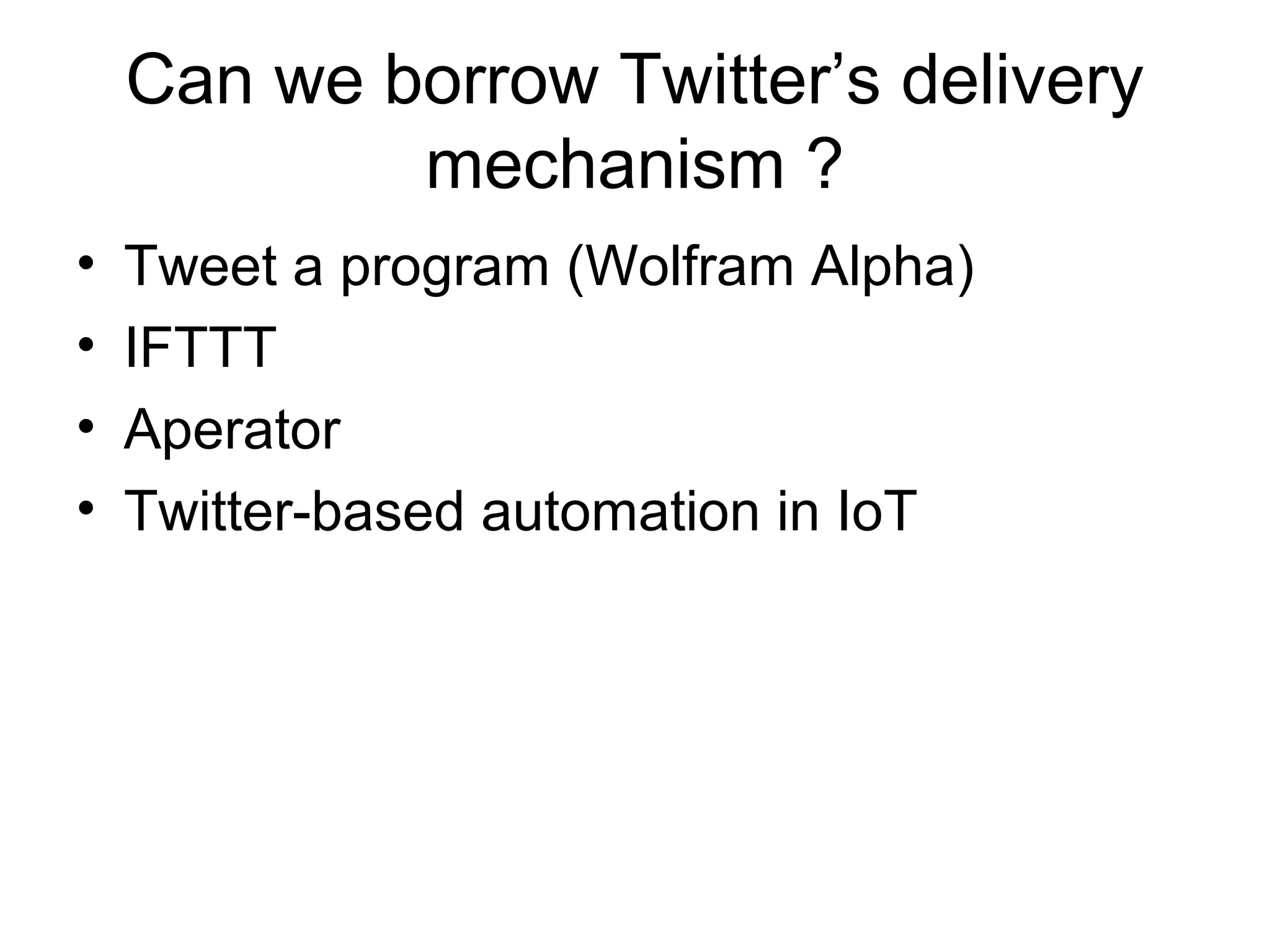
Can we borrow Twitter’s delivery
mechanism ?
• Tweet a program (Wolfram Alpha)
• IFTTT
• Aperator
• Twitter-based automation in IoT
T411 service
• DIY information service:
http://t411.linkstore.ru
• Programming processing for tweets like:
key_word additional parameters
• Account in Twitter plays a role of a service
number
• Request is a “mention” and/or direct
message
T411 architecture
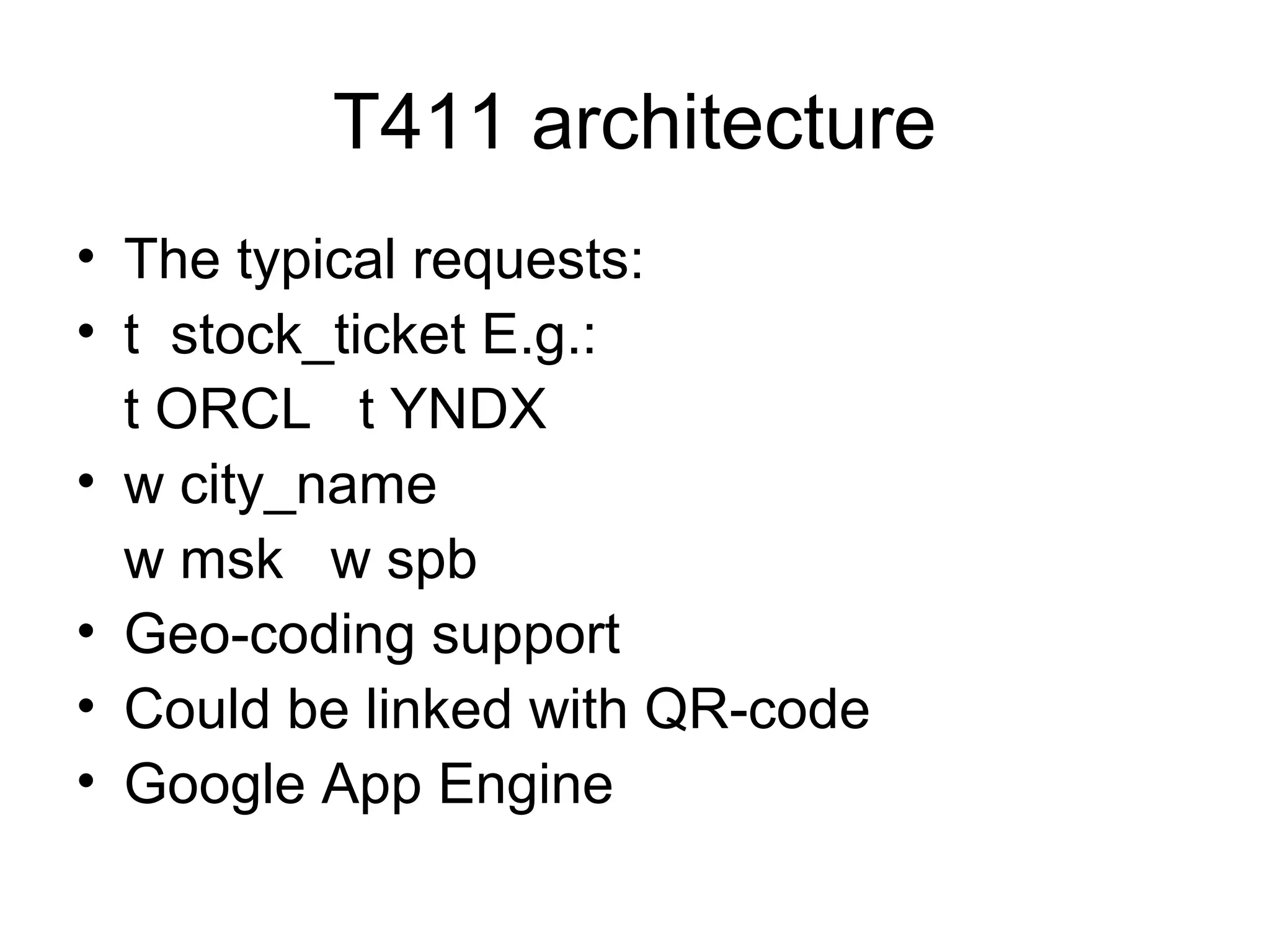
• The typical requests:
• t stock_ticket E.g.:
t ORCL t YNDX
• w city_name
w msk w spb
• Geo-coding support
• Could be linked with QR-code
• Google App Engine
T411 architecture
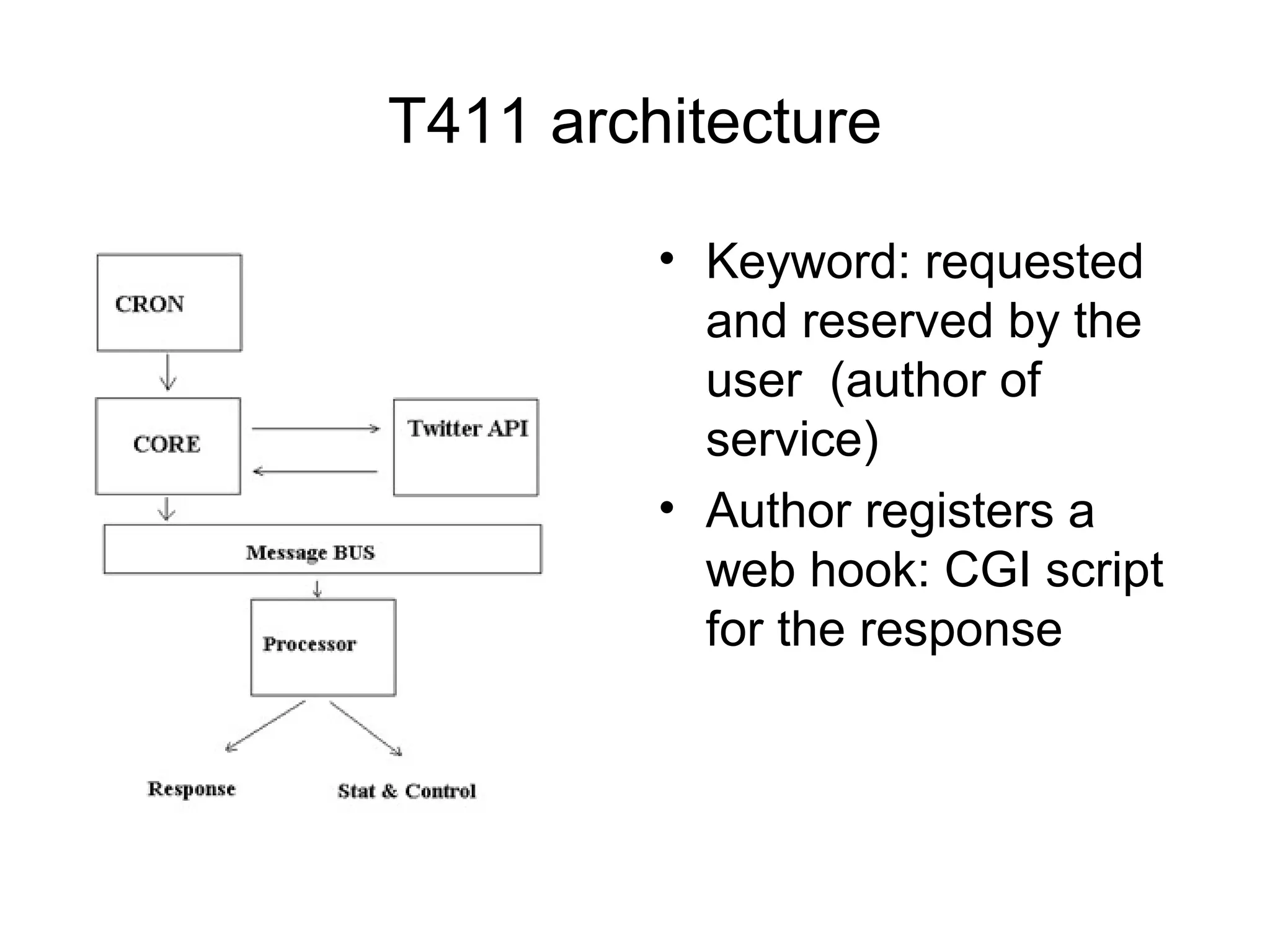
• Keyword: requested
and reserved by the
user (author of
service)
• Author registers a
web hook: CGI script
for the response
Performance and Reliability
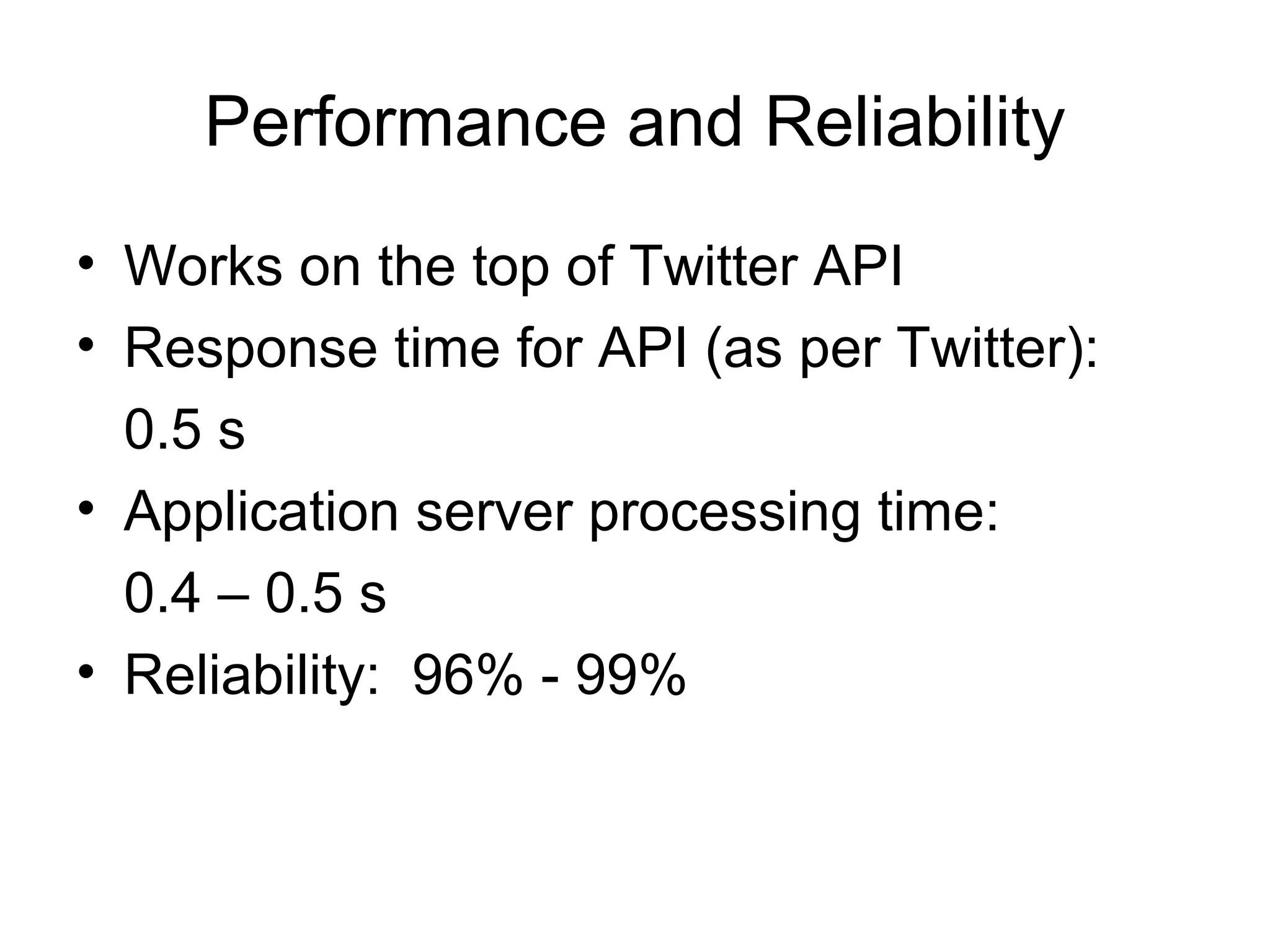
• Works on the top of Twitter API
• Response time for API (as per Twitter):
0.5 s
• Application server processing time:
0.4 – 0.5 s
• Reliability: 96% - 99%

Twitter as a Transport Layer Platform

  • 1.
    Twitter as aTransport Layer Platform Dmitry Namiot Lomonosov Moscow State University dnamiot@gmail.com AINL-IMSW FRUCT 2016
  • 2.
    • Information systemsin post-SMS time • How to replace SMS as a main information channel for mobile users • Interactions between mobile users and applications • Internet services as data delivery channels for mobile users About
  • 3.
  • 4.
    Introduction • SMS isa traditional solution for information services on mobile networks • Built-in client, always on • Easy to use • Built-in billing • Growing price • Telecom based solution: how to get a number?
  • 5.
    SMS deployment • SMS(MMS) request: service_number, key_word, additional parameters • Could be integrated with QR-codes • We can send links • Programming: SMPP and service libraries on the top • In the most cases: web programming • Do it yourself tools: small penetration
  • 6.
    Non-SMS channels • Push-notifications:require application • In the most cases, it is one-way interaction • Social networks: easy to publish information • Social circles are problems • Internet Messengers: potentially is growing area, no clear winner at this moment
  • 7.
    Why Twitter? • Theroots are in SMS • There are no social circles • Rich API • Web browser as a client • Could be integrated with QR-codes • Used in SMM
  • 8.
    Can we borrowTwitter’s delivery mechanism ? • Tweet a program (Wolfram Alpha) • IFTTT • Aperator • Twitter-based automation in IoT
  • 9.
    T411 service • DIYinformation service: http://t411.linkstore.ru • Programming processing for tweets like: key_word additional parameters • Account in Twitter plays a role of a service number • Request is a “mention” and/or direct message
  • 10.
    T411 architecture • Thetypical requests: • t stock_ticket E.g.: t ORCL t YNDX • w city_name w msk w spb • Geo-coding support • Could be linked with QR-code • Google App Engine
  • 11.
    T411 architecture • Keyword:requested and reserved by the user (author of service) • Author registers a web hook: CGI script for the response
  • 12.
    Performance and Reliability •Works on the top of Twitter API • Response time for API (as per Twitter): 0.5 s • Application server processing time: 0.4 – 0.5 s • Reliability: 96% - 99%