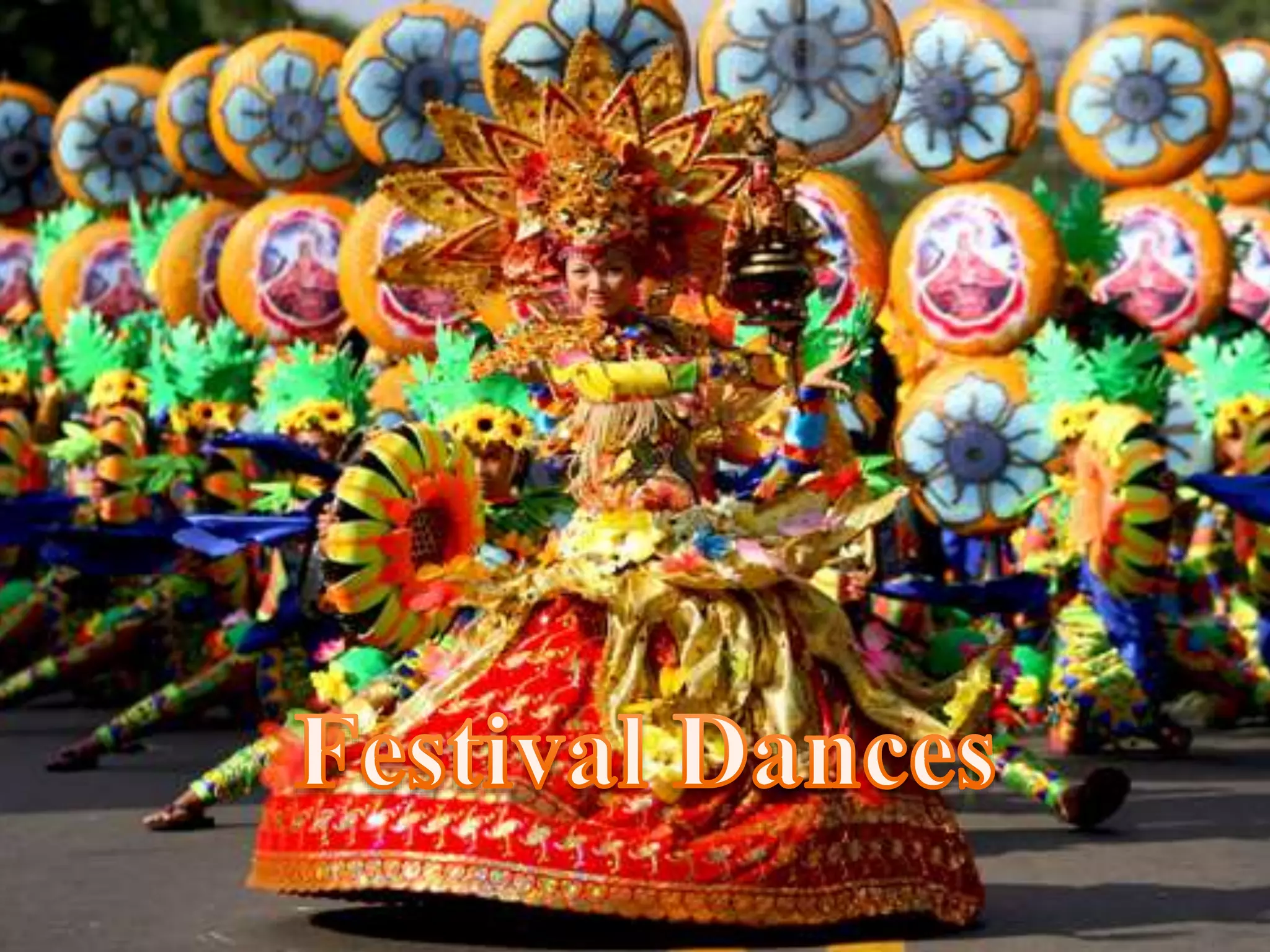
Festival dances are cultural dances performed to 
the strong beats of percussion instruments by a 
community of people sharing the same culture 
usually done in honor of a Patron Saint or in 
thanksgiving of a bountiful harvest. Festival 
dances may be religious or secular in nature. But 
the best thing about festivals is that they add to 
the merry-making and festivities where they are 
celebrated, the reason why they are called 
festival dances after all. Festival dances draw the 
people’s culture by portraying the people’s ways 
of life through movements, costumes and 
implements inherent to their place of origin.
Some of the famous festivals in the country 
include Sinulog of Cebu, Dinagyang of Iloilo, Ati-atihan 
of Kalibo, Aklan, Buyogan and Lingayan of 
Leyte, Bangus of Dagupan, T’nalak of South 
Cotabato, Masskara of Bacolod City, Bambanti of 
Isabela, and Kadayawan of Davao. Many others, 
especially from Luzon, are now paving their way 
to join the country’s festival of festivals, the 
Aliwan Fiesta which is done in the month of 
April.
Filipinos do festivals primarily to celebrate. There 
are a multitude of reasons for this reason. We 
celebrate our unity amidst the diversity of 
cultures and we celebrate our industry bringing 
about a bountiful harvest. Festivals have been a 
consistent crowd-producing activity leading to 
upliftment of a community’s economy due to its 
tourism and entertainment value. Basically, 
festivals are a form of entertainment that attract 
foreign and domestic tourists to visit a place 
eventually leading to the elevation of the 
Filipino’s quality of life.
Whatever festival we celebrate, be it done to 
honor a religious icon or celebrate our 
industry. Festival dances are a reflection of 
the unity of the Filipino community that 
despite the economic, social, environmental, 
cultural and political challenges we face every 
day, there can be no other race more resilient 
than ours.
As mentioned earlier, festivals may either be 
religious, in honor of a certain religious icon 
or secular or non-religious, in thanksgiving or 
celebration of peoples industry and bountiful 
harvest. The following are some of the said 
festivals:
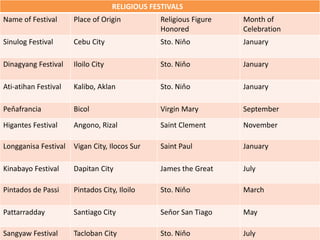
RELIGIOUS FESTIVALS 
Name of Festival Place of Origin Religious Figure 
Honored 
Month of 
Celebration 
Sinulog Festival Cebu City Sto. Niňo January 
Dinagyang Festival Iloilo City Sto. Niňo January 
Ati-atihan Festival Kalibo, Aklan Sto. Niňo January 
Peňafrancia Bicol Virgin Mary September 
Higantes Festival Angono, Rizal Saint Clement November 
Longganisa Festival Vigan City, Ilocos Sur Saint Paul January 
Kinabayo Festival Dapitan City James the Great July 
Pintados de Passi Pintados City, Iloilo Sto. Niňo March 
Pattarradday Santiago City Seňor San Tiago May 
Sangyaw Festival Tacloban City Sto. Niňo July
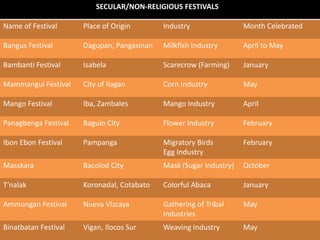
SECULAR/NON-RELIGIOUS FESTIVALS 
Name of Festival Place of Origin Industry Month Celebrated 
Bangus Festival Dagupan, Pangasinan Milkfish Industry April to May 
Bambanti Festival Isabela Scarecrow (Farming) January 
Mammangui Festival City of Ilagan Corn Industry May 
Mango Festival Iba, Zambales Mango Industry April 
Panagbenga Festival Baguio City Flower Industry February 
Ibon Ebon Festival Pampanga Migratory Birds 
Egg Industry 
February 
Masskara Bacolod City Mask (Sugar Industry) October 
T’nalak Koronadal, Cotabato Colorful Abaca January 
Ammungan Festival Nueva Vizcaya Gathering of Tribal 
Industries 
May 
Binatbatan Festival Vigan, Ilocos Sur Weaving Industry May

Festival dances

  • 2.
    Festival dances arecultural dances performed to the strong beats of percussion instruments by a community of people sharing the same culture usually done in honor of a Patron Saint or in thanksgiving of a bountiful harvest. Festival dances may be religious or secular in nature. But the best thing about festivals is that they add to the merry-making and festivities where they are celebrated, the reason why they are called festival dances after all. Festival dances draw the people’s culture by portraying the people’s ways of life through movements, costumes and implements inherent to their place of origin.
  • 3.
    Some of thefamous festivals in the country include Sinulog of Cebu, Dinagyang of Iloilo, Ati-atihan of Kalibo, Aklan, Buyogan and Lingayan of Leyte, Bangus of Dagupan, T’nalak of South Cotabato, Masskara of Bacolod City, Bambanti of Isabela, and Kadayawan of Davao. Many others, especially from Luzon, are now paving their way to join the country’s festival of festivals, the Aliwan Fiesta which is done in the month of April.
  • 4.
    Filipinos do festivalsprimarily to celebrate. There are a multitude of reasons for this reason. We celebrate our unity amidst the diversity of cultures and we celebrate our industry bringing about a bountiful harvest. Festivals have been a consistent crowd-producing activity leading to upliftment of a community’s economy due to its tourism and entertainment value. Basically, festivals are a form of entertainment that attract foreign and domestic tourists to visit a place eventually leading to the elevation of the Filipino’s quality of life.
  • 5.
    Whatever festival wecelebrate, be it done to honor a religious icon or celebrate our industry. Festival dances are a reflection of the unity of the Filipino community that despite the economic, social, environmental, cultural and political challenges we face every day, there can be no other race more resilient than ours.
  • 6.
    As mentioned earlier,festivals may either be religious, in honor of a certain religious icon or secular or non-religious, in thanksgiving or celebration of peoples industry and bountiful harvest. The following are some of the said festivals:
  • 7.
    RELIGIOUS FESTIVALS Nameof Festival Place of Origin Religious Figure Honored Month of Celebration Sinulog Festival Cebu City Sto. Niňo January Dinagyang Festival Iloilo City Sto. Niňo January Ati-atihan Festival Kalibo, Aklan Sto. Niňo January Peňafrancia Bicol Virgin Mary September Higantes Festival Angono, Rizal Saint Clement November Longganisa Festival Vigan City, Ilocos Sur Saint Paul January Kinabayo Festival Dapitan City James the Great July Pintados de Passi Pintados City, Iloilo Sto. Niňo March Pattarradday Santiago City Seňor San Tiago May Sangyaw Festival Tacloban City Sto. Niňo July
  • 8.
    SECULAR/NON-RELIGIOUS FESTIVALS Nameof Festival Place of Origin Industry Month Celebrated Bangus Festival Dagupan, Pangasinan Milkfish Industry April to May Bambanti Festival Isabela Scarecrow (Farming) January Mammangui Festival City of Ilagan Corn Industry May Mango Festival Iba, Zambales Mango Industry April Panagbenga Festival Baguio City Flower Industry February Ibon Ebon Festival Pampanga Migratory Birds Egg Industry February Masskara Bacolod City Mask (Sugar Industry) October T’nalak Koronadal, Cotabato Colorful Abaca January Ammungan Festival Nueva Vizcaya Gathering of Tribal Industries May Binatbatan Festival Vigan, Ilocos Sur Weaving Industry May