Kids on Drugs
(Thanks to Parents and Doctors)
Presented by cesultra.com
The Dangers of Drugs
Parents and Doctors are often overwhelmed when having to deal with ADHD kids. They often
look for a shortcut—prescription drugs. Common brand names include stimulants such as
Ritalin, Concerta, Adderall, Metadate, Vyvanse, and Provigil. Use of such drugs has reached
epidemic proportions. The figures are staggering:
More than 1 in 10 (11%) US school-aged children had received an ADHD diagnosis by a health
care provider by 2011, as reported by parents.
6.4 million children reported by parents to have ever received a health care provider diagnosis
of ADHD , including:
 1 in 5 high school boys
 1 in 11 high school girls
The percentage of US children 4-17 years of age with an ADHD diagnosis by a health care
provider, as reported by parents, continues to increase.
A history of ADHD diagnosis by a health care provider increased by 42% between 2003 and
2011:
 7.8% had ever had a diagnosis in 2003
 9.5% had ever had a diagnosis in 2007
 11.0% had ever had a diagnosis in 2011
Average annual increase was approximately 5% per year
The percentage of children 4-17 years of age taking medication for ADHD, as reported by
parents, increased by 28% between 2007 and 2011.
Percentage of children taking medication for ADHD was:
 4.8% in 2007
 6.1% in 2011
Average annual increase was approximately 7% per year
The average age of ADHD diagnosis was 7 years of age, but children reported by their parents
as having more severe ADHD were diagnosed earlier.
8 years of age was the average age of diagnosis for children reported as having mild ADHD
7 years of age was the average age of diagnosis for children reported as having moderate ADHD
5 years of age was the average age of diagnosis for children reported as having severe ADHD
More US children were reported by their parents to be receiving ADHD treatment in 2011
compared to 2007, however treatment gaps may exist.
In 2011, as many as 17.5% of children with current ADHD were reported by their parents
as not receiving either medication for ADHD or mental health counseling
More than one-third of children reported by their parents as not receiving treatment were also
reported to have moderate or severe ADHD
The patterns in ADHD diagnosis and medication treatment showed increases in the
percentages overall, however some new patterns emerged between 2007 and 2011.
The percentage of children reported by their parents to have a history of health care provider
diagnosed ADHD increased for most demographic groups (for example, across racial groups,
boys and girls) from 2003 to 2011; however,
Between 2007 and 2011, the percentage of children reported by their parents to have a history
of a health care provider diagnosed ADHD:
 Was similar among older teens
 Decreased among multiracial children and children of other races when compared to
black or white children
The number of US families impacted by ADHD continues to increase.
An estimated 2 million more children were reported by their parents to be diagnosed by a
health care professional with ADHD in 2011, compared to 2003
 By 2011, 6.4 million children were reported by their parents to be diagnosed by a health
professional with ADHD compared to 4.4 million in 2003
An estimated 1 million more children were reported by their parents to be taking medication
for ADHD in 2011, compared to 2003.
 By 2011, 3.5 million children were reported by their parents to be taking medication for
ADHD compared to 2.5 million in 2003
These figures should give pause for consideration. By increasing children’s dependence on
pharmaceuticals, they learn that the best and easiest way to deal with their emotional issues is
by taking a drug, perfect training for their adult years and an added incentive to graduate to
recreational drug use and an increased reliance and dependence on prescriptions as a pathway
to health.
ADHD Drug Warnings:
There have been 44 warnings from eight countries (United States, United Kingdom, Canada,
Japan, Australia, New Zealand, France and Singapore) warning that ADHD drugs/stimulants
cause harmful side effects. These include the following (note that some warnings cite more
than one side effect, so the list below may not be equal to the total number of warnings):
 13 warnings on stimulants causing heart problems
 10 warnings on stimulants causing mania/psychosis
 9 warnings on stimulants causing cardiovascular problems
 8 warnings on stimulants causing death
 4 warnings on stimulants causing hallucinations
 4 warnings on stimulants causing depression
 4 warnings on stimulants causing violence, hostility or aggression
 4 warnings on stimulants causing seizures
 3 warnings on stimulants causing agitation or irritability
 3 warnings on stimulants causing anxiety
 2 warnings on stimulants causing suicide risk/attempts
 2 warnings on stimulants causing addiction or dependence
ADHD Drug Studies:
There are 25 studies from five countries (United States, Australia, Denmark, Canada and Italy)
showing that ADHD drugs/stimulants cause harmful side effects. These include the following
(note that some studies cite more than one side effect, so the list below may not be equal to
the total number of studies):
 5 studies on stimulants causing addiction/medication abuse
 5 studies on stimulants causing heart problems
 5 studies on stimulants showing lack of efficacy of the drug
 4 studies on stimulants causing stunted growth
 2 studies on stimulants causing death
 1 study on stimulants causing suicide risk/attempts
 1 study on stimulants causing violence
 1 study on stimulants causing homicidal ideation
 1 study on stimulants causing irritability
 1 study on stimulants causing depression
 1 study on stimulants causing mania, psychosis and hallucinations
CES is safe and effective alternative to drugs
CES (Cranial Electrotherapy Stimulation) is a unique and viable
"bioelectric" approach which enhances the homeostasis of the
biological central nervous system - the tendency for intrinsic
balance within a system. Its ethic is that of self-regulation. Its goal,
wellness - a state of proper alignment - the balanced interplay of
body and mind attained through personal empowerment rather
than dependency.
Self-regulation, autonomy, and no negative side effects are ample
reasons to consider CES. CES proponents believe that increased reliance on external drugs
interferes with that self-regulatory process, reducing our ability to cope.
To reclaim control of our life we have to learn how to alter that chemical composition and
reorient that circuitry, not through dependency but by activating, strengthening, and effectively
employing our own inner resources.
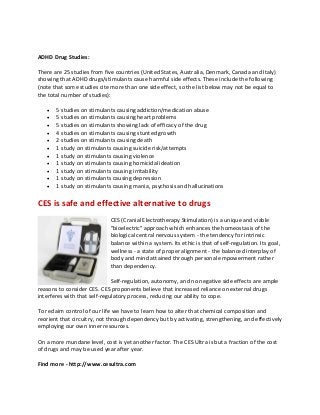
On a more mundane level, cost is yet another factor. The CES Ultra is but a fraction of the cost
of drugs and may be used year after year.
Find more - http://www.cesultra.com

Kids on Drugs (Thanks to Parents and Doctors)

  • 1.
    Kids on Drugs (Thanksto Parents and Doctors) Presented by cesultra.com
  • 2.
    The Dangers ofDrugs Parents and Doctors are often overwhelmed when having to deal with ADHD kids. They often look for a shortcut—prescription drugs. Common brand names include stimulants such as Ritalin, Concerta, Adderall, Metadate, Vyvanse, and Provigil. Use of such drugs has reached epidemic proportions. The figures are staggering: More than 1 in 10 (11%) US school-aged children had received an ADHD diagnosis by a health care provider by 2011, as reported by parents. 6.4 million children reported by parents to have ever received a health care provider diagnosis of ADHD , including:  1 in 5 high school boys  1 in 11 high school girls
  • 3.
    The percentage ofUS children 4-17 years of age with an ADHD diagnosis by a health care provider, as reported by parents, continues to increase. A history of ADHD diagnosis by a health care provider increased by 42% between 2003 and 2011:  7.8% had ever had a diagnosis in 2003  9.5% had ever had a diagnosis in 2007  11.0% had ever had a diagnosis in 2011 Average annual increase was approximately 5% per year The percentage of children 4-17 years of age taking medication for ADHD, as reported by parents, increased by 28% between 2007 and 2011. Percentage of children taking medication for ADHD was:  4.8% in 2007  6.1% in 2011 Average annual increase was approximately 7% per year The average age of ADHD diagnosis was 7 years of age, but children reported by their parents as having more severe ADHD were diagnosed earlier. 8 years of age was the average age of diagnosis for children reported as having mild ADHD 7 years of age was the average age of diagnosis for children reported as having moderate ADHD 5 years of age was the average age of diagnosis for children reported as having severe ADHD More US children were reported by their parents to be receiving ADHD treatment in 2011 compared to 2007, however treatment gaps may exist. In 2011, as many as 17.5% of children with current ADHD were reported by their parents as not receiving either medication for ADHD or mental health counseling More than one-third of children reported by their parents as not receiving treatment were also reported to have moderate or severe ADHD
  • 4.
    The patterns inADHD diagnosis and medication treatment showed increases in the percentages overall, however some new patterns emerged between 2007 and 2011. The percentage of children reported by their parents to have a history of health care provider diagnosed ADHD increased for most demographic groups (for example, across racial groups, boys and girls) from 2003 to 2011; however, Between 2007 and 2011, the percentage of children reported by their parents to have a history of a health care provider diagnosed ADHD:  Was similar among older teens  Decreased among multiracial children and children of other races when compared to black or white children The number of US families impacted by ADHD continues to increase. An estimated 2 million more children were reported by their parents to be diagnosed by a health care professional with ADHD in 2011, compared to 2003  By 2011, 6.4 million children were reported by their parents to be diagnosed by a health professional with ADHD compared to 4.4 million in 2003
  • 5.
    An estimated 1million more children were reported by their parents to be taking medication for ADHD in 2011, compared to 2003.  By 2011, 3.5 million children were reported by their parents to be taking medication for ADHD compared to 2.5 million in 2003 These figures should give pause for consideration. By increasing children’s dependence on pharmaceuticals, they learn that the best and easiest way to deal with their emotional issues is by taking a drug, perfect training for their adult years and an added incentive to graduate to recreational drug use and an increased reliance and dependence on prescriptions as a pathway to health. ADHD Drug Warnings: There have been 44 warnings from eight countries (United States, United Kingdom, Canada, Japan, Australia, New Zealand, France and Singapore) warning that ADHD drugs/stimulants cause harmful side effects. These include the following (note that some warnings cite more than one side effect, so the list below may not be equal to the total number of warnings):  13 warnings on stimulants causing heart problems  10 warnings on stimulants causing mania/psychosis  9 warnings on stimulants causing cardiovascular problems  8 warnings on stimulants causing death  4 warnings on stimulants causing hallucinations  4 warnings on stimulants causing depression  4 warnings on stimulants causing violence, hostility or aggression  4 warnings on stimulants causing seizures  3 warnings on stimulants causing agitation or irritability  3 warnings on stimulants causing anxiety  2 warnings on stimulants causing suicide risk/attempts  2 warnings on stimulants causing addiction or dependence
  • 6.
    ADHD Drug Studies: Thereare 25 studies from five countries (United States, Australia, Denmark, Canada and Italy) showing that ADHD drugs/stimulants cause harmful side effects. These include the following (note that some studies cite more than one side effect, so the list below may not be equal to the total number of studies):  5 studies on stimulants causing addiction/medication abuse  5 studies on stimulants causing heart problems  5 studies on stimulants showing lack of efficacy of the drug  4 studies on stimulants causing stunted growth  2 studies on stimulants causing death  1 study on stimulants causing suicide risk/attempts  1 study on stimulants causing violence  1 study on stimulants causing homicidal ideation  1 study on stimulants causing irritability  1 study on stimulants causing depression  1 study on stimulants causing mania, psychosis and hallucinations CES is safe and effective alternative to drugs CES (Cranial Electrotherapy Stimulation) is a unique and viable "bioelectric" approach which enhances the homeostasis of the biological central nervous system - the tendency for intrinsic balance within a system. Its ethic is that of self-regulation. Its goal, wellness - a state of proper alignment - the balanced interplay of body and mind attained through personal empowerment rather than dependency. Self-regulation, autonomy, and no negative side effects are ample reasons to consider CES. CES proponents believe that increased reliance on external drugs interferes with that self-regulatory process, reducing our ability to cope. To reclaim control of our life we have to learn how to alter that chemical composition and reorient that circuitry, not through dependency but by activating, strengthening, and effectively employing our own inner resources. On a more mundane level, cost is yet another factor. The CES Ultra is but a fraction of the cost of drugs and may be used year after year. Find more - http://www.cesultra.com