
Financial Crisis
The term financial crisis is applied broadly to a variety of situations
in which some financial institutions or assets suddenly lose a
large part of their value.
Types of Financial Crisis
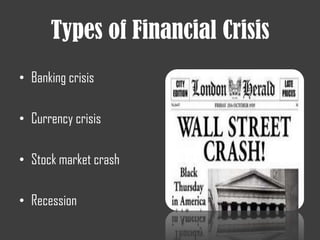
• Banking crisis
• Currency crisis
• Stock market crash
• Recession
Oil Crisis in 1973
The oil Crisis started in between
October 1973.
1973-1974 oil crisis which was led by
Arab members of the Organization of
Petroleum Exporting Countries (OPEC).
Some fact of Oil Crisis
• The crisis also prompted a call for individuals and businesses to conserve
energy, most notably a campaign by the Advertising Council using the tag line "Don't Be
Fuelish."
• The 1973 oil crisis was a major factor in Japan's economy shifting from oil-intensive
industries, and resulted in huge Japanese investments in industries such as
electronics
• The UK, Germany, Italy, Switzerland, and Norway banned flying, driving and boating on
Sundays. The Netherlands imposed prison sentences for those who used more than
their given ration of electricity.
• To help reduce consumption, in 1974 a national maximum speed limit of 55 mph (about
88 km/h) was imposed through the Emergency Highway Energy Conservation Act.
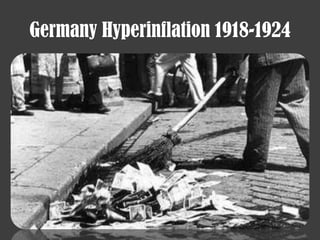
Germany Hyperinflation 1918-1924
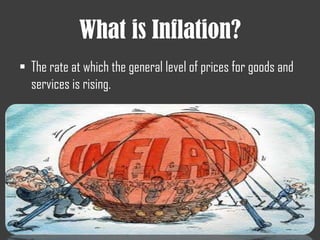
What is Inflation?
 The rate at which the general level of prices for goods and
services is rising.
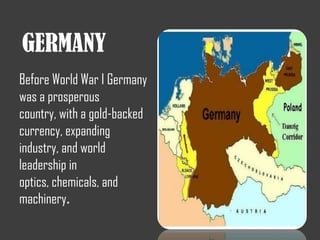
GERMANY
Before World War I Germany
was a prosperous
country, with a gold-backed
currency, expanding
industry, and world
leadership in
optics, chemicals, and
machinery.
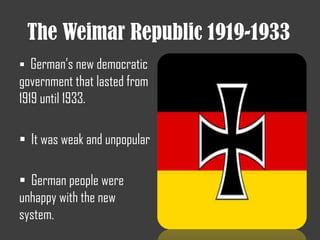
The Weimar Republic 1919-1933
 German’s new democratic
government that lasted from
1919 until 1933.
 It was weak and unpopular
 German people were
unhappy with the new
system.
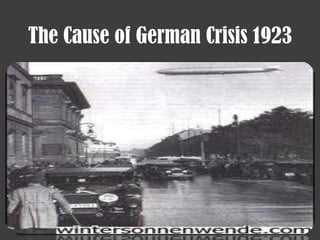
The Cause of German Crisis 1923
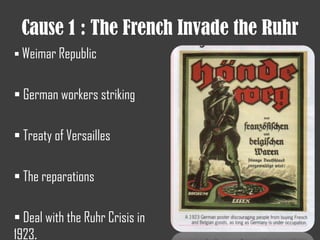
Cause 1 : The French Invade the Ruhr
 Weimar Republic
 German workers striking
 Treaty of Versailles
 The reparations
 Deal with the Ruhr Crisis in
1923.
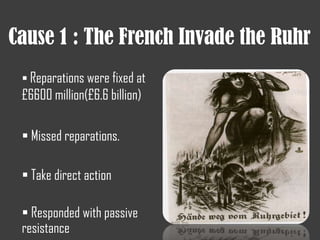
Cause 1 : The French Invade the Ruhr
 Reparations were fixed at
£6600 million(£6.6 billion)
 Missed reparations.
 Take direct action
 Responded with passive
resistance
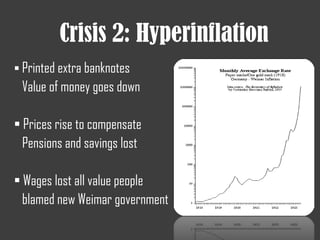
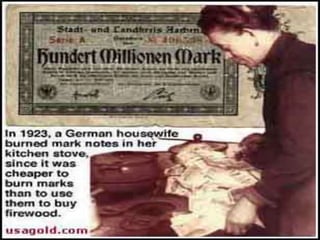
Crisis 2: Hyperinflation
 Printed extra banknotes
Value of money goes down
 Prices rise to compensate
Pensions and savings lost
 Wages lost all value people
blamed new Weimar government
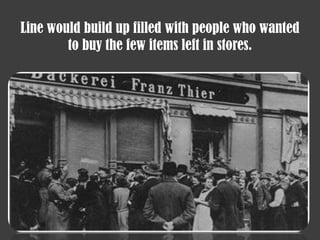
Line would build up filled with people who wanted
to buy the few items left in stores.
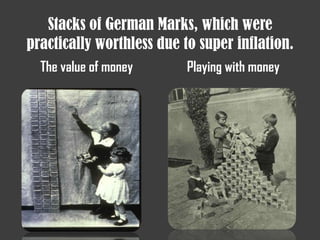
Stacks of German Marks, which were
practically worthless due to super inflation.
The value of money Playing with money
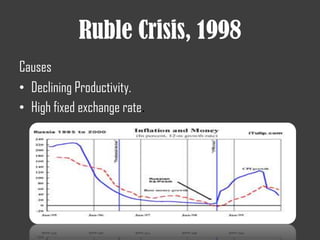
Ruble Crisis, 1998
Causes
• Declining Productivity.
• High fixed exchange rate.
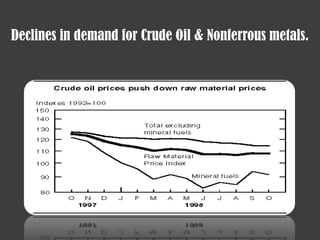
Declines in demand for Crude Oil & Nonferrous metals.
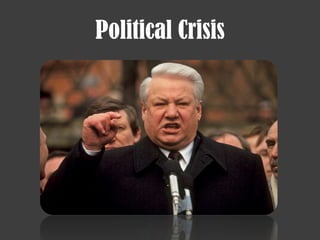
Political Crisis
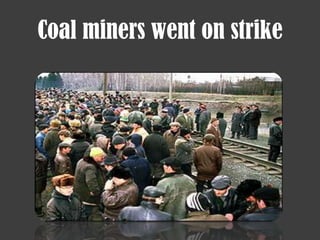
Coal miners went on strike
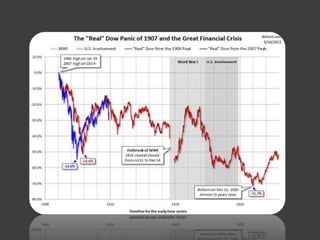
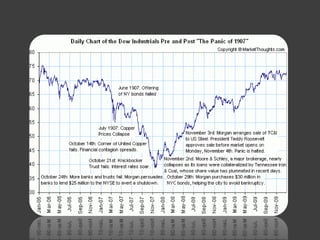
The Panic of 1907
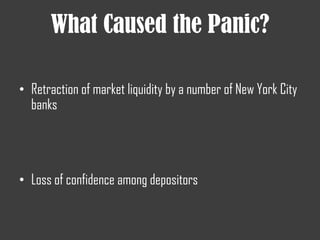
What Caused the Panic?
• Retraction of market liquidity by a number of New York City
banks
• Loss of confidence among depositors
Effects
• The Connection to the Stock Market
• Panic at the Trust Companies
Euro Crisis
• Eurozone - is the economic
and monetary union
of member countries of
Europe who have adopted
Euro as their common
currency.
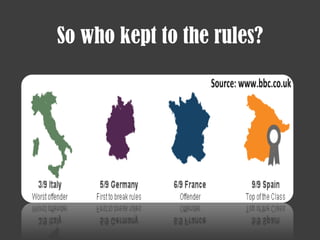
So who kept to the rules?
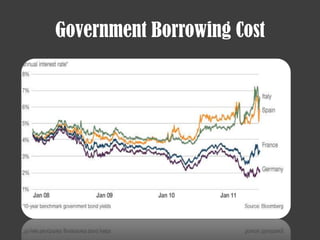
Government Borrowing Cost
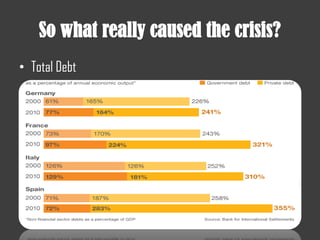
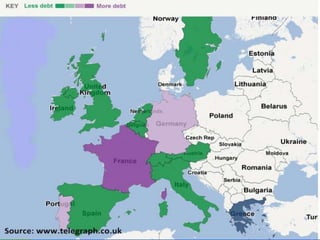
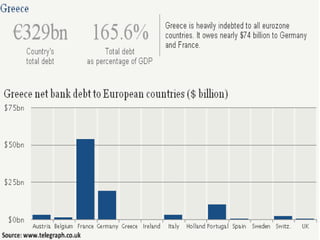
So what really caused the crisis?
• Total Debt
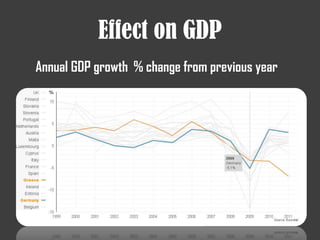
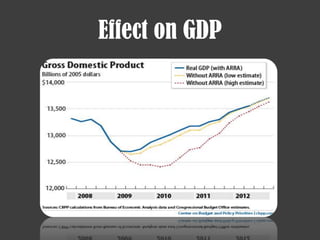
Effect on GDP
Annual GDP growth % change from previous year
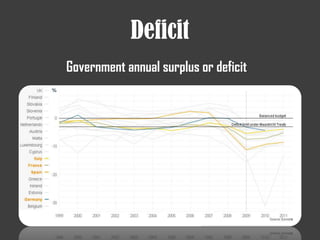
Deficit
Government annual surplus or deficit
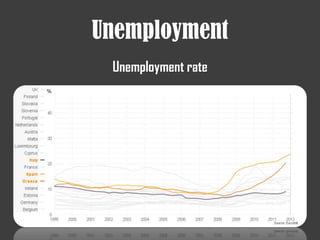
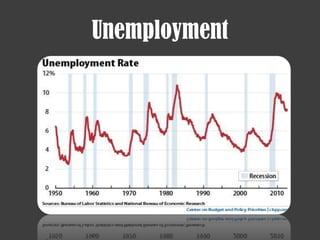
Unemployment
Unemployment rate
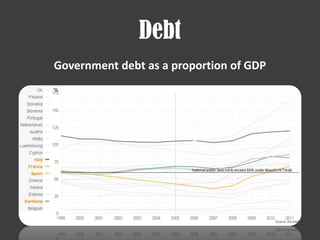
Debt
Government debt as a proportion of GDP
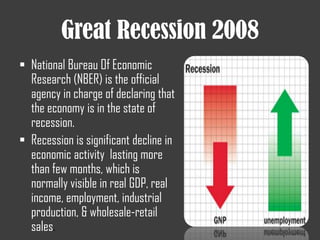
Great Recession 2008
 National Bureau Of Economic
Research (NBER) is the official
agency in charge of declaring that
the economy is in the state of
recession.
 Recession is significant decline in
economic activity lasting more
than few months, which is
normally visible in real GDP, real
income, employment, industrial
production, & wholesale-retail
sales.
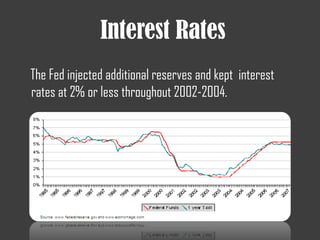
Interest Rates
The Fed injected additional reserves and kept interest
rates at 2% or less throughout 2002-2004.
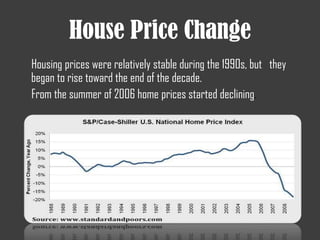
House Price Change
Housing prices were relatively stable during the 1990s, but they
began to rise toward the end of the decade.
From the summer of 2006 home prices started declining.
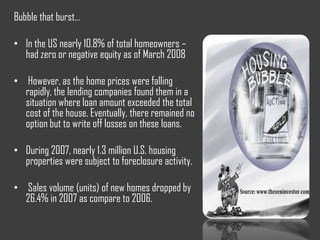
Bubble that burst…
• In the US nearly 10.8% of total homeowners –
had zero or negative equity as of March 2008
• However, as the home prices were falling
rapidly, the lending companies found them in a
situation where loan amount exceeded the total
cost of the house. Eventually, there remained no
option but to write off losses on these loans.
• During 2007, nearly 1.3 million U.S. housing
properties were subject to foreclosure activity.
• Sales volume (units) of new homes dropped by
26.4% in 2007 as compare to 2006.
Unemployment
Effect on GDP
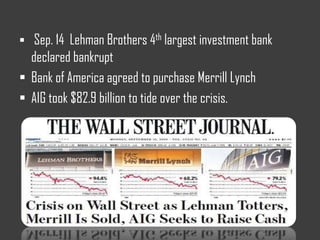
 Sep. 14 Lehman Brothers 4th largest investment bank
declared bankrupt
 Bank of America agreed to purchase Merrill Lynch
 AIG took $82.9 billion to tide over the crisis.
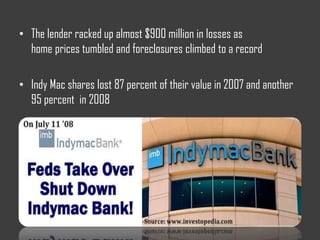
• The lender racked up almost $900 million in losses as
home prices tumbled and foreclosures climbed to a record
• Indy Mac shares lost 87 percent of their value in 2007 and another
95 percent in 2008
U.S. housing policies are the root cause of the current financial crisis.
Other players-- “greedy” investment bankers; foolish investors;
imprudent bankers; incompetent rating agencies; irresponsible
housing speculators; short sighted homeowners; and predatory
mortgage brokers, lenders, and borrowers--all played a part.
- Peter J. Wallison
(lawyer & White House counsel)
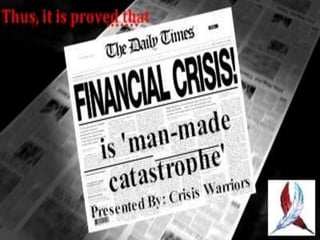
Financial crisis is 'man made catastrophe‘

Financial crisis is 'man made catastrophe‘

  • 2.
    Financial Crisis The termfinancial crisis is applied broadly to a variety of situations in which some financial institutions or assets suddenly lose a large part of their value.
  • 3.
    Types of FinancialCrisis • Banking crisis • Currency crisis • Stock market crash • Recession
  • 4.
    Oil Crisis in1973 The oil Crisis started in between October 1973. 1973-1974 oil crisis which was led by Arab members of the Organization of Petroleum Exporting Countries (OPEC).
  • 5.
    Some fact ofOil Crisis • The crisis also prompted a call for individuals and businesses to conserve energy, most notably a campaign by the Advertising Council using the tag line "Don't Be Fuelish." • The 1973 oil crisis was a major factor in Japan's economy shifting from oil-intensive industries, and resulted in huge Japanese investments in industries such as electronics • The UK, Germany, Italy, Switzerland, and Norway banned flying, driving and boating on Sundays. The Netherlands imposed prison sentences for those who used more than their given ration of electricity. • To help reduce consumption, in 1974 a national maximum speed limit of 55 mph (about 88 km/h) was imposed through the Emergency Highway Energy Conservation Act.
  • 6.
  • 7.
    What is Inflation? The rate at which the general level of prices for goods and services is rising.
  • 8.
    GERMANY Before World WarI Germany was a prosperous country, with a gold-backed currency, expanding industry, and world leadership in optics, chemicals, and machinery.
  • 9.
    The Weimar Republic1919-1933  German’s new democratic government that lasted from 1919 until 1933.  It was weak and unpopular  German people were unhappy with the new system.
  • 10.
    The Cause ofGerman Crisis 1923
  • 11.
    Cause 1 :The French Invade the Ruhr  Weimar Republic  German workers striking  Treaty of Versailles  The reparations  Deal with the Ruhr Crisis in 1923.
  • 12.
    Cause 1 :The French Invade the Ruhr  Reparations were fixed at £6600 million(£6.6 billion)  Missed reparations.  Take direct action  Responded with passive resistance
  • 13.
    Crisis 2: Hyperinflation Printed extra banknotes Value of money goes down  Prices rise to compensate Pensions and savings lost  Wages lost all value people blamed new Weimar government
  • 15.
    Line would buildup filled with people who wanted to buy the few items left in stores.
  • 16.
    Stacks of GermanMarks, which were practically worthless due to super inflation. The value of money Playing with money
  • 17.
    Ruble Crisis, 1998 Causes •Declining Productivity. • High fixed exchange rate.
  • 18.
    Declines in demandfor Crude Oil & Nonferrous metals.
  • 19.
  • 20.
  • 21.
  • 22.
    What Caused thePanic? • Retraction of market liquidity by a number of New York City banks • Loss of confidence among depositors
  • 23.
    Effects • The Connectionto the Stock Market • Panic at the Trust Companies
  • 26.
    Euro Crisis • Eurozone- is the economic and monetary union of member countries of Europe who have adopted Euro as their common currency.
  • 27.
    So who keptto the rules?
  • 28.
  • 29.
    So what reallycaused the crisis? • Total Debt
  • 32.
    Effect on GDP AnnualGDP growth % change from previous year
  • 33.
  • 34.
  • 35.
    Debt Government debt asa proportion of GDP
  • 36.
    Great Recession 2008 National Bureau Of Economic Research (NBER) is the official agency in charge of declaring that the economy is in the state of recession.  Recession is significant decline in economic activity lasting more than few months, which is normally visible in real GDP, real income, employment, industrial production, & wholesale-retail sales.
  • 37.
    Interest Rates The Fedinjected additional reserves and kept interest rates at 2% or less throughout 2002-2004.
  • 38.
    House Price Change Housingprices were relatively stable during the 1990s, but they began to rise toward the end of the decade. From the summer of 2006 home prices started declining.
  • 39.
    Bubble that burst… •In the US nearly 10.8% of total homeowners – had zero or negative equity as of March 2008 • However, as the home prices were falling rapidly, the lending companies found them in a situation where loan amount exceeded the total cost of the house. Eventually, there remained no option but to write off losses on these loans. • During 2007, nearly 1.3 million U.S. housing properties were subject to foreclosure activity. • Sales volume (units) of new homes dropped by 26.4% in 2007 as compare to 2006.
  • 40.
  • 41.
  • 42.
     Sep. 14Lehman Brothers 4th largest investment bank declared bankrupt  Bank of America agreed to purchase Merrill Lynch  AIG took $82.9 billion to tide over the crisis.
  • 43.
    • The lenderracked up almost $900 million in losses as home prices tumbled and foreclosures climbed to a record • Indy Mac shares lost 87 percent of their value in 2007 and another 95 percent in 2008
  • 44.
    U.S. housing policiesare the root cause of the current financial crisis. Other players-- “greedy” investment bankers; foolish investors; imprudent bankers; incompetent rating agencies; irresponsible housing speculators; short sighted homeowners; and predatory mortgage brokers, lenders, and borrowers--all played a part. - Peter J. Wallison (lawyer & White House counsel)

Editor's Notes

  • #13 Source – A German poster from 1923. The text means ‘Hands of the Ruhr!’