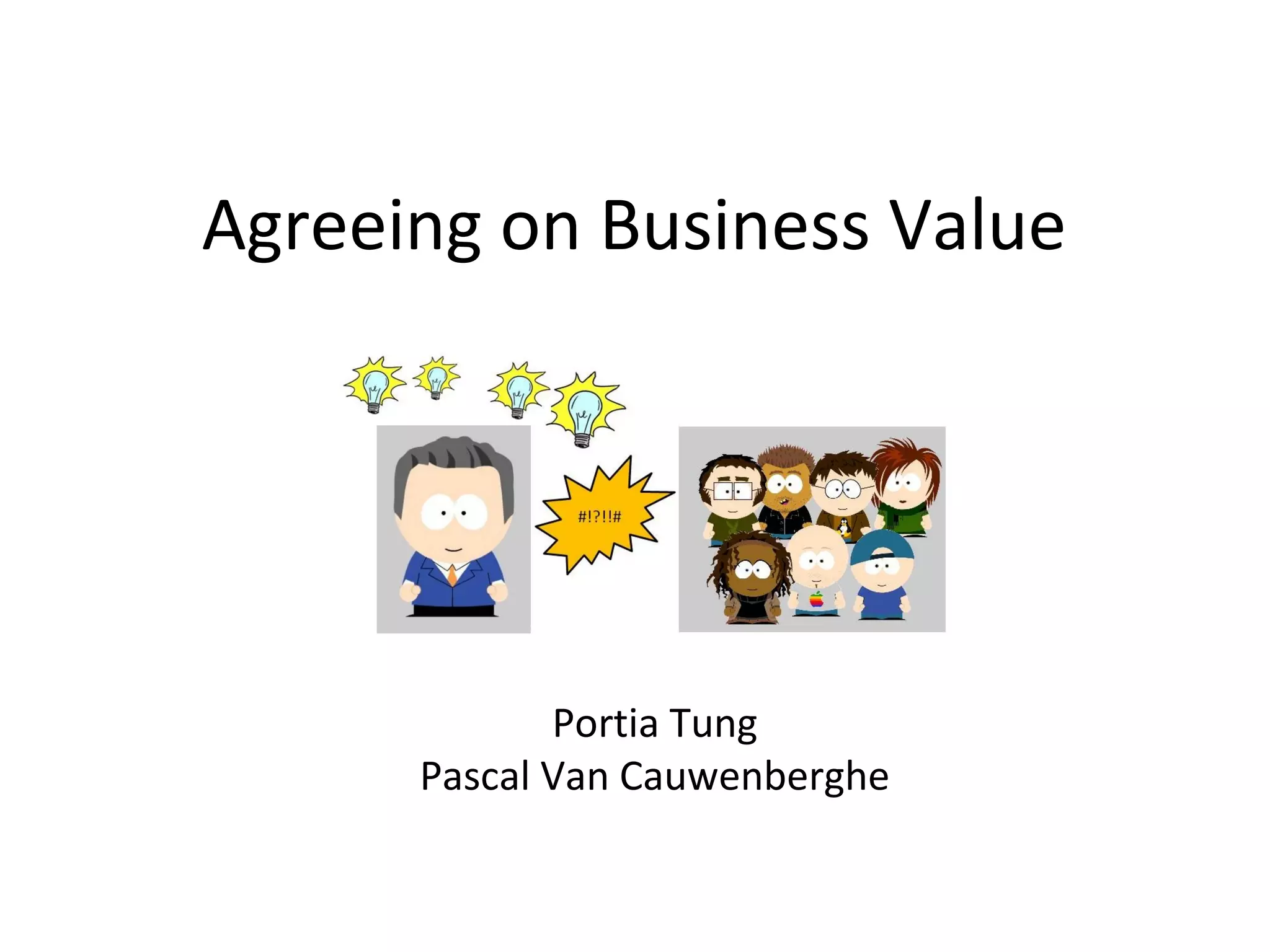
Agreeing on Business Value
Portia Tung
Pascal Van Cauwenberghe
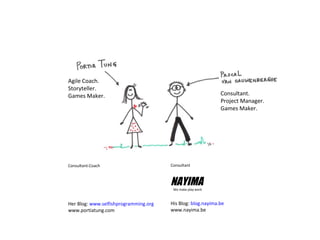
Introductions
Consultant
His Blog: blog.nayima.be
www.nayima.be
NAYIMAWe make play work
Agile Coach.
Storyteller.
Games Maker. Consultant.
Project Manager.
Games Maker.
Consultant-Coach
Her Blog: www.selfishprogramming.org
www.portiatung.com
Without a goal
It’s hard to score
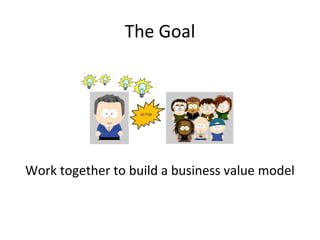
The Goal
Work together to build a business value model
Session Acceptance Tests
 I can build a simple Business Value Model
 I can explain the value of building a Business
Value Model
 I want to learn more about this topic
What is Business Value?
How do you measure
Business Value?
What Business Value means to us
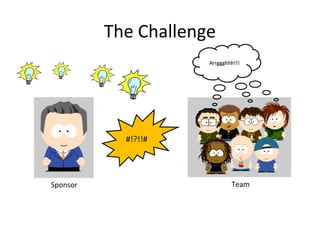
The Challenge
#!?!!#
Sponsor Team
Arrggghhh!!!Arrggghhh!!!Arrggghhh!!!
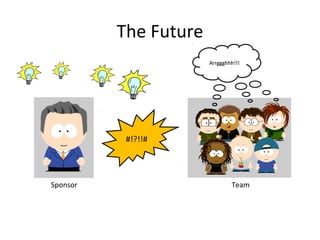
The Future
Sponsor Team
Arrggghhh!!!Arrggghhh!!!Arrggghhh!!!
#!?!!#
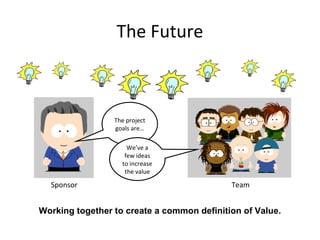
The Future
Sponsor Team
The project
goals are…
We’ve a
few ideas
to increase
the value
Working together to create a common definition of Value.
A Useful Tool
Business Value Modelling
What is Business Value
• Business Value is not a number
• Business Value is a model
• Business Value models what you value
Ring-ring-ring…
(The Simulation)
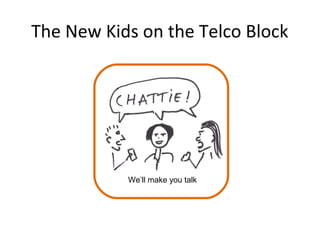
The New Kids on the Telco Block
We’ll make you talk
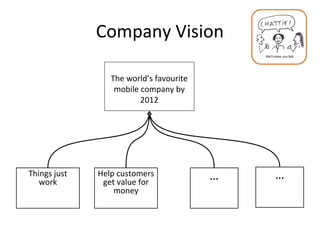
Company Vision
The world’s favourite
mobile company by
2012
Things just
work
… …Help customers
get value for
money
Your Mission
Do Business Value Modelling
Building a Business Value Model
• Work in groups per table
• Use Post-Its to make model easy to change
• When you have a question or an issue
– Write it on a pink Post-It
– Continue working
– Resolve issues and questions when we come
round to your table
Building a Business Value Model
(1)
1. Read your persona goals
2. Choose a small (4 - 5) number of goals
3. Balanced: financial, people, organisation
4. Represent all personas
5. One goal per Post-It
Exercise 1
Create your own
Business Value Model
Building a Business Value Model
(1)
1. Read your persona goals
2. Brainstorm a small (4 - 5) number of goals
3. Balanced: financial, people, organisation
4. Represent all personas
5. One goal per Post-It
Time’s up!
10 min
Exercise 2
Identify measures
Building a Business Value Model
(2)
1. Identify one measure per goal
2. Write the measure on the corresponding
goal Post-It
Building a Business Value Model
(2)
1. Identify one measure per goal
2. Write the measure on the corresponding
goal Post-It
Time’s up!
5 min
Exercise 3
Find leading indicators
Leading and Lagging indicators
• Most measures can only be measured late,
after customer use
• These are called “Lagging indicators”
• We want feedback sooner
• We find measures that we can have sooner
and that (we think) predict success with the
real goals: “Leading indicators”
• We can use leading indicators during the
project
Building a Business Value Model
(3)
1. Identify goals that can only be measured late
2. Identify goals that can be measured early and
are good predictors
3. Add them as Post-Its
For example
Building a Business Value Model
(3)
1. Identify goals that can only be measured late
2. Identify goals that can be measured early and
are good predictors
3. Add them as Post-Its
Time’s up!
5 min
Exercise 4
Find relationships between goals
Diagram of Effects
• We’re looking at complex systems
• Changing one variable will affect another
• A “Diagram of effects” shows how we think
these measures affect one another
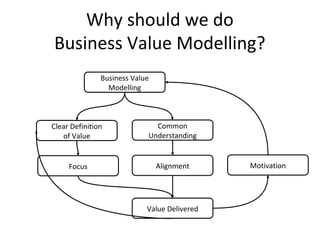
Why should we do
Business Value Modelling?
Value Delivered
Focus Alignment
Clear Definition
of Value
Common
Understanding
Business Value
Modelling
Motivation
Building a Business Value Model
(4)
1. Identify and explain relationships between
lagging indicators
2. Identify and explain relationships between
leading indicators
3. Identify and explain relationships between
leading and lagging indicators
4. Add any missing measures that are needed
to explain the system
For example
Building a Business Value Model
(4)
1. Identify and explain relationships between
lagging indicators
2. Identify and explain relationships between
leading indicators
3. Identify and explain relationships between
leading and lagging indicators
4. Add any missing measures that are needed
to explain the system
Time’s up!
5 min
The Theory
Behind Business Value Modelling
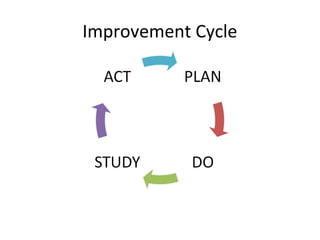
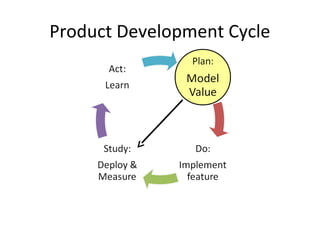
Improvement Cycle
Product Development Cycle
A Business Value Model
is a Hypothesis
• The Business Value Model is one of many models
the team builds
• No model is perfect, some are useful
• Our model is a hypothesis, what we think will
happen
• We re-evaluate and improve the model regularly
based on feedback
• It’s not a “zombie” business case (one that comes
back to haunt you)
• We won’t be punished if we get it wrong
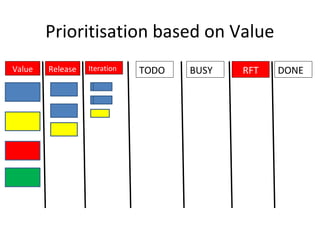
Prioritisation based on Value
TODO BUSY RFT DONEIterationReleaseValue
Where else can you use this
tool?
Business Value Modelling
Stories of how we’ve used the tool
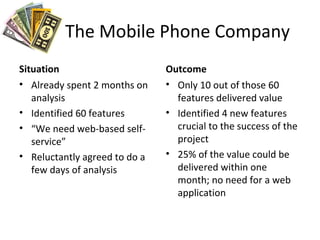
The Mobile Phone Company
Situation
• Already spent 2 months on
analysis
• Identified 60 features
• “We need web-based self-
service”
• Reluctantly agreed to do a
few days of analysis
Outcome
• Only 10 out of those 60
features delivered value
• Identified 4 new features
crucial to the success of the
project
• 25% of the value could be
delivered within one
month; no need for a web
application
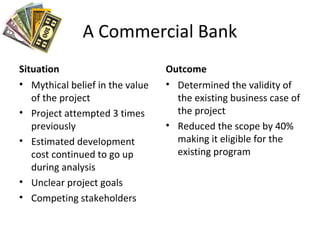
A Commercial Bank
Situation
• Mythical belief in the value
of the project
• Project attempted 3 times
previously
• Estimated development
cost continued to go up
during analysis
• Unclear project goals
• Competing stakeholders
Outcome
• Determined the validity of
the existing business case of
the project
• Reduced the scope by 40%
making it eligible for the
existing program
The Transport Company
Before
• A new team on their first Agile
project
• Two days of business analysis
with the whole team
• “Aren’t we wasting too much
time analysing?”
• “Why are the developers
here?”
• “When can we start coding?”
After
• In production 3 months
earlier than predicted
• “I can’t believe we already
released. Normally we’d still
be doing analysis.”
• Developers came up with a
new use for existing data,
with large financial and
ecological benefits
Exercise 5
Create a poster to explain the
Business Value Modelling tool
Session Acceptance Tests
 I can build a simple Business Value Model
 I can explain the value of building a Business
Value Model
 I want to learn more about this topic
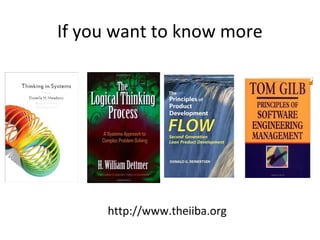
If you want to know more
http://www.theiiba.org
Give the gift of feedback
Perfection Game on back of the Session cards
Introductions
Consultant
His Blog: blog.nayima.be
www.nayima.be
NAYIMAWe make play work
Agile Coach.
Storyteller.
Games Maker. Consultant.
Project Manager.
Games Maker.
Consultant-Coach
Her Blog: www.selfishprogramming.org
www.portiatung.com
Thank you

Agreeing on business value

  • 1.
    Agreeing on BusinessValue Portia Tung Pascal Van Cauwenberghe
  • 2.
    Introductions Consultant His Blog: blog.nayima.be www.nayima.be NAYIMAWemake play work Agile Coach. Storyteller. Games Maker. Consultant. Project Manager. Games Maker. Consultant-Coach Her Blog: www.selfishprogramming.org www.portiatung.com
  • 3.
    Without a goal It’shard to score
  • 4.
    The Goal Work togetherto build a business value model
  • 5.
    Session Acceptance Tests I can build a simple Business Value Model  I can explain the value of building a Business Value Model  I want to learn more about this topic
  • 6.
  • 7.
    How do youmeasure Business Value?
  • 8.
  • 9.
  • 10.
  • 11.
    The Future Sponsor Team Theproject goals are… We’ve a few ideas to increase the value Working together to create a common definition of Value.
  • 12.
    A Useful Tool BusinessValue Modelling
  • 13.
    What is BusinessValue • Business Value is not a number • Business Value is a model • Business Value models what you value
  • 14.
  • 15.
    The New Kidson the Telco Block We’ll make you talk
  • 16.
    Company Vision The world’sfavourite mobile company by 2012 Things just work … …Help customers get value for money
  • 17.
    Your Mission Do BusinessValue Modelling
  • 18.
    Building a BusinessValue Model • Work in groups per table • Use Post-Its to make model easy to change • When you have a question or an issue – Write it on a pink Post-It – Continue working – Resolve issues and questions when we come round to your table
  • 19.
    Building a BusinessValue Model (1) 1. Read your persona goals 2. Choose a small (4 - 5) number of goals 3. Balanced: financial, people, organisation 4. Represent all personas 5. One goal per Post-It
  • 20.
    Exercise 1 Create yourown Business Value Model
  • 21.
    Building a BusinessValue Model (1) 1. Read your persona goals 2. Brainstorm a small (4 - 5) number of goals 3. Balanced: financial, people, organisation 4. Represent all personas 5. One goal per Post-It Time’s up! 10 min
  • 22.
  • 23.
    Building a BusinessValue Model (2) 1. Identify one measure per goal 2. Write the measure on the corresponding goal Post-It
  • 24.
    Building a BusinessValue Model (2) 1. Identify one measure per goal 2. Write the measure on the corresponding goal Post-It Time’s up! 5 min
  • 25.
  • 26.
    Leading and Laggingindicators • Most measures can only be measured late, after customer use • These are called “Lagging indicators” • We want feedback sooner • We find measures that we can have sooner and that (we think) predict success with the real goals: “Leading indicators” • We can use leading indicators during the project
  • 27.
    Building a BusinessValue Model (3) 1. Identify goals that can only be measured late 2. Identify goals that can be measured early and are good predictors 3. Add them as Post-Its
  • 28.
  • 29.
    Building a BusinessValue Model (3) 1. Identify goals that can only be measured late 2. Identify goals that can be measured early and are good predictors 3. Add them as Post-Its Time’s up! 5 min
  • 30.
  • 31.
    Diagram of Effects •We’re looking at complex systems • Changing one variable will affect another • A “Diagram of effects” shows how we think these measures affect one another
  • 32.
    Why should wedo Business Value Modelling? Value Delivered Focus Alignment Clear Definition of Value Common Understanding Business Value Modelling Motivation
  • 33.
    Building a BusinessValue Model (4) 1. Identify and explain relationships between lagging indicators 2. Identify and explain relationships between leading indicators 3. Identify and explain relationships between leading and lagging indicators 4. Add any missing measures that are needed to explain the system
  • 34.
  • 35.
    Building a BusinessValue Model (4) 1. Identify and explain relationships between lagging indicators 2. Identify and explain relationships between leading indicators 3. Identify and explain relationships between leading and lagging indicators 4. Add any missing measures that are needed to explain the system Time’s up! 5 min
  • 36.
  • 37.
  • 38.
  • 39.
    A Business ValueModel is a Hypothesis • The Business Value Model is one of many models the team builds • No model is perfect, some are useful • Our model is a hypothesis, what we think will happen • We re-evaluate and improve the model regularly based on feedback • It’s not a “zombie” business case (one that comes back to haunt you) • We won’t be punished if we get it wrong
  • 40.
    Prioritisation based onValue TODO BUSY RFT DONEIterationReleaseValue
  • 41.
    Where else canyou use this tool?
  • 42.
    Business Value Modelling Storiesof how we’ve used the tool
  • 43.
    The Mobile PhoneCompany Situation • Already spent 2 months on analysis • Identified 60 features • “We need web-based self- service” • Reluctantly agreed to do a few days of analysis Outcome • Only 10 out of those 60 features delivered value • Identified 4 new features crucial to the success of the project • 25% of the value could be delivered within one month; no need for a web application
  • 44.
    A Commercial Bank Situation •Mythical belief in the value of the project • Project attempted 3 times previously • Estimated development cost continued to go up during analysis • Unclear project goals • Competing stakeholders Outcome • Determined the validity of the existing business case of the project • Reduced the scope by 40% making it eligible for the existing program
  • 45.
    The Transport Company Before •A new team on their first Agile project • Two days of business analysis with the whole team • “Aren’t we wasting too much time analysing?” • “Why are the developers here?” • “When can we start coding?” After • In production 3 months earlier than predicted • “I can’t believe we already released. Normally we’d still be doing analysis.” • Developers came up with a new use for existing data, with large financial and ecological benefits
  • 46.
    Exercise 5 Create aposter to explain the Business Value Modelling tool
  • 47.
    Session Acceptance Tests I can build a simple Business Value Model  I can explain the value of building a Business Value Model  I want to learn more about this topic
  • 48.
    If you wantto know more http://www.theiiba.org
  • 50.
    Give the giftof feedback Perfection Game on back of the Session cards
  • 51.
    Introductions Consultant His Blog: blog.nayima.be www.nayima.be NAYIMAWemake play work Agile Coach. Storyteller. Games Maker. Consultant. Project Manager. Games Maker. Consultant-Coach Her Blog: www.selfishprogramming.org www.portiatung.com Thank you

Editor's Notes