Dampness in Buildings
Dampness in buildings can cause a myriad of problems for both the
structure and its inhabitants. Dampness in any building occurred by
absorption of water by the materials. If dampness occurred in the
building, it becomes harmful to person those are living in the building.
1. Condensation Damp - 2. Penetration Damp - 3. Rising Damp -
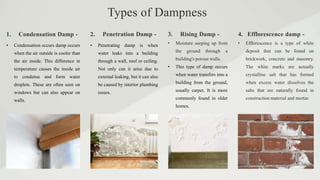
• Condensation occurs damp occurs
when the air outside is cooler than
the air inside. This difference in
temperature causes the inside air
to condense and form water
droplets. These are often seen on
windows but can also appear on
walls.
• Penetrating damp is when
water leaks into a building
through a wall, roof or ceiling.
Not only can it arise due to
external leaking, but it can also
be caused by interior plumbing
issues.
• Moisture seeping up from
the ground through a
building's porous walls.
• This type of damp occurs
when water transfers into a
building from the ground,
usually carpet. It is more
commonly found in older
homes.
Types of Dampness
4. Efflorescence damp -
• Efflorescence is a type of white
deposit that can be found on
brickwork, concrete and masonry.
The white marks are actually
crystalline salt that has formed
when excess water dissolves the
salts that are naturally found in
construction material and mortar.
Health Concerns - Structural Damage - Aesthetic Problems -
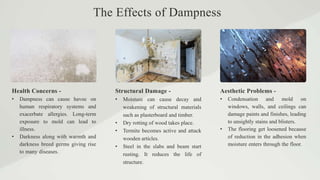
• Dampness can cause havoc on
human respiratory systems and
exacerbate allergies. Long-term
exposure to mold can lead to
illness.
• Darkness along with warmth and
darkness breed germs giving rise
to many diseases.
• Moisture can cause decay and
weakening of structural materials
such as plasterboard and timber.
• Dry rotting of wood takes place.
• Termite becomes active and attack
wooden articles.
• Steel in the slabs and beam start
rusting. It reduces the life of
structure.
• Condensation and mold on
windows, walls, and ceilings can
damage paints and finishes, leading
to unsightly stains and blisters.
• The flooring get loosened because
of reduction in the adhesion when
moisture enters through the floor.
The Effects of Dampness
1. Condensation Damp - 2. Penetration Damp - 3. Rising Damp -
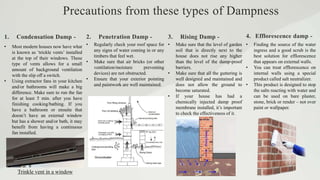
• Most modern houses now have what
is known as ‘trickle vents’ installed
at the top of their windows. These
type of vents allows for a small
amount of background ventilation
with the slip off a switch.
• Using extractor fans in your kitchen
and/or bathrooms will make a big
difference. Make sure to run the fan
for at least 5 min. after you have
finishing cooking/bathing. If you
have a bathroom or ensuite that
doesn’t have an external window
but has a shower and/or bath, it may
benefit from having a continuous
fan installed.
• Regularly check your roof space for
any signs of water coming in or any
timbers that feel wet.
• Make sure that air bricks (or other
ventilation/moisture preventing
devices) are not obstructed.
• Ensure that your exterior pointing
and paintwork are well maintained.
• Make sure that the level of garden
soil that is directly next to the
house does not rise any higher
than the level of the damp-proof
barriers.
• Make sure that all the guttering is
well designed and maintained and
does not allow the ground to
become saturated.
• If your house has had a
chemically injected damp proof
membrane installed, it’s important
to check the effectiveness of it.
Precautions from these types of Dampness
Trinkle vent in a window
• Finding the source of the water
ingress and a good scrub is the
best solution for efflorescence
that appears on external walls.
• You can treat efflorescence on
internal walls using a special
product called salt neutralizer.
• This product is designed to stop
the salts reacting with water and
can be used on bare plaster,
stone, brick or render – not over
paint or wallpaper.
4. Efflorescence damp -
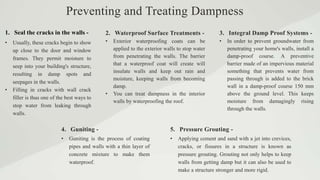
1. Seal the cracks in the walls -
4. Guniting -
2. Waterproof Surface Treatments -
• Usually, these cracks begin to show
up close to the door and window
frames. They permit moisture to
seep into your building's structure,
resulting in damp spots and
seepages in the walls.
• Filling in cracks with wall crack
filler is thus one of the best ways to
stop water from leaking through
walls.
• Guniting is the process of coating
pipes and walls with a thin layer of
concrete mixture to make them
waterproof.
• Exterior waterproofing coats can be
applied to the exterior walls to stop water
from penetrating the walls. The barrier
that a waterproof coat will create will
insulate walls and keep out rain and
moisture, keeping walls from becoming
damp.
• You can treat dampness in the interior
walls by waterproofing the roof.
Preventing and Treating Dampness
3. Integral Damp Proof Systems -
• In order to prevent groundwater from
penetrating your home's walls, install a
damp-proof course. A preventive
barrier made of an impervious material
something that prevents water from
passing through is added to the brick
wall in a damp-proof course 150 mm
above the ground level. This keeps
moisture from damagingly rising
through the walls.
5. Pressure Grouting -
• Applying cement and sand with a jet into crevices,
cracks, or fissures in a structure is known as
pressure grouting. Grouting not only helps to keep
walls from getting damp but it can also be used to
make a structure stronger and more rigid.

Dampness in Architecture.pptx

  • 1.
    Dampness in Buildings Dampnessin buildings can cause a myriad of problems for both the structure and its inhabitants. Dampness in any building occurred by absorption of water by the materials. If dampness occurred in the building, it becomes harmful to person those are living in the building.
  • 2.
    1. Condensation Damp- 2. Penetration Damp - 3. Rising Damp - • Condensation occurs damp occurs when the air outside is cooler than the air inside. This difference in temperature causes the inside air to condense and form water droplets. These are often seen on windows but can also appear on walls. • Penetrating damp is when water leaks into a building through a wall, roof or ceiling. Not only can it arise due to external leaking, but it can also be caused by interior plumbing issues. • Moisture seeping up from the ground through a building's porous walls. • This type of damp occurs when water transfers into a building from the ground, usually carpet. It is more commonly found in older homes. Types of Dampness 4. Efflorescence damp - • Efflorescence is a type of white deposit that can be found on brickwork, concrete and masonry. The white marks are actually crystalline salt that has formed when excess water dissolves the salts that are naturally found in construction material and mortar.
  • 3.
    Health Concerns -Structural Damage - Aesthetic Problems - • Dampness can cause havoc on human respiratory systems and exacerbate allergies. Long-term exposure to mold can lead to illness. • Darkness along with warmth and darkness breed germs giving rise to many diseases. • Moisture can cause decay and weakening of structural materials such as plasterboard and timber. • Dry rotting of wood takes place. • Termite becomes active and attack wooden articles. • Steel in the slabs and beam start rusting. It reduces the life of structure. • Condensation and mold on windows, walls, and ceilings can damage paints and finishes, leading to unsightly stains and blisters. • The flooring get loosened because of reduction in the adhesion when moisture enters through the floor. The Effects of Dampness
  • 4.
    1. Condensation Damp- 2. Penetration Damp - 3. Rising Damp - • Most modern houses now have what is known as ‘trickle vents’ installed at the top of their windows. These type of vents allows for a small amount of background ventilation with the slip off a switch. • Using extractor fans in your kitchen and/or bathrooms will make a big difference. Make sure to run the fan for at least 5 min. after you have finishing cooking/bathing. If you have a bathroom or ensuite that doesn’t have an external window but has a shower and/or bath, it may benefit from having a continuous fan installed. • Regularly check your roof space for any signs of water coming in or any timbers that feel wet. • Make sure that air bricks (or other ventilation/moisture preventing devices) are not obstructed. • Ensure that your exterior pointing and paintwork are well maintained. • Make sure that the level of garden soil that is directly next to the house does not rise any higher than the level of the damp-proof barriers. • Make sure that all the guttering is well designed and maintained and does not allow the ground to become saturated. • If your house has had a chemically injected damp proof membrane installed, it’s important to check the effectiveness of it. Precautions from these types of Dampness Trinkle vent in a window • Finding the source of the water ingress and a good scrub is the best solution for efflorescence that appears on external walls. • You can treat efflorescence on internal walls using a special product called salt neutralizer. • This product is designed to stop the salts reacting with water and can be used on bare plaster, stone, brick or render – not over paint or wallpaper. 4. Efflorescence damp -
  • 5.
    1. Seal thecracks in the walls - 4. Guniting - 2. Waterproof Surface Treatments - • Usually, these cracks begin to show up close to the door and window frames. They permit moisture to seep into your building's structure, resulting in damp spots and seepages in the walls. • Filling in cracks with wall crack filler is thus one of the best ways to stop water from leaking through walls. • Guniting is the process of coating pipes and walls with a thin layer of concrete mixture to make them waterproof. • Exterior waterproofing coats can be applied to the exterior walls to stop water from penetrating the walls. The barrier that a waterproof coat will create will insulate walls and keep out rain and moisture, keeping walls from becoming damp. • You can treat dampness in the interior walls by waterproofing the roof. Preventing and Treating Dampness 3. Integral Damp Proof Systems - • In order to prevent groundwater from penetrating your home's walls, install a damp-proof course. A preventive barrier made of an impervious material something that prevents water from passing through is added to the brick wall in a damp-proof course 150 mm above the ground level. This keeps moisture from damagingly rising through the walls. 5. Pressure Grouting - • Applying cement and sand with a jet into crevices, cracks, or fissures in a structure is known as pressure grouting. Grouting not only helps to keep walls from getting damp but it can also be used to make a structure stronger and more rigid.