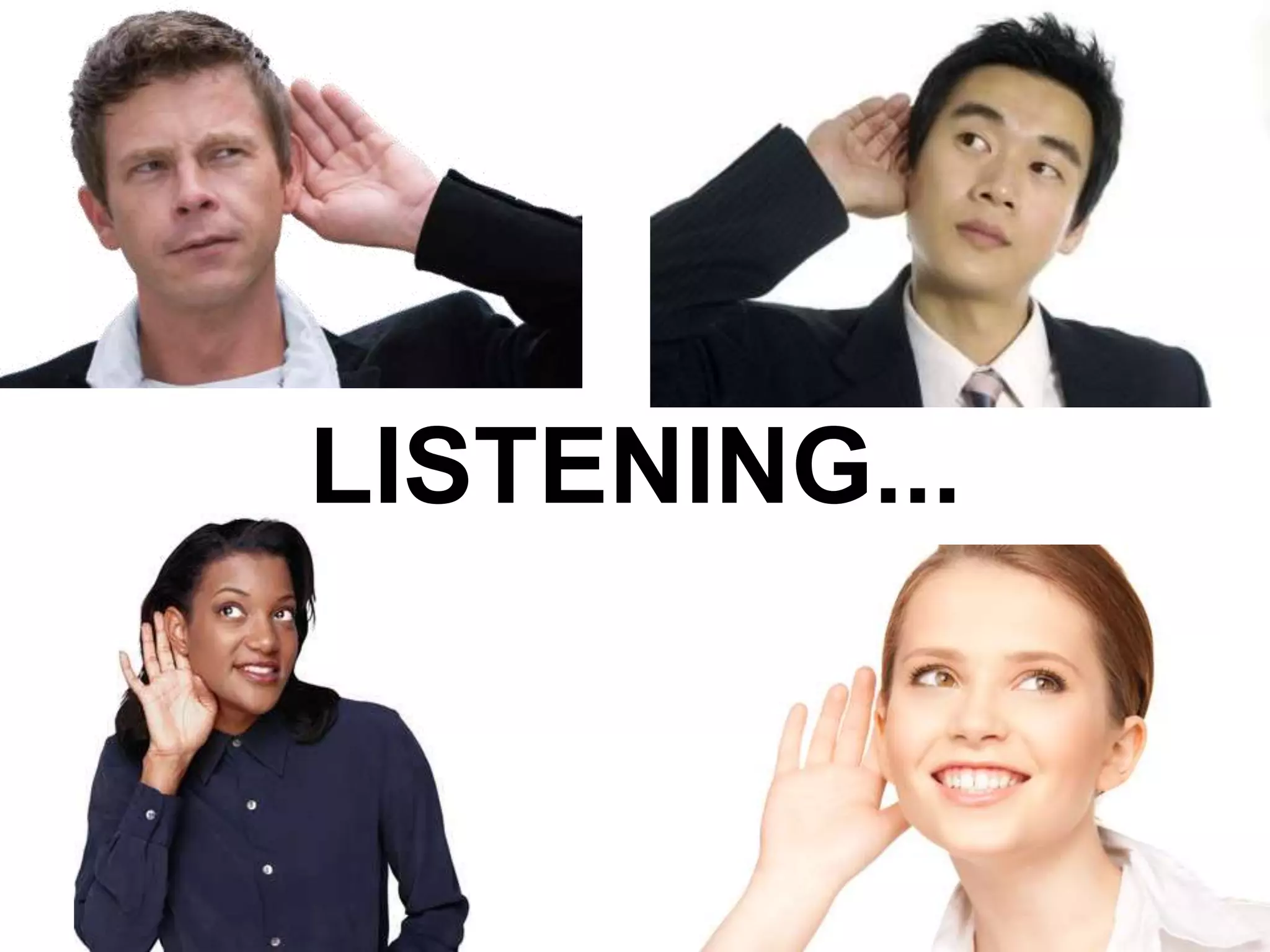
LISTENING...
IN THE LIGHT OF... 
WRITING
RECALLING PREVIOUS...
ACTIVATION!!!!
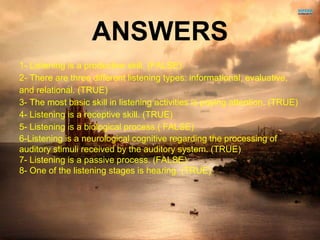
ANSWERS 
1- Listening is a productive skill. (FALSE) 
2- There are three different listening types: informational, evaluative, 
and relational. (TRUE) 
3- The most basic skill in listening activities is paying attention. (TRUE) 
4- Listening is a receptive skill. (TRUE) 
5- Listening is a biological process.( FALSE) 
6-Listening is a neurological cognitive regarding the processing of 
auditory stimuli received by the auditory system. (TRUE) 
7- Listening is a passive process. (FALSE) 
8- One of the listening stages is hearing. (TRUE)
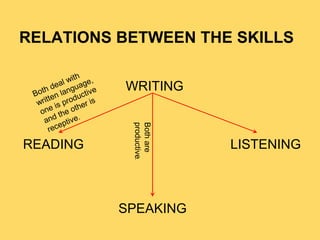
RELATIONS BETWEEN THE SKILLS 
WRITING 
Both are 
productive. 
READING LISTENING 
SPEAKING
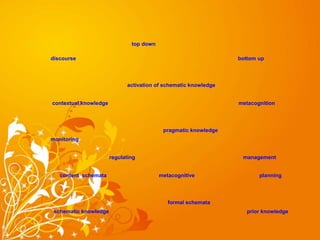
top down 
discourse bottom up 
activation of schematic knowledge 
contextual knowledge metacognition 
pragmatic knowledge 
monitoring 
regulating management 
content schemata metacognitive planning 
formal schemata 
schematic knowledge prior knowledge
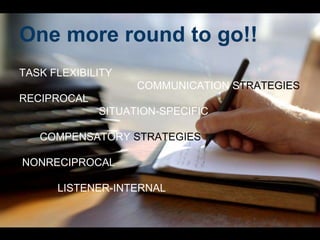
One more round to go!! 
TASK FLEXIBILITY 
COMMUNICATION STRATEGIES 
RECIPROCAL 
SITUATION-SPECIFIC 
COMPENSATORY STRATEGIES 
NONRECIPROCAL 
LISTENER-INTERNAL
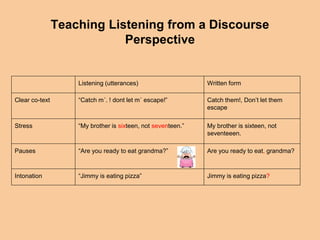
Teaching Listening from a Discourse 
Perspective 
Listening (utterances) Written form 
Clear co-text “Catch m´. ! dont let m´ escape!” Catch them!, Don’t let them 
escape 
Stress “My brother is sixteen, not seventeen.” My brother is sixteen, not 
seventeeen. 
Pauses “Are you ready to eat grandma?” Are you ready to eat, grandma? 
Intonation “Jimmy is eating pizza” Jimmy is eating pizza?
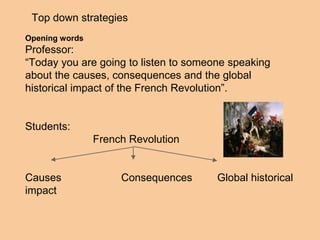
Top down strategies 
Opening words 
Professor: 
“Today you are going to listen to someone speaking 
about the causes, consequences and the global 
historical impact of the French Revolution”. 
Students: 
French Revolution 
Causes Consequences Global historical 
impact
Get the GIST
How effective are communications in the virtual 
era? 
While cell phones have allowed us to engage in 
different forms of contact quickly, some times, 
when we communicate with another person, it 
is difficult for us to write what we mean in the 
way we want to say it and that our listener 
understands exactly what we are expressing .
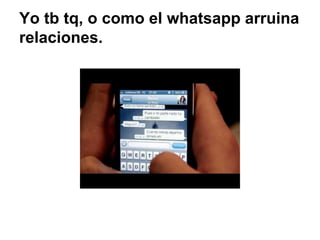
Yo tb tq, o como el whatsapp arruina 
relaciones.
Traditional characteristics of the 4 skills 
Writing-reading 
-Time to think of what to 
say. 
-Draft and correction. 
-Unknown context of the 
receiver (feelings, situation) 
-Need to create context in 
the same limited ability of 
the words. 
-Delayed or impossible 
feedback. 
-Unilateral discourse. 
Speaking-listening 
-Communication on the 
spot. 
-Immediate feedback. 
-Known receiver 
known context. 
-Continuous change of 
roles.
Modern ways of communication 
Email 
In the beginning it 
demanded to be 
connected through a 
computer. Usually at 
job
Text 
messages 
Each message was 
paid, so it needed 
concision.
Messenger-Whatsapp 
● Communication on the spot, but time for correction. 
● Known receiver and context, but no so (feelings, 
situation) 
● Immediate feedback, but not so. 
● Continuous change of roles, but not so. 
● Adaptation of spoken language to written form, in order 
to convey meaning. 
● It created a new language, different from any other.
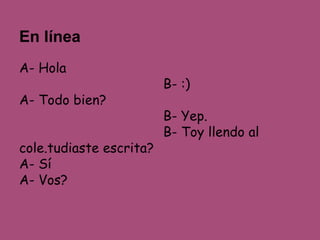
En línea 
A- Hola 
B- :) 
A- Todo bien? 
B- Yep. 
B- Toy llendo al 
cole.tudiaste escrita? 
A- Sí 
A- Vos?
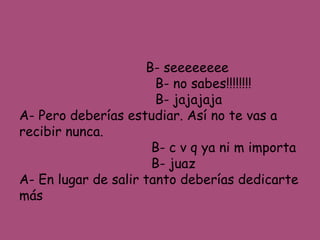
B- seeeeeeee 
B- no sabes!!!!!!!! 
B- jajajaja 
A- Pero deberías estudiar. Así no te vas a 
recibir nunca. 
B- c v q ya ni m importa 
B- juaz 
A- En lugar de salir tanto deberías dedicarte 
más
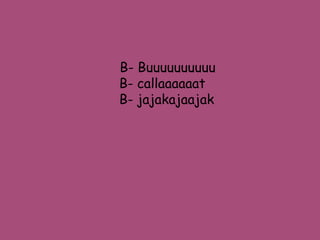
B- Buuuuuuuuuu 
B- callaaaaaat 
B- jajakajaajak
Radio ad Script 
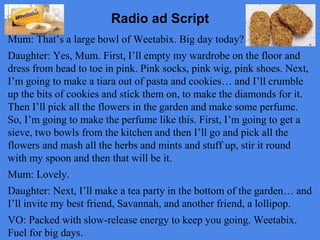
Mum: That’s a large bowl of Weetabix. Big day today? 
Daughter: Yes, Mum. First, I’ll empty my wardrobe on the floor and 
dress from head to toe in pink. Pink socks, pink wig, pink shoes. Next, 
I’m going to make a tiara out of pasta and cookies… and I’ll crumble 
up the bits of cookies and stick them on, to make the diamonds for it. 
Then I’ll pick all the flowers in the garden and make some perfume. 
So, I’m going to make the perfume like this. First, I’m going to get a 
sieve, two bowls from the kitchen and then I’ll go and pick all the 
flowers and mash all the herbs and mints and stuff up, stir it round 
with my spoon and then that will be it. 
Mum: Lovely. 
Daughter: Next, I’ll make a tea party in the bottom of the garden… and 
I’ll invite my best friend, Savannah, and another friend, a lollipop. 
VO: Packed with slow-release energy to keep you going. Weetabix. 
Fuel for big days.
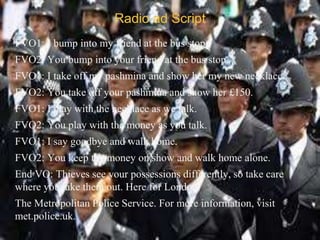
Radio ad Script 
FVO1: I bump into my friend at the bus stop. 
FVO2: You bump into your friend at the bus stop. 
FVO1: I take off my pashmina and show her my new necklace. 
FVO2: You take off your pashmina and show her £150. 
FVO1: I play with the necklace as we talk. 
FVO2: You play with the money as you talk. 
FVO1: I say goodbye and walk home. 
FVO2: You keep the money on show and walk home alone. 
End VO: Thieves see your possessions differently, so take care 
where you take them out. Here for London. 
The Metropolitan Police Service. For more information, visit 
met.police.uk.
Works Cited 
Celce-Murcia, M., & Olshtain, E. (n.d.). Listening, Writing. 
In Discourse And context in Language Teaching (pp. 102- 
117, 141-163).

Listening and writing.Presentation

  • 1.
  • 2.
    IN THE LIGHTOF... WRITING
  • 3.
  • 4.
  • 5.
    ANSWERS 1- Listeningis a productive skill. (FALSE) 2- There are three different listening types: informational, evaluative, and relational. (TRUE) 3- The most basic skill in listening activities is paying attention. (TRUE) 4- Listening is a receptive skill. (TRUE) 5- Listening is a biological process.( FALSE) 6-Listening is a neurological cognitive regarding the processing of auditory stimuli received by the auditory system. (TRUE) 7- Listening is a passive process. (FALSE) 8- One of the listening stages is hearing. (TRUE)
  • 6.
    RELATIONS BETWEEN THESKILLS WRITING Both are productive. READING LISTENING SPEAKING
  • 7.
    top down discoursebottom up activation of schematic knowledge contextual knowledge metacognition pragmatic knowledge monitoring regulating management content schemata metacognitive planning formal schemata schematic knowledge prior knowledge
  • 8.
    One more roundto go!! TASK FLEXIBILITY COMMUNICATION STRATEGIES RECIPROCAL SITUATION-SPECIFIC COMPENSATORY STRATEGIES NONRECIPROCAL LISTENER-INTERNAL
  • 9.
    Teaching Listening froma Discourse Perspective Listening (utterances) Written form Clear co-text “Catch m´. ! dont let m´ escape!” Catch them!, Don’t let them escape Stress “My brother is sixteen, not seventeen.” My brother is sixteen, not seventeeen. Pauses “Are you ready to eat grandma?” Are you ready to eat, grandma? Intonation “Jimmy is eating pizza” Jimmy is eating pizza?
  • 10.
    Top down strategies Opening words Professor: “Today you are going to listen to someone speaking about the causes, consequences and the global historical impact of the French Revolution”. Students: French Revolution Causes Consequences Global historical impact
  • 11.
  • 12.
    How effective arecommunications in the virtual era? While cell phones have allowed us to engage in different forms of contact quickly, some times, when we communicate with another person, it is difficult for us to write what we mean in the way we want to say it and that our listener understands exactly what we are expressing .
  • 13.
    Yo tb tq,o como el whatsapp arruina relaciones.
  • 14.
    Traditional characteristics ofthe 4 skills Writing-reading -Time to think of what to say. -Draft and correction. -Unknown context of the receiver (feelings, situation) -Need to create context in the same limited ability of the words. -Delayed or impossible feedback. -Unilateral discourse. Speaking-listening -Communication on the spot. -Immediate feedback. -Known receiver known context. -Continuous change of roles.
  • 15.
    Modern ways ofcommunication Email In the beginning it demanded to be connected through a computer. Usually at job
  • 16.
    Text messages Eachmessage was paid, so it needed concision.
  • 17.
    Messenger-Whatsapp ● Communicationon the spot, but time for correction. ● Known receiver and context, but no so (feelings, situation) ● Immediate feedback, but not so. ● Continuous change of roles, but not so. ● Adaptation of spoken language to written form, in order to convey meaning. ● It created a new language, different from any other.
  • 18.
    En línea A-Hola B- :) A- Todo bien? B- Yep. B- Toy llendo al cole.tudiaste escrita? A- Sí A- Vos?
  • 19.
    B- seeeeeeee B-no sabes!!!!!!!! B- jajajaja A- Pero deberías estudiar. Así no te vas a recibir nunca. B- c v q ya ni m importa B- juaz A- En lugar de salir tanto deberías dedicarte más
  • 20.
    B- Buuuuuuuuuu B-callaaaaaat B- jajakajaajak
  • 21.
    Radio ad Script Mum: That’s a large bowl of Weetabix. Big day today? Daughter: Yes, Mum. First, I’ll empty my wardrobe on the floor and dress from head to toe in pink. Pink socks, pink wig, pink shoes. Next, I’m going to make a tiara out of pasta and cookies… and I’ll crumble up the bits of cookies and stick them on, to make the diamonds for it. Then I’ll pick all the flowers in the garden and make some perfume. So, I’m going to make the perfume like this. First, I’m going to get a sieve, two bowls from the kitchen and then I’ll go and pick all the flowers and mash all the herbs and mints and stuff up, stir it round with my spoon and then that will be it. Mum: Lovely. Daughter: Next, I’ll make a tea party in the bottom of the garden… and I’ll invite my best friend, Savannah, and another friend, a lollipop. VO: Packed with slow-release energy to keep you going. Weetabix. Fuel for big days.
  • 22.
    Radio ad Script FVO1: I bump into my friend at the bus stop. FVO2: You bump into your friend at the bus stop. FVO1: I take off my pashmina and show her my new necklace. FVO2: You take off your pashmina and show her £150. FVO1: I play with the necklace as we talk. FVO2: You play with the money as you talk. FVO1: I say goodbye and walk home. FVO2: You keep the money on show and walk home alone. End VO: Thieves see your possessions differently, so take care where you take them out. Here for London. The Metropolitan Police Service. For more information, visit met.police.uk.
  • 23.
    Works Cited Celce-Murcia,M., & Olshtain, E. (n.d.). Listening, Writing. In Discourse And context in Language Teaching (pp. 102- 117, 141-163).