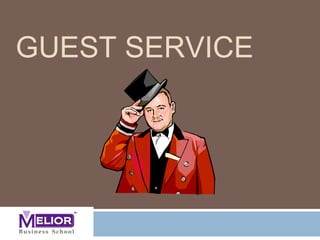
GUEST SERVICE
Contents 
 Service Standards 
 Guest Conflict Resolution 
 Empowerment 
 Diversity Awareness 
 International Guests 
 Management’s Role in Guest Service
Introduction 
Guest satisfaction is crucial 
in maintaining loyalty. 
 Guest loyalty ensures 
repeat business.
Service Standards 
Guest service is 
paramount to hotel 
success 
Guest interaction defines 
guest service
Verbal Means 
Verbal communication allows 
for gaining insight into a guest 
The most important verbal 
tools in ensuring guest 
satisfaction are perhaps the 
simplest
The basic rules for verbal 
communication are: 
 Use an appropriate greeting 
 Personalize the conversation 
(use the guest’s name) 
 Thank the guest 
 Listen
Verbal Means (Cont…) 
 Use an appropriate greeting: employees should greet 
every guest appropriately whether in person or over the 
phone. 
 They should identify the time of day: “Good 
morning/afternoon/evening”. 
 When greeting a guest over the phone, an employee 
should also include their name and department: “Good 
morning, front desk, this is John, how may I help you?” 
This reassures the guest that they have reached the 
appropriate department
Verbal Means (Cont…) 
 Personalize the conversation: this helps to set a relaxed 
tone in the conversation, however using an appropriate 
title (i.e., Mr. or Ms.) is important 
 During check-in or checkout, the guest account will let 
the employee know the guest’s name 
 Many phone systems will identify the guest’s name and 
room number, as will many PMS systems 
 Guests greeted by name are subtly reminded that the 
hotel values their business
Verbal Means (Cont…) 
 Thank the guest: thanking the guest in a sincere manner 
is also very important 
 Employees may conduct a variety of guest services in a 
day, and each of these transaction should be completed 
with a “thank you” 
 Thanking a guest for staying at a hotel also implies that 
the hotel appreciates their business
Verbal Means (Cont…) 
 Listening: this is the only way a receiver can hear the 
message that the transmitter is sending, so employees 
can listen for subtle hints and signals a guest gives out 
during communication 
 The employee creates a comfort level when they listen, 
and letting the guest initiate the tone of the conversation 
also puts him/her at ease
Verbal Means (Cont…) 
 Failure to listen properly can cause problems 
 The seven common listening errors are: 
 Failure to concentrate 
 Listening too hard 
 “Jumping the gun” 
 Lagging behind the conversation 
 Focusing too much on delivery or appearance 
 Omitting 
 Adding
Visual Means 
 Communicating visually is as 
important as communicating verbally, 
as visual communication can 
reinforce what is being said verbally 
 The complete delivery of guest 
service can be accomplished by 
incorporating both means
The rules for effective visual 
communication are: 
 Communicate with a smile 
 Be aware of body language 
 Observe the grooming 
standards
Visual Means (Cont…) 
 Communicate with a smile: a genuine smile that 
accompanies a greeting or thank you reinforces the 
message 
 Smiling at guests helps create a comfortable 
atmosphere 
 Be aware of body language: observing guest body 
language is like listening with eyes, it can give the 
employee clues on how to communicate with the guest
Visual Means (Cont…) 
 Common body language signals include the following: 
 Crossed arms may indicate a defensive posture 
 A guest who leans across the front desk during conversation 
may be aggressive 
 Strong and consistent eye contact may indicate confidence 
 Strong firm handshakes may also indicate confidence 
 Red eyes may indicate fatigue
Visual Means (Cont…) 
 Observe appropriate grooming standards: hotel 
employees are viewed as an extension of the hotel so a 
guest’s perception of an employee can contribute to the 
guest’s overall perception of the hotel 
 The first and often most long lasting perception a guest 
makes on an employee is the employee’s appearance, 
so most hotels have instituted grooming standards
Guest Service Management 
 The guest service philosophy of a 
hotel should be communicated 
consistently 
 This communication should begin 
with the first day of employee 
orientation where all new employees 
should be given the hotel’s service 
philosophy
Guest Service Management (Cont...) 
Guest service training continues 
beyond orientation and introduction 
of the service mission statement, and 
should be constant 
 Larger hotel chains have complete 
divisions at a corporate level 
dedicated to creating and 
implementing guest service programs
Motivating for Guest Service 
 Motivating employees to embody the service mission 
statement in their day-to-day duties helps ensure guest 
satisfaction 
 A good way to motivate is through guest feedback, and 
most hotels have some version of a comment card in the 
guest rooms 
 These cards encourage guests to rate and/or rank the 
services received during his/her stay 
 They also solicit the names of employees that have 
impacted the guest’s stay
Motivating for Guest Service (Cont..) 
 Employees or departments that are mentioned should 
be rewarded or recognized in some way 
 The employees can be proud of these rewards and a 
healthy competition can ensue to see which employees 
can get the most rewards

Guest service

  • 1.
  • 2.
    Contents  ServiceStandards  Guest Conflict Resolution  Empowerment  Diversity Awareness  International Guests  Management’s Role in Guest Service
  • 3.
    Introduction Guest satisfactionis crucial in maintaining loyalty.  Guest loyalty ensures repeat business.
  • 4.
    Service Standards Guestservice is paramount to hotel success Guest interaction defines guest service
  • 5.
    Verbal Means Verbalcommunication allows for gaining insight into a guest The most important verbal tools in ensuring guest satisfaction are perhaps the simplest
  • 6.
    The basic rulesfor verbal communication are:  Use an appropriate greeting  Personalize the conversation (use the guest’s name)  Thank the guest  Listen
  • 7.
    Verbal Means (Cont…)  Use an appropriate greeting: employees should greet every guest appropriately whether in person or over the phone.  They should identify the time of day: “Good morning/afternoon/evening”.  When greeting a guest over the phone, an employee should also include their name and department: “Good morning, front desk, this is John, how may I help you?” This reassures the guest that they have reached the appropriate department
  • 8.
    Verbal Means (Cont…)  Personalize the conversation: this helps to set a relaxed tone in the conversation, however using an appropriate title (i.e., Mr. or Ms.) is important  During check-in or checkout, the guest account will let the employee know the guest’s name  Many phone systems will identify the guest’s name and room number, as will many PMS systems  Guests greeted by name are subtly reminded that the hotel values their business
  • 9.
    Verbal Means (Cont…)  Thank the guest: thanking the guest in a sincere manner is also very important  Employees may conduct a variety of guest services in a day, and each of these transaction should be completed with a “thank you”  Thanking a guest for staying at a hotel also implies that the hotel appreciates their business
  • 10.
    Verbal Means (Cont…)  Listening: this is the only way a receiver can hear the message that the transmitter is sending, so employees can listen for subtle hints and signals a guest gives out during communication  The employee creates a comfort level when they listen, and letting the guest initiate the tone of the conversation also puts him/her at ease
  • 11.
    Verbal Means (Cont…)  Failure to listen properly can cause problems  The seven common listening errors are:  Failure to concentrate  Listening too hard  “Jumping the gun”  Lagging behind the conversation  Focusing too much on delivery or appearance  Omitting  Adding
  • 12.
    Visual Means Communicating visually is as important as communicating verbally, as visual communication can reinforce what is being said verbally  The complete delivery of guest service can be accomplished by incorporating both means
  • 13.
    The rules foreffective visual communication are:  Communicate with a smile  Be aware of body language  Observe the grooming standards
  • 14.
    Visual Means (Cont…)  Communicate with a smile: a genuine smile that accompanies a greeting or thank you reinforces the message  Smiling at guests helps create a comfortable atmosphere  Be aware of body language: observing guest body language is like listening with eyes, it can give the employee clues on how to communicate with the guest
  • 15.
    Visual Means (Cont…)  Common body language signals include the following:  Crossed arms may indicate a defensive posture  A guest who leans across the front desk during conversation may be aggressive  Strong and consistent eye contact may indicate confidence  Strong firm handshakes may also indicate confidence  Red eyes may indicate fatigue
  • 16.
    Visual Means (Cont…)  Observe appropriate grooming standards: hotel employees are viewed as an extension of the hotel so a guest’s perception of an employee can contribute to the guest’s overall perception of the hotel  The first and often most long lasting perception a guest makes on an employee is the employee’s appearance, so most hotels have instituted grooming standards
  • 17.
    Guest Service Management  The guest service philosophy of a hotel should be communicated consistently  This communication should begin with the first day of employee orientation where all new employees should be given the hotel’s service philosophy
  • 18.
    Guest Service Management(Cont...) Guest service training continues beyond orientation and introduction of the service mission statement, and should be constant  Larger hotel chains have complete divisions at a corporate level dedicated to creating and implementing guest service programs
  • 19.
    Motivating for GuestService  Motivating employees to embody the service mission statement in their day-to-day duties helps ensure guest satisfaction  A good way to motivate is through guest feedback, and most hotels have some version of a comment card in the guest rooms  These cards encourage guests to rate and/or rank the services received during his/her stay  They also solicit the names of employees that have impacted the guest’s stay
  • 20.
    Motivating for GuestService (Cont..)  Employees or departments that are mentioned should be rewarded or recognized in some way  The employees can be proud of these rewards and a healthy competition can ensue to see which employees can get the most rewards