‘Squads and Maps’ Framework
Luke Robbertse
Technology Squads Operations Manager
December 2019
Squads
What are they?
A squad is a group of people focused on an outcome that they can achieve rapidly.
They are resourced and empowered to deliver end to end. They are not blocked by
other resources nor need to hand over work. They can design, engineer and deliver
effectively and efficiently.
Squads are populated by roles.
Squads have autonomy to decide how best to work together to deliver their
outcome.
Outcomes allow us to ensure Squads remain aligned with their mission, our
product strategy and business goals.
Outcomes are defined by the business with the squad leader being accountable for
its delivery.
What do YOU get from Squads:
• Connection with the customer.
• Team communication.
• Cadence of weekly releases.
• High Autonomy + High Alignment.
• Cross-pollination of skills and knowledge areas.
• Learning.
• Agile over Scrum.
• Principles over Practices.
• Community over Structure.
• Trust over Control.
• Reward and satisfaction from achieving and delivering short living outcomes.
• Opportunities for growth and professional development.
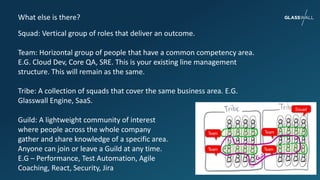
What else is there?
Squad: Vertical group of roles that deliver an outcome.
Team: Horizontal group of people that have a common competency area.
E.G. Cloud Dev, Core QA, SRE. This is your existing line management
structure. This will remain as the same.
Tribe: A collection of squads that cover the same business area. E.G.
Glasswall Engine, SaaS.
Guild: A lightweight community of interest
where people across the whole company
gather and share knowledge of a specific area.
Anyone can join or leave a Guild at any time.
E.G – Performance, Test Automation, Agile
Coaching, React, Security, Jira
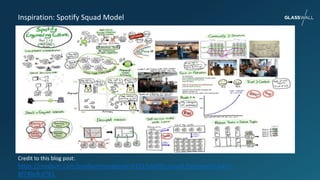
Inspiration: Spotify Squad Model
Credit to this blog post:
https://medium.com/productmanagement101/spotify-squad-framework-part-i-
8f74bcfcd761
Jira
How does this Scale? - Jira
• Using tools like Jira,
Zappier, ElasticSearch
and Teams.
• We’ll need to engineer
high levels of
integration to ensure
the linking and
mapping of every piece
of the puzzle.
• Jira will be used as a
graph database.
• We have a first MVP of
this to show.
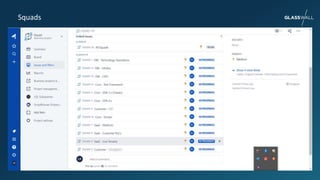
Squads
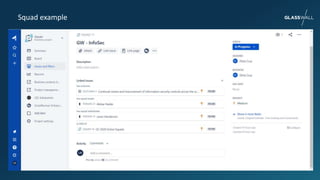
Squad example
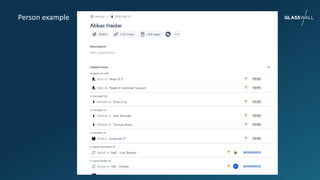
Person example
Jira Demo Time
https://glasswall.atlassian.net/
Pioneers, Settlers, Town Planners
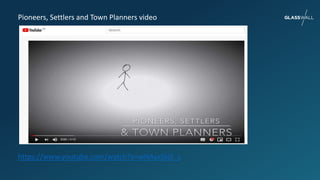
Pioneers, Settlers and Town Planners video
https://www.youtube.com/watch?v=wNAyxSkjS_c
Zappier
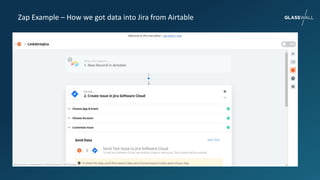
Zap Example – How we got data into Jira from Airtable
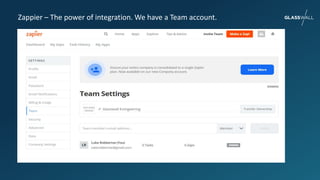
Zappier – The power of integration. We have a Team account.
Wardley Maps
Wardley Maps
https://www.youtube.com/watch?v=Gfq3ocmadZo&list=PL74c5r6gRUXq2Dzcn7a6RpzBj
XV1NVeJl
Wardley Maps Presentation
https://www.slideshare.net/DinisCruz/using-wardley-maps-to-understand-
securitys-landscape-and-strategy-191404053
Thank you.
Questions?

Glasswall 'Squads and Maps' Framework v0.5

  • 1.
    ‘Squads and Maps’Framework Luke Robbertse Technology Squads Operations Manager December 2019
  • 2.
  • 3.
    What are they? Asquad is a group of people focused on an outcome that they can achieve rapidly. They are resourced and empowered to deliver end to end. They are not blocked by other resources nor need to hand over work. They can design, engineer and deliver effectively and efficiently. Squads are populated by roles. Squads have autonomy to decide how best to work together to deliver their outcome. Outcomes allow us to ensure Squads remain aligned with their mission, our product strategy and business goals. Outcomes are defined by the business with the squad leader being accountable for its delivery.
  • 4.
    What do YOUget from Squads: • Connection with the customer. • Team communication. • Cadence of weekly releases. • High Autonomy + High Alignment. • Cross-pollination of skills and knowledge areas. • Learning. • Agile over Scrum. • Principles over Practices. • Community over Structure. • Trust over Control. • Reward and satisfaction from achieving and delivering short living outcomes. • Opportunities for growth and professional development.
  • 5.
    What else isthere? Squad: Vertical group of roles that deliver an outcome. Team: Horizontal group of people that have a common competency area. E.G. Cloud Dev, Core QA, SRE. This is your existing line management structure. This will remain as the same. Tribe: A collection of squads that cover the same business area. E.G. Glasswall Engine, SaaS. Guild: A lightweight community of interest where people across the whole company gather and share knowledge of a specific area. Anyone can join or leave a Guild at any time. E.G – Performance, Test Automation, Agile Coaching, React, Security, Jira
  • 6.
    Inspiration: Spotify SquadModel Credit to this blog post: https://medium.com/productmanagement101/spotify-squad-framework-part-i- 8f74bcfcd761
  • 7.
  • 8.
    How does thisScale? - Jira • Using tools like Jira, Zappier, ElasticSearch and Teams. • We’ll need to engineer high levels of integration to ensure the linking and mapping of every piece of the puzzle. • Jira will be used as a graph database. • We have a first MVP of this to show.
  • 9.
  • 10.
  • 11.
  • 12.
  • 13.
  • 14.
    Pioneers, Settlers andTown Planners video https://www.youtube.com/watch?v=wNAyxSkjS_c
  • 15.
  • 16.
    Zap Example –How we got data into Jira from Airtable
  • 17.
    Zappier – Thepower of integration. We have a Team account.
  • 18.
  • 19.
  • 20.
  • 21.

Editor's Notes

  • #3 In these sessions the goal is for you to understand: Who Glasswall are What we do Our position in the market How we differentiate ourselves For us to understand a little more of any potential use case you may have. At the end we will plan next steps as appropriate. Is that what you signed up for? Ask if there are any time constraints. Introduce GW team members. Ask client to introduce themselves. (ask for detail on email platform, security stack & users count) Ask the reason why they took this meeting. Do you have a use case in mind? We use a slide deck as the backdrop to this conversation. “Please ask questions as we go, make this an interactive session”
  • #8 In these sessions the goal is for you to understand: Who Glasswall are What we do Our position in the market How we differentiate ourselves For us to understand a little more of any potential use case you may have. At the end we will plan next steps as appropriate. Is that what you signed up for? Ask if there are any time constraints. Introduce GW team members. Ask client to introduce themselves. (ask for detail on email platform, security stack & users count) Ask the reason why they took this meeting. Do you have a use case in mind? We use a slide deck as the backdrop to this conversation. “Please ask questions as we go, make this an interactive session”
  • #10 Glasswall is a UK company with our head office in London, with offices in the States. Glasswall is a file regeneration and analytics technology. Our patented d-FIRST methodology creates safe, clean and visually identical files. Rather than trying to detect malicious content in documents we regenerate files to a static standard of known good. The process controls risk and takes the threat of malicious files and documents off the table. d-FIRST aligns to Gartner’s content disarm and reconstruction (CDR) category.
  • #14 In these sessions the goal is for you to understand: Who Glasswall are What we do Our position in the market How we differentiate ourselves For us to understand a little more of any potential use case you may have. At the end we will plan next steps as appropriate. Is that what you signed up for? Ask if there are any time constraints. Introduce GW team members. Ask client to introduce themselves. (ask for detail on email platform, security stack & users count) Ask the reason why they took this meeting. Do you have a use case in mind? We use a slide deck as the backdrop to this conversation. “Please ask questions as we go, make this an interactive session”
  • #16 In these sessions the goal is for you to understand: Who Glasswall are What we do Our position in the market How we differentiate ourselves For us to understand a little more of any potential use case you may have. At the end we will plan next steps as appropriate. Is that what you signed up for? Ask if there are any time constraints. Introduce GW team members. Ask client to introduce themselves. (ask for detail on email platform, security stack & users count) Ask the reason why they took this meeting. Do you have a use case in mind? We use a slide deck as the backdrop to this conversation. “Please ask questions as we go, make this an interactive session”
  • #19 In these sessions the goal is for you to understand: Who Glasswall are What we do Our position in the market How we differentiate ourselves For us to understand a little more of any potential use case you may have. At the end we will plan next steps as appropriate. Is that what you signed up for? Ask if there are any time constraints. Introduce GW team members. Ask client to introduce themselves. (ask for detail on email platform, security stack & users count) Ask the reason why they took this meeting. Do you have a use case in mind? We use a slide deck as the backdrop to this conversation. “Please ask questions as we go, make this an interactive session”
  • #22 In these sessions the goal is for you to understand: Who Glasswall are What we do Our position in the market How we differentiate ourselves For us to understand a little more of any potential use case you may have. At the end we will plan next steps as appropriate. Is that what you signed up for? Ask if there are any time constraints. Introduce GW team members. Ask client to introduce themselves. (ask for detail on email platform, security stack & users count) Ask the reason why they took this meeting. Do you have a use case in mind? We use a slide deck as the backdrop to this conversation. “Please ask questions as we go, make this an interactive session”