Stereotypical Characters
Female Victim There is almost no horror film without a female victim, as they are portrayed as being vulnerable and in need of protection. This representation dates back to earlier horror films that were made in a more sexist era, and the idea continued. Usually young, blonde and attractive, helping to appeal to a wider male audience. This character is often portrayed to be stupid and annoying, one of the only characters the audience sometimes will to be killed. Although she is shown to be dumb, she isn’t typically the first to be killed, but when she is killed, it is usually gruesome or graphic. This character helps to build up suspense in the audience, as her behaviour often puts them on edge, and whenever she jumps, even if unnecessary, they jump too.
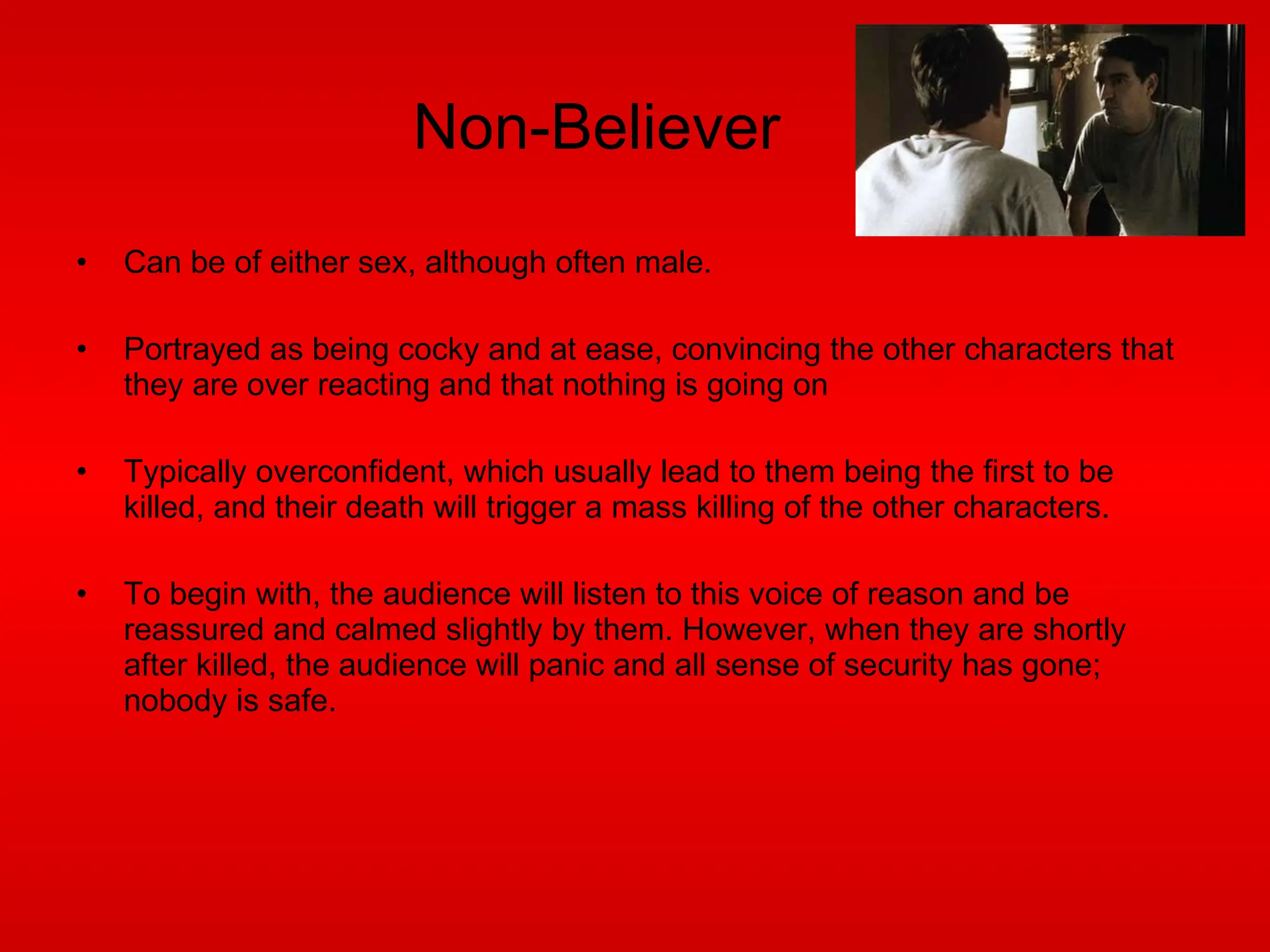
Non-Believer Can be of either sex, although often male. Portrayed as being cocky and at ease, convincing the other characters that they are over reacting and that nothing is going on Typically overconfident, which usually lead to them being the first to be killed, and their death will trigger a mass killing of the other characters. To begin with, the audience will listen to this voice of reason and be reassured and calmed slightly by them. However, when they are shortly after killed, the audience will panic and all sense of security has gone; nobody is safe.
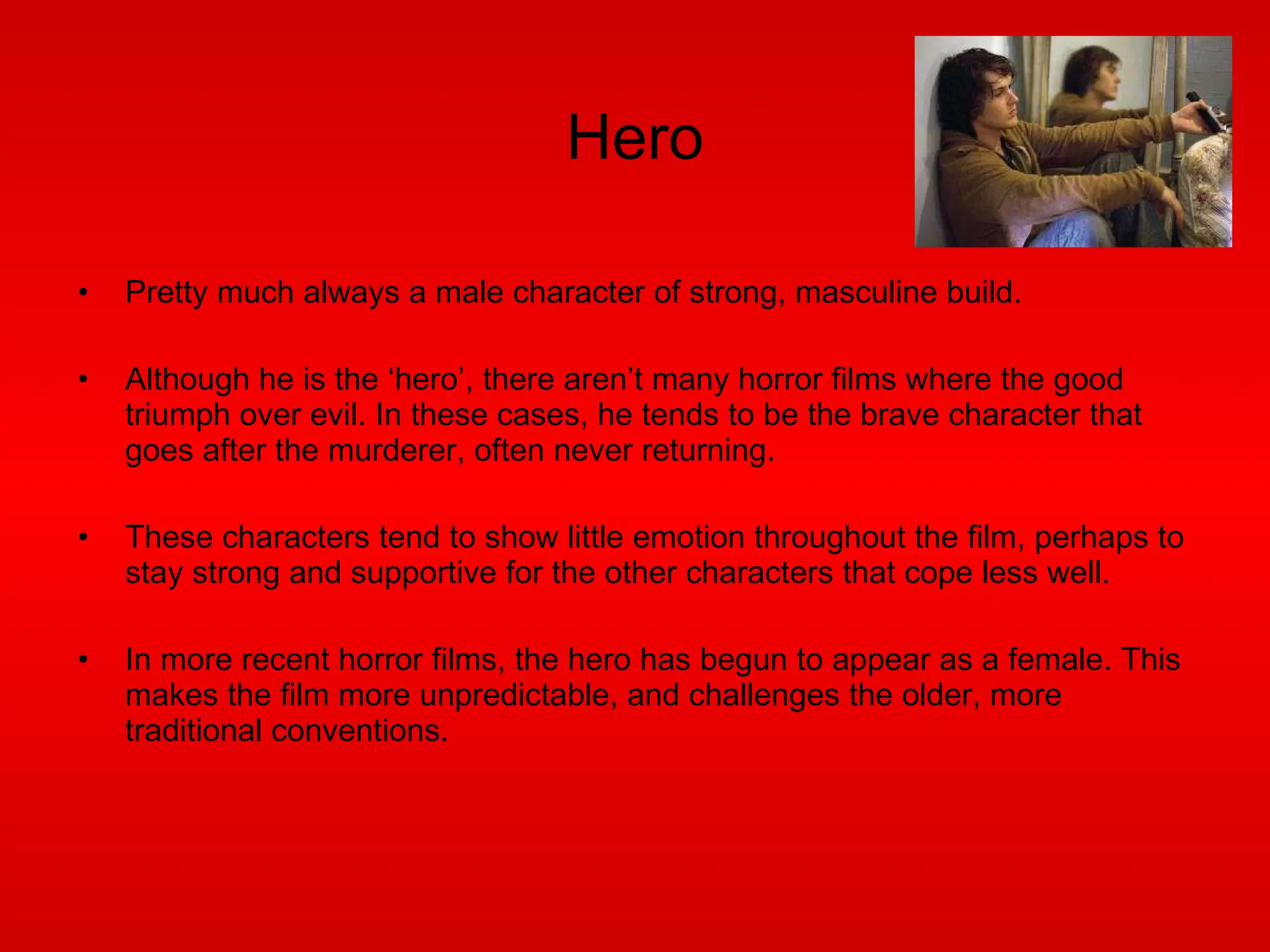
Hero Pretty much always a male character of strong, masculine build.  Although he is the ‘hero’, there aren’t many horror films where the good triumph over evil. In these cases, he tends to be the brave character that goes after the murderer, often never returning. These characters tend to show little emotion throughout the film, perhaps to stay strong and supportive for the other characters that cope less well. In more recent horror films, the hero has begun to appear as a female. This makes the film more unpredictable, and challenges the older, more traditional conventions.
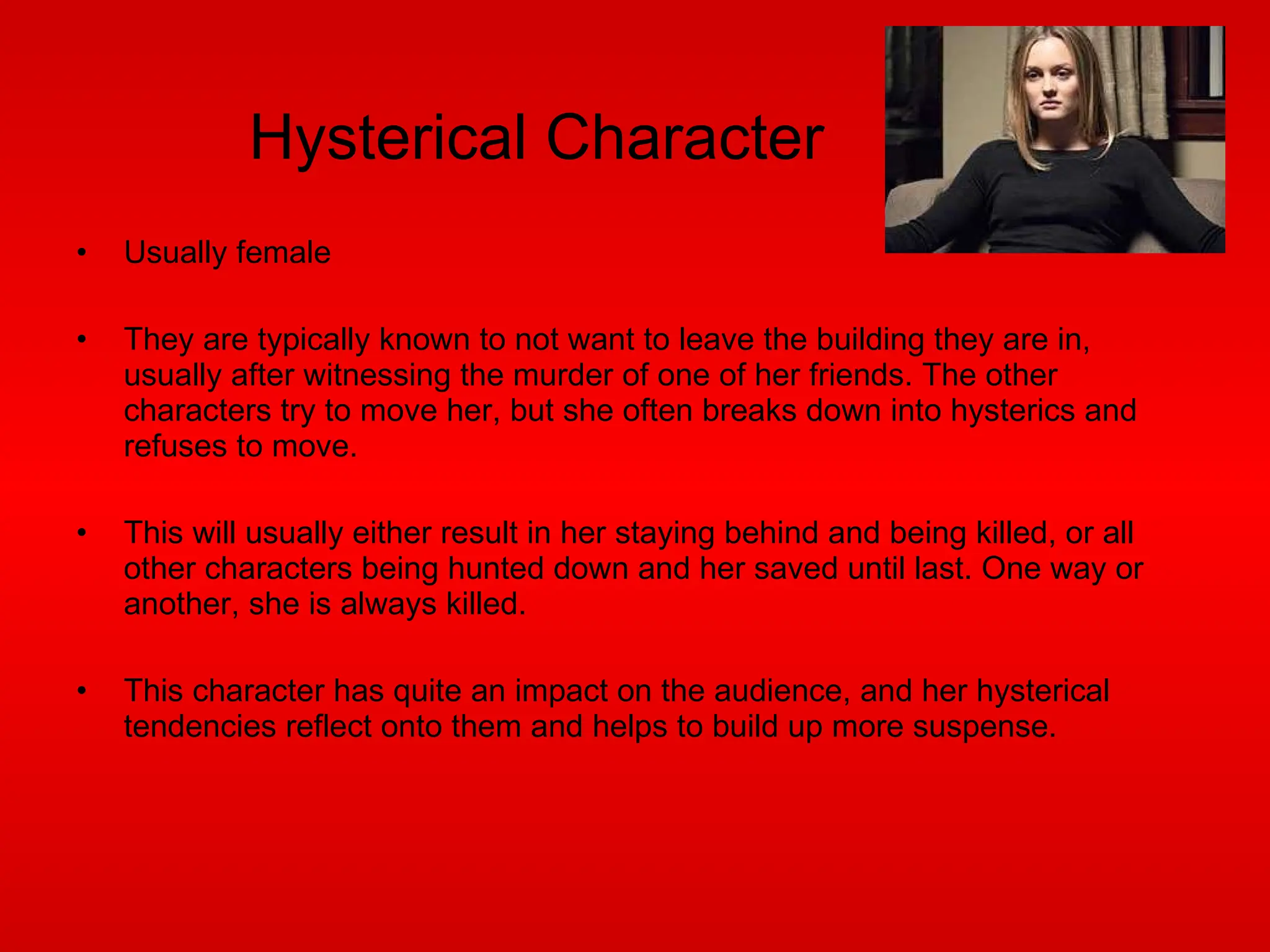
Hysterical Character Usually female They are typically known to not want to leave the building they are in, usually after witnessing the murder of one of her friends. The other characters try to move her, but she often breaks down into hysterics and refuses to move. This will usually either result in her staying behind and being killed, or all other characters being hunted down and her saved until last. One way or another, she is always killed. This character has quite an impact on the audience, and her hysterical tendencies reflect onto them and helps to build up more suspense.
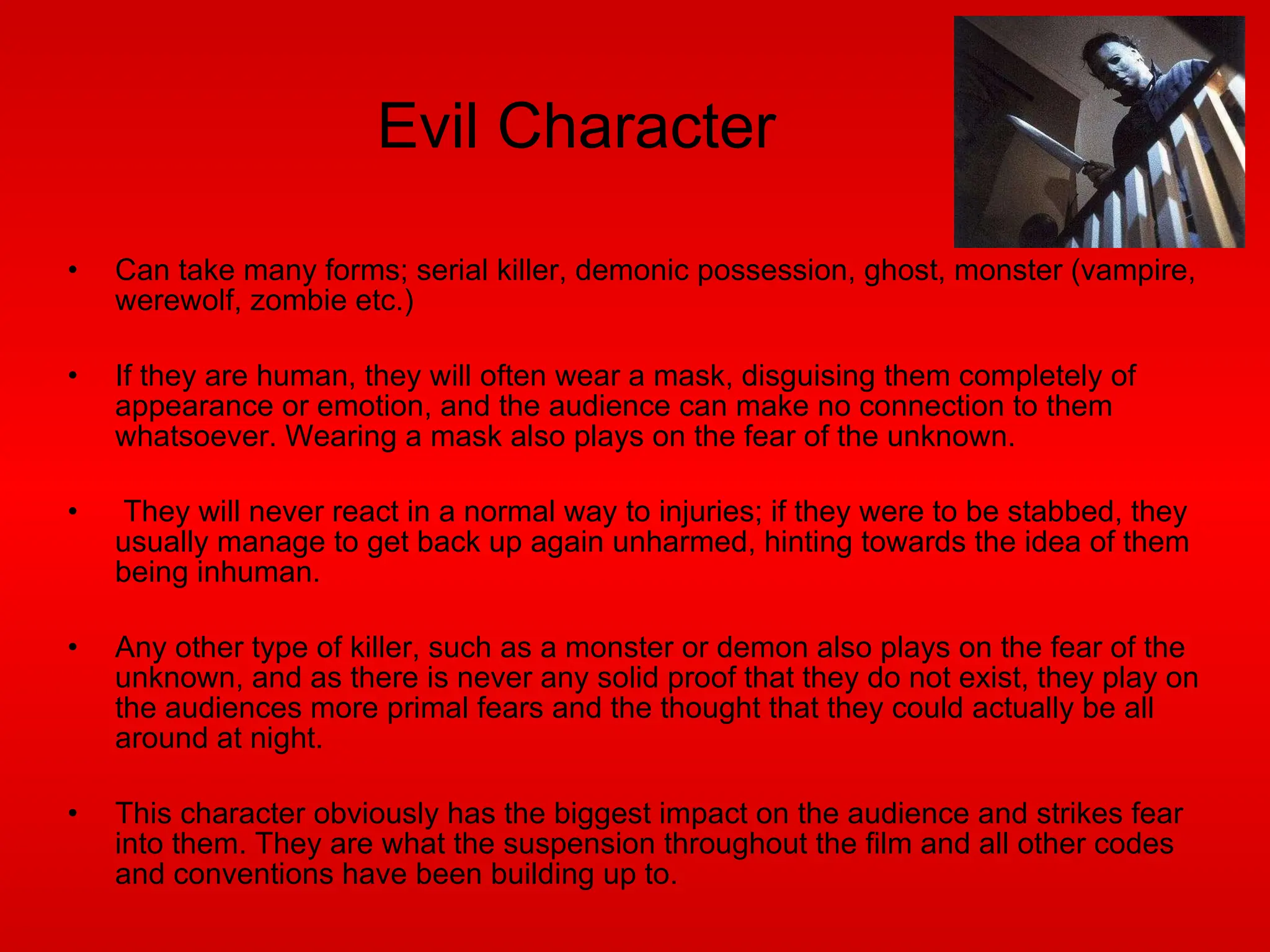
Evil Character Can take many forms; serial killer, demonic possession, ghost, monster (vampire, werewolf, zombie etc.) If they are human, they will often wear a mask, disguising them completely of appearance or emotion, and the audience can make no connection to them whatsoever. Wearing a mask also plays on the fear of the unknown. They will never react in a normal way to injuries; if they were to be stabbed, they usually manage to get back up again unharmed, hinting towards the idea of them being inhuman. Any other type of killer, such as a monster or demon also plays on the fear of the unknown, and as there is never any solid proof that they do not exist, they play on the audiences more primal fears and the thought that they could actually be all around at night. This character obviously has the biggest impact on the audience and strikes fear into them. They are what the suspension throughout the film and all other codes and conventions have been building up to.
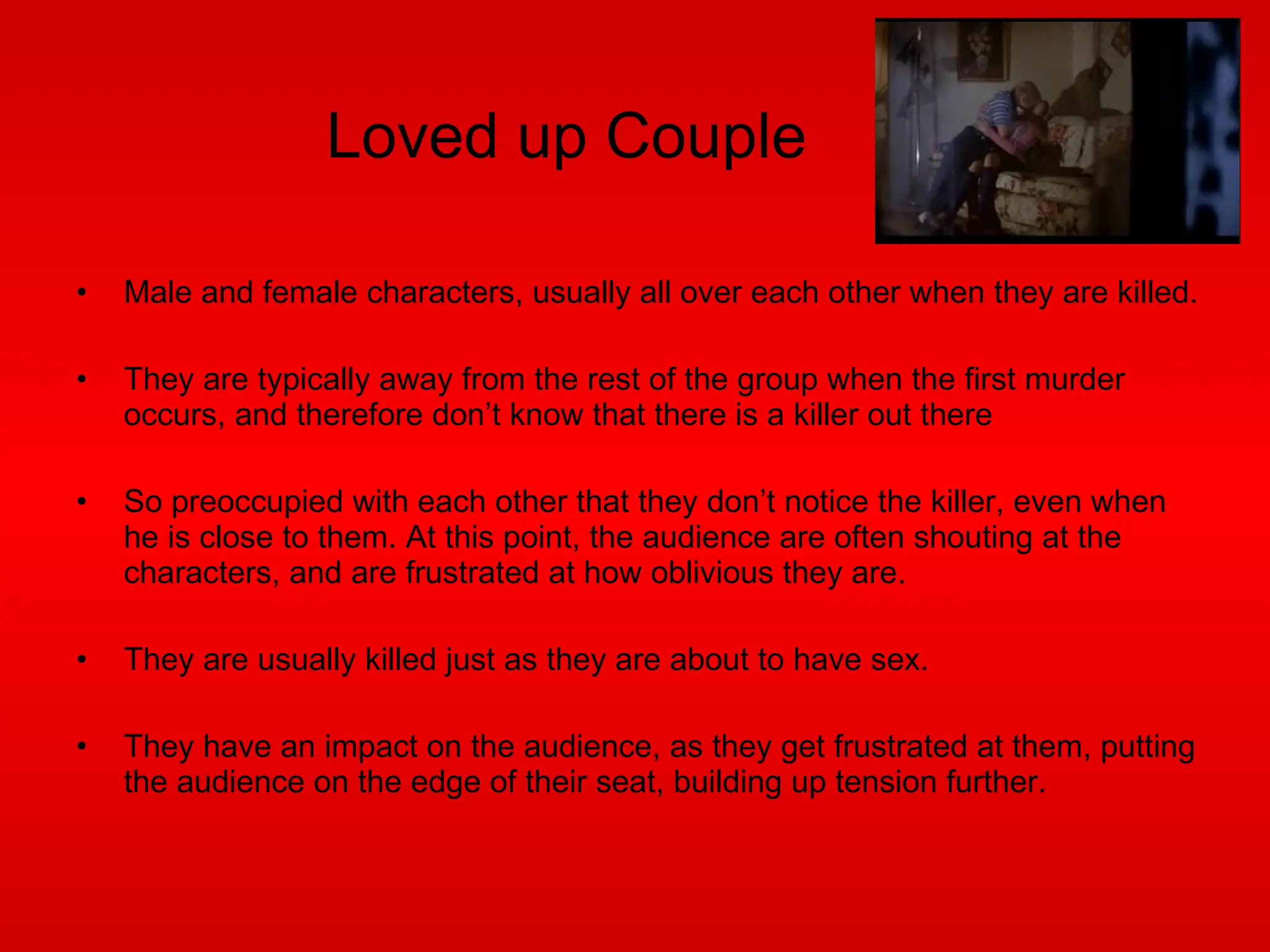
Loved up Couple Male and female characters, usually all over each other when they are killed. They are typically away from the rest of the group when the first murder occurs, and therefore don’t know that there is a killer out there So preoccupied with each other that they don’t notice the killer, even when he is close to them. At this point, the audience are often shouting at the characters, and are frustrated at how oblivious they are. They are usually killed just as they are about to have sex. They have an impact on the audience, as they get frustrated at them, putting the audience on the edge of their seat, building up tension further.
Stereotypical Characters in Horror Films

  • 1.
  • 2.
    Female Victim Thereis almost no horror film without a female victim, as they are portrayed as being vulnerable and in need of protection. This representation dates back to earlier horror films that were made in a more sexist era, and the idea continued. Usually young, blonde and attractive, helping to appeal to a wider male audience. This character is often portrayed to be stupid and annoying, one of the only characters the audience sometimes will to be killed. Although she is shown to be dumb, she isn’t typically the first to be killed, but when she is killed, it is usually gruesome or graphic. This character helps to build up suspense in the audience, as her behaviour often puts them on edge, and whenever she jumps, even if unnecessary, they jump too.
  • 3.
    Non-Believer Can beof either sex, although often male. Portrayed as being cocky and at ease, convincing the other characters that they are over reacting and that nothing is going on Typically overconfident, which usually lead to them being the first to be killed, and their death will trigger a mass killing of the other characters. To begin with, the audience will listen to this voice of reason and be reassured and calmed slightly by them. However, when they are shortly after killed, the audience will panic and all sense of security has gone; nobody is safe.
  • 4.
    Hero Pretty muchalways a male character of strong, masculine build. Although he is the ‘hero’, there aren’t many horror films where the good triumph over evil. In these cases, he tends to be the brave character that goes after the murderer, often never returning. These characters tend to show little emotion throughout the film, perhaps to stay strong and supportive for the other characters that cope less well. In more recent horror films, the hero has begun to appear as a female. This makes the film more unpredictable, and challenges the older, more traditional conventions.
  • 5.
    Hysterical Character Usuallyfemale They are typically known to not want to leave the building they are in, usually after witnessing the murder of one of her friends. The other characters try to move her, but she often breaks down into hysterics and refuses to move. This will usually either result in her staying behind and being killed, or all other characters being hunted down and her saved until last. One way or another, she is always killed. This character has quite an impact on the audience, and her hysterical tendencies reflect onto them and helps to build up more suspense.
  • 6.
    Evil Character Cantake many forms; serial killer, demonic possession, ghost, monster (vampire, werewolf, zombie etc.) If they are human, they will often wear a mask, disguising them completely of appearance or emotion, and the audience can make no connection to them whatsoever. Wearing a mask also plays on the fear of the unknown. They will never react in a normal way to injuries; if they were to be stabbed, they usually manage to get back up again unharmed, hinting towards the idea of them being inhuman. Any other type of killer, such as a monster or demon also plays on the fear of the unknown, and as there is never any solid proof that they do not exist, they play on the audiences more primal fears and the thought that they could actually be all around at night. This character obviously has the biggest impact on the audience and strikes fear into them. They are what the suspension throughout the film and all other codes and conventions have been building up to.
  • 7.
    Loved up CoupleMale and female characters, usually all over each other when they are killed. They are typically away from the rest of the group when the first murder occurs, and therefore don’t know that there is a killer out there So preoccupied with each other that they don’t notice the killer, even when he is close to them. At this point, the audience are often shouting at the characters, and are frustrated at how oblivious they are. They are usually killed just as they are about to have sex. They have an impact on the audience, as they get frustrated at them, putting the audience on the edge of their seat, building up tension further.