Characters in The Swamp Dwellers
Name- Budhiditya Shankar Das
Course- M.A. (English)
Paper No.- 14
Sem- 04
Roll No.- 06
Email Id- budhiditya900@gmail.com
Submitted to- Smt.S.B.Gardi
Department of English
M.K.Bhavnagar University
About the Author
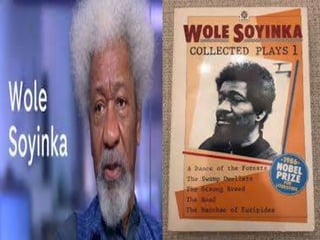
Wole Soyinka is a Nigerian playwright, poet, author, teacher
and political activist who received the Nobel Prize for
Literature in 1986.
Wole Soyinka was born on July 13, 1934, in Nigeria and
educated in England. In 1986, the playwright and political
activist became the first African to receive the Nobel Prize
for Literature. He dedicated his Nobel acceptance speech to
Nelson Mandela. Soyinka has published hundreds of works,
including drama, novels, essays and poetry, and colleges all
over the world seek him out as a visiting professor.
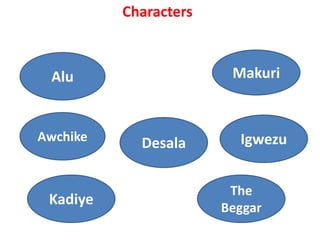
Characters
Alu
IgwezuDesala
Makuri
The
Beggar
Kadiye
Awchike
Desala
IgwezuAwchike
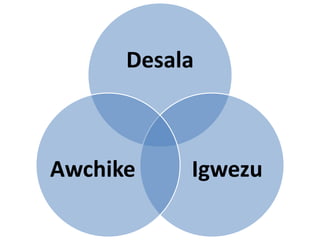
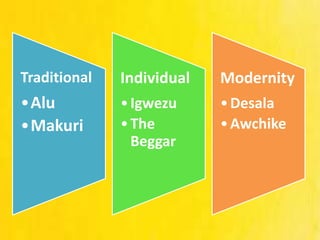
Traditional
•Alu
•Makuri
Individual
•Igwezu
•The
Beggar
Modernity
•Desala
•Awchike
Alu
Alu is the wife of Makuri. She is the mother of Igwezu and Awuchike. She
believes in the custom of the swamps. She thinks that the river bed is the ideal
bridal bed. She has more concern for Awchike who is in the city. She has anxiety
for his safety which makes her shoot questions. Her questions make Makuri
think of her as a fussy neurotic wife. Her reaction to the words of Kadiye shows
her to be a traditionalist.
Though she is outspoken, she is not for change. Alu’s understanding of the world
is very limited. All said, Alu is a loving and a loveable mother.
Makuri
Makuri is the father of Igwezu and Awuchike. He is the husband of Alu. As a
husband he is conceited. He is a good host. He offers cane brew to the beggar.
He gives himself totally to the serpent cult.
He is more intelligent than his wife. Igwezu exposes Kadiye’s corrupt practice.
Makuri feels offended over it.
Soyinka through Makuri emphasizes the importance and the value of marital ties
between husband and wife. He does not have delusions about the character of
Awchike. Nor does he have it in him to console Igwezu who has come back
betrayed by his wife Desala.
Igwezu
Igwezu is the son of Alu and Makuri. He is the centre of the play. The Swamp
Dwellers is a drama of revelation and Igwezu gets education through experience
both in the city and in the swamp.
Igwezu’s discovery of the deficiencies of the village life and the city life
constitutes the primary thematic content of the play. He is a character in the play
who has tasted the ups and downs of life both in the village and in the city.
It is through him Soyinka criticizes the corrupt religious practices of Kadiye.
Familial ties have meaning for him.
Desala
Desala does not appear in the play as a character. But, she is spoken off. Desala is
the embodiment of the corrupt nature of the city life.
The character also echoes the materialistic attitude of city dwellers. Desala
marries Igwezu. Igwezu later becomes poor owing to bad returns from his
business.
Desala found Awuchike prospering in his business. So, Desala leaves Igwezu and
marries Awuchike. It shows how city life has become morally void.
Awuchike
Awuchike is the brother of Igwezu. He does not appear as a character in the play.
It is through telling Soyinka portrays the character of Awuchike.
The glamour of city life has changed his character. He has became a total city
dweller. Money making carries him off his feet. He has snapped ties with the
kinsmen in the swamp and is not a man of fair dealing.
Doing business in city has made him ruthless and heartless. He goes to the
extent of taking Desala from his brother Igwezu. He is a betrayer. He exemplifies
the statement “city turns brother against brother”.
Kadiye
In physical appearance Kadiye is a contrast to the beggar. He is bulky. His fingers
are heavily ringed. He is prosperous in the midst of poverty.
He is a man of self‐importance. As the priest of the serpent he fleeces the
swamp dwellers. He betrays the trust of the villagers. He encourages the serpent
cult.
He has set his eye on Igwezu’s money. As a priest he is not bothered about
Igwezu’s lot. He exploits the villagers knowing full well they are in straits.
Soyinka satirizes the corrupt practices ail the society living in superstition living
in superstition through Kadiye.
The Beggar
The Beggar comes from Bukanji in North Nigeria. His bearing is dignified and he is a
Muslim devotee. He is a man of independence. Though he is blind he is a very good
judge of other characters in the play.
Soyinka has drawn him as a contrast to Kadiye. Though he has seen adversity it has
not shaken his spirits. He is full of hope. He shores up the sagging spirit of Igwezu by
offering him hope. He is for redeeming a piece of land for cultivation from the
swamp.
He is a man of quick intelligence. He braces himself to fight against those who exploit
them. He may be a beggar because he does not have means to support him. But his
intention is to work and earn his livelihood. He is against getting alms. His
self‐esteem does not allow him to beg.
Characters in The Swamp Dweller

Characters in The Swamp Dweller

  • 1.
    Characters in TheSwamp Dwellers Name- Budhiditya Shankar Das Course- M.A. (English) Paper No.- 14 Sem- 04 Roll No.- 06 Email Id- budhiditya900@gmail.com Submitted to- Smt.S.B.Gardi Department of English M.K.Bhavnagar University
  • 3.
    About the Author WoleSoyinka is a Nigerian playwright, poet, author, teacher and political activist who received the Nobel Prize for Literature in 1986. Wole Soyinka was born on July 13, 1934, in Nigeria and educated in England. In 1986, the playwright and political activist became the first African to receive the Nobel Prize for Literature. He dedicated his Nobel acceptance speech to Nelson Mandela. Soyinka has published hundreds of works, including drama, novels, essays and poetry, and colleges all over the world seek him out as a visiting professor.
  • 4.
  • 5.
  • 6.
  • 7.
    Alu Alu is thewife of Makuri. She is the mother of Igwezu and Awuchike. She believes in the custom of the swamps. She thinks that the river bed is the ideal bridal bed. She has more concern for Awchike who is in the city. She has anxiety for his safety which makes her shoot questions. Her questions make Makuri think of her as a fussy neurotic wife. Her reaction to the words of Kadiye shows her to be a traditionalist. Though she is outspoken, she is not for change. Alu’s understanding of the world is very limited. All said, Alu is a loving and a loveable mother.
  • 8.
    Makuri Makuri is thefather of Igwezu and Awuchike. He is the husband of Alu. As a husband he is conceited. He is a good host. He offers cane brew to the beggar. He gives himself totally to the serpent cult. He is more intelligent than his wife. Igwezu exposes Kadiye’s corrupt practice. Makuri feels offended over it. Soyinka through Makuri emphasizes the importance and the value of marital ties between husband and wife. He does not have delusions about the character of Awchike. Nor does he have it in him to console Igwezu who has come back betrayed by his wife Desala.
  • 9.
    Igwezu Igwezu is theson of Alu and Makuri. He is the centre of the play. The Swamp Dwellers is a drama of revelation and Igwezu gets education through experience both in the city and in the swamp. Igwezu’s discovery of the deficiencies of the village life and the city life constitutes the primary thematic content of the play. He is a character in the play who has tasted the ups and downs of life both in the village and in the city. It is through him Soyinka criticizes the corrupt religious practices of Kadiye. Familial ties have meaning for him.
  • 10.
    Desala Desala does notappear in the play as a character. But, she is spoken off. Desala is the embodiment of the corrupt nature of the city life. The character also echoes the materialistic attitude of city dwellers. Desala marries Igwezu. Igwezu later becomes poor owing to bad returns from his business. Desala found Awuchike prospering in his business. So, Desala leaves Igwezu and marries Awuchike. It shows how city life has become morally void.
  • 11.
    Awuchike Awuchike is thebrother of Igwezu. He does not appear as a character in the play. It is through telling Soyinka portrays the character of Awuchike. The glamour of city life has changed his character. He has became a total city dweller. Money making carries him off his feet. He has snapped ties with the kinsmen in the swamp and is not a man of fair dealing. Doing business in city has made him ruthless and heartless. He goes to the extent of taking Desala from his brother Igwezu. He is a betrayer. He exemplifies the statement “city turns brother against brother”.
  • 12.
    Kadiye In physical appearanceKadiye is a contrast to the beggar. He is bulky. His fingers are heavily ringed. He is prosperous in the midst of poverty. He is a man of self‐importance. As the priest of the serpent he fleeces the swamp dwellers. He betrays the trust of the villagers. He encourages the serpent cult. He has set his eye on Igwezu’s money. As a priest he is not bothered about Igwezu’s lot. He exploits the villagers knowing full well they are in straits. Soyinka satirizes the corrupt practices ail the society living in superstition living in superstition through Kadiye.
  • 13.
    The Beggar The Beggarcomes from Bukanji in North Nigeria. His bearing is dignified and he is a Muslim devotee. He is a man of independence. Though he is blind he is a very good judge of other characters in the play. Soyinka has drawn him as a contrast to Kadiye. Though he has seen adversity it has not shaken his spirits. He is full of hope. He shores up the sagging spirit of Igwezu by offering him hope. He is for redeeming a piece of land for cultivation from the swamp. He is a man of quick intelligence. He braces himself to fight against those who exploit them. He may be a beggar because he does not have means to support him. But his intention is to work and earn his livelihood. He is against getting alms. His self‐esteem does not allow him to beg.