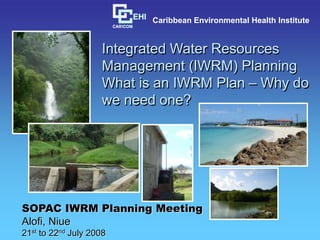
Integrated Water Resources
Management (IWRM) Planning
What is an IWRM Plan – Why do
we need one?
SOPAC IWRM Planning Meeting
Alofi, Niue
21st to 22nd July 2008
Caribbean Environmental Health Institute
Presentation Outline
Part 1
• Water resources management in SIDS context
• Background on IWRM
• IWRM Planning
– What is an IWRM Plan
IWRM Plan context
– Elements of an IWRM Plan
Part 2
• IWRM Roadmapping
Water resources management
Context for SIDS
• Small size; limited land mass, populations
• Fragile diverse, unique, ecosystems
• Small, open, vulnerable economies
• Highly sensitive to climate change impacts
• Typically water-scarce
– Limited reserves
– Impacted by pollution
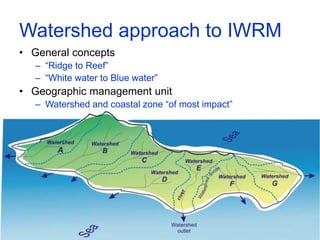
Watershed approach to IWRM
• General concepts
– “Ridge to Reef”
– “White water to Blue water”
• Geographic management unit
– Watershed and coastal zone “of most impact”
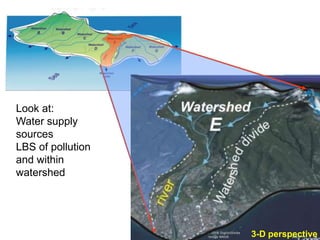
3-D perspective
Look at:
Water supply
sources
LBS of pollution
and within
watershed
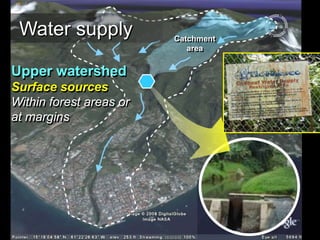
Upper watershed
Surface sources
Within forest areas or
at margins
Catchment
area
Water supply
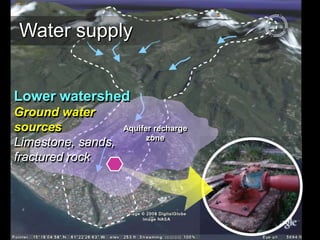
Lower watershed
Ground water
sources
Limestone, sands,
fractured rock
Aquifer recharge
zone
Water supply
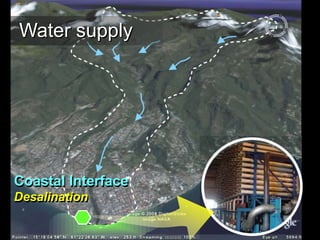
Coastal Interface
Desalination
Water supply
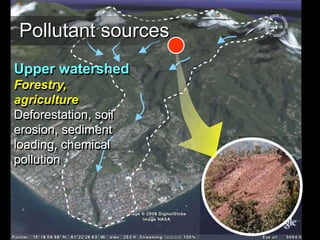
Upper watershed
Forestry,
agriculture
Deforestation, soil
erosion, sediment
loading, chemical
pollution
Pollutant sources
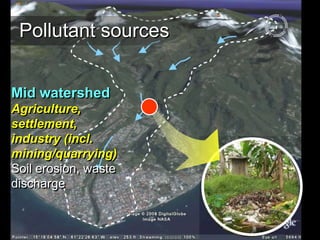
Mid watershed
Agriculture,
settlement,
industry (incl.
mining/quarrying)
Soil erosion, waste
discharge
Pollutant sources
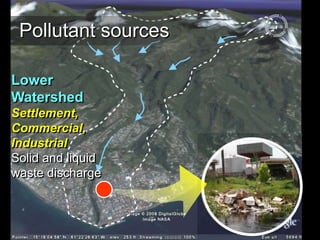
Lower
Watershed
Settlement,
Commercial,
Industrial
Solid and liquid
waste discharge
Pollutant sources
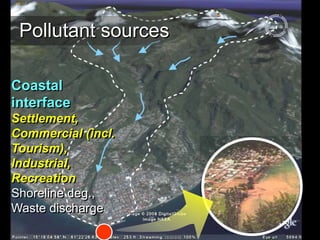
Coastal
interface
Settlement,
Commercial (incl.
Tourism),
Industrial,
Recreation
Shoreline deg.,
Waste discharge
Pollutant sources
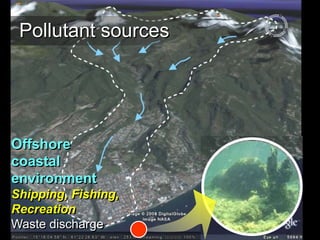
Offshore
coastal
environment
Shipping, Fishing,
Recreation
Waste discharge
Pollutant sources
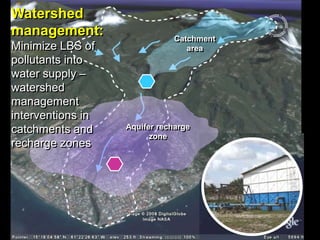
Catchment
area
Aquifer recharge
zone
Watershed
management:
Minimize LBS of
pollutants into
water supply –
watershed
management
interventions in
catchments and
recharge zones
Background on IWRM
• 1992 International Conference on Water and the
Environment (ICWE) in Dublin, Ireland
• Dublin Statement: laid the foundation for guiding
integrated management of the world’s water resources
• The principles are:
– Fresh water is a finite and vulnerable resource, essential to
sustain life, development and the environment;
– Water development and management should be based on a
participatory approach, involving users, planners and
policymakers at all levels;
– Women play a central part in the provision, management and
safeguarding of water;
– Water has an economic value in all its competing uses and
should be recognised as an economic good
Background
• 2002 the World Summit on Sustainable
Development (WSSD) was held in
Johannesburg, South Africa
• Johannesburg Plan of Implementation
(JPOI) calls for all countries to: “Develop
integrated water resources management
and water efficiency plans by 2005, with
support to developing countries”
Background
• Millennium Development Goals (MDG´s)
national commitments:
– Halve, by the year 2015, the proportion of people
without access to safe drinking water (reaffirmation of
Millennium Development Goal).
– Halve, by the year 2015, the proportion of people
who do not have access to basic sanitation.
– Develop integrated water resources management
and water efficiency plans by 2005
Background
• What is IWRM?
– A systematic process for the sustainable
development, allocation and monitoring of water
resource use in the context of social, economic and
environmental objectives
• Means that all the different uses of water
resources are considered together
• Water allocations and management
decisions consider the effects of each use
on the others
What is an IWRM plan?
• A strategic statement that details a
country’s actions toward to sustainable
management of its water resources
– Scope - Fresh and coastal waters
– Defines the issues and the strategic
responses by all actors
– Lays out the indicative cost outlay required for
action over short to medium-term; basis for
sourcing funding internally or externally
Context for IWRM Plan
• Link to other strategies and plans
– NEMS and other existing national plans/strategies
– National MDG strategies
– National poverty reduction strategy papers
(PRSPs)
– National 5-year plans
– National sustainable development strategies
– National Biodiversity Strategy and Action Plans
IWRM Key Tools
• Other water planning frameworks
– Water Use Efficiency Plans
– Water Safety Plans
– Water Demand Management Plans
– National Plans of Action (pollution control)
– Waste Water Management Plans
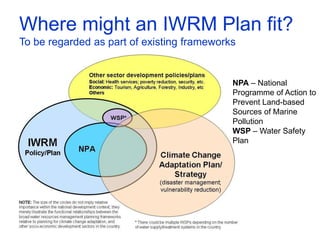
Where might an IWRM Plan fit?
To be regarded as part of existing frameworks
NPA – National
Programme of Action to
Prevent Land-based
Sources of Marine
Pollution
WSP – Water Safety
Plan
What does an IWRM Plan look
like?
• Description of the existing water
management approach. Where it came
from, how long has it been in place, what legal
instruments (policies, laws and institutions) support
it, and the constraints of the current approach to
water management.
• A description of the current water
resources situation in the country
(a water resource assessment)
What does an IWRM Plan look
like?
• A description of the scope of the plan. (Goals,
aims and objectives we wish to attain)
• A description of how we plan to achieve the
vision, goals, aims and objectives.
• Links the IWRM plan to other national
processes and/or plans (e.g. How relevant is the IWRM
Plan for a Poverty Reduction Plan or an Integrated Development Plan).
• Resource requirements to implement the plan
– Integration within the Public Sector Investment
Programme
An IWRM Plan should:
• Heighten awareness and understanding of the value
and benefits of integrated water resources
management and vulnerability of human health and the
environment from poor Water resources management;
• Identify and implement actions to address specific
causes of negative impacts and threats on human
health and the environment from poor water resources
management practices;
• Assist mobilize resources and partners, including the
private sector, for implementation of specific projects to
address the negative impacts and threats on human
health and the environment from poor water resources
management practices.

What is an IWRM Plan.ppt

  • 1.
    Integrated Water Resources Management(IWRM) Planning What is an IWRM Plan – Why do we need one? SOPAC IWRM Planning Meeting Alofi, Niue 21st to 22nd July 2008 Caribbean Environmental Health Institute
  • 2.
    Presentation Outline Part 1 •Water resources management in SIDS context • Background on IWRM • IWRM Planning – What is an IWRM Plan IWRM Plan context – Elements of an IWRM Plan Part 2 • IWRM Roadmapping
  • 3.
    Water resources management Contextfor SIDS • Small size; limited land mass, populations • Fragile diverse, unique, ecosystems • Small, open, vulnerable economies • Highly sensitive to climate change impacts • Typically water-scarce – Limited reserves – Impacted by pollution
  • 4.
    Watershed approach toIWRM • General concepts – “Ridge to Reef” – “White water to Blue water” • Geographic management unit – Watershed and coastal zone “of most impact”
  • 5.
    3-D perspective Look at: Watersupply sources LBS of pollution and within watershed
  • 6.
    Upper watershed Surface sources Withinforest areas or at margins Catchment area Water supply
  • 7.
    Lower watershed Ground water sources Limestone,sands, fractured rock Aquifer recharge zone Water supply
  • 8.
  • 9.
    Upper watershed Forestry, agriculture Deforestation, soil erosion,sediment loading, chemical pollution Pollutant sources
  • 10.
  • 11.
  • 12.
  • 13.
  • 14.
    Catchment area Aquifer recharge zone Watershed management: Minimize LBSof pollutants into water supply – watershed management interventions in catchments and recharge zones
  • 15.
    Background on IWRM •1992 International Conference on Water and the Environment (ICWE) in Dublin, Ireland • Dublin Statement: laid the foundation for guiding integrated management of the world’s water resources • The principles are: – Fresh water is a finite and vulnerable resource, essential to sustain life, development and the environment; – Water development and management should be based on a participatory approach, involving users, planners and policymakers at all levels; – Women play a central part in the provision, management and safeguarding of water; – Water has an economic value in all its competing uses and should be recognised as an economic good
  • 16.
    Background • 2002 theWorld Summit on Sustainable Development (WSSD) was held in Johannesburg, South Africa • Johannesburg Plan of Implementation (JPOI) calls for all countries to: “Develop integrated water resources management and water efficiency plans by 2005, with support to developing countries”
  • 17.
    Background • Millennium DevelopmentGoals (MDG´s) national commitments: – Halve, by the year 2015, the proportion of people without access to safe drinking water (reaffirmation of Millennium Development Goal). – Halve, by the year 2015, the proportion of people who do not have access to basic sanitation. – Develop integrated water resources management and water efficiency plans by 2005
  • 18.
    Background • What isIWRM? – A systematic process for the sustainable development, allocation and monitoring of water resource use in the context of social, economic and environmental objectives • Means that all the different uses of water resources are considered together • Water allocations and management decisions consider the effects of each use on the others
  • 19.
    What is anIWRM plan? • A strategic statement that details a country’s actions toward to sustainable management of its water resources – Scope - Fresh and coastal waters – Defines the issues and the strategic responses by all actors – Lays out the indicative cost outlay required for action over short to medium-term; basis for sourcing funding internally or externally
  • 20.
    Context for IWRMPlan • Link to other strategies and plans – NEMS and other existing national plans/strategies – National MDG strategies – National poverty reduction strategy papers (PRSPs) – National 5-year plans – National sustainable development strategies – National Biodiversity Strategy and Action Plans
  • 21.
    IWRM Key Tools •Other water planning frameworks – Water Use Efficiency Plans – Water Safety Plans – Water Demand Management Plans – National Plans of Action (pollution control) – Waste Water Management Plans
  • 22.
    Where might anIWRM Plan fit? To be regarded as part of existing frameworks NPA – National Programme of Action to Prevent Land-based Sources of Marine Pollution WSP – Water Safety Plan
  • 23.
    What does anIWRM Plan look like? • Description of the existing water management approach. Where it came from, how long has it been in place, what legal instruments (policies, laws and institutions) support it, and the constraints of the current approach to water management. • A description of the current water resources situation in the country (a water resource assessment)
  • 24.
    What does anIWRM Plan look like? • A description of the scope of the plan. (Goals, aims and objectives we wish to attain) • A description of how we plan to achieve the vision, goals, aims and objectives. • Links the IWRM plan to other national processes and/or plans (e.g. How relevant is the IWRM Plan for a Poverty Reduction Plan or an Integrated Development Plan). • Resource requirements to implement the plan – Integration within the Public Sector Investment Programme
  • 25.
    An IWRM Planshould: • Heighten awareness and understanding of the value and benefits of integrated water resources management and vulnerability of human health and the environment from poor Water resources management; • Identify and implement actions to address specific causes of negative impacts and threats on human health and the environment from poor water resources management practices; • Assist mobilize resources and partners, including the private sector, for implementation of specific projects to address the negative impacts and threats on human health and the environment from poor water resources management practices.