‘YOU HAVE IT?’ 
TIPS FOR SUCCESSFUL BUSINESS HANDOFFS 
BY IAN LURIE 
@PORTENTINT 
PORTENT, INC 
PORTENT.COM
CEO & Founder
3 
What’s a handoff? Why do we care? How do we do it right? 
This is what I’m going to talk about.
5 
Wrong. 
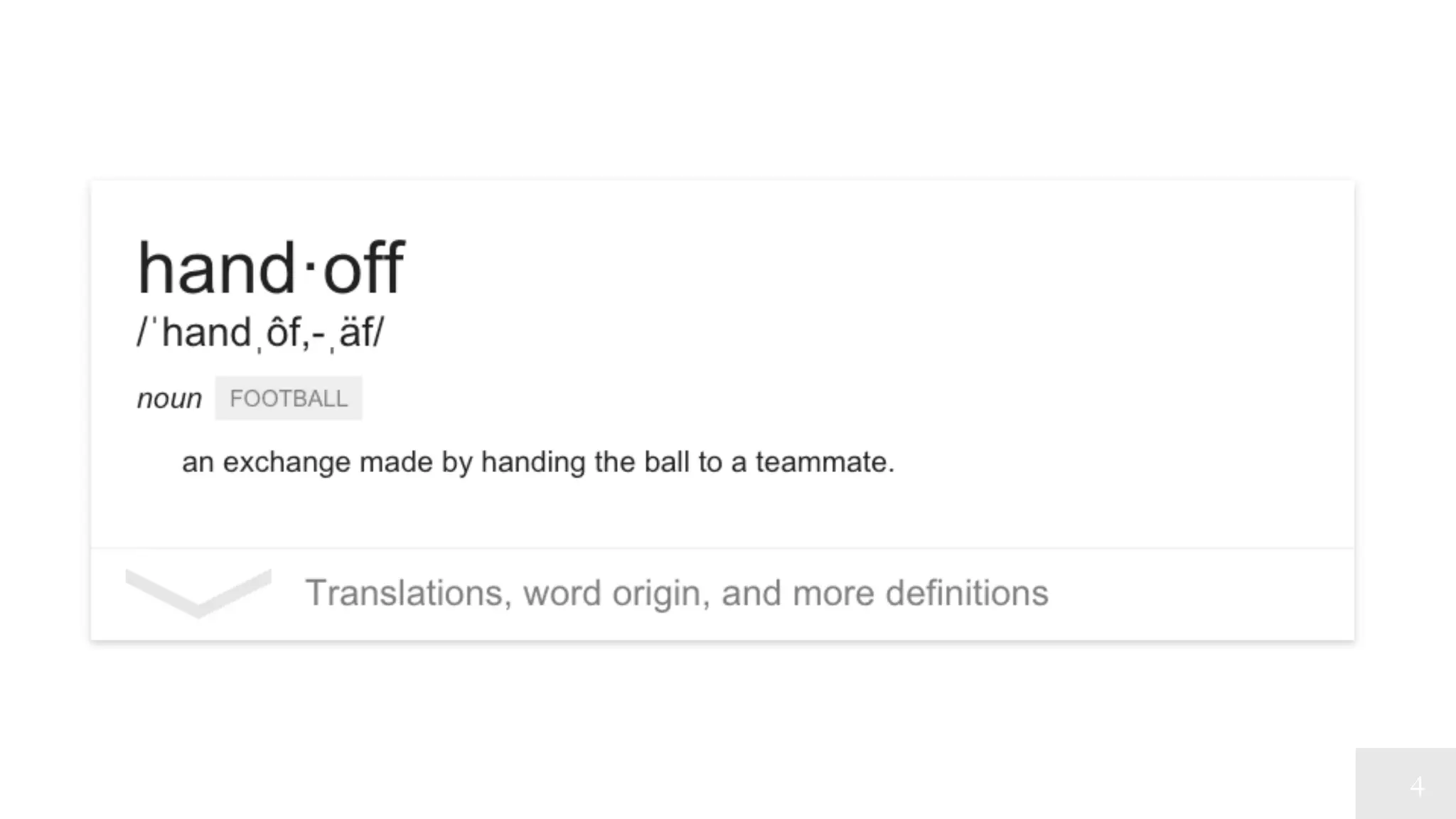
That’s awfully narrow, don’t you think? It’s about more than sports.
6 
HANDOFF 
Passing a critical item from one person to another. 
That’s more like it.
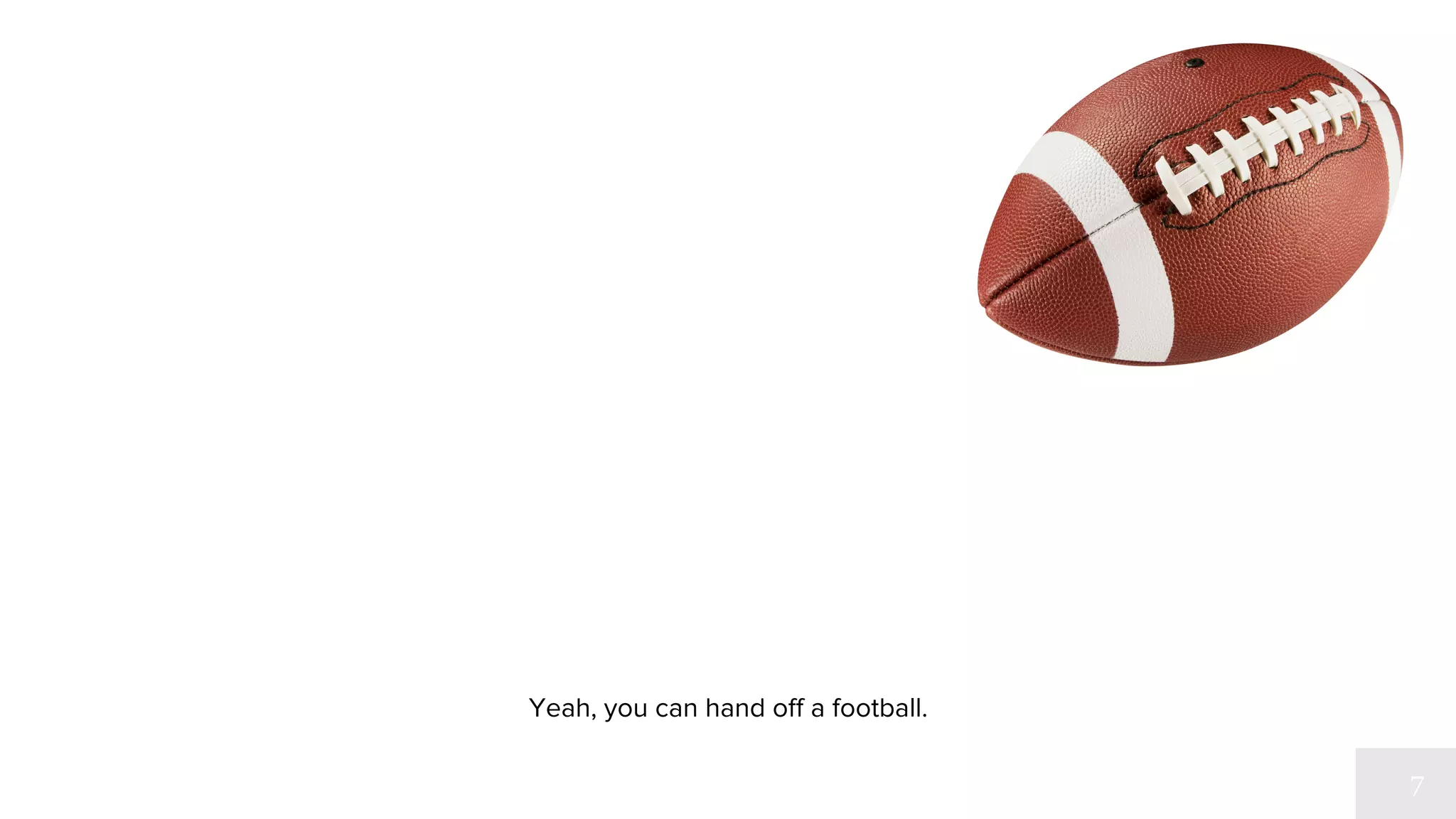
Yeah, you can hand off a football.
By Portent, Inc. May 17, 2012 
Google 
Cardio Strength Flexability Kinesis Functional Accessories The Method Wellness Integration Fitness Plans 
For you For your business 
1000 px 
Logo 
Fitness equipment Get fit, stay fit 
Product content specific to B2C 
text Search 
243,000 f Like this on Facebook 
5,432 
+1 this on Google 
9,410 
Tweet this 
More about the product specific to B2C, with images 
Company information 
Footer 
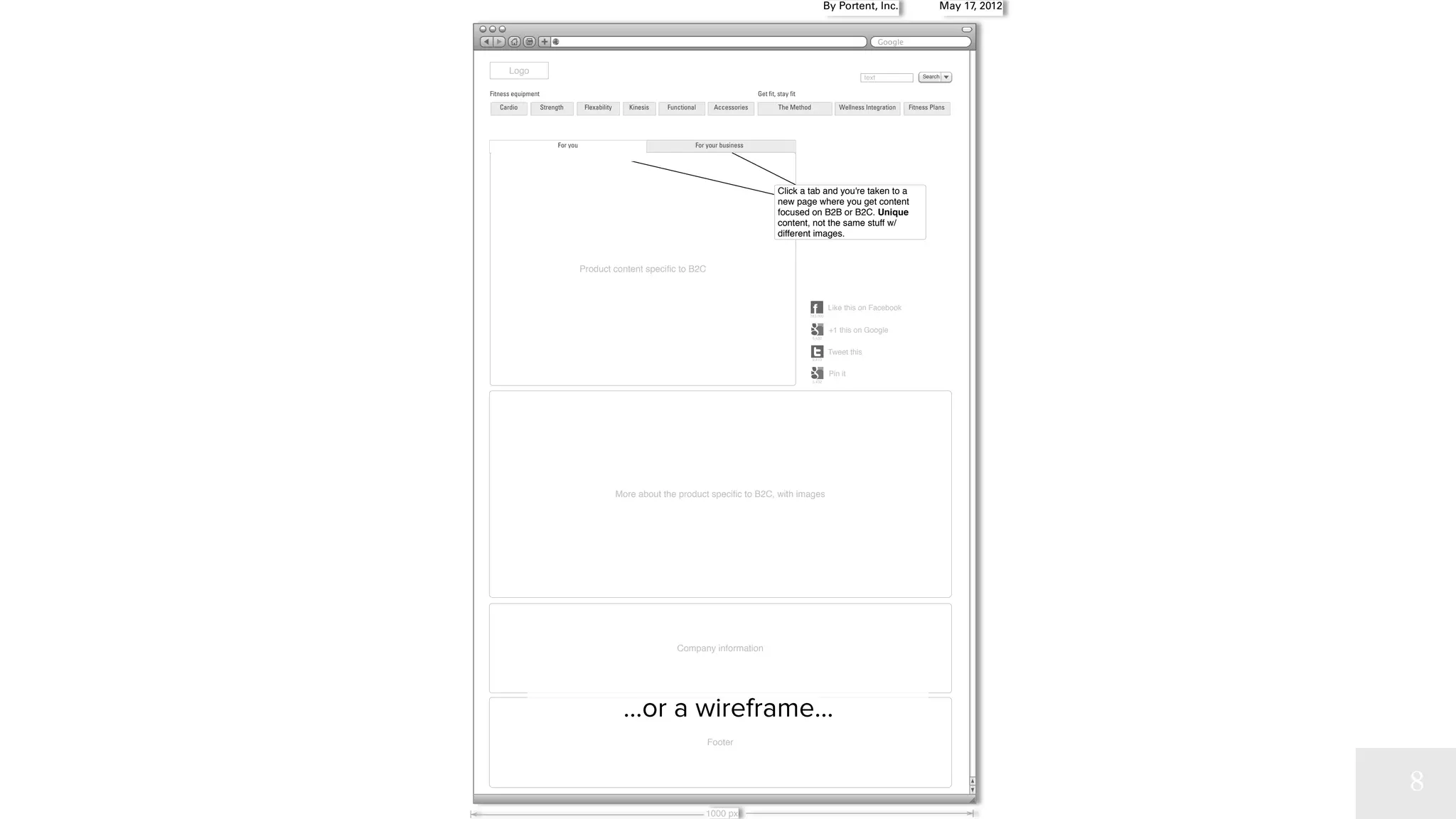
Click a tab and you're taken to a 
new page where you get content 
focused on B2B or B2C. Unique 
content, not the same stuff w/ 
different images. 
5,432 
Pin it 
…or a wireframe...
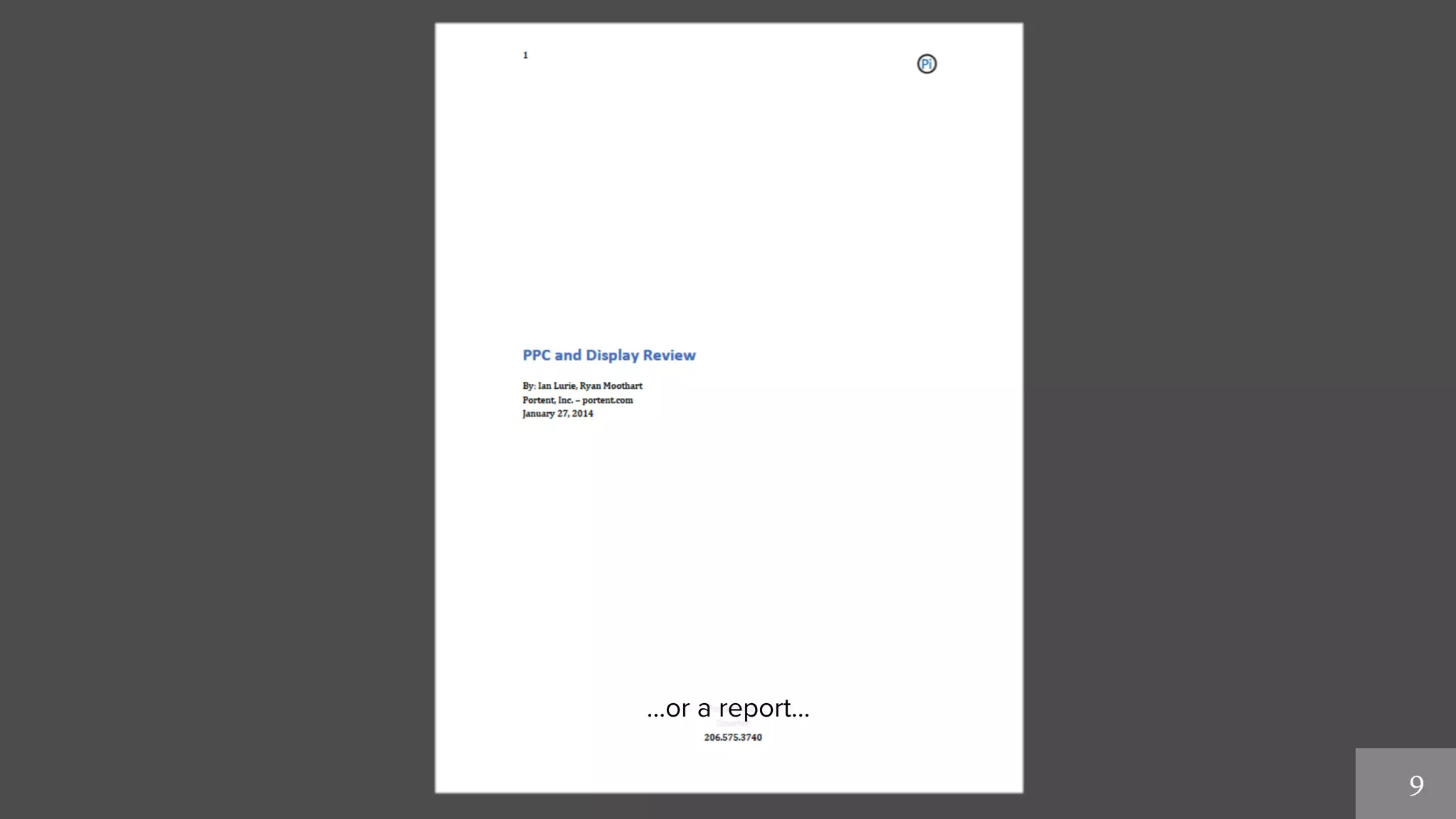
…or a report…
…or a really pretty dashboard…
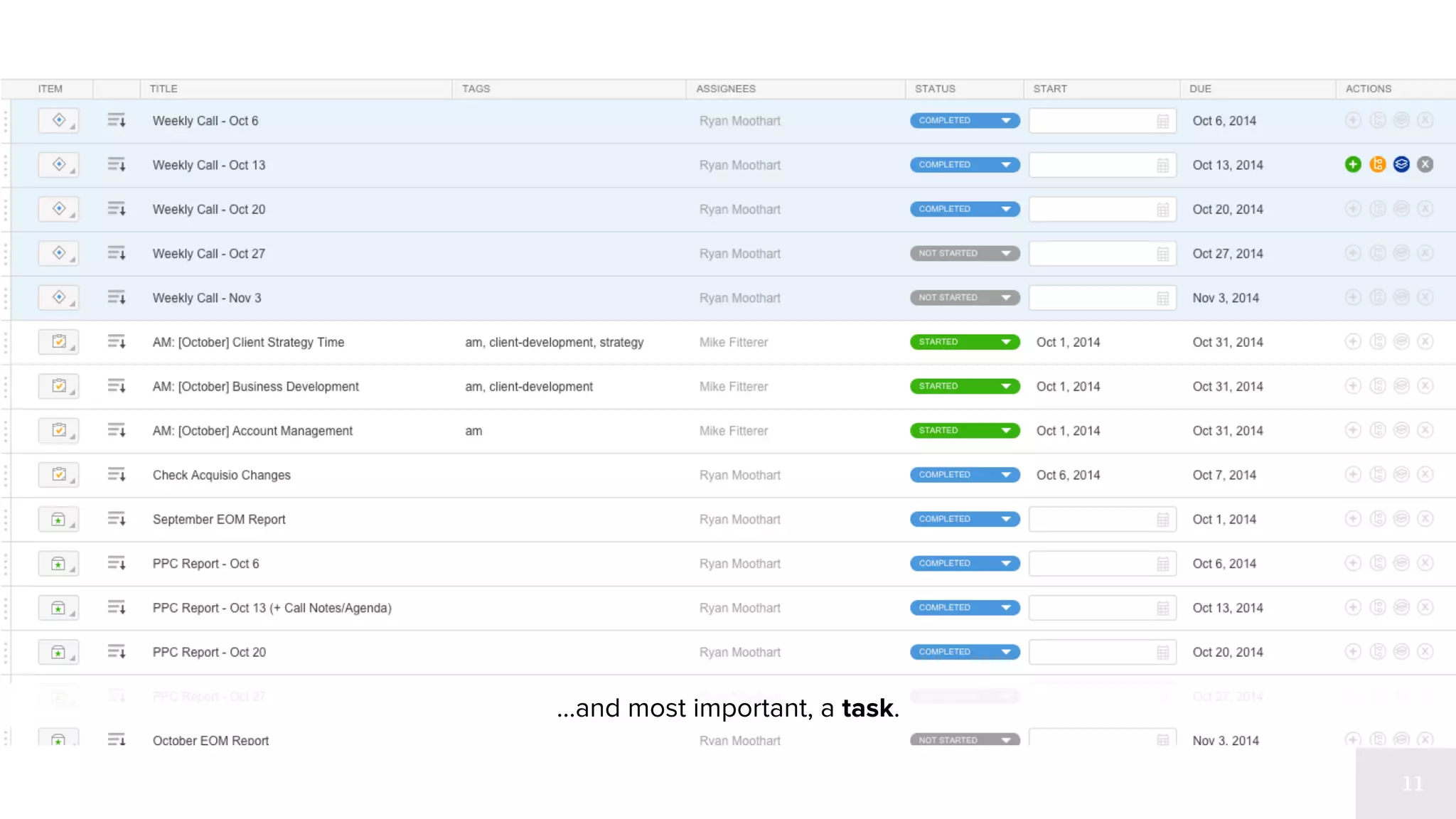
…and most important, a task.
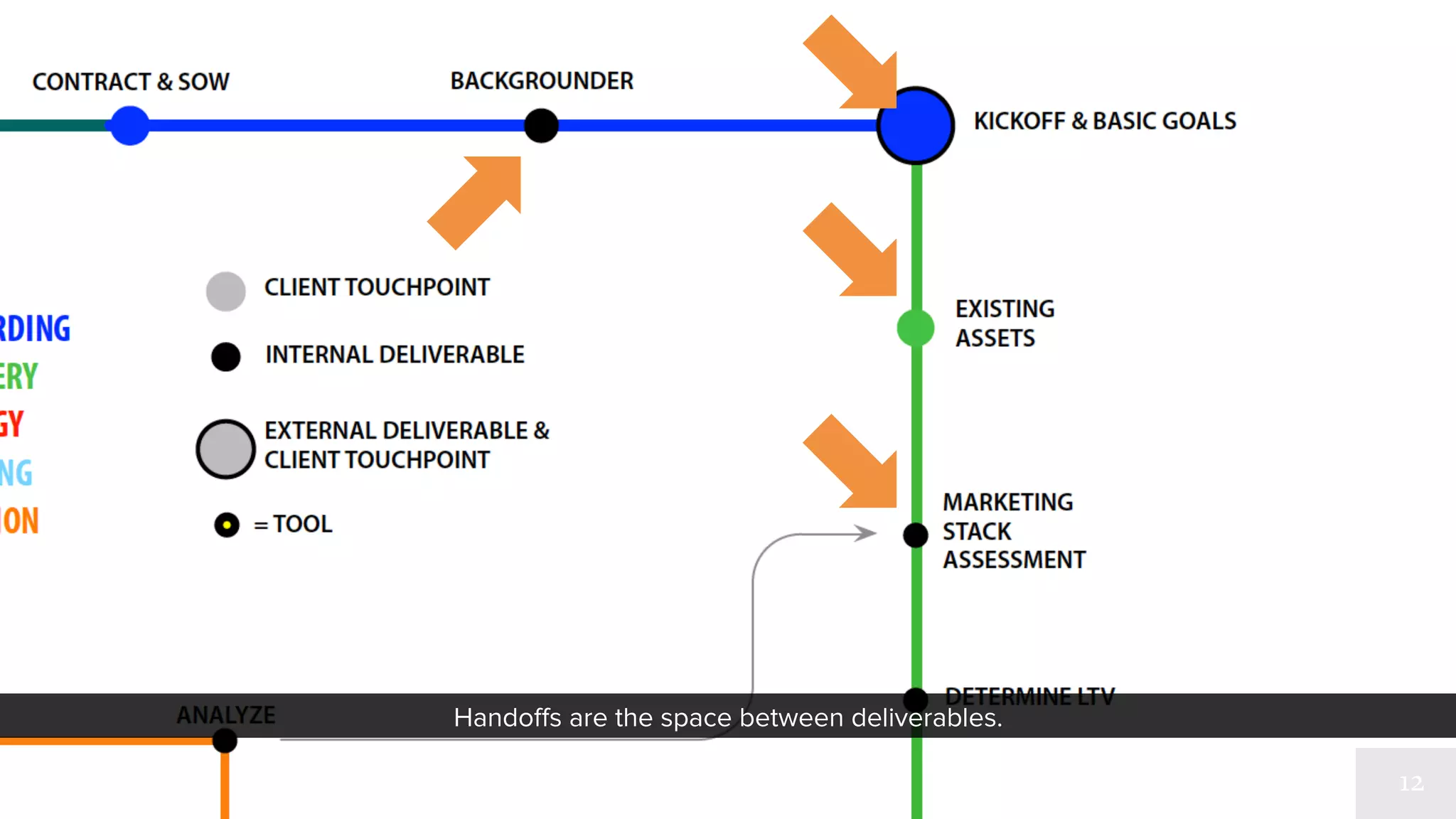
Handoffs are the space between deliverables.
Handoffs are a kind of dark matter, holding everything together, but invisible…
seriously? 
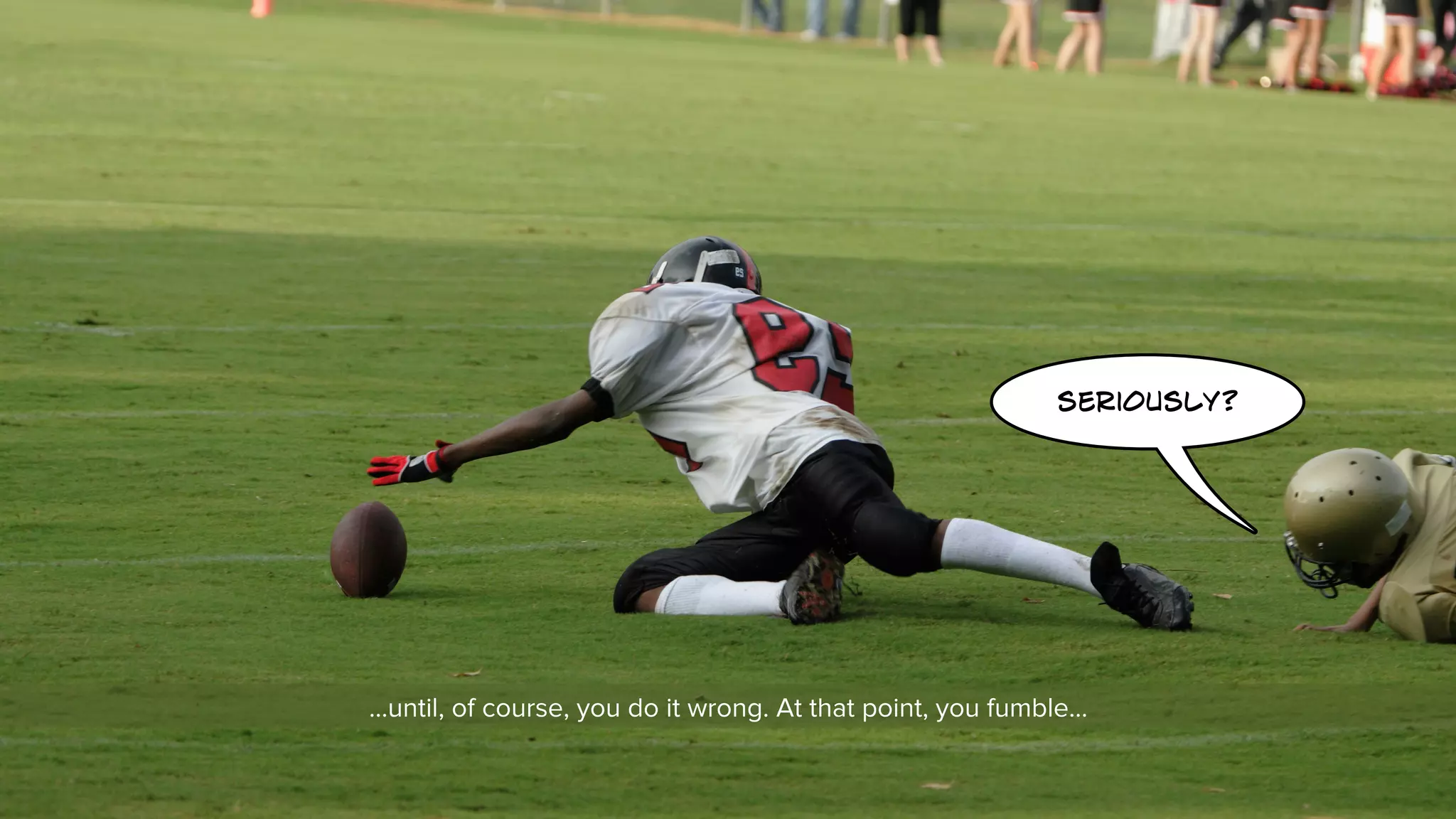
…until, of course, you do it wrong. At that point, you fumble…
…or leave someone high and dry.
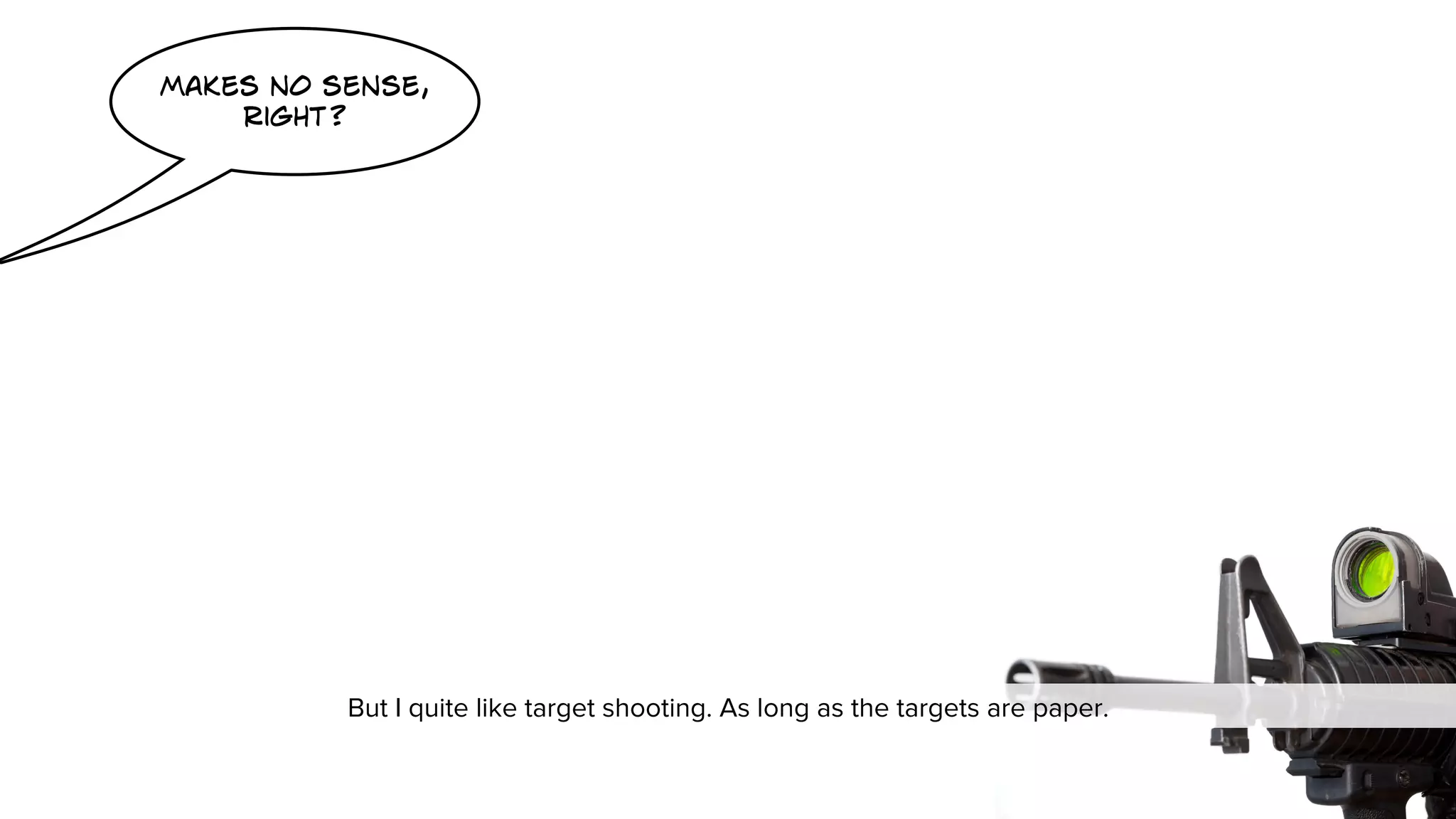
But my favorite analogy, and lesson, is target shooting.
Squishy liberal that I am, you’d think I’d hate anything that goes ‘pew’ or ‘twang’.
makes no sense, 
right? 
But I quite like target shooting. As long as the targets are paper.
you have it? 
A friend of mine was once showing me a rifle, and as he handed it to me, he asked “You have it?”
you have it? 
I HAVE IT. 
Until I answered, “I have it,” he didn’t release it.
you have it? 
I HAVE IT. 
Best. Handoff. Ever.
sonofa... 
twang 
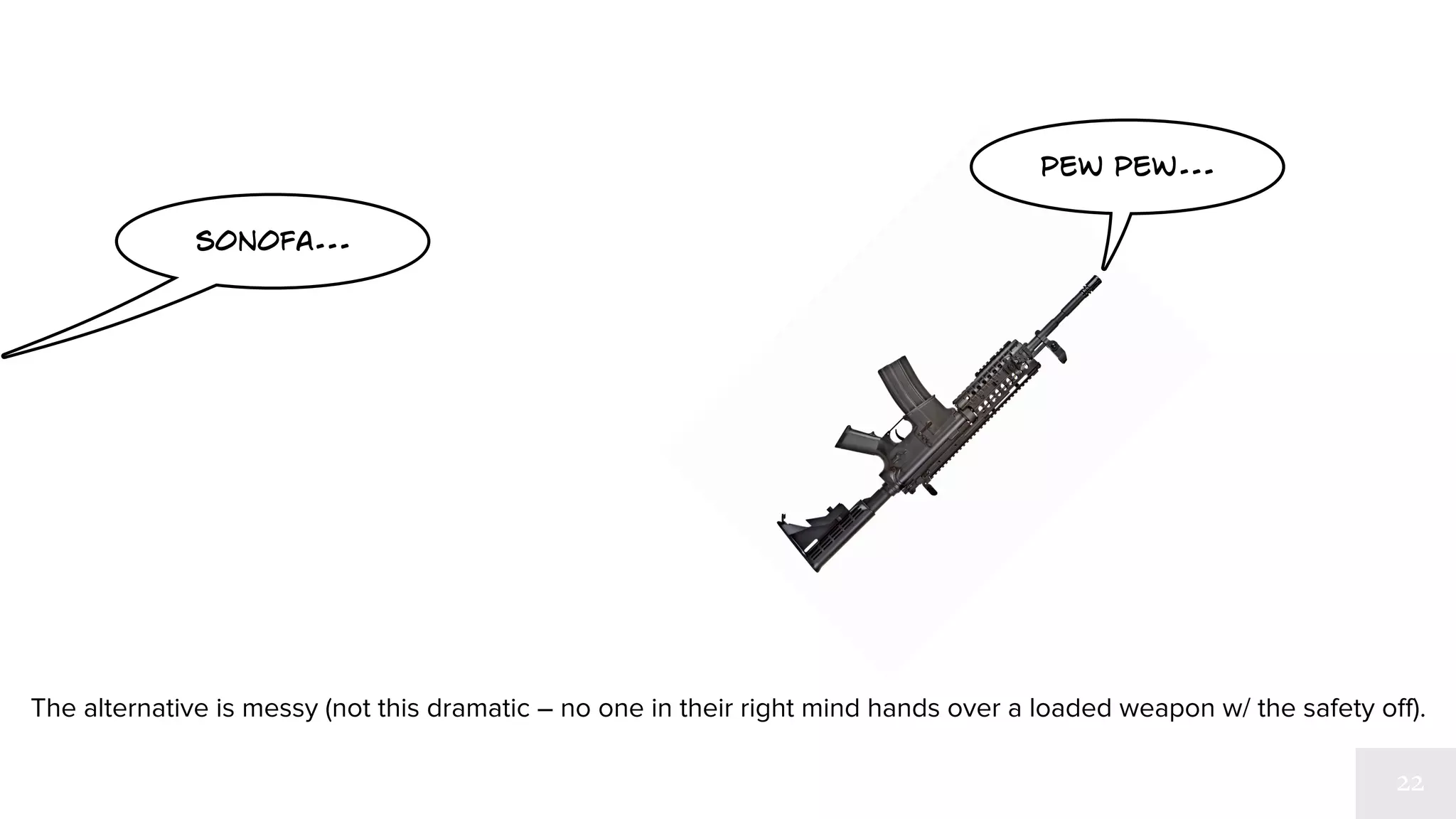
The alternative is messy (not this dramatic – no one in their right mind hands over a loaded weapon).
23 
“YOU HAVE IT?” 
“ARE YOU READY TO ACCEPT RESPONSIBILITY?” 
‘You have it?’ makes it clear that you expect the other person to now accept responsibility for ‘it.’
24 
“YOU HAVE IT?” 
“DO YOU UNDERSTAND WHAT HAPPENS NEXT?” 
‘You have it?’ asks the person receiving the handoff whether they know what to do next.
25 
“YOU HAVE IT?” 
“WILL YOU PLEASE NOT ACCIDENTALLY SHOOT US BOTH?” 
‘You have it?’ asks the receiving party if they know what they’re doing.
26 
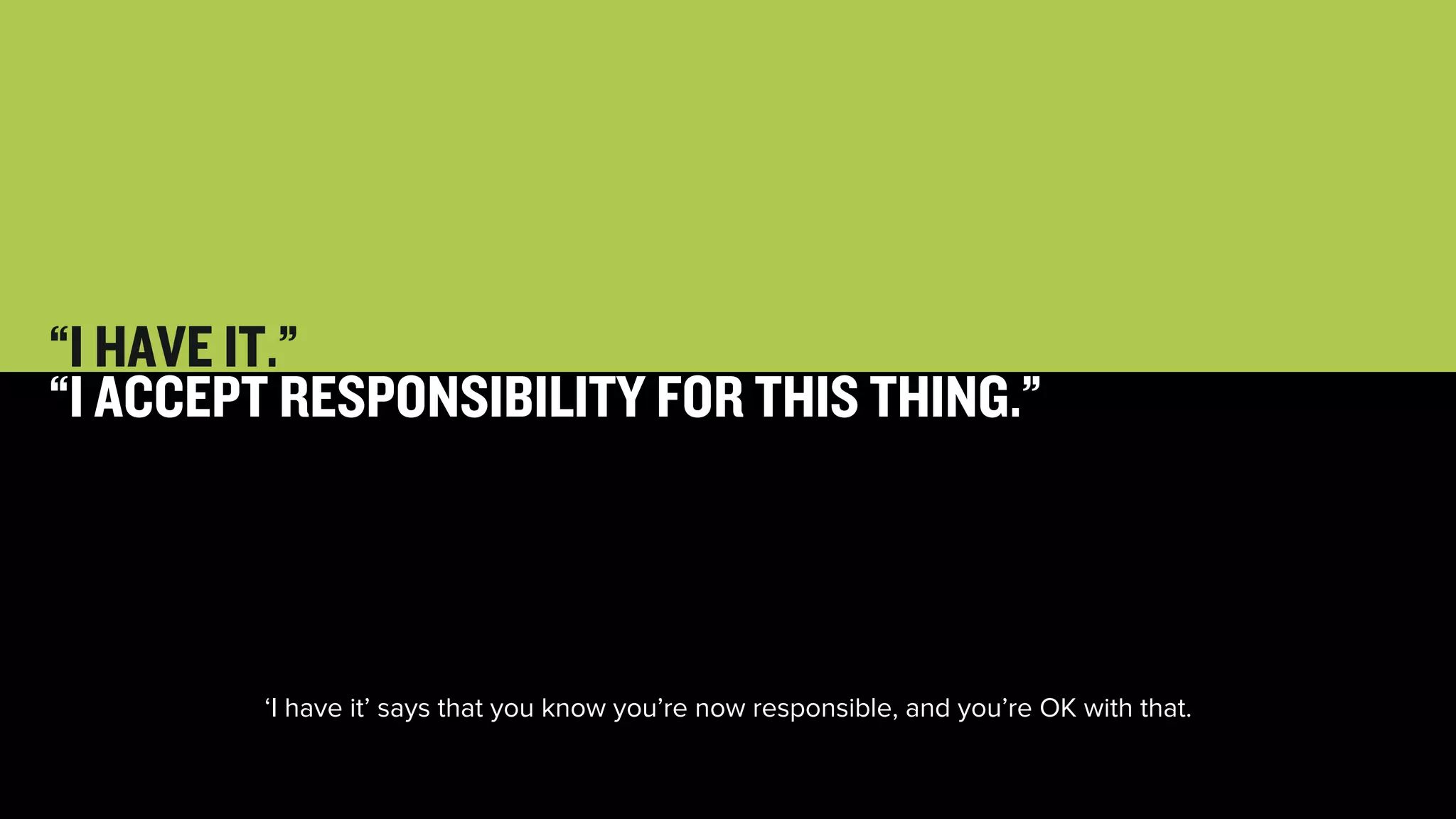
“I HAVE IT.” 
“I ACCEPT RESPONSIBILITY FOR THIS THING.” 
‘I have it’ says that you know you’re now responsible, and you’re OK with that.
27 
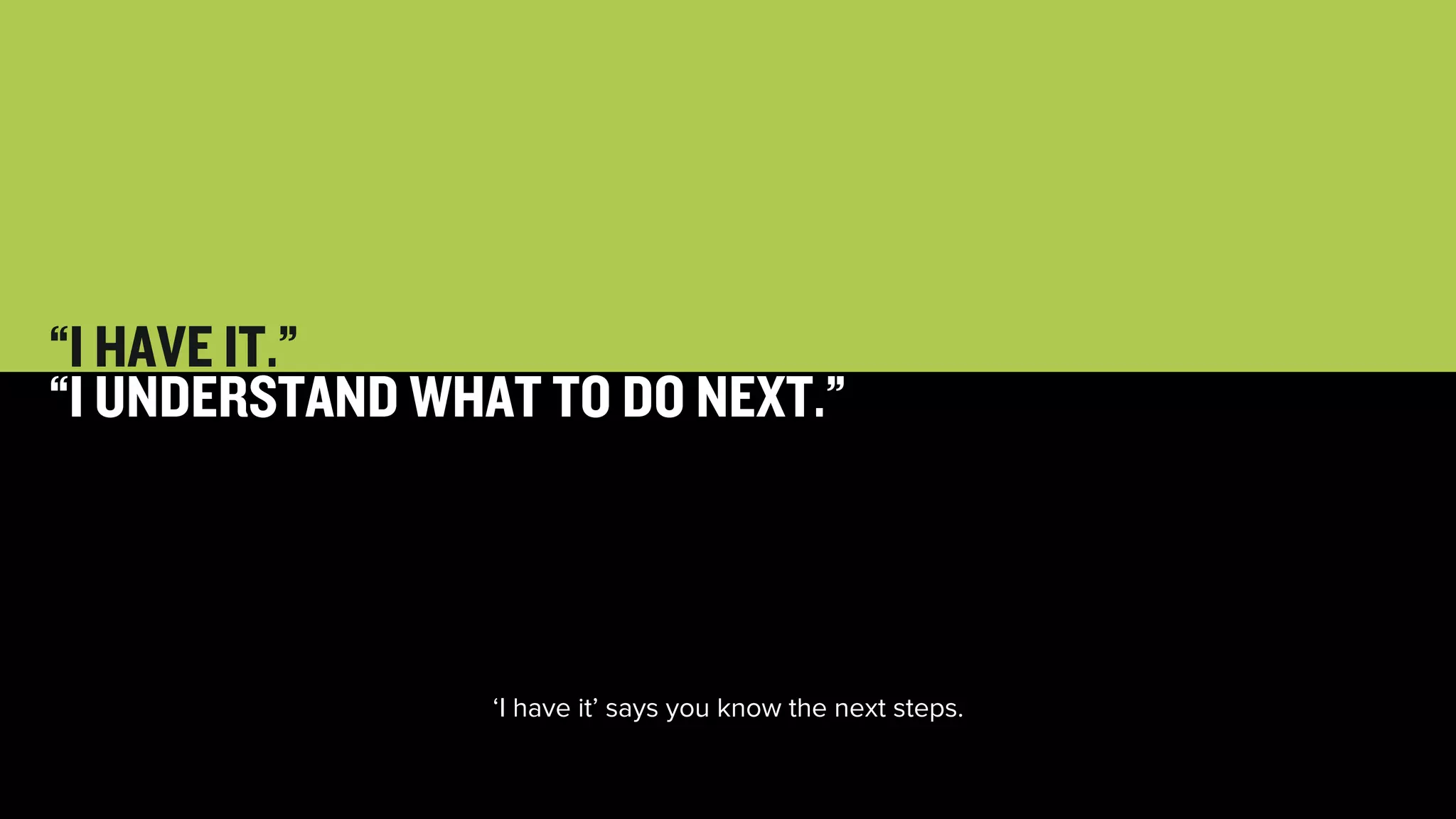
“I HAVE IT.” 
“I UNDERSTAND WHAT TO DO NEXT.” 
‘I have it’ says you know the next steps.
28 
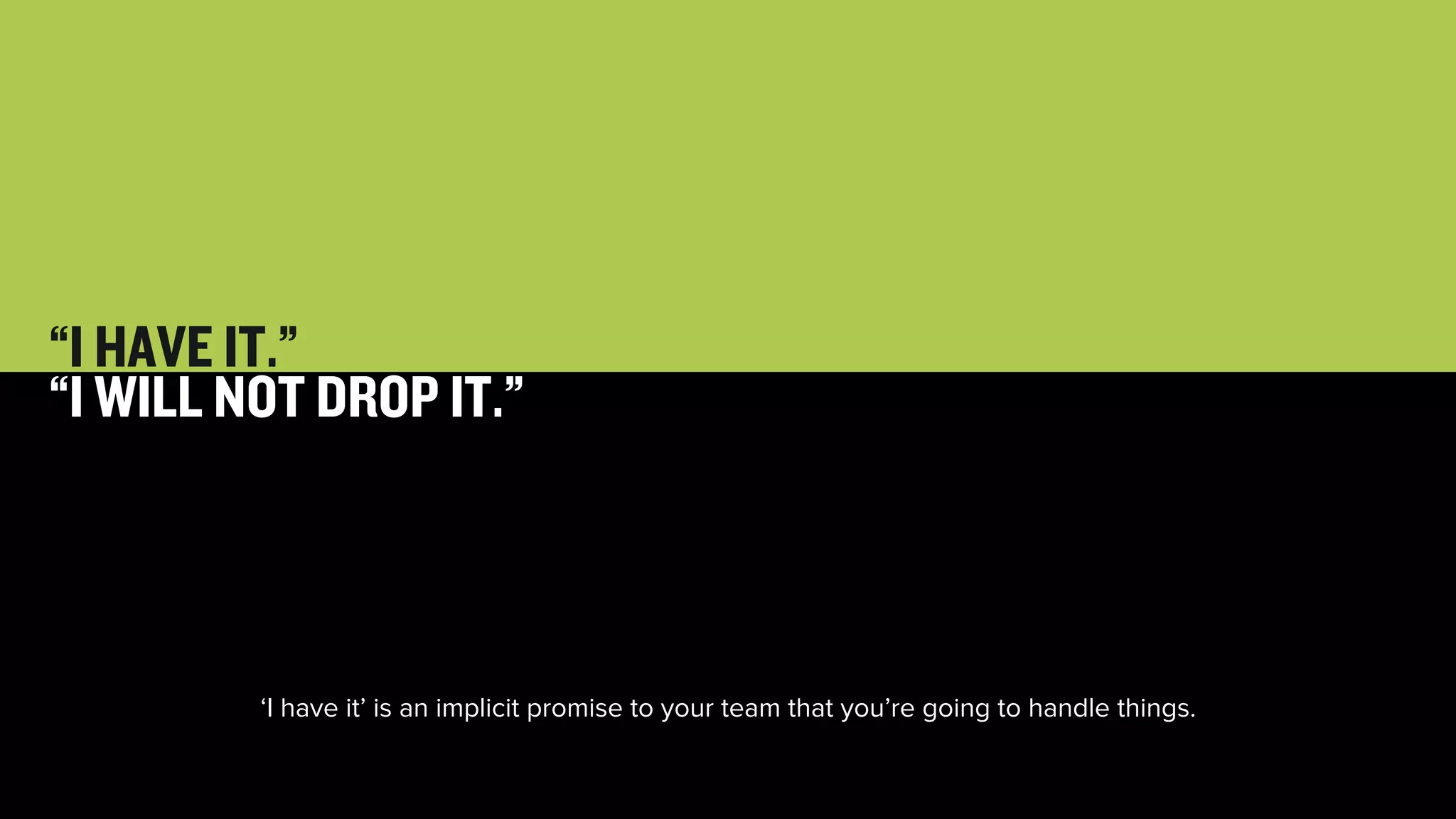
“I HAVE IT.” 
“I WILL NOT DROP IT.” 
‘I have it’ is an implicit promise to your team that you’re going to handle things.
29 
YOU/I 
THE NEXT ACTOR 
‘You/I’ is the next actor – the person who must now take action.
30 
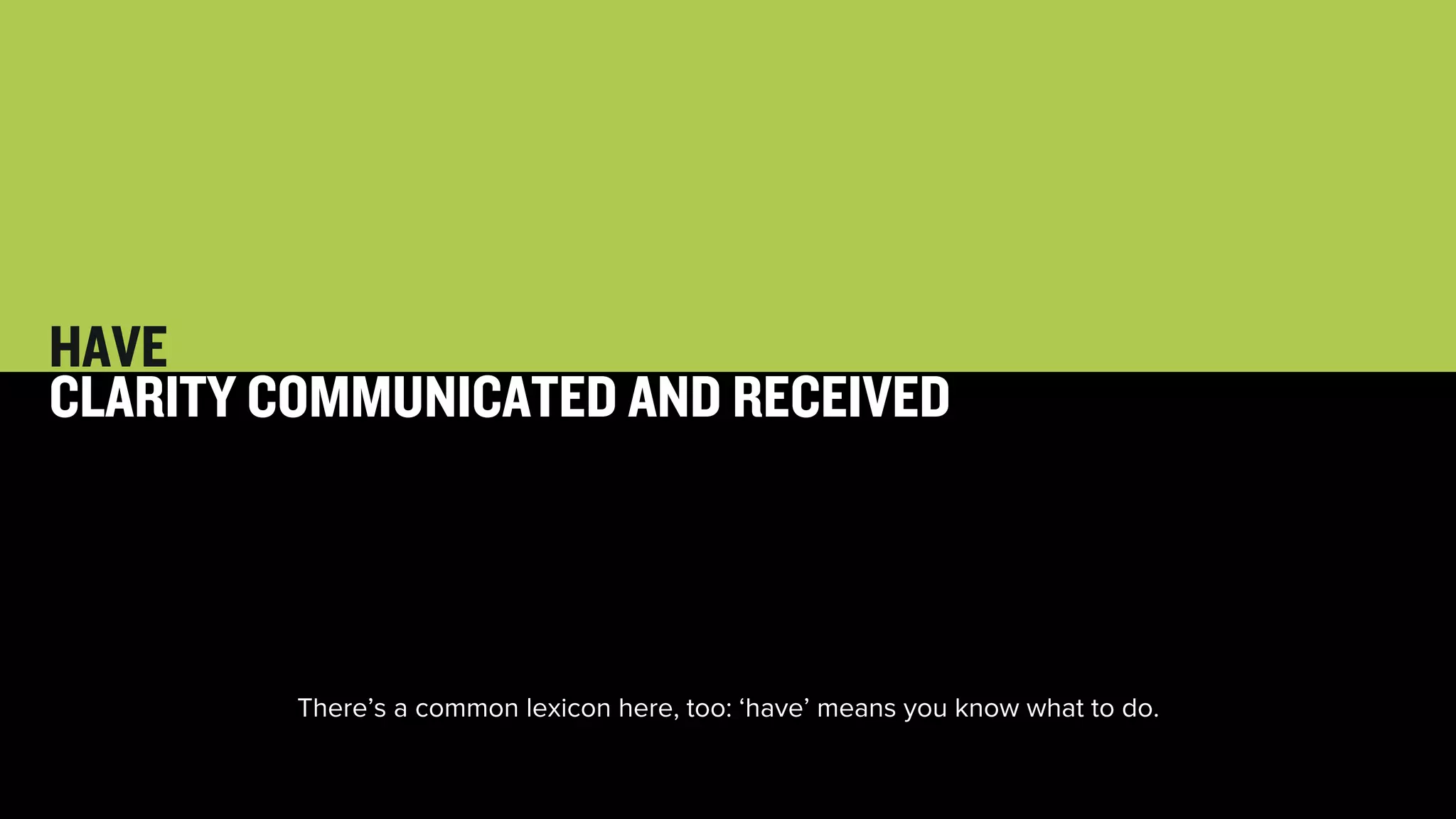
HAVE 
CLARITY COMMUNICATED AND RECEIVED 
There’s a common lexicon here, too: ‘have’ means you know what to do.
31 
IT 
THE TASK 
‘It’ is the task to be performed and the thing to be delivered.
32 
IT 
THE TASK 
Expertise is assumed. The person handing off shouldn’t have to provide the step by step.
33 
IT 
THE TASK 
For example, I shouldn’t have to tell you, “Please leave the safety on. Please only point downrange.”
34 
IT 
THE TASK 
These are assumed knowledge. If you don’t have it, you must immediately say ‘No!!! I don’t have it!!!’
35 
IT 
THE TASK 
Clarity makes or breaks the handoff. Everyone involved must know what the result will be. Especially clients!
36 
DOING IT RIGHT 
This all seems simple, but there’s a right and wrong way to ask the question. 
You must understand what you’re asking.
37 
“YOU HAVE IT?” 
This question implies several others. Know what they are, and then answer them.
38 
Can you hold on to what I’m handing you? 
First, can the recipient handle this? Are they OK with it?
39 
Do you know what to do next? 
Second, are my instructions clear?
40 
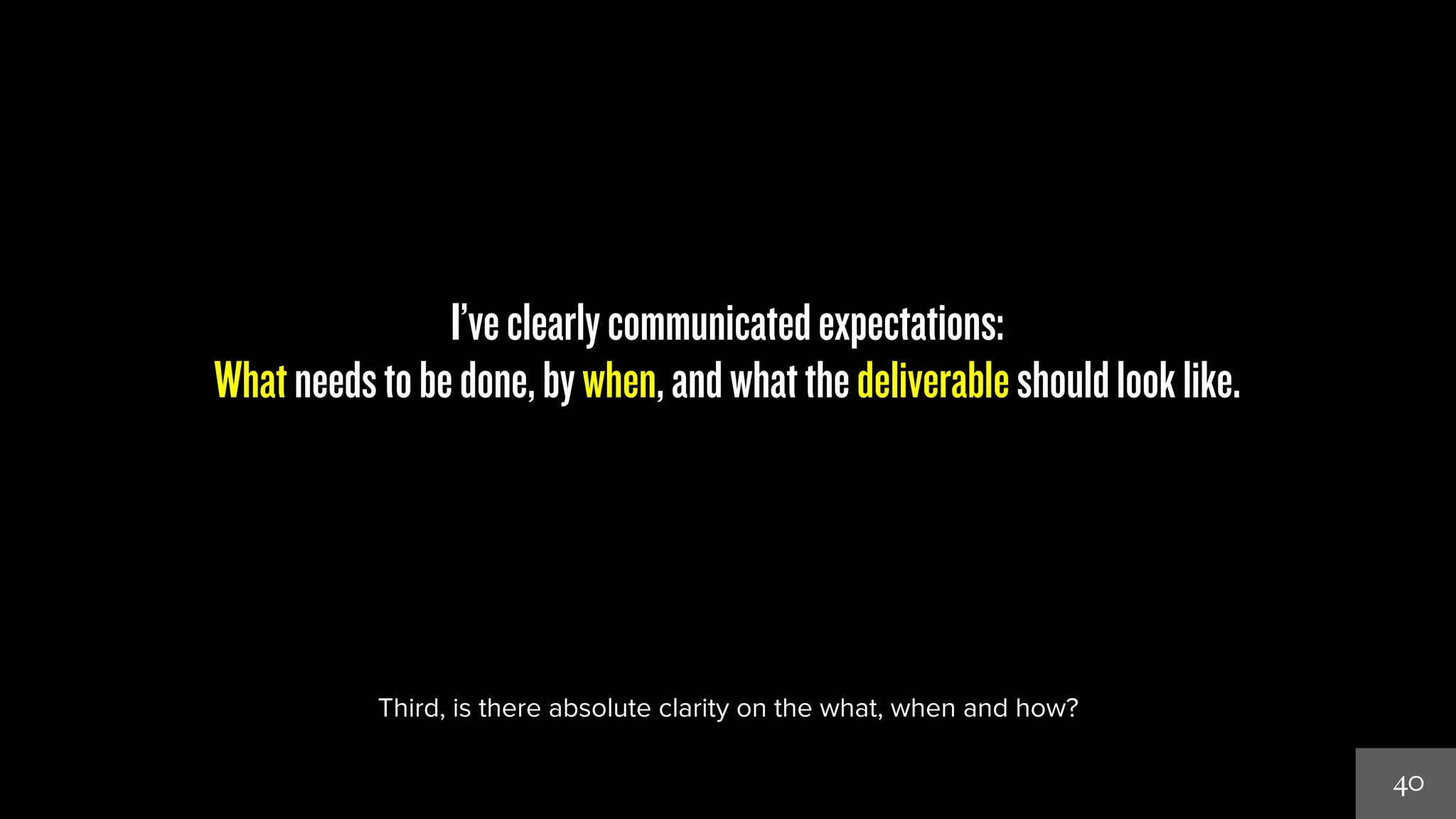
I’ve clearly communicated expectations: 
What needs to be done, by when, and what the deliverable should look like. 
Third, is there absolute clarity on the what, when and how?
41 
I’ve clearly communicated expectations: 
What needs to be done, by when, and what the deliverable should look like. 
What must the recipient deliver? A report? A solution? Something else?
42 
I’ve clearly communicated expectations: 
What needs to be done, by when, and what the deliverable should look like. 
When must they deliver it? Be precise. ‘Next week’ isn’t precise. ‘Wednesday before 5’ is precise.
43 
I’ve clearly communicated expectations: 
What needs to be done, by when, and what the deliverable should look like. 
How must they deliver it? Is an e-mail OK? Should it be formal? Will they be presenting it verbally?
44 
I’ve clearly communicated expectations: 
What needs to be done, by when, and what the deliverable should look like. 
Also, what should the deliverable contain? Tons of detail? A summary? Both?
45 
I’ve clearly communicated expectations: 
What needs to be done, by when, and what the deliverable should look like. 
This one is really important with clients. Define ‘it’ well in advance. Make sure it’s what they want.
46 
I’ve clearly communicated expectations: 
What needs to be done, by when, and what the deliverable should look like. 
If they expect a football and you give them an anvil, there’ll be problems.
47 
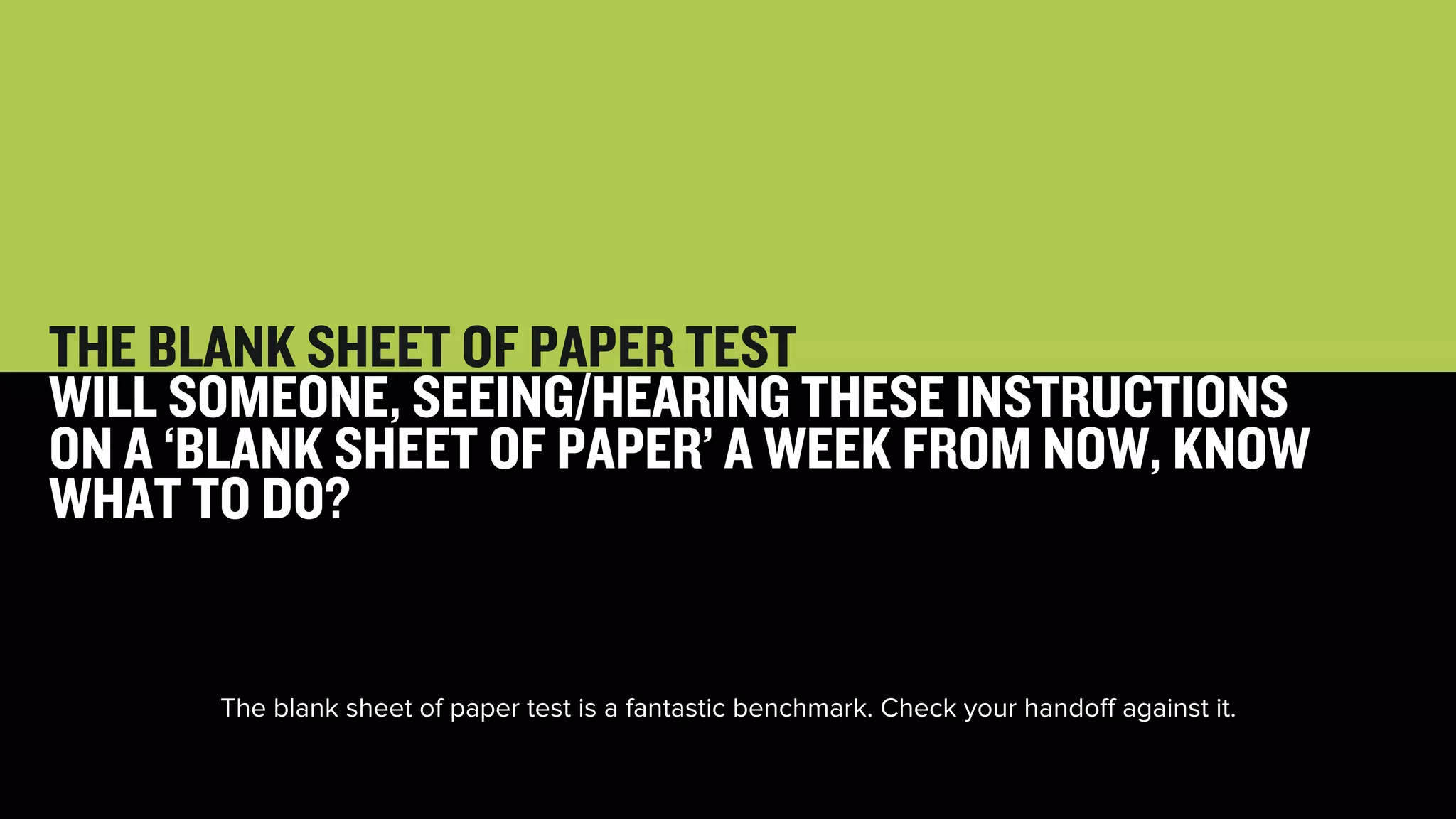
THE BLANK SHEET OF PAPER TEST 
WILL SOMEONE, SEEING/HEARING THESE INSTRUCTIONS 
ON A ‘BLANK SHEET OF PAPER’ A WEEK FROM NOW, KNOW 
WHAT TO DO? 
The blank sheet of paper test is a fantastic benchmark. Check your handoff against it.
48 
“I have it.” 
When the recipient says ‘I have it,’ they’re stating…
49 
“I know what I’m supposed to do.” 
…they have the requisite expertise, and don’t need a step-by-step…
50 
I’ve accepted responsibility, acknowledging I know: 
What needs to be done, by when, and what the deliverable should look like. 
…they know the what, when and how…
51 
“I have no further questions, unless conditions change.” 
…and, barring changed conditions, they have no further questions.
52 
CONDITIONS CHANGE WHEN 
I’VE FOUND SOMETHING UNEXPECTED, OR DELIVERABLE 
EXPECTATIONS CHANGE. 
Conditions change when new stuff arises. It’s also OK to ask clarification later, but aim to avoid that…
53 
CONDITIONS CHANGE WHEN 
I’VE FOUND SOMETHING UNEXPECTED, OR DELIVERABLE 
EXPECTATIONS CHANGE. 
…because extra round trips and handoffs waste a lot of time and energy.
54 
“I’ve got it.” 
Saying ‘I’ve got it’ is a pretty big deal. Make sure you really do.
55 
HANDING IT BACK 
It’s not a one-way process. The recipient hands it back, or to another person.
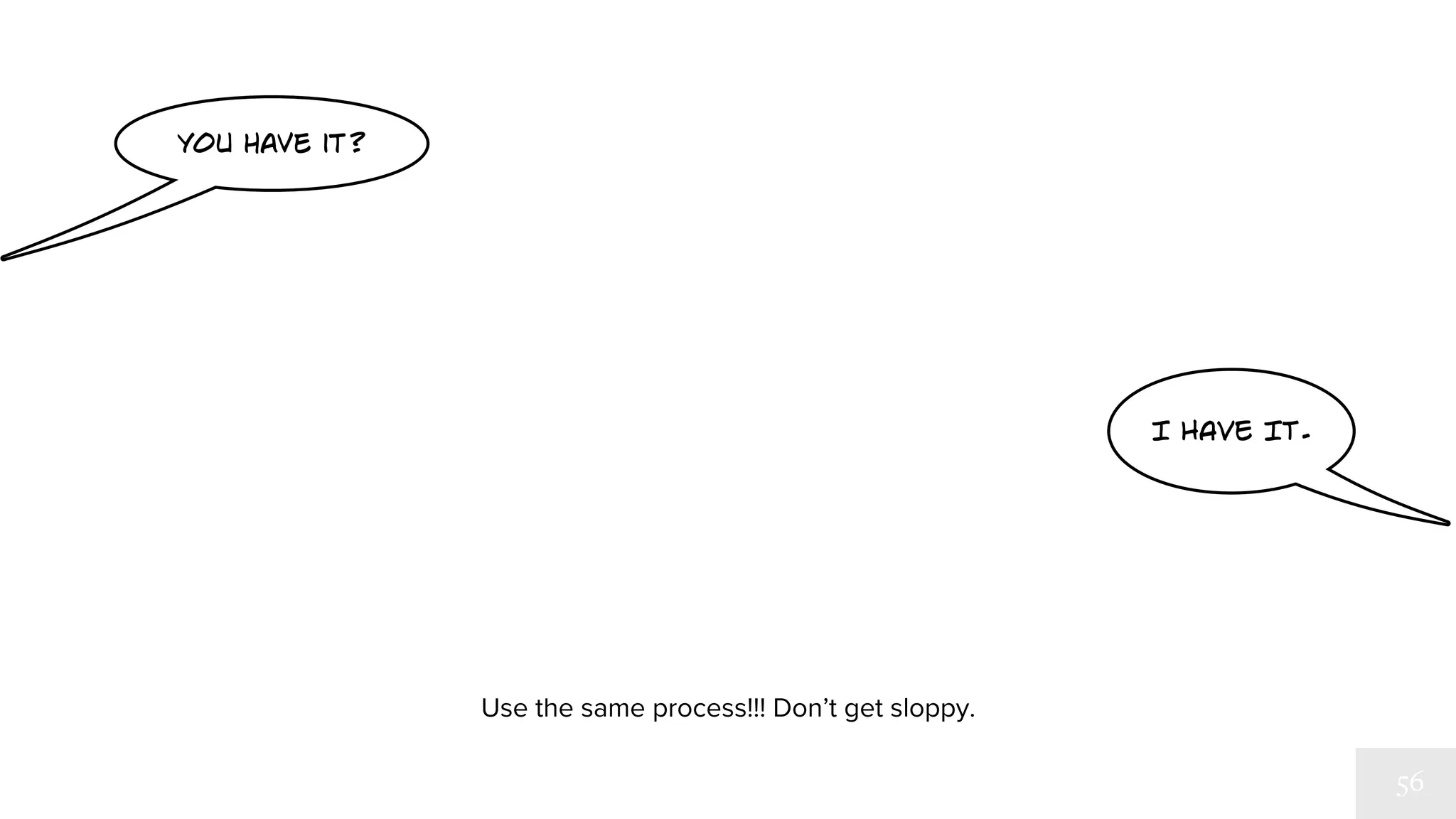
you have it? 
I HAVE IT. 
Use the same process!!! Don’t get sloppy.
57 
Do the same thing. No shortcuts. 
This.
58 
MAINTAIN EYE CONTACT 
A good handoff means eye contact. Everyone’s aware that it’s happening.
59 
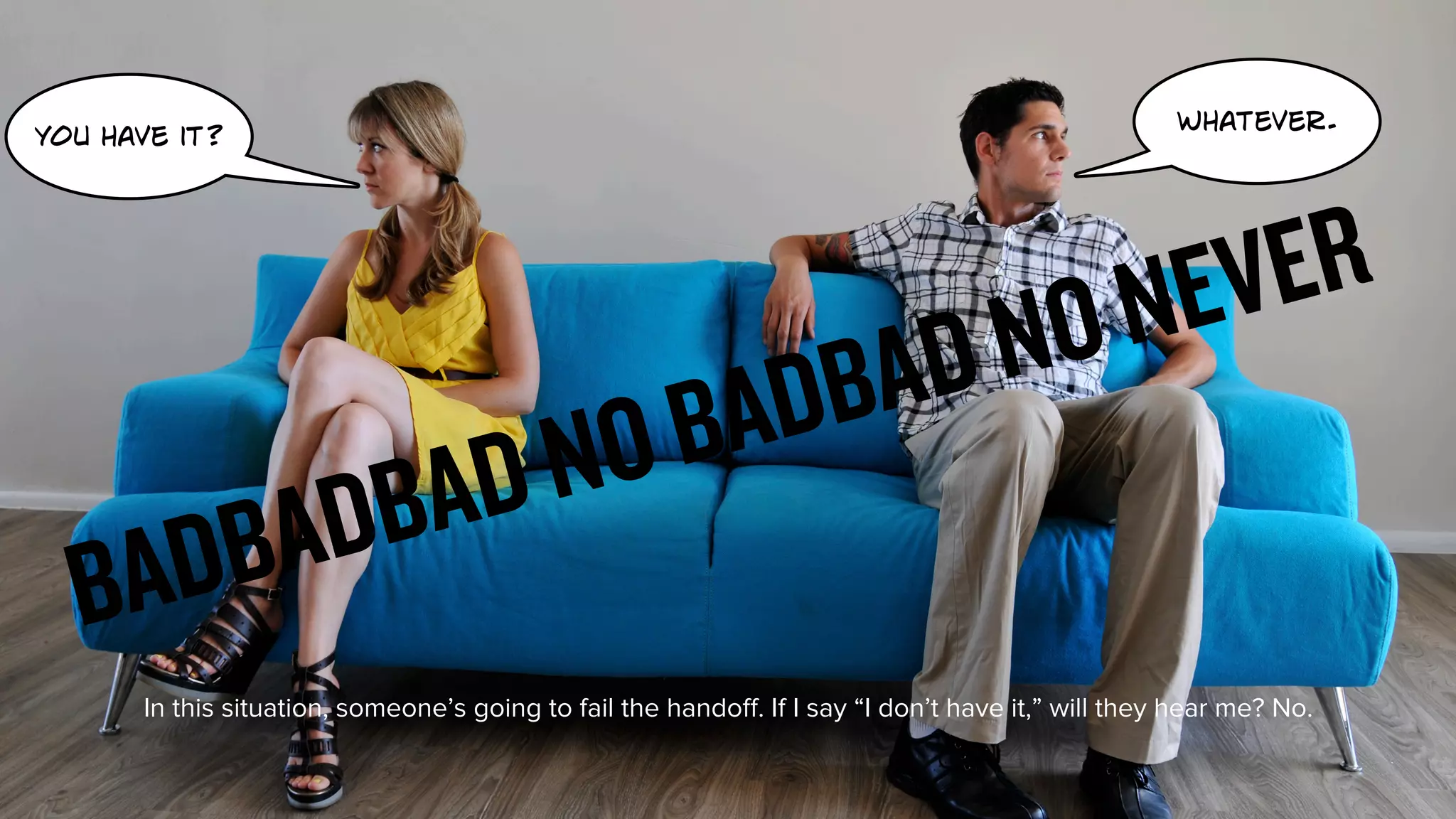
you have it? whatever. 
BADBADBAD NO BADBAD NO NEVER 
In this situation, someone’s going to fail the handoff. If I say “I don’t have it,” will they hear me? No.
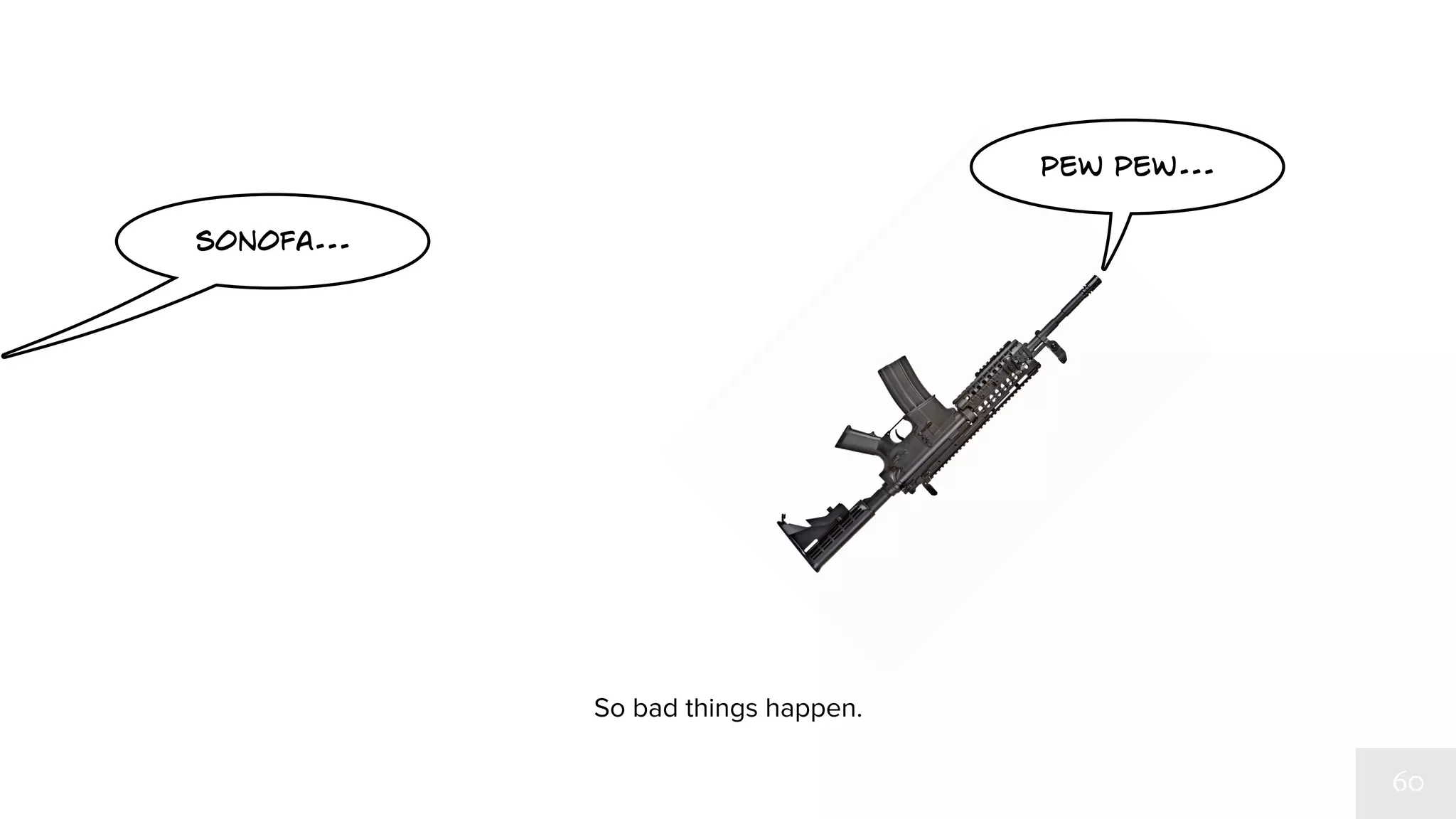
sonofa... 
So bad things happen. 
twang
61 
Over-communicate. 
Over-communicate! Repeat! Go to a level of detail that seems downright silly!
62 
Check back in. 
Most important, check back in.
63 
“Hey, remember you have it. Any questions?” 
Give a reminder, that they’ve said “I have it” and that you’re there to help.
64 
“I still have it. It’s going well.” 
Send updates. Nothing builds trust and confidence like an update.
65 
“I thought I had it. Now I don’t.” 
Updates are particularly important if things go wrong. Surprises are bad.
66 
CONSISTENT LANGUAGE 
Consistent language leads to clarity. The “You have it,” “I have it” is a great demonstration.
67 
“I have it.” 
Everyone understands what ‘have it’ means in this context, and it doesn’t change.
68 
“You have it?” 
See?
69 
Consistent language fosters clarity.
70 
A REFRESHER 
Walk away understanding…
71 
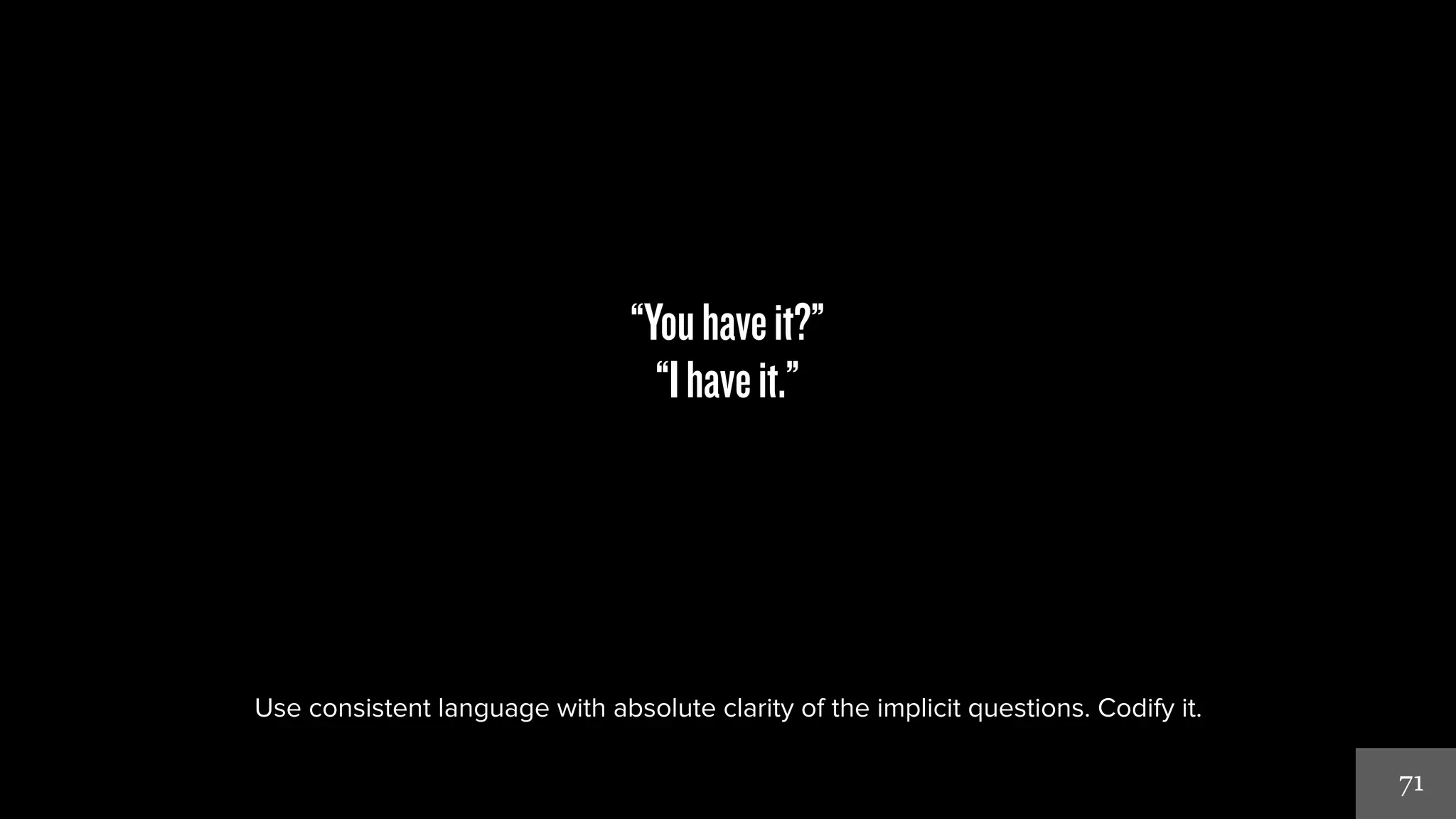
“You have it?” 
“I have it.” 
Use consistent language with absolute clarity of the implicit questions. Codify it.
72 
Over-communicate. 
Over-communicate to absurdity in all details.
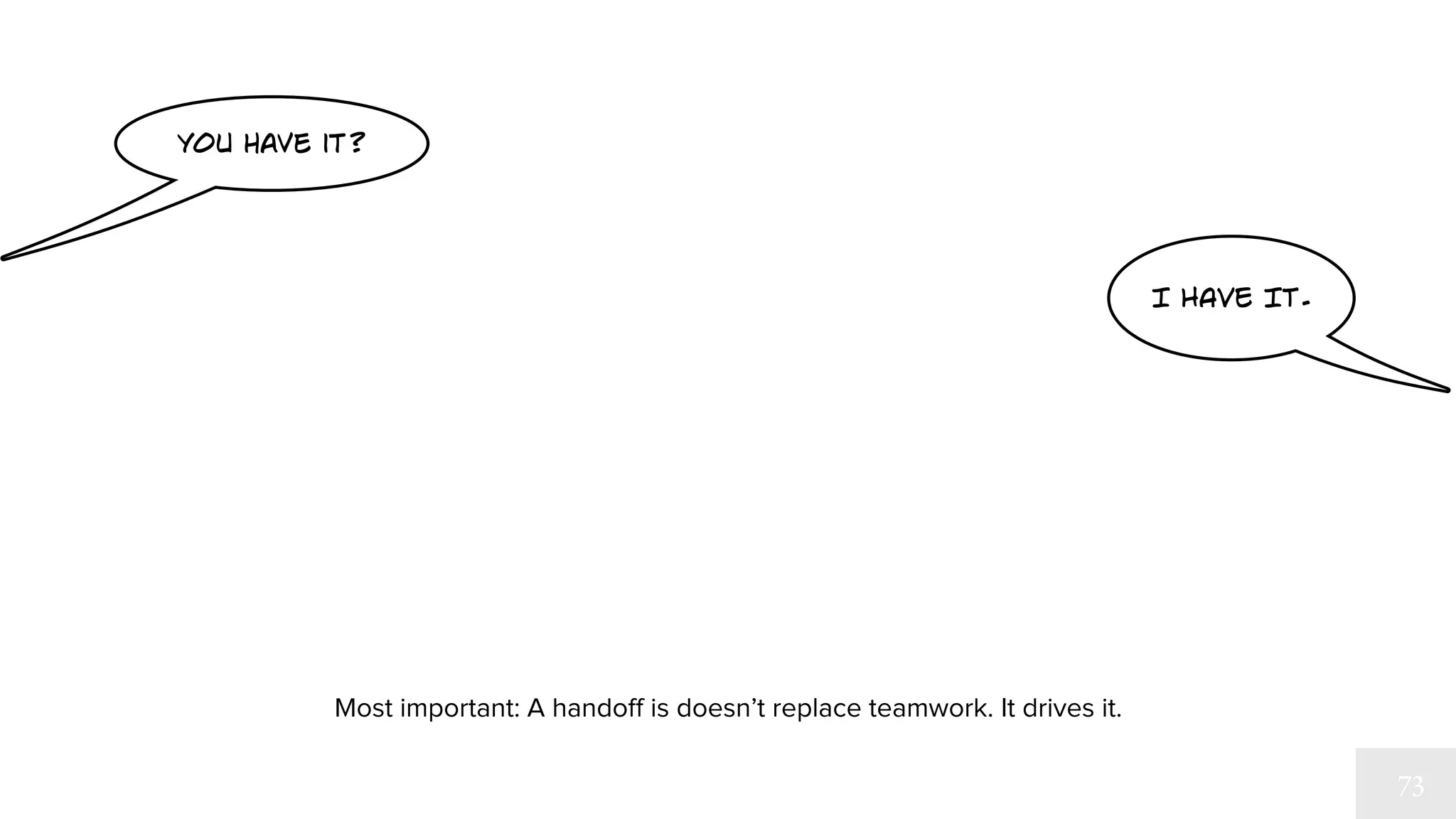
you have it? 
I HAVE IT. 
Most important: A handoff doesn’t replace teamwork. It drives it.
74 
THE END. Ian Lurie 
@portentint 
www.portent.com 
other presentations by me:
ON KINDLE 
bit.ly/onetrick 
A shameless plug: I wrote a book about business strategy. You should read it.

You have it? Tips for successful business handoffs

  • 1.
    ‘YOU HAVE IT?’ TIPS FOR SUCCESSFUL BUSINESS HANDOFFS BY IAN LURIE @PORTENTINT PORTENT, INC PORTENT.COM
  • 2.
  • 3.
    3 What’s ahandoff? Why do we care? How do we do it right? This is what I’m going to talk about.
  • 5.
    5 Wrong. That’sawfully narrow, don’t you think? It’s about more than sports.
  • 6.
    6 HANDOFF Passinga critical item from one person to another. That’s more like it.
  • 7.
    Yeah, you canhand off a football.
  • 8.
    By Portent, Inc.May 17, 2012 Google Cardio Strength Flexability Kinesis Functional Accessories The Method Wellness Integration Fitness Plans For you For your business 1000 px Logo Fitness equipment Get fit, stay fit Product content specific to B2C text Search 243,000 f Like this on Facebook 5,432 +1 this on Google 9,410 Tweet this More about the product specific to B2C, with images Company information Footer Click a tab and you're taken to a new page where you get content focused on B2B or B2C. Unique content, not the same stuff w/ different images. 5,432 Pin it …or a wireframe...
  • 9.
  • 10.
    …or a reallypretty dashboard…
  • 11.
  • 12.
    Handoffs are thespace between deliverables.
  • 13.
    Handoffs are akind of dark matter, holding everything together, but invisible…
  • 14.
    seriously? …until, ofcourse, you do it wrong. At that point, you fumble…
  • 15.
    …or leave someonehigh and dry.
  • 16.
    But my favoriteanalogy, and lesson, is target shooting.
  • 17.
    Squishy liberal thatI am, you’d think I’d hate anything that goes ‘pew’ or ‘twang’.
  • 18.
    makes no sense, right? But I quite like target shooting. As long as the targets are paper.
  • 19.
    you have it? A friend of mine was once showing me a rifle, and as he handed it to me, he asked “You have it?”
  • 20.
    you have it? I HAVE IT. Until I answered, “I have it,” he didn’t release it.
  • 21.
    you have it? I HAVE IT. Best. Handoff. Ever.
  • 22.
    sonofa... twang Thealternative is messy (not this dramatic – no one in their right mind hands over a loaded weapon).
  • 23.
    23 “YOU HAVEIT?” “ARE YOU READY TO ACCEPT RESPONSIBILITY?” ‘You have it?’ makes it clear that you expect the other person to now accept responsibility for ‘it.’
  • 24.
    24 “YOU HAVEIT?” “DO YOU UNDERSTAND WHAT HAPPENS NEXT?” ‘You have it?’ asks the person receiving the handoff whether they know what to do next.
  • 25.
    25 “YOU HAVEIT?” “WILL YOU PLEASE NOT ACCIDENTALLY SHOOT US BOTH?” ‘You have it?’ asks the receiving party if they know what they’re doing.
  • 26.
    26 “I HAVEIT.” “I ACCEPT RESPONSIBILITY FOR THIS THING.” ‘I have it’ says that you know you’re now responsible, and you’re OK with that.
  • 27.
    27 “I HAVEIT.” “I UNDERSTAND WHAT TO DO NEXT.” ‘I have it’ says you know the next steps.
  • 28.
    28 “I HAVEIT.” “I WILL NOT DROP IT.” ‘I have it’ is an implicit promise to your team that you’re going to handle things.
  • 29.
    29 YOU/I THENEXT ACTOR ‘You/I’ is the next actor – the person who must now take action.
  • 30.
    30 HAVE CLARITYCOMMUNICATED AND RECEIVED There’s a common lexicon here, too: ‘have’ means you know what to do.
  • 31.
    31 IT THETASK ‘It’ is the task to be performed and the thing to be delivered.
  • 32.
    32 IT THETASK Expertise is assumed. The person handing off shouldn’t have to provide the step by step.
  • 33.
    33 IT THETASK For example, I shouldn’t have to tell you, “Please leave the safety on. Please only point downrange.”
  • 34.
    34 IT THETASK These are assumed knowledge. If you don’t have it, you must immediately say ‘No!!! I don’t have it!!!’
  • 35.
    35 IT THETASK Clarity makes or breaks the handoff. Everyone involved must know what the result will be. Especially clients!
  • 36.
    36 DOING ITRIGHT This all seems simple, but there’s a right and wrong way to ask the question. You must understand what you’re asking.
  • 37.
    37 “YOU HAVEIT?” This question implies several others. Know what they are, and then answer them.
  • 38.
    38 Can youhold on to what I’m handing you? First, can the recipient handle this? Are they OK with it?
  • 39.
    39 Do youknow what to do next? Second, are my instructions clear?
  • 40.
    40 I’ve clearlycommunicated expectations: What needs to be done, by when, and what the deliverable should look like. Third, is there absolute clarity on the what, when and how?
  • 41.
    41 I’ve clearlycommunicated expectations: What needs to be done, by when, and what the deliverable should look like. What must the recipient deliver? A report? A solution? Something else?
  • 42.
    42 I’ve clearlycommunicated expectations: What needs to be done, by when, and what the deliverable should look like. When must they deliver it? Be precise. ‘Next week’ isn’t precise. ‘Wednesday before 5’ is precise.
  • 43.
    43 I’ve clearlycommunicated expectations: What needs to be done, by when, and what the deliverable should look like. How must they deliver it? Is an e-mail OK? Should it be formal? Will they be presenting it verbally?
  • 44.
    44 I’ve clearlycommunicated expectations: What needs to be done, by when, and what the deliverable should look like. Also, what should the deliverable contain? Tons of detail? A summary? Both?
  • 45.
    45 I’ve clearlycommunicated expectations: What needs to be done, by when, and what the deliverable should look like. This one is really important with clients. Define ‘it’ well in advance. Make sure it’s what they want.
  • 46.
    46 I’ve clearlycommunicated expectations: What needs to be done, by when, and what the deliverable should look like. If they expect a football and you give them an anvil, there’ll be problems.
  • 47.
    47 THE BLANKSHEET OF PAPER TEST WILL SOMEONE, SEEING/HEARING THESE INSTRUCTIONS ON A ‘BLANK SHEET OF PAPER’ A WEEK FROM NOW, KNOW WHAT TO DO? The blank sheet of paper test is a fantastic benchmark. Check your handoff against it.
  • 48.
    48 “I haveit.” When the recipient says ‘I have it,’ they’re stating…
  • 49.
    49 “I knowwhat I’m supposed to do.” …they have the requisite expertise, and don’t need a step-by-step…
  • 50.
    50 I’ve acceptedresponsibility, acknowledging I know: What needs to be done, by when, and what the deliverable should look like. …they know the what, when and how…
  • 51.
    51 “I haveno further questions, unless conditions change.” …and, barring changed conditions, they have no further questions.
  • 52.
    52 CONDITIONS CHANGEWHEN I’VE FOUND SOMETHING UNEXPECTED, OR DELIVERABLE EXPECTATIONS CHANGE. Conditions change when new stuff arises. It’s also OK to ask clarification later, but aim to avoid that…
  • 53.
    53 CONDITIONS CHANGEWHEN I’VE FOUND SOMETHING UNEXPECTED, OR DELIVERABLE EXPECTATIONS CHANGE. …because extra round trips and handoffs waste a lot of time and energy.
  • 54.
    54 “I’ve gotit.” Saying ‘I’ve got it’ is a pretty big deal. Make sure you really do.
  • 55.
    55 HANDING ITBACK It’s not a one-way process. The recipient hands it back, or to another person.
  • 56.
    you have it? I HAVE IT. Use the same process!!! Don’t get sloppy.
  • 57.
    57 Do thesame thing. No shortcuts. This.
  • 58.
    58 MAINTAIN EYECONTACT A good handoff means eye contact. Everyone’s aware that it’s happening.
  • 59.
    59 you haveit? whatever. BADBADBAD NO BADBAD NO NEVER In this situation, someone’s going to fail the handoff. If I say “I don’t have it,” will they hear me? No.
  • 60.
    sonofa... So badthings happen. twang
  • 61.
    61 Over-communicate. Over-communicate!Repeat! Go to a level of detail that seems downright silly!
  • 62.
    62 Check backin. Most important, check back in.
  • 63.
    63 “Hey, rememberyou have it. Any questions?” Give a reminder, that they’ve said “I have it” and that you’re there to help.
  • 64.
    64 “I stillhave it. It’s going well.” Send updates. Nothing builds trust and confidence like an update.
  • 65.
    65 “I thoughtI had it. Now I don’t.” Updates are particularly important if things go wrong. Surprises are bad.
  • 66.
    66 CONSISTENT LANGUAGE Consistent language leads to clarity. The “You have it,” “I have it” is a great demonstration.
  • 67.
    67 “I haveit.” Everyone understands what ‘have it’ means in this context, and it doesn’t change.
  • 68.
    68 “You haveit?” See?
  • 69.
    69 Consistent languagefosters clarity.
  • 70.
    70 A REFRESHER Walk away understanding…
  • 71.
    71 “You haveit?” “I have it.” Use consistent language with absolute clarity of the implicit questions. Codify it.
  • 72.
    72 Over-communicate. Over-communicateto absurdity in all details.
  • 73.
    you have it? I HAVE IT. Most important: A handoff doesn’t replace teamwork. It drives it.
  • 74.
    74 THE END.Ian Lurie @portentint www.portent.com other presentations by me:
  • 75.
    ON KINDLE bit.ly/onetrick A shameless plug: I wrote a book about business strategy. You should read it.