Download as KEY, PPTX
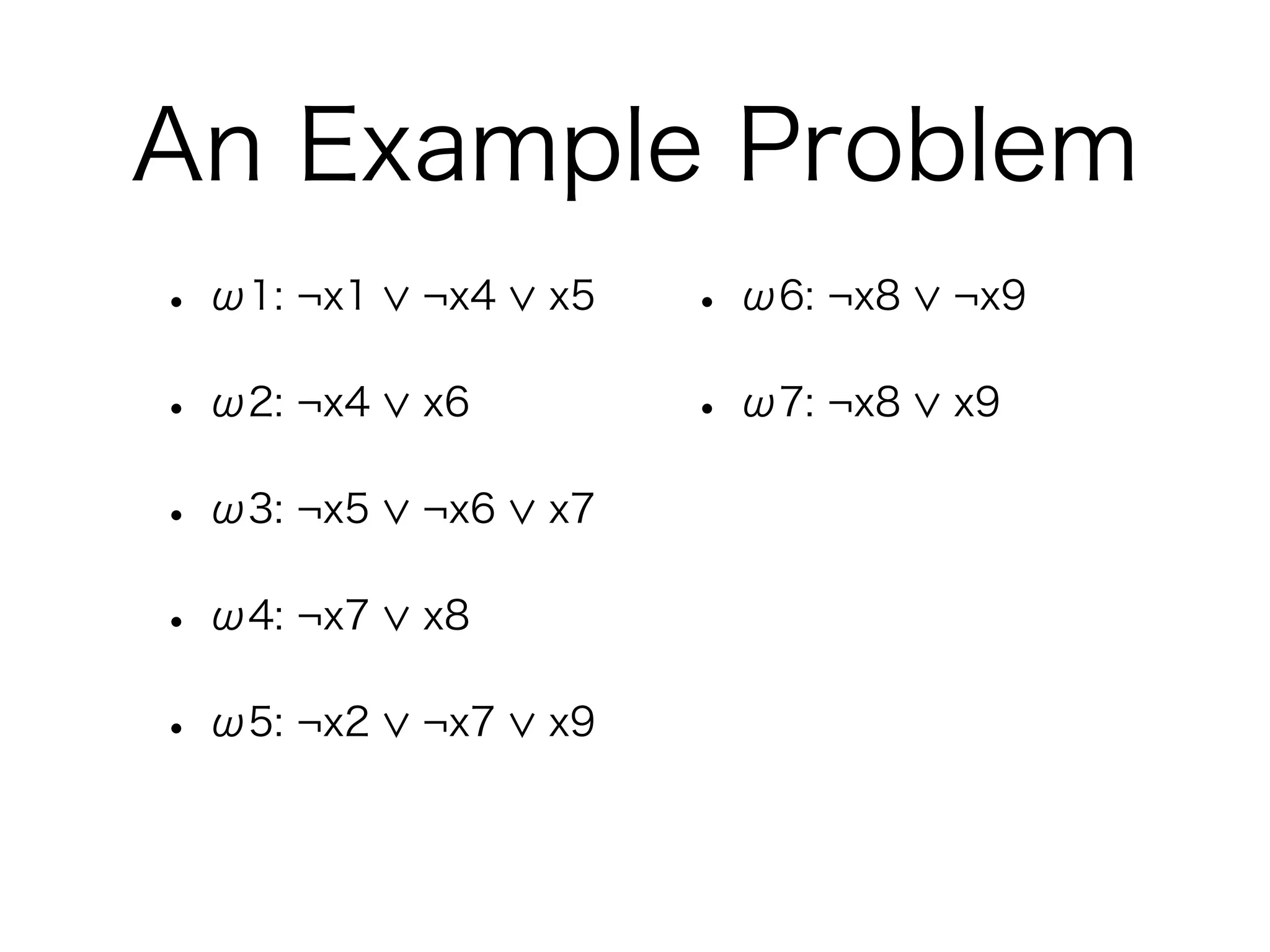
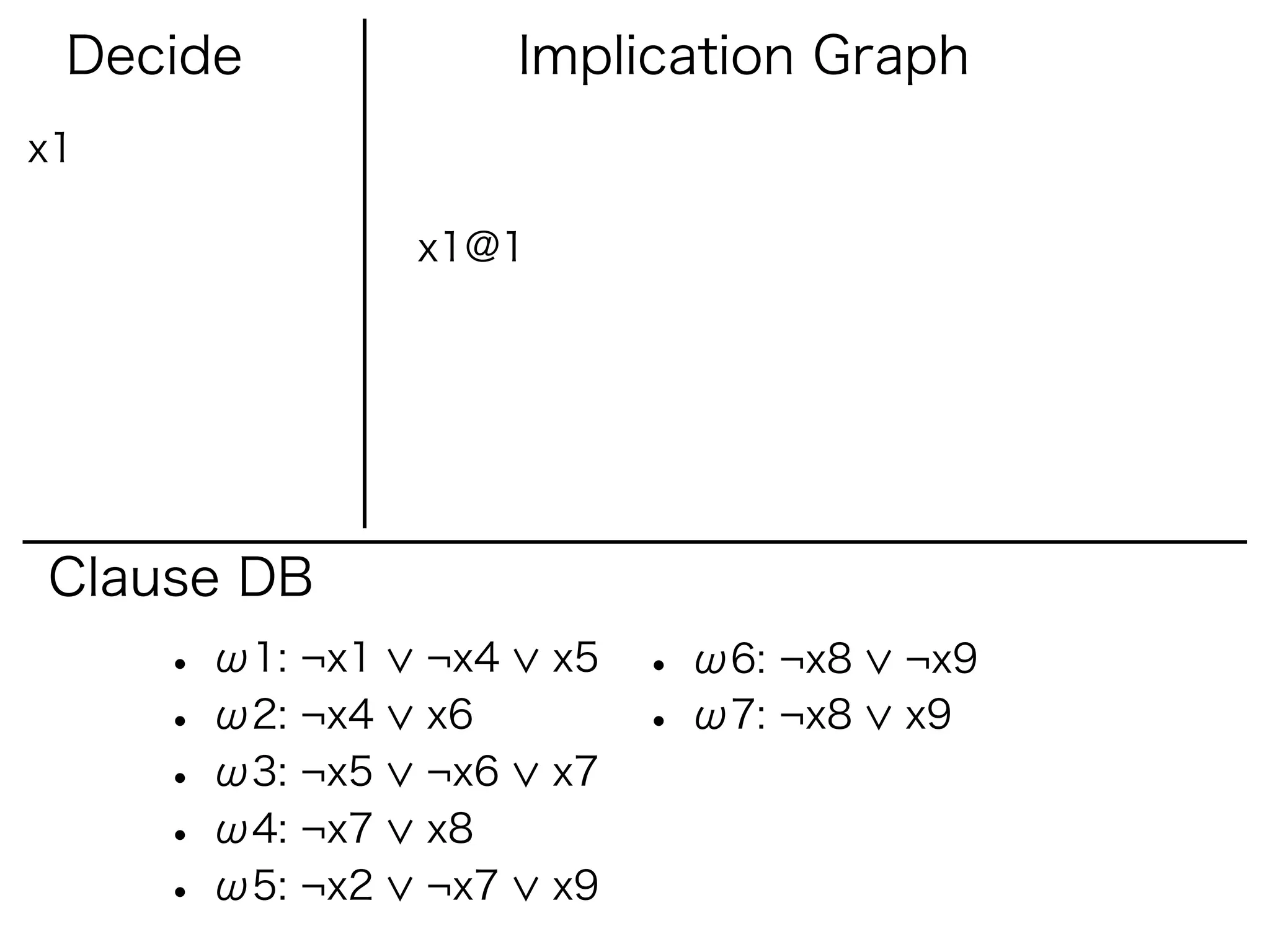
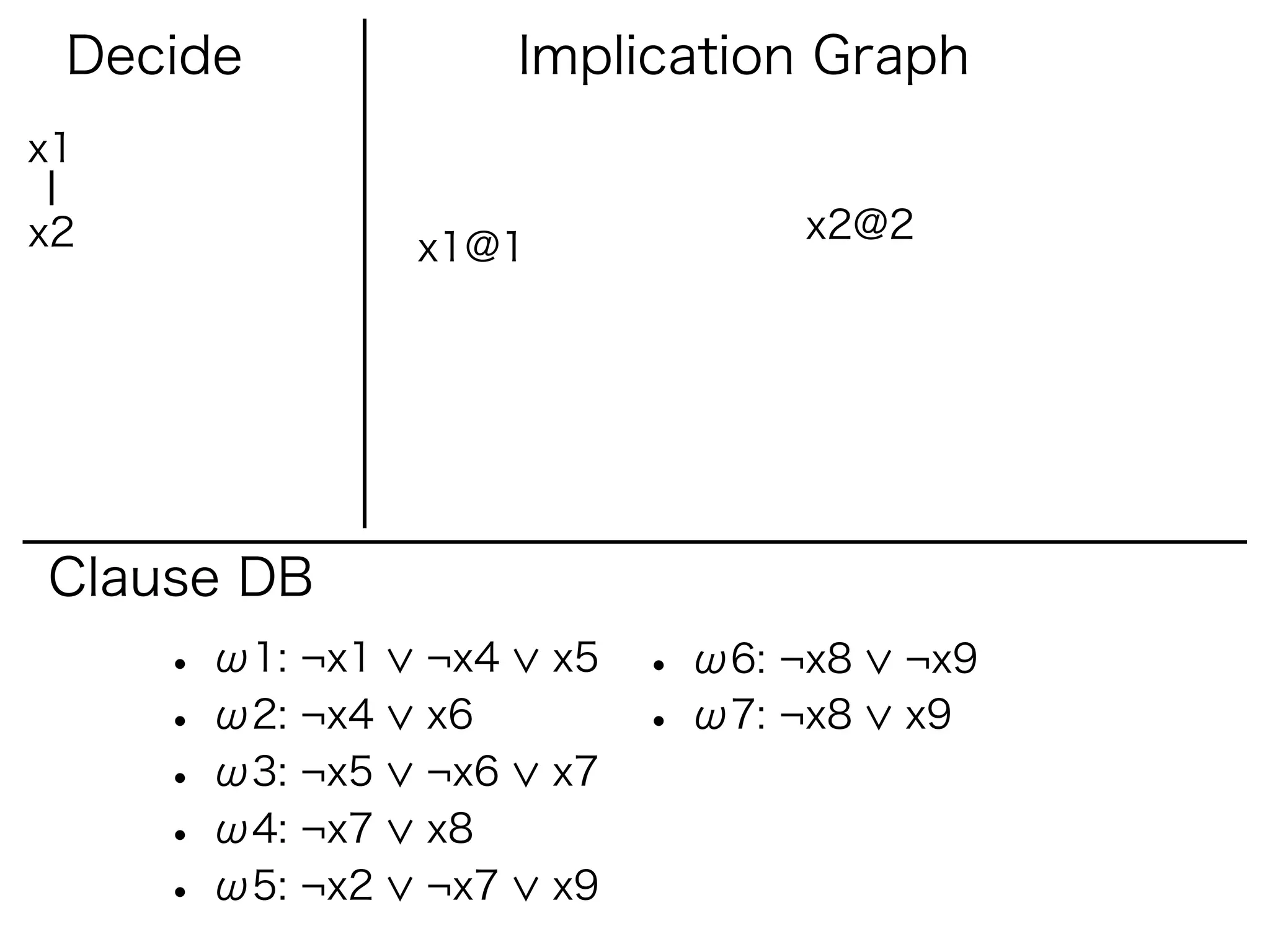
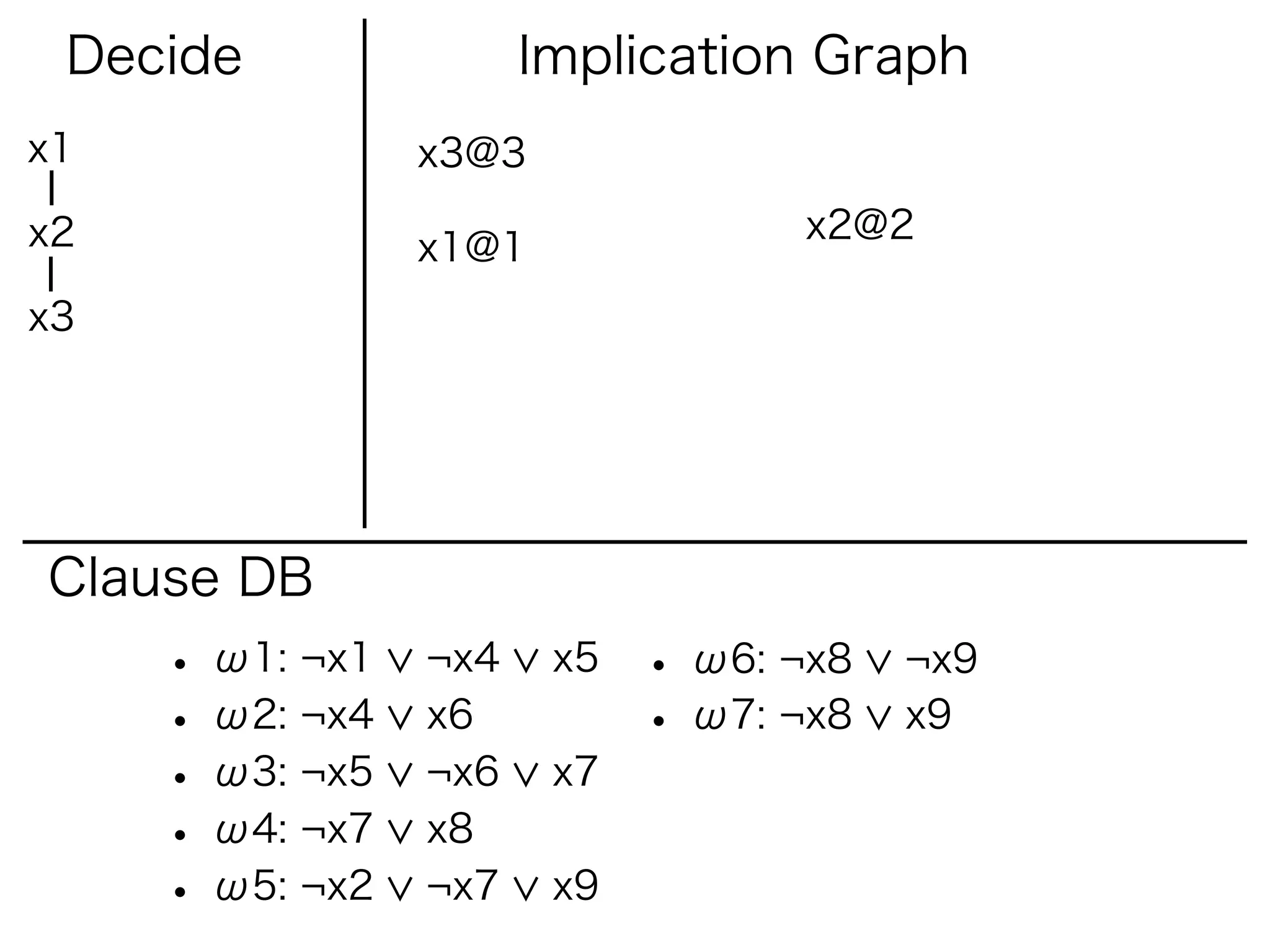
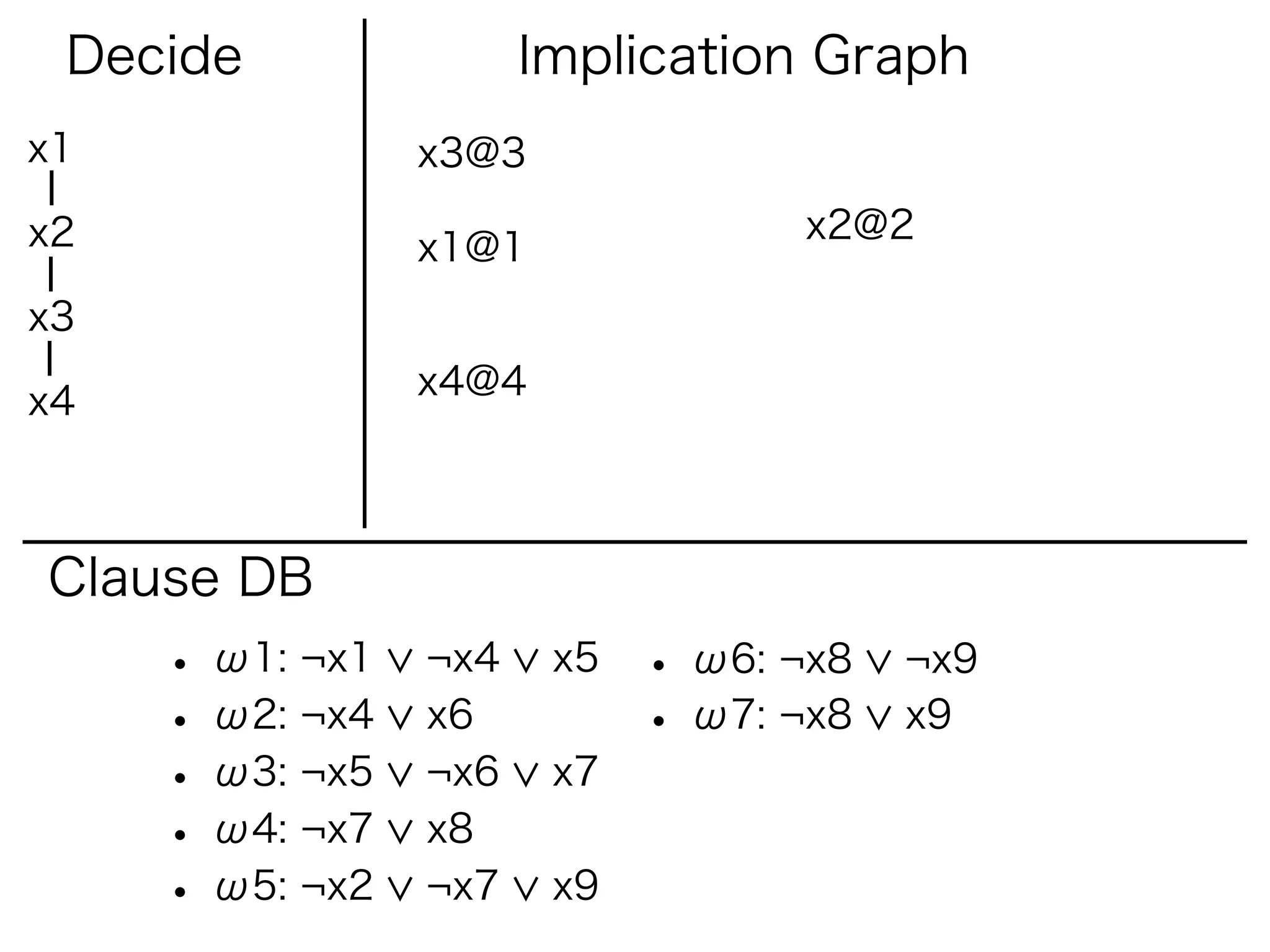
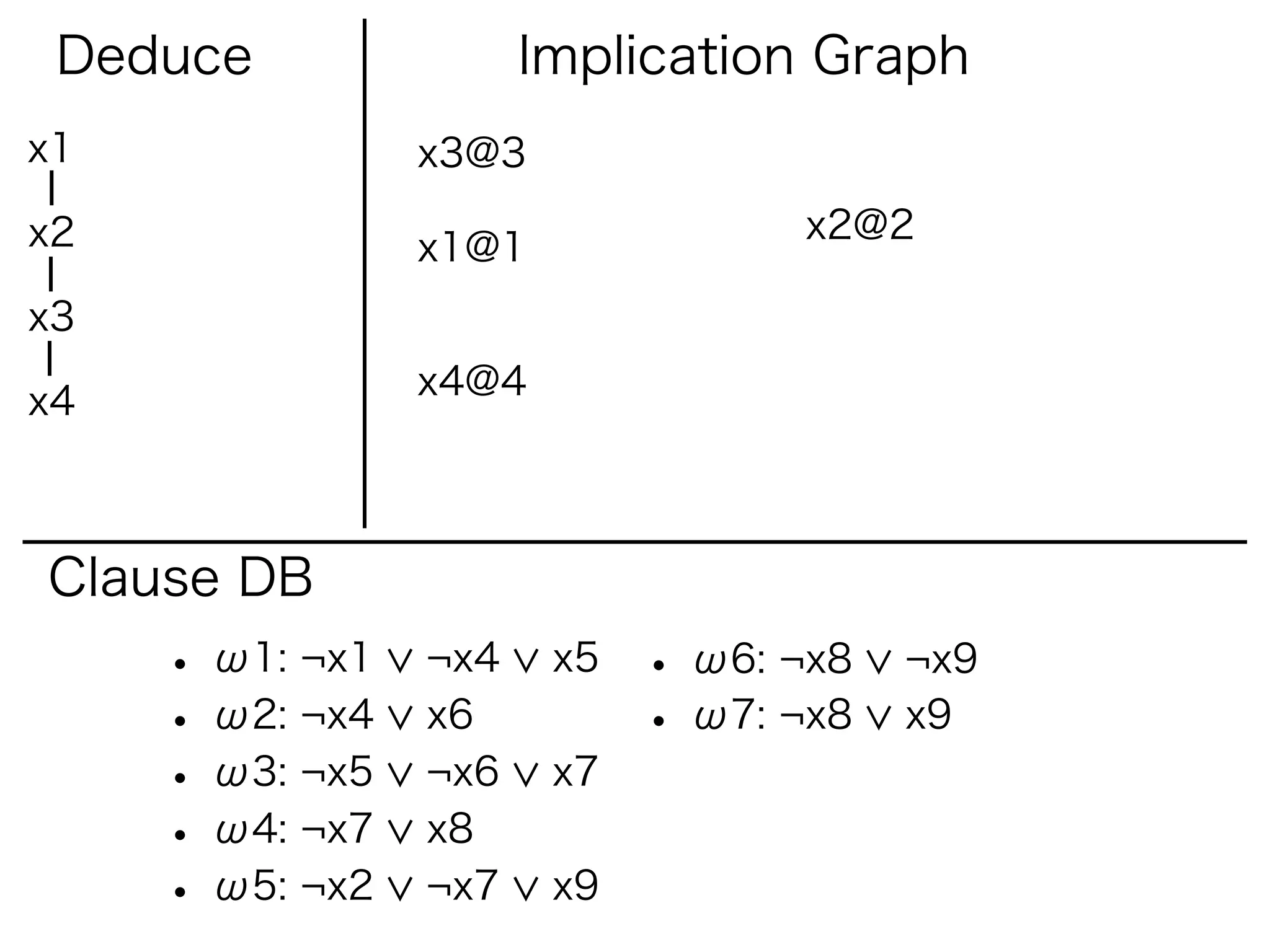
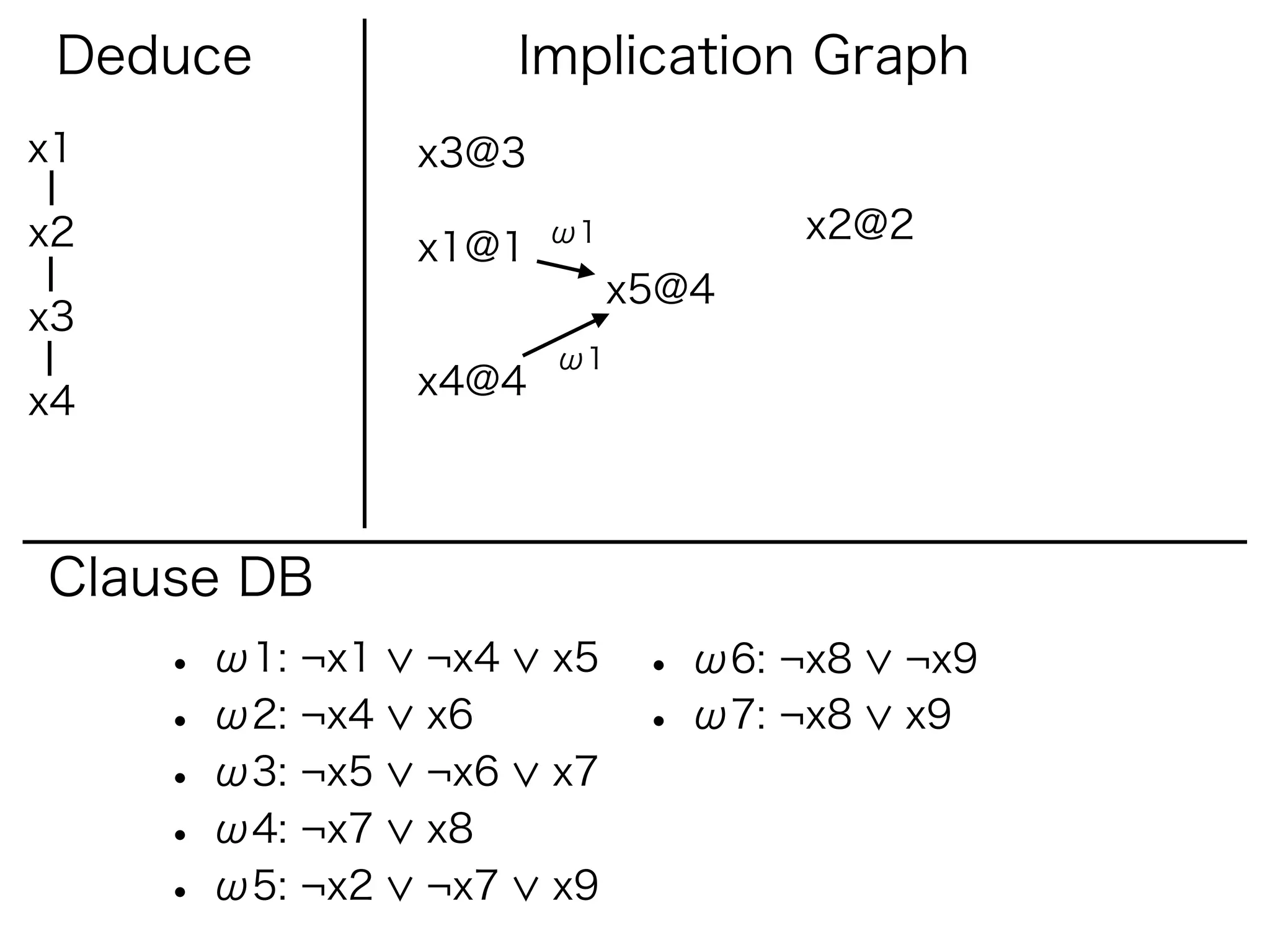
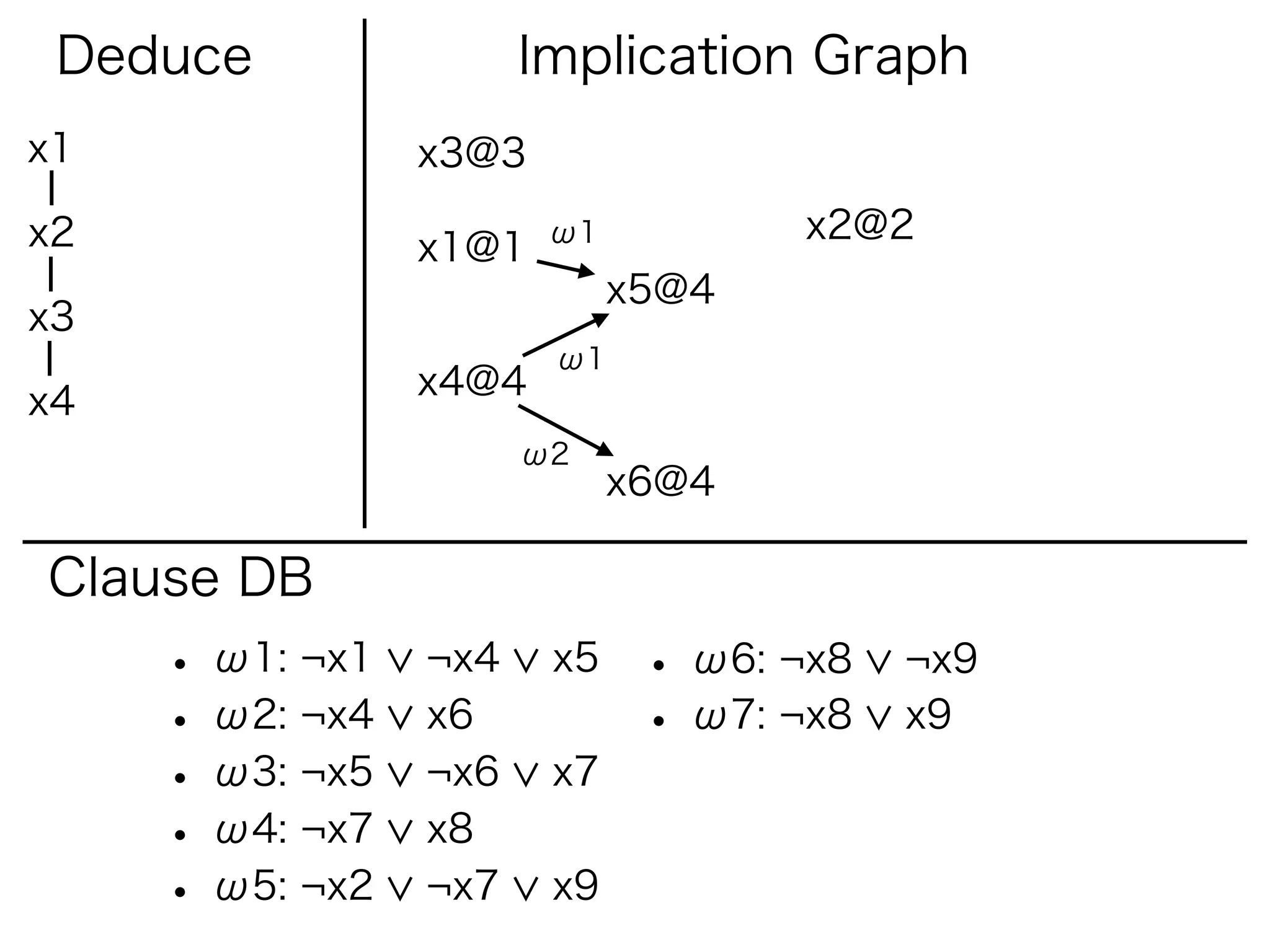
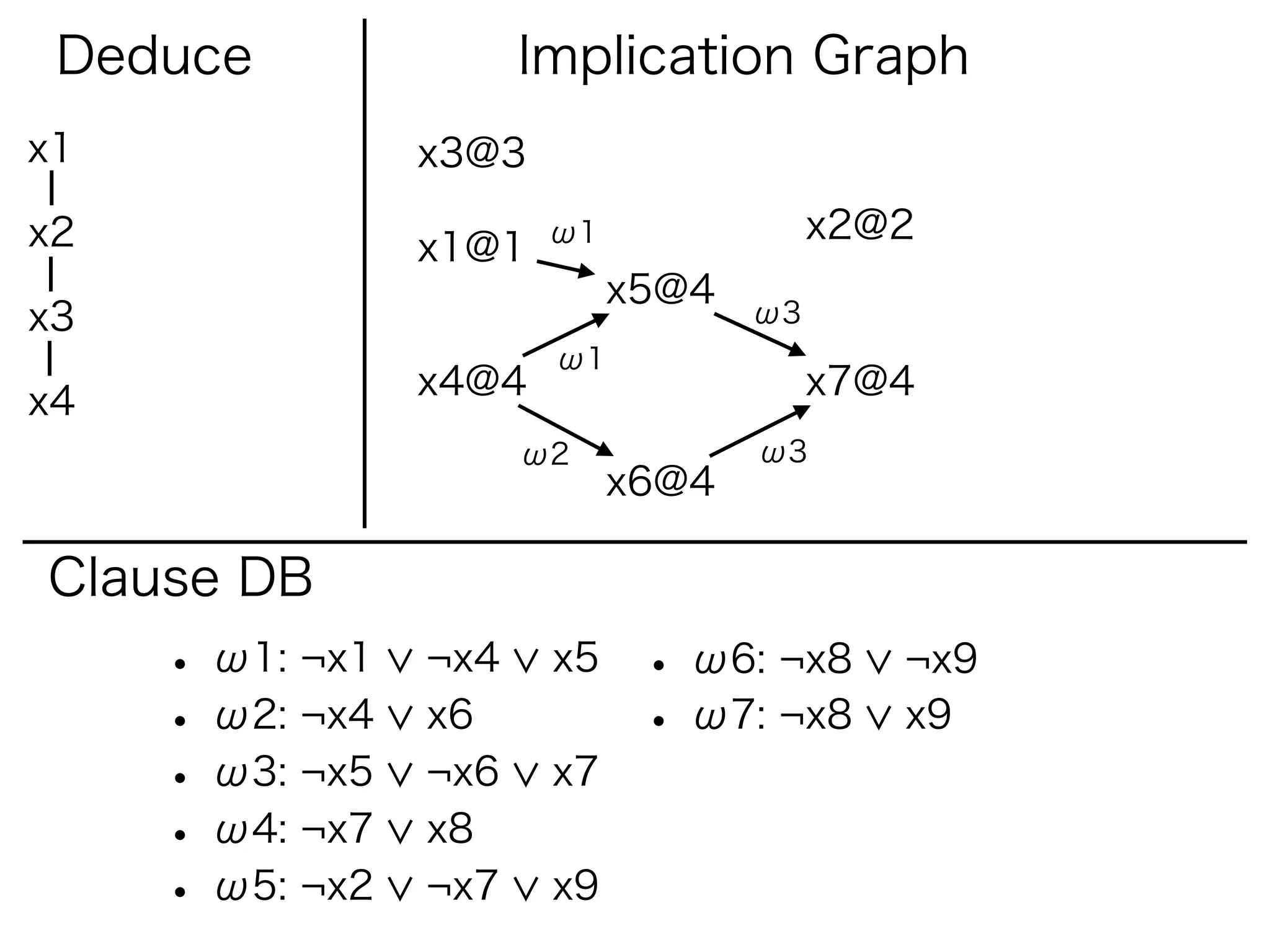
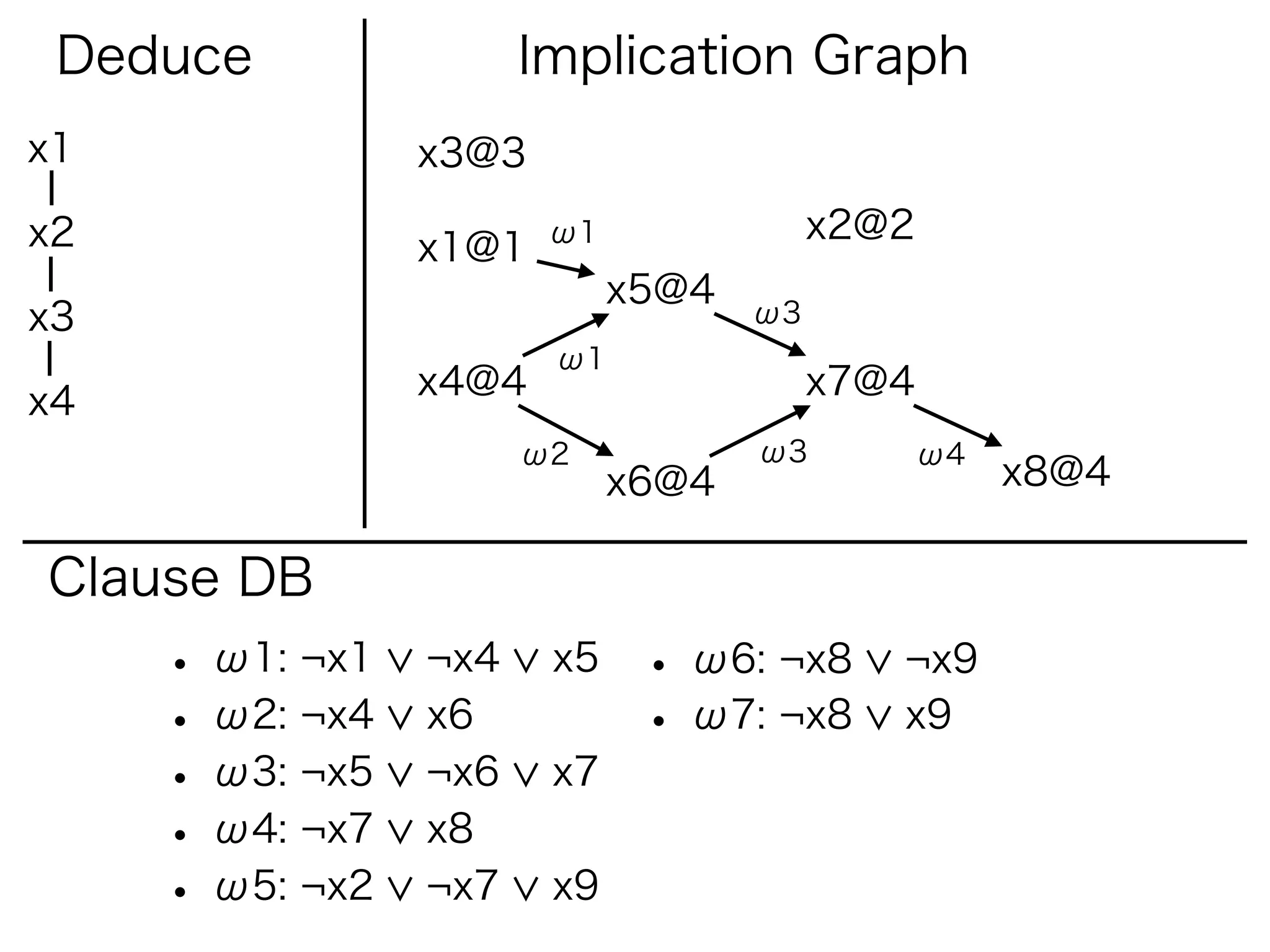
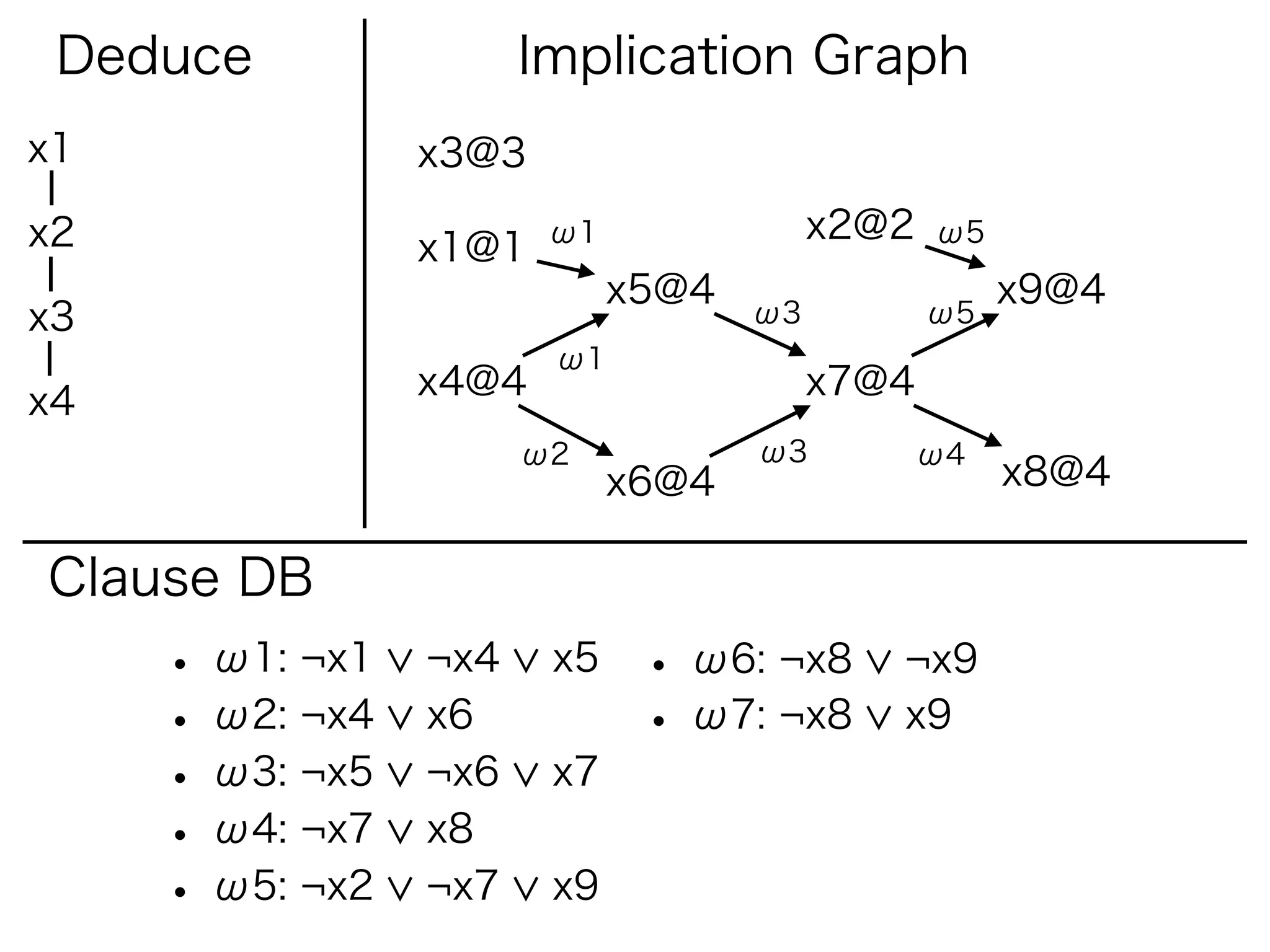
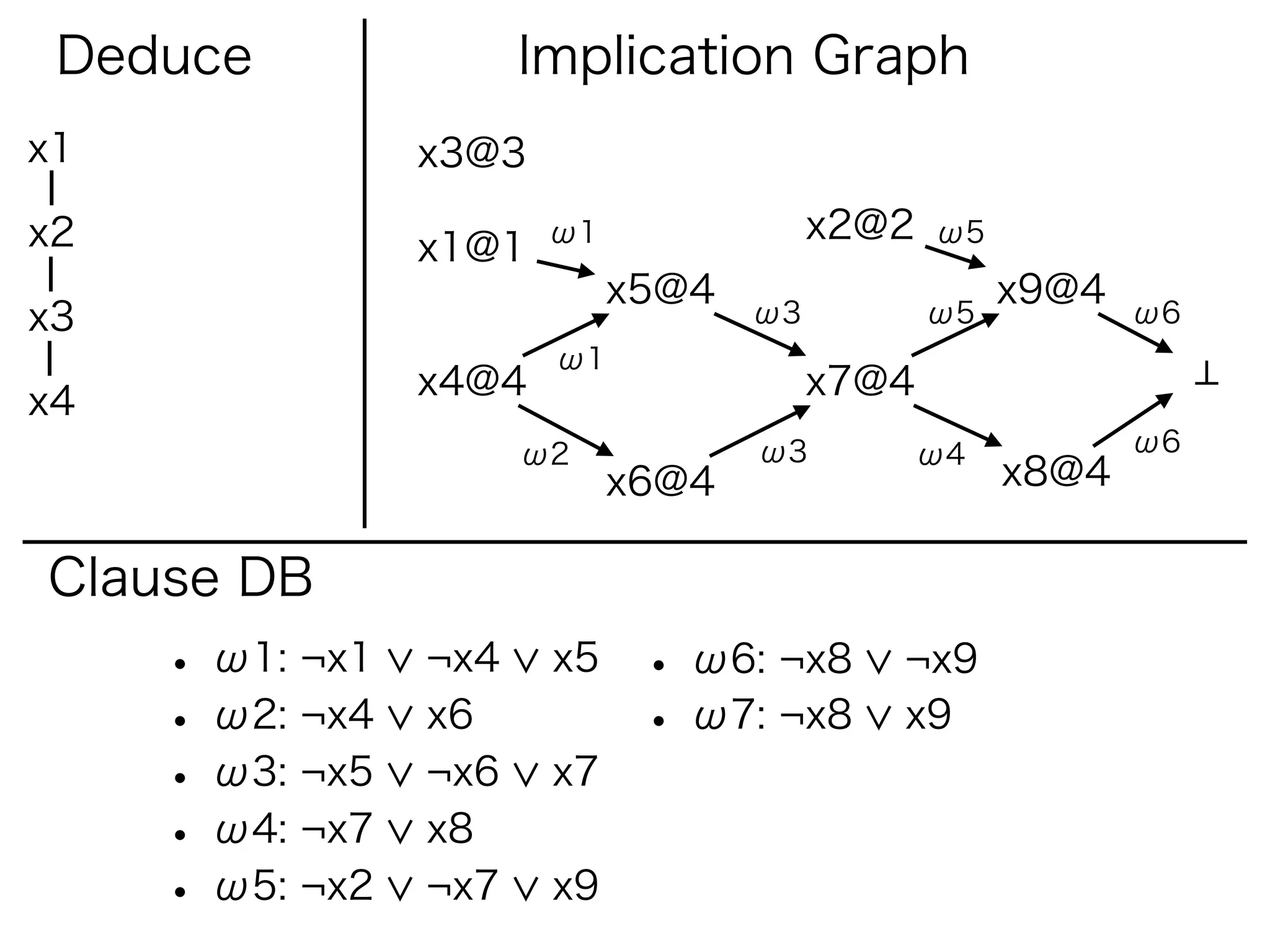
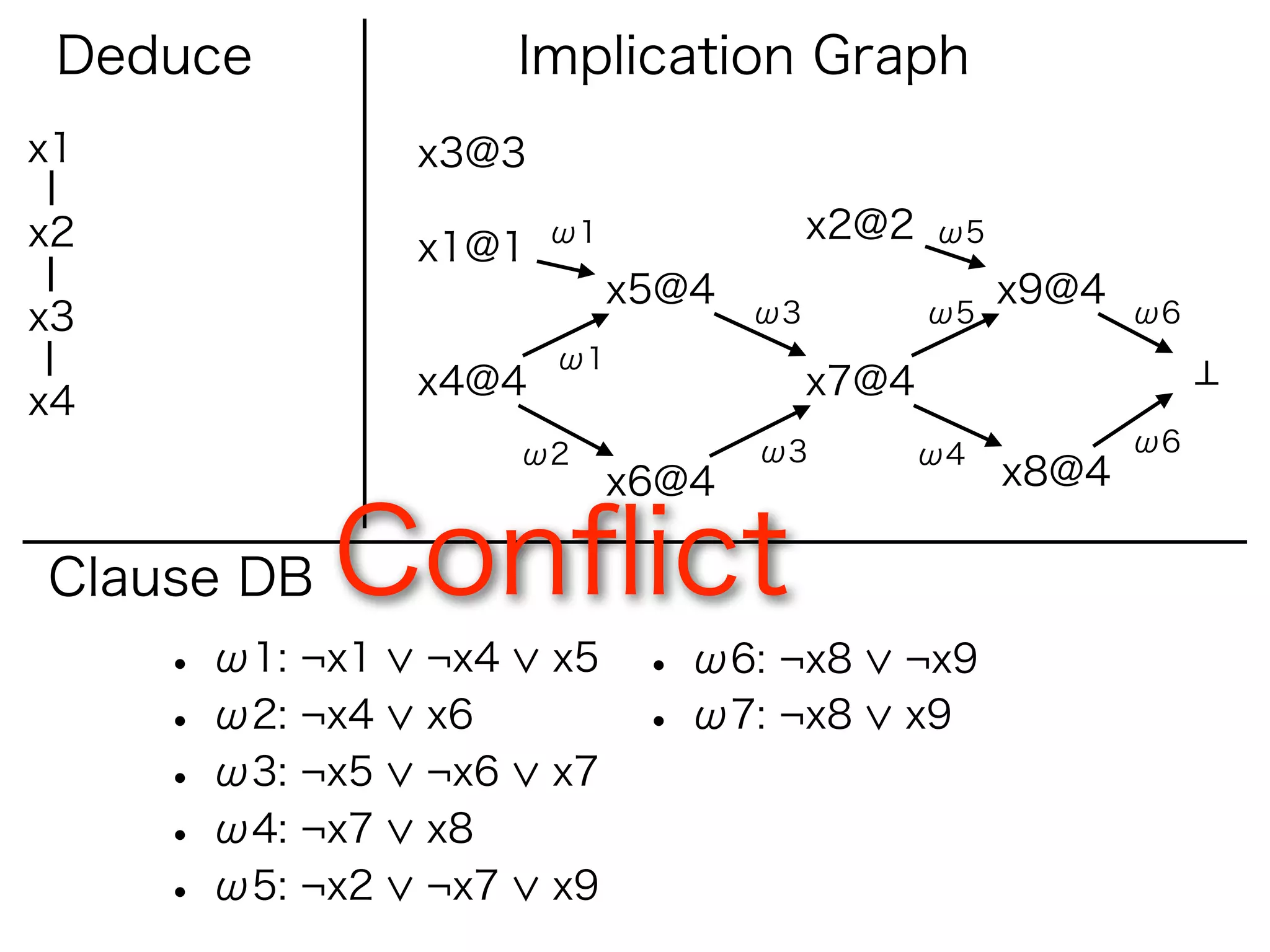
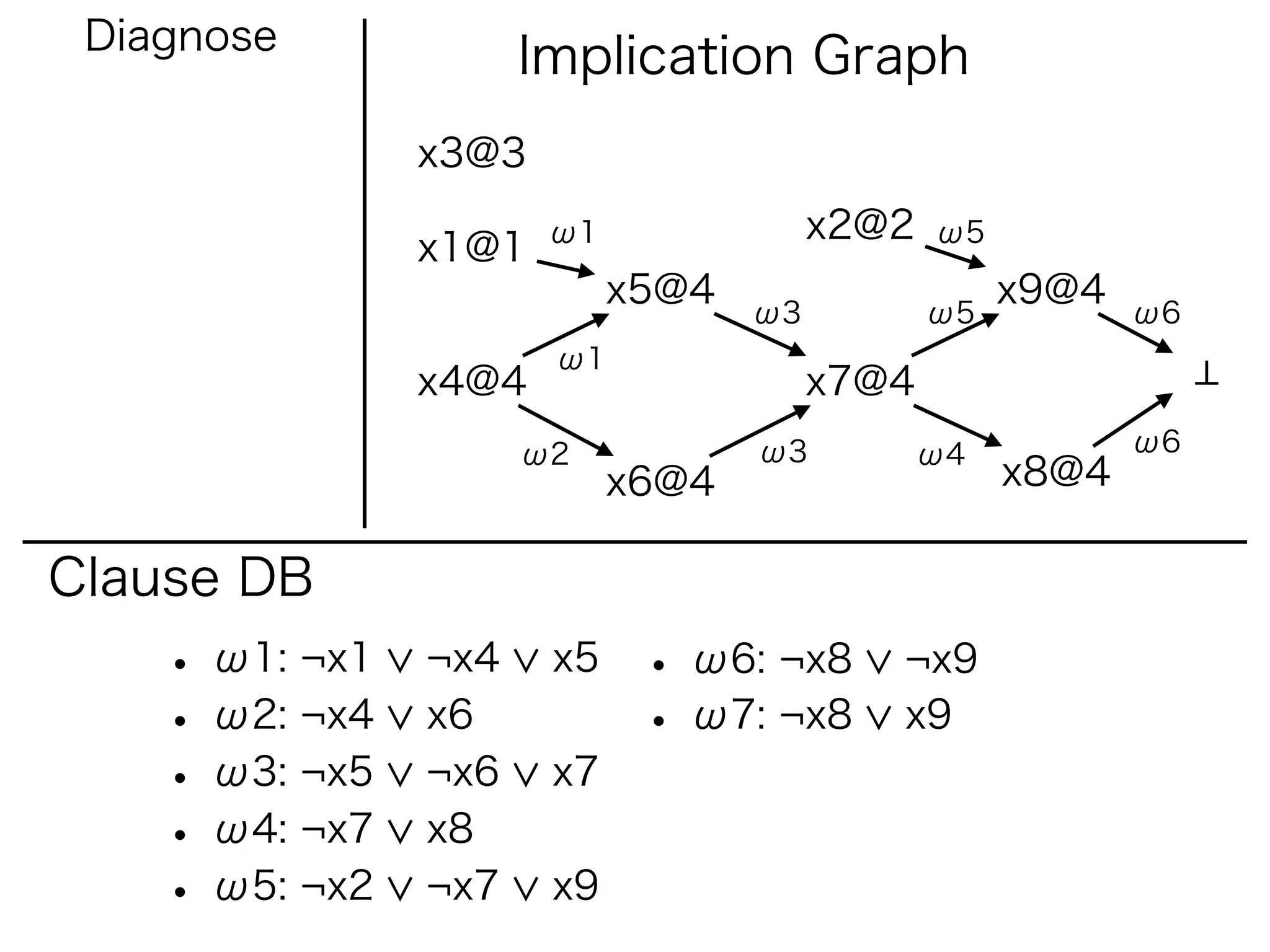
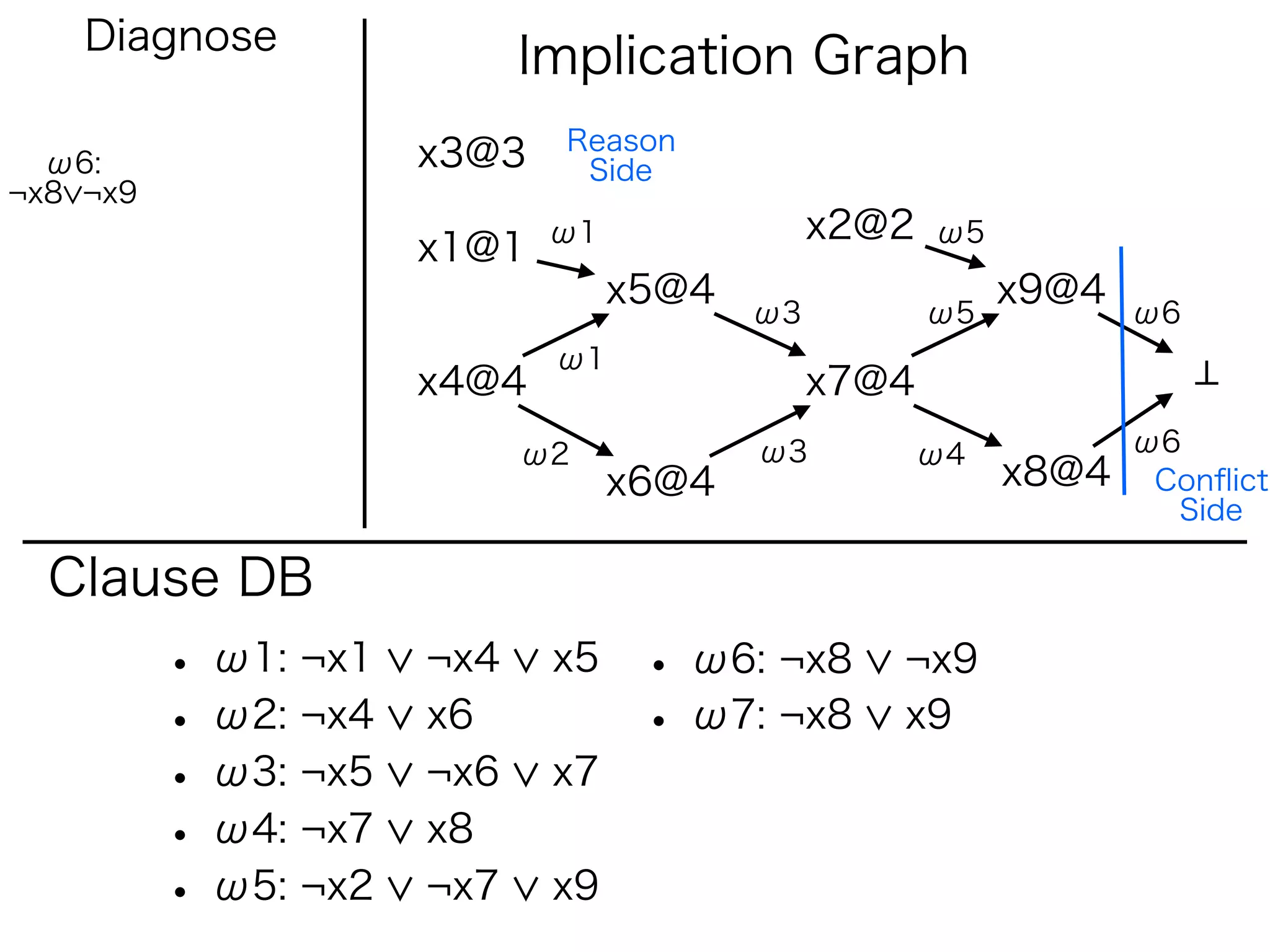
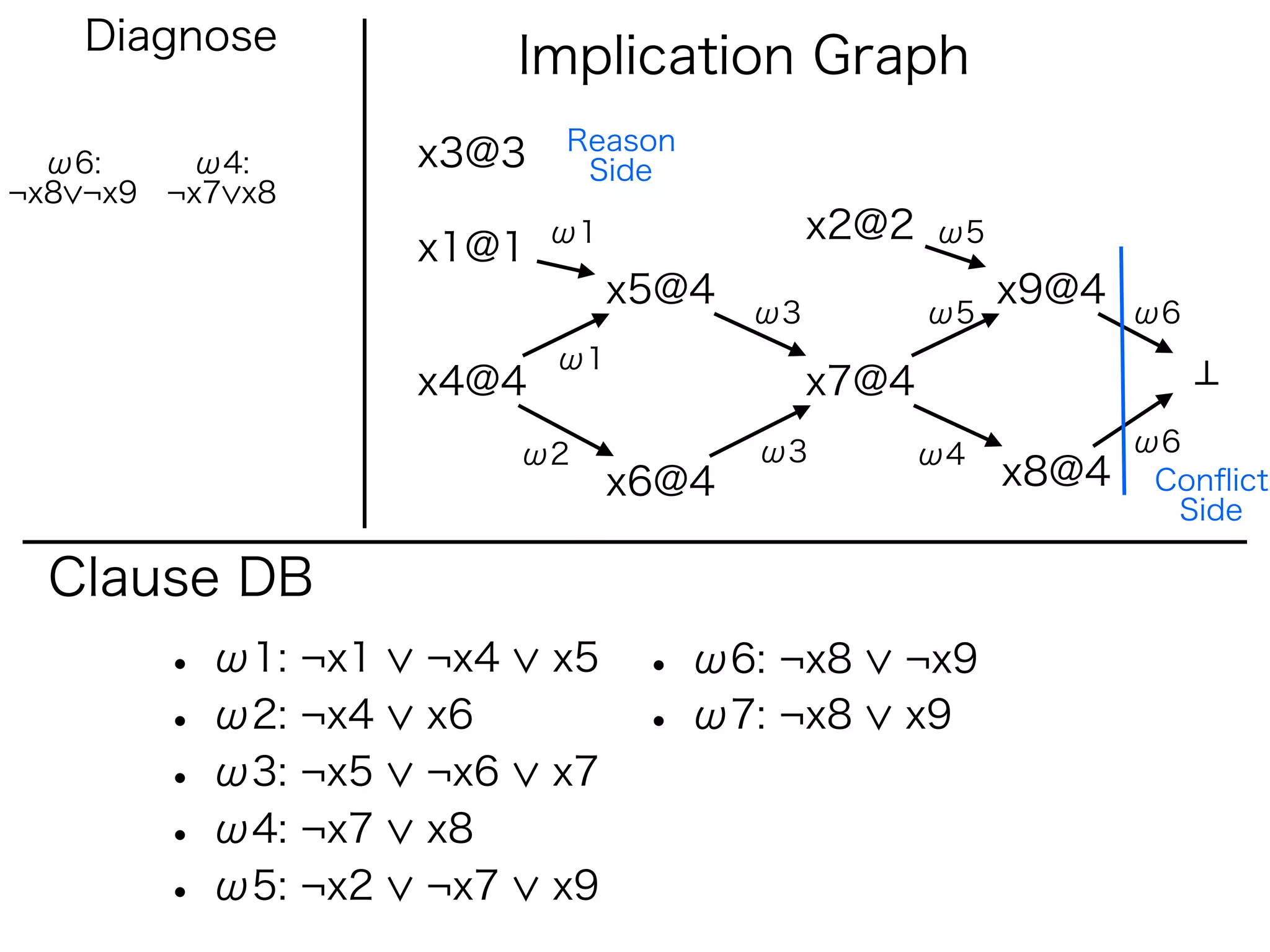
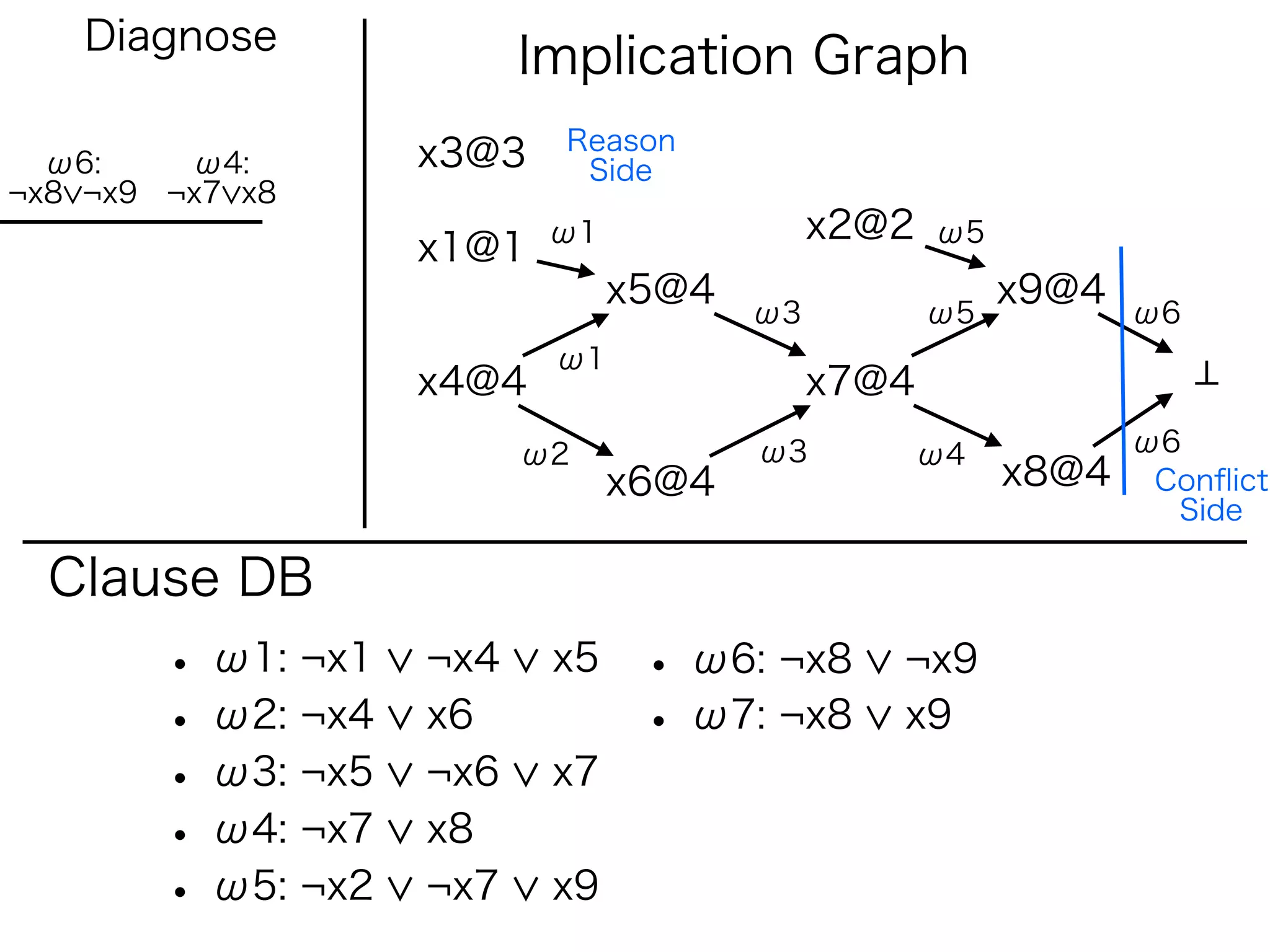
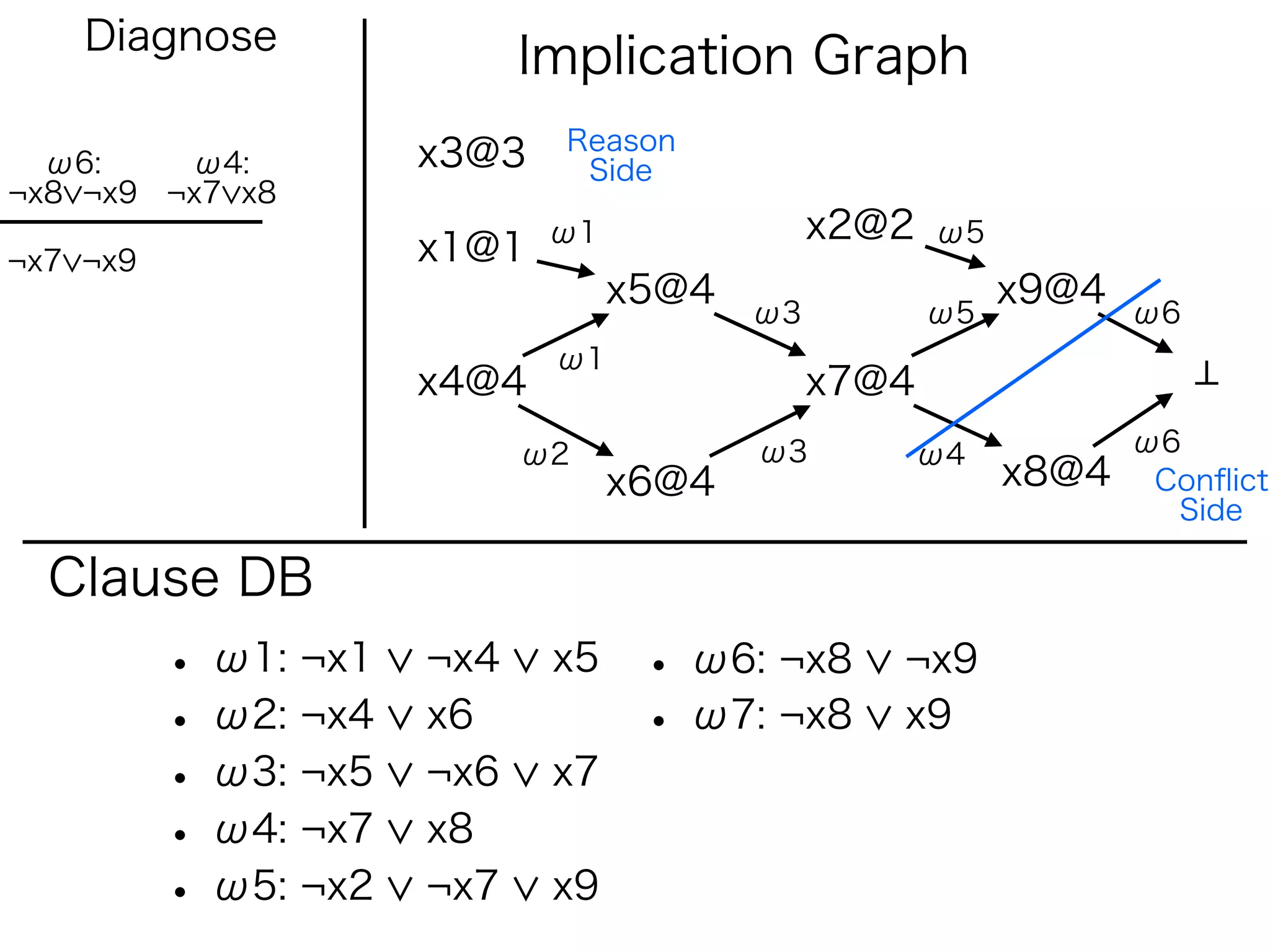
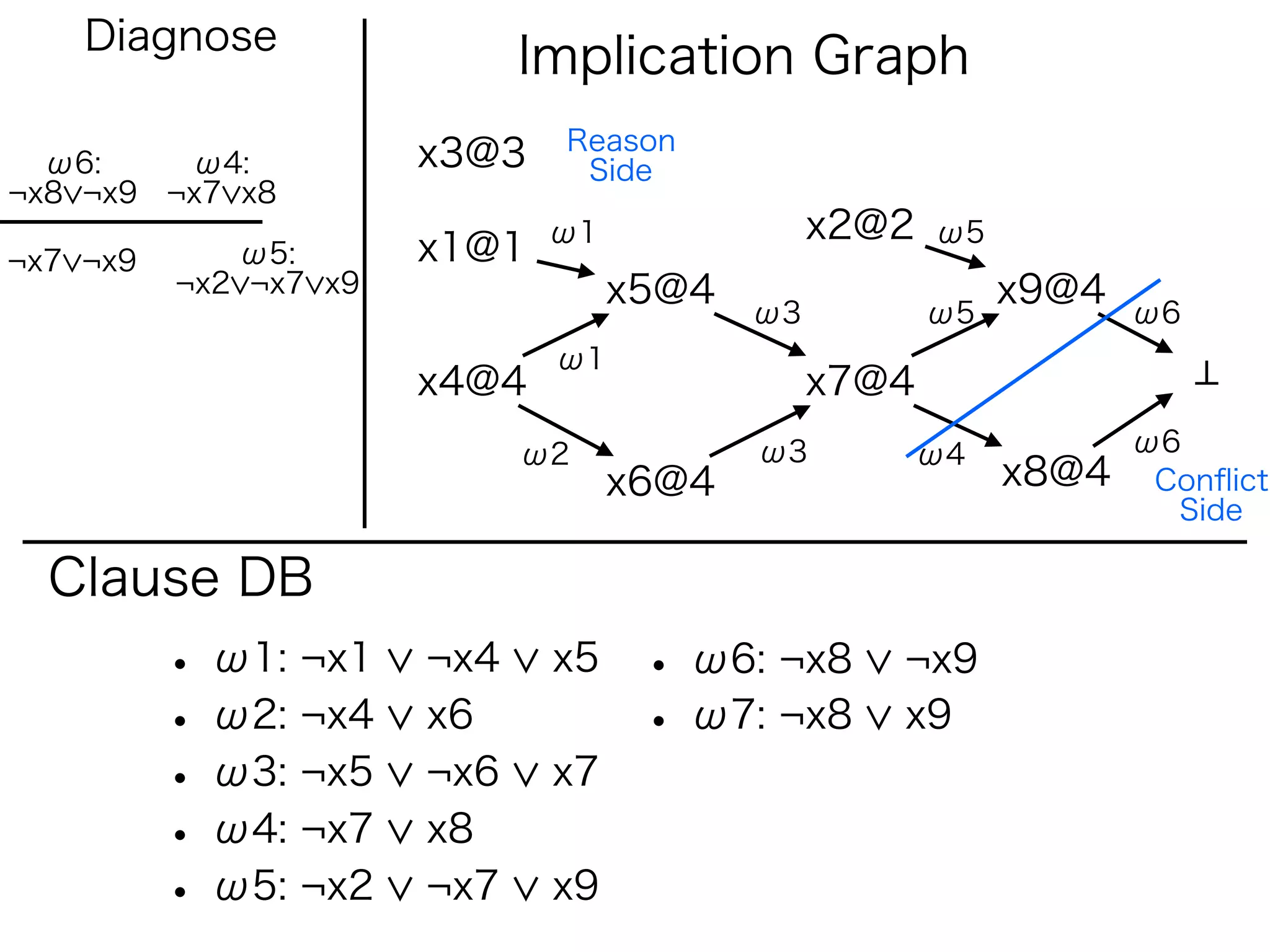
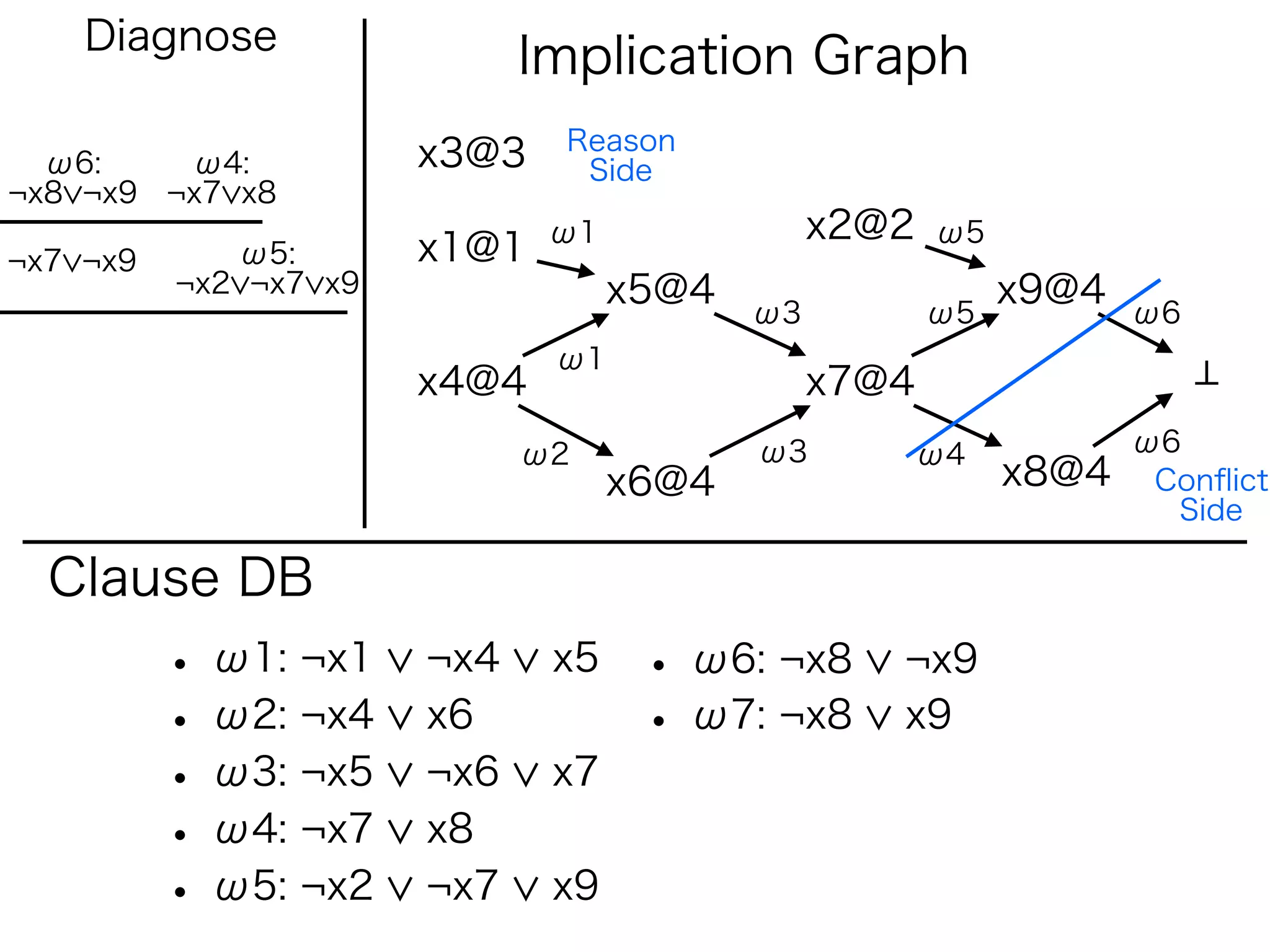
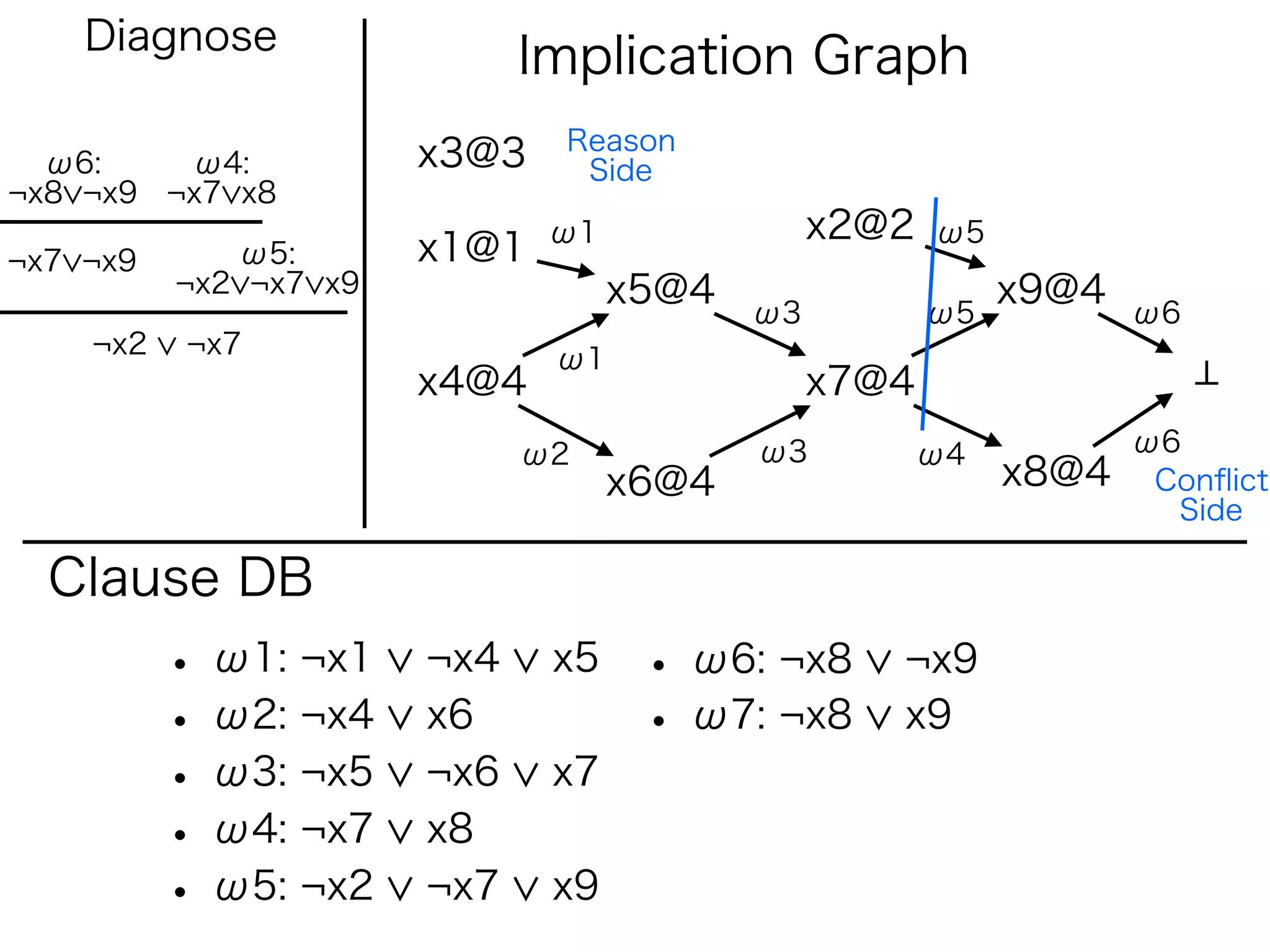
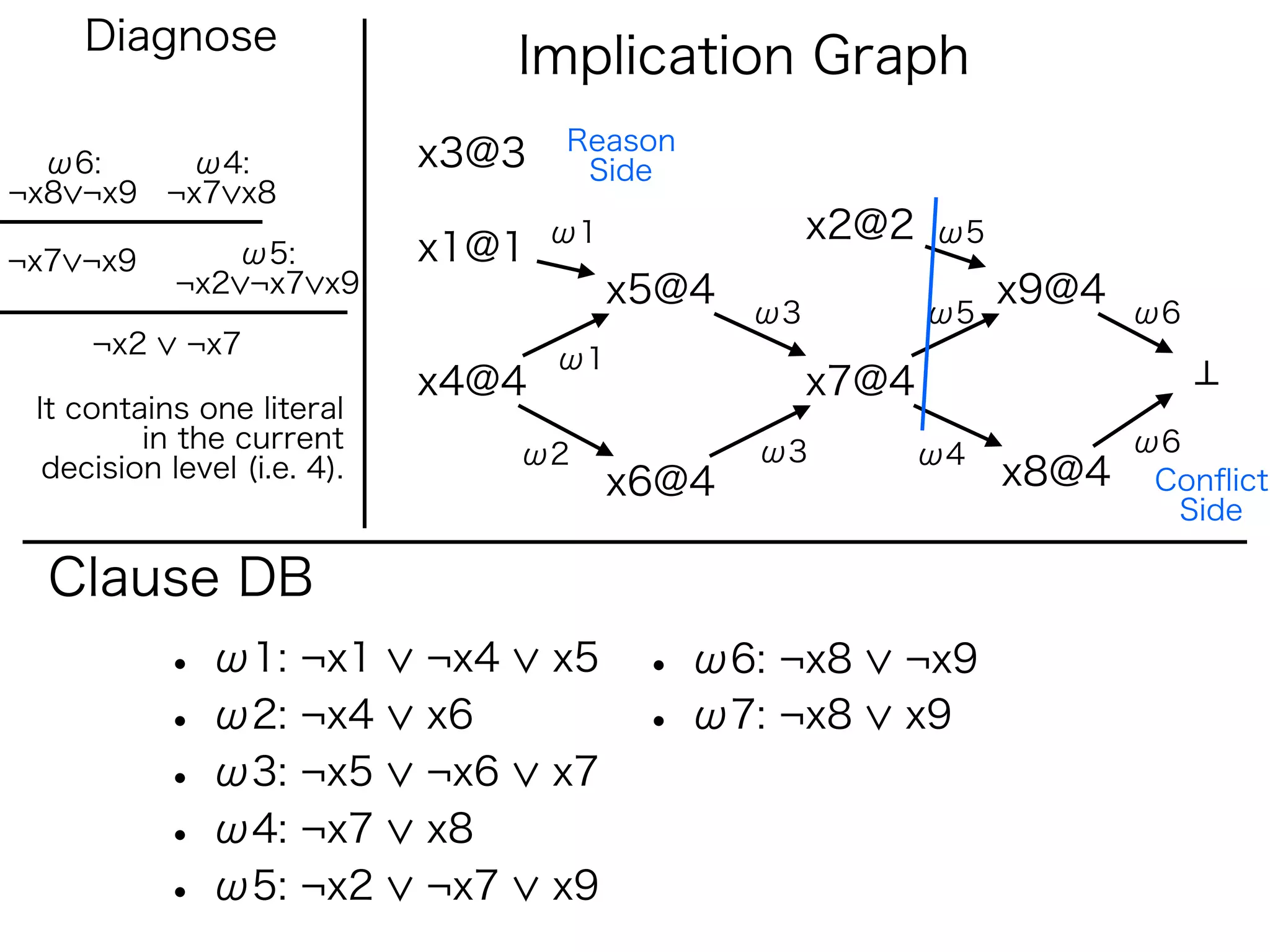
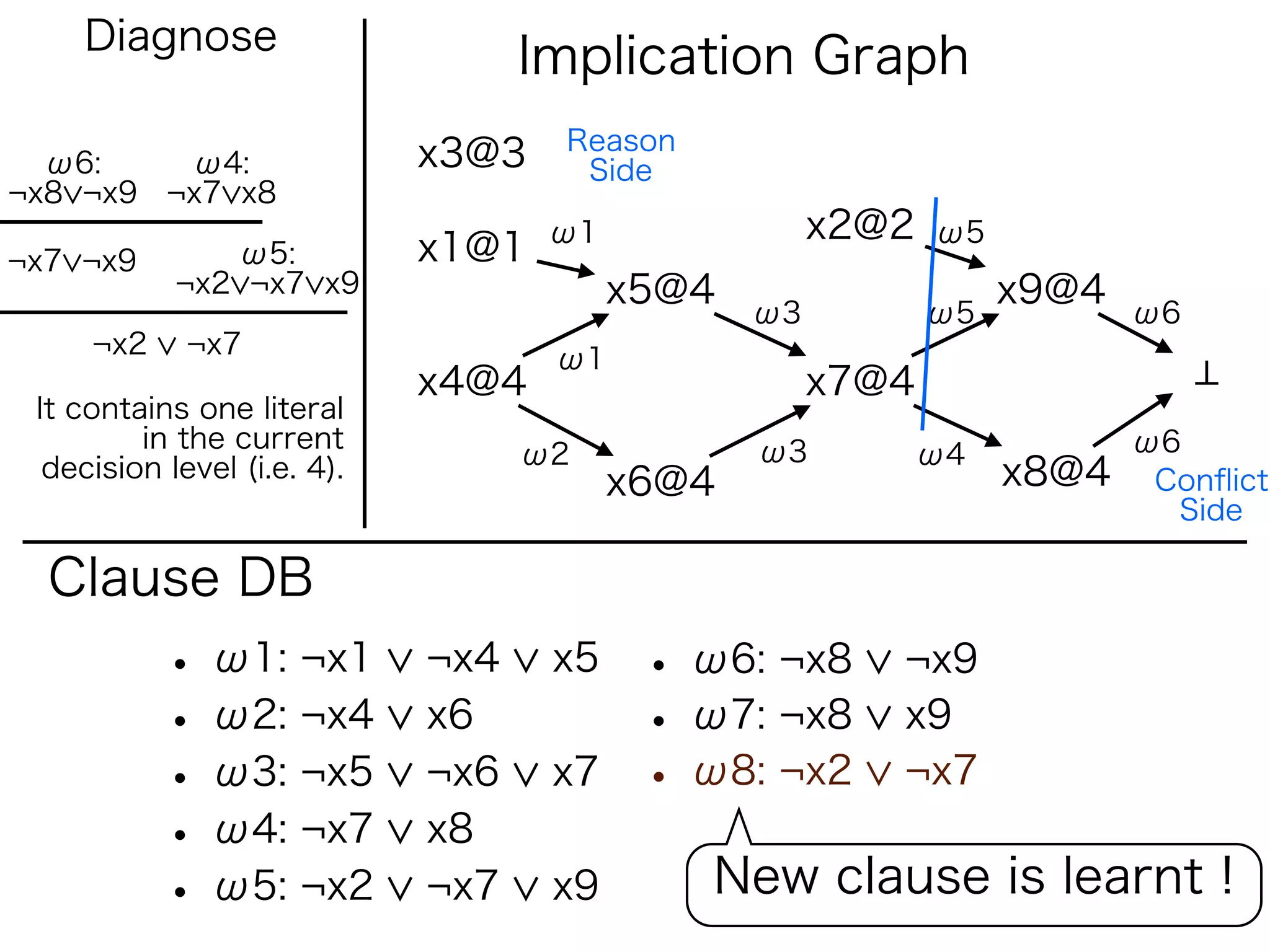
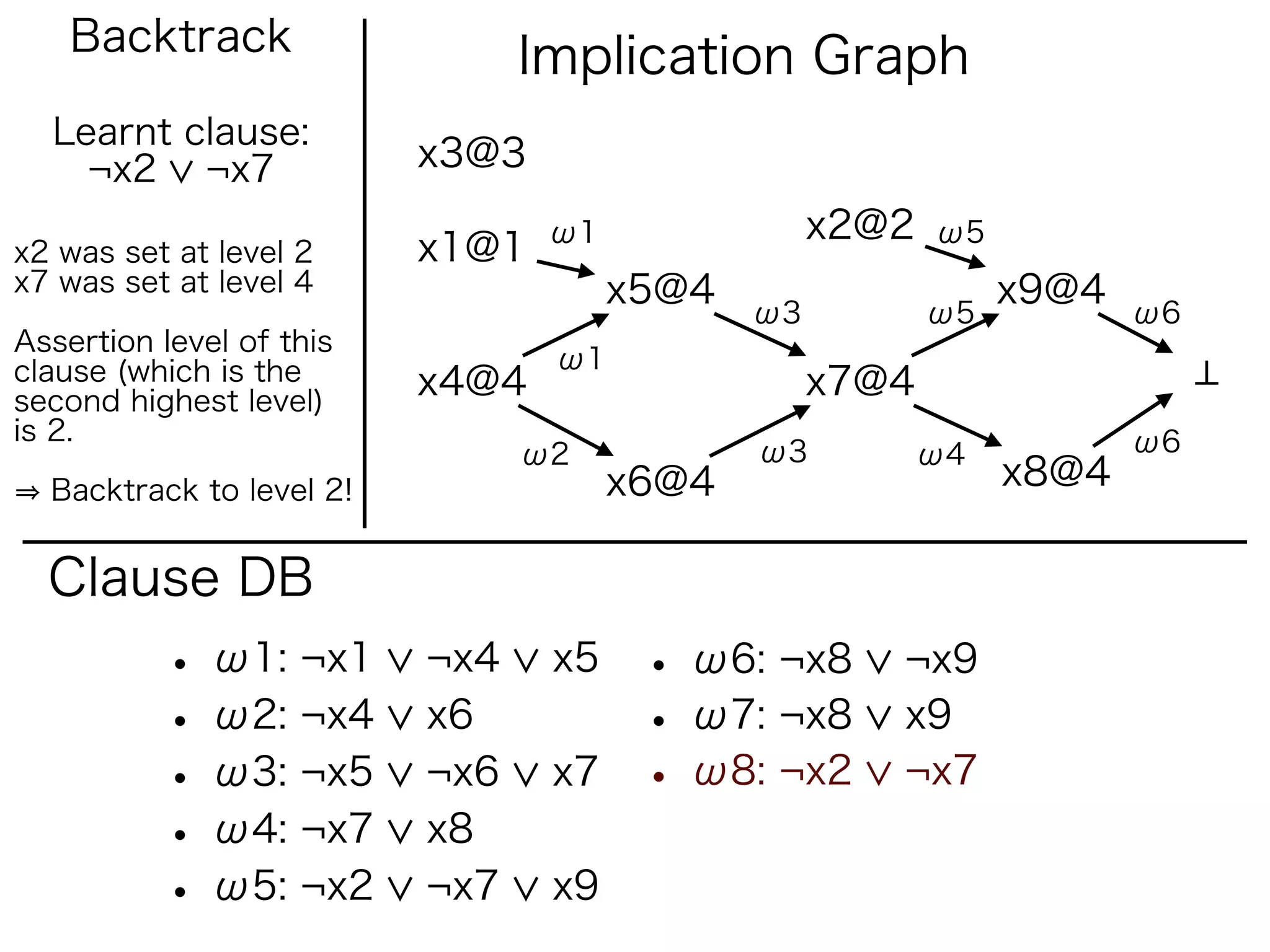
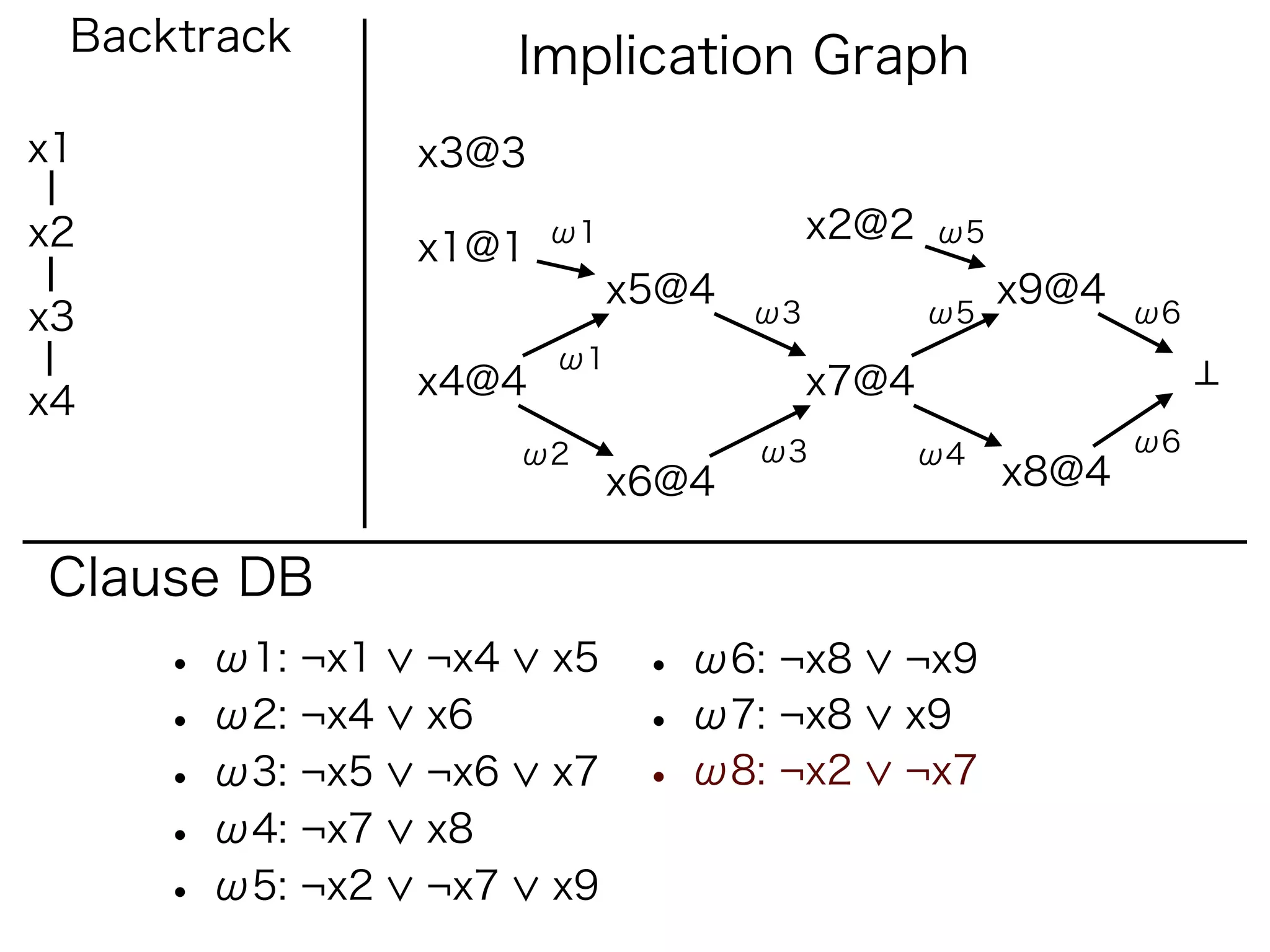
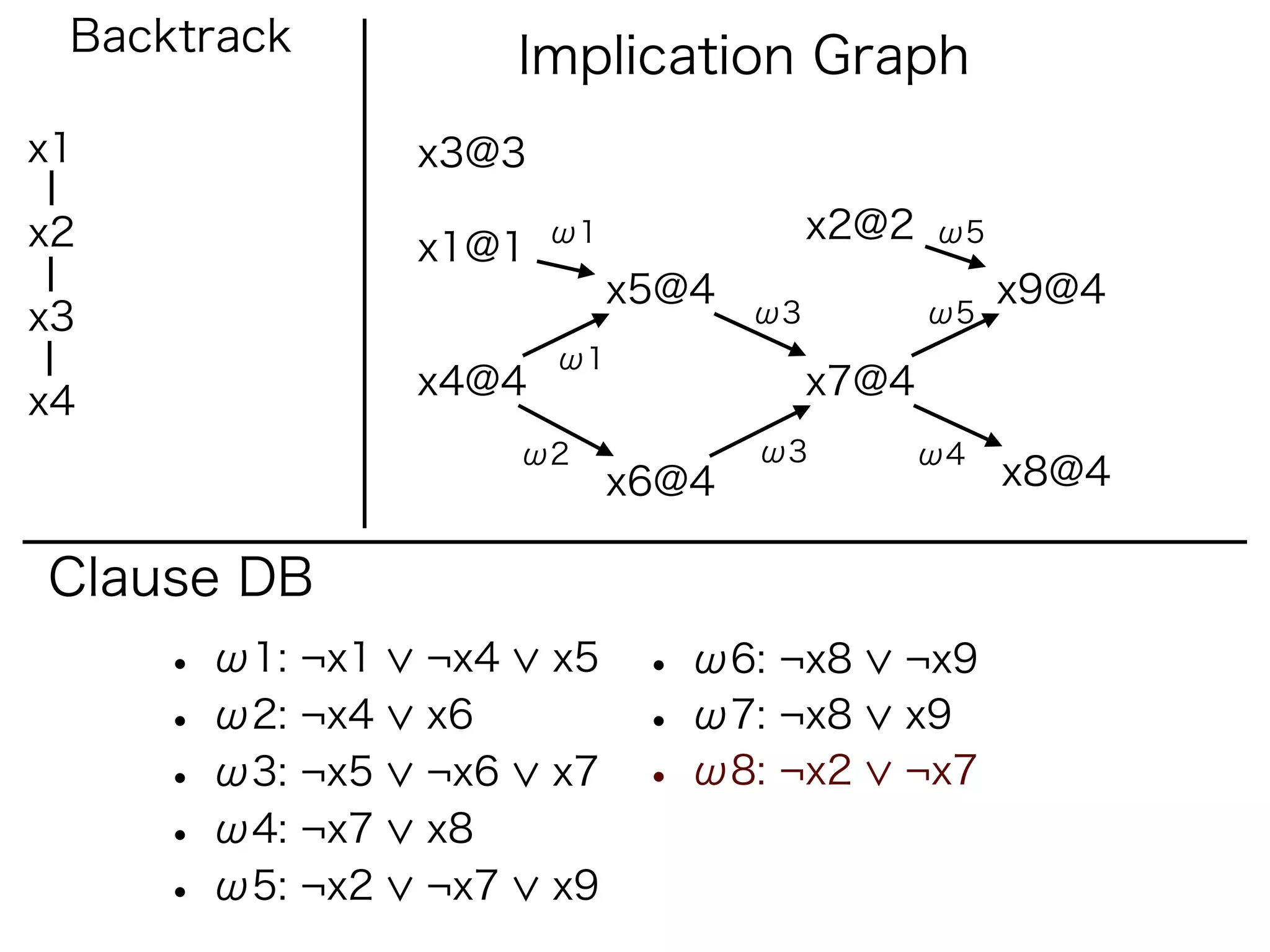
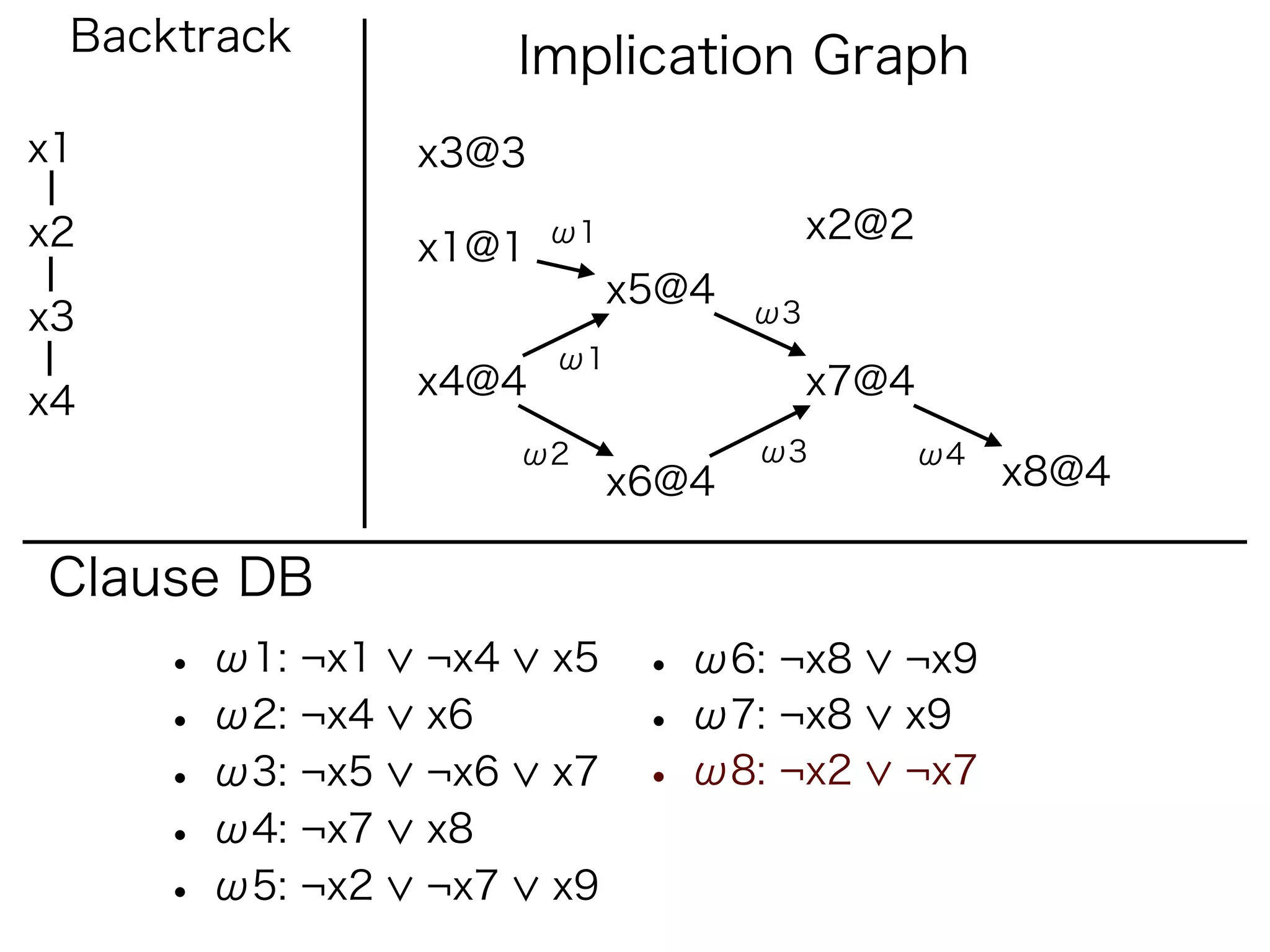
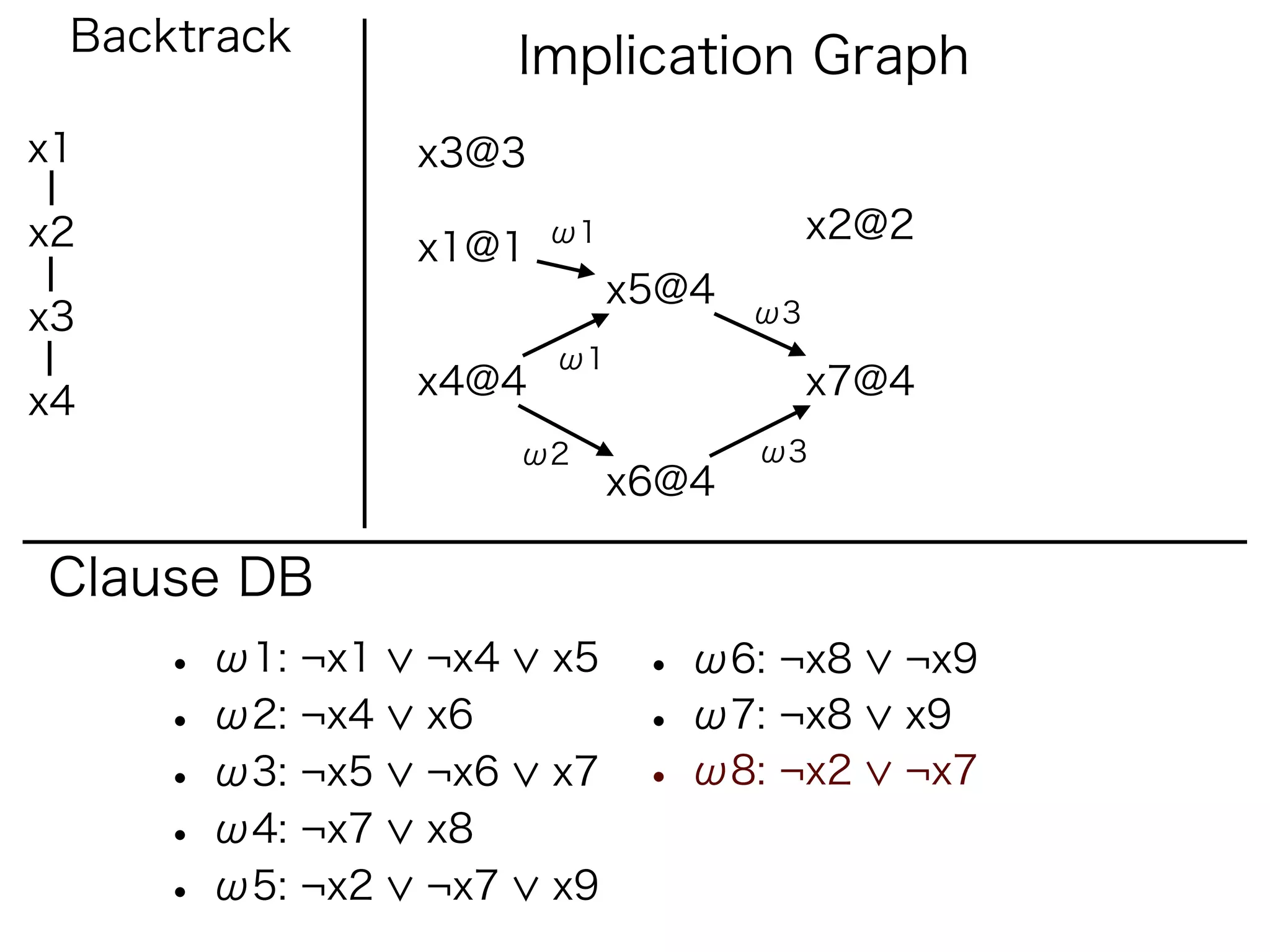
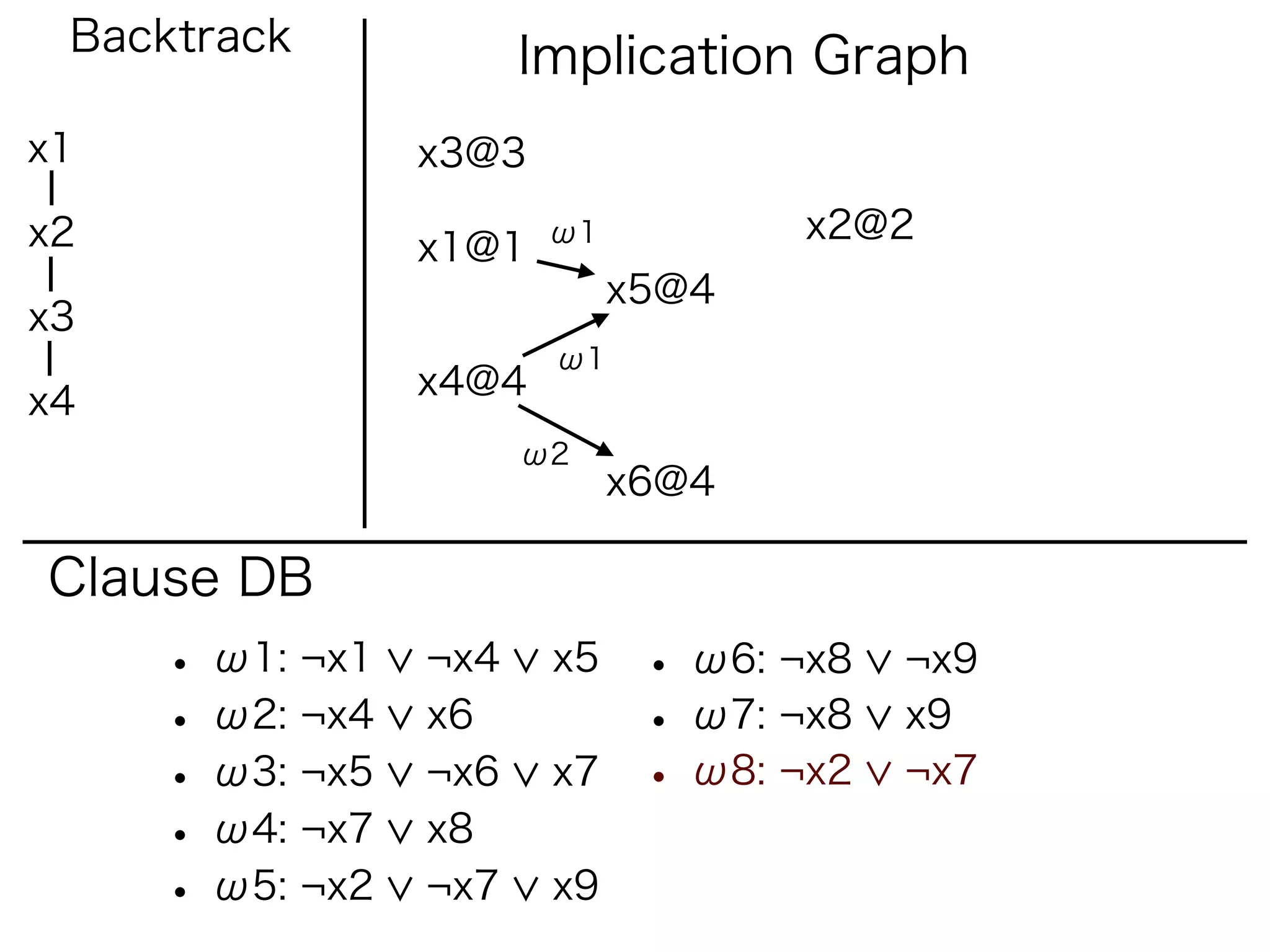
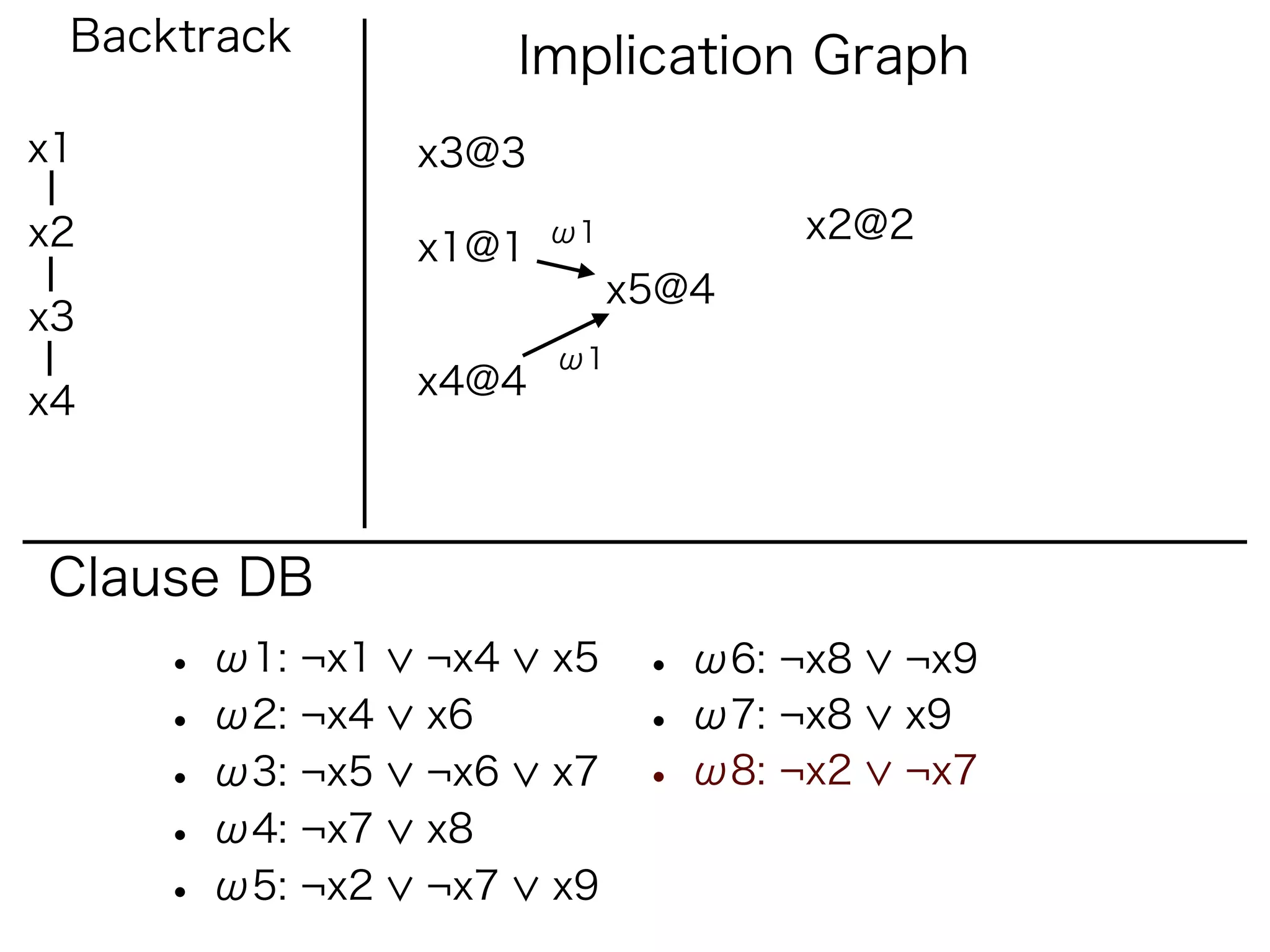
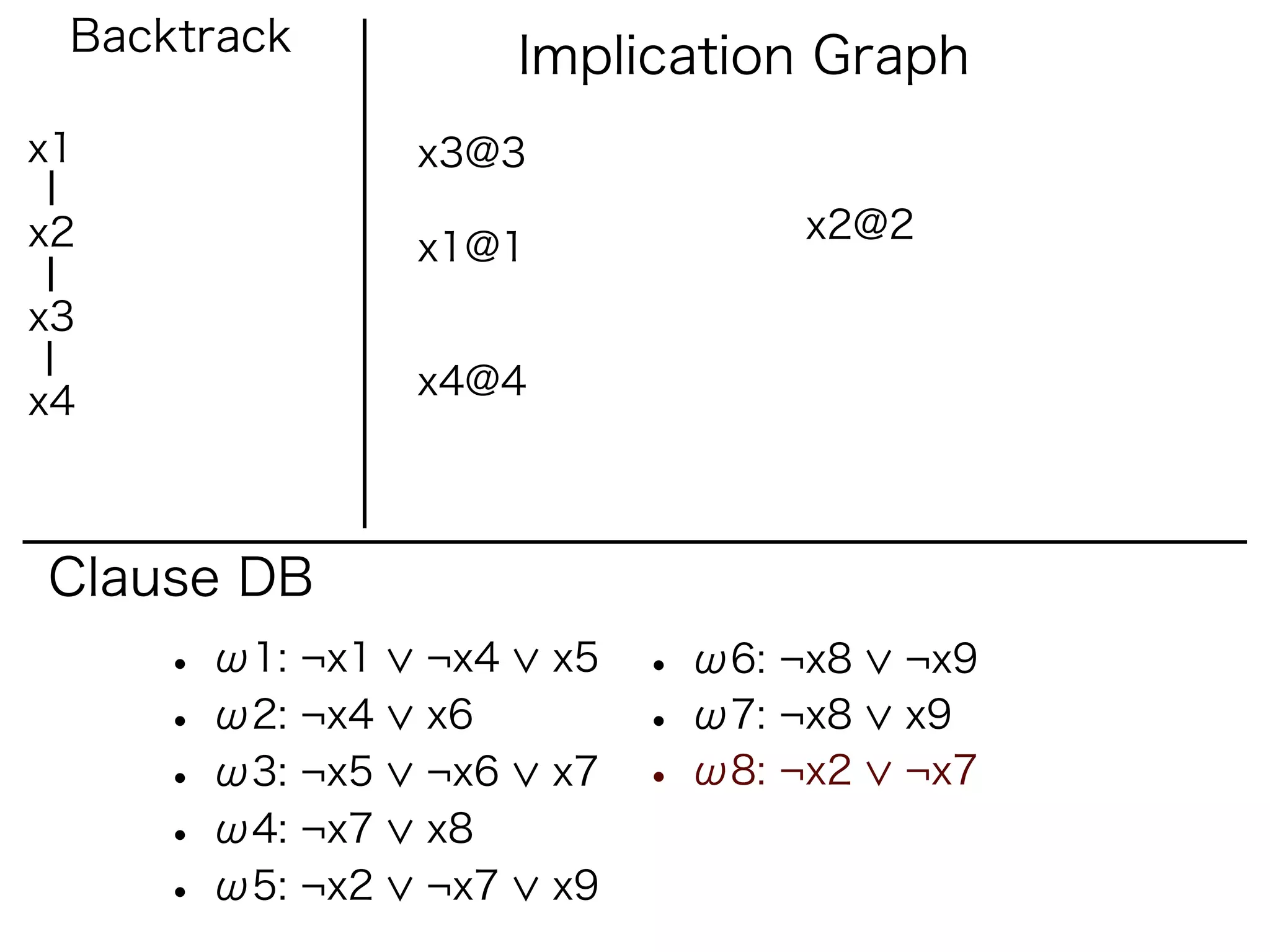
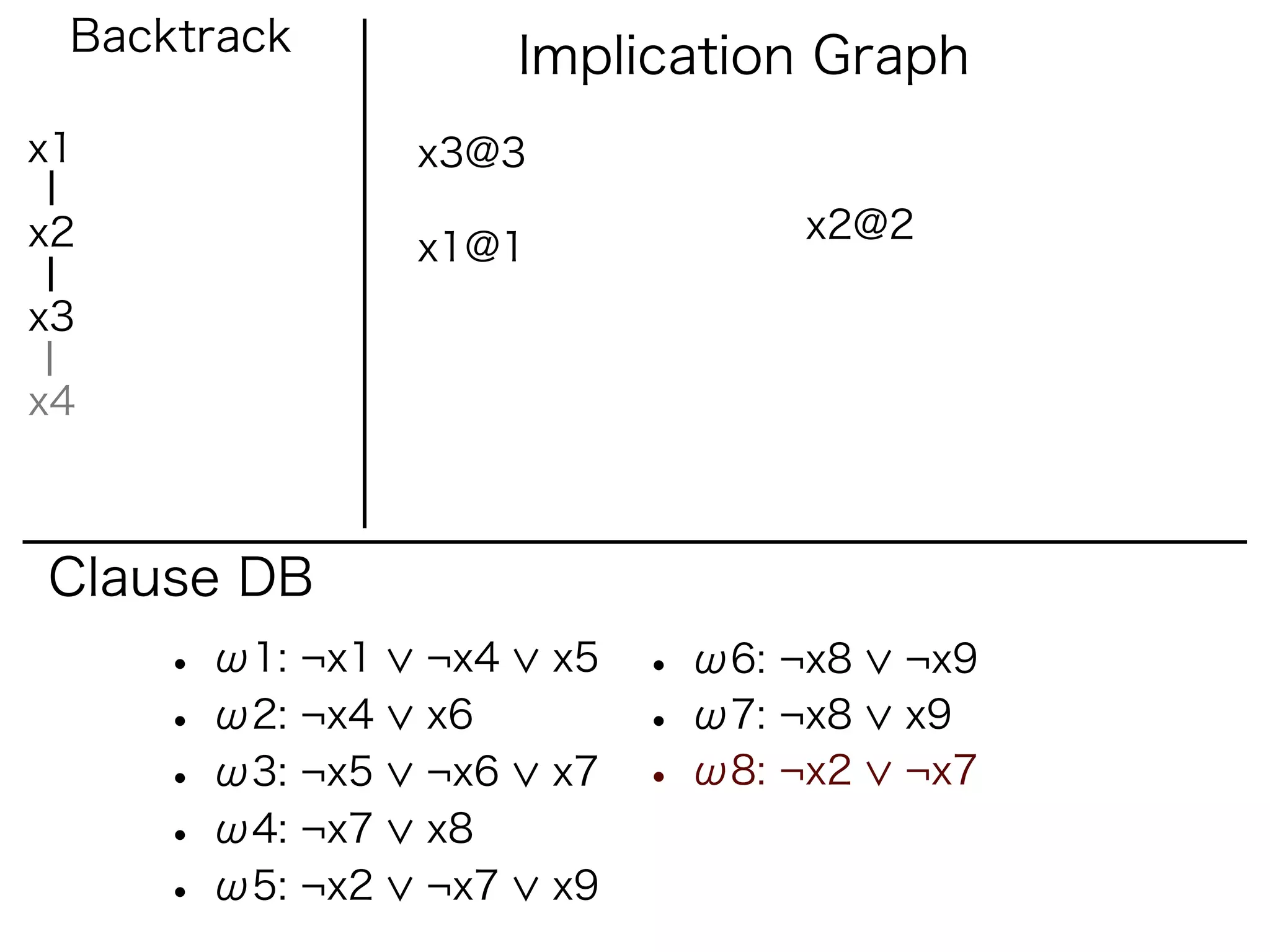
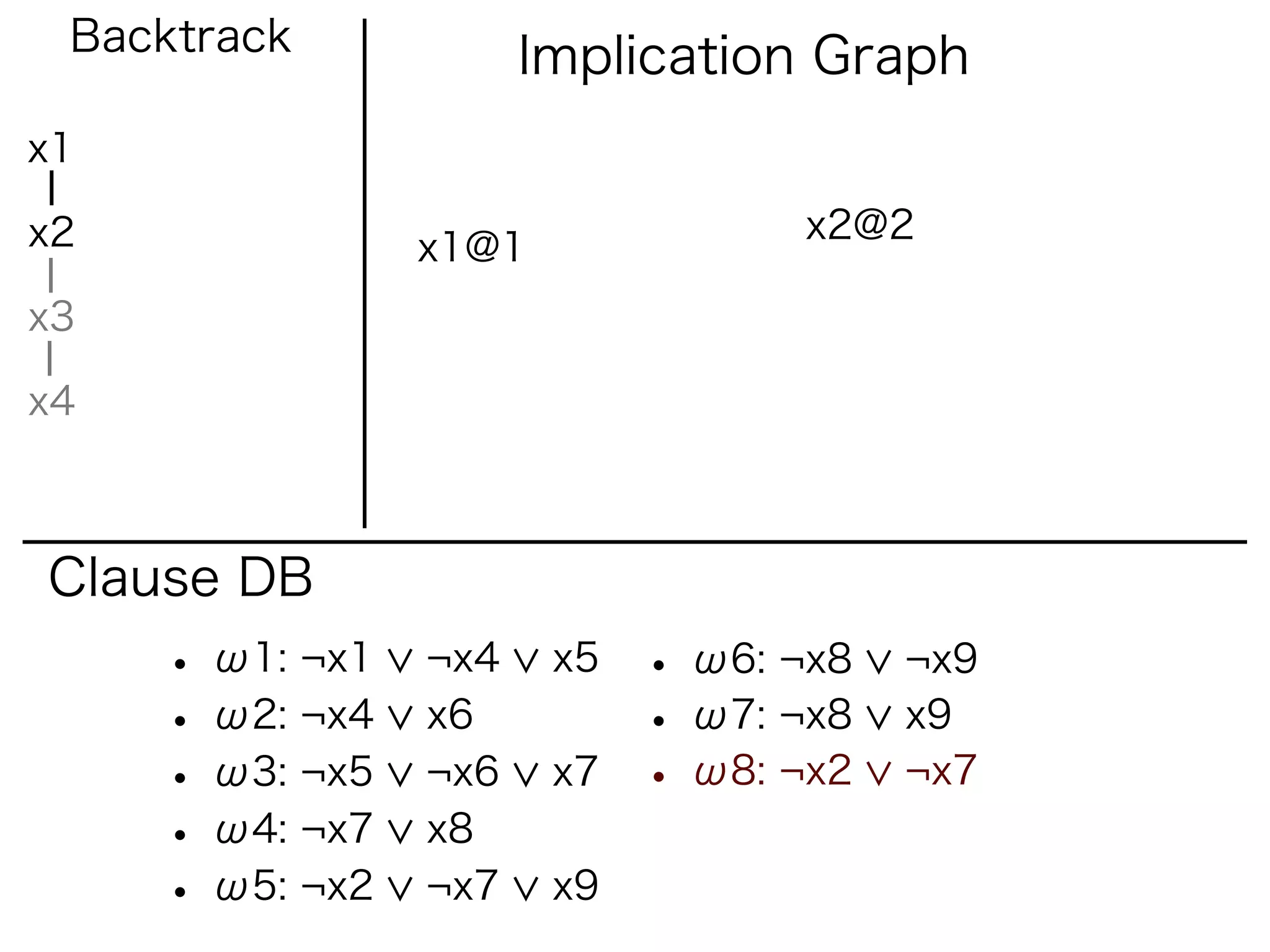
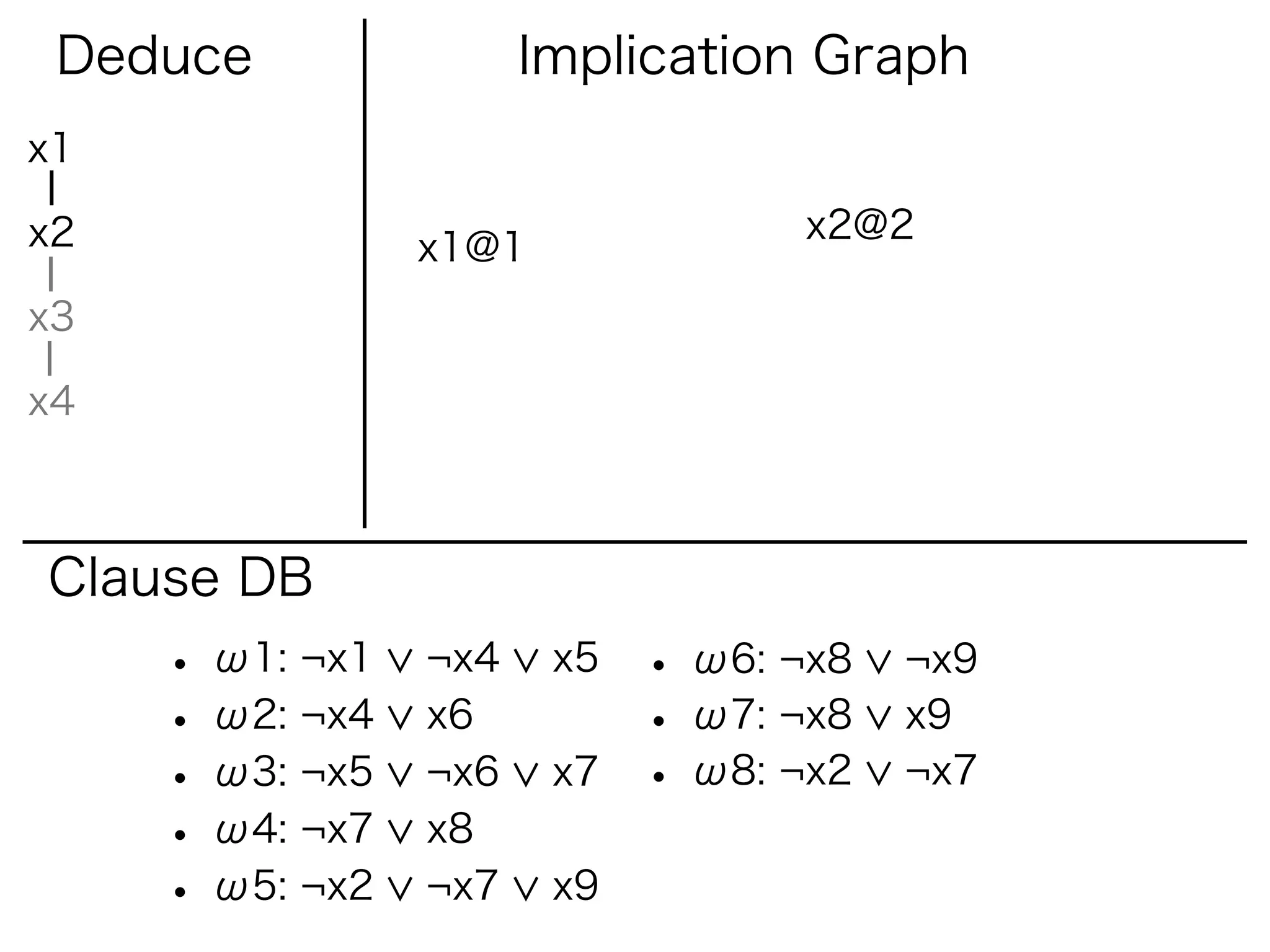
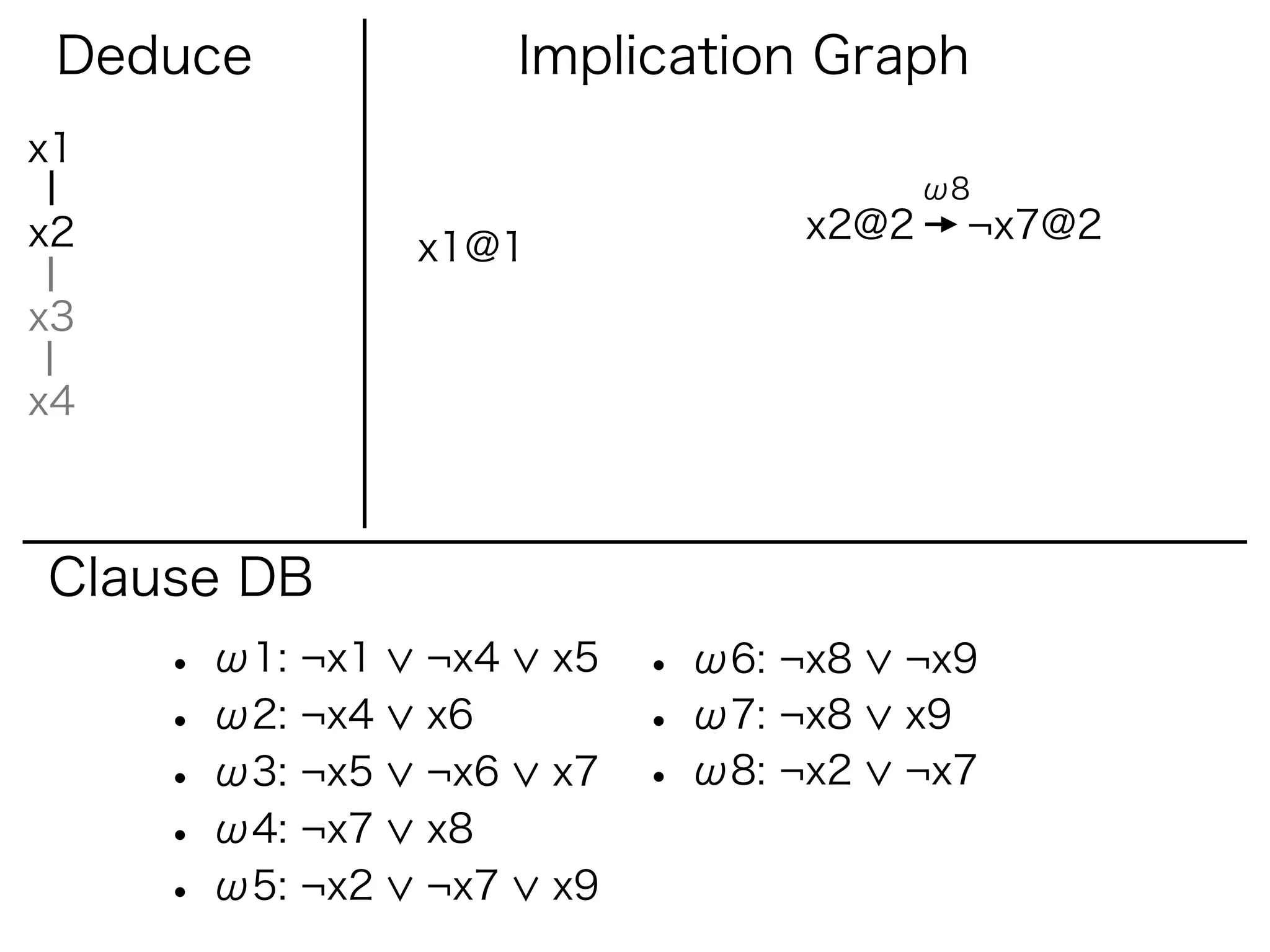
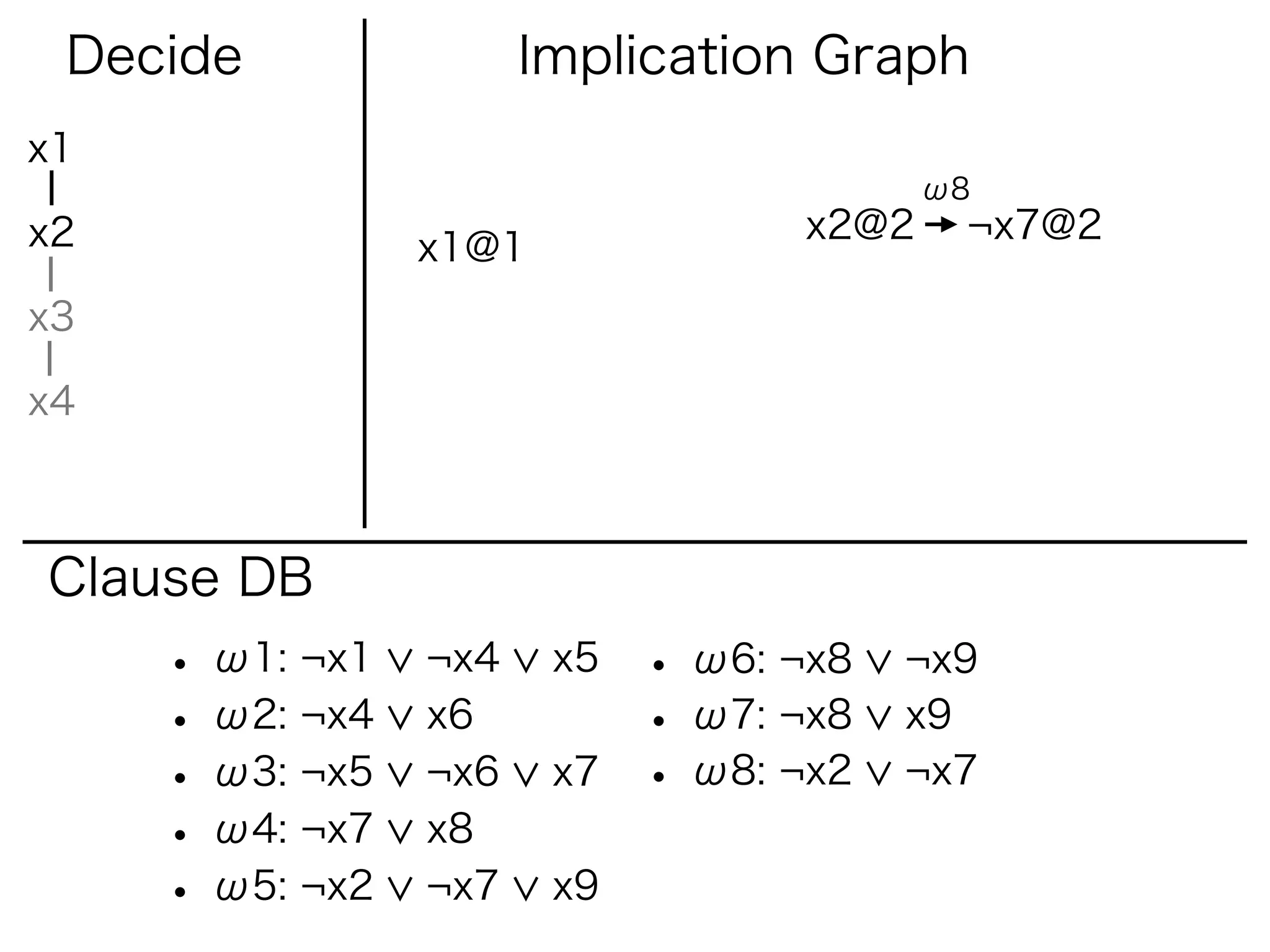
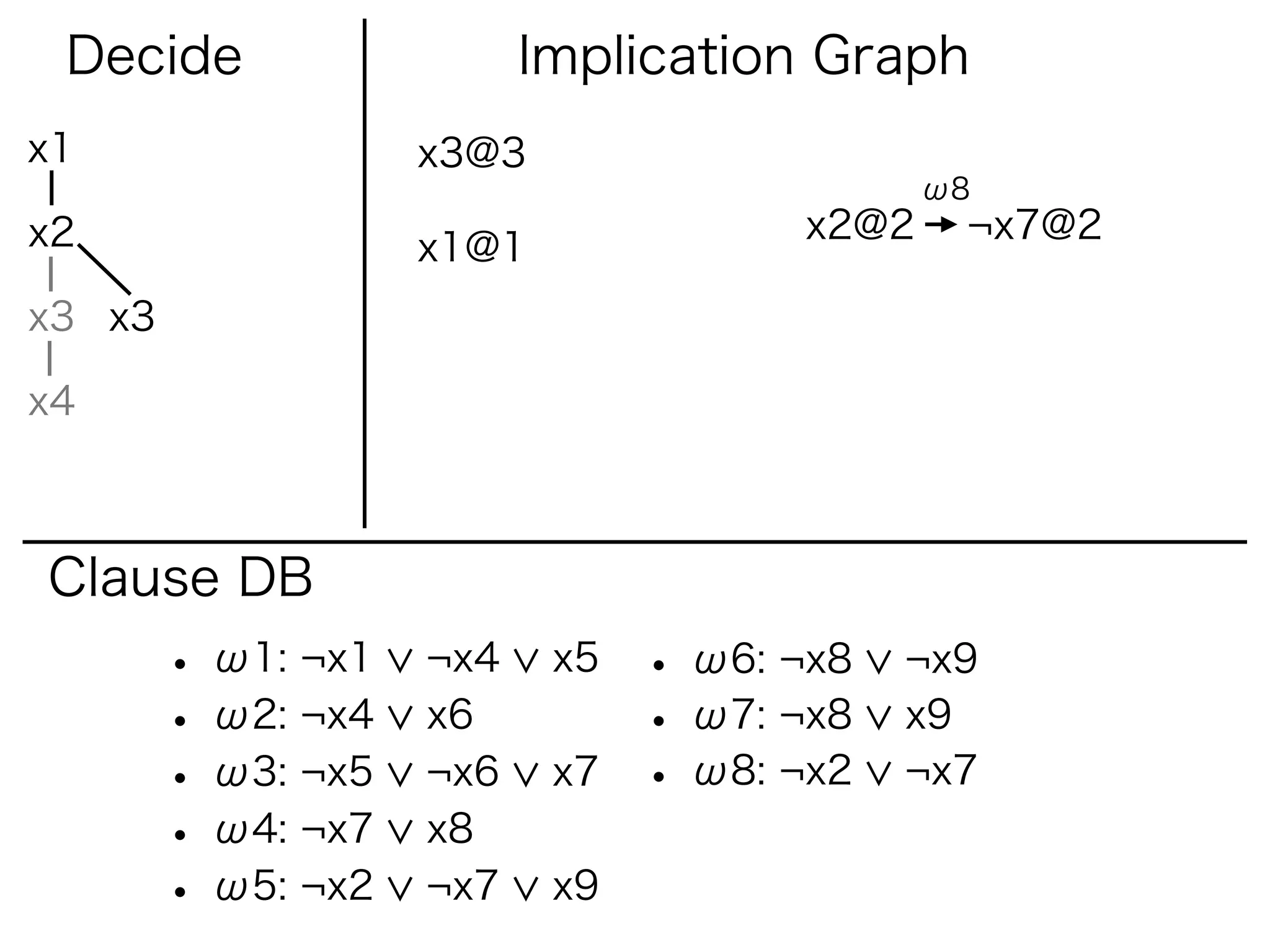
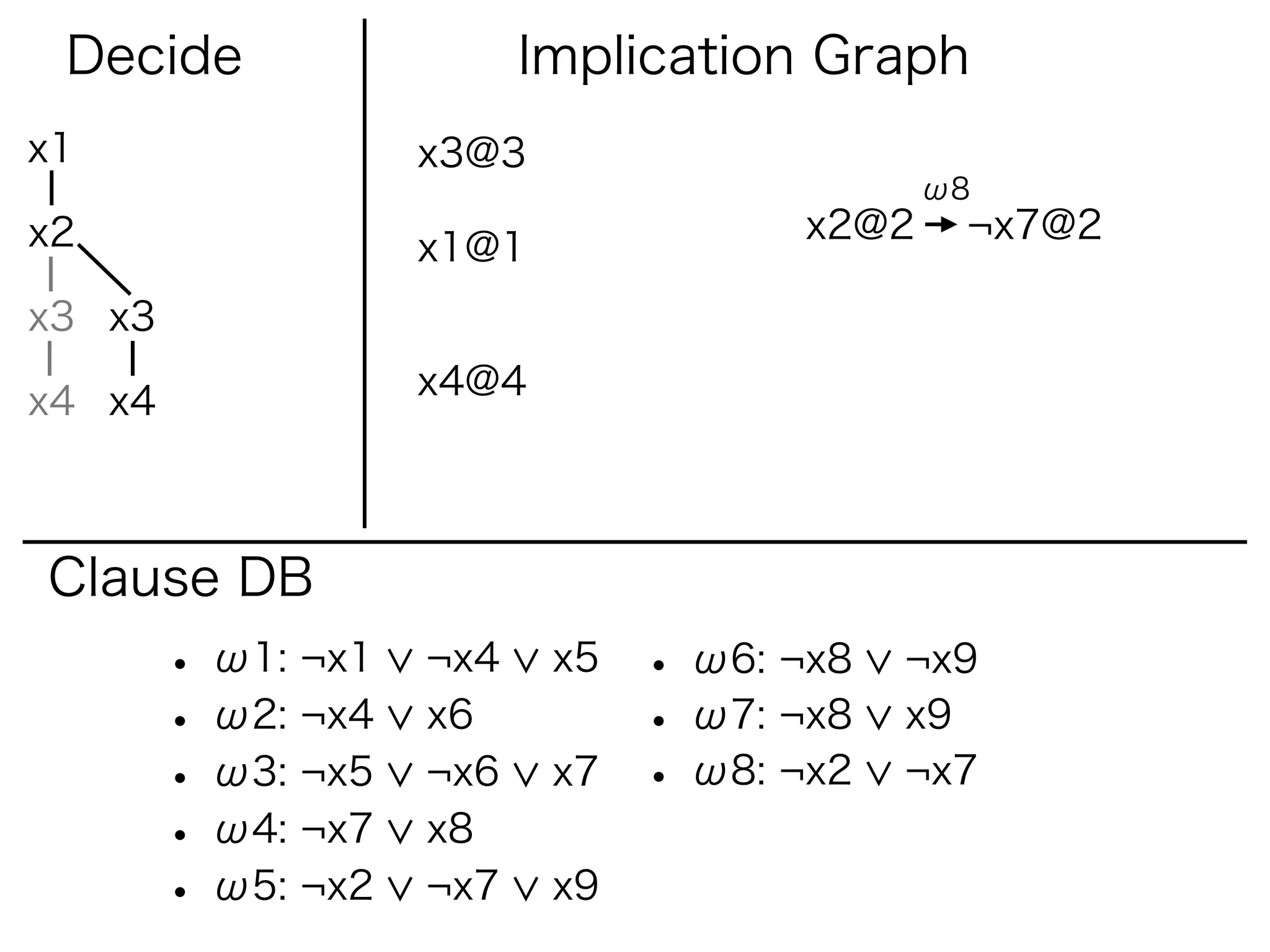
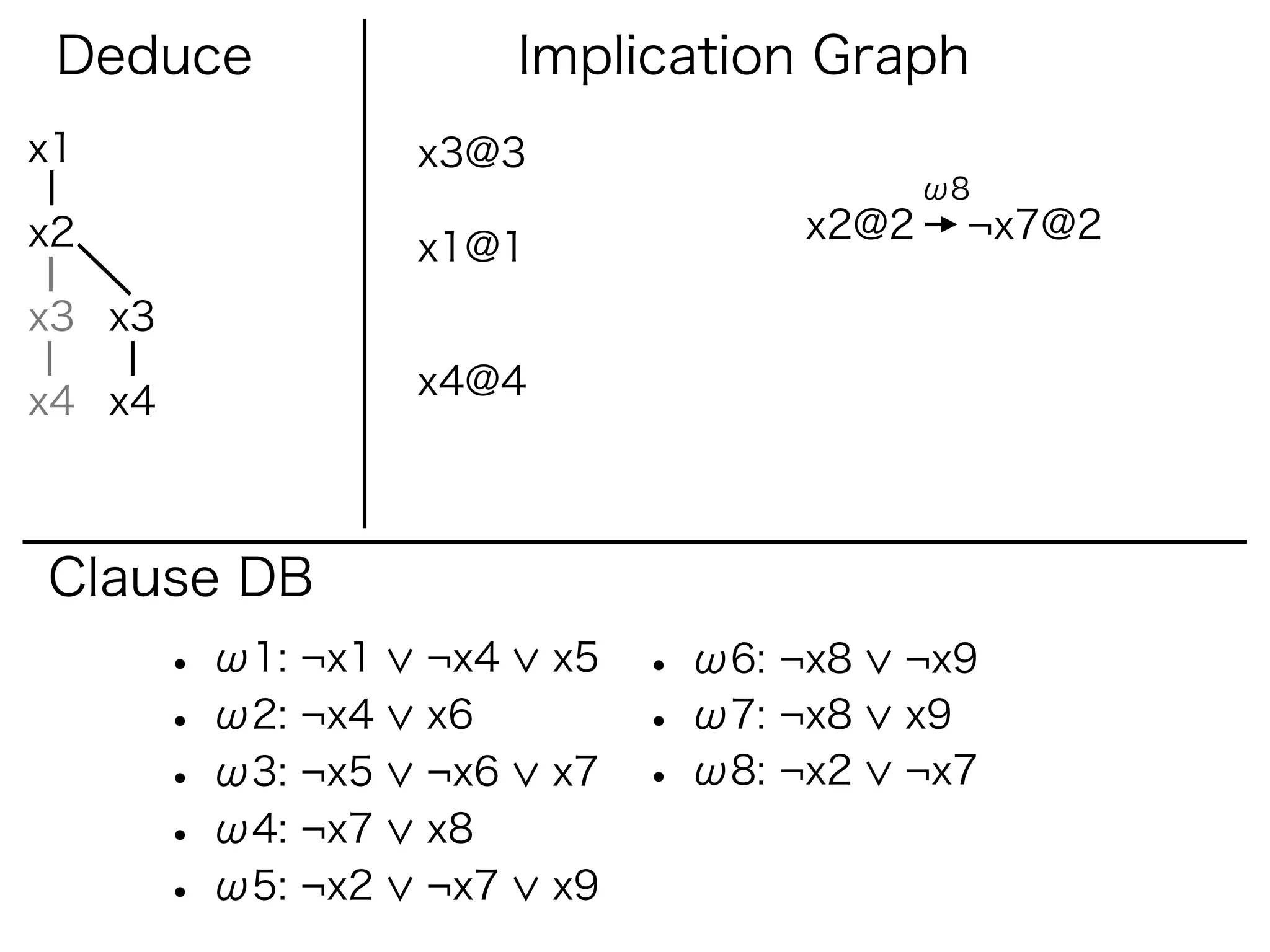
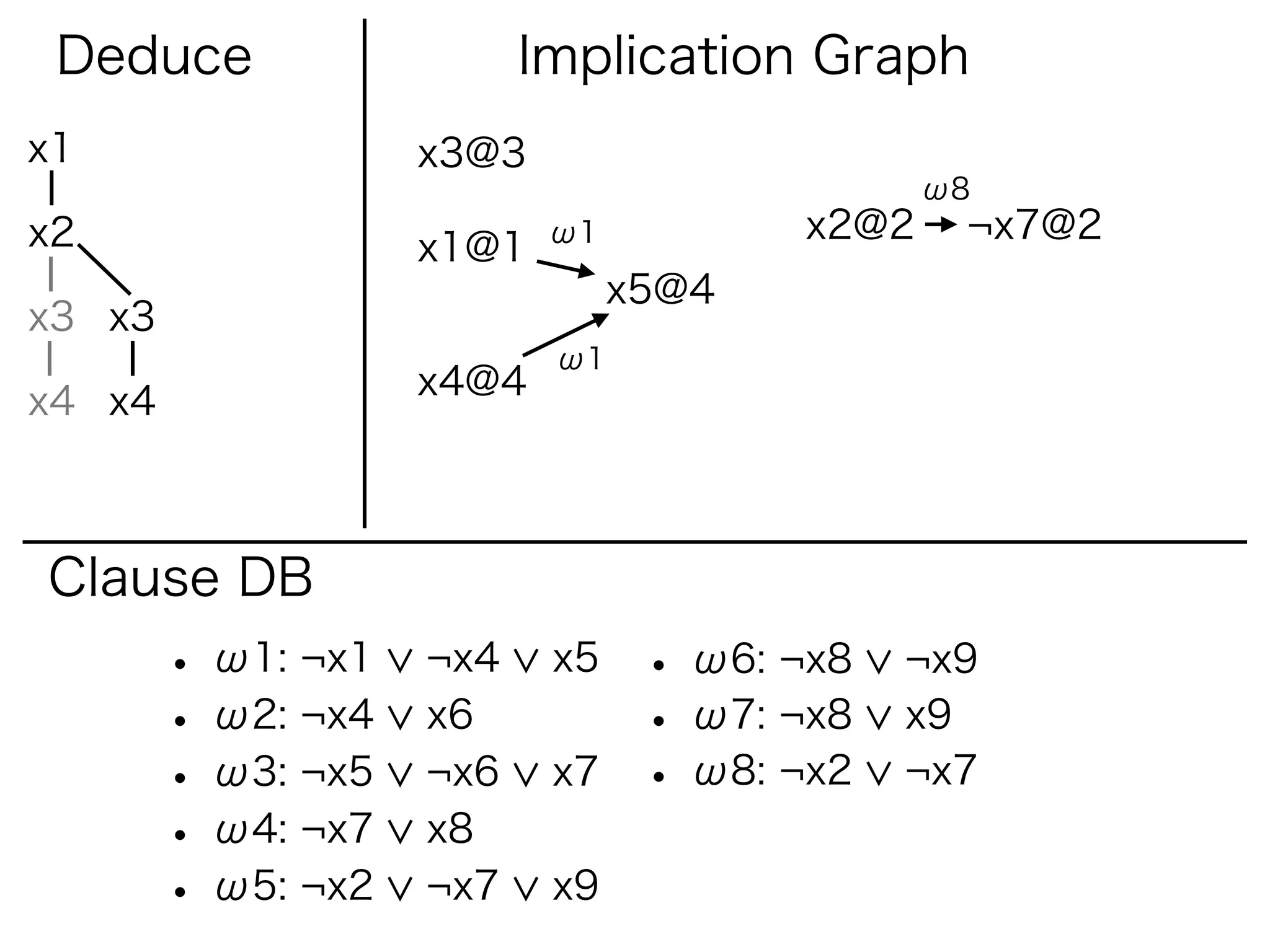
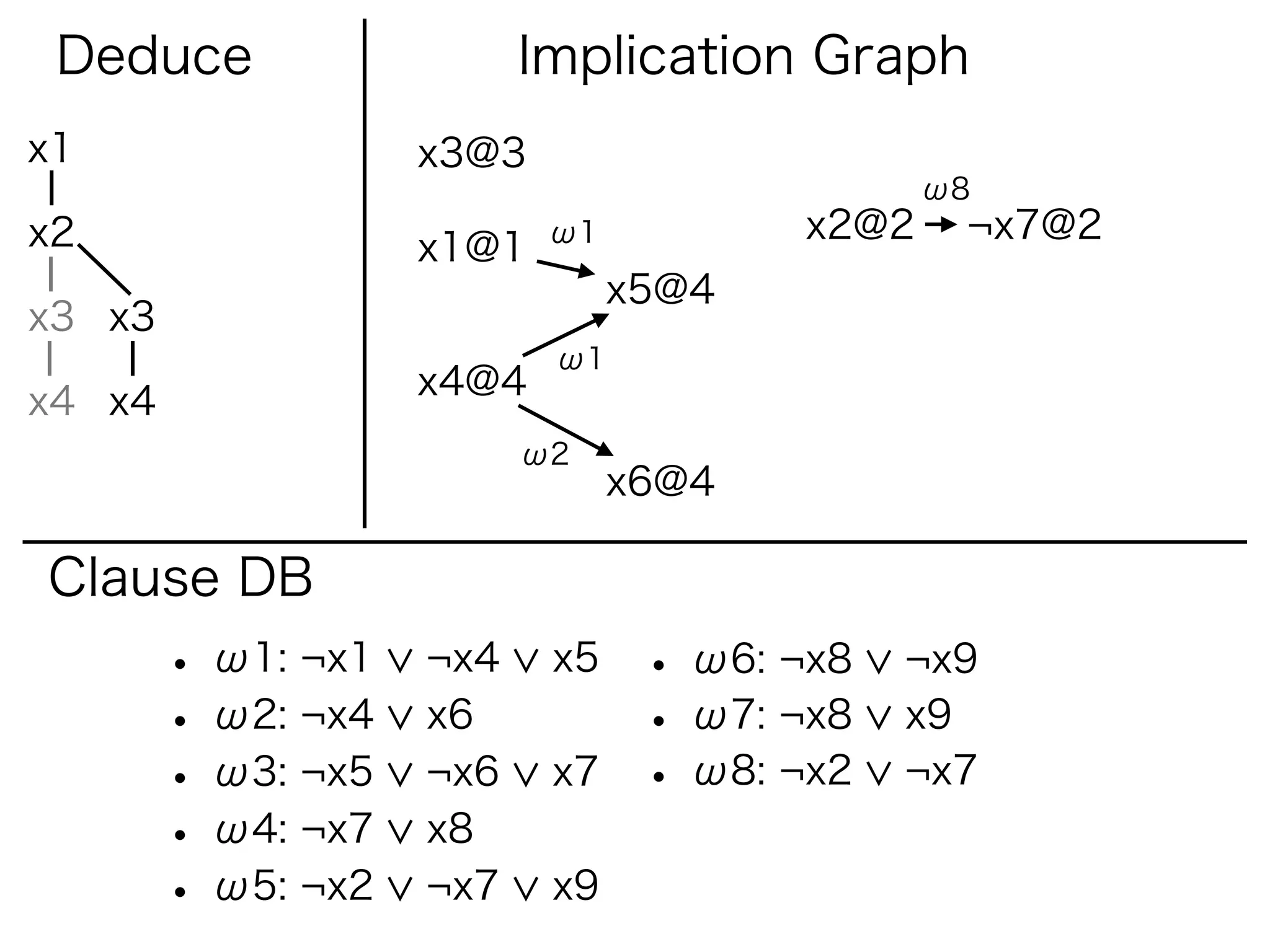
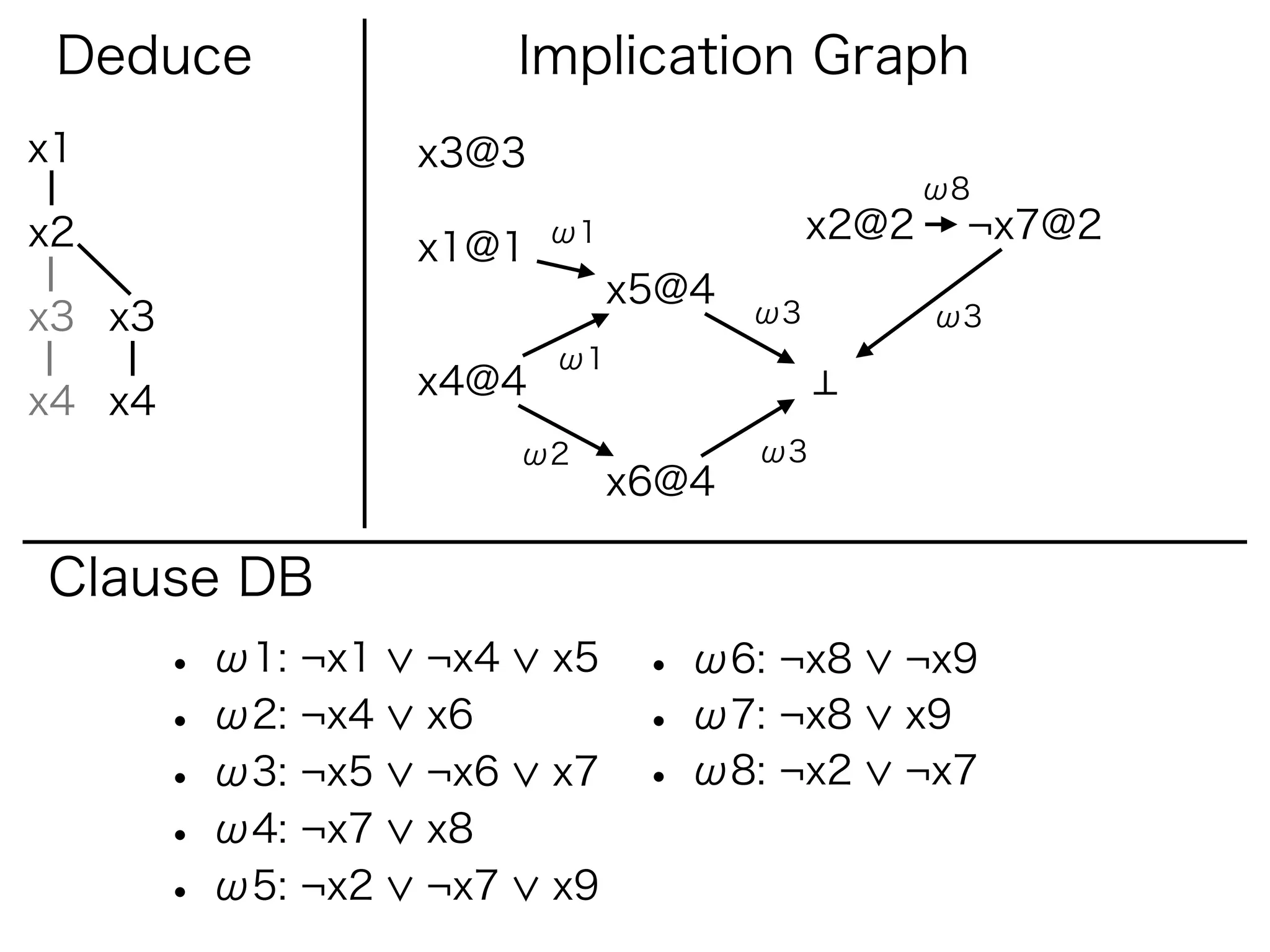
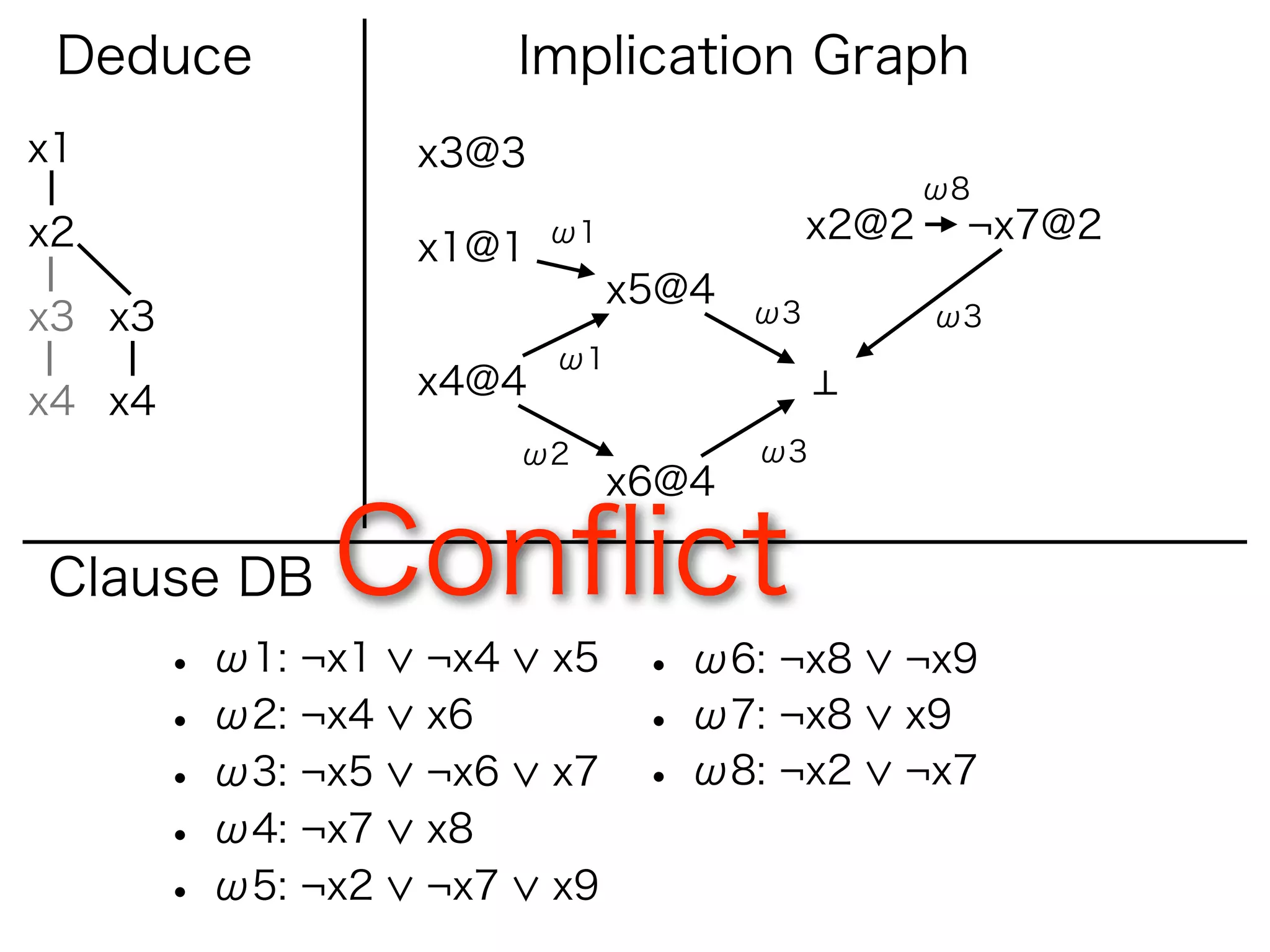
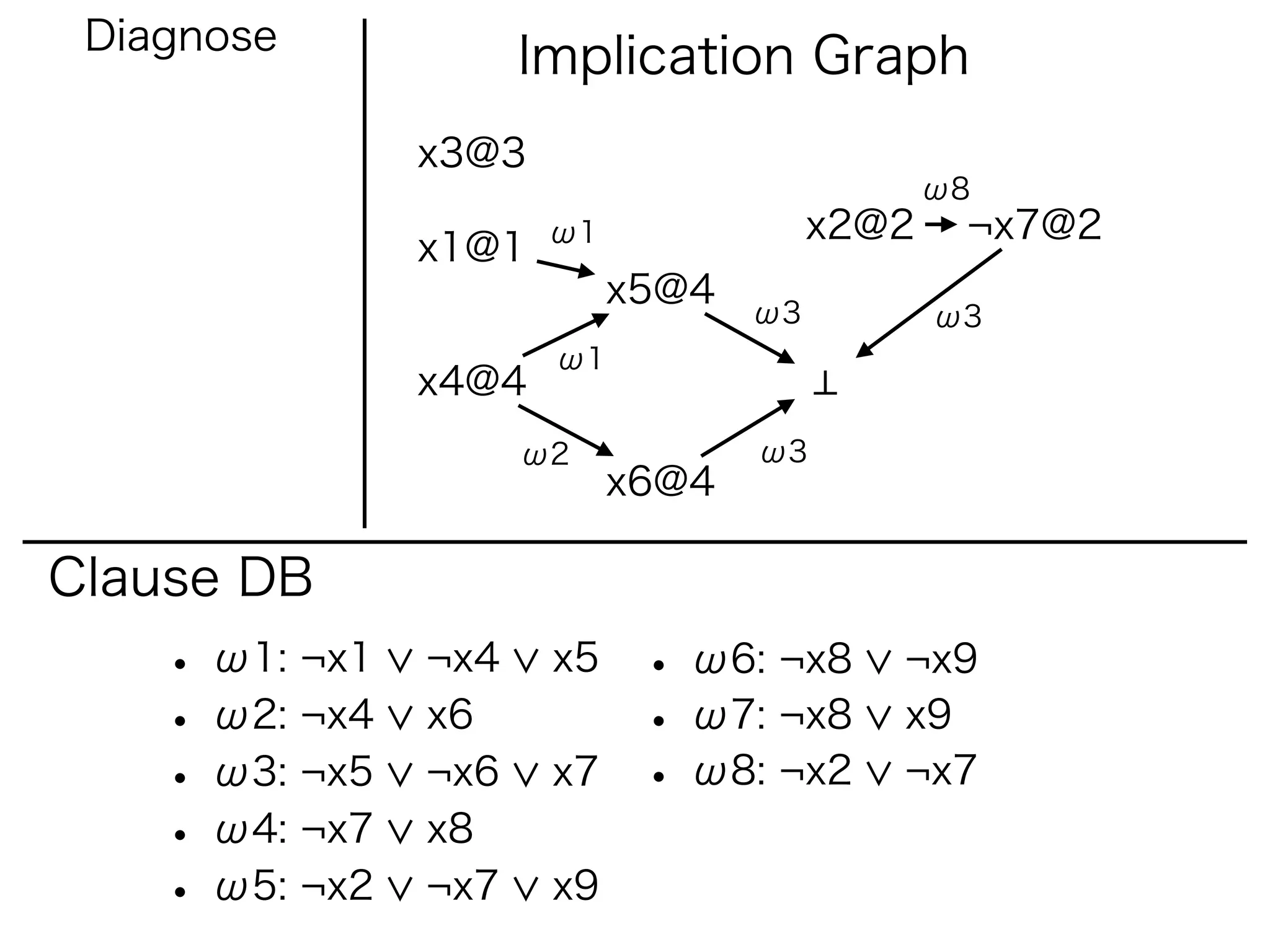
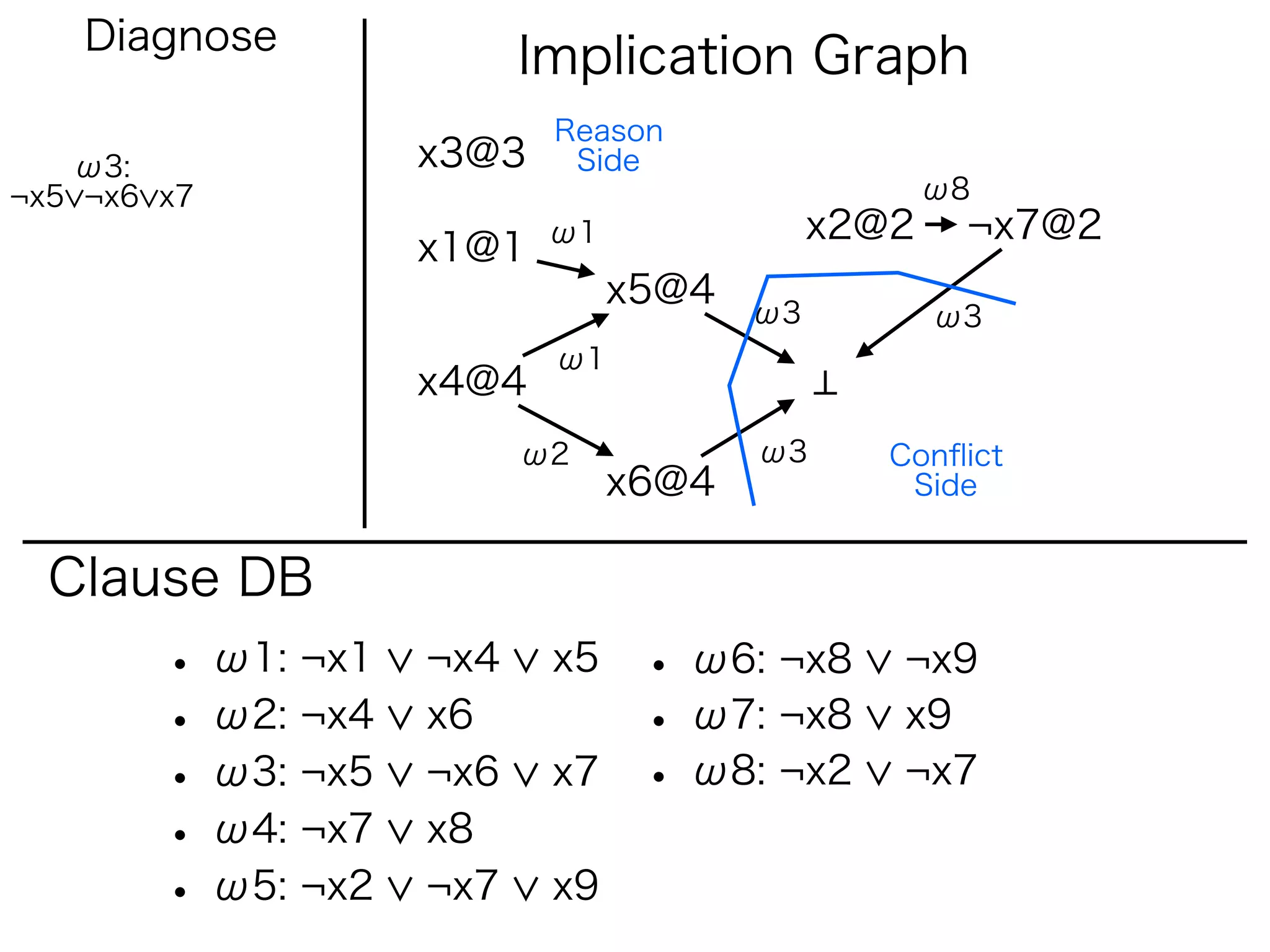
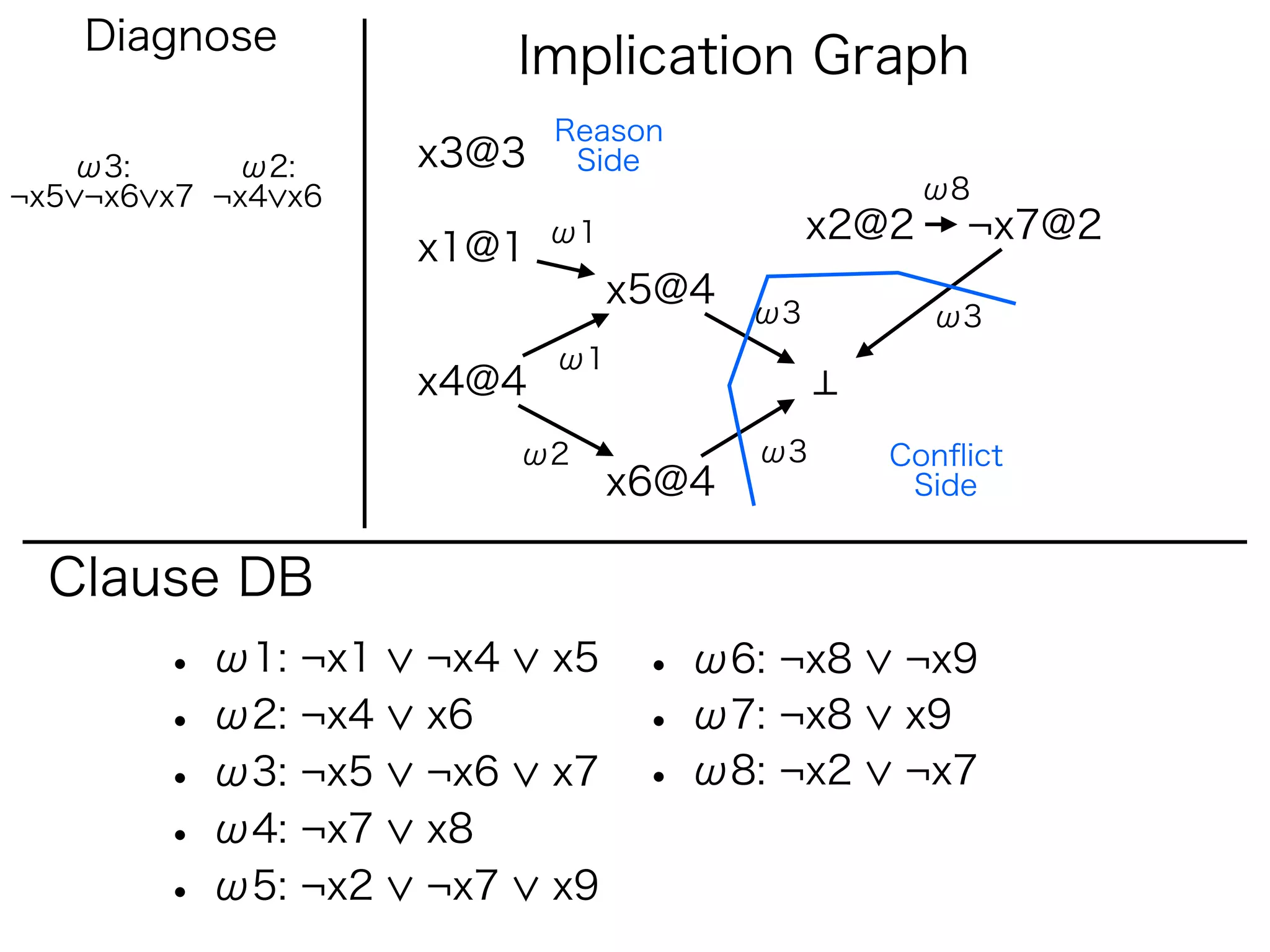
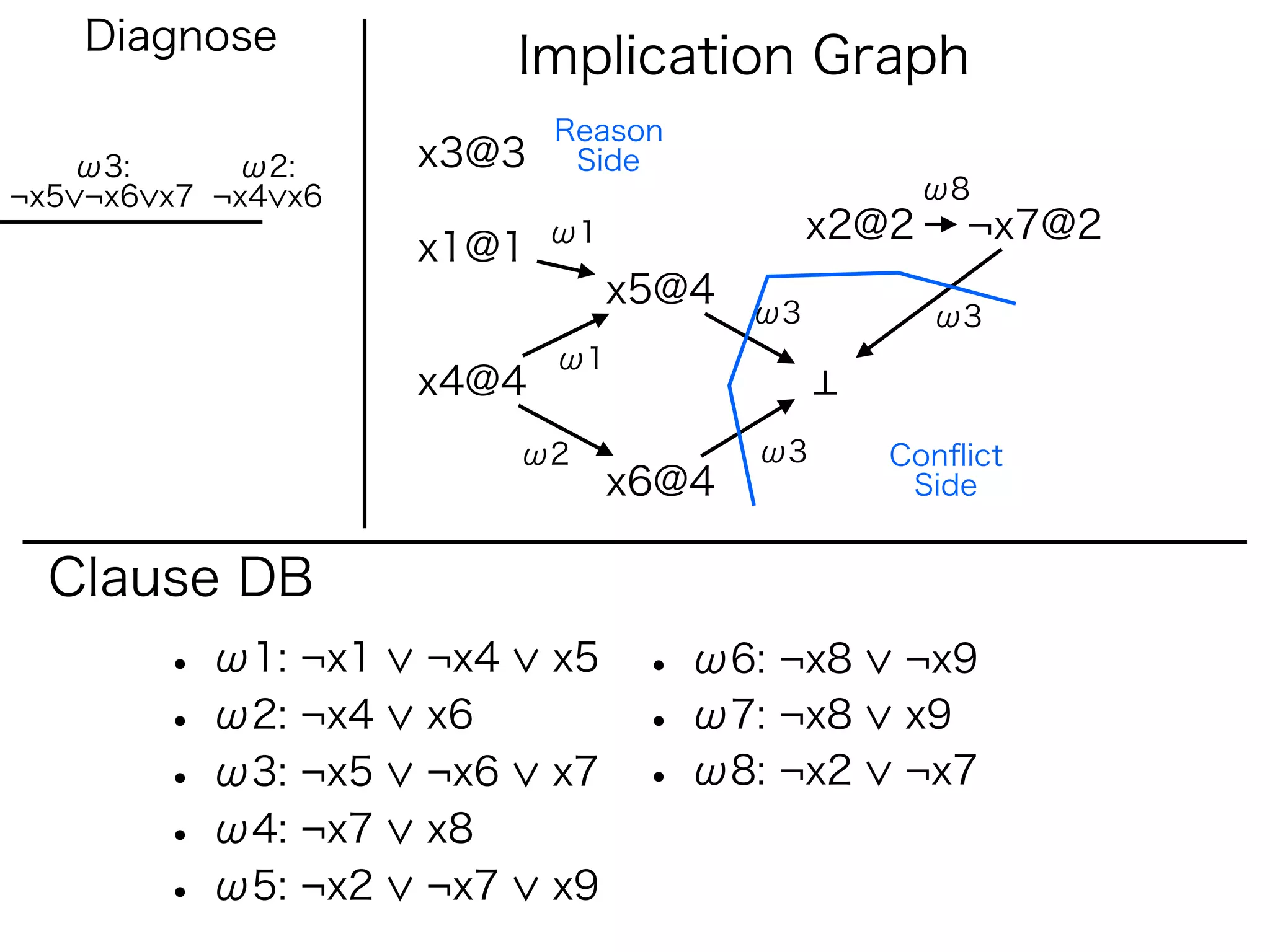
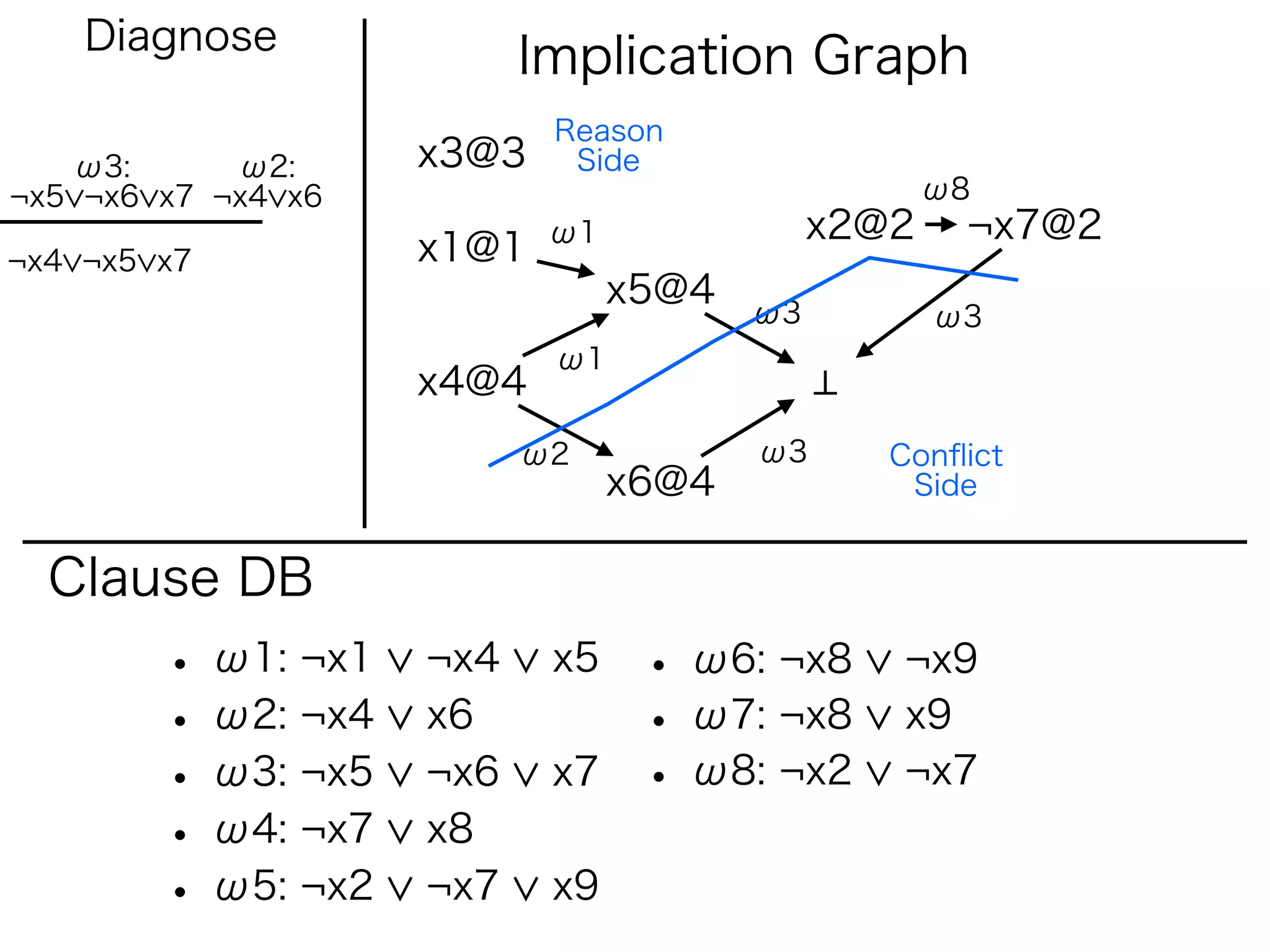
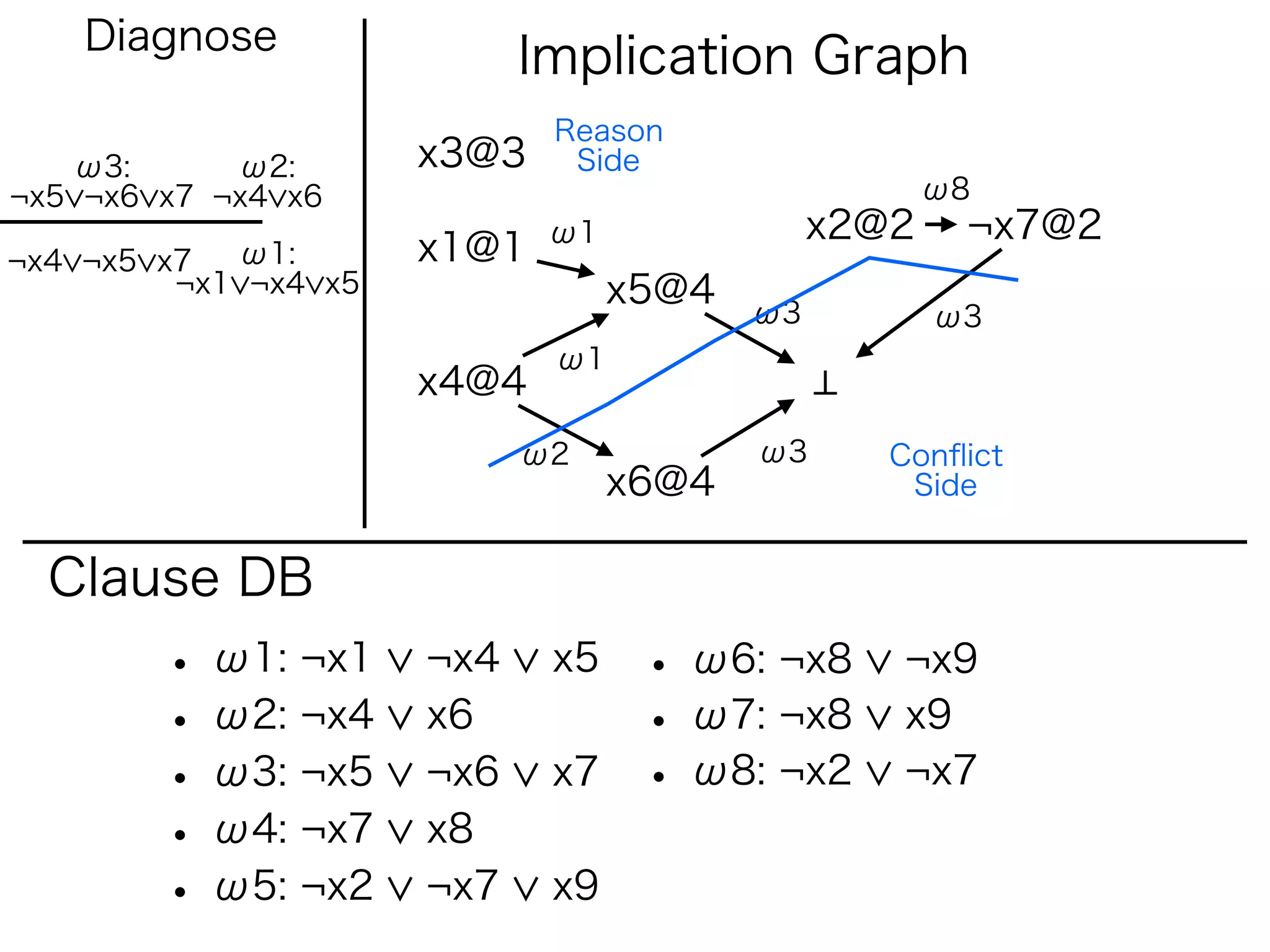
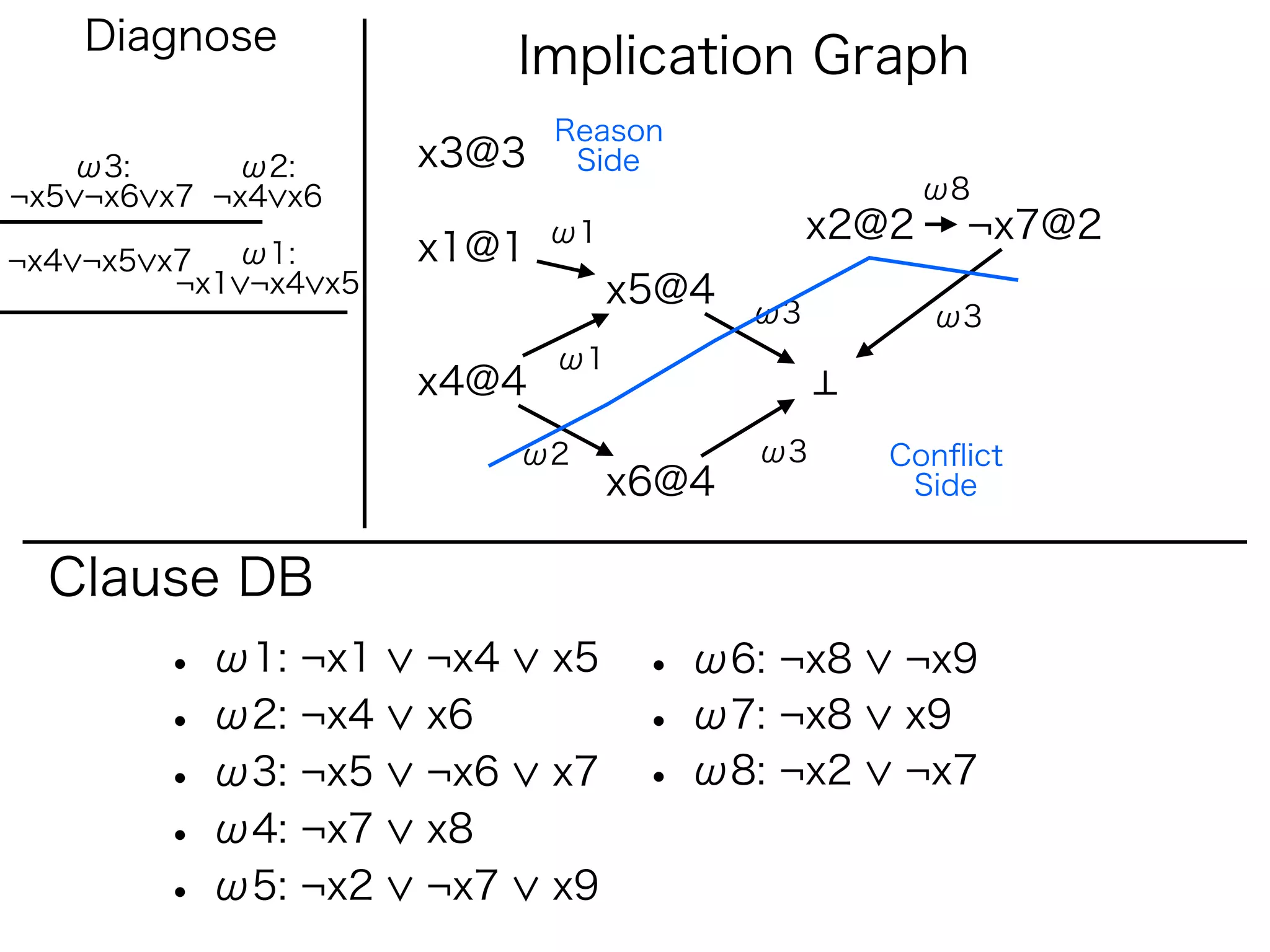
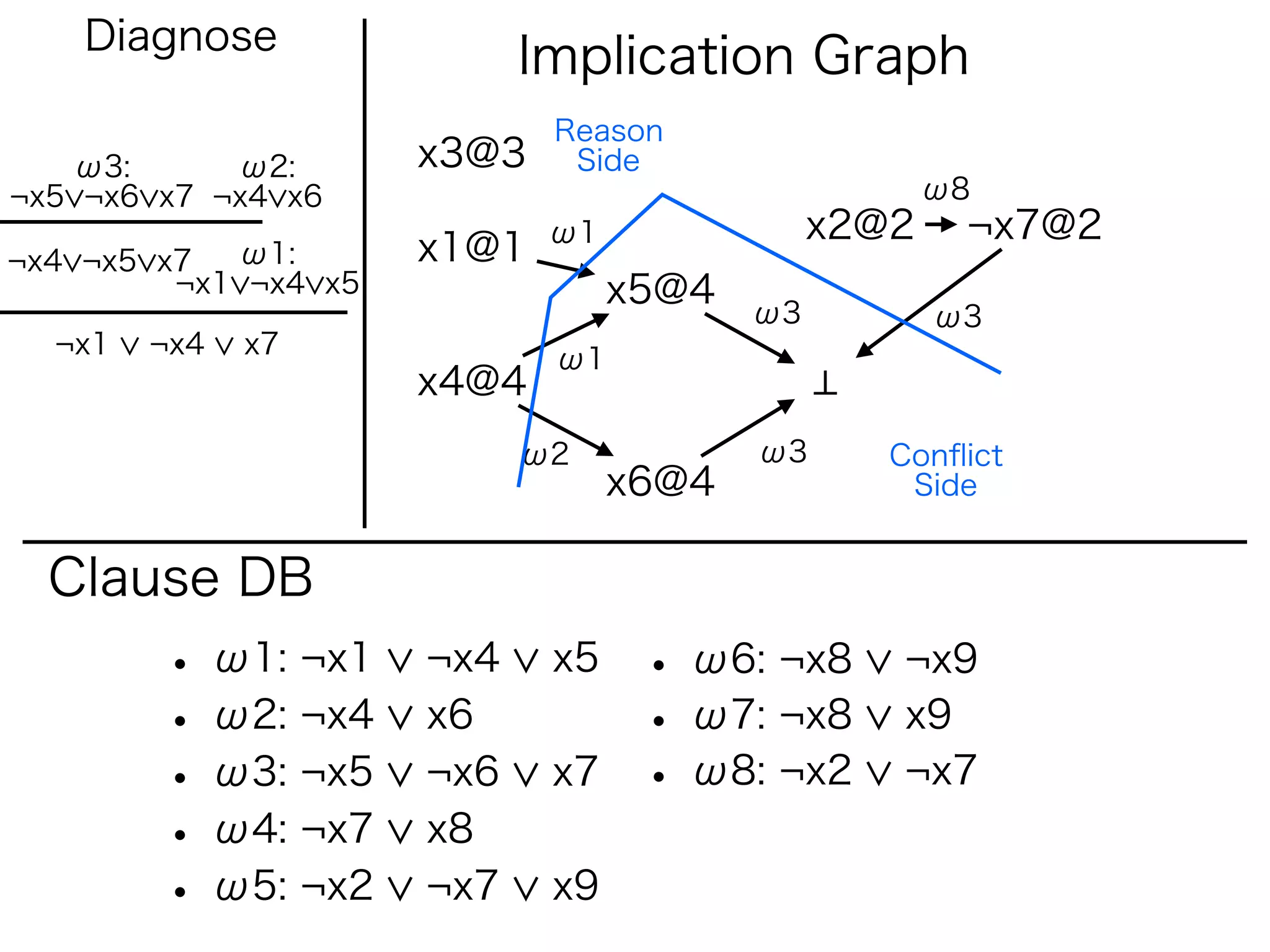
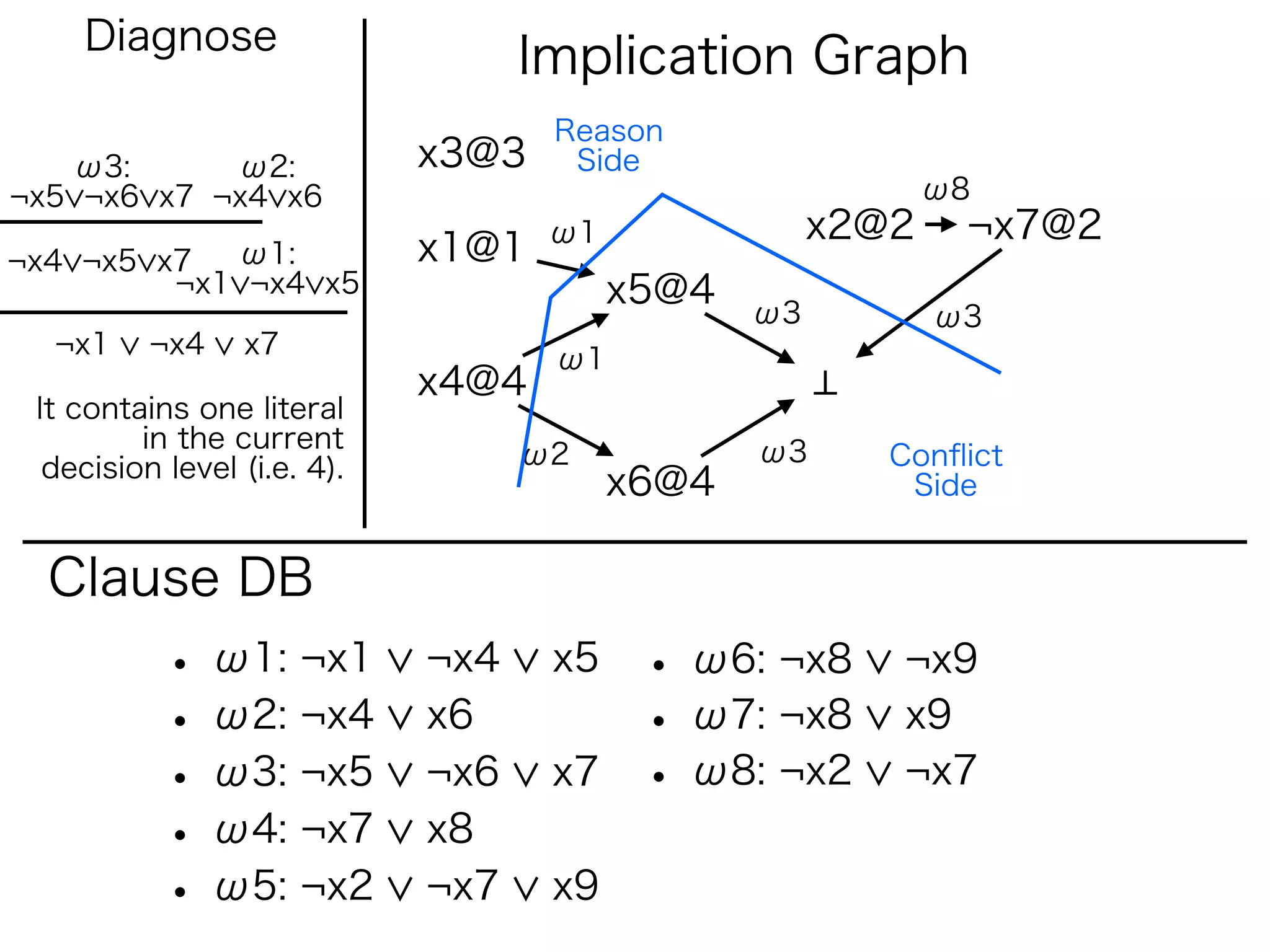
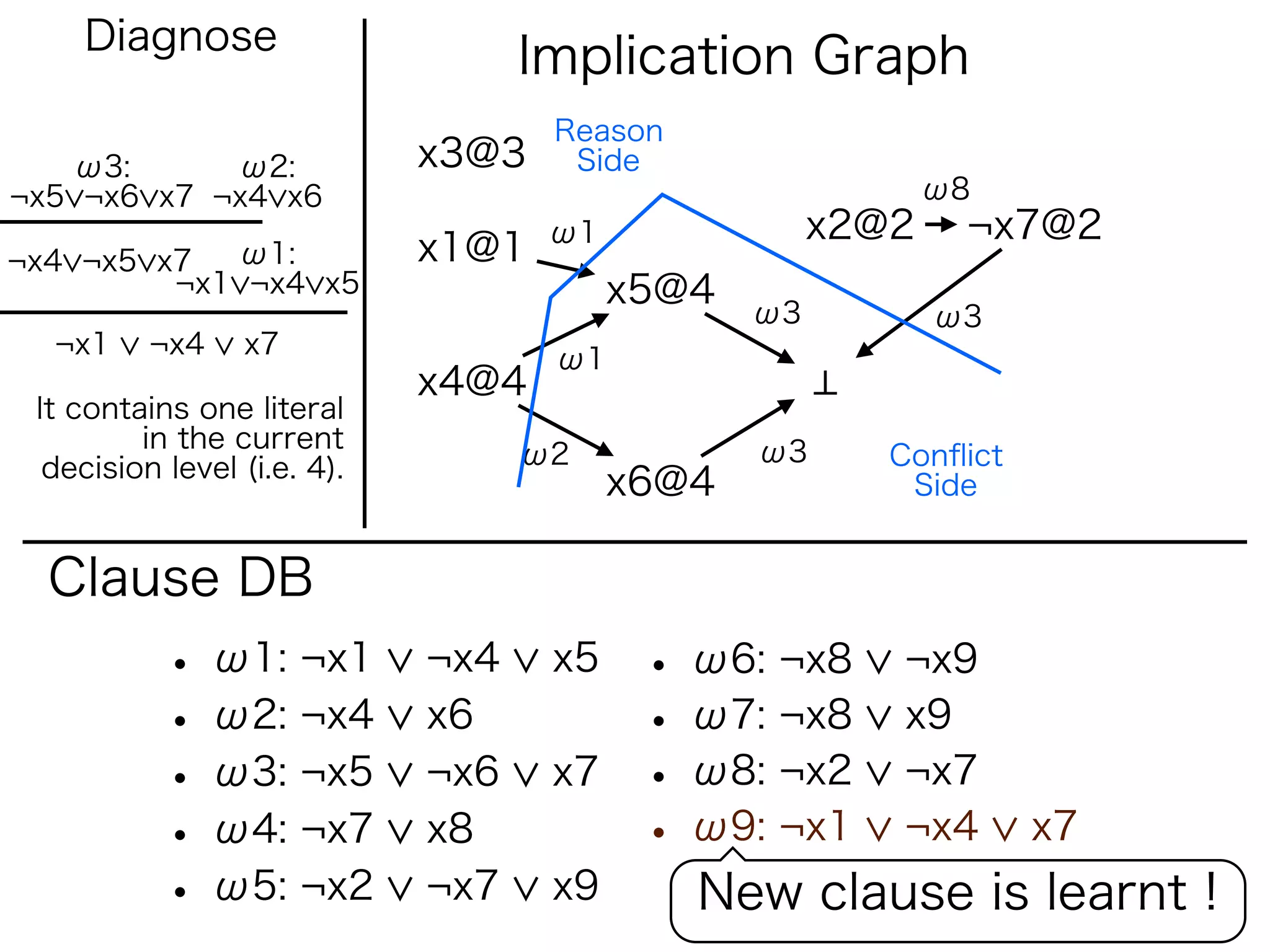
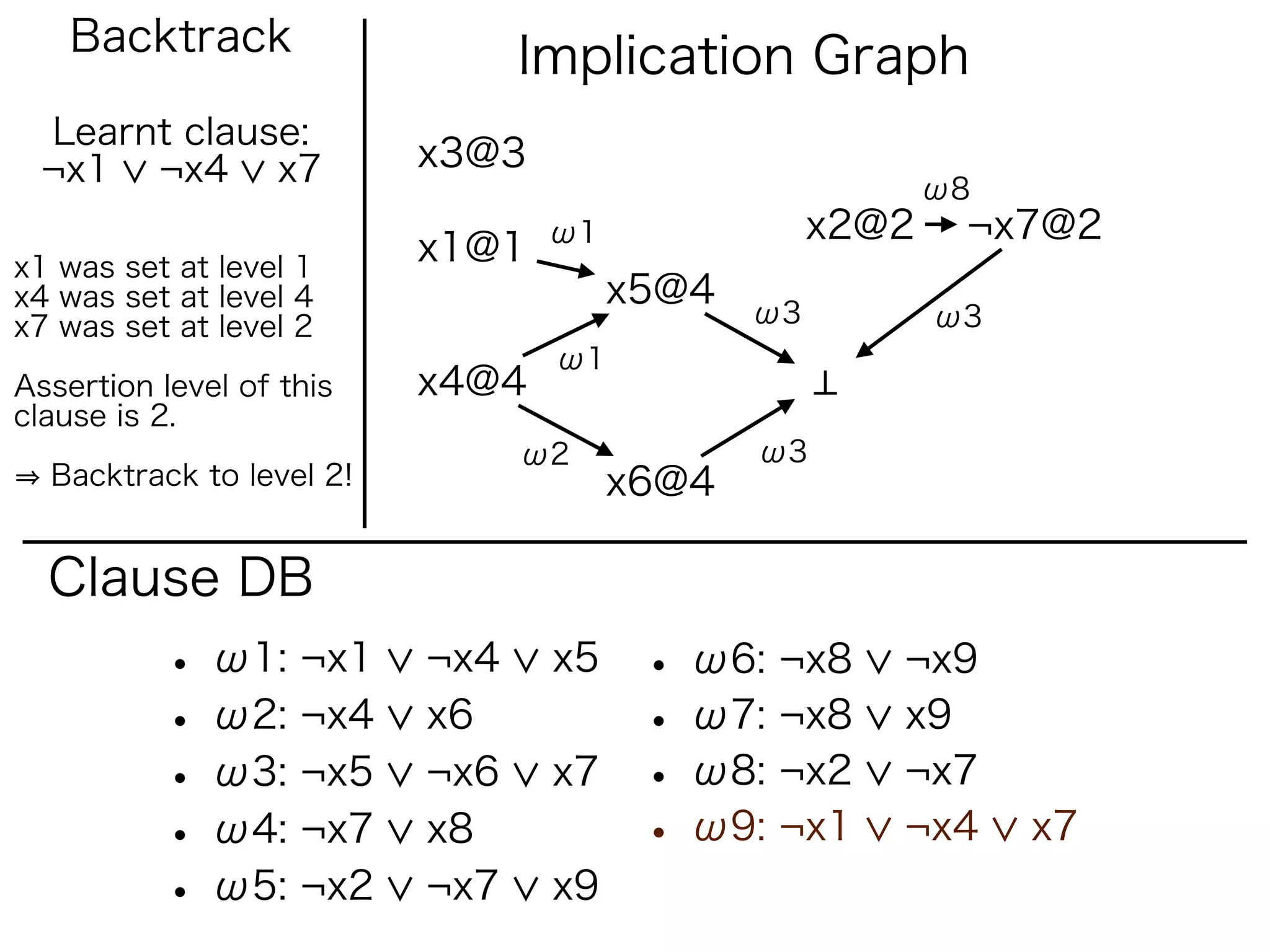
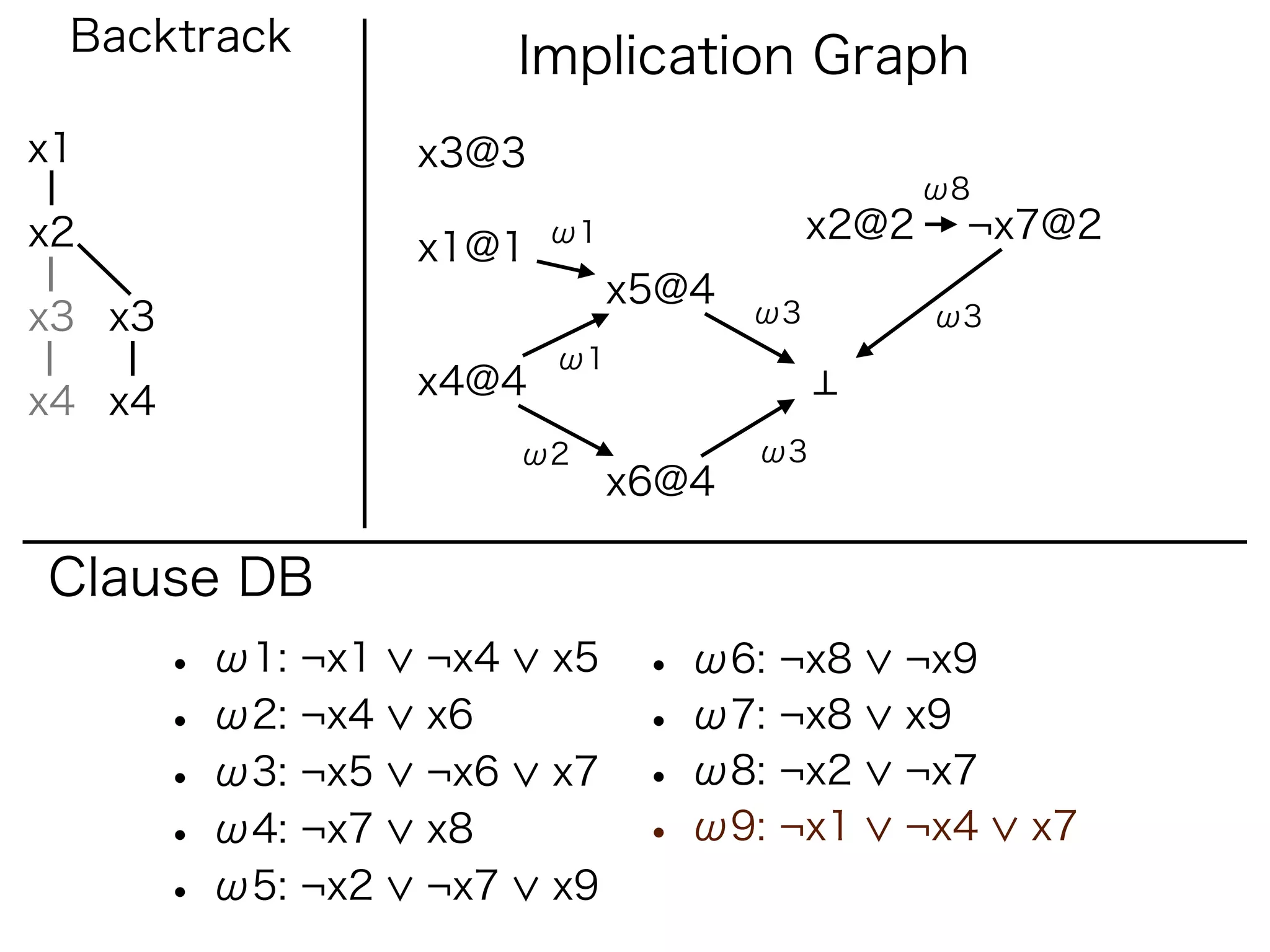
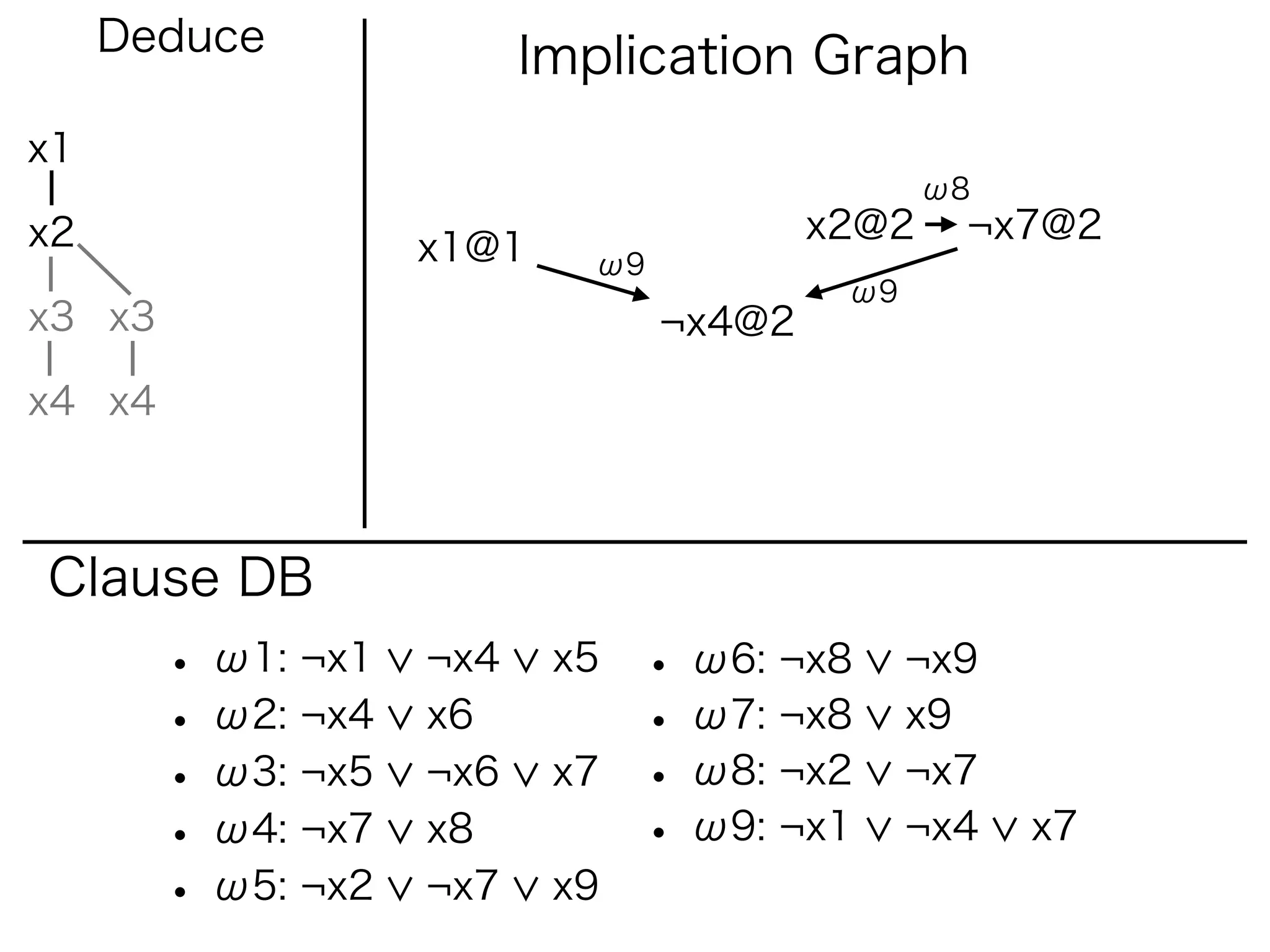
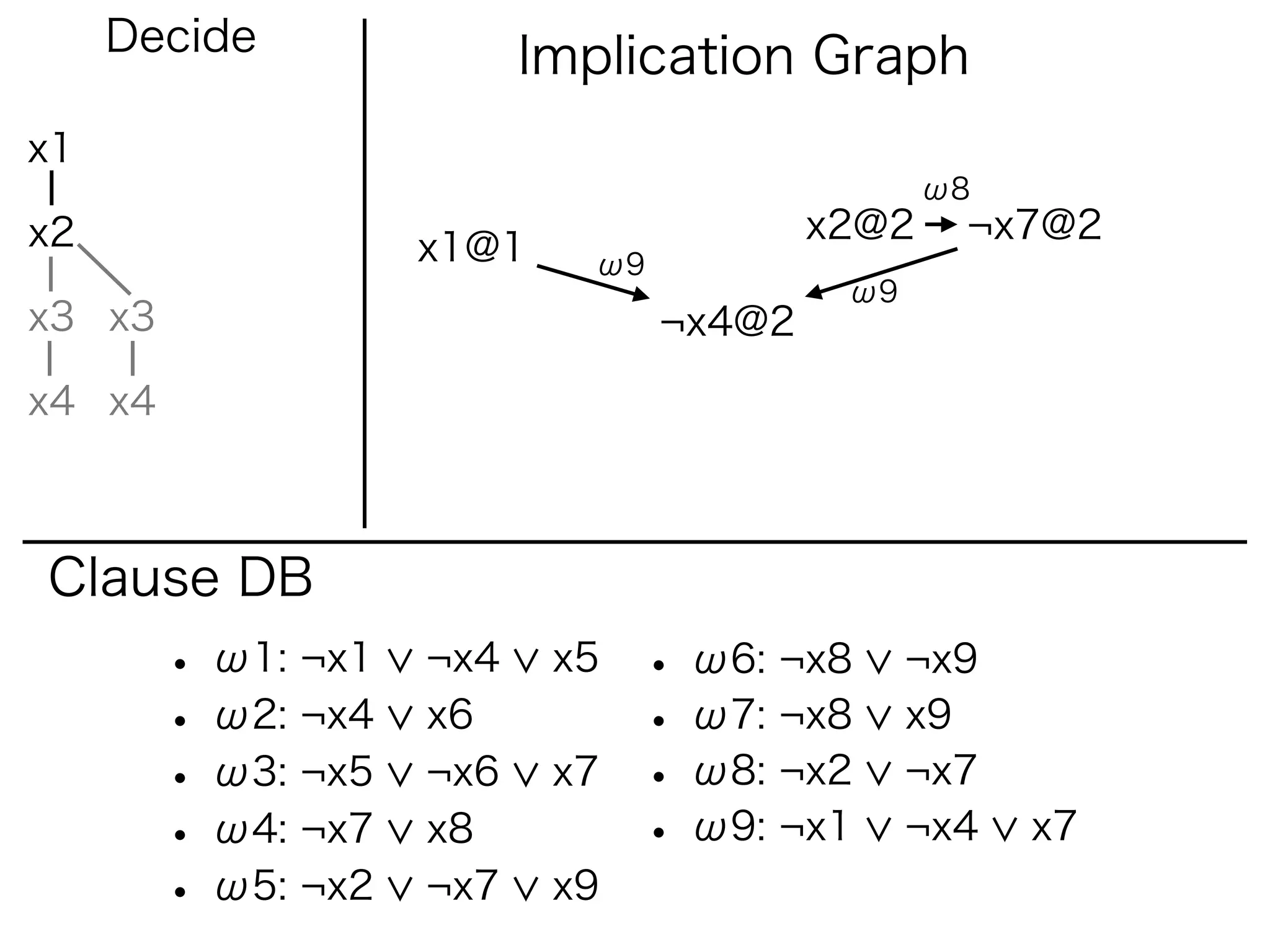
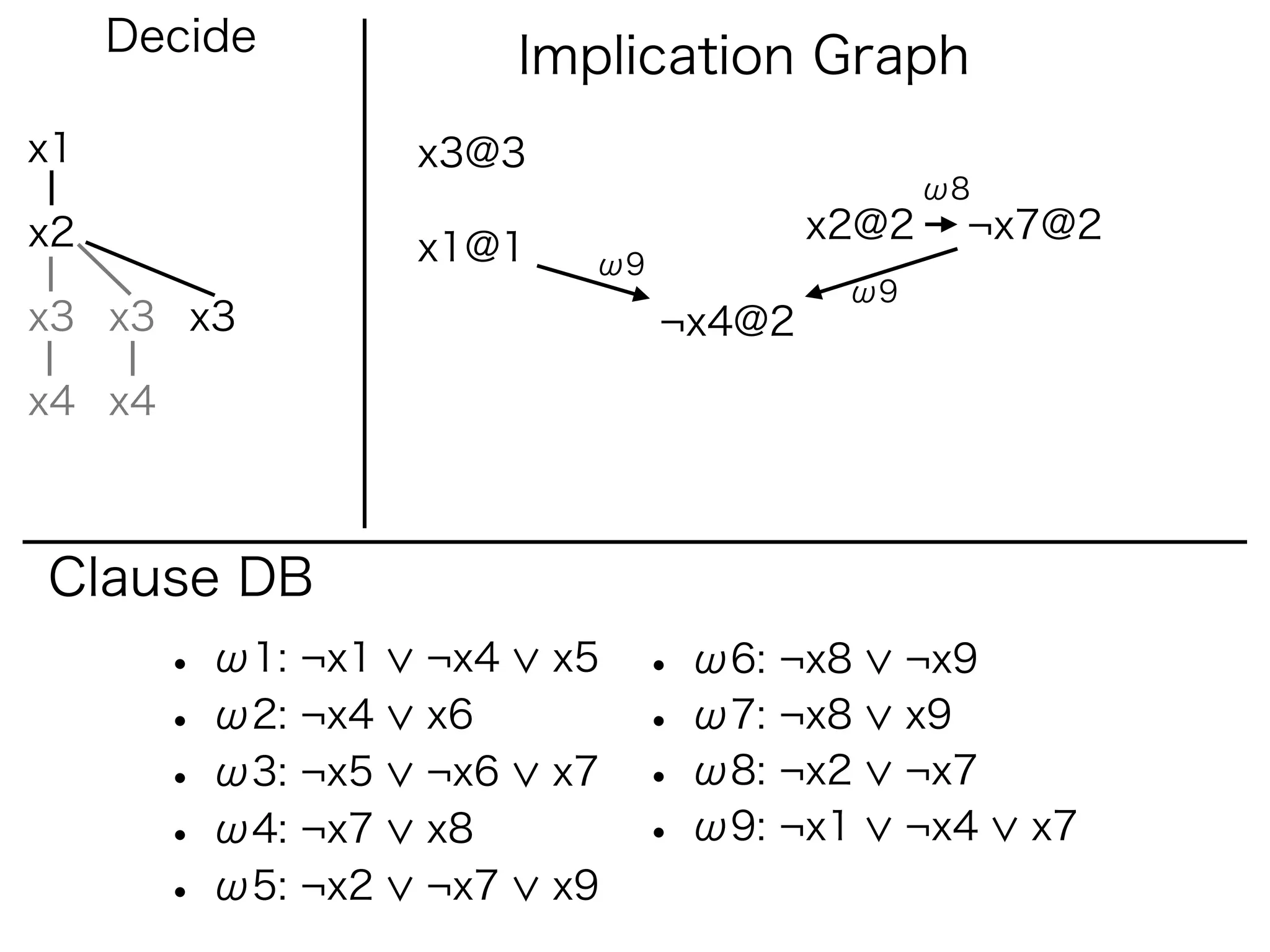
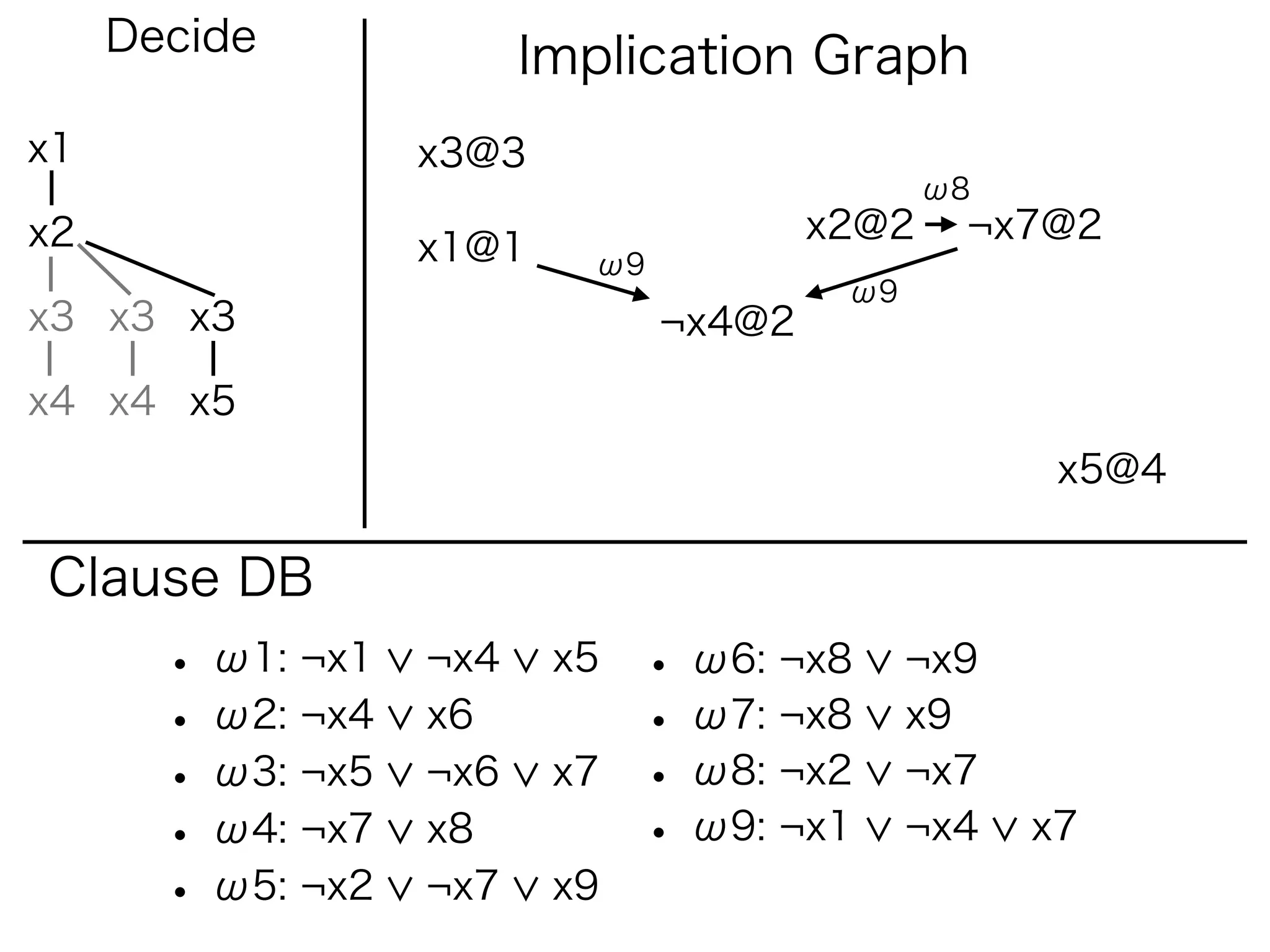
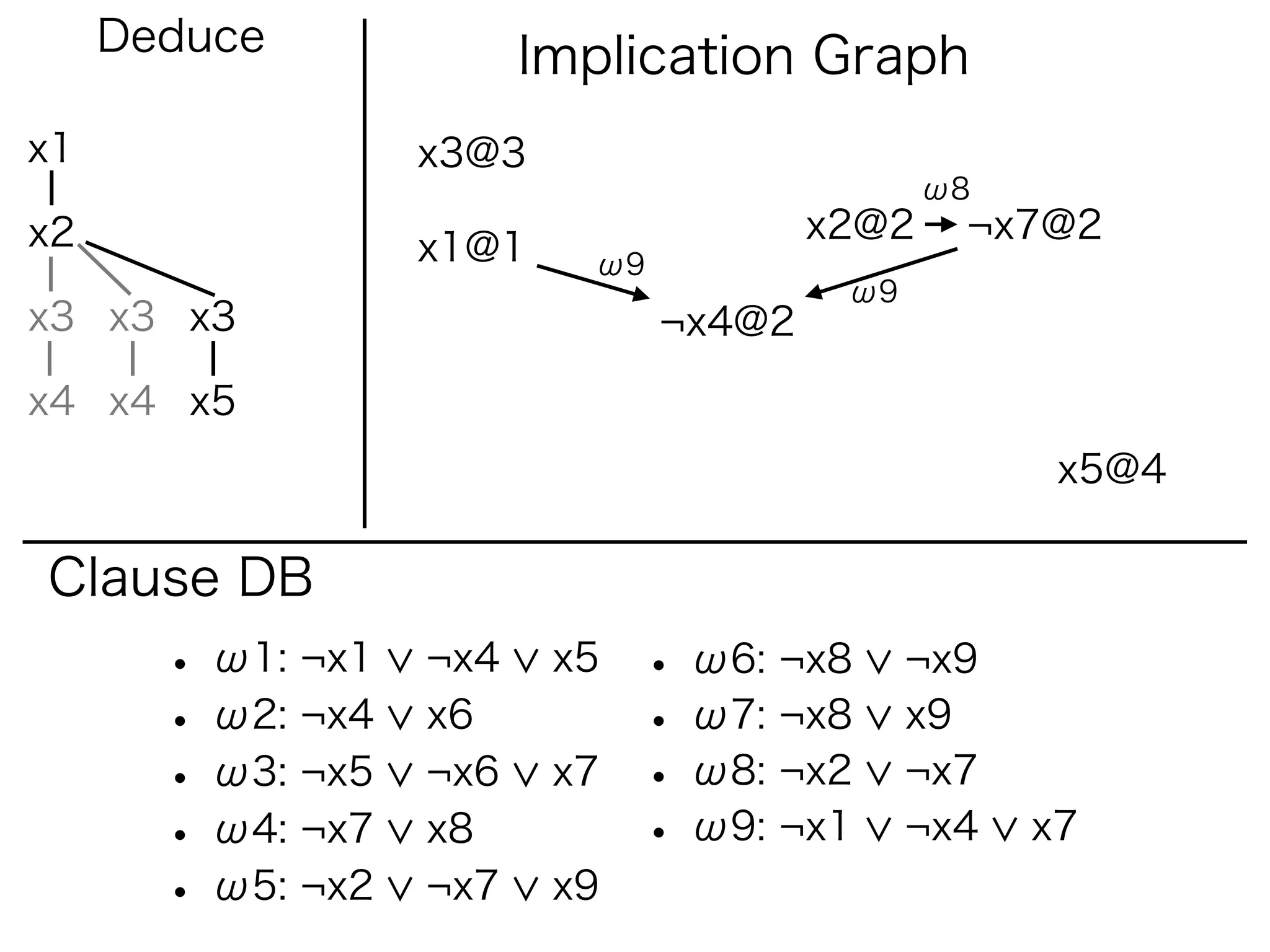
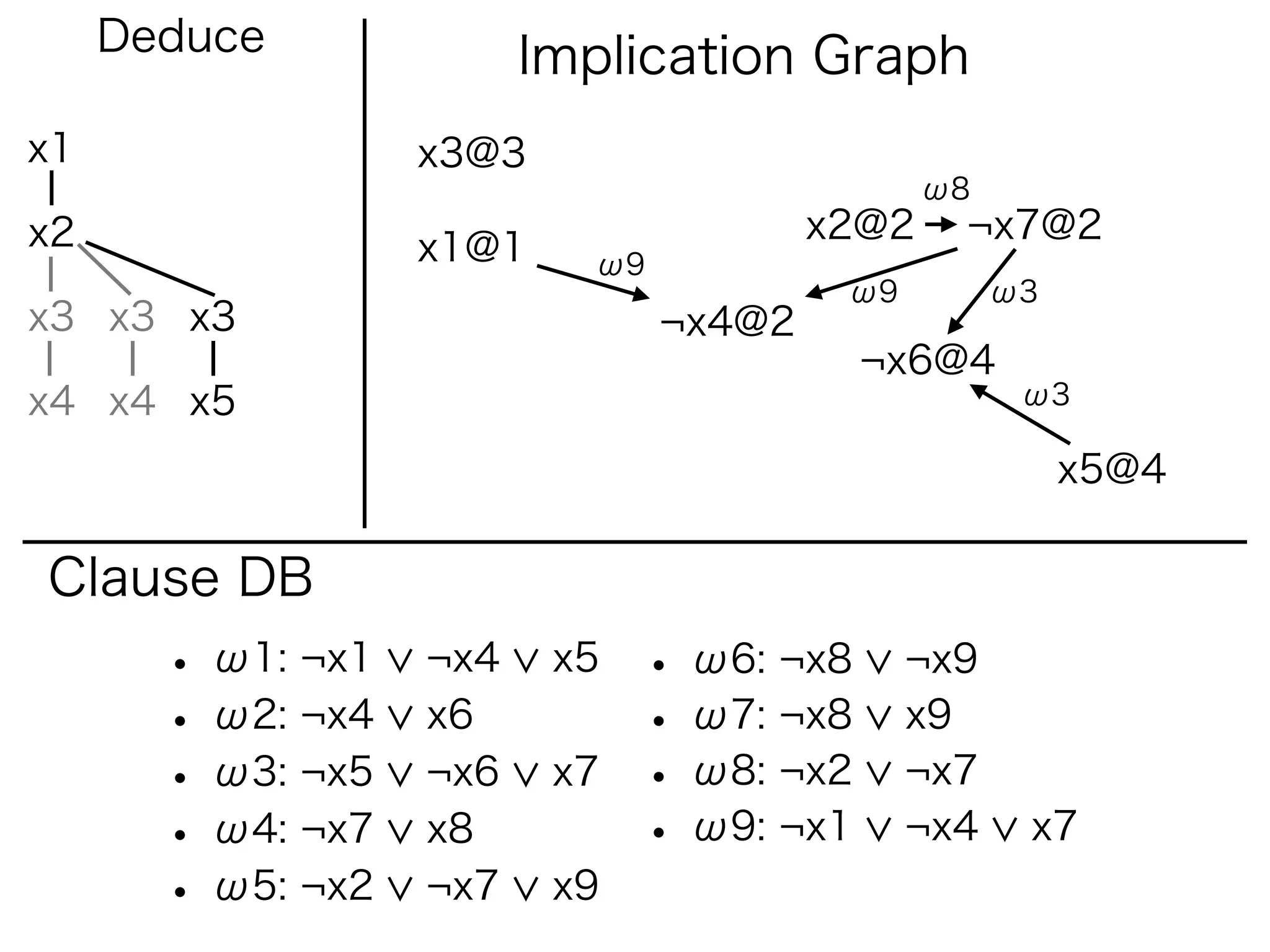
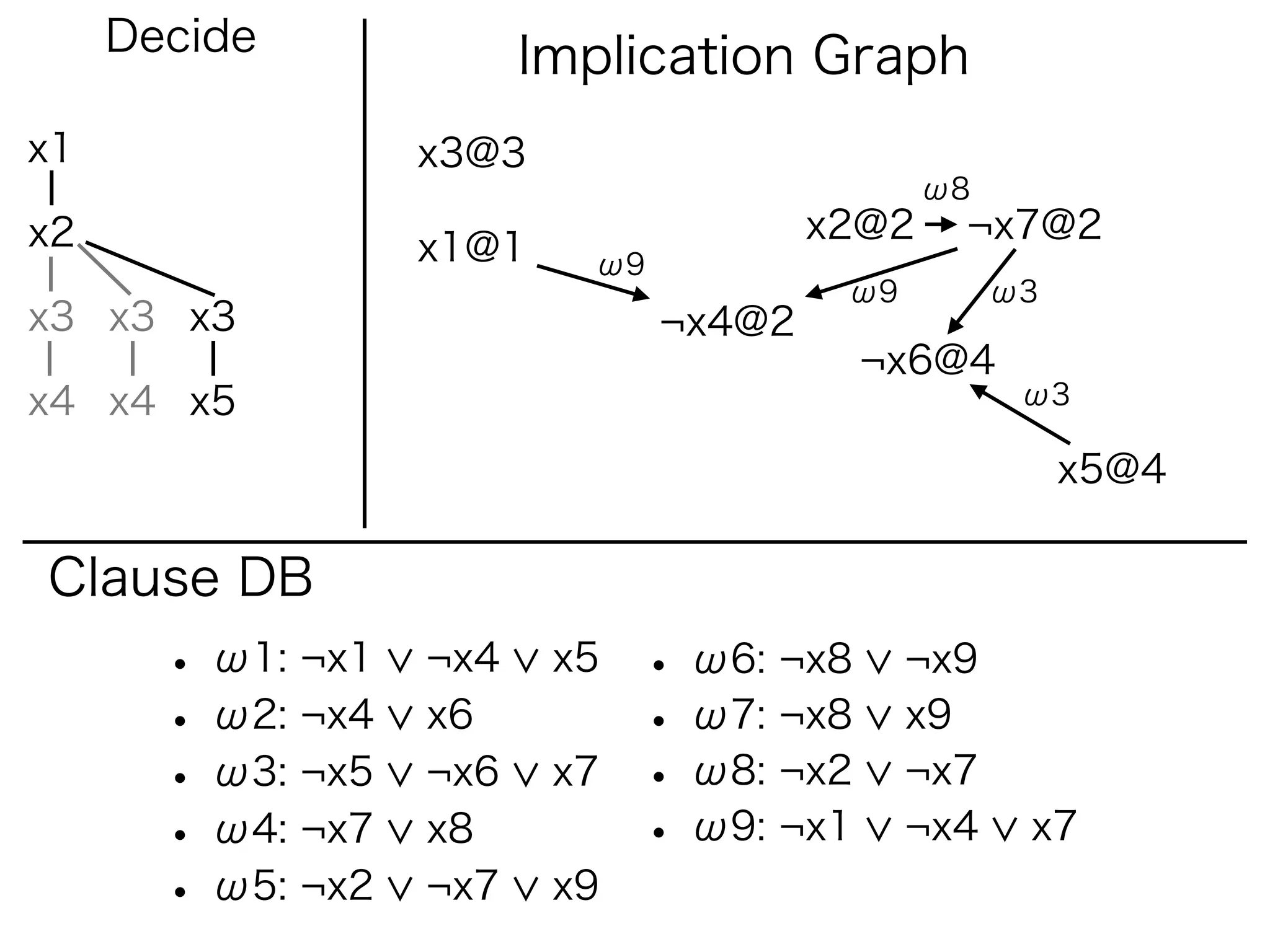
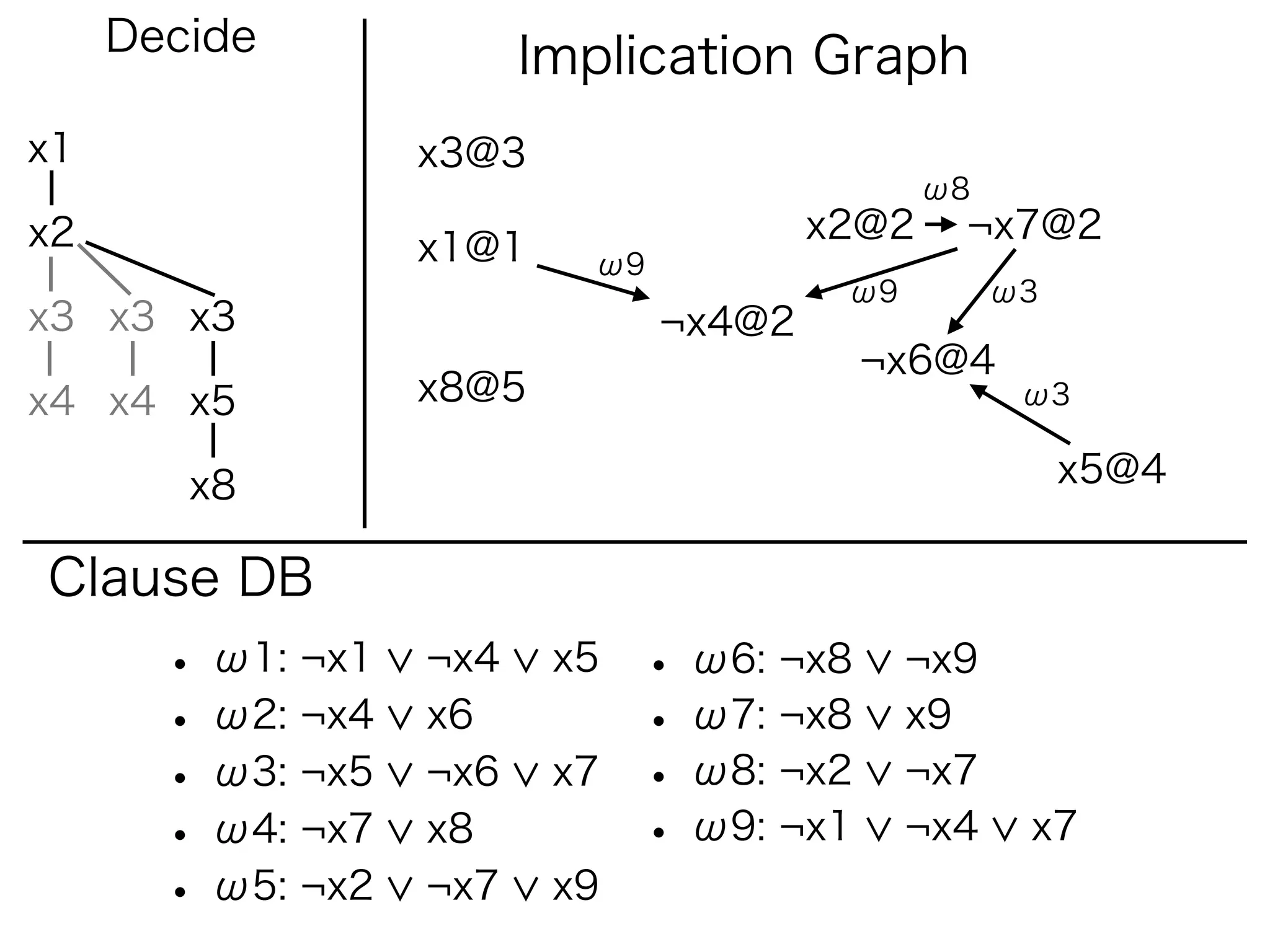
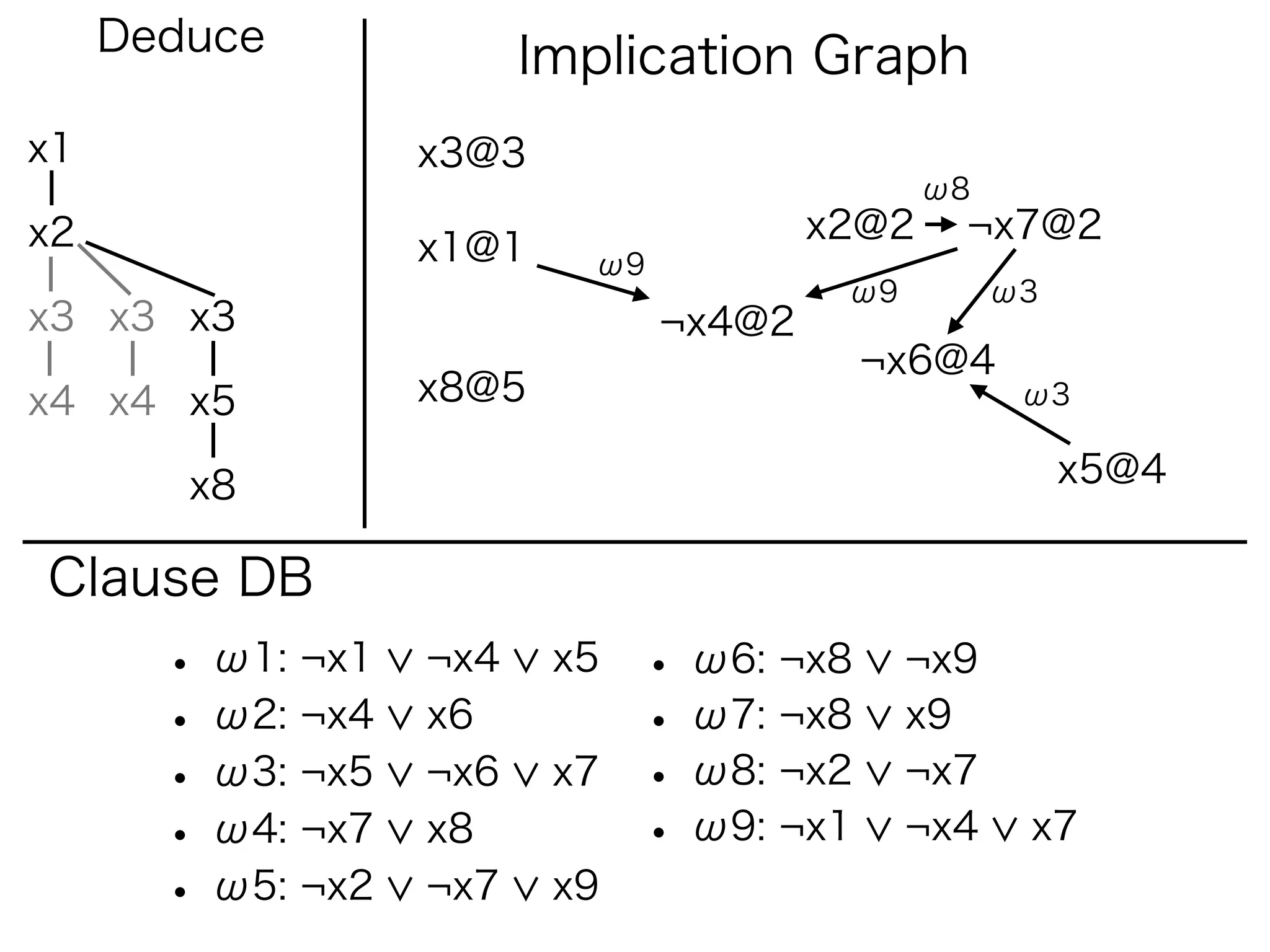
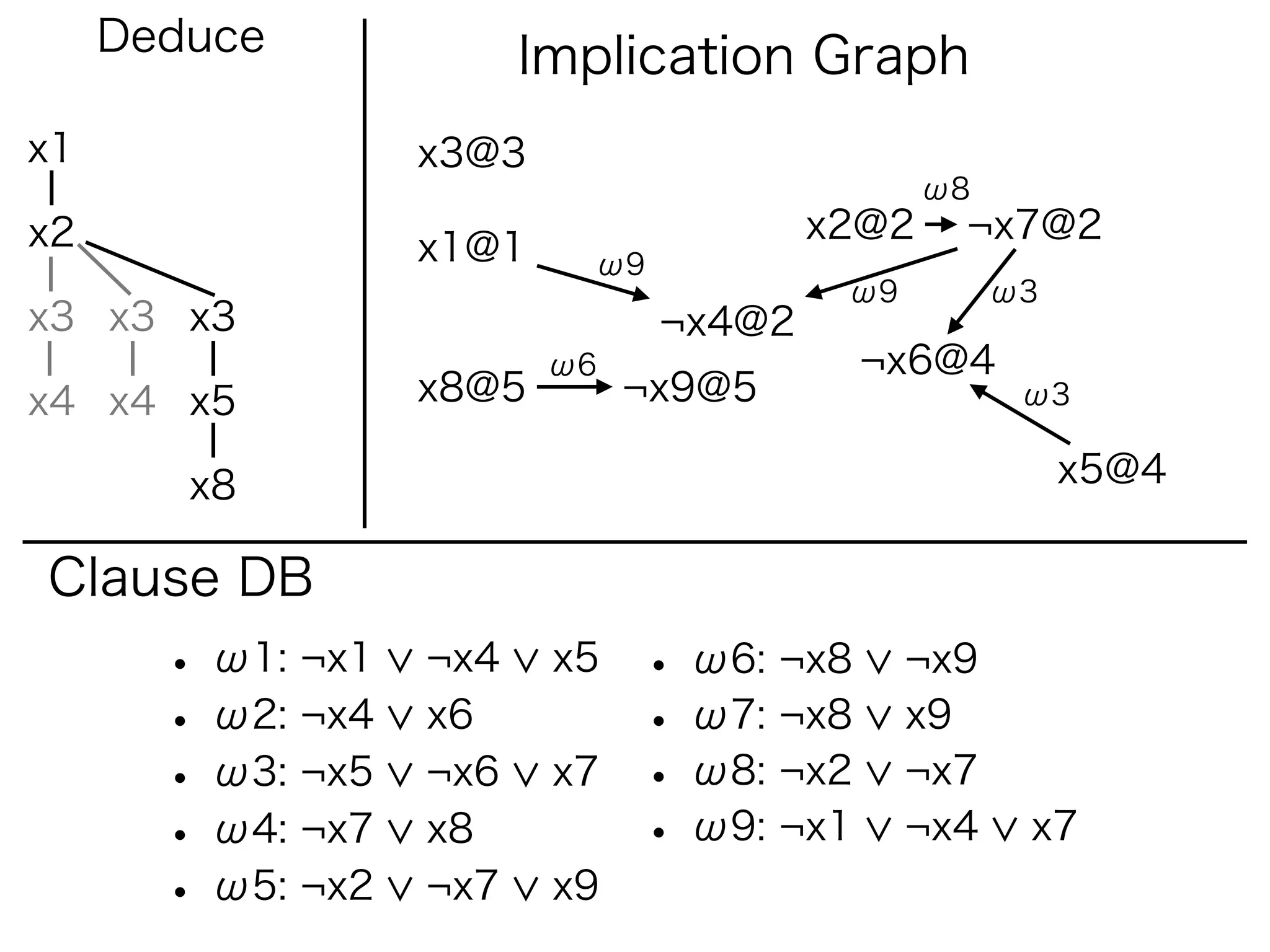
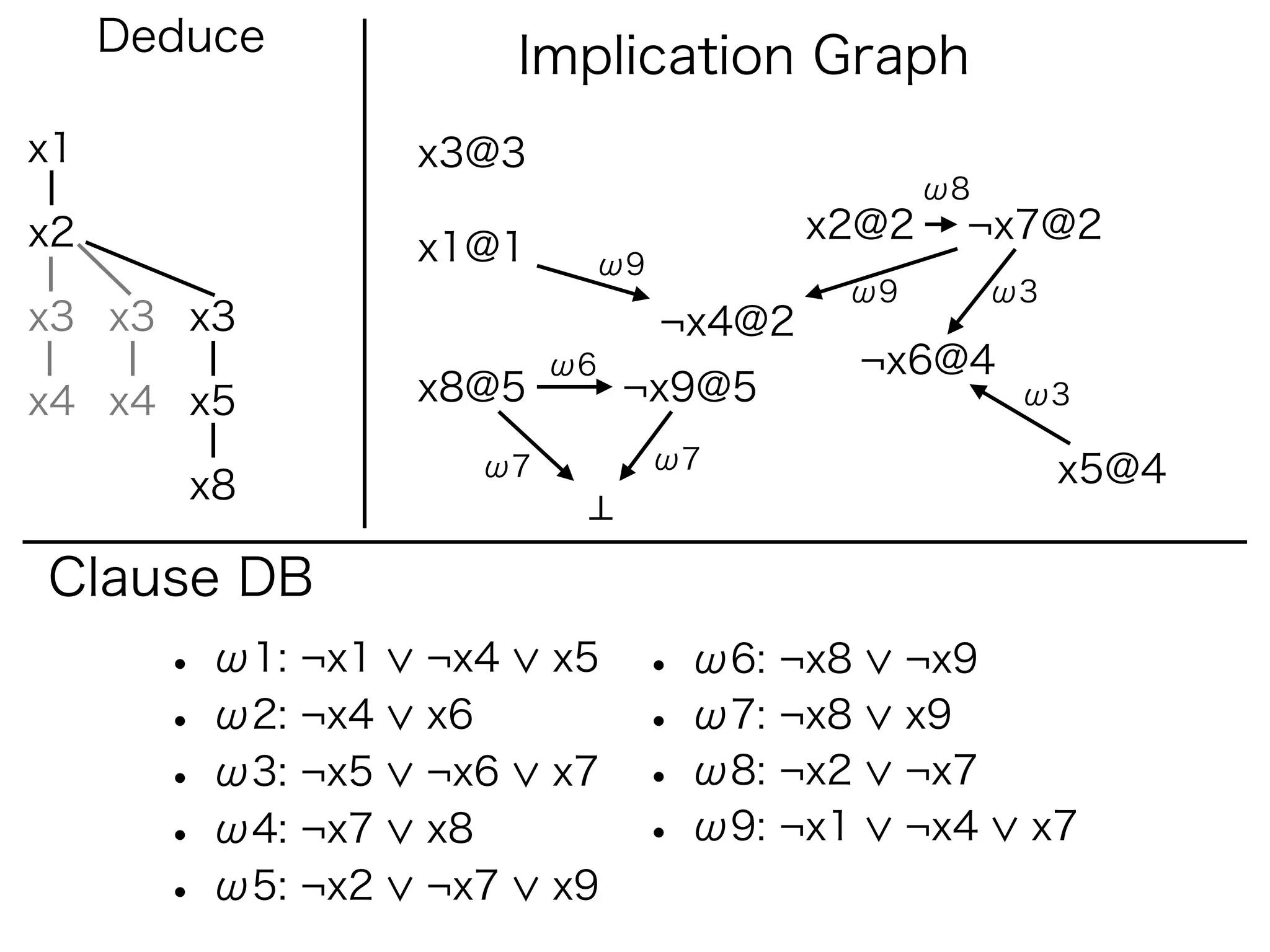
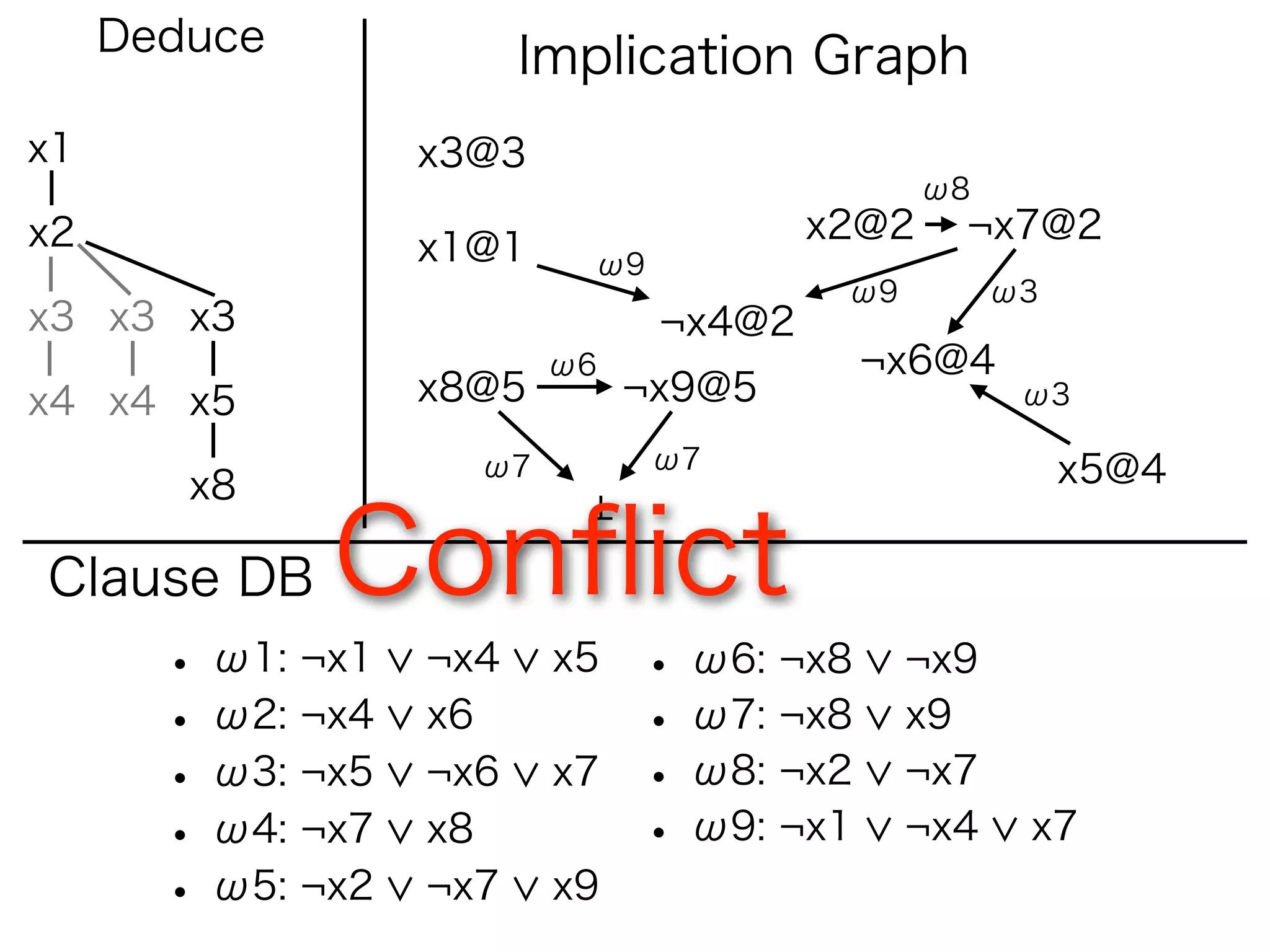
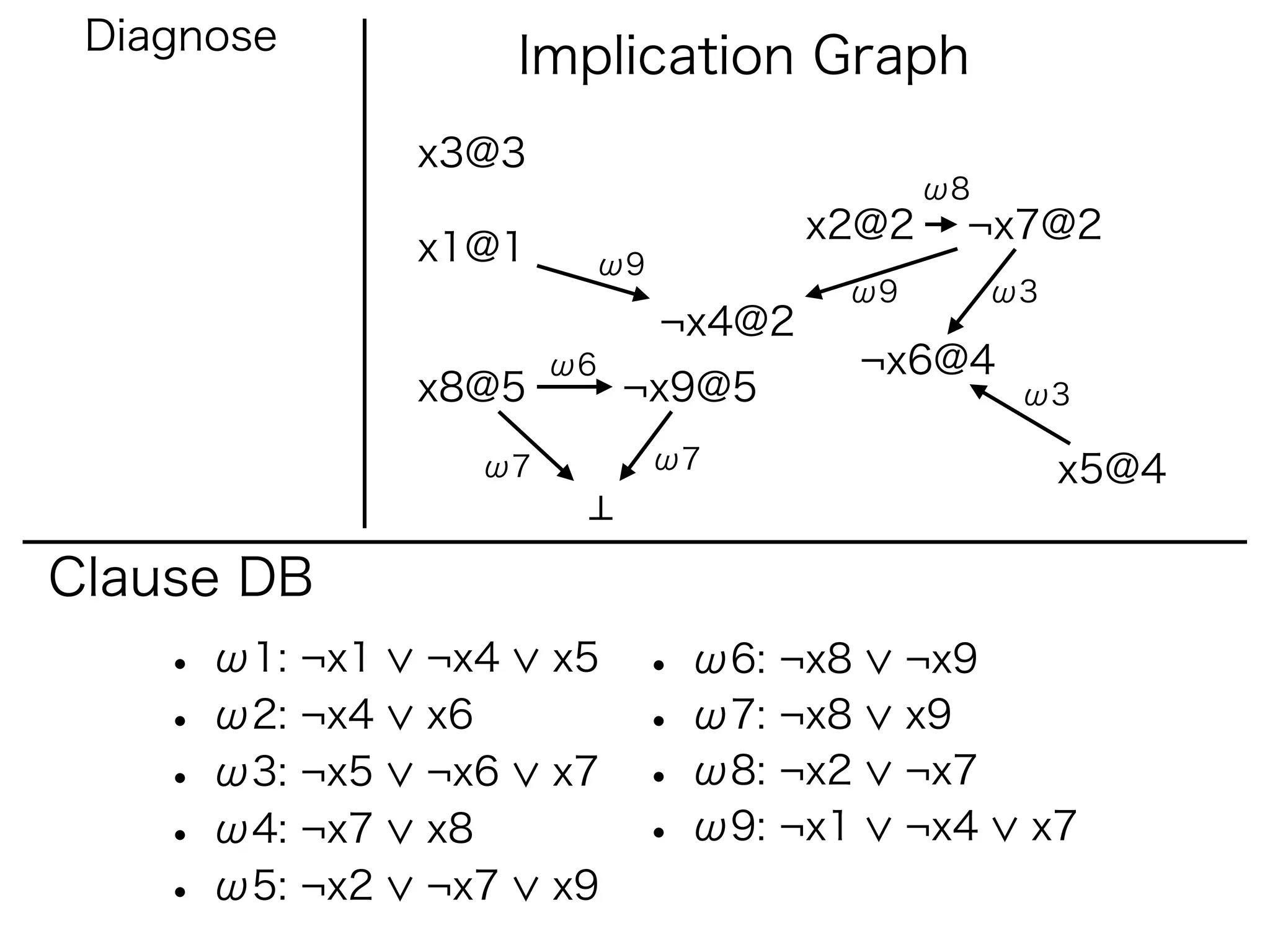
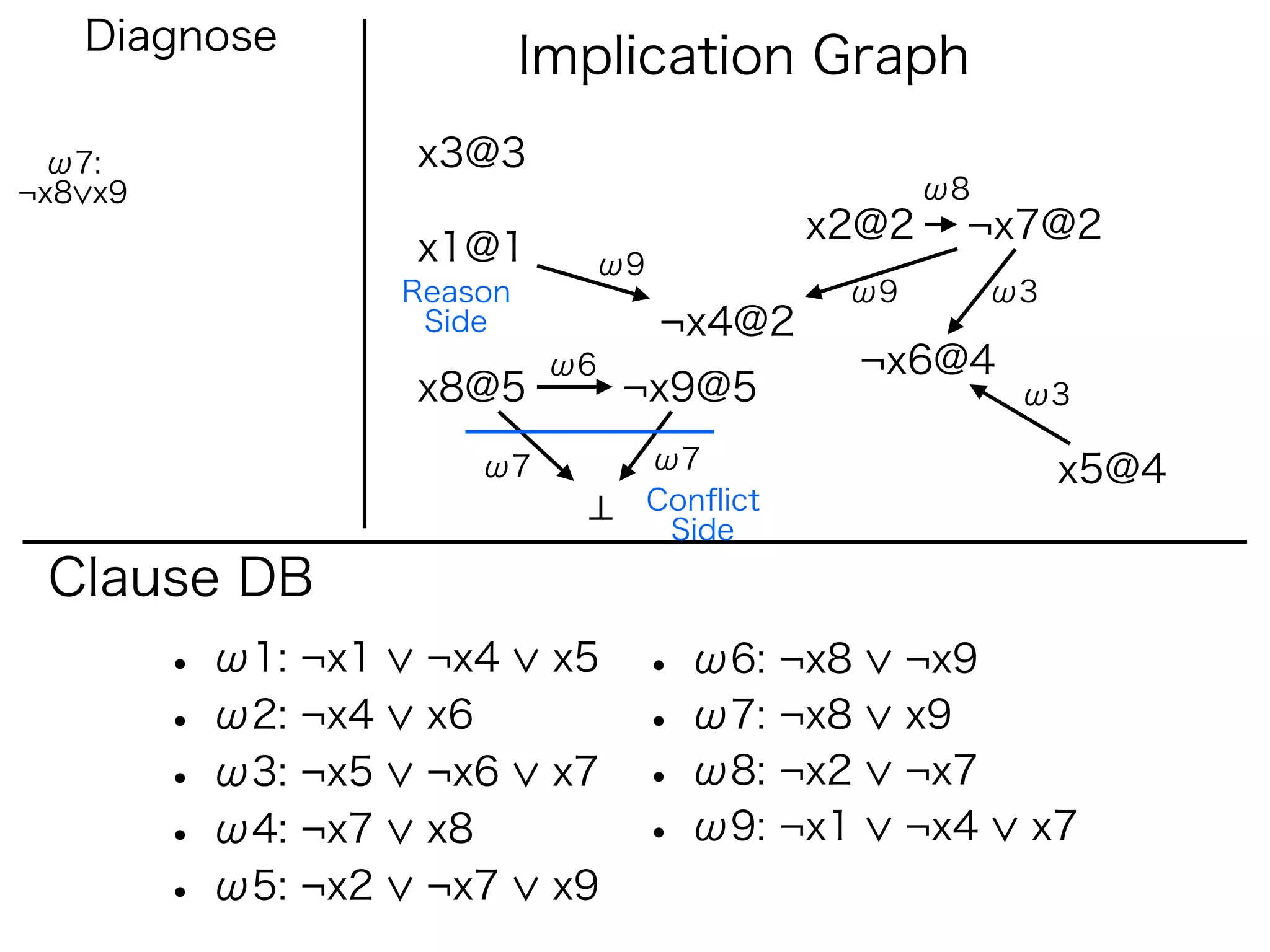
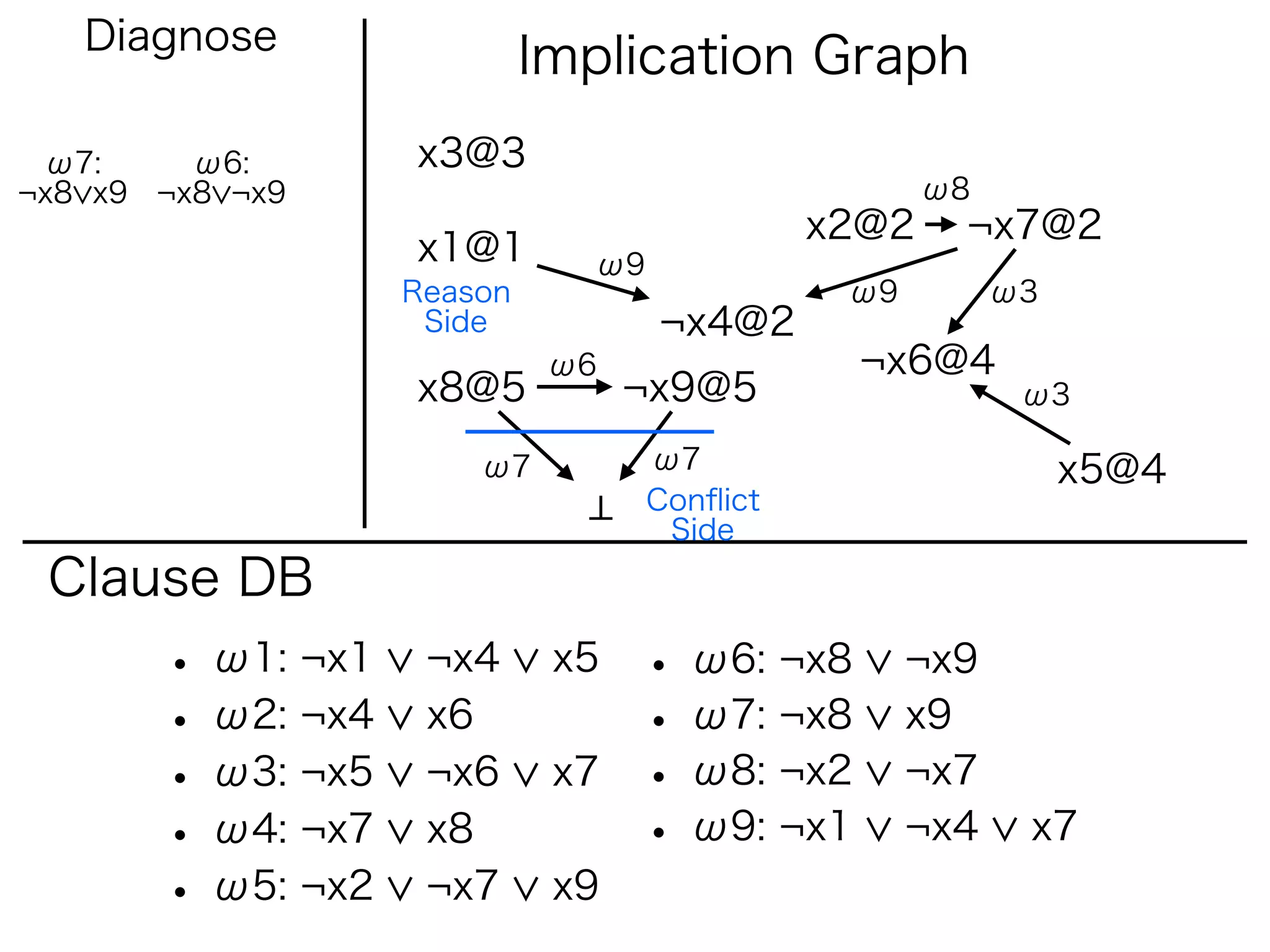
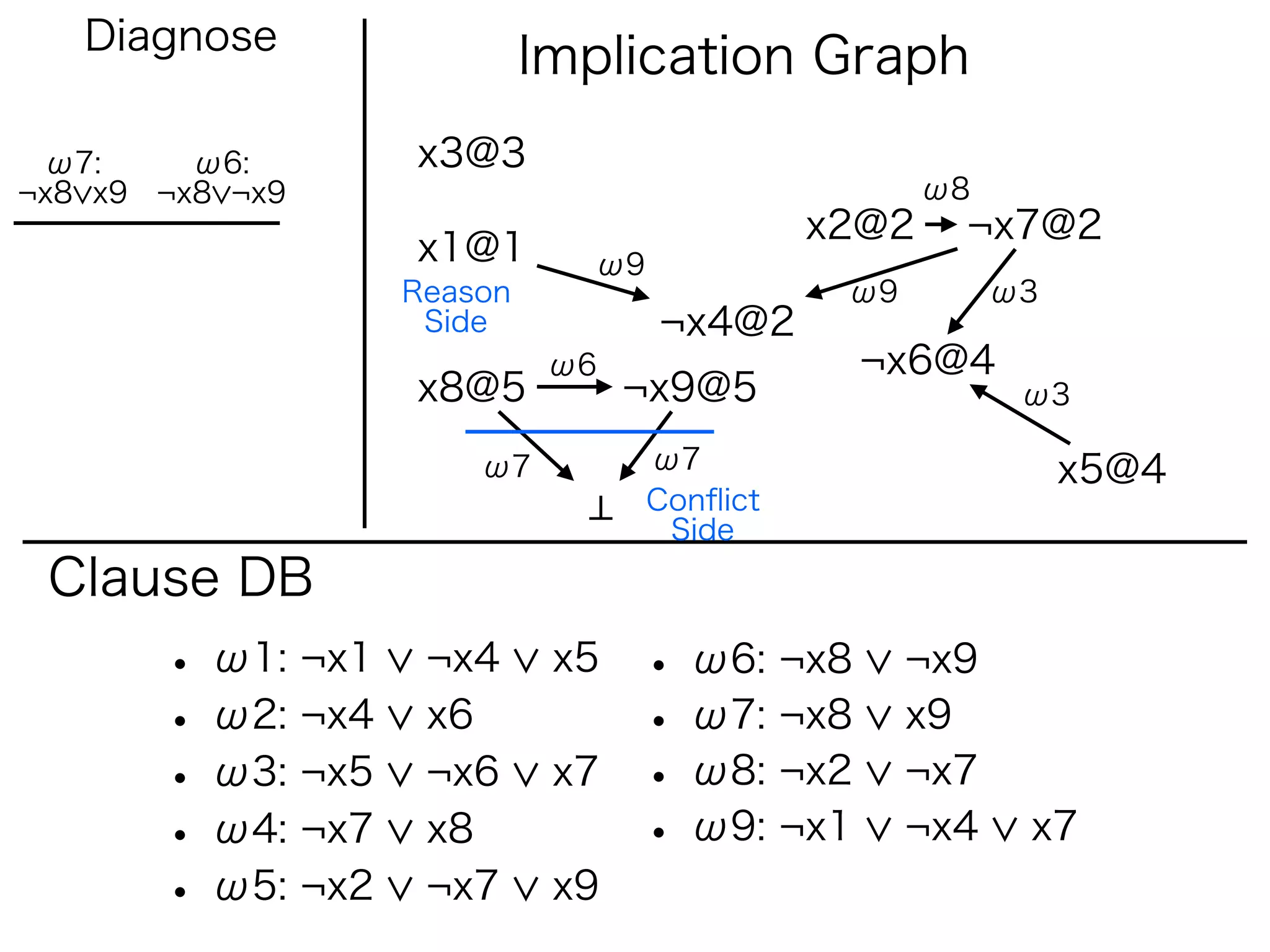
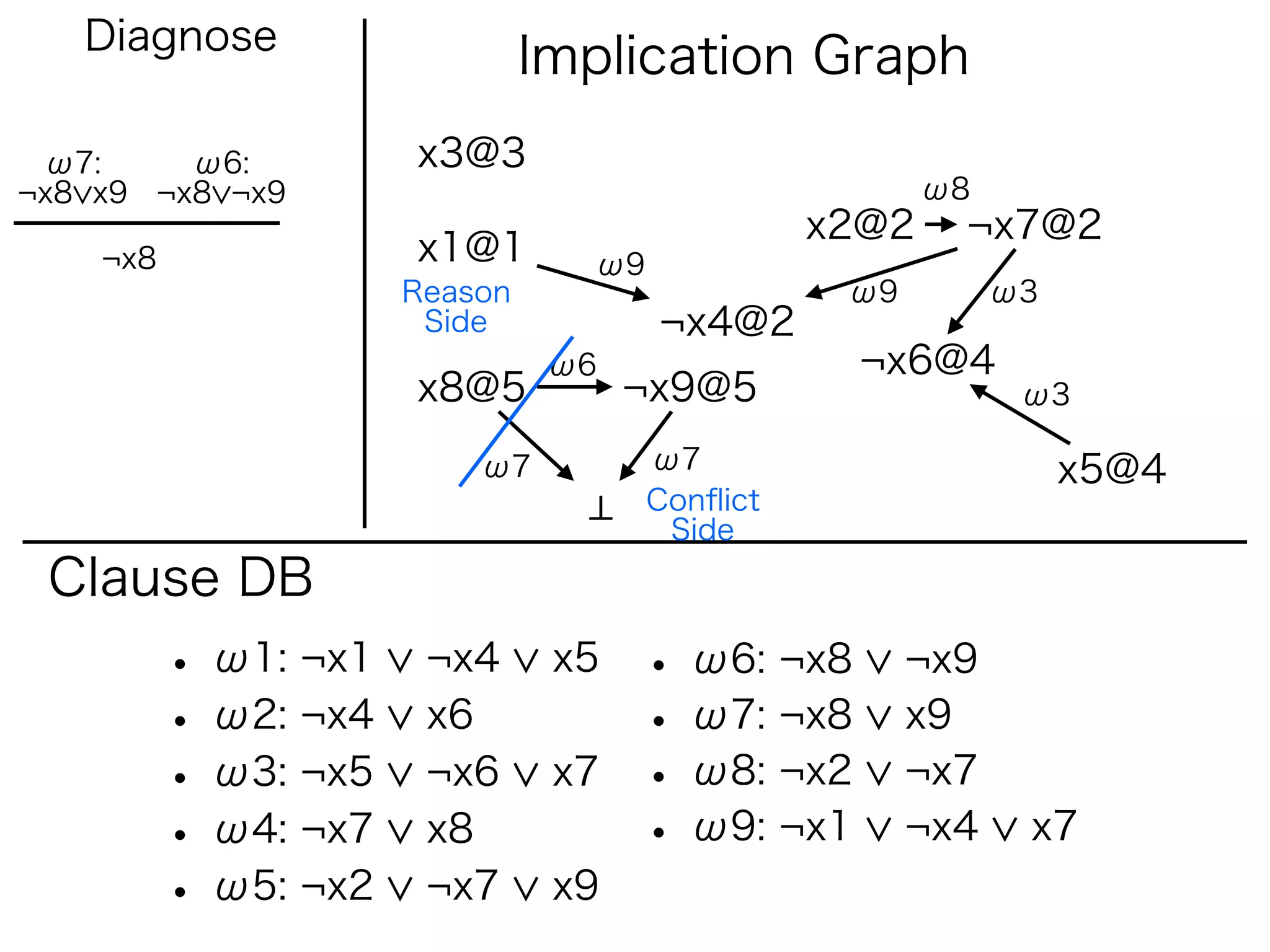
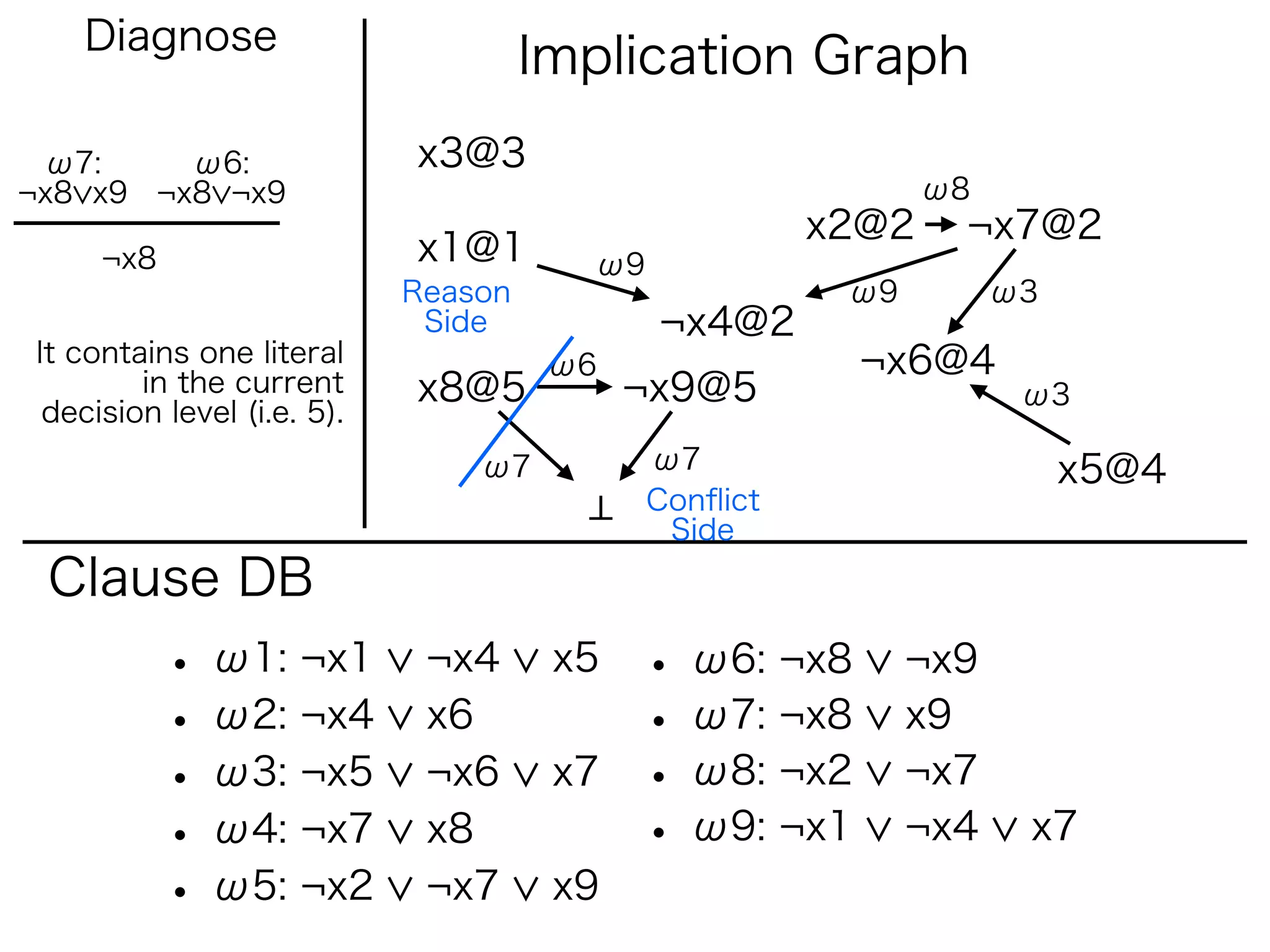
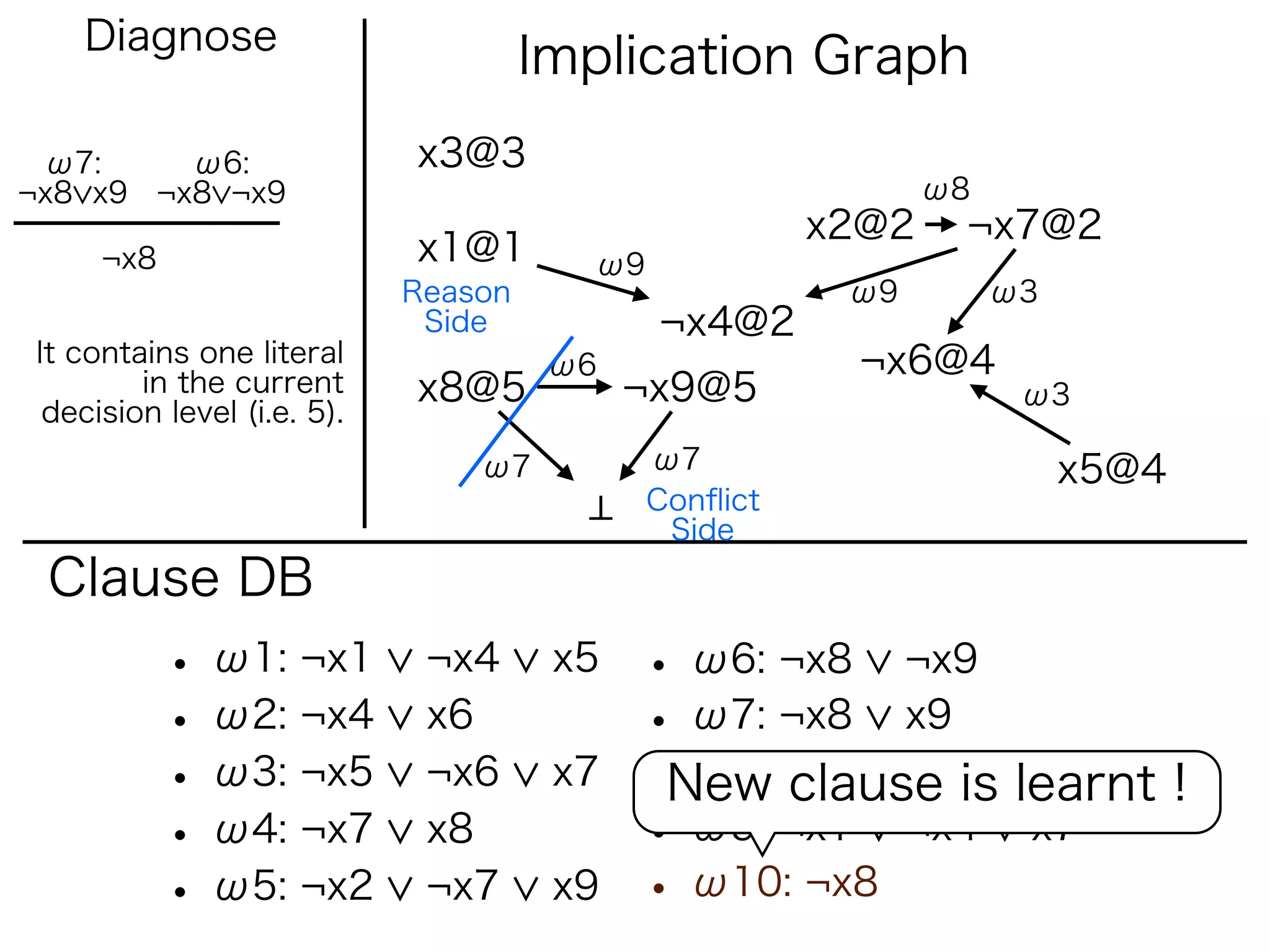
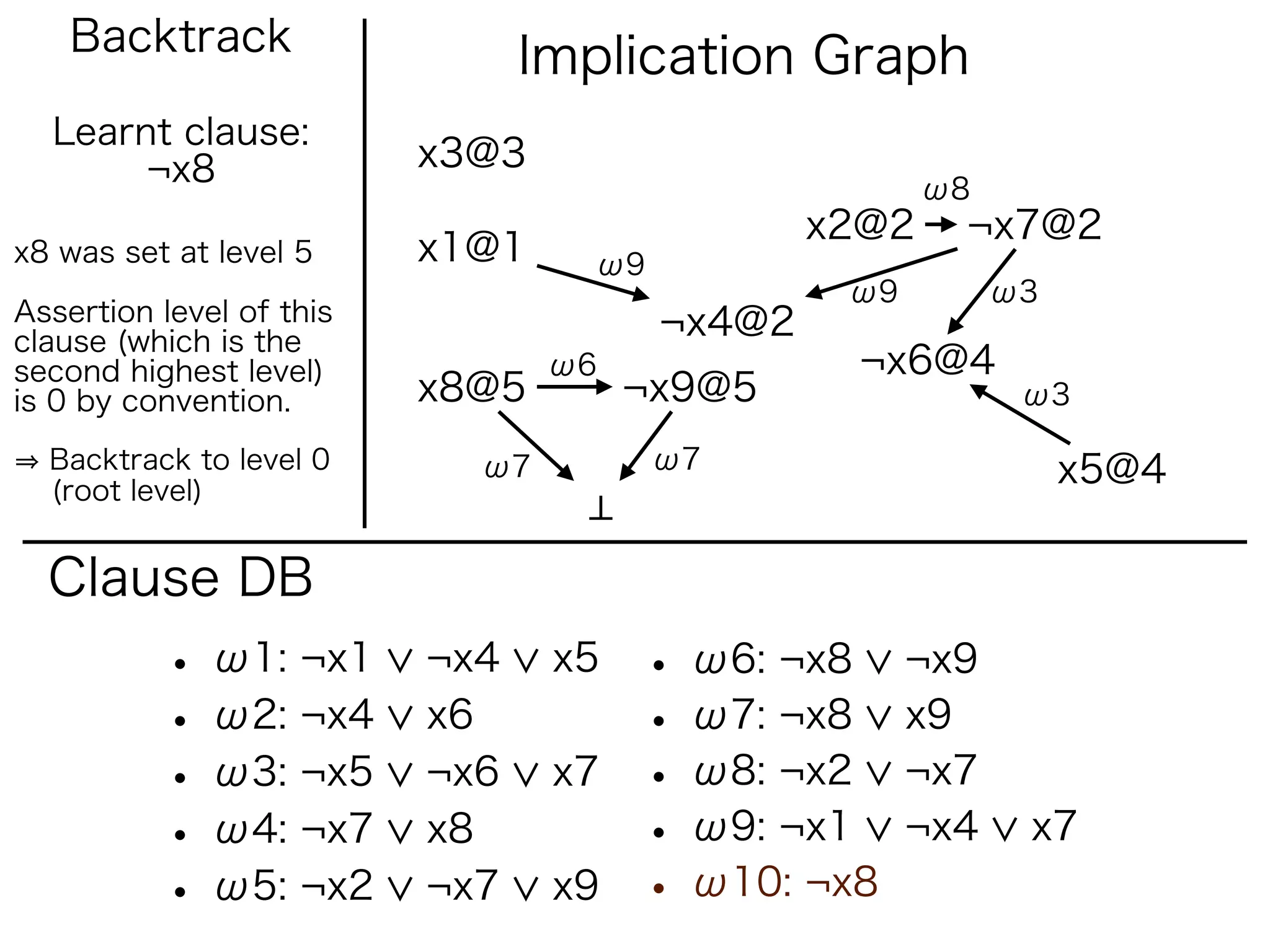
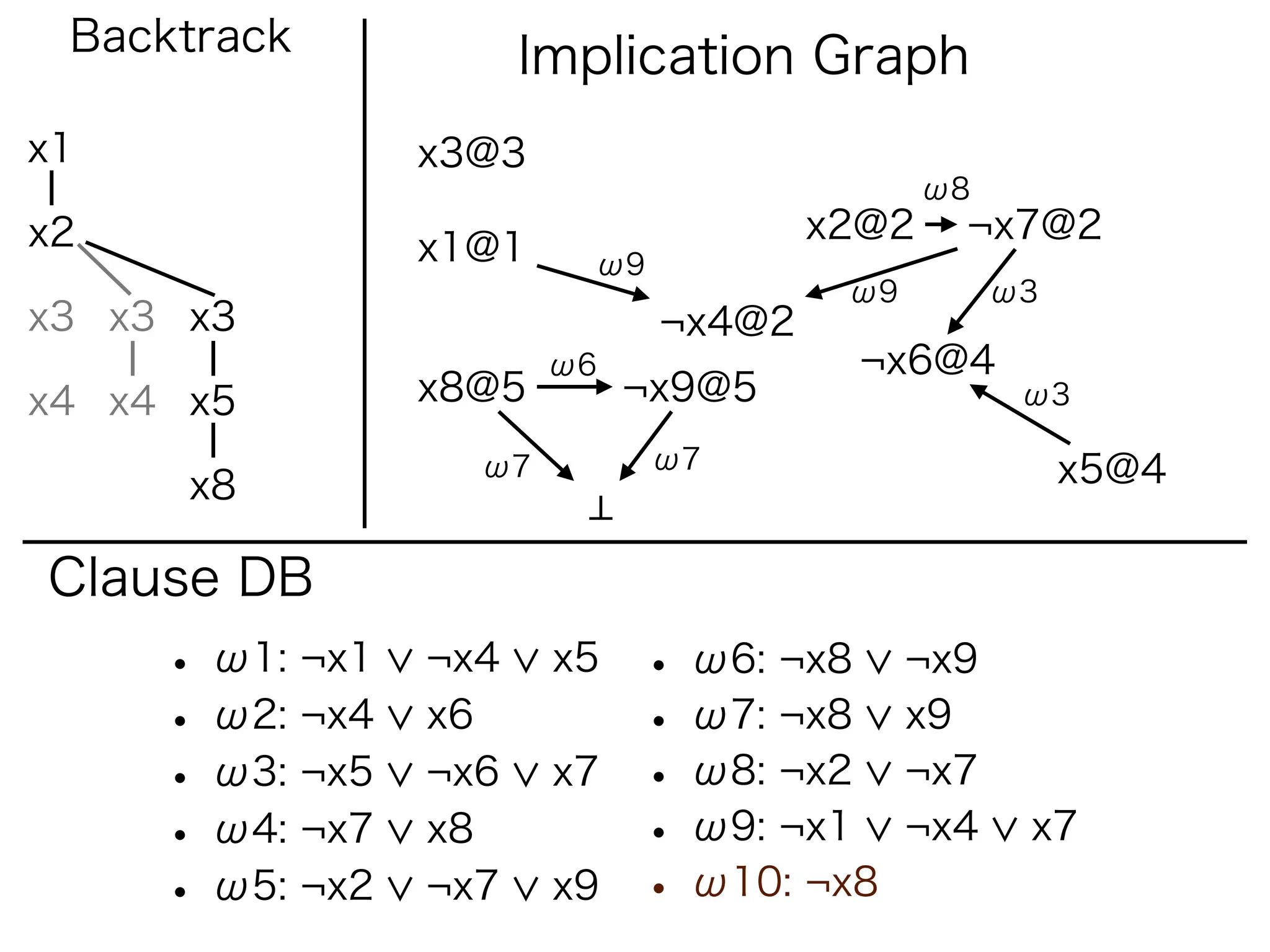
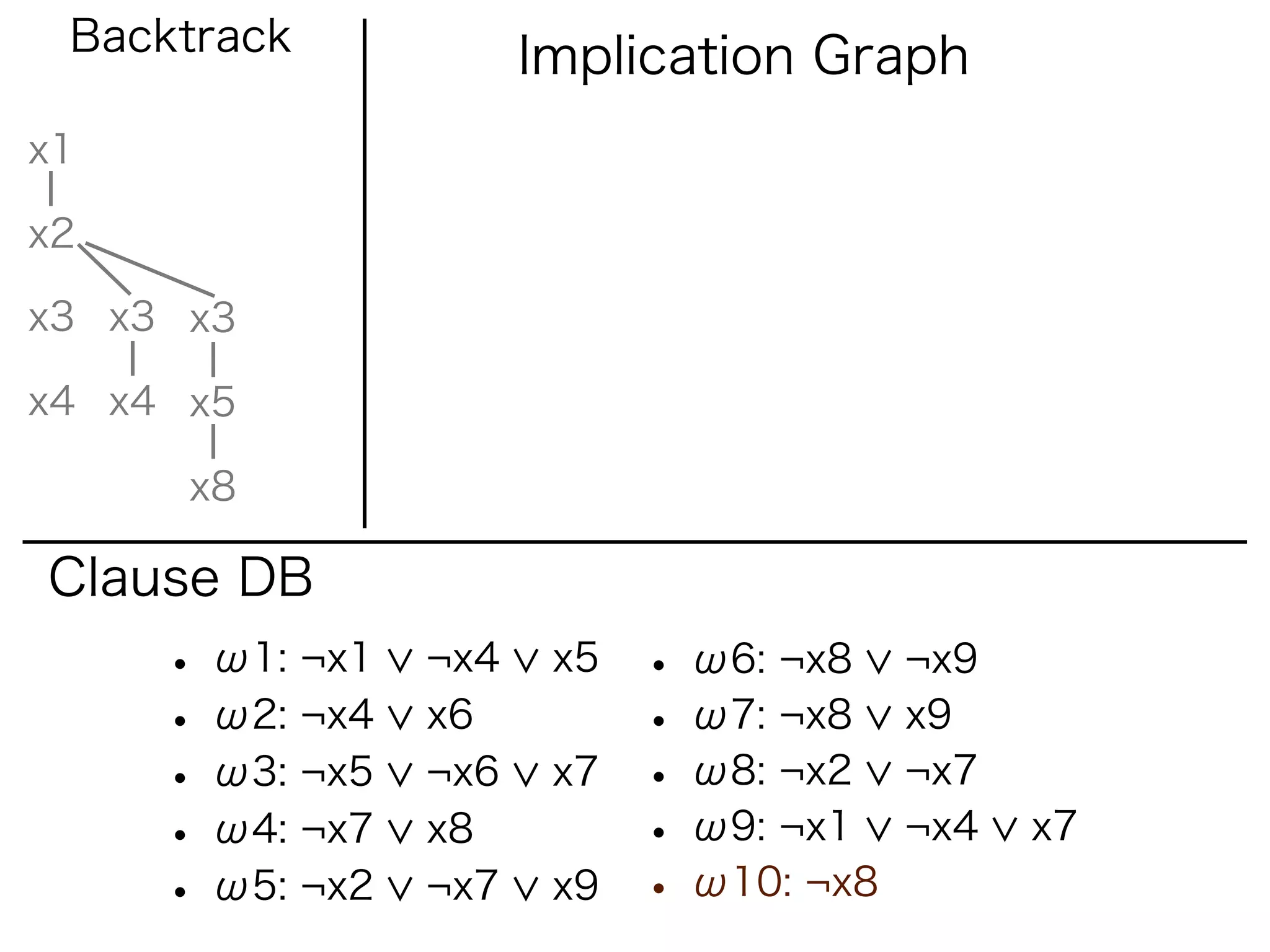
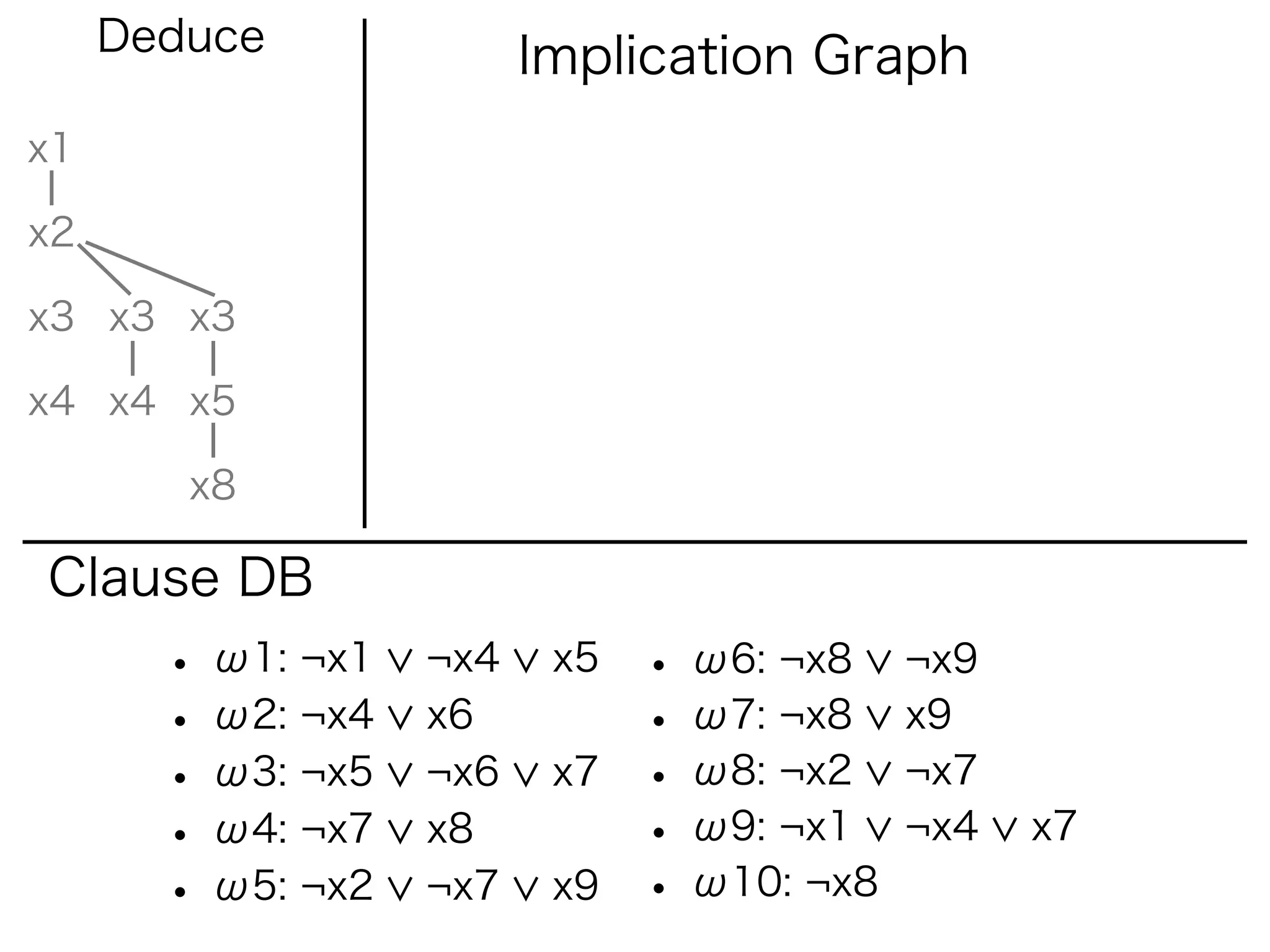
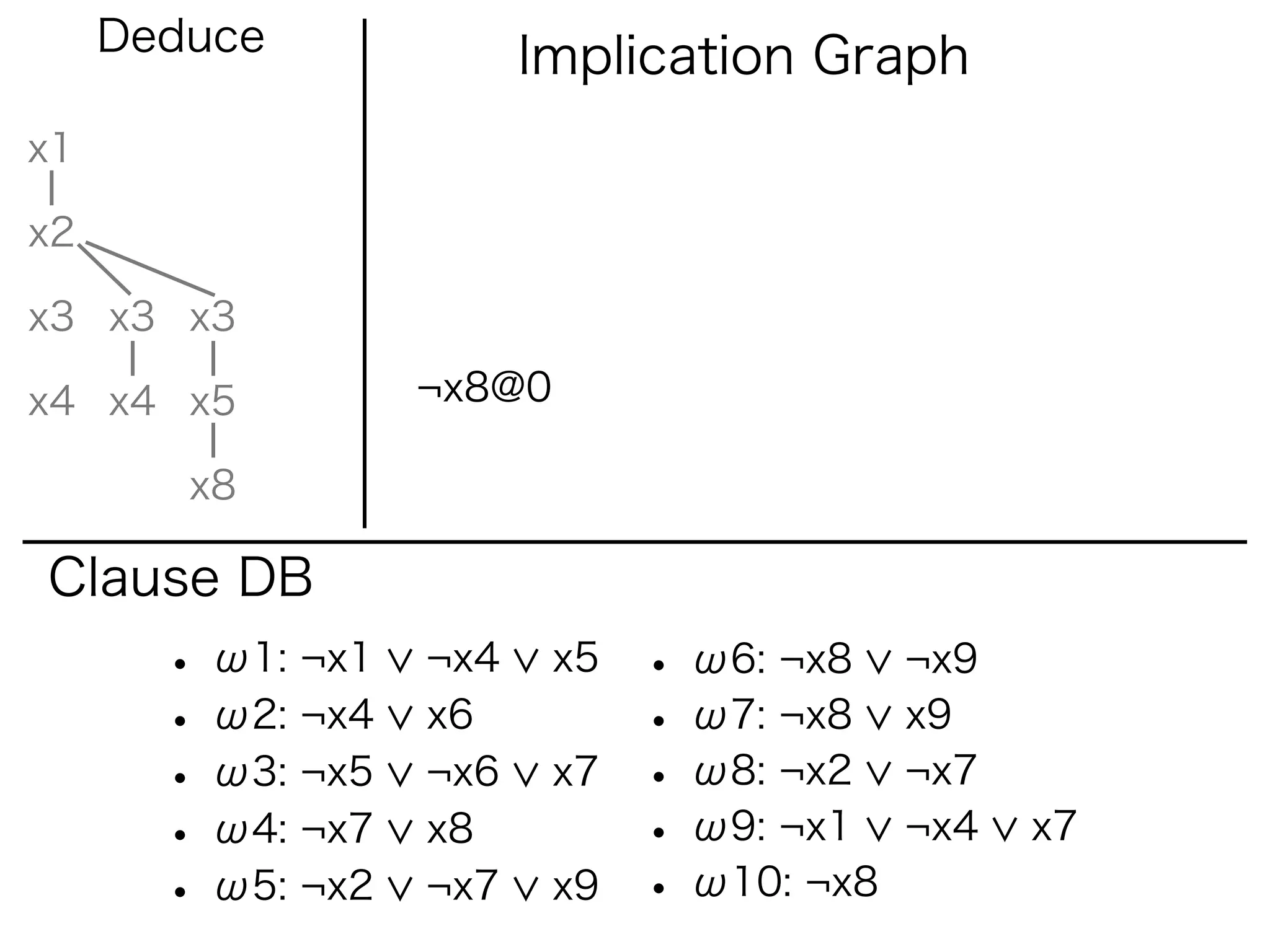
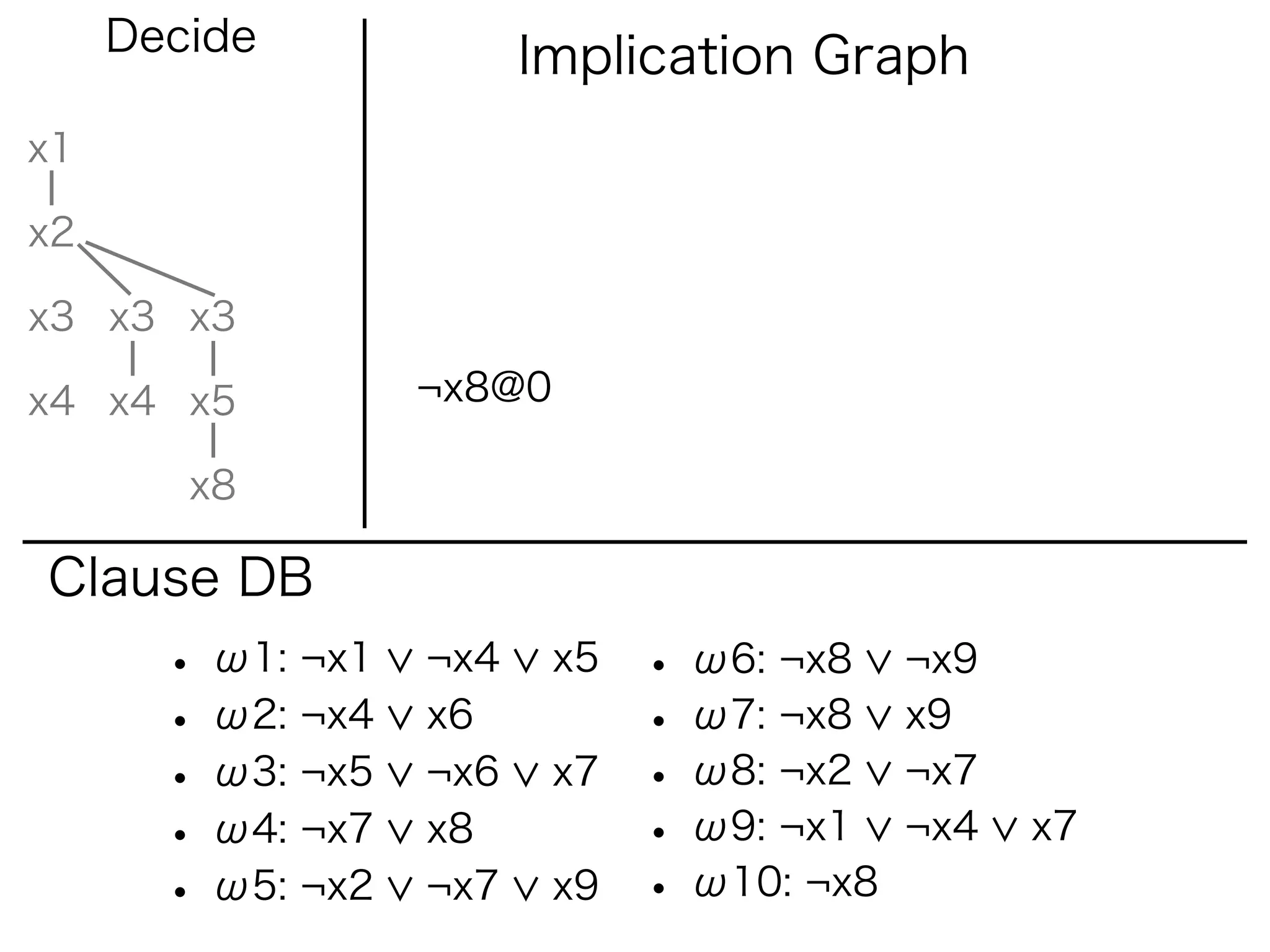
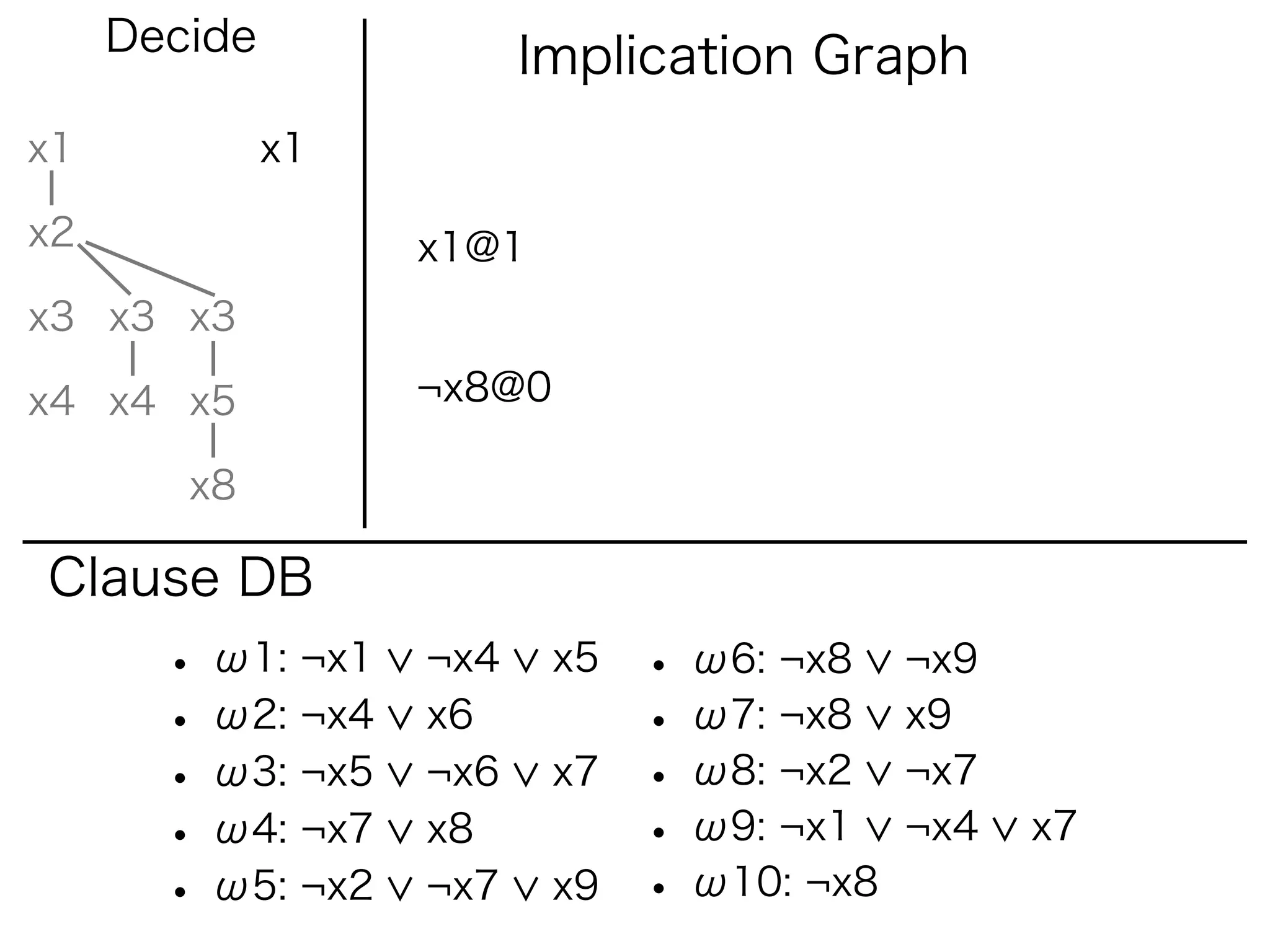
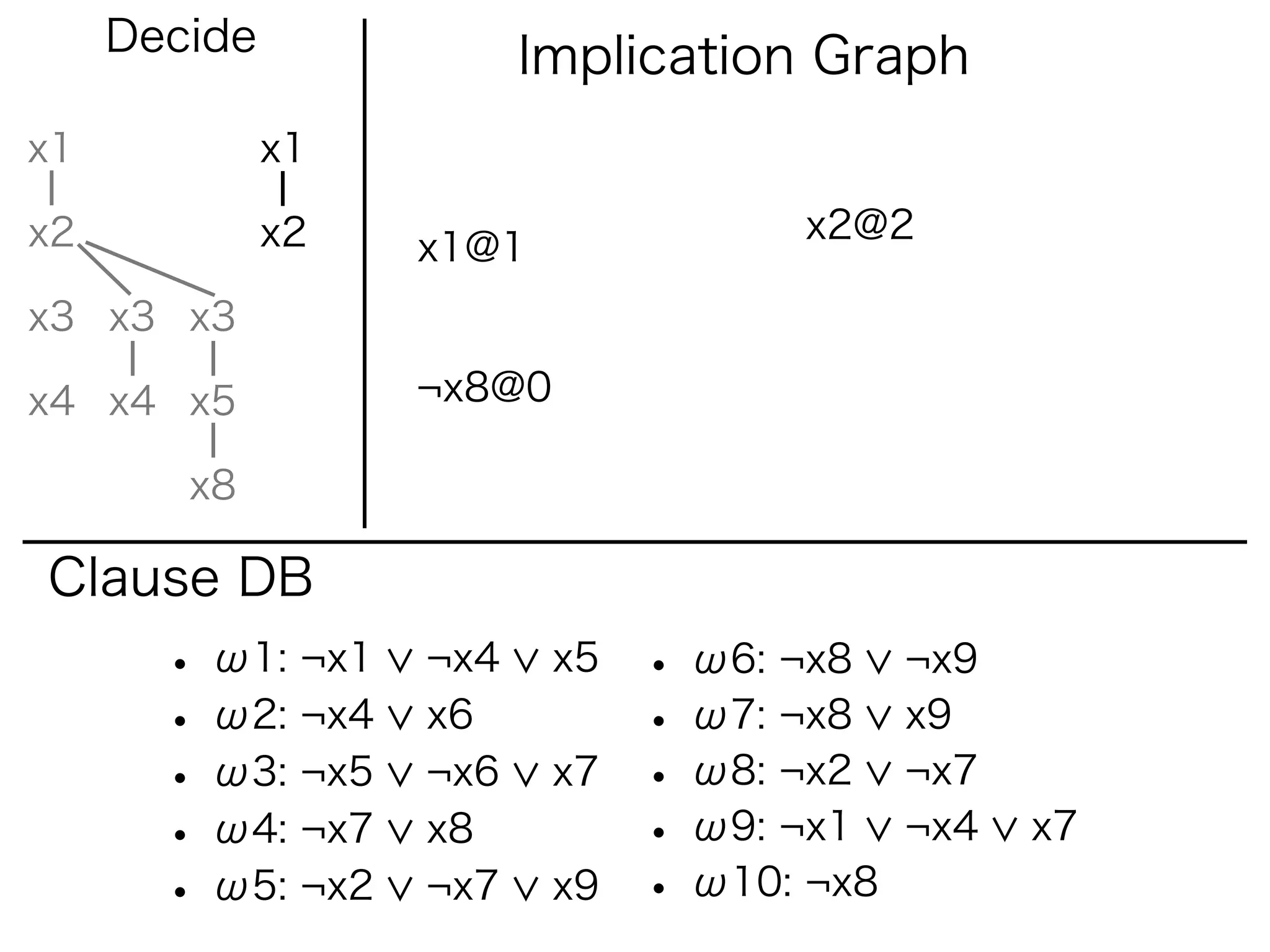
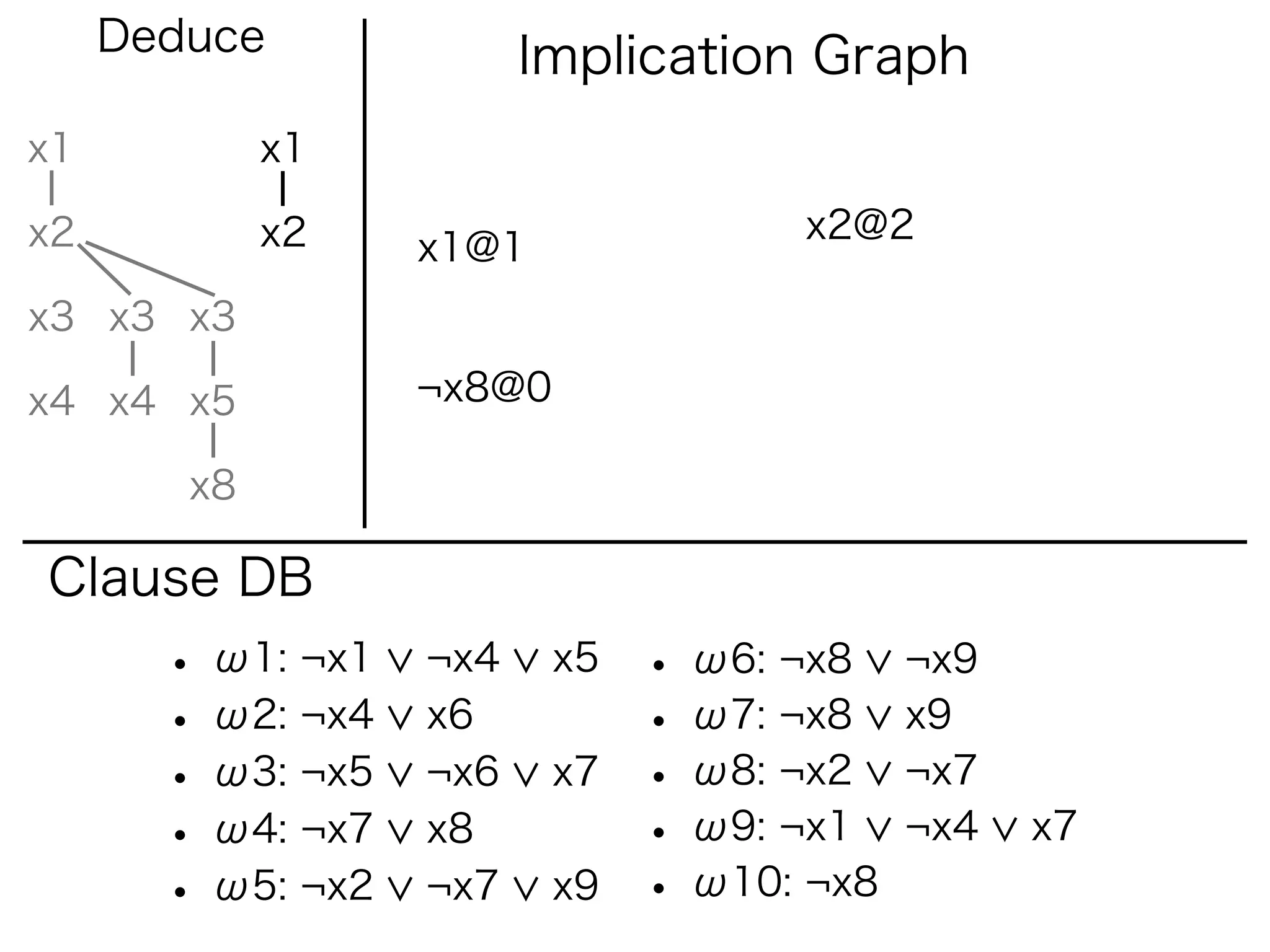
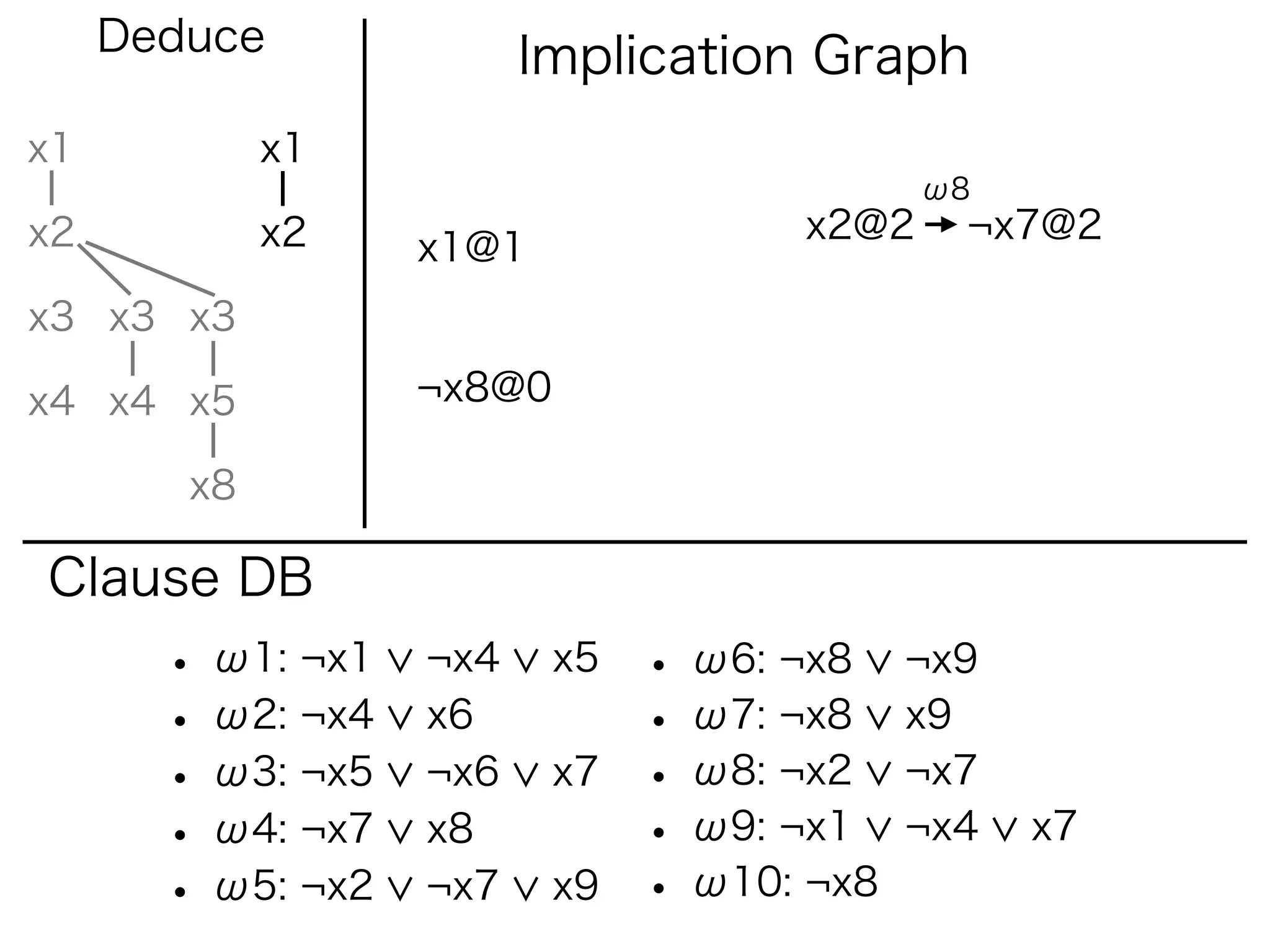
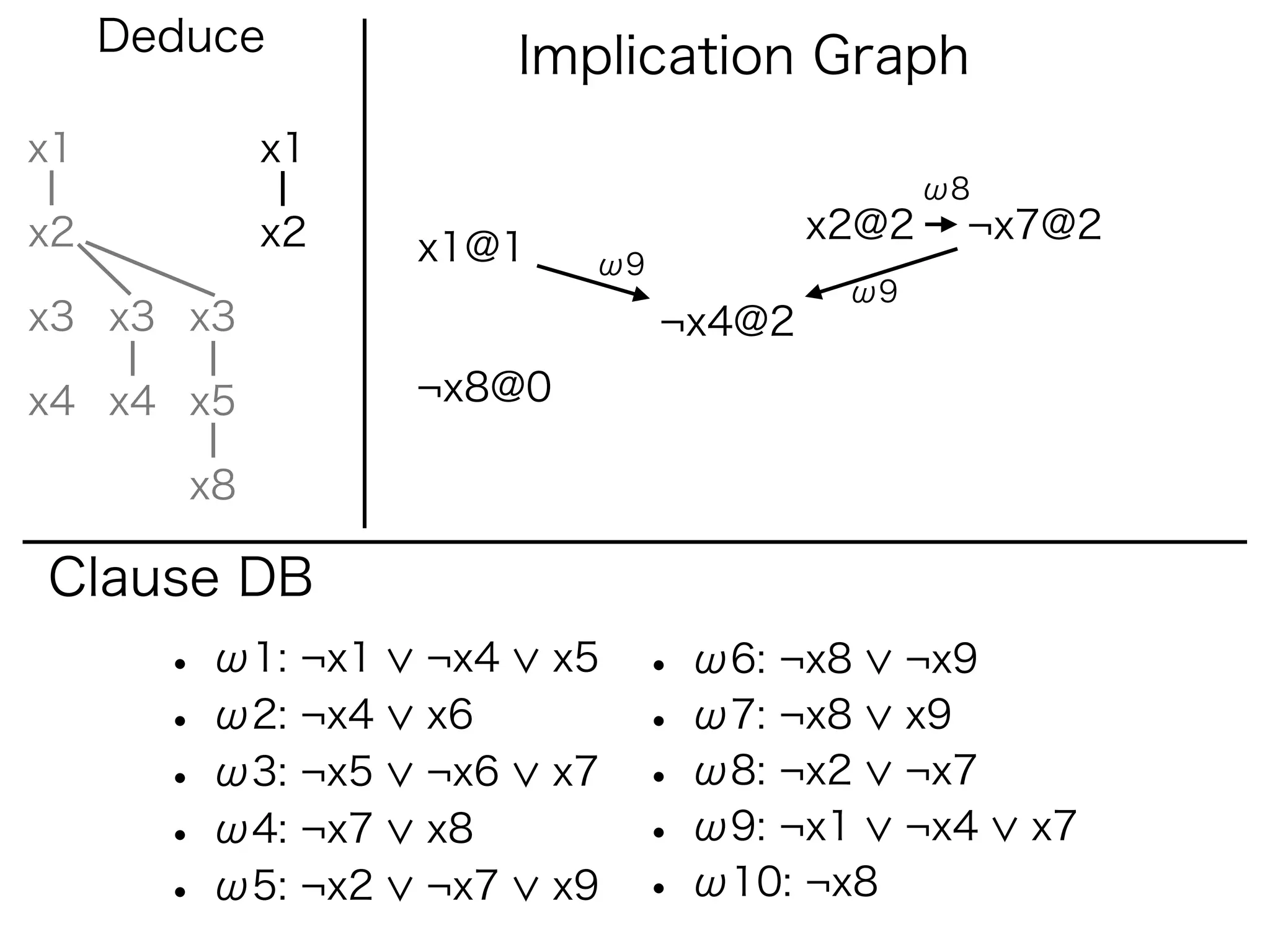
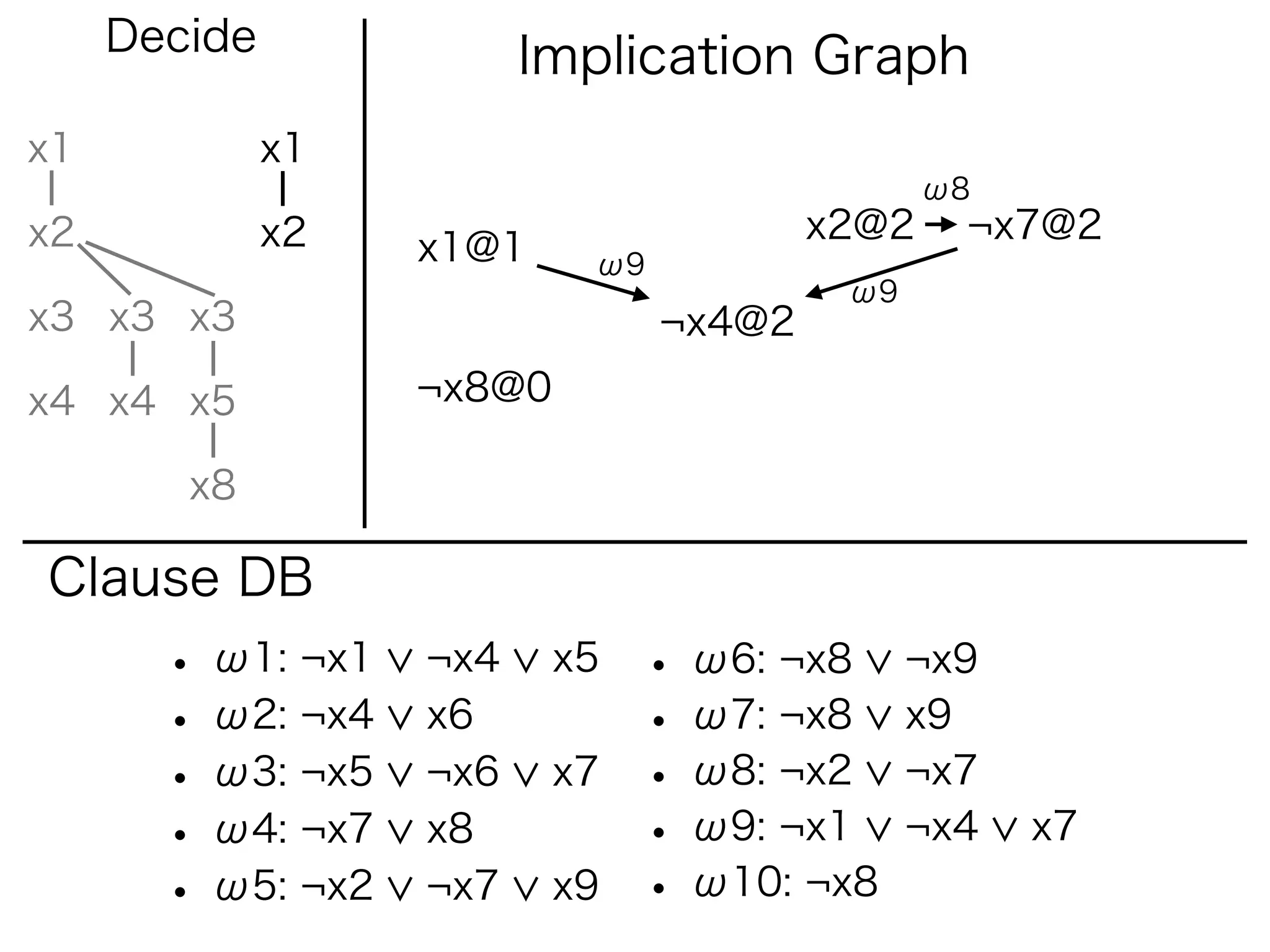
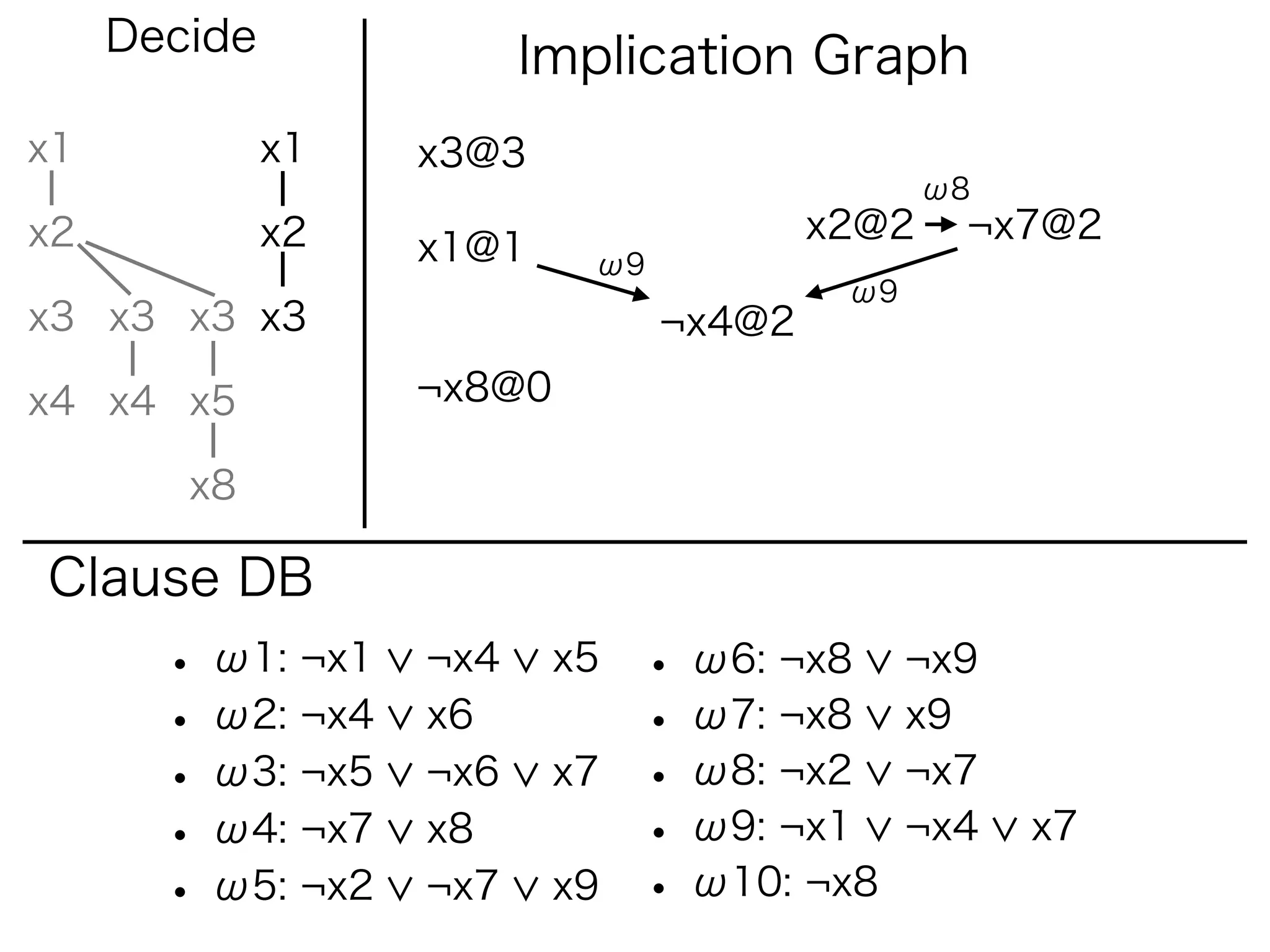
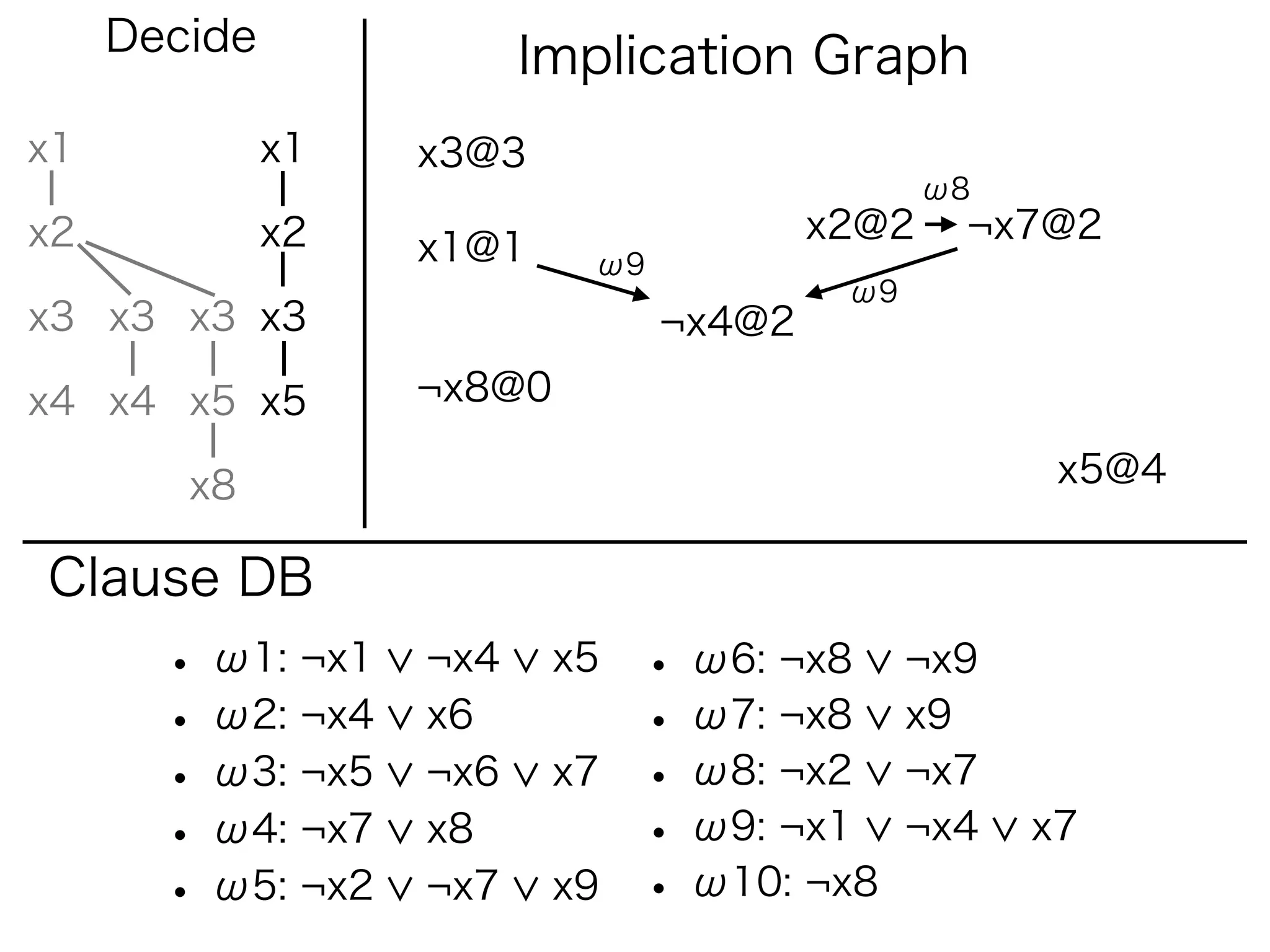
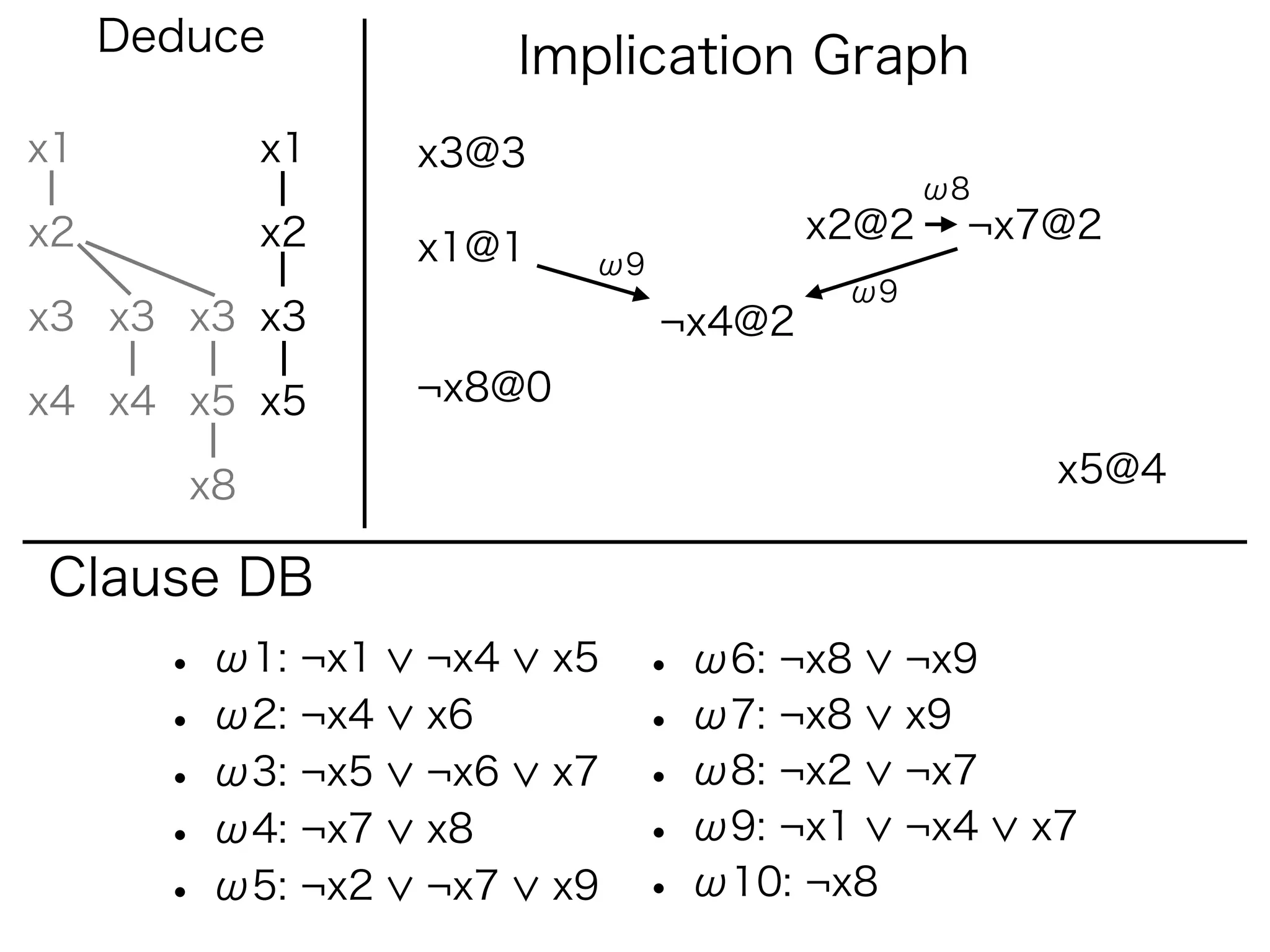
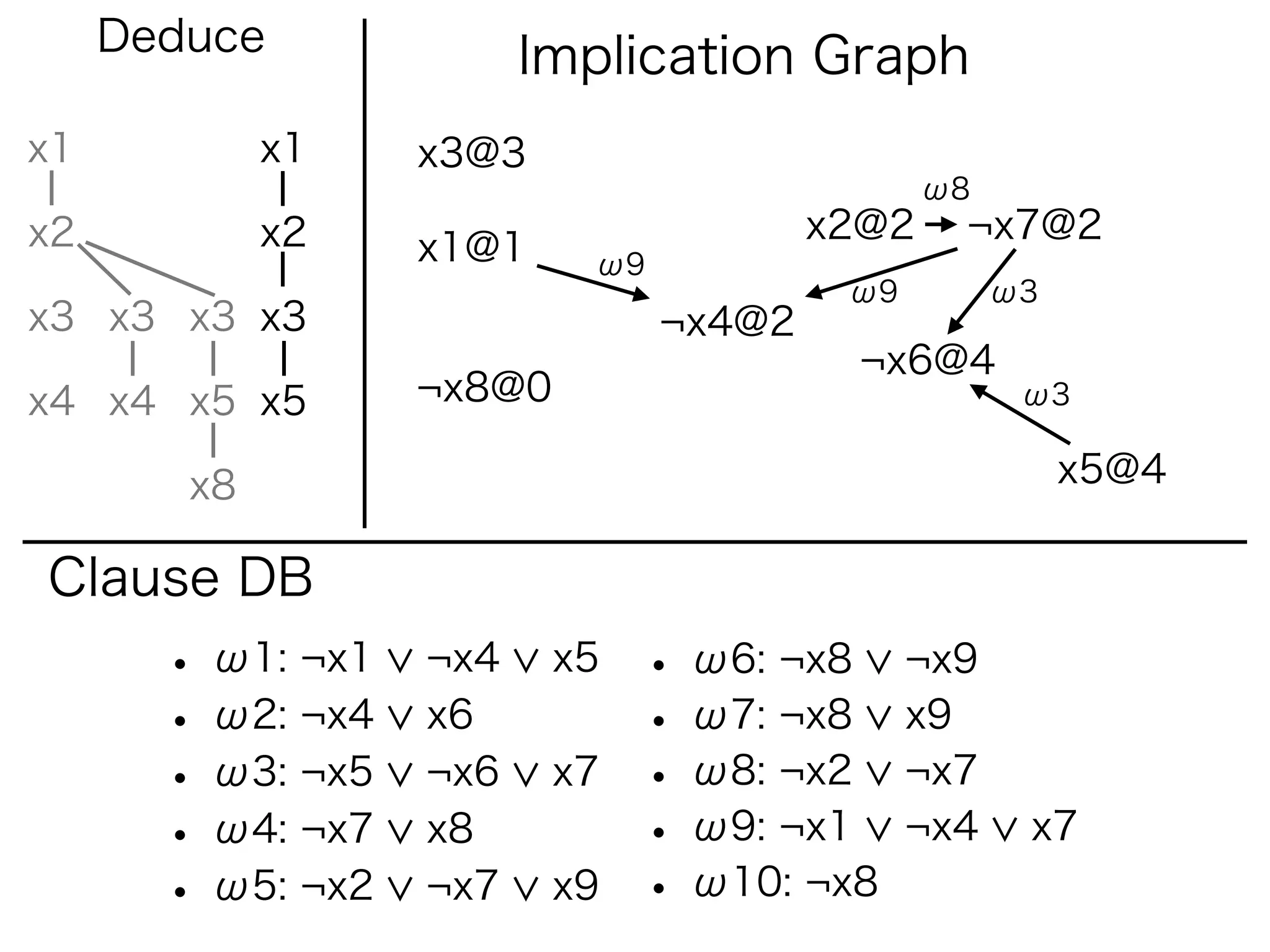
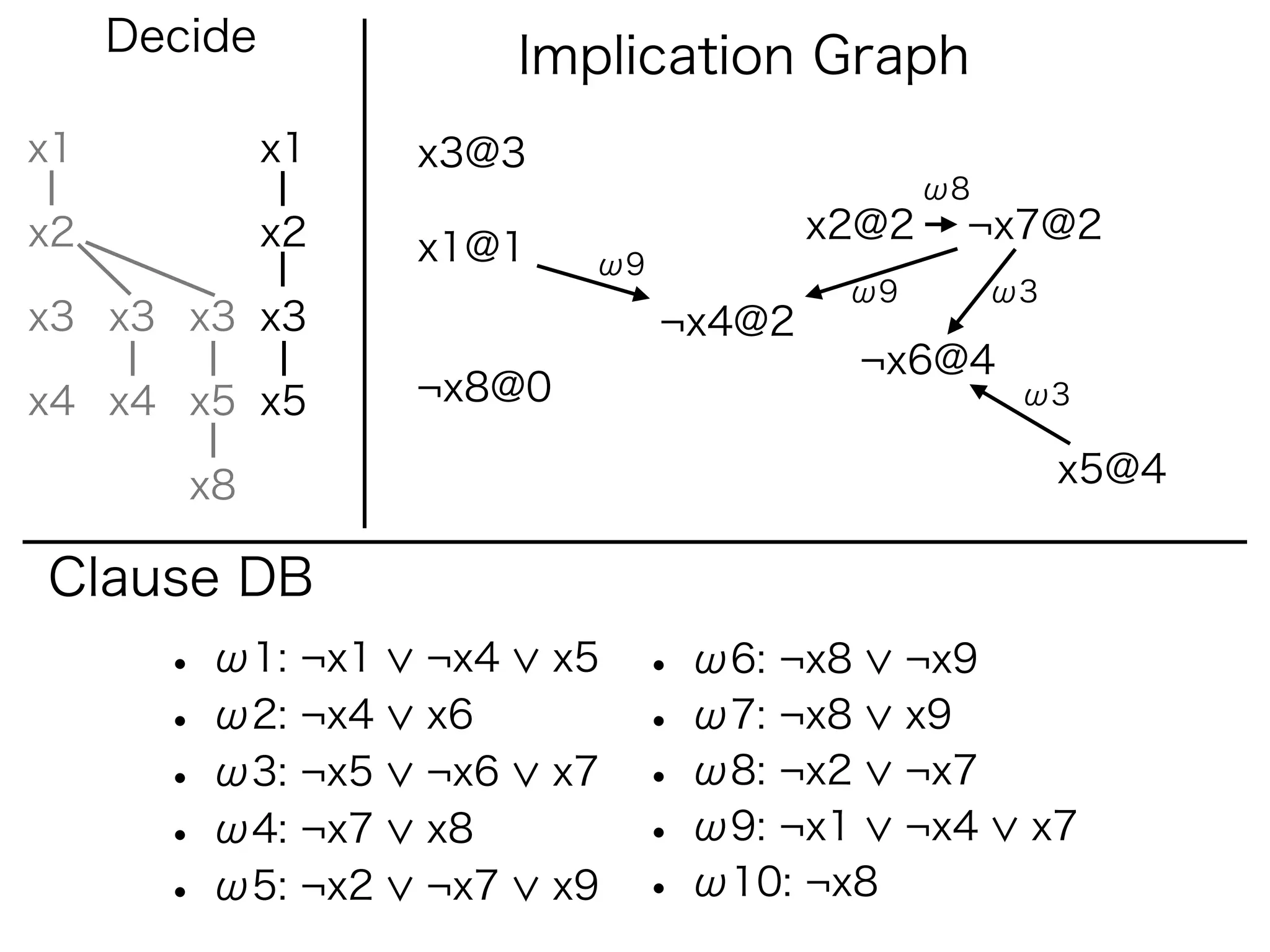
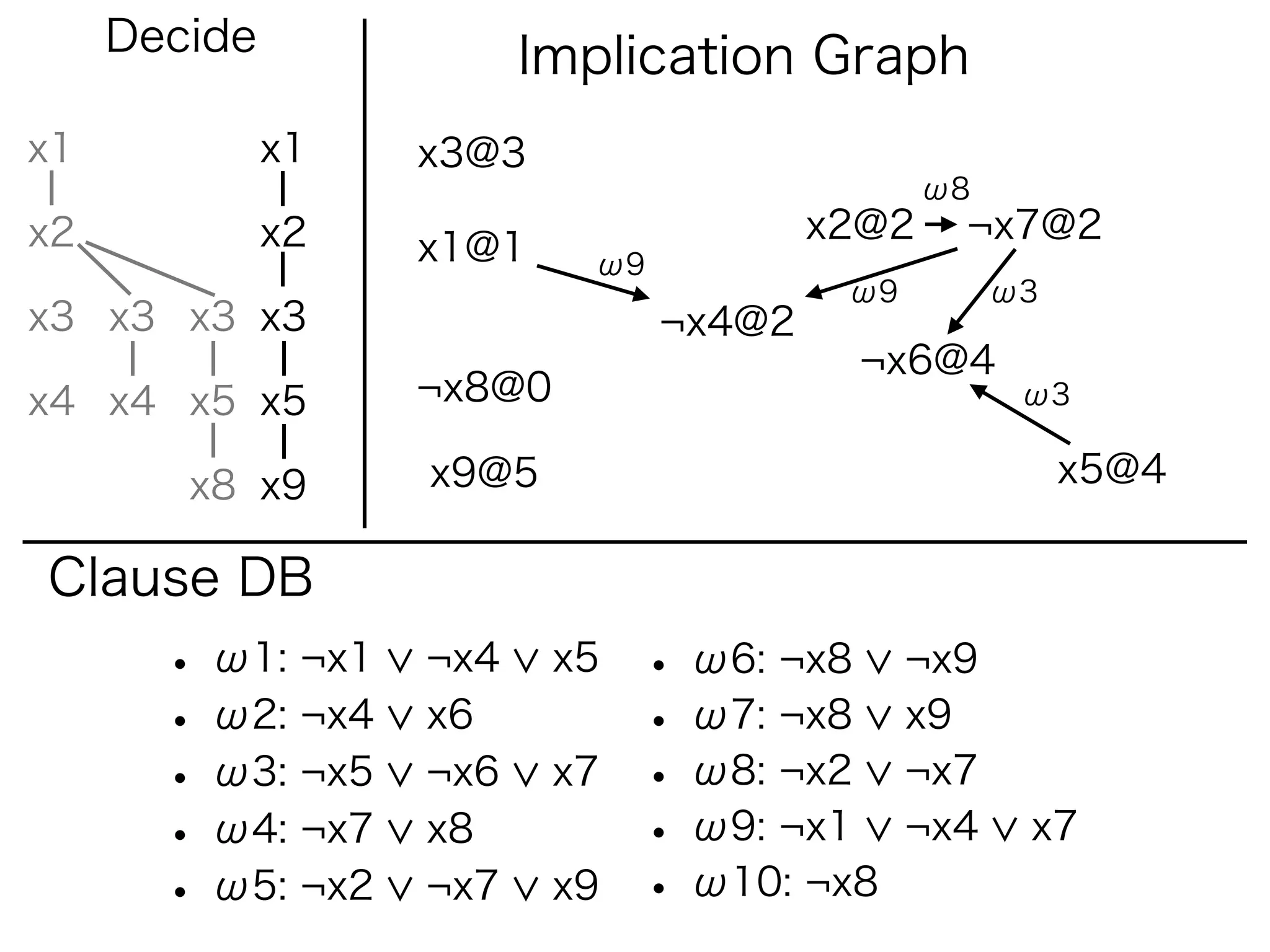
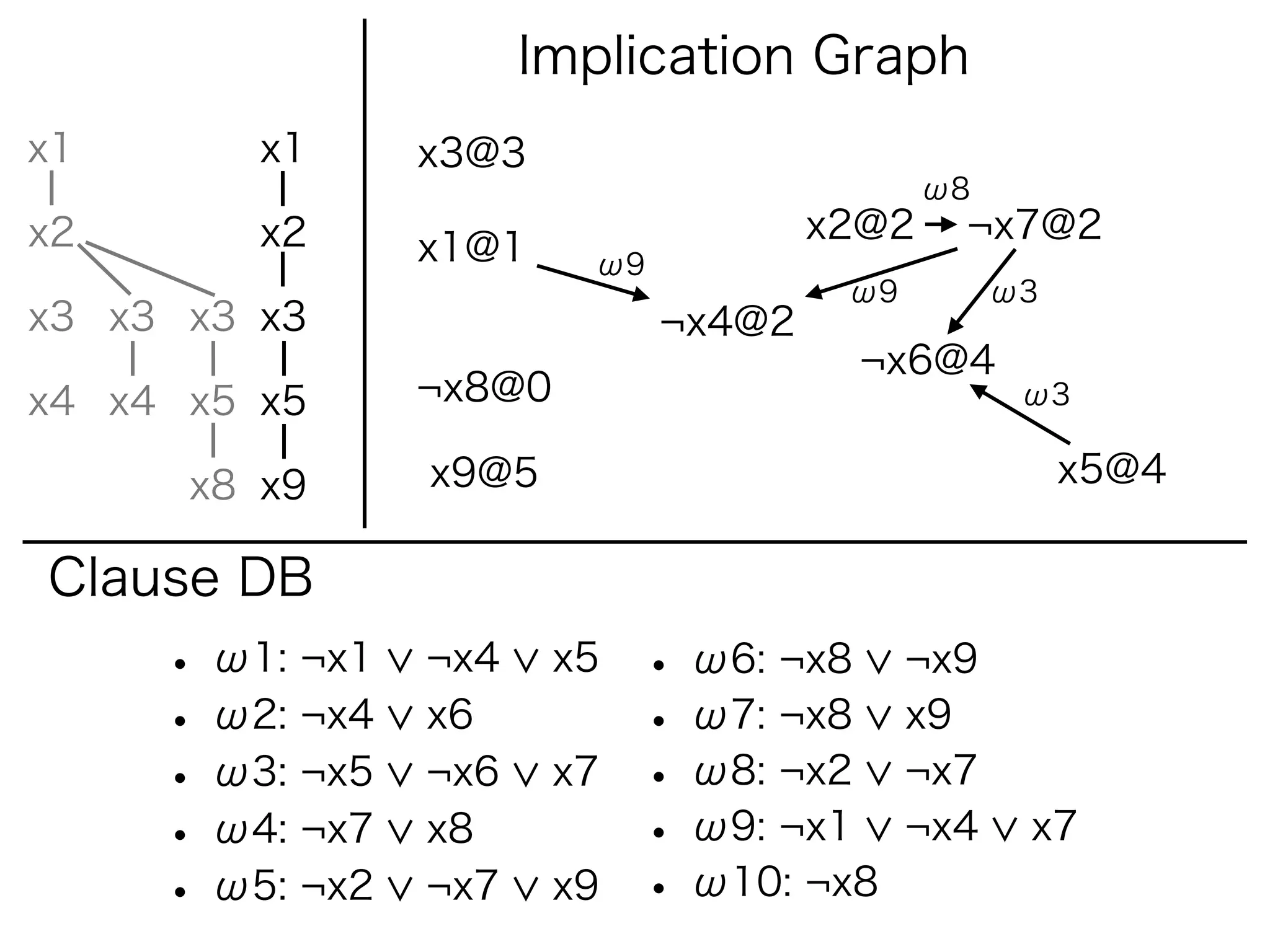
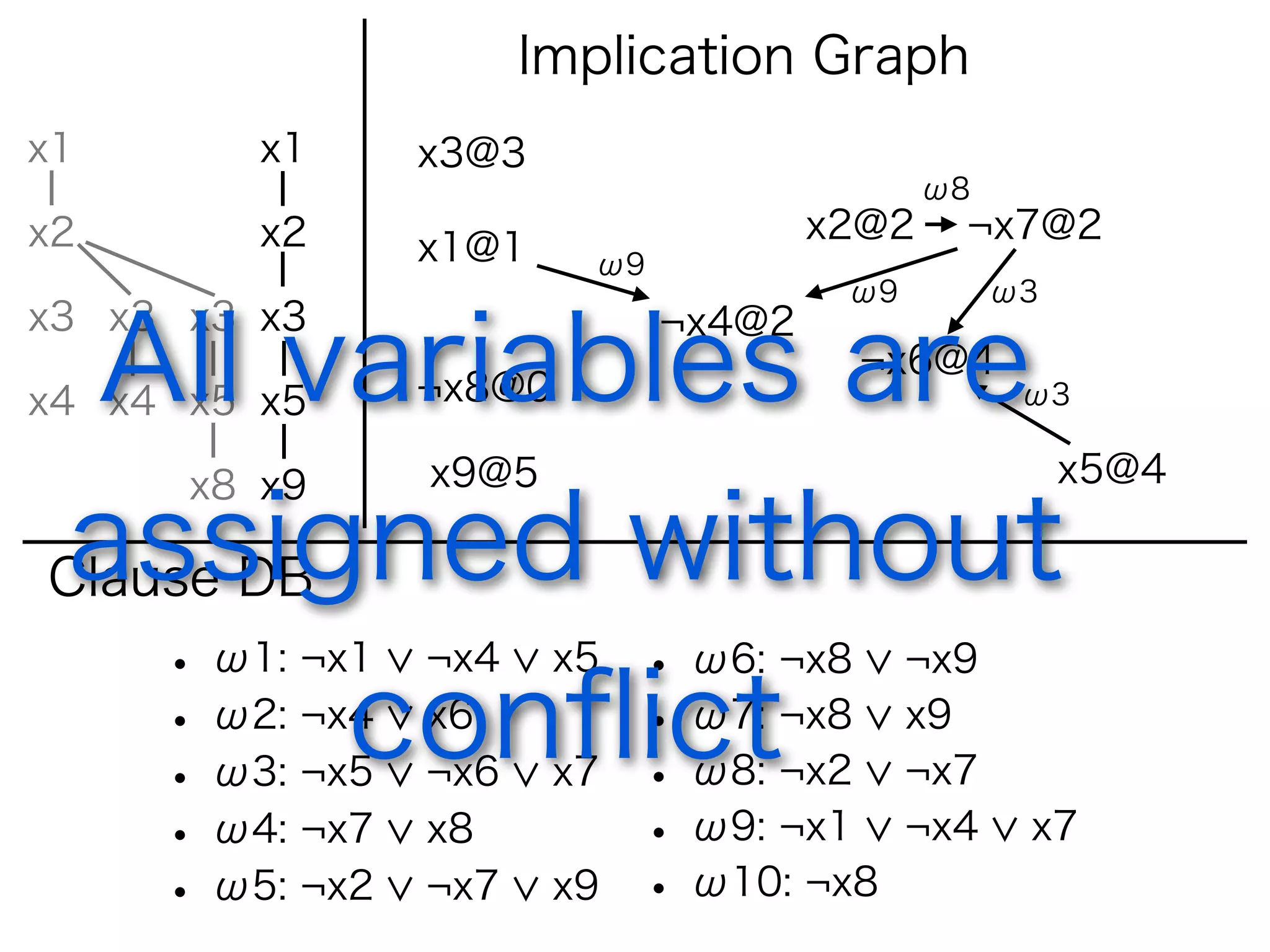
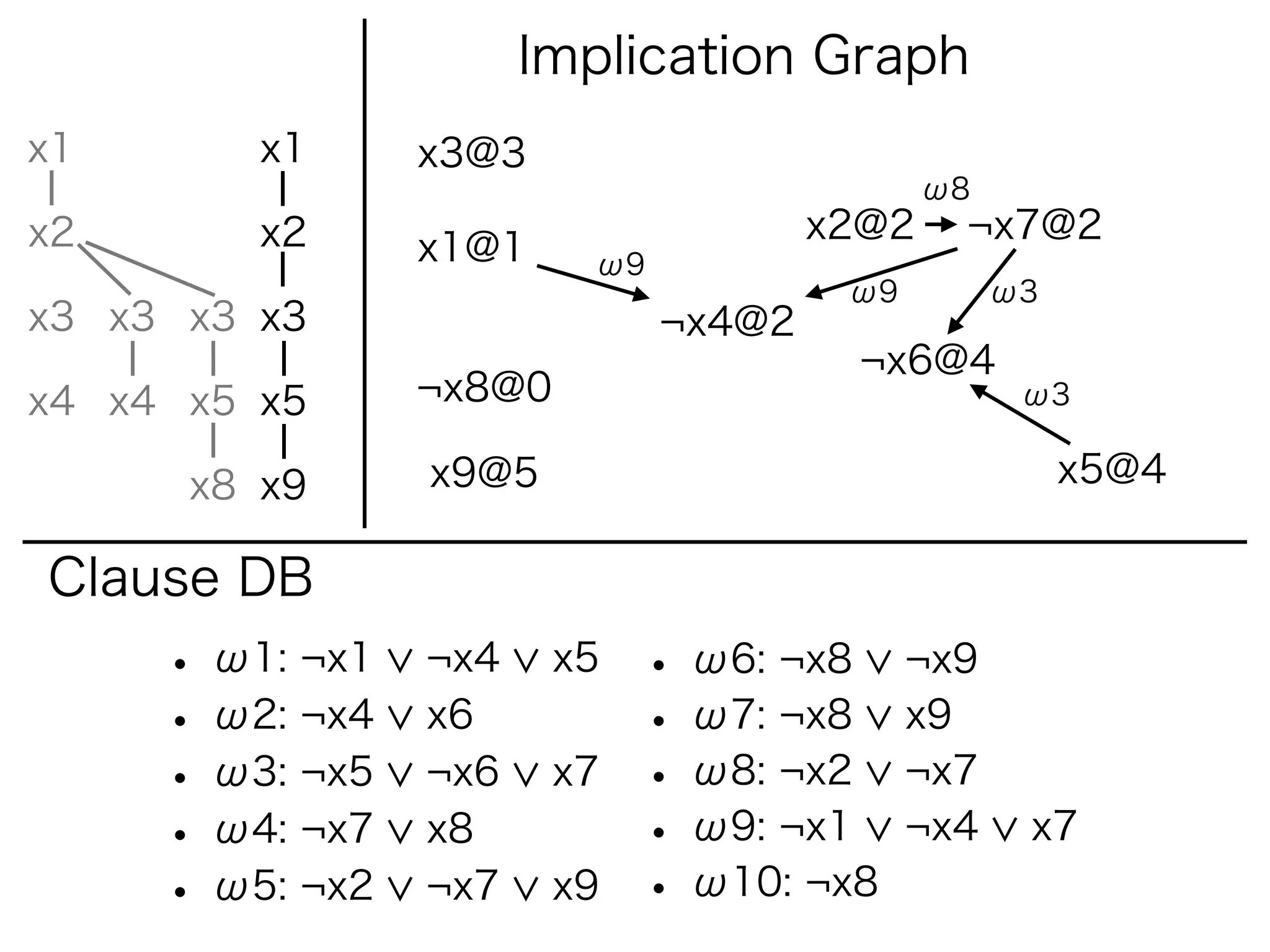
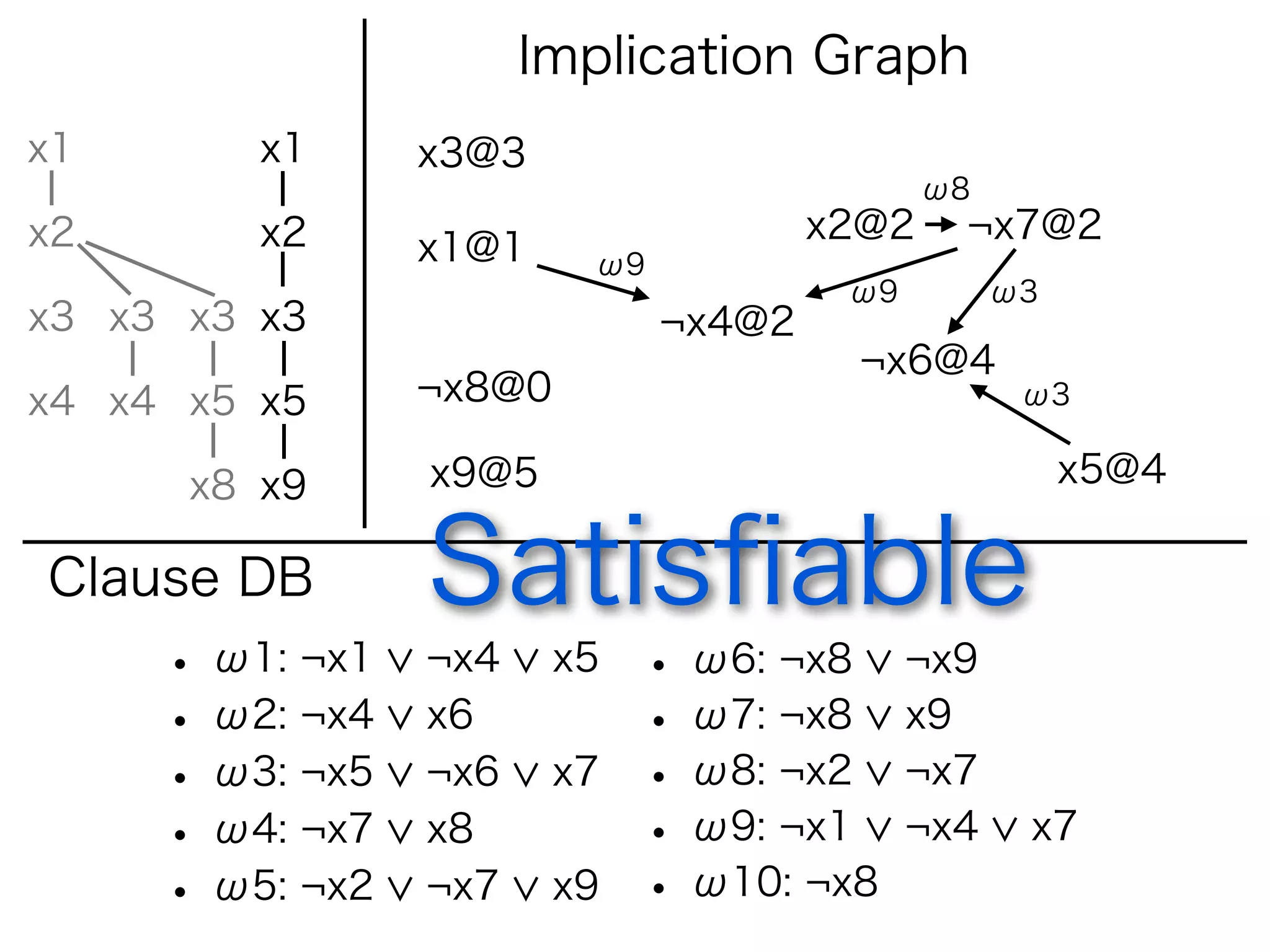
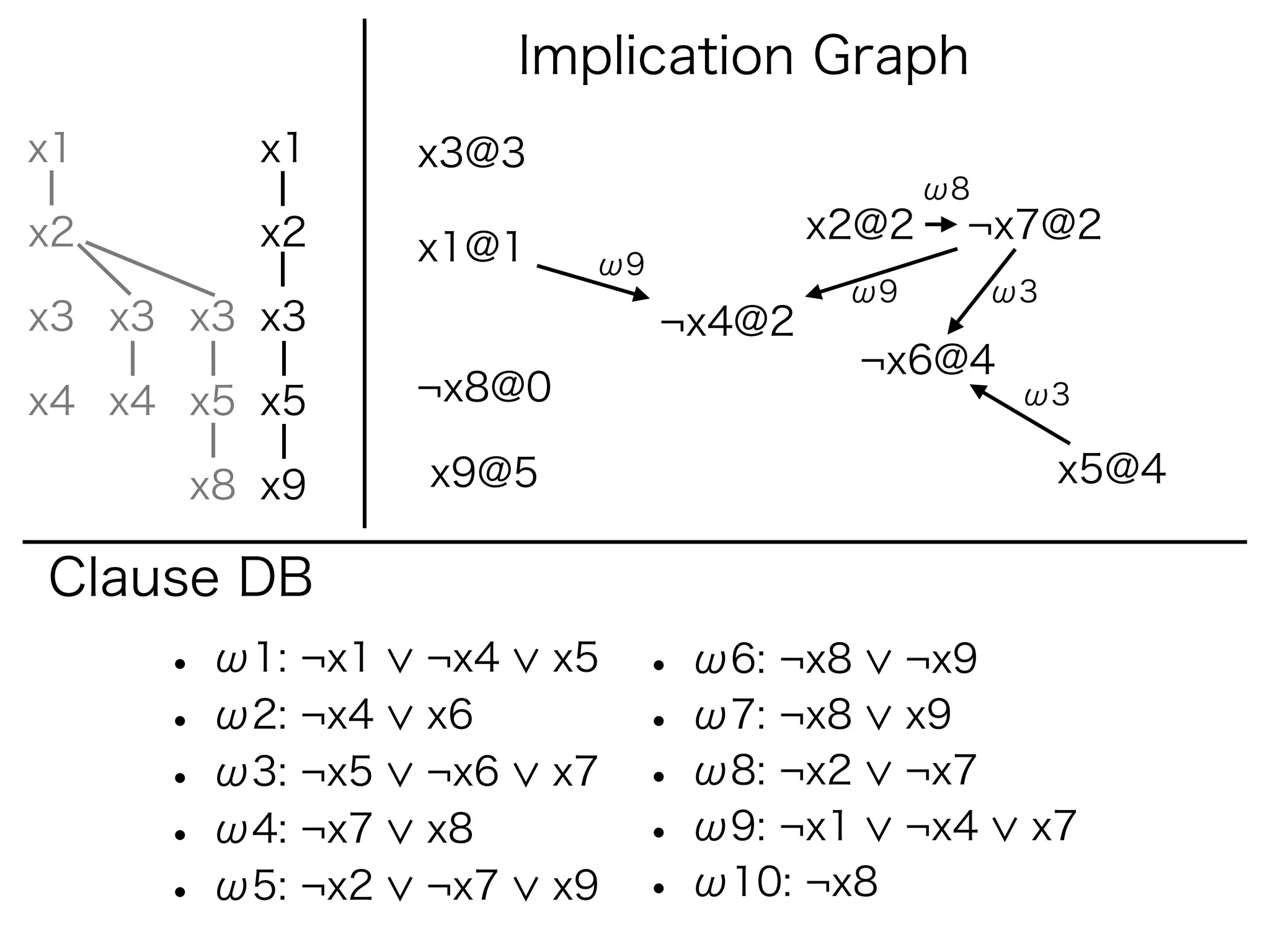
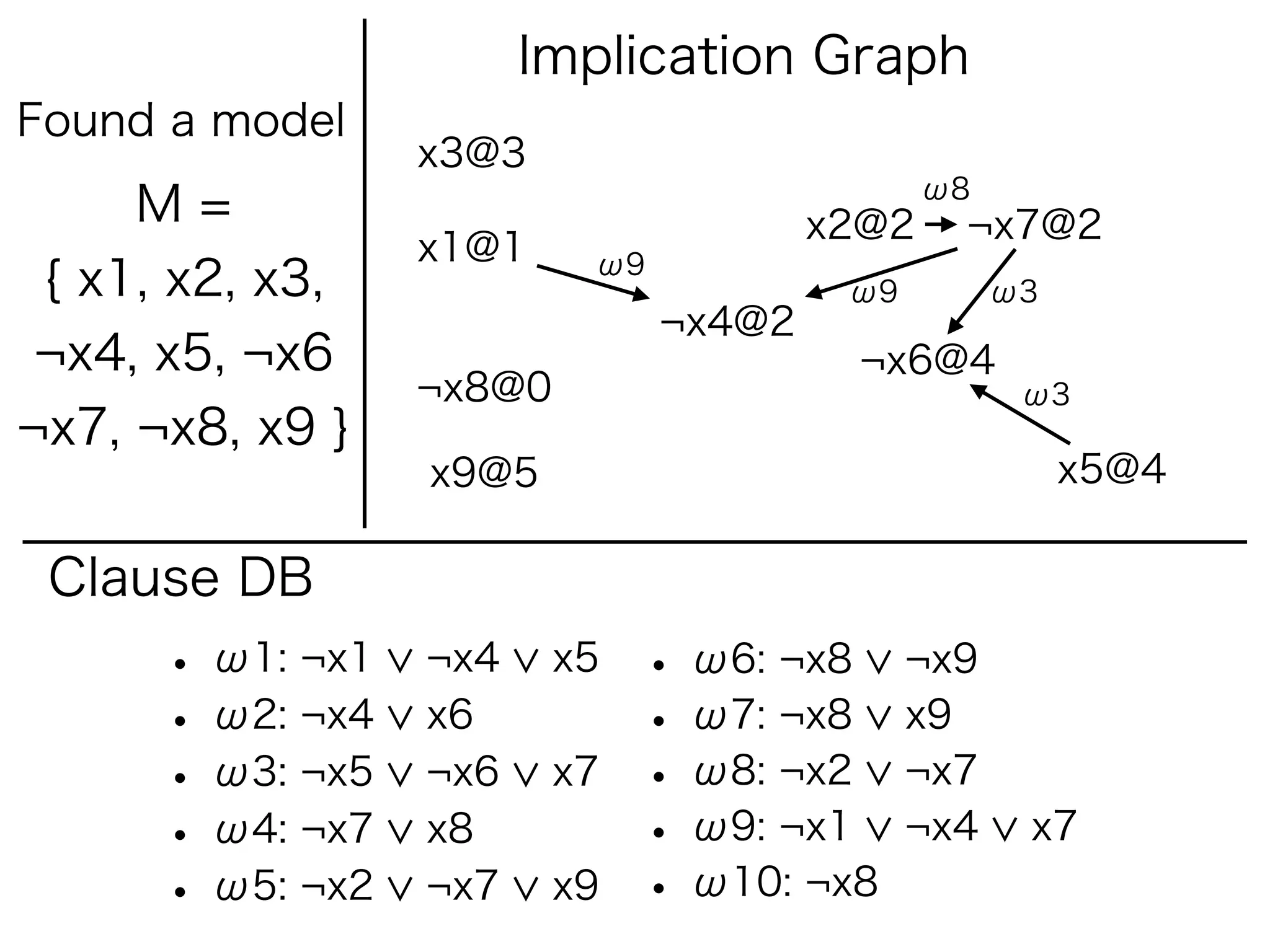


1. The document demonstrates how a CDCL SAT solver works on a small example problem with 9 variables and 7 clauses. 2. It shows the step-by-step deductions made by the solver as it decides variable assignments, deduces implications, and detects a conflict. 3. When a conflict is found, the solver performs conflict analysis to determine the reason for the inconsistency and learns a new clause, which is added to its clause database.
Overview of how a Conflict-Driven Clause Learning (CDCL) SAT solver operates with focus on key features such as 1-UIP learning.
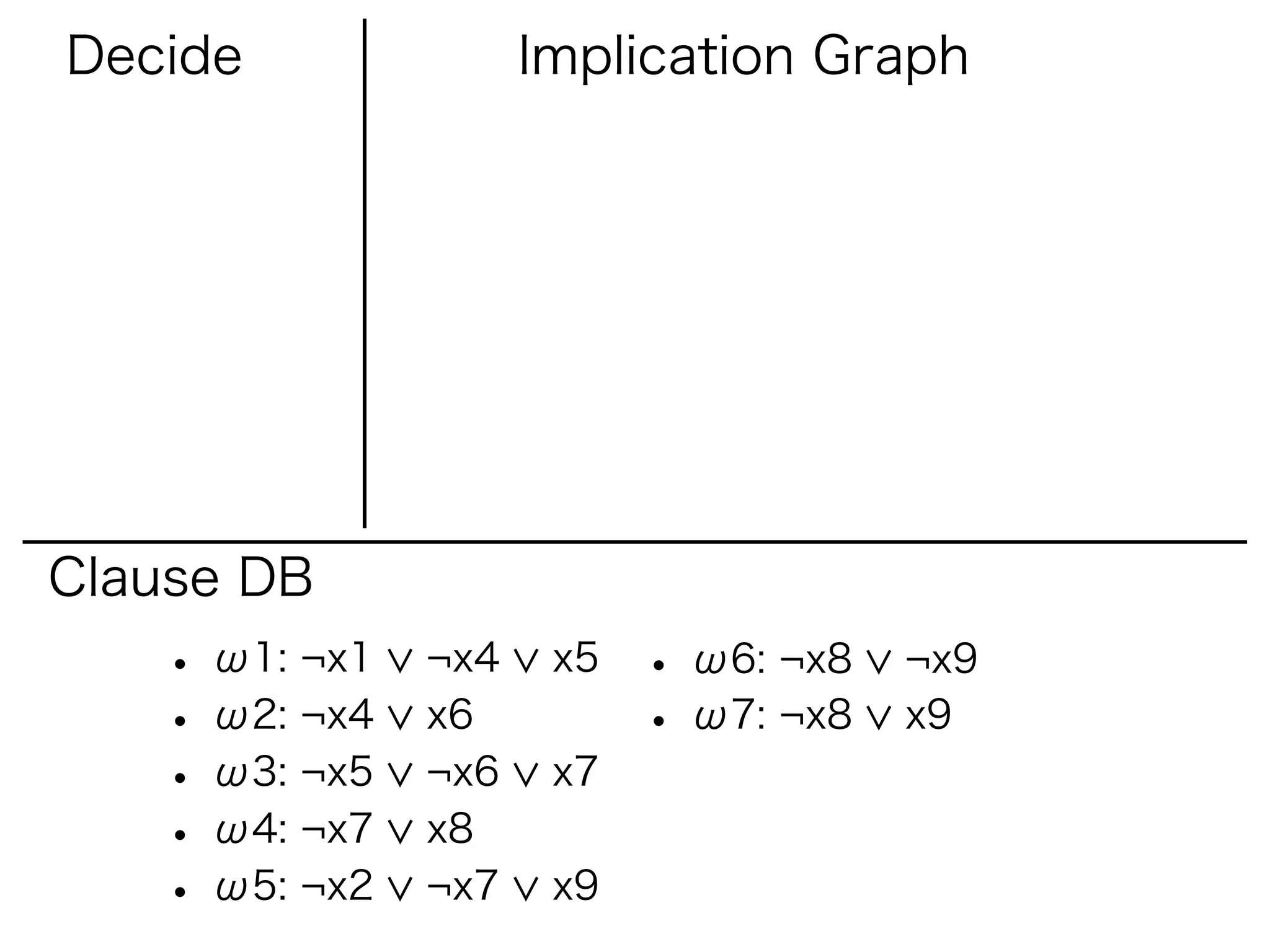
Presentation of a sample problem with clauses (ω1 to ω7) for illustration of the SAT solver in action.Progressive decision-making steps showing selected variables (x1 to x4) and the implications of these decisions in the graph.
Demonstration of deduction process from decisions made, represented in the implication graph with various clauses.
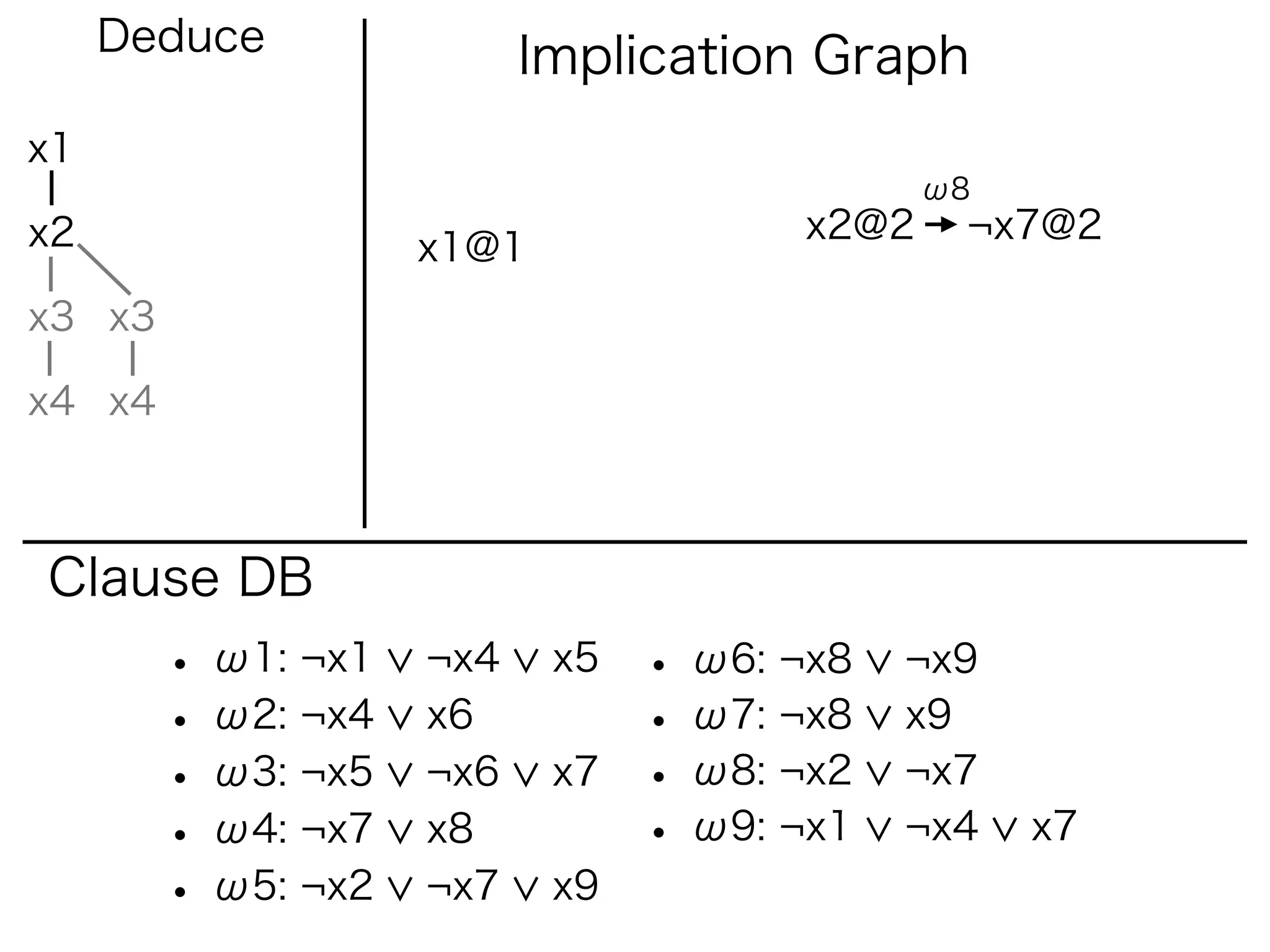
Ongoing deduction moves visualized step-by-step, depicting the role of clauses and their implications as the solver progresses.
Identifying conflicts arising in the decision-making process, including visual representation of graphs indicating reasons and conflicts.
Advanced diagnosis of conflicts in each step when variables lead to contradictions, emphasizing the implications derived from existing clauses.
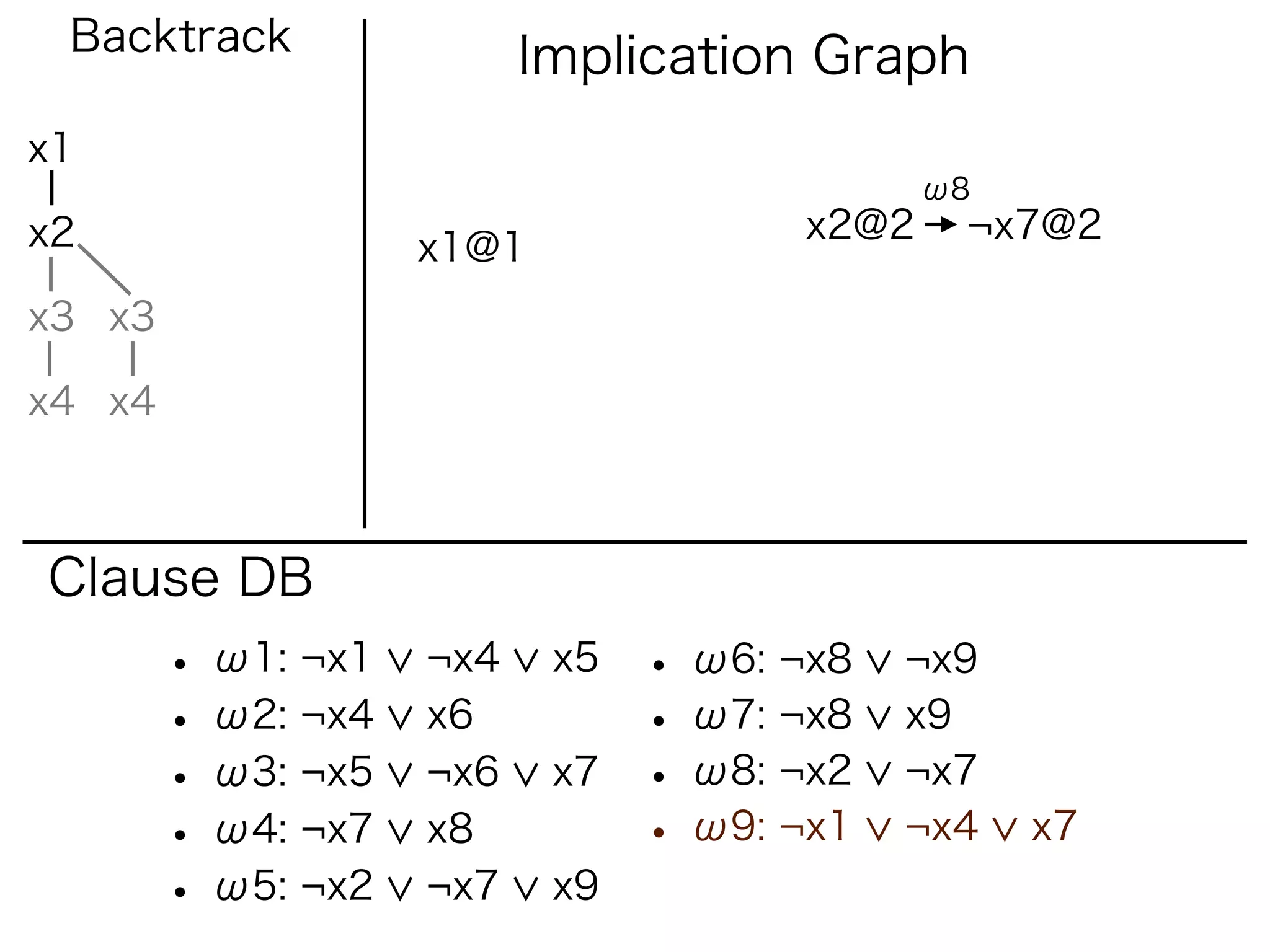
Explanation of the backtracking process to previous decision levels in an attempt to resolve conflicts, showing effects on implication graphs.
Final deductions and decisions leading to the identification of a satisfiable model for the provided clause database, concluding the SAT solving process.


![Vibe Coding vs. Spec-Driven Development [Free Meetup]](https://cdn.slidesharecdn.com/ss_thumbnails/vibecodingvsspecdrivendevelopment-251209105622-43f455e7-thumbnail.jpg?width=640&height=640&fit=bounds)


