Course: Fundamental of Global Business
Chapter 11: International Strategy and
Organization Structure
Lecturer: Eng Kimsan
Group 11
•Roeun Nakry
•Sean Tiheng
PAÑÑĀSĀSTRA UNIVERSITY OFPAÑÑĀSĀSTRA UNIVERSITY OF
CAMBODIACAMBODIA
Commitment to ExcellenceCommitment to Excellence
Copyright © Wondershare Software
TableTable ContentContent
I. International Strategy
• Strategy formulation Process
• Identify Mission and Goals
• Identify Core Competency and Value-Creating
Activities
• Formulate Strategies
II. International Organizational Structure
• Centralization and Decentralization
• Type of Organization Structure
• Team Work
Copyright © Wondershare Software
Learning ObjectiveLearning Objective
• Explain the stages of identification and analysis that
precede strategy selection.
• Identify the two international strategies and the
corporate-level strategies that companies use.
• Identify the business-level strategies of companies
and the role of department-level strategies.
• Discuss the important issues that influence the
choice of organizational structure.
• Describe each type of international organizational
structure, and explain the importance of work
teams.
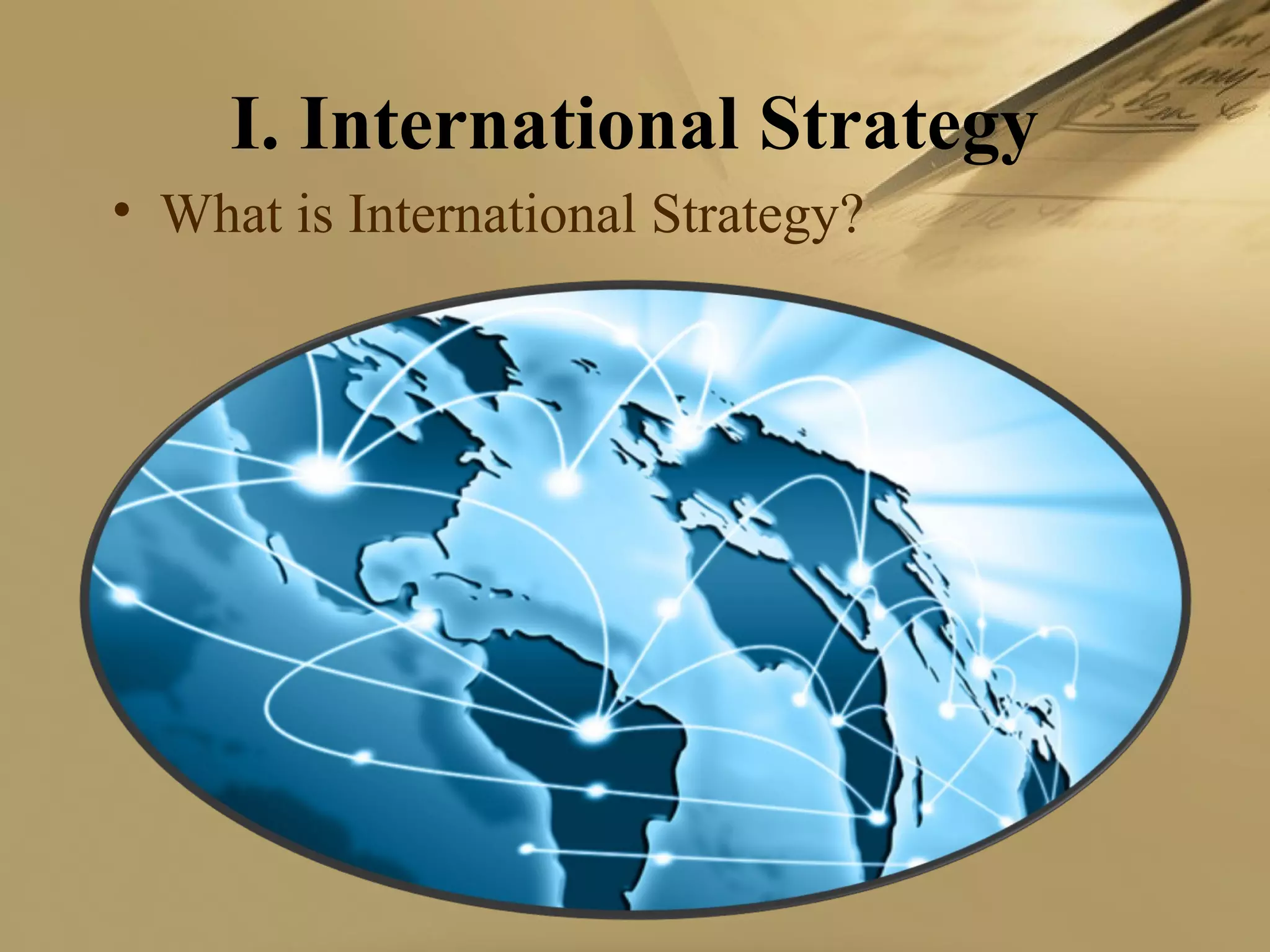
I. International Strategy
• What is International Strategy?
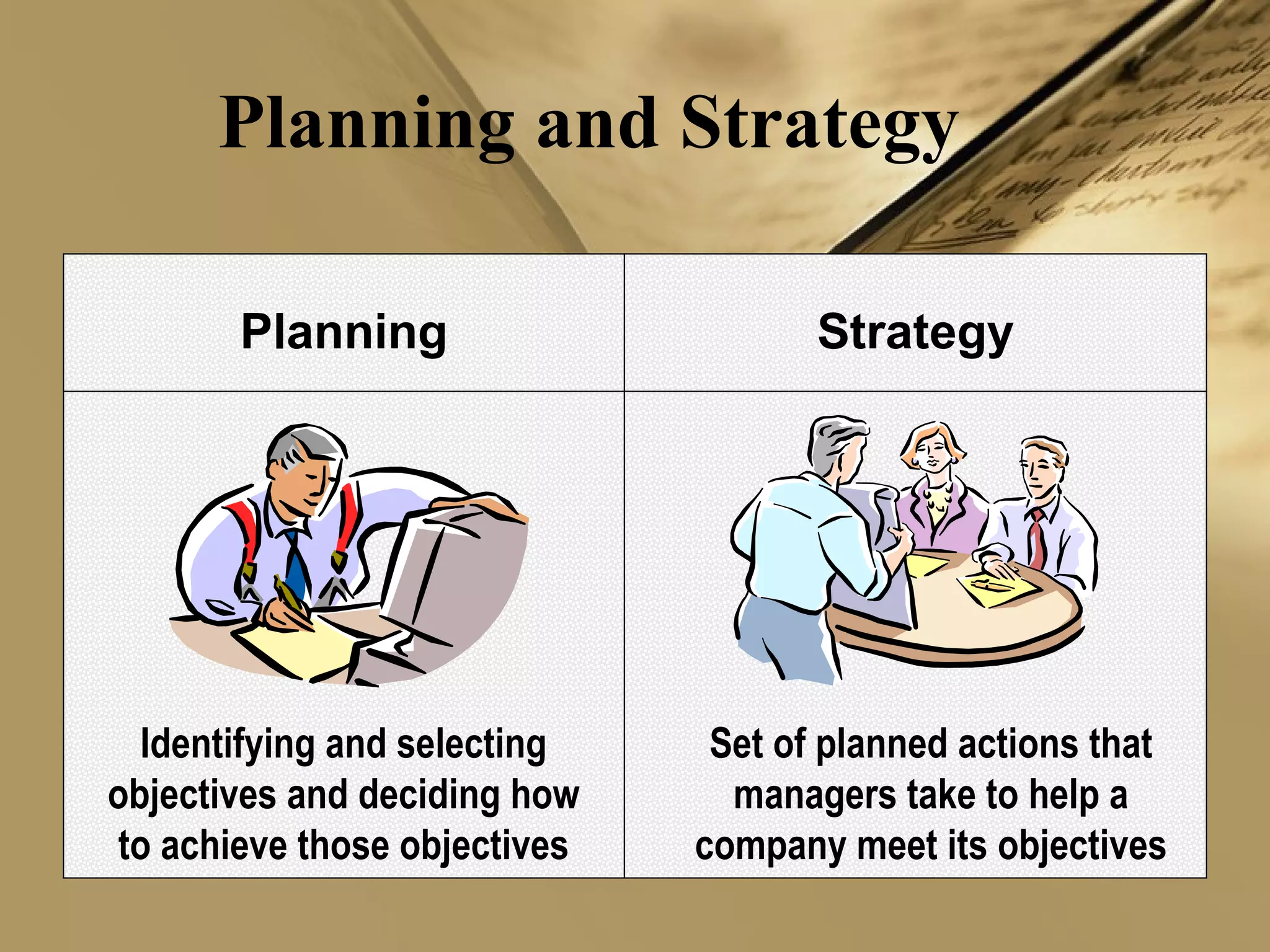
Planning and Strategy
Planning Strategy
Identifying and selecting
objectives and deciding how
to achieve those objectives
Set of planned actions that
managers take to help a
company meet its objectives
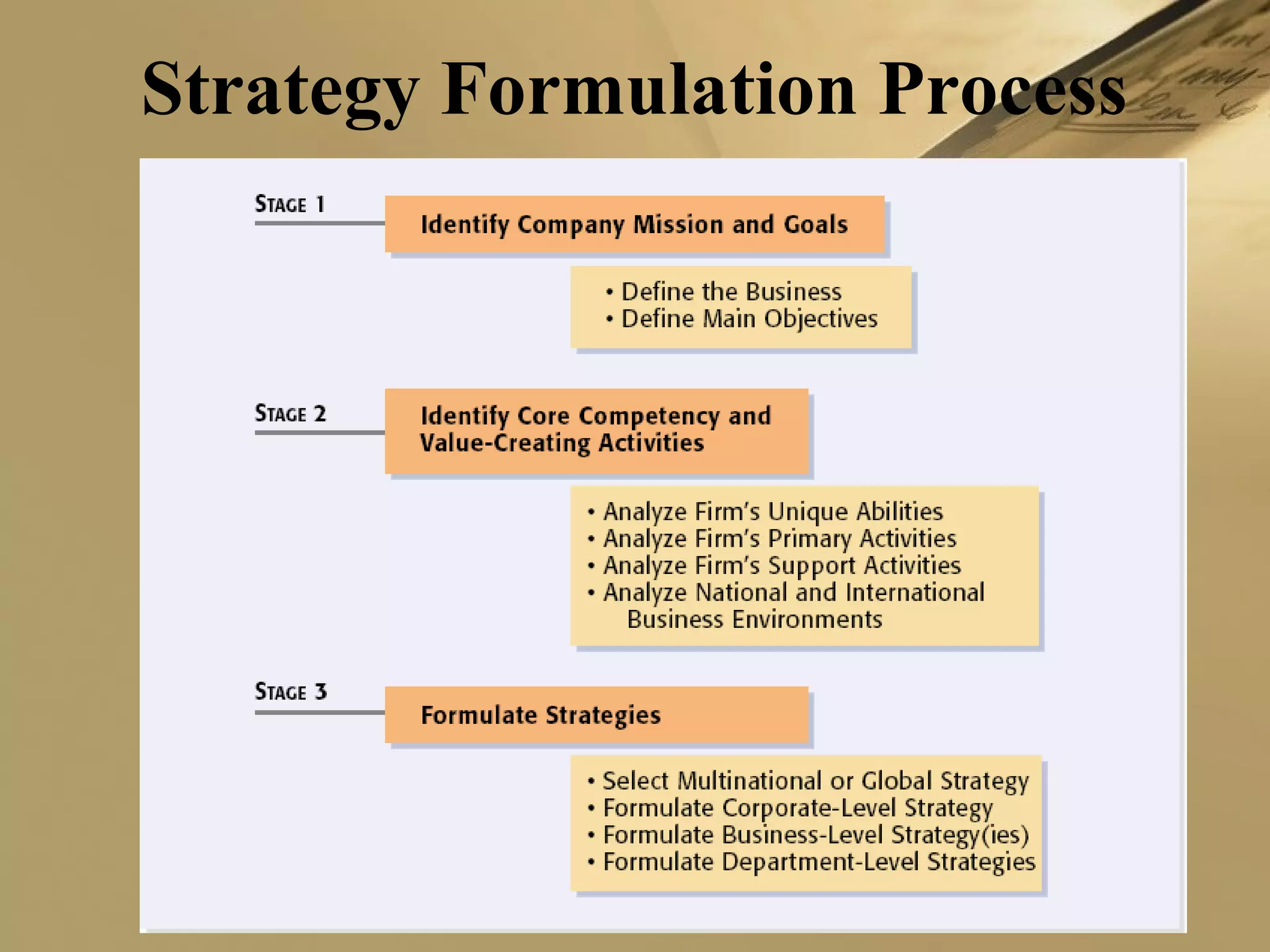
Strategy Formulation Process
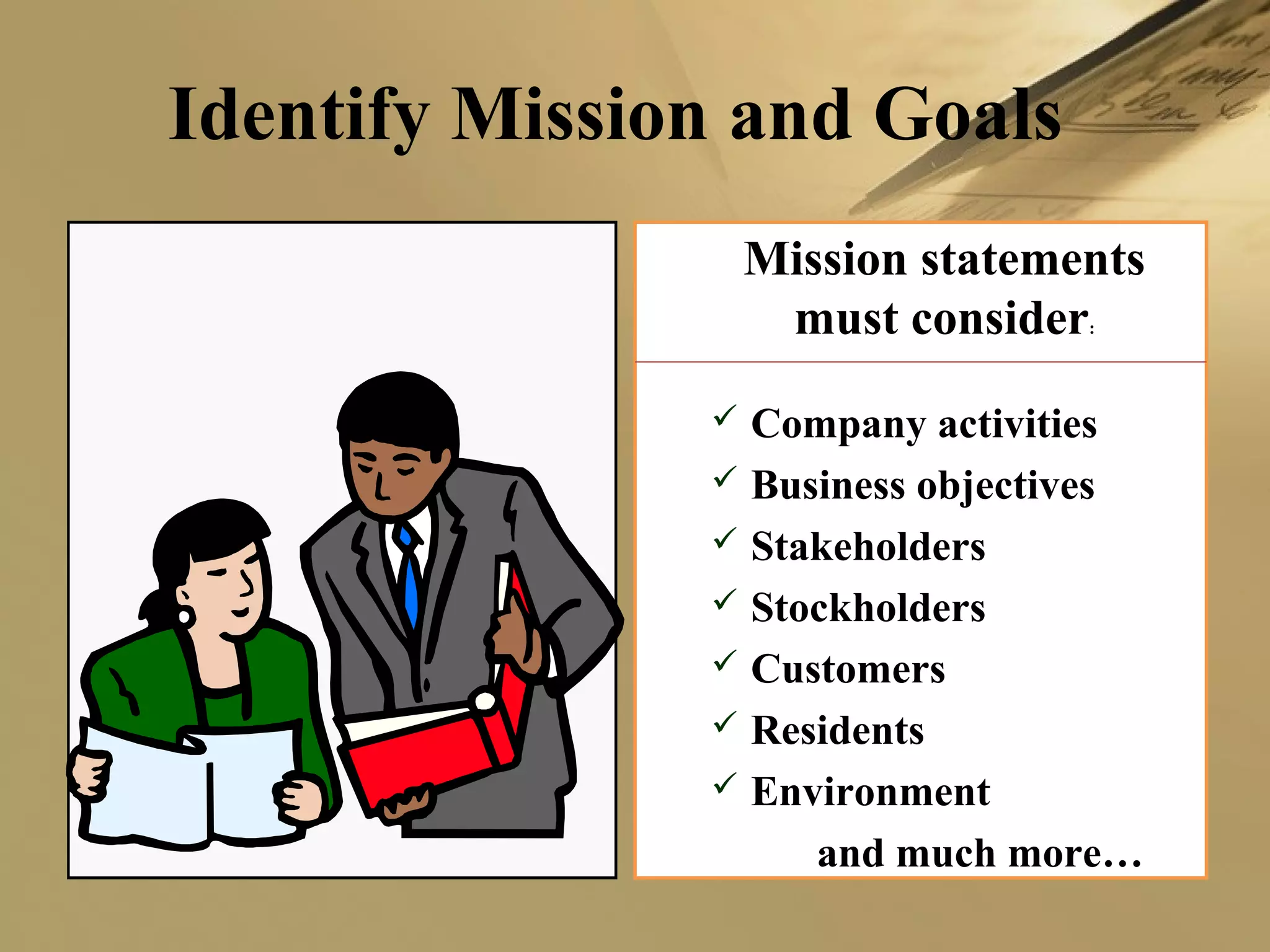
Identify Mission and Goals
Mission statements
must consider:
 Company activities
 Business objectives
 Stakeholders
 Stockholders
 Customers
 Residents
 Environment
and much more…
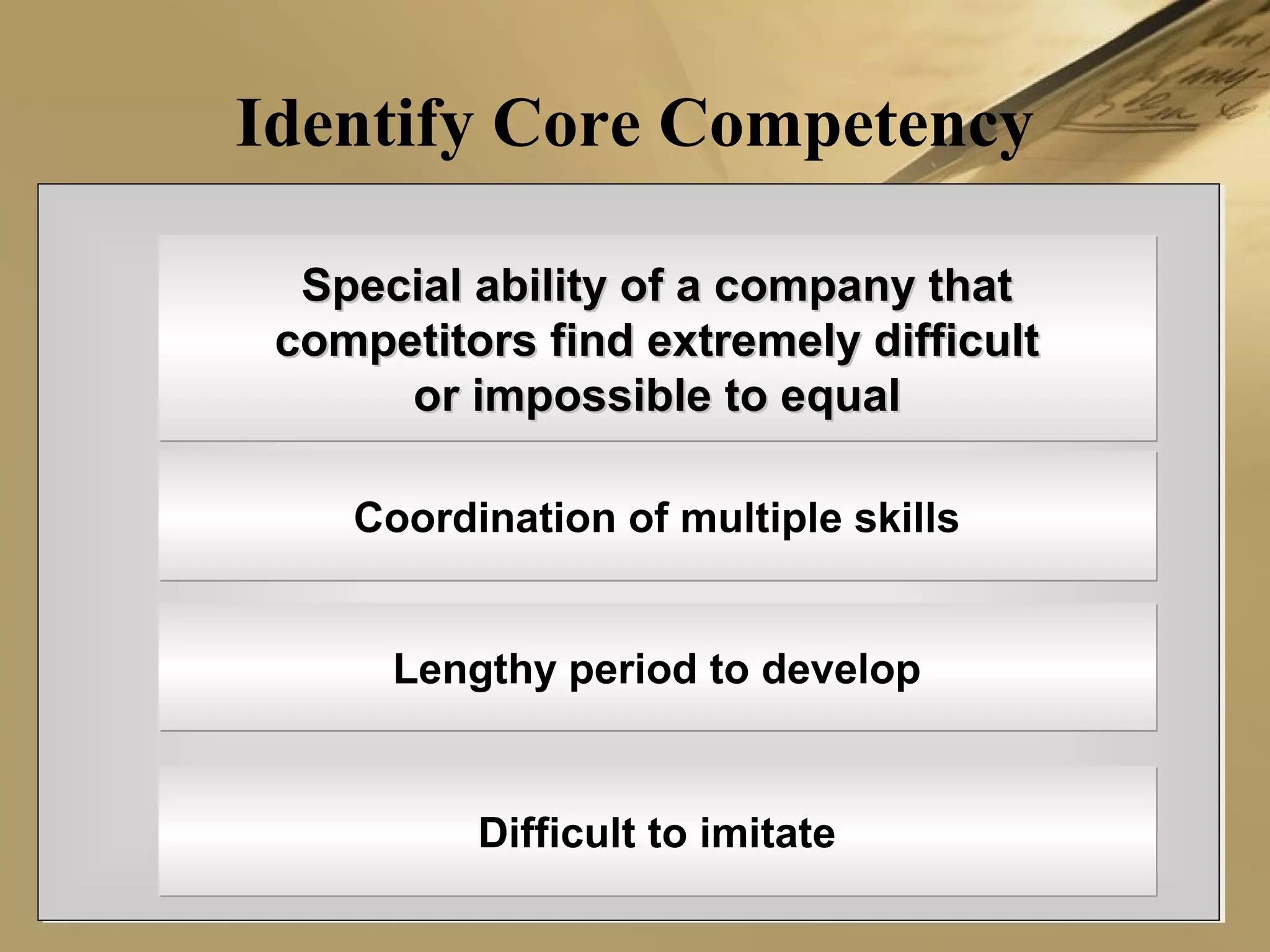
Identify Core Competency
Special ability of a company thatSpecial ability of a company that
competitors find extremely difficultcompetitors find extremely difficult
or impossible to equalor impossible to equal
Special ability of a company thatSpecial ability of a company that
competitors find extremely difficultcompetitors find extremely difficult
or impossible to equalor impossible to equal
Coordination of multiple skillsCoordination of multiple skills
Lengthy period to developLengthy period to develop
Difficult to imitateDifficult to imitate
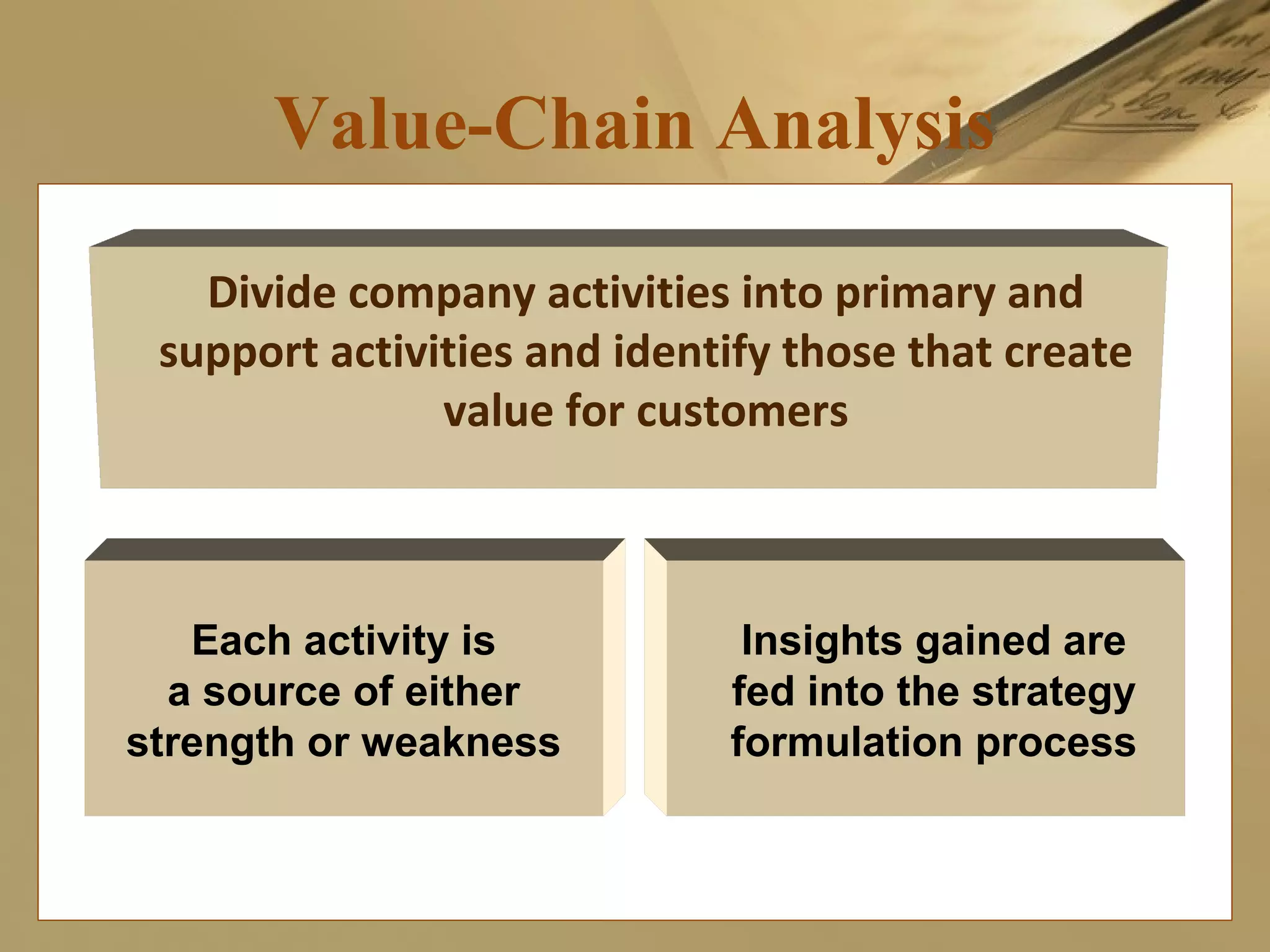
Value-Chain Analysis
Divide company activities into primary and
support activities and identify those that create
value for customers
Each activity is
a source of either
strength or weakness
Insights gained are
fed into the strategy
formulation process
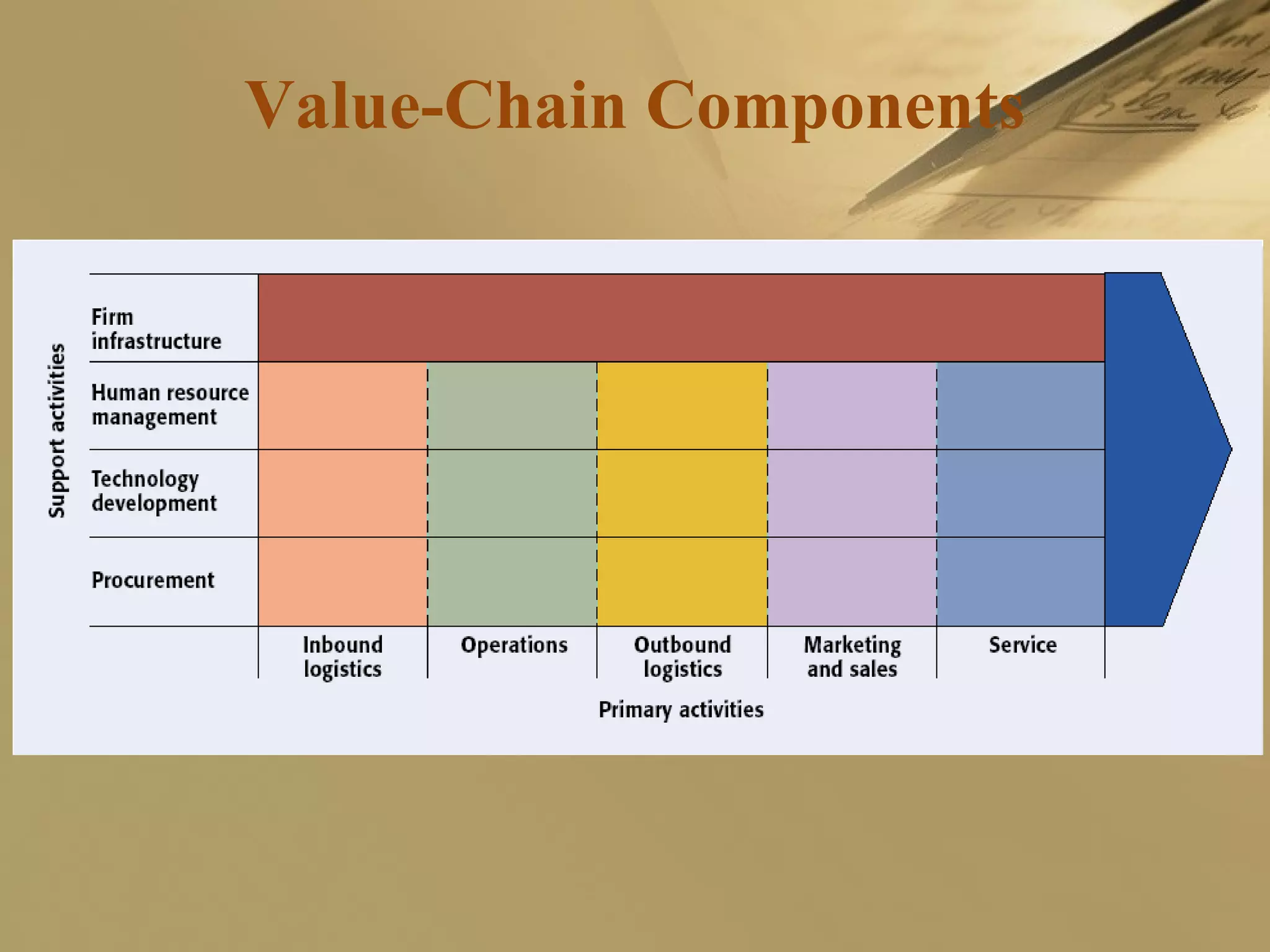
Value-Chain Components
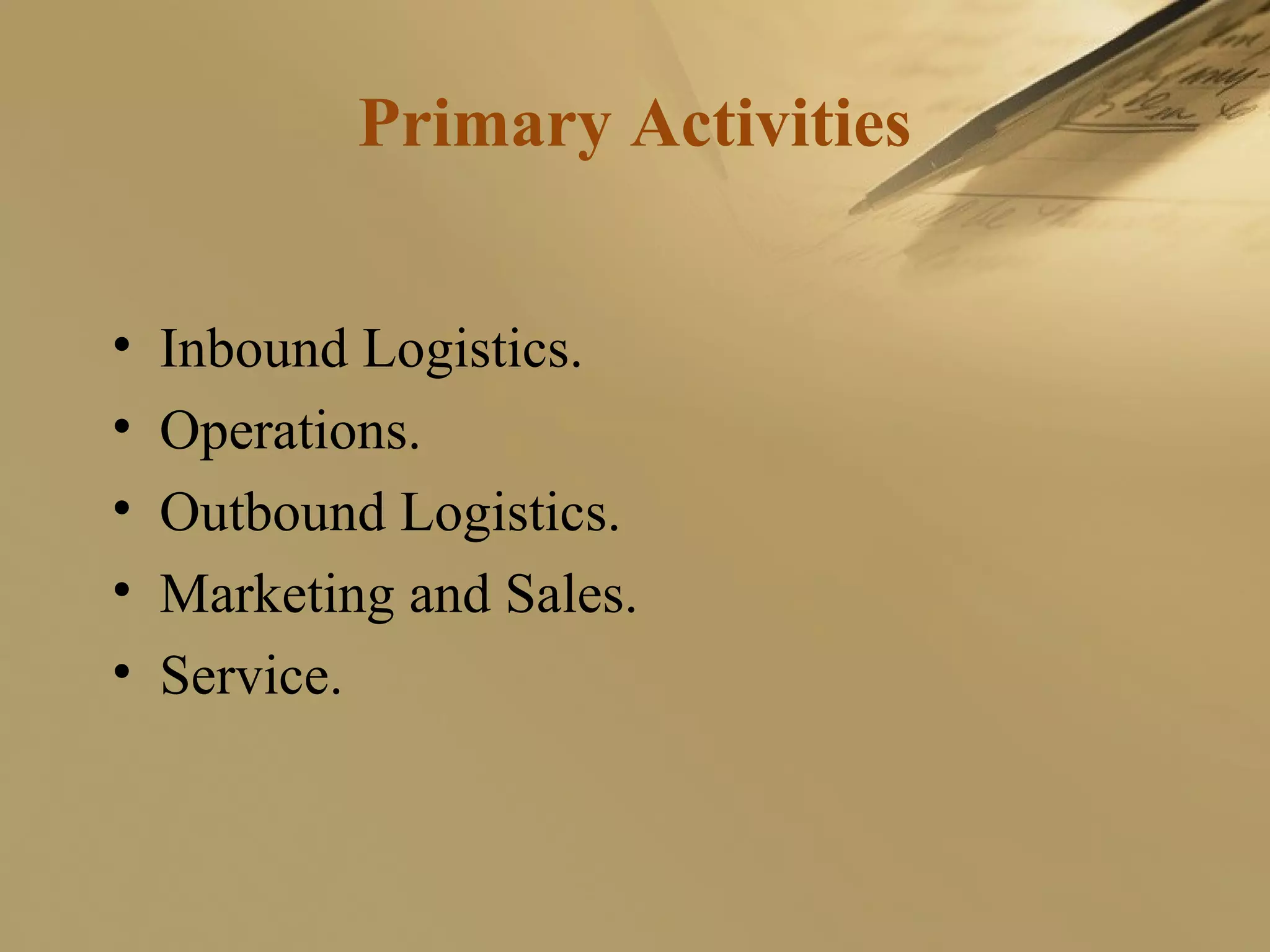
Primary Activities
• Inbound Logistics.
• Operations.
• Outbound Logistics.
• Marketing and Sales.
• Service.
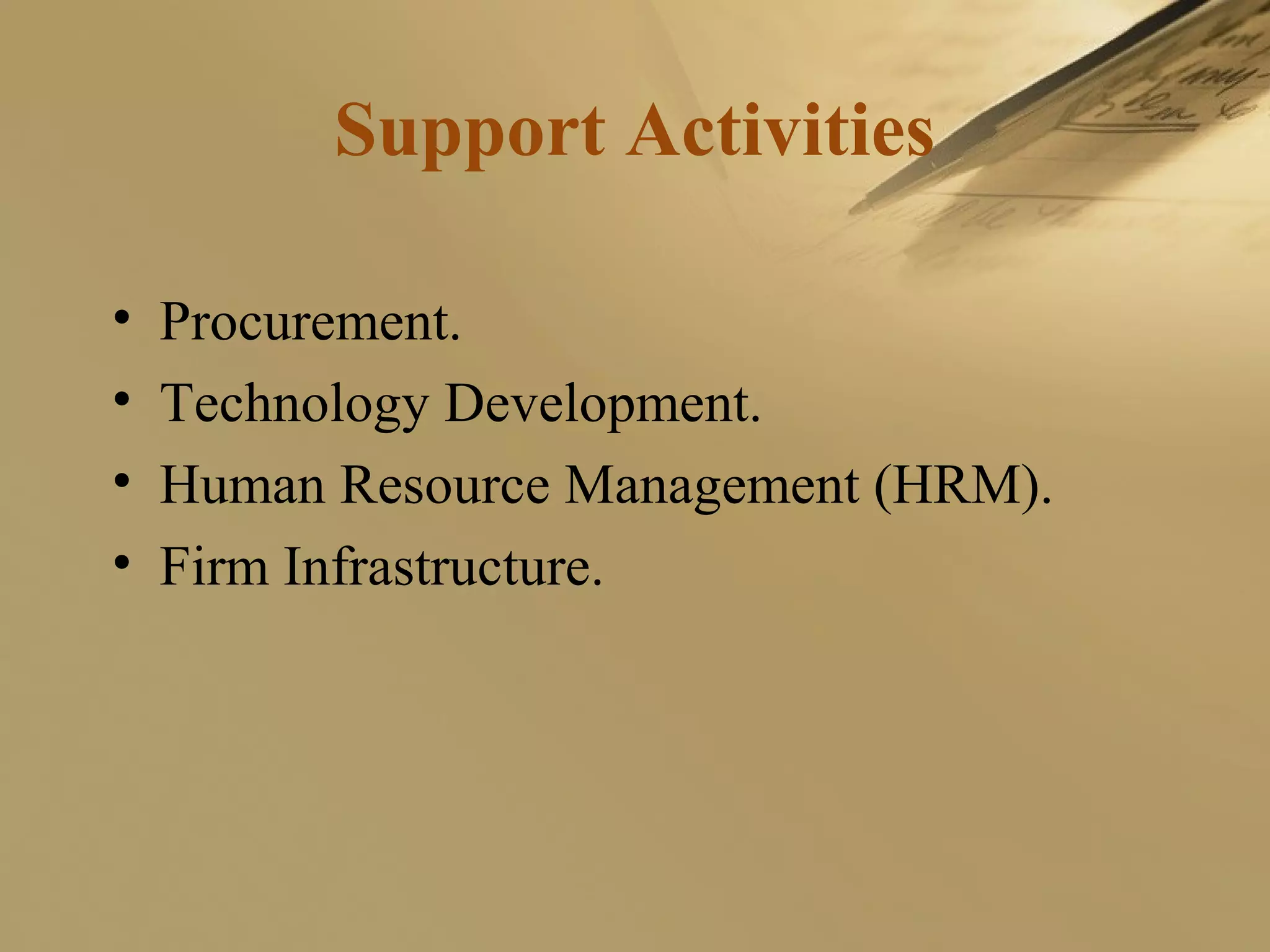
Support Activities
• Procurement.
• Technology Development.
• Human Resource Management (HRM).
• Firm Infrastructure.
Business Environment
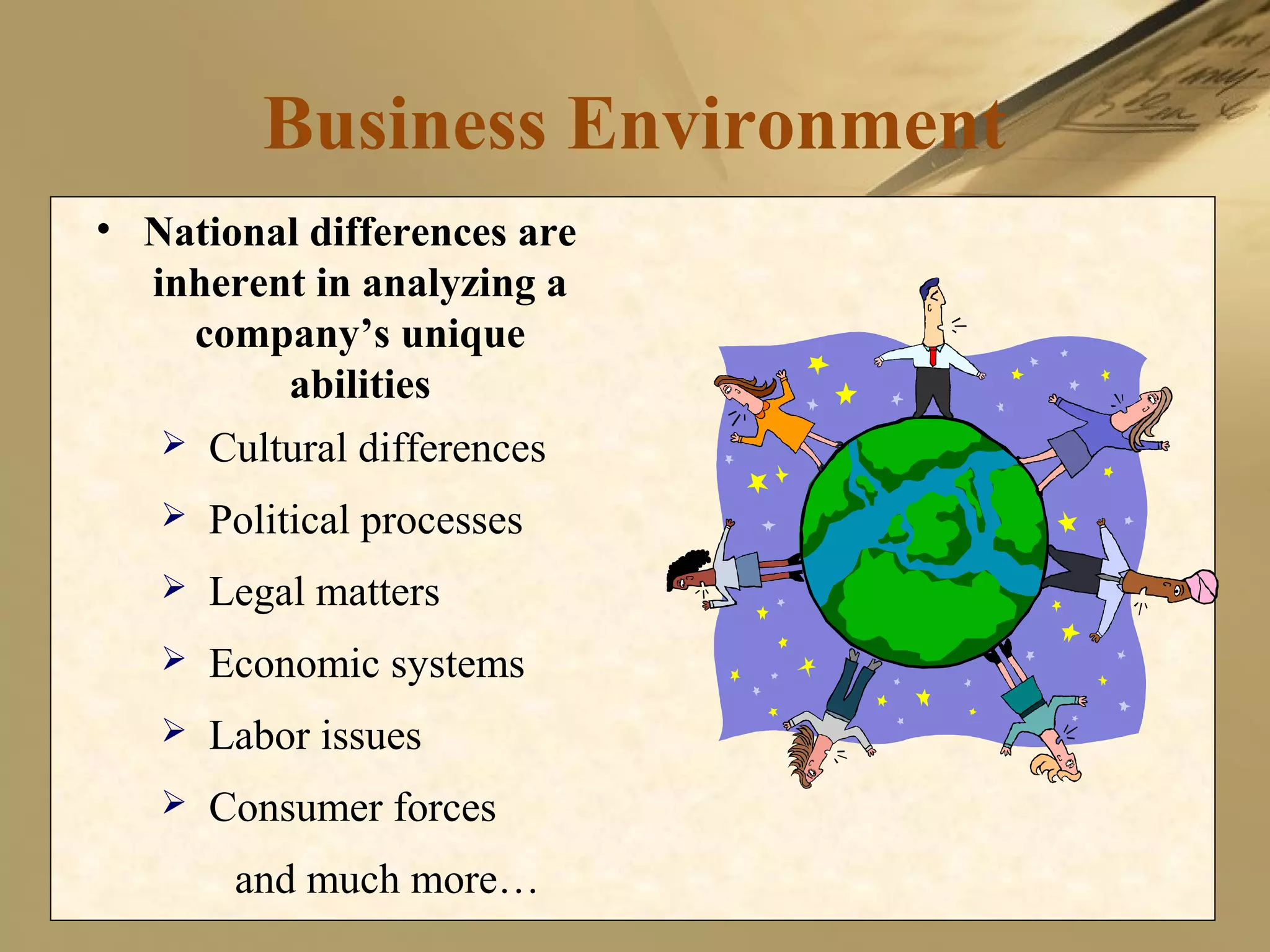
• National differences are
inherent in analyzing a
company’s unique
abilities
 Cultural differences
 Political processes
 Legal matters
 Economic systems
 Labor issues
 Consumer forces
and much more…
Copyright © Wondershare Software
Formulation Strategy
1. Two international strategy:
• Multinational Strategy (multidomestic
strategy): adapting products and their marketing
strategies in each national market to suit local
preferences.
• Global Strategy: Offering the same products
using the same marketing strategy in all
national markets.
Copyright © Wondershare Software
2. Corporate Level Strategy:
• Growth Strategy: Strategy designed to increase
the scale (size of activities) or scope (kinds of
activities) of a corporations.
• Retrenchment Strategy: Strategy designed to
reduce the scale or scope of a corporation's
business.
Copyright © Wondershare Software
• Stability Strategy: Strategy designed to guard
against change and used by corporations to
avoid either growth or retrenchment.
• Combination Strategy: Strategy designed to
mix growth, retrenchment, and stability
strategies across a corporation’s business units.
II. International Organizational
Structure
• Organizational Structure:
Way in which a company divides its activities
among separate units and coordinates activities
between those unites to achieve the
organization goals.
Centralization & Decentralization
• Centralized decision making is when
decision making is centralized at a high
level in one location, such as headquarters.
• Decentralized decision making is when
decisions are made at lower levels, such as
in international subsidiaries.
Centralization Advantages
• Help to coordinate the operation of
international subsidiaries.
• Decisions consistent with organizational
objectives.
• Top managers may be more experienced
and have a better decision making
• Centralization helps strong leadership
(power is at the top).
• Some companies maintain strong central
control over financial resources.
Copyright © Wondershare Software
Decentralization Advantages
• Help to reduce the top management task because
top might be overburdened
• More motivation at lower levels
• More flexibility
• Better decisions on the spot by people directly
involved
• Saves time in making decision to respond to
local markets (operational decisions).
• Strong commitment on their projects
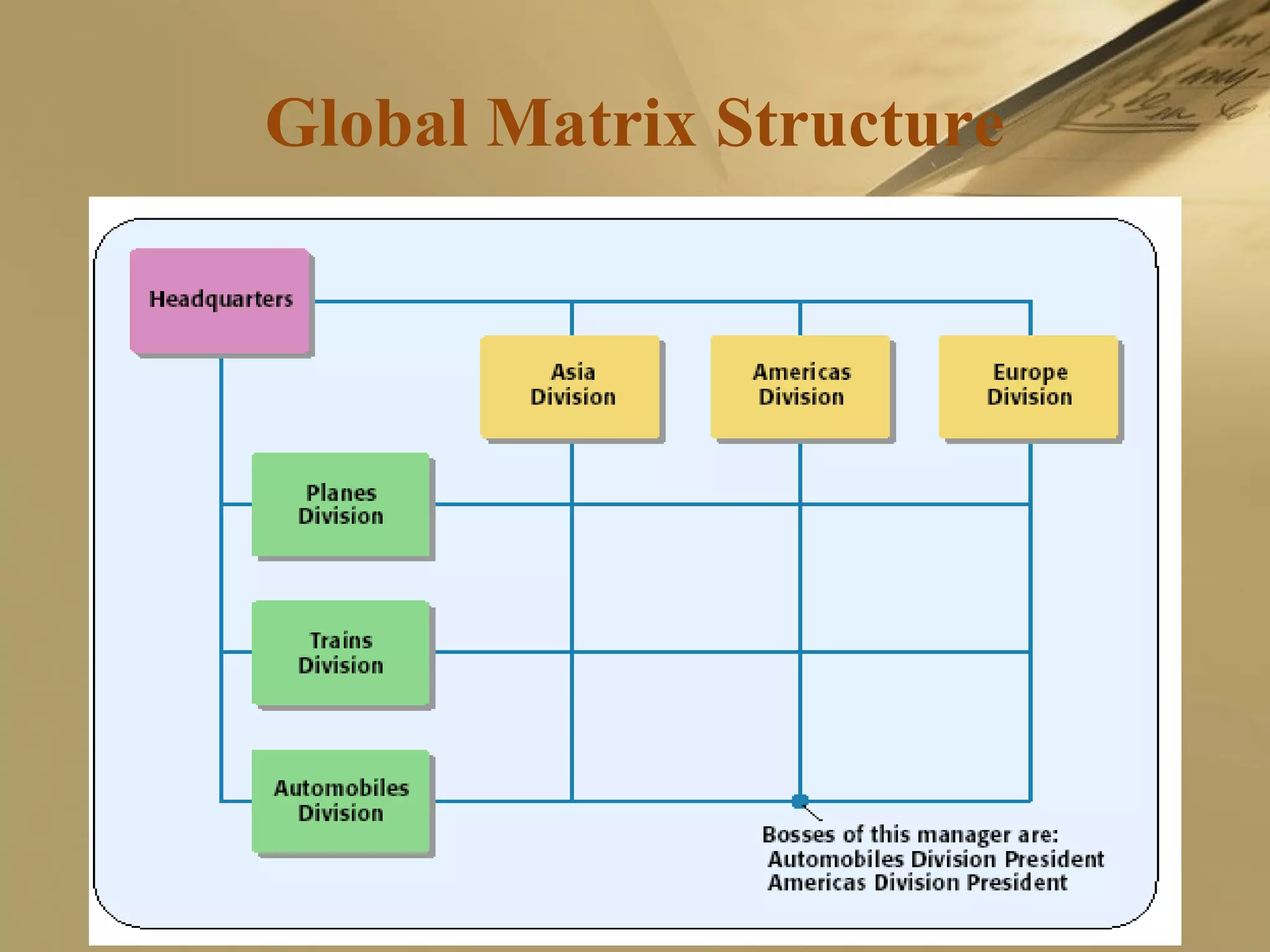
Type of Organization Structure
• There are many different ways in which a
company can organize itself to carry out its
international business activities.
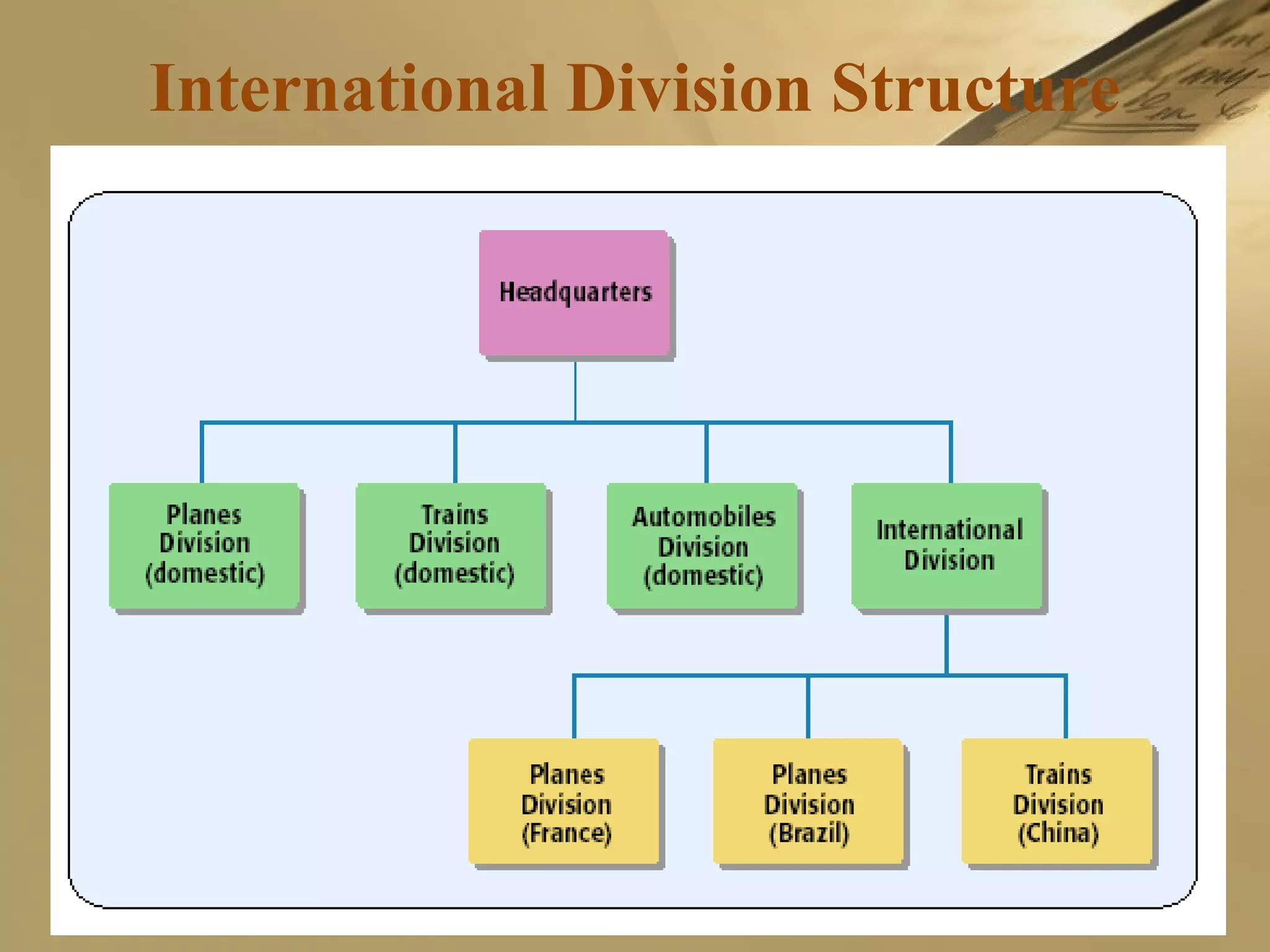
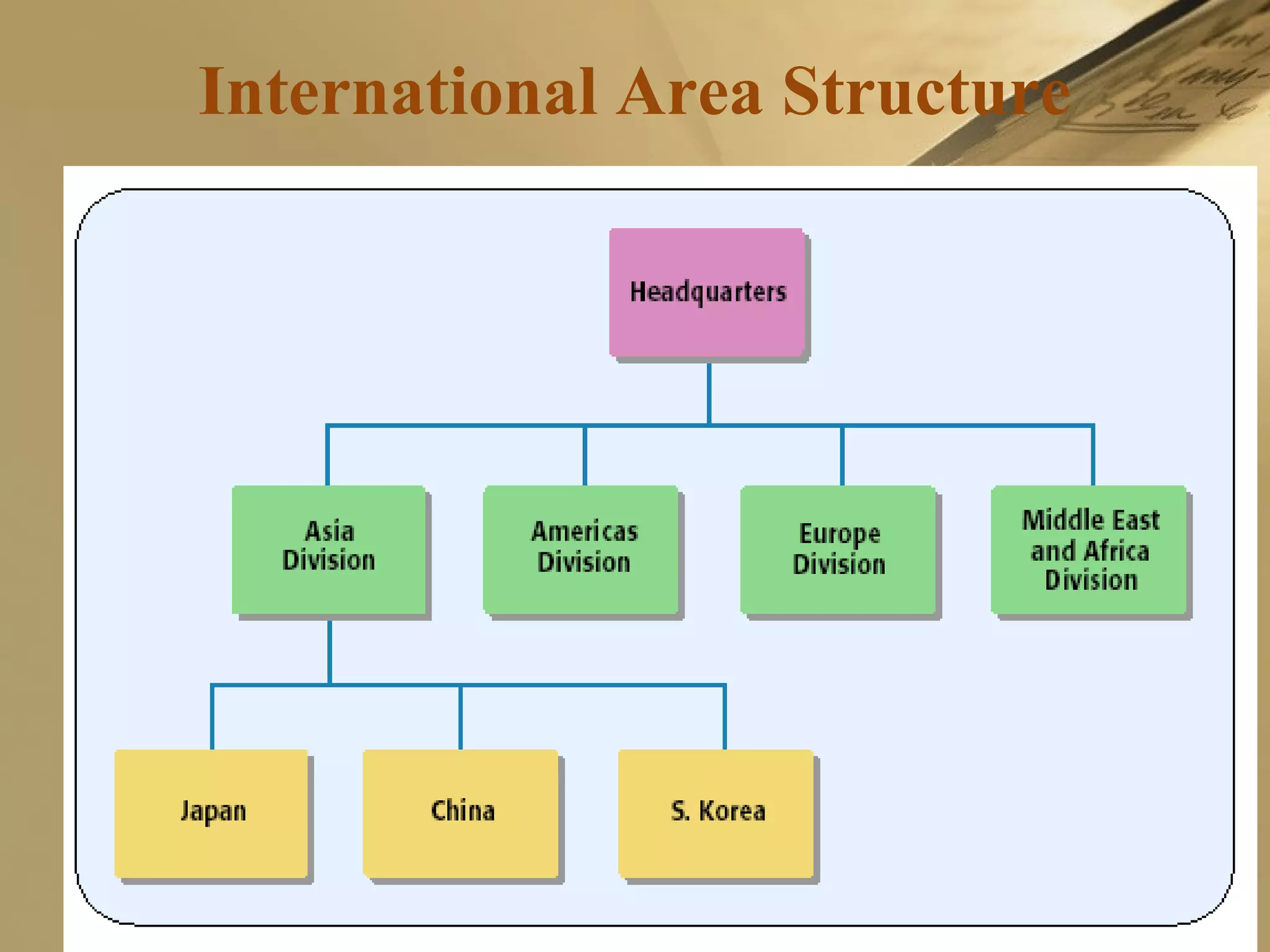
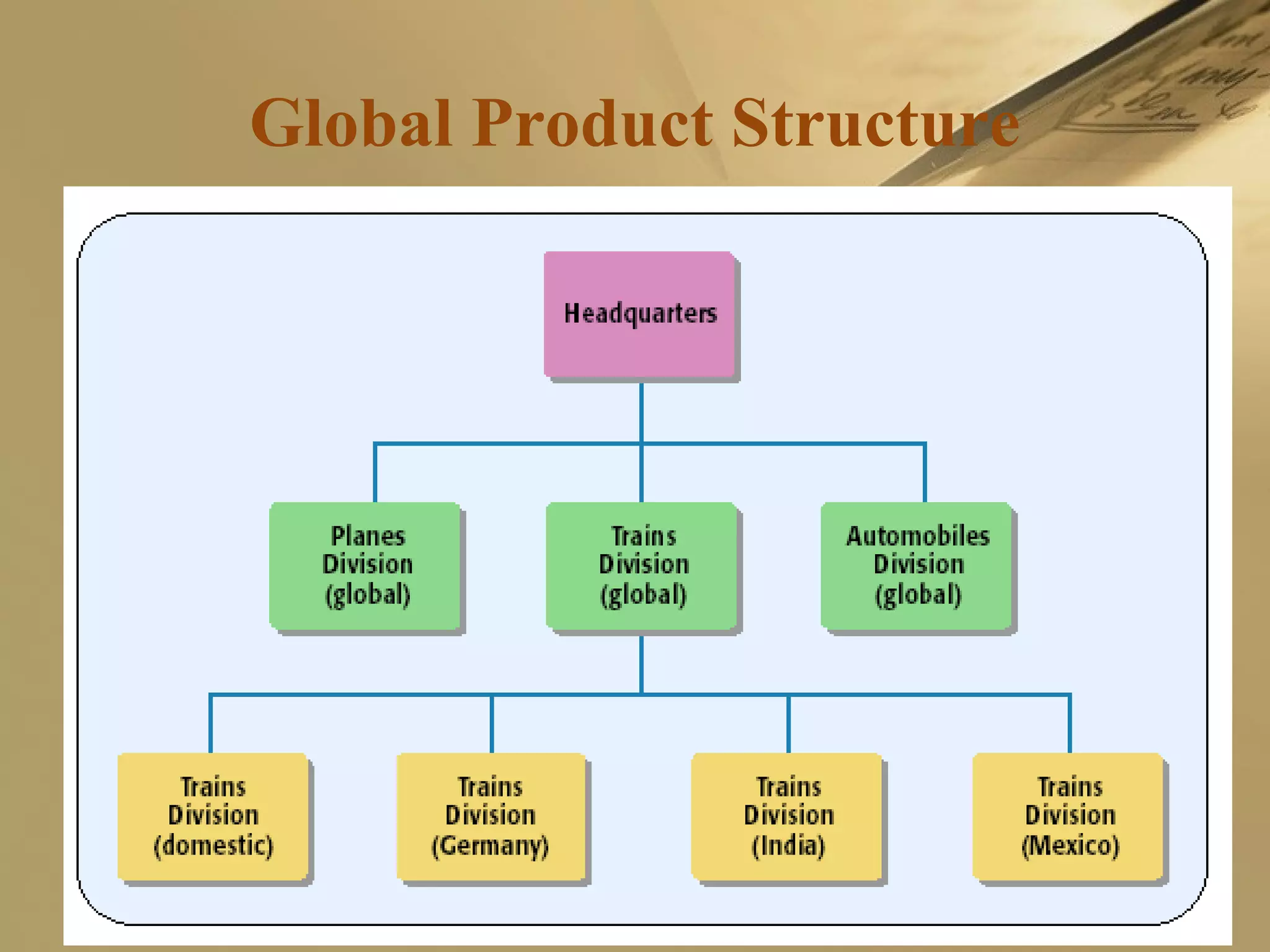
• There are 4 most common organizational
structure of international companies such as
division structure, area structure, product
structure, and matrix structure
International Division Structure
International Area Structure
Global Product Structure
Global Matrix Structure
Teamwork
1. Self-managed team: Employees from one
department take on responsibilities of former
supervisors
2. Cross-functional team: Group of employees
from similar levels but different functional
departments
3. Global Team: Top managers from headquarters
and subsidiaries solve company problems
Copyright © Wondershare Software
II. Summary
In this chapter study about international
strategy and organization structure.
There are three stages of Strategy Formulation
Process such as identify company mission and goals,
identify core competency and value creating
activities, and formulate strategies.
Organization structure which focus about
centralizes and decentralized decision making,
difference type of structure, and teamwork.
Copyright © Wondershare Software
Thank for Your Attention!Thank for Your Attention!

International Strategy and Organization Structure

  • 1.
    Course: Fundamental ofGlobal Business Chapter 11: International Strategy and Organization Structure Lecturer: Eng Kimsan Group 11 •Roeun Nakry •Sean Tiheng PAÑÑĀSĀSTRA UNIVERSITY OFPAÑÑĀSĀSTRA UNIVERSITY OF CAMBODIACAMBODIA Commitment to ExcellenceCommitment to Excellence
  • 2.
    Copyright © WondershareSoftware TableTable ContentContent I. International Strategy • Strategy formulation Process • Identify Mission and Goals • Identify Core Competency and Value-Creating Activities • Formulate Strategies II. International Organizational Structure • Centralization and Decentralization • Type of Organization Structure • Team Work
  • 3.
    Copyright © WondershareSoftware Learning ObjectiveLearning Objective • Explain the stages of identification and analysis that precede strategy selection. • Identify the two international strategies and the corporate-level strategies that companies use. • Identify the business-level strategies of companies and the role of department-level strategies. • Discuss the important issues that influence the choice of organizational structure. • Describe each type of international organizational structure, and explain the importance of work teams.
  • 4.
    I. International Strategy •What is International Strategy?
  • 5.
    Planning and Strategy PlanningStrategy Identifying and selecting objectives and deciding how to achieve those objectives Set of planned actions that managers take to help a company meet its objectives
  • 6.
  • 7.
    Identify Mission andGoals Mission statements must consider:  Company activities  Business objectives  Stakeholders  Stockholders  Customers  Residents  Environment and much more…
  • 8.
    Identify Core Competency Specialability of a company thatSpecial ability of a company that competitors find extremely difficultcompetitors find extremely difficult or impossible to equalor impossible to equal Special ability of a company thatSpecial ability of a company that competitors find extremely difficultcompetitors find extremely difficult or impossible to equalor impossible to equal Coordination of multiple skillsCoordination of multiple skills Lengthy period to developLengthy period to develop Difficult to imitateDifficult to imitate
  • 9.
    Value-Chain Analysis Divide companyactivities into primary and support activities and identify those that create value for customers Each activity is a source of either strength or weakness Insights gained are fed into the strategy formulation process
  • 10.
  • 11.
    Primary Activities • InboundLogistics. • Operations. • Outbound Logistics. • Marketing and Sales. • Service.
  • 12.
    Support Activities • Procurement. •Technology Development. • Human Resource Management (HRM). • Firm Infrastructure.
  • 13.
    Business Environment • Nationaldifferences are inherent in analyzing a company’s unique abilities  Cultural differences  Political processes  Legal matters  Economic systems  Labor issues  Consumer forces and much more…
  • 14.
    Copyright © WondershareSoftware Formulation Strategy 1. Two international strategy: • Multinational Strategy (multidomestic strategy): adapting products and their marketing strategies in each national market to suit local preferences. • Global Strategy: Offering the same products using the same marketing strategy in all national markets.
  • 15.
    Copyright © WondershareSoftware 2. Corporate Level Strategy: • Growth Strategy: Strategy designed to increase the scale (size of activities) or scope (kinds of activities) of a corporations. • Retrenchment Strategy: Strategy designed to reduce the scale or scope of a corporation's business.
  • 16.
    Copyright © WondershareSoftware • Stability Strategy: Strategy designed to guard against change and used by corporations to avoid either growth or retrenchment. • Combination Strategy: Strategy designed to mix growth, retrenchment, and stability strategies across a corporation’s business units.
  • 17.
    II. International Organizational Structure •Organizational Structure: Way in which a company divides its activities among separate units and coordinates activities between those unites to achieve the organization goals.
  • 18.
    Centralization & Decentralization •Centralized decision making is when decision making is centralized at a high level in one location, such as headquarters. • Decentralized decision making is when decisions are made at lower levels, such as in international subsidiaries.
  • 19.
    Centralization Advantages • Helpto coordinate the operation of international subsidiaries. • Decisions consistent with organizational objectives. • Top managers may be more experienced and have a better decision making • Centralization helps strong leadership (power is at the top). • Some companies maintain strong central control over financial resources.
  • 20.
    Copyright © WondershareSoftware Decentralization Advantages • Help to reduce the top management task because top might be overburdened • More motivation at lower levels • More flexibility • Better decisions on the spot by people directly involved • Saves time in making decision to respond to local markets (operational decisions). • Strong commitment on their projects
  • 21.
    Type of OrganizationStructure • There are many different ways in which a company can organize itself to carry out its international business activities. • There are 4 most common organizational structure of international companies such as division structure, area structure, product structure, and matrix structure
  • 22.
  • 23.
  • 24.
  • 25.
  • 26.
    Teamwork 1. Self-managed team:Employees from one department take on responsibilities of former supervisors 2. Cross-functional team: Group of employees from similar levels but different functional departments 3. Global Team: Top managers from headquarters and subsidiaries solve company problems
  • 27.
    Copyright © WondershareSoftware II. Summary In this chapter study about international strategy and organization structure. There are three stages of Strategy Formulation Process such as identify company mission and goals, identify core competency and value creating activities, and formulate strategies. Organization structure which focus about centralizes and decentralized decision making, difference type of structure, and teamwork.
  • 28.
    Copyright © WondershareSoftware Thank for Your Attention!Thank for Your Attention!