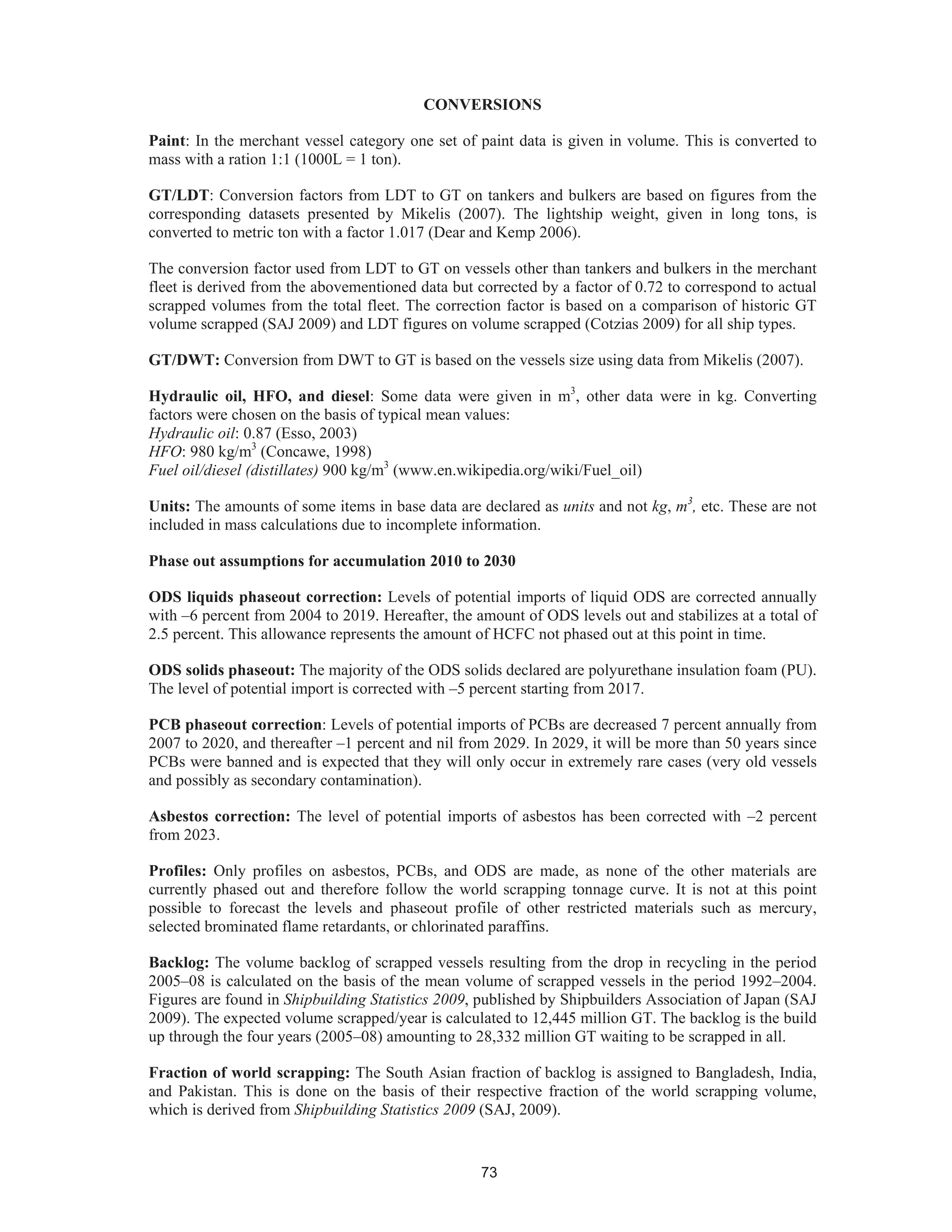




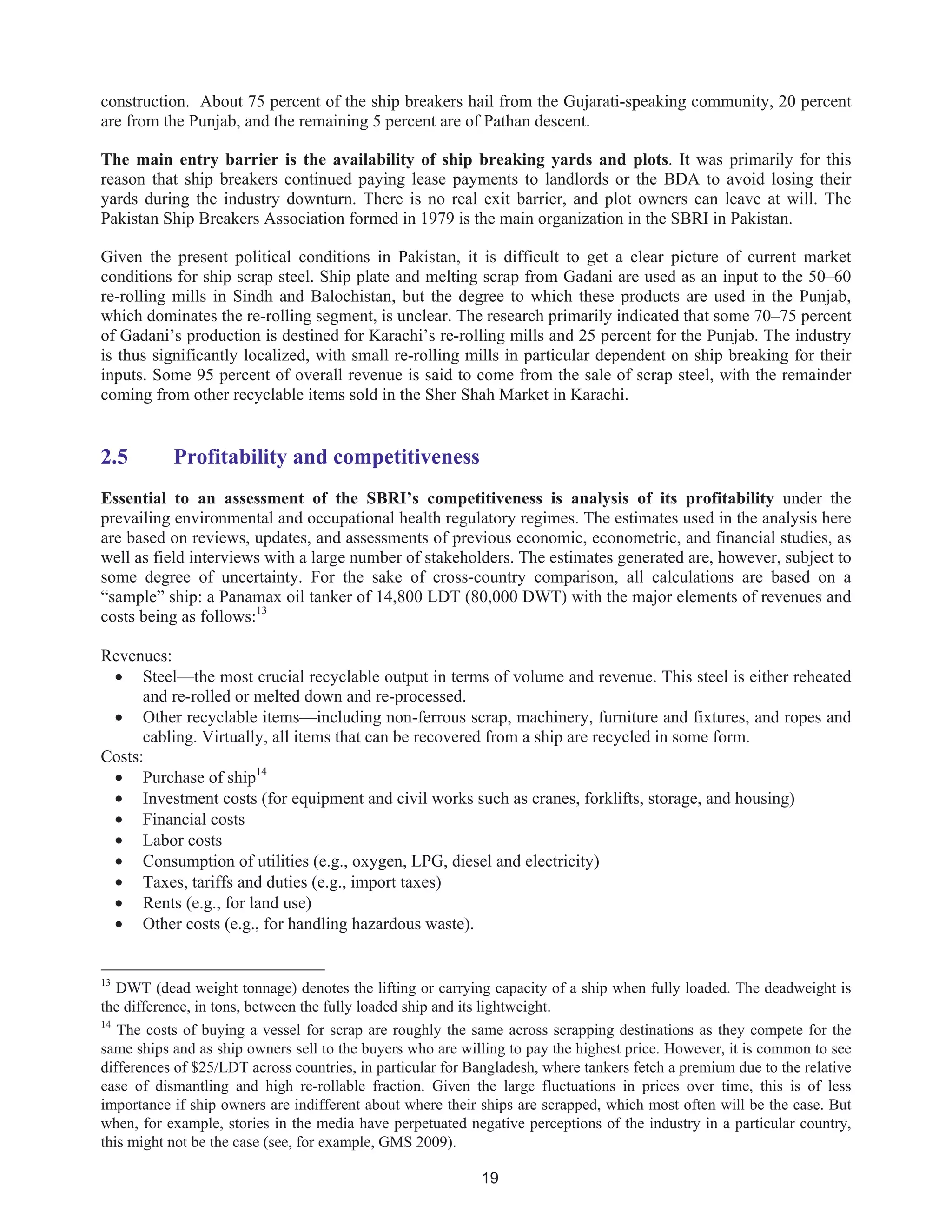
Steel Industry in Myanmar 2014
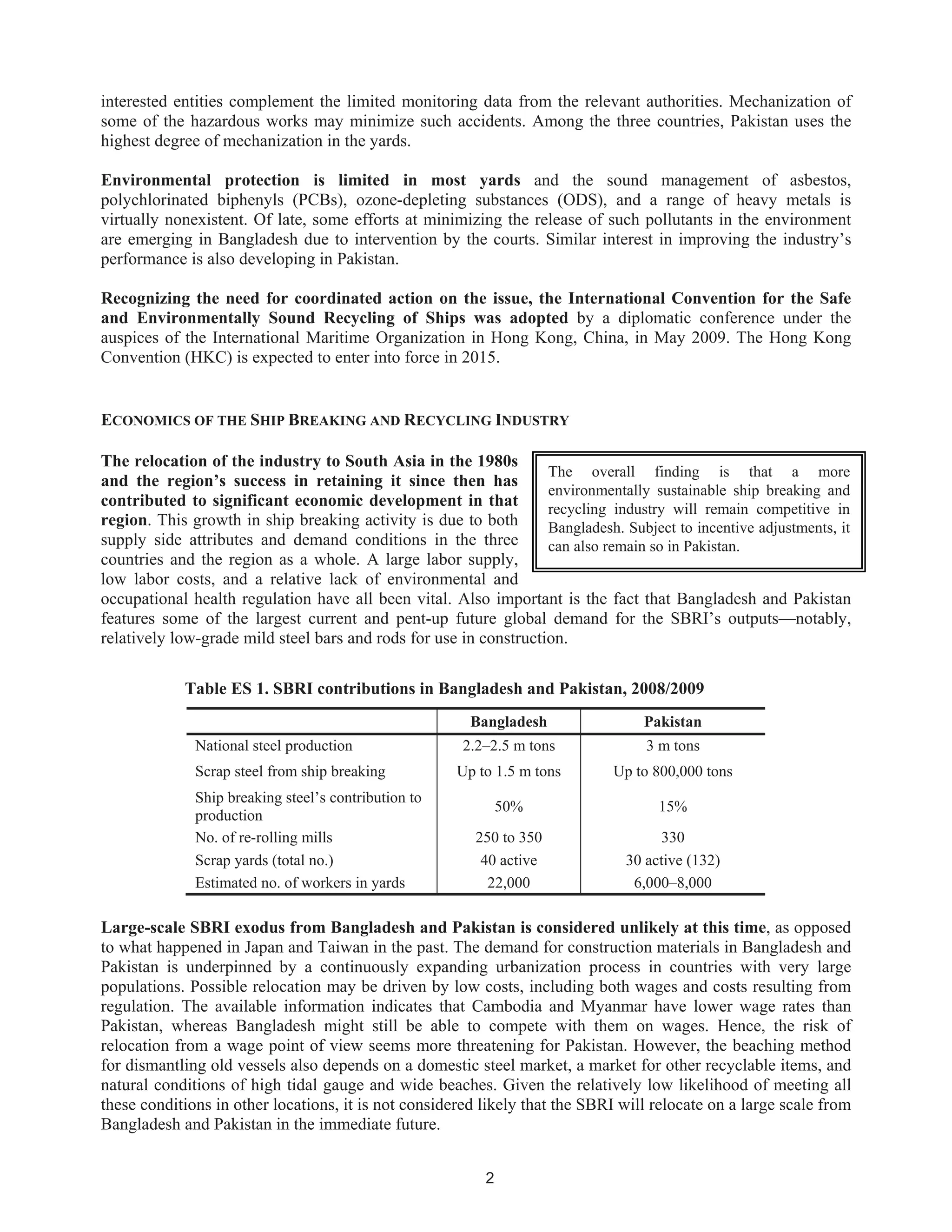
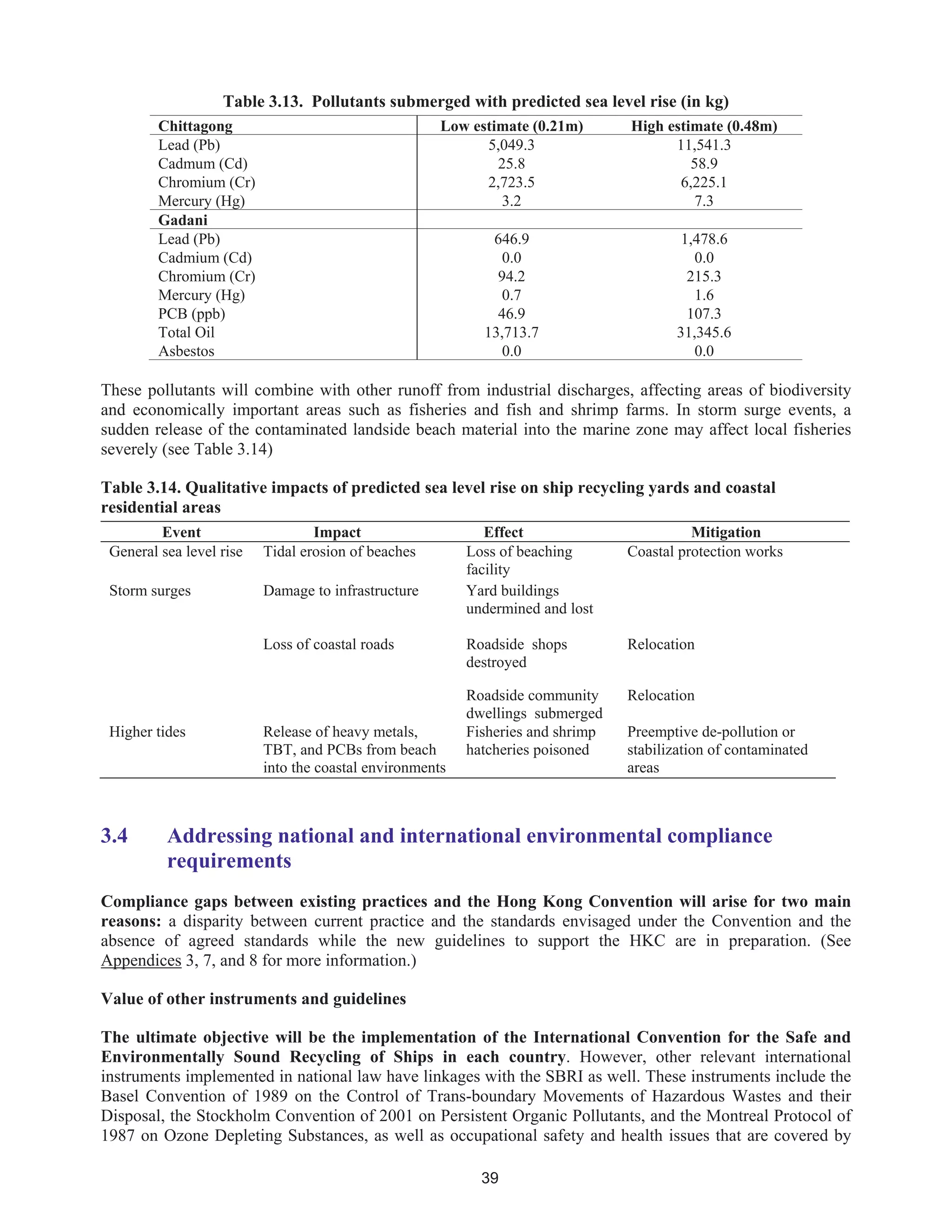
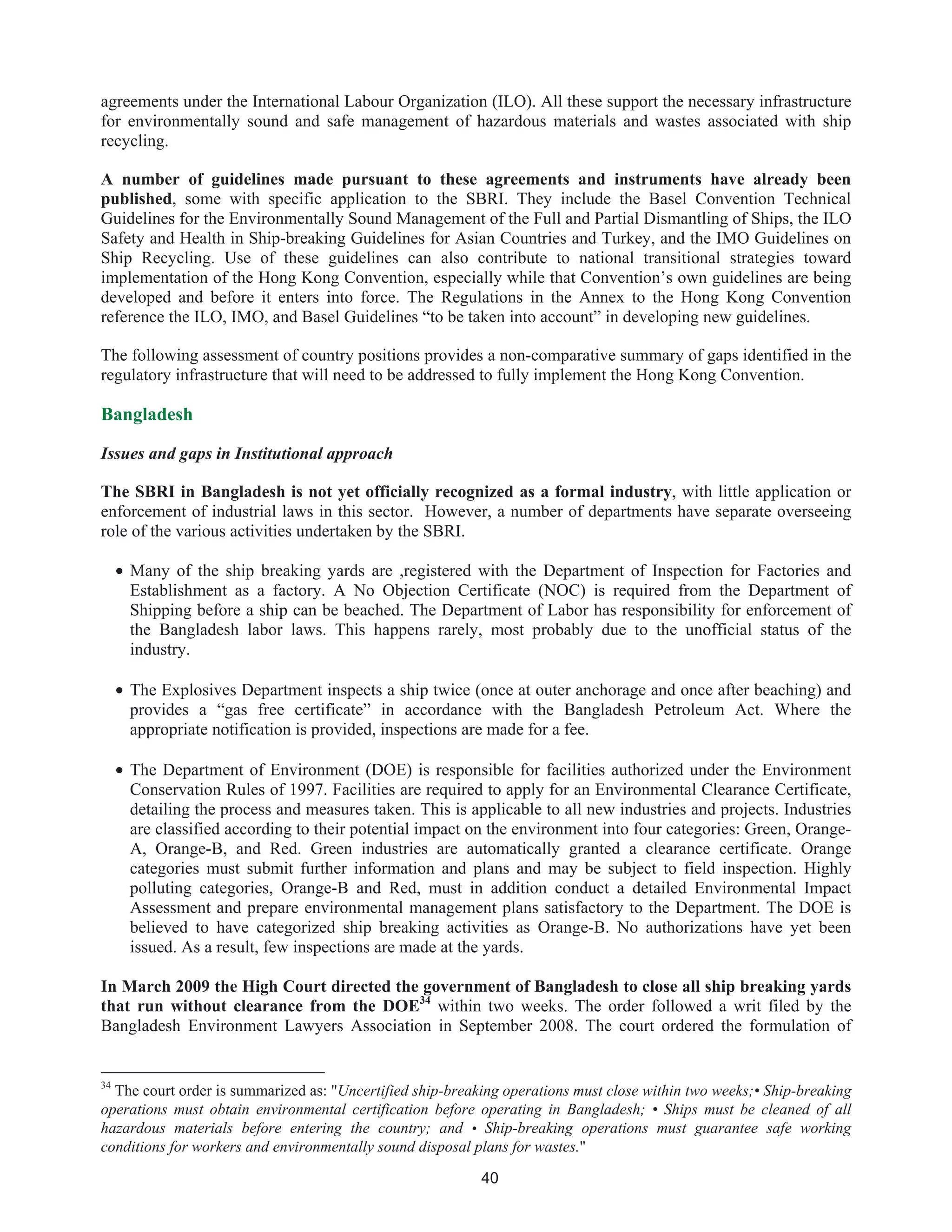
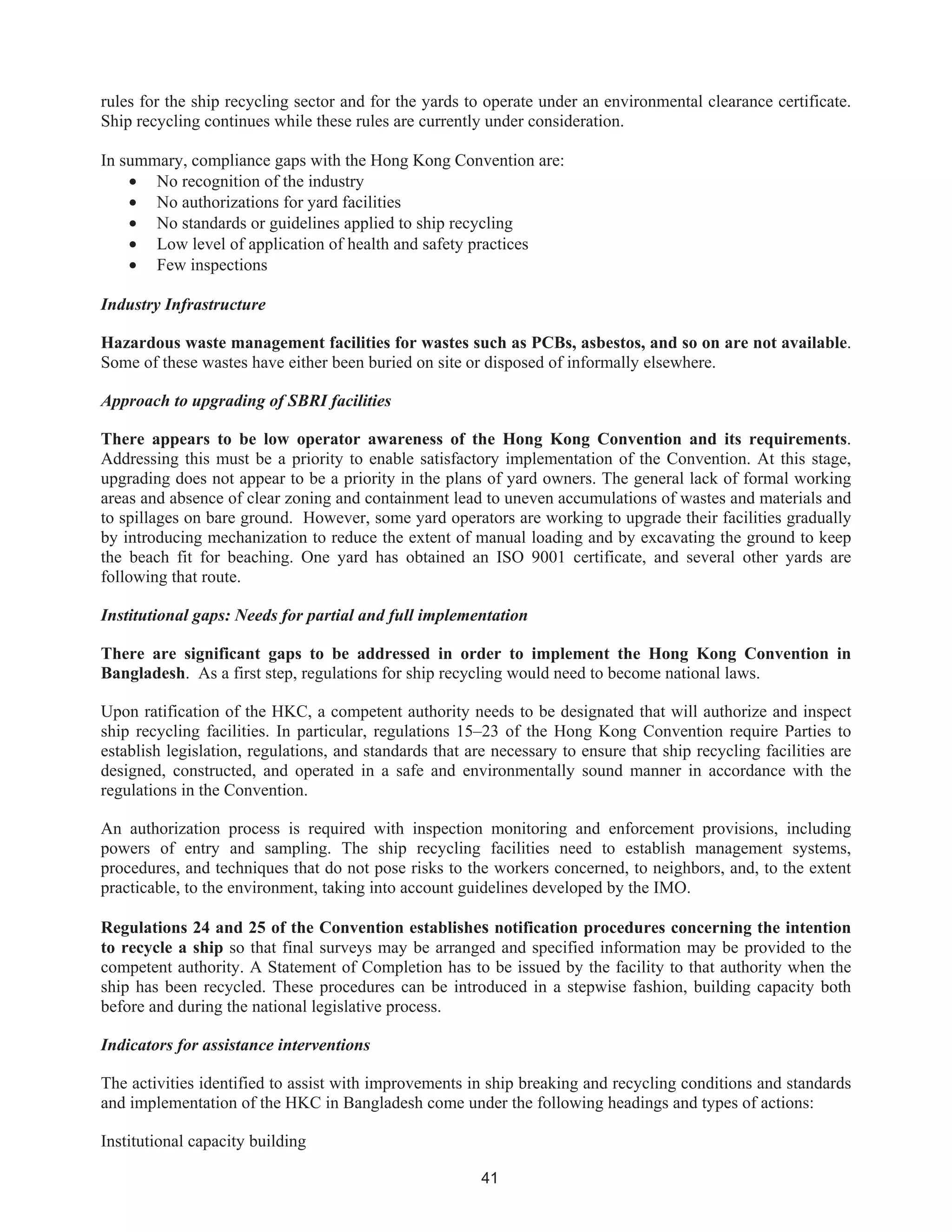
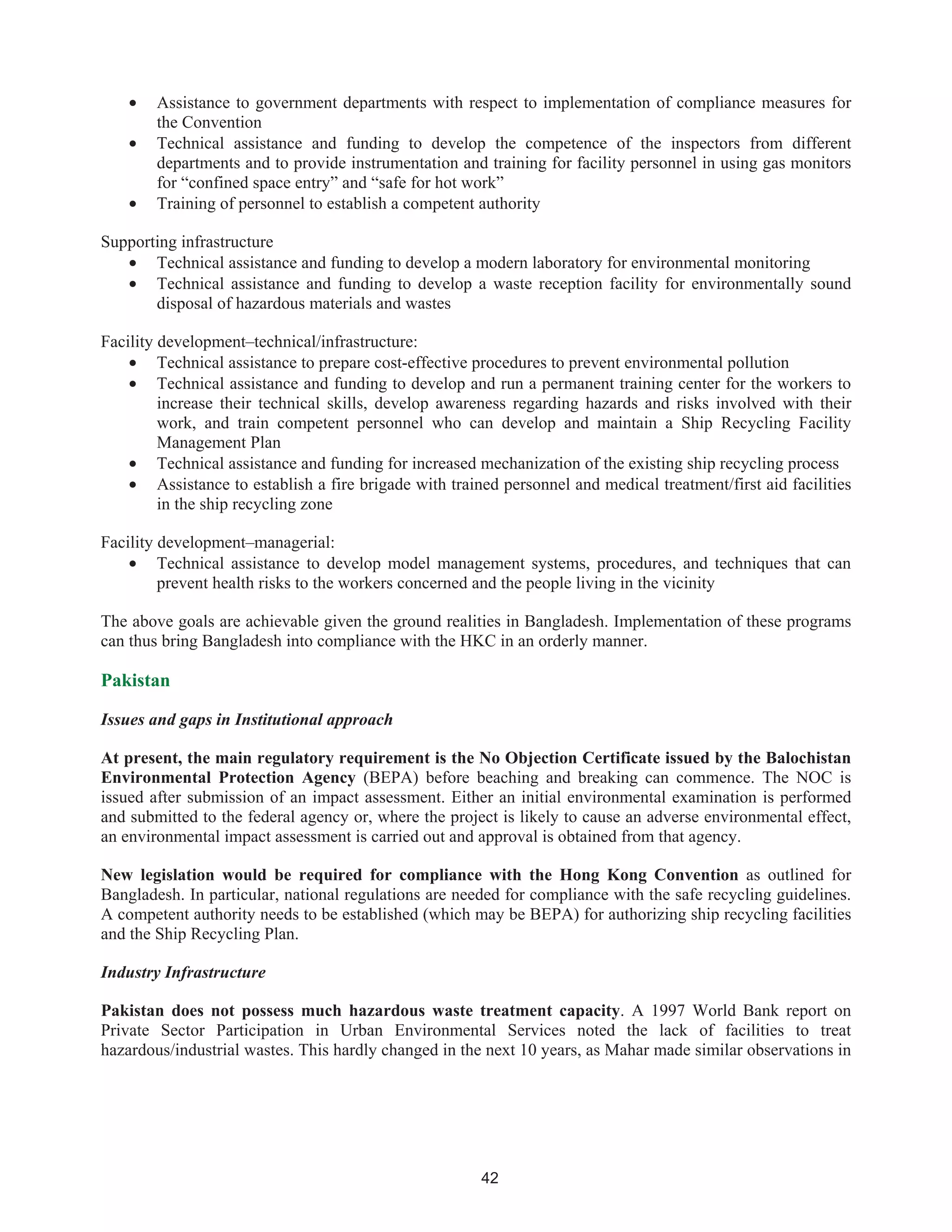
သံ၊ သံမဏိလုပ္ငန္းႏွင့္ျမန္မာျပည္စီးပြားေရးစနစ္
တိုးတက္ေသာႏိုင္ငံတို႕တြင္ သံလုပ္ငန္းအလြန္ထြန္းကားပါသည္။ စက္မႈထြန္းကားပါက သံ၊ သံမဏိလုပ္ငန္းလည္း
ထြန္းကားရသည္။ ဥေရာပ၊ အေမရိကန္၊ ဂ်ပန္တို႕သည္ သံလုပ္ငန္းမ်ား အေျခက်ေနျပီျဖစ္သည္။
တိုင္းျပည္အလွ်င္အျမန္တည္ေဆာက္ေနေသာ တရုပ္ျပည္ၾကီး ေဆာက္လုပ္ေရးလုပ္ငန္းမ်ားအတြက္ သံ၊ သံမဏိစက္ရံုမ်ားစြာ
တဟုန္ထိုးေပၚေပါက္လာရသည္။ ၂၀၁၃တြင္ တစ္ကမၻာလံုး သံမဏိထုတ္လုပ္မႈ၏ ၄၀% အထိျဖစ္လာသည္။ ယခုအခါ
ကမၻာ့စီးပြားေရးမေကာင္းသျဖင့္ တရုပ္ျပည္ၾကီးလည္း ေဆာက္လုပ္ေရးလုပ္ငန္းမ်ား ေႏွးေကြးသြားသည္။ သံ၊
သံမဏိေစ်းႏႈန္းသည္ ရိုက္တာသတင္းဌာန ၉-ဇြန္-၂၀၁၄ အရ တရုပ္ႏိုင္ငံတြင္၊ သံမဏိေစ်းႏႈန္း မက္ထရစ္တစ္တန္
ေဒၚလာ၄၉၀၊ သံရိုင္း မက္ထရစ္တစ္တန္ ကန္ေဒၚလာ ၁၀၉ သို႕က်ဆင္းသြားသည္။ ေစ်းေကာင္းေသာကာ ၂၀၀၇တြင္
သံမဏိ၊ မက္ထရစ္တစ္တန္ ေဒၚလာတစ္ေထာင္အထိ ေစ်းတက္ခဲ့ဖူးျပီး၊ ၂၀၁၃တြင္ ေဒၚလာ၆၀၀သို႕ က်ဆင္းလာျပီး၊
၂၀၁၄တြင္ ေစ်းအႏို္မ့္ဆံုးျဖစ္လာခဲ့သည္။
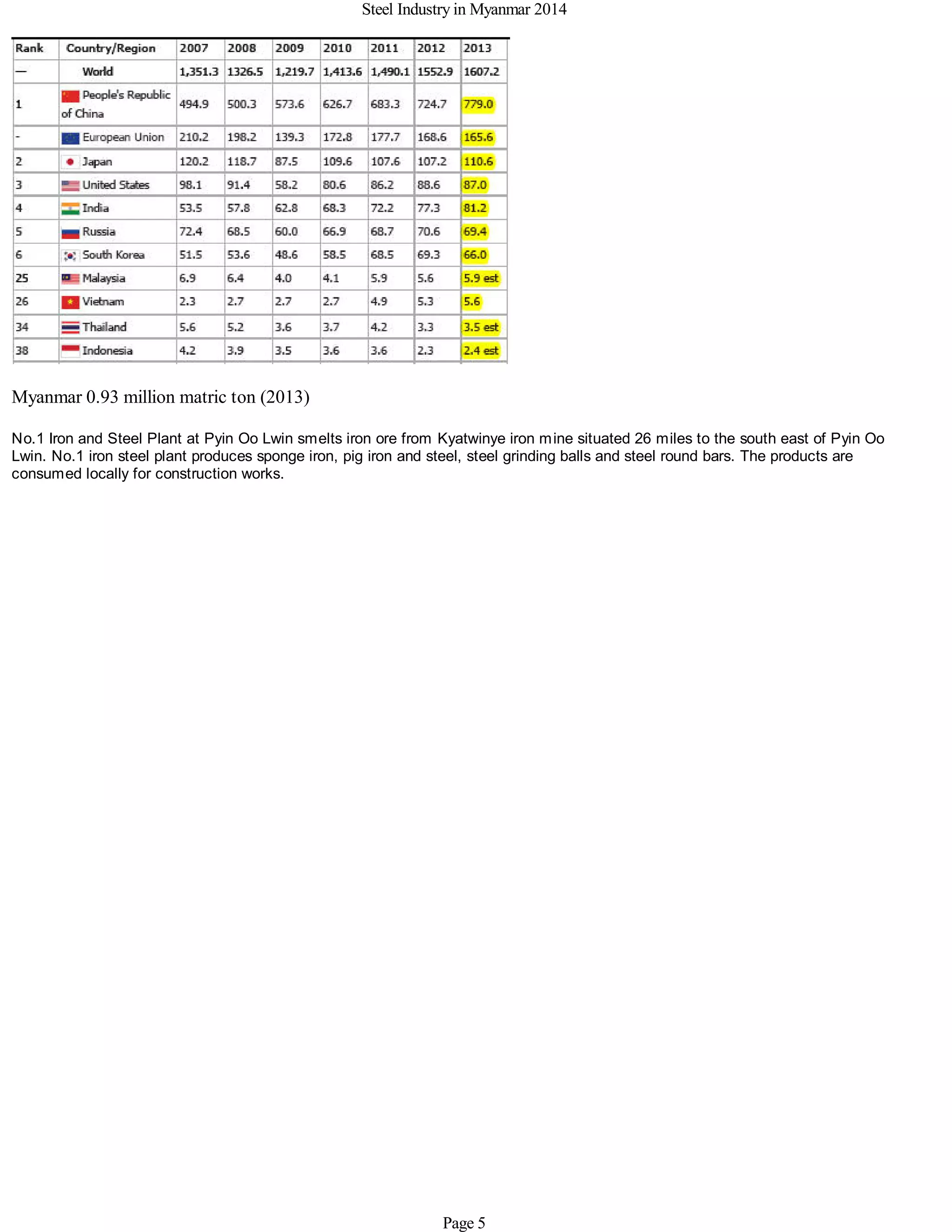
ႏိုင္ငံအလိုက္ သံမဏိထုတ္လုပ္မႈ မက္ထရစ္တန္ခ်ိန္သန္းေပါင္း (၂၀၁၃) အရ၊ တရုပ္ ၇၇၉သန္း၊ ဥေရာပ-အီးယူႏိုင္ငံမ်ား
၁၆၅သန္း၊ ဂ်ပန္ ၁၁၀သန္း၊ အေမရိကန္ ၈၇သန္း၊ အိႏၷိယ ၈၁သန္း..စသျဖင့္ ထုတ္လုပ္ၾကသည္။
အေရွ႕ေတာင္အာရွႏိုင္ငံမ်ားတြင္ အမ်ားဆံုးထုတ္ႏိုင္ငံမွာ မေလးရွား ၅.၉သန္းျဖစ္သည္။ ဗီယက္နမ္ ၅.၆သန္း၊ ထိုင္း ၃.၅သန္း၊
အင္ဒိုနီးရွား ၂.၄သန္း .စသျဖင့္ အနည္းငယ္သာထုတ္ႏိုင္သည္။ အေရွ႕ေတာင္အာရွႏိုင္ငံမ်ားအဖို႕ သံမဏိက
ျပည္ပမွတင္သြင္းျပီး ႏိုင္ငံစက္မႈတိုးတက္ေအာင္လုပ္ရပါသည္။ အမ်ားဆံုးသံမဏိတင္သြင္းေသာ ႏိုင္ငံမ်ားတြင္
အေရွ႕ေတာင္အာရွႏိုင္ငံမ်ားက ထိပ္ဆံုး၁၀ႏိုင္ငံတြင္ရွိေနၾကသည္။ ထိုင္း ၁၀.၉သန္း၊ ဗီယက္နမ္ ၈.၃သန္း၊ အင္ဒိုနီးရွား
၇.၃သန္း၊ ဖိလစ္ပိုင္ ၃.၈သန္း၊ စင္ကာပူ ၃.၁သန္း စသည္တို႕ျဖစ္သည္။ တရုပ္ျပည္မွာ သံရုိင္းတင္သြင္းျပီး၊
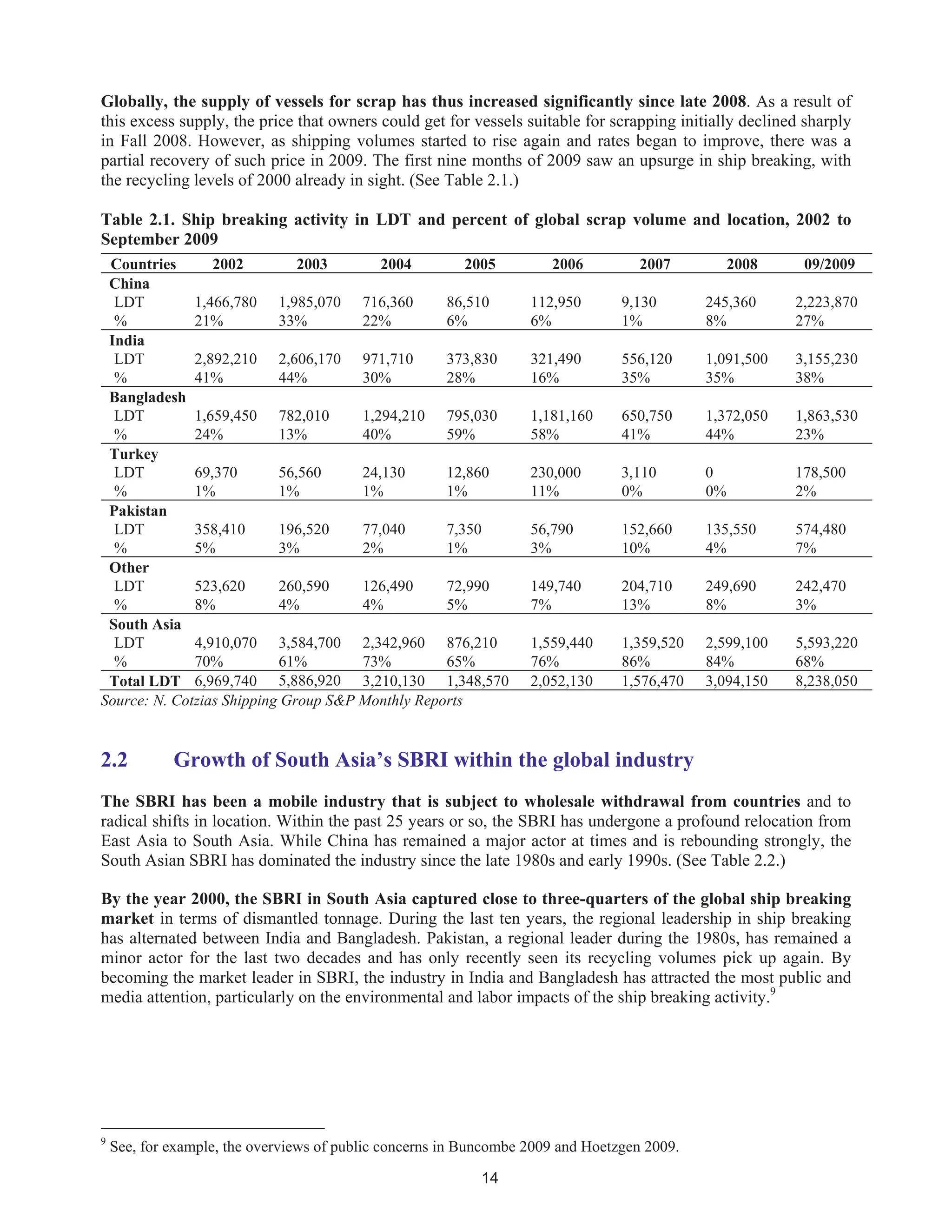
စက္ရံုမ်ားမွာကုန္ေခ်ာ သံမဏိတင္ပို႕ေရာင္းခ်ေသာ ထိပ္တန္းႏိုင္ငံျဖစ္ေနသည္။ ေအာက္ပါဇယားကို ေလ့လာပါက ၂၀၀၇ မွ
၂၀၁၃ အတြင္း တရုပ္ျပည္ၾကီး၏ သံမဏိစက္ရံုလုပ္ငန္းသည္ ၂ဆနီးပါး အံ့ၾသဘြယ္တိုးတက္သြားသလို၊ ဗီယက္နမ္ႏိုင္ငံ၏
သံမဏိလုပ္ငန္းသည္ ၃ဆခန္႕ တိုးတက္သြားပါသည္။ ယခုအခါ ျမန္မာ့ေဆာက္လုပ္ေရးလုပ္ငန္းမ်ားသည္ တရုပ္၊ အိႏၷိယ
သံမဏိမ်ားထက္၊ ဗီယက္နမ္သံမဏိမ်ားက အရည္ေသြးပိုေကာင္းသျဖင့္ ဗီယက္နမ္သံမဏိမ်ား ျမန္မာ့ေစ်းကြက္သို႕
ေနရာယူလာၾကသည္။
ျမန္မာႏိုင္ငံအစိုးရသစ္သည္ ၂၀၁၁မွ စတင္ျပီး၊ ပြင့္လင္းျမင္သာစနစ္ျဖင့္ ျပည္ပရင္းႏွီးျမွတ္ႏွံမႈမ်ား FDI ကိုရွာေဖြခဲ့သည္။
ဌာနဆိုင္ရာအသီးသီးမွ ႏိုင္ငံျခားကုမၸဏီမ်ားကို ဖိတ္ေခၚျပီး ျမန္မာျပည္တြင္းသယံဇာတ လုပ္ကြက္မ်ားကိုတင္ျပခဲ့သည္။
Page 1
Steel Industry in Myanmar 2014
Slideshare.net တြင္ သတၱဳတြင္းဝန္ၾကီးဌာန ဒါရိုက္တာဦးေက်ာ္ထက္၏ Current Mining Activities in Myanmar,
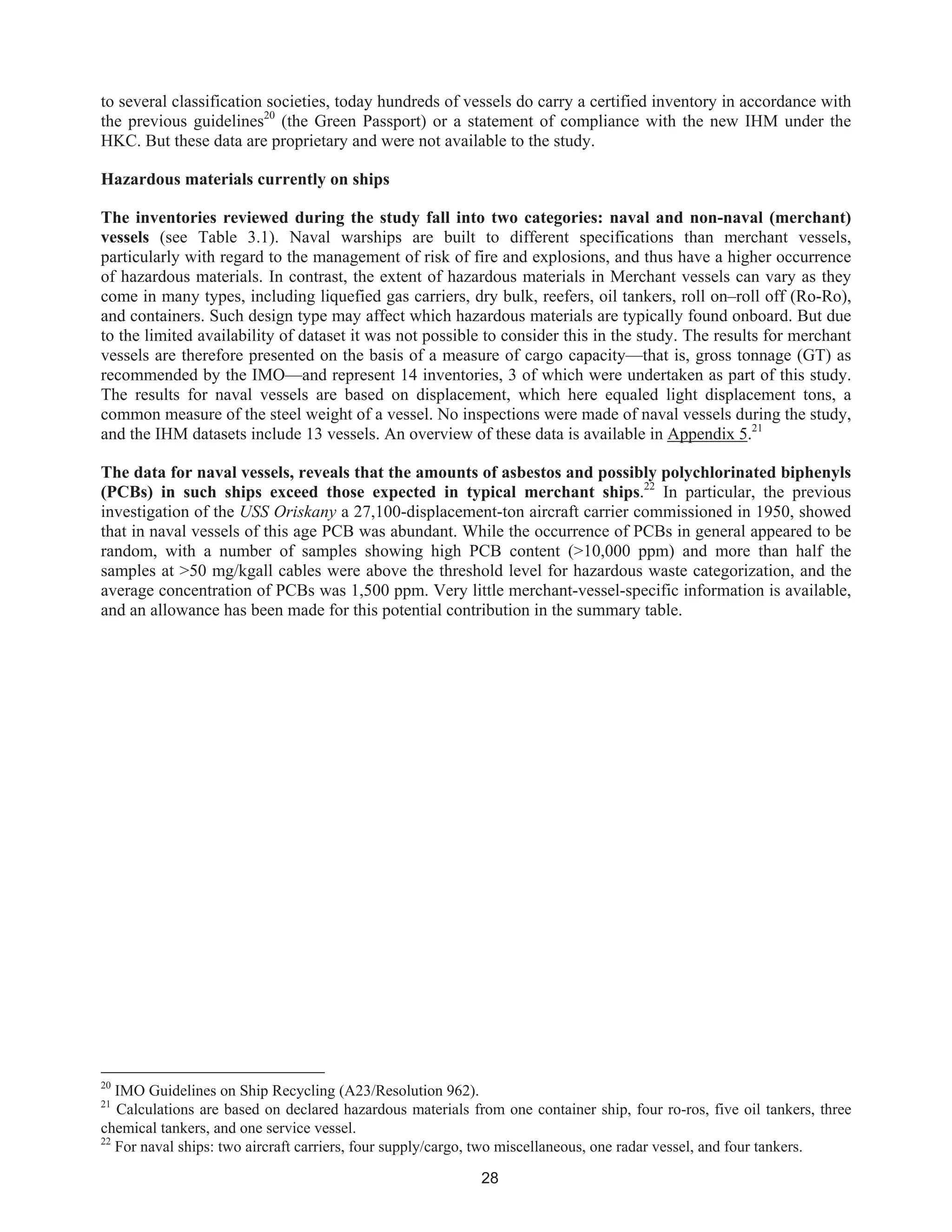
ဒါရိုက္တာဦးဝင္းထိန္၏ Investment Opportunities in Current Myanmar တို႕ကို အင္တာနက္တြင္ အလြယ္တကူ
ေဒါင္းလုပ္ၾကည့္ႏိုင္သည္။ အျခားျမန္မာ့စီးပြားေရးလုပ္ငန္းမ်ားလည္း သက္ဆိုင္ရာေကာ္ပိုေရးရွင္း၊ ဝန္ၾကီးဌာနမ်ားက
အင္တာနက္တြင္ တင္ျပထားသည္မွာ ပြင့္လင္းျမင္သာမႈရွိေနပါသည္။ သို႕ေသာ္ တကယ္လုပ္ကိုင္ၾကမည္ဆိုပါက
လိုင္စင္/ပါမစ္မ်ားကို ယခင္၂၀၁၁မတိုင္မီက စနစ္အတိုင္း စစ္ဗိုလ္ခ်ဳပ္ေဟာင္းမ်ားႏွင့္ခရိုနီမ်ားက လက္ဝါးၾကီးအုပ္ထားသျဖင့္
ပို၍လုပ္ကိုင္ရ ခက္ခဲ့သြားေၾကာင္း၊ ျမန္မာ့စီးပြားေရး နားလည္သူမ်ားက ေျပာၾကသည္။ ႏိုင္ငံျခားကုမၸဏီမ်ားမွာ လိုင္စင္/ပါမစ္
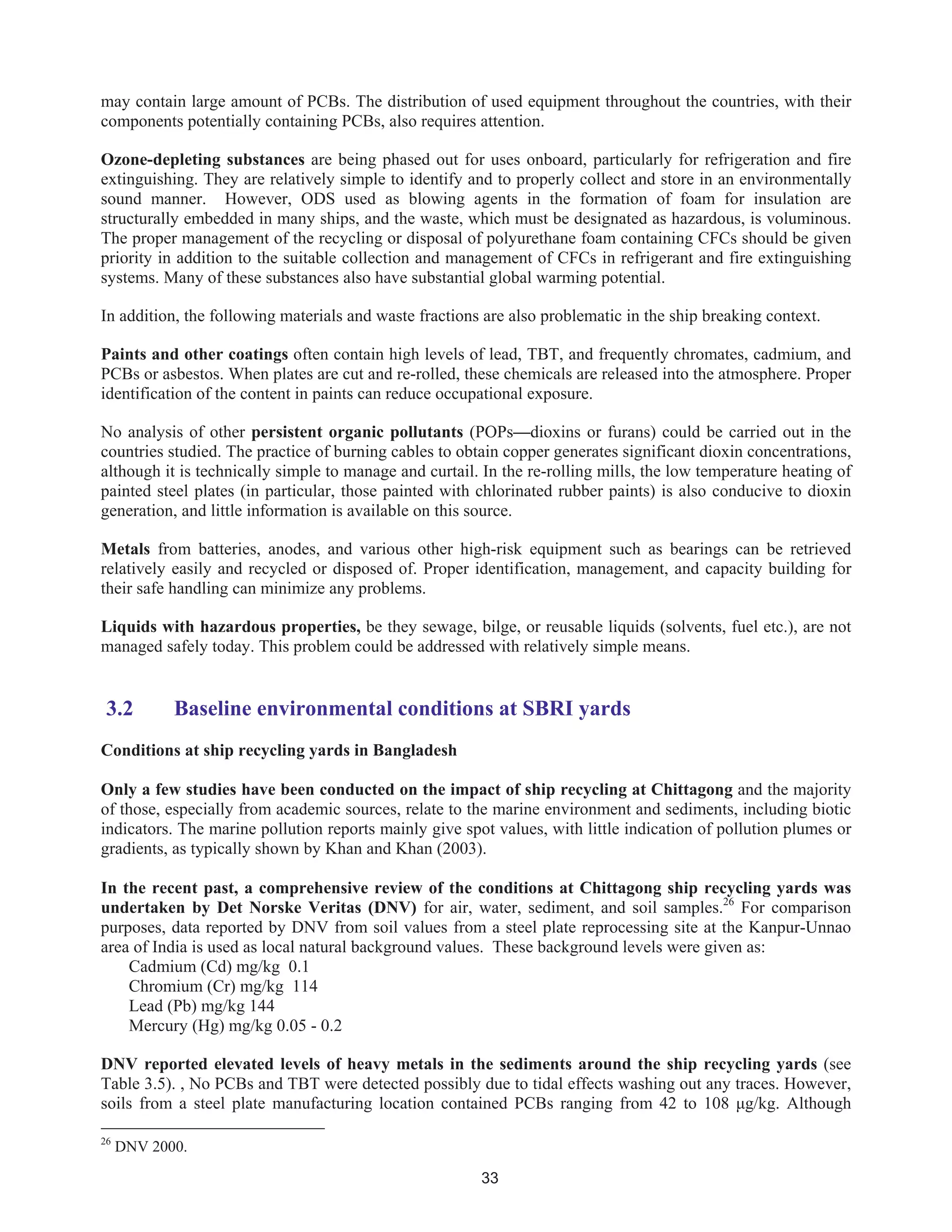
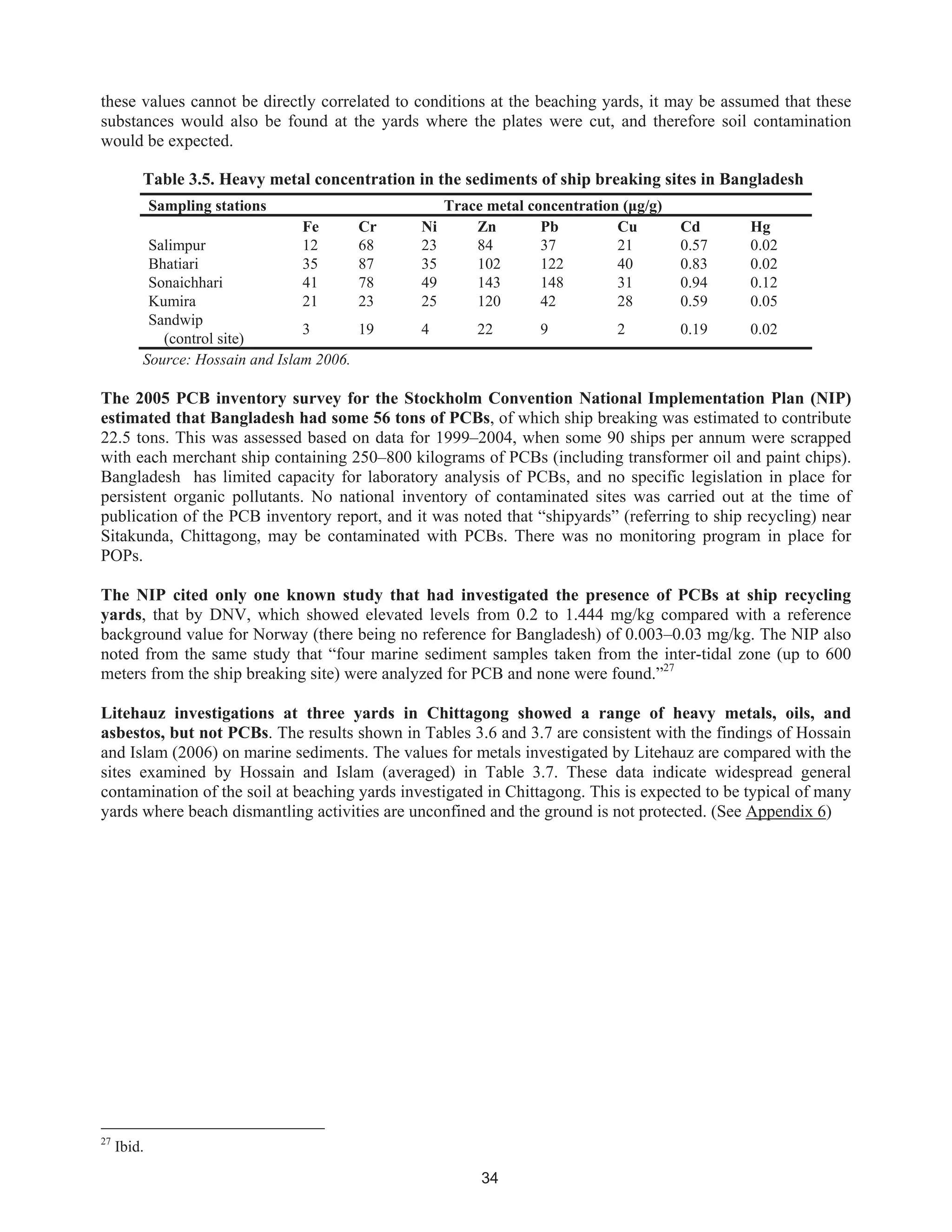
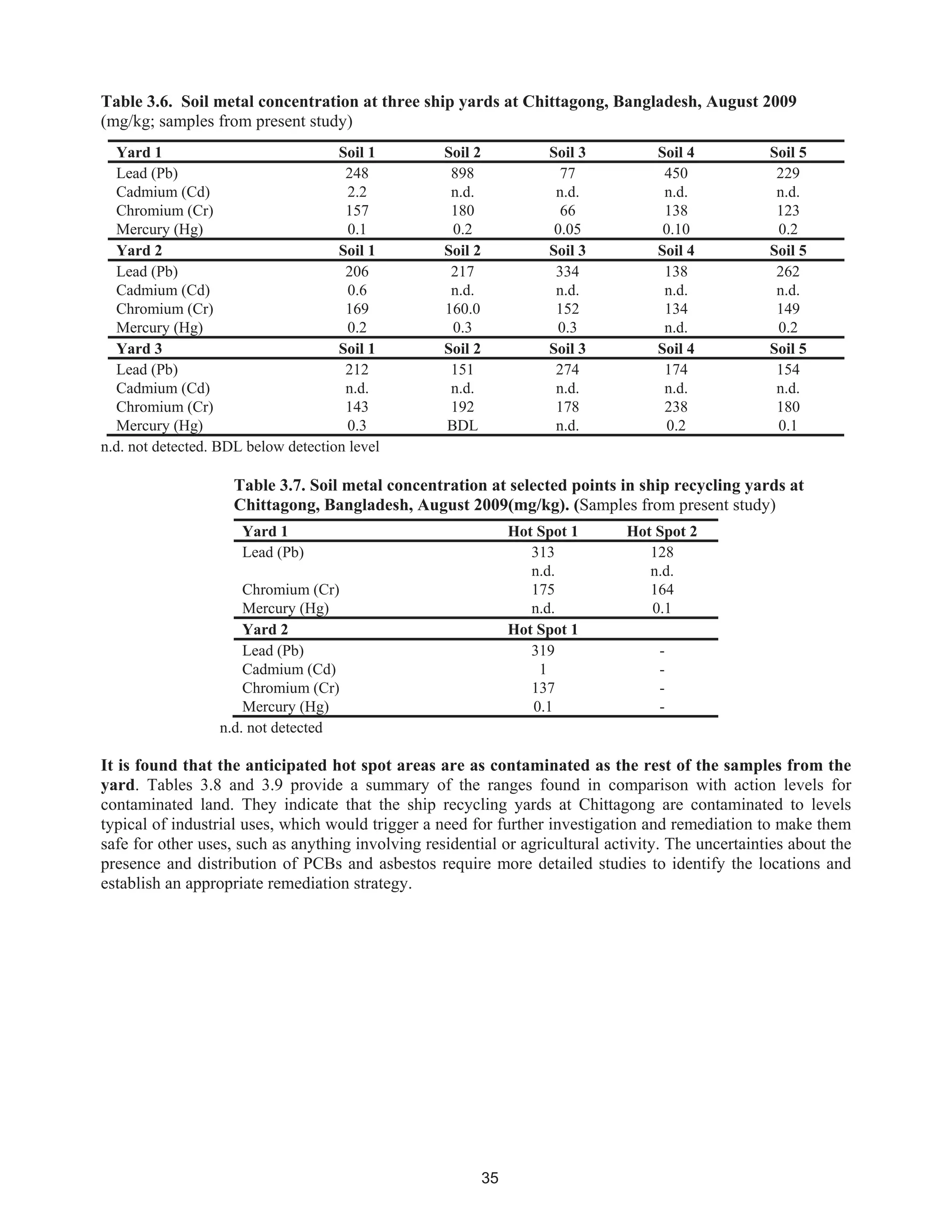
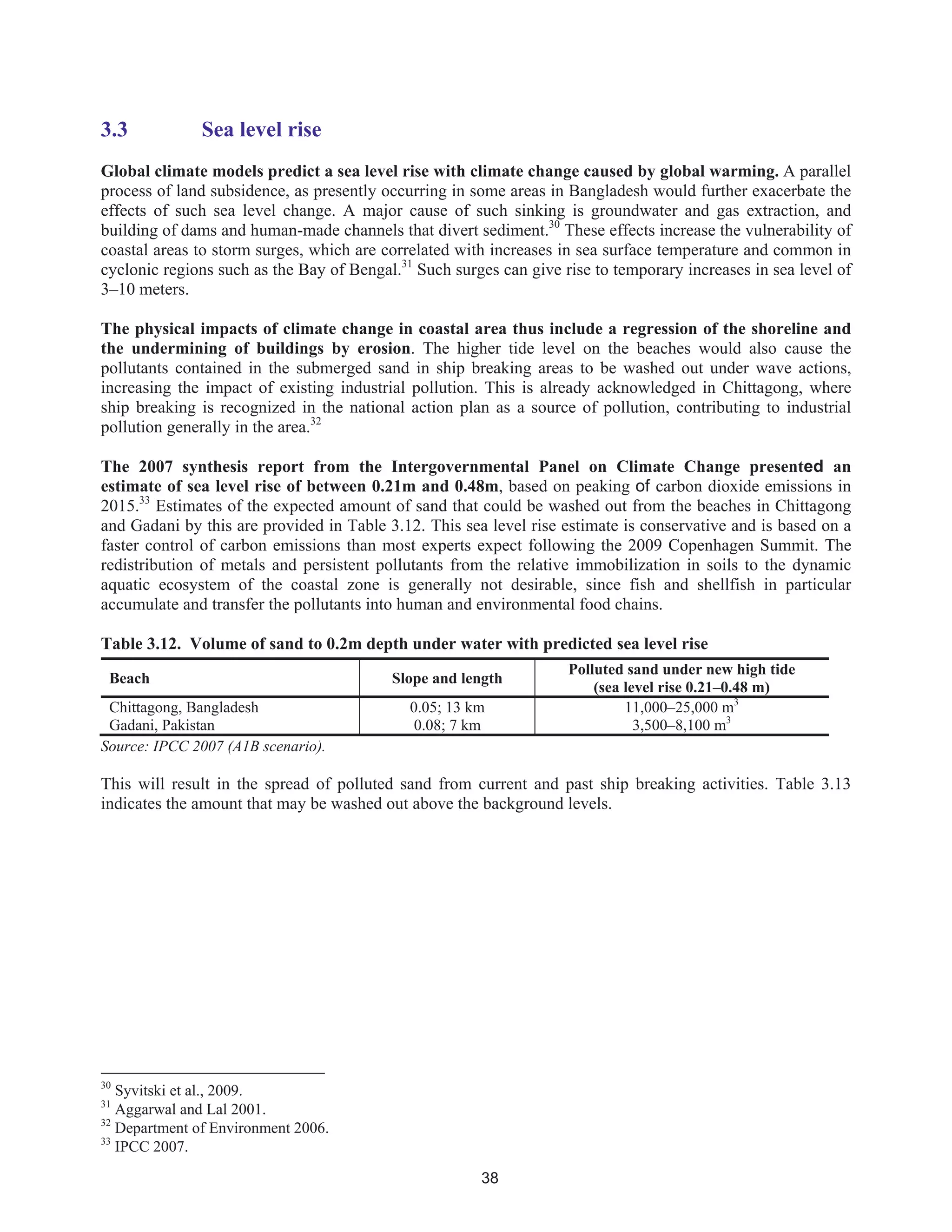
ရရွိေရးအတြက္ အျပိဳင္အဆိုင္၊ ခ်ဥ္းကပ္လုပ္ေဆာင္ေနၾကသည္မွာ အိမ္ျခံေျမေစ်းႏႈန္း အဆမတန္တက္သြားေသာေၾကာင့္
ရင္းႏွီးျမွတ္နွံသူ အေသးစားစက္မႈလုပ္ငန္းမ်ား အခက္ခဲျဖစ္ရသည္။ ပုဂၢလိကကို စက္မႈလုပ္ငန္းအားလံုး ေပးအပ္ခဲ့ရာတြင္
သံမဏိလုပ္ငန္းမ်ားမွာ ျမန္မာ့တပ္မေတာ္လက္ေအာက္တြင္ ေရာက္ရွိသြားခဲ့သည္။
အထက္ျမန္မာႏိုင္ငံျမင္းျခံျမိဳ႕နယ္တြင္ အမွတ္(၃)သံမဏိစက္ရံုၾကီးတည္ေဆာက္ေနသည္။ မ.ဆ.လ
ဦးေနဝင္းေခတ္ကတည္းက စတင္ခဲ့ျပီး၊ န.အ.ဖ ဦးသန္းေရႊေခတ္တြင္လဲမျပီး၊ ဦးသိန္းစိန္ေခတ္တြင္ ပိုမိုေကာင္းလာမလားဟု
ဆက္လုပ္ေနပါသည္။ သံကုန္ၾကမ္းဆိပ္ကမ္းႏွင့္ အလြန္ေဝးလံေသာ ေနရာတြင္ ဧရာမ
သံရည္ၾကိဳစက္ရံုၾကီးတည္ေဆာက္သည္။ စက္ရံုထုတ္လုပ္သူ အီတလီႏိုင္ငံမွ စက္ပစၥည္းအားလံုး
ျမန္မာျပည္သို႕တင္ပို႕ျပီးျဖစ္ျပီး၊ ျမန္မာႏိုင္ငံမွ ေငြအားလံုးေပးေခ်ျပီးျဖစ္သည္။ သံရိုင္း၊ သံထည္အေဟာင္းမ်ားမွ
သံမဏိထုတ္လုပ္သည့္စက္ရံု၊ ကားပစၥည္းစက္ရံု၊ ပိုက္လုပ္ငန္းစက္ရံု စသည့္ စက္ရံုမ်ားစြာေဆာက္လုပ္ရန္
ေအရွားေဝါကုမၼဏီမွာ တည္ေဆာက္ေရးကန္ထရိုက္ရရွိခဲ့သည္။ တည္ေဆာက္ေရးကုန္က်စရိတ္ အားလံုး P.O, B.O
အေျမာက္အမ်ား ေအရွာေဝါမွ ရစရာရွိသည္မ်ား အကုန္ယူသြားျပီးျဖစ္သည္။ သို႕ေသာ္ စက္ရံုမ်ားစြာအနက္
သံမဏိအရည္က်ိဳသည့္ စက္တစ္ခုပင္ မျပီးႏိုင္ျဖစ္ေနေသာေၾကာင့္ ဘက္ဂ်တ္ထပ္ေတာင္းေနရသည္။ စက္ရံုသည္
ျပီးမည့္ဟန္လည္းမရွိပါ။ ျပီးလွ်င္လည္း လည္ပတ္လွ်င္ အရံႈးၾကီးမားစြာ ေပၚလာဦးမည္ျဖစ္ေသာေၾကာင့္ ေနာက္ဆံုး
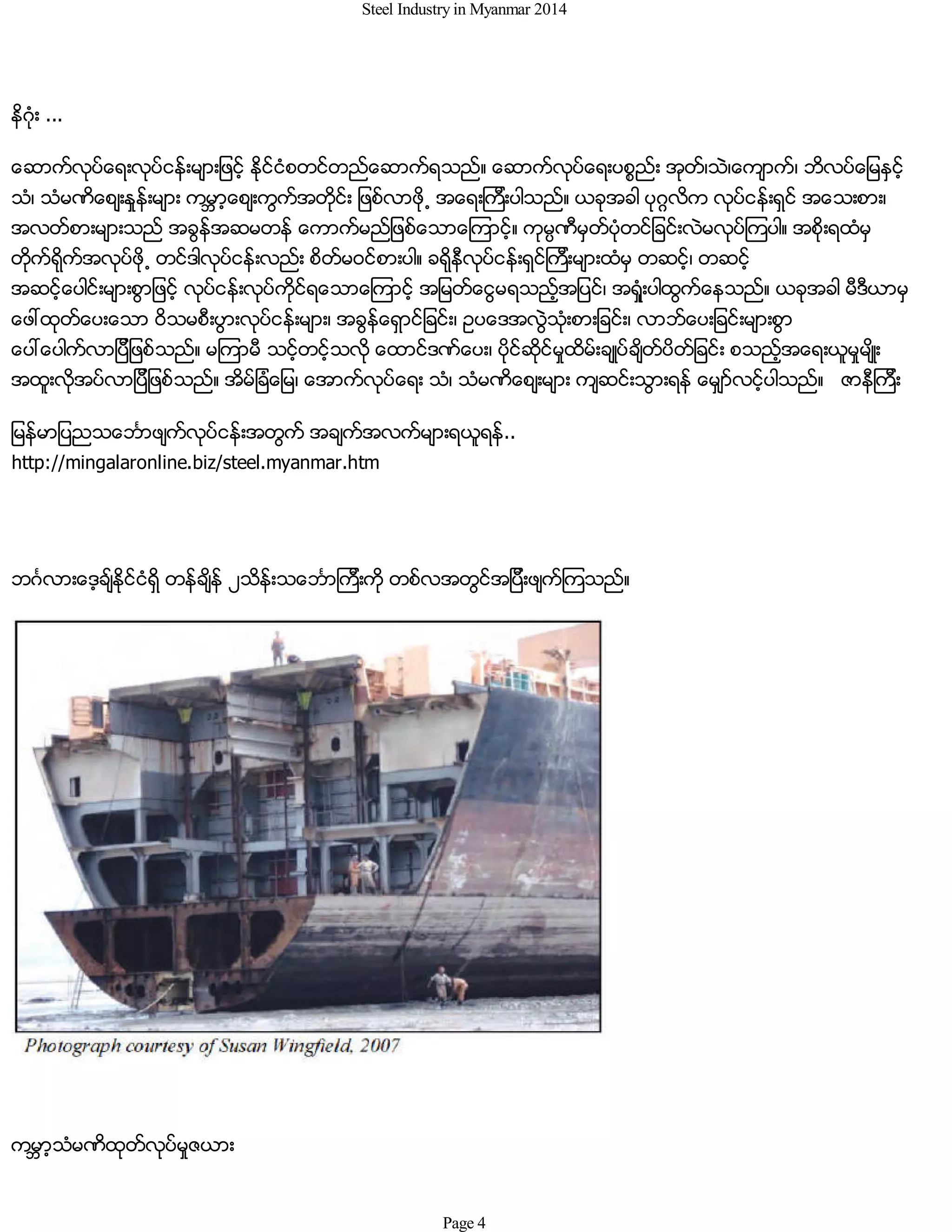
စက္မႈဝန္ၾကီးဌာနသို႕ အဆင့္ဆင့္ လြဲေျပာင္းေပးလိုက္ေသာ ပိုက္ေဘာထုပ္ၾကီးတစ္ခုျဖစ္သည္။ (ပံု)
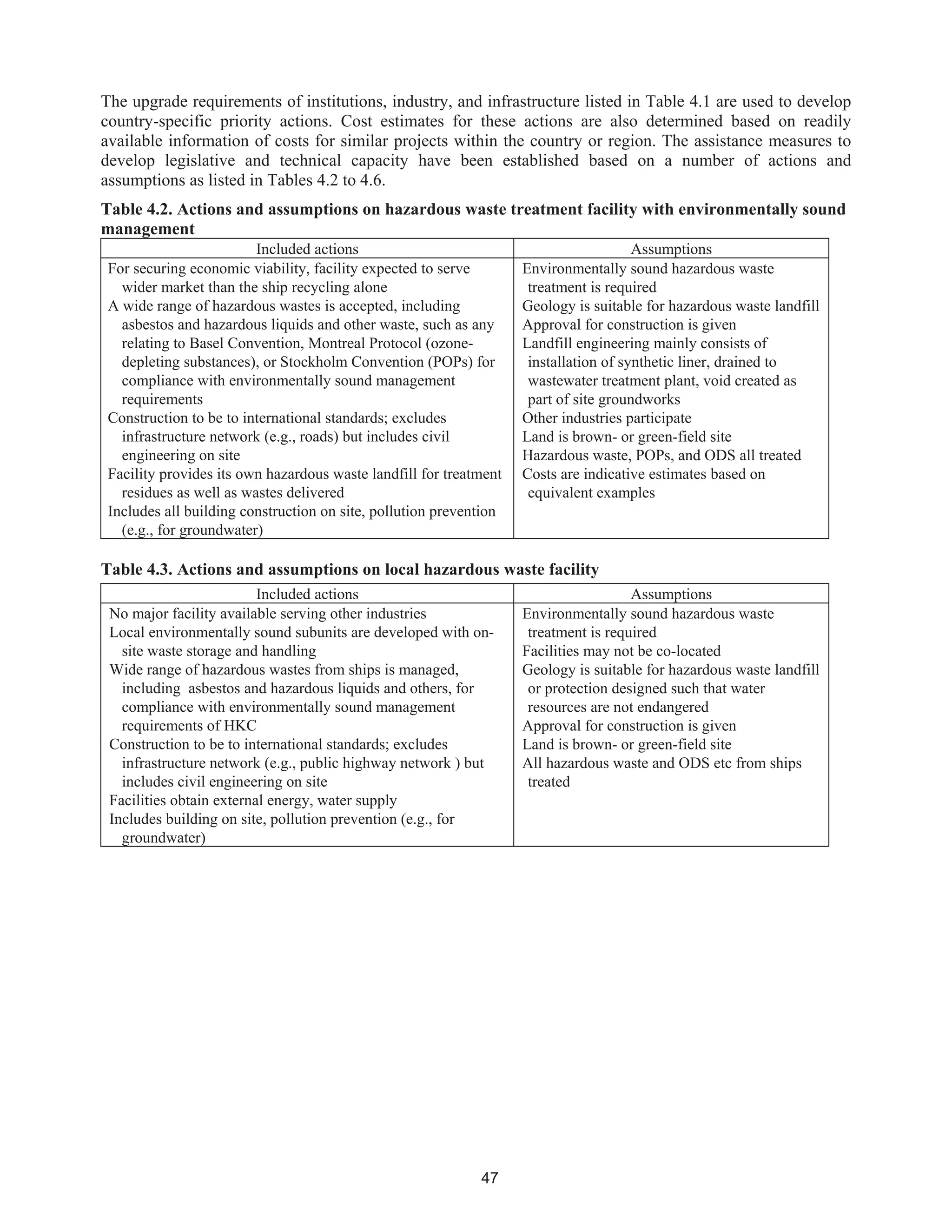
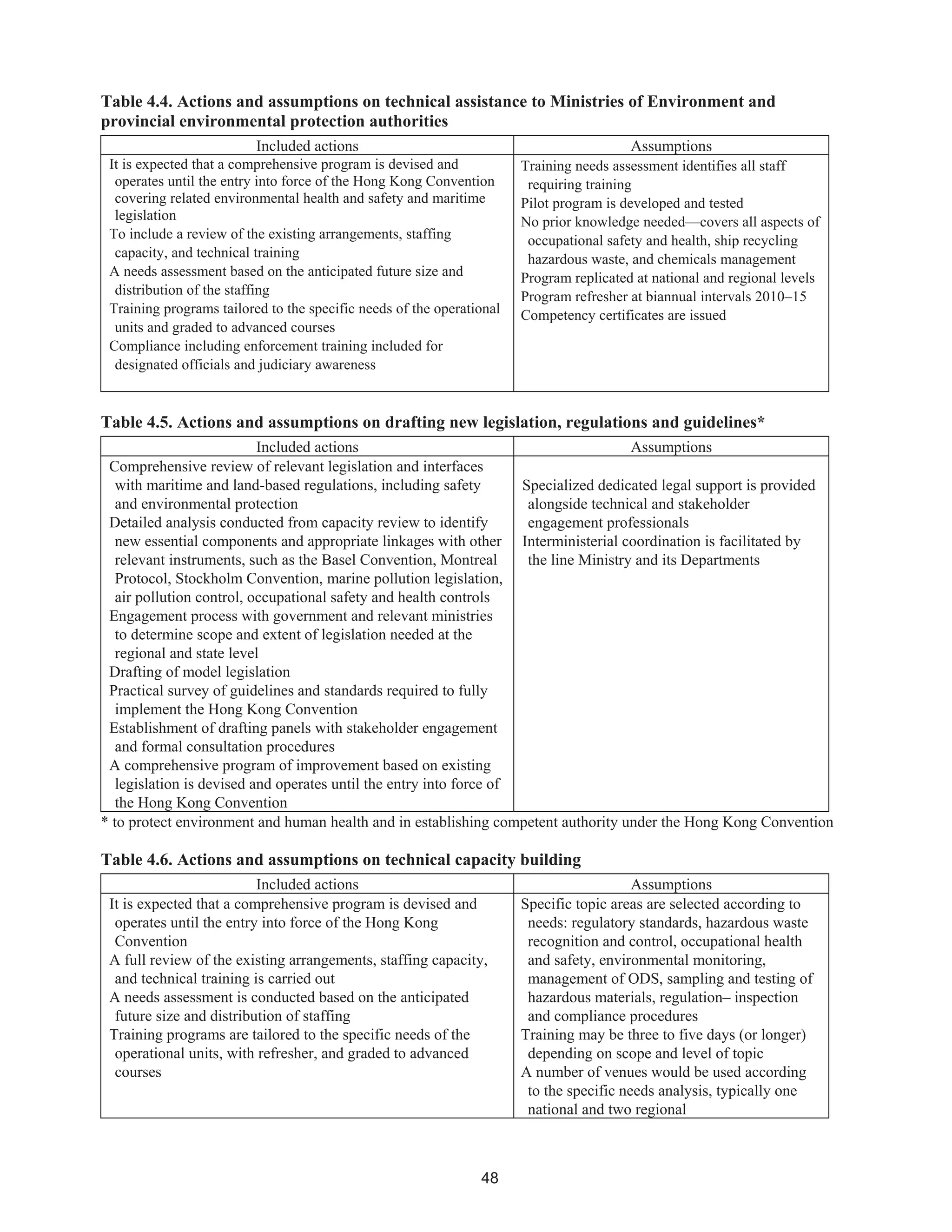
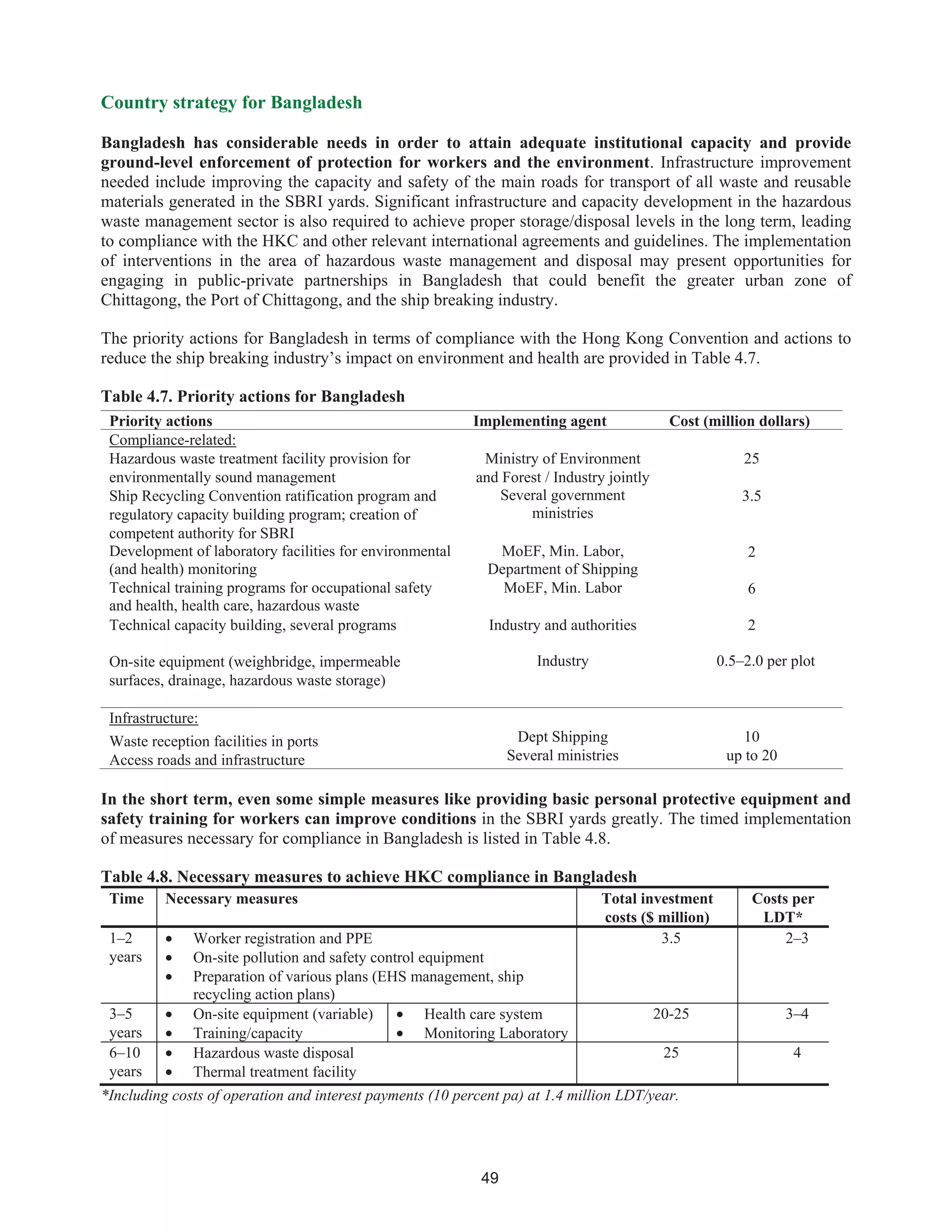
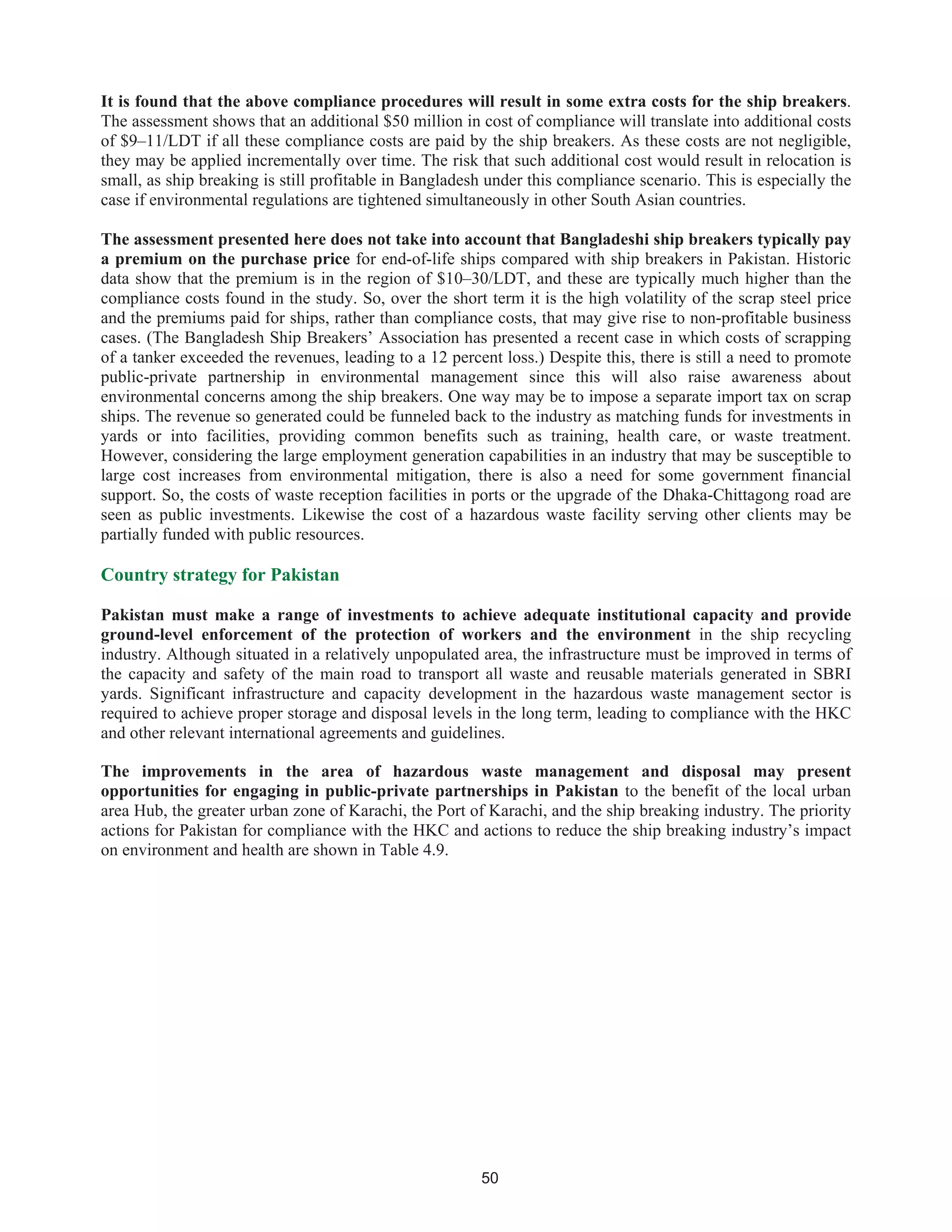
အထက္ျမန္မာျပည္တစ္ခုလံုးမွ ေမာ္ေတာ္ယဥ္ေဟာင္းမ်ား၊ ႏိုင္ငံျခားမွတင္သြင္းထားေသာ ကုန္ၾကမ္းသံထည္အေဟာင္း
တန္ခ်ိန္သိန္းႏွင့္ခ်ီျပီး၊ ေရာက္ေနပါသည္။ စက္ရံုလည္မည့္အခ်ိန္ကာလ မသိႏိုင္ေတာ့ပါ။ စက္ပစၥည္းမ်ားစြာသည္
ရန္ကုန္တြင္ရွိသည္။ ျမင္းျခံစက္ရံုပတ္လည္တြင္ အမိုးကာမဲ့လြင္ျပင္ၾကီးတြင္ အဖံုးပင္ဖြင့္မၾကည့္ရေသးေသာ
စက္ပစၥည္းကုန္ေသတၱာေပါင္း မေရမတြက္ႏိုင္ေအာင္ မ်က္စိတစ္ဆံုးရွိေနသည္။ ထိုေနရာသို႕ ေရာက္လာေသာ အရာရွိမ်ားမွာ
မေကာင္းေက်ာင္းပို႕ မ်ားျဖစ္သည္။ မည္သို႕ျဖစ္ပါေစ သံရည္ၾကိဳစက္ တစ္ခုကိုေတာ့ အျမန္ဆံုးလည္ပတ္ေအာင္ ၾကိဳးစား
လုပ္ေနပါသည္။ တျခားသံမဏိကုန္ထုတ္စက္ရံုမ်ားကေတာ့ အေဟာင္းေစ်းႏွင့္ ျပန္ေရာင္းခ်လွ်င္ပင္ ဝယ္သူမနည္းရွာရဦးမည္။
ကုန္က်ေငြေပါင္းကို စာရင္းလုပ္ပါက ဘီလ်ံေဒၚလာ ျဖဳန္းတီးမႈၾကီးျဖစ္ေသာေၾကာင့္ ဖြက္ထား၊ စာရင္းေဖ်ာက္ထားရပါမည္။
ေနာက္ေနာင္ ထိုကဲ့သို႕ တိုင္းျပည္ဘ႑ာေငြမ်ားကို ျဖဳန္းတီးျခင္း၊ ျမန္မာႏိုင္ငံသားႏွင့္ႏိုင္ငံျခားသာမ်ားက မိမိတို႕အိတ္ကပ္ထဲ
ထည့္ျခင္းမ်ားကို ကာကြယ္ရန္ လူေတာ္လူေကာင္းမ်ားက အုပ္ခ်ဳပ္ဖို႕အေရးၾကီးလွပါသည္။ သို႕မဟုတ္ပါက ကမၻာ့အေကာင္းဆံုး
စင္ကာပူႏိုင္ငံမွ ျခစားမႈကင္းေသာ စီးပြားေရးစနစ္ၾကီး ျဖစ္ပါေစ.. ဝိသမစီးပြားသမားမ်ားက
ဥပေဒအလြဲသံုးစားလုပ္ေနဦးမည္ျဖစ္ေလသည္။
ျမန္မာႏိုင္ငံႏွင့္သံ၊ သံမဏိလုပ္ငန္း
သံ၊ သံမဏိလုပ္ငန္းသည္ ျမန္မာျပည္အတြက္ အလြန္လိုအပ္ေသာ္လည္း၊ လုပ္ပိုင္ခြင့္မရေသာေၾကာင့္ ပုဂၢလိက သံ၊
သံမဏိလုပ္ငန္းမွာ လုပ္သူနည္းပါး ျဖစ္ေနရသည္။ အေသးစား တႏိုင္လုပ္ငန္းမ်ားသာ တထိတ္ထိတ္ႏွင့္လုပ္ကိုင္ေနရသည္။
Page 2
Steel Industry in Myanmar 2014
သံရည္ၾကိဳလုပ္ငန္း၊ ေဆာက္လုပ္ေရး ကြန္ကရစ္သံလုပ္ငန္း၊ သံခ်ည္သံပန္းလုပ္ငန္းမ်ားအတြက္ သံၾကိတ္လုပ္ငန္း၊
သံရည္က်ိဳလုပ္ငန္းငယ္မ်ားသာ ရွိသည္။ ေဆာက္လုပ္ေရးလုပ္ငန္း၏ ၃၀% တန္ဖိုးရွိေသာ သံထည္ပစၥည္းမ်ားကို
ျမန္မာျပည္တြင္ လက္ဝါးအုပ္စနစ္ေၾကာင့္ ပတ္ဝန္းက်င္ႏိုင္ငံမ်ားထက္ ေစ်း၂ဆေပးျပီး လုပ္ကိုင္ရသည္။ သံ၊သံမဏိ သာမက၊
ေဆာက္လုပ္ေရး ဘိလပ္ေျမမ်ားလည္း ၂ဆေစ်းၾကီးေပးျပီး ဝယ္ရသည္။ အျခား အုတ္၊သဲ၊ေက်ာက္ ေစ်းႏႈန္းမ်ားလည္း
အလားတူ ေစ်းၾကီးေနေသာေခတ္ျဖစ္သည္။ ခရိုနီ လူတစ္စုအတြက္သာ ဖြင့္ထားျပီး၊ လူထုအတြက္ ပိတ္ထားသည့္
စီးပြားေရးစနစ္ျဖစ္သည္။ အျမန္ဆံုးျပဳျပင္ေျပာင္းလဲဖို႕လိုအပ္ပါသည္။
ျမန္မာ့အစိုးရ လႊတ္ေတာ္မွထုတ္ျပန္ေသာ စာတန္းမ်ားအရ သံမဏိတံုး မက္ထရစ္တန္ခ်ိန္ ၀.၉၄သန္း ၂၀၁၃တြင္
ထုတ္လုပ္ရန္ရည္မွန္းထားသည္။ သံရိုင္း တန္ခ်ိန္ ၉၅၀၀ သာထုတ္ႏိုင္မည္ဟု ဆိုသည္။ ျပည္တြင္းမထုတ္လုပ္ႏိုင္သျဖင့္
ျပည္ပမွနည္းမ်ိဳးစံုျဖင့္ တင္သြင္းေနရသည္။ ထံုးစံအတိုင္း တင္သြင္းခြင့္ လိုင္စင္/ပါမစ္မ်ားျဖင့္တစ္မ်ိဳး၊
တရားမဝင္နည္းလမ္းမ်ားျဖင့္တစ္ဖံု တန္ခ်ိန္သန္းေပါင္းမည္မွ် တင္သြင္းရသည္မွာ စာရင္းမရွိပါ။ သေဘၤာျဖင့္တင္သြင္းပါက
သယ္ယူစရိတ္သက္သာေသာ္လည္း လိုင္စင္/ပါမစ္ ျပသနာေၾကာင္ နယ္စပ္မွတင္သြင္းျခင္းမ်ား တရားမဝင္၊ တရားဝင္
နည္းမ်ိဳးစံုျဖင့္ လုပ္ကိုင္ရေသာေၾကာင့္ အဆံုးသပ္ သံ၊ သံမဏိေစ်းႏႈန္းမ်ား အဆမတန္ ေစ်းၾကီးသြားျခင္းကို ေတြ႕ရေပသည္။
ယခုအခါ ၾကိဳးနီစနစ္မ်ား ေလွ်ာ့ေပါ့လာသည့္အျပင္ ကမၻာ့သံ၊ သံမဏိေစ်းလည္း က်ဆင္းလာေသာေၾကာင့္ ျမန္မာျပည္သံ၊
သံမဏိေစ်းႏႈန္းမ်ား က်ဆင္းလာသည္ကို ေတြ႕ရသည္။
သံအေဟာင္းေစ်းကြက္၊ သေဘၤာဖ်က္လုပ္ငန္း
ျမန္မာျပည္၊ ရန္ကုန္တြင္နာမည္ၾကီးေသာ သံေစ်းကြက္ရွိပါသည္။ ယခုအခါ ျမန္မာအစိုးရ ဌာနဆိုင္ရာမ်ားကပင္
ထိုေစ်းကြက္မွဝယ္ရသည္။ ျမန္မာေဆာက္လုပ္ေရးလုပ္ငန္းမ်ားအတြက္ လိုအပ္ေသာသံအမ်ားစုမွာ ထိုေစ်းကြက္မွ ရရွိသည္။
ျဗိတိသွ်ေခတ္ကတည္းက ေဆာက္လုပ္ထားေသာ စက္ရံုအေဟာင္းမ်ားစြာမွာ သံထည္သံစမ်ားကို ျပန္လည္ၾကိတ္ျခင္း၊
သံရည္က်ိဳျခင္းမ်ား လုပ္ၾကသည္။
သေဘၤာပ်က္ဖ်က္ျပီး သံအေဟာင္းမွ၊ သံထည္အသစ္ထုတ္လုပ္ျခင္းလုပ္ငန္းမွာ ျမန္မာျပည္တြင္သိပ္ေခတ္မစားပါ။ အိမ္နီးခ်င္း
ဘဂၤလားေဒခ်္ႏိုင္ငံသည္ သေဘၤာပ်က္လုပ္ငန္းကို အၾကီးအက်ယ္လုပ္ကိုင္သည္။ ျမန္မာမႈျပဳရန္လိုသည္။ သီလ၀ါတြင္ MEC
ပံ့ပိုးမႈျဖင့္သေဘၤာေဟာင္းဖ်က္ျခင္း လုပ္ေနေသာ္လည္း၊ ေငြေၾကးသိပ္မျမက္ေသာေၾကာင့္ လုပ္ငန္းမျဖစ္ပါ။ အလုပ္ေပးႏိုင္မႈ
အလုပ္ၾကမ္းသမားမ်ားစြာ လိုအပ္ေသာေၾကာင့္ ဧရာဝတီတိုင္း၊ ရန္ကုန္တိုင္းတြင္ သေဘၤာဖ်က္လုပ္ငန္းမ်ား ခြင့္ျပဳရန္ျဖစ္သည္။
အျမတ္အစြန္းနည္းပါလွေသာေၾကာင့္ ျမန္မာႏိုင္ငံစီးပြားေရးသမားမ်ား ရင္းႏွီးရန္စိတ္မဝင္စားၾကပါ။ သံ၊ သံမဏိ
သြင္းကုန္လုပ္ငန္းသည္ လြယ္ကူျပီး၊ အျမတ္စြန္းမ်ားစြာရသသည္။ Ship Breaking သေဘၤာဖ်က္မွ ရရွိေသာသံ Melting
(10%) , Re-rolling (90%) တို႕မွကုန္ေခ်ာမ်ားကို ေဆာက္လုပ္ေရးလုပ္ငန္းမ်ားတြင္ အသံုးျပဳသည္။
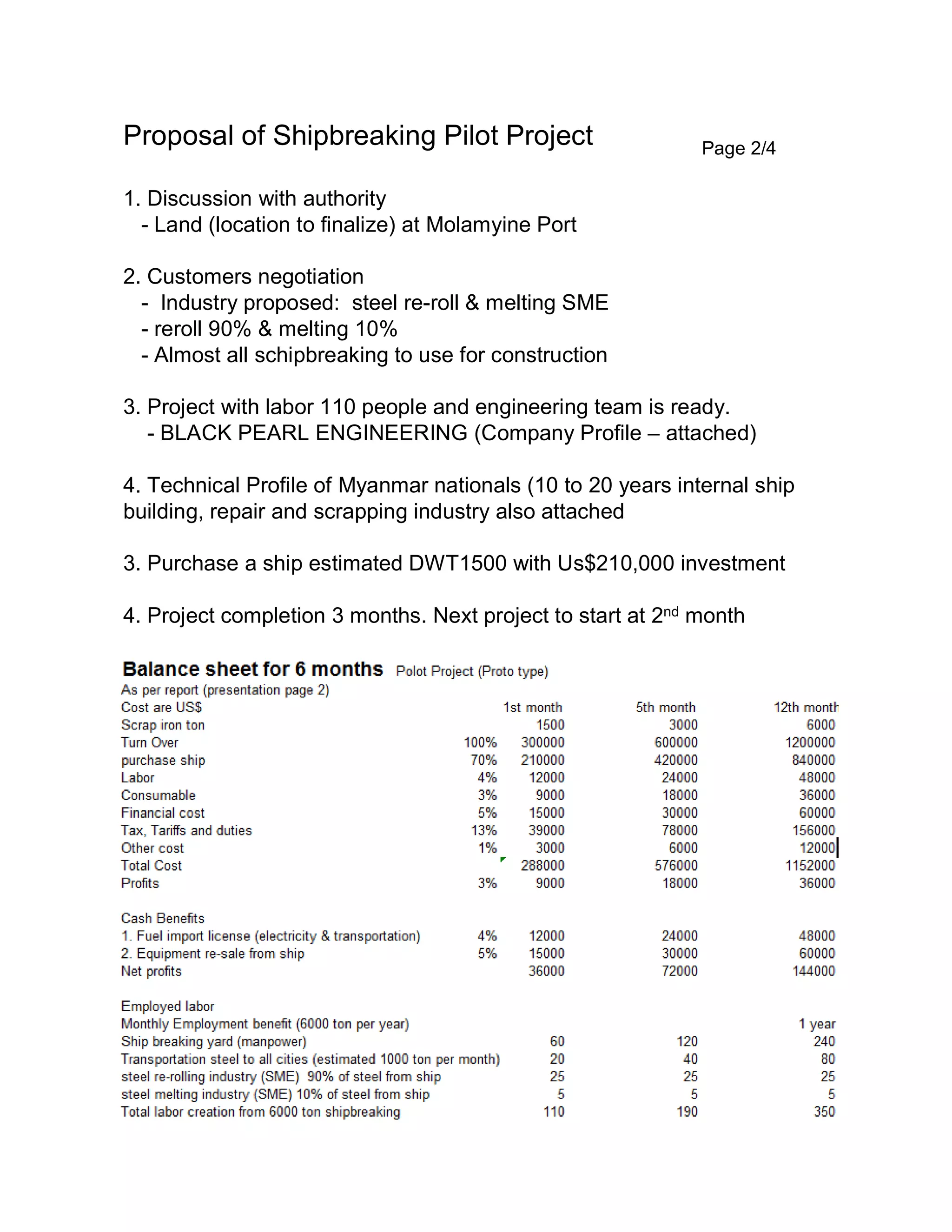
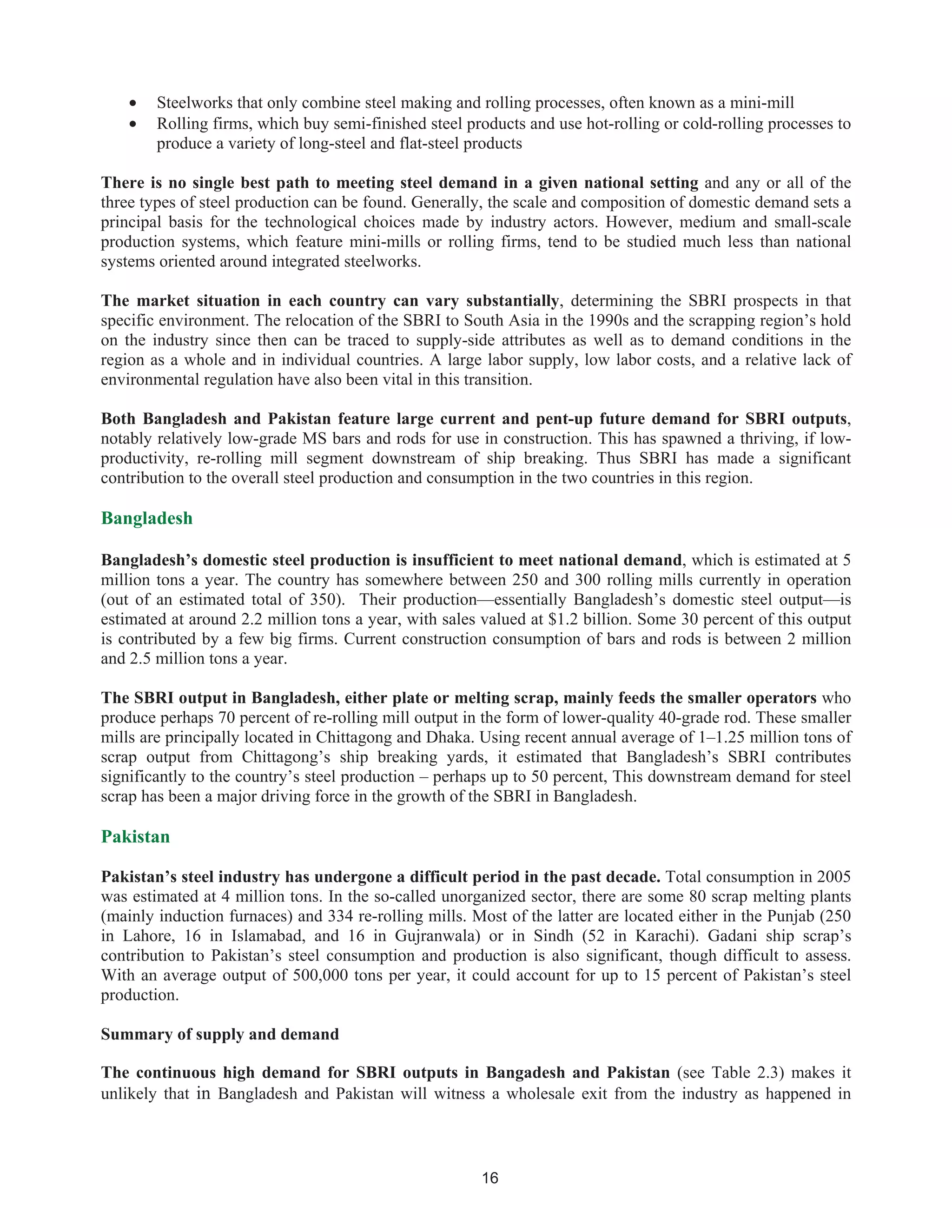
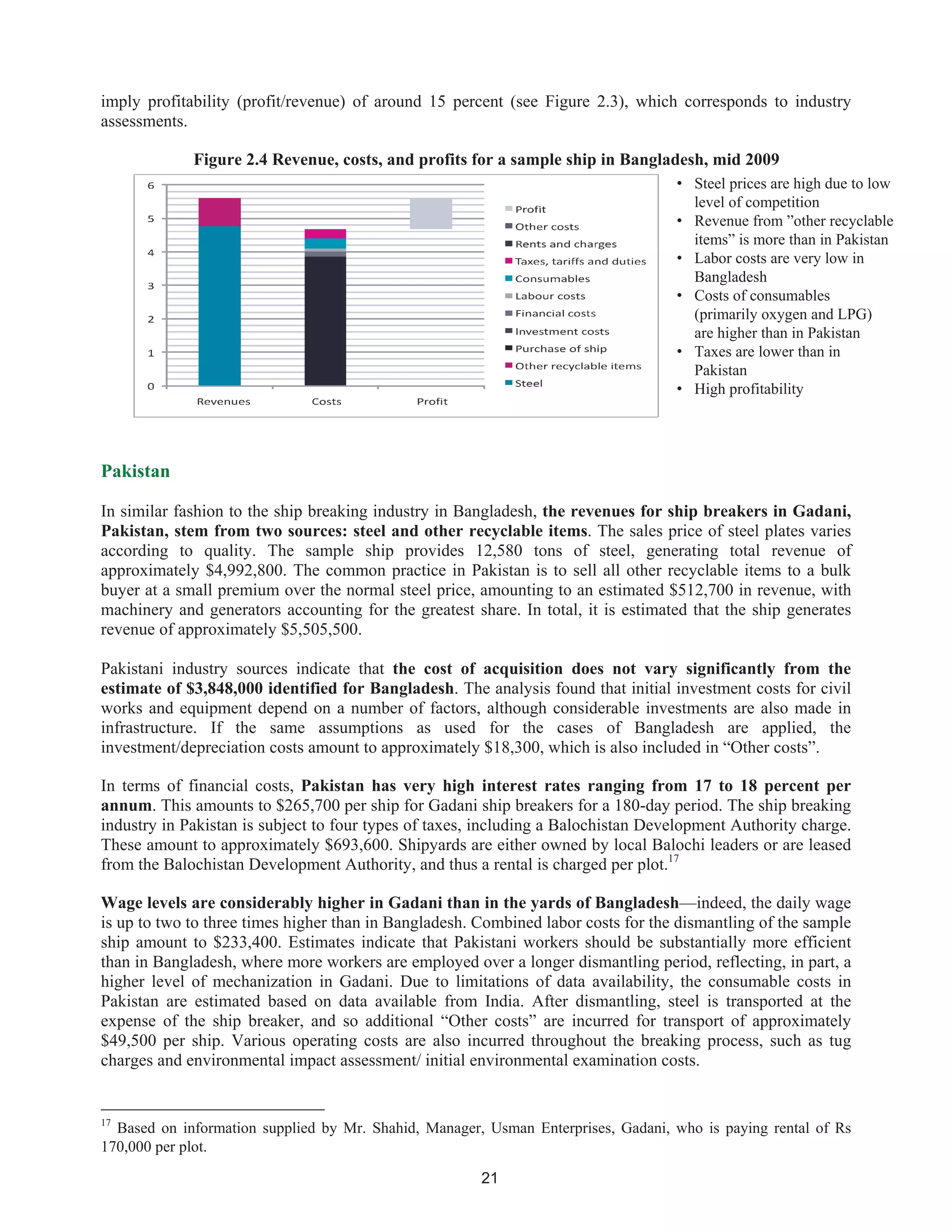
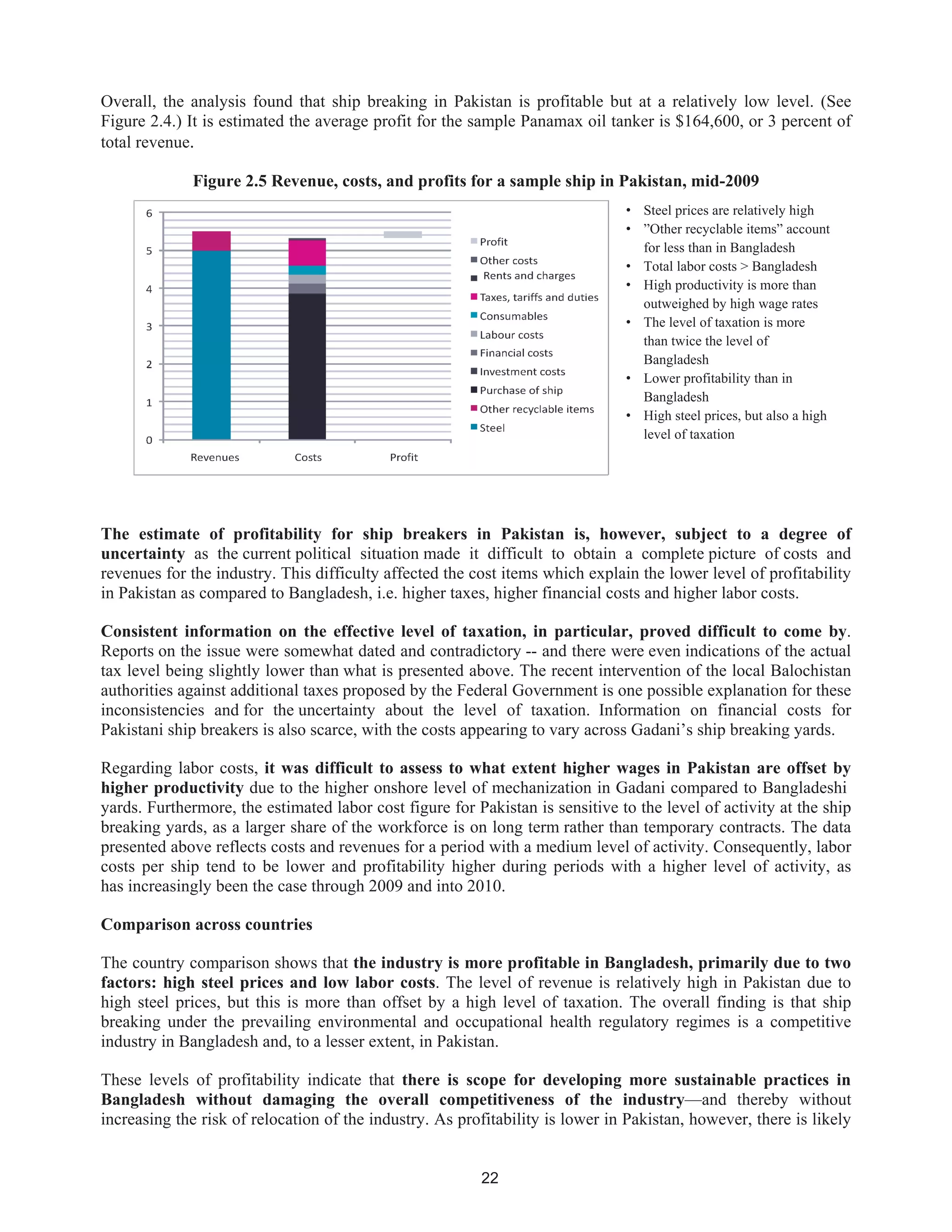
ဘဂၤလားေဒ့ခ်္ႏိုင္ငံတြင္ သေဘၤာဖ်က္လုပ္ငန္းအတြက္ ကုန္က်စရိတ္အားလံုးႏႈတ္ျပီး၊ လုပ္ငန္းျပီးပါက လုပ္ငန္းရွင္သည္ ၅%
အျမတ္ရသည္။ သေဘၤာေဟာင္း ဝယ္ေစ်း ၆၉%၊ လုပ္အားခ ၄%၊ ပစၥည္းခ ၄%၊ အစိုးရအခြန္ေငြမွာ ၅%၊
ေငြေၾကးအတိုးေပးေငြ ၃% ၊ အေထြေထြ ၁% ကုန္က်သည္။ ပါကစၥတန္တြင္ အျမက္ ၃%သာ ရသည္။ သေဘၤာေဟာင္း
ဝယ္ေစ်း ၇၀%၊ လုပ္အားခ ၂%၊ ပစၥည္းခ ၅%၊ အစိုးရအခြန္ေငြမွာ ၁၃%၊ ေငြေၾကးအတိုးေပးေငြ ၅% ၊ အေထြေထြ ၁%
ကုန္က်သည္။ ျမန္မာႏိုင္ငံတြင္ ထိုလုပ္ငန္းလုပ္ပါက အစိုးရအခြန္ေငြ ရာႏႈန္းမည္မွ်နည္း အဓိကက်ပါသည္။
အခြန္ေငြဆိုသည္မွာ လိုင္စင္/ပါမစ္ေၾကးမ်ားပါဝင္သည္။ အစိုးရကိုေပးရေသာ အခြန္၊လိုင္စင္/ပါမစ္ ေစ်းၾကီးသျဖင့္
သေဘၤာဖ်က္လုပ္ငန္းသည္ ျမန္မာႏိုင္ငံ အလတ္စားလုပ္ငန္းရွင္မ်ား လုပ္ခ်င္ေသာ္လည္း ျဖစ္မလာေသးပါ။
Page 3
Steel Industry in Myanmar 2014
နိဂံုး ...
ေဆာက္လုပ္ေရးလုပ္ငန္းမ်ားျဖင့္ ႏိုင္ငံစတင္တည္ေဆာက္ရသည္။ ေဆာက္လုပ္ေရးပစၥည္း အုတ္၊သဲ၊ေက်ာက္၊ ဘိလပ္ေျမႏွင့္
သံ၊ သံမဏိေစ်းႏႈန္းမ်ား ကမၻာ့ေစ်းကြက္အတိုင္း ျဖစ္လာဖို႕ အေရးၾကီးပါသည္။ ယခုအခါ ပုဂၢလိက လုပ္ငန္းရွင္ အေသးစား၊
အလတ္စားမ်ားသည္ အခြန္အဆမတန္ ေကာက္မည္ျဖစ္ေသာေၾကာင့္။ ကုမၸဏီမွတ္ပံုတင္ျခင္းလဲမလုပ္ၾကပါ။ အစိုးရထံမွ
တိုက္ရိုက္အလုပ္ဖို႕ တင္ဒါလုပ္ငန္းလည္း စိတ္မဝင္စားပါ။ ခရိုနီလုပ္ငန္းရွင္ၾကီးမ်ားထံမွ တဆင့္၊ တဆင့္
အဆင့္ေပါင္းမ်ားစြာျဖင့္ လုပ္ငန္းလုပ္ကိုင္ရေသာေၾကာင့္ အျမတ္ေငြမရသည့္အျပင္၊ အရံႈးပါထြက္ေနသည္။ ယခုအခါ မီဒီယာမွ
ေဖၚထုတ္ေပးေသာ ဝိသမစီးပြားလုပ္ငန္းမ်ား၊ အခြန္ေရွာင္ျခင္း၊ ဥပေဒအလြဲသံုးစားျခင္း၊ လာဘ္ေပးျခင္းမ်ားစြာ
ေပၚေပါက္လာျပီျဖစ္သည္။ မၾကာမီ သင့္တင့္သလို ေထာင္ဒဏ္ေပး၊ ပိုင္ဆိုင္မႈထိမ္းခ်ဳပ္ခ်ိတ္ပိတ္ျခင္း စသည့္အေရးယူမႈမ်ိဳး
အထူးလိုအပ္လာျပီျဖစ္သည္။ အိမ္ျခံေျမ၊ ေအာက္လုပ္ေရး သံ၊ သံမဏိေစ်းမ်ား က်ဆင္းသြားရန္ ေမွ်ာ္လင့္ပါသည္။ ဇာနီၾကီး
ျမန္မာျပညသေဘၤာဖ်က္လုပ္ငန္းအတြက္္ အခ်က္အလက္မ်ားရယူရန္..
http://mingalaronline.biz/steel.myanmar.htm
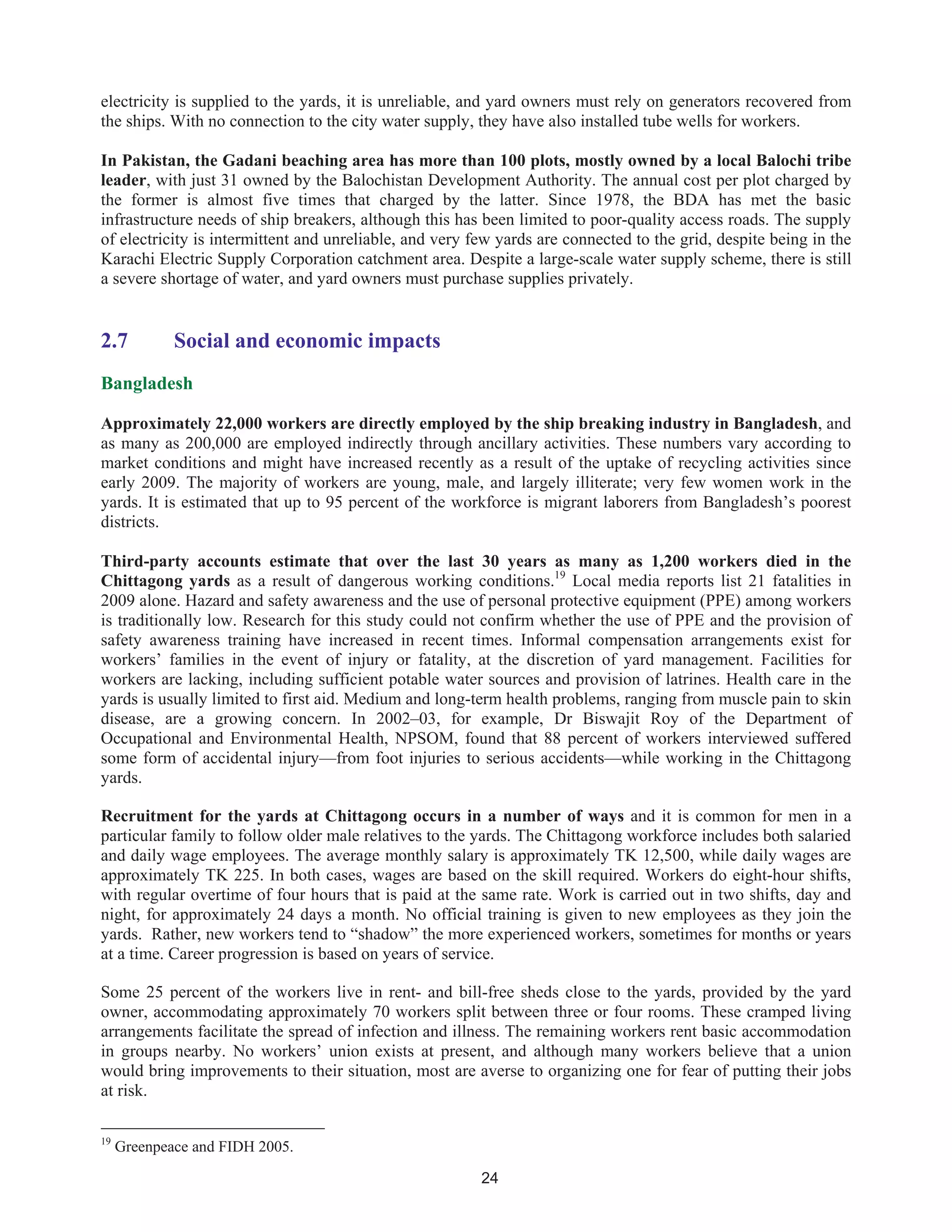
ဘဂၤလားေဒ့ခ်္ႏိုင္ငံရွိ တန္ခ်ိန္ ၂သိန္းသေဘၤာၾကီးကို တစ္လအတြင္အျပီးဖ်က္ၾကသည္။
ကမၻာ့သံမဏိထုတ္လုပ္မႈဇယား
Page 4
Steel Industry in Myanmar 2014
Myanmar 0.93 million matric ton (2013)
No.1 Iron and Steel Plant at Pyin Oo Lwin smelts iron ore from Kyatwinye iron mine situated 26 miles to the south east of Pyin Oo
Lwin. No.1 iron steel plant produces sponge iron, pig iron and steel, steel grinding balls and steel round bars. The products are
consumed locally for construction works.
Page 5
Old ship import, export shoud be "zero" tax, tariffs
and duties for 3 years at least.
Now almost all CONSTRUCTION steel are
importing from Vietnam, China and India.
After this prototype success, many people come to
ship breaking business.
This team only can produced 6000 ton per year (Myanmar CONSTRUCTION need
estimated 1.5 million ton in 2013 ..*need to confirm)
After this proto type success, employ
320 labor in one year
1st 3 month - employ 80 labor, generate 30% $9000
from investment of $210,000
Now in 2013
Ship Breaking
Technical
Proposal
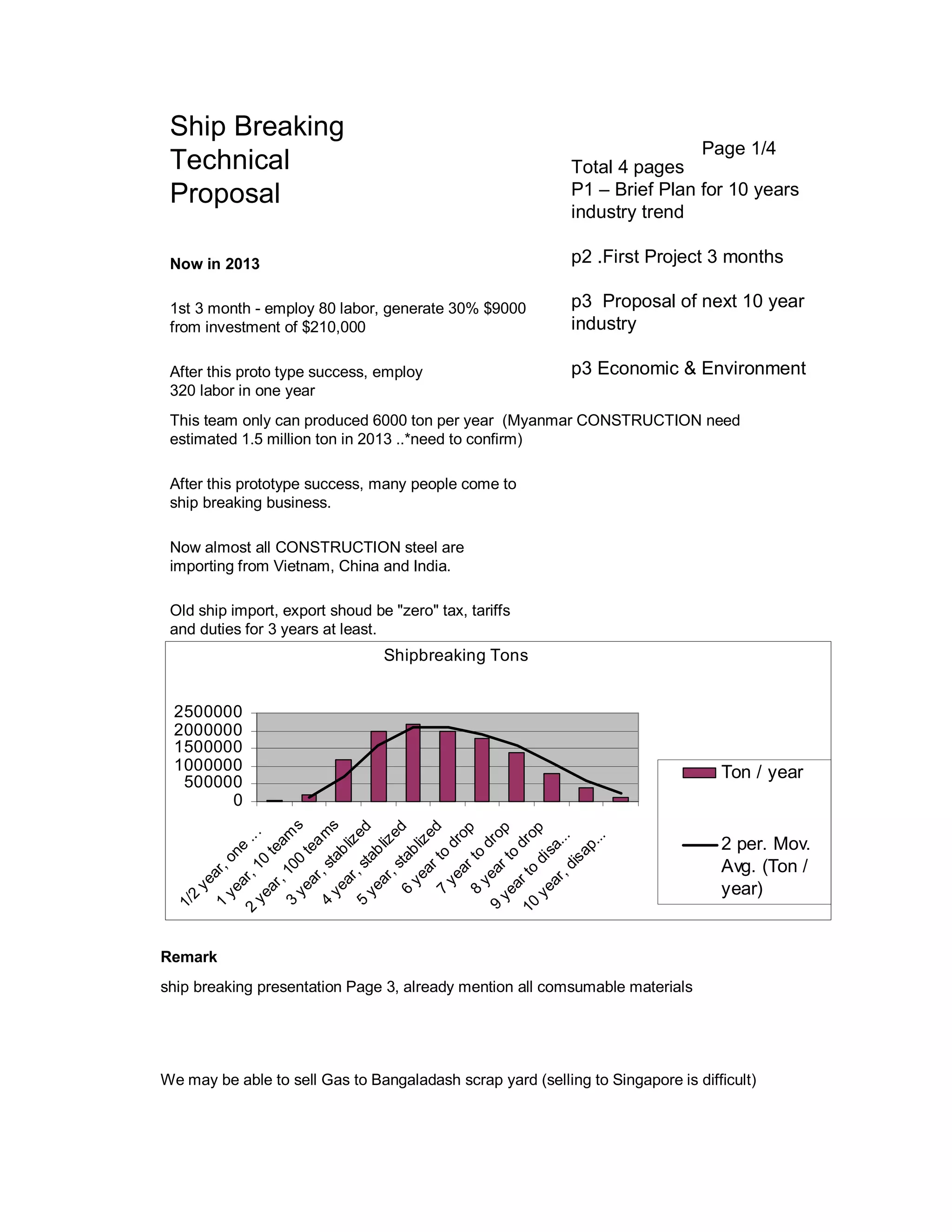
Shipbreaking Tons
0
500000
1000000
1500000
2000000
2500000
1/2
year,one
...
1
year,10
team
s
2
year,100
team
s
3
year,stablized
4
year,stablized
5
year,stablized
6
yearto
drop
7
yearto
drop
8
yearto
drop
9
yearto
disa...
10
year,disap...
Ton / year
2 per. Mov.
Avg. (Ton /
year)
We may be able to sell Gas to Bangaladash scrap yard (selling to Singapore is difficult)
ship breaking presentation Page 3, already mention all comsumable materials
Remark
Page 1/4
Total 4 pages
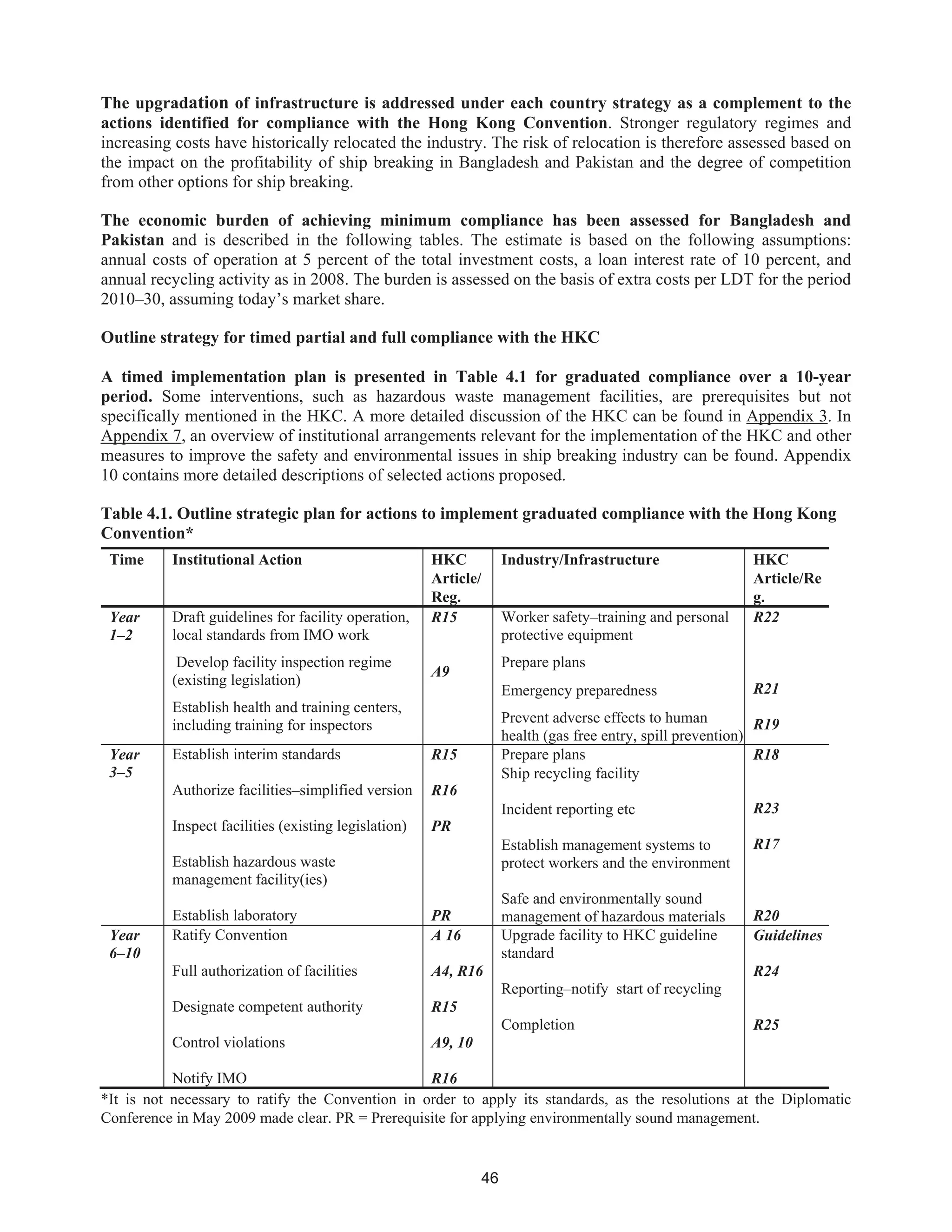
P1 – Brief Plan for 10 years
industry trend
p2 .First Project 3 months
p3 Proposal of next 10 year
industry
p3 Economic & Environment
Proposal of Shipbreaking Pilot Project
1. Discussion with authority
- Land (location to finalize) at Molamyine Port
2. Customers negotiation
- Industry proposed: steel re-roll & melting SME
- reroll 90% & melting 10%
- Almost all schipbreaking to use for construction
3. Project with labor 110 people and engineering team is ready.
- BLACK PEARL ENGINEERING (Company Profile – attached)
4. Technical Profile of Myanmar nationals (10 to 20 years internal ship
building, repair and scrapping industry also attached
3. Purchase a ship estimated DWT1500 with Us$210,000 investment
4. Project completion 3 months. Next project to start at 2nd month
Page 2/4
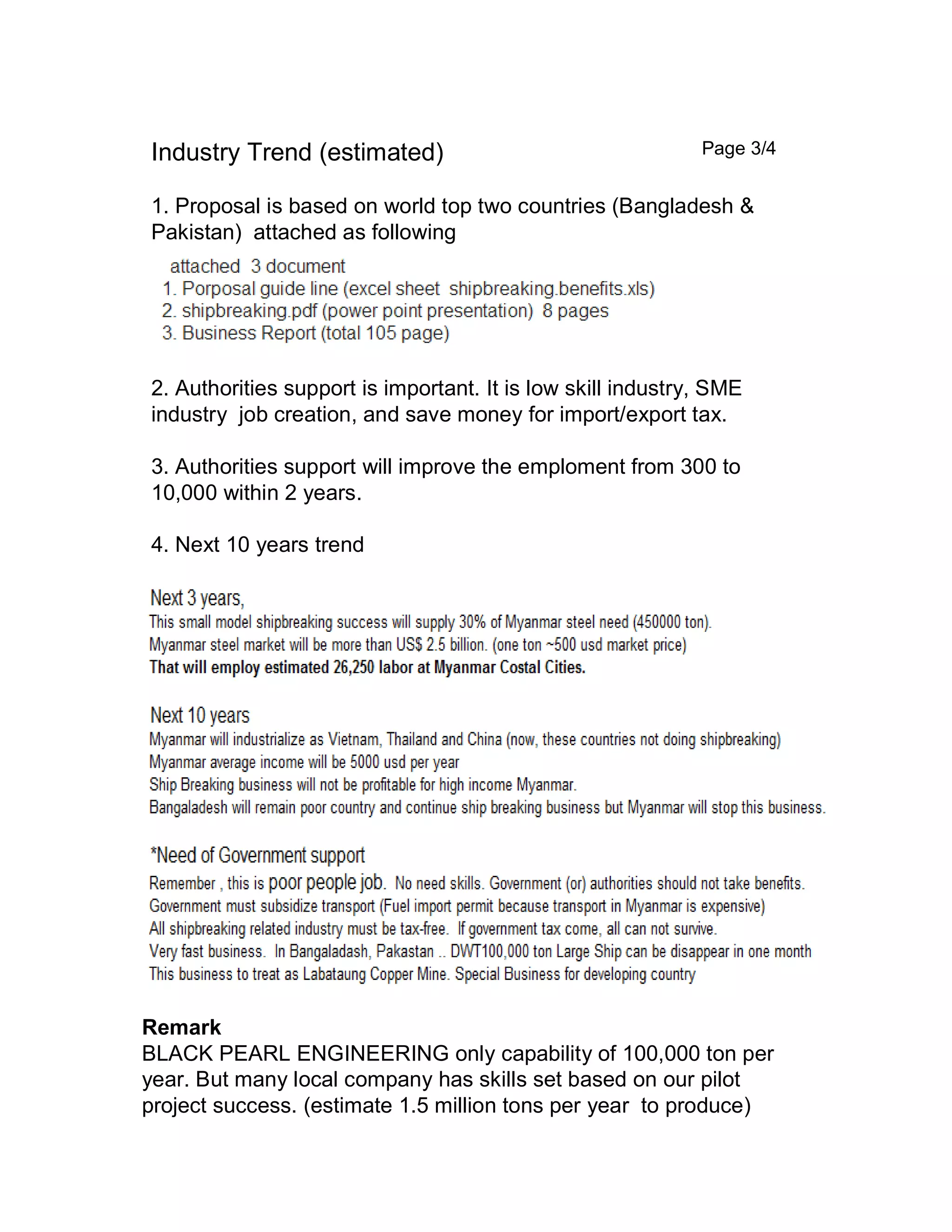
Page 3/4Industry Trend (estimated)
1. Proposal is based on world top two countries (Bangladesh &
Pakistan) attached as following
2. Authorities support is important. It is low skill industry, SME
industry job creation, and save money for import/export tax.
3. Authorities support will improve the emploment from 300 to
10,000 within 2 years.
4. Next 10 years trend
Remark
BLACK PEARL ENGINEERING only capability of 100,000 ton per
year. But many local company has skills set based on our pilot
project success. (estimate 1.5 million tons per year to produce)
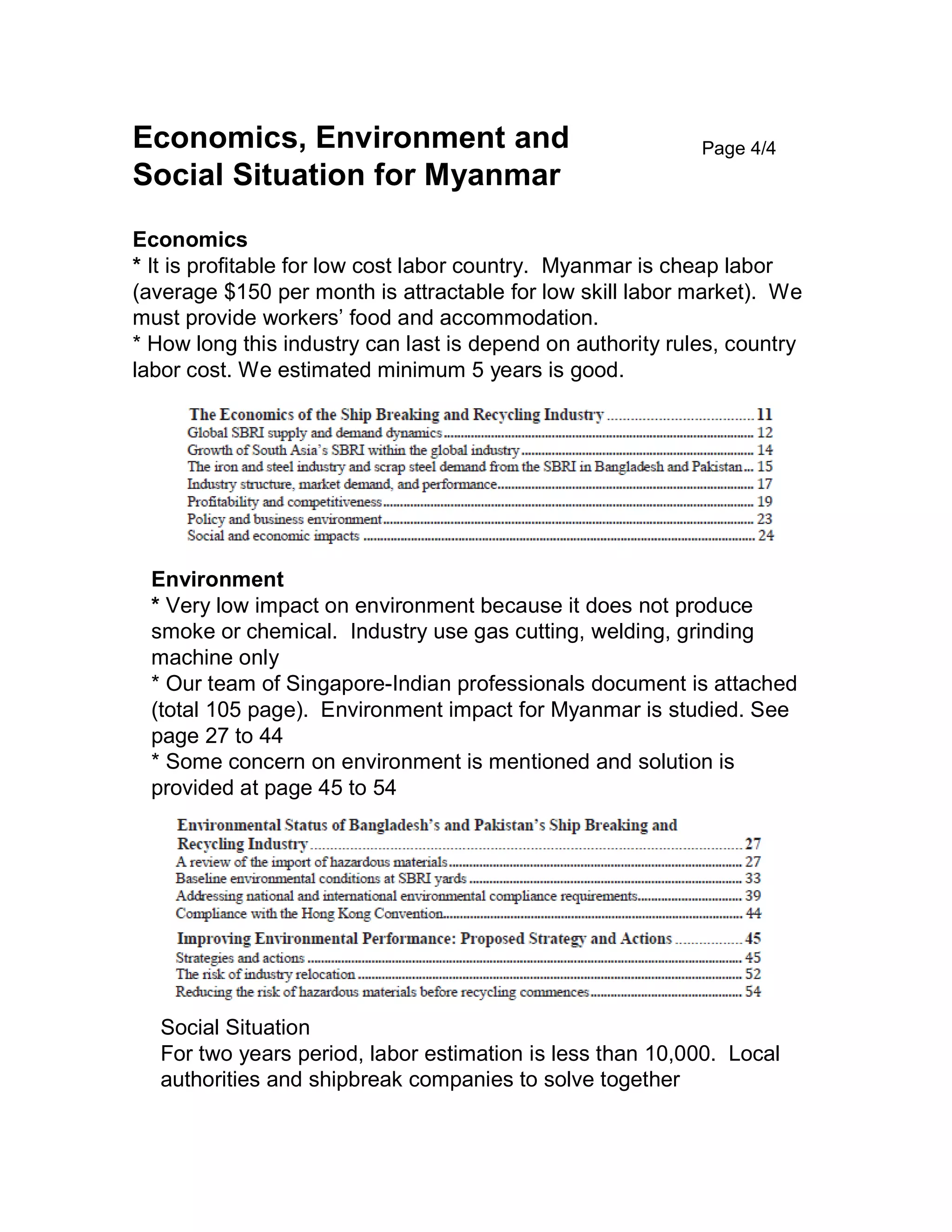
Economics, Environment and
Social Situation for Myanmar
Economics
* It is profitable for low cost labor country. Myanmar is cheap labor
(average $150 per month is attractable for low skill labor market). We
must provide workers’ food and accommodation.
* How long this industry can last is depend on authority rules, country
labor cost. We estimated minimum 5 years is good.
Page 4/4
Environment
* Very low impact on environment because it does not produce
smoke or chemical. Industry use gas cutting, welding, grinding
machine only
* Our team of Singapore-Indian professionals document is attached
(total 105 page). Environment impact for Myanmar is studied. See
page 27 to 44
* Some concern on environment is mentioned and solution is
provided at page 45 to 54
Social Situation
For two years period, labor estimation is less than 10,000. Local
authorities and shipbreak companies to solve together
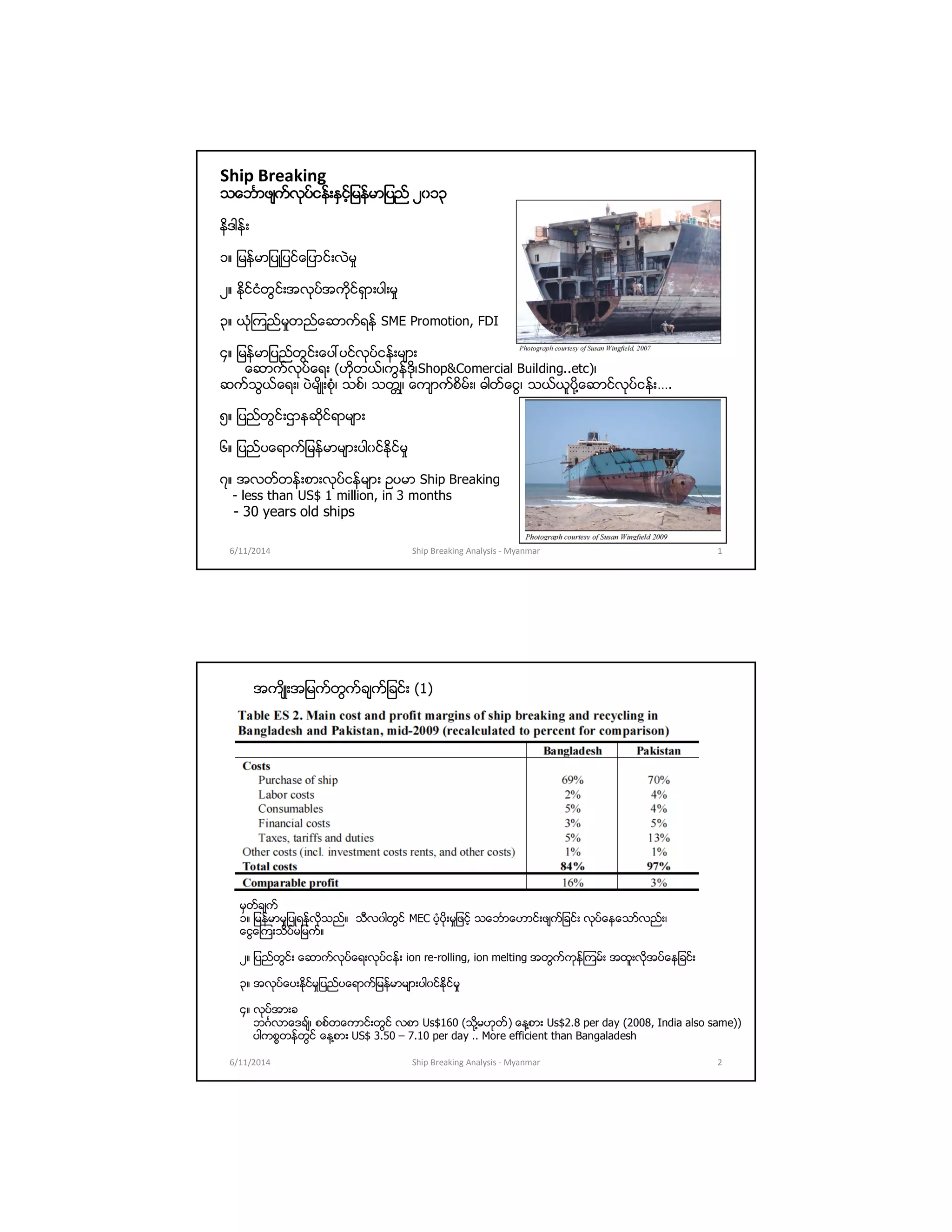
Ship Breaking
သေဘၤာဖ်က္လုပ္ငန္းႏွင့္ျမန္မာျပည္ ၂၀၁၃
နိဒါန္း
၁။ ျမန္မာျပဳျပင္ေျပာင္းလဲမႈ
၂။ ႏိုင္ငံတြင္းအလုပ္အကိုင္ရွားပါးမႈ
၃။ ယံုၾကည္မႈတည္ေဆာက္ရန္ SME Promotion, FDI
၄။ ျမန္မာျပည္တြင္းေပၚပင္လုပ္ငန္းမ်ား
ေဆာက္လုပ္ေရး (ဟုိတယ္၊ကြန္ဒို၊Shop&Comercial Building..etc)၊
ဆက္သြယ္ေရး၊ ပဲမ်ိဳးစံု၊ သစ္၊ သတၲဳ၊ ေက်ာက္စိမ္း၊ ဓါတ္ေငြ၊ သယ္ယူပို႔ေဆာင္လုပ္ငန္း….
၅။ ျပည္တြင္းဌာနဆိုင္ရာမ်ား
၆။ ျပည္ပေရာက္ျမန္မာမ်ားပါ၀င္ႏိုင္မႈ
၇။ အလတ္တန္းစားလုပ္ငန္မ်ား ဥပမာ Ship Breaking
- less than US$ 1 million, in 3 months
- 30 years old ships
6/11/2014 1Ship Breaking Analysis - Myanmar
အက်ိဳးအျမက္တြက္ခ်က္ျခင္း (1)
မွတ္ခ်က္
၁။ ျမန္မာမႈျပဳရန္လိုသည္။ သီလ၀ါတြင္ MEC ပံ့ပိုးမႈျဖင့္ သေဘၤာေဟာင္းဖ်က္ျခင္း လုပ္ေနေသာ္လည္း၊
ေငြေၾကးသိပ္မျမက္။
၂။ ျပည္တြင္း ေဆာက္လုပ္ေရးလုပ္ငန္း ion re-rolling, ion melting အတြက္ကုန္ၾကမ္း အထူးလိုအပ္ေနျခင္း
၃။ အလုပ္ေပးႏိုင္မႈျပည္ပေရာက္ျမန္မာမ်ားပါ၀င္ႏိုင္မႈ
၄။ လုပ္အားခ
ဘဂၤလာေဒခ်္၊ စစ္တေကာင္းတြင္ လစာ Us$160 (သို႔မဟုတ္) ေန႔စား Us$2.8 per day (2008, India also same))
ပါကစၥတန္တြင္ ေန႔စား US$ 3.50 – 7.10 per day .. More efficient than Bangaladesh
6/11/2014 2Ship Breaking Analysis - Myanmar
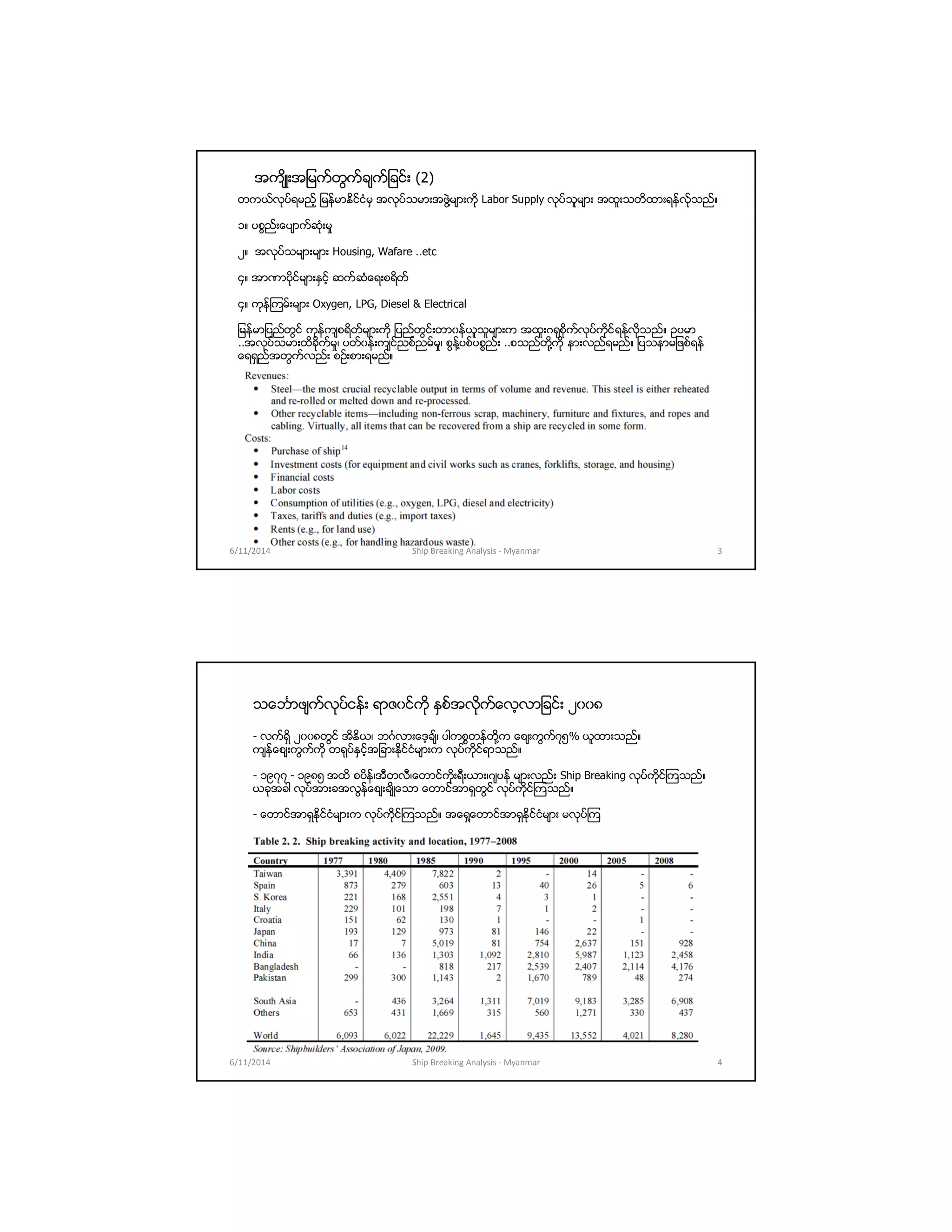
အက်ိဳးအျမက္တြက္ခ်က္ျခင္း (2)
တကယ္လုပ္ရမည့္ ျမန္မာႏိင္ငံမွ အလုပ္သမားအဖြဲ႔မ်ားကို Labor Supply လုပ္သူမ်ား အထူးသတိထားရန္လု္သည္။
၁။ ပစၥည္းေပ်ာက္ဆံုးမႈ
၂။ အလုပ္သမ်ားမ်ား Housing, Wafare ..etc
၄။ အာဏာပိုင္မ်ားႏွင့္ ဆက္ဆံေရးစရိတ္
၄။ ကုန္ၾကမ္းမ်ား Oxygen, LPG, Diesel & Electrical
ျမန္မာျပည္တြင္ ကုန္က်စရိတ္မ်ားကို ျပည္တြင္းတာ၀န္ယူသူမ်ားက အထူးဂရုစိုက္လုပ္ကိုင္ရန္လိုသည္။ ဥပမာ
..အလုပ္သမားထိခိုက္မႈ၊ ပတ္၀န္းက်င္ညစ္ညမ္မႈ၊ စြန္႔ပစ္ပစၥည္း ..စသည္တို႔ကို နားလည္ရမည္။ ျပသနာမျဖစ္ရန္
ေရရွည္အတြက္လည္း စဥ္းစားရမည္။
6/11/2014 3Ship Breaking Analysis - Myanmar
သေဘၤာဖ်က္လုပ္ငန္း ရာဇ၀င္ကို ႏွစ္အလိုက္ေလ့လာျခင္း ၂၀၀၈
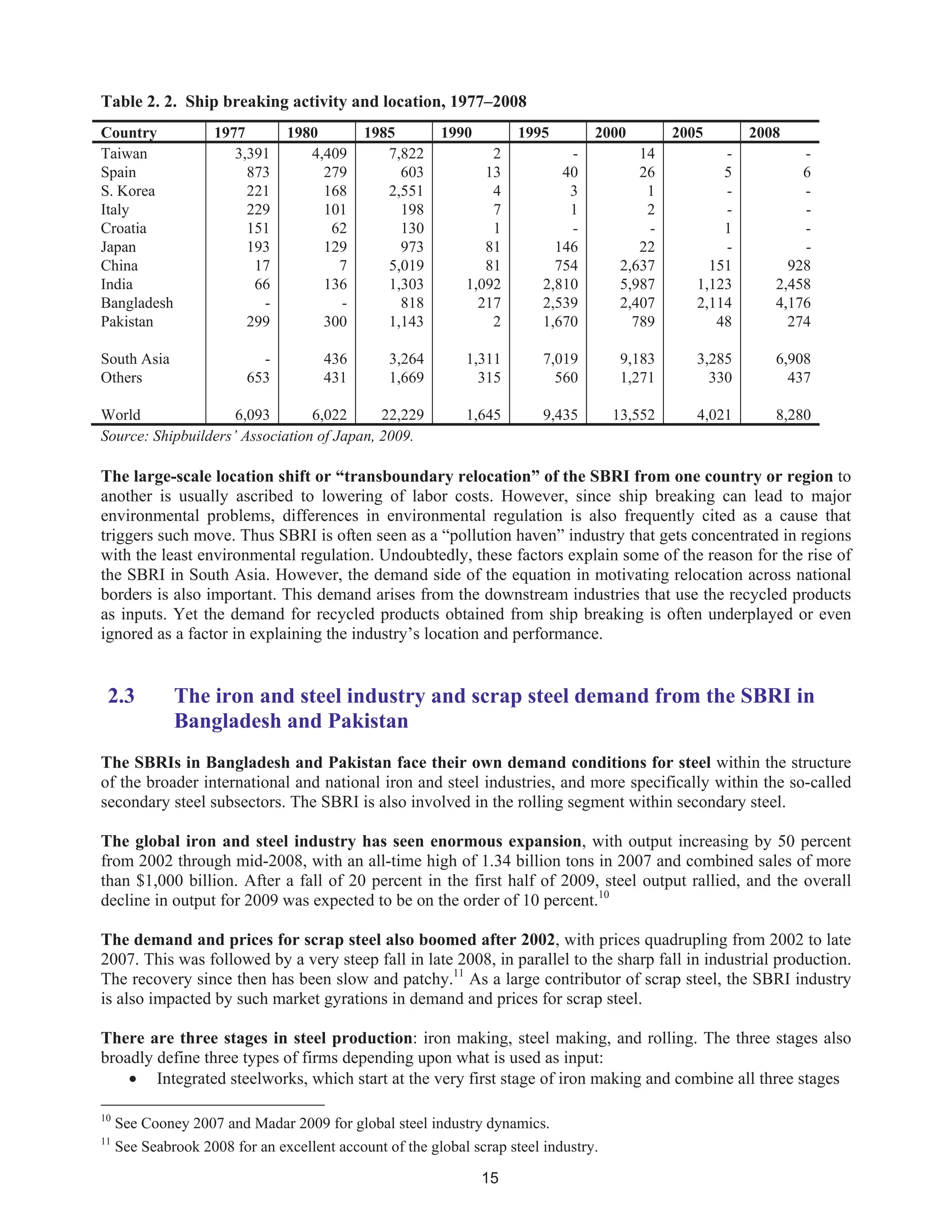
- လက္ရွိ ၂၀၀၈တြင္ အိႏိယ၊ ဘဂၤလားေဒ့ခ်္၊ ပါကစၥတန္တို႔က ေစ်းကြက္၇၅% ယူထားသည္။
က်န္ေစ်းကြက္ကို တရုပ္ႏွင့္အျခားႏိုင္ငံမ်ားက လုပ္ကိုင္ရာသည္။
- ၁၉၇၇ - ၁၉၈၅ အထိ စပိန္၊အီတလီ၊ေတာင္ကိုးရီးယား၊ဂ်ပန္ မ်ားလည္း Ship Breaking လုပ္ကိုင္ၾကသည္။
ယခုအခါ လုပ္အားခအလြန္ေစ်းခ်ိဳေသာ ေတာင္အာရွတြင္ လုပ္ကိုင္ၾကသည္။
- ေတာင္အာရွႏိုင္ငံမ်ားက လုပ္ကိုင္ၾကသည္။ အေရွ႔ေတာင္အာရွႏိုင္ငံမ်ား မလုပ္ၾက
6/11/2014 4Ship Breaking Analysis - Myanmar
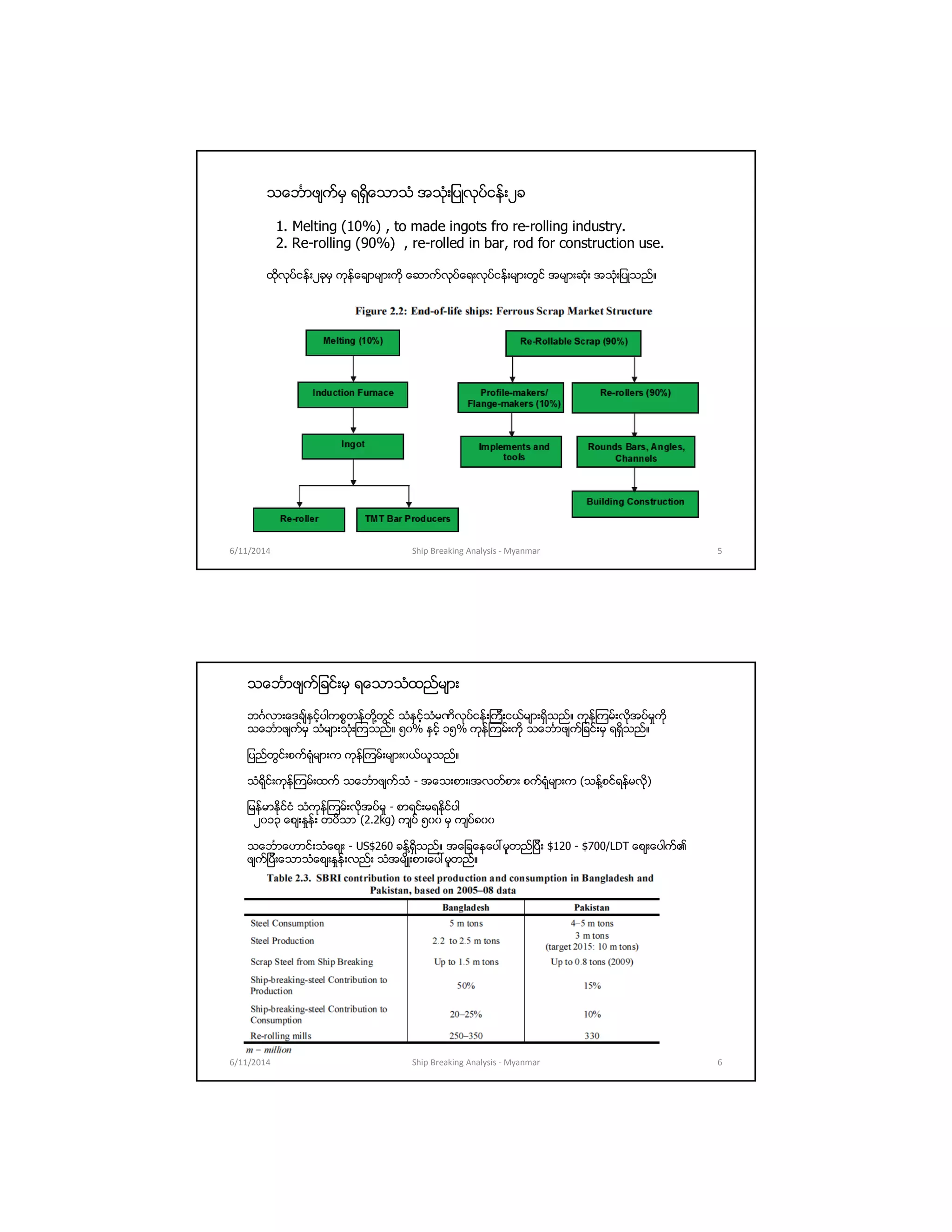
သေဘၤာဖ်က္မွ ရရွိေသာသံ အသံုးျပဳလုပ္ငန္း၂ခ
1. Melting (10%) , to made ingots fro re-rolling industry.
2. Re-rolling (90%) , re-rolled in bar, rod for construction use.
ထိုလုပ္ငန္း၂ခုမွ ကုန္ေခ်ာမ်ားကို ေဆာက္လုပ္ေရးလုပ္ငန္းမ်ားတြင္ အမ်ားဆံုး အသံုးျပဳသည္။
6/11/2014 5Ship Breaking Analysis - Myanmar
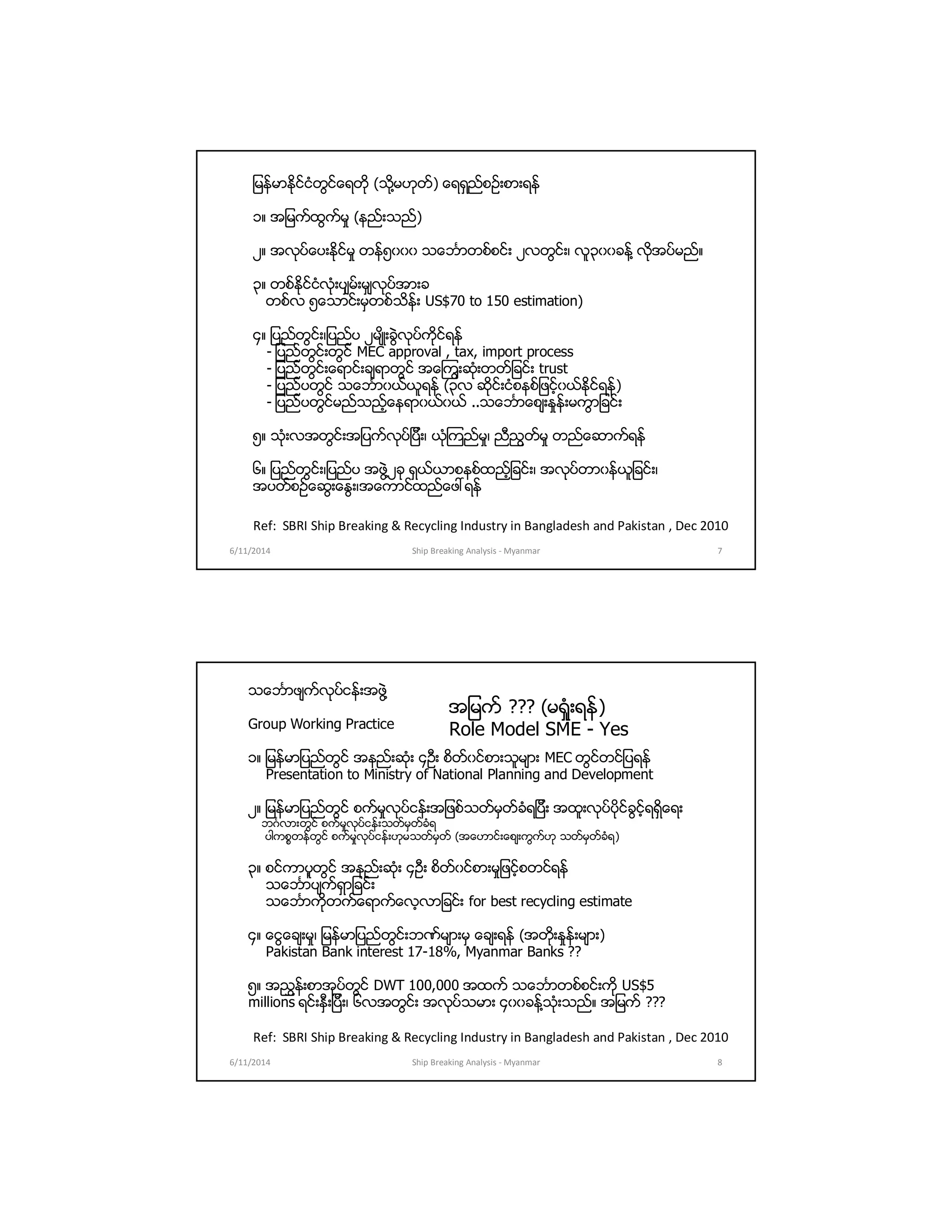
သေဘၤာဖ်က္ျခင္းမွ ရေသာသံထည္မ်ား
ဘဂၤလားေဒခ်္ႏွင့္ပါကစၥတန္တို႔တြင္ သံႏွင့္သံမဏိလုပ္ငန္းၾကီးငယ္မ်ားရွိသည္။ ကုန္ၾကမ္းလိုအပ္မႈကို
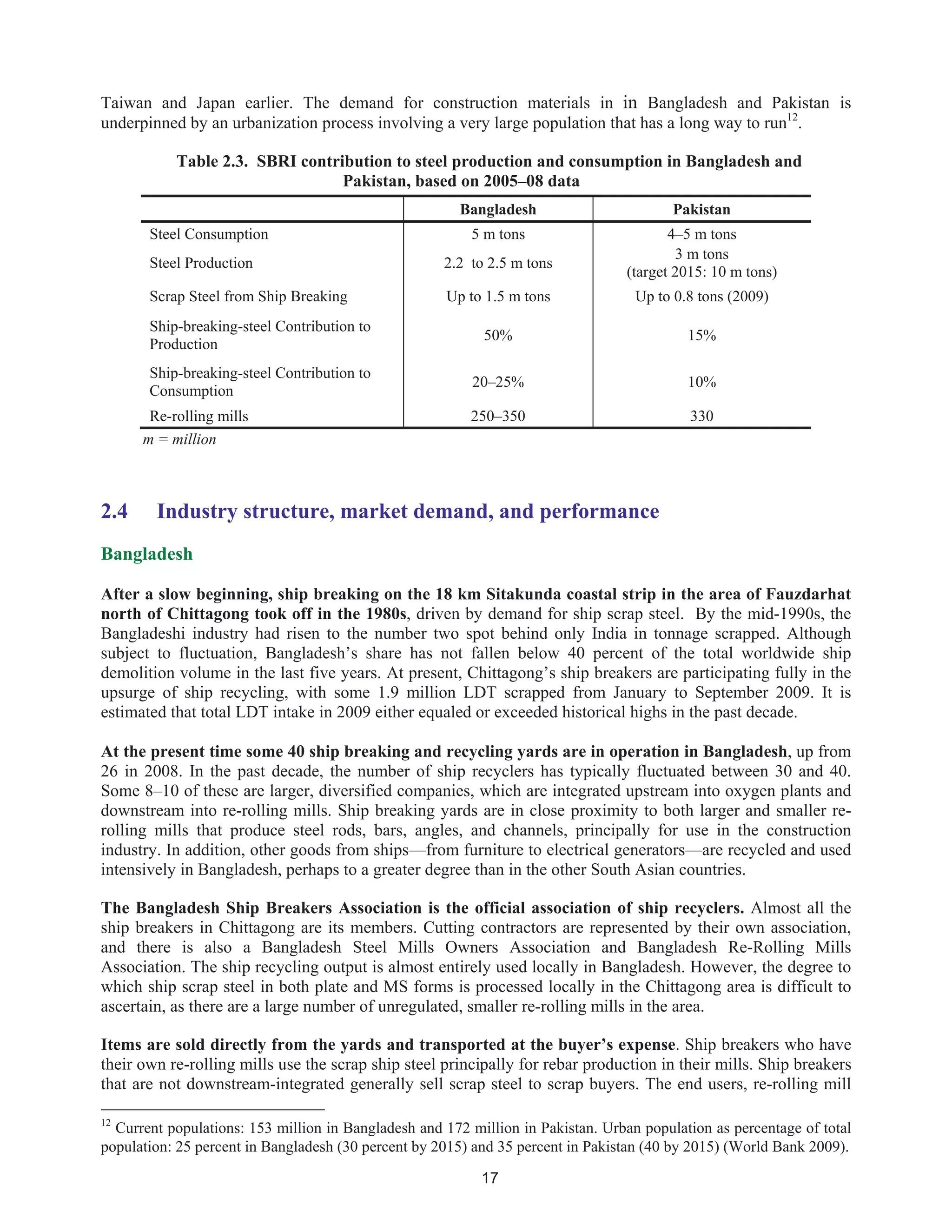
သေဘၤာဖ်က္မွ သံမ်ားသံုးၾကသည္။ ၅၀% ႏွင့္ ၁၅% ကုန္ၾကမ္းကို သေဘၤာဖ်က္ျခင္းမွ ရရွိသည္။
ျပည္တြင္းစက္ရံုမ်ားက ကုန္ၾကမ္းမ်ား၀ယ္ယူသည္။
သံရိုင္းကုန္ၾကမ္းထက္ သေဘၤာဖ်က္သံ - အေသးစား၊အလတ္စား စက္ရံုမ်ားက (သန္႔စင္ရန္မလို)
ျမန္မာႏိုင္ငံ သံကုန္ၾကမ္းလိုအပ္မႈ - စာရင္းမရႏိုင္ပါ
၂၀၁၃ ေစ်းႏႈန္း တပိသာ (2.2kg) က်ပ္ ၅၀၀ မွ က်ပ္၈၀၀
သေဘၤာေဟာင္းသံေစ်း - US$260 ခန္႔ရွိသည္။ အေျခေနေပၚမူတည္ျပီး $120 - $700/LDT ေစ်းေပါက္၏
ဖ်က္ျပီးေသာသံေစ်းႏႈန္းလည္း သံအမ်ိဳးစားေပၚမူတည္။
6/11/2014 6Ship Breaking Analysis - Myanmar
ျမန္မာႏိုင္ငံတြင္ေရတို (သို႔မဟုတ္) ေရရွည္စဥ္းစားရန္
၁။ အျမက္ထြက္မႈ (နည္းသည္)
၂။ အလုပ္ေပးႏိုင္မႈ တန္၅၀၀၀ သေဘၤာတစ္စင္း ၂လတြင္း၊ လူ၃၀၀ခန္႔ လိုအပ္မည္။
၃။ တစ္ႏိုင္ငံလုံးပ်ွမ္းမွ်လုပ္အားခ
တစ္လ ၅ေသာင္းမွတစ္သိန္း US$70 to 150 estimation)
၄။ ျပည္တြင္း၊ျပည္ပ ၂မ်ိဳးခြဲလုပ္ကိုင္ရန္
- ျပည္တြင္းတြင္ MEC approval , tax, import process
- ျပည္တြင္းေရာင္းခ်ရာတြင္ အေၾကြးဆံုးတတ္ျခင္း trust
- ျပည္ပတြင္ သေဘၤာ၀ယ္ယူရန္ (၃လ ဆိုင္းငံစနစ္ျဖင့္၀ယ္ႏိုင္ရန္)
- ျပည္ပတြင္မည္သည့္ေနရာ၀ယ္၀ယ္ ..သေဘၤာေစ်းႏႈန္းမကြာျခင္း
၅။ သံုးလအတြင္းအျပက္လုပ္ျပီး၊ ယံုၾကည္မႈ၊ ညီညြတ္မႈ တည္ေဆာက္ရန္
၆။ ျပည္တြင္း၊ျပည္ပ အဖြဲ႔၂ခု ရွယ္ယာစနစ္ထည့္ျခင္း၊ အလုပ္တာ၀န္ယူျခင္း၊
အပတ္စဥ္ေဆြးေႏြး၊အေကာင္ထည္ေဖၚရန္
Ref: SBRI Ship Breaking & Recycling Industry in Bangladesh and Pakistan , Dec 2010
6/11/2014 7Ship Breaking Analysis - Myanmar
သေဘၤာဖ်က္လုပ္ငန္းအဖြဲ႔
Group Working Practice
၁။ ျမန္မာျပည္တြင္ အနည္းဆံုး ၄ဦး စိတ္၀င္စားသူမ်ား MEC တြင္တင္ျပရန္
Presentation to Ministry of National Planning and Development
၂။ ျမန္မာျပည္တြင္ စက္မႈလုပ္ငန္းအျဖစ္သတ္မွတ္ခံရျပီး အထူးလုပ္ပိုင္ခြင့္ရရွိေရး
ဘဂၤလားတြင္ စက္မႈလုပ္ငန္းသတ္မွတ္ခံရ
ပါကစၥတန္တြင္ စက္မႈလုပ္ငန္းဟုမသတ္မွတ္ (အေဟာင္းေစ်းကြက္ဟု သတ္မွတ္ခံရ)
၃။ စင္ကာပ့ူတြင္ အနည္းဆံုး ၄ဦး စိတ္၀င္စားမႈျဖင့္စတင္ရန္
သေဘၤာပ်က္ရွာျခင္း
သေဘၤာကိုတက္ေရာက္ေလ့လာျခင္း for best recycling estimate
၄။ ေငြေခ်းမႈ၊ ျမန္မာျပည္တြင္းဘဏ္မ်ားမွ ေခ်းရန္ (အတိုးႏႈန္းမ်ား)
Pakistan Bank interest 17-18%, Myanmar Banks ??
၅။ အညႊန္းစာအုပ္တြင္ DWT 100,000 အထက္ သေဘၤာတစ္စင္းကို US$5
millions ရင္းႏွီးျပီး၊ ၆လအတြင္း အလုပ္သမား ၄၀၀ခန္႔သံုးသည္။ အျမက္ ???
Ref: SBRI Ship Breaking & Recycling Industry in Bangladesh and Pakistan , Dec 2010
အျမက္ ??? (မရံႈးရန္)
Role Model SME - Yes
6/11/2014 8Ship Breaking Analysis - Myanmar
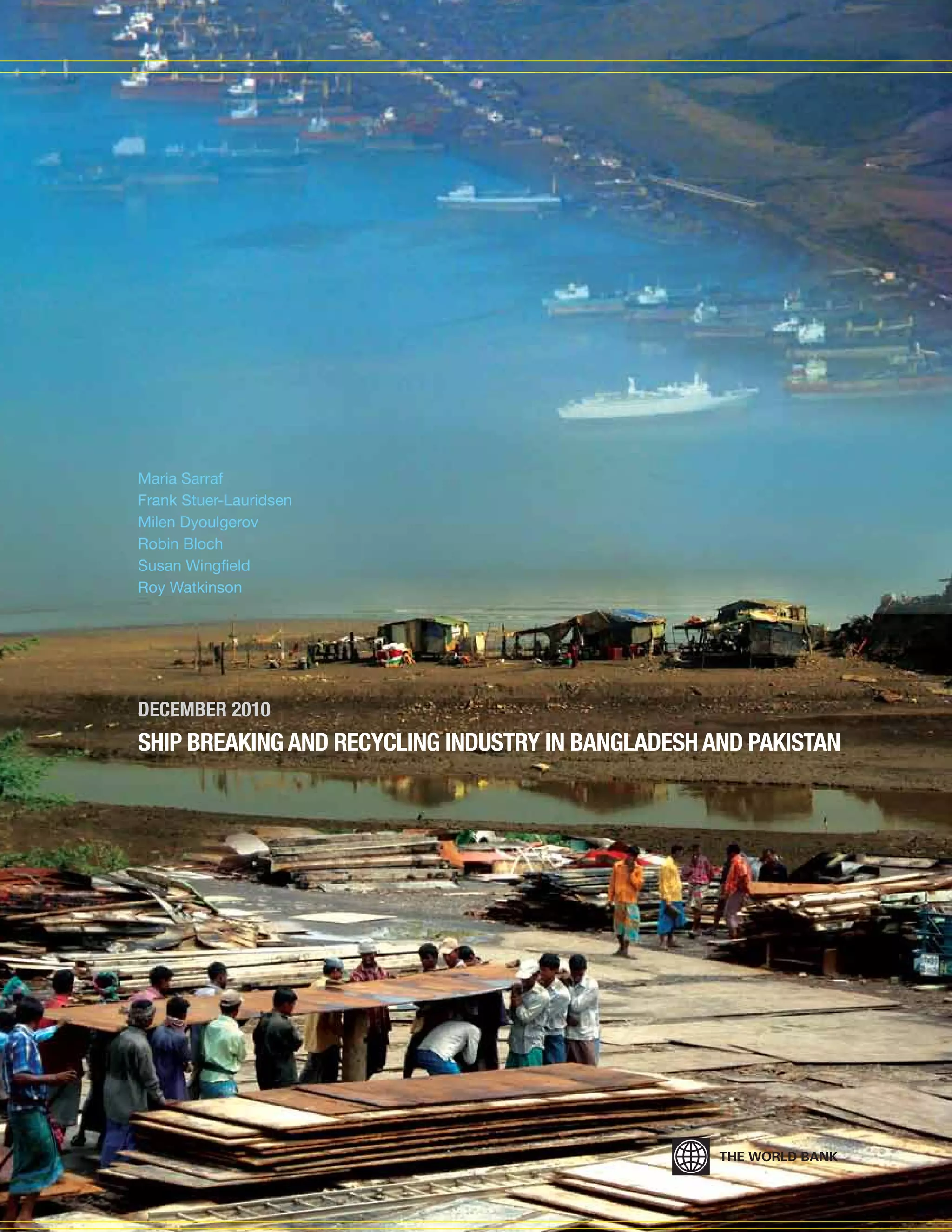
SHIP BREAKING AND RECYCLING INDUSTRY IN BANGLADESH AND PAKISTAN
DECEMBER 2010
Maria Sarraf
Frank Stuer-Lauridsen
Milen Dyoulgerov
Robin Bloch
Susan Wingfield
Roy Watkinson
i
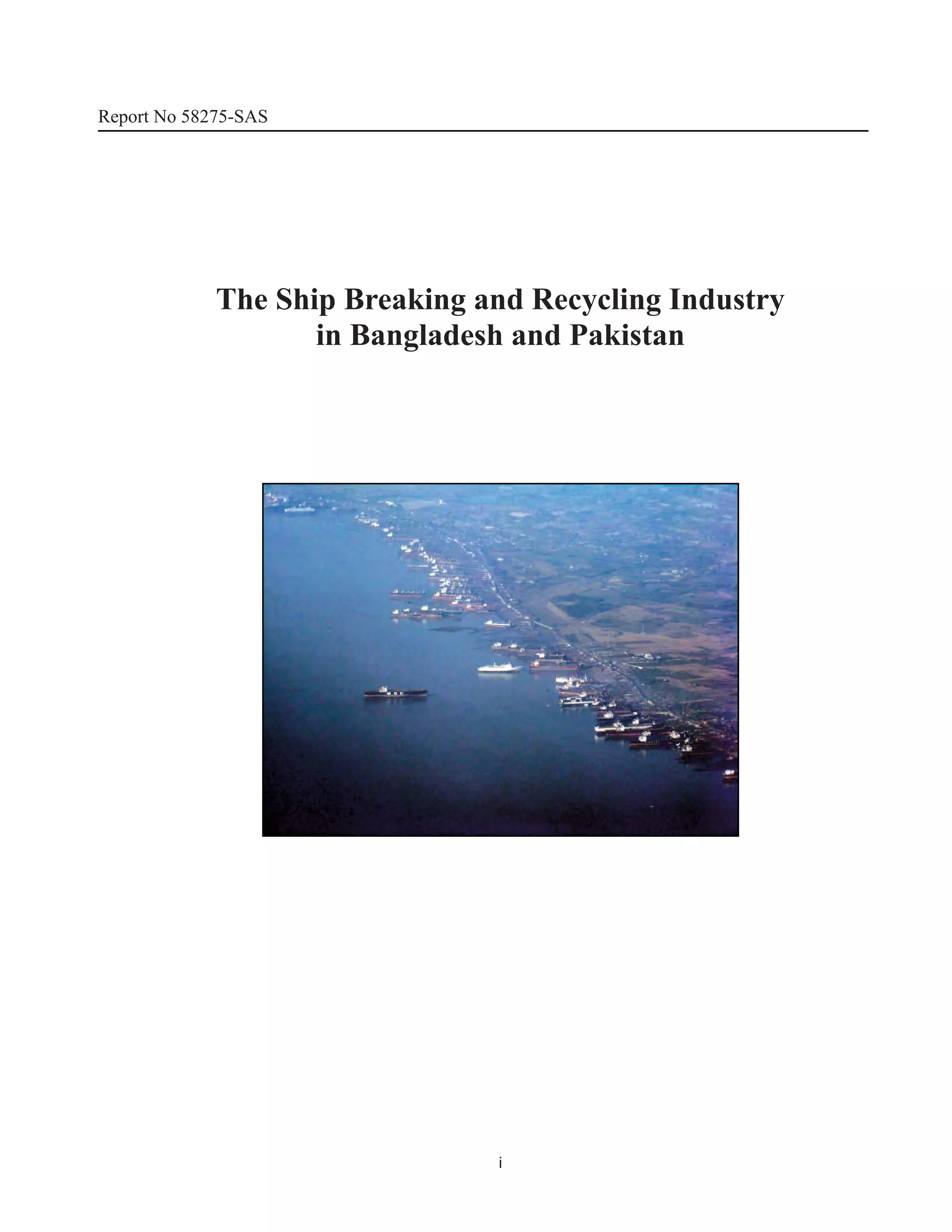
Report No 58275-SAS
The Ship Breaking and Recycling Industry
in Bangladesh and Pakistan
Acknowledgements. The preparation of this report was managed by a team consisting of Maria Sarraf
(Task Team Leader) and Milen Dyoulgerov (Operations Officer). The team would like to thank Adriana
Damianova for supporting this important activity and Khawaja Minnatullah and Javaid Afzal for
overseeing the study consultations in Bangladesh and Pakistan. The team would also like to thank Parvez
Anwar, Arun Banerje, Robin Carruthers, Catalina Marulanda Nikos Mikelis, Sanjay Srivastava, Ruma
Tavorath, Ellen Tynan and Saleem Uz Zaman for providing substantial comments. The team is also
grateful to Subhendu Roy for providing editorial support, Poonam Rohatgi for administrative support,
Hernan Gigena for the graphic design and Adrien Feil for supervising the printing of the study.
The report is based on a study commissioned by the World Bank and written in 2009 by a consortium of
international and local consultants, headed by Litehauz ApS (Denmark). Dr. Frank Stuer-Lauridsen of
Litehauz was the Consortium Leader. The team included Messrs/Mmes. Ahmad Aslam, Robin Bloch,
Eleanor Curtain, Tridib Ghose, Rakesh Johri, Shailesh Modi, Thomas Odgaard, Suneel Pandey, Ritesh
Ranjan, Roy Watkinson and Susan Wingfield.
The team is grateful to every stakeholder from Government Agencies, Industry, NGOs, and Academic
institutions in Bangladesh and Pakistan for their input and guidance. In Bangladesh the team would
particularly like to highlight the cooperation of: the Ministry of Environment & Forests, the Ministry of
Shipping, the Ministry of Labour and Employment, the Department of Inspection for Factories &
Establishments, the Department of Environment, the Department of Shipping, Chittagong Mayor’s
Office, the Bangladesh Ship Breakers’ Association, the Bangladesh Environmental Lawyers Association,
Young Power in Social Action, the Bangladesh Occupational Safety, Health and Environment
Foundation, the Bangladesh Institute of Labour Studies, the Asian University for Women and the
University of Chittagong. In Pakistan valuable guidance was received from the Ministry of Environment,
the Ministry of Ports and Shipping, the Ministry of Commerce, the Ministry of Industry, the Federal
Board of Revenue, the Balochistan Environmental Protection Agency, the Sindh Environmental
Protection Agency, the Balochistan Development Authority, the Marine Pollution Control Department,
the Karachi Port Trust, the National Institute of Oceanography, and the Pakistan Ship breakers’
Association. We are also indebted to our colleagues in the UNDP missions in Bangladesh and Pakistan,
the International Labour Organisation, and the Norwegian Royal Embassy in Bangladesh for their advice
and assistance.
The report was made possible with the support of the Canada International Development Agency through
the Canadian Persistent Organic Pollutants Trust Fund managed by the World Bank.
This volume is a product of the staff of the International Bank for Reconstruction and Development/ The
World Bank. The findings, interpretations, and conclusions expressed in this volume do not necessarily
reflect the views of the Executive Directors of The World Bank or the governments they represent.
The World Bank does not guarantee the accuracy of the data included in this work. The boundaries,
colors, denominations and other information shown on any map in this work do not imply any judgment
on the part of The World Bank concerning the legal status of any territory or the endorsement or
acceptance of such boundaries.
iii
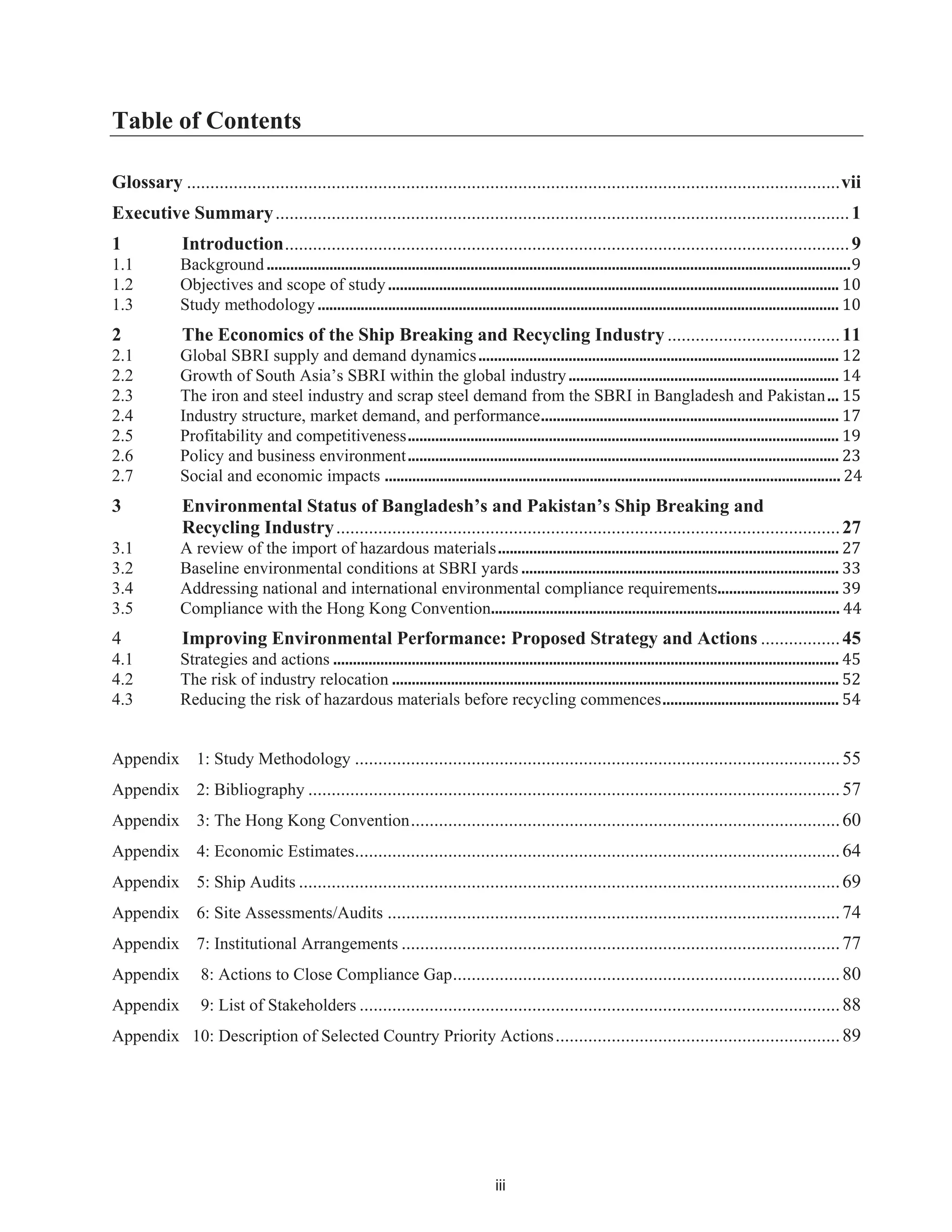
Table of Contents
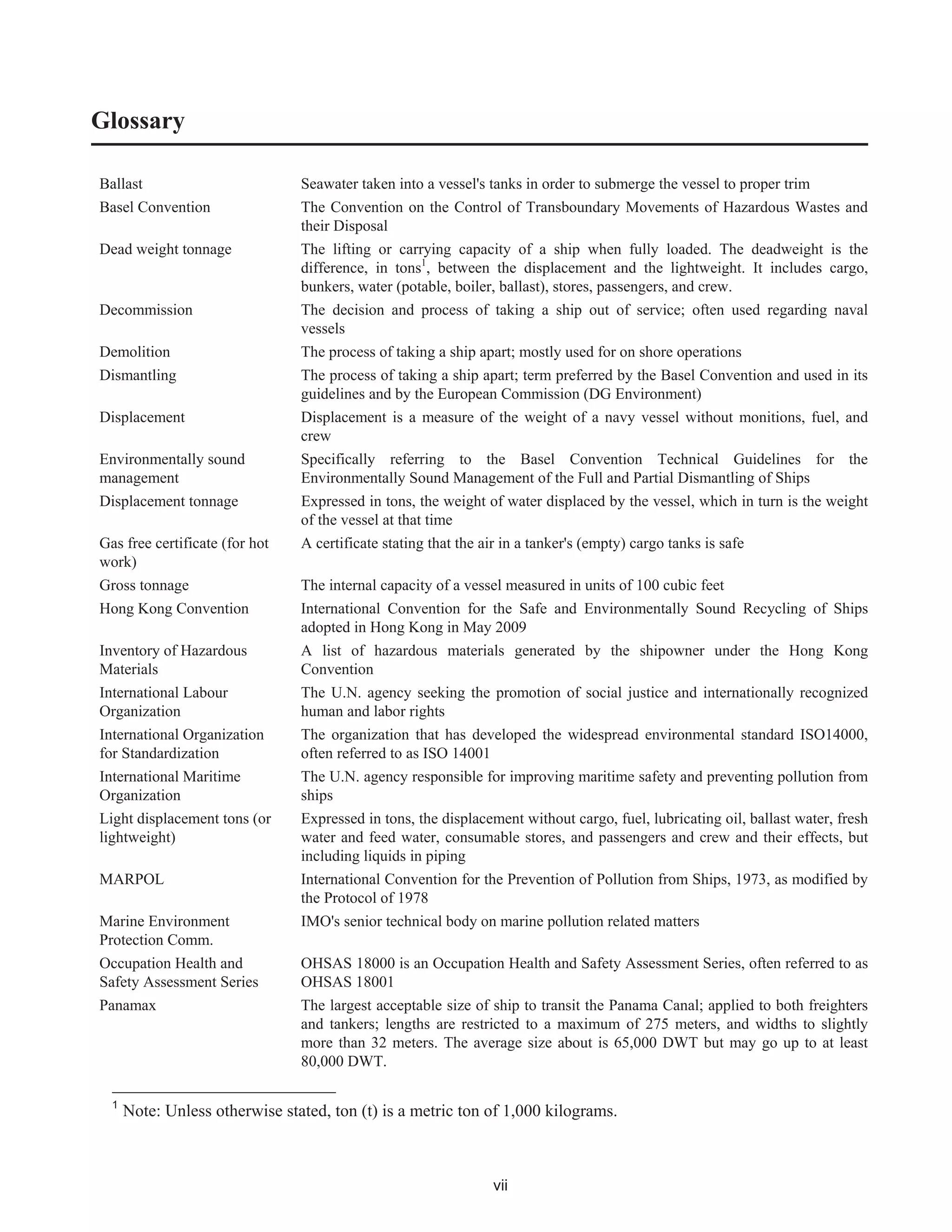
Glossary ............................................................................................................................................vii
Executive Summary...........................................................................................................................1
1 Introduction.........................................................................................................................9
1.1 Background.....................................................................................................................................................9
1.2 Objectives and scope of study................................................................................................................... 10
1.3 Study methodology ..................................................................................................................................... 10
2 The Economics of the Ship Breaking and Recycling Industry .....................................11
2.1 Global SBRI supply and demand dynamics............................................................................................ 12
2.2 Growth of South Asia’s SBRI within the global industry..................................................................... 14
2.3 The iron and steel industry and scrap steel demand from the SBRI in Bangladesh and Pakistan... 15
2.4 Industry structure, market demand, and performance............................................................................ 17
2.5 Profitability and competitiveness.............................................................................................................. 19
2.6 Policy and business environment.............................................................................................................. 23
2.7 Social and economic impacts 24
3 Environmental Status of Bangladesh’s and Pakistan’s Ship Breaking and
Recycling Industry............................................................................................................27
3.1 A review of the import of hazardous materials....................................................................................... 27
3.2 Baseline environmental conditions at SBRI yards ................................................................................. 33
3.4 Addressing national and international environmental compliance requirements............................... 39
3.5 Compliance with Hong Kong Convention......................................................................................... 44
4 Improving Environmental Performance: Proposed Strategy and Actions .................45
4.1 Strategies and actions ................................................................................................................................. 45
4.2 The risk of industry relocation .................................................................................................................. 52
4.3 Reducing the risk of hazardous materials before recycling commences............................................. 54
Appendix 1: Study Methodology ........................................................................................................55
Appendix 2: Bibliography ..................................................................................................................57
Appendix 3: The Hong Kong Convention............................................................................................60
Appendix 4: Economic Estimates........................................................................................................64
Appendix 5: Ship Audits ....................................................................................................................69
Appendix 6: Site Assessments/Audits .................................................................................................74
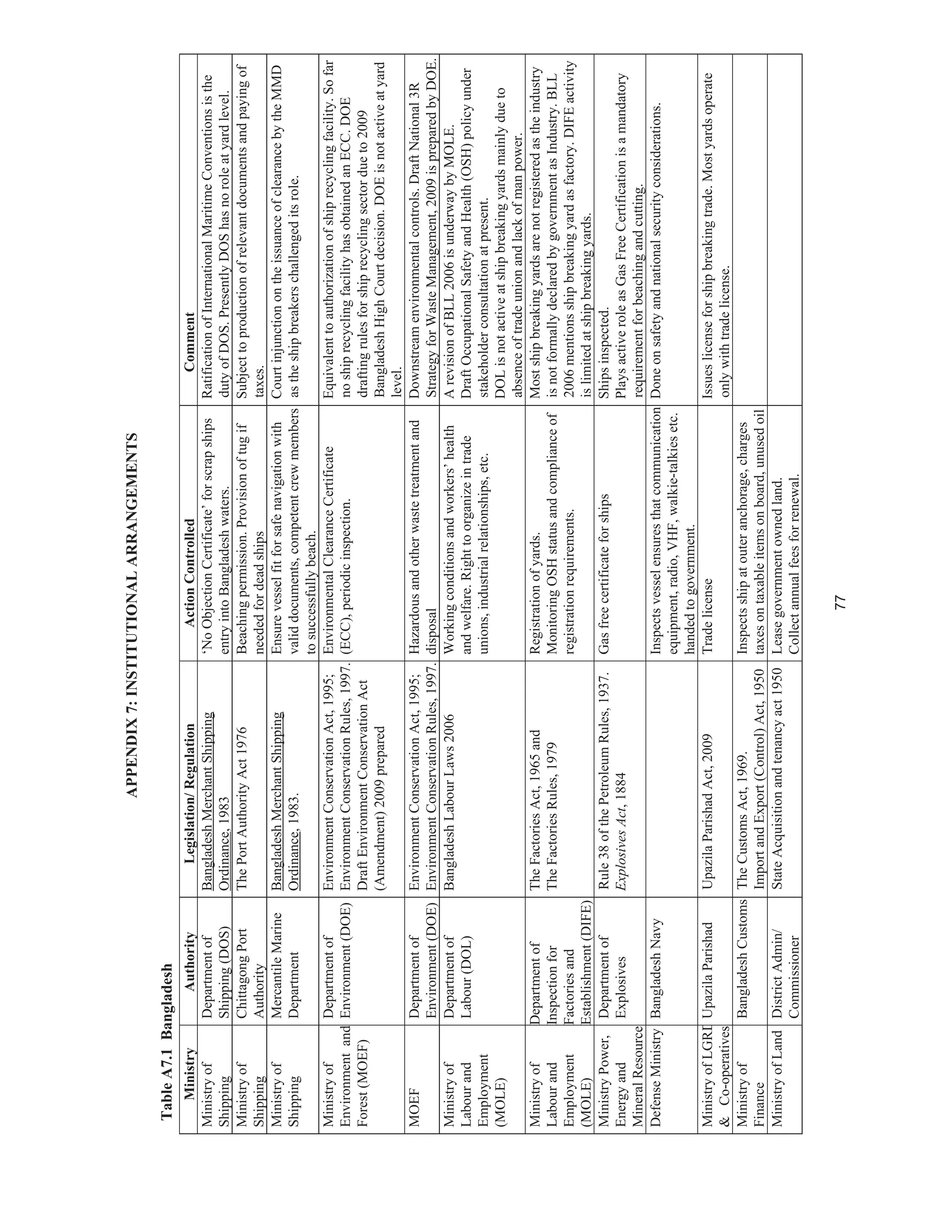
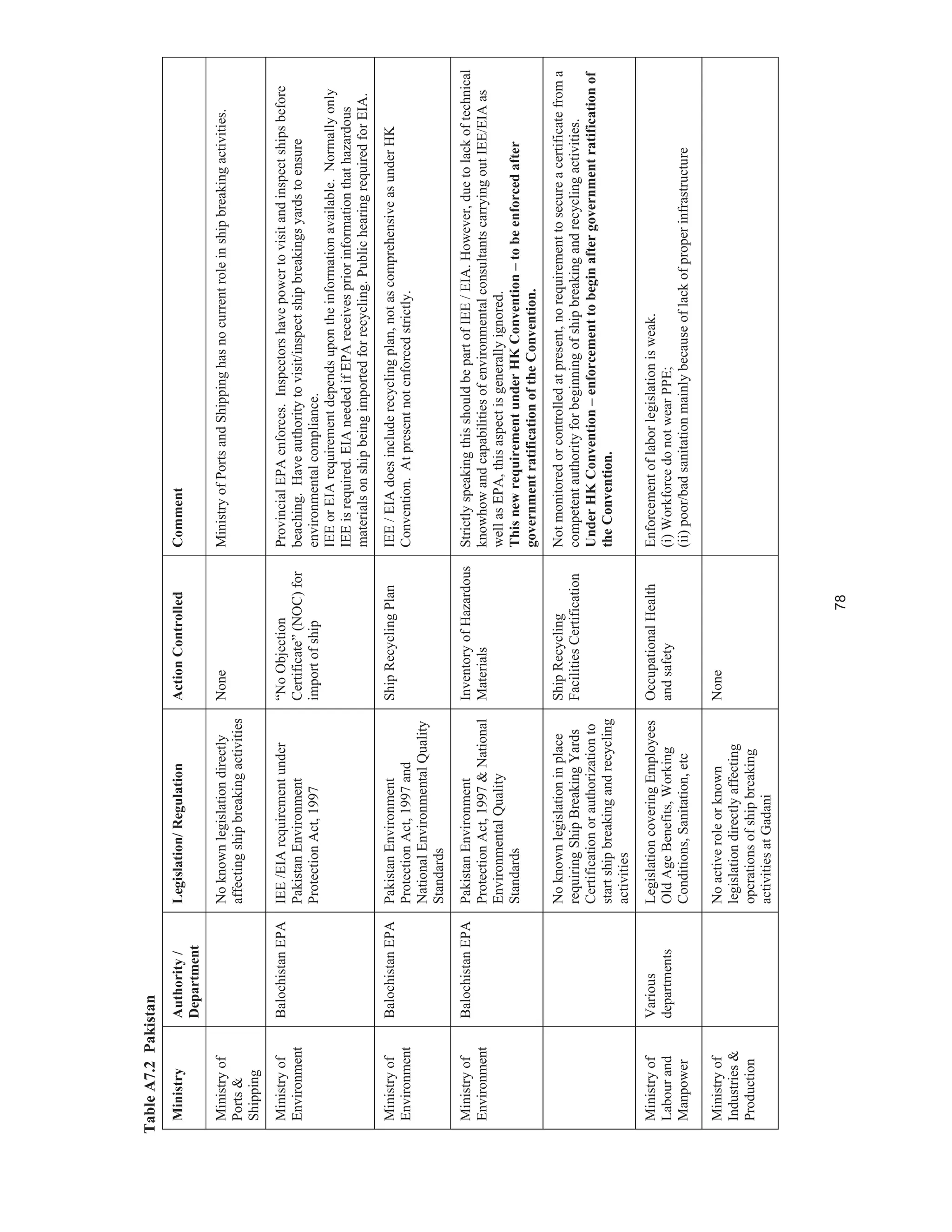
Appendix 7: Institutional Arrangements ..............................................................................................77
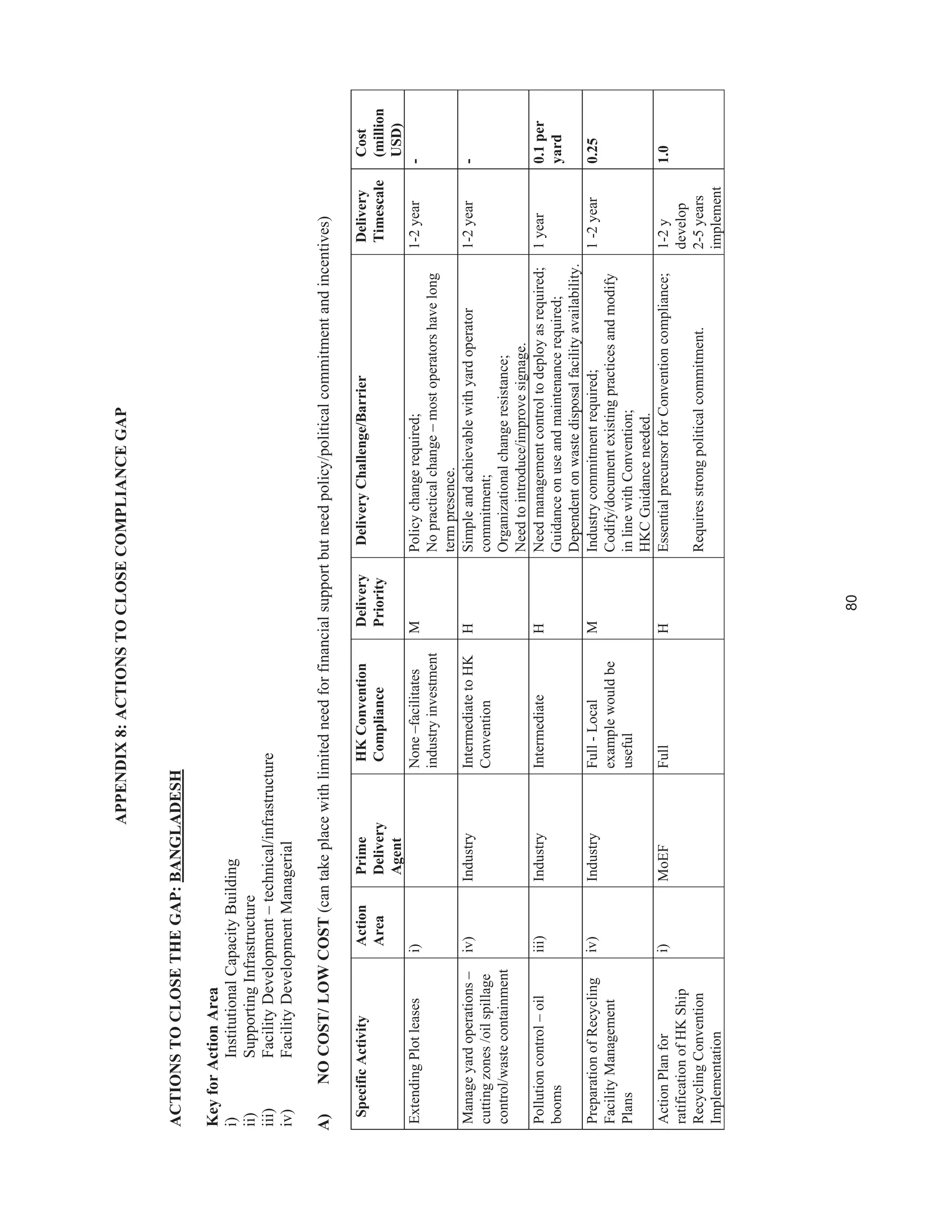
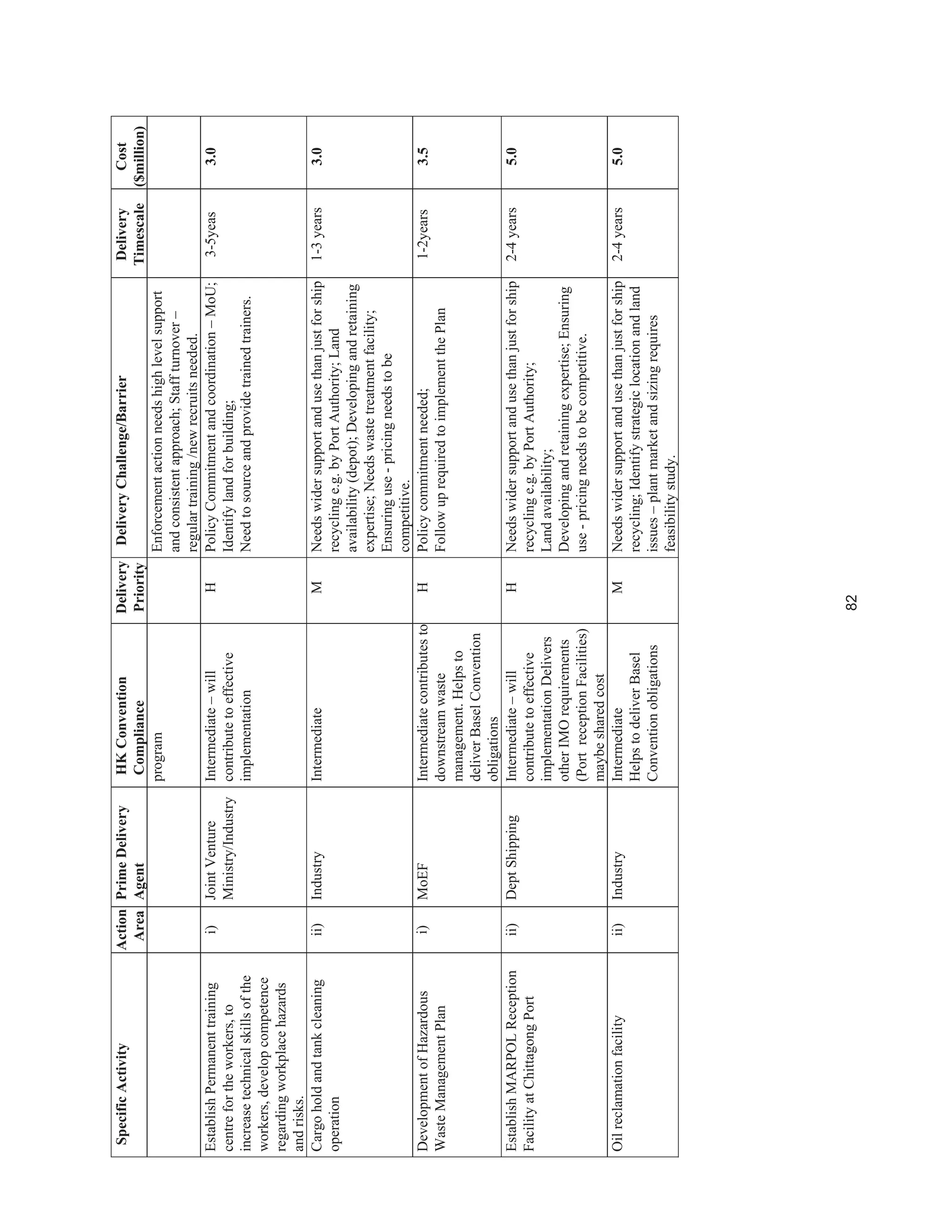
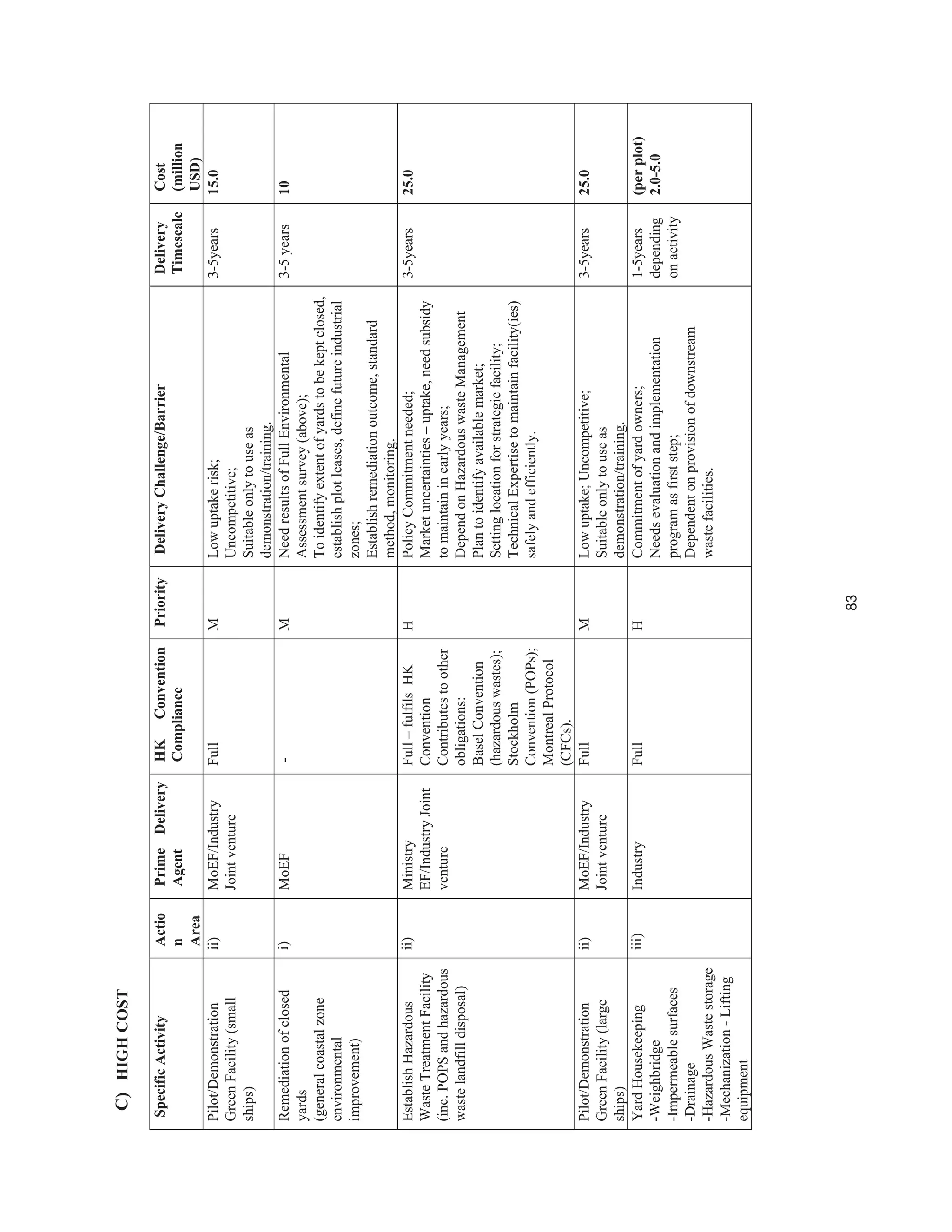
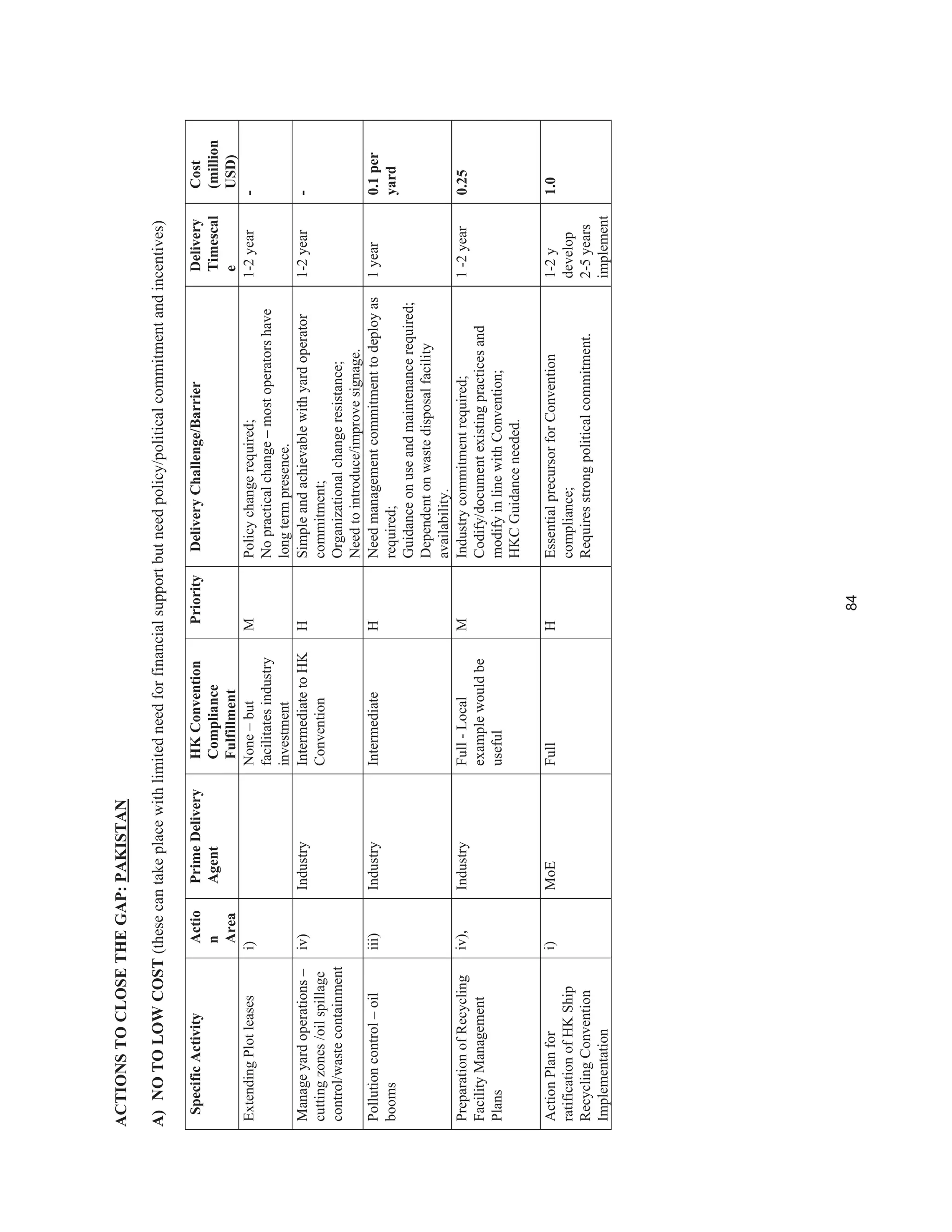
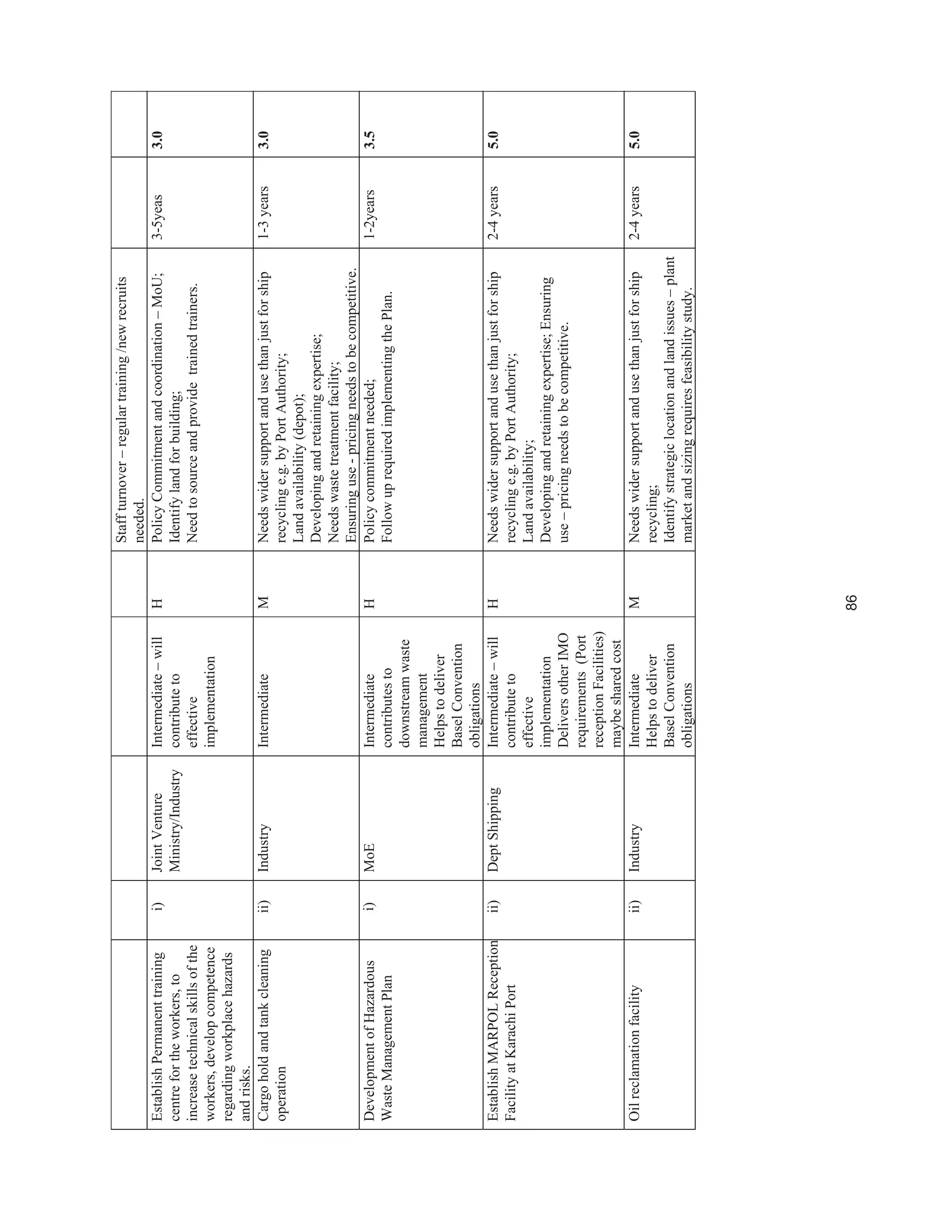
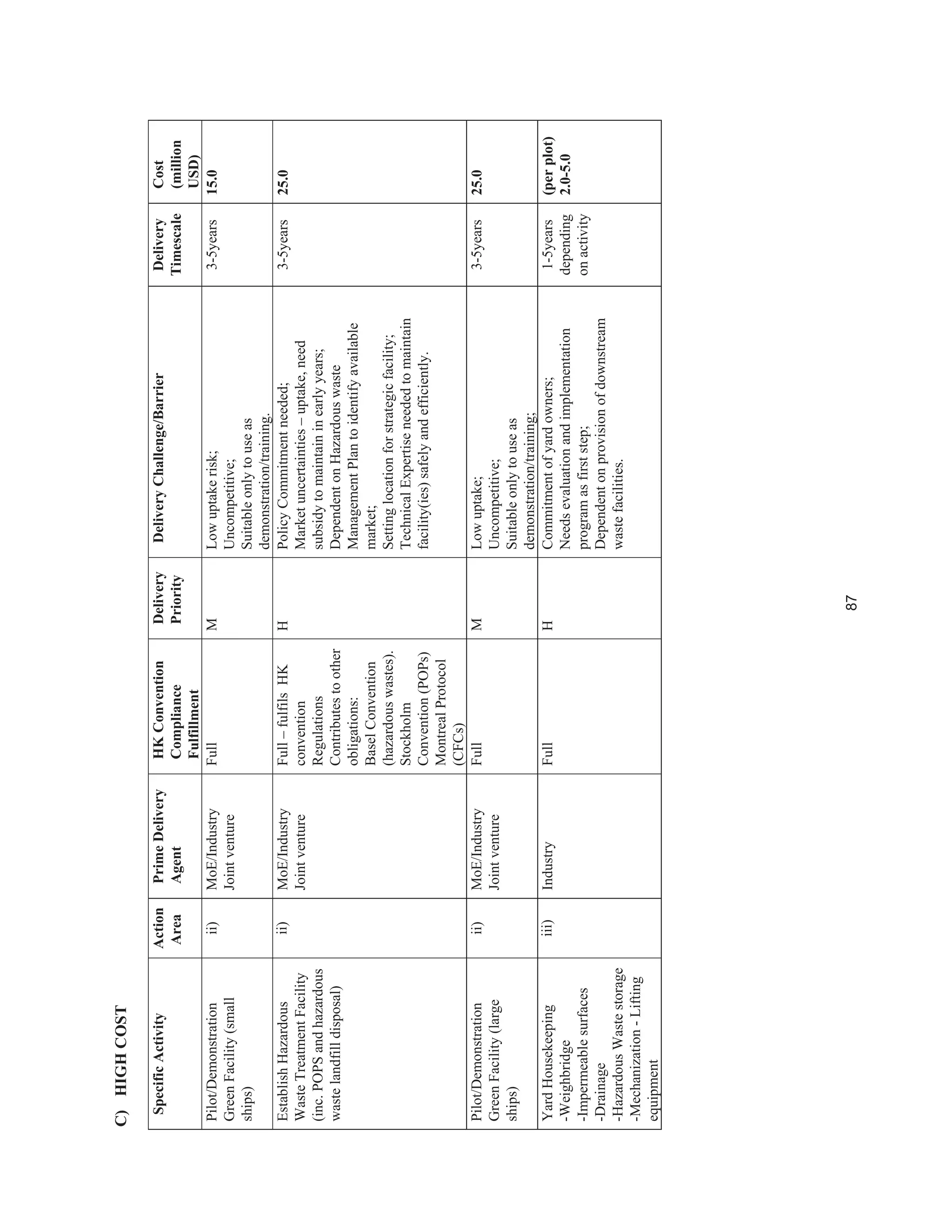
Appendix 8: Actions to Close Compliance Gap...................................................................................80
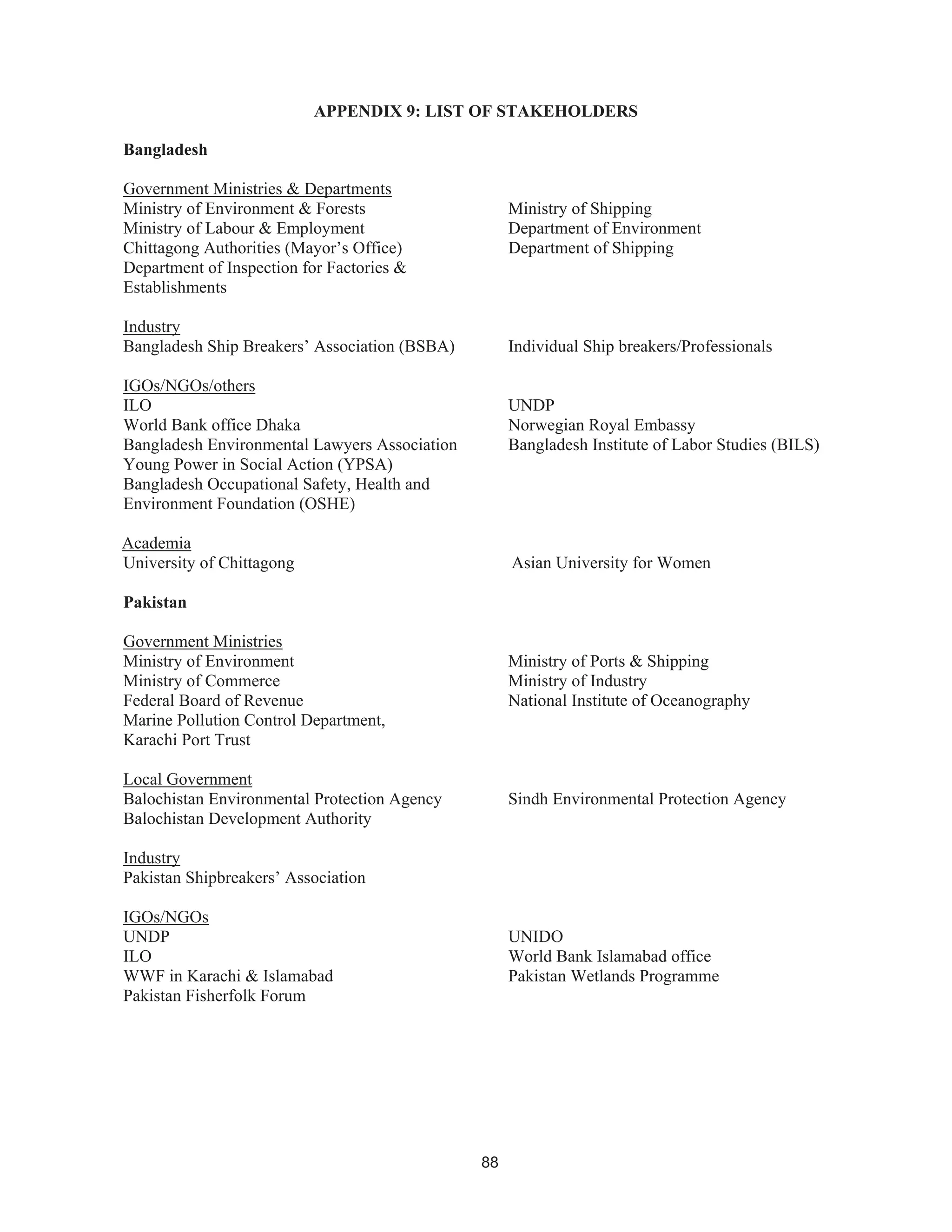
Appendix 9: List of Stakeholders .......................................................................................................88
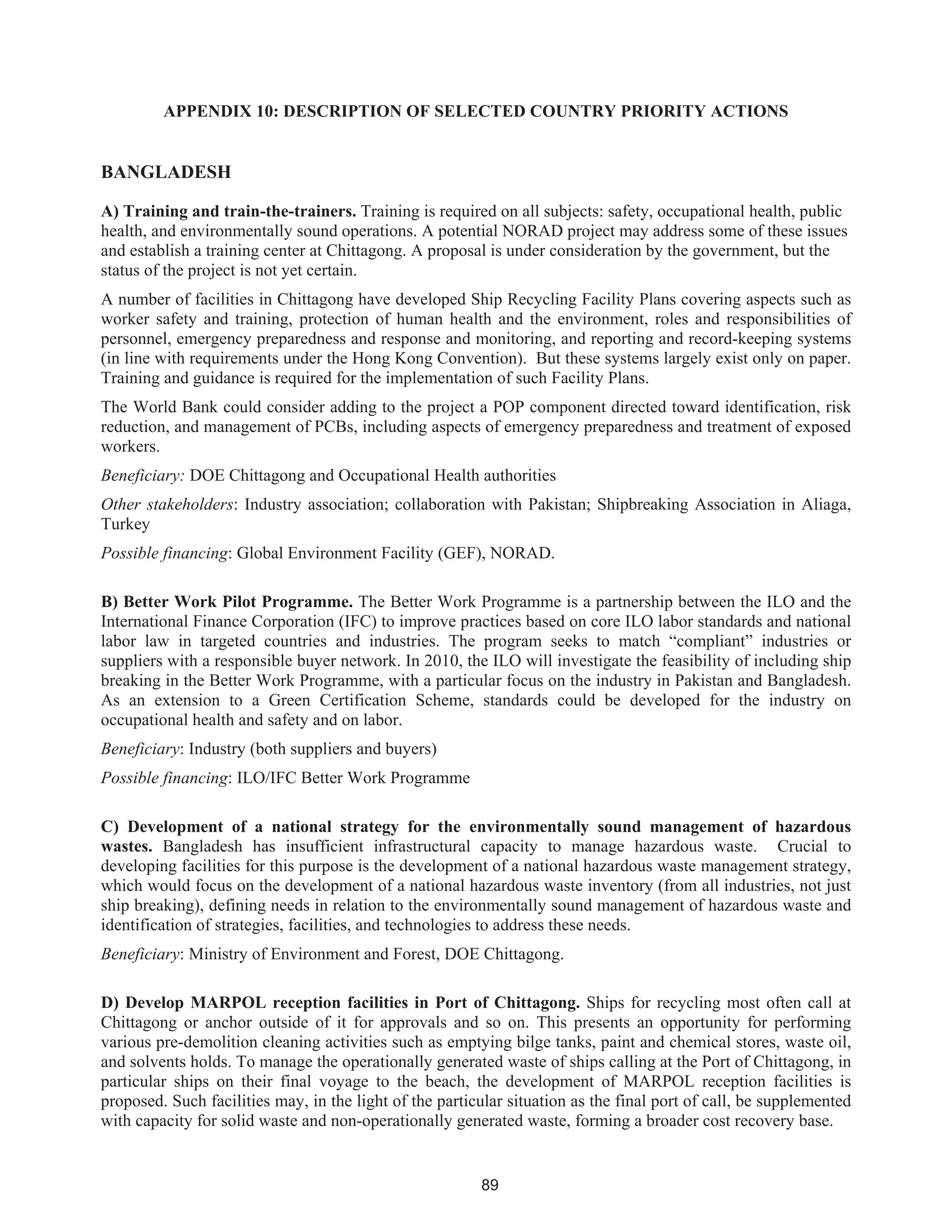
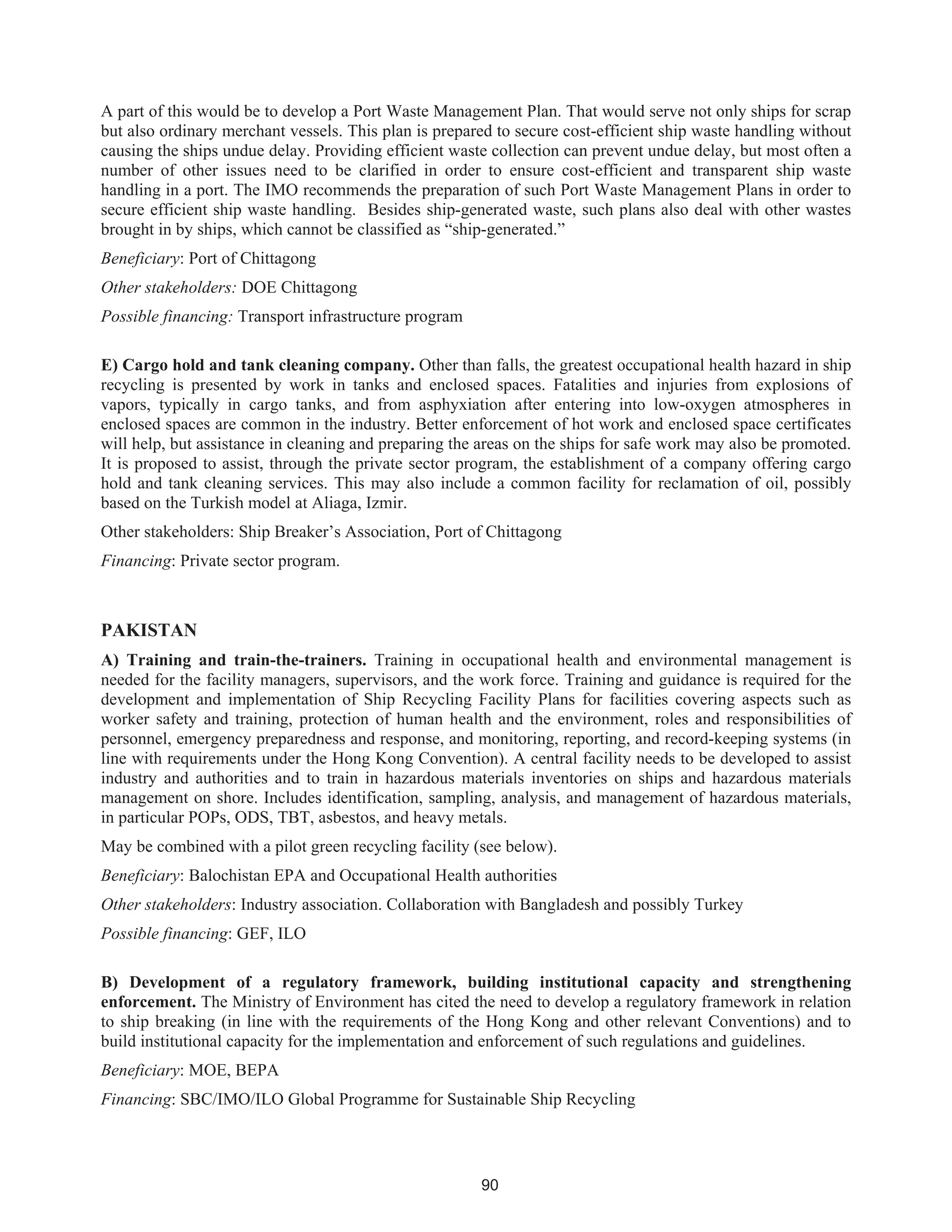
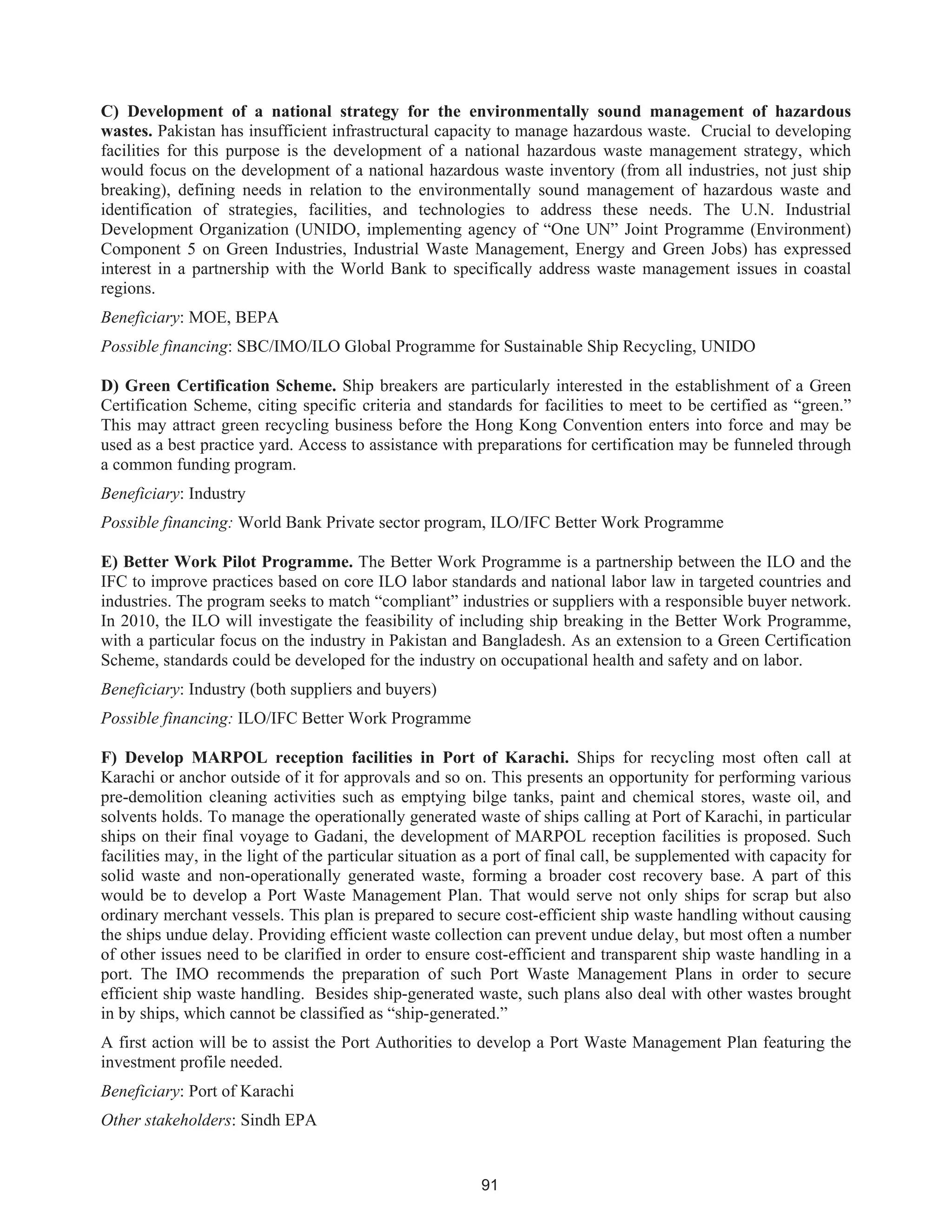
Appendix 10: Description of Selected Country Priority Actions.............................................................89
....................................................................................................................
the
iv
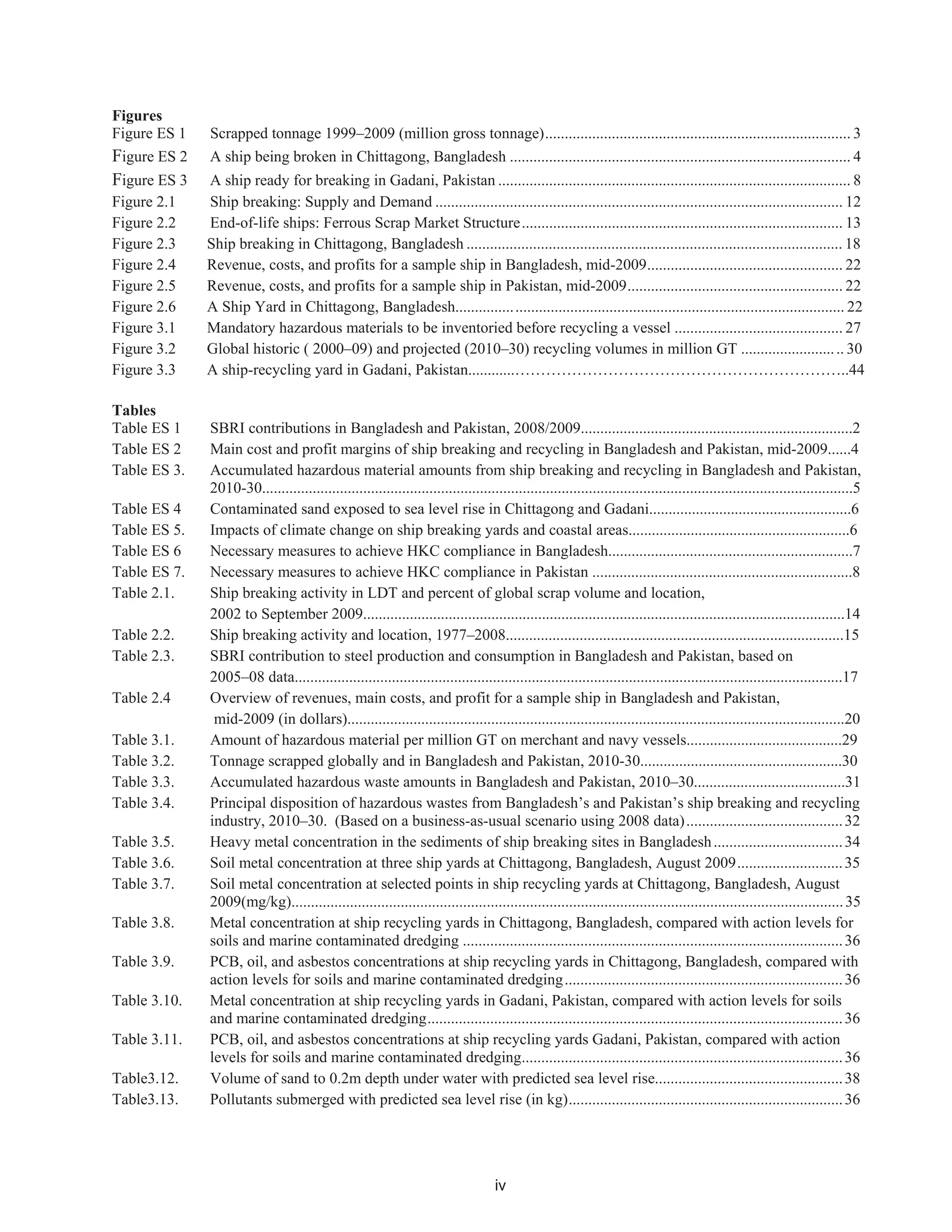
Figures
Figure ES 1 Scrapped tonnage 1999–2009 (million gross tonnage).............................................................................. 3
Figure ES 2 A ship being broken in Chittagong, Bangladesh ....................................................................................... 4
Figure ES 3 A ship ready for breaking in Gadani, Pakistan .......................................................................................... 8
Figure 2.1 Ship breaking: Supply and Demand ........................................................................................................ 12
Figure 2.2 End-of-life ships: Ferrous Scrap Market Structure.................................................................................. 13
Figure 2.3 hip b e ng in Chittagong, Bangladesh ...................................................................................... 18
Figure 2.4 Revenue, costs, and profits for a sample ship in Bangladesh, mid-2009.................................................. 22
Figure 2.5 Revenue, costs, and profits for a sample ship in Pakistan, mid-2009....................................................... 22
Figure 2.6 A hip ard in Chittagong, Bangladesh .................................................................................... 22
Figure 3.1 Mandatory hazardous materials to be inventoried before recycling a vessel ........................................... 27
Figure 3.2 Global historic ( 2000–09) and projected (2010–30) recycling volumes in million GT .......................... 30
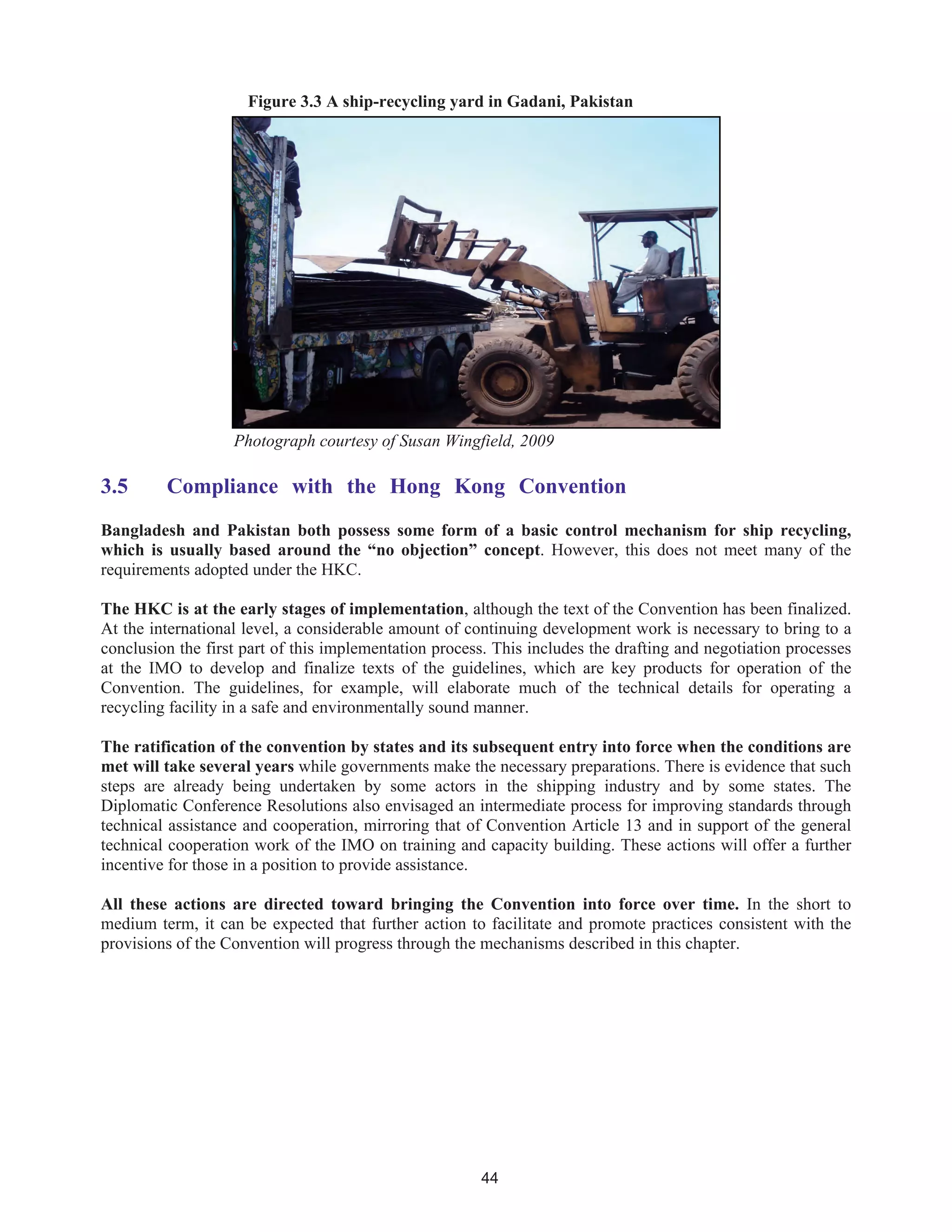
Figure 3.3 A ship-recycling yard in Gadani, Pakistan ………………………………………………………..44
Tables
Table ES 1 SBRI contributions in Bangladesh and Pakistan, 2008/2009......................................................................2
Table ES 2 Main cost and profit margins of ship breaking and recycling in Bangladesh and Pakistan, mid-2009......4
Table ES 3. Accumulated hazardous material amounts from ship breaking and recycling in Bangladesh and Pakistan,
2010-30........................................................................................................................................................5
Table ES 4 Contaminated sand exposed to sea level rise in Chittagong and Gadani....................................................6
Table ES 5. Impacts of climate change on ship breaking yards and coastal areas.........................................................6
Table ES 6 Necessary measures to achieve HKC compliance in Bangladesh...............................................................7
Table ES 7. Necessary measures to achieve HKC compliance in Pakistan ...................................................................8
Table 2.1. Ship breaking activity in LDT and percent of global scrap volume and location,
2002 to September 2009............................................................................................................................14
Table 2.2. Ship breaking activity and location, 1977–2008.......................................................................................15
Table 2.3. SBRI contribution to steel production and consumption in Bangladesh and Pakistan, based on
2005–08 data.............................................................................................................................................17
Table 2.4 Overview of revenues, main costs, and profit for a sample ship in Bangladesh and Pakistan,
mid-2009 (in dollars)................................................................................................................................20
Table 3.1. Amount of hazardous material per million GT on merchant and navy vessels........................................29
Table 3.2. Tonnage scrapped globally and in Bangladesh and Pakistan, 2010-30....................................................30
Table 3.3. Accumulated hazardous waste amounts in Bangladesh and Pakistan, 2010–30.......................................31
Table 3.4. Principal disposition of hazardous wastes from Bangladesh’s and Pakistan’s ship breaking and recycling
industry, 2010–30. (Based on a business-as-usual scenario using 2008 data)........................................32
Table 3.5. Heavy metal concentration in the sediments of ship breaking sites in Bangladesh.................................34
Table 3.6. Soil metal concentration at three ship yards at Chittagong, Bangladesh, August 2009...........................35
Table 3.7. Soil metal concentration at selected points in ship recycling yards at Chittagong, Bangladesh, August
2009(mg/kg) ...........................................................................................35
Table 3.8. Metal concentration at ship recycling yards in Chittagong, Bangladesh, compared with action levels for
soils and marine contaminated dredging .................................................................................................36
Table 3.9. PCB, oil, and asbestos concentrations at ship recycling yards in Chittagong, Bangladesh, compared with
action levels for soils and marine contaminated dredging.......................................................................36
Table 3.10. Metal concentration at ship recycling yards in Gadani, Pakistan, compared with action levels for soils
and marine contaminated dredging..........................................................................................................36
Table 3.11. PCB, oil, and asbestos concentrations at ship recycling yards Gadani, Pakistan, compared with action
levels for soils and marine contaminated dredging..................................................................................36
Table3.12. Volume of sand to 0.2m depth under water with predicted sea level rise................................................38
Table3.13. Pollutants submerged with predicted sea level rise (in kg)......................................................................36
S r ka i ..........
S Y ...............
............
..................................................
v
Table3.14. Qualitative impacts of predicted sea level rise on ship recycling yards and coastal residential areas ....39
Table 4.1. Outline strategic plan for actions to implement graduated compliance with the Hong Kong
Convention* ............................................................................................................................................46
Table 4.2. Actions and assumptions on hazardous waste treatment facility with environmentally sound
management.............................................................................................................................................47
Table 4.3. Actions and assumptions on local hazardous waste facility ....................................................................47
Table 4.4. Actions and assumptions on technical assistance to Ministries of Environment and provincial
environmental protection authorities .......................................................................................................48
Table 4.5. Actions and assumptions on drafting new legislation, regulations and guidelines*................................48
Table 4.6. Actions and assumptions on technical capacity building.........................................................................48
Table 4.7. Priority actions for Bangladesh ...............................................................................................................49
Table 4.8. Necessary measures to achieve HKC compliance in Bangladesh (in dollars).........................................49
Table 4.9. Priority actions for Paklistan ...................................................................................................................51
Table 4.10 Necessary measures to achieve HKC compliance in Pakistan (in dollars)..............................................51
vi
Acronyms and Abbreviations
BDA Balochistan Development Authority
BEPA Balochistan Environmental Protection Agency
DOE Department of Environment (Bangladesh)
DWT Dead Weight Tonnage
EHS Environment, Health, and Safety
EU European Union
GEF Global Environment Facility
GEPIL Gujarat Environment Protection Infrastructure Ltd
GMB Gujarat Maritime Board
GT Gross Tonnage
HKC Hong Kong Convention
IFC International Finance Corporation
IHM Inventory of Hazardous Materials
ILO International Labour Organization
ISO International Organization for Standardization
IMO International Maritime Organization
LDT Light displacement tons
MEPC Marine Environment Protection Committee
MoE Ministry of Environment (Pakistan)
MoEF Ministry of Environment and Forest (Bangladesh)
MS Mild Steel
NIP National Implementation Plan
NOC No Objection Certificate
ODS Ozone-Depleting Substance
OHSAS Occupation Health and Safety Assessment Series
PCB Polychlorinated Biphenyl
PPE Personal Protective Equipment
SBRI Ship Breaking and Recycling Industry
TBT Tributyltin
UNIDO United Nations Industrial Development Organization
vii
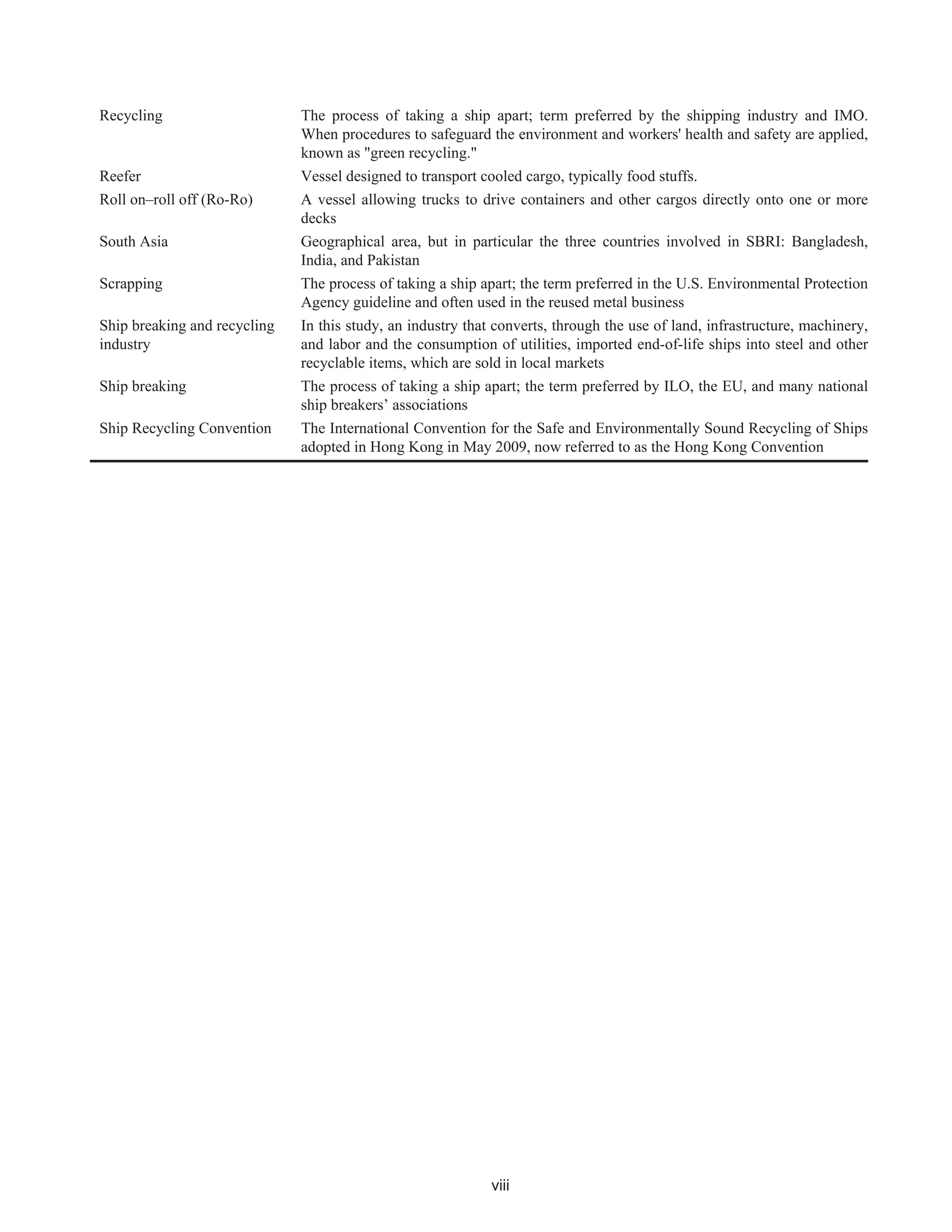
Glossary
Ballast Seawater taken into a vessel's tanks in order to submerge the vessel to proper trim
Basel Convention The Convention on the Control of Transboundary Movements of Hazardous Wastes and
their Disposal
Dead weight tonnage The lifting or carrying capacity of a ship when fully loaded. The deadweight is the
difference, in tons1
, between the displacement and the lightweight. It includes cargo,
bunkers, water (potable, boiler, ballast), stores, passengers, and crew.
Decommission The decision and process of taking a ship out of service; often used regarding naval
vessels
Demolition The process of taking a ship apart; mostly used for on shore operations
Dismantling The process of taking a ship apart; term preferred by the Basel Convention and used in its
guidelines and by the European Commission (DG Environment)
Displacement Displacement is a measure of the weight of a navy vessel without monitions, fuel, and
crew
Environmentally sound
management
Specifically referring to the Basel Convention Technical Guidelines for the
Environmentally Sound Management of the Full and Partial Dismantling of Ships
Displacement tonnage Expressed in tons, the weight of water displaced by the vessel, which in turn is the weight
of the vessel at that time
Gas free certificate (for hot
work)
A certificate stating that the air in a tanker's (empty) cargo tanks is safe
Gross tonnage The internal capacity of a vessel measured in units of 100 cubic feet
Hong Kong Convention International Convention for the Safe and Environmentally Sound Recycling of Ships
adopted in Hong Kong in May 2009
Inventory of Hazardous
Materials
A list of hazardous materials generated by the shipowner under the Hong Kong
Convention
International Labour
Organization
The U.N. agency seeking the promotion of social justice and internationally recognized
human and labor rights
International Organization
for Standardization
The organization that has developed the widespread environmental standard ISO14000,
often referred to as ISO 14001
International Maritime
Organization
The U.N. agency responsible for improving maritime safety and preventing pollution from
ships
Light displacement tons (or
lightweight)
Expressed in tons, the displacement without cargo, fuel, lubricating oil, ballast water, fresh
water and feed water, consumable stores, and passengers and crew and their effects, but
including liquids in piping
MARPOL International Convention for the Prevention of Pollution from Ships, 1973, as modified by
the Protocol of 1978
Marine Environment
Protection Comm.
IMO's senior technical body on marine pollution related matters
Occupation Health and
Safety Assessment Series
OHSAS 18000 is an Occupation Health and Safety Assessment Series, often referred to as
OHSAS 18001
Panamax The largest acceptable size of ship to transit the Panama Canal; applied to both freighters
and tankers; lengths are restricted to a maximum of 275 meters, and widths to slightly
more than 32 meters. The average size about is 65,000 DWT but may go up to at least
80,000 DWT.
1
Note: Unless otherwise stated, ton (t) is a metric ton of 1,000 kilograms.
viii
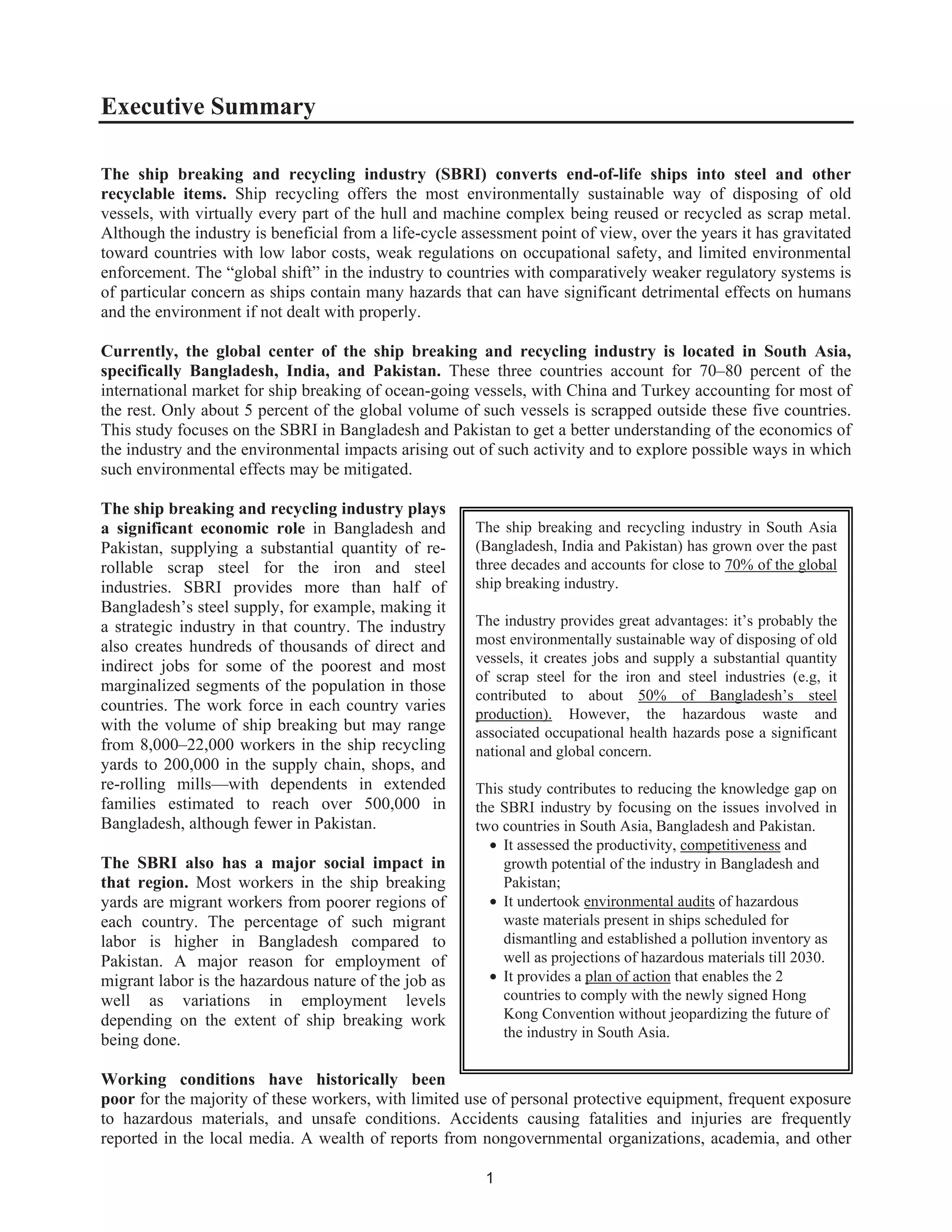
Recycling The process of taking a ship apart; term preferred by the shipping industry and IMO.
When procedures to safeguard the environment and workers' health and safety are applied,
known as "green recycling."
Reefer Vessel designed to transport cooled cargo, typically food stuffs.
Roll on–roll off (Ro-Ro) A vessel allowing trucks to drive containers and other cargos directly onto one or more
decks
South Asia Geographical area, but in particular the three countries involved in SBRI: Bangladesh,
India, and Pakistan
Scrapping The process of taking a ship apart; the term preferred in the U.S. Environmental Protection
Agency guideline and often used in the reused metal business
Ship breaking and recycling
industry
In this study, an industry that converts, through the use of land, infrastructure, machinery,
and labor and the consumption of utilities, imported end-of-life ships into steel and other
recyclable items, which are sold in local markets
Ship breaking The process of taking a ship apart; the term preferred by ILO, the EU, and many national
ship breakers’ associations
Ship Recycling Convention The International Convention for the Safe and Environmentally Sound Recycling of Ships
adopted in Hong Kong in May 2009, now referred to as the Hong Kong Convention
1
Executive Summary
The ship breaking and recycling industry (SBRI) converts end-of-life ships into steel and other
recyclable items. Ship recycling offers the most environmentally sustainable way of disposing of old
vessels, with virtually every part of the hull and machine complex being reused or recycled as scrap metal.
Although the industry is beneficial from a life-cycle assessment point of view, over the years it has gravitated
toward countries with low labor costs, weak regulations on occupational safety, and limited environmental
enforcement. The “global shift” in the industry to countries with comparatively weaker regulatory systems is
of particular concern as ships contain many hazards that can have significant detrimental effects on humans
and the environment if not dealt with properly.
Currently, the global center of the ship breaking and recycling industry is located in South Asia,
specifically Bangladesh, India, and Pakistan. These three countries account for 70–80 percent of the
international market for ship breaking of ocean-going vessels, with China and Turkey accounting for most of
the rest. Only about 5 percent of the global volume of such vessels is scrapped outside these five countries.
This study focuses on the SBRI in Bangladesh and Pakistan to get a better understanding of the economics of
the industry and the environmental impacts arising out of such activity and to explore possible ways in which
such environmental effects may be mitigated.
The ship breaking and recycling industry plays
a significant economic role in Bangladesh and
Pakistan, supplying a substantial quantity of re-
rollable scrap steel for the iron and steel
industries. SBRI provides more than half of
Bangladesh’s steel supply, for example, making it
a strategic industry in that country. The industry
also creates hundreds of thousands of direct and
indirect jobs for some of the poorest and most
marginalized segments of the population in those
countries. The work force in each country varies
with the volume of ship breaking but may range
from 8,000–22,000 workers in the ship recycling
yards to 200,000 in the supply chain, shops, and
re-rolling mills—with dependents in extended
families estimated to reach over 500,000 in
Bangladesh, although fewer in Pakistan.
The SBRI also has a major social impact in
that region. Most workers in the ship breaking
yards are migrant workers from poorer regions of
each country. The percentage of such migrant
labor is higher in Bangladesh compared to
Pakistan. A major reason for employment of
migrant labor is the hazardous nature of the job as
well as variations in employment levels
depending on the extent of ship breaking work
being done.
Working conditions have historically been
poor for the majority of these workers, with limited use of personal protective equipment, frequent exposure
to hazardous materials, and unsafe conditions. Accidents causing fatalities and injuries are frequently
reported in the local media. A wealth of reports from nongovernmental organizations, academia, and other
The ship breaking and recycling industry in South Asia
(Bangladesh, India and Pakistan) has grown over the past
three decades and accounts for close to 70% of the global
ship breaking industry.
The industry provides great advantages: it’s probably the
most environmentally sustainable way of disposing of old
vessels, it creates jobs and supply a substantial quantity
of scrap steel for the iron and steel industries (e.g, it
contributed to about 50% of Bangladesh’s steel
production). However, the hazardous waste and
associated occupational health hazards pose a significant
national and global concern.
This study contributes to reducing the knowledge gap on
the SBRI industry by focusing on the issues involved in
two countries in South Asia, Bangladesh and Pakistan.
• It assessed the productivity, competitiveness and
growth potential of the industry in Bangladesh and
Pakistan;
• It undertook environmental audits of hazardous
waste materials present in ships scheduled for
dismantling and established a pollution inventory as
well as projections of hazardous materials till 2030.
• It provides a plan of action that enables the 2
countries to comply with the newly signed Hong
Kong Convention without jeopardizing the future of
the industry in South Asia.
2
interested entities complement the limited monitoring data from the relevant authorities. Mechanization of
some of the hazardous works may minimize such accidents. Among the three countries, Pakistan uses the
highest degree of mechanization in the yards.
Environmental protection is limited in most yards and the sound management of asbestos,
polychlorinated biphenyls (PCBs), ozone-depleting substances (ODS), and a range of heavy metals is
virtually nonexistent. Of late, some efforts at minimizing the release of such pollutants in the environment
are emerging in Bangladesh due to intervention by the courts. Similar interest in improving the industry’s
performance is also developing in Pakistan.
Recognizing the need for coordinated action on the issue, the International Convention for the Safe
and Environmentally Sound Recycling of Ships was adopted by a diplomatic conference under the
auspices of the International Maritime Organization in Hong Kong, China, in May 2009. The Hong Kong
Convention (HKC) is expected to enter into force in 2015.
ECONOMICS OF THE SHIP BREAKING AND RECYCLING INDUSTRY
The relocation of the industry to South Asia in the 1980s
and the region’s success in retaining it since then has
contributed to significant economic development in that
region. This growth in ship breaking activity is due to both
supply side attributes and demand conditions in the three
countries and the region as a whole. A large labor supply,
low labor costs, and a relative lack of environmental and
occupational health regulation have all been vital. Also important is the fact that Bangladesh and Pakistan
features some of the largest current and pent-up future global demand for the SBRI’s outputs—notably,
relatively low-grade mild steel bars and rods for use in construction.
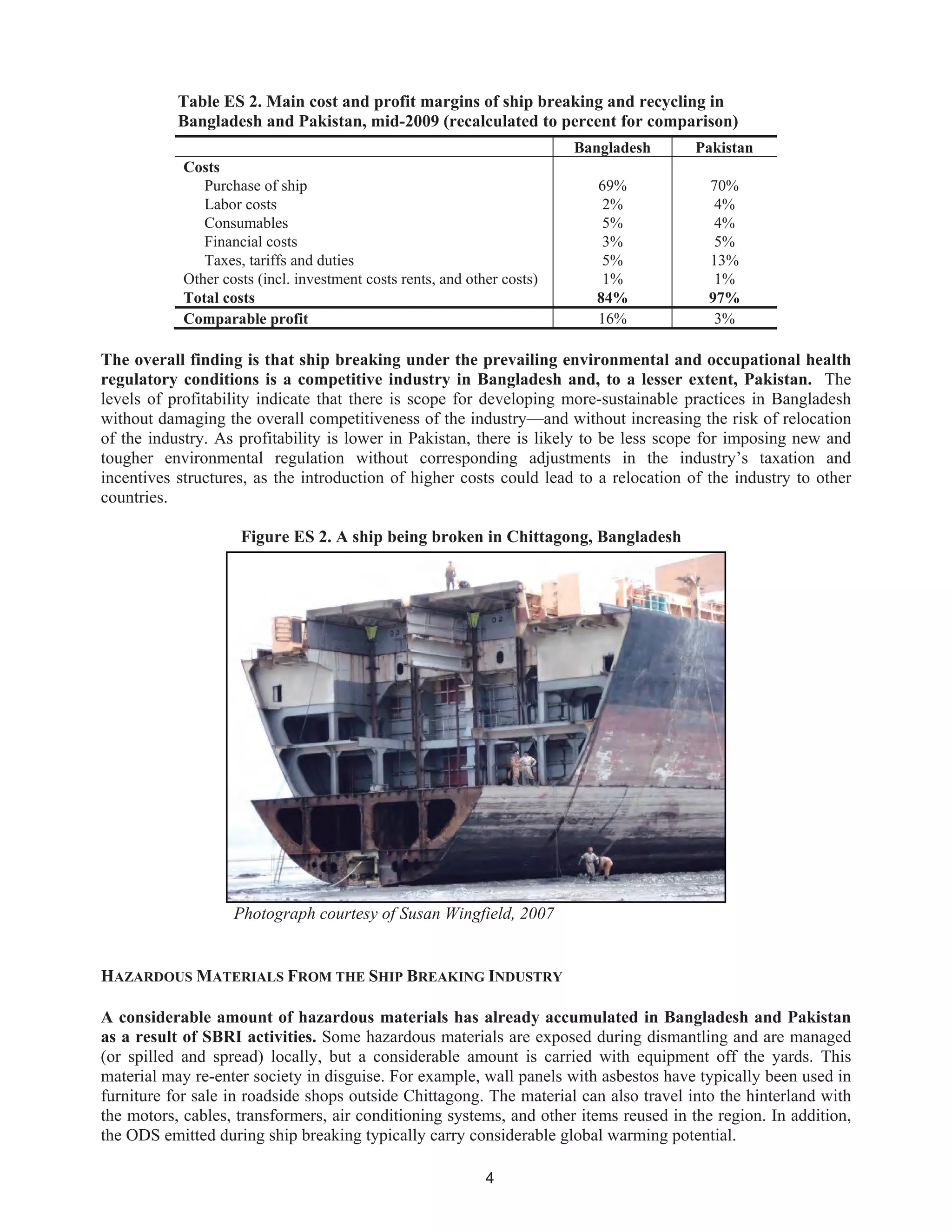
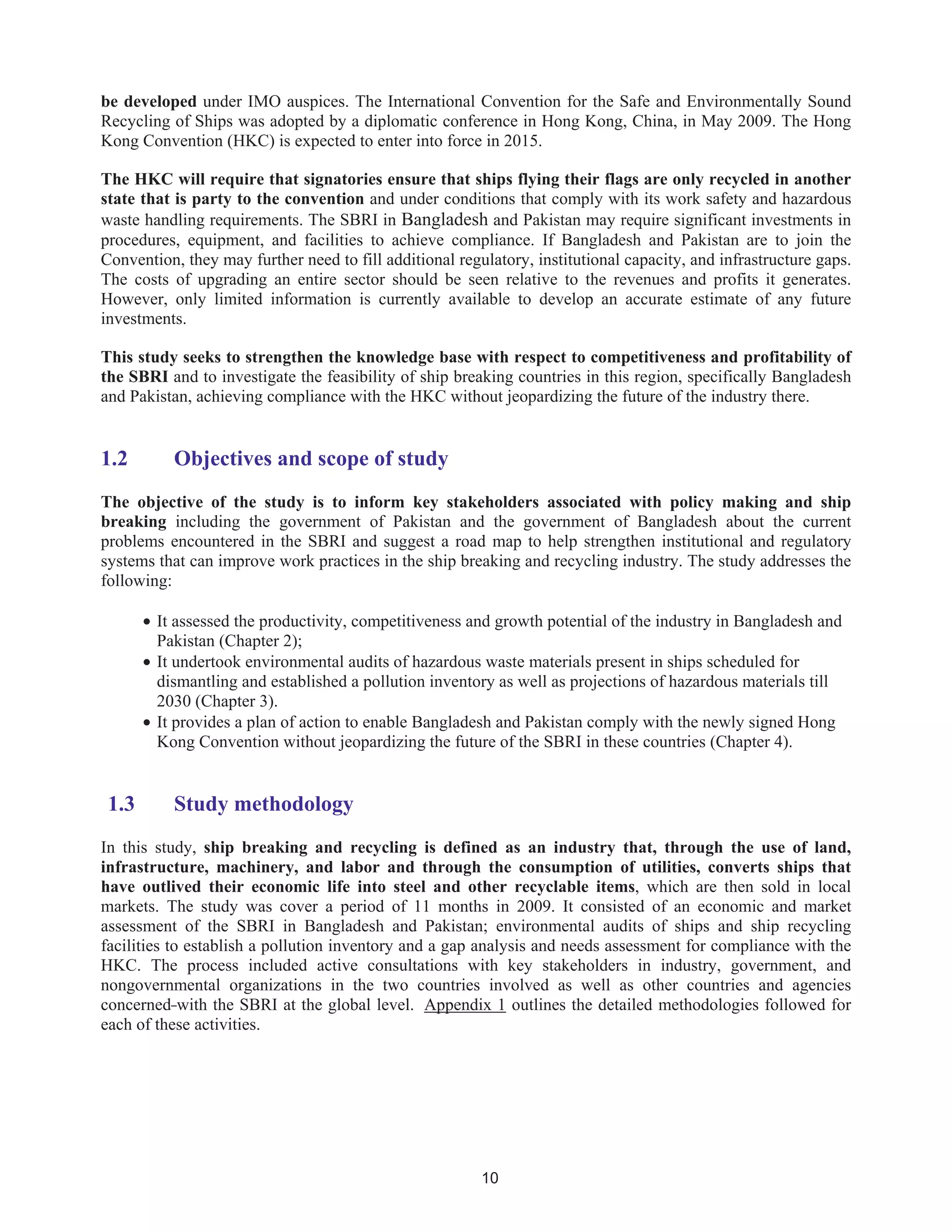
Table ES 1. SBRI contributions in Bangladesh and Pakistan, 2008/2009
Bangladesh Pakistan
National steel production 2.2–2.5 m tons 3 m tons
Scrap steel from ship breaking Up to 1.5 m tons Up to 800,000 tons
Ship breaking steel’s contribution to
production
50% 15%
No. of re-rolling mills 250 to 350 330
Scrap yards (total no.) 40 active 30 active (132)
Estimated no. of workers in yards 22,000 6,000–8,000
Large-scale SBRI exodus from Bangladesh and Pakistan is considered unlikely at this time, as opposed
to what happened in Japan and Taiwan in the past. The demand for construction materials in Bangladesh and
Pakistan is underpinned by a continuously expanding urbanization process in countries with very large
populations. Possible relocation may be driven by low costs, including both wages and costs resulting from
regulation. The available information indicates that Cambodia and Myanmar have lower wage rates than
Pakistan, whereas Bangladesh might still be able to compete with them on wages. Hence, the risk of
relocation from a wage point of view seems more threatening for Pakistan. However, the beaching method
for dismantling old vessels also depends on a domestic steel market, a market for other recyclable items, and
natural conditions of high tidal gauge and wide beaches. Given the relatively low likelihood of meeting all
these conditions in other locations, it is not considered likely that the SBRI will relocate on a large scale from
Bangladesh and Pakistan in the immediate future.
The overall finding is that a more
environmentally sustainable ship breaking and
recycling industry will remain competitive in
Bangladesh. Subject to incentive adjustments, it
can also remain so in Pakistan.
3
The supply of vessels for scrapping from the shipping sector is subject to large variations as a
consequence of the global demand for seaborne transport. Between 2004 and 2008 shipping saw unsurpassed
freight rates as a result of high demand for maritime transportation. That high demand kept even older ships
in operation during that period. This resulted in a record low number of vessels being offered for scrapping.
On average, some 700–800 ships larger than 499 gross tonnage are scrapped annually, but during the
shipping industry’s global boom years the figure was only 300–400 vessels. Following the recent economic
recession, however, the demand for maritime transportation has declined. As a result, the number of vessels
scrapped in 2009 is estimated to have reached 1,200 equal to a capacity of more that 25 million gross
tonnage.
Figure ES 1. Scrapped tonnage 1999–2009 (million gross tonnage)
Source: Mikelis 2007 and Fairplay 2010
The future demand for scrapping is not expected to fall to previous lows even if the global economy
picks up. This is due to the generation of a massive order book in the shipbuilding yards during the boom
years, which will be completed in 2008-2012. Thus tonnage will be in excess of demand for at least 5-10
years to come. Already today, more ships are laid-up than for the past 20 years and unless global market
conditions change dramatically, a significant part of this fleet will undoubtedly go directly for scrapping.
The study assessed the profitability (and hence competitiveness) of the industry in Bangladesh and
Pakistan under the prevailing environmental and occupational health regulatory conditions. The estimates
used in the analysis are based on reviews, updates, and assessments of previous economic, econometric, and
financial studies, as well as on field interviews with a large number of stakeholders. The estimates are subject
to some degree of uncertainty, given the nature of the industry and the historic lack of reliable data. For
cross-country comparison purposes, all calculations are based on a “sample” ship—a Panamax oil tanker of
14,800 LDT (80,000 DWT).2
All major elements of revenue (from steel and other recyclable items) and costs
(from the purchase of the ship, labor, and financial costs) were considered to determine profitability.
2
LDT (light displacement tons or lightweight) denotes ship displacement, in tons, without cargo, fuel, lubricating oil,
ballast water, fresh water and feed water, consumable stores, and passengers and crew and their effects, but including
liquids in piping. DWT (dead weight tonnage) denotes the lifting or carrying capacity of a ship when fully loaded. The
deadweight is the difference, in tons, between the fully loaded ship and its lightweight.
0
5
10
15
20
25
30
1999 2000 2001 2002 2003 2004 2005 2006 2007 2008 2009
4
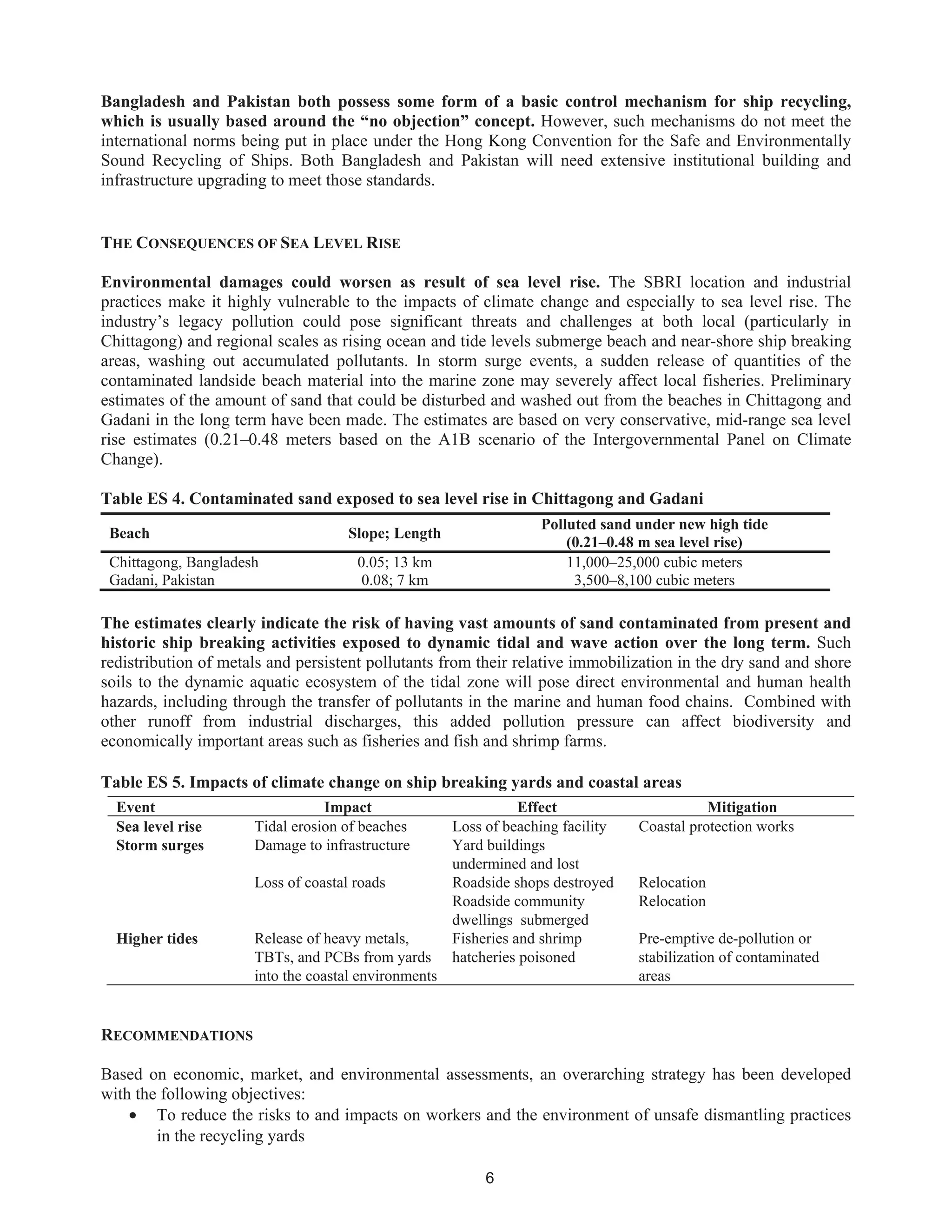
Table ES 2. Main cost and profit margins of ship breaking and recycling in
Bangladesh and Pakistan, mid-2009 (recalculated to percent for comparison)
Bangladesh Pakistan
Costs
Purchase of ship 69% 70%
Labor costs 2% 4%
Consumables 5% 4%
Financial costs 3% 5%
Taxes, tariffs and duties 5% 13%
Other costs (incl. investment costs rents, and other costs) 1% 1%
Total costs 84% 97%
Comparable profit 16% 3%
The overall finding is that ship breaking under the prevailing environmental and occupational health
regulatory conditions is a competitive industry in Bangladesh and, to a lesser extent, Pakistan. The
levels of profitability indicate that there is scope for developing more-sustainable practices in Bangladesh
without damaging the overall competitiveness of the industry—and without increasing the risk of relocation
of the industry. As profitability is lower in Pakistan, there is likely to be less scope for imposing new and
tougher environmental regulation without corresponding adjustments in the industry’s taxation and
incentives structures, as the introduction of higher costs could lead to a relocation of the industry to other
countries.
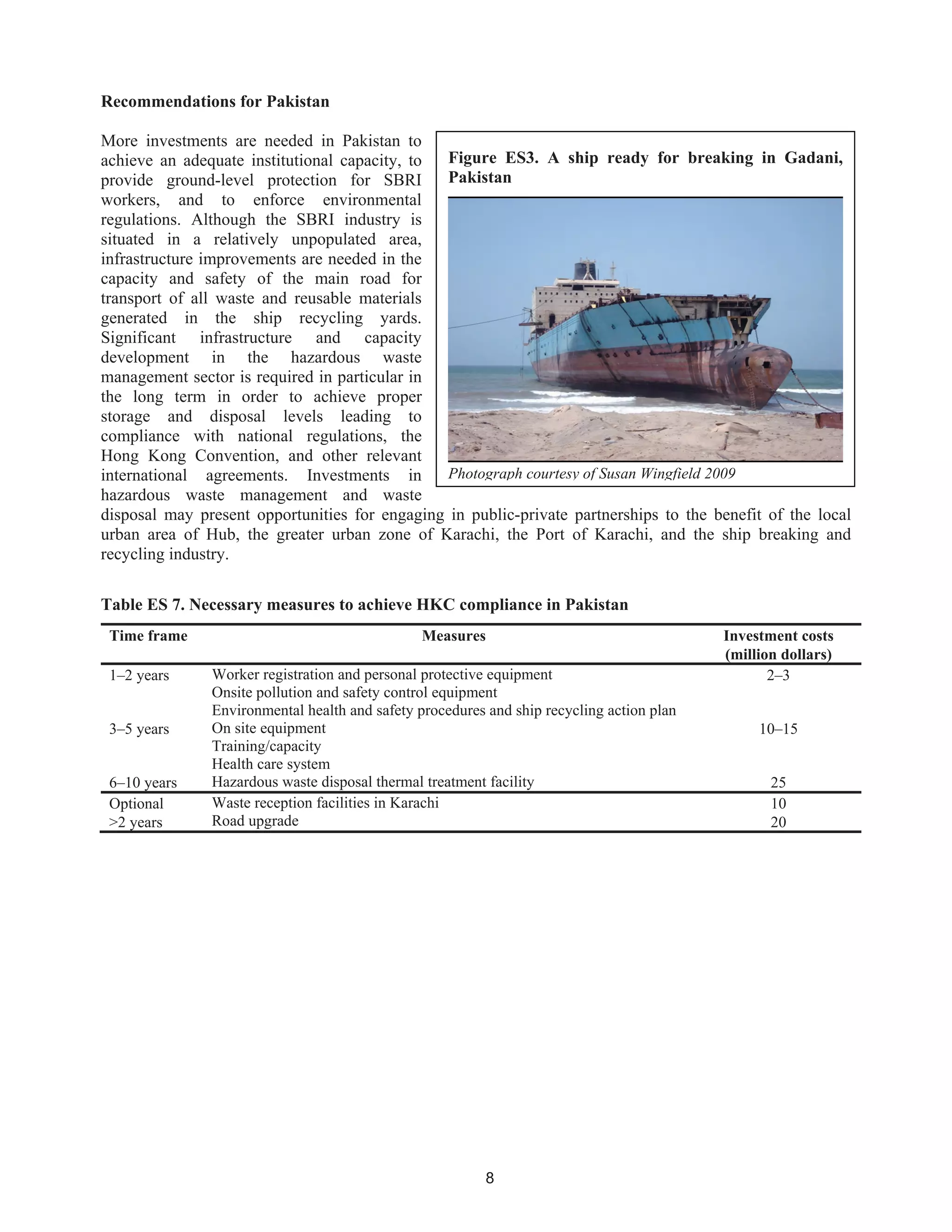
Figure ES 2. A ship being broken in Chittagong, Bangladesh
Photograph courtesy of Susan Wingfield, 2007
HAZARDOUS MATERIALS FROM THE SHIP BREAKING INDUSTRY
A considerable amount of hazardous materials has already accumulated in Bangladesh and Pakistan
as a result of SBRI activities. Some hazardous materials are exposed during dismantling and are managed
(or spilled and spread) locally, but a considerable amount is carried with equipment off the yards. This
material may re-enter society in disguise. For example, wall panels with asbestos have typically been used in
furniture for sale in roadside shops outside Chittagong. The material can also travel into the hinterland with
the motors, cables, transformers, air conditioning systems, and other items reused in the region. In addition,
the ODS emitted during ship breaking typically carry considerable global warming potential.
5
During the study, yards in Bangladesh and Pakistan were
tested for soil contamination. A widespread but varying
degree of contamination of ship recycling yards at Chittagong
(Bangladesh) and Gadani (Pakistan) was found, with deposits of
cadmium, chromium, lead, and mercury. Oil aside, the results
are consistent with previous limited studies on marine
sediments in the vicinity of ship breaking yards. This
contamination is indicative of the threats to the environment
caused by the practices and improper management of hazardous materials during the dismantling of ships. In
a number of samples the lead and oil concentrations raise concerns regarding the working environment.
As a result of analysis for this study, it was determined that:
• Asbestos will remain a significant long-term problem (as it is still found in newly build vessels).
• PCBs will still occur in older vessels and naval vessels.
• PCB-contaminated cables are a key area of concern.
• No collection or management options for ODS are available.
• Metals in paint pollute the work environment.
• Large volumes of oil and oily water must be managed.
Dioxins may be generated while burning cables to obtain copper, but fortunately it is technically simple
to manage and enforce a stop to this practice. In the re-rolling mills, however, the heating of painted steel
plates (in particular, those painted with chlorinated rubber paints) is also conducive to dioxin generation, and
little information is available on this source.
Hazardous materials that remain on beaches can be well managed locally with improved housekeeping
practices and with adequate handling and storage. The lack of hazardous waste disposal and treatment
facilities in Bangladesh and Pakistan means that wastes produced must nevertheless be disposed of
somewhere. And informal disposal may occur on the beaches, on adjacent unused plots, or on other land in
the vicinity.
Large amount of hazardous materials are likely to accumulate in both Bangladesh and Pakistan if the
prevailing practices continue over the next 20 years Based on the ship breaking work likely to be carried
out in the yards in Bangladesh and Pakistan between 2010 and 2030, an estimate was prepared about
accumulation of hazardous material in the three countries assuming continuation of the prevailing practices.
Table ES 3 shows that the impact is likely to be the more in Bangladesh than in Pakistan. A major reason for
the lower estimate for Pakistan arises from the fewer ships likely to be recycled there.
Table ES 3. Accumulated hazardous material amounts from ship breaking and
recycling in Bangladesh and Pakistan, 2010-30
Hazardous material Unit Bangladesh Pakistan
Asbestos t 79,000 5,200
PCBs (mainly cables) t 240,000 16,000
ODS (mainly polyurethane foam) t 210,000 14,000
Paints (metals, tributyltin (TBT), and PCBs) t 69,200 4,550
Heavy metals t 678 45
Waste liquid organic m3
1,978,000 130,000
Miscellaneous (mainly sewage) m3
107,000 7,000
Waste liquids inorganic (acids) t 775 51
Reusable liquids organics t 675,000 44,200
Soil contamination found in sites in
Bangladesh and Pakistan:
• Cadmium from 0.6 to 2.2 mg/kg
• Chromium from 2.42 to 22.12 mg/kg
• Lead from 11.3 to 197.7 mg/kg
• Mercury from 0.078 to 0.158 mg/kg
• Oil from 485 to 4,430 mg/kg
6
Bangladesh and Pakistan both possess some form of a basic control mechanism for ship recycling,
which is usually based around the “no objection” concept. However, such mechanisms do not meet the
international norms being put in place under the Hong Kong Convention for the Safe and Environmentally
Sound Recycling of Ships. Both Bangladesh and Pakistan will need extensive institutional building and
infrastructure upgrading to meet those standards.
THE CONSEQUENCES OF SEA LEVEL RISE
Environmental damages could worsen as result of sea level rise. The SBRI location and industrial
practices make it highly vulnerable to the impacts of climate change and especially to sea level rise. The
industry’s legacy pollution could pose significant threats and challenges at both local (particularly in
Chittagong) and regional scales as rising ocean and tide levels submerge beach and near-shore ship breaking
areas, washing out accumulated pollutants. In storm surge events, a sudden release of quantities of the
contaminated landside beach material into the marine zone may severely affect local fisheries. Preliminary
estimates of the amount of sand that could be disturbed and washed out from the beaches in Chittagong and
Gadani in the long term have been made. The estimates are based on very conservative, mid-range sea level
rise estimates (0.21–0.48 meters based on the A1B scenario of the Intergovernmental Panel on Climate
Change).
Table ES 4. Contaminated sand exposed to sea level rise in Chittagong and Gadani
Beach Slope; Length
Polluted sand under new high tide
(0.21–0.48 m sea level rise)
Chittagong, Bangladesh 0.05; 13 km 11,000–25,000 cubic meters
Gadani, Pakistan 0.08; 7 km 3,500–8,100 cubic meters
The estimates clearly indicate the risk of having vast amounts of sand contaminated from present and
historic ship breaking activities exposed to dynamic tidal and wave action over the long term. Such
redistribution of metals and persistent pollutants from their relative immobilization in the dry sand and shore
soils to the dynamic aquatic ecosystem of the tidal zone will pose direct environmental and human health
hazards, including through the transfer of pollutants in the marine and human food chains. Combined with
other runoff from industrial discharges, this added pollution pressure can affect biodiversity and
economically important areas such as fisheries and fish and shrimp farms.
Table ES 5. Impacts of climate change on ship breaking yards and coastal areas
Event Impact Effect Mitigation
Sea level rise Tidal erosion of beaches Loss of beaching facility Coastal protection works
Storm surges Damage to infrastructure Yard buildings
undermined and lost
Loss of coastal roads Roadside shops destroyed Relocation
Roadside community
dwellings submerged
Relocation
Higher tides Release of heavy metals,
TBTs, and PCBs from yards
into the coastal environments
Fisheries and shrimp
hatcheries poisoned
Pre-emptive de-pollution or
stabilization of contaminated
areas
RECOMMENDATIONS
Based on economic, market, and environmental assessments, an overarching strategy has been developed
with the following objectives:
• To reduce the risks to and impacts on workers and the environment of unsafe dismantling practices
in the recycling yards
7
• To provide safe storage, transport, and disposal options for hazardous materials derived from the
recycling process in order to reduce the distribution of unsafe materials in communities
• To provide options for financing investments and managing them through public-private partnerships
• To clean ships prior to starting any breaking or recycling activity.
Enforcement on the ground needs to be improved. The proposed strategy includes institutional capacity
building, enforcement of regulations, and investment in waste management facility. Institutional technical
capacity is strongly needed in both Bangladesh and Pakistan. However, the need to strengthen monitoring
and enforcement capacity in both countries is essential. With regard to infrastructure development,
significant investment in hazardous waste management is required to achieve compliance with the Hong
Kong Convention as well as other relevant international agreements and guidelines in both Bangladesh and
Pakistan. The implementation of interventions in the area of hazardous waste management and disposal may
present opportunities for engaging in public-private partnerships in Pakistan and Bangladesh.
A key recommendation of the study is to reduce the risks from hazardous materials before ship
recycling commences. It was found that ships for recycling often call at Karachi and Chittagong or anchor
outside for approvals. Such calls can be made mandatory, as it provides an opportunity to perform various
pre-demolition cleaning activities such as cleaning cargo tanks, emptying bilge tanks, paint and chemical
stores, and waste oil, and unloading surplus fuel under controlled conditions. To manage the operationally
generated waste of ships calling at the ports of Karachi and Chittagong, in particular ships on their final
voyage to the Chittagong beaches, MARPOL reception facilities should be developed3
. These facilities may,
in light of the particular situation at a port of final call, be supplemented with a capacity for handling solid
waste and non-operationally generated waste, providing a broader cost recovery base.
Recommendations for Bangladesh
Considerable efforts are needed in Bangladesh to achieve adequate institutional capacity and provide ground-
level enforcement of protection of workers and environment in the ship breaking industry. Infrastructure
improvement regarding the capacity and safety of the main road for transport of all waste and reusable
materials generated in the ship breaking yards should be initiated. Significant infrastructure and capacity
development in the hazardous waste management sector is required to achieve proper storage and disposal
levels in the long term in order to comply with the HKC and other relevant international agreements.
Given the proximity of the Chittagong municipal area, interventions in hazardous waste management and
disposal may present opportunities for engaging in public-private partnerships in Bangladesh to the benefit of
the greater urban zone, the port of Chittagong, and the ship breaking industry. Opportunities for establishing
an import tax regime directed at funding the investments may also be pursued.
Table ES 6. Necessary measures to achieve HKC compliance in Bangladesh
Time frame Measures Inv. costs ($ million)
1–2 years Worker registration
Onsite pollution and safety control equipment
Environmental health and safety procedures and ship recycling action plan
3.5
3–5 years On site equipment (variable)
Training/capacity
Health care system
Monitoring laboratory
20–25
6–10 years Hazardous waste disposal thermal treatment facility 25
Optional
>2 years
Pre-cleaning and waste reception facilities in Chittagong
Road upgrade (20 km Dhaka-Chittagong)
10–14
20
3
MARPOL is the international treaty regulating disposal of wastes generated by the normal operation of vessels.
8
Recommendations for Pakistan
More investments are needed in Pakistan to
achieve an adequate institutional capacity, to
provide ground-level protection for SBRI
workers, and to enforce environmental
regulations. Although the SBRI industry is
situated in a relatively unpopulated area,
infrastructure improvements are needed in the
capacity and safety of the main road for
transport of all waste and reusable materials
generated in the ship recycling yards.
Significant infrastructure and capacity
development in the hazardous waste
management sector is required in particular in
the long term in order to achieve proper
storage and disposal levels leading to
compliance with national regulations, the
Hong Kong Convention, and other relevant
international agreements. Investments in
hazardous waste management and waste
disposal may present opportunities for engaging in public-private partnerships to the benefit of the local
urban area of Hub, the greater urban zone of Karachi, the Port of Karachi, and the ship breaking and
recycling industry.
Table ES 7. Necessary measures to achieve HKC compliance in Pakistan
Time frame Measures Investment costs
(million dollars)
1–2 years Worker registration and personal protective equipment
Onsite pollution and safety control equipment
Environmental health and safety procedures and ship recycling action plan
2–3
3–5 years On site equipment
Training/capacity
Health care system
10–15
6–10 years Hazardous waste disposal thermal treatment facility 25
Optional
>2 years
Waste reception facilities in Karachi
Road upgrade
10
20
Figure ES3. A ship ready for breaking in Gadani,
Pakistan
Photograph courtesy of Susan Wingfield 2009
9
1 Introduction
1.1 Background
Sea going vessels or ships have a normal lifespan of about 30/40 years after which any repair or
renovation becomes uneconomical. These ships are then retired and sold for scrap to commercial ship
breakers. Until well into the 20th century, ship breaking used to be carried out in industrialized ports
including those in USA and UK. Thereafter, the major centers of the ship breaking and recycling industry
(SBRI) first moved from Europe and North America to East Asia and, since the 1980s, to South Asia. Since
ship breaking involves highly labor intensive work, the SBRI has gravitated to countries with availability of
low wage labor. In addition, weak occupational health and environment regulations, and little or no
enforcement may also have been a contributory factor for the emergence of a large SBRI sector in South
Asia.
At present, the global center of the ship breaking and recycling industry is in South Asia, specifically
Bangladesh, India, and Pakistan. These three countries account for 70–80 percent of the international
recycling market for ocean-going vessels, with China and Turkey covering most of the remaining market.
Only about 5 percent of global volume is scrapped outside these five countries. This study focuses on the
SBRI in Bangladesh and Pakistan to get a better understanding of the economics of the industry and the
environmental impacts arising out of such activity and to explore possible ways in which such environmental
effects may be mitigated.
In some ways ship breaking can be considered a “green industry”. Almost everything on the ship and the
ship itself is recycled and reused, thus adding to the sustainability of our natural resources and the
environment. However, the process of recycling itself can also lead to environmental problems. This is
because ships contain many hazards that, if not handled and disposed off in a safe manner, can have
significant detrimental effects on both human health and the environment. In designing, constructing, and
operating ships, a wide range of materials are selected for their technical characteristics, often to provide fire
protection or meet other maritime safety requirements. When exposed in the process of ship demolition and
recycling, such materials may pose a hazard to the demolition workers’ health or the environment.
The volume of hazardous materials handled in the SBRI is expected to increase significantly with the
implementation of International Maritime Organization (IMO) regulations for the phase-out of single-hull
tankers from 2010 to 2015. In addition, the overcapacity built in the maritime transport sector during the
2002–08 “boom” years is now fueling a wave of ship retirements, providing for an increased flow of
hazardous material to the South Asian SBRI yards over the next 10–15 years
Over the years, the SBRI in Bangladesh and Pakistan has accumulated a long record of work-related
injuries and fatalities and has only recently begun to adopt practices for safe management and disposal of
hazardous materials. The problem is symptomatic of the overall lack of proper disposal facilities for such
materials in Bangladesh and Pakistan; to date. The limited basic infrastructure in ship breaking yards is often
highlighted by the industry as a major constraint to the development of a “green” SBRI, as is the lack of
appropriate disposal facilities for hazardous materials in Bangladesh and Pakistan.4
In December 2005, in recognition of the need for international action to address SBRI pollution and
safety issues, the IMO Assembly agreed that a new legally binding instrument on ship recycling should
4
“We are working in an atmosphere of poor infrastructure, high taxes and mounting tariff pressure. We do not have
child labor, the industry is mechanized, people wear proper uniform, goggles and gloves to be safe from hazards. We
even do not have drinking water, electricity, telephone lines and waste landfill,” declared Pakistan Ship Breakers’
Association member Asif Ali Khan on the unfair treatment of the industry in Pakistan regardless of the better conditions
for workers here than in other ship breaking countries (Khan, 2009)
10
be developed under IMO auspices. The International Convention for the Safe and Environmentally Sound
Recycling of Ships was adopted by a diplomatic conference in Hong Kong, China, in May 2009. The Hong
Kong Convention (HKC) is expected to enter into force in 2015.
The HKC will require that signatories ensure that ships flying their flags are only recycled in another
state that is party to the convention and under conditions that comply with its work safety and hazardous
waste handling requirements. The SBRI in Bangladesh and Pakistan may require significant investments in
procedures, equipment, and facilities to achieve compliance. If Bangladesh and Pakistan are to join the
Convention, they may further need to fill additional regulatory, institutional capacity, and infrastructure gaps.
The costs of upgrading an entire sector should be seen relative to the revenues and profits it generates.
However, only limited information is currently available to develop an accurate estimate of any future
investments.
This study seeks to strengthen the knowledge base with respect to competitiveness and profitability of
the SBRI and to investigate the feasibility of ship breaking countries in this region, specifically Bangladesh
and Pakistan, achieving compliance with the HKC without jeopardizing the future of the industry there.
1.2 Objectives and scope of study
The objective of the study is to inform key stakeholders associated with policy making and ship
breaking including the government of Pakistan and the government of Bangladesh about the current
problems encountered in the SBRI and suggest a road map to help strengthen institutional and regulatory
systems that can improve work practices in the ship breaking and recycling industry. The study addresses the
following:
• It assessed the productivity, competitiveness and growth potential of the industry in Bangladesh and
Pakistan (Chapter 2);
• It undertook environmental audits of hazardous waste materials present in ships scheduled for
dismantling and established a pollution inventory as well as projections of hazardous materials till
2030 (Chapter 3).
• It provides a plan of action to enable Bangladesh and Pakistan comply with the newly signed Hong
Kong Convention without jeopardizing the future of the SBRI in these countries (Chapter 4).
1.3 Study methodology
In this study, ship breaking and recycling is defined as an industry that, through the use of land,
infrastructure, machinery, and labor and through the consumption of utilities, converts ships that
have outlived their economic life into steel and other recyclable items, which are then sold in local
markets. The study was cover a period of 11 months in 2009. It consisted of an economic and market
assessment of the SBRI in Bangladesh and Pakistan; environmental audits of ships and ship recycling
facilities to establish a pollution inventory and a gap analysis and needs assessment for compliance with the
HKC. The process included active consultations with key stakeholders in industry, government, and
nongovernmental organizations in the two countries involved as well as other countries and agencies
concerned with the SBRI at the global level. Appendix 1 outlines the detailed methodologies followed for
each of these activities.
11
2 The Economics of the Ship Breaking and Recycling Industry
This chapter presents an assessment of the economics of SBRI in Bangladesh and Pakistan by
examining the industry’s growth, profitability, and productivity. Specifically, the discussion focuses on:
• The SBRI’s historical development and current trajectory within its global industrial context
• The structure and performance of the industry relative to market demand for its outputs
• The policy and business environment in which it operates
• Localized social and economic impacts and their management.
Historically, there has been limited analysis of the overall economics of the SBRI and of its
competitiveness. Most studies have mainly focused on the process of ship breaking and its environmental
and social consequences. As a result, information on the economics of the industry is typically either glossed
over or examined in a very general and superficial way. Profitability is only assumed in consequence of
supply side factors, and economic significance is usually viewed as a result of the apparently high
employment in the industry and its multiplier effect. Until now, there has been little analysis of the
downstream demand for SBRI outputs and how it contributes to the industry profitability.5
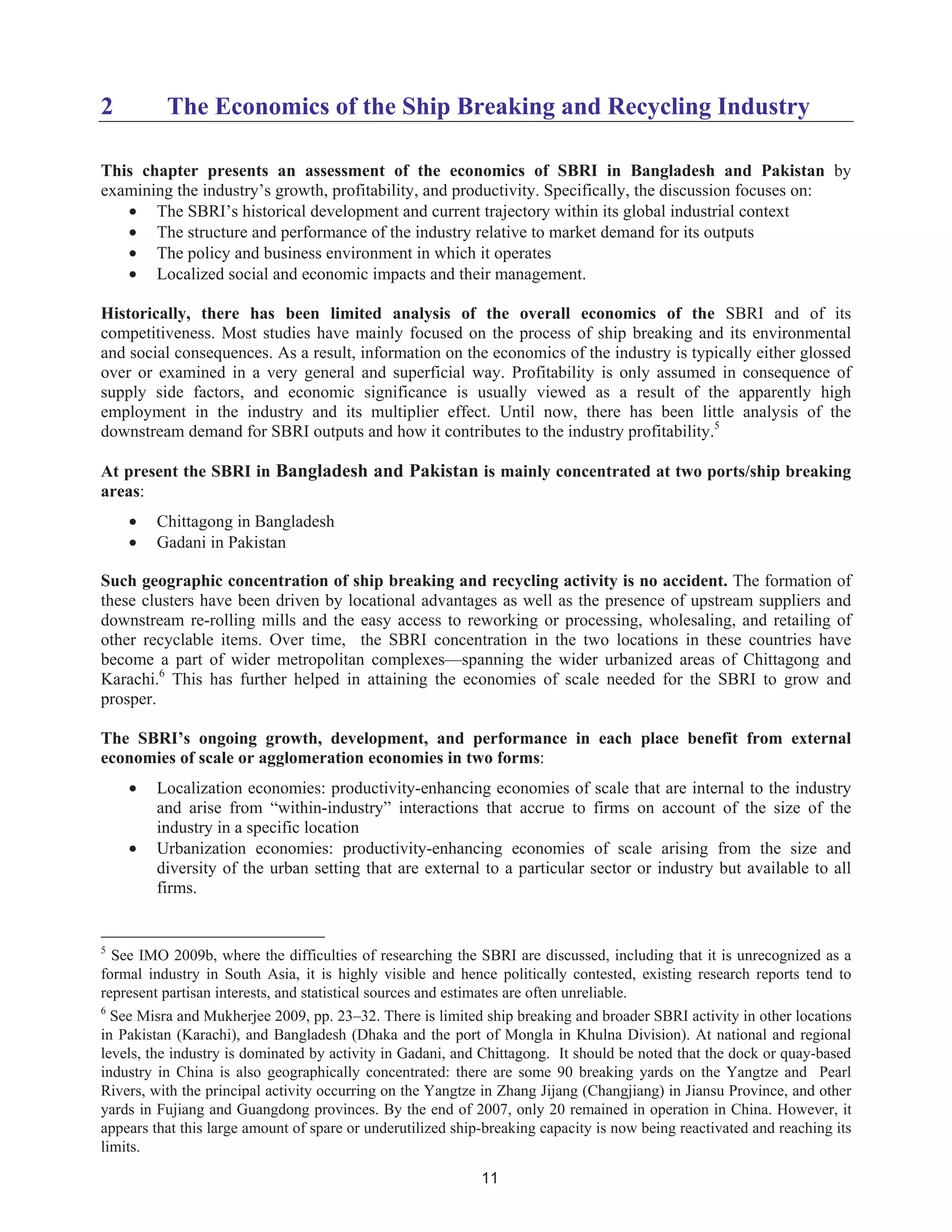
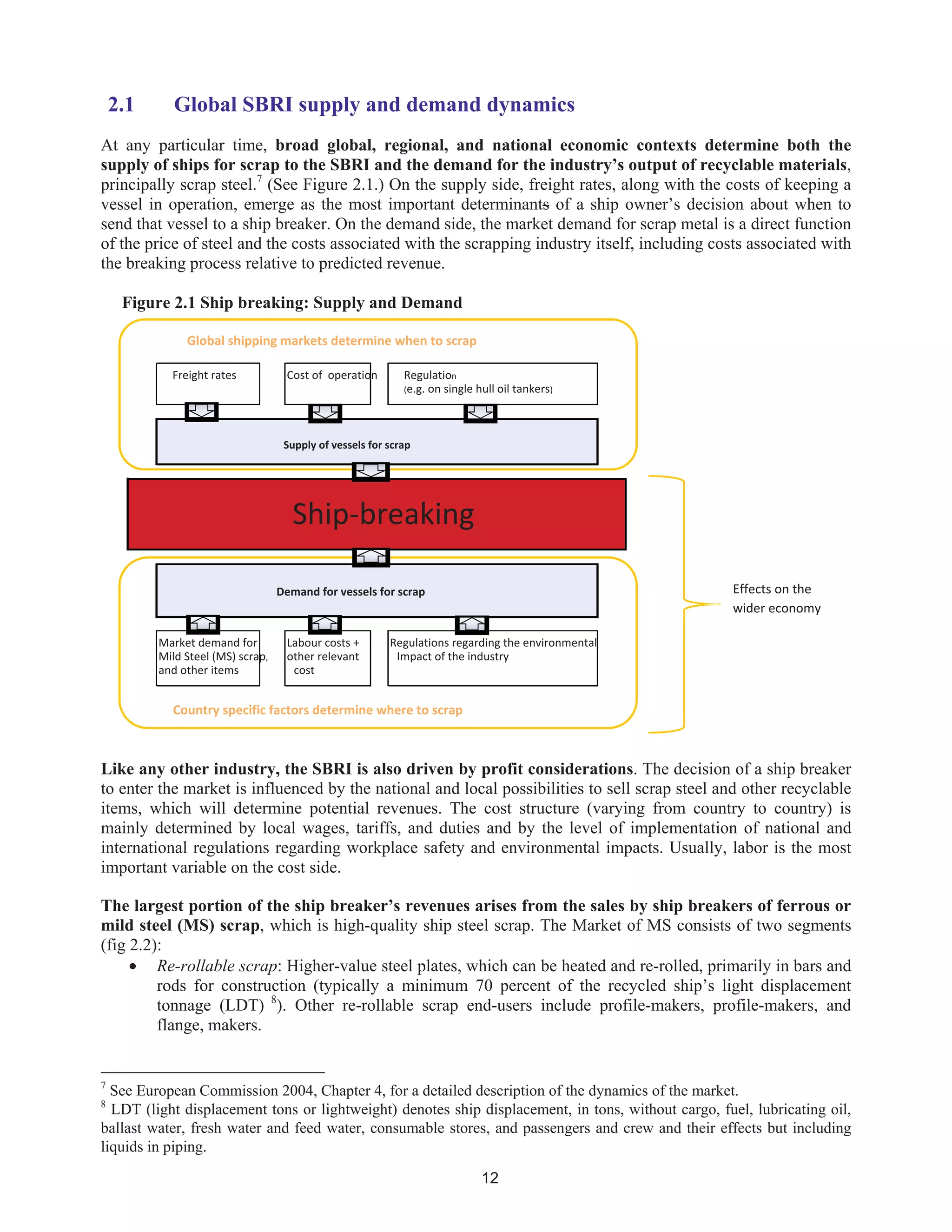
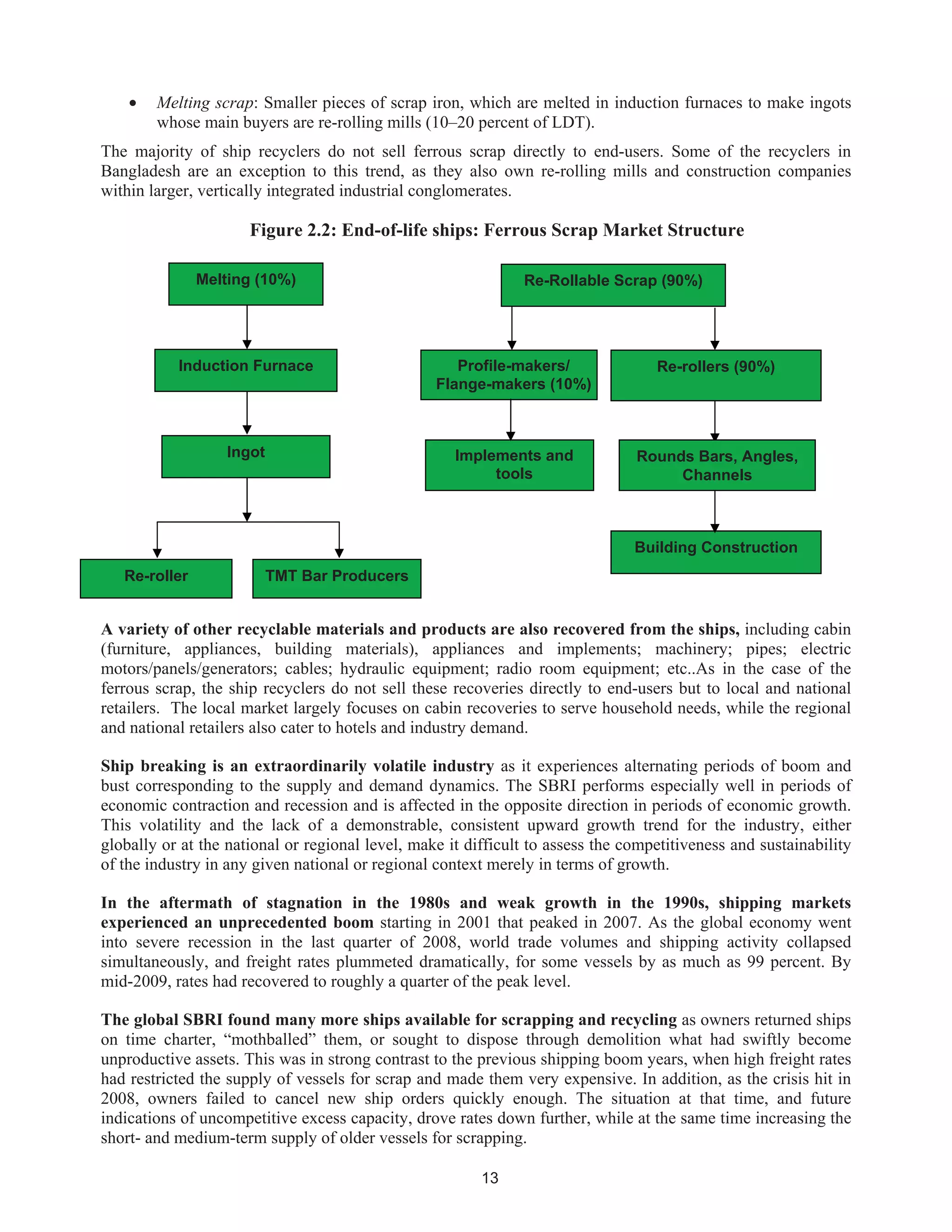
At present the SBRI in Bangladesh and Pakistan is mainly concentrated at two ports/ship breaking
areas:
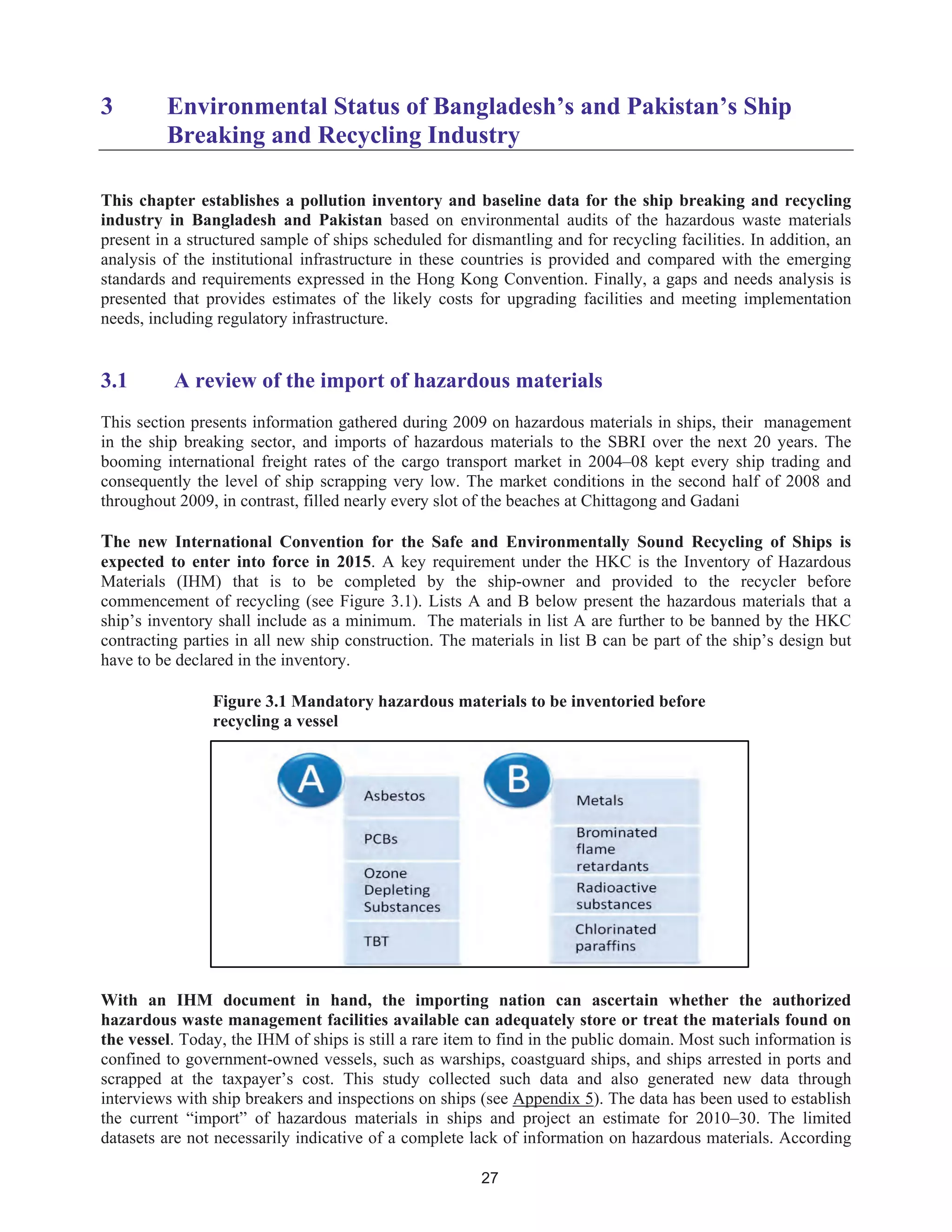
• Chittagong in Bangladesh
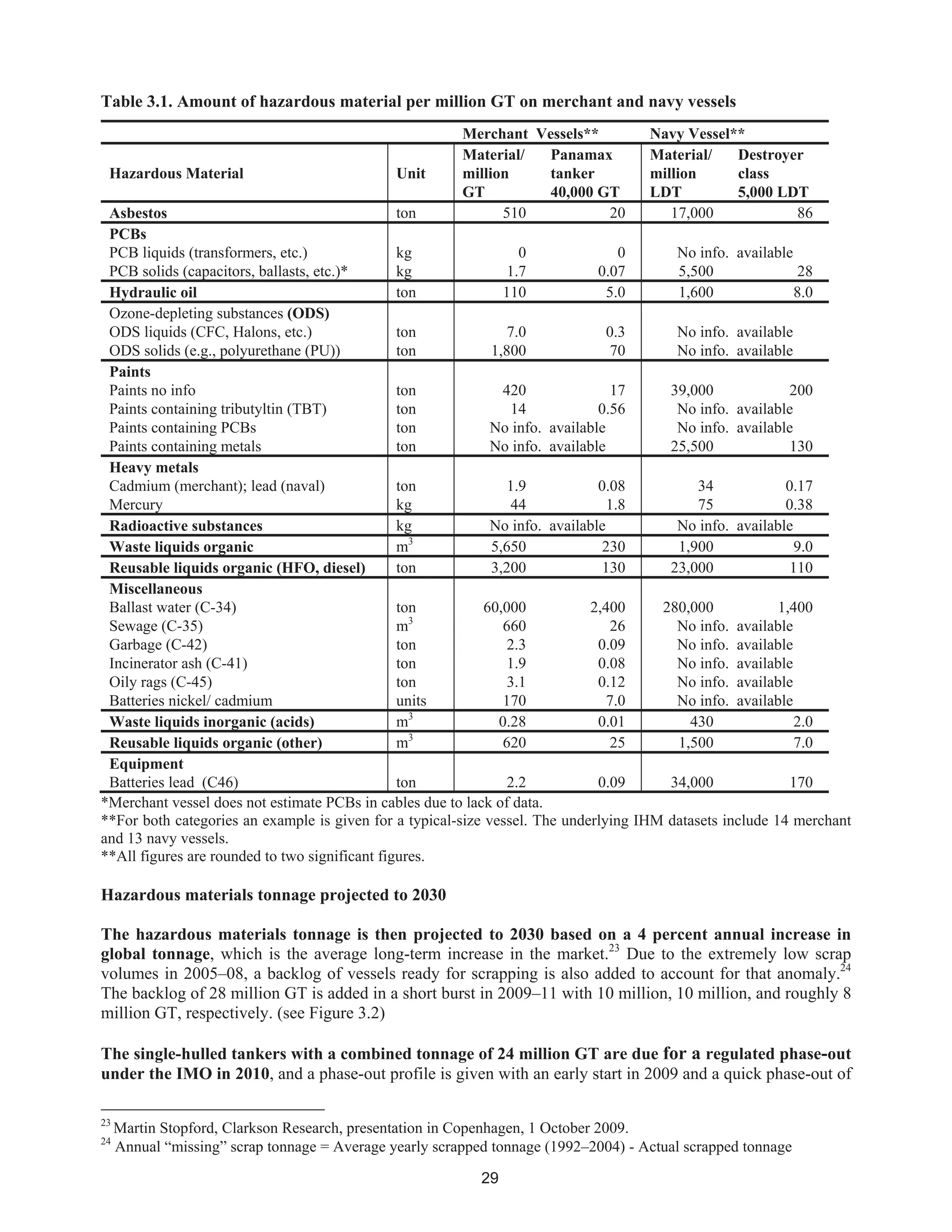
• Gadani in Pakistan
Such geographic concentration of ship breaking and recycling activity is no accident. The formation of
these clusters have been driven by locational advantages as well as the presence of upstream suppliers and
downstream re-rolling mills and the easy access to reworking or processing, wholesaling, and retailing of
other recyclable items. Over time, the SBRI concentration in the two locations in these countries have
become a part of wider metropolitan complexes—spanning the wider urbanized areas of Chittagong and
Karachi.6
This has further helped in attaining the economies of scale needed for the SBRI to grow and
prosper.
The SBRI’s ongoing growth, development, and performance in each place benefit from external
economies of scale or agglomeration economies in two forms:
• Localization economies: productivity-enhancing economies of scale that are internal to the industry
and arise from “within-industry” interactions that accrue to firms on account of the size of the
industry in a specific location
• Urbanization economies: productivity-enhancing economies of scale arising from the size and
diversity of the urban setting that are external to a particular sector or industry but available to all
firms.
5
See IMO 2009b, where the difficulties of researching the SBRI are discussed, including that it is unrecognized as a
formal industry in South Asia, it is highly visible and hence politically contested, existing research reports tend to
represent partisan interests, and statistical sources and estimates are often unreliable.
6
See Misra and Mukherjee 2009, pp. 23–32. There is limited ship breaking and broader SBRI activity in other locations
in Pakistan (Karachi), and Bangladesh (Dhaka and the port of Mongla in Khulna Division). At national and regional
levels, the industry is dominated by activity in Gadani, and Chittagong. It should be noted that the dock or quay-based
industry in China is also geographically concentrated: there are some 90 breaking yards on the Yangtze and Pearl
Rivers, with the principal activity occurring on the Yangtze in Zhang Jijang (Changjiang) in Jiansu Province, and other
yards in Fujiang and Guangdong provinces. By the end of 2007, only 20 remained in operation in China. However, it
appears that this large amount of spare or underutilized ship-breaking capacity is now being reactivated and reaching its
limits.
12
2.1 Global SBRI supply and demand dynamics
At any particular time, broad global, regional, and national economic contexts determine both the
supply of ships for scrap to the SBRI and the demand for the industry’s output of recyclable materials,
principally scrap steel.7
(See Figure 2.1.) On the supply side, freight rates, along with the costs of keeping a
vessel in operation, emerge as the most important determinants of a ship owner’s decision about when to
send that vessel to a ship breaker. On the demand side, the market demand for scrap metal is a direct function
of the price of steel and the costs associated with the scrapping industry itself, including costs associated with
the breaking process relative to predicted revenue.
Figure 2.1 Ship breaking: Supply and Demand
Like any other industry, the SBRI is also driven by profit considerations. The decision of a ship breaker
to enter the market is influenced by the national and local possibilities to sell scrap steel and other recyclable
items, which will determine potential revenues. The cost structure (varying from country to country) is
mainly determined by local wages, tariffs, and duties and by the level of implementation of national and
international regulations regarding workplace safety and environmental impacts. Usually, labor is the most
important variable on the cost side.
The largest portion of the ship breaker’s revenues arises from the sales by ship breakers of ferrous or
mild steel (MS) scrap, which is high-quality ship steel scrap. The Market of MS consists of two segments
(fig 2.2):
• Re-rollable scrap: Higher-value steel plates, which can be heated and re-rolled, primarily in bars and
rods for construction (typically a minimum 70 percent of the recycled ship’s light displacement
tonnage (LDT) 8
). Other re-rollable scrap end-users include profile-makers, profile-makers, and
flange, makers.
7
See European Commission 2004, Chapter 4, for a detailed description of the dynamics of the market.
8
LDT (light displacement tons or lightweight) denotes ship displacement, in tons, without cargo, fuel, lubricating oil,
ballast water, fresh water and feed water, consumable stores, and passengers and crew and their effects but including
liquids in piping.
Global shipping markets determine when to scrap
Freight rates Cost of operation Regulation
(e.g. on single hull oil tankers)
Supply of vessels for scrap
Ship-breaking
Demand for vessels for scrap Effects on the
wider economy
Market demand for
Mild Steel (MS) scrap,
and other items
Labour costs +
other relevant
cost
Regulations regarding the environmental
Impact of the industry
Country specific factors determine where to scrap
13
• Melting scrap: Smaller pieces of scrap iron, which are melted in induction furnaces to make ingots
whose main buyers are re-rolling mills (10–20 percent of LDT).
The majority of ship recyclers do not sell ferrous scrap directly to end-users. Some of the recyclers in
Bangladesh are an exception to this trend, as they also own re-rolling mills and construction companies
within larger, vertically integrated industrial conglomerates.
Figure 2 : End-of-life ships: Ferrous Scrap Market Structure
A variety of other recyclable materials and products are also recovered from the ships, including cabin
(furniture, appliances, building materials), appliances and implements; machinery; pipes; electric
motors/panels/generators; cables; hydraulic equipment; radio room equipment; etc..As in the case of the
ferrous scrap, the ship recyclers do not sell these recoveries directly to end-users but to local and national
retailers. The local market largely focuses on cabin recoveries to serve household needs, while the regional
and national retailers also cater to hotels and industry demand.
Ship breaking is an extraordinarily volatile industry as it experiences alternating periods of boom and
bust corresponding to the supply and demand dynamics. The SBRI performs especially well in periods of
economic contraction and recession and is affected in the opposite direction in periods of economic growth.
This volatility and the lack of a demonstrable, consistent upward growth trend for the industry, either
globally or at the national or regional level, make it difficult to assess the competitiveness and sustainability
of the industry in any given national or regional context merely in terms of growth.
In the aftermath of stagnation in the 1980s and weak growth in the 1990s, shipping markets
experienced an unprecedented boom starting in 2001 that peaked in 2007. As the global economy went
into severe recession in the last quarter of 2008, world trade volumes and shipping activity collapsed
simultaneously, and freight rates plummeted dramatically, for some vessels by as much as 99 percent. By
mid-2009, rates had recovered to roughly a quarter of the peak level.
The global SBRI found many more ships available for scrapping and recycling as owners returned ships
on time charter, “mothballed” them, or sought to dispose through demolition what had swiftly become
unproductive assets. This was in strong contrast to the previous shipping boom years, when high freight rates
had restricted the supply of vessels for scrap and made them very expensive. In addition, as the crisis hit in
2008, owners failed to cancel new ship orders quickly enough. The situation at that time, and future
indications of uncompetitive excess capacity, drove rates down further, while at the same time increasing the
short- and medium-term supply of older vessels for scrapping.
Melting (10%)
Induction Furnace
Ingot
Re-roller TMT Bar Producers
Re-Rollable Scrap (90%)
Profile-makers/
Flange-makers (10%)
Re-rollers (90%)
Implements and
tools
Rounds Bars, Angles,
Channels
Building Construction
.2
14
Globally, the supply of vessels for scrap has thus increased significantly since late 2008. As a result of
this excess supply, the price that owners could get for vessels suitable for scrapping initially declined sharply
in Fall 2008. However, as shipping volumes started to rise again and rates began to improve, there was a
partial recovery of such price in 2009. The first nine months of 2009 saw an upsurge in ship breaking, with
the recycling levels of 2000 already in sight. (See Table 2.1.)
Table 2.1. Ship breaking activity in LDT and percent of global scrap volume and location, 2002 to
September 2009
Countries 2002 2003 2004 2005 2006 2007 2008 09/2009
China
LDT 1,466,780 1,985,070 716,360 86,510 112,950 9,130 245,360 2,223,870
% 21% 33% 22% 6% 6% 1% 8% 27%
India
LDT 2,892,210 2,606,170 971,710 373,830 321,490 556,120 1,091,500 3,155,230
% 41% 44% 30% 28% 16% 35% 35% 38%
Bangladesh
LDT 1,659,450 782,010 1,294,210 795,030 1,181,160 650,750 1,372,050 1,863,530
% 24% 13% 40% 59% 58% 41% 44% 23%
Turkey
LDT 69,370 56,560 24,130 12,860 230,000 3,110 0 178,500
% 1% 1% 1% 1% 11% 0% 0% 2%
Pakistan
LDT 358,410 196,520 77,040 7,350 56,790 152,660 135,550 574,480
% 5% 3% 2% 1% 3% 10% 4% 7%
Other
LDT 523,620 260,590 126,490 72,990 149,740 204,710 249,690 242,470
% 8% 4% 4% 5% 7% 13% 8% 3%
South Asia
LDT 4,910,070 3,584,700 2,342,960 876,210 1,559,440 1,359,520 2,599,100 5,593,220
% 70% 61% 73% 65% 76% 86% 84% 68%
Total LDT 6,969,740 5,886,920 3,210,130 1,348,570 2,052,130 1,576,470 3,094,150 8,238,050
Source: N. Cotzias Shipping Group S&P Monthly Reports
2.2 Growth of South Asia’s SBRI within the global industry
The SBRI has been a mobile industry that is subject to wholesale withdrawal from countries and to
radical shifts in location. Within the past 25 years or so, the SBRI has undergone a profound relocation from
East Asia to South Asia. While China has remained a major actor at times and is rebounding strongly, the
South Asian SBRI has dominated the industry since the late 1980s and early 1990s. (See Table 2.2.)
By the year 2000, the SBRI in South Asia captured close to three-quarters of the global ship breaking
market in terms of dismantled tonnage. During the last ten years, the regional leadership in ship breaking
has alternated between India and Bangladesh. Pakistan, a regional leader during the 1980s, has remained a
minor actor for the last two decades and has only recently seen its recycling volumes pick up again. By
becoming the market leader in SBRI, the industry in India and Bangladesh has attracted the most public and
media attention, particularly on the environmental and labor impacts of the ship breaking activity.9
9
See, for example, the overviews of public concerns in Buncombe 2009 and Hoetzgen 2009.
15
Table 2. 2. Ship breaking activity and location, 1977–2008
Country 1977 1980 1985 1990 1995 2000 2005 2008
Taiwan 3,391 4,409 7,822 2 - 14 - -
Spain 873 279 603 13 40 26 5 6
S. Korea 221 168 2,551 4 3 1 - -
Italy 229 101 198 7 1 2 - -
Croatia 151 62 130 1 - - 1 -
Japan 193 129 973 81 146 22 - -
China 17 7 5,019 81 754 2,637 151 928
India 66 136 1,303 1,092 2,810 5,987 1,123 2,458
Bangladesh - - 818 217 2,539 2,407 2,114 4,176
Pakistan 299 300 1,143 2 1,670 789 48 274
South Asia - 436 3,264 1,311 7,019 9,183 3,285 6,908
Others 653 431 1,669 315 560 1,271 330 437
World 6,093 6,022 22,229 1,645 9,435 13,552 4,021 8,280
Source: Shipbuilders’ Association of Japan, 2009.
The large-scale location shift or “transboundary relocation” of the SBRI from one country or region to
another is usually ascribed to lowering of labor costs. However, since ship breaking can lead to major
environmental problems, differences in environmental regulation is also frequently cited as a cause that
triggers such move. Thus SBRI is often seen as a “pollution haven” industry that gets concentrated in regions
with the least environmental regulation. Undoubtedly, these factors explain some of the reason for the rise of
the SBRI in South Asia. However, the demand side of the equation in motivating relocation across national
borders is also important. This demand arises from the downstream industries that use the recycled products
as inputs. Yet the demand for recycled products obtained from ship breaking is often underplayed or even
ignored as a factor in explaining the industry’s location and performance.
2.3 The iron and steel industry and scrap steel demand from the SBRI in
Bangladesh and Pakistan
The SBRIs in Bangladesh and Pakistan face their own demand conditions for steel within the structure
of the broader international and national iron and steel industries, and more specifically within the so-called
secondary steel subsectors. The SBRI is also involved in the rolling segment within secondary steel.
The global iron and steel industry has seen enormous expansion, with output increasing by 50 percent
from 2002 through mid-2008, with an all-time high of 1.34 billion tons in 2007 and combined sales of more
than $1,000 billion. After a fall of 20 percent in the first half of 2009, steel output rallied, and the overall
decline in output for 2009 was expected to be on the order of 10 percent.10
The demand and prices for scrap steel also boomed after 2002, with prices quadrupling from 2002 to late
2007. This was followed by a very steep fall in late 2008, in parallel to the sharp fall in industrial production.
The recovery since then has been slow and patchy.11
As a large contributor of scrap steel, the SBRI industry
is also impacted by such market gyrations in demand and prices for scrap steel.
There are three stages in steel production: iron making, steel making, and rolling. The three stages also
broadly define three types of firms depending upon what is used as input:
• Integrated steelworks, which start at the very first stage of iron making and combine all three stages
10
See Cooney 2007 and Madar 2009 for global steel industry dynamics.
11
See Seabrook 2008 for an excellent account of the global scrap steel industry.
16
• Steelworks that only combine steel making and rolling processes, often known as a mini-mill
• Rolling firms, which buy semi-finished steel products and use hot-rolling or cold-rolling processes to
produce a variety of long-steel and flat-steel products
There is no single best path to meeting steel demand in a given national setting and any or all of the
three types of steel production can be found. Generally, the scale and composition of domestic demand sets a
principal basis for the technological choices made by industry actors. However, medium and small-scale
production systems, which feature mini-mills or rolling firms, tend to be studied much less than national
systems oriented around integrated steelworks.
The market situation in each country can vary substantially, determining the SBRI prospects in that
specific environment. The relocation of the SBRI to South Asia in the 1990s and the scrapping region’s hold
on the industry since then can be traced to supply-side attributes as well as to demand conditions in the
region as a whole and in individual countries. A large labor supply, low labor costs, and a relative lack of
environmental regulation have also been vital in this transition.
Both Bangladesh and Pakistan feature large current and pent-up future demand for SBRI outputs,
notably relatively low-grade MS bars and rods for use in construction. This has spawned a thriving, if low-
productivity, re-rolling mill segment downstream of ship breaking. Thus SBRI has made a significant
contribution to the overall steel production and consumption in the two countries in this region.
Bangladesh
Bangladesh’s domestic steel production is insufficient to meet national demand, which is estimated at 5
million tons a year. The country has somewhere between 250 and 300 rolling mills currently in operation
(out of an estimated total of 350). Their production—essentially Bangladesh’s domestic steel output—is
estimated at around 2.2 million tons a year, with sales valued at $1.2 billion. Some 30 percent of this output
is contributed by a few big firms. Current construction consumption of bars and rods is between 2 million
and 2.5 million tons a year.
The SBRI output in Bangladesh, either plate or melting scrap, mainly feeds the smaller operators who
produce perhaps 70 percent of re-rolling mill output in the form of lower-quality 40-grade rod. These smaller
mills are principally located in Chittagong and Dhaka. Using recent annual average of 1–1.25 million tons of
scrap output from Chittagong’s ship breaking yards, it estimated that Bangladesh’s SBRI contributes
significantly to the country’s steel production – perhaps up to 50 percent, This downstream demand for steel
scrap has been a major driving force in the growth of the SBRI in Bangladesh.
Pakistan
Pakistan’s steel industry has undergone a difficult period in the past decade. Total consumption in 2005
was estimated at 4 million tons. In the so-called unorganized sector, there are some 80 scrap melting plants
(mainly induction furnaces) and 334 re-rolling mills. Most of the latter are located either in the Punjab (250
in Lahore, 16 in Islamabad, and 16 in Gujranwala) or in Sindh (52 in Karachi). Gadani ship scrap’s
contribution to Pakistan’s steel consumption and production is also significant, though difficult to assess.
With an average output of 500,000 tons per year, it could account for up to 15 percent of Pakistan’s steel
production.
Summary of supply and demand
The continuous high demand for SBRI outputs in Bangadesh and Pakistan (see Table 2.3) makes it
unlikely that in Bangladesh and Pakistan will witness a wholesale exit from the industry as happened in
17
Taiwan and Japan earlier. The demand for construction materials in in Bangladesh and Pakistan is
underpinned by an urbanization process involving a very large population that has a long way to run12
.
Table 2.3. SBRI contribution to steel production and consumption in Bangladesh and
Pakistan, based on 2005–08 data
Bangladesh Pakistan
Steel Consumption 5 m tons 4–5 m tons
Steel Production 2.2 to 2.5 m tons
3 m tons
(target 2015: 10 m tons)
Scrap Steel from Ship Breaking Up to 1.5 m tons Up to 0.8 tons (2009)
Ship-breaking-steel Contribution to
Production
50% 15%
Ship-breaking-steel Contribution to
Consumption
20–25% 10%
Re-rolling mills 250–350 330
m = million
2.4 Industry structure, market demand, and performance
Bangladesh
After a slow beginning, ship breaking on the 18 km Sitakunda coastal strip in the area of Fauzdarhat
north of Chittagong took off in the 1980s, driven by demand for ship scrap steel. By the mid-1990s, the
Bangladeshi industry had risen to the number two spot behind only India in tonnage scrapped. Although
subject to fluctuation, Bangladesh’s share has not fallen below 40 percent of the total worldwide ship
demolition volume in the last five years. At present, Chittagong’s ship breakers are participating fully in the
upsurge of ship recycling, with some 1.9 million LDT scrapped from January to September 2009. It is
estimated that total LDT intake in 2009 either equaled or exceeded historical highs in the past decade.
At the present time some 40 ship breaking and recycling yards are in operation in Bangladesh, up from
26 in 2008. In the past decade, the number of ship recyclers has typically fluctuated between 30 and 40.
Some 8–10 of these are larger, diversified companies, which are integrated upstream into oxygen plants and
downstream into re-rolling mills. Ship breaking yards are in close proximity to both larger and smaller re-
rolling mills that produce steel rods, bars, angles, and channels, principally for use in the construction
industry. In addition, other goods from ships—from furniture to electrical generators—are recycled and used
intensively in Bangladesh, perhaps to a greater degree than in the other South Asian countries.
The Bangladesh Ship Breakers Association is the official association of ship recyclers. Almost all the
ship breakers in Chittagong are its members. Cutting contractors are represented by their own association,
and there is also a Bangladesh Steel Mills Owners Association and Bangladesh Re-Rolling Mills
Association. The ship recycling output is almost entirely used locally in Bangladesh. However, the degree to
which ship scrap steel in both plate and MS forms is processed locally in the Chittagong area is difficult to
ascertain, as there are a large number of unregulated, smaller re-rolling mills in the area.
Items are sold directly from the yards and transported at the buyer’s expense. Ship breakers who have
their own re-rolling mills use the scrap ship steel principally for rebar production in their mills. Ship breakers
that are not downstream-integrated generally sell scrap steel to scrap buyers. The end users, re-rolling mill
12
Current populations: 153 million in Bangladesh and 172 million in Pakistan. Urban population as percentage of total
population: 25 percent in Bangladesh (30 percent by 2015) and 35 percent in Pakistan (40 by 2015) (World Bank 2009).
18
operators, do not buy directly from the ship breakers, as the relationship between the two parties is somewhat
strained. The purchase of steel plates by ship builders for repairs or for building small vessels was reported as
significant by government shipping department officials but was considered to be of lesser importance by the
ship breakers themselves.
Figure 2.3 Ship Breaking in Chittagong, Bangladesh
Photograph courtesy of Frank Stuer-Lauridsen
Pakistan
Ship breaking in Gadani has been ongoing since pre-partition days. Realizing its importance, the
government of Pakistan took practical measures to strengthen the industry in 1978, including classifying
Gadani as a port, reducing import duties, and establishing a task force for infrastructure and logistical issues.
In its early years, Gadani could be said to have brought to prominence the competitive value of the beaching
method, and it produced approximately 1 million tons of scrap during the 1980s. It is estimated that at its
peak the ship breaking industry of Gadani employed close to 30,000 people. However, the combination of
stronger competition from India and Bangladesh and changing tax and regulatory regimes saw its decline,
and ship scrap output dropped to less than one-fifth of the level in the1980s.
In the early 1990s, a 45 percent customs duty was imposed on ships imported for dismantling. This
adversely affected ship breaking activities at Gadani, almost halting the industry by the early 2000s. In recent
years, ship breakers and local authorities have successfully lobbied for reducing duties and taxes. The
industry has thus recovered considerably recently, although volumes are far below those of Bangladesh.
Nonetheless, ship breaking is the largest industry in Balochistan province providing local employment to
20–25 percent of the total Gadani workforce and a major source of tax revenue for the provincial and federal
government and for the Balochistan Development Authority (BDA). It is reported that the federal
government proposed additional taxes on ship breaking activities recently but that these were dropped after
the intervention of the Chief Minister of Balochistan.
There are 132 ship breaking plots at Gadani. Some two-thirds are under private ownership; the rest are
owned by the BDA. At present, about 30 active ship breakers operate on land leased either from these local
landlords or from the BDA. Each ship breaker uses an average of three plots, with the five largest breakers
using four or more. In a similar fashion to the Bangladeshi industry, most ship breaking operations form part
of small, diversified industrial groups. There is a measure of forward integration into both steel and
19
construction. About 75 percent of the ship breakers hail from the Gujarati-speaking community, 20 percent
are from the Punjab, and the remaining 5 percent are of Pathan descent.
The main entry barrier is the availability of ship breaking yards and plots. It was primarily for this
reason that ship breakers continued paying lease payments to landlords or the BDA to avoid losing their
yards during the industry downturn. There is no real exit barrier, and plot owners can leave at will. The
Pakistan Ship Breakers Association formed in 1979 is the main organization in the SBRI in Pakistan.
Given the present political conditions in Pakistan, it is difficult to get a clear picture of current market
conditions for ship scrap steel. Ship plate and melting scrap from Gadani are used as an input to the 50–60
re-rolling mills in Sindh and Balochistan, but the degree to which these products are used in the Punjab,
which dominates the re-rolling segment, is unclear. The research primarily indicated that some 70–75 percent
of Gadani’s production is destined for Karachi’s re-rolling mills and 25 percent for the Punjab. The industry
is thus significantly localized, with small re-rolling mills in particular dependent on ship breaking for their
inputs. Some 95 percent of overall revenue is said to come from the sale of scrap steel, with the remainder
coming from other recyclable items sold in the Sher Shah Market in Karachi.
2.5 Profitability and competitiveness
Essential to an assessment of the SBRI’s competitiveness is analysis of its profitability under the
prevailing environmental and occupational health regulatory regimes. The estimates used in the analysis here
are based on reviews, updates, and assessments of previous economic, econometric, and financial studies, as
well as field interviews with a large number of stakeholders. The estimates generated are, however, subject to
some degree of uncertainty. For the sake of cross-country comparison, all calculations are based on a
“sample” ship: a Panamax oil tanker of 14,800 LDT (80,000 DWT) with the major elements of revenues and
costs being as follows:13
Revenues:
• Steel—the most crucial recyclable output in terms of volume and revenue. This steel is either reheated
and re-rolled or melted down and re-processed.
• Other recyclable items—including non-ferrous scrap, machinery, furniture and fixtures, and ropes and
cabling. Virtually, all items that can be recovered from a ship are recycled in some form.
Costs:
• Purchase of ship14
• Investment costs (for equipment and civil works such as cranes, forklifts, storage, and housing)
• Financial costs
• Labor costs
• Consumption of utilities (e.g., oxygen, LPG, diesel and electricity)
• Taxes, tariffs and duties (e.g., import taxes)
• Rents (e.g., for land use)
• Other costs (e.g., for handling hazardous waste).
13
DWT (dead weight tonnage) denotes the lifting or carrying capacity of a ship when fully loaded. The deadweight is
the difference, in tons, between the fully loaded ship and its lightweight.
14
The costs of buying a vessel for scrap are roughly the same across scrapping destinations as they compete for the
same ships and as ship owners sell to the buyers who are willing to pay the highest price. However, it is common to see
differences of $25/LDT across countries, in particular for Bangladesh, where tankers fetch a premium due to the relative
ease of dismantling and high re-rollable fraction. Given the large fluctuations in prices over time, this is of less
importance if ship owners are indifferent about where their ships are scrapped, which most often will be the case. But
when, for example, stories in the media have perpetuated negative perceptions of the industry in a particular country,
this might not be the case (see, for example, GMS 2009).
20
The results of the assessment are summarized in Table 2.4 (see Appendix 4 for further details).
Table 2.4. Overview of revenues, main costs, and profit for a sample ship in
Bangladesh and Pakistan, mid-2009 (in dollars)
Bangladesh Pakistan*
Revenues 5,613,600 5,505,500
Total costs 4,692,200 5,340,900
- Purchase of ship 3,848,000 3,848,000
- Labor costs 92,700 233,400
- Consumables 302,200 230,000*
- Financial costs 147,900 265,700
- Taxes, tariffs, and duties 263,000 693,600
- Other costs (including rents,
investment costs, etc.)
38,400 70,200
Profit 921,400 164,600
*As information on use of consumables in Pakistan was unavailable, it was estimated based on data
available from India.
Bangladesh
According to ship breakers in Chittagong, approximately 85 percent of a ship is recyclable steel in the
form of directly re-rollable steel (75 percent) and melting scrap (10 percent).15
It is estimated that ship
breakers’ revenue from steel amounts to $4,771,500. Combined with the industry estimate of revenue
generated by other recyclable items, total revenue is estimated at $5,613,600.
The existing estimates of the price of ships vary considerably. To allow for comparison across the region,
the analysis assumed that the price of a ship was the same in both countries—that is, $3,848,000, excluding
taxes. Investment costs for equipment and civil works have been estimated to be in the region of $441,200.
After assumptions pertaining to depreciation and residual value are made, this figure is reduced to $21,900
per ship and included in “Other costs”.
Detailed information on financial costs is lacking for Chittagong and indicators of interest costs vary. An
estimate based on the average of these indicators suggests a total financial cost of approximately $147,900,
somewhat lower than for Pakistan. A number of taxes are imposed on ship breakers in Chittagong totaling
approximately $263,000, although this too is subject to uncertainty. A number of rents and charges are also
applied, including rents for leased land, port charges, beaching costs, and tug charges. In addition, ship
breakers pay a fee to the Bangladesh Ship Breakers Association and a donation to a local cutting
commission. The analysis found that there appear to be no costs related to a levy for housing or a
development fund for workers, labor safety, training, or insurance.
Because of a lack of more detailed information on the staffing for ship breaking in Bangladesh, the
labor costs were estimated based on data available from SBRI in India. With the assumption that
Bangladeshi ship breakers need approximately the same number of workers as in India to manage the
breaking up of the sample ship, the labor costs amount to $92,700 (combining salaried workers with workers
on a daily wage).16
The costs of consumables that aid the dismantling process (such as oxygen, LPG, and
diesel) have increased in recent years and are estimated at approximately $302,200.Overall, based on revenue
and costs it is estimated that ship breakers in Bangladesh earn a profit of $921,400 per ship. The results
15
There are different estimates on the proportions of steel output. One ship-breaking yard managing director suggests a
somewhat higher proportion of melting scrap than assumed here, but given the preference for tankers, the high re-rolling
proportion is kept.
16
Data available from India suggest 396 hired workers on a yearly basis, with an activity of around two ships per year.
So, it is assumed that this corresponds to around half of this per ship. This corresponds to other sources that estimate
approximately 200 workers per ship in ship breaking industries.
21
imply profitability (profit/revenue) of around 15 percent (see Figure 2.3), which corresponds to industry
assessments.
Figure 2.4 Revenue, costs, and profits for a sample ship in Bangladesh, mid 2009
• Steel prices are high due to low
level of competition
• Revenue from ”other recyclable
items” is more than in Pakistan
• Labor costs are very low in
Bangladesh
• Costs of consumables
(primarily oxygen and LPG)
are higher than in Pakistan
• Taxes are lower than in
Pakistan
• High profitability
Pakistan
In similar fashion to the ship breaking industry in Bangladesh, the revenues for ship breakers in Gadani,
Pakistan, stem from two sources: steel and other recyclable items. The sales price of steel plates varies
according to quality. The sample ship provides 12,580 tons of steel, generating total revenue of
approximately $4,992,800. The common practice in Pakistan is to sell all other recyclable items to a bulk
buyer at a small premium over the normal steel price, amounting to an estimated $512,700 in revenue, with
machinery and generators accounting for the greatest share. In total, it is estimated that the ship generates
revenue of approximately $5,505,500.
Pakistani industry sources indicate that the cost of acquisition does not vary significantly from the
estimate of $3,848,000 identified for Bangladesh. The analysis found that initial investment costs for civil
works and equipment depend on a number of factors, although considerable investments are also made in
infrastructure. If the same assumptions as used for the cases of Bangladesh are applied, the
investment/depreciation costs amount to approximately $18,300, which is also included in “Other costs”.
In terms of financial costs, Pakistan has very high interest rates ranging from 17 to 18 percent per
annum. This amounts to $265,700 per ship for Gadani ship breakers for a 180-day period. The ship breaking
industry in Pakistan is subject to four types of taxes, including a Balochistan Development Authority charge.
These amount to approximately $693,600. Shipyards are either owned by local Balochi leaders or are leased
from the Balochistan Development Authority, and thus a rental is charged per plot.17
Wage levels are considerably higher in Gadani than in the yards of Bangladesh—indeed, the daily wage
is up to two to three times higher than in Bangladesh. Combined labor costs for the dismantling of the sample
ship amount to $233,400. Estimates indicate that Pakistani workers should be substantially more efficient
than in Bangladesh, where more workers are employed over a longer dismantling period, reflecting, in part, a
higher level of mechanization in Gadani. Due to limitations of data availability, the consumable costs in
Pakistan are estimated based on data available from India. After dismantling, steel is transported at the
expense of the ship breaker, and so additional “Other costs” are incurred for transport of approximately
$49,500 per ship. Various operating costs are also incurred throughout the breaking process, such as tug
charges and environmental impact assessment/ initial environmental examination costs.
17
Based on information supplied by Mr. Shahid, Manager, Usman Enterprises, Gadani, who is paying rental of Rs
170,000 per plot.
22
Overall, the analysis found that ship breaking in Pakistan is profitable but at a relatively low level. (See
Figure 2.4.) It is estimated the average profit for the sample Panamax oil tanker is $164,600, or 3 percent of
total revenue.
Figure 2.5 Revenue, costs, and profits for a sample ship in Pakistan, mid-2009
• Steel prices are relatively high
• ”Other recyclable items” account
for less than in Bangladesh
• Total labor costs > Bangladesh
• High productivity is more than
outweighed by high wage rates
• The level of taxation is more
than twice the level of
Bangladesh
• Lower profitability than in
Bangladesh
• High steel prices, but also a high
level of taxation
The estimate of profitability for ship breakers in Pakistan is, however, subject to a degree of
uncertainty as the current political situation made it difficult to obtain a complete picture of costs and
revenues for the industry. This difficulty affected the cost items which explain the lower level of profitability
in Pakistan as compared to Bangladesh, i.e. higher taxes, higher financial costs and higher labor costs.
Consistent information on the effective level of taxation, in particular, proved difficult to come by.
Reports on the issue were somewhat dated and contradictory -- and there were even indications of the actual
tax level being slightly lower than what is presented above. The recent intervention of the local Balochistan
authorities against additional taxes proposed by the Federal Government is one possible explanation for these
inconsistencies and for the uncertainty about the level of taxation. Information on financial costs for
Pakistani ship breakers is also scarce, with the costs appearing to vary across Gadani’s ship breaking yards.
Regarding labor costs, it was difficult to assess to what extent higher wages in Pakistan are offset by
higher productivity due to the higher onshore level of mechanization in Gadani compared to Bangladeshi
yards. Furthermore, the estimated labor cost figure for Pakistan is sensitive to the level of activity at the ship
breaking yards, as a larger share of the workforce is on long term rather than temporary contracts. The data
presented above reflects costs and revenues for a period with a medium level of activity. Consequently, labor
costs per ship tend to be lower and profitability higher during periods with a higher level of activity, as
has increasingly been the case through 2009 and into 2010.
Comparison across countries
The country comparison shows that the industry is more profitable in Bangladesh, primarily due to two
factors: high steel prices and low labor costs. The level of revenue is relatively high in Pakistan due to
high steel prices, but this is more than offset by a high level of taxation. The overall finding is that ship
breaking under the prevailing environmental and occupational health regulatory regimes is a competitive
industry in Bangladesh and, to a lesser extent, in Pakistan.
These levels of profitability indicate that there is scope for developing more sustainable practices in
Bangladesh without damaging the overall competitiveness of the industry—and thereby without
increasing the risk of relocation of the industry. As profitability is lower in Pakistan, however, there is likely
23
to be less scope for imposing new and tougher environmental regulations, as the introduction of higher costs
could lead the industry to relocate to other countries.
Sensitivity Analysis for Ship Purchase Price
In the main analysis above, a base case of $260/LDT was used as the purchase price for end-of-life
ships. Over the last 15 years, however, the price for end-of-life ships has fluctuated between $120 /LDT and
$700 /LDT. Ship breakers may make or lose money at any level of ship purchase price as the scrapping and
recycling business operates on the margin between the ship purchase price and the local scrap steel price.
When in 1999, for example, the price for end-of-life ships was low, local scrap steel prices were also
correspondingly low. Because ship breakers operate on this margin they are not so sensitive to the actual
day-to-day level of prices but rather to sudden large price fluctuations, as there is a time lag between when
the price for the ship is fixed and when income is generated from selling the scrap steel to local buyers. The
price ship breakers are willing to pay for ships thus depends on their expectations for future scrap steel price
developments.
The 2008 crisis illustrates the sensitivity to steel price changes after the purchase of ships for
scrapping. At the peak period in mid-2008, some ship scrappers paid as much as $700/LDT for end-of-life
ships. At that time, local prices in Bangladesh and Pakistan for re-rollable steel and melting scrap were
about twice as high as indicated above in the base case. The ship breakers expected further increases.
Sensitivity calculations show that even with increased local steel prices, ship breakers would experience a
severe loss when paying $700/LDT for end-of-life ships. Additional sensitivity tests show that Pakistani ship
breakers needed a further increase of 10-25% in local steel prices to break even, whereas the ship breakers in
Bangladesh could, at best, have just broken even. In reality, as the global economic crisis hit in late 2008, the
prices for all types of steel plunged, including those for ship scrap. This caused some of the most severe
losses in the history of the industry.
2.6 Policy and business environment
Government policy
The government does not officially recognize ship breaking as an industry in Bangladesh; instead, ship
breakers run their business with a trade license obtained from a government agency. As a result of this
unofficial status, Bangladeshi ship breakers do not receive any government grants, subsidies, or tax waivers.
Yet ship breaking is governed by certain environmental rulings, some of which appear contradictory in
practice. The Department of Shipping within the Ministry of Shipping has assumed some responsibility for
the industry, and recent reports suggest that a draft Ship-breaking and Recycling Policy has been
developed.18
In Pakistan, imported iron and steel materials are taxed heavily by the government so as to promote
indigenous production of raw materials. As indicated earlier, during the course of this study it was revealed
that the central government had planned to levy additional taxes on ship breaking activities for the current
fiscal year. Due to the intervention of the Chief Minister of Balochistan, however, such a move has
apparently been postponed indefinitely.
Land, Infrastructure, and Planning
In Bangladesh, the land on which the ship breaking yards are built is partially leased and partially
owned. Given the unofficial status of the industry, limited infrastructure is provided by the government, and
yard owners themselves pay for repairs to access roads that suffer under heavy yard traffic. Although
18
Shaams 2010.
24
electricity is supplied to the yards, it is unreliable, and yard owners must rely on generators recovered from
the ships. With no connection to the city water supply, they have also installed tube wells for workers.
In Pakistan, the Gadani beaching area has more than 100 plots, mostly owned by a local Balochi tribe
leader, with just 31 owned by the Balochistan Development Authority. The annual cost per plot charged by
the former is almost five times that charged by the latter. Since 1978, the BDA has met the basic
infrastructure needs of ship breakers, although this has been limited to poor-quality access roads. The supply
of electricity is intermittent and unreliable, and very few yards are connected to the grid, despite being in the
Karachi Electric Supply Corporation catchment area. Despite a large-scale water supply scheme, there is still
a severe shortage of water, and yard owners must purchase supplies privately.
2.7 Social and economic impacts
Bangladesh
Approximately 22,000 workers are directly employed by the ship breaking industry in Bangladesh, and
as many as 200,000 are employed indirectly through ancillary activities. These numbers vary according to
market conditions and might have increased recently as a result of the uptake of recycling activities since
early 2009. The majority of workers are young, male, and largely illiterate; very few women work in the
yards. It is estimated that up to 95 percent of the workforce is migrant laborers from Bangladesh’s poorest
districts.
Third-party accounts estimate that over the last 30 years as many as 1,200 workers died in the
Chittagong yards as a result of dangerous working conditions.19
Local media reports list 21 fatalities in
2009 alone. Hazard and safety awareness and the use of personal protective equipment (PPE) among workers
is traditionally low. Research for this study could not confirm whether the use of PPE and the provision of
safety awareness training have increased in recent times. Informal compensation arrangements exist for
workers’ families in the event of injury or fatality, at the discretion of yard management. Facilities for
workers are lacking, including sufficient potable water sources and provision of latrines. Health care in the
yards is usually limited to first aid. Medium and long-term health problems, ranging from muscle pain to skin
disease, are a growing concern. In 2002–03, for example, Dr Biswajit Roy of the Department of
Occupational and Environmental Health, NPSOM, found that 88 percent of workers interviewed suffered
some form of accidental injury—from foot injuries to serious accidents—while working in the Chittagong
yards.
Recruitment for the yards at Chittagong occurs in a number of ways and it is common for men in a
particular family to follow older male relatives to the yards. The Chittagong workforce includes both salaried
and daily wage employees. The average monthly salary is approximately TK 12,500, while daily wages are
approximately TK 225. In both cases, wages are based on the skill required. Workers do eight-hour shifts,
with regular overtime of four hours that is paid at the same rate. Work is carried out in two shifts, day and
night, for approximately 24 days a month. No official training is given to new employees as they join the
yards. Rather, new workers tend to “shadow” the more experienced workers, sometimes for months or years
at a time. Career progression is based on years of service.
Some 25 percent of the workers live in rent- and bill-free sheds close to the yards, provided by the yard
owner, accommodating approximately 70 workers split between three or four rooms. These cramped living
arrangements facilitate the spread of infection and illness. The remaining workers rent basic accommodation
in groups nearby. No workers’ union exists at present, and although many workers believe that a union
would bring improvements to their situation, most are averse to organizing one for fear of putting their jobs
at risk.
19
Greenpeace and FIDH 2005.
25
Figure 2.6 Ship Yard in Chittagong, Bangladesh
Photograph courtesy of Frank Stuer-Lauridsen
Pakistan
During its heyday, approximately 30,000 workers were directly employed by the Gadani ship breaking
yards in Pakistan. In recent years this has decreased significantly to between 6,000 and 8,000, with
approximately 4,000 more indirectly employed through ancillary activities. Both figures are likely to increase
in the coming years. Industry representatives indicate that virtually no women or children are employed in
the ship breaking yards. Up to 75 percent of the total workforce are migrant laborers, although this statistic
varies significantly between yards.
While working conditions at Gadani have been denounced by labor organizations, there is a higher degree
of mechanization than in Bangladesh, which mitigates some risks. However, the industry is still in strong
need of modernization. There is conflicting evidence regarding the state of working conditions and safety
and hazard management at Gadani. Injuries and fatalities in 2009 have been attributed to dangerous
conditions, although research for this study indicates that recent improvements have been made and that PPE
is now mandatory in many yards. But health care facilities are ill equipped to deal with the nature and extent
of injuries common to ship breaking. Only basic first aid is provided to workers on site, and no trained
medical staff are present. The seriously injured must be transported to Karachi, and the resulting delays for
treatment can prove fatal.
The Gadani workforce consists of salaried and daily wage employees. The average daily wage for an
eight-hour shift is between Rs 350 and Rs 700, depending on experience. An additional four hours of
overtime is commonplace and paid at the same rate, with workers opting to leave yards that cannot offer
overtime. Gadani is the only area in this study where labor shortages have been a problem (according to
Diwan Rizwan, chairman of the Ship Breakers Association). Salaried workers provide the required skilled
labor in the yards and earn between Rs 25,000 and Rs 30,000 per month. After the closure of a Ship Breakers
College, which provided technical training to new recruits, workers now train on the job by assisting and
shadowing the more experienced and skilled employees. Career progression is based on years of service, and
only the most experienced and longest-serving workers do demolition work aboard the ship itself.
26
Little information is available on the living conditions of ship breaking workers in Pakistan. The vast
majority of workers appear to be provided with accommodation by the yard owners, containing the bare
minimum of facilities recovered from the ships themselves. The accommodation available to workers at
Gadani appears to be of a slightly higher standard than what is available in Bangladesh. However, there is no
supply of potable water and an absence of sanitation facilities. A scheme to provide 1,000 housing units to
workers was recently announced.
The Gadani workers have organized themselves into a Ship-breaking Labor Union, which in February
2009 successfully campaigned for a 40 percent wage increase, better working conditions, and improvements
to medical facilities. Other reports describe a “pocket” union, composed of “loyal” workers, that has been
put in place by the ship breakers to rival the official union, thus denying true worker representation.
27
3 Environmental Status of Bangladesh’s and Pakistan’s Ship
Breaking and Recycling Industry
This chapter establishes a pollution inventory and baseline data for the ship breaking and recycling
industry in Bangladesh and Pakistan based on environmental audits of the hazardous waste materials
present in a structured sample of ships scheduled for dismantling and for recycling facilities. In addition, an
analysis of the institutional infrastructure in these countries is provided and compared with the emerging
standards and requirements expressed in the Hong Kong Convention. Finally, a gaps and needs analysis is
presented that provides estimates of the likely costs for upgrading facilities and meeting implementation
needs, including regulatory infrastructure.
3.1 A review of the import of hazardous materials
This section presents information gathered during 2009 on hazardous materials in ships, their management
in the ship breaking sector, and imports of hazardous materials to the SBRI over the next 20 years. The
booming international freight rates of the cargo transport market in 2004–08 kept every ship trading and
consequently the level of ship scrapping very low. The market conditions in the second half of 2008 and
throughout 2009, in contrast, filled nearly every slot of the beaches at Chittagong and Gadani
The new International Convention for the Safe and Environmentally Sound Recycling of Ships is
expected to enter into force in 2015. A key requirement under the HKC is the Inventory of Hazardous
Materials (IHM) that is to be completed by the ship-owner and provided to the recycler before
commencement of recycling (see Figure 3.1). Lists A and B below present the hazardous materials that a
ship’s inventory shall include as a minimum. The materials in list A are further to be banned by the HKC
contracting parties in all new ship construction. The materials in list B can be part of the ship’s design but
have to be declared in the inventory.
Figure 3.1 Mandatory hazardous materials to be inventoried before
recycling a vessel
With an IHM document in hand, the importing nation can ascertain whether the authorized
hazardous waste management facilities available can adequately store or treat the materials found on
the vessel. Today, the IHM of ships is still a rare item to find in the public domain. Most such information is
confined to government-owned vessels, such as warships, coastguard ships, and ships arrested in ports and
scrapped at the taxpayer’s cost. This study collected such data and also generated new data through
interviews with ship breakers and inspections on ships (see Appendix 5). The data has been used to establish
the current “import” of hazardous materials in ships and project an estimate for 2010–30. The limited
datasets are not necessarily indicative of a complete lack of information on hazardous materials. According
28
to several classification societies, today hundreds of vessels do carry a certified inventory in accordance with
the previous guidelines20
(the Green Passport) or a statement of compliance with the new IHM under the
HKC. But these data are proprietary and were not available to the study.
Hazardous materials currently on ships
The inventories reviewed during the study fall into two categories: naval and non-naval (merchant)
vessels (see Table 3.1). Naval warships are built to different specifications than merchant vessels,
particularly with regard to the management of risk of fire and explosions, and thus have a higher occurrence
of hazardous materials. In contrast, the extent of hazardous materials in Merchant vessels can vary as they
come in many types, including liquefied gas carriers, dry bulk, reefers, oil tankers, roll on–roll off (Ro-Ro),
and containers. Such design type may affect which hazardous materials are typically found onboard. But due
to the limited availability of dataset it was not possible to consider this in the study. The results for merchant
vessels are therefore presented on the basis of a measure of cargo capacity—that is, gross tonnage (GT) as
recommended by the IMO—and represent 14 inventories, 3 of which were undertaken as part of this study.
The results for naval vessels are based on displacement, which here equaled light displacement tons, a
common measure of the steel weight of a vessel. No inspections were made of naval vessels during the study,
and the IHM datasets include 13 vessels. An overview of these data is available in Appendix 5.21
The data for naval vessels, reveals that the amounts of asbestos and possibly polychlorinated biphenyls
(PCBs) in such ships exceed those expected in typical merchant ships.22
In particular, the previous
investigation of the USS Oriskany a 27,100-displacement-ton aircraft carrier commissioned in 1950, showed
that in naval vessels of this age PCB was abundant. While the occurrence of PCBs in general appeared to be
random, with a number of samples showing high PCB content (>10,000 ppm) and more than half the
samples at >50 mg/kgall cables were above the threshold level for hazardous waste categorization, and the
average concentration of PCBs was 1,500 ppm. Very little merchant-vessel-specific information is available,
and an allowance has been made for this potential contribution in the summary table.
20
IMO Guidelines on Ship Recycling (A23/Resolution 962).
21
Calculations are based on declared hazardous materials from one container ship, four ro-ros, five oil tankers, three
chemical tankers, and one service vessel.
22
For naval ships: two aircraft carriers, four supply/cargo, two miscellaneous, one radar vessel, and four tankers.
29
Table 3.1. Amount of hazardous material per million GT on merchant and navy vessels
Merchant Vessels** Navy Vessel**
Hazardous Material Unit
Material/
million
GT
Panamax
tanker
40,000 GT
Material/
million
LDT
Destroyer
class
5,000 LDT
Asbestos ton 510 20 17,000 86
PCBs
PCB liquids (transformers, etc.) kg 0 0 No info. available
PCB solids (capacitors, ballasts, etc.)* kg 1.7 0.07 5,500 28
Hydraulic oil ton 110 5.0 1,600 8.0
Ozone-depleting substances (ODS)
ODS liquids (CFC, Halons, etc.) ton 7.0 0.3 No info. available
ODS solids (e.g., polyurethane (PU)) ton 1,800 70 No info. available
Paints
Paints no info ton 420 17 39,000 200
Paints containing tributyltin (TBT) ton 14 0.56 No info. available
Paints containing PCBs ton No info. available No info. available
Paints containing metals ton No info. available 25,500 130
Heavy metals
Cadmium (merchant); lead (naval) ton 1.9 0.08 34 0.17
Mercury kg 44 1.8 75 0.38
Radioactive substances kg No info. available No info. available
Waste liquids organic m3
5,650 230 1,900 9.0
Reusable liquids organic (HFO, diesel) ton 3,200 130 23,000 110
Miscellaneous
Ballast water (C-34) ton 60,000 2,400 280,000 1,400
Sewage (C-35) m3
660 26 No info. available
Garbage (C-42) ton 2.3 0.09 No info. available
Incinerator ash (C-41) ton 1.9 0.08 No info. available
Oily rags (C-45) ton 3.1 0.12 No info. available
Batteries nickel/ cadmium units 170 7.0 No info. available
Waste liquids inorganic (acids) m3
0.28 0.01 430 2.0
Reusable liquids organic (other) m3
620 25 1,500 7.0
Equipment
Batteries lead (C46) ton 2.2 0.09 34,000 170
*Merchant vessel does not estimate PCBs in cables due to lack of data.
**For both categories an example is given for a typical-size vessel. The underlying IHM datasets include 14 merchant
and 13 navy vessels.
**All figures are rounded to two significant figures.
Hazardous materials tonnage projected to 2030
The hazardous materials tonnage is then projected to 2030 based on a 4 percent annual increase in
global tonnage, which is the average long-term increase in the market.23
Due to the extremely low scrap
volumes in 2005–08, a backlog of vessels ready for scrapping is also added to account for that anomaly.24
The backlog of 28 million GT is added in a short burst in 2009–11 with 10 million, 10 million, and roughly 8
million GT, respectively. (see Figure 3.2)
The single-hulled tankers with a combined tonnage of 24 million GT are due for a regulated phase-out
under the IMO in 2010, and a phase-out profile is given with an early start in 2009 and a quick phase-out of
23
Martin Stopford, Clarkson Research, presentation in Copenhagen, 1 October 2009.
24
Annual “missing” scrap tonnage = Average yearly scrapped tonnage (1992–2004) - Actual scrapped tonnage
30
all the regulated tonnage in the three years leading to 2012. The fraction of backlog and the single-hulled
tanker phase-out is divided and added to Bangladesh and Pakistan on the basis of their respective shares of
world scrapping volume in 2008. Thus, the projected profiles of the countries involved in recycling are
similar to the global projection, although not in absolute numbers.
Figure 3.2 Global historic recycling volume 2000–09 and projected recycling 2010–30 in
million GT
Table 3.2 provides data for accumulated recycling for the next 20 years for global recycling volume in
the two countries of the study. These accumulated tonnages are used to estimate the amount of hazardous
materials imported and are based on both the latest full year available data for 2008 and the accumulated data
distribution from 2000 to 2008. No distinction has been made between the types of merchant ship or place
and year of build due to insufficient data availability for the hazardous materials by these categories.
Although the market profiles of the recycling nations are slightly different, with Bangladesh and, to a lesser
extent, Pakistan scrapping mostly tankers, both countries are treated alike for this study. The projected global
volume of scrapping is based on an annual 4 percent increase in fleet size, as noted earlier, but since the
annual volume in 2008 is slightly less than the average annual volume for 2000–08, the projected
accumulated global recycled tonnage differs in the two estimates.
Table 3.2. Tonnage scrapped globally and in Bangladesh and Pakistan, 2010-30
Accumulated tonnage scrapped 2010–30 (mGT)
Location Distribution based on 2008 data Distribution based on 2000–08 data
Global 320 388
Bangladesh 162 130
Pakistan 10.2 22.9
The global volume of naval vessels to be decommissioned over the next 20 years cannot be predicted, as
political decisions are far more important for the lifetime of warships than their age (which is typically
decisive for merchant vessels). The destination of warships decommissioned from a nation’s navy may be
another (friendly) nation’s navy, the vessels may be scrapped nationally, or they may be used for artificial
reefs or target practice. In the European Union (EU), the annual decommissioned volume is estimated at
40,000 LDT, which is assumed to be approximately 1 percent of the merchant fleet volume.25
Table 3.3
25
European Commission 2007.
31
shows the projected accumulated hazardous materials imported in scrapped merchant vessels to the three
countries for 2010–30. This is based on the available data for the materials listed in the IHM Parts I, II, and
III.
Table 3.3. Accumulated hazardous waste amounts in Bangladesh and Pakistan, 2010–30*
Hazardous material Unit Bangladesh** Pakistan**
Asbestos ton 79,000 5,200
(62,000) (11,700)
PCB*** (mainly in cables) ton 240,000 16,000
(192,000) (36,000)
ODS (mainly in PU foam) ton 210,000 14,000
(168,000) (32,000)
Paints (metals, TBT, and PCB) ton 69,200 4,550
(59,800) (102,000)
Heavy metals**** ton 678 45
(542) (101)
Waste liquid organic m3
1,980,000 130,000
(1,580,000) (292,000)
Miscellaneous (mainly sewage) m3
107,000 7,000
(85,600) (15,700)
Waste liquids, inorganic (acids) ton 775 51
(620) (115)
Reusable liquids, organic ton 675,000 44,200
(540,000) (99,500)
*Based on Tables 3.1 and 3.2. **Country distribution based on 2008 and 2000–08 data (in parentheses).
***The values given for PCB correspond to the amounts of contaminated materials, which must be treated as
hazardous waste under the proposed IMO regime. The actual PCB content based on 1,500 ppm in cables
corresponds to 360 tons in Bangladesh and 24 tons in Pakistan. ****Mainly batteries, bearings, and anodes.
Fate of hazardous materials imported in ships for recycling
Some hazardous materials are exposed during dismantling and managed (or spilled) on the spot, but a
great number of different materials in considerable amounts are carried with equipment off the yards. This
material may re-enter society in disguise (wall panels with asbestos were used in furniture displayed at a
roadside shop outside Chittagong, for instance) or simply travel into the hinterland with the motors, cables,
transformers, A/C systems, and other items reused in both countries.
Table 3.4 provides the principal disposition of the hazardous wastes. Some materials will be separated
and disposed of as waste at authorized facilities, but many of the materials are associated with the products,
such as paint on steel for rerolling and equipment for resale, such as pumps, motors, and transformers. The
hazardous materials will thus become more widely distributed and will be further spread into the
environment, particularly when subject to additional processing. Assumptions have been made to illustrate
the potential distribution of these materials by estimating the partition between different destinations: the
yards, the re-rolling mills, waste treatment facilities (where known to exist), and other destinations not
specified, which may include informal, unauthorized disposal. The assumptions are mainly based on whether
the product has a further use in the given country. A small amount of halons (an ozone-depleting substance
or ODS) will be found in fire-fighting equipment (if left sealed), whereas the majority will be in foam, so
only a small amount of total ODS is allocated to equipment. The ODS in foam will be widely distributed
depending on any secondary use made of the foam, hence this ODS has an “unknown” destination and may
remain a pollution factor for years to come.
32
Table 3.4. Principal disposition of hazardous wastes from Bangladesh’s and Pakistan’s ship breaking
and recycling industry, 2010–30. (Based on a business-as-usual scenario using 2008 data)
Hazardous material (unit)
Remain at
yard/ in beach
sediment
Sold with
equipment or
as item
Re-rolling
mills
Waste
disposal site
(formal)
Unknown or
informal waste
disposal site
Bangladesh
Asbestos (t) 37,525 3,950 0 0 37,525
PCB mainly in cables (t) 24,000 216,000 0 0 0
ODS (PU foam) (t) 42,000 2,100 0 0 165,900
Paints (metals, TBT, PCB) (t) 3,460 3,460 58,820 0 3,460
Heavy metals (t) 169.5 169.5 339 0 0
Waste liquid organic (m3
) 1,978,000 0 0 0 0
Miscellaneous (sewage) (m3
) 107,000 0 0 0 0
Waste liquids inorganic (t) 193 389 0 0 193
Reusable liquids organics (t) 33,750 607,500 0 0 33,750
Pakistan
Asbestos (t) 4,940 260 0 0 0
PCB (mainly in cables) (t) 1,600 14,400 0 0 0
ODS (PU foam) (t) 13,860 140 0 0 0
Paints (metals, TBT, PCB) (t) 455 228 3,867 0 0
Heavy metals (t) 22.5 22.5 0 0 0
Waste liquid organic (m3
) 130,000 0 0 0 0
Miscellaneous (sewage) (m3
) 7,000 0 0 0 0
Waste liquids inorganic (t) 25.5 25.5 0 0 0
Reusable liquids organics (t) 2,210 39,780 0 0 2,210
These estimates assume that no new waste treatment capacity comes on stream, that existing ship
breaking practice remains unaltered, and that the materials themselves are distributed according to
proportions assigned to them. Further releases to the environment may occur during any downstream
processing, depending on the state of pollution control mechanisms in use, such as the air pollution control at
re-rolling mills.
Much of the material assumed to remain on the beaches will be due to the quality of yard
housekeeping practices, allowing spillages and leakages of hazardous materials or their escape during
normal handling—for example, torch cutting of painted metals not mechanically cleaned before cutting. The
lack of hazardous waste disposal and treatment facilities in Bangladesh and Pakistan means that wastes
produced must nevertheless be disposed of somewhere. Therefore informal disposal may also occur on the
beaches themselves, on adjacent unused plots, or on other nearby land.
On the basis of the above projections, key areas of concern include the following.
Asbestos is a concern because of its occurrence on many vessels, its detrimental effect on workers from
exposure, and the slow phase-out profile. The sheer volume of more than 40,000 tons that is likely to be
produced is a significant challenge for occupational exposure, although environmentally speaking asbestos is
not a major problem.
PCBs are of concern because the projections, in particular regarding cables and hydraulic/lube oil, suggest a
massive volume of hazardous materials. There are too few data to dismiss PCBs as a problem of the past. In
the years ahead the majority of vessels built in the late 1970s and 1980s will be recycled and many of these
33
may contain large amount of PCBs. The distribution of used equipment throughout the countries, with their
components potentially containing PCBs, also requires attention.
Ozone-depleting substances are being phased out for uses onboard, particularly for refrigeration and fire
extinguishing. They are relatively simple to identify and to properly collect and store in an environmentally
sound manner. However, ODS used as blowing agents in the formation of foam for insulation are
structurally embedded in many ships, and the waste, which must be designated as hazardous, is voluminous.
The proper management of the recycling or disposal of polyurethane foam containing CFCs should be given
priority in addition to the suitable collection and management of CFCs in refrigerant and fire extinguishing
systems. Many of these substances also have substantial global warming potential.
In addition, the following materials and waste fractions are also problematic in the ship breaking context.
Paints and other coatings often contain high levels of lead, TBT, and frequently chromates, cadmium, and
PCBs or asbestos. When plates are cut and re-rolled, these chemicals are released into the atmosphere. Proper
identification of the content in paints can reduce occupational exposure.
No analysis of other persistent organic pollutants (POPs—dioxins or furans) could be carried out in the
countries studied. The practice of burning cables to obtain copper generates significant dioxin concentrations,
although it is technically simple to manage and curtail. In the re-rolling mills, the low temperature heating of
painted steel plates (in particular, those painted with chlorinated rubber paints) is also conducive to dioxin
generation, and little information is available on this source.
Metals from batteries, anodes, and various other high-risk equipment such as bearings can be retrieved
relatively easily and recycled or disposed of. Proper identification, management, and capacity building for
their safe handling can minimize any problems.
Liquids with hazardous properties, be they sewage, bilge, or reusable liquids (solvents, fuel etc.), are not
managed safely today. This problem could be addressed with relatively simple means.
3.2 Baseline environmental conditions at SBRI yards
Conditions at ship recycling yards in Bangladesh
Only a few studies have been conducted on the impact of ship recycling at Chittagong and the majority
of those, especially from academic sources, relate to the marine environment and sediments, including biotic
indicators. The marine pollution reports mainly give spot values, with little indication of pollution plumes or
gradients, as typically shown by Khan and Khan (2003).
In the recent past, a comprehensive review of the conditions at Chittagong ship recycling yards was
undertaken by Det Norske Veritas (DNV) for air, water, sediment, and soil samples.26
For comparison
purposes, data reported by DNV from soil values from a steel plate reprocessing site at the Kanpur-Unnao
area of India is used as local natural background values. These background levels were given as:
Cadmium (Cd) mg/kg 0.1
Chromium (Cr) mg/kg 114
Lead (Pb) mg/kg 144
Mercury (Hg) mg/kg 0.05 - 0.2
DNV reported elevated levels of heavy metals in the sediments around the ship recycling yards (see
Table 3.5). , No PCBs and TBT were detected possibly due to tidal effects washing out any traces. However,
soils from a steel plate manufacturing location contained PCBs ranging from 42 to 108 μg/kg. Although
26
DNV 2000.
34
these values cannot be directly correlated to conditions at the beaching yards, it may be assumed that these
substances would also be found at the yards where the plates were cut, and therefore soil contamination
would be expected.
Table 3.5. Heavy metal concentration in the sediments of ship breaking sites in Bangladesh
Sampling stations Trace metal concentration (μg/g)
Fe Cr Ni Zn Pb Cu Cd Hg
Salimpur 12 68 23 84 37 21 0.57 0.02
Bhatiari 35 87 35 102 122 40 0.83 0.02
Sonaichhari 41 78 49 143 148 31 0.94 0.12
Kumira 21 23 25 120 42 28 0.59 0.05
Sandwip
(control site)
3 19 4 22 9 2 0.19 0.02
Source: Hossain and Islam 2006.
The 2005 PCB inventory survey for the Stockholm Convention National Implementation Plan (NIP)
estimated that Bangladesh had some 56 tons of PCBs, of which ship breaking was estimated to contribute
22.5 tons. This was assessed based on data for 1999–2004, when some 90 ships per annum were scrapped
with each merchant ship containing 250–800 kilograms of PCBs (including transformer oil and paint chips).
Bangladesh has limited capacity for laboratory analysis of PCBs, and no specific legislation in place for
persistent organic pollutants. No national inventory of contaminated sites was carried out at the time of
publication of the PCB inventory report, and it was noted that “shipyards” (referring to ship recycling) near
Sitakunda, Chittagong, may be contaminated with PCBs. There was no monitoring program in place for
POPs.
The NIP cited only one known study that had investigated the presence of PCBs at ship recycling
yards, that by DNV, which showed elevated levels from 0.2 to 1.444 mg/kg compared with a reference
background value for Norway (there being no reference for Bangladesh) of 0.003–0.03 mg/kg. The NIP also
noted from the same study that “four marine sediment samples taken from the inter-tidal zone (up to 600
meters from the ship breaking site) were analyzed for PCB and none were found.”27
Litehauz investigations at three yards in Chittagong showed a range of heavy metals, oils, and
asbestos, but not PCBs. The results shown in Tables 3.6 and 3.7 are consistent with the findings of Hossain
and Islam (2006) on marine sediments. The values for metals investigated by Litehauz are compared with the
sites examined by Hossain and Islam (averaged) in Table 3.7. These data indicate widespread general
contamination of the soil at beaching yards investigated in Chittagong. This is expected to be typical of many
yards where beach dismantling activities are unconfined and the ground is not protected. (See Appendix 6)
27
Ibid.
35
Table 3.6. Soil metal concentration at three ship yards at Chittagong, Bangladesh, August 2009
(mg/kg; samples from present study)
Yard 1 Soil 1 Soil 2 Soil 3 Soil 4 Soil 5
Lead (Pb) 248 898 77 450 229
Cadmium (Cd) 2.2 n.d. n.d. n.d. n.d.
Chromium (Cr) 157 180 66 138 123
Mercury (Hg) 0.1 0.2 0.05 0.10 0.2
Yard 2 Soil 1 Soil 2 Soil 3 Soil 4 Soil 5
Lead (Pb) 206 217 334 138 262
Cadmium (Cd) 0.6 n.d. n.d. n.d. n.d.
Chromium (Cr) 169 160.0 152 134 149
Mercury (Hg) 0.2 0.3 0.3 n.d. 0.2
Yard 3 Soil 1 Soil 2 Soil 3 Soil 4 Soil 5
Lead (Pb) 212 151 274 174 154
Cadmium (Cd) n.d. n.d. n.d. n.d. n.d.
Chromium (Cr) 143 192 178 238 180
Mercury (Hg) 0.3 BDL n.d. 0.2 0.1
n.d. not detected. BDL below detection level
Table 3.7. Soil metal concentration at selected points in ship recycling yards at
Chittagong, Bangladesh, August 2009(mg/kg). (Samples from present study)
Yard 1 Hot Spot 1 Hot Spot 2
Lead (Pb) 313 128
n.d. n.d.
Chromium (Cr) 175 164
Mercury (Hg) n.d. 0.1
Yard 2 Hot Spot 1
Lead (Pb) 319 -
Cadmium (Cd) 1 -
Chromium (Cr) 137 -
Mercury (Hg) 0.1 -
n.d. not detected
It is found that the anticipated hot spot areas are as contaminated as the rest of the samples from the
yard. Tables 3.8 and 3.9 provide a summary of the ranges found in comparison with action levels for
contaminated land. They indicate that the ship recycling yards at Chittagong are contaminated to levels
typical of industrial uses, which would trigger a need for further investigation and remediation to make them
safe for other uses, such as anything involving residential or agricultural activity. The uncertainties about the
presence and distribution of PCBs and asbestos require more detailed studies to identify the locations and
establish an appropriate remediation strategy.
36
Table 3.8. Metal concentration at ship recycling yards at Chittagong, Bangladesh, compared with
action levels for soils and marine contaminated dredging
(Samples from present study)
Parameter Range Lower
(mg/kg)
Range
Upper
(mg/kg)
Background
Soil
(mg/kg)
Average
Hossain
(mg/kg)
Action
Level
Marine*
Action Level
Soil**
Lead (Pb) 151 898 <50 87.25 40–200 450–750
Cadmium (Cd) n.d. 2.2 0.39 0.73 0.4–2.5 1.8–230
Chromium (Cr) 66 238 39.3 64 50–270 130–5,000***
Mercury (Hg) n.d. 0.3 0.13 0.052 0.25–1 1.0–26
Col. 5: Average of values from Table 3.5 sampling stations affected sites. n.d. not detected.
* OSPAR Commission 2008. ** Soil Guideline Values, Environment Agency UK, lower limit for sensitive areas (such
as gardens), upper for commercial uses; 2009 data except as stated. *** Defra 2002.
Table 3.9. PCB, oil, and asbestos concentrations at ship recycling yards in Chittagong, Bangladesh,
compared with action levels for soils and marine contaminated dredging
Parameter Range
Lower
(mg/kg)
Range
Upper
(mg/kg)
Background
Soil
(mg/kg)
Action Level
Marine
Action Level Soil
PCBs (μg/kg) n.d. n.d. 1 20–200 8.0–240*
Asbestos fibers/g 2 400 - - -
Oil and grease % 0.32 4.43 - - -
For references, see Table 3.8. n.d. not detected. * Soil guideline values for sum of polychlorinated dibenzodioxins),
polychlorinated dibenzofurans, and dioxin-like PCBs.
Conditions at ship recycling yards in Pakistan
Few studies exist of the ship recycling area at Gadani Beach in Balochistan. Case studies for
environmental impact assessments for specific ships recognize that the beaches have become contaminated
by recycling activity, although the parameters measured are limited to grease, oil, and bacteria and do not
generally report on heavy metals, PCBs, or TBT. The investigations of sampled beach material for site
characterization assessments conducted for this study show the presence of chromium, lead, and mercury but
not cadmium. (see Table 3.10) The concentrations ranged from 2.42 to 22.12 mg/kg for chromium, from 11.3
to 197.7 mg/kg for lead, and from 0.078 to 0.158 mg/kg for mercury. These values are comparable to those
found in marine sediments at Chittagong, Bangladesh.28
Asbestos was not found at the one site for which samples were analyzed. This is not surprising, as it is
understood that burial on-site is a common practice, although the locations are not marked. The surface
samples taken may not have disturbed a lower-lying asbestos-containing layer. PCBs were found to be
widely distributed over the yards sampled, with concentrations varying from 0.01 to 11.52 ppb. (see Table
3.11) There was no overall pattern discernible, with concentrations being higher across the yard than at a
selected “hot spot.” This is consistent with cutting and other activities being carried out at multiple locations
without preventive measures to control releases to the soil. In a separate exercise, tin was measured as
indicative of the presence of TBT on paint samples. This is not conclusive, but the evidence from the ship
samples (paint chips) indicates that further confirmatory work should be done on sediments and soils at the
yard, specifically to examine the presence of TBT. Oil was found in all samples tested, ranging from 485
mg/kg to 4,300 mg/kg, indicating general contamination.
28
Hossain and Islam 2006.
37
Table 3.10. Metal concentrations at ship recycling yards in Gadani, Pakistan, compared with action
levels for soils and marine contaminated dredging
Parameter Range
Lower
(mg/kg)
Range
Upper
(mg/kg)
Background
Soil (typical)
Action Level
Marine
Action Level Soil
Lead (Pb) 11.3 197.7 <50ppm 40-200 450-750
Cadmium (Cd) BDL BDL 0.39 0.4-2.5 1.8-230
Chromium (Cr) 2.42 22.12 39.3 50-270 130-5,000
Mercury (Hg) 0.078 0.158 0.13 0.25-1 1.0-26
BDL below detection level. For references, see Table 3.8
Table 3.11. PCBs, asbestos, and oil at ship recycling yards in Gadani, Pakistan, compared with action
levels for soils and marine contaminated dredging
Parameter Range
Lower
(mg/kg)
Range
Upper
(mg/kg)
Background
Soil (typical)
Action Level
Marine
Action Level Soil
PCBs (μg/kg) 0.01 11.52 1 20-200 8-240
Asbestos n.d. n.d. - - -
Oil (mg/kg) 485 4300 - - -
For references, see Table 3.9
These investigations confirm the likely widespread variable contamination of the ship recycling yards
at Gadani beach with chromium, lead, and mercury—although not at levels as high as those found at
other ship recycling areas in the region. Contamination with oil and PCBs but not TBT was found. Further
work would be needed to quantify the distribution of these substances and to determine the location of any
asbestos materials. Only modest decontamination procedures might be needed to restore the sites for other
uses.
Overall baseline conditions at ship recycling yards in Bangladesh and Pakistan
There is widespread varying contamination of the ship recycling yards at Chittagong (Bangladesh)
with cadmium, chromium, lead, and mercury and less contamination at Gadani (Pakistan). Values
found in the site characterization assessments range from 0.6 to 2.2 mg/kg for cadmium, from 2.42 to 22.12
mg/kg for chromium, from 11.3 to 197.7 mg/kg for lead, and from 0.078 to 0.158 mg/kg for mercury. Oil
was found in all samples tested, ranging from 485 to 4,430 mg/kg. Oil aside, these results are consistent with
previous studies on marine sediments in the vicinity of the yards. Significant restoration/decontamination
would be required at Chittagong to allow for any change of land use and to prevent loss of the pollutants to
the sea in the event of sea level rise, leading to contamination of other vulnerable areas, such as fisheries and
hatcheries.PCB concentrations vary from 0.01 to 11.52 ppb. Treatment and disposal of POPs waste,
especially PCBs, is beset with difficulties due to the lack of suitable treatment facilities and the need for a
reliable low-cost PCB detection method.
In the context of alignment with the Stockholm Convention, the Basel Convention has adopted a
guideline covering all aspects of PCB waste management, including identification, handling, storage, and
environmentally sound disposal of PCB wastes. Two documents are relevant, a general one on POPs waste
management and the specific PCB Guideline.29
No analysis of other POPs (that is, dioxins or furans) was
carried out in the three countries. The practice of burning cables to obtain copper (which may be less
common today) generates significant dioxin concentrations, and in the re-rolling mills the low-temperature
heating of painted steel plates is conducive to dioxin generation.
29
Both available at www.basel.int/meetings/sbc/workdoc/techdocs.html.
38
3.3 Sea level rise
Global climate models predict a sea level rise with climate change caused by global warming. A parallel
process of land subsidence, as presently occurring in some areas in Bangladesh would further exacerbate the
effects of such sea level change. A major cause of such sinking is groundwater and gas extraction, and
building of dams and human-made channels that divert sediment.30
These effects increase the vulnerability of
coastal areas to storm surges, which are correlated with increases in sea surface temperature and common in
cyclonic regions such as the Bay of Bengal.31
Such surges can give rise to temporary increases in sea level of
3–10 meters.
The physical impacts of climate change in coastal area thus include a regression of the shoreline and
the undermining of buildings by erosion. The higher tide level on the beaches would also cause the
pollutants contained in the submerged sand in ship breaking areas to be washed out under wave actions,
increasing the impact of existing industrial pollution. This is already acknowledged in Chittagong, where
ship breaking is recognized in the national action plan as a source of pollution, contributing to industrial
pollution generally in the area.32
The 2007 synthesis report from the Intergovernmental Panel on Climate Change presented an
estimate of sea level rise of between 0.21m and 0.48m, based on peaking of carbon dioxide emissions in
2015.33
Estimates of the expected amount of sand that could be washed out from the beaches in Chittagong
and Gadani by this are provided in Table 3.12. This sea level rise estimate is conservative and is based on a
faster control of carbon emissions than most experts expect following the 2009 Copenhagen Summit. The
redistribution of metals and persistent pollutants from the relative immobilization in soils to the dynamic
aquatic ecosystem of the coastal zone is generally not desirable, since fish and shellfish in particular
accumulate and transfer the pollutants into human and environmental food chains.
Table 3.12. Volume of sand to 0.2m depth under water with predicted sea level rise
Beach Slope and length
Polluted sand under new high tide
(sea level rise 0.21–0.48 m)
Chittagong, Bangladesh 0.05; 13 km 11,000–25,000 m3
Gadani, Pakistan 0.08; 7 km 3,500–8,100 m3
Source: IPCC 2007 (A1B scenario).
This will result in the spread of polluted sand from current and past ship breaking activities. Table 3.13
indicates the amount that may be washed out above the background levels.
30
Syvitski et al., 2009.
31
Aggarwal and Lal 2001.
32
Department of Environment 2006.
33
IPCC 2007.
39
Table 3.13. Pollutants submerged with predicted sea level rise (in kg)
Chittagong Low estimate (0.21m) High estimate (0.48m)
Lead (Pb) 5,049.3 11,541.3
Cadmum (Cd) 25.8 58.9
Chromium (Cr) 2,723.5 6,225.1
Mercury (Hg) 3.2 7.3
Gadani
Lead (Pb) 646.9 1,478.6
Cadmium (Cd) 0.0 0.0
Chromium (Cr) 94.2 215.3
Mercury (Hg) 0.7 1.6
PCB (ppb) 46.9 107.3
Total Oil 13,713.7 31,345.6
Asbestos 0.0 0.0
These pollutants will combine with other runoff from industrial discharges, affecting areas of biodiversity
and economically important areas such as fisheries and fish and shrimp farms. In storm surge events, a
sudden release of the contaminated landside beach material into the marine zone may affect local fisheries
severely (see Table 3.14)
Table 3.14. Qualitative impacts of predicted sea level rise on ship recycling yards and coastal
residential areas
Event Impact Effect Mitigation
General sea level rise Tidal erosion of beaches Loss of beaching
facility
Coastal protection works
Storm surges Damage to infrastructure Yard buildings
undermined and lost
Loss of coastal roads Roadside shops
destroyed
Relocation
Roadside community
dwellings submerged
Relocation
Higher tides Release of heavy metals,
TBT, and PCBs from beach
into the coastal environments
Fisheries and shrimp
hatcheries poisoned
Preemptive de-pollution or
stabilization of contaminated
areas
3.4 Addressing national and international environmental compliance
requirements
Compliance gaps between existing practices and the Hong Kong Convention will arise for two main
reasons: a disparity between current practice and the standards envisaged under the Convention and the
absence of agreed standards while the new guidelines to support the HKC are in preparation. (See
Appendices 3, 7, and 8 for more information.)
Value of other instruments and guidelines
The ultimate objective will be the implementation of the International Convention for the Safe and
Environmentally Sound Recycling of Ships in each country. However, other relevant international
instruments implemented in national law have linkages with the SBRI as well. These instruments include the
Basel Convention of 1989 on the Control of Trans-boundary Movements of Hazardous Wastes and their
Disposal, the Stockholm Convention of 2001 on Persistent Organic Pollutants, and the Montreal Protocol of
1987 on Ozone Depleting Substances, as well as occupational safety and health issues that are covered by
40
agreements under the International Labour Organization (ILO). All these support the necessary infrastructure
for environmentally sound and safe management of hazardous materials and wastes associated with ship
recycling.
A number of guidelines made pursuant to these agreements and instruments have already been
published, some with specific application to the SBRI. They include the Basel Convention Technical
Guidelines for the Environmentally Sound Management of the Full and Partial Dismantling of Ships, the ILO
Safety and Health in Ship-breaking Guidelines for Asian Countries and Turkey, and the IMO Guidelines on
Ship Recycling. Use of these guidelines can also contribute to national transitional strategies toward
implementation of the Hong Kong Convention, especially while that Convention’s own guidelines are being
developed and before it enters into force. The Regulations in the Annex to the Hong Kong Convention
reference the ILO, IMO, and Basel Guidelines “to be taken into account” in developing new guidelines.
The following assessment of country positions provides a non-comparative summary of gaps identified in the
regulatory infrastructure that will need to be addressed to fully implement the Hong Kong Convention.
Bangladesh
Issues and gaps in Institutional approach
The SBRI in Bangladesh is not yet officially recognized as a formal industry, with little application or
enforcement of industrial laws in this sector. However, a number of departments have separate overseeing
role of the various activities undertaken by the SBRI.
• Many of the ship breaking yards are ,registered with the Department of Inspection for Factories and
Establishment as a factory. A No Objection Certificate (NOC) is required from the Department of
Shipping before a ship can be beached. The Department of Labor has responsibility for enforcement of
the Bangladesh labor laws. This happens rarely, most probably due to the unofficial status of the
industry.
• The Explosives Department inspects a ship twice (once at outer anchorage and once after beaching) and
provides a “gas free certificate” in accordance with the Bangladesh Petroleum Act. Where the
appropriate notification is provided, inspections are made for a fee.
• The Department of Environment (DOE) is responsible for facilities authorized under the Environment
Conservation Rules of 1997. Facilities are required to apply for an Environmental Clearance Certificate,
detailing the process and measures taken. This is applicable to all new industries and projects. Industries
are classified according to their potential impact on the environment into four categories: Green, Orange-
A, Orange-B, and Red. Green industries are automatically granted a clearance certificate. Orange
categories must submit further information and plans and may be subject to field inspection. Highly
polluting categories, Orange-B and Red, must in addition conduct a detailed Environmental Impact
Assessment and prepare environmental management plans satisfactory to the Department. The DOE is
believed to have categorized ship breaking activities as Orange-B. No authorizations have yet been
issued. As a result, few inspections are made at the yards.
In March 2009 the High Court directed the government of Bangladesh to close all ship breaking yards
that run without clearance from the DOE34
within two weeks. The order followed a writ filed by the
Bangladesh Environment Lawyers Association in September 2008. The court ordered the formulation of
34
The court order is summarized as: "Uncertified ship-breaking operations must close within two weeks;• Ship-breaking
operations must obtain environmental certification before operating in Bangladesh; • Ships must be cleaned of all
hazardous materials before entering the country; and • Ship-breaking operations must guarantee safe working
conditions for workers and environmentally sound disposal plans for wastes."
41
rules for the ship recycling sector and for the yards to operate under an environmental clearance certificate.
Ship recycling continues while these rules are currently under consideration.
In summary, compliance gaps with the Hong Kong Convention are:
• No recognition of the industry
• No authorizations for yard facilities
• No standards or guidelines applied to ship recycling
• Low level of application of health and safety practices
• Few inspections
Industry Infrastructure
Hazardous waste management facilities for wastes such as PCBs, asbestos, and so on are not available.
Some of these wastes have either been buried on site or disposed of informally elsewhere.
Approach to upgrading of SBRI facilities
There appears to be low operator awareness of the Hong Kong Convention and its requirements.
Addressing this must be a priority to enable satisfactory implementation of the Convention. At this stage,
upgrading does not appear to be a priority in the plans of yard owners. The general lack of formal working
areas and absence of clear zoning and containment lead to uneven accumulations of wastes and materials and
to spillages on bare ground. However, some yard operators are working to upgrade their facilities gradually
by introducing mechanization to reduce the extent of manual loading and by excavating the ground to keep
the beach fit for beaching. One yard has obtained an ISO 9001 certificate, and several other yards are
following that route.
Institutional gaps: Needs for partial and full implementation
There are significant gaps to be addressed in order to implement the Hong Kong Convention in
Bangladesh. As a first step, regulations for ship recycling would need to become national laws.
Upon ratification of the HKC, a competent authority needs to be designated that will authorize and inspect
ship recycling facilities. In particular, regulations 15–23 of the Hong Kong Convention require Parties to
establish legislation, regulations, and standards that are necessary to ensure that ship recycling facilities are
designed, constructed, and operated in a safe and environmentally sound manner in accordance with the
regulations in the Convention.
An authorization process is required with inspection monitoring and enforcement provisions, including
powers of entry and sampling. The ship recycling facilities need to establish management systems,
procedures, and techniques that do not pose risks to the workers concerned, to neighbors, and, to the extent
practicable, to the environment, taking into account guidelines developed by the IMO.
Regulations 24 and 25 of the Convention establishes notification procedures concerning the intention
to recycle a ship so that final surveys may be arranged and specified information may be provided to the
competent authority. A Statement of Completion has to be issued by the facility to that authority when the
ship has been recycled. These procedures can be introduced in a stepwise fashion, building capacity both
before and during the national legislative process.
Indicators for assistance interventions
The activities identified to assist with improvements in ship breaking and recycling conditions and standards
and implementation of the HKC in Bangladesh come under the following headings and types of actions:
Institutional capacity building
42
• Assistance to government departments with respect to implementation of compliance measures for
the Convention
• Technical assistance and funding to develop the competence of the inspectors from different
departments and to provide instrumentation and training for facility personnel in using gas monitors
for “confined space entry” and “safe for hot work”
• Training of personnel to establish a competent authority
Supporting infrastructure
• Technical assistance and funding to develop a modern laboratory for environmental monitoring
• Technical assistance and funding to develop a waste reception facility for environmentally sound
disposal of hazardous materials and wastes
Facility development–technical/infrastructure:
• Technical assistance to prepare cost-effective procedures to prevent environmental pollution
• Technical assistance and funding to develop and run a permanent training center for the workers to
increase their technical skills, develop awareness regarding hazards and risks involved with their
work, and train competent personnel who can develop and maintain a Ship Recycling Facility
Management Plan
• Technical assistance and funding for increased mechanization of the existing ship recycling process
• Assistance to establish a fire brigade with trained personnel and medical treatment/first aid facilities
in the ship recycling zone
Facility development–managerial:
• Technical assistance to develop model management systems, procedures, and techniques that can
prevent health risks to the workers concerned and the people living in the vicinity
The above goals are achievable given the ground realities in Bangladesh. Implementation of these programs
can thus bring Bangladesh into compliance with the HKC in an orderly manner.
Pakistan
Issues and gaps in Institutional approach
At present, the main regulatory requirement is the No Objection Certificate issued by the Balochistan
Environmental Protection Agency (BEPA) before beaching and breaking can commence. The NOC is
issued after submission of an impact assessment. Either an initial environmental examination is performed
and submitted to the federal agency or, where the project is likely to cause an adverse environmental effect,
an environmental impact assessment is carried out and approval is obtained from that agency.
New legislation would be required for compliance with the Hong Kong Convention as outlined for
Bangladesh. In particular, national regulations are needed for compliance with the safe recycling guidelines.
A competent authority needs to be established (which may be BEPA) for authorizing ship recycling facilities
and the Ship Recycling Plan.
Industry Infrastructure
Pakistan does not possess much hazardous waste treatment capacity. A 1997 World Bank report on
Private Sector Participation in Urban Environmental Services noted the lack of facilities to treat
hazardous/industrial wastes. This hardly changed in the next 10 years, as Mahar made similar observations in
43
2007.35
Any program that addresses implementation of the Hong Kong Convention for downstream treatment
of wastes in Pakistan will also need to consider how to manage the general lack of hazardous waste facilities.
Approach to upgrading of facilities
The Ship Breakers’ Association is open to dialogue and keen to learn about the HKC. In terms of
action, while the Convention is still at an early stage in its life cycle, the approach of the industry is to
maintain a watchful eye without taking any preparatory steps.
Institutional gaps: Needs for partial and full implementation
The World Bank Strategic Country Environmental Assessment for Pakistan noted the efforts made to
develop environmental legislation but also the low level of regulatory resources: “the adequacy and
capacity of staff remains a continuing challenge.” Research for this study indicates that this is still the case,
and it is likely that ship recycling is one among many other priorities.
Pakistan’s recently submitted Stockholm Convention National Implementation Plan (15 December
2009) makes no mention of ship recycling, even in the section on industry in Balochistan. The NIP recalls
that there is no specific law on polychlorinated biphenyls. Legislative proposals in the NIP include a ban on
the import of PCBs while not recognizing the potential implications for ship recycling (in contrast to the very
large burden of PCBs ascribed to ship recycling in Bangladesh in that country’s Stockholm NIP).
Consideration needs to be given to this aspect in developing Pakistan’s environmental legislation to ensure
that all POPs are appropriately controlled.
Indicators for assistance interventions
The following activities were identified to assist with improvements in ship breaking and recycling
conditions and standards and implementation of the HKC in Pakistan.
Institutional capacity building:
• Technical assistance for enhancing capacity of the Ministry of Environment and provincial
Environmental Protection Agencies for adherence and compliance with various articles of the
Convention
• Technical assistance in establishing a competent authority
• Assistance in drafting legislation, regulations, and standards for safe recycling facilities
• Technical assistance in implementing regulations and standards at ship recycling facilities
Supporting infrastructure:
• Provision of a disposal facility for hazardous materials and wastes from ship recycling in an
environmentally sound manner
Facility development—technical/infrastructure:
• Assistance in implementing guidelines for inspection of ships before beaching
Facility development—managerial:
• Establishment of guidelines and procedures to prevent adverse effects on human health
35
Mahar et al. 2007.
44
Figure 3.3 A ship-recycling yard in Gadani, Pakistan
Photograph courtesy of Susan Wingfield, 2009
3.5 Compliance with the Hong Kong Convention
Bangladesh and Pakistan both possess some form of a basic control mechanism for ship recycling,
which is usually based around the “no objection” concept. However, this does not meet many of the
requirements adopted under the HKC.
The HKC is at the early stages of implementation, although the text of the Convention has been finalized.
At the international level, a considerable amount of continuing development work is necessary to bring to a
conclusion the first part of this implementation process. This includes the drafting and negotiation processes
at the IMO to develop and finalize texts of the guidelines, which are key products for operation of the
Convention. The guidelines, for example, will elaborate much of the technical details for operating a
recycling facility in a safe and environmentally sound manner.
The ratification of the convention by states and its subsequent entry into force when the conditions are
met will take several years while governments make the necessary preparations. There is evidence that such
steps are already being undertaken by some actors in the shipping industry and by some states. The
Diplomatic Conference Resolutions also envisaged an intermediate process for improving standards through
technical assistance and cooperation, mirroring that of Convention Article 13 and in support of the general
technical cooperation work of the IMO on training and capacity building. These actions will offer a further
incentive for those in a position to provide assistance.
All these actions are directed toward bringing the Convention into force over time. In the short to
medium term, it can be expected that further action to facilitate and promote practices consistent with the
provisions of the Convention will progress through the mechanisms described in this chapter.
45
4 Improving Environmental Performance: Proposed Strategy and
Actions
The ship breaking industry in South Asia can look back on 25–30 years of activity with very little
global competition. This is a significant period of time in comparison with the history of other ship breaking
destinations such as Taiwan, Korea, or, even earlier, Japan, which only maintained dominance in the market
for 10–15 years. China has, over the same time span, entered and exited the market several times, always
offering slightly less competitive prices.
With the adoption of the HKC, it is inevitable that the countries involved in ship recycling must decide
on their future plans, as the crossroad of ratification is approaching. This process was already under way in
Bangladesh and Pakistan for a few years during the development of the Convention. In both countries some
progress is discernible towards better environmental management that can help in meeting many of the
requirements under HKC. In Bangladesh, the High Court has decided on initial procedures toward
recognition of the environmental concerns associated with the industry, and in Pakistan, authorities have new
legal instruments to allow assessment of the hazardous conditions of end-of-life ships. However, both
countries still have some distance to cover to reach a proper EHS management level as the crossroad for
conforming to the requirements prescribed under HKC is nevertheless approaching. An early start on an
implementation strategy will allow for a less painful transition period and will increase the viability and
sustainability of the recycling industry.
This chapter addresses strategies to improve EHS performance while maintaining the continuance of
the industry in each country. Although both capacity development and infrastructure improvements are
needed, considerable focus on involving industry is maintained and, in particular, the options for public-
private partnerships are emphasized. The time to act is opportune during the coming years, as the HKC is
expected to enter into force in 2015. The recent accession of both countries to the Stockholm Convention on
Persistent Organic Pollutants is also a positive development.
4.1 Strategies and actions
The two South Asian countries responsible for a major share of global ship recycling volume are often
portrayed in the media and public opinion as operating under similar conditions. While there are some
similarities, there are also considerable differences with regard to the economic, legislative, political climate,
or even basic natural conditions. In areas with common problems, there are opportunities for collaboration
between the two countries. This collaboration can even be made regional by also including India, the other
major ship breaking nation in that region. The proposed recommendations take into account these similarities
and differences.
The gap analysis and needs assessment for Bangladesh and Pakistan has shown that the improvements must
address workers’ living and work safety conditions, protection of the environment, and upgradation of
roads, technical services, and amenities in the ship breaking community. Furthermore, for future
compliance with the HKC, actions are needed regarding the direct upgradation of ship recycling procedures,
performance, equipment, and infrastructure in the SBRI. The overarching strategy should aim at achieving
this through interventions based on three objectives:
• Reducing the risks/impact to workers and the environment from unsafe dismantling practices in the
recycling yards
• Providing safe storage, transport, and disposal options for hazardous materials derived from the
recycling process to reduce the distribution of unsafe materials in communities
• Providing options for financing investments and managing them through public-private partnerships.
46
The upgradation of infrastructure is addressed under each country strategy as a complement to the
actions identified for compliance with the Hong Kong Convention. Stronger regulatory regimes and
increasing costs have historically relocated the industry. The risk of relocation is therefore assessed based on
the impact on the profitability of ship breaking in Bangladesh and Pakistan and the degree of competition
from other options for ship breaking.
The economic burden of achieving minimum compliance has been assessed for Bangladesh and
Pakistan and is described in the following tables. The estimate is based on the following assumptions:
annual costs of operation at 5 percent of the total investment costs, a loan interest rate of 10 percent, and
annual recycling activity as in 2008. The burden is assessed on the basis of extra costs per LDT for the period
2010–30, assuming today’s market share.
Outline strategy for timed partial and full compliance with the HKC
A timed implementation plan is presented in Table 4.1 for graduated compliance over a 10-year
period. Some interventions, such as hazardous waste management facilities, are prerequisites but not
specifically mentioned in the HKC. A more detailed discussion of the HKC can be found in Appendix 3. In
Appendix 7, an overview of institutional arrangements relevant for the implementation of the HKC and other
measures to improve the safety and environmental issues in ship breaking industry can be found. Appendix
10 contains more detailed descriptions of selected actions proposed.
Table 4.1. Outline strategic plan for actions to implement graduated compliance with the Hong Kong
Convention*
Time Institutional Action HKC
Article/
Reg.
Industry/Infrastructure HKC
Article/Re
g.
Year
1–2
Draft guidelines for facility operation,
local standards from IMO work
Develop facility inspection regime
(existing legislation)
Establish health and training centers,
including training for inspectors
R15
A9
Worker safety–training and personal
protective equipment
Prepare plans
Emergency preparedness
Prevent adverse effects to human
health (gas free entry, spill prevention)
R22
R21
R19
Year
3–5
Establish interim standards
Authorize facilities–simplified version
Inspect facilities (existing legislation)
Establish hazardous waste
management facility(ies)
Establish laboratory
R15
R16
PR
PR
Prepare plans
Ship recycling facility
Incident reporting etc
Establish management systems to
protect workers and the environment
Safe and environmentally sound
management of hazardous materials
R18
R23
R17
R20
Year
6–10
Ratify Convention
Full authorization of facilities
Designate competent authority
Control violations
Notify IMO
A 16
A4, R16
R15
A9, 10
R16
Upgrade facility to HKC guideline
standard
Reporting–notify start of recycling
Completion
Guidelines
R24
R25
*It is not necessary to ratify the Convention in order to apply its standards, as the resolutions at the Diplomatic
Conference in May 2009 made clear. PR = Prerequisite for applying environmentally sound management.
47
The upgrade requirements of institutions, industry, and infrastructure listed in Table 4.1 are used to develop
country-specific priority actions. Cost estimates for these actions are also determined based on readily
available information of costs for similar projects within the country or region. The assistance measures to
develop legislative and technical capacity have been established based on a number of actions and
assumptions as listed in Tables 4.2 to 4.6.
Table 4.2. Actions and assumptions on hazardous waste treatment facility with environmentally sound
management
Included actions Assumptions
For securing economic viability, facility expected to serve
wider market than the ship recycling alone
A wide range of hazardous wastes is accepted, including
asbestos and hazardous liquids and other waste, such as any
relating to Basel Convention, Montreal Protocol (ozone-
depleting substances), or Stockholm Convention (POPs) for
compliance with environmentally sound management
requirements
Construction to be to international standards; excludes
infrastructure network (e.g., roads) but includes civil
engineering on site
Facility provides its own hazardous waste landfill for treatment
residues as well as wastes delivered
Includes all building construction on site, pollution prevention
(e.g., for groundwater)
Environmentally sound hazardous waste
treatment is required
Geology is suitable for hazardous waste landfill
Approval for construction is given
Landfill engineering mainly consists of
installation of synthetic liner, drained to
wastewater treatment plant, void created as
part of site groundworks
Other industries participate
Land is brown- or green-field site
Hazardous waste, POPs, and ODS all treated
Costs are indicative estimates based on
equivalent examples
Table 4.3. Actions and assumptions on local hazardous waste facility
Included actions Assumptions
No major facility available serving other industries
Local environmentally sound subunits are developed with on-
site waste storage and handling
Wide range of hazardous wastes from ships is managed,
including asbestos and hazardous liquids and others, for
compliance with environmentally sound management
requirements of HKC
Construction to be to international standards; excludes
infrastructure network (e.g., public highway network ) but
includes civil engineering on site
Facilities obtain external energy, water supply
Includes building on site, pollution prevention (e.g., for
groundwater)
Environmentally sound hazardous waste
treatment is required
Facilities may not be co-located
Geology is suitable for hazardous waste landfill
or protection designed such that water
resources are not endangered
Approval for construction is given
Land is brown- or green-field site
All hazardous waste and ODS etc from ships
treated
48
Table 4.4. Actions and assumptions on technical assistance to Ministries of Environment and
provincial environmental protection authorities
Included actions Assumptions
It is expected that a comprehensive program is devised and
operates until the entry into force of the Hong Kong Convention
covering related environmental health and safety and maritime
legislation
To include a review of the existing arrangements, staffing
capacity, and technical training
A needs assessment based on the anticipated future size and
distribution of the staffing
Training programs tailored to the specific needs of the operational
units and graded to advanced courses
Compliance including enforcement training included for
designated officials and judiciary awareness
Training needs assessment identifies all staff
requiring training
Pilot program is developed and tested
No prior knowledge needed—covers all aspects of
occupational safety and health, ship recycling
hazardous waste, and chemicals management
Program replicated at national and regional levels
Program refresher at biannual intervals 2010–15
Competency certificates are issued
Table 4.5. Actions and assumptions on drafting new legislation, regulations and guidelines*
Included actions Assumptions
Comprehensive review of relevant legislation and interfaces
with maritime and land-based regulations, including safety
and environmental protection
Detailed analysis conducted from capacity review to identify
new essential components and appropriate linkages with other
relevant instruments, such as the Basel Convention, Montreal
Protocol, Stockholm Convention, marine pollution legislation,
air pollution control, occupational safety and health controls
Engagement process with government and relevant ministries
to determine scope and extent of legislation needed at the
regional and state level
Drafting of model legislation
Practical survey of guidelines and standards required to fully
implement the Hong Kong Convention
Establishment of drafting panels with stakeholder engagement
and formal consultation procedures
A comprehensive program of improvement based on existing
legislation is devised and operates until the entry into force of
the Hong Kong Convention
Specialized dedicated legal support is provided
alongside technical and stakeholder
engagement professionals
Interministerial coordination is facilitated by
the line Ministry and its Departments
* to protect environment and human health and in establishing competent authority under the Hong Kong Convention
Table 4.6. Actions and assumptions on technical capacity building
Included actions Assumptions
It is expected that a comprehensive program is devised and
operates until the entry into force of the Hong Kong
Convention
A full review of the existing arrangements, staffing capacity,
and technical training is carried out
A needs assessment is conducted based on the anticipated
future size and distribution of staffing
Training programs are tailored to the specific needs of the
operational units, with refresher, and graded to advanced
courses
Specific topic areas are selected according to
needs: regulatory standards, hazardous waste
recognition and control, occupational health
and safety, environmental monitoring,
management of ODS, sampling and testing of
hazardous materials, regulation– inspection
and compliance procedures
Training may be three to five days (or longer)
depending on scope and level of topic
A number of venues would be used according
to the specific needs analysis, typically one
national and two regional
49
Country strategy for Bangladesh
Bangladesh has considerable needs in order to attain adequate institutional capacity and provide
ground-level enforcement of protection for workers and the environment. Infrastructure improvement
needed include improving the capacity and safety of the main roads for transport of all waste and reusable
materials generated in the SBRI yards. Significant infrastructure and capacity development in the hazardous
waste management sector is also required to achieve proper storage/disposal levels in the long term, leading
to compliance with the HKC and other relevant international agreements and guidelines. The implementation
of interventions in the area of hazardous waste management and disposal may present opportunities for
engaging in public-private partnerships in Bangladesh that could benefit the greater urban zone of
Chittagong, the Port of Chittagong, and the ship breaking industry.
The priority actions for Bangladesh in terms of compliance with the Hong Kong Convention and actions to
reduce the ship breaking industry’s impact on environment and health are provided in Table 4.7.
Table 4.7. Priority actions for Bangladesh
Priority actions Implementing agent Cost (million dollars)
Compliance-related:
Hazardous waste treatment facility provision for
environmentally sound management
Ministry of Environment
and Forest / Industry jointly
25
Ship Recycling Convention ratification program and
regulatory capacity building program; creation of
competent authority for SBRI
Several government
ministries
3.5
Development of laboratory facilities for environmental
(and health) monitoring
MoEF, Min. Labor,
Department of Shipping
2
Technical training programs for occupational safety
and health, health care, hazardous waste
MoEF, Min. Labor 6
Technical capacity building, several programs Industry and authorities 2
On-site equipment (weighbridge, impermeable
surfaces, drainage, hazardous waste storage)
Industry 0.5–2.0 per plot
Infrastructure:
Waste reception facilities in ports
Access roads and infrastructure
Dept Shipping
Several ministries
10
up to 20
In the short term, even some simple measures like providing basic personal protective equipment and
safety training for workers can improve conditions in the SBRI yards greatly. The timed implementation
of measures necessary for compliance in Bangladesh is listed in Table 4.8.
Table 4.8. Necessary measures to achieve HKC compliance in Bangladesh
Time Necessary measures Total investment
costs ($ million)
Costs per
LDT*
1–2
years
• Worker registration and PPE
• On-site pollution and safety control equipment
• Preparation of various plans (EHS management, ship
recycling action plans)
3.5 2–3
3–5
years
• On-site equipment (variable)
• Training/capacity
• Health care system
• Monitoring Laboratory
20-25 3–4
6–10
years
• Hazardous waste disposal
• Thermal treatment facility
25 4
*Including costs of operation and interest payments (10 percent pa) at 1.4 million LDT/year.
50
It is found that the above compliance procedures will result in some extra costs for the ship breakers.
The assessment shows that an additional $50 million in cost of compliance will translate into additional costs
of $9–11/LDT if all these compliance costs are paid by the ship breakers. As these costs are not negligible,
they may be applied incrementally over time. The risk that such additional cost would result in relocation is
small, as ship breaking is still profitable in Bangladesh under this compliance scenario. This is especially the
case if environmental regulations are tightened simultaneously in other South Asian countries.
The assessment presented here does not take into account that Bangladeshi ship breakers typically pay
a premium on the purchase price for end-of-life ships compared with ship breakers in Pakistan. Historic
data show that the premium is in the region of $10–30/LDT, and these are typically much higher than the
compliance costs found in the study. So, over the short term it is the high volatility of the scrap steel price
and the premiums paid for ships, rather than compliance costs, that may give rise to non-profitable business
cases. (The Bangladesh Ship Breakers’ Association has presented a recent case in which costs of scrapping
of a tanker exceeded the revenues, leading to a 12 percent loss.) Despite this, there is still a need to promote
public-private partnership in environmental management since this will also raise awareness about
environmental concerns among the ship breakers. One way may be to impose a separate import tax on scrap
ships. The revenue so generated could be funneled back to the industry as matching funds for investments in
yards or into facilities, providing common benefits such as training, health care, or waste treatment.
However, considering the large employment generation capabilities in an industry that may be susceptible to
large cost increases from environmental mitigation, there is also a need for some government financial
support. So, the costs of waste reception facilities in ports or the upgrade of the Dhaka-Chittagong road are
seen as public investments. Likewise the cost of a hazardous waste facility serving other clients may be
partially funded with public resources.
Country strategy for Pakistan
Pakistan must make a range of investments to achieve adequate institutional capacity and provide
ground-level enforcement of the protection of workers and the environment in the ship recycling
industry. Although situated in a relatively unpopulated area, the infrastructure must be improved in terms of
the capacity and safety of the main road to transport all waste and reusable materials generated in SBRI
yards. Significant infrastructure and capacity development in the hazardous waste management sector is
required to achieve proper storage and disposal levels in the long term, leading to compliance with the HKC
and other relevant international agreements and guidelines.
The improvements in the area of hazardous waste management and disposal may present
opportunities for engaging in public-private partnerships in Pakistan to the benefit of the local urban
area Hub, the greater urban zone of Karachi, the Port of Karachi, and the ship breaking industry. The priority
actions for Pakistan for compliance with the HKC and actions to reduce the ship breaking industry’s impact
on environment and health are shown in Table 4.9.
51
Table 4.9. Priority actions for Pakistan
Priority actions Implementing agent Cost (million dollars)
Compliance-related:
Hazardous waste treatment facility provision
for environmentally sound management
Technical assistance to enhance capacity of
Ministry of Environment and provincial
environmental protection authorities
Assistance in drafting new legislation,
regulations, and standards to protect
environment and human health and in
establishing competent authority under HKC
Capacity building to develop environmentally
sound hazardous waste treatment facilities
Technical capacity building, several programs
Housekeeping: weighbridge, impermeable
surfaces, drainage, hazardous waste storage
Ministry of Environment /Industry jointly
Several government ministries,
Balochistan and Sindh authorities
MOE, Min. Labour, Department of
Shipping
Industry, local authorities
MoE/Dept Shipping/Training
Institutes/UNITAR-UNDP
Industry
25
3.5
6.5
3.5
4.0
0.5–2.0 per yard
Infrastructure:
Waste reception facilities in ports
Access roads and infrastructure
Dpt Shipping, Marine Pollution Control
Centre in Karachi
Several government ministries
10
up to 20
In Pakistan, the use of PPE, the mechanization of lifting activities, and other improvements to increase
safety are more advanced than in Bangladesh. The existing mechanization and more widespread use of
PPE are beneficial, but actions are still needed on a number of impacts. However, the costs for upgrading the
capacity of the ship recycling industry and the authorities involved are relatively high on the basis of LDT,
since the volumes of ship-for-scrap are much lower in Pakistan than in Bangladesh. The necessary measures
for compliance in Pakistan are listed in Table 4.10.
Table 4.10 .Necessary measures to achieve compliance in Pakistan (in dollars)
Time Necessary measures Total investment costs
(million dollars)
Costs per LDT*
1–2 years • Worker registration and PPE
• On-site pollution and safety control equipment
• Preparation of various plans (EHS management,
ship recycling, action plans)
2–3 10–20
3–5 years • On-site equipment
• Training/capacity
• Health care system
10–15 30–35
rs • Hazardous waste disposal
• Thermal treatment facility
25 40–60
*Including costs of operation and interest payments
The economic burden of compliance in Pakistan is estimated on the basis of the same assumptions as
listed for Bangladesh, except that the level of future ship breaking activity is expected to be considerably
lower in Pakistan. The estimated impact on the profit (per LDT) for ship breakers in Pakistan, when all
necessary measures are taken, may reach more than $80/LDT. The assessment shows very clearly that the
costs of compliance are so high that they may eliminate the basis for ship breaking in Pakistan, if all costs are
paid by the ship breakers. The costs of waste reception facilities in ports and the upgradation of the
infrastructure in Gadani (e.g water, electricity, sanitation) are foreseen as public investments, but these
facilities may accrue revenue from other clients than solely the ship recycling industry.
52
The investments needed for compliance with the HKC are beyond the financial capacity of the
industry in Pakistan. However, the enforcement level is not conducive for command and control strategies,
and it is likely that a winning strategy will involve positive partnerships with individual proactive breakers
and lower cost incremental improvements to maintain profitability while raising compliance. Thus,
international assistance to the Government, the regional authorities and the industry is crucial to the
compliance of the ship recycling in Pakistan.
4.2 The risk of industry relocation
Option A: Relocation to “Pollution Haven”
Outside of South Asia, today only China and, to a lesser extent, Turkey are in the global market for
larger obsolete vessels. Although the appetite for steel appears to be sizeable in China, prices for ships are
still considerably lower there than in Bangladesh or Pakistan and pose no imminent threat to the beaching
facilities in these countries. But it can be speculated that improvement in the EHS management of recycling
facilities to levels compliant with the HKC and other U.N. conventions on related issues will entail costs that
may open a new non-compliant market in ship recycling. This could be in new recycling locations or in one
of the countries already engaged in ship recycling if it decides not to become Party to the Convention.
Most flag states are expected to ratify the Hong Kong Convention, and once it has been ratified by two
major recycling nations the Convention is expected to enter into force around 2015. At that time ships flying
the flags of Parties can only be scrapped in Party states in authorized facilities. Likewise, non-Party states
can only scrap ships flying non-Party flags. But since it is relatively easy to change the registration of a
vessel, there is a risk that shipowners may choose to re-flag their obsolete vessels before selling them for
scrap or simply sell them to a new owner, who may then decide to operate or scrap the vessels under a new
flag.
This happens to some extent already today; the 25 leading flag states at the time of de-registration of a vessel
(that is, after scrapping or loss at sea) include:36
• Tuvalu;
• St. Kitts-Nevis;
• St. Vincent & Grenadines;
• Mongolia;
• Comoros;
• Cambodia;
• Dominica
These states are not among the top 25 flags where tonnage is registered for ships in service. Yet these seven
countries accounted for almost 20 percent of the recycled (or deregistered) tonnage in 2008 and for less than
2 percent of the world's fleet in service that year.
So is there a risk of relocation of the ship recycling industry to cater to a market accepting ships re-
flagged to a non-Party flag and situated in a non-Party state? Although it cannot be ruled out, it is not
considered likely, since a new location competing successfully with South Asian beaching must have at least
the following characteristics:
• Strong domestic demand for steel plate and re-bars not readily available from other sources
• A market for equipment and consumables
• Few, if any, enforced regulations on workers’ health and safety and environmental pollution
• Wages as low as in Bangladesh or lower
36
Data from ships demolition databases 2008.
53
• Natural hydrographical conditions to allow beaching (or similar capital-extensive methodology).
Few states meet these requirements, and the need for a considerable tidal gauge itself is an obstacle for most
of Africa or other candidate countries in the Bay of Bengal or the South China Sea (such as Myanmar or
Cambodia).
In order to examine the risk of relocation to countries with potential “pollution haven” characteristics,
it is relevant to consider the wage differential between them and Bangladesh, and Pakistan. The available
information indicates that Cambodia, for instance, and especially Myanmar both have lower wage rates than
in Pakistan, whereas Bangladesh might still be able to compete on wages. Hence, the risk of relocation from
a wage point of view seems more threatening for Pakistan.
It is also possible that either Bangladesh or Pakistan would attempt to scoop up the non-Party business
by not ratifying the HKC, and in both countries this is a scenario being considered by industry actors.
Large-profile carriers aside, past experience indicates that it will be difficult to stem the inflow of “re-
flagged” end-of-life ships in the short to medium term. Moreover, it is also considered unlikely that, over
time, the domestic demand for mild steel in Bangladesh will be able to accommodate a large supply of scrap
steel. So, this may ultimately drive down the prices paid for recycled ships. This is a scenario leaving the
upgrade of the industry caught between a rock and a hard place. It is therefore clear that investments in
improved EHS management are unlikely to happen without financial support. Both lack of regulatory and
enforcement options and little investment enthusiasm in industry render the possible improvements reliant on
aid assistance. Without aid assistance, the introduction of tougher environmental regulations in Bangladesh
and Pakistan could in fact potentially increase the market shares of alternative options for ship recycling.
Option B: Relocation back to Europe or other industrialized region
In theory, the entire dismantling part of the process could take place in a country that has its own
enforceable regulations regarding both the disposal of hazardous waste and occupational health and safety
conditions. The assessment showed that the disadvantage (potential lower revenue and higher costs) of
dismantling in western industrial countries is in the region of $155/LDT (Turkey) and $400/LDT (EU, high
estimate) compared with Bangladesh and Pakistan. This disadvantage is so large that it seems unlikely that
the implementation of compliance will lead to a transfer of activities from South Asia to Europe. So, these
may continue to retain their niche markets largely involving government-owned and smaller vessels.
Option C: Pre-cleaning in country of ownership
During the evolution of the Hong Kong Convention, various interests raised the concept of pre-
cleaning. If a ship could be cleaned of the hazardous materials originally used or installed during its service
life, little risk from such materials would be faced by workers or the environment in the recycling countries.
Both recycling countries and international nongovernmental organizations have promoted this idea of pre-
cleaning of obsolete ships before they are sent to South Asia. Pre-cleaning activities are envisaged as taking
place in the countries where the ships were built or from which they are operated or owned—or indeed any
port, repair yard, or similar facility during the last voyage.
If pre-cleaning of the ship takes place in the ownership country and the ship remains in seaworthy condition,
it needs to be towed to a recycling country where the actual dismantling and recycling of the marketable
materials takes place. The assessment indicates that the costs of pre-cleaning a medium size oil tanker are in
the region of $100–200/LDT, while the costs of towing are estimated to be in the region of $65/LDT,
assuming U.K. ownership. In addition to this, the cost of “risk of accident by towing” is estimated at
$15/LDT.
54
All together, the total extra costs of pre-cleaning and towing are in the region of $180–280/LDT.
Therefore, it is considered unlikely that the implementation of the compliance scenario will lead to a decline
in activity in South Asian countries due to competition from this option.
4.3 Reducing the risk of hazardous materials before recycling commences
Several pre-cleaning activities that do not involve constructive elements and do not lead to towing can
be carried out with relative ease while in a port or on the way. These include cargo space cleaning,
emptying of tanks, refrigeration systems, and storage areas, and ventilation of enclosed spaces. This is not a
common practice, but undertaking these activities at the last port of call or in the local port as part of a
mandatory regime before arriving at the recycling yard will greatly improve safety for workers and simplify
the management of hazardous materials. In the process, it may also generate a revenue stream. It is proposed
to combine several elements from public and privately run waste management activities that may act with
synergy in this particular setting. The detailed design should include:
• MARPOL reception facilities in Ports of Karachi and Chittagong (MARPOL is the international
treaty regulating disposal of wastes generated by the normal operation of vessels)
• Establishment of a cargo hold and tank cleaning company
• Development of a hazardous waste and waste storage/disposal facility.
Ships for recycling most often call at Karachi and Chittagong or anchor outside for approvals. This
presents an opportunity to perform various pre-demolition activities such as cleaning cargo tanks and
emptying bilge tanks, paint and chemical stores, waste oil, and solvents holds. To manage the operationally
generated waste of ships calling at the Ports of Karachi and Chittagong, on their final voyage to the beaches,
the development of MARPOL reception facilities is proposed. Such facilities may be supplemented with
capacity for solid waste and non-operationally generated waste removal, thus forming a broader cost
recovery base.
An important part in this exercise would be to develop a Port Waste Management plan. It would serve
not only ships being scrapped but also ordinary merchant vessels calling on the ports. The IMO recommends
the preparation of such Post Waste Management Plans in order to secure efficient ship waste handling.
Besides ship-generated waste, such plans also deal with other wastes brought in by ships, which cannot be
classified as “ship-generated” and such cost-efficient ship waste handling can also minimize undue delay for
ships.
Other than injury caused by falls, the most serious occupational health hazard in ship recycling arises
during work in tanks and enclosed spaces. Fatalities and injuries from explosions of vapors, typically in
cargo or fuel tanks, and from asphyxiation after entering into low-oxygen atmospheres in enclosed spaces are
common in the industry. Better enforcement of hot work and enclosed space certificates will help, but
assistance in cleaning and preparing the areas on the ships for safe work may also be promoted. It is
proposed to assist this process through a private sector program with the establishment of a company offering
cargo hold and tank cleaning services.
The hazardous waste management (storage, transport, and disposal) facility is a costly requirement to
meet. However, it is needed not only for compliance with the HKC but also to meet other obligations such as
under the Basel and Stockholm Conventions. The industry sectors of metropolitan areas, the recyclers, and
ships calling at the ports may help promote the business case for the development of such facilities. In
addition, the inventories of hazardous materials onboard can be carried out while at port to improve the
information on the location of hazardous materials on ships. The facilities can also be used for training and
testing equipment to facilitate detection of hazardous conditions by the yard staff.
55
APPENDIX 1: STUDY METHODOLOGY
The study had three interrelated activities:
• Economic and market assessment of the ship breaking and recycling industry (SBRI) in
Bangladesh and Pakistan;
• Environmental audits of ships and ship recycling facilities to establish a pollution inventory and a
gaps-and-needs assessment for compliance with the Hong Kong Convention (HKC); and
• Consultations with key industry, government, and nongovernmental organization (NGO)
stakeholders in the countries and at the global level.
Economic assessment methodology
The economic assessment of the ship breaking industry was carried out in Bangladesh and Pakistan under
the prevailing environmental and occupational health regulatory regimes. The estimates used in this
analysis are based on reviews, updates, and assessments of previous economic, econometric, and financial
studies, as well as field interviews with a large number of stakeholders. The estimates generated in this
assessment, however, are subject to some degree of uncertainty. To facilitate cross-country comparison, all
profitability calculations are based on the same type of “model” ship—a Panamax oil tanker. The
economic and market assessment consisted of:
• review, update, and assessment of previous economic, econometric, and financial analyses of the
global trends and demand for ship breaking capacity over the next two decades;
• SBRI market assessment for Pakistan and Bangladesh including the economic, social, and political
economy aspects as well as “downstream” demand and industry linkages;
• country-specific and comparative assessments of the profitability and sustainability of the SBRI in
Pakistan and Bangladesh; and
• assessment of the financial impacts of different possible levels of implementation of the
international regulations in Pakistan and Bangladesh.
Environmental baseline methodology
The environmental baseline was generated through a comprehensive literature review and on-site/on-ship
assessments and interviews with ship breakers, shop and yard managers, and other stakeholders. The data
on hazardous waste and materials were then measured against other information sources for verification.
Capacity and facility gap analyses were conducted by comparing the likely standards that will be finalized
under the new HKC and other relevant guidelines (for example, the guidelines of the Basel Convention and
the ILO). The study included:
• reviews and updates of previous assessments of the quantities and types of hazardous materials
present in ships scheduled for scrapping and recycling
• institutional gap analysis for Pakistan and Bangladesh looking at existing SBRI regulatory
structures and environment, institutional capacities, enforcement issues, and regulatory and
compliance gaps vis-à-vis the HKC
• audits of the hazardous materials present in a structured sample of different ships scheduled for
breaking and recycling in SAR—the audits were based on the proposed International IMO
inventory lists of the potentially hazardous materials present in ships designated for recycling
• Compilation of a structured sample of environmental audits at the ship breaking and recycling sites
in Gadani (Pakistan) and Chittagong (Bangladesh); the sample had to be sufficient to establish a
baseline and to estimate the costs of remediation and avoidance of future contamination in line
with the HKC
• Establishment of a pollution inventory and baseline data on current handling practices, based on
the above audits and other relevant data
56
• Identification and assessment of options (including costing) for hazardous waste handling and
disposal to close the gap between existing SBRI practices and what is needed in order to comply
with the objectives and targets of international treaties and conventions (particularly the HKC).
Study preparation and stakeholder methodology:
Stakeholder engagement and knowledge transfer were undertaken to ensure that the results and proposals
of the study were disseminated widely, that stakeholder perspectives were considered appropriately, and
that strong support was received from stakeholder groups. This activity commenced in March 2009 and
involved the development and population of a stakeholder matrix detailing the key stakeholders in the three
countries. This was subsequently verified through contact with the Consortium’s local network of
consultants, Government, industry, and NGO representatives in the two countries. An ongoing dialogue
was maintained with international organizations that have a vested interest in the ship recycling issue (for
example, the IMO, the ILO, and the Basel Convention).
The first phase of consultations with stakeholders took place in April 2009 through targeted meetings in
Bangladesh (Dhaka and Chittagong) and Pakistan (Islamabad, Karachi, and Gadani). Contact points were
identified and used during the field work, where informal consultations also took place (June–September
2009). A second set of formal consultations was held in November 2009. These consisted of a milestone
consultation meeting in Dhaka, Bangladesh, and industry cluster meetings in or near the centers of the
SBRI in each country: Chittagong, Bangladesh; Karachi, Pakistan. A list of the stakeholders consulted is
available in Appendix 9.
The formal consultative events commenced with presentations of the findings and the draft
recommendations of the study, followed by an opportunity for government and industry interventions and a
question-and-answer session. The feedback obtained from these consultations was used to inform the
preparation of the final report. It was noted that there was wide-ranging support from all stakeholder
groups for a regional consultation meeting to be held at the finalization of the study at a “neutral” location.
57
APPENDIX 2: BIBLIOGRAPHY
Basak, G. K. 2007. “Changing Dynamics of the Secondary Steel Sector.” Mimeo. Kolkata: Joint Plant
Committee.
Basel Convention. 2003. “Technical Guidelines for the Environmentally Sound Management of the Full and
Partial Dismantling of Ships.” Basel Convention Series/SBC No 2003/2. Geneva.
Bastiansen, E. 2006. “Recycling of Ships 2006–2021.” BIMCO Bulletin 101 (6): 110–15.
Beriwala, Shyam Sunder. 2002. “The Status of Re-rolling industry–Its Problems and Future Prospects.”
Mimeo. Kolkata: Joint Plant Committee.
Buerk, Roland. 2006. Breaking Ships: How Supertankers and Cargo Ships Are Dismantled on the Beaches of
Bangladesh. New York: Chamberlain Bros.
Buncombe, Andrew. 2009. “Alang: The Place Where Ships Go to Die.” The Independent (UK). 31 August.
China–Netherlands Environmental Protection Cooperation Project. 2005. Report on Environmental Sound
Management of Waste Ship Dismantling.
Clarkson. 2006. “Breaking News.” Feature by Martin Macleod.
Clarkson, Perter. 2009. “Huge Investment in Pakistan Shipbreaking.” GlobMaritime Social Network, 15
June.
Commission of the European Communities. 2007. Better Ship Dismantling. Green Paper. Brussels.
CONCAWE. 1998. Heavy Fuel Oils. Petroleum Products and Health Management Groups, Brussels.
Cotzias. 2009. “Cotzias Market Economic Outlook.” Maritime Econometrics, October. Pireaus-Hellas,
Greece: N. Cotzias Shipping Co. Ltd.
COWI/Litehauz. 2008. Certification of Ship Recycling Facilities, prepared for European Maritime Safety
Agency. Copenhagen.
Danish EPA (Environmental Protection Agency). 2003. Ship Breaking in OECD. Working Report No. 17,
Copenhagen.
———. 2007a. Pocket Book Manual. Draft 2006 submitted to Basel Convention Secretariat. Copenhagen.
———. 2007b. “Project Identification Note – Options for Demonstration Projects on Green Ship
Recycling,” February–September. By DHI/COWI. Copenhagen.
Das, P. K. et al. 2006. Proceedings of the First International Conference on Dismantling of Obsolete Vessels,
11–12 September 2006, Glasgow, U.K.
Dear, I. C. B., and P. Kemp. 2006. Oxford Companion to Ships and the Sea. Oxford: Oxford University
Press.
DEFRA (Department for Environment, Food and Rural Affairs). 2002. [[Ref missing; from chap 2]] London.
———. 2006. Partial Regulatory Impact Assessment: UK Ship Recycling Strategy. London.
———. 2007. Overview of the Ship Recycling Process in the UK. London.
Department of Environment, Ministry of Environment and Forests, Government of the People’s Republic of
Bangladesh in collaboration with IUCN Bangladesh Country Office and Bangladesh Centre for Advance
Studies, 2006. National Programme of Action for Protection of the Coastal and Marine Environment from
Land-Based Activities.
DNV (Det Norske Veritas). 2000. Decommissioning of Ships – Environmental Standards; Ship-Breaking
Practices/ On-Site Assessment; Bangladesh – Chittagong. Report 2000-3158. Oslo.
DNV/Appeldore. 2001. Technological and Economic Feasibility Study of Ship Scrapping in Europe.
Brussels: Commission of the European Communities.
Esso. 2003. Product Data Sheet, ESSO Hydraulic Oil AW, Anti-wear Hydraulic. Calgary: Esso Imperial Oil.
European Commission. 2004. Oil Tanker Phase Out and the Ship Scrapping Industry. Brussels.
———. 2007. Ship Dismantling and Pre-cleaning of Ships. Study by COWI/DHI. Brussels.
———. Forthcoming. Dismantling of Vessels with Enhanced Safety and Technology. Research foreseen
under the 7th European Research Framework Programme. Brussels: European Union.
———. Undated. Cost-effective and Environmentally Sound Dismantling of Obsolete Vessels. Project
funded under 6th Research Framework Programme.
———. Undated. Ship repair to Maintain Transport Which is Environmentally Sustainable. Project funded
under 6th Research Framework Programme.
Feringa, G. 2005. “Ship Recycling in Bangladesh – Findings of Baseline Survey.” Draft Report to the ILO.
Geneva.
58
FIDH (International Federation for Human Rights). 2002. Where do the Floating Dustbins End Up? Labour
Rights in the Ship Breaking Yards of South Asia. Paris.
FIDH and YPSA (Young Power in Social Action). 2008. Childbreaking Yards: Child Labour in the Ship
Recycling Industry in Bangladesh. Paris.
Ghose, Tridib, and Don Eliseo Lucero-Prisno III. 2006. “Safe and Environmental Friendly Ship Recycling
Project: Improving Workers Health and Welfare in Bangladesh,” presented at the 11th World Congress on
Public Health, Rio de Janeiro, Brazil, 21–25 August.
Global Marketing Systems. Cash Buyers of Ships for Recycling. Weekly Newsletter. www.gmsinc.net
Government of France. 2007. Inter-departmental Committee on the Dismantling of Civilian and Military
End-of-Life Ships Report. Paris.
Greenpeace. 2002. Report on the Environmental, Health and Safety Conditions in Aliaga Shipbreaking
Yards, Izmir, Turkey. Amsterdam.
Greenpeace. 2003. Ships for Scrap: Steel and Toxic Wastes for Asia, Chapter VI. Mumbai. Amsterdam.
Greenpeace and FIDH. 2005. End of Life Ships—The Human Cost of Breaking Ships. Amsterdam and Paris.
Gujarat Pollution Control Board. 2006. Hazardous Waste Inventory–2006, Gujarat State.
Hoelzgen, Joachim. 2009. “The Freighter Graveyards of South Asia.” Spiegel Online International, 8 May.
Hossain, Md. M. Maruf, and Mohammad Mahmudul Islam. 2006. Ship Breaking Activities and Its Impact on
the Coastal Zone of Chittagong, Bangladesh: Towards Sustainable Management. Chittagong: YPSA.
Hossain, Shakhawat. 2009. “Steel Industry: Steady Demands Nourish Robust Growth.” New Age
Bangladesh, May 12.
I&A Research Publications. 2006. Steel Industry in Pakistan, Report # 036, Karachi.
ICS. Undated. Industry Code of Practice on Ship Recycling. London.
ILO. 2004. Safety and Health in Ship Breaking—Guidelines for Asian Countries and Turkey. Geneva.
———. 2005. Ship Recycling in Bangladesh: Baseline Survey. Geneva.
IMF (International Metalworkers’ Federation). 2006. Status of Shipbreaking Workers in India—A Survey on
Working and Socio-Economic Conditions of Shipbreaking Workers in India. IMF-FNV Project in India,
2004-2007. South Asia Office, New Delhi.
IMO. 2003. “Resolution A. 962(23), Guidelines on Ship Recycling.” London.
———. 2006. “MEPC 55/5/2, Report of Correspondence Group on Ship Recycling, submitted by Norway.”
7 July. London.
———. 2009a. “Guidelines for the Development of the Inventory of Hazardous Materials.” London.
———. 2009b. “Information Resources on Recycling of Ships.” Information Sheet No. 38. London.
———. 2009c. International Convention for the Safe and Environmentally Sound Recycling of Ships
adopted in Hong Kong, China.
IPCC (Intergovernmental Panel on Climate Change). 2007. Synthesis Report to the Fourth Assessment
Report of the Intergovernmental Panel on Climate Change. Geneva.
Khan, Asif Ali. 2009. Safety at Sea International, 15 December.
Khan, Shahriar. 2009. “Double Whammy on Local Steelmakers.” Business Report (Dhaka), 1 June.
Khan and Kahn. 2003 “Health of flatfish from localities in Placentia Bay, Newfoundland, contaminated with
petroleum and PCBs”, Archives of Environmental Contamination and Toxicology 44 (2003), pp. 485–492.
Knapp, Sabine, Shashi N. Kumar, and Anna Bobo Remijn. 2007. The Ship Recycling Conundrum: An
Econometric Analysis of Market Dynamics and Industry Trends. Econometric Institute Report 2007-52.
Rotterdam: Erasmus University.
Lebacq, X. 2006. Presentation by the French Inter-ministerial Working Group to the EMSA Workshop on
Ship Recycling.
Madar, Daniel. 2009. Big Steel: Technology, Trade and Survival in a Global Market. Vancouver: UBC Press.
Mahar, A. et al. 2007. Proceedings of the International Conference on Sustainable Solid Waste Management,
5–7 September, Chennai, India.
Masroor, Aroosa. 2009. “Pakistan: Hazardous Conditions for Workers at Gadani Ship Breaking Yard.” South
Asian Citizens Web, 25 April.
Mikelis, N. E. 2006. “Developments and Issues on Recycling of Ships,” submitted to the East Asian Seas
Congress, Haikou City, Hainan Province, China.
———. 2007. “A Statistical Overview of Ship Recycling,” International Maritime Organization,
International Symposium on Maritime Safety, Security & Environmental Protection, Athens, September.
59
Misra, Purnendu, and Anjan Mukherjee. 2009. Ship Recycling: A Handbook for Mariners. New Delhi:
Narosa Publishing House.
Neşer, G., D. Ünsalan, N. Tekoğul, and F. Stuer-Lauridsen. 2006. “Shipbreaking Industry in Turkey at a
Breaking Point: Environment, Occupational Health, Working Safety and Economy.” Journal of Cleaner
Production 16 (3): 350–58.
Norwegian Ministry of the Environment and Norwegian Ship Owners Association, 1999. Decommissioning
of Ships. Environmental Protection and Ship Demolition Practices. Technical Report. Report No. 99-3065
Revision No. 03. Oslo.
OSPAR Commission. 2008. “Overview of Contracting Parties’ National Action Levels for Dredged Material
(for Denmark).” London.
Porter, Michael E. 1998. “Clusters and Competition: New Agendas for Companies, Governments and
Institutions.” In On Competition. Boston: Harvard Business Review.
Qadeer, Mohammed A. 1999. “‘Urbanisation of Everybody’, Institutional Imperatives and Social
Transformation in Pakistan.” Pakistan Development Review 38 (4): Part II.
———. 2000. “Ruralopolises: The Spatial Organization and Residential Land Economy of High-density
Rural Regions in South Asia.” Urban Studies 37 (9): 1583–1603.
Rousmaniere, Peter, and Nikhil Raj. 2007. “Shipbreaking in the Developing World: Problems and
Prospects.” International Journal of Occupational and Environmental Health, 13 (4): 359–68.
SAJ (Shipbuilders’ Association of Japan). 2009. Shipbuilding Statistics.
Seabrook, John. 2008. “American Scrap: An Old-School Industry Globalizes.”The New Yorker. Jan 14.
Shaams, Af Shariar. 2010. “Ship-breaking Policy in the Pipeline,” Metal Supply (Denmark), 2 February.
Steel Guru. 2009. “Update on Gadani Based Ship Breaking Industry.” 29 June.
Stopford, Martin. 2009a. Maritime Economics, 3rd ed. New York: Routledge.
———. 2009b. “Perspectives on the Shipping Cycles.” Presentation on 1 October. Blue Event 17 Place:
Copenhagen Business School.
Syvitski, J. P. M., Albert J. Kettner, Irina Overeem, Eric W. H. Hutton, Mark T. Hannon, G. Robert
Brakenridge, John Day, Charles Vörösmarty, Yoshiki Saito, Liviu Giosan, and Robert J. Nicholls. 2009.
“Sinking Deltas due to Human Activities.” Nature Geoscience 2: 681–86.
Terao, Tadayoshi. 2008. “Shipbreaking and Metal Recycling Industries in Taiwan,” In Promoting 3Rs in
Developing Countries: Lessons from the Japanese Experience, ed. Michikazu Kojima. Chiba, Japan: IDE-
JETRO.
UNESCO. 2004. Impacts and Challenges of a Large Coastal Industry: Alang-Sosiya Ship-Breaking Yard
Gujarat, India. Coastal Region and Small Island Paper 17. Paris.
Wijngaarden, M. 2006. “Towards a Safer Ship Dismantling in South Asia.” Journal of Marine Design and
Operations. No. B9 2005/6.
———. 2009. “Ship Recycling Safety Developments in South Asia.” Presented at the Lloyd’s Maritime
Event on Ship Recycling London. February.
World Bank. World Development Report 2009: Reshaping Economic Geography. Washington, DC.
Zamir, Muhammad. 2009. “Overcoming the Migrant Worker Meltdown.” Economic Observer May.
60
APPENDIX 3: THE HONG KONG CONVENTION
A Summary of the Hong Kong International Convention for the Safe and Environmentally Sound
Recycling of Ships
1. Introduction
The Hong Kong International Convention for the Safe and Environmentally Sound Recycling of Ships
(hereafter referred to as “the Convention”) was adopted at a Diplomatic Conference held in Hong Kong,
China, 11–15 May 2009, under the auspices of the IMO. The Convention deals with many matters that are
generally described here but are not covered in detail. The main context for this note is the management of
hazardous materials within the ship recycling industry. The note describes the main features of the
Convention, providing a summary of the whole Convention and its general implications for states, ship
owners, and ship recyclers along with key issues including entry-into-force conditions. The challenges facing
one of the current ship recycling states (Bangladesh) are assessed, indicating some of the pressures and the
gaps that may need to be filled to bring about ratification and implementation of the Convention. Some
possible next steps are outlined along with the approach that might be taken by other IMO member states.
The latter has particular significance, bearing in mind the interconnectedness of the Convention’s entry-into-
force requirements.
2. Main features of the Convention
2.1 The Convention text
This section outlines the main features of the Convention as set down in the text adopted at the Diplomatic
Conference held in Hong Kong on 15 May 2009. The general structure of the Convention is that of enabling
Articles containing requirements appropriate to ship recycling, together with standard mechanisms for the
operation of international agreements, such as entry-into-force conditions. Detailed requirements are
contained in the text of regulations that are in an Annex. The Annex itself is designated as an integral part of
the Convention, meaning that the requirements of the Annex have the same force as those of the Articles to
the Convention.
2.2 The Articles
The Articles and their obligations are now fixed and unalterable since adoption, except in accordance with
the Convention’s amendment procedure (Article 18). Operation of this would first require entry into force.
Any changes that might then be considered would first be subject to discussion through the IMO negotiating
processes, usually by means of the Marine Environment Protection Committee (MEPC).
The Convention has 21 Articles setting out the main obligations. These include: definitions and scope
(applying to ships of 500 gross tons and over operating internationally, excluding government-owned ships)
(Article 3); Ship Recycling Facilities must be authorized in accordance with the Convention’s regulations
(Article 6); ships are subject to inspection in ports (Article 8). On enforcement provisions, detection of
violations of the Convention are set out in Article 9, and Article 10 requires violations of the Convention to
be prohibited by national laws that provide sanctions. On communication, Parties to the Convention must
report certain information to the IMO, such as a list of authorized ship recycling facilities, Competent
Authority contact details, recognized organizations acting on behalf of the Party (e.g., for surveys), a list of
ships with an International Ready for Recycling Certificate, a list of ships recycled annually, and any
violations and actions taken against ship recycling facilities.
Articles 14 to 16 deal with dispute settlement, relationship with other international laws, ratification, etc.
Entry into force requirements are in Article 17 and are considered further below.
2.3 The Annex – Regulations
The essential requirements of the Convention are contained herein four Chapters, with detailed conditions to
be observed and signposts to relevant guidance, the latter yet to be developed by the IMO. Ultimately these
61
regulations may be adapted over time, as experience indicates, through the IMO’s negotiation mechanism.
This process would require the Convention to have entered into force and some experience to have been
gained in practice of the operation of the Convention.
Chapter 1 - General Provisions: Regulations 1 to 3 provide further definitions and scope. In particular,
Regulation 3 refers to the “applicable standards” found in the material developed by the ILO and the Basel
Convention on the Control of Trans-boundary Movements of Hazardous Wastes and Their Disposal, to be
taken into account by Parties (i.e., the states that have ratified the Convention and are bound by its
provisions) when taking measures to implement the requirements of the Annex.
Chapter 2 – Requirements for Ships: Regulation 5 provides for new and existing ships to possess an
Inventory of Hazardous Materials, materials that the ship contains in its structure and equipment, to be kept
updated. Just before recycling, the inventory is to be supplemented with information about stores and
operational wastes. Regulation 9 requires a Ship Recycling Plan to be prepared by the ship recycling facility
and be “explicitly or tacitly approved by the Competent Authority authorizing the ship recycling facility,” the
chosen approval option (tacit or explicit) being decided at its ratification stage by the state concerned. The
exact nature of the written notification procedures to other authorities and the ship owner depend on the
tacit/explicit option selected. Regulations 10 to 14 deal with surveys and certification of ships by the
Administration (Flag State) under the Convention.
Chapter 3 - Requirements for Ship Recycling Facilities: Regulations 15 to 23 require a Party to the
Convention to establish legislation, regulations, and standards that are necessary to ensure that ship recycling
facilities are designed, constructed, and operated in a safe and environmentally sound manner in accordance
with Convention regulations. An authorization process is required with inspection, monitoring and
enforcement provisions, including powers of entry and sampling. Ship recycling facilities shall establish
management systems, procedures, and techniques that do not pose risks to the workers concerned or to
neighbours and that, to the extent practicable, eliminate adverse effects on the environment, taking into
account guidelines developed by the IMO.
Chapter 4 – Reporting Requirements: Regulations 24 and 25 establish notification procedures concerning
the intention to recycle a ship so that final surveys may be arranged and specify the information to be given
to the ship recycling facility’s competent authority by the facility. A Statement of Completion is issued by
the facility to the competent authority when the ship has been recycled.
2.4 The Annex – Appendices
There are seven appendices that, among other things, establish the hazardous materials list and set out the
forms of documentation and certificates to be used. These appendices do not have a significant role in setting
standards but do provide necessary items such as a common information base and a consistent format for
documentation that will assist the smooth operation of the Convention’s procedures. The materials to be
included in the hazardous materials list in Appendix 2 are significant, as these at least have to be included on
the Inventory. Additions to this list will be updated via the MEPC.
2.5 Guidelines “to be taken into account”
These are currently being developed through the IMO’s MEPC, comprising representatives of all IMO
member states. The Guidelines for Development of the Inventory of Hazardous Materials have already been
adopted (2009), and the recycling facility guidelines are currently being developed, both of which are seen to
be priorities for the operation of the Convention. These guidelines carry more weight than the existing
ILO/IMO/Basel Convention Guidelines, as they are empowered by the Convention and will have been
specifically developed to deliver operational details in accordance with the Convention’s Regulations. These
guidelines are most likely to affect the key issues of standards on ships and at ship recycling facilities. In this
context, Regulation 3, which requires existing ILO and Basel Convention Guidelines to be taken into account
during the development of the IMO Guidelines, is most likely to have an impact on standard setting for
environmental protection and on health and safety requirements.
62
The Guidelines to be developed currently cover:
• Inventory of Hazardous Materials
• Survey and Certification
• Inspection of Ships
• Authorization of Ship Recycling Facilities
• Safe and Environmentally Sound Ship Recycling
• The Ship Recycling Plan
Countries aiming to implement the Convention will want to be well informed on the content of these
guidelines as they are drafted and adopted, to inform the development of their own legislative proposals. For
example, preparation of the Ship Recycling Plan and the Ship Recycling Facility Management Plan will draw
extensively on the guidelines, and how these are to be taken into account in implementing legislation will
need to be carefully considered.
3. Key Issues Arising from the Convention’s Adoption
3.1 Need for New Legislation at State Level
From the comprehensive nature of the Convention, its wide scope, and its specificity, it is almost inevitable
that all states wishing to become Party to the Convention will need to enact new Acts and/or Regulations in
order to establish the means by which compliance with the provisions of the Convention can be achieved. It
is likely that only those states with broad enabling powers for shipping and environmental protection on land
will not need to pass new Acts, and all will need to adapt or develop new regulations and put in place the
mechanisms and structures for their administration and enforcement.
The rest of this section briefly outlines some of the Convention’s provisions that are seen as key for its
implementation and their impact on standards of ship recycling in particular.
3.2 Entry into Force
The conditions for entry into force of the Convention have to be met before the Convention can be made
effective globally. The conditions are that:
• Fifteen states have ratified it
• Merchant fleets of those states constitute not less than 40 percent of the gross tonnage of the world’s
merchant shipping
• The recycling volume of those states during the preceding 10 years is not less than 3 percent of the
gross merchant shipping tonnage of those states.
The Convention then enters into force 24 months after these conditions are met. There is no set timescale
over which this will occur; it will be a natural consequence of events as states deposit their instruments of
ratification until the target is met.
3.3 Standards
In this context, the actual standards under which ship recycling is to be carried out are not necessarily found
within the Convention. These, as described above, are a matter for more detailed documents that are under
preparation. The Convention in this sense sets the direction. It determines the criteria and scope for ship
recycling standards (as well as other matters) so that what is to be covered in terms of protection of the
environment and occupational health and safety is established. The detail of how this is to be applied will be
set out in the guidance documents developed according to the Regulations of the Annex to the Convention.
Much may therefore be determined by the outcome of the negotiations on the drafts of the guidance
documents currently before the MEPC Working Group for its consideration.
3.4 Reporting
Reporting is the means of establishing how compliance with the Convention is progressing. Reporting is not
restricted to those elements of the Convention specifically labelled as such, but here refers to all the
63
communication of data and information that provides a means of monitoring the operation of the Convention
and its effectiveness, especially where the information is transmitted to one of the main bodies involved such
as the IMO rather than simply between Parties for a particular ship recycling transaction.
The obligations of the Convention are in this respect spread across a number of its Articles and Regulations
in the Annex. These include Article 9 on Detection of Violations (see Articles 9.2, 9.3, 9.4) and similarly for
Article 10 on Violations. Article 12, Communication of Information, specifically sets out a range of
information to be reported to the International Maritime Organization, including the ship recycling facilities
authorized by a Party, contact details of competent authorities, recognized organizations empowered to act
on behalf of a Party, an annual list of ships to which an International Ready for Recycling Certificate has
been issued, an annual list of ships recycled, and violations.
3.5 Safety
Occupational health and safety at ship recycling facilities is covered in some detail in the Regulations in the
Annex in Chapter 3. Guidelines will be developed to supplement the Regulations intended to be consistent
with international standards, especially those developed through the ILO as expressed by the International
Labour Office during the course of the negotiations on the text of the Convention. Prevention of adverse
effects to human health and the environment, emergency preparedness and response, worker safety and
training, and the reporting of incidents, accidents, occupational diseases, and chronic effects are all covered
by the Regulations.
4. Transitional measures to work toward entry into force of the Convention
4.1 Possible transitional actions by states.
The Diplomatic Conference adopting the Convention passed a number of Resolutions, not part of the text of
the Convention but complementary to it and its future implementation pathway. The Diplomatic Conference
envisaged that a number of states may request technical assistance to give full and complete effect to the
provisions of the Convention.
4.2 Resolutions of the Diplomatic Conference
Resolution 3 of the Diplomatic Conference specifically addresses the provision of technical assistance and
cooperation between states and with the IMO as well as other international development organizations and
agencies. While the context for this is based on Article 13 for Parties to the Convention, the Resolution
addresses member states of the IMO and so allows the opportunity for transitional assistance and cooperation
prior to either a state becoming a Party to the Convention or the Convention’s entry into force.
Resolution 3 promotes technical cooperation and assistance between member states of the IMO through:
• assessment of implications of ratifying the Convention;
• development of national legislation and institutional arrangements to give effect to the Convention;
• introduction of environmentally sound management for hazardous materials and wastes from ship
recycling;
• training for implementation and enforcement of the Convention; and
• co-operation between shipbuilding and ship recycling countries on research.
Resolution 5 also invites IMO member states and industry to apply the technical standards of the Convention
on a voluntary basis prior to its entry into force.
64
APPENDIX 4: ECONOMIC ESTIMATES
Table A4.1 Summary Table (in dollars based on 14,800 LDT Panamax vessel)
Category Element Bangladesh Pakistan
Revenue Steel 4,771,500 4,992,800
Other recyclable items 842,000 512,700
Total revenue 5,613,600 5,505,500
Costs Purchase of ship 3,848,000 3,848,000
Investment costs 21,900 18,300
Financial costs 147,900 265,700
Labor costs 92,700 233,400
Consumables 302,200 230,000
Taxes, tariffs and duties 263,000 693,600
Rents, levy and permits 2,700 500
Other costs 13,800 51,300
Total costs 4,692,200 5,340,800
Profit Total 921,400 164,600
$/LDT 62 11
Total, local currency 62,231,800 13,307,700
Rs./LDT 4,200 900
Table A4.2 BANGLADESH (Overall Financial Analysis)
Main element Sub element Unit Bangladesh
Revenue Revenue from steel $/vessel 4,771,543
Other recyclable items $/vessel 842,037
Total revenue $/vessel 5,613,580
Costs Purchase of ship $/vessel 3,848,000
Investment costs $/vessel 21,913
Financial costs $/vessel 147,912
Labor costs $/vessel 92,653
Consumables $/vessel 302,207
Taxes, tariffs and duties $/vessel 262,955
Rent, levies and duties $/vessel 2,713
Other costs $/vessel 13,820
Extra costs, tougher
environmental regulation
a. Purchasing and construction costs for new
equipment and infrastructure $/vessel 0
b. Manpower costs for new and more time-
consuming work routines $/vessel 0
c. Hazardous waste disposal costs $/vessel 0
Total extra costs $/vessel 0
Total costs $/vessel 4,692,173
Profit $/vessel 921,407
$/LDT 62
Local currency/vessel 62,231,803
Local currency/LDT 4,205
65
Table A4.3 Bangladesh (Revenues)
Price, scrap steel Unit
Main analysis Re-rollable steel, local currency/ton 26500
Melting scrap, local currency/ton 21500
Share of re-rollable steel 85%
Share of melting scrap 15%
Average price, local currency/ton 25,750
Average price, $/ton 381
Table A4.4 Bangladesh (Revenues)
LDT per ship
Size of ship 80,000 DWT
Conversion rate 0.185 LDT/DWT
LDT 14,800
Table A4.5 Bangladesh (Revenues)
Recovery Quantity Rs. Unit Revenue $
(%) (Tons) Selling Price
Re-rolling Scrap 70 10,360 26500 274,540,000 4,064,850
Melting Scrap 15 2,220 21500 47,730,000 706,692
Other elements 8 1,184 15% 56,871,176 842,037
Weight Loss 7 1,036
Total 100 14,800 379,141,176 5,613,580
Table A4.6 Bangladesh (Cost - Purchase Price of Ship)
Main analysis $/LDT 260
Table A4.7 Bangladesh (Investment Cost)
Investment costs for equipment and civil works
In local currency Total 30,000,000
Depreciation rate 10%
Residual value 20%
Annual costs 2,400,000
Costs per panamax
tanker 1,480,000
In $ 21,913
Table A4.8 Bangladesh (Financial Cost)
Per ship, $ 147,912
Table A4.9 Bangladesh (Labour Cost)
See report for sources/calculation assumptions
In Tk In $
Fixed labor Per ship 1,985,667 29,400
Hired labor Total wage bill 4,272,087 63,253
Total Per ship 6,257,754 92,653
66
Table A4.10 Bangladesh (Consumables)
Consumables Unit
Oxygen tk/m3 23 Tk
LPG tk/kg 90 Tk
Use of oxygen 25 m3/ton steel generated
Use of LPG 10 kg/ton steel generated
Costs for other consumables 10% extra
Total costs 1,623 Tk/ton
Total costs per ship in Tk 20,411,050 Tk
Total costs per ship in $ 302,207 $
Table A4.11 Bangladesh (Taxes, Tariffs and Duties)
Tk/ton $/ton $/ship
1,200 18 262,955
Table A4.12 Bangladesh (Rents, Levies and Duties)
Rents, levies and duties Tk $ tk/ship $/ship
Rents pr ship 1,233
Port charges 100,000 1,481
Table A4.13 Bangladesh (Other Costs)
Table A4.14 Bangladesh (Annual Dismantling Activity)
App. 2 ships of the average size 10-12,000 tons
Assumed in main analysis, LDT 24000
Ships pr year 1.62
Other costs tk/ship $/ship
Inspections for ‘Gas free certification’ 32,000 474
Beaching costs 110,000 1,629
Clearing and forwarding costs 35,000 518
Tug charges 120,000 1,777
Sub Total 297,000 4,397
BSBA fees 44,400 657
Local committee donation 592,000 8,765
Total 933,400 13,820
67
Table A4.15 PAKISTAN (Overall Financial Analysis)
Main element Sub element Unit Pakistan
Revenue Revenue from steel $/vessel 4,992,780
Other recyclable items $/vessel 512,681
Total revenue $/vessel 5,505,461
Costs Purchase of ship $/vessel 3,848,000
Investment costs $/vessel 18,310
Financial costs $/vessel 265,670
Labor costs $/vessel 233,398
Consumables $/vessel 229,955
Taxes, tariffs and duties $/vessel 693,613
Rent, levies and duties $/vessel 531
Other costs $/vessel 51,344
Extra costs, tougher
environmental regulation
a. Purchasing and construction
costs for new equipment and
infrastructure $/vessel 0
b. Manpower costs for new and
more time-consuming work
routines $/vessel 0
c. Hazardous waste disposal
costs $/vessel 0
Total extra costs $/vessel 0
Total costs $/vessel 5,340,822
Profit $/vessel 164,639
$/LDT 11
Local
currency/vessel 13,307,749
Local
currency/LDT 899
Table A4.16 Pakistan (Revenues)
Steel LDT per ship
Size of ship 80,000 DWT
Conversion rate 0.185 LDT/DWT
LDT 14,800
Table A4.17 Pakistan (Revenues)
Recovery % of steel output Quantity Tk. Revenue $
(%) (Tons) Unit Selling
Price
Steel 85
- normal steel 99% 12,454 32000 398,534,400 4,930,526
- prime steel 1% 126 40000 5,032,000 62,254
Other elements 8 1,184 35000 41,440,000 512,681
Weight Loss 7 1,036
Total 100 14,800 445,006,400 5,505,461
Table A4.18 Pakistan (Cost)
Purchase price of ship Unit
Main analysis $/LDT 260
68
Table A4.19 Pakistan (Investment Costs for Equipment and Civil Works)
Table A4.20 Pakistan (Financial Costs)
Bank interest per ship 265,670
Table A4.21 Pakistan (Labour Cost)
See report for sources/calculation assumptions
In Rs In $
Total Per ship 18,865,556 233,398
Table A4.22 Pakistan (Taxes, Tariffs and Duties)
Taxes Tk per ship $ per ship
GST (Rs per MT) 3,550 52,540,000 650,006.19
BDA Charges (Rs per MT) 28 414,400 5,126.81
Withholding Tax (% of Value) 1% 3,110,338 38,480.00
Total 56,064,738 693,613.00
Table A4.23 Pakistan (Other Costs)
Table A4.24 Pakistan (Annual dismantling activity)
App. 2 ships of the average size 10-12,000 tons
Assumed in main analysis, LDT 24000
Ships pr year 1.62
Table A4.25 Exchange Rates
Bangladesh 100 taka= X USD 1.48
1 taka= X USD 0.01
1 USD= X taka 67.54
Pakistan 100 Rs=X USD 1.24
1 Rs= X USD 0.01
1 USD= X Rs 80.83
In local currency (Total) 30,000,000
Depreciation rate 10%
Residual value 20%
Annual costs 2,400,000
Costs per panamax tanker ($) 1,480,000
18,310
Transportation
Cost for first 15 tonnes (Rs) 6,000
Additional Cost per tonnage (Rs) 225
Average Carrying Capacity of Truck in ton 40
Weight to be transported to Shershah (ton) 13,764
No of Trucks required 344
Cost per truck (Rs) 11,625
Total Transportation Costs (Rs) 4,000,163
- in$ 49,489
Beaching costs between 25,000-150,000 Rs
Assumed 150,000
- in $ 1,856
69
APPENDIX5:SHIPAUDITS
TABLEA5.1MERCHANTFLEET(calculationsareonthebasisofdeclaredhazardousmaterialsfromthefollowingnumberandtypesofships:
onecontainership,fourro-ros,fiveoiltankers,threechemicaltankers,andonenon-cargoship)
MerchantFleet-MeanTotal
HazardousMaterialUnit
Material
Total
1000
GT
total
Material/
millionGT
Rangeof
Shipsize
[GT]
Rangeof
material
Rangeof
material/
millionGT
No.
observations
Compiled
fromentry
no.
1
Asbestoston335659509
960-
156,8150.05-150
0.76-
3666.9413/14
2PCB
2.1
PCBliquids(transformers,etc)kg0.004520.00
960-
156,815NorangeNorange8/14
2.2
PCBssolids(capacitors,ballasts,
etc)kg0.352081.66
51,071-
156,8150.300-0.0450.29-5.872/14
3
Hydraulicoilton18158113
960-
156,8152.22-16.0
99.86-
2312.52/14
4ODS
4.1
ODSliquids(CFC,Halons,etc)ton2.523507
960-
156,8150.16-0.915.29-167.086/14
4.2
ODSsolids(e.gPU)ton3031731753
35,431-
51,0710.03-300
0.75-
8467.064/14
5Paints
5.1Paintsnoinfoton65157415norangenorangenorange1/14
5.2
Paintscont.TBTton430514
960-
156,8150.00-2.987.65-66.255/14
5.3Paintscont.PCBtonNoinformationavailable
5.4Paintscont.MetalstonNoinformationavailable
6Heavymetals
6.2Cadmiumton
0.301581.90
960-
156,8150.0002-0.30.21-1.912/14
6.4Mercurykg
16.2337143.75
960-
156,8150-50-146.066/14
7RadioactivesubstanceskgNoinformationavailable
8
Wasteliquidsorganicm319233405654
960-
156,8150.056-1820
1.25-
11,606.057/288.1-8.2
70
MerchantFleet-MeanTotal-cont’d
HazardousMaterialUnit
Material
Total
1000
GT
total
Material/
millionGT
Rangeof
Shipsize
[GT]
Rangeof
material
Rangeof
material/
millionGT
No.
observations
Compiled
fromentry
no.
9
Reusableliquidsorganic(HFO,
diesel)ton15504833208
960-
156,8155.21-567
907.18-
12,802.199/14
10Misc
10.1BallastWater(C-34)ton25184259485Norangenorangenorange1/14
10.2sewage(C-35)m32842661Norangenorangenorange1/14
10.3Garbage(C-42)ton0.10442.3Norangenorangenorange1/14
10.4Incineratorash(C-41)ton0.05261.9Norangenorangenorange1/14
10.5
Oilyrags(C-45)ton0.22703.1
35,431-
44,2890.02-0.20.0006-0.004522/1410.5
10.7
Batteriesnickel/cadmium
unit
s742165Norangenorangenorange1/14
11Wasteliquidsinorganic(acids)m30.041570.28NorangeNorangeNorange1/14
12
Reusableliquidsorganic(other)m3151246615
960-
156,8150.24-86.0250-23,177.086/42
12.1,12.2,
12.4
13Misc
13.4Batterieslead(C46)ton0.351572.23156,815norangenorange1/14
71
TABLEA5.2NAVALFLEET(calculationsareonthebasisofdeclaredhazardousmaterialsfromthefollowingtypesandnumbersofnavalships:two
aircraftcarriers,foursupply/cargo,twomisc.,oneradar,andfourtankers)
NavalFleet-MeanTotal
HazardousMaterialUnit
Material
Total
1000
LDT
Total
Material
/million
LDT
Rangeof
shipsize
[LDT]
Rangeof
material
Rangeof
material/
millionLDT
No.
observations
Compiledfrom
entryno.
1Asbestoston265515417222
4,700-
26,705
76-7717,088-26,41715/15
2PCB
2.1PCBliquids(transformers,etc)tonNoinformationavailable
2.2
PCBssolids(capacitors,ballasts,
etc)
ton8231495508
5,174-
26,705
13.7-286.02,574-23,83314/15
3Hydraulicoilston49311560
4,700-
26,705
749-6,1702/15
4ODS
4.1ODSliquids(CFC,Halons,etc)tonNoinformationavailable
4.2ODSsolids(e.gPU)tonNoinformationavailable
5Paints
5.1Paintsnoinfoton183538936NorangeNorangeNorange1/15
5.2Paintscont.TBTtonNoinformationavailable
5.3Paintscont.PCBtonNoinformationavailable
5.4Paintscont.Metalston120525532NorangeNorangeNorange1/15
6heavymetals
6.1Leadton0.16534NorangeNorangeNorange1/15
6.4Mercuryton2.002775NorangeNorangeNorange1/15
7RadioactivesubstanceskgNoinformationavailable
8Wasteliquidsorganicm32481321880
4,700-
14,170
0.20-237.1043-22,11115/308.1,8.2
9
Reusableliquidsorganic(HFO,
diesel)
ton347215422522
4,700-
26,705
7.0-813.575-157,22815/15
NavalFleet-MeanTotal–cont’d
HazardousMaterialUnit
Material
Total
1000
LDT
Total
Material
/million
LDT
Rangeof
shipsize
[LDT]
Rangeof
material
Rangeof
material/
millionLDT
No.
observations
Compiledfrom
entryno.
72
10Misc.
10.1BallastWater(C-34)ton866731275975
4,700-
26,705
4,316-4,351
162,928-
918,298
2/15
10.2sewage(C-35)m3Noinformationavailable
10.3Garbage(C-42)tonNoinformationavailable
10.4Incineratorash(C-41)tonNoinformationavailable
10.5Oilyrags(C-45)tonNoinformationavailable
10.7Batteriesnickel/cadmium
unit
s
Noinformationavailable
11Wasteliquidsinorganic(acids)m32.004.70426NorangeNorangeNorange1/15
12Reusableliquidsorganic(other)m31921321451
4,700-
14,170
0.009-24.492-7,74815/3012.2,12.3
13Misc.
13.4Batterieslead(C46)kg160534043NorangeNorangeNorange1/15
73
CONVERSIONS
Paint: In the merchant vessel category one set of paint data is given in volume. This is converted to
mass with a ration 1:1 (1000L = 1 ton).
GT/LDT: Conversion factors from LDT to GT on tankers and bulkers are based on figures from the
corresponding datasets presented by Mikelis (2007). The lightship weight, given in long tons, is
converted to metric ton with a factor 1.017 (Dear and Kemp 2006).
The conversion factor used from LDT to GT on vessels other than tankers and bulkers in the merchant
fleet is derived from the abovementioned data but corrected by a factor of 0.72 to correspond to actual
scrapped volumes from the total fleet. The correction factor is based on a comparison of historic GT
volume scrapped (SAJ 2009) and LDT figures on volume scrapped (Cotzias 2009) for all ship types.
GT/DWT: Conversion from DWT to GT is based on the vessels size using data from Mikelis (2007).
Hydraulic oil, HFO, and diesel: Some data were given in m3
, other data were in kg. Converting
factors were chosen on the basis of typical mean values:
Hydraulic oil: 0.87 (Esso, 2003)
HFO: 980 kg/m3
(Concawe, 1998)
Fuel oil/diesel (distillates) 900 kg/m3
(www.en.wikipedia.org/wiki/Fuel_oil)
Units: The amounts of some items in base data are declared as units and not kg, m3
, etc. These are not
included in mass calculations due to incomplete information.
Phase out assumptions for accumulation 2010 to 2030
ODS liquids phaseout correction: Levels of potential imports of liquid ODS are corrected annually
with –6 percent from 2004 to 2019. Hereafter, the amount of ODS levels out and stabilizes at a total of
2.5 percent. This allowance represents the amount of HCFC not phased out at this point in time.
ODS solids phaseout: The majority of the ODS solids declared are polyurethane insulation foam (PU).
The level of potential import is corrected with –5 percent starting from 2017.
PCB phaseout correction: Levels of potential imports of PCBs are decreased 7 percent annually from
2007 to 2020, and thereafter –1 percent and nil from 2029. In 2029, it will be more than 50 years since
PCBs were banned and is expected that they will only occur in extremely rare cases (very old vessels
and possibly as secondary contamination).
Asbestos correction: The level of potential imports of asbestos has been corrected with –2 percent
from 2023.
Profiles: Only profiles on asbestos, PCBs, and ODS are made, as none of the other materials are
currently phased out and therefore follow the world scrapping tonnage curve. It is not at this point
possible to forecast the levels and phaseout profile of other restricted materials such as mercury,
selected brominated flame retardants, or chlorinated paraffins.
Backlog: The volume backlog of scrapped vessels resulting from the drop in recycling in the period
2005–08 is calculated on the basis of the mean volume of scrapped vessels in the period 1992–2004.
Figures are found in Shipbuilding Statistics 2009, published by Shipbuilders Association of Japan (SAJ
2009). The expected volume scrapped/year is calculated to 12,445 million GT. The backlog is the build
up through the four years (2005–08) amounting to 28,332 million GT waiting to be scrapped in all.
Fraction of world scrapping: The South Asian fraction of backlog is assigned to Bangladesh, India,
and Pakistan. This is done on the basis of their respective fraction of the world scrapping volume,
which is derived from Shipbuilding Statistics 2009 (SAJ, 2009).
74
APPENDIX 6: SITE ASSESSMENTS/AUDITS
Approach: From the literature it was identified that, of the studies carried out at ship recycling yards,
more reports were available on the marine environment around ship recycling activities and fewer on the
land condition. There are many studies and programs on the Bay of Bengal, for example. Gathering data
on the ground condition at yards was therefore of more interest within the limits of this study. A
sampling methodology was devised based on standard soil investigation techniques that would provide a
basis for comparison and future work, as described below.
Yard selection and access. Access to these sites to take samples was arranged locally. The yards that
granted access may or may not be considered to be representative of all other yards. Visual inspection of
adjacent yards showed no significant differences in vessels being dismantled or working practices that
would suggest the yards visited were not representative. In total, five yards were sampled. Three were
sampled at Chittagong in Bangladesh and two at Gadani in Pakistan.
Field sampling method - all sites
Sampling Protocol
1. A sketch plan of the yard was made with the assistance of the site supervisors. The yard dimensions
and location of the key fixed equipment and infrastructure were recorded. Particular locations where
specific activities were carried out (e.g., cutting) were also marked on the sketch plan. Any information
about possible hotspot locations was also noted.
2. A “W” grid pattern was marked on a copy of the yard sketch plan, within the boundaries of the site.
3. Five (5) numbered sampling points were marked along the length of the “W” for later cross reference
to the sample containers. The points were evenly distributed covering the whole length of the “W.”
4. “Hot spot” locations were marked on the plan (e.g., as HS1 and HS2 to distinguish them from the “W”
samples), where these could be identified (a maximum of two).
5. At each sample location within an approximate 2 meter radius, three sample points were selected. At
each point the surface soil was scraped to a depth of approximately 20mm and a measured scoop of
approximately 750mm of soil was removed down to some 150mm and placed in a bulk sample container.
6. The material in the bulk sample container was transferred to a mixing tray.
7. The bulk sample was thoroughly mixed by cutting and turning over five times. Large objects >10mm
were removed. (Note that objects were not removed from hotspots where specific material may be the
subject of further analysis)
8. The bulk sample was leveled in the tray to a depth of some 25mm, and this was subdivided into four
sections.
9. An aliquot of soil was removed from each of the four sections randomly, providing a weighed amount
of some 200gm from each section.
10. These aliquots were transferred to a 500ml sample jar and sealed, each numbered according to the
site location plan. Jars were given unique identifiers, including date and number but not name. Records
were kept to correlate each sample with its original location on the sketch plan for each yard.
Analytical Method
The samples were transferred to reputable laboratories for analysis. In selecting the laboratories, it
became clear that while standard methods for heavy metal analyses are commonly used, more
sophisticated techniques for PCBs and TBT restrict choice and availability within time and price
constraints. It was necessary to analyze the sample from the yards in Chittagong in India. A suitable
laboratory was found in Pakistan for the Gadani samples.
75
Results: Bangladesh
Table A6.1 Soil Metal, PCB, Asbestos and Oil concentrations in 3 Ship Recycling Yards in
Chittagong, August 2009 (Results in mg/kg or as stated)
Yard 1 Soil 1 Soil 2 Soil 3 Soil 4 Soil 5 Hot Spot 1 Hot Spot 2
Lead (Pb) 248.0 898.0 77.0 450.0 229.0 313.0 128.0
Cadmum (Cd) 2.2 n.d. n.d. n.d. n.d. n.d. n.d.
Chromium (Cr) 157.0 180.0 66.0 138.0 123.0 175.0 164.0
Mercury (Hg) 0.1 0.2 0.05 0.10 0.2 n.d. 0.1
Asbestos (fibres/g) 4 2 400 3 14 2 18
PCB n.d. n.d. n.d. n.d. n.d.
Oil & grease - - - - - 4.43% 0.32%
Yard 2 Soil 1 Soil 2 Soil 3 Soil 4 Soil 5 Hot Spot 1 Hot Spot 2
Lead (Pb) 206.0 217.0 334.0 138.0 262.0 319.0 -
Cadmum (Cd) 0.6 n.d. n.d. n.d. n.d. 1.0 -
Chromium (Cr) 169.0 160.0 152.0 134.0 149.0 137.0 -
Mercury (Hg) 0.2 0.3 0.3 n.d. 0.2 0.1 -
Asbestos (fibres/g) 3 3 6 16 11 5 -
PCB n.d. n.d. n.d. n.d. n.d. - -
Oil & Grease - - - - - 0.49%
Yard 3 Soil 1 Soil 2 Soil 3 Soil 4 Soil 5 Hot Spot 1 Hot Spot 2
Lead (Pb) 212.0 151.0 274.0 174.0 154.0 - -
Cadmum (Cd) n.d. n.d. n.d. n.d. n.d. - -
Chromium (Cr) 143.0 192.0 178.0 238.0 180.0 - -
Mercury (Hg) 0.3 BDL n.d. 0.2 0.1 - -
Asbestos (fibres/g) 6 5 3 7 10 - -
PCB - - - - - - -
Table A6.2
Techniques used for analysis
Metals AAS
PCBs GC-MS
Oil and grease Gravimetric
Limit of detection (LOD)
Analyte LOD( mg/kg)
Cadmium 0.5
Chromium 2.0
Mercury 0.05
PCBs 0.01
Limit of detection for PCBs in paper is 0.1 mg/kg
76
Results: Gadani, Pakistan
Table A6.3 Soil Sample from Shipyard # 1
S.No Parameters Unit Method Y1-1 Y1-2 Y1-3 Y1-4 Y1-5
1 Asbestos X-ray Diffraction N.D N.D N.D N.D N.D
2 Total Oil mg/kg Solvent extraction 2250.0 659 485 2952 2118
3 Cadmium mg/kg AAS BDL BDL BDL BDL BDL
4 Chromium mg/kg AAS 14.71 10.94 22.12 19.65 21.19
5 Lead mg/kg AAS 102.26 122.75 106.96 122.38 27.62
6 Mercury mg/kg USEPA 3052 0.137 0.134 0.105 0.158 0.121
7 PCB –15 ppb GCP 6.45 6.18 4.43 11.52 0.01
8 PCB – 101 ppb GCP 0.35 0.00 0.01 0.48 0.67
9 PCB - 151 ppb GCP 0.41 0.00 0.04 0.00 0.14
10 PCB - 118 ppb GCP 0.26 0.11 0.00 0.03 0.16
11 PCB - 153 ppb GCP 0.08 0.00 0.22 NO 0.73
12 PCB - 141 ppb GCP 0.01 0.52 NO NO 0.15
13 PCB - 138 ppb GCP 0.99 0.00 0.22 NO 2.75
14 PCB - 187 ppb GCP 2.99 0.24 0.01 NO 0.06
15 PCB - 180 ppb GCP 0.21 NO 7.82 0.03 0.20
16 PCB - 170 ppb GCP 0.01 0.02 0.00 0.00 0.03
17 PCB - 196 ppb GCP 0.00 0.02 0.03 0.00 0.11
18 PCB - 198 ppb GCP 0.01 0.04 0.00 0.02 0.00
19 PCB - 195 ppb GCP 0.01 0.01 0.05 0.02 0.07
20 PCB -194 ppb GCP 0.00 0.01 0.26 0.00 0.05
21 PCB-209 ppb GCP 0.00 0.00 0.02 0.01 0.11
Y1-1 =Soil Sample #1 from yard 1, Y1-2 =Soil Sample #2 from yard 1, Y1-3 =Soil Sample #3 from yard 1
Y1-4 =Soil Sample #4 from yard 1, Y1-5 =Soil Sample #5 from yard 1
Table A6.4 Hot Spot Soil Sample from Shipyard # 1
S.No Parameters Unit Method Y1H-1 Y1H-2
1 PCB –15 ppb GCP 0.76 0.06
2 PCB – 101 ppb GCP 0.11 0.07
3 PCB - 151 ppb GCP 0.04 0.00
4 PCB - 118 ppb GCP 0.00 0.01
5 PCB - 153 ppb GCP NO 0.00
6 PCB - 141 ppb GCP 0.01 0.00
7 PCB - 138 ppb GCP 0.01 0.00
8 PCB - 187 ppb GCP NO 0.00
9 PCB - 180 ppb GCP 0.70 0.01
10 PCB - 170 ppb GCP 0.12 0.01
11 PCB - 196 ppb GCP 0.24 0.01
12 PCB - 198 ppb GCP 0.06 0.00
13 PCB - 195 ppb GCP 0.02 0.00
14 PCB -194 ppb GCP 0.02 0.00
15 PCB-209 ppb GCP 0.03 0.01
Y1H-1= Hot Stop Soil Sample from Cutting Area; Y1H-2= Hot Stop Soil Sample from Workshop
Table A6.5 Hot Spot Soil Sample from Shipyard # 2
S.No Parameters Unit Method Y2-1 Y2-2 Y2-3 Y2-4 Y2-5
1 Total Oil mg/kg Solvent extraction 4300.0 2811 3679 1025 1291
2 Cadmium mg/kg AAS BDL BDL BDL BDL BDL
3 Chromium mg/kg AAS 13.61 16.97 11.72 2.42 BDL
4 Lead mg/kg AAS 197.7 117.74 107.0 11.3 BDL
5 Mercury mg/kg MassSpectrometer 0.101 0.092 0.098 0.086 0.078
Y2-1 =Soil Sample #1 from yard 2; Y2-2 =Soil Sample #2 from yard 2; Y2-3 =Soil Sample #3 from yard 2
Y2-4 =Soil Sample #4 from yard 2; Y2-5 =Soil Sample #5 from yard 2.
77
APPENDIX7:INSTITUTIONALARRANGEMENTS
TableA7.1Bangladesh
MinistryAuthorityLegislation/RegulationActionControlledComment
Ministryof
Shipping
Departmentof
Shipping(DOS)
BangladeshMerchantShipping
Ordinance,1983
‘NoObjectionCertificate’forscrapships
entryintoBangladeshwaters.
RatificationofInternationalMaritimeConventionsisthe
dutyofDOS.PresentlyDOShasnoroleatyardlevel.
Ministryof
Shipping
ChittagongPort
Authority
ThePortAuthorityAct1976Beachingpermission.Provisionoftugif
neededfordeadships
Subjecttoproductionofrelevantdocumentsandpayingof
taxes.
Ministryof
Shipping
MercantileMarine
Department
BangladeshMerchantShipping
Ordinance,1983.
Ensurevesselfitforsafenavigationwith
validdocuments,competentcrewmembers
tosuccessfullybeach.
CourtinjunctionontheissuanceofclearancebytheMMD
astheshipbreakerschallengeditsrole.
Ministryof
Environmentand
Forest(MOEF)
Departmentof
Environment(DOE)
EnvironmentConservationAct,1995;
EnvironmentConservationRules,1997.
DraftEnvironmentConservationAct
(Amendment)2009prepared
EnvironmentalClearanceCertificate
(ECC),periodicinspection.
Equivalenttoauthorizationofshiprecyclingfacility.Sofar
noshiprecyclingfacilityhasobtainedanECC.DOE
draftingrulesforshiprecyclingsectordueto2009
BangladeshHighCourtdecision.DOEisnotactiveatyard
level.
MOEFDepartmentof
Environment(DOE)
EnvironmentConservationAct,1995;
EnvironmentConservationRules,1997.
Hazardousandotherwastetreatmentand
disposal
Downstreamenvironmentalcontrols.DraftNational3R
StrategyforWasteManagement,2009ispreparedbyDOE.
Ministryof
Labourand
Employment
(MOLE)
Departmentof
Labour(DOL)
BangladeshLabourLaws2006Workingconditionsandworkers’health
andwelfare.Righttoorganizeintrade
unions,industrialrelationships,etc.
ArevisionofBLL2006isunderwaybyMOLE.
DraftOccupationalSafetyandHealth(OSH)policyunder
stakeholderconsultationatpresent.
DOLisnotactiveatshipbreakingyardsmainlydueto
absenceoftradeunionandlackofmanpower.
Ministryof
Labourand
Employment
(MOLE)
Departmentof
Inspectionfor
Factoriesand
Establishment(DIFE)
TheFactoriesAct,1965and
TheFactoriesRules,1979
Registrationofyards.
MonitoringOSHstatusandcomplianceof
registrationrequirements.
Mostshipbreakingyardsarenotregisteredastheindustry
isnotformallydeclaredbygovernmentasIndustry.BLL
2006mentionsshipbreakingyardasfactory.DIFEactivity
islimitedatshipbreakingyards.
MinistryPower,
Energyand
MineralResource
Departmentof
Explosives
Rule38ofthePetroleumRules,1937.
ExplosivesAct,1884
GasfreecertificateforshipsShipsinspected.
PlaysactiveroleasGasFreeCertificationisamandatory
requirementforbeachingandcutting.
DefenseMinistryBangladeshNavyInspectsvesselensuresthatcommunication
equipment,radio,VHF,walkie-talkiesetc.
handedtogovernment.
Doneonsafetyandnationalsecurityconsiderations.
MinistryofLGRD
&Co-operatives
UpazilaParishadUpazilaParishadAct,2009TradelicenseIssueslicenseforshipbreakingtrade.Mostyardsoperate
onlywithtradelicense.
Ministryof
Finance
BangladeshCustomsTheCustomsAct,1969.
ImportandExport(Control)Act,1950
Inspectsshipatouteranchorage,charges
taxesontaxableitemsonboard,unusedoil
MinistryofLandDistrictAdmin/
Commissioner
StateAcquisitionandtenancyact1950Leasegovernmentownedland.
Collectannualfeesforrenewal.
78
TableA7.2Pakistan
MinistryAuthority/
Department
Legislation/RegulationActionControlledComment
Ministryof
Ports&
Shipping
Noknownlegislationdirectly
affectingshipbreakingactivities
NoneMinistryofPortsandShippinghasnocurrentroleinshipbreakingactivities.
Ministryof
Environment
BalochistanEPAIEE/EIArequirementunder
PakistanEnvironment
ProtectionAct,1997
“NoObjection
Certificate”(NOC)for
importofship
ProvincialEPAenforces.Inspectorshavepowertovisitandinspectshipsbefore
beaching.Haveauthoritytovisit/inspectshipbreakingsyardstoensure
environmentalcompliance.
IEEorEIArequirementdependsupontheinformationavailable.Normallyonly
IEEisrequired.EIAneededifEPAreceivespriorinformationthathazardous
materialsonshipbeingimportedforrecycling.PublichearingrequiredforEIA.
Ministryof
Environment
BalochistanEPAPakistanEnvironment
ProtectionAct,1997and
NationalEnvironmentalQuality
Standards
ShipRecyclingPlanIEE/EIAdoesincluderecyclingplan,notascomprehensiveasunderHK
Convention.Atpresentnotenforcedstrictly.
Ministryof
Environment
BalochistanEPAPakistanEnvironment
ProtectionAct,1997&National
EnvironmentalQuality
Standards
InventoryofHazardous
Materials
StrictlyspeakingthisshouldbepartofIEE/EIA.However,duetolackoftechnical
knowhowandcapabilitiesofenvironmentalconsultantscarryingoutIEE/EIAas
wellasEPA,thisaspectisgenerallyignored.
ThisnewrequirementunderHKConvention–tobeenforcedafter
governmentratificationoftheConvention.
Noknownlegislationinplace
requiringShipBreakingYards
Certificationorauthorizationto
startshipbreakingandrecycling
activities
ShipRecycling
FacilitiesCertification
Notmonitoredorcontrolledatpresent,norequirementtosecureacertificatefroma
competentauthorityforbeginningofshipbreakingandrecyclingactivities.
UnderHKConvention–enforcementtobeginaftergovernmentratificationof
theConvention.
Ministryof
Labourand
Manpower
Various
departments
LegislationcoveringEmployees
OldAgeBenefits,Working
Conditions,Sanitation,etc
OccupationalHealth
andsafety
Enforcementoflaborlegislationisweak.
(i)WorkforcedonotwearPPE;
(ii)poor/badsanitationmainlybecauseoflackofproperinfrastructure
Ministryof
Industries&
Production
Noactiveroleorknown
legislationdirectlyaffecting
operationsofshipbreaking
activitiesatGadani
None
79
Ministryof
Petroleum&
Natural
Resources
Noactiveroleorknown
legislationdirectlyaffecting
operationsofshipbreaking
activitiesatGadani
NoneGasforcuttingisprocuredfromtwomultinationalcompaniesandsogasutility
companyorgovernmentdepartmenthasnorole.
ThereisnoroutineinspectionbyGovernmentregulatoryauthorityordepartmenton
gaspipinginstalledatyards.
Oil&Gas
Regulatory
Authority
(OGRA).Or
BalochistanEPA
Noknownlegislationinplace
thatwouldrequireNOCorany
kindofapprovaltobegincutting
NOCforGasFreefor
HotWorks
Notmonitoredorcontrolledatthepresentstate.
ThisisanewrequirementunderHKConvention–Notcontrolledatthe
present.(Notyetclearwhichdepartment/authoritywouldbeinvolved)
Noknownlegislationinplace
thatwouldrequireanykindof
approvalforstartingship
breakingandrecycling
activities.
BallastWaterdisposalNotmonitoredorcontrolledatthepresentstate.
Planning&
Development
Department,
Balochistan
Government
Balochistan
Development
Authority
Balochistandevelopmentlevy/
charges
Renewalofleaseforyards
ownedbyBDA
“NoObjection
Certificate”(NOC)for
startingshipbreaking
activities
NOCisrequiredbeforeshipbreakingactivitiescanbestarted.Itisstrictly
enforced.
NOCnotissuedifdevelopmentlevy/chargesareoutstanding.
Ministryof
Finance,
Economic
Affairs,
Statistics&
Revenue
Revenue
Division-
Customs
SalesTax
[SalesTaxNotificationSRO
678(1)/2007]
WithholdingTax
“NoObjection
Certificate”(NOC)for
startingshipbreaking
operations
NOCisrequiredbeforeshipbreakingactivitiescanbestarted.Itisstrictly
enforced.
SalesTaxpaymentscheduleandwithholdingtaxpaymentisnecessaryforissuance
ofNOCbyCustoms.
Withholdingtaxisafixedratetax(1%ofthevalue)chargedregardlessof
profitabilityoftheyards.Itisstrictlyenforced.
80
APPENDIX8:ACTIONSTOCLOSECOMPLIANCEGAP
ACTIONSTOCLOSETHEGAP:BANGLADESH
KeyforActionArea
i)InstitutionalCapacityBuilding
ii)SupportingInfrastructure
iii)FacilityDevelopment–technical/infrastructure
iv)FacilityDevelopmentManagerial
A)NOCOST/LOWCOST(cantakeplacewithlimitedneedforfinancialsupportbutneedpolicy/politicalcommitmentandincentives)
SpecificActivityAction
Area
Prime
Delivery
Agent
HKConvention
Compliance
Delivery
Priority
DeliveryChallenge/BarrierDelivery
Timescale
Cost
(million
USD)
ExtendingPlotleasesi)None–facilitates
industryinvestment
MPolicychangerequired;
Nopracticalchange–mostoperatorshavelong
termpresence.
1-2year-
Manageyardoperations–
cuttingzones/oilspillage
control/wastecontainment
iv)IndustryIntermediatetoHK
Convention
HSimpleandachievablewithyardoperator
commitment;
Organizationalchangeresistance;
Needtointroduce/improvesignage.
1-2year-
Pollutioncontrol–oil
booms
iii)IndustryIntermediateHNeedmanagementcontroltodeployasrequired;
Guidanceonuseandmaintenancerequired;
Dependentonwastedisposalfacilityavailability.
1year0.1per
yard
PreparationofRecycling
FacilityManagement
Plans
iv)IndustryFull-Local
examplewouldbe
useful
MIndustrycommitmentrequired;
Codify/documentexistingpracticesandmodify
inlinewithConvention;
HKCGuidanceneeded.
1-2year0.25
ActionPlanfor
ratificationofHKShip
RecyclingConvention
Implementation
i)MoEFFullHEssentialprecursorforConventioncompliance;
Requiresstrongpoliticalcommitment.
1-2y
develop
2-5years
implement
1.0
81
B)LOWTOMEDIUMCOST
SpecificActivityAction
Area
PrimeDelivery
Agent
HKConvention
Compliance
Delivery
Priority
DeliveryChallenge/BarrierDelivery
Timescale
Cost
($million)
IncorporationofshipsPOPS
ManagementintoStockholm
NIP(seeEnvironmental
Assessmentalso,below)
i)MoEFFull–RegulationHPCBmanagementpriorityneedspolicy
commitment;
CoordinationofrelevantMinistryresponsible
officials.
1-2years0.25
EstablishShipInspection
Protocol
iv)IndustryPartialMNeedscoordinatedactionbyyardownersand
shipowners.
1-2years1.0
DevelopmentofTrainingTools
forHKC–Requirementsfor
RecyclingFacilities
i)MoEF/Dep
Shipping/Training
Institutes/UNITA
R-UNDP
IntermediateMDependentonproductionofGuidanceto
Convention;Needsstepwiseintroduction-
managedprogramoftraining.
3-5years1.5
LocalHealthcarefacilityii)HealthPartialforworkerheath
andsafety–assumeLocal
“FirstAidplus”facility
HLandneeded;Design/treatmentleveltobe
developed;Needtoidentifyresponsiblebody
tocommittomaintain.
1year1.5
FullEnvironmentalAssessment
ofshiprecyclingyardsand
remediationfeasibilitystudy
withPOPS(PCB)balance
characterization
i)MoEFPartialHCooperationyardowners;InterMinistry
coordinationrequired;Preferabletoestablish
localanalyticalfacilityabove;Potential
cooperationwithUniversityofChittagong.
1-2year1.5
Technicalassistancefor
capacitybuildingfor
Governmentdepartmentswith
respecttocompliancewiththe
ArticlesandRegulationsofthe
Convention
i)Ministries:
Shipping,Steel,
EnvForest
IntermediateHIdentifyingactualstandards-stillbeing
developedatIMOMEPC;
Adaptableprogramoffamiliarizationwith
Conventionrequirementsastheyare
developed.
1-4years2.0
Developandimplementa
NationalShipRecycling
FacilityImprovementPlan
consistentwithaimsand
objectivesofHKC
i)MoEFIntermediateMNecessaryprecursortodeliveryoffull
compliance.
1-2years2.0
Establishanalyticallaboratory
facility
ii)Intermediateforsimple
monitoringRequiredfor
fullcompliance
MPolicycommitmentneeded;Landrequired;
Technicalskillstrainingforroutinesampling
andanalysis.
2years2.0
Developandimplement
Trainingprogramsfor
inspectionandenforcement
i)Neededforfull
compliance
Intermediatestepto
establishregularinspection
MPolicycommitmenttocommitstaffresource;
Establishmentoftechnicalandadministrative
systemsandprocedures;Trainingofallstaff;
Maintainingongoinginspectionprogram;
3-5years2.5
82
SpecificActivityAction
Area
PrimeDelivery
Agent
HKConvention
Compliance
Delivery
Priority
DeliveryChallenge/BarrierDelivery
Timescale
Cost
($million)
programEnforcementactionneedshighlevelsupport
andconsistentapproach;Staffturnover–
regulartraining/newrecruitsneeded.
EstablishPermanenttraining
centrefortheworkers,to
increasetechnicalskillsofthe
workers,developcompetence
regardingworkplacehazards
andrisks.
i)JointVenture
Ministry/Industry
Intermediate–will
contributetoeffective
implementation
HPolicyCommitmentandcoordination–MoU;
Identifylandforbuilding;
Needtosourceandprovidetrainedtrainers.
3-5yeas3.0
Cargoholdandtankcleaning
operation
ii)IndustryIntermediateMNeedswidersupportandusethanjustforship
recyclinge.g.byPortAuthority;Land
availability(depot);Developingandretaining
expertise;Needswastetreatmentfacility;
Ensuringuse-pricingneedstobe
competitive.
1-3years3.0
DevelopmentofHazardous
WasteManagementPlan
i)MoEFIntermediatecontributesto
downstreamwaste
management.Helpsto
deliverBaselConvention
obligations
HPolicycommitmentneeded;
FollowuprequiredtoimplementthePlan
1-2years3.5
EstablishMARPOLReception
FacilityatChittagongPort
ii)DeptShippingIntermediate–will
contributetoeffective
implementationDelivers
otherIMOrequirements
(PortreceptionFacilities)
maybesharedcost
HNeedswidersupportandusethanjustforship
recyclinge.g.byPortAuthority;
Landavailability;
Developingandretainingexpertise;Ensuring
use-pricingneedstobecompetitive.
2-4years5.0
Oilreclamationfacilityii)IndustryIntermediate
HelpstodeliverBasel
Conventionobligations
MNeedswidersupportandusethanjustforship
recycling;Identifystrategiclocationandland
issues–plantmarketandsizingrequires
feasibilitystudy.
2-4years5.0
83
C)HIGHCOST
SpecificActivityActio
n
Area
PrimeDelivery
Agent
HKConvention
Compliance
PriorityDeliveryChallenge/BarrierDelivery
Timescale
Cost
(million
USD)
Pilot/Demonstration
GreenFacility(small
ships)
ii)MoEF/Industry
Jointventure
FullMLowuptakerisk;
Uncompetitive;
Suitableonlytouseas
demonstration/training.
3-5years15.0
Remediationofclosed
yards
(generalcoastalzone
environmental
improvement)
i)MoEF-MNeedresultsofFullEnvironmental
Assessmentsurvey(above);
Toidentifyextentofyardstobekeptclosed,
establishplotleases,definefutureindustrial
zones;
Establishremediationoutcome,standard
method,monitoring.
3-5years10
EstablishHazardous
WasteTreatmentFacility
(inc.POPSandhazardous
wastelandfilldisposal)
ii)Ministry
EF/IndustryJoint
venture
Full–fulfilsHK
Convention
Contributestoother
obligations:
BaselConvention
(hazardouswastes);
Stockholm
Convention(POPs);
MontrealProtocol
(CFCs).
HPolicyCommitmentneeded;
Marketuncertainties–uptake,needsubsidy
tomaintaininearlyyears;
DependonHazardouswasteManagement
Plantoidentifyavailablemarket;
Settinglocationforstrategicfacility;
TechnicalExpertisetomaintainfacility(ies)
safelyandefficiently.
3-5years25.0
Pilot/Demonstration
GreenFacility(large
ships)
ii)MoEF/Industry
Jointventure
FullMLowuptake;Uncompetitive;
Suitableonlytouseas
demonstration/training.
3-5years25.0
YardHousekeeping
-Weighbridge
-Impermeablesurfaces
-Drainage
-HazardousWastestorage
-Mechanization-Lifting
equipment
iii)IndustryFullHCommitmentofyardowners;
Needsevaluationandimplementation
programasfirststep;
Dependentonprovisionofdownstream
wastefacilities.
1-5years
depending
onactivity
(perplot)
2.0-5.0
84
ACTIONSTOCLOSETHEGAP:PAKISTAN
A)NOTOLOWCOST(thesecantakeplacewithlimitedneedforfinancialsupportbutneedpolicy/politicalcommitmentandincentives)
SpecificActivityActio
n
Area
PrimeDelivery
Agent
HKConvention
Compliance
Fulfillment
PriorityDeliveryChallenge/BarrierDelivery
Timescal
e
Cost
(million
USD)
ExtendingPlotleasesi)None–but
facilitatesindustry
investment
MPolicychangerequired;
Nopracticalchange–mostoperatorshave
longtermpresence.
1-2year-
Manageyardoperations–
cuttingzones/oilspillage
control/wastecontainment
iv)IndustryIntermediatetoHK
Convention
HSimpleandachievablewithyardoperator
commitment;
Organizationalchangeresistance;
Needtointroduce/improvesignage.
1-2year-
Pollutioncontrol–oil
booms
iii)IndustryIntermediateHNeedmanagementcommitmenttodeployas
required;
Guidanceonuseandmaintenancerequired;
Dependentonwastedisposalfacility
availability.
1year0.1per
yard
PreparationofRecycling
FacilityManagement
Plans
iv),IndustryFull-Local
examplewouldbe
useful
MIndustrycommitmentrequired;
Codify/documentexistingpracticesand
modifyinlinewithConvention;
HKCGuidanceneeded.
1-2year0.25
ActionPlanfor
ratificationofHKShip
RecyclingConvention
Implementation
i)MoEFullHEssentialprecursorforConvention
compliance;
Requiresstrongpoliticalcommitment.
1-2y
develop
2-5years
implement
1.0
85
B)LOWTOMEDIUMCOST
SpecificActivityAction
Area
PrimeDelivery
Agent
HKConvention
Compliance
Fulfillment
Delivery
Priority
DeliveryChallenge/BarrierDelivery
Timescale
Cost
(million
USD)
IncorporationofshipsPOPS
ManagementintoStockholm
NIP
i)MoEFull–RegulationHPCBmanagementpriorityneedspolicy
commitment;CoordinationofrelevantMinistry
responsibleofficials.
1-2years0.5
EstablishShipInspection
Protocol
iv)IndustryPartial_Needscoordinatedactionbyyardownersand
shipowners.
1-2years1.0
DevelopmentofTraining
ToolsforHKC–
RequirementsforRecycling
Facilities
i)MoE/Dep
Shipping/Training
Institutes/UNITA
R-UNDP
IntermediateMDependentonproductionofGuidanceto
Convention;Needsstepwiseintroduction-
managedprogramoftraining.
3-5years1.5
LocalHealthcarefacilityii)HealthPartialforworker
heathandsafety–
assumeLocal“First
Aidplus”facility
HLandneeded;
Design/treatmentleveltobedeveloped;
Needtoidentifyresponsiblebodytocommitto
maintain.
1year1.5
Technicalassistancefor
capacitybuildingfor
Governmentdepartmentswith
respecttocompliancewiththe
ArticlesandRegulationsof
theConvention
i)Ministries:
Shipping,Steel,
Environment
IntermediateHIdentifyingactualstandards-stillbeing
developedatIMOMEPC;
Adaptableprogramoffamiliarizationwith
Conventionrequirementsastheyaredeveloped.
1-4years2.0
Developmentandimplementa
NationalShipRecycling
FacilityImprovementPlan
consistentwithaimsand
objectivesofHKC
i)MoEIntermediateMNecessaryprecursortodeliveryoffull
compliance.
1-2years2.0
Establishanalyticallaboratory
facility
ii)Balochistan/Sindh
EPA
Intermediatefor
simplemonitoring
Requiredforfull
compliance
MPolicycommitmentneeded;
Landrequired;
Technicalskillstrainingforroutinesampling
andanalysis.
2years2.0
Developandimplement
Trainingprogramsfor
inspectionandenforcement
i)Balochistan/Sindh
EPA
Neededforfull
compliance
Intermediatestepto
establishregular
inspectionprogram
MPolicycommitmenttocommitstaffresource;
Establishmentoftechnicalandadministrative
systemsandprocedures;
Trainingofallstaff;
Maintainingongoinginspectionprogram;
Enforcementactionneedshighlevelsupport
andconsistentapproach;
3-5years2.5
86
Staffturnover–regulartraining/newrecruits
needed.
EstablishPermanenttraining
centrefortheworkers,to
increasetechnicalskillsofthe
workers,developcompetence
regardingworkplacehazards
andrisks.
i)JointVenture
Ministry/Industry
Intermediate–will
contributeto
effective
implementation
HPolicyCommitmentandcoordination–MoU;
Identifylandforbuilding;
Needtosourceandprovidetrainedtrainers.
3-5yeas3.0
Cargoholdandtankcleaning
operation
ii)IndustryIntermediateMNeedswidersupportandusethanjustforship
recyclinge.g.byPortAuthority;
Landavailability(depot);
Developingandretainingexpertise;
Needswastetreatmentfacility;
Ensuringuse-pricingneedstobecompetitive.
1-3years3.0
DevelopmentofHazardous
WasteManagementPlan
i)MoEIntermediate
contributesto
downstreamwaste
management
Helpstodeliver
BaselConvention
obligations
HPolicycommitmentneeded;
FollowuprequiredimplementingthePlan.
1-2years3.5
EstablishMARPOLReception
FacilityatKarachiPort
ii)DeptShippingIntermediate–will
contributeto
effective
implementation
DeliversotherIMO
requirements(Port
receptionFacilities)
maybesharedcost
HNeedswidersupportandusethanjustforship
recyclinge.g.byPortAuthority;
Landavailability;
Developingandretainingexpertise;Ensuring
use–pricingneedstobecompetitive.
2-4years5.0
Oilreclamationfacilityii)IndustryIntermediate
Helpstodeliver
BaselConvention
obligations
MNeedswidersupportandusethanjustforship
recycling;
Identifystrategiclocationandlandissues–plant
marketandsizingrequiresfeasibilitystudy.
2-4years5.0
87
C)HIGHCOST
SpecificActivityAction
Area
PrimeDelivery
Agent
HKConvention
Compliance
Fulfillment
Delivery
Priority
DeliveryChallenge/BarrierDelivery
Timescale
Cost
(million
USD)
Pilot/Demonstration
GreenFacility(small
ships)
ii)MoE/Industry
Jointventure
FullMLowuptakerisk;
Uncompetitive;
Suitableonlytouseas
demonstration/training.
3-5years15.0
EstablishHazardous
WasteTreatmentFacility
(inc.POPSandhazardous
wastelandfilldisposal)
ii)MoE/Industry
Jointventure
Full–fulfilsHK
convention
Regulations
Contributestoother
obligations:
BaselConvention
(hazardouswastes).
Stockholm
Convention(POPs)
MontrealProtocol
(CFCs)
HPolicyCommitmentneeded;
Marketuncertainties–uptake,need
subsidytomaintaininearlyyears;
DependentonHazardouswaste
ManagementPlantoidentifyavailable
market;
Settinglocationforstrategicfacility;
TechnicalExpertiseneededtomaintain
facility(ies)safelyandefficiently.
3-5years25.0
Pilot/Demonstration
GreenFacility(large
ships)
ii)MoE/Industry
Jointventure
FullMLowuptake;
Uncompetitive;
Suitableonlytouseas
demonstration/training;
3-5years25.0
YardHousekeeping
-Weighbridge
-Impermeablesurfaces
-Drainage
-HazardousWastestorage
-Mechanization-Lifting
equipment
iii)IndustryFullHCommitmentofyardowners;
Needsevaluationandimplementation
programasfirststep;
Dependentonprovisionofdownstream
wastefacilities.
1-5years
depending
onactivity
(perplot)
2.0-5.0
88
APPENDIX 9: LIST OF STAKEHOLDERS
Bangladesh
Government Ministries & Departments
Ministry of Environment & Forests Ministry of Shipping
Ministry of Labour & Employment Department of Environment
Chittagong Authorities (Mayor’s Office) Department of Shipping
Department of Inspection for Factories &
Establishments
Industry
Bangladesh Ship Breakers’ Association (BSBA) Individual Ship breakers/Professionals
IGOs/NGOs/others
ILO UNDP
World Bank office Dhaka Norwegian Royal Embassy
Bangladesh Environmental Lawyers Association Bangladesh Institute of Labor Studies (BILS)
Young Power in Social Action (YPSA)
Bangladesh Occupational Safety, Health and
Environment Foundation (OSHE)
Academia
University of Chittagong Asian University for Women
Pakistan
Government Ministries
Ministry of Environment Ministry of Ports & Shipping
Ministry of Commerce Ministry of Industry
Federal Board of Revenue National Institute of Oceanography
Marine Pollution Control Department,
Karachi Port Trust
Local Government
Balochistan Environmental Protection Agency Sindh Environmental Protection Agency
Balochistan Development Authority
Industry
Pakistan Shipbreakers’ Association
IGOs/NGOs
UNDP UNIDO
ILO World Bank Islamabad office
WWF in Karachi & Islamabad Pakistan Wetlands Programme
Pakistan Fisherfolk Forum
89
APPENDIX 10: DESCRIPTION OF SELECTED COUNTRY PRIORITY ACTIONS
BANGLADESH
A) Training and train-the-trainers. Training is required on all subjects: safety, occupational health, public
health, and environmentally sound operations. A potential NORAD project may address some of these issues
and establish a training center at Chittagong. A proposal is under consideration by the government, but the
status of the project is not yet certain.
A number of facilities in Chittagong have developed Ship Recycling Facility Plans covering aspects such as
worker safety and training, protection of human health and the environment, roles and responsibilities of
personnel, emergency preparedness and response and monitoring, and reporting and record-keeping systems
(in line with requirements under the Hong Kong Convention). But these systems largely exist only on paper.
Training and guidance is required for the implementation of such Facility Plans.
The World Bank could consider adding to the project a POP component directed toward identification, risk
reduction, and management of PCBs, including aspects of emergency preparedness and treatment of exposed
workers.
Beneficiary: DOE Chittagong and Occupational Health authorities
Other stakeholders: Industry association; collaboration with Pakistan; Shipbreaking Association in Aliaga,
Turkey
Possible financing: Global Environment Facility (GEF), NORAD.
B) Better Work Pilot Programme. The Better Work Programme is a partnership between the ILO and the
International Finance Corporation (IFC) to improve practices based on core ILO labor standards and national
labor law in targeted countries and industries. The program seeks to match “compliant” industries or
suppliers with a responsible buyer network. In 2010, the ILO will investigate the feasibility of including ship
breaking in the Better Work Programme, with a particular focus on the industry in Pakistan and Bangladesh.
As an extension to a Green Certification Scheme, standards could be developed for the industry on
occupational health and safety and on labor.
Beneficiary: Industry (both suppliers and buyers)
Possible financing: ILO/IFC Better Work Programme
C) Development of a national strategy for the environmentally sound management of hazardous
wastes. Bangladesh has insufficient infrastructural capacity to manage hazardous waste. Crucial to
developing facilities for this purpose is the development of a national hazardous waste management strategy,
which would focus on the development of a national hazardous waste inventory (from all industries, not just
ship breaking), defining needs in relation to the environmentally sound management of hazardous waste and
identification of strategies, facilities, and technologies to address these needs.
Beneficiary: Ministry of Environment and Forest, DOE Chittagong.
D) Develop MARPOL reception facilities in Port of Chittagong. Ships for recycling most often call at
Chittagong or anchor outside of it for approvals and so on. This presents an opportunity for performing
various pre-demolition cleaning activities such as emptying bilge tanks, paint and chemical stores, waste oil,
and solvents holds. To manage the operationally generated waste of ships calling at the Port of Chittagong, in
particular ships on their final voyage to the beach, the development of MARPOL reception facilities is
proposed. Such facilities may, in the light of the particular situation as the final port of call, be supplemented
with capacity for solid waste and non-operationally generated waste, forming a broader cost recovery base.
90
A part of this would be to develop a Port Waste Management Plan. That would serve not only ships for scrap
but also ordinary merchant vessels. This plan is prepared to secure cost-efficient ship waste handling without
causing the ships undue delay. Providing efficient waste collection can prevent undue delay, but most often a
number of other issues need to be clarified in order to ensure cost-efficient and transparent ship waste
handling in a port. The IMO recommends the preparation of such Port Waste Management Plans in order to
secure efficient ship waste handling. Besides ship-generated waste, such plans also deal with other wastes
brought in by ships, which cannot be classified as “ship-generated.”
Beneficiary: Port of Chittagong
Other stakeholders: DOE Chittagong
Possible financing: Transport infrastructure program
E) Cargo hold and tank cleaning company. Other than falls, the greatest occupational health hazard in ship
recycling is presented by work in tanks and enclosed spaces. Fatalities and injuries from explosions of
vapors, typically in cargo tanks, and from asphyxiation after entering into low-oxygen atmospheres in
enclosed spaces are common in the industry. Better enforcement of hot work and enclosed space certificates
will help, but assistance in cleaning and preparing the areas on the ships for safe work may also be promoted.
It is proposed to assist, through the private sector program, the establishment of a company offering cargo
hold and tank cleaning services. This may also include a common facility for reclamation of oil, possibly
based on the Turkish model at Aliaga, Izmir.
Other stakeholders: Ship Breaker’s Association, Port of Chittagong
Financing: Private sector program.
PAKISTAN
A) Training and train-the-trainers. Training in occupational health and environmental management is
needed for the facility managers, supervisors, and the work force. Training and guidance is required for the
development and implementation of Ship Recycling Facility Plans for facilities covering aspects such as
worker safety and training, protection of human health and the environment, roles and responsibilities of
personnel, emergency preparedness and response, and monitoring, reporting, and record-keeping systems (in
line with requirements under the Hong Kong Convention). A central facility needs to be developed to assist
industry and authorities and to train in hazardous materials inventories on ships and hazardous materials
management on shore. Includes identification, sampling, analysis, and management of hazardous materials,
in particular POPs, ODS, TBT, asbestos, and heavy metals.
May be combined with a pilot green recycling facility (see below).
Beneficiary: Balochistan EPA and Occupational Health authorities
Other stakeholders: Industry association. Collaboration with Bangladesh and possibly Turkey
Possible financing: GEF, ILO
B) Development of a regulatory framework, building institutional capacity and strengthening
enforcement. The Ministry of Environment has cited the need to develop a regulatory framework in relation
to ship breaking (in line with the requirements of the Hong Kong and other relevant Conventions) and to
build institutional capacity for the implementation and enforcement of such regulations and guidelines.
Beneficiary: MOE, BEPA
Financing: SBC/IMO/ILO Global Programme for Sustainable Ship Recycling
91
C) Development of a national strategy for the environmentally sound management of hazardous
wastes. Pakistan has insufficient infrastructural capacity to manage hazardous waste. Crucial to developing
facilities for this purpose is the development of a national hazardous waste management strategy, which
would focus on the development of a national hazardous waste inventory (from all industries, not just ship
breaking), defining needs in relation to the environmentally sound management of hazardous waste and
identification of strategies, facilities, and technologies to address these needs. The U.N. Industrial
Development Organization (UNIDO, implementing agency of “One UN” Joint Programme (Environment)
Component 5 on Green Industries, Industrial Waste Management, Energy and Green Jobs) has expressed
interest in a partnership with the World Bank to specifically address waste management issues in coastal
regions.
Beneficiary: MOE, BEPA
Possible financing: SBC/IMO/ILO Global Programme for Sustainable Ship Recycling, UNIDO
D) Green Certification Scheme. Ship breakers are particularly interested in the establishment of a Green
Certification Scheme, citing specific criteria and standards for facilities to meet to be certified as “green.”
This may attract green recycling business before the Hong Kong Convention enters into force and may be
used as a best practice yard. Access to assistance with preparations for certification may be funneled through
a common funding program.
Beneficiary: Industry
Possible financing: World Bank Private sector program, ILO/IFC Better Work Programme
E) Better Work Pilot Programme. The Better Work Programme is a partnership between the ILO and the
IFC to improve practices based on core ILO labor standards and national labor law in targeted countries and
industries. The program seeks to match “compliant” industries or suppliers with a responsible buyer network.
In 2010, the ILO will investigate the feasibility of including ship breaking in the Better Work Programme,
with a particular focus on the industry in Pakistan and Bangladesh. As an extension to a Green Certification
Scheme, standards could be developed for the industry on occupational health and safety and on labor.
Beneficiary: Industry (both suppliers and buyers)
Possible financing: ILO/IFC Better Work Programme
F) Develop MARPOL reception facilities in Port of Karachi. Ships for recycling most often call at
Karachi or anchor outside of it for approvals and so on. This presents an opportunity for performing various
pre-demolition cleaning activities such as emptying bilge tanks, paint and chemical stores, waste oil, and
solvents holds. To manage the operationally generated waste of ships calling at Port of Karachi, in particular
ships on their final voyage to Gadani, the development of MARPOL reception facilities is proposed. Such
facilities may, in the light of the particular situation as a port of final call, be supplemented with capacity for
solid waste and non-operationally generated waste, forming a broader cost recovery base. A part of this
would be to develop a Port Waste Management Plan. That would serve not only ships for scrap but also
ordinary merchant vessels. This plan is prepared to secure cost-efficient ship waste handling without causing
the ships undue delay. Providing efficient waste collection can prevent undue delay, but most often a number
of other issues need to be clarified in order to ensure cost-efficient and transparent ship waste handling in a
port. The IMO recommends the preparation of such Port Waste Management Plans in order to secure
efficient ship waste handling. Besides ship-generated waste, such plans also deal with other wastes brought
in by ships, which cannot be classified as “ship-generated.”
A first action will be to assist the Port Authorities to develop a Port Waste Management Plan featuring the
investment profile needed.
Beneficiary: Port of Karachi
Other stakeholders: Sindh EPA
92
Possible financing: Transport infrastructure program
G) Cargo hold and tank cleaning company. Other than falls, the most serious occupational health hazard
in ship recycling is presented by work in tanks and enclosed spaces. Fatalities and injuries from explosions of
vapors, typically in cargo tanks, and from asphyxiation after entering into low-oxygen atmospheres in
enclosed spaces are common in the industry. Better enforcement of hot work and enclosed space certificates
will help, but assistance in cleaning and preparing the areas on the ships for safe work may also be promoted.
It is proposed to assist, through the private sector program, the establishment of a company offering cargo
hold and tank cleaning services.
Beneficiary: Industry
Other stakeholder: Ship Breaker’s Association, Port of Karachi
Possible financing: Private sector program.

Shipbreaking myanmar-2014

  • 1.
    Steel Industry inMyanmar 2014 သံ၊ သံမဏိလုပ္ငန္းႏွင့္ျမန္မာျပည္စီးပြားေရးစနစ္ တိုးတက္ေသာႏိုင္ငံတို႕တြင္ သံလုပ္ငန္းအလြန္ထြန္းကားပါသည္။ စက္မႈထြန္းကားပါက သံ၊ သံမဏိလုပ္ငန္းလည္း ထြန္းကားရသည္။ ဥေရာပ၊ အေမရိကန္၊ ဂ်ပန္တို႕သည္ သံလုပ္ငန္းမ်ား အေျခက်ေနျပီျဖစ္သည္။ တိုင္းျပည္အလွ်င္အျမန္တည္ေဆာက္ေနေသာ တရုပ္ျပည္ၾကီး ေဆာက္လုပ္ေရးလုပ္ငန္းမ်ားအတြက္ သံ၊ သံမဏိစက္ရံုမ်ားစြာ တဟုန္ထိုးေပၚေပါက္လာရသည္။ ၂၀၁၃တြင္ တစ္ကမၻာလံုး သံမဏိထုတ္လုပ္မႈ၏ ၄၀% အထိျဖစ္လာသည္။ ယခုအခါ ကမၻာ့စီးပြားေရးမေကာင္းသျဖင့္ တရုပ္ျပည္ၾကီးလည္း ေဆာက္လုပ္ေရးလုပ္ငန္းမ်ား ေႏွးေကြးသြားသည္။ သံ၊ သံမဏိေစ်းႏႈန္းသည္ ရိုက္တာသတင္းဌာန ၉-ဇြန္-၂၀၁၄ အရ တရုပ္ႏိုင္ငံတြင္၊ သံမဏိေစ်းႏႈန္း မက္ထရစ္တစ္တန္ ေဒၚလာ၄၉၀၊ သံရိုင္း မက္ထရစ္တစ္တန္ ကန္ေဒၚလာ ၁၀၉ သို႕က်ဆင္းသြားသည္။ ေစ်းေကာင္းေသာကာ ၂၀၀၇တြင္ သံမဏိ၊ မက္ထရစ္တစ္တန္ ေဒၚလာတစ္ေထာင္အထိ ေစ်းတက္ခဲ့ဖူးျပီး၊ ၂၀၁၃တြင္ ေဒၚလာ၆၀၀သို႕ က်ဆင္းလာျပီး၊ ၂၀၁၄တြင္ ေစ်းအႏို္မ့္ဆံုးျဖစ္လာခဲ့သည္။ ႏိုင္ငံအလိုက္ သံမဏိထုတ္လုပ္မႈ မက္ထရစ္တန္ခ်ိန္သန္းေပါင္း (၂၀၁၃) အရ၊ တရုပ္ ၇၇၉သန္း၊ ဥေရာပ-အီးယူႏိုင္ငံမ်ား ၁၆၅သန္း၊ ဂ်ပန္ ၁၁၀သန္း၊ အေမရိကန္ ၈၇သန္း၊ အိႏၷိယ ၈၁သန္း..စသျဖင့္ ထုတ္လုပ္ၾကသည္။ အေရွ႕ေတာင္အာရွႏိုင္ငံမ်ားတြင္ အမ်ားဆံုးထုတ္ႏိုင္ငံမွာ မေလးရွား ၅.၉သန္းျဖစ္သည္။ ဗီယက္နမ္ ၅.၆သန္း၊ ထိုင္း ၃.၅သန္း၊ အင္ဒိုနီးရွား ၂.၄သန္း .စသျဖင့္ အနည္းငယ္သာထုတ္ႏိုင္သည္။ အေရွ႕ေတာင္အာရွႏိုင္ငံမ်ားအဖို႕ သံမဏိက ျပည္ပမွတင္သြင္းျပီး ႏိုင္ငံစက္မႈတိုးတက္ေအာင္လုပ္ရပါသည္။ အမ်ားဆံုးသံမဏိတင္သြင္းေသာ ႏိုင္ငံမ်ားတြင္ အေရွ႕ေတာင္အာရွႏိုင္ငံမ်ားက ထိပ္ဆံုး၁၀ႏိုင္ငံတြင္ရွိေနၾကသည္။ ထိုင္း ၁၀.၉သန္း၊ ဗီယက္နမ္ ၈.၃သန္း၊ အင္ဒိုနီးရွား ၇.၃သန္း၊ ဖိလစ္ပိုင္ ၃.၈သန္း၊ စင္ကာပူ ၃.၁သန္း စသည္တို႕ျဖစ္သည္။ တရုပ္ျပည္မွာ သံရုိင္းတင္သြင္းျပီး၊ စက္ရံုမ်ားမွာကုန္ေခ်ာ သံမဏိတင္ပို႕ေရာင္းခ်ေသာ ထိပ္တန္းႏိုင္ငံျဖစ္ေနသည္။ ေအာက္ပါဇယားကို ေလ့လာပါက ၂၀၀၇ မွ ၂၀၁၃ အတြင္း တရုပ္ျပည္ၾကီး၏ သံမဏိစက္ရံုလုပ္ငန္းသည္ ၂ဆနီးပါး အံ့ၾသဘြယ္တိုးတက္သြားသလို၊ ဗီယက္နမ္ႏိုင္ငံ၏ သံမဏိလုပ္ငန္းသည္ ၃ဆခန္႕ တိုးတက္သြားပါသည္။ ယခုအခါ ျမန္မာ့ေဆာက္လုပ္ေရးလုပ္ငန္းမ်ားသည္ တရုပ္၊ အိႏၷိယ သံမဏိမ်ားထက္၊ ဗီယက္နမ္သံမဏိမ်ားက အရည္ေသြးပိုေကာင္းသျဖင့္ ဗီယက္နမ္သံမဏိမ်ား ျမန္မာ့ေစ်းကြက္သို႕ ေနရာယူလာၾကသည္။ ျမန္မာႏိုင္ငံအစိုးရသစ္သည္ ၂၀၁၁မွ စတင္ျပီး၊ ပြင့္လင္းျမင္သာစနစ္ျဖင့္ ျပည္ပရင္းႏွီးျမွတ္ႏွံမႈမ်ား FDI ကိုရွာေဖြခဲ့သည္။ ဌာနဆိုင္ရာအသီးသီးမွ ႏိုင္ငံျခားကုမၸဏီမ်ားကို ဖိတ္ေခၚျပီး ျမန္မာျပည္တြင္းသယံဇာတ လုပ္ကြက္မ်ားကိုတင္ျပခဲ့သည္။ Page 1
  • 2.
    Steel Industry inMyanmar 2014 Slideshare.net တြင္ သတၱဳတြင္းဝန္ၾကီးဌာန ဒါရိုက္တာဦးေက်ာ္ထက္၏ Current Mining Activities in Myanmar, ဒါရိုက္တာဦးဝင္းထိန္၏ Investment Opportunities in Current Myanmar တို႕ကို အင္တာနက္တြင္ အလြယ္တကူ ေဒါင္းလုပ္ၾကည့္ႏိုင္သည္။ အျခားျမန္မာ့စီးပြားေရးလုပ္ငန္းမ်ားလည္း သက္ဆိုင္ရာေကာ္ပိုေရးရွင္း၊ ဝန္ၾကီးဌာနမ်ားက အင္တာနက္တြင္ တင္ျပထားသည္မွာ ပြင့္လင္းျမင္သာမႈရွိေနပါသည္။ သို႕ေသာ္ တကယ္လုပ္ကိုင္ၾကမည္ဆိုပါက လိုင္စင္/ပါမစ္မ်ားကို ယခင္၂၀၁၁မတိုင္မီက စနစ္အတိုင္း စစ္ဗိုလ္ခ်ဳပ္ေဟာင္းမ်ားႏွင့္ခရိုနီမ်ားက လက္ဝါးၾကီးအုပ္ထားသျဖင့္ ပို၍လုပ္ကိုင္ရ ခက္ခဲ့သြားေၾကာင္း၊ ျမန္မာ့စီးပြားေရး နားလည္သူမ်ားက ေျပာၾကသည္။ ႏိုင္ငံျခားကုမၸဏီမ်ားမွာ လိုင္စင္/ပါမစ္ ရရွိေရးအတြက္ အျပိဳင္အဆိုင္၊ ခ်ဥ္းကပ္လုပ္ေဆာင္ေနၾကသည္မွာ အိမ္ျခံေျမေစ်းႏႈန္း အဆမတန္တက္သြားေသာေၾကာင့္ ရင္းႏွီးျမွတ္နွံသူ အေသးစားစက္မႈလုပ္ငန္းမ်ား အခက္ခဲျဖစ္ရသည္။ ပုဂၢလိကကို စက္မႈလုပ္ငန္းအားလံုး ေပးအပ္ခဲ့ရာတြင္ သံမဏိလုပ္ငန္းမ်ားမွာ ျမန္မာ့တပ္မေတာ္လက္ေအာက္တြင္ ေရာက္ရွိသြားခဲ့သည္။ အထက္ျမန္မာႏိုင္ငံျမင္းျခံျမိဳ႕နယ္တြင္ အမွတ္(၃)သံမဏိစက္ရံုၾကီးတည္ေဆာက္ေနသည္။ မ.ဆ.လ ဦးေနဝင္းေခတ္ကတည္းက စတင္ခဲ့ျပီး၊ န.အ.ဖ ဦးသန္းေရႊေခတ္တြင္လဲမျပီး၊ ဦးသိန္းစိန္ေခတ္တြင္ ပိုမိုေကာင္းလာမလားဟု ဆက္လုပ္ေနပါသည္။ သံကုန္ၾကမ္းဆိပ္ကမ္းႏွင့္ အလြန္ေဝးလံေသာ ေနရာတြင္ ဧရာမ သံရည္ၾကိဳစက္ရံုၾကီးတည္ေဆာက္သည္။ စက္ရံုထုတ္လုပ္သူ အီတလီႏိုင္ငံမွ စက္ပစၥည္းအားလံုး ျမန္မာျပည္သို႕တင္ပို႕ျပီးျဖစ္ျပီး၊ ျမန္မာႏိုင္ငံမွ ေငြအားလံုးေပးေခ်ျပီးျဖစ္သည္။ သံရိုင္း၊ သံထည္အေဟာင္းမ်ားမွ သံမဏိထုတ္လုပ္သည့္စက္ရံု၊ ကားပစၥည္းစက္ရံု၊ ပိုက္လုပ္ငန္းစက္ရံု စသည့္ စက္ရံုမ်ားစြာေဆာက္လုပ္ရန္ ေအရွားေဝါကုမၼဏီမွာ တည္ေဆာက္ေရးကန္ထရိုက္ရရွိခဲ့သည္။ တည္ေဆာက္ေရးကုန္က်စရိတ္ အားလံုး P.O, B.O အေျမာက္အမ်ား ေအရွာေဝါမွ ရစရာရွိသည္မ်ား အကုန္ယူသြားျပီးျဖစ္သည္။ သို႕ေသာ္ စက္ရံုမ်ားစြာအနက္ သံမဏိအရည္က်ိဳသည့္ စက္တစ္ခုပင္ မျပီးႏိုင္ျဖစ္ေနေသာေၾကာင့္ ဘက္ဂ်တ္ထပ္ေတာင္းေနရသည္။ စက္ရံုသည္ ျပီးမည့္ဟန္လည္းမရွိပါ။ ျပီးလွ်င္လည္း လည္ပတ္လွ်င္ အရံႈးၾကီးမားစြာ ေပၚလာဦးမည္ျဖစ္ေသာေၾကာင့္ ေနာက္ဆံုး စက္မႈဝန္ၾကီးဌာနသို႕ အဆင့္ဆင့္ လြဲေျပာင္းေပးလိုက္ေသာ ပိုက္ေဘာထုပ္ၾကီးတစ္ခုျဖစ္သည္။ (ပံု) အထက္ျမန္မာျပည္တစ္ခုလံုးမွ ေမာ္ေတာ္ယဥ္ေဟာင္းမ်ား၊ ႏိုင္ငံျခားမွတင္သြင္းထားေသာ ကုန္ၾကမ္းသံထည္အေဟာင္း တန္ခ်ိန္သိန္းႏွင့္ခ်ီျပီး၊ ေရာက္ေနပါသည္။ စက္ရံုလည္မည့္အခ်ိန္ကာလ မသိႏိုင္ေတာ့ပါ။ စက္ပစၥည္းမ်ားစြာသည္ ရန္ကုန္တြင္ရွိသည္။ ျမင္းျခံစက္ရံုပတ္လည္တြင္ အမိုးကာမဲ့လြင္ျပင္ၾကီးတြင္ အဖံုးပင္ဖြင့္မၾကည့္ရေသးေသာ စက္ပစၥည္းကုန္ေသတၱာေပါင္း မေရမတြက္ႏိုင္ေအာင္ မ်က္စိတစ္ဆံုးရွိေနသည္။ ထိုေနရာသို႕ ေရာက္လာေသာ အရာရွိမ်ားမွာ မေကာင္းေက်ာင္းပို႕ မ်ားျဖစ္သည္။ မည္သို႕ျဖစ္ပါေစ သံရည္ၾကိဳစက္ တစ္ခုကိုေတာ့ အျမန္ဆံုးလည္ပတ္ေအာင္ ၾကိဳးစား လုပ္ေနပါသည္။ တျခားသံမဏိကုန္ထုတ္စက္ရံုမ်ားကေတာ့ အေဟာင္းေစ်းႏွင့္ ျပန္ေရာင္းခ်လွ်င္ပင္ ဝယ္သူမနည္းရွာရဦးမည္။ ကုန္က်ေငြေပါင္းကို စာရင္းလုပ္ပါက ဘီလ်ံေဒၚလာ ျဖဳန္းတီးမႈၾကီးျဖစ္ေသာေၾကာင့္ ဖြက္ထား၊ စာရင္းေဖ်ာက္ထားရပါမည္။ ေနာက္ေနာင္ ထိုကဲ့သို႕ တိုင္းျပည္ဘ႑ာေငြမ်ားကို ျဖဳန္းတီးျခင္း၊ ျမန္မာႏိုင္ငံသားႏွင့္ႏိုင္ငံျခားသာမ်ားက မိမိတို႕အိတ္ကပ္ထဲ ထည့္ျခင္းမ်ားကို ကာကြယ္ရန္ လူေတာ္လူေကာင္းမ်ားက အုပ္ခ်ဳပ္ဖို႕အေရးၾကီးလွပါသည္။ သို႕မဟုတ္ပါက ကမၻာ့အေကာင္းဆံုး စင္ကာပူႏိုင္ငံမွ ျခစားမႈကင္းေသာ စီးပြားေရးစနစ္ၾကီး ျဖစ္ပါေစ.. ဝိသမစီးပြားသမားမ်ားက ဥပေဒအလြဲသံုးစားလုပ္ေနဦးမည္ျဖစ္ေလသည္။ ျမန္မာႏိုင္ငံႏွင့္သံ၊ သံမဏိလုပ္ငန္း သံ၊ သံမဏိလုပ္ငန္းသည္ ျမန္မာျပည္အတြက္ အလြန္လိုအပ္ေသာ္လည္း၊ လုပ္ပိုင္ခြင့္မရေသာေၾကာင့္ ပုဂၢလိက သံ၊ သံမဏိလုပ္ငန္းမွာ လုပ္သူနည္းပါး ျဖစ္ေနရသည္။ အေသးစား တႏိုင္လုပ္ငန္းမ်ားသာ တထိတ္ထိတ္ႏွင့္လုပ္ကိုင္ေနရသည္။ Page 2
  • 3.
    Steel Industry inMyanmar 2014 သံရည္ၾကိဳလုပ္ငန္း၊ ေဆာက္လုပ္ေရး ကြန္ကရစ္သံလုပ္ငန္း၊ သံခ်ည္သံပန္းလုပ္ငန္းမ်ားအတြက္ သံၾကိတ္လုပ္ငန္း၊ သံရည္က်ိဳလုပ္ငန္းငယ္မ်ားသာ ရွိသည္။ ေဆာက္လုပ္ေရးလုပ္ငန္း၏ ၃၀% တန္ဖိုးရွိေသာ သံထည္ပစၥည္းမ်ားကို ျမန္မာျပည္တြင္ လက္ဝါးအုပ္စနစ္ေၾကာင့္ ပတ္ဝန္းက်င္ႏိုင္ငံမ်ားထက္ ေစ်း၂ဆေပးျပီး လုပ္ကိုင္ရသည္။ သံ၊သံမဏိ သာမက၊ ေဆာက္လုပ္ေရး ဘိလပ္ေျမမ်ားလည္း ၂ဆေစ်းၾကီးေပးျပီး ဝယ္ရသည္။ အျခား အုတ္၊သဲ၊ေက်ာက္ ေစ်းႏႈန္းမ်ားလည္း အလားတူ ေစ်းၾကီးေနေသာေခတ္ျဖစ္သည္။ ခရိုနီ လူတစ္စုအတြက္သာ ဖြင့္ထားျပီး၊ လူထုအတြက္ ပိတ္ထားသည့္ စီးပြားေရးစနစ္ျဖစ္သည္။ အျမန္ဆံုးျပဳျပင္ေျပာင္းလဲဖို႕လိုအပ္ပါသည္။ ျမန္မာ့အစိုးရ လႊတ္ေတာ္မွထုတ္ျပန္ေသာ စာတန္းမ်ားအရ သံမဏိတံုး မက္ထရစ္တန္ခ်ိန္ ၀.၉၄သန္း ၂၀၁၃တြင္ ထုတ္လုပ္ရန္ရည္မွန္းထားသည္။ သံရိုင္း တန္ခ်ိန္ ၉၅၀၀ သာထုတ္ႏိုင္မည္ဟု ဆိုသည္။ ျပည္တြင္းမထုတ္လုပ္ႏိုင္သျဖင့္ ျပည္ပမွနည္းမ်ိဳးစံုျဖင့္ တင္သြင္းေနရသည္။ ထံုးစံအတိုင္း တင္သြင္းခြင့္ လိုင္စင္/ပါမစ္မ်ားျဖင့္တစ္မ်ိဳး၊ တရားမဝင္နည္းလမ္းမ်ားျဖင့္တစ္ဖံု တန္ခ်ိန္သန္းေပါင္းမည္မွ် တင္သြင္းရသည္မွာ စာရင္းမရွိပါ။ သေဘၤာျဖင့္တင္သြင္းပါက သယ္ယူစရိတ္သက္သာေသာ္လည္း လိုင္စင္/ပါမစ္ ျပသနာေၾကာင္ နယ္စပ္မွတင္သြင္းျခင္းမ်ား တရားမဝင္၊ တရားဝင္ နည္းမ်ိဳးစံုျဖင့္ လုပ္ကိုင္ရေသာေၾကာင့္ အဆံုးသပ္ သံ၊ သံမဏိေစ်းႏႈန္းမ်ား အဆမတန္ ေစ်းၾကီးသြားျခင္းကို ေတြ႕ရေပသည္။ ယခုအခါ ၾကိဳးနီစနစ္မ်ား ေလွ်ာ့ေပါ့လာသည့္အျပင္ ကမၻာ့သံ၊ သံမဏိေစ်းလည္း က်ဆင္းလာေသာေၾကာင့္ ျမန္မာျပည္သံ၊ သံမဏိေစ်းႏႈန္းမ်ား က်ဆင္းလာသည္ကို ေတြ႕ရသည္။ သံအေဟာင္းေစ်းကြက္၊ သေဘၤာဖ်က္လုပ္ငန္း ျမန္မာျပည္၊ ရန္ကုန္တြင္နာမည္ၾကီးေသာ သံေစ်းကြက္ရွိပါသည္။ ယခုအခါ ျမန္မာအစိုးရ ဌာနဆိုင္ရာမ်ားကပင္ ထိုေစ်းကြက္မွဝယ္ရသည္။ ျမန္မာေဆာက္လုပ္ေရးလုပ္ငန္းမ်ားအတြက္ လိုအပ္ေသာသံအမ်ားစုမွာ ထိုေစ်းကြက္မွ ရရွိသည္။ ျဗိတိသွ်ေခတ္ကတည္းက ေဆာက္လုပ္ထားေသာ စက္ရံုအေဟာင္းမ်ားစြာမွာ သံထည္သံစမ်ားကို ျပန္လည္ၾကိတ္ျခင္း၊ သံရည္က်ိဳျခင္းမ်ား လုပ္ၾကသည္။ သေဘၤာပ်က္ဖ်က္ျပီး သံအေဟာင္းမွ၊ သံထည္အသစ္ထုတ္လုပ္ျခင္းလုပ္ငန္းမွာ ျမန္မာျပည္တြင္သိပ္ေခတ္မစားပါ။ အိမ္နီးခ်င္း ဘဂၤလားေဒခ်္ႏိုင္ငံသည္ သေဘၤာပ်က္လုပ္ငန္းကို အၾကီးအက်ယ္လုပ္ကိုင္သည္။ ျမန္မာမႈျပဳရန္လိုသည္။ သီလ၀ါတြင္ MEC ပံ့ပိုးမႈျဖင့္သေဘၤာေဟာင္းဖ်က္ျခင္း လုပ္ေနေသာ္လည္း၊ ေငြေၾကးသိပ္မျမက္ေသာေၾကာင့္ လုပ္ငန္းမျဖစ္ပါ။ အလုပ္ေပးႏိုင္မႈ အလုပ္ၾကမ္းသမားမ်ားစြာ လိုအပ္ေသာေၾကာင့္ ဧရာဝတီတိုင္း၊ ရန္ကုန္တိုင္းတြင္ သေဘၤာဖ်က္လုပ္ငန္းမ်ား ခြင့္ျပဳရန္ျဖစ္သည္။ အျမတ္အစြန္းနည္းပါလွေသာေၾကာင့္ ျမန္မာႏိုင္ငံစီးပြားေရးသမားမ်ား ရင္းႏွီးရန္စိတ္မဝင္စားၾကပါ။ သံ၊ သံမဏိ သြင္းကုန္လုပ္ငန္းသည္ လြယ္ကူျပီး၊ အျမတ္စြန္းမ်ားစြာရသသည္။ Ship Breaking သေဘၤာဖ်က္မွ ရရွိေသာသံ Melting (10%) , Re-rolling (90%) တို႕မွကုန္ေခ်ာမ်ားကို ေဆာက္လုပ္ေရးလုပ္ငန္းမ်ားတြင္ အသံုးျပဳသည္။ ဘဂၤလားေဒ့ခ်္ႏိုင္ငံတြင္ သေဘၤာဖ်က္လုပ္ငန္းအတြက္ ကုန္က်စရိတ္အားလံုးႏႈတ္ျပီး၊ လုပ္ငန္းျပီးပါက လုပ္ငန္းရွင္သည္ ၅% အျမတ္ရသည္။ သေဘၤာေဟာင္း ဝယ္ေစ်း ၆၉%၊ လုပ္အားခ ၄%၊ ပစၥည္းခ ၄%၊ အစိုးရအခြန္ေငြမွာ ၅%၊ ေငြေၾကးအတိုးေပးေငြ ၃% ၊ အေထြေထြ ၁% ကုန္က်သည္။ ပါကစၥတန္တြင္ အျမက္ ၃%သာ ရသည္။ သေဘၤာေဟာင္း ဝယ္ေစ်း ၇၀%၊ လုပ္အားခ ၂%၊ ပစၥည္းခ ၅%၊ အစိုးရအခြန္ေငြမွာ ၁၃%၊ ေငြေၾကးအတိုးေပးေငြ ၅% ၊ အေထြေထြ ၁% ကုန္က်သည္။ ျမန္မာႏိုင္ငံတြင္ ထိုလုပ္ငန္းလုပ္ပါက အစိုးရအခြန္ေငြ ရာႏႈန္းမည္မွ်နည္း အဓိကက်ပါသည္။ အခြန္ေငြဆိုသည္မွာ လိုင္စင္/ပါမစ္ေၾကးမ်ားပါဝင္သည္။ အစိုးရကိုေပးရေသာ အခြန္၊လိုင္စင္/ပါမစ္ ေစ်းၾကီးသျဖင့္ သေဘၤာဖ်က္လုပ္ငန္းသည္ ျမန္မာႏိုင္ငံ အလတ္စားလုပ္ငန္းရွင္မ်ား လုပ္ခ်င္ေသာ္လည္း ျဖစ္မလာေသးပါ။ Page 3
  • 4.
    Steel Industry inMyanmar 2014 နိဂံုး ... ေဆာက္လုပ္ေရးလုပ္ငန္းမ်ားျဖင့္ ႏိုင္ငံစတင္တည္ေဆာက္ရသည္။ ေဆာက္လုပ္ေရးပစၥည္း အုတ္၊သဲ၊ေက်ာက္၊ ဘိလပ္ေျမႏွင့္ သံ၊ သံမဏိေစ်းႏႈန္းမ်ား ကမၻာ့ေစ်းကြက္အတိုင္း ျဖစ္လာဖို႕ အေရးၾကီးပါသည္။ ယခုအခါ ပုဂၢလိက လုပ္ငန္းရွင္ အေသးစား၊ အလတ္စားမ်ားသည္ အခြန္အဆမတန္ ေကာက္မည္ျဖစ္ေသာေၾကာင့္။ ကုမၸဏီမွတ္ပံုတင္ျခင္းလဲမလုပ္ၾကပါ။ အစိုးရထံမွ တိုက္ရိုက္အလုပ္ဖို႕ တင္ဒါလုပ္ငန္းလည္း စိတ္မဝင္စားပါ။ ခရိုနီလုပ္ငန္းရွင္ၾကီးမ်ားထံမွ တဆင့္၊ တဆင့္ အဆင့္ေပါင္းမ်ားစြာျဖင့္ လုပ္ငန္းလုပ္ကိုင္ရေသာေၾကာင့္ အျမတ္ေငြမရသည့္အျပင္၊ အရံႈးပါထြက္ေနသည္။ ယခုအခါ မီဒီယာမွ ေဖၚထုတ္ေပးေသာ ဝိသမစီးပြားလုပ္ငန္းမ်ား၊ အခြန္ေရွာင္ျခင္း၊ ဥပေဒအလြဲသံုးစားျခင္း၊ လာဘ္ေပးျခင္းမ်ားစြာ ေပၚေပါက္လာျပီျဖစ္သည္။ မၾကာမီ သင့္တင့္သလို ေထာင္ဒဏ္ေပး၊ ပိုင္ဆိုင္မႈထိမ္းခ်ဳပ္ခ်ိတ္ပိတ္ျခင္း စသည့္အေရးယူမႈမ်ိဳး အထူးလိုအပ္လာျပီျဖစ္သည္။ အိမ္ျခံေျမ၊ ေအာက္လုပ္ေရး သံ၊ သံမဏိေစ်းမ်ား က်ဆင္းသြားရန္ ေမွ်ာ္လင့္ပါသည္။ ဇာနီၾကီး ျမန္မာျပညသေဘၤာဖ်က္လုပ္ငန္းအတြက္္ အခ်က္အလက္မ်ားရယူရန္.. http://mingalaronline.biz/steel.myanmar.htm ဘဂၤလားေဒ့ခ်္ႏိုင္ငံရွိ တန္ခ်ိန္ ၂သိန္းသေဘၤာၾကီးကို တစ္လအတြင္အျပီးဖ်က္ၾကသည္။ ကမၻာ့သံမဏိထုတ္လုပ္မႈဇယား Page 4
  • 5.
    Steel Industry inMyanmar 2014 Myanmar 0.93 million matric ton (2013) No.1 Iron and Steel Plant at Pyin Oo Lwin smelts iron ore from Kyatwinye iron mine situated 26 miles to the south east of Pyin Oo Lwin. No.1 iron steel plant produces sponge iron, pig iron and steel, steel grinding balls and steel round bars. The products are consumed locally for construction works. Page 5
  • 6.
    Old ship import,export shoud be "zero" tax, tariffs and duties for 3 years at least. Now almost all CONSTRUCTION steel are importing from Vietnam, China and India. After this prototype success, many people come to ship breaking business. This team only can produced 6000 ton per year (Myanmar CONSTRUCTION need estimated 1.5 million ton in 2013 ..*need to confirm) After this proto type success, employ 320 labor in one year 1st 3 month - employ 80 labor, generate 30% $9000 from investment of $210,000 Now in 2013 Ship Breaking Technical Proposal Shipbreaking Tons 0 500000 1000000 1500000 2000000 2500000 1/2 year,one ... 1 year,10 team s 2 year,100 team s 3 year,stablized 4 year,stablized 5 year,stablized 6 yearto drop 7 yearto drop 8 yearto drop 9 yearto disa... 10 year,disap... Ton / year 2 per. Mov. Avg. (Ton / year) We may be able to sell Gas to Bangaladash scrap yard (selling to Singapore is difficult) ship breaking presentation Page 3, already mention all comsumable materials Remark Page 1/4 Total 4 pages P1 – Brief Plan for 10 years industry trend p2 .First Project 3 months p3 Proposal of next 10 year industry p3 Economic & Environment
  • 7.
    Proposal of ShipbreakingPilot Project 1. Discussion with authority - Land (location to finalize) at Molamyine Port 2. Customers negotiation - Industry proposed: steel re-roll & melting SME - reroll 90% & melting 10% - Almost all schipbreaking to use for construction 3. Project with labor 110 people and engineering team is ready. - BLACK PEARL ENGINEERING (Company Profile – attached) 4. Technical Profile of Myanmar nationals (10 to 20 years internal ship building, repair and scrapping industry also attached 3. Purchase a ship estimated DWT1500 with Us$210,000 investment 4. Project completion 3 months. Next project to start at 2nd month Page 2/4
  • 8.
    Page 3/4Industry Trend(estimated) 1. Proposal is based on world top two countries (Bangladesh & Pakistan) attached as following 2. Authorities support is important. It is low skill industry, SME industry job creation, and save money for import/export tax. 3. Authorities support will improve the emploment from 300 to 10,000 within 2 years. 4. Next 10 years trend Remark BLACK PEARL ENGINEERING only capability of 100,000 ton per year. But many local company has skills set based on our pilot project success. (estimate 1.5 million tons per year to produce)
  • 9.
    Economics, Environment and SocialSituation for Myanmar Economics * It is profitable for low cost labor country. Myanmar is cheap labor (average $150 per month is attractable for low skill labor market). We must provide workers’ food and accommodation. * How long this industry can last is depend on authority rules, country labor cost. We estimated minimum 5 years is good. Page 4/4 Environment * Very low impact on environment because it does not produce smoke or chemical. Industry use gas cutting, welding, grinding machine only * Our team of Singapore-Indian professionals document is attached (total 105 page). Environment impact for Myanmar is studied. See page 27 to 44 * Some concern on environment is mentioned and solution is provided at page 45 to 54 Social Situation For two years period, labor estimation is less than 10,000. Local authorities and shipbreak companies to solve together
  • 10.
    Ship Breaking သေဘၤာဖ်က္လုပ္ငန္းႏွင့္ျမန္မာျပည္ ၂၀၁၃ နိဒါန္း ၁။ျမန္မာျပဳျပင္ေျပာင္းလဲမႈ ၂။ ႏိုင္ငံတြင္းအလုပ္အကိုင္ရွားပါးမႈ ၃။ ယံုၾကည္မႈတည္ေဆာက္ရန္ SME Promotion, FDI ၄။ ျမန္မာျပည္တြင္းေပၚပင္လုပ္ငန္းမ်ား ေဆာက္လုပ္ေရး (ဟုိတယ္၊ကြန္ဒို၊Shop&Comercial Building..etc)၊ ဆက္သြယ္ေရး၊ ပဲမ်ိဳးစံု၊ သစ္၊ သတၲဳ၊ ေက်ာက္စိမ္း၊ ဓါတ္ေငြ၊ သယ္ယူပို႔ေဆာင္လုပ္ငန္း…. ၅။ ျပည္တြင္းဌာနဆိုင္ရာမ်ား ၆။ ျပည္ပေရာက္ျမန္မာမ်ားပါ၀င္ႏိုင္မႈ ၇။ အလတ္တန္းစားလုပ္ငန္မ်ား ဥပမာ Ship Breaking - less than US$ 1 million, in 3 months - 30 years old ships 6/11/2014 1Ship Breaking Analysis - Myanmar အက်ိဳးအျမက္တြက္ခ်က္ျခင္း (1) မွတ္ခ်က္ ၁။ ျမန္မာမႈျပဳရန္လိုသည္။ သီလ၀ါတြင္ MEC ပံ့ပိုးမႈျဖင့္ သေဘၤာေဟာင္းဖ်က္ျခင္း လုပ္ေနေသာ္လည္း၊ ေငြေၾကးသိပ္မျမက္။ ၂။ ျပည္တြင္း ေဆာက္လုပ္ေရးလုပ္ငန္း ion re-rolling, ion melting အတြက္ကုန္ၾကမ္း အထူးလိုအပ္ေနျခင္း ၃။ အလုပ္ေပးႏိုင္မႈျပည္ပေရာက္ျမန္မာမ်ားပါ၀င္ႏိုင္မႈ ၄။ လုပ္အားခ ဘဂၤလာေဒခ်္၊ စစ္တေကာင္းတြင္ လစာ Us$160 (သို႔မဟုတ္) ေန႔စား Us$2.8 per day (2008, India also same)) ပါကစၥတန္တြင္ ေန႔စား US$ 3.50 – 7.10 per day .. More efficient than Bangaladesh 6/11/2014 2Ship Breaking Analysis - Myanmar
  • 11.
    အက်ိဳးအျမက္တြက္ခ်က္ျခင္း (2) တကယ္လုပ္ရမည့္ ျမန္မာႏိင္ငံမွအလုပ္သမားအဖြဲ႔မ်ားကို Labor Supply လုပ္သူမ်ား အထူးသတိထားရန္လု္သည္။ ၁။ ပစၥည္းေပ်ာက္ဆံုးမႈ ၂။ အလုပ္သမ်ားမ်ား Housing, Wafare ..etc ၄။ အာဏာပိုင္မ်ားႏွင့္ ဆက္ဆံေရးစရိတ္ ၄။ ကုန္ၾကမ္းမ်ား Oxygen, LPG, Diesel & Electrical ျမန္မာျပည္တြင္ ကုန္က်စရိတ္မ်ားကို ျပည္တြင္းတာ၀န္ယူသူမ်ားက အထူးဂရုစိုက္လုပ္ကိုင္ရန္လိုသည္။ ဥပမာ ..အလုပ္သမားထိခိုက္မႈ၊ ပတ္၀န္းက်င္ညစ္ညမ္မႈ၊ စြန္႔ပစ္ပစၥည္း ..စသည္တို႔ကို နားလည္ရမည္။ ျပသနာမျဖစ္ရန္ ေရရွည္အတြက္လည္း စဥ္းစားရမည္။ 6/11/2014 3Ship Breaking Analysis - Myanmar သေဘၤာဖ်က္လုပ္ငန္း ရာဇ၀င္ကို ႏွစ္အလိုက္ေလ့လာျခင္း ၂၀၀၈ - လက္ရွိ ၂၀၀၈တြင္ အိႏိယ၊ ဘဂၤလားေဒ့ခ်္၊ ပါကစၥတန္တို႔က ေစ်းကြက္၇၅% ယူထားသည္။ က်န္ေစ်းကြက္ကို တရုပ္ႏွင့္အျခားႏိုင္ငံမ်ားက လုပ္ကိုင္ရာသည္။ - ၁၉၇၇ - ၁၉၈၅ အထိ စပိန္၊အီတလီ၊ေတာင္ကိုးရီးယား၊ဂ်ပန္ မ်ားလည္း Ship Breaking လုပ္ကိုင္ၾကသည္။ ယခုအခါ လုပ္အားခအလြန္ေစ်းခ်ိဳေသာ ေတာင္အာရွတြင္ လုပ္ကိုင္ၾကသည္။ - ေတာင္အာရွႏိုင္ငံမ်ားက လုပ္ကိုင္ၾကသည္။ အေရွ႔ေတာင္အာရွႏိုင္ငံမ်ား မလုပ္ၾက 6/11/2014 4Ship Breaking Analysis - Myanmar
  • 12.
    သေဘၤာဖ်က္မွ ရရွိေသာသံ အသံုးျပဳလုပ္ငန္း၂ခ 1.Melting (10%) , to made ingots fro re-rolling industry. 2. Re-rolling (90%) , re-rolled in bar, rod for construction use. ထိုလုပ္ငန္း၂ခုမွ ကုန္ေခ်ာမ်ားကို ေဆာက္လုပ္ေရးလုပ္ငန္းမ်ားတြင္ အမ်ားဆံုး အသံုးျပဳသည္။ 6/11/2014 5Ship Breaking Analysis - Myanmar သေဘၤာဖ်က္ျခင္းမွ ရေသာသံထည္မ်ား ဘဂၤလားေဒခ်္ႏွင့္ပါကစၥတန္တို႔တြင္ သံႏွင့္သံမဏိလုပ္ငန္းၾကီးငယ္မ်ားရွိသည္။ ကုန္ၾကမ္းလိုအပ္မႈကို သေဘၤာဖ်က္မွ သံမ်ားသံုးၾကသည္။ ၅၀% ႏွင့္ ၁၅% ကုန္ၾကမ္းကို သေဘၤာဖ်က္ျခင္းမွ ရရွိသည္။ ျပည္တြင္းစက္ရံုမ်ားက ကုန္ၾကမ္းမ်ား၀ယ္ယူသည္။ သံရိုင္းကုန္ၾကမ္းထက္ သေဘၤာဖ်က္သံ - အေသးစား၊အလတ္စား စက္ရံုမ်ားက (သန္႔စင္ရန္မလို) ျမန္မာႏိုင္ငံ သံကုန္ၾကမ္းလိုအပ္မႈ - စာရင္းမရႏိုင္ပါ ၂၀၁၃ ေစ်းႏႈန္း တပိသာ (2.2kg) က်ပ္ ၅၀၀ မွ က်ပ္၈၀၀ သေဘၤာေဟာင္းသံေစ်း - US$260 ခန္႔ရွိသည္။ အေျခေနေပၚမူတည္ျပီး $120 - $700/LDT ေစ်းေပါက္၏ ဖ်က္ျပီးေသာသံေစ်းႏႈန္းလည္း သံအမ်ိဳးစားေပၚမူတည္။ 6/11/2014 6Ship Breaking Analysis - Myanmar
  • 13.
    ျမန္မာႏိုင္ငံတြင္ေရတို (သို႔မဟုတ္) ေရရွည္စဥ္းစားရန္ ၁။အျမက္ထြက္မႈ (နည္းသည္) ၂။ အလုပ္ေပးႏိုင္မႈ တန္၅၀၀၀ သေဘၤာတစ္စင္း ၂လတြင္း၊ လူ၃၀၀ခန္႔ လိုအပ္မည္။ ၃။ တစ္ႏိုင္ငံလုံးပ်ွမ္းမွ်လုပ္အားခ တစ္လ ၅ေသာင္းမွတစ္သိန္း US$70 to 150 estimation) ၄။ ျပည္တြင္း၊ျပည္ပ ၂မ်ိဳးခြဲလုပ္ကိုင္ရန္ - ျပည္တြင္းတြင္ MEC approval , tax, import process - ျပည္တြင္းေရာင္းခ်ရာတြင္ အေၾကြးဆံုးတတ္ျခင္း trust - ျပည္ပတြင္ သေဘၤာ၀ယ္ယူရန္ (၃လ ဆိုင္းငံစနစ္ျဖင့္၀ယ္ႏိုင္ရန္) - ျပည္ပတြင္မည္သည့္ေနရာ၀ယ္၀ယ္ ..သေဘၤာေစ်းႏႈန္းမကြာျခင္း ၅။ သံုးလအတြင္းအျပက္လုပ္ျပီး၊ ယံုၾကည္မႈ၊ ညီညြတ္မႈ တည္ေဆာက္ရန္ ၆။ ျပည္တြင္း၊ျပည္ပ အဖြဲ႔၂ခု ရွယ္ယာစနစ္ထည့္ျခင္း၊ အလုပ္တာ၀န္ယူျခင္း၊ အပတ္စဥ္ေဆြးေႏြး၊အေကာင္ထည္ေဖၚရန္ Ref: SBRI Ship Breaking & Recycling Industry in Bangladesh and Pakistan , Dec 2010 6/11/2014 7Ship Breaking Analysis - Myanmar သေဘၤာဖ်က္လုပ္ငန္းအဖြဲ႔ Group Working Practice ၁။ ျမန္မာျပည္တြင္ အနည္းဆံုး ၄ဦး စိတ္၀င္စားသူမ်ား MEC တြင္တင္ျပရန္ Presentation to Ministry of National Planning and Development ၂။ ျမန္မာျပည္တြင္ စက္မႈလုပ္ငန္းအျဖစ္သတ္မွတ္ခံရျပီး အထူးလုပ္ပိုင္ခြင့္ရရွိေရး ဘဂၤလားတြင္ စက္မႈလုပ္ငန္းသတ္မွတ္ခံရ ပါကစၥတန္တြင္ စက္မႈလုပ္ငန္းဟုမသတ္မွတ္ (အေဟာင္းေစ်းကြက္ဟု သတ္မွတ္ခံရ) ၃။ စင္ကာပ့ူတြင္ အနည္းဆံုး ၄ဦး စိတ္၀င္စားမႈျဖင့္စတင္ရန္ သေဘၤာပ်က္ရွာျခင္း သေဘၤာကိုတက္ေရာက္ေလ့လာျခင္း for best recycling estimate ၄။ ေငြေခ်းမႈ၊ ျမန္မာျပည္တြင္းဘဏ္မ်ားမွ ေခ်းရန္ (အတိုးႏႈန္းမ်ား) Pakistan Bank interest 17-18%, Myanmar Banks ?? ၅။ အညႊန္းစာအုပ္တြင္ DWT 100,000 အထက္ သေဘၤာတစ္စင္းကို US$5 millions ရင္းႏွီးျပီး၊ ၆လအတြင္း အလုပ္သမား ၄၀၀ခန္႔သံုးသည္။ အျမက္ ??? Ref: SBRI Ship Breaking & Recycling Industry in Bangladesh and Pakistan , Dec 2010 အျမက္ ??? (မရံႈးရန္) Role Model SME - Yes 6/11/2014 8Ship Breaking Analysis - Myanmar
  • 14.
    SHIP BREAKING ANDRECYCLING INDUSTRY IN BANGLADESH AND PAKISTAN DECEMBER 2010 Maria Sarraf Frank Stuer-Lauridsen Milen Dyoulgerov Robin Bloch Susan Wingfield Roy Watkinson
  • 15.
    i Report No 58275-SAS TheShip Breaking and Recycling Industry in Bangladesh and Pakistan
  • 17.
    Acknowledgements. The preparationof this report was managed by a team consisting of Maria Sarraf (Task Team Leader) and Milen Dyoulgerov (Operations Officer). The team would like to thank Adriana Damianova for supporting this important activity and Khawaja Minnatullah and Javaid Afzal for overseeing the study consultations in Bangladesh and Pakistan. The team would also like to thank Parvez Anwar, Arun Banerje, Robin Carruthers, Catalina Marulanda Nikos Mikelis, Sanjay Srivastava, Ruma Tavorath, Ellen Tynan and Saleem Uz Zaman for providing substantial comments. The team is also grateful to Subhendu Roy for providing editorial support, Poonam Rohatgi for administrative support, Hernan Gigena for the graphic design and Adrien Feil for supervising the printing of the study. The report is based on a study commissioned by the World Bank and written in 2009 by a consortium of international and local consultants, headed by Litehauz ApS (Denmark). Dr. Frank Stuer-Lauridsen of Litehauz was the Consortium Leader. The team included Messrs/Mmes. Ahmad Aslam, Robin Bloch, Eleanor Curtain, Tridib Ghose, Rakesh Johri, Shailesh Modi, Thomas Odgaard, Suneel Pandey, Ritesh Ranjan, Roy Watkinson and Susan Wingfield. The team is grateful to every stakeholder from Government Agencies, Industry, NGOs, and Academic institutions in Bangladesh and Pakistan for their input and guidance. In Bangladesh the team would particularly like to highlight the cooperation of: the Ministry of Environment & Forests, the Ministry of Shipping, the Ministry of Labour and Employment, the Department of Inspection for Factories & Establishments, the Department of Environment, the Department of Shipping, Chittagong Mayor’s Office, the Bangladesh Ship Breakers’ Association, the Bangladesh Environmental Lawyers Association, Young Power in Social Action, the Bangladesh Occupational Safety, Health and Environment Foundation, the Bangladesh Institute of Labour Studies, the Asian University for Women and the University of Chittagong. In Pakistan valuable guidance was received from the Ministry of Environment, the Ministry of Ports and Shipping, the Ministry of Commerce, the Ministry of Industry, the Federal Board of Revenue, the Balochistan Environmental Protection Agency, the Sindh Environmental Protection Agency, the Balochistan Development Authority, the Marine Pollution Control Department, the Karachi Port Trust, the National Institute of Oceanography, and the Pakistan Ship breakers’ Association. We are also indebted to our colleagues in the UNDP missions in Bangladesh and Pakistan, the International Labour Organisation, and the Norwegian Royal Embassy in Bangladesh for their advice and assistance. The report was made possible with the support of the Canada International Development Agency through the Canadian Persistent Organic Pollutants Trust Fund managed by the World Bank. This volume is a product of the staff of the International Bank for Reconstruction and Development/ The World Bank. The findings, interpretations, and conclusions expressed in this volume do not necessarily reflect the views of the Executive Directors of The World Bank or the governments they represent. The World Bank does not guarantee the accuracy of the data included in this work. The boundaries, colors, denominations and other information shown on any map in this work do not imply any judgment on the part of The World Bank concerning the legal status of any territory or the endorsement or acceptance of such boundaries.
  • 19.
    iii Table of Contents Glossary............................................................................................................................................vii Executive Summary...........................................................................................................................1 1 Introduction.........................................................................................................................9 1.1 Background.....................................................................................................................................................9 1.2 Objectives and scope of study................................................................................................................... 10 1.3 Study methodology ..................................................................................................................................... 10 2 The Economics of the Ship Breaking and Recycling Industry .....................................11 2.1 Global SBRI supply and demand dynamics............................................................................................ 12 2.2 Growth of South Asia’s SBRI within the global industry..................................................................... 14 2.3 The iron and steel industry and scrap steel demand from the SBRI in Bangladesh and Pakistan... 15 2.4 Industry structure, market demand, and performance............................................................................ 17 2.5 Profitability and competitiveness.............................................................................................................. 19 2.6 Policy and business environment.............................................................................................................. 23 2.7 Social and economic impacts 24 3 Environmental Status of Bangladesh’s and Pakistan’s Ship Breaking and Recycling Industry............................................................................................................27 3.1 A review of the import of hazardous materials....................................................................................... 27 3.2 Baseline environmental conditions at SBRI yards ................................................................................. 33 3.4 Addressing national and international environmental compliance requirements............................... 39 3.5 Compliance with Hong Kong Convention......................................................................................... 44 4 Improving Environmental Performance: Proposed Strategy and Actions .................45 4.1 Strategies and actions ................................................................................................................................. 45 4.2 The risk of industry relocation .................................................................................................................. 52 4.3 Reducing the risk of hazardous materials before recycling commences............................................. 54 Appendix 1: Study Methodology ........................................................................................................55 Appendix 2: Bibliography ..................................................................................................................57 Appendix 3: The Hong Kong Convention............................................................................................60 Appendix 4: Economic Estimates........................................................................................................64 Appendix 5: Ship Audits ....................................................................................................................69 Appendix 6: Site Assessments/Audits .................................................................................................74 Appendix 7: Institutional Arrangements ..............................................................................................77 Appendix 8: Actions to Close Compliance Gap...................................................................................80 Appendix 9: List of Stakeholders .......................................................................................................88 Appendix 10: Description of Selected Country Priority Actions.............................................................89 .................................................................................................................... the
  • 20.
    iv Figures Figure ES 1Scrapped tonnage 1999–2009 (million gross tonnage).............................................................................. 3 Figure ES 2 A ship being broken in Chittagong, Bangladesh ....................................................................................... 4 Figure ES 3 A ship ready for breaking in Gadani, Pakistan .......................................................................................... 8 Figure 2.1 Ship breaking: Supply and Demand ........................................................................................................ 12 Figure 2.2 End-of-life ships: Ferrous Scrap Market Structure.................................................................................. 13 Figure 2.3 hip b e ng in Chittagong, Bangladesh ...................................................................................... 18 Figure 2.4 Revenue, costs, and profits for a sample ship in Bangladesh, mid-2009.................................................. 22 Figure 2.5 Revenue, costs, and profits for a sample ship in Pakistan, mid-2009....................................................... 22 Figure 2.6 A hip ard in Chittagong, Bangladesh .................................................................................... 22 Figure 3.1 Mandatory hazardous materials to be inventoried before recycling a vessel ........................................... 27 Figure 3.2 Global historic ( 2000–09) and projected (2010–30) recycling volumes in million GT .......................... 30 Figure 3.3 A ship-recycling yard in Gadani, Pakistan ………………………………………………………..44 Tables Table ES 1 SBRI contributions in Bangladesh and Pakistan, 2008/2009......................................................................2 Table ES 2 Main cost and profit margins of ship breaking and recycling in Bangladesh and Pakistan, mid-2009......4 Table ES 3. Accumulated hazardous material amounts from ship breaking and recycling in Bangladesh and Pakistan, 2010-30........................................................................................................................................................5 Table ES 4 Contaminated sand exposed to sea level rise in Chittagong and Gadani....................................................6 Table ES 5. Impacts of climate change on ship breaking yards and coastal areas.........................................................6 Table ES 6 Necessary measures to achieve HKC compliance in Bangladesh...............................................................7 Table ES 7. Necessary measures to achieve HKC compliance in Pakistan ...................................................................8 Table 2.1. Ship breaking activity in LDT and percent of global scrap volume and location, 2002 to September 2009............................................................................................................................14 Table 2.2. Ship breaking activity and location, 1977–2008.......................................................................................15 Table 2.3. SBRI contribution to steel production and consumption in Bangladesh and Pakistan, based on 2005–08 data.............................................................................................................................................17 Table 2.4 Overview of revenues, main costs, and profit for a sample ship in Bangladesh and Pakistan, mid-2009 (in dollars)................................................................................................................................20 Table 3.1. Amount of hazardous material per million GT on merchant and navy vessels........................................29 Table 3.2. Tonnage scrapped globally and in Bangladesh and Pakistan, 2010-30....................................................30 Table 3.3. Accumulated hazardous waste amounts in Bangladesh and Pakistan, 2010–30.......................................31 Table 3.4. Principal disposition of hazardous wastes from Bangladesh’s and Pakistan’s ship breaking and recycling industry, 2010–30. (Based on a business-as-usual scenario using 2008 data)........................................32 Table 3.5. Heavy metal concentration in the sediments of ship breaking sites in Bangladesh.................................34 Table 3.6. Soil metal concentration at three ship yards at Chittagong, Bangladesh, August 2009...........................35 Table 3.7. Soil metal concentration at selected points in ship recycling yards at Chittagong, Bangladesh, August 2009(mg/kg) ...........................................................................................35 Table 3.8. Metal concentration at ship recycling yards in Chittagong, Bangladesh, compared with action levels for soils and marine contaminated dredging .................................................................................................36 Table 3.9. PCB, oil, and asbestos concentrations at ship recycling yards in Chittagong, Bangladesh, compared with action levels for soils and marine contaminated dredging.......................................................................36 Table 3.10. Metal concentration at ship recycling yards in Gadani, Pakistan, compared with action levels for soils and marine contaminated dredging..........................................................................................................36 Table 3.11. PCB, oil, and asbestos concentrations at ship recycling yards Gadani, Pakistan, compared with action levels for soils and marine contaminated dredging..................................................................................36 Table3.12. Volume of sand to 0.2m depth under water with predicted sea level rise................................................38 Table3.13. Pollutants submerged with predicted sea level rise (in kg)......................................................................36 S r ka i .......... S Y ............... ............ ..................................................
  • 21.
    v Table3.14. Qualitative impactsof predicted sea level rise on ship recycling yards and coastal residential areas ....39 Table 4.1. Outline strategic plan for actions to implement graduated compliance with the Hong Kong Convention* ............................................................................................................................................46 Table 4.2. Actions and assumptions on hazardous waste treatment facility with environmentally sound management.............................................................................................................................................47 Table 4.3. Actions and assumptions on local hazardous waste facility ....................................................................47 Table 4.4. Actions and assumptions on technical assistance to Ministries of Environment and provincial environmental protection authorities .......................................................................................................48 Table 4.5. Actions and assumptions on drafting new legislation, regulations and guidelines*................................48 Table 4.6. Actions and assumptions on technical capacity building.........................................................................48 Table 4.7. Priority actions for Bangladesh ...............................................................................................................49 Table 4.8. Necessary measures to achieve HKC compliance in Bangladesh (in dollars).........................................49 Table 4.9. Priority actions for Paklistan ...................................................................................................................51 Table 4.10 Necessary measures to achieve HKC compliance in Pakistan (in dollars)..............................................51
  • 23.
    vi Acronyms and Abbreviations BDABalochistan Development Authority BEPA Balochistan Environmental Protection Agency DOE Department of Environment (Bangladesh) DWT Dead Weight Tonnage EHS Environment, Health, and Safety EU European Union GEF Global Environment Facility GEPIL Gujarat Environment Protection Infrastructure Ltd GMB Gujarat Maritime Board GT Gross Tonnage HKC Hong Kong Convention IFC International Finance Corporation IHM Inventory of Hazardous Materials ILO International Labour Organization ISO International Organization for Standardization IMO International Maritime Organization LDT Light displacement tons MEPC Marine Environment Protection Committee MoE Ministry of Environment (Pakistan) MoEF Ministry of Environment and Forest (Bangladesh) MS Mild Steel NIP National Implementation Plan NOC No Objection Certificate ODS Ozone-Depleting Substance OHSAS Occupation Health and Safety Assessment Series PCB Polychlorinated Biphenyl PPE Personal Protective Equipment SBRI Ship Breaking and Recycling Industry TBT Tributyltin UNIDO United Nations Industrial Development Organization
  • 25.
    vii Glossary Ballast Seawater takeninto a vessel's tanks in order to submerge the vessel to proper trim Basel Convention The Convention on the Control of Transboundary Movements of Hazardous Wastes and their Disposal Dead weight tonnage The lifting or carrying capacity of a ship when fully loaded. The deadweight is the difference, in tons1 , between the displacement and the lightweight. It includes cargo, bunkers, water (potable, boiler, ballast), stores, passengers, and crew. Decommission The decision and process of taking a ship out of service; often used regarding naval vessels Demolition The process of taking a ship apart; mostly used for on shore operations Dismantling The process of taking a ship apart; term preferred by the Basel Convention and used in its guidelines and by the European Commission (DG Environment) Displacement Displacement is a measure of the weight of a navy vessel without monitions, fuel, and crew Environmentally sound management Specifically referring to the Basel Convention Technical Guidelines for the Environmentally Sound Management of the Full and Partial Dismantling of Ships Displacement tonnage Expressed in tons, the weight of water displaced by the vessel, which in turn is the weight of the vessel at that time Gas free certificate (for hot work) A certificate stating that the air in a tanker's (empty) cargo tanks is safe Gross tonnage The internal capacity of a vessel measured in units of 100 cubic feet Hong Kong Convention International Convention for the Safe and Environmentally Sound Recycling of Ships adopted in Hong Kong in May 2009 Inventory of Hazardous Materials A list of hazardous materials generated by the shipowner under the Hong Kong Convention International Labour Organization The U.N. agency seeking the promotion of social justice and internationally recognized human and labor rights International Organization for Standardization The organization that has developed the widespread environmental standard ISO14000, often referred to as ISO 14001 International Maritime Organization The U.N. agency responsible for improving maritime safety and preventing pollution from ships Light displacement tons (or lightweight) Expressed in tons, the displacement without cargo, fuel, lubricating oil, ballast water, fresh water and feed water, consumable stores, and passengers and crew and their effects, but including liquids in piping MARPOL International Convention for the Prevention of Pollution from Ships, 1973, as modified by the Protocol of 1978 Marine Environment Protection Comm. IMO's senior technical body on marine pollution related matters Occupation Health and Safety Assessment Series OHSAS 18000 is an Occupation Health and Safety Assessment Series, often referred to as OHSAS 18001 Panamax The largest acceptable size of ship to transit the Panama Canal; applied to both freighters and tankers; lengths are restricted to a maximum of 275 meters, and widths to slightly more than 32 meters. The average size about is 65,000 DWT but may go up to at least 80,000 DWT. 1 Note: Unless otherwise stated, ton (t) is a metric ton of 1,000 kilograms.
  • 26.
    viii Recycling The processof taking a ship apart; term preferred by the shipping industry and IMO. When procedures to safeguard the environment and workers' health and safety are applied, known as "green recycling." Reefer Vessel designed to transport cooled cargo, typically food stuffs. Roll on–roll off (Ro-Ro) A vessel allowing trucks to drive containers and other cargos directly onto one or more decks South Asia Geographical area, but in particular the three countries involved in SBRI: Bangladesh, India, and Pakistan Scrapping The process of taking a ship apart; the term preferred in the U.S. Environmental Protection Agency guideline and often used in the reused metal business Ship breaking and recycling industry In this study, an industry that converts, through the use of land, infrastructure, machinery, and labor and the consumption of utilities, imported end-of-life ships into steel and other recyclable items, which are sold in local markets Ship breaking The process of taking a ship apart; the term preferred by ILO, the EU, and many national ship breakers’ associations Ship Recycling Convention The International Convention for the Safe and Environmentally Sound Recycling of Ships adopted in Hong Kong in May 2009, now referred to as the Hong Kong Convention
  • 27.
    1 Executive Summary The shipbreaking and recycling industry (SBRI) converts end-of-life ships into steel and other recyclable items. Ship recycling offers the most environmentally sustainable way of disposing of old vessels, with virtually every part of the hull and machine complex being reused or recycled as scrap metal. Although the industry is beneficial from a life-cycle assessment point of view, over the years it has gravitated toward countries with low labor costs, weak regulations on occupational safety, and limited environmental enforcement. The “global shift” in the industry to countries with comparatively weaker regulatory systems is of particular concern as ships contain many hazards that can have significant detrimental effects on humans and the environment if not dealt with properly. Currently, the global center of the ship breaking and recycling industry is located in South Asia, specifically Bangladesh, India, and Pakistan. These three countries account for 70–80 percent of the international market for ship breaking of ocean-going vessels, with China and Turkey accounting for most of the rest. Only about 5 percent of the global volume of such vessels is scrapped outside these five countries. This study focuses on the SBRI in Bangladesh and Pakistan to get a better understanding of the economics of the industry and the environmental impacts arising out of such activity and to explore possible ways in which such environmental effects may be mitigated. The ship breaking and recycling industry plays a significant economic role in Bangladesh and Pakistan, supplying a substantial quantity of re- rollable scrap steel for the iron and steel industries. SBRI provides more than half of Bangladesh’s steel supply, for example, making it a strategic industry in that country. The industry also creates hundreds of thousands of direct and indirect jobs for some of the poorest and most marginalized segments of the population in those countries. The work force in each country varies with the volume of ship breaking but may range from 8,000–22,000 workers in the ship recycling yards to 200,000 in the supply chain, shops, and re-rolling mills—with dependents in extended families estimated to reach over 500,000 in Bangladesh, although fewer in Pakistan. The SBRI also has a major social impact in that region. Most workers in the ship breaking yards are migrant workers from poorer regions of each country. The percentage of such migrant labor is higher in Bangladesh compared to Pakistan. A major reason for employment of migrant labor is the hazardous nature of the job as well as variations in employment levels depending on the extent of ship breaking work being done. Working conditions have historically been poor for the majority of these workers, with limited use of personal protective equipment, frequent exposure to hazardous materials, and unsafe conditions. Accidents causing fatalities and injuries are frequently reported in the local media. A wealth of reports from nongovernmental organizations, academia, and other The ship breaking and recycling industry in South Asia (Bangladesh, India and Pakistan) has grown over the past three decades and accounts for close to 70% of the global ship breaking industry. The industry provides great advantages: it’s probably the most environmentally sustainable way of disposing of old vessels, it creates jobs and supply a substantial quantity of scrap steel for the iron and steel industries (e.g, it contributed to about 50% of Bangladesh’s steel production). However, the hazardous waste and associated occupational health hazards pose a significant national and global concern. This study contributes to reducing the knowledge gap on the SBRI industry by focusing on the issues involved in two countries in South Asia, Bangladesh and Pakistan. • It assessed the productivity, competitiveness and growth potential of the industry in Bangladesh and Pakistan; • It undertook environmental audits of hazardous waste materials present in ships scheduled for dismantling and established a pollution inventory as well as projections of hazardous materials till 2030. • It provides a plan of action that enables the 2 countries to comply with the newly signed Hong Kong Convention without jeopardizing the future of the industry in South Asia.
  • 28.
    2 interested entities complementthe limited monitoring data from the relevant authorities. Mechanization of some of the hazardous works may minimize such accidents. Among the three countries, Pakistan uses the highest degree of mechanization in the yards. Environmental protection is limited in most yards and the sound management of asbestos, polychlorinated biphenyls (PCBs), ozone-depleting substances (ODS), and a range of heavy metals is virtually nonexistent. Of late, some efforts at minimizing the release of such pollutants in the environment are emerging in Bangladesh due to intervention by the courts. Similar interest in improving the industry’s performance is also developing in Pakistan. Recognizing the need for coordinated action on the issue, the International Convention for the Safe and Environmentally Sound Recycling of Ships was adopted by a diplomatic conference under the auspices of the International Maritime Organization in Hong Kong, China, in May 2009. The Hong Kong Convention (HKC) is expected to enter into force in 2015. ECONOMICS OF THE SHIP BREAKING AND RECYCLING INDUSTRY The relocation of the industry to South Asia in the 1980s and the region’s success in retaining it since then has contributed to significant economic development in that region. This growth in ship breaking activity is due to both supply side attributes and demand conditions in the three countries and the region as a whole. A large labor supply, low labor costs, and a relative lack of environmental and occupational health regulation have all been vital. Also important is the fact that Bangladesh and Pakistan features some of the largest current and pent-up future global demand for the SBRI’s outputs—notably, relatively low-grade mild steel bars and rods for use in construction. Table ES 1. SBRI contributions in Bangladesh and Pakistan, 2008/2009 Bangladesh Pakistan National steel production 2.2–2.5 m tons 3 m tons Scrap steel from ship breaking Up to 1.5 m tons Up to 800,000 tons Ship breaking steel’s contribution to production 50% 15% No. of re-rolling mills 250 to 350 330 Scrap yards (total no.) 40 active 30 active (132) Estimated no. of workers in yards 22,000 6,000–8,000 Large-scale SBRI exodus from Bangladesh and Pakistan is considered unlikely at this time, as opposed to what happened in Japan and Taiwan in the past. The demand for construction materials in Bangladesh and Pakistan is underpinned by a continuously expanding urbanization process in countries with very large populations. Possible relocation may be driven by low costs, including both wages and costs resulting from regulation. The available information indicates that Cambodia and Myanmar have lower wage rates than Pakistan, whereas Bangladesh might still be able to compete with them on wages. Hence, the risk of relocation from a wage point of view seems more threatening for Pakistan. However, the beaching method for dismantling old vessels also depends on a domestic steel market, a market for other recyclable items, and natural conditions of high tidal gauge and wide beaches. Given the relatively low likelihood of meeting all these conditions in other locations, it is not considered likely that the SBRI will relocate on a large scale from Bangladesh and Pakistan in the immediate future. The overall finding is that a more environmentally sustainable ship breaking and recycling industry will remain competitive in Bangladesh. Subject to incentive adjustments, it can also remain so in Pakistan.
  • 29.
    3 The supply ofvessels for scrapping from the shipping sector is subject to large variations as a consequence of the global demand for seaborne transport. Between 2004 and 2008 shipping saw unsurpassed freight rates as a result of high demand for maritime transportation. That high demand kept even older ships in operation during that period. This resulted in a record low number of vessels being offered for scrapping. On average, some 700–800 ships larger than 499 gross tonnage are scrapped annually, but during the shipping industry’s global boom years the figure was only 300–400 vessels. Following the recent economic recession, however, the demand for maritime transportation has declined. As a result, the number of vessels scrapped in 2009 is estimated to have reached 1,200 equal to a capacity of more that 25 million gross tonnage. Figure ES 1. Scrapped tonnage 1999–2009 (million gross tonnage) Source: Mikelis 2007 and Fairplay 2010 The future demand for scrapping is not expected to fall to previous lows even if the global economy picks up. This is due to the generation of a massive order book in the shipbuilding yards during the boom years, which will be completed in 2008-2012. Thus tonnage will be in excess of demand for at least 5-10 years to come. Already today, more ships are laid-up than for the past 20 years and unless global market conditions change dramatically, a significant part of this fleet will undoubtedly go directly for scrapping. The study assessed the profitability (and hence competitiveness) of the industry in Bangladesh and Pakistan under the prevailing environmental and occupational health regulatory conditions. The estimates used in the analysis are based on reviews, updates, and assessments of previous economic, econometric, and financial studies, as well as on field interviews with a large number of stakeholders. The estimates are subject to some degree of uncertainty, given the nature of the industry and the historic lack of reliable data. For cross-country comparison purposes, all calculations are based on a “sample” ship—a Panamax oil tanker of 14,800 LDT (80,000 DWT).2 All major elements of revenue (from steel and other recyclable items) and costs (from the purchase of the ship, labor, and financial costs) were considered to determine profitability. 2 LDT (light displacement tons or lightweight) denotes ship displacement, in tons, without cargo, fuel, lubricating oil, ballast water, fresh water and feed water, consumable stores, and passengers and crew and their effects, but including liquids in piping. DWT (dead weight tonnage) denotes the lifting or carrying capacity of a ship when fully loaded. The deadweight is the difference, in tons, between the fully loaded ship and its lightweight. 0 5 10 15 20 25 30 1999 2000 2001 2002 2003 2004 2005 2006 2007 2008 2009
  • 30.
    4 Table ES 2.Main cost and profit margins of ship breaking and recycling in Bangladesh and Pakistan, mid-2009 (recalculated to percent for comparison) Bangladesh Pakistan Costs Purchase of ship 69% 70% Labor costs 2% 4% Consumables 5% 4% Financial costs 3% 5% Taxes, tariffs and duties 5% 13% Other costs (incl. investment costs rents, and other costs) 1% 1% Total costs 84% 97% Comparable profit 16% 3% The overall finding is that ship breaking under the prevailing environmental and occupational health regulatory conditions is a competitive industry in Bangladesh and, to a lesser extent, Pakistan. The levels of profitability indicate that there is scope for developing more-sustainable practices in Bangladesh without damaging the overall competitiveness of the industry—and without increasing the risk of relocation of the industry. As profitability is lower in Pakistan, there is likely to be less scope for imposing new and tougher environmental regulation without corresponding adjustments in the industry’s taxation and incentives structures, as the introduction of higher costs could lead to a relocation of the industry to other countries. Figure ES 2. A ship being broken in Chittagong, Bangladesh Photograph courtesy of Susan Wingfield, 2007 HAZARDOUS MATERIALS FROM THE SHIP BREAKING INDUSTRY A considerable amount of hazardous materials has already accumulated in Bangladesh and Pakistan as a result of SBRI activities. Some hazardous materials are exposed during dismantling and are managed (or spilled and spread) locally, but a considerable amount is carried with equipment off the yards. This material may re-enter society in disguise. For example, wall panels with asbestos have typically been used in furniture for sale in roadside shops outside Chittagong. The material can also travel into the hinterland with the motors, cables, transformers, air conditioning systems, and other items reused in the region. In addition, the ODS emitted during ship breaking typically carry considerable global warming potential.
  • 31.
    5 During the study,yards in Bangladesh and Pakistan were tested for soil contamination. A widespread but varying degree of contamination of ship recycling yards at Chittagong (Bangladesh) and Gadani (Pakistan) was found, with deposits of cadmium, chromium, lead, and mercury. Oil aside, the results are consistent with previous limited studies on marine sediments in the vicinity of ship breaking yards. This contamination is indicative of the threats to the environment caused by the practices and improper management of hazardous materials during the dismantling of ships. In a number of samples the lead and oil concentrations raise concerns regarding the working environment. As a result of analysis for this study, it was determined that: • Asbestos will remain a significant long-term problem (as it is still found in newly build vessels). • PCBs will still occur in older vessels and naval vessels. • PCB-contaminated cables are a key area of concern. • No collection or management options for ODS are available. • Metals in paint pollute the work environment. • Large volumes of oil and oily water must be managed. Dioxins may be generated while burning cables to obtain copper, but fortunately it is technically simple to manage and enforce a stop to this practice. In the re-rolling mills, however, the heating of painted steel plates (in particular, those painted with chlorinated rubber paints) is also conducive to dioxin generation, and little information is available on this source. Hazardous materials that remain on beaches can be well managed locally with improved housekeeping practices and with adequate handling and storage. The lack of hazardous waste disposal and treatment facilities in Bangladesh and Pakistan means that wastes produced must nevertheless be disposed of somewhere. And informal disposal may occur on the beaches, on adjacent unused plots, or on other land in the vicinity. Large amount of hazardous materials are likely to accumulate in both Bangladesh and Pakistan if the prevailing practices continue over the next 20 years Based on the ship breaking work likely to be carried out in the yards in Bangladesh and Pakistan between 2010 and 2030, an estimate was prepared about accumulation of hazardous material in the three countries assuming continuation of the prevailing practices. Table ES 3 shows that the impact is likely to be the more in Bangladesh than in Pakistan. A major reason for the lower estimate for Pakistan arises from the fewer ships likely to be recycled there. Table ES 3. Accumulated hazardous material amounts from ship breaking and recycling in Bangladesh and Pakistan, 2010-30 Hazardous material Unit Bangladesh Pakistan Asbestos t 79,000 5,200 PCBs (mainly cables) t 240,000 16,000 ODS (mainly polyurethane foam) t 210,000 14,000 Paints (metals, tributyltin (TBT), and PCBs) t 69,200 4,550 Heavy metals t 678 45 Waste liquid organic m3 1,978,000 130,000 Miscellaneous (mainly sewage) m3 107,000 7,000 Waste liquids inorganic (acids) t 775 51 Reusable liquids organics t 675,000 44,200 Soil contamination found in sites in Bangladesh and Pakistan: • Cadmium from 0.6 to 2.2 mg/kg • Chromium from 2.42 to 22.12 mg/kg • Lead from 11.3 to 197.7 mg/kg • Mercury from 0.078 to 0.158 mg/kg • Oil from 485 to 4,430 mg/kg
  • 32.
    6 Bangladesh and Pakistanboth possess some form of a basic control mechanism for ship recycling, which is usually based around the “no objection” concept. However, such mechanisms do not meet the international norms being put in place under the Hong Kong Convention for the Safe and Environmentally Sound Recycling of Ships. Both Bangladesh and Pakistan will need extensive institutional building and infrastructure upgrading to meet those standards. THE CONSEQUENCES OF SEA LEVEL RISE Environmental damages could worsen as result of sea level rise. The SBRI location and industrial practices make it highly vulnerable to the impacts of climate change and especially to sea level rise. The industry’s legacy pollution could pose significant threats and challenges at both local (particularly in Chittagong) and regional scales as rising ocean and tide levels submerge beach and near-shore ship breaking areas, washing out accumulated pollutants. In storm surge events, a sudden release of quantities of the contaminated landside beach material into the marine zone may severely affect local fisheries. Preliminary estimates of the amount of sand that could be disturbed and washed out from the beaches in Chittagong and Gadani in the long term have been made. The estimates are based on very conservative, mid-range sea level rise estimates (0.21–0.48 meters based on the A1B scenario of the Intergovernmental Panel on Climate Change). Table ES 4. Contaminated sand exposed to sea level rise in Chittagong and Gadani Beach Slope; Length Polluted sand under new high tide (0.21–0.48 m sea level rise) Chittagong, Bangladesh 0.05; 13 km 11,000–25,000 cubic meters Gadani, Pakistan 0.08; 7 km 3,500–8,100 cubic meters The estimates clearly indicate the risk of having vast amounts of sand contaminated from present and historic ship breaking activities exposed to dynamic tidal and wave action over the long term. Such redistribution of metals and persistent pollutants from their relative immobilization in the dry sand and shore soils to the dynamic aquatic ecosystem of the tidal zone will pose direct environmental and human health hazards, including through the transfer of pollutants in the marine and human food chains. Combined with other runoff from industrial discharges, this added pollution pressure can affect biodiversity and economically important areas such as fisheries and fish and shrimp farms. Table ES 5. Impacts of climate change on ship breaking yards and coastal areas Event Impact Effect Mitigation Sea level rise Tidal erosion of beaches Loss of beaching facility Coastal protection works Storm surges Damage to infrastructure Yard buildings undermined and lost Loss of coastal roads Roadside shops destroyed Relocation Roadside community dwellings submerged Relocation Higher tides Release of heavy metals, TBTs, and PCBs from yards into the coastal environments Fisheries and shrimp hatcheries poisoned Pre-emptive de-pollution or stabilization of contaminated areas RECOMMENDATIONS Based on economic, market, and environmental assessments, an overarching strategy has been developed with the following objectives: • To reduce the risks to and impacts on workers and the environment of unsafe dismantling practices in the recycling yards
  • 33.
    7 • To providesafe storage, transport, and disposal options for hazardous materials derived from the recycling process in order to reduce the distribution of unsafe materials in communities • To provide options for financing investments and managing them through public-private partnerships • To clean ships prior to starting any breaking or recycling activity. Enforcement on the ground needs to be improved. The proposed strategy includes institutional capacity building, enforcement of regulations, and investment in waste management facility. Institutional technical capacity is strongly needed in both Bangladesh and Pakistan. However, the need to strengthen monitoring and enforcement capacity in both countries is essential. With regard to infrastructure development, significant investment in hazardous waste management is required to achieve compliance with the Hong Kong Convention as well as other relevant international agreements and guidelines in both Bangladesh and Pakistan. The implementation of interventions in the area of hazardous waste management and disposal may present opportunities for engaging in public-private partnerships in Pakistan and Bangladesh. A key recommendation of the study is to reduce the risks from hazardous materials before ship recycling commences. It was found that ships for recycling often call at Karachi and Chittagong or anchor outside for approvals. Such calls can be made mandatory, as it provides an opportunity to perform various pre-demolition cleaning activities such as cleaning cargo tanks, emptying bilge tanks, paint and chemical stores, and waste oil, and unloading surplus fuel under controlled conditions. To manage the operationally generated waste of ships calling at the ports of Karachi and Chittagong, in particular ships on their final voyage to the Chittagong beaches, MARPOL reception facilities should be developed3 . These facilities may, in light of the particular situation at a port of final call, be supplemented with a capacity for handling solid waste and non-operationally generated waste, providing a broader cost recovery base. Recommendations for Bangladesh Considerable efforts are needed in Bangladesh to achieve adequate institutional capacity and provide ground- level enforcement of protection of workers and environment in the ship breaking industry. Infrastructure improvement regarding the capacity and safety of the main road for transport of all waste and reusable materials generated in the ship breaking yards should be initiated. Significant infrastructure and capacity development in the hazardous waste management sector is required to achieve proper storage and disposal levels in the long term in order to comply with the HKC and other relevant international agreements. Given the proximity of the Chittagong municipal area, interventions in hazardous waste management and disposal may present opportunities for engaging in public-private partnerships in Bangladesh to the benefit of the greater urban zone, the port of Chittagong, and the ship breaking industry. Opportunities for establishing an import tax regime directed at funding the investments may also be pursued. Table ES 6. Necessary measures to achieve HKC compliance in Bangladesh Time frame Measures Inv. costs ($ million) 1–2 years Worker registration Onsite pollution and safety control equipment Environmental health and safety procedures and ship recycling action plan 3.5 3–5 years On site equipment (variable) Training/capacity Health care system Monitoring laboratory 20–25 6–10 years Hazardous waste disposal thermal treatment facility 25 Optional >2 years Pre-cleaning and waste reception facilities in Chittagong Road upgrade (20 km Dhaka-Chittagong) 10–14 20 3 MARPOL is the international treaty regulating disposal of wastes generated by the normal operation of vessels.
  • 34.
    8 Recommendations for Pakistan Moreinvestments are needed in Pakistan to achieve an adequate institutional capacity, to provide ground-level protection for SBRI workers, and to enforce environmental regulations. Although the SBRI industry is situated in a relatively unpopulated area, infrastructure improvements are needed in the capacity and safety of the main road for transport of all waste and reusable materials generated in the ship recycling yards. Significant infrastructure and capacity development in the hazardous waste management sector is required in particular in the long term in order to achieve proper storage and disposal levels leading to compliance with national regulations, the Hong Kong Convention, and other relevant international agreements. Investments in hazardous waste management and waste disposal may present opportunities for engaging in public-private partnerships to the benefit of the local urban area of Hub, the greater urban zone of Karachi, the Port of Karachi, and the ship breaking and recycling industry. Table ES 7. Necessary measures to achieve HKC compliance in Pakistan Time frame Measures Investment costs (million dollars) 1–2 years Worker registration and personal protective equipment Onsite pollution and safety control equipment Environmental health and safety procedures and ship recycling action plan 2–3 3–5 years On site equipment Training/capacity Health care system 10–15 6–10 years Hazardous waste disposal thermal treatment facility 25 Optional >2 years Waste reception facilities in Karachi Road upgrade 10 20 Figure ES3. A ship ready for breaking in Gadani, Pakistan Photograph courtesy of Susan Wingfield 2009
  • 35.
    9 1 Introduction 1.1 Background Seagoing vessels or ships have a normal lifespan of about 30/40 years after which any repair or renovation becomes uneconomical. These ships are then retired and sold for scrap to commercial ship breakers. Until well into the 20th century, ship breaking used to be carried out in industrialized ports including those in USA and UK. Thereafter, the major centers of the ship breaking and recycling industry (SBRI) first moved from Europe and North America to East Asia and, since the 1980s, to South Asia. Since ship breaking involves highly labor intensive work, the SBRI has gravitated to countries with availability of low wage labor. In addition, weak occupational health and environment regulations, and little or no enforcement may also have been a contributory factor for the emergence of a large SBRI sector in South Asia. At present, the global center of the ship breaking and recycling industry is in South Asia, specifically Bangladesh, India, and Pakistan. These three countries account for 70–80 percent of the international recycling market for ocean-going vessels, with China and Turkey covering most of the remaining market. Only about 5 percent of global volume is scrapped outside these five countries. This study focuses on the SBRI in Bangladesh and Pakistan to get a better understanding of the economics of the industry and the environmental impacts arising out of such activity and to explore possible ways in which such environmental effects may be mitigated. In some ways ship breaking can be considered a “green industry”. Almost everything on the ship and the ship itself is recycled and reused, thus adding to the sustainability of our natural resources and the environment. However, the process of recycling itself can also lead to environmental problems. This is because ships contain many hazards that, if not handled and disposed off in a safe manner, can have significant detrimental effects on both human health and the environment. In designing, constructing, and operating ships, a wide range of materials are selected for their technical characteristics, often to provide fire protection or meet other maritime safety requirements. When exposed in the process of ship demolition and recycling, such materials may pose a hazard to the demolition workers’ health or the environment. The volume of hazardous materials handled in the SBRI is expected to increase significantly with the implementation of International Maritime Organization (IMO) regulations for the phase-out of single-hull tankers from 2010 to 2015. In addition, the overcapacity built in the maritime transport sector during the 2002–08 “boom” years is now fueling a wave of ship retirements, providing for an increased flow of hazardous material to the South Asian SBRI yards over the next 10–15 years Over the years, the SBRI in Bangladesh and Pakistan has accumulated a long record of work-related injuries and fatalities and has only recently begun to adopt practices for safe management and disposal of hazardous materials. The problem is symptomatic of the overall lack of proper disposal facilities for such materials in Bangladesh and Pakistan; to date. The limited basic infrastructure in ship breaking yards is often highlighted by the industry as a major constraint to the development of a “green” SBRI, as is the lack of appropriate disposal facilities for hazardous materials in Bangladesh and Pakistan.4 In December 2005, in recognition of the need for international action to address SBRI pollution and safety issues, the IMO Assembly agreed that a new legally binding instrument on ship recycling should 4 “We are working in an atmosphere of poor infrastructure, high taxes and mounting tariff pressure. We do not have child labor, the industry is mechanized, people wear proper uniform, goggles and gloves to be safe from hazards. We even do not have drinking water, electricity, telephone lines and waste landfill,” declared Pakistan Ship Breakers’ Association member Asif Ali Khan on the unfair treatment of the industry in Pakistan regardless of the better conditions for workers here than in other ship breaking countries (Khan, 2009)
  • 36.
    10 be developed underIMO auspices. The International Convention for the Safe and Environmentally Sound Recycling of Ships was adopted by a diplomatic conference in Hong Kong, China, in May 2009. The Hong Kong Convention (HKC) is expected to enter into force in 2015. The HKC will require that signatories ensure that ships flying their flags are only recycled in another state that is party to the convention and under conditions that comply with its work safety and hazardous waste handling requirements. The SBRI in Bangladesh and Pakistan may require significant investments in procedures, equipment, and facilities to achieve compliance. If Bangladesh and Pakistan are to join the Convention, they may further need to fill additional regulatory, institutional capacity, and infrastructure gaps. The costs of upgrading an entire sector should be seen relative to the revenues and profits it generates. However, only limited information is currently available to develop an accurate estimate of any future investments. This study seeks to strengthen the knowledge base with respect to competitiveness and profitability of the SBRI and to investigate the feasibility of ship breaking countries in this region, specifically Bangladesh and Pakistan, achieving compliance with the HKC without jeopardizing the future of the industry there. 1.2 Objectives and scope of study The objective of the study is to inform key stakeholders associated with policy making and ship breaking including the government of Pakistan and the government of Bangladesh about the current problems encountered in the SBRI and suggest a road map to help strengthen institutional and regulatory systems that can improve work practices in the ship breaking and recycling industry. The study addresses the following: • It assessed the productivity, competitiveness and growth potential of the industry in Bangladesh and Pakistan (Chapter 2); • It undertook environmental audits of hazardous waste materials present in ships scheduled for dismantling and established a pollution inventory as well as projections of hazardous materials till 2030 (Chapter 3). • It provides a plan of action to enable Bangladesh and Pakistan comply with the newly signed Hong Kong Convention without jeopardizing the future of the SBRI in these countries (Chapter 4). 1.3 Study methodology In this study, ship breaking and recycling is defined as an industry that, through the use of land, infrastructure, machinery, and labor and through the consumption of utilities, converts ships that have outlived their economic life into steel and other recyclable items, which are then sold in local markets. The study was cover a period of 11 months in 2009. It consisted of an economic and market assessment of the SBRI in Bangladesh and Pakistan; environmental audits of ships and ship recycling facilities to establish a pollution inventory and a gap analysis and needs assessment for compliance with the HKC. The process included active consultations with key stakeholders in industry, government, and nongovernmental organizations in the two countries involved as well as other countries and agencies concerned with the SBRI at the global level. Appendix 1 outlines the detailed methodologies followed for each of these activities.
  • 37.
    11 2 The Economicsof the Ship Breaking and Recycling Industry This chapter presents an assessment of the economics of SBRI in Bangladesh and Pakistan by examining the industry’s growth, profitability, and productivity. Specifically, the discussion focuses on: • The SBRI’s historical development and current trajectory within its global industrial context • The structure and performance of the industry relative to market demand for its outputs • The policy and business environment in which it operates • Localized social and economic impacts and their management. Historically, there has been limited analysis of the overall economics of the SBRI and of its competitiveness. Most studies have mainly focused on the process of ship breaking and its environmental and social consequences. As a result, information on the economics of the industry is typically either glossed over or examined in a very general and superficial way. Profitability is only assumed in consequence of supply side factors, and economic significance is usually viewed as a result of the apparently high employment in the industry and its multiplier effect. Until now, there has been little analysis of the downstream demand for SBRI outputs and how it contributes to the industry profitability.5 At present the SBRI in Bangladesh and Pakistan is mainly concentrated at two ports/ship breaking areas: • Chittagong in Bangladesh • Gadani in Pakistan Such geographic concentration of ship breaking and recycling activity is no accident. The formation of these clusters have been driven by locational advantages as well as the presence of upstream suppliers and downstream re-rolling mills and the easy access to reworking or processing, wholesaling, and retailing of other recyclable items. Over time, the SBRI concentration in the two locations in these countries have become a part of wider metropolitan complexes—spanning the wider urbanized areas of Chittagong and Karachi.6 This has further helped in attaining the economies of scale needed for the SBRI to grow and prosper. The SBRI’s ongoing growth, development, and performance in each place benefit from external economies of scale or agglomeration economies in two forms: • Localization economies: productivity-enhancing economies of scale that are internal to the industry and arise from “within-industry” interactions that accrue to firms on account of the size of the industry in a specific location • Urbanization economies: productivity-enhancing economies of scale arising from the size and diversity of the urban setting that are external to a particular sector or industry but available to all firms. 5 See IMO 2009b, where the difficulties of researching the SBRI are discussed, including that it is unrecognized as a formal industry in South Asia, it is highly visible and hence politically contested, existing research reports tend to represent partisan interests, and statistical sources and estimates are often unreliable. 6 See Misra and Mukherjee 2009, pp. 23–32. There is limited ship breaking and broader SBRI activity in other locations in Pakistan (Karachi), and Bangladesh (Dhaka and the port of Mongla in Khulna Division). At national and regional levels, the industry is dominated by activity in Gadani, and Chittagong. It should be noted that the dock or quay-based industry in China is also geographically concentrated: there are some 90 breaking yards on the Yangtze and Pearl Rivers, with the principal activity occurring on the Yangtze in Zhang Jijang (Changjiang) in Jiansu Province, and other yards in Fujiang and Guangdong provinces. By the end of 2007, only 20 remained in operation in China. However, it appears that this large amount of spare or underutilized ship-breaking capacity is now being reactivated and reaching its limits.
  • 38.
    12 2.1 Global SBRIsupply and demand dynamics At any particular time, broad global, regional, and national economic contexts determine both the supply of ships for scrap to the SBRI and the demand for the industry’s output of recyclable materials, principally scrap steel.7 (See Figure 2.1.) On the supply side, freight rates, along with the costs of keeping a vessel in operation, emerge as the most important determinants of a ship owner’s decision about when to send that vessel to a ship breaker. On the demand side, the market demand for scrap metal is a direct function of the price of steel and the costs associated with the scrapping industry itself, including costs associated with the breaking process relative to predicted revenue. Figure 2.1 Ship breaking: Supply and Demand Like any other industry, the SBRI is also driven by profit considerations. The decision of a ship breaker to enter the market is influenced by the national and local possibilities to sell scrap steel and other recyclable items, which will determine potential revenues. The cost structure (varying from country to country) is mainly determined by local wages, tariffs, and duties and by the level of implementation of national and international regulations regarding workplace safety and environmental impacts. Usually, labor is the most important variable on the cost side. The largest portion of the ship breaker’s revenues arises from the sales by ship breakers of ferrous or mild steel (MS) scrap, which is high-quality ship steel scrap. The Market of MS consists of two segments (fig 2.2): • Re-rollable scrap: Higher-value steel plates, which can be heated and re-rolled, primarily in bars and rods for construction (typically a minimum 70 percent of the recycled ship’s light displacement tonnage (LDT) 8 ). Other re-rollable scrap end-users include profile-makers, profile-makers, and flange, makers. 7 See European Commission 2004, Chapter 4, for a detailed description of the dynamics of the market. 8 LDT (light displacement tons or lightweight) denotes ship displacement, in tons, without cargo, fuel, lubricating oil, ballast water, fresh water and feed water, consumable stores, and passengers and crew and their effects but including liquids in piping. Global shipping markets determine when to scrap Freight rates Cost of operation Regulation (e.g. on single hull oil tankers) Supply of vessels for scrap Ship-breaking Demand for vessels for scrap Effects on the wider economy Market demand for Mild Steel (MS) scrap, and other items Labour costs + other relevant cost Regulations regarding the environmental Impact of the industry Country specific factors determine where to scrap
  • 39.
    13 • Melting scrap:Smaller pieces of scrap iron, which are melted in induction furnaces to make ingots whose main buyers are re-rolling mills (10–20 percent of LDT). The majority of ship recyclers do not sell ferrous scrap directly to end-users. Some of the recyclers in Bangladesh are an exception to this trend, as they also own re-rolling mills and construction companies within larger, vertically integrated industrial conglomerates. Figure 2 : End-of-life ships: Ferrous Scrap Market Structure A variety of other recyclable materials and products are also recovered from the ships, including cabin (furniture, appliances, building materials), appliances and implements; machinery; pipes; electric motors/panels/generators; cables; hydraulic equipment; radio room equipment; etc..As in the case of the ferrous scrap, the ship recyclers do not sell these recoveries directly to end-users but to local and national retailers. The local market largely focuses on cabin recoveries to serve household needs, while the regional and national retailers also cater to hotels and industry demand. Ship breaking is an extraordinarily volatile industry as it experiences alternating periods of boom and bust corresponding to the supply and demand dynamics. The SBRI performs especially well in periods of economic contraction and recession and is affected in the opposite direction in periods of economic growth. This volatility and the lack of a demonstrable, consistent upward growth trend for the industry, either globally or at the national or regional level, make it difficult to assess the competitiveness and sustainability of the industry in any given national or regional context merely in terms of growth. In the aftermath of stagnation in the 1980s and weak growth in the 1990s, shipping markets experienced an unprecedented boom starting in 2001 that peaked in 2007. As the global economy went into severe recession in the last quarter of 2008, world trade volumes and shipping activity collapsed simultaneously, and freight rates plummeted dramatically, for some vessels by as much as 99 percent. By mid-2009, rates had recovered to roughly a quarter of the peak level. The global SBRI found many more ships available for scrapping and recycling as owners returned ships on time charter, “mothballed” them, or sought to dispose through demolition what had swiftly become unproductive assets. This was in strong contrast to the previous shipping boom years, when high freight rates had restricted the supply of vessels for scrap and made them very expensive. In addition, as the crisis hit in 2008, owners failed to cancel new ship orders quickly enough. The situation at that time, and future indications of uncompetitive excess capacity, drove rates down further, while at the same time increasing the short- and medium-term supply of older vessels for scrapping. Melting (10%) Induction Furnace Ingot Re-roller TMT Bar Producers Re-Rollable Scrap (90%) Profile-makers/ Flange-makers (10%) Re-rollers (90%) Implements and tools Rounds Bars, Angles, Channels Building Construction .2
  • 40.
    14 Globally, the supplyof vessels for scrap has thus increased significantly since late 2008. As a result of this excess supply, the price that owners could get for vessels suitable for scrapping initially declined sharply in Fall 2008. However, as shipping volumes started to rise again and rates began to improve, there was a partial recovery of such price in 2009. The first nine months of 2009 saw an upsurge in ship breaking, with the recycling levels of 2000 already in sight. (See Table 2.1.) Table 2.1. Ship breaking activity in LDT and percent of global scrap volume and location, 2002 to September 2009 Countries 2002 2003 2004 2005 2006 2007 2008 09/2009 China LDT 1,466,780 1,985,070 716,360 86,510 112,950 9,130 245,360 2,223,870 % 21% 33% 22% 6% 6% 1% 8% 27% India LDT 2,892,210 2,606,170 971,710 373,830 321,490 556,120 1,091,500 3,155,230 % 41% 44% 30% 28% 16% 35% 35% 38% Bangladesh LDT 1,659,450 782,010 1,294,210 795,030 1,181,160 650,750 1,372,050 1,863,530 % 24% 13% 40% 59% 58% 41% 44% 23% Turkey LDT 69,370 56,560 24,130 12,860 230,000 3,110 0 178,500 % 1% 1% 1% 1% 11% 0% 0% 2% Pakistan LDT 358,410 196,520 77,040 7,350 56,790 152,660 135,550 574,480 % 5% 3% 2% 1% 3% 10% 4% 7% Other LDT 523,620 260,590 126,490 72,990 149,740 204,710 249,690 242,470 % 8% 4% 4% 5% 7% 13% 8% 3% South Asia LDT 4,910,070 3,584,700 2,342,960 876,210 1,559,440 1,359,520 2,599,100 5,593,220 % 70% 61% 73% 65% 76% 86% 84% 68% Total LDT 6,969,740 5,886,920 3,210,130 1,348,570 2,052,130 1,576,470 3,094,150 8,238,050 Source: N. Cotzias Shipping Group S&P Monthly Reports 2.2 Growth of South Asia’s SBRI within the global industry The SBRI has been a mobile industry that is subject to wholesale withdrawal from countries and to radical shifts in location. Within the past 25 years or so, the SBRI has undergone a profound relocation from East Asia to South Asia. While China has remained a major actor at times and is rebounding strongly, the South Asian SBRI has dominated the industry since the late 1980s and early 1990s. (See Table 2.2.) By the year 2000, the SBRI in South Asia captured close to three-quarters of the global ship breaking market in terms of dismantled tonnage. During the last ten years, the regional leadership in ship breaking has alternated between India and Bangladesh. Pakistan, a regional leader during the 1980s, has remained a minor actor for the last two decades and has only recently seen its recycling volumes pick up again. By becoming the market leader in SBRI, the industry in India and Bangladesh has attracted the most public and media attention, particularly on the environmental and labor impacts of the ship breaking activity.9 9 See, for example, the overviews of public concerns in Buncombe 2009 and Hoetzgen 2009.
  • 41.
    15 Table 2. 2.Ship breaking activity and location, 1977–2008 Country 1977 1980 1985 1990 1995 2000 2005 2008 Taiwan 3,391 4,409 7,822 2 - 14 - - Spain 873 279 603 13 40 26 5 6 S. Korea 221 168 2,551 4 3 1 - - Italy 229 101 198 7 1 2 - - Croatia 151 62 130 1 - - 1 - Japan 193 129 973 81 146 22 - - China 17 7 5,019 81 754 2,637 151 928 India 66 136 1,303 1,092 2,810 5,987 1,123 2,458 Bangladesh - - 818 217 2,539 2,407 2,114 4,176 Pakistan 299 300 1,143 2 1,670 789 48 274 South Asia - 436 3,264 1,311 7,019 9,183 3,285 6,908 Others 653 431 1,669 315 560 1,271 330 437 World 6,093 6,022 22,229 1,645 9,435 13,552 4,021 8,280 Source: Shipbuilders’ Association of Japan, 2009. The large-scale location shift or “transboundary relocation” of the SBRI from one country or region to another is usually ascribed to lowering of labor costs. However, since ship breaking can lead to major environmental problems, differences in environmental regulation is also frequently cited as a cause that triggers such move. Thus SBRI is often seen as a “pollution haven” industry that gets concentrated in regions with the least environmental regulation. Undoubtedly, these factors explain some of the reason for the rise of the SBRI in South Asia. However, the demand side of the equation in motivating relocation across national borders is also important. This demand arises from the downstream industries that use the recycled products as inputs. Yet the demand for recycled products obtained from ship breaking is often underplayed or even ignored as a factor in explaining the industry’s location and performance. 2.3 The iron and steel industry and scrap steel demand from the SBRI in Bangladesh and Pakistan The SBRIs in Bangladesh and Pakistan face their own demand conditions for steel within the structure of the broader international and national iron and steel industries, and more specifically within the so-called secondary steel subsectors. The SBRI is also involved in the rolling segment within secondary steel. The global iron and steel industry has seen enormous expansion, with output increasing by 50 percent from 2002 through mid-2008, with an all-time high of 1.34 billion tons in 2007 and combined sales of more than $1,000 billion. After a fall of 20 percent in the first half of 2009, steel output rallied, and the overall decline in output for 2009 was expected to be on the order of 10 percent.10 The demand and prices for scrap steel also boomed after 2002, with prices quadrupling from 2002 to late 2007. This was followed by a very steep fall in late 2008, in parallel to the sharp fall in industrial production. The recovery since then has been slow and patchy.11 As a large contributor of scrap steel, the SBRI industry is also impacted by such market gyrations in demand and prices for scrap steel. There are three stages in steel production: iron making, steel making, and rolling. The three stages also broadly define three types of firms depending upon what is used as input: • Integrated steelworks, which start at the very first stage of iron making and combine all three stages 10 See Cooney 2007 and Madar 2009 for global steel industry dynamics. 11 See Seabrook 2008 for an excellent account of the global scrap steel industry.
  • 42.
    16 • Steelworks thatonly combine steel making and rolling processes, often known as a mini-mill • Rolling firms, which buy semi-finished steel products and use hot-rolling or cold-rolling processes to produce a variety of long-steel and flat-steel products There is no single best path to meeting steel demand in a given national setting and any or all of the three types of steel production can be found. Generally, the scale and composition of domestic demand sets a principal basis for the technological choices made by industry actors. However, medium and small-scale production systems, which feature mini-mills or rolling firms, tend to be studied much less than national systems oriented around integrated steelworks. The market situation in each country can vary substantially, determining the SBRI prospects in that specific environment. The relocation of the SBRI to South Asia in the 1990s and the scrapping region’s hold on the industry since then can be traced to supply-side attributes as well as to demand conditions in the region as a whole and in individual countries. A large labor supply, low labor costs, and a relative lack of environmental regulation have also been vital in this transition. Both Bangladesh and Pakistan feature large current and pent-up future demand for SBRI outputs, notably relatively low-grade MS bars and rods for use in construction. This has spawned a thriving, if low- productivity, re-rolling mill segment downstream of ship breaking. Thus SBRI has made a significant contribution to the overall steel production and consumption in the two countries in this region. Bangladesh Bangladesh’s domestic steel production is insufficient to meet national demand, which is estimated at 5 million tons a year. The country has somewhere between 250 and 300 rolling mills currently in operation (out of an estimated total of 350). Their production—essentially Bangladesh’s domestic steel output—is estimated at around 2.2 million tons a year, with sales valued at $1.2 billion. Some 30 percent of this output is contributed by a few big firms. Current construction consumption of bars and rods is between 2 million and 2.5 million tons a year. The SBRI output in Bangladesh, either plate or melting scrap, mainly feeds the smaller operators who produce perhaps 70 percent of re-rolling mill output in the form of lower-quality 40-grade rod. These smaller mills are principally located in Chittagong and Dhaka. Using recent annual average of 1–1.25 million tons of scrap output from Chittagong’s ship breaking yards, it estimated that Bangladesh’s SBRI contributes significantly to the country’s steel production – perhaps up to 50 percent, This downstream demand for steel scrap has been a major driving force in the growth of the SBRI in Bangladesh. Pakistan Pakistan’s steel industry has undergone a difficult period in the past decade. Total consumption in 2005 was estimated at 4 million tons. In the so-called unorganized sector, there are some 80 scrap melting plants (mainly induction furnaces) and 334 re-rolling mills. Most of the latter are located either in the Punjab (250 in Lahore, 16 in Islamabad, and 16 in Gujranwala) or in Sindh (52 in Karachi). Gadani ship scrap’s contribution to Pakistan’s steel consumption and production is also significant, though difficult to assess. With an average output of 500,000 tons per year, it could account for up to 15 percent of Pakistan’s steel production. Summary of supply and demand The continuous high demand for SBRI outputs in Bangadesh and Pakistan (see Table 2.3) makes it unlikely that in Bangladesh and Pakistan will witness a wholesale exit from the industry as happened in
  • 43.
    17 Taiwan and Japanearlier. The demand for construction materials in in Bangladesh and Pakistan is underpinned by an urbanization process involving a very large population that has a long way to run12 . Table 2.3. SBRI contribution to steel production and consumption in Bangladesh and Pakistan, based on 2005–08 data Bangladesh Pakistan Steel Consumption 5 m tons 4–5 m tons Steel Production 2.2 to 2.5 m tons 3 m tons (target 2015: 10 m tons) Scrap Steel from Ship Breaking Up to 1.5 m tons Up to 0.8 tons (2009) Ship-breaking-steel Contribution to Production 50% 15% Ship-breaking-steel Contribution to Consumption 20–25% 10% Re-rolling mills 250–350 330 m = million 2.4 Industry structure, market demand, and performance Bangladesh After a slow beginning, ship breaking on the 18 km Sitakunda coastal strip in the area of Fauzdarhat north of Chittagong took off in the 1980s, driven by demand for ship scrap steel. By the mid-1990s, the Bangladeshi industry had risen to the number two spot behind only India in tonnage scrapped. Although subject to fluctuation, Bangladesh’s share has not fallen below 40 percent of the total worldwide ship demolition volume in the last five years. At present, Chittagong’s ship breakers are participating fully in the upsurge of ship recycling, with some 1.9 million LDT scrapped from January to September 2009. It is estimated that total LDT intake in 2009 either equaled or exceeded historical highs in the past decade. At the present time some 40 ship breaking and recycling yards are in operation in Bangladesh, up from 26 in 2008. In the past decade, the number of ship recyclers has typically fluctuated between 30 and 40. Some 8–10 of these are larger, diversified companies, which are integrated upstream into oxygen plants and downstream into re-rolling mills. Ship breaking yards are in close proximity to both larger and smaller re- rolling mills that produce steel rods, bars, angles, and channels, principally for use in the construction industry. In addition, other goods from ships—from furniture to electrical generators—are recycled and used intensively in Bangladesh, perhaps to a greater degree than in the other South Asian countries. The Bangladesh Ship Breakers Association is the official association of ship recyclers. Almost all the ship breakers in Chittagong are its members. Cutting contractors are represented by their own association, and there is also a Bangladesh Steel Mills Owners Association and Bangladesh Re-Rolling Mills Association. The ship recycling output is almost entirely used locally in Bangladesh. However, the degree to which ship scrap steel in both plate and MS forms is processed locally in the Chittagong area is difficult to ascertain, as there are a large number of unregulated, smaller re-rolling mills in the area. Items are sold directly from the yards and transported at the buyer’s expense. Ship breakers who have their own re-rolling mills use the scrap ship steel principally for rebar production in their mills. Ship breakers that are not downstream-integrated generally sell scrap steel to scrap buyers. The end users, re-rolling mill 12 Current populations: 153 million in Bangladesh and 172 million in Pakistan. Urban population as percentage of total population: 25 percent in Bangladesh (30 percent by 2015) and 35 percent in Pakistan (40 by 2015) (World Bank 2009).
  • 44.
    18 operators, do notbuy directly from the ship breakers, as the relationship between the two parties is somewhat strained. The purchase of steel plates by ship builders for repairs or for building small vessels was reported as significant by government shipping department officials but was considered to be of lesser importance by the ship breakers themselves. Figure 2.3 Ship Breaking in Chittagong, Bangladesh Photograph courtesy of Frank Stuer-Lauridsen Pakistan Ship breaking in Gadani has been ongoing since pre-partition days. Realizing its importance, the government of Pakistan took practical measures to strengthen the industry in 1978, including classifying Gadani as a port, reducing import duties, and establishing a task force for infrastructure and logistical issues. In its early years, Gadani could be said to have brought to prominence the competitive value of the beaching method, and it produced approximately 1 million tons of scrap during the 1980s. It is estimated that at its peak the ship breaking industry of Gadani employed close to 30,000 people. However, the combination of stronger competition from India and Bangladesh and changing tax and regulatory regimes saw its decline, and ship scrap output dropped to less than one-fifth of the level in the1980s. In the early 1990s, a 45 percent customs duty was imposed on ships imported for dismantling. This adversely affected ship breaking activities at Gadani, almost halting the industry by the early 2000s. In recent years, ship breakers and local authorities have successfully lobbied for reducing duties and taxes. The industry has thus recovered considerably recently, although volumes are far below those of Bangladesh. Nonetheless, ship breaking is the largest industry in Balochistan province providing local employment to 20–25 percent of the total Gadani workforce and a major source of tax revenue for the provincial and federal government and for the Balochistan Development Authority (BDA). It is reported that the federal government proposed additional taxes on ship breaking activities recently but that these were dropped after the intervention of the Chief Minister of Balochistan. There are 132 ship breaking plots at Gadani. Some two-thirds are under private ownership; the rest are owned by the BDA. At present, about 30 active ship breakers operate on land leased either from these local landlords or from the BDA. Each ship breaker uses an average of three plots, with the five largest breakers using four or more. In a similar fashion to the Bangladeshi industry, most ship breaking operations form part of small, diversified industrial groups. There is a measure of forward integration into both steel and
  • 45.
    19 construction. About 75percent of the ship breakers hail from the Gujarati-speaking community, 20 percent are from the Punjab, and the remaining 5 percent are of Pathan descent. The main entry barrier is the availability of ship breaking yards and plots. It was primarily for this reason that ship breakers continued paying lease payments to landlords or the BDA to avoid losing their yards during the industry downturn. There is no real exit barrier, and plot owners can leave at will. The Pakistan Ship Breakers Association formed in 1979 is the main organization in the SBRI in Pakistan. Given the present political conditions in Pakistan, it is difficult to get a clear picture of current market conditions for ship scrap steel. Ship plate and melting scrap from Gadani are used as an input to the 50–60 re-rolling mills in Sindh and Balochistan, but the degree to which these products are used in the Punjab, which dominates the re-rolling segment, is unclear. The research primarily indicated that some 70–75 percent of Gadani’s production is destined for Karachi’s re-rolling mills and 25 percent for the Punjab. The industry is thus significantly localized, with small re-rolling mills in particular dependent on ship breaking for their inputs. Some 95 percent of overall revenue is said to come from the sale of scrap steel, with the remainder coming from other recyclable items sold in the Sher Shah Market in Karachi. 2.5 Profitability and competitiveness Essential to an assessment of the SBRI’s competitiveness is analysis of its profitability under the prevailing environmental and occupational health regulatory regimes. The estimates used in the analysis here are based on reviews, updates, and assessments of previous economic, econometric, and financial studies, as well as field interviews with a large number of stakeholders. The estimates generated are, however, subject to some degree of uncertainty. For the sake of cross-country comparison, all calculations are based on a “sample” ship: a Panamax oil tanker of 14,800 LDT (80,000 DWT) with the major elements of revenues and costs being as follows:13 Revenues: • Steel—the most crucial recyclable output in terms of volume and revenue. This steel is either reheated and re-rolled or melted down and re-processed. • Other recyclable items—including non-ferrous scrap, machinery, furniture and fixtures, and ropes and cabling. Virtually, all items that can be recovered from a ship are recycled in some form. Costs: • Purchase of ship14 • Investment costs (for equipment and civil works such as cranes, forklifts, storage, and housing) • Financial costs • Labor costs • Consumption of utilities (e.g., oxygen, LPG, diesel and electricity) • Taxes, tariffs and duties (e.g., import taxes) • Rents (e.g., for land use) • Other costs (e.g., for handling hazardous waste). 13 DWT (dead weight tonnage) denotes the lifting or carrying capacity of a ship when fully loaded. The deadweight is the difference, in tons, between the fully loaded ship and its lightweight. 14 The costs of buying a vessel for scrap are roughly the same across scrapping destinations as they compete for the same ships and as ship owners sell to the buyers who are willing to pay the highest price. However, it is common to see differences of $25/LDT across countries, in particular for Bangladesh, where tankers fetch a premium due to the relative ease of dismantling and high re-rollable fraction. Given the large fluctuations in prices over time, this is of less importance if ship owners are indifferent about where their ships are scrapped, which most often will be the case. But when, for example, stories in the media have perpetuated negative perceptions of the industry in a particular country, this might not be the case (see, for example, GMS 2009).
  • 46.
    20 The results ofthe assessment are summarized in Table 2.4 (see Appendix 4 for further details). Table 2.4. Overview of revenues, main costs, and profit for a sample ship in Bangladesh and Pakistan, mid-2009 (in dollars) Bangladesh Pakistan* Revenues 5,613,600 5,505,500 Total costs 4,692,200 5,340,900 - Purchase of ship 3,848,000 3,848,000 - Labor costs 92,700 233,400 - Consumables 302,200 230,000* - Financial costs 147,900 265,700 - Taxes, tariffs, and duties 263,000 693,600 - Other costs (including rents, investment costs, etc.) 38,400 70,200 Profit 921,400 164,600 *As information on use of consumables in Pakistan was unavailable, it was estimated based on data available from India. Bangladesh According to ship breakers in Chittagong, approximately 85 percent of a ship is recyclable steel in the form of directly re-rollable steel (75 percent) and melting scrap (10 percent).15 It is estimated that ship breakers’ revenue from steel amounts to $4,771,500. Combined with the industry estimate of revenue generated by other recyclable items, total revenue is estimated at $5,613,600. The existing estimates of the price of ships vary considerably. To allow for comparison across the region, the analysis assumed that the price of a ship was the same in both countries—that is, $3,848,000, excluding taxes. Investment costs for equipment and civil works have been estimated to be in the region of $441,200. After assumptions pertaining to depreciation and residual value are made, this figure is reduced to $21,900 per ship and included in “Other costs”. Detailed information on financial costs is lacking for Chittagong and indicators of interest costs vary. An estimate based on the average of these indicators suggests a total financial cost of approximately $147,900, somewhat lower than for Pakistan. A number of taxes are imposed on ship breakers in Chittagong totaling approximately $263,000, although this too is subject to uncertainty. A number of rents and charges are also applied, including rents for leased land, port charges, beaching costs, and tug charges. In addition, ship breakers pay a fee to the Bangladesh Ship Breakers Association and a donation to a local cutting commission. The analysis found that there appear to be no costs related to a levy for housing or a development fund for workers, labor safety, training, or insurance. Because of a lack of more detailed information on the staffing for ship breaking in Bangladesh, the labor costs were estimated based on data available from SBRI in India. With the assumption that Bangladeshi ship breakers need approximately the same number of workers as in India to manage the breaking up of the sample ship, the labor costs amount to $92,700 (combining salaried workers with workers on a daily wage).16 The costs of consumables that aid the dismantling process (such as oxygen, LPG, and diesel) have increased in recent years and are estimated at approximately $302,200.Overall, based on revenue and costs it is estimated that ship breakers in Bangladesh earn a profit of $921,400 per ship. The results 15 There are different estimates on the proportions of steel output. One ship-breaking yard managing director suggests a somewhat higher proportion of melting scrap than assumed here, but given the preference for tankers, the high re-rolling proportion is kept. 16 Data available from India suggest 396 hired workers on a yearly basis, with an activity of around two ships per year. So, it is assumed that this corresponds to around half of this per ship. This corresponds to other sources that estimate approximately 200 workers per ship in ship breaking industries.
  • 47.
    21 imply profitability (profit/revenue)of around 15 percent (see Figure 2.3), which corresponds to industry assessments. Figure 2.4 Revenue, costs, and profits for a sample ship in Bangladesh, mid 2009 • Steel prices are high due to low level of competition • Revenue from ”other recyclable items” is more than in Pakistan • Labor costs are very low in Bangladesh • Costs of consumables (primarily oxygen and LPG) are higher than in Pakistan • Taxes are lower than in Pakistan • High profitability Pakistan In similar fashion to the ship breaking industry in Bangladesh, the revenues for ship breakers in Gadani, Pakistan, stem from two sources: steel and other recyclable items. The sales price of steel plates varies according to quality. The sample ship provides 12,580 tons of steel, generating total revenue of approximately $4,992,800. The common practice in Pakistan is to sell all other recyclable items to a bulk buyer at a small premium over the normal steel price, amounting to an estimated $512,700 in revenue, with machinery and generators accounting for the greatest share. In total, it is estimated that the ship generates revenue of approximately $5,505,500. Pakistani industry sources indicate that the cost of acquisition does not vary significantly from the estimate of $3,848,000 identified for Bangladesh. The analysis found that initial investment costs for civil works and equipment depend on a number of factors, although considerable investments are also made in infrastructure. If the same assumptions as used for the cases of Bangladesh are applied, the investment/depreciation costs amount to approximately $18,300, which is also included in “Other costs”. In terms of financial costs, Pakistan has very high interest rates ranging from 17 to 18 percent per annum. This amounts to $265,700 per ship for Gadani ship breakers for a 180-day period. The ship breaking industry in Pakistan is subject to four types of taxes, including a Balochistan Development Authority charge. These amount to approximately $693,600. Shipyards are either owned by local Balochi leaders or are leased from the Balochistan Development Authority, and thus a rental is charged per plot.17 Wage levels are considerably higher in Gadani than in the yards of Bangladesh—indeed, the daily wage is up to two to three times higher than in Bangladesh. Combined labor costs for the dismantling of the sample ship amount to $233,400. Estimates indicate that Pakistani workers should be substantially more efficient than in Bangladesh, where more workers are employed over a longer dismantling period, reflecting, in part, a higher level of mechanization in Gadani. Due to limitations of data availability, the consumable costs in Pakistan are estimated based on data available from India. After dismantling, steel is transported at the expense of the ship breaker, and so additional “Other costs” are incurred for transport of approximately $49,500 per ship. Various operating costs are also incurred throughout the breaking process, such as tug charges and environmental impact assessment/ initial environmental examination costs. 17 Based on information supplied by Mr. Shahid, Manager, Usman Enterprises, Gadani, who is paying rental of Rs 170,000 per plot.
  • 48.
    22 Overall, the analysisfound that ship breaking in Pakistan is profitable but at a relatively low level. (See Figure 2.4.) It is estimated the average profit for the sample Panamax oil tanker is $164,600, or 3 percent of total revenue. Figure 2.5 Revenue, costs, and profits for a sample ship in Pakistan, mid-2009 • Steel prices are relatively high • ”Other recyclable items” account for less than in Bangladesh • Total labor costs > Bangladesh • High productivity is more than outweighed by high wage rates • The level of taxation is more than twice the level of Bangladesh • Lower profitability than in Bangladesh • High steel prices, but also a high level of taxation The estimate of profitability for ship breakers in Pakistan is, however, subject to a degree of uncertainty as the current political situation made it difficult to obtain a complete picture of costs and revenues for the industry. This difficulty affected the cost items which explain the lower level of profitability in Pakistan as compared to Bangladesh, i.e. higher taxes, higher financial costs and higher labor costs. Consistent information on the effective level of taxation, in particular, proved difficult to come by. Reports on the issue were somewhat dated and contradictory -- and there were even indications of the actual tax level being slightly lower than what is presented above. The recent intervention of the local Balochistan authorities against additional taxes proposed by the Federal Government is one possible explanation for these inconsistencies and for the uncertainty about the level of taxation. Information on financial costs for Pakistani ship breakers is also scarce, with the costs appearing to vary across Gadani’s ship breaking yards. Regarding labor costs, it was difficult to assess to what extent higher wages in Pakistan are offset by higher productivity due to the higher onshore level of mechanization in Gadani compared to Bangladeshi yards. Furthermore, the estimated labor cost figure for Pakistan is sensitive to the level of activity at the ship breaking yards, as a larger share of the workforce is on long term rather than temporary contracts. The data presented above reflects costs and revenues for a period with a medium level of activity. Consequently, labor costs per ship tend to be lower and profitability higher during periods with a higher level of activity, as has increasingly been the case through 2009 and into 2010. Comparison across countries The country comparison shows that the industry is more profitable in Bangladesh, primarily due to two factors: high steel prices and low labor costs. The level of revenue is relatively high in Pakistan due to high steel prices, but this is more than offset by a high level of taxation. The overall finding is that ship breaking under the prevailing environmental and occupational health regulatory regimes is a competitive industry in Bangladesh and, to a lesser extent, in Pakistan. These levels of profitability indicate that there is scope for developing more sustainable practices in Bangladesh without damaging the overall competitiveness of the industry—and thereby without increasing the risk of relocation of the industry. As profitability is lower in Pakistan, however, there is likely
  • 49.
    23 to be lessscope for imposing new and tougher environmental regulations, as the introduction of higher costs could lead the industry to relocate to other countries. Sensitivity Analysis for Ship Purchase Price In the main analysis above, a base case of $260/LDT was used as the purchase price for end-of-life ships. Over the last 15 years, however, the price for end-of-life ships has fluctuated between $120 /LDT and $700 /LDT. Ship breakers may make or lose money at any level of ship purchase price as the scrapping and recycling business operates on the margin between the ship purchase price and the local scrap steel price. When in 1999, for example, the price for end-of-life ships was low, local scrap steel prices were also correspondingly low. Because ship breakers operate on this margin they are not so sensitive to the actual day-to-day level of prices but rather to sudden large price fluctuations, as there is a time lag between when the price for the ship is fixed and when income is generated from selling the scrap steel to local buyers. The price ship breakers are willing to pay for ships thus depends on their expectations for future scrap steel price developments. The 2008 crisis illustrates the sensitivity to steel price changes after the purchase of ships for scrapping. At the peak period in mid-2008, some ship scrappers paid as much as $700/LDT for end-of-life ships. At that time, local prices in Bangladesh and Pakistan for re-rollable steel and melting scrap were about twice as high as indicated above in the base case. The ship breakers expected further increases. Sensitivity calculations show that even with increased local steel prices, ship breakers would experience a severe loss when paying $700/LDT for end-of-life ships. Additional sensitivity tests show that Pakistani ship breakers needed a further increase of 10-25% in local steel prices to break even, whereas the ship breakers in Bangladesh could, at best, have just broken even. In reality, as the global economic crisis hit in late 2008, the prices for all types of steel plunged, including those for ship scrap. This caused some of the most severe losses in the history of the industry. 2.6 Policy and business environment Government policy The government does not officially recognize ship breaking as an industry in Bangladesh; instead, ship breakers run their business with a trade license obtained from a government agency. As a result of this unofficial status, Bangladeshi ship breakers do not receive any government grants, subsidies, or tax waivers. Yet ship breaking is governed by certain environmental rulings, some of which appear contradictory in practice. The Department of Shipping within the Ministry of Shipping has assumed some responsibility for the industry, and recent reports suggest that a draft Ship-breaking and Recycling Policy has been developed.18 In Pakistan, imported iron and steel materials are taxed heavily by the government so as to promote indigenous production of raw materials. As indicated earlier, during the course of this study it was revealed that the central government had planned to levy additional taxes on ship breaking activities for the current fiscal year. Due to the intervention of the Chief Minister of Balochistan, however, such a move has apparently been postponed indefinitely. Land, Infrastructure, and Planning In Bangladesh, the land on which the ship breaking yards are built is partially leased and partially owned. Given the unofficial status of the industry, limited infrastructure is provided by the government, and yard owners themselves pay for repairs to access roads that suffer under heavy yard traffic. Although 18 Shaams 2010.
  • 50.
    24 electricity is suppliedto the yards, it is unreliable, and yard owners must rely on generators recovered from the ships. With no connection to the city water supply, they have also installed tube wells for workers. In Pakistan, the Gadani beaching area has more than 100 plots, mostly owned by a local Balochi tribe leader, with just 31 owned by the Balochistan Development Authority. The annual cost per plot charged by the former is almost five times that charged by the latter. Since 1978, the BDA has met the basic infrastructure needs of ship breakers, although this has been limited to poor-quality access roads. The supply of electricity is intermittent and unreliable, and very few yards are connected to the grid, despite being in the Karachi Electric Supply Corporation catchment area. Despite a large-scale water supply scheme, there is still a severe shortage of water, and yard owners must purchase supplies privately. 2.7 Social and economic impacts Bangladesh Approximately 22,000 workers are directly employed by the ship breaking industry in Bangladesh, and as many as 200,000 are employed indirectly through ancillary activities. These numbers vary according to market conditions and might have increased recently as a result of the uptake of recycling activities since early 2009. The majority of workers are young, male, and largely illiterate; very few women work in the yards. It is estimated that up to 95 percent of the workforce is migrant laborers from Bangladesh’s poorest districts. Third-party accounts estimate that over the last 30 years as many as 1,200 workers died in the Chittagong yards as a result of dangerous working conditions.19 Local media reports list 21 fatalities in 2009 alone. Hazard and safety awareness and the use of personal protective equipment (PPE) among workers is traditionally low. Research for this study could not confirm whether the use of PPE and the provision of safety awareness training have increased in recent times. Informal compensation arrangements exist for workers’ families in the event of injury or fatality, at the discretion of yard management. Facilities for workers are lacking, including sufficient potable water sources and provision of latrines. Health care in the yards is usually limited to first aid. Medium and long-term health problems, ranging from muscle pain to skin disease, are a growing concern. In 2002–03, for example, Dr Biswajit Roy of the Department of Occupational and Environmental Health, NPSOM, found that 88 percent of workers interviewed suffered some form of accidental injury—from foot injuries to serious accidents—while working in the Chittagong yards. Recruitment for the yards at Chittagong occurs in a number of ways and it is common for men in a particular family to follow older male relatives to the yards. The Chittagong workforce includes both salaried and daily wage employees. The average monthly salary is approximately TK 12,500, while daily wages are approximately TK 225. In both cases, wages are based on the skill required. Workers do eight-hour shifts, with regular overtime of four hours that is paid at the same rate. Work is carried out in two shifts, day and night, for approximately 24 days a month. No official training is given to new employees as they join the yards. Rather, new workers tend to “shadow” the more experienced workers, sometimes for months or years at a time. Career progression is based on years of service. Some 25 percent of the workers live in rent- and bill-free sheds close to the yards, provided by the yard owner, accommodating approximately 70 workers split between three or four rooms. These cramped living arrangements facilitate the spread of infection and illness. The remaining workers rent basic accommodation in groups nearby. No workers’ union exists at present, and although many workers believe that a union would bring improvements to their situation, most are averse to organizing one for fear of putting their jobs at risk. 19 Greenpeace and FIDH 2005.
  • 51.
    25 Figure 2.6 ShipYard in Chittagong, Bangladesh Photograph courtesy of Frank Stuer-Lauridsen Pakistan During its heyday, approximately 30,000 workers were directly employed by the Gadani ship breaking yards in Pakistan. In recent years this has decreased significantly to between 6,000 and 8,000, with approximately 4,000 more indirectly employed through ancillary activities. Both figures are likely to increase in the coming years. Industry representatives indicate that virtually no women or children are employed in the ship breaking yards. Up to 75 percent of the total workforce are migrant laborers, although this statistic varies significantly between yards. While working conditions at Gadani have been denounced by labor organizations, there is a higher degree of mechanization than in Bangladesh, which mitigates some risks. However, the industry is still in strong need of modernization. There is conflicting evidence regarding the state of working conditions and safety and hazard management at Gadani. Injuries and fatalities in 2009 have been attributed to dangerous conditions, although research for this study indicates that recent improvements have been made and that PPE is now mandatory in many yards. But health care facilities are ill equipped to deal with the nature and extent of injuries common to ship breaking. Only basic first aid is provided to workers on site, and no trained medical staff are present. The seriously injured must be transported to Karachi, and the resulting delays for treatment can prove fatal. The Gadani workforce consists of salaried and daily wage employees. The average daily wage for an eight-hour shift is between Rs 350 and Rs 700, depending on experience. An additional four hours of overtime is commonplace and paid at the same rate, with workers opting to leave yards that cannot offer overtime. Gadani is the only area in this study where labor shortages have been a problem (according to Diwan Rizwan, chairman of the Ship Breakers Association). Salaried workers provide the required skilled labor in the yards and earn between Rs 25,000 and Rs 30,000 per month. After the closure of a Ship Breakers College, which provided technical training to new recruits, workers now train on the job by assisting and shadowing the more experienced and skilled employees. Career progression is based on years of service, and only the most experienced and longest-serving workers do demolition work aboard the ship itself.
  • 52.
    26 Little information isavailable on the living conditions of ship breaking workers in Pakistan. The vast majority of workers appear to be provided with accommodation by the yard owners, containing the bare minimum of facilities recovered from the ships themselves. The accommodation available to workers at Gadani appears to be of a slightly higher standard than what is available in Bangladesh. However, there is no supply of potable water and an absence of sanitation facilities. A scheme to provide 1,000 housing units to workers was recently announced. The Gadani workers have organized themselves into a Ship-breaking Labor Union, which in February 2009 successfully campaigned for a 40 percent wage increase, better working conditions, and improvements to medical facilities. Other reports describe a “pocket” union, composed of “loyal” workers, that has been put in place by the ship breakers to rival the official union, thus denying true worker representation.
  • 53.
    27 3 Environmental Statusof Bangladesh’s and Pakistan’s Ship Breaking and Recycling Industry This chapter establishes a pollution inventory and baseline data for the ship breaking and recycling industry in Bangladesh and Pakistan based on environmental audits of the hazardous waste materials present in a structured sample of ships scheduled for dismantling and for recycling facilities. In addition, an analysis of the institutional infrastructure in these countries is provided and compared with the emerging standards and requirements expressed in the Hong Kong Convention. Finally, a gaps and needs analysis is presented that provides estimates of the likely costs for upgrading facilities and meeting implementation needs, including regulatory infrastructure. 3.1 A review of the import of hazardous materials This section presents information gathered during 2009 on hazardous materials in ships, their management in the ship breaking sector, and imports of hazardous materials to the SBRI over the next 20 years. The booming international freight rates of the cargo transport market in 2004–08 kept every ship trading and consequently the level of ship scrapping very low. The market conditions in the second half of 2008 and throughout 2009, in contrast, filled nearly every slot of the beaches at Chittagong and Gadani The new International Convention for the Safe and Environmentally Sound Recycling of Ships is expected to enter into force in 2015. A key requirement under the HKC is the Inventory of Hazardous Materials (IHM) that is to be completed by the ship-owner and provided to the recycler before commencement of recycling (see Figure 3.1). Lists A and B below present the hazardous materials that a ship’s inventory shall include as a minimum. The materials in list A are further to be banned by the HKC contracting parties in all new ship construction. The materials in list B can be part of the ship’s design but have to be declared in the inventory. Figure 3.1 Mandatory hazardous materials to be inventoried before recycling a vessel With an IHM document in hand, the importing nation can ascertain whether the authorized hazardous waste management facilities available can adequately store or treat the materials found on the vessel. Today, the IHM of ships is still a rare item to find in the public domain. Most such information is confined to government-owned vessels, such as warships, coastguard ships, and ships arrested in ports and scrapped at the taxpayer’s cost. This study collected such data and also generated new data through interviews with ship breakers and inspections on ships (see Appendix 5). The data has been used to establish the current “import” of hazardous materials in ships and project an estimate for 2010–30. The limited datasets are not necessarily indicative of a complete lack of information on hazardous materials. According
  • 54.
    28 to several classificationsocieties, today hundreds of vessels do carry a certified inventory in accordance with the previous guidelines20 (the Green Passport) or a statement of compliance with the new IHM under the HKC. But these data are proprietary and were not available to the study. Hazardous materials currently on ships The inventories reviewed during the study fall into two categories: naval and non-naval (merchant) vessels (see Table 3.1). Naval warships are built to different specifications than merchant vessels, particularly with regard to the management of risk of fire and explosions, and thus have a higher occurrence of hazardous materials. In contrast, the extent of hazardous materials in Merchant vessels can vary as they come in many types, including liquefied gas carriers, dry bulk, reefers, oil tankers, roll on–roll off (Ro-Ro), and containers. Such design type may affect which hazardous materials are typically found onboard. But due to the limited availability of dataset it was not possible to consider this in the study. The results for merchant vessels are therefore presented on the basis of a measure of cargo capacity—that is, gross tonnage (GT) as recommended by the IMO—and represent 14 inventories, 3 of which were undertaken as part of this study. The results for naval vessels are based on displacement, which here equaled light displacement tons, a common measure of the steel weight of a vessel. No inspections were made of naval vessels during the study, and the IHM datasets include 13 vessels. An overview of these data is available in Appendix 5.21 The data for naval vessels, reveals that the amounts of asbestos and possibly polychlorinated biphenyls (PCBs) in such ships exceed those expected in typical merchant ships.22 In particular, the previous investigation of the USS Oriskany a 27,100-displacement-ton aircraft carrier commissioned in 1950, showed that in naval vessels of this age PCB was abundant. While the occurrence of PCBs in general appeared to be random, with a number of samples showing high PCB content (>10,000 ppm) and more than half the samples at >50 mg/kgall cables were above the threshold level for hazardous waste categorization, and the average concentration of PCBs was 1,500 ppm. Very little merchant-vessel-specific information is available, and an allowance has been made for this potential contribution in the summary table. 20 IMO Guidelines on Ship Recycling (A23/Resolution 962). 21 Calculations are based on declared hazardous materials from one container ship, four ro-ros, five oil tankers, three chemical tankers, and one service vessel. 22 For naval ships: two aircraft carriers, four supply/cargo, two miscellaneous, one radar vessel, and four tankers.
  • 55.
    29 Table 3.1. Amountof hazardous material per million GT on merchant and navy vessels Merchant Vessels** Navy Vessel** Hazardous Material Unit Material/ million GT Panamax tanker 40,000 GT Material/ million LDT Destroyer class 5,000 LDT Asbestos ton 510 20 17,000 86 PCBs PCB liquids (transformers, etc.) kg 0 0 No info. available PCB solids (capacitors, ballasts, etc.)* kg 1.7 0.07 5,500 28 Hydraulic oil ton 110 5.0 1,600 8.0 Ozone-depleting substances (ODS) ODS liquids (CFC, Halons, etc.) ton 7.0 0.3 No info. available ODS solids (e.g., polyurethane (PU)) ton 1,800 70 No info. available Paints Paints no info ton 420 17 39,000 200 Paints containing tributyltin (TBT) ton 14 0.56 No info. available Paints containing PCBs ton No info. available No info. available Paints containing metals ton No info. available 25,500 130 Heavy metals Cadmium (merchant); lead (naval) ton 1.9 0.08 34 0.17 Mercury kg 44 1.8 75 0.38 Radioactive substances kg No info. available No info. available Waste liquids organic m3 5,650 230 1,900 9.0 Reusable liquids organic (HFO, diesel) ton 3,200 130 23,000 110 Miscellaneous Ballast water (C-34) ton 60,000 2,400 280,000 1,400 Sewage (C-35) m3 660 26 No info. available Garbage (C-42) ton 2.3 0.09 No info. available Incinerator ash (C-41) ton 1.9 0.08 No info. available Oily rags (C-45) ton 3.1 0.12 No info. available Batteries nickel/ cadmium units 170 7.0 No info. available Waste liquids inorganic (acids) m3 0.28 0.01 430 2.0 Reusable liquids organic (other) m3 620 25 1,500 7.0 Equipment Batteries lead (C46) ton 2.2 0.09 34,000 170 *Merchant vessel does not estimate PCBs in cables due to lack of data. **For both categories an example is given for a typical-size vessel. The underlying IHM datasets include 14 merchant and 13 navy vessels. **All figures are rounded to two significant figures. Hazardous materials tonnage projected to 2030 The hazardous materials tonnage is then projected to 2030 based on a 4 percent annual increase in global tonnage, which is the average long-term increase in the market.23 Due to the extremely low scrap volumes in 2005–08, a backlog of vessels ready for scrapping is also added to account for that anomaly.24 The backlog of 28 million GT is added in a short burst in 2009–11 with 10 million, 10 million, and roughly 8 million GT, respectively. (see Figure 3.2) The single-hulled tankers with a combined tonnage of 24 million GT are due for a regulated phase-out under the IMO in 2010, and a phase-out profile is given with an early start in 2009 and a quick phase-out of 23 Martin Stopford, Clarkson Research, presentation in Copenhagen, 1 October 2009. 24 Annual “missing” scrap tonnage = Average yearly scrapped tonnage (1992–2004) - Actual scrapped tonnage
  • 56.
    30 all the regulatedtonnage in the three years leading to 2012. The fraction of backlog and the single-hulled tanker phase-out is divided and added to Bangladesh and Pakistan on the basis of their respective shares of world scrapping volume in 2008. Thus, the projected profiles of the countries involved in recycling are similar to the global projection, although not in absolute numbers. Figure 3.2 Global historic recycling volume 2000–09 and projected recycling 2010–30 in million GT Table 3.2 provides data for accumulated recycling for the next 20 years for global recycling volume in the two countries of the study. These accumulated tonnages are used to estimate the amount of hazardous materials imported and are based on both the latest full year available data for 2008 and the accumulated data distribution from 2000 to 2008. No distinction has been made between the types of merchant ship or place and year of build due to insufficient data availability for the hazardous materials by these categories. Although the market profiles of the recycling nations are slightly different, with Bangladesh and, to a lesser extent, Pakistan scrapping mostly tankers, both countries are treated alike for this study. The projected global volume of scrapping is based on an annual 4 percent increase in fleet size, as noted earlier, but since the annual volume in 2008 is slightly less than the average annual volume for 2000–08, the projected accumulated global recycled tonnage differs in the two estimates. Table 3.2. Tonnage scrapped globally and in Bangladesh and Pakistan, 2010-30 Accumulated tonnage scrapped 2010–30 (mGT) Location Distribution based on 2008 data Distribution based on 2000–08 data Global 320 388 Bangladesh 162 130 Pakistan 10.2 22.9 The global volume of naval vessels to be decommissioned over the next 20 years cannot be predicted, as political decisions are far more important for the lifetime of warships than their age (which is typically decisive for merchant vessels). The destination of warships decommissioned from a nation’s navy may be another (friendly) nation’s navy, the vessels may be scrapped nationally, or they may be used for artificial reefs or target practice. In the European Union (EU), the annual decommissioned volume is estimated at 40,000 LDT, which is assumed to be approximately 1 percent of the merchant fleet volume.25 Table 3.3 25 European Commission 2007.
  • 57.
    31 shows the projectedaccumulated hazardous materials imported in scrapped merchant vessels to the three countries for 2010–30. This is based on the available data for the materials listed in the IHM Parts I, II, and III. Table 3.3. Accumulated hazardous waste amounts in Bangladesh and Pakistan, 2010–30* Hazardous material Unit Bangladesh** Pakistan** Asbestos ton 79,000 5,200 (62,000) (11,700) PCB*** (mainly in cables) ton 240,000 16,000 (192,000) (36,000) ODS (mainly in PU foam) ton 210,000 14,000 (168,000) (32,000) Paints (metals, TBT, and PCB) ton 69,200 4,550 (59,800) (102,000) Heavy metals**** ton 678 45 (542) (101) Waste liquid organic m3 1,980,000 130,000 (1,580,000) (292,000) Miscellaneous (mainly sewage) m3 107,000 7,000 (85,600) (15,700) Waste liquids, inorganic (acids) ton 775 51 (620) (115) Reusable liquids, organic ton 675,000 44,200 (540,000) (99,500) *Based on Tables 3.1 and 3.2. **Country distribution based on 2008 and 2000–08 data (in parentheses). ***The values given for PCB correspond to the amounts of contaminated materials, which must be treated as hazardous waste under the proposed IMO regime. The actual PCB content based on 1,500 ppm in cables corresponds to 360 tons in Bangladesh and 24 tons in Pakistan. ****Mainly batteries, bearings, and anodes. Fate of hazardous materials imported in ships for recycling Some hazardous materials are exposed during dismantling and managed (or spilled) on the spot, but a great number of different materials in considerable amounts are carried with equipment off the yards. This material may re-enter society in disguise (wall panels with asbestos were used in furniture displayed at a roadside shop outside Chittagong, for instance) or simply travel into the hinterland with the motors, cables, transformers, A/C systems, and other items reused in both countries. Table 3.4 provides the principal disposition of the hazardous wastes. Some materials will be separated and disposed of as waste at authorized facilities, but many of the materials are associated with the products, such as paint on steel for rerolling and equipment for resale, such as pumps, motors, and transformers. The hazardous materials will thus become more widely distributed and will be further spread into the environment, particularly when subject to additional processing. Assumptions have been made to illustrate the potential distribution of these materials by estimating the partition between different destinations: the yards, the re-rolling mills, waste treatment facilities (where known to exist), and other destinations not specified, which may include informal, unauthorized disposal. The assumptions are mainly based on whether the product has a further use in the given country. A small amount of halons (an ozone-depleting substance or ODS) will be found in fire-fighting equipment (if left sealed), whereas the majority will be in foam, so only a small amount of total ODS is allocated to equipment. The ODS in foam will be widely distributed depending on any secondary use made of the foam, hence this ODS has an “unknown” destination and may remain a pollution factor for years to come.
  • 58.
    32 Table 3.4. Principaldisposition of hazardous wastes from Bangladesh’s and Pakistan’s ship breaking and recycling industry, 2010–30. (Based on a business-as-usual scenario using 2008 data) Hazardous material (unit) Remain at yard/ in beach sediment Sold with equipment or as item Re-rolling mills Waste disposal site (formal) Unknown or informal waste disposal site Bangladesh Asbestos (t) 37,525 3,950 0 0 37,525 PCB mainly in cables (t) 24,000 216,000 0 0 0 ODS (PU foam) (t) 42,000 2,100 0 0 165,900 Paints (metals, TBT, PCB) (t) 3,460 3,460 58,820 0 3,460 Heavy metals (t) 169.5 169.5 339 0 0 Waste liquid organic (m3 ) 1,978,000 0 0 0 0 Miscellaneous (sewage) (m3 ) 107,000 0 0 0 0 Waste liquids inorganic (t) 193 389 0 0 193 Reusable liquids organics (t) 33,750 607,500 0 0 33,750 Pakistan Asbestos (t) 4,940 260 0 0 0 PCB (mainly in cables) (t) 1,600 14,400 0 0 0 ODS (PU foam) (t) 13,860 140 0 0 0 Paints (metals, TBT, PCB) (t) 455 228 3,867 0 0 Heavy metals (t) 22.5 22.5 0 0 0 Waste liquid organic (m3 ) 130,000 0 0 0 0 Miscellaneous (sewage) (m3 ) 7,000 0 0 0 0 Waste liquids inorganic (t) 25.5 25.5 0 0 0 Reusable liquids organics (t) 2,210 39,780 0 0 2,210 These estimates assume that no new waste treatment capacity comes on stream, that existing ship breaking practice remains unaltered, and that the materials themselves are distributed according to proportions assigned to them. Further releases to the environment may occur during any downstream processing, depending on the state of pollution control mechanisms in use, such as the air pollution control at re-rolling mills. Much of the material assumed to remain on the beaches will be due to the quality of yard housekeeping practices, allowing spillages and leakages of hazardous materials or their escape during normal handling—for example, torch cutting of painted metals not mechanically cleaned before cutting. The lack of hazardous waste disposal and treatment facilities in Bangladesh and Pakistan means that wastes produced must nevertheless be disposed of somewhere. Therefore informal disposal may also occur on the beaches themselves, on adjacent unused plots, or on other nearby land. On the basis of the above projections, key areas of concern include the following. Asbestos is a concern because of its occurrence on many vessels, its detrimental effect on workers from exposure, and the slow phase-out profile. The sheer volume of more than 40,000 tons that is likely to be produced is a significant challenge for occupational exposure, although environmentally speaking asbestos is not a major problem. PCBs are of concern because the projections, in particular regarding cables and hydraulic/lube oil, suggest a massive volume of hazardous materials. There are too few data to dismiss PCBs as a problem of the past. In the years ahead the majority of vessels built in the late 1970s and 1980s will be recycled and many of these
  • 59.
    33 may contain largeamount of PCBs. The distribution of used equipment throughout the countries, with their components potentially containing PCBs, also requires attention. Ozone-depleting substances are being phased out for uses onboard, particularly for refrigeration and fire extinguishing. They are relatively simple to identify and to properly collect and store in an environmentally sound manner. However, ODS used as blowing agents in the formation of foam for insulation are structurally embedded in many ships, and the waste, which must be designated as hazardous, is voluminous. The proper management of the recycling or disposal of polyurethane foam containing CFCs should be given priority in addition to the suitable collection and management of CFCs in refrigerant and fire extinguishing systems. Many of these substances also have substantial global warming potential. In addition, the following materials and waste fractions are also problematic in the ship breaking context. Paints and other coatings often contain high levels of lead, TBT, and frequently chromates, cadmium, and PCBs or asbestos. When plates are cut and re-rolled, these chemicals are released into the atmosphere. Proper identification of the content in paints can reduce occupational exposure. No analysis of other persistent organic pollutants (POPs—dioxins or furans) could be carried out in the countries studied. The practice of burning cables to obtain copper generates significant dioxin concentrations, although it is technically simple to manage and curtail. In the re-rolling mills, the low temperature heating of painted steel plates (in particular, those painted with chlorinated rubber paints) is also conducive to dioxin generation, and little information is available on this source. Metals from batteries, anodes, and various other high-risk equipment such as bearings can be retrieved relatively easily and recycled or disposed of. Proper identification, management, and capacity building for their safe handling can minimize any problems. Liquids with hazardous properties, be they sewage, bilge, or reusable liquids (solvents, fuel etc.), are not managed safely today. This problem could be addressed with relatively simple means. 3.2 Baseline environmental conditions at SBRI yards Conditions at ship recycling yards in Bangladesh Only a few studies have been conducted on the impact of ship recycling at Chittagong and the majority of those, especially from academic sources, relate to the marine environment and sediments, including biotic indicators. The marine pollution reports mainly give spot values, with little indication of pollution plumes or gradients, as typically shown by Khan and Khan (2003). In the recent past, a comprehensive review of the conditions at Chittagong ship recycling yards was undertaken by Det Norske Veritas (DNV) for air, water, sediment, and soil samples.26 For comparison purposes, data reported by DNV from soil values from a steel plate reprocessing site at the Kanpur-Unnao area of India is used as local natural background values. These background levels were given as: Cadmium (Cd) mg/kg 0.1 Chromium (Cr) mg/kg 114 Lead (Pb) mg/kg 144 Mercury (Hg) mg/kg 0.05 - 0.2 DNV reported elevated levels of heavy metals in the sediments around the ship recycling yards (see Table 3.5). , No PCBs and TBT were detected possibly due to tidal effects washing out any traces. However, soils from a steel plate manufacturing location contained PCBs ranging from 42 to 108 μg/kg. Although 26 DNV 2000.
  • 60.
    34 these values cannotbe directly correlated to conditions at the beaching yards, it may be assumed that these substances would also be found at the yards where the plates were cut, and therefore soil contamination would be expected. Table 3.5. Heavy metal concentration in the sediments of ship breaking sites in Bangladesh Sampling stations Trace metal concentration (μg/g) Fe Cr Ni Zn Pb Cu Cd Hg Salimpur 12 68 23 84 37 21 0.57 0.02 Bhatiari 35 87 35 102 122 40 0.83 0.02 Sonaichhari 41 78 49 143 148 31 0.94 0.12 Kumira 21 23 25 120 42 28 0.59 0.05 Sandwip (control site) 3 19 4 22 9 2 0.19 0.02 Source: Hossain and Islam 2006. The 2005 PCB inventory survey for the Stockholm Convention National Implementation Plan (NIP) estimated that Bangladesh had some 56 tons of PCBs, of which ship breaking was estimated to contribute 22.5 tons. This was assessed based on data for 1999–2004, when some 90 ships per annum were scrapped with each merchant ship containing 250–800 kilograms of PCBs (including transformer oil and paint chips). Bangladesh has limited capacity for laboratory analysis of PCBs, and no specific legislation in place for persistent organic pollutants. No national inventory of contaminated sites was carried out at the time of publication of the PCB inventory report, and it was noted that “shipyards” (referring to ship recycling) near Sitakunda, Chittagong, may be contaminated with PCBs. There was no monitoring program in place for POPs. The NIP cited only one known study that had investigated the presence of PCBs at ship recycling yards, that by DNV, which showed elevated levels from 0.2 to 1.444 mg/kg compared with a reference background value for Norway (there being no reference for Bangladesh) of 0.003–0.03 mg/kg. The NIP also noted from the same study that “four marine sediment samples taken from the inter-tidal zone (up to 600 meters from the ship breaking site) were analyzed for PCB and none were found.”27 Litehauz investigations at three yards in Chittagong showed a range of heavy metals, oils, and asbestos, but not PCBs. The results shown in Tables 3.6 and 3.7 are consistent with the findings of Hossain and Islam (2006) on marine sediments. The values for metals investigated by Litehauz are compared with the sites examined by Hossain and Islam (averaged) in Table 3.7. These data indicate widespread general contamination of the soil at beaching yards investigated in Chittagong. This is expected to be typical of many yards where beach dismantling activities are unconfined and the ground is not protected. (See Appendix 6) 27 Ibid.
  • 61.
    35 Table 3.6. Soilmetal concentration at three ship yards at Chittagong, Bangladesh, August 2009 (mg/kg; samples from present study) Yard 1 Soil 1 Soil 2 Soil 3 Soil 4 Soil 5 Lead (Pb) 248 898 77 450 229 Cadmium (Cd) 2.2 n.d. n.d. n.d. n.d. Chromium (Cr) 157 180 66 138 123 Mercury (Hg) 0.1 0.2 0.05 0.10 0.2 Yard 2 Soil 1 Soil 2 Soil 3 Soil 4 Soil 5 Lead (Pb) 206 217 334 138 262 Cadmium (Cd) 0.6 n.d. n.d. n.d. n.d. Chromium (Cr) 169 160.0 152 134 149 Mercury (Hg) 0.2 0.3 0.3 n.d. 0.2 Yard 3 Soil 1 Soil 2 Soil 3 Soil 4 Soil 5 Lead (Pb) 212 151 274 174 154 Cadmium (Cd) n.d. n.d. n.d. n.d. n.d. Chromium (Cr) 143 192 178 238 180 Mercury (Hg) 0.3 BDL n.d. 0.2 0.1 n.d. not detected. BDL below detection level Table 3.7. Soil metal concentration at selected points in ship recycling yards at Chittagong, Bangladesh, August 2009(mg/kg). (Samples from present study) Yard 1 Hot Spot 1 Hot Spot 2 Lead (Pb) 313 128 n.d. n.d. Chromium (Cr) 175 164 Mercury (Hg) n.d. 0.1 Yard 2 Hot Spot 1 Lead (Pb) 319 - Cadmium (Cd) 1 - Chromium (Cr) 137 - Mercury (Hg) 0.1 - n.d. not detected It is found that the anticipated hot spot areas are as contaminated as the rest of the samples from the yard. Tables 3.8 and 3.9 provide a summary of the ranges found in comparison with action levels for contaminated land. They indicate that the ship recycling yards at Chittagong are contaminated to levels typical of industrial uses, which would trigger a need for further investigation and remediation to make them safe for other uses, such as anything involving residential or agricultural activity. The uncertainties about the presence and distribution of PCBs and asbestos require more detailed studies to identify the locations and establish an appropriate remediation strategy.
  • 62.
    36 Table 3.8. Metalconcentration at ship recycling yards at Chittagong, Bangladesh, compared with action levels for soils and marine contaminated dredging (Samples from present study) Parameter Range Lower (mg/kg) Range Upper (mg/kg) Background Soil (mg/kg) Average Hossain (mg/kg) Action Level Marine* Action Level Soil** Lead (Pb) 151 898 <50 87.25 40–200 450–750 Cadmium (Cd) n.d. 2.2 0.39 0.73 0.4–2.5 1.8–230 Chromium (Cr) 66 238 39.3 64 50–270 130–5,000*** Mercury (Hg) n.d. 0.3 0.13 0.052 0.25–1 1.0–26 Col. 5: Average of values from Table 3.5 sampling stations affected sites. n.d. not detected. * OSPAR Commission 2008. ** Soil Guideline Values, Environment Agency UK, lower limit for sensitive areas (such as gardens), upper for commercial uses; 2009 data except as stated. *** Defra 2002. Table 3.9. PCB, oil, and asbestos concentrations at ship recycling yards in Chittagong, Bangladesh, compared with action levels for soils and marine contaminated dredging Parameter Range Lower (mg/kg) Range Upper (mg/kg) Background Soil (mg/kg) Action Level Marine Action Level Soil PCBs (μg/kg) n.d. n.d. 1 20–200 8.0–240* Asbestos fibers/g 2 400 - - - Oil and grease % 0.32 4.43 - - - For references, see Table 3.8. n.d. not detected. * Soil guideline values for sum of polychlorinated dibenzodioxins), polychlorinated dibenzofurans, and dioxin-like PCBs. Conditions at ship recycling yards in Pakistan Few studies exist of the ship recycling area at Gadani Beach in Balochistan. Case studies for environmental impact assessments for specific ships recognize that the beaches have become contaminated by recycling activity, although the parameters measured are limited to grease, oil, and bacteria and do not generally report on heavy metals, PCBs, or TBT. The investigations of sampled beach material for site characterization assessments conducted for this study show the presence of chromium, lead, and mercury but not cadmium. (see Table 3.10) The concentrations ranged from 2.42 to 22.12 mg/kg for chromium, from 11.3 to 197.7 mg/kg for lead, and from 0.078 to 0.158 mg/kg for mercury. These values are comparable to those found in marine sediments at Chittagong, Bangladesh.28 Asbestos was not found at the one site for which samples were analyzed. This is not surprising, as it is understood that burial on-site is a common practice, although the locations are not marked. The surface samples taken may not have disturbed a lower-lying asbestos-containing layer. PCBs were found to be widely distributed over the yards sampled, with concentrations varying from 0.01 to 11.52 ppb. (see Table 3.11) There was no overall pattern discernible, with concentrations being higher across the yard than at a selected “hot spot.” This is consistent with cutting and other activities being carried out at multiple locations without preventive measures to control releases to the soil. In a separate exercise, tin was measured as indicative of the presence of TBT on paint samples. This is not conclusive, but the evidence from the ship samples (paint chips) indicates that further confirmatory work should be done on sediments and soils at the yard, specifically to examine the presence of TBT. Oil was found in all samples tested, ranging from 485 mg/kg to 4,300 mg/kg, indicating general contamination. 28 Hossain and Islam 2006.
  • 63.
    37 Table 3.10. Metalconcentrations at ship recycling yards in Gadani, Pakistan, compared with action levels for soils and marine contaminated dredging Parameter Range Lower (mg/kg) Range Upper (mg/kg) Background Soil (typical) Action Level Marine Action Level Soil Lead (Pb) 11.3 197.7 <50ppm 40-200 450-750 Cadmium (Cd) BDL BDL 0.39 0.4-2.5 1.8-230 Chromium (Cr) 2.42 22.12 39.3 50-270 130-5,000 Mercury (Hg) 0.078 0.158 0.13 0.25-1 1.0-26 BDL below detection level. For references, see Table 3.8 Table 3.11. PCBs, asbestos, and oil at ship recycling yards in Gadani, Pakistan, compared with action levels for soils and marine contaminated dredging Parameter Range Lower (mg/kg) Range Upper (mg/kg) Background Soil (typical) Action Level Marine Action Level Soil PCBs (μg/kg) 0.01 11.52 1 20-200 8-240 Asbestos n.d. n.d. - - - Oil (mg/kg) 485 4300 - - - For references, see Table 3.9 These investigations confirm the likely widespread variable contamination of the ship recycling yards at Gadani beach with chromium, lead, and mercury—although not at levels as high as those found at other ship recycling areas in the region. Contamination with oil and PCBs but not TBT was found. Further work would be needed to quantify the distribution of these substances and to determine the location of any asbestos materials. Only modest decontamination procedures might be needed to restore the sites for other uses. Overall baseline conditions at ship recycling yards in Bangladesh and Pakistan There is widespread varying contamination of the ship recycling yards at Chittagong (Bangladesh) with cadmium, chromium, lead, and mercury and less contamination at Gadani (Pakistan). Values found in the site characterization assessments range from 0.6 to 2.2 mg/kg for cadmium, from 2.42 to 22.12 mg/kg for chromium, from 11.3 to 197.7 mg/kg for lead, and from 0.078 to 0.158 mg/kg for mercury. Oil was found in all samples tested, ranging from 485 to 4,430 mg/kg. Oil aside, these results are consistent with previous studies on marine sediments in the vicinity of the yards. Significant restoration/decontamination would be required at Chittagong to allow for any change of land use and to prevent loss of the pollutants to the sea in the event of sea level rise, leading to contamination of other vulnerable areas, such as fisheries and hatcheries.PCB concentrations vary from 0.01 to 11.52 ppb. Treatment and disposal of POPs waste, especially PCBs, is beset with difficulties due to the lack of suitable treatment facilities and the need for a reliable low-cost PCB detection method. In the context of alignment with the Stockholm Convention, the Basel Convention has adopted a guideline covering all aspects of PCB waste management, including identification, handling, storage, and environmentally sound disposal of PCB wastes. Two documents are relevant, a general one on POPs waste management and the specific PCB Guideline.29 No analysis of other POPs (that is, dioxins or furans) was carried out in the three countries. The practice of burning cables to obtain copper (which may be less common today) generates significant dioxin concentrations, and in the re-rolling mills the low-temperature heating of painted steel plates is conducive to dioxin generation. 29 Both available at www.basel.int/meetings/sbc/workdoc/techdocs.html.
  • 64.
    38 3.3 Sea levelrise Global climate models predict a sea level rise with climate change caused by global warming. A parallel process of land subsidence, as presently occurring in some areas in Bangladesh would further exacerbate the effects of such sea level change. A major cause of such sinking is groundwater and gas extraction, and building of dams and human-made channels that divert sediment.30 These effects increase the vulnerability of coastal areas to storm surges, which are correlated with increases in sea surface temperature and common in cyclonic regions such as the Bay of Bengal.31 Such surges can give rise to temporary increases in sea level of 3–10 meters. The physical impacts of climate change in coastal area thus include a regression of the shoreline and the undermining of buildings by erosion. The higher tide level on the beaches would also cause the pollutants contained in the submerged sand in ship breaking areas to be washed out under wave actions, increasing the impact of existing industrial pollution. This is already acknowledged in Chittagong, where ship breaking is recognized in the national action plan as a source of pollution, contributing to industrial pollution generally in the area.32 The 2007 synthesis report from the Intergovernmental Panel on Climate Change presented an estimate of sea level rise of between 0.21m and 0.48m, based on peaking of carbon dioxide emissions in 2015.33 Estimates of the expected amount of sand that could be washed out from the beaches in Chittagong and Gadani by this are provided in Table 3.12. This sea level rise estimate is conservative and is based on a faster control of carbon emissions than most experts expect following the 2009 Copenhagen Summit. The redistribution of metals and persistent pollutants from the relative immobilization in soils to the dynamic aquatic ecosystem of the coastal zone is generally not desirable, since fish and shellfish in particular accumulate and transfer the pollutants into human and environmental food chains. Table 3.12. Volume of sand to 0.2m depth under water with predicted sea level rise Beach Slope and length Polluted sand under new high tide (sea level rise 0.21–0.48 m) Chittagong, Bangladesh 0.05; 13 km 11,000–25,000 m3 Gadani, Pakistan 0.08; 7 km 3,500–8,100 m3 Source: IPCC 2007 (A1B scenario). This will result in the spread of polluted sand from current and past ship breaking activities. Table 3.13 indicates the amount that may be washed out above the background levels. 30 Syvitski et al., 2009. 31 Aggarwal and Lal 2001. 32 Department of Environment 2006. 33 IPCC 2007.
  • 65.
    39 Table 3.13. Pollutantssubmerged with predicted sea level rise (in kg) Chittagong Low estimate (0.21m) High estimate (0.48m) Lead (Pb) 5,049.3 11,541.3 Cadmum (Cd) 25.8 58.9 Chromium (Cr) 2,723.5 6,225.1 Mercury (Hg) 3.2 7.3 Gadani Lead (Pb) 646.9 1,478.6 Cadmium (Cd) 0.0 0.0 Chromium (Cr) 94.2 215.3 Mercury (Hg) 0.7 1.6 PCB (ppb) 46.9 107.3 Total Oil 13,713.7 31,345.6 Asbestos 0.0 0.0 These pollutants will combine with other runoff from industrial discharges, affecting areas of biodiversity and economically important areas such as fisheries and fish and shrimp farms. In storm surge events, a sudden release of the contaminated landside beach material into the marine zone may affect local fisheries severely (see Table 3.14) Table 3.14. Qualitative impacts of predicted sea level rise on ship recycling yards and coastal residential areas Event Impact Effect Mitigation General sea level rise Tidal erosion of beaches Loss of beaching facility Coastal protection works Storm surges Damage to infrastructure Yard buildings undermined and lost Loss of coastal roads Roadside shops destroyed Relocation Roadside community dwellings submerged Relocation Higher tides Release of heavy metals, TBT, and PCBs from beach into the coastal environments Fisheries and shrimp hatcheries poisoned Preemptive de-pollution or stabilization of contaminated areas 3.4 Addressing national and international environmental compliance requirements Compliance gaps between existing practices and the Hong Kong Convention will arise for two main reasons: a disparity between current practice and the standards envisaged under the Convention and the absence of agreed standards while the new guidelines to support the HKC are in preparation. (See Appendices 3, 7, and 8 for more information.) Value of other instruments and guidelines The ultimate objective will be the implementation of the International Convention for the Safe and Environmentally Sound Recycling of Ships in each country. However, other relevant international instruments implemented in national law have linkages with the SBRI as well. These instruments include the Basel Convention of 1989 on the Control of Trans-boundary Movements of Hazardous Wastes and their Disposal, the Stockholm Convention of 2001 on Persistent Organic Pollutants, and the Montreal Protocol of 1987 on Ozone Depleting Substances, as well as occupational safety and health issues that are covered by
  • 66.
    40 agreements under theInternational Labour Organization (ILO). All these support the necessary infrastructure for environmentally sound and safe management of hazardous materials and wastes associated with ship recycling. A number of guidelines made pursuant to these agreements and instruments have already been published, some with specific application to the SBRI. They include the Basel Convention Technical Guidelines for the Environmentally Sound Management of the Full and Partial Dismantling of Ships, the ILO Safety and Health in Ship-breaking Guidelines for Asian Countries and Turkey, and the IMO Guidelines on Ship Recycling. Use of these guidelines can also contribute to national transitional strategies toward implementation of the Hong Kong Convention, especially while that Convention’s own guidelines are being developed and before it enters into force. The Regulations in the Annex to the Hong Kong Convention reference the ILO, IMO, and Basel Guidelines “to be taken into account” in developing new guidelines. The following assessment of country positions provides a non-comparative summary of gaps identified in the regulatory infrastructure that will need to be addressed to fully implement the Hong Kong Convention. Bangladesh Issues and gaps in Institutional approach The SBRI in Bangladesh is not yet officially recognized as a formal industry, with little application or enforcement of industrial laws in this sector. However, a number of departments have separate overseeing role of the various activities undertaken by the SBRI. • Many of the ship breaking yards are ,registered with the Department of Inspection for Factories and Establishment as a factory. A No Objection Certificate (NOC) is required from the Department of Shipping before a ship can be beached. The Department of Labor has responsibility for enforcement of the Bangladesh labor laws. This happens rarely, most probably due to the unofficial status of the industry. • The Explosives Department inspects a ship twice (once at outer anchorage and once after beaching) and provides a “gas free certificate” in accordance with the Bangladesh Petroleum Act. Where the appropriate notification is provided, inspections are made for a fee. • The Department of Environment (DOE) is responsible for facilities authorized under the Environment Conservation Rules of 1997. Facilities are required to apply for an Environmental Clearance Certificate, detailing the process and measures taken. This is applicable to all new industries and projects. Industries are classified according to their potential impact on the environment into four categories: Green, Orange- A, Orange-B, and Red. Green industries are automatically granted a clearance certificate. Orange categories must submit further information and plans and may be subject to field inspection. Highly polluting categories, Orange-B and Red, must in addition conduct a detailed Environmental Impact Assessment and prepare environmental management plans satisfactory to the Department. The DOE is believed to have categorized ship breaking activities as Orange-B. No authorizations have yet been issued. As a result, few inspections are made at the yards. In March 2009 the High Court directed the government of Bangladesh to close all ship breaking yards that run without clearance from the DOE34 within two weeks. The order followed a writ filed by the Bangladesh Environment Lawyers Association in September 2008. The court ordered the formulation of 34 The court order is summarized as: "Uncertified ship-breaking operations must close within two weeks;• Ship-breaking operations must obtain environmental certification before operating in Bangladesh; • Ships must be cleaned of all hazardous materials before entering the country; and • Ship-breaking operations must guarantee safe working conditions for workers and environmentally sound disposal plans for wastes."
  • 67.
    41 rules for theship recycling sector and for the yards to operate under an environmental clearance certificate. Ship recycling continues while these rules are currently under consideration. In summary, compliance gaps with the Hong Kong Convention are: • No recognition of the industry • No authorizations for yard facilities • No standards or guidelines applied to ship recycling • Low level of application of health and safety practices • Few inspections Industry Infrastructure Hazardous waste management facilities for wastes such as PCBs, asbestos, and so on are not available. Some of these wastes have either been buried on site or disposed of informally elsewhere. Approach to upgrading of SBRI facilities There appears to be low operator awareness of the Hong Kong Convention and its requirements. Addressing this must be a priority to enable satisfactory implementation of the Convention. At this stage, upgrading does not appear to be a priority in the plans of yard owners. The general lack of formal working areas and absence of clear zoning and containment lead to uneven accumulations of wastes and materials and to spillages on bare ground. However, some yard operators are working to upgrade their facilities gradually by introducing mechanization to reduce the extent of manual loading and by excavating the ground to keep the beach fit for beaching. One yard has obtained an ISO 9001 certificate, and several other yards are following that route. Institutional gaps: Needs for partial and full implementation There are significant gaps to be addressed in order to implement the Hong Kong Convention in Bangladesh. As a first step, regulations for ship recycling would need to become national laws. Upon ratification of the HKC, a competent authority needs to be designated that will authorize and inspect ship recycling facilities. In particular, regulations 15–23 of the Hong Kong Convention require Parties to establish legislation, regulations, and standards that are necessary to ensure that ship recycling facilities are designed, constructed, and operated in a safe and environmentally sound manner in accordance with the regulations in the Convention. An authorization process is required with inspection monitoring and enforcement provisions, including powers of entry and sampling. The ship recycling facilities need to establish management systems, procedures, and techniques that do not pose risks to the workers concerned, to neighbors, and, to the extent practicable, to the environment, taking into account guidelines developed by the IMO. Regulations 24 and 25 of the Convention establishes notification procedures concerning the intention to recycle a ship so that final surveys may be arranged and specified information may be provided to the competent authority. A Statement of Completion has to be issued by the facility to that authority when the ship has been recycled. These procedures can be introduced in a stepwise fashion, building capacity both before and during the national legislative process. Indicators for assistance interventions The activities identified to assist with improvements in ship breaking and recycling conditions and standards and implementation of the HKC in Bangladesh come under the following headings and types of actions: Institutional capacity building
  • 68.
    42 • Assistance togovernment departments with respect to implementation of compliance measures for the Convention • Technical assistance and funding to develop the competence of the inspectors from different departments and to provide instrumentation and training for facility personnel in using gas monitors for “confined space entry” and “safe for hot work” • Training of personnel to establish a competent authority Supporting infrastructure • Technical assistance and funding to develop a modern laboratory for environmental monitoring • Technical assistance and funding to develop a waste reception facility for environmentally sound disposal of hazardous materials and wastes Facility development–technical/infrastructure: • Technical assistance to prepare cost-effective procedures to prevent environmental pollution • Technical assistance and funding to develop and run a permanent training center for the workers to increase their technical skills, develop awareness regarding hazards and risks involved with their work, and train competent personnel who can develop and maintain a Ship Recycling Facility Management Plan • Technical assistance and funding for increased mechanization of the existing ship recycling process • Assistance to establish a fire brigade with trained personnel and medical treatment/first aid facilities in the ship recycling zone Facility development–managerial: • Technical assistance to develop model management systems, procedures, and techniques that can prevent health risks to the workers concerned and the people living in the vicinity The above goals are achievable given the ground realities in Bangladesh. Implementation of these programs can thus bring Bangladesh into compliance with the HKC in an orderly manner. Pakistan Issues and gaps in Institutional approach At present, the main regulatory requirement is the No Objection Certificate issued by the Balochistan Environmental Protection Agency (BEPA) before beaching and breaking can commence. The NOC is issued after submission of an impact assessment. Either an initial environmental examination is performed and submitted to the federal agency or, where the project is likely to cause an adverse environmental effect, an environmental impact assessment is carried out and approval is obtained from that agency. New legislation would be required for compliance with the Hong Kong Convention as outlined for Bangladesh. In particular, national regulations are needed for compliance with the safe recycling guidelines. A competent authority needs to be established (which may be BEPA) for authorizing ship recycling facilities and the Ship Recycling Plan. Industry Infrastructure Pakistan does not possess much hazardous waste treatment capacity. A 1997 World Bank report on Private Sector Participation in Urban Environmental Services noted the lack of facilities to treat hazardous/industrial wastes. This hardly changed in the next 10 years, as Mahar made similar observations in
  • 69.
    43 2007.35 Any program thataddresses implementation of the Hong Kong Convention for downstream treatment of wastes in Pakistan will also need to consider how to manage the general lack of hazardous waste facilities. Approach to upgrading of facilities The Ship Breakers’ Association is open to dialogue and keen to learn about the HKC. In terms of action, while the Convention is still at an early stage in its life cycle, the approach of the industry is to maintain a watchful eye without taking any preparatory steps. Institutional gaps: Needs for partial and full implementation The World Bank Strategic Country Environmental Assessment for Pakistan noted the efforts made to develop environmental legislation but also the low level of regulatory resources: “the adequacy and capacity of staff remains a continuing challenge.” Research for this study indicates that this is still the case, and it is likely that ship recycling is one among many other priorities. Pakistan’s recently submitted Stockholm Convention National Implementation Plan (15 December 2009) makes no mention of ship recycling, even in the section on industry in Balochistan. The NIP recalls that there is no specific law on polychlorinated biphenyls. Legislative proposals in the NIP include a ban on the import of PCBs while not recognizing the potential implications for ship recycling (in contrast to the very large burden of PCBs ascribed to ship recycling in Bangladesh in that country’s Stockholm NIP). Consideration needs to be given to this aspect in developing Pakistan’s environmental legislation to ensure that all POPs are appropriately controlled. Indicators for assistance interventions The following activities were identified to assist with improvements in ship breaking and recycling conditions and standards and implementation of the HKC in Pakistan. Institutional capacity building: • Technical assistance for enhancing capacity of the Ministry of Environment and provincial Environmental Protection Agencies for adherence and compliance with various articles of the Convention • Technical assistance in establishing a competent authority • Assistance in drafting legislation, regulations, and standards for safe recycling facilities • Technical assistance in implementing regulations and standards at ship recycling facilities Supporting infrastructure: • Provision of a disposal facility for hazardous materials and wastes from ship recycling in an environmentally sound manner Facility development—technical/infrastructure: • Assistance in implementing guidelines for inspection of ships before beaching Facility development—managerial: • Establishment of guidelines and procedures to prevent adverse effects on human health 35 Mahar et al. 2007.
  • 70.
    44 Figure 3.3 Aship-recycling yard in Gadani, Pakistan Photograph courtesy of Susan Wingfield, 2009 3.5 Compliance with the Hong Kong Convention Bangladesh and Pakistan both possess some form of a basic control mechanism for ship recycling, which is usually based around the “no objection” concept. However, this does not meet many of the requirements adopted under the HKC. The HKC is at the early stages of implementation, although the text of the Convention has been finalized. At the international level, a considerable amount of continuing development work is necessary to bring to a conclusion the first part of this implementation process. This includes the drafting and negotiation processes at the IMO to develop and finalize texts of the guidelines, which are key products for operation of the Convention. The guidelines, for example, will elaborate much of the technical details for operating a recycling facility in a safe and environmentally sound manner. The ratification of the convention by states and its subsequent entry into force when the conditions are met will take several years while governments make the necessary preparations. There is evidence that such steps are already being undertaken by some actors in the shipping industry and by some states. The Diplomatic Conference Resolutions also envisaged an intermediate process for improving standards through technical assistance and cooperation, mirroring that of Convention Article 13 and in support of the general technical cooperation work of the IMO on training and capacity building. These actions will offer a further incentive for those in a position to provide assistance. All these actions are directed toward bringing the Convention into force over time. In the short to medium term, it can be expected that further action to facilitate and promote practices consistent with the provisions of the Convention will progress through the mechanisms described in this chapter.
  • 71.
    45 4 Improving EnvironmentalPerformance: Proposed Strategy and Actions The ship breaking industry in South Asia can look back on 25–30 years of activity with very little global competition. This is a significant period of time in comparison with the history of other ship breaking destinations such as Taiwan, Korea, or, even earlier, Japan, which only maintained dominance in the market for 10–15 years. China has, over the same time span, entered and exited the market several times, always offering slightly less competitive prices. With the adoption of the HKC, it is inevitable that the countries involved in ship recycling must decide on their future plans, as the crossroad of ratification is approaching. This process was already under way in Bangladesh and Pakistan for a few years during the development of the Convention. In both countries some progress is discernible towards better environmental management that can help in meeting many of the requirements under HKC. In Bangladesh, the High Court has decided on initial procedures toward recognition of the environmental concerns associated with the industry, and in Pakistan, authorities have new legal instruments to allow assessment of the hazardous conditions of end-of-life ships. However, both countries still have some distance to cover to reach a proper EHS management level as the crossroad for conforming to the requirements prescribed under HKC is nevertheless approaching. An early start on an implementation strategy will allow for a less painful transition period and will increase the viability and sustainability of the recycling industry. This chapter addresses strategies to improve EHS performance while maintaining the continuance of the industry in each country. Although both capacity development and infrastructure improvements are needed, considerable focus on involving industry is maintained and, in particular, the options for public- private partnerships are emphasized. The time to act is opportune during the coming years, as the HKC is expected to enter into force in 2015. The recent accession of both countries to the Stockholm Convention on Persistent Organic Pollutants is also a positive development. 4.1 Strategies and actions The two South Asian countries responsible for a major share of global ship recycling volume are often portrayed in the media and public opinion as operating under similar conditions. While there are some similarities, there are also considerable differences with regard to the economic, legislative, political climate, or even basic natural conditions. In areas with common problems, there are opportunities for collaboration between the two countries. This collaboration can even be made regional by also including India, the other major ship breaking nation in that region. The proposed recommendations take into account these similarities and differences. The gap analysis and needs assessment for Bangladesh and Pakistan has shown that the improvements must address workers’ living and work safety conditions, protection of the environment, and upgradation of roads, technical services, and amenities in the ship breaking community. Furthermore, for future compliance with the HKC, actions are needed regarding the direct upgradation of ship recycling procedures, performance, equipment, and infrastructure in the SBRI. The overarching strategy should aim at achieving this through interventions based on three objectives: • Reducing the risks/impact to workers and the environment from unsafe dismantling practices in the recycling yards • Providing safe storage, transport, and disposal options for hazardous materials derived from the recycling process to reduce the distribution of unsafe materials in communities • Providing options for financing investments and managing them through public-private partnerships.
  • 72.
    46 The upgradation ofinfrastructure is addressed under each country strategy as a complement to the actions identified for compliance with the Hong Kong Convention. Stronger regulatory regimes and increasing costs have historically relocated the industry. The risk of relocation is therefore assessed based on the impact on the profitability of ship breaking in Bangladesh and Pakistan and the degree of competition from other options for ship breaking. The economic burden of achieving minimum compliance has been assessed for Bangladesh and Pakistan and is described in the following tables. The estimate is based on the following assumptions: annual costs of operation at 5 percent of the total investment costs, a loan interest rate of 10 percent, and annual recycling activity as in 2008. The burden is assessed on the basis of extra costs per LDT for the period 2010–30, assuming today’s market share. Outline strategy for timed partial and full compliance with the HKC A timed implementation plan is presented in Table 4.1 for graduated compliance over a 10-year period. Some interventions, such as hazardous waste management facilities, are prerequisites but not specifically mentioned in the HKC. A more detailed discussion of the HKC can be found in Appendix 3. In Appendix 7, an overview of institutional arrangements relevant for the implementation of the HKC and other measures to improve the safety and environmental issues in ship breaking industry can be found. Appendix 10 contains more detailed descriptions of selected actions proposed. Table 4.1. Outline strategic plan for actions to implement graduated compliance with the Hong Kong Convention* Time Institutional Action HKC Article/ Reg. Industry/Infrastructure HKC Article/Re g. Year 1–2 Draft guidelines for facility operation, local standards from IMO work Develop facility inspection regime (existing legislation) Establish health and training centers, including training for inspectors R15 A9 Worker safety–training and personal protective equipment Prepare plans Emergency preparedness Prevent adverse effects to human health (gas free entry, spill prevention) R22 R21 R19 Year 3–5 Establish interim standards Authorize facilities–simplified version Inspect facilities (existing legislation) Establish hazardous waste management facility(ies) Establish laboratory R15 R16 PR PR Prepare plans Ship recycling facility Incident reporting etc Establish management systems to protect workers and the environment Safe and environmentally sound management of hazardous materials R18 R23 R17 R20 Year 6–10 Ratify Convention Full authorization of facilities Designate competent authority Control violations Notify IMO A 16 A4, R16 R15 A9, 10 R16 Upgrade facility to HKC guideline standard Reporting–notify start of recycling Completion Guidelines R24 R25 *It is not necessary to ratify the Convention in order to apply its standards, as the resolutions at the Diplomatic Conference in May 2009 made clear. PR = Prerequisite for applying environmentally sound management.
  • 73.
    47 The upgrade requirementsof institutions, industry, and infrastructure listed in Table 4.1 are used to develop country-specific priority actions. Cost estimates for these actions are also determined based on readily available information of costs for similar projects within the country or region. The assistance measures to develop legislative and technical capacity have been established based on a number of actions and assumptions as listed in Tables 4.2 to 4.6. Table 4.2. Actions and assumptions on hazardous waste treatment facility with environmentally sound management Included actions Assumptions For securing economic viability, facility expected to serve wider market than the ship recycling alone A wide range of hazardous wastes is accepted, including asbestos and hazardous liquids and other waste, such as any relating to Basel Convention, Montreal Protocol (ozone- depleting substances), or Stockholm Convention (POPs) for compliance with environmentally sound management requirements Construction to be to international standards; excludes infrastructure network (e.g., roads) but includes civil engineering on site Facility provides its own hazardous waste landfill for treatment residues as well as wastes delivered Includes all building construction on site, pollution prevention (e.g., for groundwater) Environmentally sound hazardous waste treatment is required Geology is suitable for hazardous waste landfill Approval for construction is given Landfill engineering mainly consists of installation of synthetic liner, drained to wastewater treatment plant, void created as part of site groundworks Other industries participate Land is brown- or green-field site Hazardous waste, POPs, and ODS all treated Costs are indicative estimates based on equivalent examples Table 4.3. Actions and assumptions on local hazardous waste facility Included actions Assumptions No major facility available serving other industries Local environmentally sound subunits are developed with on- site waste storage and handling Wide range of hazardous wastes from ships is managed, including asbestos and hazardous liquids and others, for compliance with environmentally sound management requirements of HKC Construction to be to international standards; excludes infrastructure network (e.g., public highway network ) but includes civil engineering on site Facilities obtain external energy, water supply Includes building on site, pollution prevention (e.g., for groundwater) Environmentally sound hazardous waste treatment is required Facilities may not be co-located Geology is suitable for hazardous waste landfill or protection designed such that water resources are not endangered Approval for construction is given Land is brown- or green-field site All hazardous waste and ODS etc from ships treated
  • 74.
    48 Table 4.4. Actionsand assumptions on technical assistance to Ministries of Environment and provincial environmental protection authorities Included actions Assumptions It is expected that a comprehensive program is devised and operates until the entry into force of the Hong Kong Convention covering related environmental health and safety and maritime legislation To include a review of the existing arrangements, staffing capacity, and technical training A needs assessment based on the anticipated future size and distribution of the staffing Training programs tailored to the specific needs of the operational units and graded to advanced courses Compliance including enforcement training included for designated officials and judiciary awareness Training needs assessment identifies all staff requiring training Pilot program is developed and tested No prior knowledge needed—covers all aspects of occupational safety and health, ship recycling hazardous waste, and chemicals management Program replicated at national and regional levels Program refresher at biannual intervals 2010–15 Competency certificates are issued Table 4.5. Actions and assumptions on drafting new legislation, regulations and guidelines* Included actions Assumptions Comprehensive review of relevant legislation and interfaces with maritime and land-based regulations, including safety and environmental protection Detailed analysis conducted from capacity review to identify new essential components and appropriate linkages with other relevant instruments, such as the Basel Convention, Montreal Protocol, Stockholm Convention, marine pollution legislation, air pollution control, occupational safety and health controls Engagement process with government and relevant ministries to determine scope and extent of legislation needed at the regional and state level Drafting of model legislation Practical survey of guidelines and standards required to fully implement the Hong Kong Convention Establishment of drafting panels with stakeholder engagement and formal consultation procedures A comprehensive program of improvement based on existing legislation is devised and operates until the entry into force of the Hong Kong Convention Specialized dedicated legal support is provided alongside technical and stakeholder engagement professionals Interministerial coordination is facilitated by the line Ministry and its Departments * to protect environment and human health and in establishing competent authority under the Hong Kong Convention Table 4.6. Actions and assumptions on technical capacity building Included actions Assumptions It is expected that a comprehensive program is devised and operates until the entry into force of the Hong Kong Convention A full review of the existing arrangements, staffing capacity, and technical training is carried out A needs assessment is conducted based on the anticipated future size and distribution of staffing Training programs are tailored to the specific needs of the operational units, with refresher, and graded to advanced courses Specific topic areas are selected according to needs: regulatory standards, hazardous waste recognition and control, occupational health and safety, environmental monitoring, management of ODS, sampling and testing of hazardous materials, regulation– inspection and compliance procedures Training may be three to five days (or longer) depending on scope and level of topic A number of venues would be used according to the specific needs analysis, typically one national and two regional
  • 75.
    49 Country strategy forBangladesh Bangladesh has considerable needs in order to attain adequate institutional capacity and provide ground-level enforcement of protection for workers and the environment. Infrastructure improvement needed include improving the capacity and safety of the main roads for transport of all waste and reusable materials generated in the SBRI yards. Significant infrastructure and capacity development in the hazardous waste management sector is also required to achieve proper storage/disposal levels in the long term, leading to compliance with the HKC and other relevant international agreements and guidelines. The implementation of interventions in the area of hazardous waste management and disposal may present opportunities for engaging in public-private partnerships in Bangladesh that could benefit the greater urban zone of Chittagong, the Port of Chittagong, and the ship breaking industry. The priority actions for Bangladesh in terms of compliance with the Hong Kong Convention and actions to reduce the ship breaking industry’s impact on environment and health are provided in Table 4.7. Table 4.7. Priority actions for Bangladesh Priority actions Implementing agent Cost (million dollars) Compliance-related: Hazardous waste treatment facility provision for environmentally sound management Ministry of Environment and Forest / Industry jointly 25 Ship Recycling Convention ratification program and regulatory capacity building program; creation of competent authority for SBRI Several government ministries 3.5 Development of laboratory facilities for environmental (and health) monitoring MoEF, Min. Labor, Department of Shipping 2 Technical training programs for occupational safety and health, health care, hazardous waste MoEF, Min. Labor 6 Technical capacity building, several programs Industry and authorities 2 On-site equipment (weighbridge, impermeable surfaces, drainage, hazardous waste storage) Industry 0.5–2.0 per plot Infrastructure: Waste reception facilities in ports Access roads and infrastructure Dept Shipping Several ministries 10 up to 20 In the short term, even some simple measures like providing basic personal protective equipment and safety training for workers can improve conditions in the SBRI yards greatly. The timed implementation of measures necessary for compliance in Bangladesh is listed in Table 4.8. Table 4.8. Necessary measures to achieve HKC compliance in Bangladesh Time Necessary measures Total investment costs ($ million) Costs per LDT* 1–2 years • Worker registration and PPE • On-site pollution and safety control equipment • Preparation of various plans (EHS management, ship recycling action plans) 3.5 2–3 3–5 years • On-site equipment (variable) • Training/capacity • Health care system • Monitoring Laboratory 20-25 3–4 6–10 years • Hazardous waste disposal • Thermal treatment facility 25 4 *Including costs of operation and interest payments (10 percent pa) at 1.4 million LDT/year.
  • 76.
    50 It is foundthat the above compliance procedures will result in some extra costs for the ship breakers. The assessment shows that an additional $50 million in cost of compliance will translate into additional costs of $9–11/LDT if all these compliance costs are paid by the ship breakers. As these costs are not negligible, they may be applied incrementally over time. The risk that such additional cost would result in relocation is small, as ship breaking is still profitable in Bangladesh under this compliance scenario. This is especially the case if environmental regulations are tightened simultaneously in other South Asian countries. The assessment presented here does not take into account that Bangladeshi ship breakers typically pay a premium on the purchase price for end-of-life ships compared with ship breakers in Pakistan. Historic data show that the premium is in the region of $10–30/LDT, and these are typically much higher than the compliance costs found in the study. So, over the short term it is the high volatility of the scrap steel price and the premiums paid for ships, rather than compliance costs, that may give rise to non-profitable business cases. (The Bangladesh Ship Breakers’ Association has presented a recent case in which costs of scrapping of a tanker exceeded the revenues, leading to a 12 percent loss.) Despite this, there is still a need to promote public-private partnership in environmental management since this will also raise awareness about environmental concerns among the ship breakers. One way may be to impose a separate import tax on scrap ships. The revenue so generated could be funneled back to the industry as matching funds for investments in yards or into facilities, providing common benefits such as training, health care, or waste treatment. However, considering the large employment generation capabilities in an industry that may be susceptible to large cost increases from environmental mitigation, there is also a need for some government financial support. So, the costs of waste reception facilities in ports or the upgrade of the Dhaka-Chittagong road are seen as public investments. Likewise the cost of a hazardous waste facility serving other clients may be partially funded with public resources. Country strategy for Pakistan Pakistan must make a range of investments to achieve adequate institutional capacity and provide ground-level enforcement of the protection of workers and the environment in the ship recycling industry. Although situated in a relatively unpopulated area, the infrastructure must be improved in terms of the capacity and safety of the main road to transport all waste and reusable materials generated in SBRI yards. Significant infrastructure and capacity development in the hazardous waste management sector is required to achieve proper storage and disposal levels in the long term, leading to compliance with the HKC and other relevant international agreements and guidelines. The improvements in the area of hazardous waste management and disposal may present opportunities for engaging in public-private partnerships in Pakistan to the benefit of the local urban area Hub, the greater urban zone of Karachi, the Port of Karachi, and the ship breaking industry. The priority actions for Pakistan for compliance with the HKC and actions to reduce the ship breaking industry’s impact on environment and health are shown in Table 4.9.
  • 77.
    51 Table 4.9. Priorityactions for Pakistan Priority actions Implementing agent Cost (million dollars) Compliance-related: Hazardous waste treatment facility provision for environmentally sound management Technical assistance to enhance capacity of Ministry of Environment and provincial environmental protection authorities Assistance in drafting new legislation, regulations, and standards to protect environment and human health and in establishing competent authority under HKC Capacity building to develop environmentally sound hazardous waste treatment facilities Technical capacity building, several programs Housekeeping: weighbridge, impermeable surfaces, drainage, hazardous waste storage Ministry of Environment /Industry jointly Several government ministries, Balochistan and Sindh authorities MOE, Min. Labour, Department of Shipping Industry, local authorities MoE/Dept Shipping/Training Institutes/UNITAR-UNDP Industry 25 3.5 6.5 3.5 4.0 0.5–2.0 per yard Infrastructure: Waste reception facilities in ports Access roads and infrastructure Dpt Shipping, Marine Pollution Control Centre in Karachi Several government ministries 10 up to 20 In Pakistan, the use of PPE, the mechanization of lifting activities, and other improvements to increase safety are more advanced than in Bangladesh. The existing mechanization and more widespread use of PPE are beneficial, but actions are still needed on a number of impacts. However, the costs for upgrading the capacity of the ship recycling industry and the authorities involved are relatively high on the basis of LDT, since the volumes of ship-for-scrap are much lower in Pakistan than in Bangladesh. The necessary measures for compliance in Pakistan are listed in Table 4.10. Table 4.10 .Necessary measures to achieve compliance in Pakistan (in dollars) Time Necessary measures Total investment costs (million dollars) Costs per LDT* 1–2 years • Worker registration and PPE • On-site pollution and safety control equipment • Preparation of various plans (EHS management, ship recycling, action plans) 2–3 10–20 3–5 years • On-site equipment • Training/capacity • Health care system 10–15 30–35 rs • Hazardous waste disposal • Thermal treatment facility 25 40–60 *Including costs of operation and interest payments The economic burden of compliance in Pakistan is estimated on the basis of the same assumptions as listed for Bangladesh, except that the level of future ship breaking activity is expected to be considerably lower in Pakistan. The estimated impact on the profit (per LDT) for ship breakers in Pakistan, when all necessary measures are taken, may reach more than $80/LDT. The assessment shows very clearly that the costs of compliance are so high that they may eliminate the basis for ship breaking in Pakistan, if all costs are paid by the ship breakers. The costs of waste reception facilities in ports and the upgradation of the infrastructure in Gadani (e.g water, electricity, sanitation) are foreseen as public investments, but these facilities may accrue revenue from other clients than solely the ship recycling industry.
  • 78.
    52 The investments neededfor compliance with the HKC are beyond the financial capacity of the industry in Pakistan. However, the enforcement level is not conducive for command and control strategies, and it is likely that a winning strategy will involve positive partnerships with individual proactive breakers and lower cost incremental improvements to maintain profitability while raising compliance. Thus, international assistance to the Government, the regional authorities and the industry is crucial to the compliance of the ship recycling in Pakistan. 4.2 The risk of industry relocation Option A: Relocation to “Pollution Haven” Outside of South Asia, today only China and, to a lesser extent, Turkey are in the global market for larger obsolete vessels. Although the appetite for steel appears to be sizeable in China, prices for ships are still considerably lower there than in Bangladesh or Pakistan and pose no imminent threat to the beaching facilities in these countries. But it can be speculated that improvement in the EHS management of recycling facilities to levels compliant with the HKC and other U.N. conventions on related issues will entail costs that may open a new non-compliant market in ship recycling. This could be in new recycling locations or in one of the countries already engaged in ship recycling if it decides not to become Party to the Convention. Most flag states are expected to ratify the Hong Kong Convention, and once it has been ratified by two major recycling nations the Convention is expected to enter into force around 2015. At that time ships flying the flags of Parties can only be scrapped in Party states in authorized facilities. Likewise, non-Party states can only scrap ships flying non-Party flags. But since it is relatively easy to change the registration of a vessel, there is a risk that shipowners may choose to re-flag their obsolete vessels before selling them for scrap or simply sell them to a new owner, who may then decide to operate or scrap the vessels under a new flag. This happens to some extent already today; the 25 leading flag states at the time of de-registration of a vessel (that is, after scrapping or loss at sea) include:36 • Tuvalu; • St. Kitts-Nevis; • St. Vincent & Grenadines; • Mongolia; • Comoros; • Cambodia; • Dominica These states are not among the top 25 flags where tonnage is registered for ships in service. Yet these seven countries accounted for almost 20 percent of the recycled (or deregistered) tonnage in 2008 and for less than 2 percent of the world's fleet in service that year. So is there a risk of relocation of the ship recycling industry to cater to a market accepting ships re- flagged to a non-Party flag and situated in a non-Party state? Although it cannot be ruled out, it is not considered likely, since a new location competing successfully with South Asian beaching must have at least the following characteristics: • Strong domestic demand for steel plate and re-bars not readily available from other sources • A market for equipment and consumables • Few, if any, enforced regulations on workers’ health and safety and environmental pollution • Wages as low as in Bangladesh or lower 36 Data from ships demolition databases 2008.
  • 79.
    53 • Natural hydrographicalconditions to allow beaching (or similar capital-extensive methodology). Few states meet these requirements, and the need for a considerable tidal gauge itself is an obstacle for most of Africa or other candidate countries in the Bay of Bengal or the South China Sea (such as Myanmar or Cambodia). In order to examine the risk of relocation to countries with potential “pollution haven” characteristics, it is relevant to consider the wage differential between them and Bangladesh, and Pakistan. The available information indicates that Cambodia, for instance, and especially Myanmar both have lower wage rates than in Pakistan, whereas Bangladesh might still be able to compete on wages. Hence, the risk of relocation from a wage point of view seems more threatening for Pakistan. It is also possible that either Bangladesh or Pakistan would attempt to scoop up the non-Party business by not ratifying the HKC, and in both countries this is a scenario being considered by industry actors. Large-profile carriers aside, past experience indicates that it will be difficult to stem the inflow of “re- flagged” end-of-life ships in the short to medium term. Moreover, it is also considered unlikely that, over time, the domestic demand for mild steel in Bangladesh will be able to accommodate a large supply of scrap steel. So, this may ultimately drive down the prices paid for recycled ships. This is a scenario leaving the upgrade of the industry caught between a rock and a hard place. It is therefore clear that investments in improved EHS management are unlikely to happen without financial support. Both lack of regulatory and enforcement options and little investment enthusiasm in industry render the possible improvements reliant on aid assistance. Without aid assistance, the introduction of tougher environmental regulations in Bangladesh and Pakistan could in fact potentially increase the market shares of alternative options for ship recycling. Option B: Relocation back to Europe or other industrialized region In theory, the entire dismantling part of the process could take place in a country that has its own enforceable regulations regarding both the disposal of hazardous waste and occupational health and safety conditions. The assessment showed that the disadvantage (potential lower revenue and higher costs) of dismantling in western industrial countries is in the region of $155/LDT (Turkey) and $400/LDT (EU, high estimate) compared with Bangladesh and Pakistan. This disadvantage is so large that it seems unlikely that the implementation of compliance will lead to a transfer of activities from South Asia to Europe. So, these may continue to retain their niche markets largely involving government-owned and smaller vessels. Option C: Pre-cleaning in country of ownership During the evolution of the Hong Kong Convention, various interests raised the concept of pre- cleaning. If a ship could be cleaned of the hazardous materials originally used or installed during its service life, little risk from such materials would be faced by workers or the environment in the recycling countries. Both recycling countries and international nongovernmental organizations have promoted this idea of pre- cleaning of obsolete ships before they are sent to South Asia. Pre-cleaning activities are envisaged as taking place in the countries where the ships were built or from which they are operated or owned—or indeed any port, repair yard, or similar facility during the last voyage. If pre-cleaning of the ship takes place in the ownership country and the ship remains in seaworthy condition, it needs to be towed to a recycling country where the actual dismantling and recycling of the marketable materials takes place. The assessment indicates that the costs of pre-cleaning a medium size oil tanker are in the region of $100–200/LDT, while the costs of towing are estimated to be in the region of $65/LDT, assuming U.K. ownership. In addition to this, the cost of “risk of accident by towing” is estimated at $15/LDT.
  • 80.
    54 All together, thetotal extra costs of pre-cleaning and towing are in the region of $180–280/LDT. Therefore, it is considered unlikely that the implementation of the compliance scenario will lead to a decline in activity in South Asian countries due to competition from this option. 4.3 Reducing the risk of hazardous materials before recycling commences Several pre-cleaning activities that do not involve constructive elements and do not lead to towing can be carried out with relative ease while in a port or on the way. These include cargo space cleaning, emptying of tanks, refrigeration systems, and storage areas, and ventilation of enclosed spaces. This is not a common practice, but undertaking these activities at the last port of call or in the local port as part of a mandatory regime before arriving at the recycling yard will greatly improve safety for workers and simplify the management of hazardous materials. In the process, it may also generate a revenue stream. It is proposed to combine several elements from public and privately run waste management activities that may act with synergy in this particular setting. The detailed design should include: • MARPOL reception facilities in Ports of Karachi and Chittagong (MARPOL is the international treaty regulating disposal of wastes generated by the normal operation of vessels) • Establishment of a cargo hold and tank cleaning company • Development of a hazardous waste and waste storage/disposal facility. Ships for recycling most often call at Karachi and Chittagong or anchor outside for approvals. This presents an opportunity to perform various pre-demolition activities such as cleaning cargo tanks and emptying bilge tanks, paint and chemical stores, waste oil, and solvents holds. To manage the operationally generated waste of ships calling at the Ports of Karachi and Chittagong, on their final voyage to the beaches, the development of MARPOL reception facilities is proposed. Such facilities may be supplemented with capacity for solid waste and non-operationally generated waste removal, thus forming a broader cost recovery base. An important part in this exercise would be to develop a Port Waste Management plan. It would serve not only ships being scrapped but also ordinary merchant vessels calling on the ports. The IMO recommends the preparation of such Post Waste Management Plans in order to secure efficient ship waste handling. Besides ship-generated waste, such plans also deal with other wastes brought in by ships, which cannot be classified as “ship-generated” and such cost-efficient ship waste handling can also minimize undue delay for ships. Other than injury caused by falls, the most serious occupational health hazard in ship recycling arises during work in tanks and enclosed spaces. Fatalities and injuries from explosions of vapors, typically in cargo or fuel tanks, and from asphyxiation after entering into low-oxygen atmospheres in enclosed spaces are common in the industry. Better enforcement of hot work and enclosed space certificates will help, but assistance in cleaning and preparing the areas on the ships for safe work may also be promoted. It is proposed to assist this process through a private sector program with the establishment of a company offering cargo hold and tank cleaning services. The hazardous waste management (storage, transport, and disposal) facility is a costly requirement to meet. However, it is needed not only for compliance with the HKC but also to meet other obligations such as under the Basel and Stockholm Conventions. The industry sectors of metropolitan areas, the recyclers, and ships calling at the ports may help promote the business case for the development of such facilities. In addition, the inventories of hazardous materials onboard can be carried out while at port to improve the information on the location of hazardous materials on ships. The facilities can also be used for training and testing equipment to facilitate detection of hazardous conditions by the yard staff.
  • 81.
    55 APPENDIX 1: STUDYMETHODOLOGY The study had three interrelated activities: • Economic and market assessment of the ship breaking and recycling industry (SBRI) in Bangladesh and Pakistan; • Environmental audits of ships and ship recycling facilities to establish a pollution inventory and a gaps-and-needs assessment for compliance with the Hong Kong Convention (HKC); and • Consultations with key industry, government, and nongovernmental organization (NGO) stakeholders in the countries and at the global level. Economic assessment methodology The economic assessment of the ship breaking industry was carried out in Bangladesh and Pakistan under the prevailing environmental and occupational health regulatory regimes. The estimates used in this analysis are based on reviews, updates, and assessments of previous economic, econometric, and financial studies, as well as field interviews with a large number of stakeholders. The estimates generated in this assessment, however, are subject to some degree of uncertainty. To facilitate cross-country comparison, all profitability calculations are based on the same type of “model” ship—a Panamax oil tanker. The economic and market assessment consisted of: • review, update, and assessment of previous economic, econometric, and financial analyses of the global trends and demand for ship breaking capacity over the next two decades; • SBRI market assessment for Pakistan and Bangladesh including the economic, social, and political economy aspects as well as “downstream” demand and industry linkages; • country-specific and comparative assessments of the profitability and sustainability of the SBRI in Pakistan and Bangladesh; and • assessment of the financial impacts of different possible levels of implementation of the international regulations in Pakistan and Bangladesh. Environmental baseline methodology The environmental baseline was generated through a comprehensive literature review and on-site/on-ship assessments and interviews with ship breakers, shop and yard managers, and other stakeholders. The data on hazardous waste and materials were then measured against other information sources for verification. Capacity and facility gap analyses were conducted by comparing the likely standards that will be finalized under the new HKC and other relevant guidelines (for example, the guidelines of the Basel Convention and the ILO). The study included: • reviews and updates of previous assessments of the quantities and types of hazardous materials present in ships scheduled for scrapping and recycling • institutional gap analysis for Pakistan and Bangladesh looking at existing SBRI regulatory structures and environment, institutional capacities, enforcement issues, and regulatory and compliance gaps vis-à-vis the HKC • audits of the hazardous materials present in a structured sample of different ships scheduled for breaking and recycling in SAR—the audits were based on the proposed International IMO inventory lists of the potentially hazardous materials present in ships designated for recycling • Compilation of a structured sample of environmental audits at the ship breaking and recycling sites in Gadani (Pakistan) and Chittagong (Bangladesh); the sample had to be sufficient to establish a baseline and to estimate the costs of remediation and avoidance of future contamination in line with the HKC • Establishment of a pollution inventory and baseline data on current handling practices, based on the above audits and other relevant data
  • 82.
    56 • Identification andassessment of options (including costing) for hazardous waste handling and disposal to close the gap between existing SBRI practices and what is needed in order to comply with the objectives and targets of international treaties and conventions (particularly the HKC). Study preparation and stakeholder methodology: Stakeholder engagement and knowledge transfer were undertaken to ensure that the results and proposals of the study were disseminated widely, that stakeholder perspectives were considered appropriately, and that strong support was received from stakeholder groups. This activity commenced in March 2009 and involved the development and population of a stakeholder matrix detailing the key stakeholders in the three countries. This was subsequently verified through contact with the Consortium’s local network of consultants, Government, industry, and NGO representatives in the two countries. An ongoing dialogue was maintained with international organizations that have a vested interest in the ship recycling issue (for example, the IMO, the ILO, and the Basel Convention). The first phase of consultations with stakeholders took place in April 2009 through targeted meetings in Bangladesh (Dhaka and Chittagong) and Pakistan (Islamabad, Karachi, and Gadani). Contact points were identified and used during the field work, where informal consultations also took place (June–September 2009). A second set of formal consultations was held in November 2009. These consisted of a milestone consultation meeting in Dhaka, Bangladesh, and industry cluster meetings in or near the centers of the SBRI in each country: Chittagong, Bangladesh; Karachi, Pakistan. A list of the stakeholders consulted is available in Appendix 9. The formal consultative events commenced with presentations of the findings and the draft recommendations of the study, followed by an opportunity for government and industry interventions and a question-and-answer session. The feedback obtained from these consultations was used to inform the preparation of the final report. It was noted that there was wide-ranging support from all stakeholder groups for a regional consultation meeting to be held at the finalization of the study at a “neutral” location.
  • 83.
    57 APPENDIX 2: BIBLIOGRAPHY Basak,G. K. 2007. “Changing Dynamics of the Secondary Steel Sector.” Mimeo. Kolkata: Joint Plant Committee. Basel Convention. 2003. “Technical Guidelines for the Environmentally Sound Management of the Full and Partial Dismantling of Ships.” Basel Convention Series/SBC No 2003/2. Geneva. Bastiansen, E. 2006. “Recycling of Ships 2006–2021.” BIMCO Bulletin 101 (6): 110–15. Beriwala, Shyam Sunder. 2002. “The Status of Re-rolling industry–Its Problems and Future Prospects.” Mimeo. Kolkata: Joint Plant Committee. Buerk, Roland. 2006. Breaking Ships: How Supertankers and Cargo Ships Are Dismantled on the Beaches of Bangladesh. New York: Chamberlain Bros. Buncombe, Andrew. 2009. “Alang: The Place Where Ships Go to Die.” The Independent (UK). 31 August. China–Netherlands Environmental Protection Cooperation Project. 2005. Report on Environmental Sound Management of Waste Ship Dismantling. Clarkson. 2006. “Breaking News.” Feature by Martin Macleod. Clarkson, Perter. 2009. “Huge Investment in Pakistan Shipbreaking.” GlobMaritime Social Network, 15 June. Commission of the European Communities. 2007. Better Ship Dismantling. Green Paper. Brussels. CONCAWE. 1998. Heavy Fuel Oils. Petroleum Products and Health Management Groups, Brussels. Cotzias. 2009. “Cotzias Market Economic Outlook.” Maritime Econometrics, October. Pireaus-Hellas, Greece: N. Cotzias Shipping Co. Ltd. COWI/Litehauz. 2008. Certification of Ship Recycling Facilities, prepared for European Maritime Safety Agency. Copenhagen. Danish EPA (Environmental Protection Agency). 2003. Ship Breaking in OECD. Working Report No. 17, Copenhagen. ———. 2007a. Pocket Book Manual. Draft 2006 submitted to Basel Convention Secretariat. Copenhagen. ———. 2007b. “Project Identification Note – Options for Demonstration Projects on Green Ship Recycling,” February–September. By DHI/COWI. Copenhagen. Das, P. K. et al. 2006. Proceedings of the First International Conference on Dismantling of Obsolete Vessels, 11–12 September 2006, Glasgow, U.K. Dear, I. C. B., and P. Kemp. 2006. Oxford Companion to Ships and the Sea. Oxford: Oxford University Press. DEFRA (Department for Environment, Food and Rural Affairs). 2002. [[Ref missing; from chap 2]] London. ———. 2006. Partial Regulatory Impact Assessment: UK Ship Recycling Strategy. London. ———. 2007. Overview of the Ship Recycling Process in the UK. London. Department of Environment, Ministry of Environment and Forests, Government of the People’s Republic of Bangladesh in collaboration with IUCN Bangladesh Country Office and Bangladesh Centre for Advance Studies, 2006. National Programme of Action for Protection of the Coastal and Marine Environment from Land-Based Activities. DNV (Det Norske Veritas). 2000. Decommissioning of Ships – Environmental Standards; Ship-Breaking Practices/ On-Site Assessment; Bangladesh – Chittagong. Report 2000-3158. Oslo. DNV/Appeldore. 2001. Technological and Economic Feasibility Study of Ship Scrapping in Europe. Brussels: Commission of the European Communities. Esso. 2003. Product Data Sheet, ESSO Hydraulic Oil AW, Anti-wear Hydraulic. Calgary: Esso Imperial Oil. European Commission. 2004. Oil Tanker Phase Out and the Ship Scrapping Industry. Brussels. ———. 2007. Ship Dismantling and Pre-cleaning of Ships. Study by COWI/DHI. Brussels. ———. Forthcoming. Dismantling of Vessels with Enhanced Safety and Technology. Research foreseen under the 7th European Research Framework Programme. Brussels: European Union. ———. Undated. Cost-effective and Environmentally Sound Dismantling of Obsolete Vessels. Project funded under 6th Research Framework Programme. ———. Undated. Ship repair to Maintain Transport Which is Environmentally Sustainable. Project funded under 6th Research Framework Programme. Feringa, G. 2005. “Ship Recycling in Bangladesh – Findings of Baseline Survey.” Draft Report to the ILO. Geneva.
  • 84.
    58 FIDH (International Federationfor Human Rights). 2002. Where do the Floating Dustbins End Up? Labour Rights in the Ship Breaking Yards of South Asia. Paris. FIDH and YPSA (Young Power in Social Action). 2008. Childbreaking Yards: Child Labour in the Ship Recycling Industry in Bangladesh. Paris. Ghose, Tridib, and Don Eliseo Lucero-Prisno III. 2006. “Safe and Environmental Friendly Ship Recycling Project: Improving Workers Health and Welfare in Bangladesh,” presented at the 11th World Congress on Public Health, Rio de Janeiro, Brazil, 21–25 August. Global Marketing Systems. Cash Buyers of Ships for Recycling. Weekly Newsletter. www.gmsinc.net Government of France. 2007. Inter-departmental Committee on the Dismantling of Civilian and Military End-of-Life Ships Report. Paris. Greenpeace. 2002. Report on the Environmental, Health and Safety Conditions in Aliaga Shipbreaking Yards, Izmir, Turkey. Amsterdam. Greenpeace. 2003. Ships for Scrap: Steel and Toxic Wastes for Asia, Chapter VI. Mumbai. Amsterdam. Greenpeace and FIDH. 2005. End of Life Ships—The Human Cost of Breaking Ships. Amsterdam and Paris. Gujarat Pollution Control Board. 2006. Hazardous Waste Inventory–2006, Gujarat State. Hoelzgen, Joachim. 2009. “The Freighter Graveyards of South Asia.” Spiegel Online International, 8 May. Hossain, Md. M. Maruf, and Mohammad Mahmudul Islam. 2006. Ship Breaking Activities and Its Impact on the Coastal Zone of Chittagong, Bangladesh: Towards Sustainable Management. Chittagong: YPSA. Hossain, Shakhawat. 2009. “Steel Industry: Steady Demands Nourish Robust Growth.” New Age Bangladesh, May 12. I&A Research Publications. 2006. Steel Industry in Pakistan, Report # 036, Karachi. ICS. Undated. Industry Code of Practice on Ship Recycling. London. ILO. 2004. Safety and Health in Ship Breaking—Guidelines for Asian Countries and Turkey. Geneva. ———. 2005. Ship Recycling in Bangladesh: Baseline Survey. Geneva. IMF (International Metalworkers’ Federation). 2006. Status of Shipbreaking Workers in India—A Survey on Working and Socio-Economic Conditions of Shipbreaking Workers in India. IMF-FNV Project in India, 2004-2007. South Asia Office, New Delhi. IMO. 2003. “Resolution A. 962(23), Guidelines on Ship Recycling.” London. ———. 2006. “MEPC 55/5/2, Report of Correspondence Group on Ship Recycling, submitted by Norway.” 7 July. London. ———. 2009a. “Guidelines for the Development of the Inventory of Hazardous Materials.” London. ———. 2009b. “Information Resources on Recycling of Ships.” Information Sheet No. 38. London. ———. 2009c. International Convention for the Safe and Environmentally Sound Recycling of Ships adopted in Hong Kong, China. IPCC (Intergovernmental Panel on Climate Change). 2007. Synthesis Report to the Fourth Assessment Report of the Intergovernmental Panel on Climate Change. Geneva. Khan, Asif Ali. 2009. Safety at Sea International, 15 December. Khan, Shahriar. 2009. “Double Whammy on Local Steelmakers.” Business Report (Dhaka), 1 June. Khan and Kahn. 2003 “Health of flatfish from localities in Placentia Bay, Newfoundland, contaminated with petroleum and PCBs”, Archives of Environmental Contamination and Toxicology 44 (2003), pp. 485–492. Knapp, Sabine, Shashi N. Kumar, and Anna Bobo Remijn. 2007. The Ship Recycling Conundrum: An Econometric Analysis of Market Dynamics and Industry Trends. Econometric Institute Report 2007-52. Rotterdam: Erasmus University. Lebacq, X. 2006. Presentation by the French Inter-ministerial Working Group to the EMSA Workshop on Ship Recycling. Madar, Daniel. 2009. Big Steel: Technology, Trade and Survival in a Global Market. Vancouver: UBC Press. Mahar, A. et al. 2007. Proceedings of the International Conference on Sustainable Solid Waste Management, 5–7 September, Chennai, India. Masroor, Aroosa. 2009. “Pakistan: Hazardous Conditions for Workers at Gadani Ship Breaking Yard.” South Asian Citizens Web, 25 April. Mikelis, N. E. 2006. “Developments and Issues on Recycling of Ships,” submitted to the East Asian Seas Congress, Haikou City, Hainan Province, China. ———. 2007. “A Statistical Overview of Ship Recycling,” International Maritime Organization, International Symposium on Maritime Safety, Security & Environmental Protection, Athens, September.
  • 85.
    59 Misra, Purnendu, andAnjan Mukherjee. 2009. Ship Recycling: A Handbook for Mariners. New Delhi: Narosa Publishing House. Neşer, G., D. Ünsalan, N. Tekoğul, and F. Stuer-Lauridsen. 2006. “Shipbreaking Industry in Turkey at a Breaking Point: Environment, Occupational Health, Working Safety and Economy.” Journal of Cleaner Production 16 (3): 350–58. Norwegian Ministry of the Environment and Norwegian Ship Owners Association, 1999. Decommissioning of Ships. Environmental Protection and Ship Demolition Practices. Technical Report. Report No. 99-3065 Revision No. 03. Oslo. OSPAR Commission. 2008. “Overview of Contracting Parties’ National Action Levels for Dredged Material (for Denmark).” London. Porter, Michael E. 1998. “Clusters and Competition: New Agendas for Companies, Governments and Institutions.” In On Competition. Boston: Harvard Business Review. Qadeer, Mohammed A. 1999. “‘Urbanisation of Everybody’, Institutional Imperatives and Social Transformation in Pakistan.” Pakistan Development Review 38 (4): Part II. ———. 2000. “Ruralopolises: The Spatial Organization and Residential Land Economy of High-density Rural Regions in South Asia.” Urban Studies 37 (9): 1583–1603. Rousmaniere, Peter, and Nikhil Raj. 2007. “Shipbreaking in the Developing World: Problems and Prospects.” International Journal of Occupational and Environmental Health, 13 (4): 359–68. SAJ (Shipbuilders’ Association of Japan). 2009. Shipbuilding Statistics. Seabrook, John. 2008. “American Scrap: An Old-School Industry Globalizes.”The New Yorker. Jan 14. Shaams, Af Shariar. 2010. “Ship-breaking Policy in the Pipeline,” Metal Supply (Denmark), 2 February. Steel Guru. 2009. “Update on Gadani Based Ship Breaking Industry.” 29 June. Stopford, Martin. 2009a. Maritime Economics, 3rd ed. New York: Routledge. ———. 2009b. “Perspectives on the Shipping Cycles.” Presentation on 1 October. Blue Event 17 Place: Copenhagen Business School. Syvitski, J. P. M., Albert J. Kettner, Irina Overeem, Eric W. H. Hutton, Mark T. Hannon, G. Robert Brakenridge, John Day, Charles Vörösmarty, Yoshiki Saito, Liviu Giosan, and Robert J. Nicholls. 2009. “Sinking Deltas due to Human Activities.” Nature Geoscience 2: 681–86. Terao, Tadayoshi. 2008. “Shipbreaking and Metal Recycling Industries in Taiwan,” In Promoting 3Rs in Developing Countries: Lessons from the Japanese Experience, ed. Michikazu Kojima. Chiba, Japan: IDE- JETRO. UNESCO. 2004. Impacts and Challenges of a Large Coastal Industry: Alang-Sosiya Ship-Breaking Yard Gujarat, India. Coastal Region and Small Island Paper 17. Paris. Wijngaarden, M. 2006. “Towards a Safer Ship Dismantling in South Asia.” Journal of Marine Design and Operations. No. B9 2005/6. ———. 2009. “Ship Recycling Safety Developments in South Asia.” Presented at the Lloyd’s Maritime Event on Ship Recycling London. February. World Bank. World Development Report 2009: Reshaping Economic Geography. Washington, DC. Zamir, Muhammad. 2009. “Overcoming the Migrant Worker Meltdown.” Economic Observer May.
  • 86.
    60 APPENDIX 3: THEHONG KONG CONVENTION A Summary of the Hong Kong International Convention for the Safe and Environmentally Sound Recycling of Ships 1. Introduction The Hong Kong International Convention for the Safe and Environmentally Sound Recycling of Ships (hereafter referred to as “the Convention”) was adopted at a Diplomatic Conference held in Hong Kong, China, 11–15 May 2009, under the auspices of the IMO. The Convention deals with many matters that are generally described here but are not covered in detail. The main context for this note is the management of hazardous materials within the ship recycling industry. The note describes the main features of the Convention, providing a summary of the whole Convention and its general implications for states, ship owners, and ship recyclers along with key issues including entry-into-force conditions. The challenges facing one of the current ship recycling states (Bangladesh) are assessed, indicating some of the pressures and the gaps that may need to be filled to bring about ratification and implementation of the Convention. Some possible next steps are outlined along with the approach that might be taken by other IMO member states. The latter has particular significance, bearing in mind the interconnectedness of the Convention’s entry-into- force requirements. 2. Main features of the Convention 2.1 The Convention text This section outlines the main features of the Convention as set down in the text adopted at the Diplomatic Conference held in Hong Kong on 15 May 2009. The general structure of the Convention is that of enabling Articles containing requirements appropriate to ship recycling, together with standard mechanisms for the operation of international agreements, such as entry-into-force conditions. Detailed requirements are contained in the text of regulations that are in an Annex. The Annex itself is designated as an integral part of the Convention, meaning that the requirements of the Annex have the same force as those of the Articles to the Convention. 2.2 The Articles The Articles and their obligations are now fixed and unalterable since adoption, except in accordance with the Convention’s amendment procedure (Article 18). Operation of this would first require entry into force. Any changes that might then be considered would first be subject to discussion through the IMO negotiating processes, usually by means of the Marine Environment Protection Committee (MEPC). The Convention has 21 Articles setting out the main obligations. These include: definitions and scope (applying to ships of 500 gross tons and over operating internationally, excluding government-owned ships) (Article 3); Ship Recycling Facilities must be authorized in accordance with the Convention’s regulations (Article 6); ships are subject to inspection in ports (Article 8). On enforcement provisions, detection of violations of the Convention are set out in Article 9, and Article 10 requires violations of the Convention to be prohibited by national laws that provide sanctions. On communication, Parties to the Convention must report certain information to the IMO, such as a list of authorized ship recycling facilities, Competent Authority contact details, recognized organizations acting on behalf of the Party (e.g., for surveys), a list of ships with an International Ready for Recycling Certificate, a list of ships recycled annually, and any violations and actions taken against ship recycling facilities. Articles 14 to 16 deal with dispute settlement, relationship with other international laws, ratification, etc. Entry into force requirements are in Article 17 and are considered further below. 2.3 The Annex – Regulations The essential requirements of the Convention are contained herein four Chapters, with detailed conditions to be observed and signposts to relevant guidance, the latter yet to be developed by the IMO. Ultimately these
  • 87.
    61 regulations may beadapted over time, as experience indicates, through the IMO’s negotiation mechanism. This process would require the Convention to have entered into force and some experience to have been gained in practice of the operation of the Convention. Chapter 1 - General Provisions: Regulations 1 to 3 provide further definitions and scope. In particular, Regulation 3 refers to the “applicable standards” found in the material developed by the ILO and the Basel Convention on the Control of Trans-boundary Movements of Hazardous Wastes and Their Disposal, to be taken into account by Parties (i.e., the states that have ratified the Convention and are bound by its provisions) when taking measures to implement the requirements of the Annex. Chapter 2 – Requirements for Ships: Regulation 5 provides for new and existing ships to possess an Inventory of Hazardous Materials, materials that the ship contains in its structure and equipment, to be kept updated. Just before recycling, the inventory is to be supplemented with information about stores and operational wastes. Regulation 9 requires a Ship Recycling Plan to be prepared by the ship recycling facility and be “explicitly or tacitly approved by the Competent Authority authorizing the ship recycling facility,” the chosen approval option (tacit or explicit) being decided at its ratification stage by the state concerned. The exact nature of the written notification procedures to other authorities and the ship owner depend on the tacit/explicit option selected. Regulations 10 to 14 deal with surveys and certification of ships by the Administration (Flag State) under the Convention. Chapter 3 - Requirements for Ship Recycling Facilities: Regulations 15 to 23 require a Party to the Convention to establish legislation, regulations, and standards that are necessary to ensure that ship recycling facilities are designed, constructed, and operated in a safe and environmentally sound manner in accordance with Convention regulations. An authorization process is required with inspection, monitoring and enforcement provisions, including powers of entry and sampling. Ship recycling facilities shall establish management systems, procedures, and techniques that do not pose risks to the workers concerned or to neighbours and that, to the extent practicable, eliminate adverse effects on the environment, taking into account guidelines developed by the IMO. Chapter 4 – Reporting Requirements: Regulations 24 and 25 establish notification procedures concerning the intention to recycle a ship so that final surveys may be arranged and specify the information to be given to the ship recycling facility’s competent authority by the facility. A Statement of Completion is issued by the facility to the competent authority when the ship has been recycled. 2.4 The Annex – Appendices There are seven appendices that, among other things, establish the hazardous materials list and set out the forms of documentation and certificates to be used. These appendices do not have a significant role in setting standards but do provide necessary items such as a common information base and a consistent format for documentation that will assist the smooth operation of the Convention’s procedures. The materials to be included in the hazardous materials list in Appendix 2 are significant, as these at least have to be included on the Inventory. Additions to this list will be updated via the MEPC. 2.5 Guidelines “to be taken into account” These are currently being developed through the IMO’s MEPC, comprising representatives of all IMO member states. The Guidelines for Development of the Inventory of Hazardous Materials have already been adopted (2009), and the recycling facility guidelines are currently being developed, both of which are seen to be priorities for the operation of the Convention. These guidelines carry more weight than the existing ILO/IMO/Basel Convention Guidelines, as they are empowered by the Convention and will have been specifically developed to deliver operational details in accordance with the Convention’s Regulations. These guidelines are most likely to affect the key issues of standards on ships and at ship recycling facilities. In this context, Regulation 3, which requires existing ILO and Basel Convention Guidelines to be taken into account during the development of the IMO Guidelines, is most likely to have an impact on standard setting for environmental protection and on health and safety requirements.
  • 88.
    62 The Guidelines tobe developed currently cover: • Inventory of Hazardous Materials • Survey and Certification • Inspection of Ships • Authorization of Ship Recycling Facilities • Safe and Environmentally Sound Ship Recycling • The Ship Recycling Plan Countries aiming to implement the Convention will want to be well informed on the content of these guidelines as they are drafted and adopted, to inform the development of their own legislative proposals. For example, preparation of the Ship Recycling Plan and the Ship Recycling Facility Management Plan will draw extensively on the guidelines, and how these are to be taken into account in implementing legislation will need to be carefully considered. 3. Key Issues Arising from the Convention’s Adoption 3.1 Need for New Legislation at State Level From the comprehensive nature of the Convention, its wide scope, and its specificity, it is almost inevitable that all states wishing to become Party to the Convention will need to enact new Acts and/or Regulations in order to establish the means by which compliance with the provisions of the Convention can be achieved. It is likely that only those states with broad enabling powers for shipping and environmental protection on land will not need to pass new Acts, and all will need to adapt or develop new regulations and put in place the mechanisms and structures for their administration and enforcement. The rest of this section briefly outlines some of the Convention’s provisions that are seen as key for its implementation and their impact on standards of ship recycling in particular. 3.2 Entry into Force The conditions for entry into force of the Convention have to be met before the Convention can be made effective globally. The conditions are that: • Fifteen states have ratified it • Merchant fleets of those states constitute not less than 40 percent of the gross tonnage of the world’s merchant shipping • The recycling volume of those states during the preceding 10 years is not less than 3 percent of the gross merchant shipping tonnage of those states. The Convention then enters into force 24 months after these conditions are met. There is no set timescale over which this will occur; it will be a natural consequence of events as states deposit their instruments of ratification until the target is met. 3.3 Standards In this context, the actual standards under which ship recycling is to be carried out are not necessarily found within the Convention. These, as described above, are a matter for more detailed documents that are under preparation. The Convention in this sense sets the direction. It determines the criteria and scope for ship recycling standards (as well as other matters) so that what is to be covered in terms of protection of the environment and occupational health and safety is established. The detail of how this is to be applied will be set out in the guidance documents developed according to the Regulations of the Annex to the Convention. Much may therefore be determined by the outcome of the negotiations on the drafts of the guidance documents currently before the MEPC Working Group for its consideration. 3.4 Reporting Reporting is the means of establishing how compliance with the Convention is progressing. Reporting is not restricted to those elements of the Convention specifically labelled as such, but here refers to all the
  • 89.
    63 communication of dataand information that provides a means of monitoring the operation of the Convention and its effectiveness, especially where the information is transmitted to one of the main bodies involved such as the IMO rather than simply between Parties for a particular ship recycling transaction. The obligations of the Convention are in this respect spread across a number of its Articles and Regulations in the Annex. These include Article 9 on Detection of Violations (see Articles 9.2, 9.3, 9.4) and similarly for Article 10 on Violations. Article 12, Communication of Information, specifically sets out a range of information to be reported to the International Maritime Organization, including the ship recycling facilities authorized by a Party, contact details of competent authorities, recognized organizations empowered to act on behalf of a Party, an annual list of ships to which an International Ready for Recycling Certificate has been issued, an annual list of ships recycled, and violations. 3.5 Safety Occupational health and safety at ship recycling facilities is covered in some detail in the Regulations in the Annex in Chapter 3. Guidelines will be developed to supplement the Regulations intended to be consistent with international standards, especially those developed through the ILO as expressed by the International Labour Office during the course of the negotiations on the text of the Convention. Prevention of adverse effects to human health and the environment, emergency preparedness and response, worker safety and training, and the reporting of incidents, accidents, occupational diseases, and chronic effects are all covered by the Regulations. 4. Transitional measures to work toward entry into force of the Convention 4.1 Possible transitional actions by states. The Diplomatic Conference adopting the Convention passed a number of Resolutions, not part of the text of the Convention but complementary to it and its future implementation pathway. The Diplomatic Conference envisaged that a number of states may request technical assistance to give full and complete effect to the provisions of the Convention. 4.2 Resolutions of the Diplomatic Conference Resolution 3 of the Diplomatic Conference specifically addresses the provision of technical assistance and cooperation between states and with the IMO as well as other international development organizations and agencies. While the context for this is based on Article 13 for Parties to the Convention, the Resolution addresses member states of the IMO and so allows the opportunity for transitional assistance and cooperation prior to either a state becoming a Party to the Convention or the Convention’s entry into force. Resolution 3 promotes technical cooperation and assistance between member states of the IMO through: • assessment of implications of ratifying the Convention; • development of national legislation and institutional arrangements to give effect to the Convention; • introduction of environmentally sound management for hazardous materials and wastes from ship recycling; • training for implementation and enforcement of the Convention; and • co-operation between shipbuilding and ship recycling countries on research. Resolution 5 also invites IMO member states and industry to apply the technical standards of the Convention on a voluntary basis prior to its entry into force.
  • 90.
    64 APPENDIX 4: ECONOMICESTIMATES Table A4.1 Summary Table (in dollars based on 14,800 LDT Panamax vessel) Category Element Bangladesh Pakistan Revenue Steel 4,771,500 4,992,800 Other recyclable items 842,000 512,700 Total revenue 5,613,600 5,505,500 Costs Purchase of ship 3,848,000 3,848,000 Investment costs 21,900 18,300 Financial costs 147,900 265,700 Labor costs 92,700 233,400 Consumables 302,200 230,000 Taxes, tariffs and duties 263,000 693,600 Rents, levy and permits 2,700 500 Other costs 13,800 51,300 Total costs 4,692,200 5,340,800 Profit Total 921,400 164,600 $/LDT 62 11 Total, local currency 62,231,800 13,307,700 Rs./LDT 4,200 900 Table A4.2 BANGLADESH (Overall Financial Analysis) Main element Sub element Unit Bangladesh Revenue Revenue from steel $/vessel 4,771,543 Other recyclable items $/vessel 842,037 Total revenue $/vessel 5,613,580 Costs Purchase of ship $/vessel 3,848,000 Investment costs $/vessel 21,913 Financial costs $/vessel 147,912 Labor costs $/vessel 92,653 Consumables $/vessel 302,207 Taxes, tariffs and duties $/vessel 262,955 Rent, levies and duties $/vessel 2,713 Other costs $/vessel 13,820 Extra costs, tougher environmental regulation a. Purchasing and construction costs for new equipment and infrastructure $/vessel 0 b. Manpower costs for new and more time- consuming work routines $/vessel 0 c. Hazardous waste disposal costs $/vessel 0 Total extra costs $/vessel 0 Total costs $/vessel 4,692,173 Profit $/vessel 921,407 $/LDT 62 Local currency/vessel 62,231,803 Local currency/LDT 4,205
  • 91.
    65 Table A4.3 Bangladesh(Revenues) Price, scrap steel Unit Main analysis Re-rollable steel, local currency/ton 26500 Melting scrap, local currency/ton 21500 Share of re-rollable steel 85% Share of melting scrap 15% Average price, local currency/ton 25,750 Average price, $/ton 381 Table A4.4 Bangladesh (Revenues) LDT per ship Size of ship 80,000 DWT Conversion rate 0.185 LDT/DWT LDT 14,800 Table A4.5 Bangladesh (Revenues) Recovery Quantity Rs. Unit Revenue $ (%) (Tons) Selling Price Re-rolling Scrap 70 10,360 26500 274,540,000 4,064,850 Melting Scrap 15 2,220 21500 47,730,000 706,692 Other elements 8 1,184 15% 56,871,176 842,037 Weight Loss 7 1,036 Total 100 14,800 379,141,176 5,613,580 Table A4.6 Bangladesh (Cost - Purchase Price of Ship) Main analysis $/LDT 260 Table A4.7 Bangladesh (Investment Cost) Investment costs for equipment and civil works In local currency Total 30,000,000 Depreciation rate 10% Residual value 20% Annual costs 2,400,000 Costs per panamax tanker 1,480,000 In $ 21,913 Table A4.8 Bangladesh (Financial Cost) Per ship, $ 147,912 Table A4.9 Bangladesh (Labour Cost) See report for sources/calculation assumptions In Tk In $ Fixed labor Per ship 1,985,667 29,400 Hired labor Total wage bill 4,272,087 63,253 Total Per ship 6,257,754 92,653
  • 92.
    66 Table A4.10 Bangladesh(Consumables) Consumables Unit Oxygen tk/m3 23 Tk LPG tk/kg 90 Tk Use of oxygen 25 m3/ton steel generated Use of LPG 10 kg/ton steel generated Costs for other consumables 10% extra Total costs 1,623 Tk/ton Total costs per ship in Tk 20,411,050 Tk Total costs per ship in $ 302,207 $ Table A4.11 Bangladesh (Taxes, Tariffs and Duties) Tk/ton $/ton $/ship 1,200 18 262,955 Table A4.12 Bangladesh (Rents, Levies and Duties) Rents, levies and duties Tk $ tk/ship $/ship Rents pr ship 1,233 Port charges 100,000 1,481 Table A4.13 Bangladesh (Other Costs) Table A4.14 Bangladesh (Annual Dismantling Activity) App. 2 ships of the average size 10-12,000 tons Assumed in main analysis, LDT 24000 Ships pr year 1.62 Other costs tk/ship $/ship Inspections for ‘Gas free certification’ 32,000 474 Beaching costs 110,000 1,629 Clearing and forwarding costs 35,000 518 Tug charges 120,000 1,777 Sub Total 297,000 4,397 BSBA fees 44,400 657 Local committee donation 592,000 8,765 Total 933,400 13,820
  • 93.
    67 Table A4.15 PAKISTAN(Overall Financial Analysis) Main element Sub element Unit Pakistan Revenue Revenue from steel $/vessel 4,992,780 Other recyclable items $/vessel 512,681 Total revenue $/vessel 5,505,461 Costs Purchase of ship $/vessel 3,848,000 Investment costs $/vessel 18,310 Financial costs $/vessel 265,670 Labor costs $/vessel 233,398 Consumables $/vessel 229,955 Taxes, tariffs and duties $/vessel 693,613 Rent, levies and duties $/vessel 531 Other costs $/vessel 51,344 Extra costs, tougher environmental regulation a. Purchasing and construction costs for new equipment and infrastructure $/vessel 0 b. Manpower costs for new and more time-consuming work routines $/vessel 0 c. Hazardous waste disposal costs $/vessel 0 Total extra costs $/vessel 0 Total costs $/vessel 5,340,822 Profit $/vessel 164,639 $/LDT 11 Local currency/vessel 13,307,749 Local currency/LDT 899 Table A4.16 Pakistan (Revenues) Steel LDT per ship Size of ship 80,000 DWT Conversion rate 0.185 LDT/DWT LDT 14,800 Table A4.17 Pakistan (Revenues) Recovery % of steel output Quantity Tk. Revenue $ (%) (Tons) Unit Selling Price Steel 85 - normal steel 99% 12,454 32000 398,534,400 4,930,526 - prime steel 1% 126 40000 5,032,000 62,254 Other elements 8 1,184 35000 41,440,000 512,681 Weight Loss 7 1,036 Total 100 14,800 445,006,400 5,505,461 Table A4.18 Pakistan (Cost) Purchase price of ship Unit Main analysis $/LDT 260
  • 94.
    68 Table A4.19 Pakistan(Investment Costs for Equipment and Civil Works) Table A4.20 Pakistan (Financial Costs) Bank interest per ship 265,670 Table A4.21 Pakistan (Labour Cost) See report for sources/calculation assumptions In Rs In $ Total Per ship 18,865,556 233,398 Table A4.22 Pakistan (Taxes, Tariffs and Duties) Taxes Tk per ship $ per ship GST (Rs per MT) 3,550 52,540,000 650,006.19 BDA Charges (Rs per MT) 28 414,400 5,126.81 Withholding Tax (% of Value) 1% 3,110,338 38,480.00 Total 56,064,738 693,613.00 Table A4.23 Pakistan (Other Costs) Table A4.24 Pakistan (Annual dismantling activity) App. 2 ships of the average size 10-12,000 tons Assumed in main analysis, LDT 24000 Ships pr year 1.62 Table A4.25 Exchange Rates Bangladesh 100 taka= X USD 1.48 1 taka= X USD 0.01 1 USD= X taka 67.54 Pakistan 100 Rs=X USD 1.24 1 Rs= X USD 0.01 1 USD= X Rs 80.83 In local currency (Total) 30,000,000 Depreciation rate 10% Residual value 20% Annual costs 2,400,000 Costs per panamax tanker ($) 1,480,000 18,310 Transportation Cost for first 15 tonnes (Rs) 6,000 Additional Cost per tonnage (Rs) 225 Average Carrying Capacity of Truck in ton 40 Weight to be transported to Shershah (ton) 13,764 No of Trucks required 344 Cost per truck (Rs) 11,625 Total Transportation Costs (Rs) 4,000,163 - in$ 49,489 Beaching costs between 25,000-150,000 Rs Assumed 150,000 - in $ 1,856
  • 95.
    69 APPENDIX5:SHIPAUDITS TABLEA5.1MERCHANTFLEET(calculationsareonthebasisofdeclaredhazardousmaterialsfromthefollowingnumberandtypesofships: onecontainership,fourro-ros,fiveoiltankers,threechemicaltankers,andonenon-cargoship) MerchantFleet-MeanTotal HazardousMaterialUnit Material Total 1000 GT total Material/ millionGT Rangeof Shipsize [GT] Rangeof material Rangeof material/ millionGT No. observations Compiled fromentry no. 1 Asbestoston335659509 960- 156,8150.05-150 0.76- 3666.9413/14 2PCB 2.1 PCBliquids(transformers,etc)kg0.004520.00 960- 156,815NorangeNorange8/14 2.2 PCBssolids(capacitors,ballasts, etc)kg0.352081.66 51,071- 156,8150.300-0.0450.29-5.872/14 3 Hydraulicoilton18158113 960- 156,8152.22-16.0 99.86- 2312.52/14 4ODS 4.1 ODSliquids(CFC,Halons,etc)ton2.523507 960- 156,8150.16-0.915.29-167.086/14 4.2 ODSsolids(e.gPU)ton3031731753 35,431- 51,0710.03-300 0.75- 8467.064/14 5Paints 5.1Paintsnoinfoton65157415norangenorangenorange1/14 5.2 Paintscont.TBTton430514 960- 156,8150.00-2.987.65-66.255/14 5.3Paintscont.PCBtonNoinformationavailable 5.4Paintscont.MetalstonNoinformationavailable 6Heavymetals 6.2Cadmiumton 0.301581.90 960- 156,8150.0002-0.30.21-1.912/14 6.4Mercurykg 16.2337143.75 960- 156,8150-50-146.066/14 7RadioactivesubstanceskgNoinformationavailable 8 Wasteliquidsorganicm319233405654 960- 156,8150.056-1820 1.25- 11,606.057/288.1-8.2
  • 96.
    70 MerchantFleet-MeanTotal-cont’d HazardousMaterialUnit Material Total 1000 GT total Material/ millionGT Rangeof Shipsize [GT] Rangeof material Rangeof material/ millionGT No. observations Compiled fromentry no. 9 Reusableliquidsorganic(HFO, diesel)ton15504833208 960- 156,8155.21-567 907.18- 12,802.199/14 10Misc 10.1BallastWater(C-34)ton25184259485Norangenorangenorange1/14 10.2sewage(C-35)m32842661Norangenorangenorange1/14 10.3Garbage(C-42)ton0.10442.3Norangenorangenorange1/14 10.4Incineratorash(C-41)ton0.05261.9Norangenorangenorange1/14 10.5 Oilyrags(C-45)ton0.22703.1 35,431- 44,2890.02-0.20.0006-0.004522/1410.5 10.7 Batteriesnickel/cadmium unit s742165Norangenorangenorange1/14 11Wasteliquidsinorganic(acids)m30.041570.28NorangeNorangeNorange1/14 12 Reusableliquidsorganic(other)m3151246615 960- 156,8150.24-86.0250-23,177.086/42 12.1,12.2, 12.4 13Misc 13.4Batterieslead(C46)ton0.351572.23156,815norangenorange1/14
  • 97.
    71 TABLEA5.2NAVALFLEET(calculationsareonthebasisofdeclaredhazardousmaterialsfromthefollowingtypesandnumbersofnavalships:two aircraftcarriers,foursupply/cargo,twomisc.,oneradar,andfourtankers) NavalFleet-MeanTotal HazardousMaterialUnit Material Total 1000 LDT Total Material /million LDT Rangeof shipsize [LDT] Rangeof material Rangeof material/ millionLDT No. observations Compiledfrom entryno. 1Asbestoston265515417222 4,700- 26,705 76-7717,088-26,41715/15 2PCB 2.1PCBliquids(transformers,etc)tonNoinformationavailable 2.2 PCBssolids(capacitors,ballasts, etc) ton8231495508 5,174- 26,705 13.7-286.02,574-23,83314/15 3Hydraulicoilston49311560 4,700- 26,705 749-6,1702/15 4ODS 4.1ODSliquids(CFC,Halons,etc)tonNoinformationavailable 4.2ODSsolids(e.gPU)tonNoinformationavailable 5Paints 5.1Paintsnoinfoton183538936NorangeNorangeNorange1/15 5.2Paintscont.TBTtonNoinformationavailable 5.3Paintscont.PCBtonNoinformationavailable 5.4Paintscont.Metalston120525532NorangeNorangeNorange1/15 6heavymetals 6.1Leadton0.16534NorangeNorangeNorange1/15 6.4Mercuryton2.002775NorangeNorangeNorange1/15 7RadioactivesubstanceskgNoinformationavailable 8Wasteliquidsorganicm32481321880 4,700- 14,170 0.20-237.1043-22,11115/308.1,8.2 9 Reusableliquidsorganic(HFO, diesel) ton347215422522 4,700- 26,705 7.0-813.575-157,22815/15 NavalFleet-MeanTotal–cont’d HazardousMaterialUnit Material Total 1000 LDT Total Material /million LDT Rangeof shipsize [LDT] Rangeof material Rangeof material/ millionLDT No. observations Compiledfrom entryno.
  • 98.
  • 99.
    73 CONVERSIONS Paint: In themerchant vessel category one set of paint data is given in volume. This is converted to mass with a ration 1:1 (1000L = 1 ton). GT/LDT: Conversion factors from LDT to GT on tankers and bulkers are based on figures from the corresponding datasets presented by Mikelis (2007). The lightship weight, given in long tons, is converted to metric ton with a factor 1.017 (Dear and Kemp 2006). The conversion factor used from LDT to GT on vessels other than tankers and bulkers in the merchant fleet is derived from the abovementioned data but corrected by a factor of 0.72 to correspond to actual scrapped volumes from the total fleet. The correction factor is based on a comparison of historic GT volume scrapped (SAJ 2009) and LDT figures on volume scrapped (Cotzias 2009) for all ship types. GT/DWT: Conversion from DWT to GT is based on the vessels size using data from Mikelis (2007). Hydraulic oil, HFO, and diesel: Some data were given in m3 , other data were in kg. Converting factors were chosen on the basis of typical mean values: Hydraulic oil: 0.87 (Esso, 2003) HFO: 980 kg/m3 (Concawe, 1998) Fuel oil/diesel (distillates) 900 kg/m3 (www.en.wikipedia.org/wiki/Fuel_oil) Units: The amounts of some items in base data are declared as units and not kg, m3 , etc. These are not included in mass calculations due to incomplete information. Phase out assumptions for accumulation 2010 to 2030 ODS liquids phaseout correction: Levels of potential imports of liquid ODS are corrected annually with –6 percent from 2004 to 2019. Hereafter, the amount of ODS levels out and stabilizes at a total of 2.5 percent. This allowance represents the amount of HCFC not phased out at this point in time. ODS solids phaseout: The majority of the ODS solids declared are polyurethane insulation foam (PU). The level of potential import is corrected with –5 percent starting from 2017. PCB phaseout correction: Levels of potential imports of PCBs are decreased 7 percent annually from 2007 to 2020, and thereafter –1 percent and nil from 2029. In 2029, it will be more than 50 years since PCBs were banned and is expected that they will only occur in extremely rare cases (very old vessels and possibly as secondary contamination). Asbestos correction: The level of potential imports of asbestos has been corrected with –2 percent from 2023. Profiles: Only profiles on asbestos, PCBs, and ODS are made, as none of the other materials are currently phased out and therefore follow the world scrapping tonnage curve. It is not at this point possible to forecast the levels and phaseout profile of other restricted materials such as mercury, selected brominated flame retardants, or chlorinated paraffins. Backlog: The volume backlog of scrapped vessels resulting from the drop in recycling in the period 2005–08 is calculated on the basis of the mean volume of scrapped vessels in the period 1992–2004. Figures are found in Shipbuilding Statistics 2009, published by Shipbuilders Association of Japan (SAJ 2009). The expected volume scrapped/year is calculated to 12,445 million GT. The backlog is the build up through the four years (2005–08) amounting to 28,332 million GT waiting to be scrapped in all. Fraction of world scrapping: The South Asian fraction of backlog is assigned to Bangladesh, India, and Pakistan. This is done on the basis of their respective fraction of the world scrapping volume, which is derived from Shipbuilding Statistics 2009 (SAJ, 2009).
  • 100.
    74 APPENDIX 6: SITEASSESSMENTS/AUDITS Approach: From the literature it was identified that, of the studies carried out at ship recycling yards, more reports were available on the marine environment around ship recycling activities and fewer on the land condition. There are many studies and programs on the Bay of Bengal, for example. Gathering data on the ground condition at yards was therefore of more interest within the limits of this study. A sampling methodology was devised based on standard soil investigation techniques that would provide a basis for comparison and future work, as described below. Yard selection and access. Access to these sites to take samples was arranged locally. The yards that granted access may or may not be considered to be representative of all other yards. Visual inspection of adjacent yards showed no significant differences in vessels being dismantled or working practices that would suggest the yards visited were not representative. In total, five yards were sampled. Three were sampled at Chittagong in Bangladesh and two at Gadani in Pakistan. Field sampling method - all sites Sampling Protocol 1. A sketch plan of the yard was made with the assistance of the site supervisors. The yard dimensions and location of the key fixed equipment and infrastructure were recorded. Particular locations where specific activities were carried out (e.g., cutting) were also marked on the sketch plan. Any information about possible hotspot locations was also noted. 2. A “W” grid pattern was marked on a copy of the yard sketch plan, within the boundaries of the site. 3. Five (5) numbered sampling points were marked along the length of the “W” for later cross reference to the sample containers. The points were evenly distributed covering the whole length of the “W.” 4. “Hot spot” locations were marked on the plan (e.g., as HS1 and HS2 to distinguish them from the “W” samples), where these could be identified (a maximum of two). 5. At each sample location within an approximate 2 meter radius, three sample points were selected. At each point the surface soil was scraped to a depth of approximately 20mm and a measured scoop of approximately 750mm of soil was removed down to some 150mm and placed in a bulk sample container. 6. The material in the bulk sample container was transferred to a mixing tray. 7. The bulk sample was thoroughly mixed by cutting and turning over five times. Large objects >10mm were removed. (Note that objects were not removed from hotspots where specific material may be the subject of further analysis) 8. The bulk sample was leveled in the tray to a depth of some 25mm, and this was subdivided into four sections. 9. An aliquot of soil was removed from each of the four sections randomly, providing a weighed amount of some 200gm from each section. 10. These aliquots were transferred to a 500ml sample jar and sealed, each numbered according to the site location plan. Jars were given unique identifiers, including date and number but not name. Records were kept to correlate each sample with its original location on the sketch plan for each yard. Analytical Method The samples were transferred to reputable laboratories for analysis. In selecting the laboratories, it became clear that while standard methods for heavy metal analyses are commonly used, more sophisticated techniques for PCBs and TBT restrict choice and availability within time and price constraints. It was necessary to analyze the sample from the yards in Chittagong in India. A suitable laboratory was found in Pakistan for the Gadani samples.
  • 101.
    75 Results: Bangladesh Table A6.1Soil Metal, PCB, Asbestos and Oil concentrations in 3 Ship Recycling Yards in Chittagong, August 2009 (Results in mg/kg or as stated) Yard 1 Soil 1 Soil 2 Soil 3 Soil 4 Soil 5 Hot Spot 1 Hot Spot 2 Lead (Pb) 248.0 898.0 77.0 450.0 229.0 313.0 128.0 Cadmum (Cd) 2.2 n.d. n.d. n.d. n.d. n.d. n.d. Chromium (Cr) 157.0 180.0 66.0 138.0 123.0 175.0 164.0 Mercury (Hg) 0.1 0.2 0.05 0.10 0.2 n.d. 0.1 Asbestos (fibres/g) 4 2 400 3 14 2 18 PCB n.d. n.d. n.d. n.d. n.d. Oil & grease - - - - - 4.43% 0.32% Yard 2 Soil 1 Soil 2 Soil 3 Soil 4 Soil 5 Hot Spot 1 Hot Spot 2 Lead (Pb) 206.0 217.0 334.0 138.0 262.0 319.0 - Cadmum (Cd) 0.6 n.d. n.d. n.d. n.d. 1.0 - Chromium (Cr) 169.0 160.0 152.0 134.0 149.0 137.0 - Mercury (Hg) 0.2 0.3 0.3 n.d. 0.2 0.1 - Asbestos (fibres/g) 3 3 6 16 11 5 - PCB n.d. n.d. n.d. n.d. n.d. - - Oil & Grease - - - - - 0.49% Yard 3 Soil 1 Soil 2 Soil 3 Soil 4 Soil 5 Hot Spot 1 Hot Spot 2 Lead (Pb) 212.0 151.0 274.0 174.0 154.0 - - Cadmum (Cd) n.d. n.d. n.d. n.d. n.d. - - Chromium (Cr) 143.0 192.0 178.0 238.0 180.0 - - Mercury (Hg) 0.3 BDL n.d. 0.2 0.1 - - Asbestos (fibres/g) 6 5 3 7 10 - - PCB - - - - - - - Table A6.2 Techniques used for analysis Metals AAS PCBs GC-MS Oil and grease Gravimetric Limit of detection (LOD) Analyte LOD( mg/kg) Cadmium 0.5 Chromium 2.0 Mercury 0.05 PCBs 0.01 Limit of detection for PCBs in paper is 0.1 mg/kg
  • 102.
    76 Results: Gadani, Pakistan TableA6.3 Soil Sample from Shipyard # 1 S.No Parameters Unit Method Y1-1 Y1-2 Y1-3 Y1-4 Y1-5 1 Asbestos X-ray Diffraction N.D N.D N.D N.D N.D 2 Total Oil mg/kg Solvent extraction 2250.0 659 485 2952 2118 3 Cadmium mg/kg AAS BDL BDL BDL BDL BDL 4 Chromium mg/kg AAS 14.71 10.94 22.12 19.65 21.19 5 Lead mg/kg AAS 102.26 122.75 106.96 122.38 27.62 6 Mercury mg/kg USEPA 3052 0.137 0.134 0.105 0.158 0.121 7 PCB –15 ppb GCP 6.45 6.18 4.43 11.52 0.01 8 PCB – 101 ppb GCP 0.35 0.00 0.01 0.48 0.67 9 PCB - 151 ppb GCP 0.41 0.00 0.04 0.00 0.14 10 PCB - 118 ppb GCP 0.26 0.11 0.00 0.03 0.16 11 PCB - 153 ppb GCP 0.08 0.00 0.22 NO 0.73 12 PCB - 141 ppb GCP 0.01 0.52 NO NO 0.15 13 PCB - 138 ppb GCP 0.99 0.00 0.22 NO 2.75 14 PCB - 187 ppb GCP 2.99 0.24 0.01 NO 0.06 15 PCB - 180 ppb GCP 0.21 NO 7.82 0.03 0.20 16 PCB - 170 ppb GCP 0.01 0.02 0.00 0.00 0.03 17 PCB - 196 ppb GCP 0.00 0.02 0.03 0.00 0.11 18 PCB - 198 ppb GCP 0.01 0.04 0.00 0.02 0.00 19 PCB - 195 ppb GCP 0.01 0.01 0.05 0.02 0.07 20 PCB -194 ppb GCP 0.00 0.01 0.26 0.00 0.05 21 PCB-209 ppb GCP 0.00 0.00 0.02 0.01 0.11 Y1-1 =Soil Sample #1 from yard 1, Y1-2 =Soil Sample #2 from yard 1, Y1-3 =Soil Sample #3 from yard 1 Y1-4 =Soil Sample #4 from yard 1, Y1-5 =Soil Sample #5 from yard 1 Table A6.4 Hot Spot Soil Sample from Shipyard # 1 S.No Parameters Unit Method Y1H-1 Y1H-2 1 PCB –15 ppb GCP 0.76 0.06 2 PCB – 101 ppb GCP 0.11 0.07 3 PCB - 151 ppb GCP 0.04 0.00 4 PCB - 118 ppb GCP 0.00 0.01 5 PCB - 153 ppb GCP NO 0.00 6 PCB - 141 ppb GCP 0.01 0.00 7 PCB - 138 ppb GCP 0.01 0.00 8 PCB - 187 ppb GCP NO 0.00 9 PCB - 180 ppb GCP 0.70 0.01 10 PCB - 170 ppb GCP 0.12 0.01 11 PCB - 196 ppb GCP 0.24 0.01 12 PCB - 198 ppb GCP 0.06 0.00 13 PCB - 195 ppb GCP 0.02 0.00 14 PCB -194 ppb GCP 0.02 0.00 15 PCB-209 ppb GCP 0.03 0.01 Y1H-1= Hot Stop Soil Sample from Cutting Area; Y1H-2= Hot Stop Soil Sample from Workshop Table A6.5 Hot Spot Soil Sample from Shipyard # 2 S.No Parameters Unit Method Y2-1 Y2-2 Y2-3 Y2-4 Y2-5 1 Total Oil mg/kg Solvent extraction 4300.0 2811 3679 1025 1291 2 Cadmium mg/kg AAS BDL BDL BDL BDL BDL 3 Chromium mg/kg AAS 13.61 16.97 11.72 2.42 BDL 4 Lead mg/kg AAS 197.7 117.74 107.0 11.3 BDL 5 Mercury mg/kg MassSpectrometer 0.101 0.092 0.098 0.086 0.078 Y2-1 =Soil Sample #1 from yard 2; Y2-2 =Soil Sample #2 from yard 2; Y2-3 =Soil Sample #3 from yard 2 Y2-4 =Soil Sample #4 from yard 2; Y2-5 =Soil Sample #5 from yard 2.
  • 103.
    77 APPENDIX7:INSTITUTIONALARRANGEMENTS TableA7.1Bangladesh MinistryAuthorityLegislation/RegulationActionControlledComment Ministryof Shipping Departmentof Shipping(DOS) BangladeshMerchantShipping Ordinance,1983 ‘NoObjectionCertificate’forscrapships entryintoBangladeshwaters. RatificationofInternationalMaritimeConventionsisthe dutyofDOS.PresentlyDOShasnoroleatyardlevel. Ministryof Shipping ChittagongPort Authority ThePortAuthorityAct1976Beachingpermission.Provisionoftugif neededfordeadships Subjecttoproductionofrelevantdocumentsandpayingof taxes. Ministryof Shipping MercantileMarine Department BangladeshMerchantShipping Ordinance,1983. Ensurevesselfitforsafenavigationwith validdocuments,competentcrewmembers tosuccessfullybeach. CourtinjunctionontheissuanceofclearancebytheMMD astheshipbreakerschallengeditsrole. Ministryof Environmentand Forest(MOEF) Departmentof Environment(DOE) EnvironmentConservationAct,1995; EnvironmentConservationRules,1997. DraftEnvironmentConservationAct (Amendment)2009prepared EnvironmentalClearanceCertificate (ECC),periodicinspection. Equivalenttoauthorizationofshiprecyclingfacility.Sofar noshiprecyclingfacilityhasobtainedanECC.DOE draftingrulesforshiprecyclingsectordueto2009 BangladeshHighCourtdecision.DOEisnotactiveatyard level. MOEFDepartmentof Environment(DOE) EnvironmentConservationAct,1995; EnvironmentConservationRules,1997. Hazardousandotherwastetreatmentand disposal Downstreamenvironmentalcontrols.DraftNational3R StrategyforWasteManagement,2009ispreparedbyDOE. Ministryof Labourand Employment (MOLE) Departmentof Labour(DOL) BangladeshLabourLaws2006Workingconditionsandworkers’health andwelfare.Righttoorganizeintrade unions,industrialrelationships,etc. ArevisionofBLL2006isunderwaybyMOLE. DraftOccupationalSafetyandHealth(OSH)policyunder stakeholderconsultationatpresent. DOLisnotactiveatshipbreakingyardsmainlydueto absenceoftradeunionandlackofmanpower. Ministryof Labourand Employment (MOLE) Departmentof Inspectionfor Factoriesand Establishment(DIFE) TheFactoriesAct,1965and TheFactoriesRules,1979 Registrationofyards. MonitoringOSHstatusandcomplianceof registrationrequirements. Mostshipbreakingyardsarenotregisteredastheindustry isnotformallydeclaredbygovernmentasIndustry.BLL 2006mentionsshipbreakingyardasfactory.DIFEactivity islimitedatshipbreakingyards. MinistryPower, Energyand MineralResource Departmentof Explosives Rule38ofthePetroleumRules,1937. ExplosivesAct,1884 GasfreecertificateforshipsShipsinspected. PlaysactiveroleasGasFreeCertificationisamandatory requirementforbeachingandcutting. DefenseMinistryBangladeshNavyInspectsvesselensuresthatcommunication equipment,radio,VHF,walkie-talkiesetc. handedtogovernment. Doneonsafetyandnationalsecurityconsiderations. MinistryofLGRD &Co-operatives UpazilaParishadUpazilaParishadAct,2009TradelicenseIssueslicenseforshipbreakingtrade.Mostyardsoperate onlywithtradelicense. Ministryof Finance BangladeshCustomsTheCustomsAct,1969. ImportandExport(Control)Act,1950 Inspectsshipatouteranchorage,charges taxesontaxableitemsonboard,unusedoil MinistryofLandDistrictAdmin/ Commissioner StateAcquisitionandtenancyact1950Leasegovernmentownedland. Collectannualfeesforrenewal.
  • 104.
    78 TableA7.2Pakistan MinistryAuthority/ Department Legislation/RegulationActionControlledComment Ministryof Ports& Shipping Noknownlegislationdirectly affectingshipbreakingactivities NoneMinistryofPortsandShippinghasnocurrentroleinshipbreakingactivities. Ministryof Environment BalochistanEPAIEE/EIArequirementunder PakistanEnvironment ProtectionAct,1997 “NoObjection Certificate”(NOC)for importofship ProvincialEPAenforces.Inspectorshavepowertovisitandinspectshipsbefore beaching.Haveauthoritytovisit/inspectshipbreakingsyardstoensure environmentalcompliance. IEEorEIArequirementdependsupontheinformationavailable.Normallyonly IEEisrequired.EIAneededifEPAreceivespriorinformationthathazardous materialsonshipbeingimportedforrecycling.PublichearingrequiredforEIA. Ministryof Environment BalochistanEPAPakistanEnvironment ProtectionAct,1997and NationalEnvironmentalQuality Standards ShipRecyclingPlanIEE/EIAdoesincluderecyclingplan,notascomprehensiveasunderHK Convention.Atpresentnotenforcedstrictly. Ministryof Environment BalochistanEPAPakistanEnvironment ProtectionAct,1997&National EnvironmentalQuality Standards InventoryofHazardous Materials StrictlyspeakingthisshouldbepartofIEE/EIA.However,duetolackoftechnical knowhowandcapabilitiesofenvironmentalconsultantscarryingoutIEE/EIAas wellasEPA,thisaspectisgenerallyignored. ThisnewrequirementunderHKConvention–tobeenforcedafter governmentratificationoftheConvention. Noknownlegislationinplace requiringShipBreakingYards Certificationorauthorizationto startshipbreakingandrecycling activities ShipRecycling FacilitiesCertification Notmonitoredorcontrolledatpresent,norequirementtosecureacertificatefroma competentauthorityforbeginningofshipbreakingandrecyclingactivities. UnderHKConvention–enforcementtobeginaftergovernmentratificationof theConvention. Ministryof Labourand Manpower Various departments LegislationcoveringEmployees OldAgeBenefits,Working Conditions,Sanitation,etc OccupationalHealth andsafety Enforcementoflaborlegislationisweak. (i)WorkforcedonotwearPPE; (ii)poor/badsanitationmainlybecauseoflackofproperinfrastructure Ministryof Industries& Production Noactiveroleorknown legislationdirectlyaffecting operationsofshipbreaking activitiesatGadani None
  • 105.
    79 Ministryof Petroleum& Natural Resources Noactiveroleorknown legislationdirectlyaffecting operationsofshipbreaking activitiesatGadani NoneGasforcuttingisprocuredfromtwomultinationalcompaniesandsogasutility companyorgovernmentdepartmenthasnorole. ThereisnoroutineinspectionbyGovernmentregulatoryauthorityordepartmenton gaspipinginstalledatyards. Oil&Gas Regulatory Authority (OGRA).Or BalochistanEPA Noknownlegislationinplace thatwouldrequireNOCorany kindofapprovaltobegincutting NOCforGasFreefor HotWorks Notmonitoredorcontrolledatthepresentstate. ThisisanewrequirementunderHKConvention–Notcontrolledatthe present.(Notyetclearwhichdepartment/authoritywouldbeinvolved) Noknownlegislationinplace thatwouldrequireanykindof approvalforstartingship breakingandrecycling activities. BallastWaterdisposalNotmonitoredorcontrolledatthepresentstate. Planning& Development Department, Balochistan Government Balochistan Development Authority Balochistandevelopmentlevy/ charges Renewalofleaseforyards ownedbyBDA “NoObjection Certificate”(NOC)for startingshipbreaking activities NOCisrequiredbeforeshipbreakingactivitiescanbestarted.Itisstrictly enforced. NOCnotissuedifdevelopmentlevy/chargesareoutstanding. Ministryof Finance, Economic Affairs, Statistics& Revenue Revenue Division- Customs SalesTax [SalesTaxNotificationSRO 678(1)/2007] WithholdingTax “NoObjection Certificate”(NOC)for startingshipbreaking operations NOCisrequiredbeforeshipbreakingactivitiescanbestarted.Itisstrictly enforced. SalesTaxpaymentscheduleandwithholdingtaxpaymentisnecessaryforissuance ofNOCbyCustoms. Withholdingtaxisafixedratetax(1%ofthevalue)chargedregardlessof profitabilityoftheyards.Itisstrictlyenforced.
  • 106.
    80 APPENDIX8:ACTIONSTOCLOSECOMPLIANCEGAP ACTIONSTOCLOSETHEGAP:BANGLADESH KeyforActionArea i)InstitutionalCapacityBuilding ii)SupportingInfrastructure iii)FacilityDevelopment–technical/infrastructure iv)FacilityDevelopmentManagerial A)NOCOST/LOWCOST(cantakeplacewithlimitedneedforfinancialsupportbutneedpolicy/politicalcommitmentandincentives) SpecificActivityAction Area Prime Delivery Agent HKConvention Compliance Delivery Priority DeliveryChallenge/BarrierDelivery Timescale Cost (million USD) ExtendingPlotleasesi)None–facilitates industryinvestment MPolicychangerequired; Nopracticalchange–mostoperatorshavelong termpresence. 1-2year- Manageyardoperations– cuttingzones/oilspillage control/wastecontainment iv)IndustryIntermediatetoHK Convention HSimpleandachievablewithyardoperator commitment; Organizationalchangeresistance; Needtointroduce/improvesignage. 1-2year- Pollutioncontrol–oil booms iii)IndustryIntermediateHNeedmanagementcontroltodeployasrequired; Guidanceonuseandmaintenancerequired; Dependentonwastedisposalfacilityavailability. 1year0.1per yard PreparationofRecycling FacilityManagement Plans iv)IndustryFull-Local examplewouldbe useful MIndustrycommitmentrequired; Codify/documentexistingpracticesandmodify inlinewithConvention; HKCGuidanceneeded. 1-2year0.25 ActionPlanfor ratificationofHKShip RecyclingConvention Implementation i)MoEFFullHEssentialprecursorforConventioncompliance; Requiresstrongpoliticalcommitment. 1-2y develop 2-5years implement 1.0
  • 107.
    81 B)LOWTOMEDIUMCOST SpecificActivityAction Area PrimeDelivery Agent HKConvention Compliance Delivery Priority DeliveryChallenge/BarrierDelivery Timescale Cost ($million) IncorporationofshipsPOPS ManagementintoStockholm NIP(seeEnvironmental Assessmentalso,below) i)MoEFFull–RegulationHPCBmanagementpriorityneedspolicy commitment; CoordinationofrelevantMinistryresponsible officials. 1-2years0.25 EstablishShipInspection Protocol iv)IndustryPartialMNeedscoordinatedactionbyyardownersand shipowners. 1-2years1.0 DevelopmentofTrainingTools forHKC–Requirementsfor RecyclingFacilities i)MoEF/Dep Shipping/Training Institutes/UNITA R-UNDP IntermediateMDependentonproductionofGuidanceto Convention;Needsstepwiseintroduction- managedprogramoftraining. 3-5years1.5 LocalHealthcarefacilityii)HealthPartialforworkerheath andsafety–assumeLocal “FirstAidplus”facility HLandneeded;Design/treatmentleveltobe developed;Needtoidentifyresponsiblebody tocommittomaintain. 1year1.5 FullEnvironmentalAssessment ofshiprecyclingyardsand remediationfeasibilitystudy withPOPS(PCB)balance characterization i)MoEFPartialHCooperationyardowners;InterMinistry coordinationrequired;Preferabletoestablish localanalyticalfacilityabove;Potential cooperationwithUniversityofChittagong. 1-2year1.5 Technicalassistancefor capacitybuildingfor Governmentdepartmentswith respecttocompliancewiththe ArticlesandRegulationsofthe Convention i)Ministries: Shipping,Steel, EnvForest IntermediateHIdentifyingactualstandards-stillbeing developedatIMOMEPC; Adaptableprogramoffamiliarizationwith Conventionrequirementsastheyare developed. 1-4years2.0 Developandimplementa NationalShipRecycling FacilityImprovementPlan consistentwithaimsand objectivesofHKC i)MoEFIntermediateMNecessaryprecursortodeliveryoffull compliance. 1-2years2.0 Establishanalyticallaboratory facility ii)Intermediateforsimple monitoringRequiredfor fullcompliance MPolicycommitmentneeded;Landrequired; Technicalskillstrainingforroutinesampling andanalysis. 2years2.0 Developandimplement Trainingprogramsfor inspectionandenforcement i)Neededforfull compliance Intermediatestepto establishregularinspection MPolicycommitmenttocommitstaffresource; Establishmentoftechnicalandadministrative systemsandprocedures;Trainingofallstaff; Maintainingongoinginspectionprogram; 3-5years2.5
  • 108.
    82 SpecificActivityAction Area PrimeDelivery Agent HKConvention Compliance Delivery Priority DeliveryChallenge/BarrierDelivery Timescale Cost ($million) programEnforcementactionneedshighlevelsupport andconsistentapproach;Staffturnover– regulartraining/newrecruitsneeded. EstablishPermanenttraining centrefortheworkers,to increasetechnicalskillsofthe workers,developcompetence regardingworkplacehazards andrisks. i)JointVenture Ministry/Industry Intermediate–will contributetoeffective implementation HPolicyCommitmentandcoordination–MoU; Identifylandforbuilding; Needtosourceandprovidetrainedtrainers. 3-5yeas3.0 Cargoholdandtankcleaning operation ii)IndustryIntermediateMNeedswidersupportandusethanjustforship recyclinge.g.byPortAuthority;Land availability(depot);Developingandretaining expertise;Needswastetreatmentfacility; Ensuringuse-pricingneedstobe competitive. 1-3years3.0 DevelopmentofHazardous WasteManagementPlan i)MoEFIntermediatecontributesto downstreamwaste management.Helpsto deliverBaselConvention obligations HPolicycommitmentneeded; FollowuprequiredtoimplementthePlan 1-2years3.5 EstablishMARPOLReception FacilityatChittagongPort ii)DeptShippingIntermediate–will contributetoeffective implementationDelivers otherIMOrequirements (PortreceptionFacilities) maybesharedcost HNeedswidersupportandusethanjustforship recyclinge.g.byPortAuthority; Landavailability; Developingandretainingexpertise;Ensuring use-pricingneedstobecompetitive. 2-4years5.0 Oilreclamationfacilityii)IndustryIntermediate HelpstodeliverBasel Conventionobligations MNeedswidersupportandusethanjustforship recycling;Identifystrategiclocationandland issues–plantmarketandsizingrequires feasibilitystudy. 2-4years5.0
  • 109.
    83 C)HIGHCOST SpecificActivityActio n Area PrimeDelivery Agent HKConvention Compliance PriorityDeliveryChallenge/BarrierDelivery Timescale Cost (million USD) Pilot/Demonstration GreenFacility(small ships) ii)MoEF/Industry Jointventure FullMLowuptakerisk; Uncompetitive; Suitableonlytouseas demonstration/training. 3-5years15.0 Remediationofclosed yards (generalcoastalzone environmental improvement) i)MoEF-MNeedresultsofFullEnvironmental Assessmentsurvey(above); Toidentifyextentofyardstobekeptclosed, establishplotleases,definefutureindustrial zones; Establishremediationoutcome,standard method,monitoring. 3-5years10 EstablishHazardous WasteTreatmentFacility (inc.POPSandhazardous wastelandfilldisposal) ii)Ministry EF/IndustryJoint venture Full–fulfilsHK Convention Contributestoother obligations: BaselConvention (hazardouswastes); Stockholm Convention(POPs); MontrealProtocol (CFCs). HPolicyCommitmentneeded; Marketuncertainties–uptake,needsubsidy tomaintaininearlyyears; DependonHazardouswasteManagement Plantoidentifyavailablemarket; Settinglocationforstrategicfacility; TechnicalExpertisetomaintainfacility(ies) safelyandefficiently. 3-5years25.0 Pilot/Demonstration GreenFacility(large ships) ii)MoEF/Industry Jointventure FullMLowuptake;Uncompetitive; Suitableonlytouseas demonstration/training. 3-5years25.0 YardHousekeeping -Weighbridge -Impermeablesurfaces -Drainage -HazardousWastestorage -Mechanization-Lifting equipment iii)IndustryFullHCommitmentofyardowners; Needsevaluationandimplementation programasfirststep; Dependentonprovisionofdownstream wastefacilities. 1-5years depending onactivity (perplot) 2.0-5.0
  • 110.
    84 ACTIONSTOCLOSETHEGAP:PAKISTAN A)NOTOLOWCOST(thesecantakeplacewithlimitedneedforfinancialsupportbutneedpolicy/politicalcommitmentandincentives) SpecificActivityActio n Area PrimeDelivery Agent HKConvention Compliance Fulfillment PriorityDeliveryChallenge/BarrierDelivery Timescal e Cost (million USD) ExtendingPlotleasesi)None–but facilitatesindustry investment MPolicychangerequired; Nopracticalchange–mostoperatorshave longtermpresence. 1-2year- Manageyardoperations– cuttingzones/oilspillage control/wastecontainment iv)IndustryIntermediatetoHK Convention HSimpleandachievablewithyardoperator commitment; Organizationalchangeresistance; Needtointroduce/improvesignage. 1-2year- Pollutioncontrol–oil booms iii)IndustryIntermediateHNeedmanagementcommitmenttodeployas required; Guidanceonuseandmaintenancerequired; Dependentonwastedisposalfacility availability. 1year0.1per yard PreparationofRecycling FacilityManagement Plans iv),IndustryFull-Local examplewouldbe useful MIndustrycommitmentrequired; Codify/documentexistingpracticesand modifyinlinewithConvention; HKCGuidanceneeded. 1-2year0.25 ActionPlanfor ratificationofHKShip RecyclingConvention Implementation i)MoEFullHEssentialprecursorforConvention compliance; Requiresstrongpoliticalcommitment. 1-2y develop 2-5years implement 1.0
  • 111.
    85 B)LOWTOMEDIUMCOST SpecificActivityAction Area PrimeDelivery Agent HKConvention Compliance Fulfillment Delivery Priority DeliveryChallenge/BarrierDelivery Timescale Cost (million USD) IncorporationofshipsPOPS ManagementintoStockholm NIP i)MoEFull–RegulationHPCBmanagementpriorityneedspolicy commitment;CoordinationofrelevantMinistry responsibleofficials. 1-2years0.5 EstablishShipInspection Protocol iv)IndustryPartial_Needscoordinatedactionbyyardownersand shipowners. 1-2years1.0 DevelopmentofTraining ToolsforHKC– RequirementsforRecycling Facilities i)MoE/Dep Shipping/Training Institutes/UNITA R-UNDP IntermediateMDependentonproductionofGuidanceto Convention;Needsstepwiseintroduction- managedprogramoftraining. 3-5years1.5 LocalHealthcarefacilityii)HealthPartialforworker heathandsafety– assumeLocal“First Aidplus”facility HLandneeded; Design/treatmentleveltobedeveloped; Needtoidentifyresponsiblebodytocommitto maintain. 1year1.5 Technicalassistancefor capacitybuildingfor Governmentdepartmentswith respecttocompliancewiththe ArticlesandRegulationsof theConvention i)Ministries: Shipping,Steel, Environment IntermediateHIdentifyingactualstandards-stillbeing developedatIMOMEPC; Adaptableprogramoffamiliarizationwith Conventionrequirementsastheyaredeveloped. 1-4years2.0 Developmentandimplementa NationalShipRecycling FacilityImprovementPlan consistentwithaimsand objectivesofHKC i)MoEIntermediateMNecessaryprecursortodeliveryoffull compliance. 1-2years2.0 Establishanalyticallaboratory facility ii)Balochistan/Sindh EPA Intermediatefor simplemonitoring Requiredforfull compliance MPolicycommitmentneeded; Landrequired; Technicalskillstrainingforroutinesampling andanalysis. 2years2.0 Developandimplement Trainingprogramsfor inspectionandenforcement i)Balochistan/Sindh EPA Neededforfull compliance Intermediatestepto establishregular inspectionprogram MPolicycommitmenttocommitstaffresource; Establishmentoftechnicalandadministrative systemsandprocedures; Trainingofallstaff; Maintainingongoinginspectionprogram; Enforcementactionneedshighlevelsupport andconsistentapproach; 3-5years2.5
  • 112.
    86 Staffturnover–regulartraining/newrecruits needed. EstablishPermanenttraining centrefortheworkers,to increasetechnicalskillsofthe workers,developcompetence regardingworkplacehazards andrisks. i)JointVenture Ministry/Industry Intermediate–will contributeto effective implementation HPolicyCommitmentandcoordination–MoU; Identifylandforbuilding; Needtosourceandprovidetrainedtrainers. 3-5yeas3.0 Cargoholdandtankcleaning operation ii)IndustryIntermediateMNeedswidersupportandusethanjustforship recyclinge.g.byPortAuthority; Landavailability(depot); Developingandretainingexpertise; Needswastetreatmentfacility; Ensuringuse-pricingneedstobecompetitive. 1-3years3.0 DevelopmentofHazardous WasteManagementPlan i)MoEIntermediate contributesto downstreamwaste management Helpstodeliver BaselConvention obligations HPolicycommitmentneeded; FollowuprequiredimplementingthePlan. 1-2years3.5 EstablishMARPOLReception FacilityatKarachiPort ii)DeptShippingIntermediate–will contributeto effective implementation DeliversotherIMO requirements(Port receptionFacilities) maybesharedcost HNeedswidersupportandusethanjustforship recyclinge.g.byPortAuthority; Landavailability; Developingandretainingexpertise;Ensuring use–pricingneedstobecompetitive. 2-4years5.0 Oilreclamationfacilityii)IndustryIntermediate Helpstodeliver BaselConvention obligations MNeedswidersupportandusethanjustforship recycling; Identifystrategiclocationandlandissues–plant marketandsizingrequiresfeasibilitystudy. 2-4years5.0
  • 113.
    87 C)HIGHCOST SpecificActivityAction Area PrimeDelivery Agent HKConvention Compliance Fulfillment Delivery Priority DeliveryChallenge/BarrierDelivery Timescale Cost (million USD) Pilot/Demonstration GreenFacility(small ships) ii)MoE/Industry Jointventure FullMLowuptakerisk; Uncompetitive; Suitableonlytouseas demonstration/training. 3-5years15.0 EstablishHazardous WasteTreatmentFacility (inc.POPSandhazardous wastelandfilldisposal) ii)MoE/Industry Jointventure Full–fulfilsHK convention Regulations Contributestoother obligations: BaselConvention (hazardouswastes). Stockholm Convention(POPs) MontrealProtocol (CFCs) HPolicyCommitmentneeded; Marketuncertainties–uptake,need subsidytomaintaininearlyyears; DependentonHazardouswaste ManagementPlantoidentifyavailable market; Settinglocationforstrategicfacility; TechnicalExpertiseneededtomaintain facility(ies)safelyandefficiently. 3-5years25.0 Pilot/Demonstration GreenFacility(large ships) ii)MoE/Industry Jointventure FullMLowuptake; Uncompetitive; Suitableonlytouseas demonstration/training; 3-5years25.0 YardHousekeeping -Weighbridge -Impermeablesurfaces -Drainage -HazardousWastestorage -Mechanization-Lifting equipment iii)IndustryFullHCommitmentofyardowners; Needsevaluationandimplementation programasfirststep; Dependentonprovisionofdownstream wastefacilities. 1-5years depending onactivity (perplot) 2.0-5.0
  • 114.
    88 APPENDIX 9: LISTOF STAKEHOLDERS Bangladesh Government Ministries & Departments Ministry of Environment & Forests Ministry of Shipping Ministry of Labour & Employment Department of Environment Chittagong Authorities (Mayor’s Office) Department of Shipping Department of Inspection for Factories & Establishments Industry Bangladesh Ship Breakers’ Association (BSBA) Individual Ship breakers/Professionals IGOs/NGOs/others ILO UNDP World Bank office Dhaka Norwegian Royal Embassy Bangladesh Environmental Lawyers Association Bangladesh Institute of Labor Studies (BILS) Young Power in Social Action (YPSA) Bangladesh Occupational Safety, Health and Environment Foundation (OSHE) Academia University of Chittagong Asian University for Women Pakistan Government Ministries Ministry of Environment Ministry of Ports & Shipping Ministry of Commerce Ministry of Industry Federal Board of Revenue National Institute of Oceanography Marine Pollution Control Department, Karachi Port Trust Local Government Balochistan Environmental Protection Agency Sindh Environmental Protection Agency Balochistan Development Authority Industry Pakistan Shipbreakers’ Association IGOs/NGOs UNDP UNIDO ILO World Bank Islamabad office WWF in Karachi & Islamabad Pakistan Wetlands Programme Pakistan Fisherfolk Forum
  • 115.
    89 APPENDIX 10: DESCRIPTIONOF SELECTED COUNTRY PRIORITY ACTIONS BANGLADESH A) Training and train-the-trainers. Training is required on all subjects: safety, occupational health, public health, and environmentally sound operations. A potential NORAD project may address some of these issues and establish a training center at Chittagong. A proposal is under consideration by the government, but the status of the project is not yet certain. A number of facilities in Chittagong have developed Ship Recycling Facility Plans covering aspects such as worker safety and training, protection of human health and the environment, roles and responsibilities of personnel, emergency preparedness and response and monitoring, and reporting and record-keeping systems (in line with requirements under the Hong Kong Convention). But these systems largely exist only on paper. Training and guidance is required for the implementation of such Facility Plans. The World Bank could consider adding to the project a POP component directed toward identification, risk reduction, and management of PCBs, including aspects of emergency preparedness and treatment of exposed workers. Beneficiary: DOE Chittagong and Occupational Health authorities Other stakeholders: Industry association; collaboration with Pakistan; Shipbreaking Association in Aliaga, Turkey Possible financing: Global Environment Facility (GEF), NORAD. B) Better Work Pilot Programme. The Better Work Programme is a partnership between the ILO and the International Finance Corporation (IFC) to improve practices based on core ILO labor standards and national labor law in targeted countries and industries. The program seeks to match “compliant” industries or suppliers with a responsible buyer network. In 2010, the ILO will investigate the feasibility of including ship breaking in the Better Work Programme, with a particular focus on the industry in Pakistan and Bangladesh. As an extension to a Green Certification Scheme, standards could be developed for the industry on occupational health and safety and on labor. Beneficiary: Industry (both suppliers and buyers) Possible financing: ILO/IFC Better Work Programme C) Development of a national strategy for the environmentally sound management of hazardous wastes. Bangladesh has insufficient infrastructural capacity to manage hazardous waste. Crucial to developing facilities for this purpose is the development of a national hazardous waste management strategy, which would focus on the development of a national hazardous waste inventory (from all industries, not just ship breaking), defining needs in relation to the environmentally sound management of hazardous waste and identification of strategies, facilities, and technologies to address these needs. Beneficiary: Ministry of Environment and Forest, DOE Chittagong. D) Develop MARPOL reception facilities in Port of Chittagong. Ships for recycling most often call at Chittagong or anchor outside of it for approvals and so on. This presents an opportunity for performing various pre-demolition cleaning activities such as emptying bilge tanks, paint and chemical stores, waste oil, and solvents holds. To manage the operationally generated waste of ships calling at the Port of Chittagong, in particular ships on their final voyage to the beach, the development of MARPOL reception facilities is proposed. Such facilities may, in the light of the particular situation as the final port of call, be supplemented with capacity for solid waste and non-operationally generated waste, forming a broader cost recovery base.
  • 116.
    90 A part ofthis would be to develop a Port Waste Management Plan. That would serve not only ships for scrap but also ordinary merchant vessels. This plan is prepared to secure cost-efficient ship waste handling without causing the ships undue delay. Providing efficient waste collection can prevent undue delay, but most often a number of other issues need to be clarified in order to ensure cost-efficient and transparent ship waste handling in a port. The IMO recommends the preparation of such Port Waste Management Plans in order to secure efficient ship waste handling. Besides ship-generated waste, such plans also deal with other wastes brought in by ships, which cannot be classified as “ship-generated.” Beneficiary: Port of Chittagong Other stakeholders: DOE Chittagong Possible financing: Transport infrastructure program E) Cargo hold and tank cleaning company. Other than falls, the greatest occupational health hazard in ship recycling is presented by work in tanks and enclosed spaces. Fatalities and injuries from explosions of vapors, typically in cargo tanks, and from asphyxiation after entering into low-oxygen atmospheres in enclosed spaces are common in the industry. Better enforcement of hot work and enclosed space certificates will help, but assistance in cleaning and preparing the areas on the ships for safe work may also be promoted. It is proposed to assist, through the private sector program, the establishment of a company offering cargo hold and tank cleaning services. This may also include a common facility for reclamation of oil, possibly based on the Turkish model at Aliaga, Izmir. Other stakeholders: Ship Breaker’s Association, Port of Chittagong Financing: Private sector program. PAKISTAN A) Training and train-the-trainers. Training in occupational health and environmental management is needed for the facility managers, supervisors, and the work force. Training and guidance is required for the development and implementation of Ship Recycling Facility Plans for facilities covering aspects such as worker safety and training, protection of human health and the environment, roles and responsibilities of personnel, emergency preparedness and response, and monitoring, reporting, and record-keeping systems (in line with requirements under the Hong Kong Convention). A central facility needs to be developed to assist industry and authorities and to train in hazardous materials inventories on ships and hazardous materials management on shore. Includes identification, sampling, analysis, and management of hazardous materials, in particular POPs, ODS, TBT, asbestos, and heavy metals. May be combined with a pilot green recycling facility (see below). Beneficiary: Balochistan EPA and Occupational Health authorities Other stakeholders: Industry association. Collaboration with Bangladesh and possibly Turkey Possible financing: GEF, ILO B) Development of a regulatory framework, building institutional capacity and strengthening enforcement. The Ministry of Environment has cited the need to develop a regulatory framework in relation to ship breaking (in line with the requirements of the Hong Kong and other relevant Conventions) and to build institutional capacity for the implementation and enforcement of such regulations and guidelines. Beneficiary: MOE, BEPA Financing: SBC/IMO/ILO Global Programme for Sustainable Ship Recycling
  • 117.
    91 C) Development ofa national strategy for the environmentally sound management of hazardous wastes. Pakistan has insufficient infrastructural capacity to manage hazardous waste. Crucial to developing facilities for this purpose is the development of a national hazardous waste management strategy, which would focus on the development of a national hazardous waste inventory (from all industries, not just ship breaking), defining needs in relation to the environmentally sound management of hazardous waste and identification of strategies, facilities, and technologies to address these needs. The U.N. Industrial Development Organization (UNIDO, implementing agency of “One UN” Joint Programme (Environment) Component 5 on Green Industries, Industrial Waste Management, Energy and Green Jobs) has expressed interest in a partnership with the World Bank to specifically address waste management issues in coastal regions. Beneficiary: MOE, BEPA Possible financing: SBC/IMO/ILO Global Programme for Sustainable Ship Recycling, UNIDO D) Green Certification Scheme. Ship breakers are particularly interested in the establishment of a Green Certification Scheme, citing specific criteria and standards for facilities to meet to be certified as “green.” This may attract green recycling business before the Hong Kong Convention enters into force and may be used as a best practice yard. Access to assistance with preparations for certification may be funneled through a common funding program. Beneficiary: Industry Possible financing: World Bank Private sector program, ILO/IFC Better Work Programme E) Better Work Pilot Programme. The Better Work Programme is a partnership between the ILO and the IFC to improve practices based on core ILO labor standards and national labor law in targeted countries and industries. The program seeks to match “compliant” industries or suppliers with a responsible buyer network. In 2010, the ILO will investigate the feasibility of including ship breaking in the Better Work Programme, with a particular focus on the industry in Pakistan and Bangladesh. As an extension to a Green Certification Scheme, standards could be developed for the industry on occupational health and safety and on labor. Beneficiary: Industry (both suppliers and buyers) Possible financing: ILO/IFC Better Work Programme F) Develop MARPOL reception facilities in Port of Karachi. Ships for recycling most often call at Karachi or anchor outside of it for approvals and so on. This presents an opportunity for performing various pre-demolition cleaning activities such as emptying bilge tanks, paint and chemical stores, waste oil, and solvents holds. To manage the operationally generated waste of ships calling at Port of Karachi, in particular ships on their final voyage to Gadani, the development of MARPOL reception facilities is proposed. Such facilities may, in the light of the particular situation as a port of final call, be supplemented with capacity for solid waste and non-operationally generated waste, forming a broader cost recovery base. A part of this would be to develop a Port Waste Management Plan. That would serve not only ships for scrap but also ordinary merchant vessels. This plan is prepared to secure cost-efficient ship waste handling without causing the ships undue delay. Providing efficient waste collection can prevent undue delay, but most often a number of other issues need to be clarified in order to ensure cost-efficient and transparent ship waste handling in a port. The IMO recommends the preparation of such Port Waste Management Plans in order to secure efficient ship waste handling. Besides ship-generated waste, such plans also deal with other wastes brought in by ships, which cannot be classified as “ship-generated.” A first action will be to assist the Port Authorities to develop a Port Waste Management Plan featuring the investment profile needed. Beneficiary: Port of Karachi Other stakeholders: Sindh EPA
  • 118.
    92 Possible financing: Transportinfrastructure program G) Cargo hold and tank cleaning company. Other than falls, the most serious occupational health hazard in ship recycling is presented by work in tanks and enclosed spaces. Fatalities and injuries from explosions of vapors, typically in cargo tanks, and from asphyxiation after entering into low-oxygen atmospheres in enclosed spaces are common in the industry. Better enforcement of hot work and enclosed space certificates will help, but assistance in cleaning and preparing the areas on the ships for safe work may also be promoted. It is proposed to assist, through the private sector program, the establishment of a company offering cargo hold and tank cleaning services. Beneficiary: Industry Other stakeholder: Ship Breaker’s Association, Port of Karachi Possible financing: Private sector program.