
Postmodern Personal Evangelism
Brian McLaren and Dan Kimball, 21-C presentations
John.chandler@vbmb.org
Premodern
• Telescope
– Psalm 8
– Reality explained
in terms of far-off
transcendence
Modern
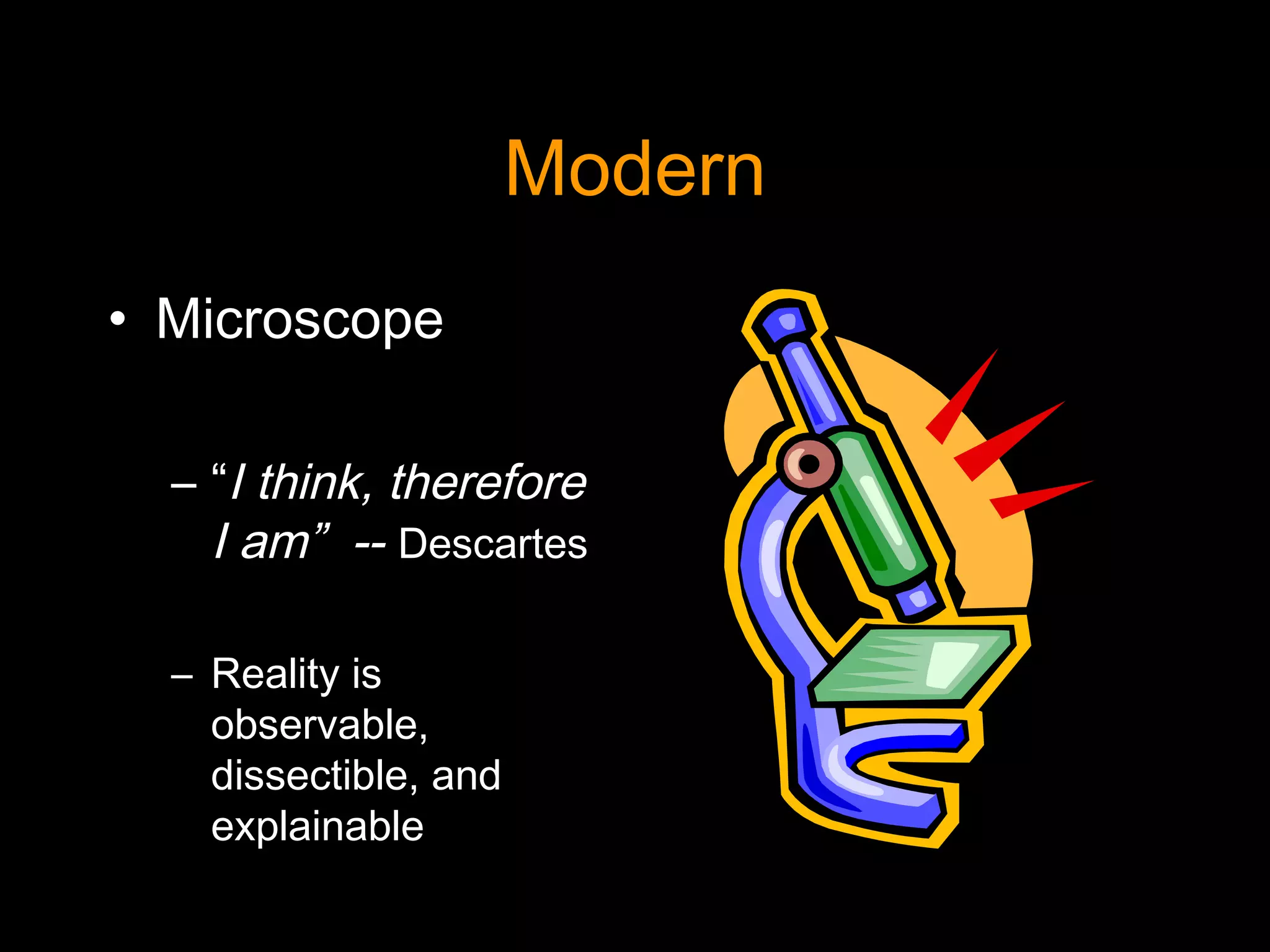
• Microscope
– “I think, therefore
I am” -- Descartes
– Reality is
observable,
dissectible, and
explainable
Postmodern
• Kaleidoscope
– “an ever-changing
mosaic of pieces of
broken glass that is
beautiful when light
shines through it”
• Erwin McManus
– Reality is evolving and
understood through
brokenness and
interrelationships
From Modern to Postmodern
• Modern
– Conquest and Control
– Mechanistic
– Analytical
– Secular-scientific
– “Knowing God”
• Postmodern
– Conservation
– Organic, ecological
– Holistic, passionate
– Spiritual-scientific
– “Experiencing God”
From Modern to Postmodern
Modern values
• Excellence (tightly run
worship experience)
• Cognitive and conceptual
learning through one-way
preaching
• Sometimes, the removal of
ancient or spiritual
• Going to church
Postmodern values
• Avoiding any sense of
performance (relationship and
chemistry trump excellence)
• Experiential learning through
interactive teaching
– encounter trumps information
– Palette of senses
• Sometimes, the desire of roots,
history, and supernatural
• The church “going”
Overlapping Waves
• Modernity and
postmodernity are
ebbing and flowing
within our culture
– Within individuals
– In congregations
Used car religion?
• “Given its bad press,
Christianity is to postmodern
people a “used car” religion.
They want to “check it out”
thoroughly & comparatively,
asking the same tough
questions we’d ask of a
used car salesman.”
• Brian McLaren
How to sell a used car …
• Space and Time
– what God made
when wanting to
create beings
capable of being in a
relationship with
himself
– “you can’t hurry love”
The Best Activity involving wise
use of space and time?
Fishing!
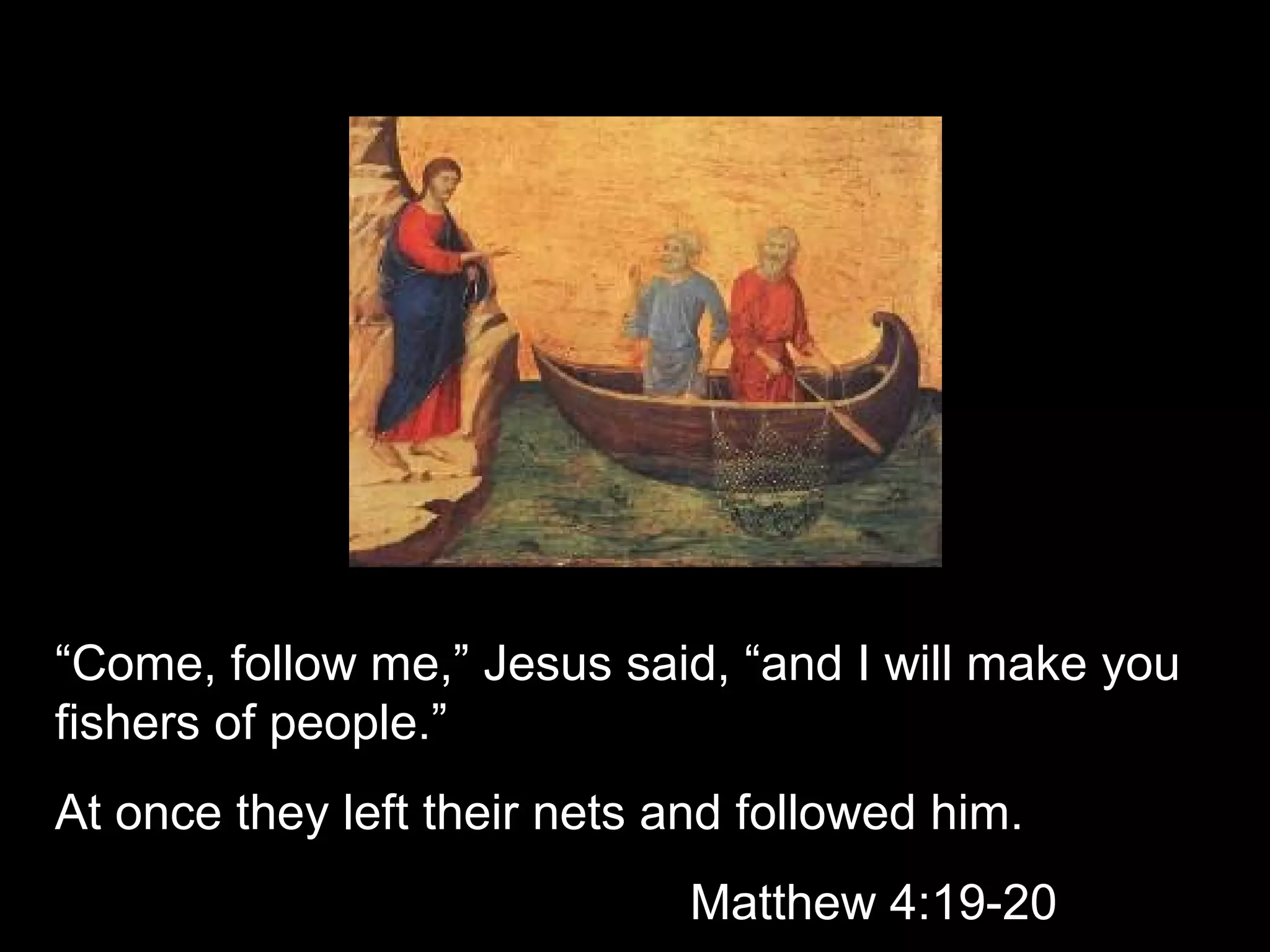
“Come, follow me,” Jesus said, “and I will make you
fishers of people.”
At once they left their nets and followed him.
Matthew 4:19-20
There was more than one
kind of fish to catch.
“Musht” (St. Peter’s Fish)
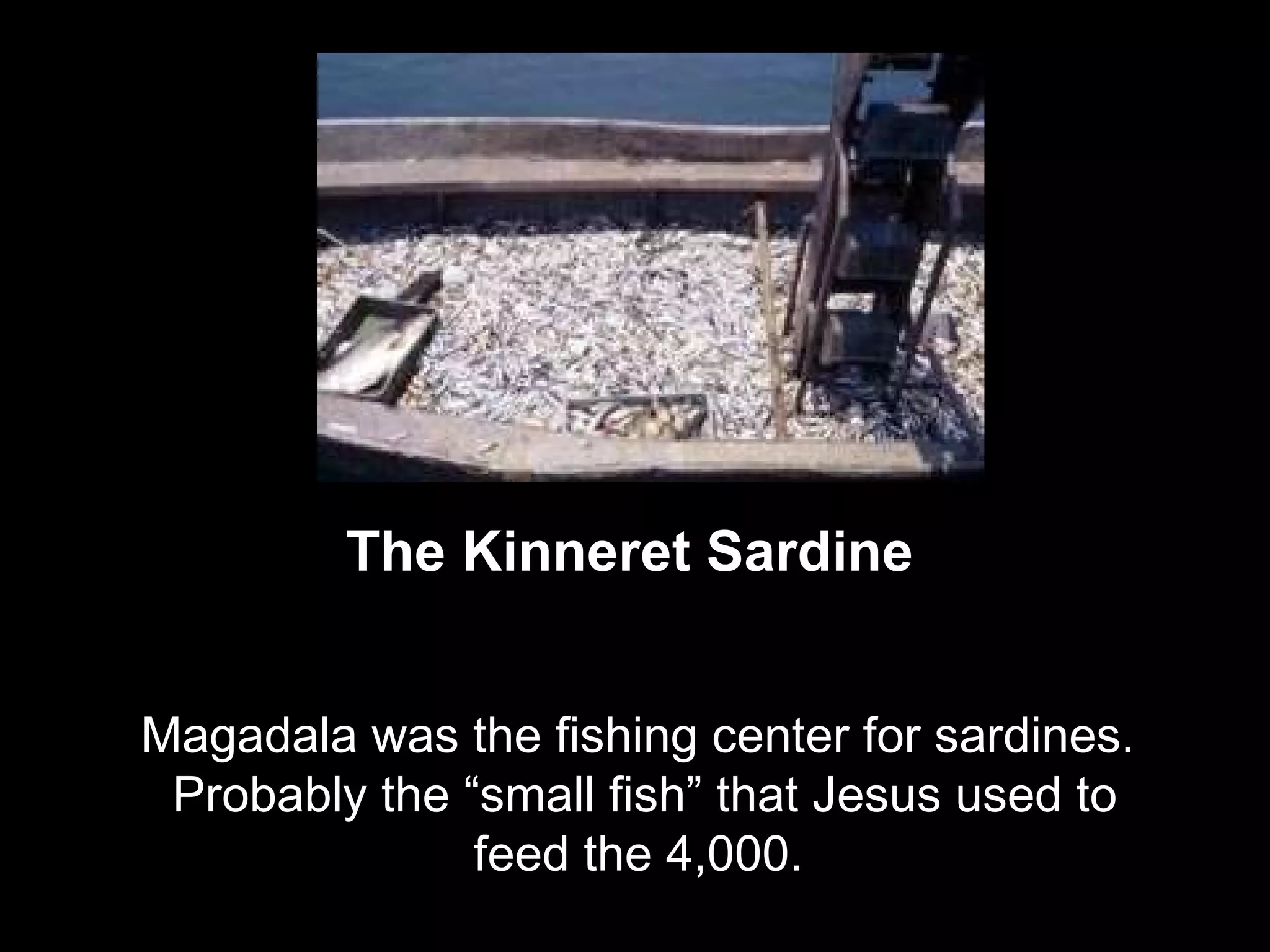
The Kinneret Sardine
Magadala was the fishing center for sardines.
Probably the “small fish” that Jesus used to
feed the 4,000.
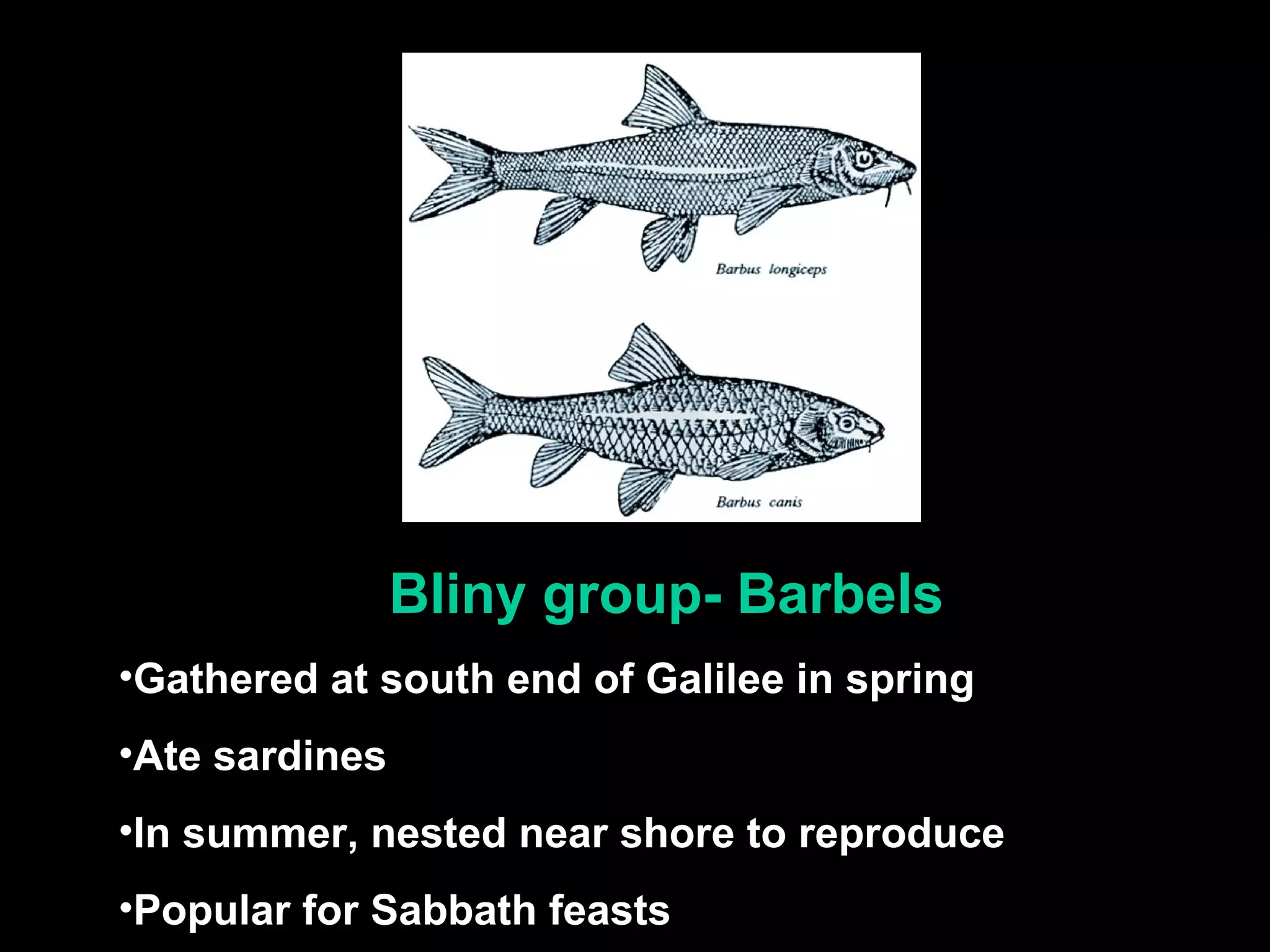
Bliny group- Barbels
•Gathered at south end of Galilee in spring
•Ate sardines
•In summer, nested near shore to reproduce
•Popular for Sabbath feasts
There was more than one
kind of net to use.
Cast Net
Drag Net
Trammel Net
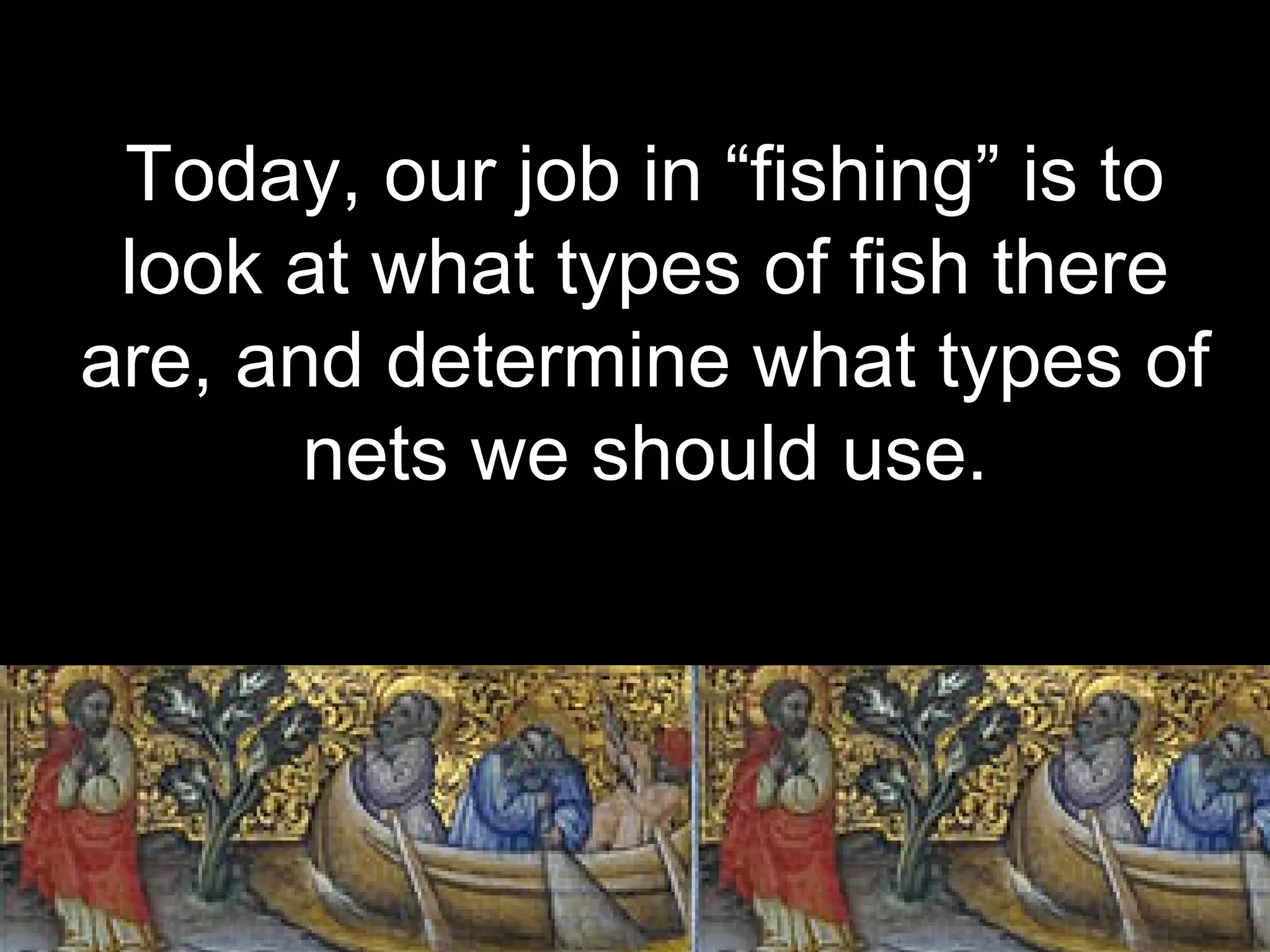
Today, our job in “fishing” is to
look at what types of fish there
are, and determine what types of
nets we should use.
More than one strategy
“(1) Admonish the idlers,
(2) encourage the faithful,
(3) help the weak,
be patient with them all.”
1 Thessalonians 5:14
• #1,2. Reminding
people who know
better to return
– Circuit, Billy Graham
• #3. Dealing with people
who have no baseline
– Happens through
“relationship” moreso
than “event”
One Net:
The 3 Great Human Values
• The True, the Good,
and the Beautiful
• Moderns have
responded to a focus on
the Truth
• Postmoderns will
respond better to a
focus on the Good and
the Beautiful
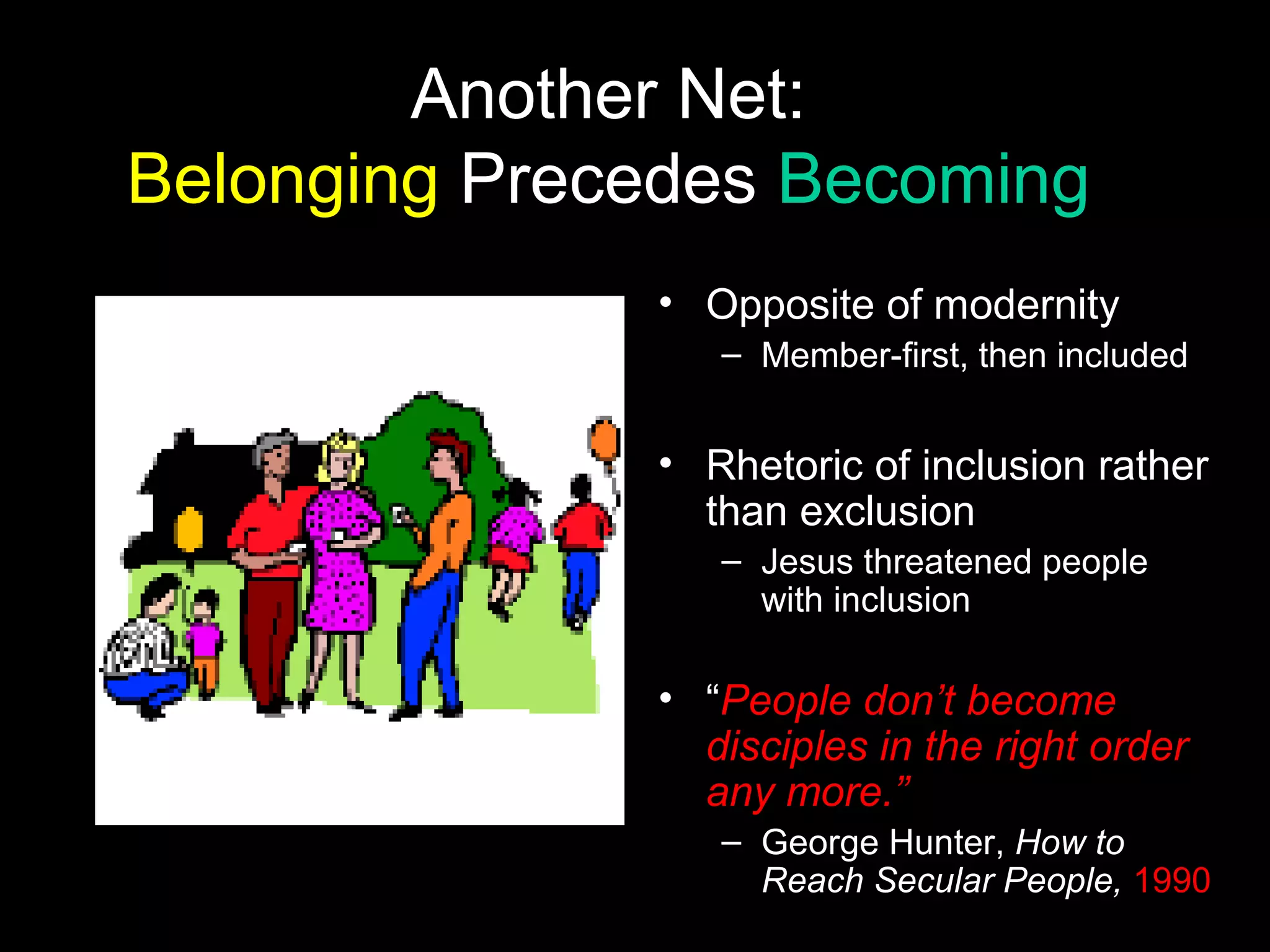
Another Net:
Belonging Precedes Becoming
• Opposite of modernity
– Member-first, then included
• Rhetoric of inclusion rather
than exclusion
– Jesus threatened people
with inclusion
• “People don’t become
disciples in the right order
any more.”
– George Hunter, How to
Reach Secular People, 1990
Both precede “Believing”
• In Alcoholics
Anonymous:
– “I come …
• “I come to …
– “I come to believe.”
7 Factors in
Postmodern Disciple-Making
• Here are some
things that allow the
flourishing relational
context of time and
space in which
people can become
disciples of Jesus
Christ:
1. The relational factor
• “We’d better learn to
count not just
conversions but
conversations.”
• Brian McLaren
• Seeing evangelism as a
relational dance rather
than a win/lose conquest
– Don’t press for decision
now, just keep the
conversation going
• Takes 10+ for conversion
2. The narrative factor
• It’s about
– their story (listen!)
– your story (share)
– and God’s story (proclaim)
• The Gospel must be
presented in story form
rather than a set of facts,
rules, propositions, laws
– Bible itself has God speak
to us via prophets, poets,
philosophers, priests
3. The communal factor
• “The greatest
hermeneutic of the
Gospel is a community
that lives by it.”
– Leslie Newbigin
• Belonging precedes
becoming precedes
believing
4. The process factor
• Instead of:
– Decision-Discipleship
– Evangelism-Follow up
• Think: “disciple-making”
– Understand but collapse the
Engel scale
– A holistic process
– Space/time
• Teach “how” rather than
“what” to believe
• (McLaren: Finding Faith)
THE ENGEL SCALE
Spiritual Decision Process ModelETERNITY
+3
+2
+1
- -
-1
-2
-3
-4
-5
-6
-7
-8 Awareness of Supreme Being but no effective
knowledge of Gospel.
Initial awareness of Gospel.
Awareness of fundamentals of Gospel.
Grasp of implications of Gospel.
Positive attitude toward Gospel.
Personal problem recognition.
DECISION TO ACT
Repentance and faith in Christ.
A “NEW CREATION”
Post-decision evaluation.
Incorporation into Body.
Conceptual and behavioral
growth begins.
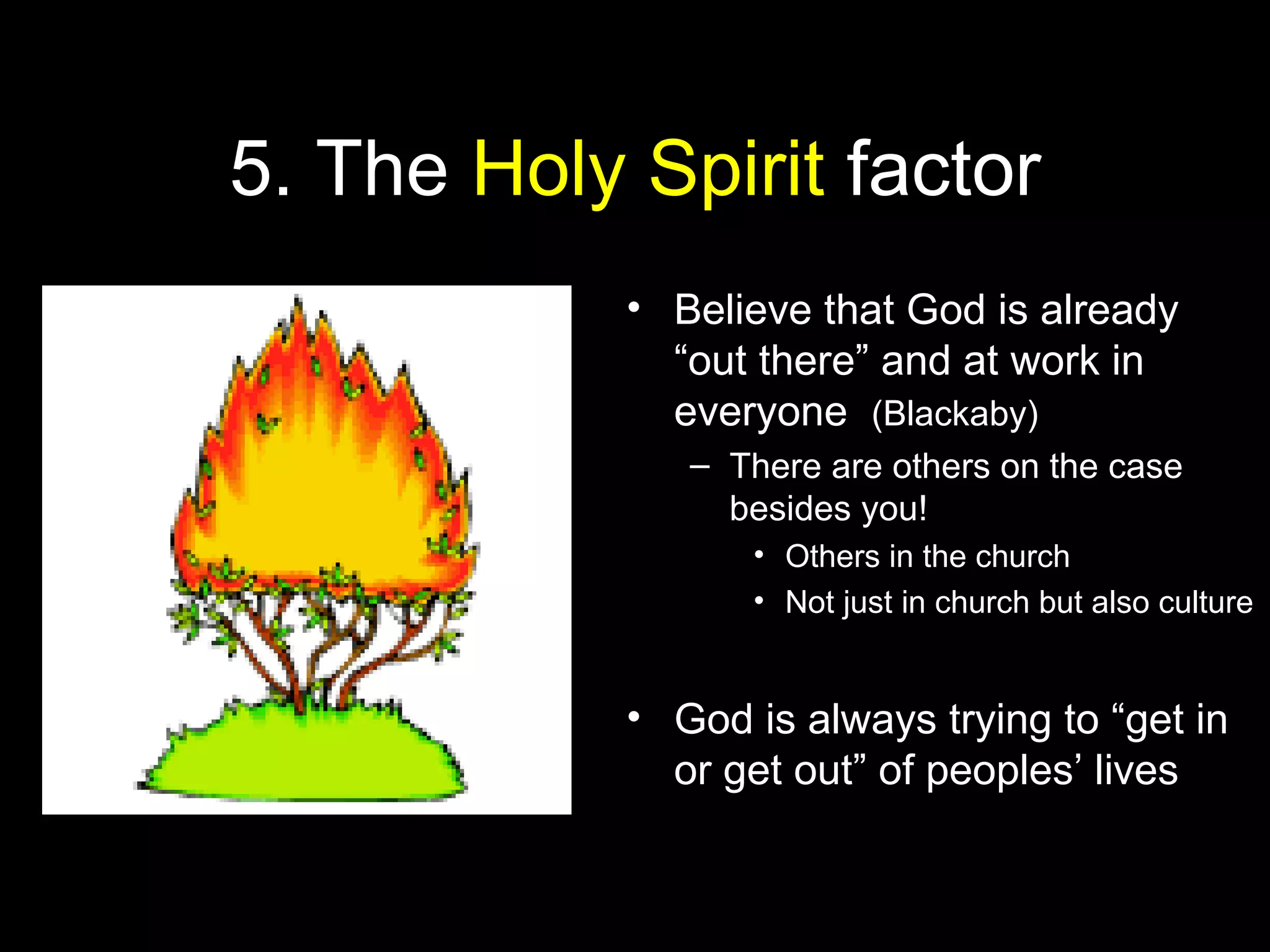
5. The Holy Spirit factor
• Believe that God is already
“out there” and at work in
everyone (Blackaby)
– There are others on the case
besides you!
• Others in the church
• Not just in church but also culture
• God is always trying to “get in
or get out” of peoples’ lives
6. The learning factor
• See evangelism as part of
my own discipleship, not
just the other person’s
• “There is enough bad in the best
of us and good in the worst of us
that it behooves all of us to
speak no ill about any of us.”
• Abraham Lincoln
7. The missional factor
• See evangelism as
recruiting people for
God’s mission here
on earth, not just
souls for heaven
• Gospel of John:
eternal life begins now!
Conclusions
Church leaders must move from inside the
office to being leaders outside office walls
and outside of the Christian bubble.
Don’t expect or try to get emerging
generations in your bubble.
(And quit evaluating pastors on “office hours!”)
Conclusions
Beyond “Soul-Winning?”
1. Postmodern
evangelism is not
conquest.
– Change Language:
crusade, spiritual
warfare, “taking” a
city, winning the lost
• “not-yet-Christians?”
“Normal people
2. Giving people:
• a relationship
(conversations)
• space/time …
… moves us toward
evangelism as disciple-
making.
God may not even be asking you
to net emerging generations
since he already has you fishing
for another kind of fish.
But….
You do need to love emerging
generations and have your
heart broken for them –
they need you.
“As he approached
Jerusalem and saw
the city, he wept over
it and said, “If you,
even you, had known
on this day what
would bring you
peace…”
- Luke 19:41
“When He saw the
crowds He had
compassion on them,
because they were
harassed and
helpless,like sheep
without a shepherd.”
Matthew 9:36-38
“What I keep coming back to, is that the alternative is
unthinkable. For anybody to sit idly by and watch 1/3 or
40% of the congregation disappear, it is unconscionable
….You can’t do nothing. Whatever it is that you try, at least
you will be able to stand before Christ one day and say we
gave it our best shot…. We never quite figured it out, but
we certainly did try!”
- Bill Hybels
Postmodern Personal Evangelism
Dr. John P. Chandler
Courageous Churches
Virginia Baptist Mission Board
john.chandler@vbmb.org
Copy right John P. Chandler, 2004

Postmodern evangelism

  • 1.
    Postmodern Personal Evangelism BrianMcLaren and Dan Kimball, 21-C presentations John.chandler@vbmb.org
  • 2.
    Premodern • Telescope – Psalm8 – Reality explained in terms of far-off transcendence
  • 3.
    Modern • Microscope – “Ithink, therefore I am” -- Descartes – Reality is observable, dissectible, and explainable
  • 4.
    Postmodern • Kaleidoscope – “anever-changing mosaic of pieces of broken glass that is beautiful when light shines through it” • Erwin McManus – Reality is evolving and understood through brokenness and interrelationships
  • 5.
    From Modern toPostmodern • Modern – Conquest and Control – Mechanistic – Analytical – Secular-scientific – “Knowing God” • Postmodern – Conservation – Organic, ecological – Holistic, passionate – Spiritual-scientific – “Experiencing God”
  • 6.
    From Modern toPostmodern Modern values • Excellence (tightly run worship experience) • Cognitive and conceptual learning through one-way preaching • Sometimes, the removal of ancient or spiritual • Going to church Postmodern values • Avoiding any sense of performance (relationship and chemistry trump excellence) • Experiential learning through interactive teaching – encounter trumps information – Palette of senses • Sometimes, the desire of roots, history, and supernatural • The church “going”
  • 7.
    Overlapping Waves • Modernityand postmodernity are ebbing and flowing within our culture – Within individuals – In congregations
  • 8.
    Used car religion? •“Given its bad press, Christianity is to postmodern people a “used car” religion. They want to “check it out” thoroughly & comparatively, asking the same tough questions we’d ask of a used car salesman.” • Brian McLaren
  • 9.
    How to sella used car … • Space and Time – what God made when wanting to create beings capable of being in a relationship with himself – “you can’t hurry love”
  • 10.
    The Best Activityinvolving wise use of space and time? Fishing!
  • 11.
    “Come, follow me,”Jesus said, “and I will make you fishers of people.” At once they left their nets and followed him. Matthew 4:19-20
  • 12.
    There was morethan one kind of fish to catch.
  • 13.
  • 14.
    The Kinneret Sardine Magadalawas the fishing center for sardines. Probably the “small fish” that Jesus used to feed the 4,000.
  • 15.
    Bliny group- Barbels •Gatheredat south end of Galilee in spring •Ate sardines •In summer, nested near shore to reproduce •Popular for Sabbath feasts
  • 16.
    There was morethan one kind of net to use.
  • 17.
  • 18.
  • 19.
  • 20.
    Today, our jobin “fishing” is to look at what types of fish there are, and determine what types of nets we should use.
  • 21.
    More than onestrategy “(1) Admonish the idlers, (2) encourage the faithful, (3) help the weak, be patient with them all.” 1 Thessalonians 5:14 • #1,2. Reminding people who know better to return – Circuit, Billy Graham • #3. Dealing with people who have no baseline – Happens through “relationship” moreso than “event”
  • 22.
    One Net: The 3Great Human Values • The True, the Good, and the Beautiful • Moderns have responded to a focus on the Truth • Postmoderns will respond better to a focus on the Good and the Beautiful
  • 23.
    Another Net: Belonging PrecedesBecoming • Opposite of modernity – Member-first, then included • Rhetoric of inclusion rather than exclusion – Jesus threatened people with inclusion • “People don’t become disciples in the right order any more.” – George Hunter, How to Reach Secular People, 1990
  • 24.
    Both precede “Believing” •In Alcoholics Anonymous: – “I come … • “I come to … – “I come to believe.”
  • 25.
    7 Factors in PostmodernDisciple-Making • Here are some things that allow the flourishing relational context of time and space in which people can become disciples of Jesus Christ:
  • 26.
    1. The relationalfactor • “We’d better learn to count not just conversions but conversations.” • Brian McLaren • Seeing evangelism as a relational dance rather than a win/lose conquest – Don’t press for decision now, just keep the conversation going • Takes 10+ for conversion
  • 27.
    2. The narrativefactor • It’s about – their story (listen!) – your story (share) – and God’s story (proclaim) • The Gospel must be presented in story form rather than a set of facts, rules, propositions, laws – Bible itself has God speak to us via prophets, poets, philosophers, priests
  • 28.
    3. The communalfactor • “The greatest hermeneutic of the Gospel is a community that lives by it.” – Leslie Newbigin • Belonging precedes becoming precedes believing
  • 29.
    4. The processfactor • Instead of: – Decision-Discipleship – Evangelism-Follow up • Think: “disciple-making” – Understand but collapse the Engel scale – A holistic process – Space/time • Teach “how” rather than “what” to believe • (McLaren: Finding Faith)
  • 30.
    THE ENGEL SCALE SpiritualDecision Process ModelETERNITY +3 +2 +1 - - -1 -2 -3 -4 -5 -6 -7 -8 Awareness of Supreme Being but no effective knowledge of Gospel. Initial awareness of Gospel. Awareness of fundamentals of Gospel. Grasp of implications of Gospel. Positive attitude toward Gospel. Personal problem recognition. DECISION TO ACT Repentance and faith in Christ. A “NEW CREATION” Post-decision evaluation. Incorporation into Body. Conceptual and behavioral growth begins.
  • 31.
    5. The HolySpirit factor • Believe that God is already “out there” and at work in everyone (Blackaby) – There are others on the case besides you! • Others in the church • Not just in church but also culture • God is always trying to “get in or get out” of peoples’ lives
  • 32.
    6. The learningfactor • See evangelism as part of my own discipleship, not just the other person’s • “There is enough bad in the best of us and good in the worst of us that it behooves all of us to speak no ill about any of us.” • Abraham Lincoln
  • 33.
    7. The missionalfactor • See evangelism as recruiting people for God’s mission here on earth, not just souls for heaven • Gospel of John: eternal life begins now!
  • 34.
    Conclusions Church leaders mustmove from inside the office to being leaders outside office walls and outside of the Christian bubble. Don’t expect or try to get emerging generations in your bubble. (And quit evaluating pastors on “office hours!”)
  • 35.
    Conclusions Beyond “Soul-Winning?” 1. Postmodern evangelismis not conquest. – Change Language: crusade, spiritual warfare, “taking” a city, winning the lost • “not-yet-Christians?” “Normal people 2. Giving people: • a relationship (conversations) • space/time … … moves us toward evangelism as disciple- making.
  • 36.
    God may noteven be asking you to net emerging generations since he already has you fishing for another kind of fish.
  • 37.
  • 38.
    You do needto love emerging generations and have your heart broken for them – they need you.
  • 39.
    “As he approached Jerusalemand saw the city, he wept over it and said, “If you, even you, had known on this day what would bring you peace…” - Luke 19:41
  • 40.
    “When He sawthe crowds He had compassion on them, because they were harassed and helpless,like sheep without a shepherd.” Matthew 9:36-38
  • 41.
    “What I keepcoming back to, is that the alternative is unthinkable. For anybody to sit idly by and watch 1/3 or 40% of the congregation disappear, it is unconscionable ….You can’t do nothing. Whatever it is that you try, at least you will be able to stand before Christ one day and say we gave it our best shot…. We never quite figured it out, but we certainly did try!” - Bill Hybels
  • 42.
    Postmodern Personal Evangelism Dr.John P. Chandler Courageous Churches Virginia Baptist Mission Board john.chandler@vbmb.org Copy right John P. Chandler, 2004

Editor's Notes