Downloaded 424 times
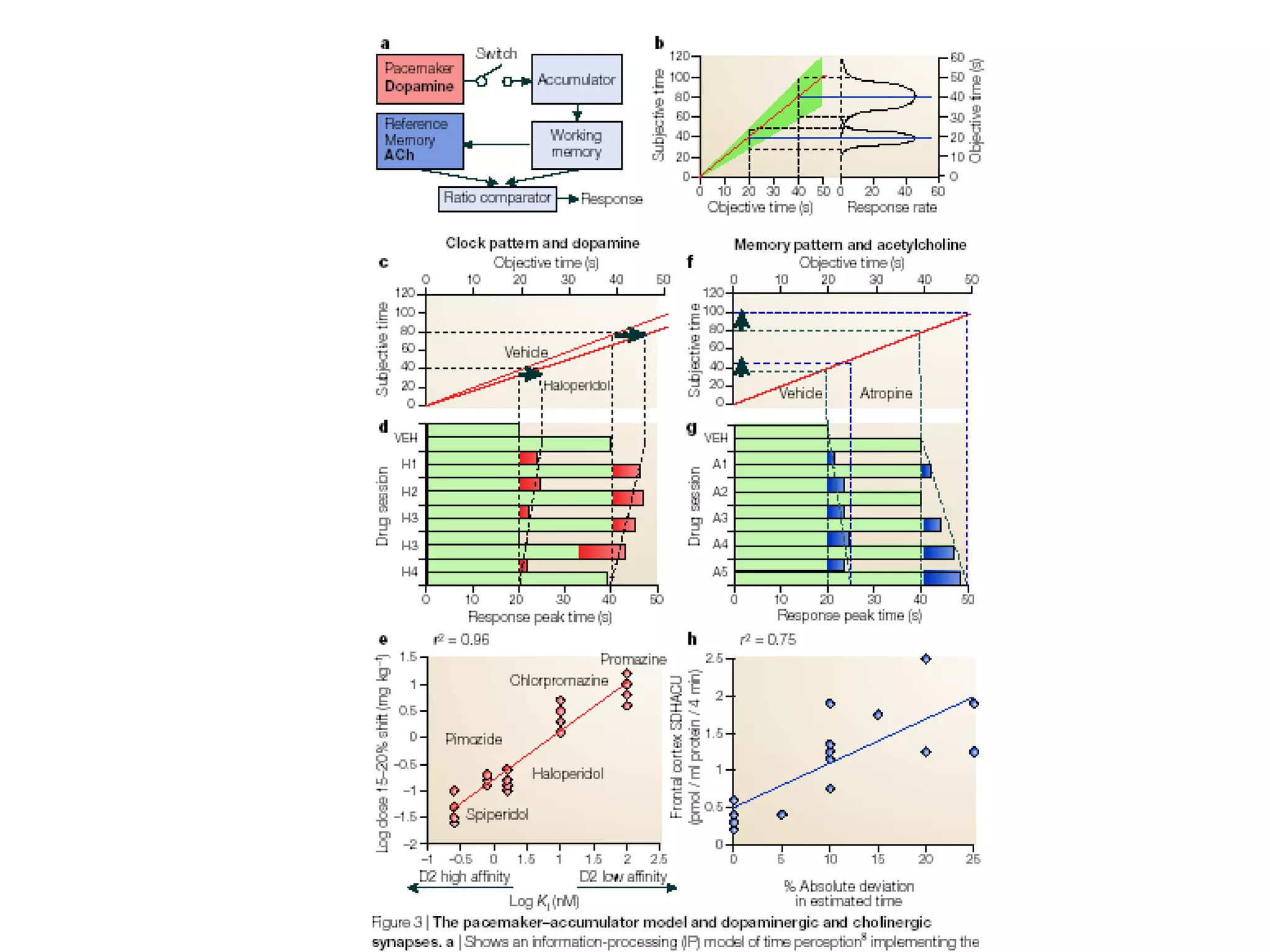
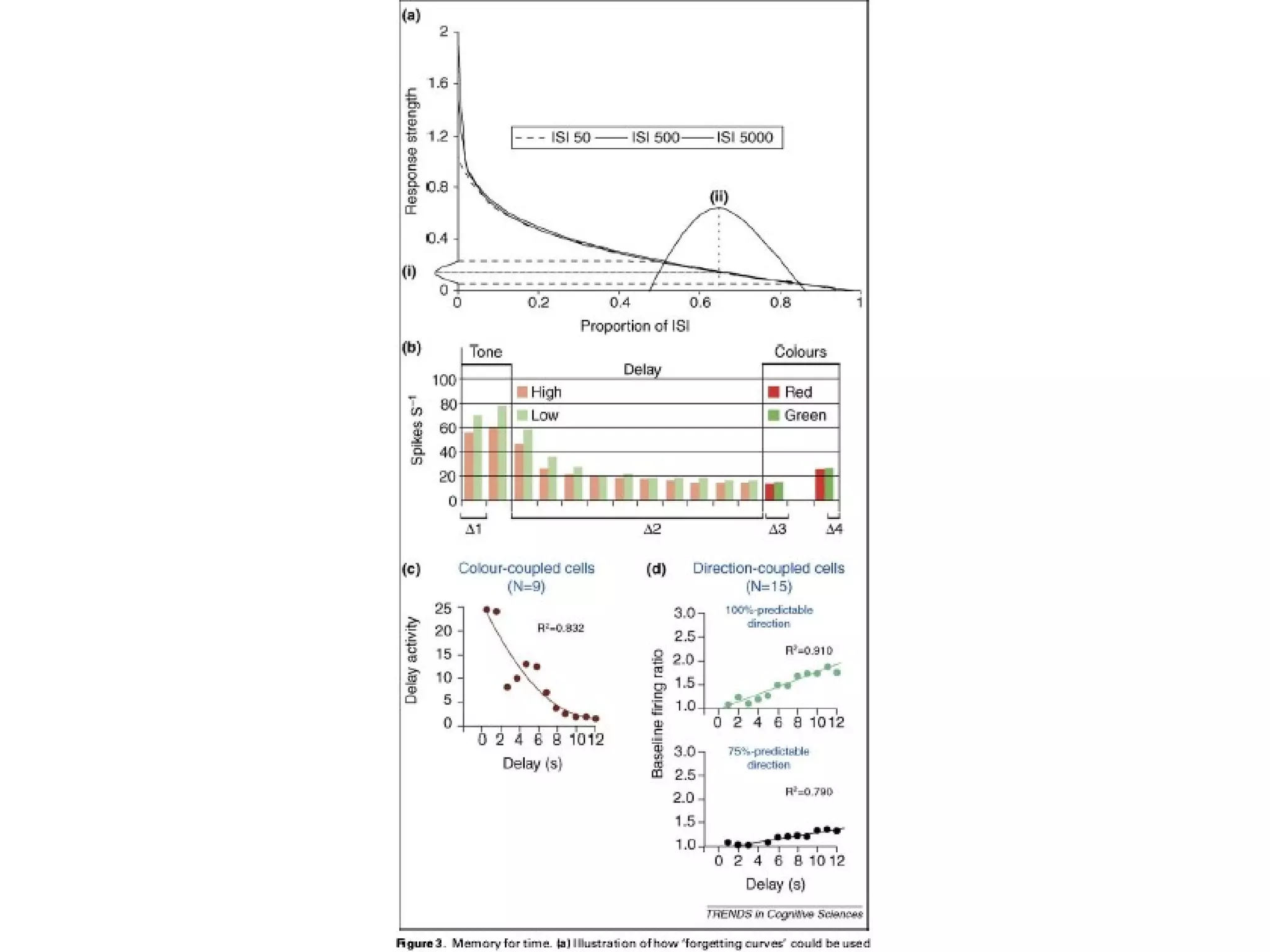

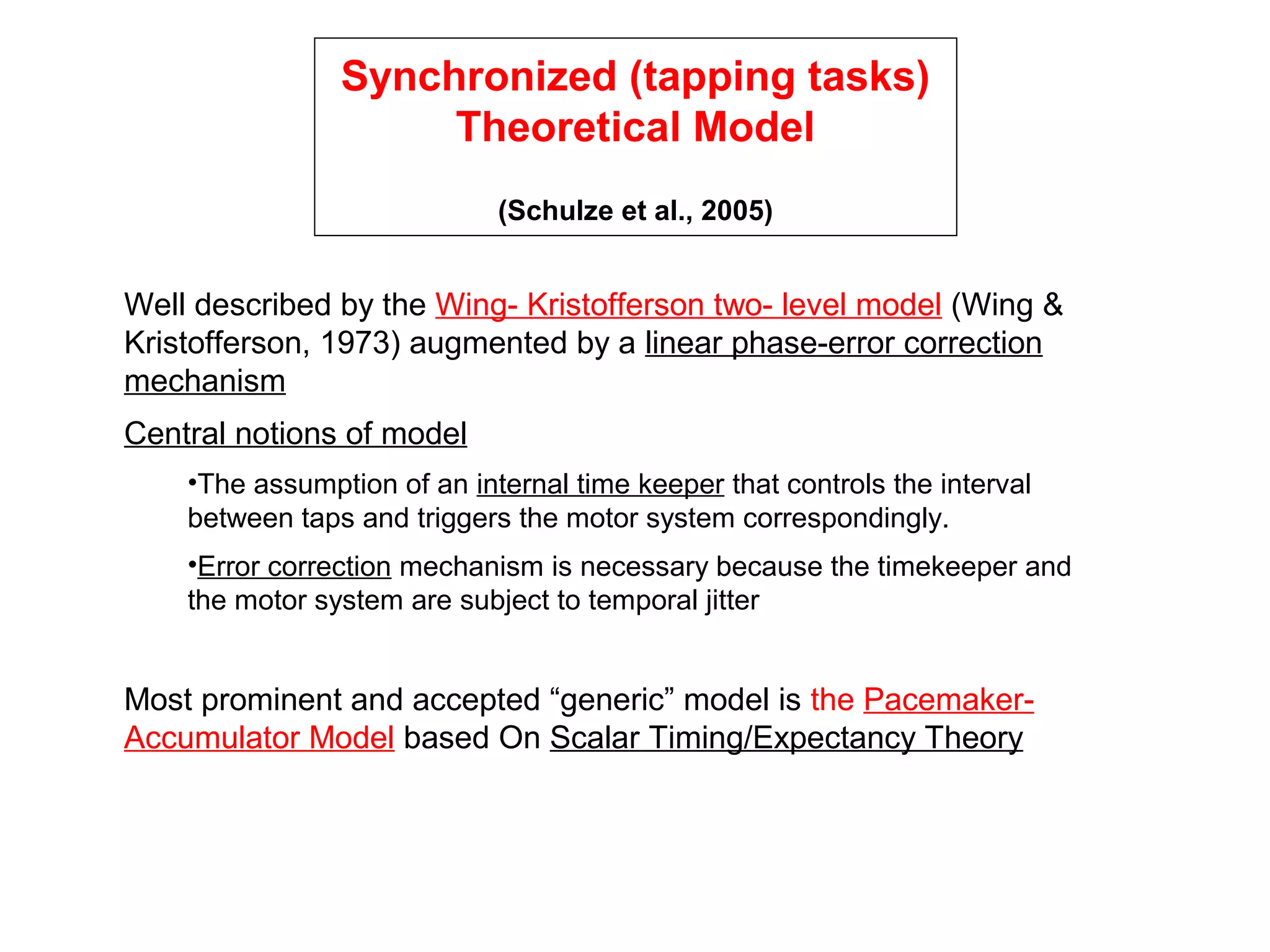
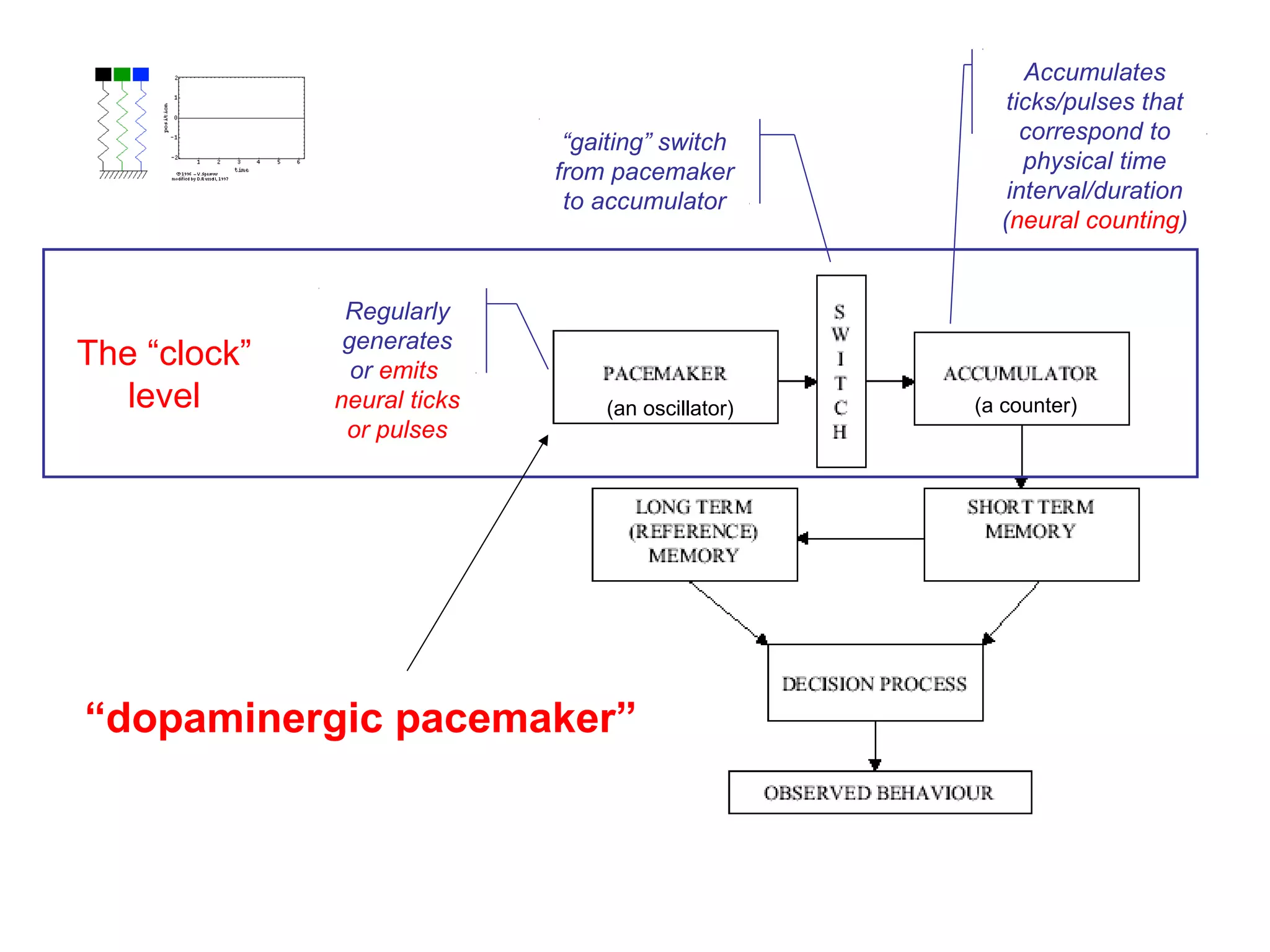
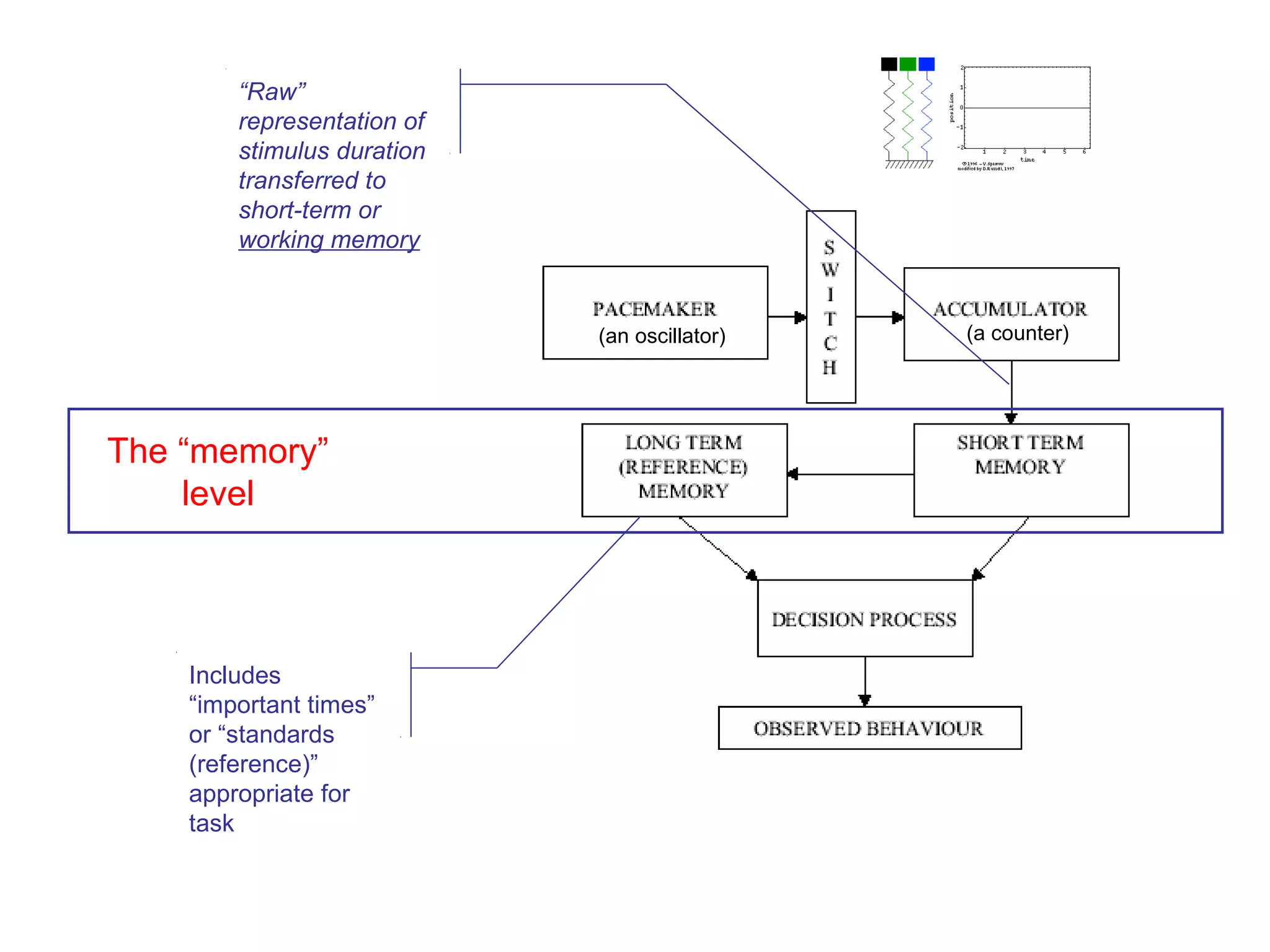
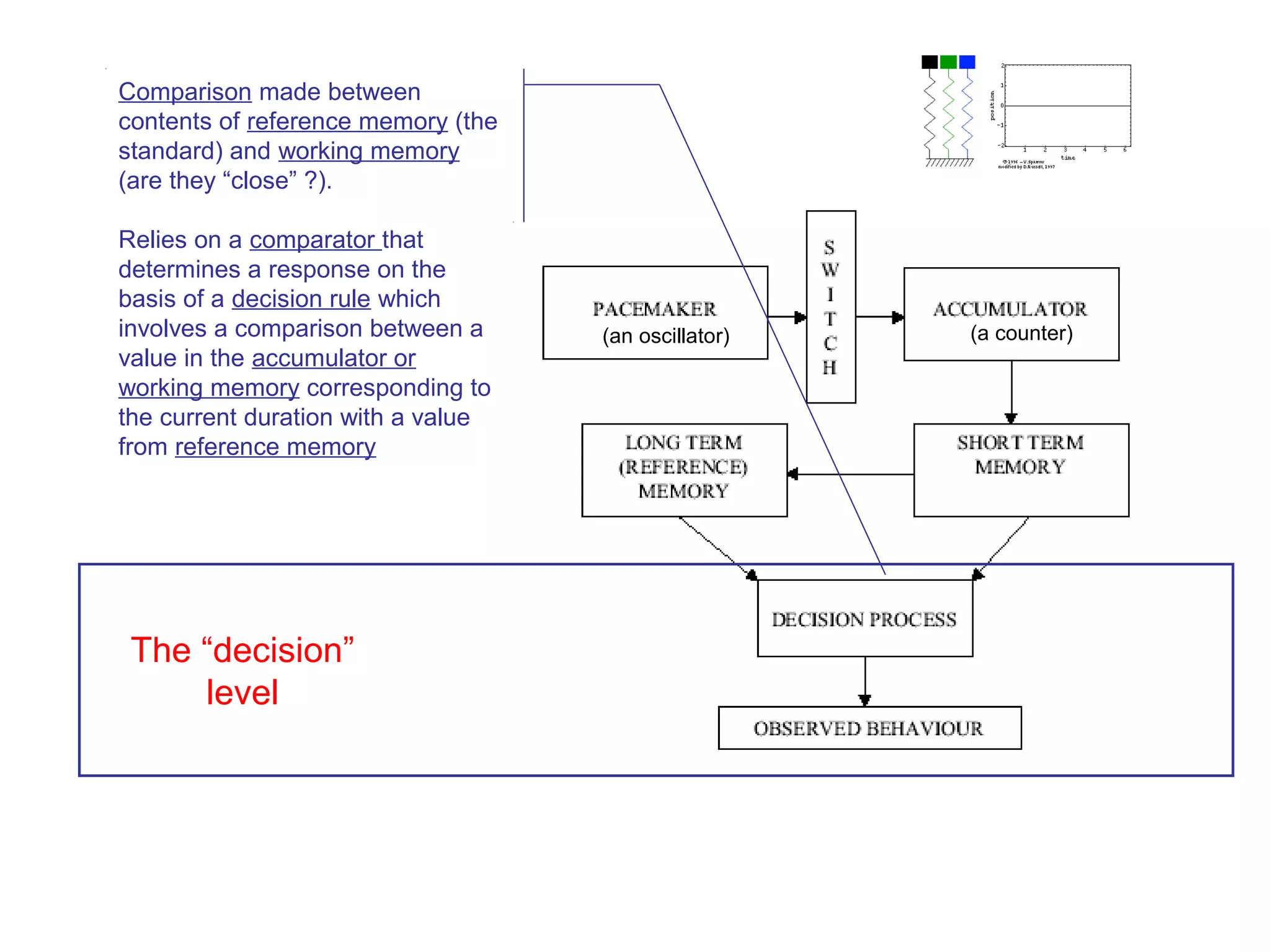
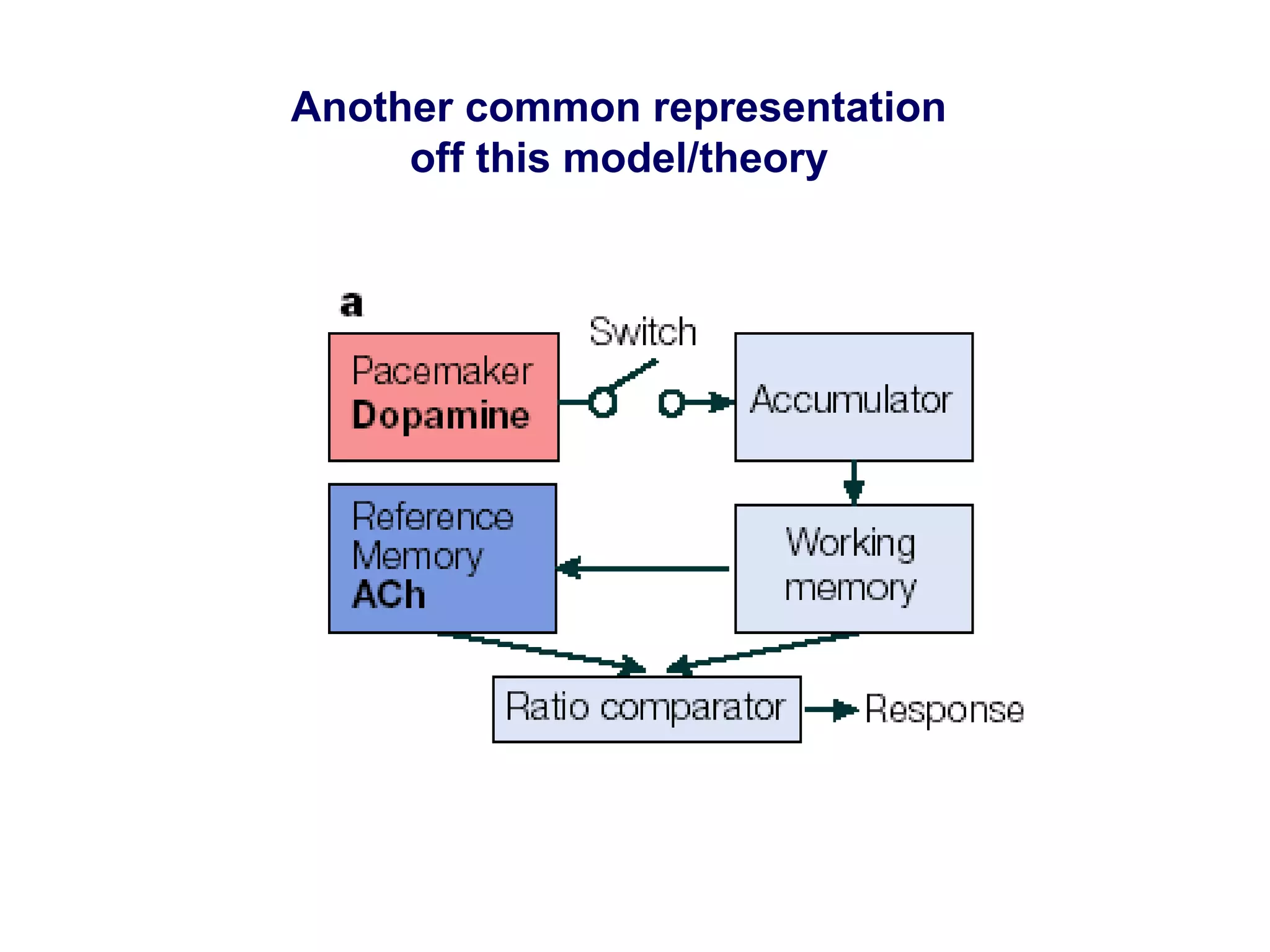
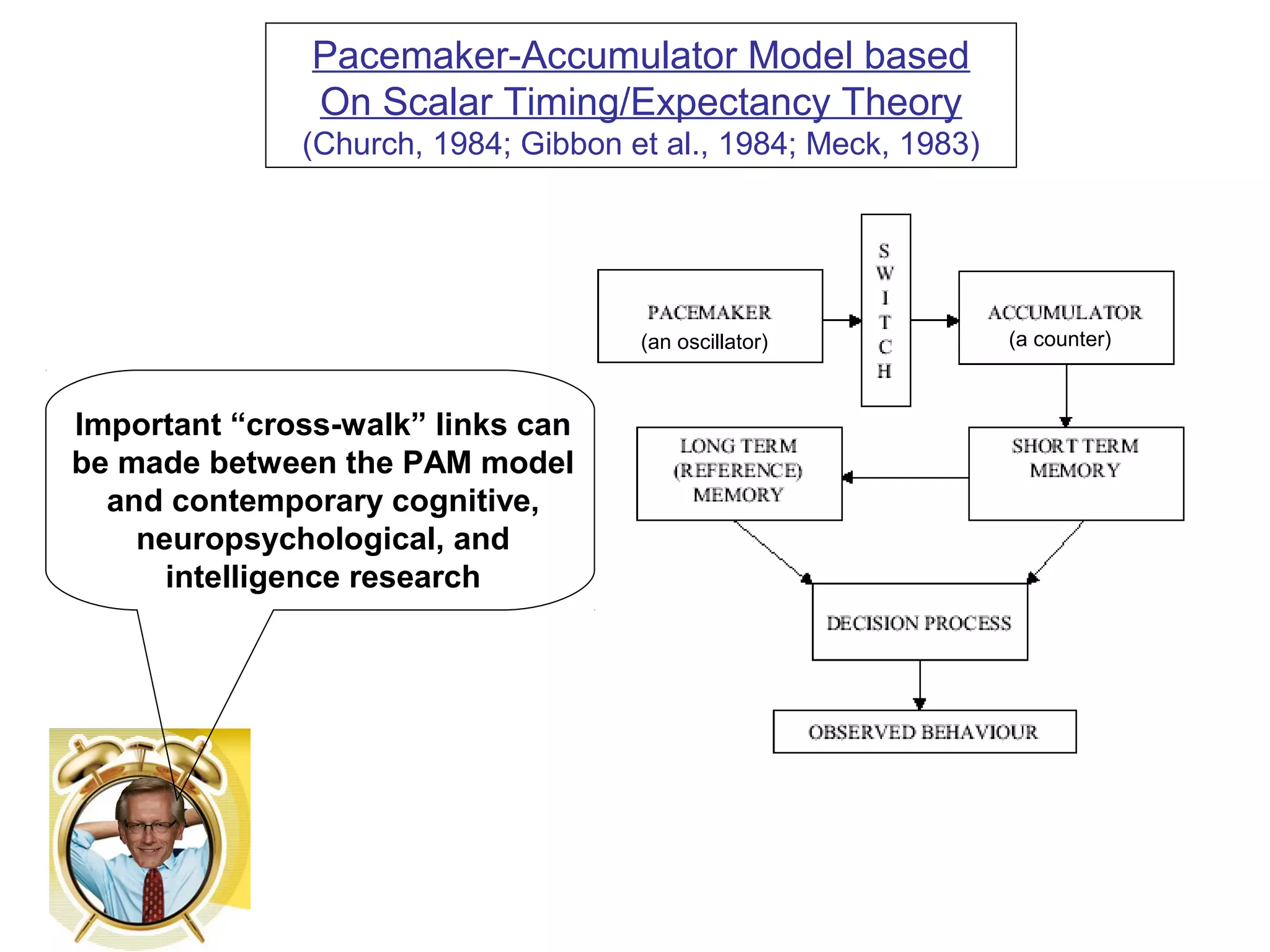
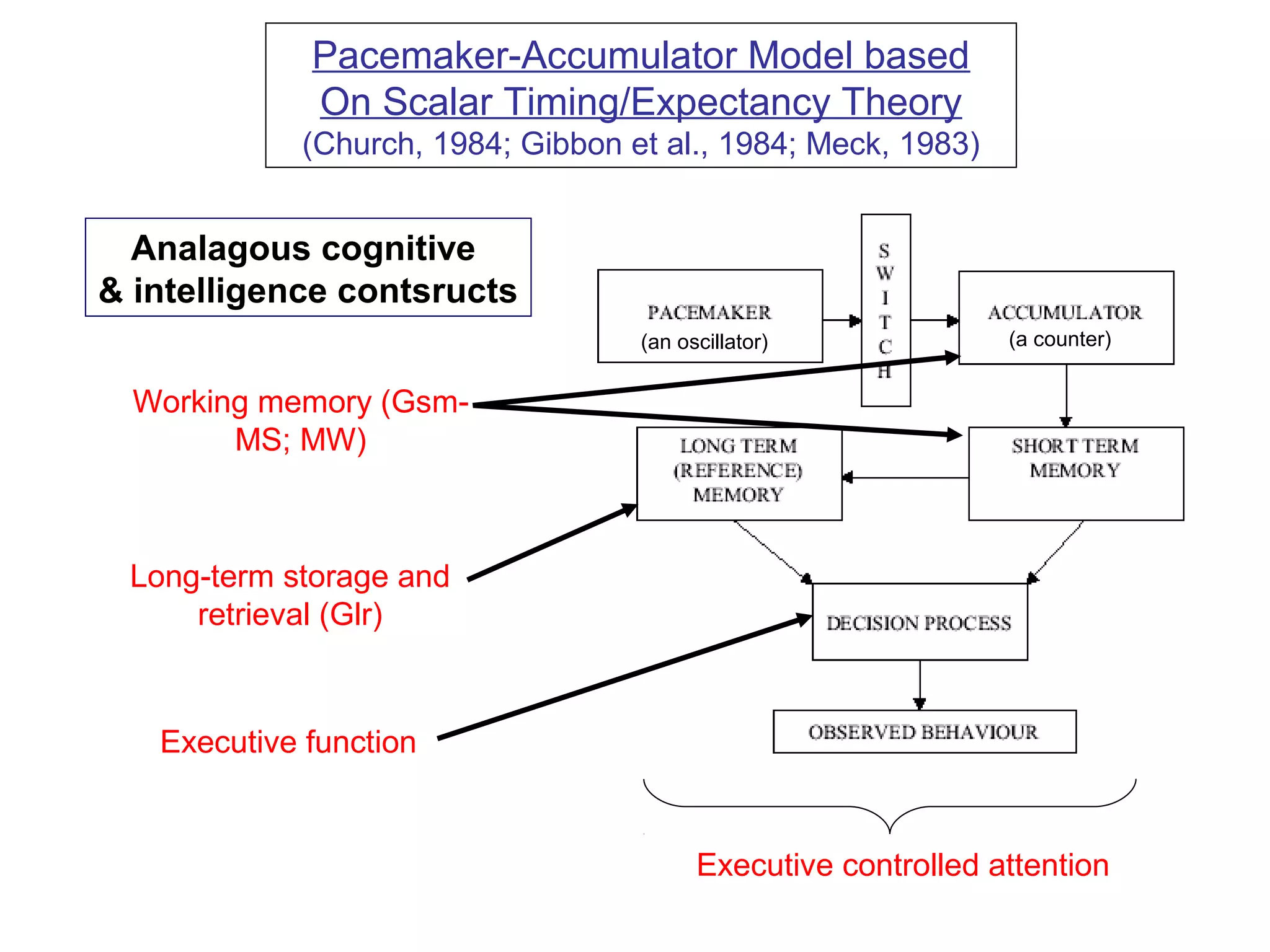
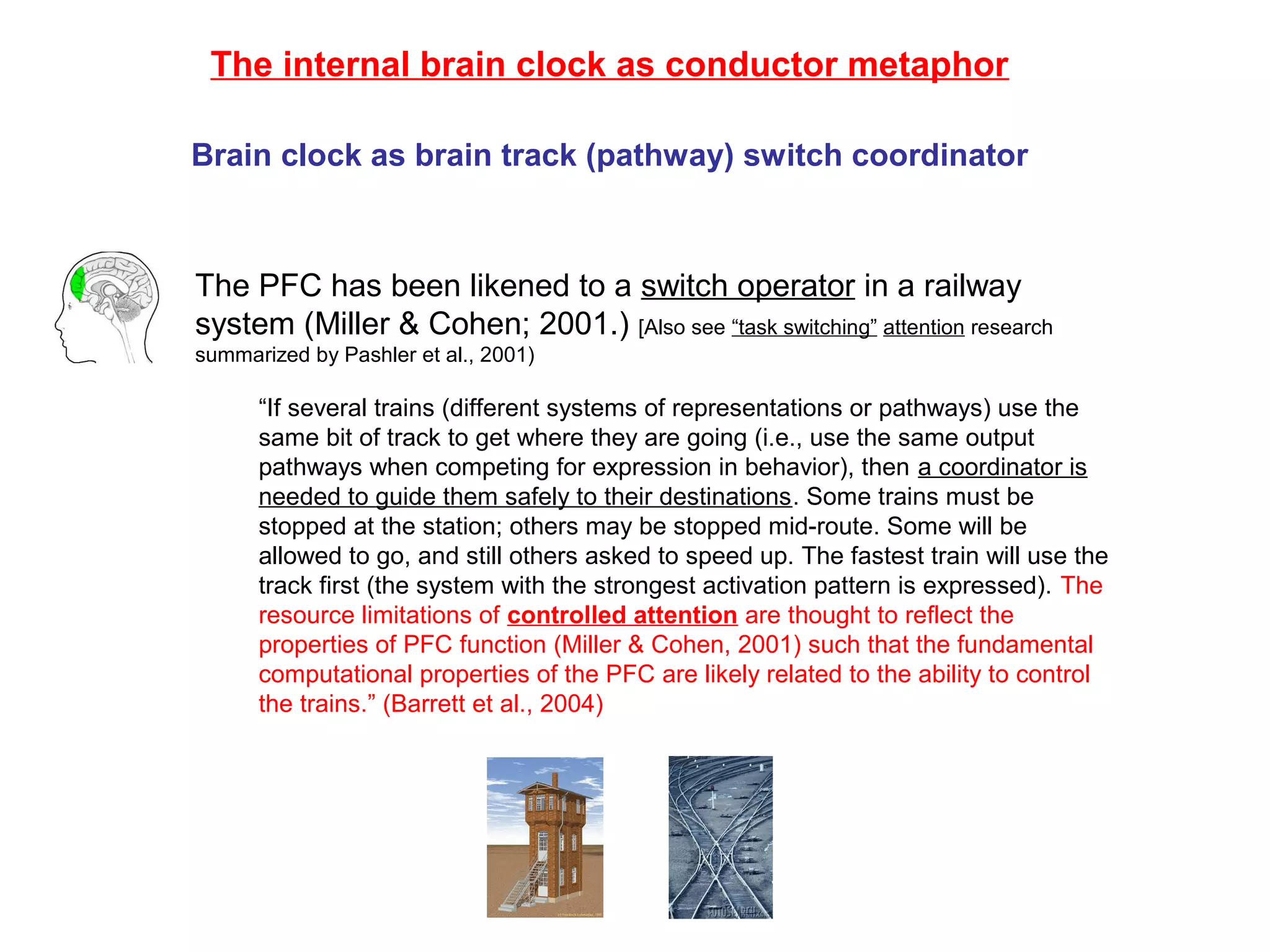
![Pacemaker-Accumulator Model based
On Scalar Timing/Expectancy Theory
(Church, 1984; Gibbon et al., 1984; Meck, 1983)
The most prominent
theory/model of
time/temporal estimation*
Time duration judgments
are performed by a
modular information
processing system
composed of:
•Clock
•Memory
•Decision processes
* [Prominent does not mean exclusive – eg…see alternative MTS (multiple time scales) model that does
NOT include internal pacemaker – instead time is based on length of decaying/fading memory traces]
(an oscillator) (a counter)](https://image.slidesharecdn.com/kathrynpaige-100421121322-phpapp02-reupload/75/Brain-Clock-IM-Keynote-brief-2007-35-2048.jpg)
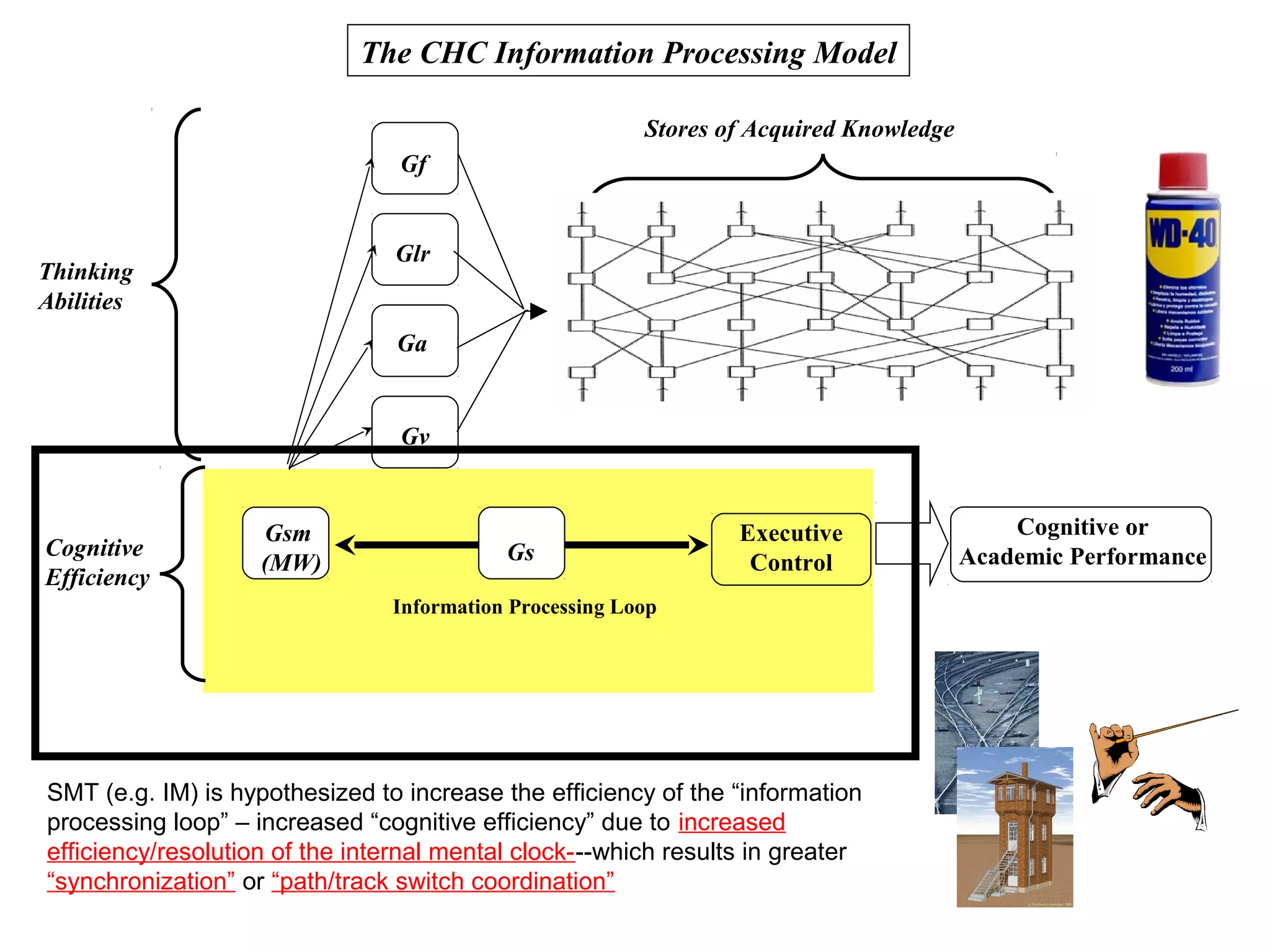

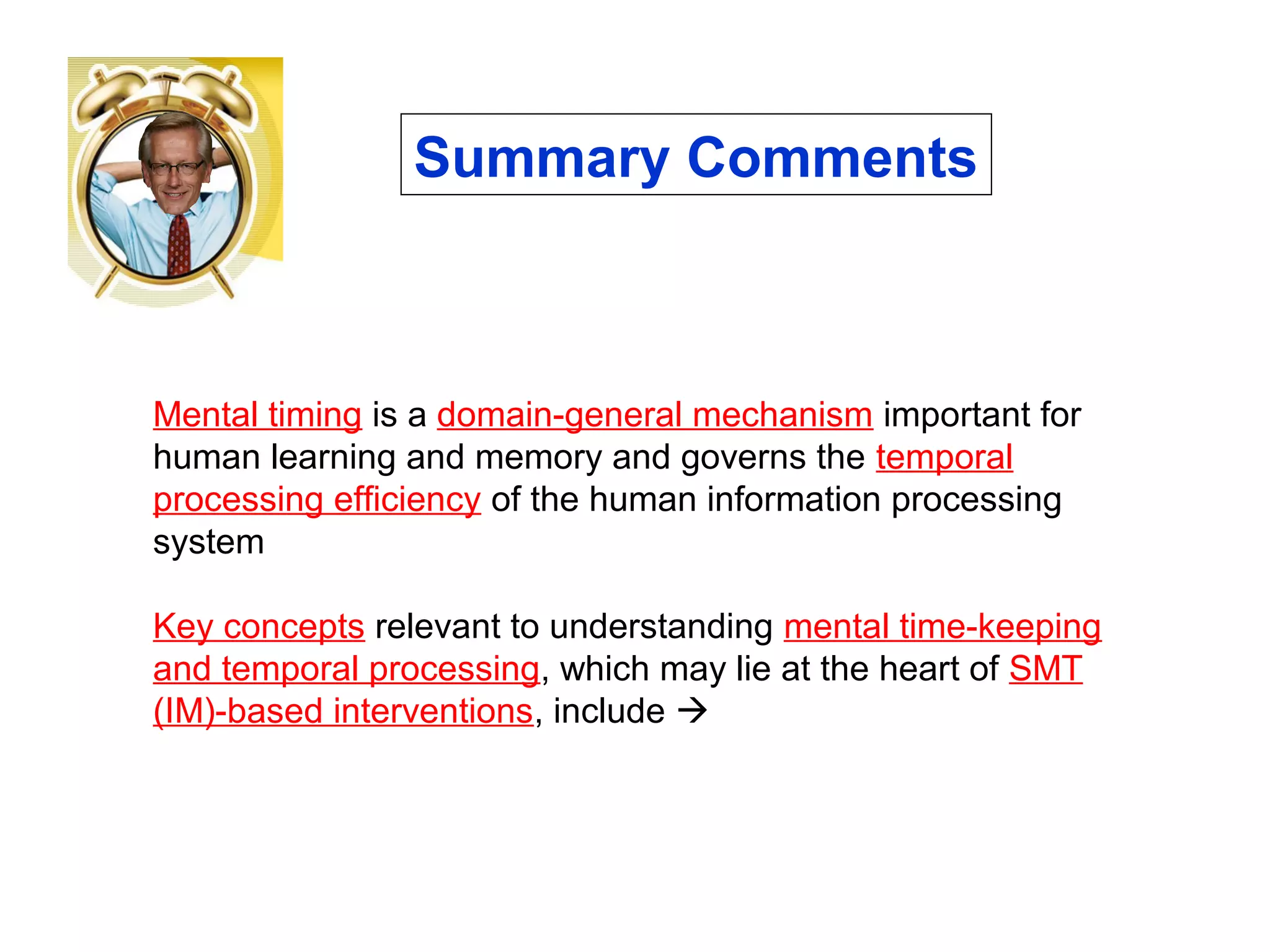
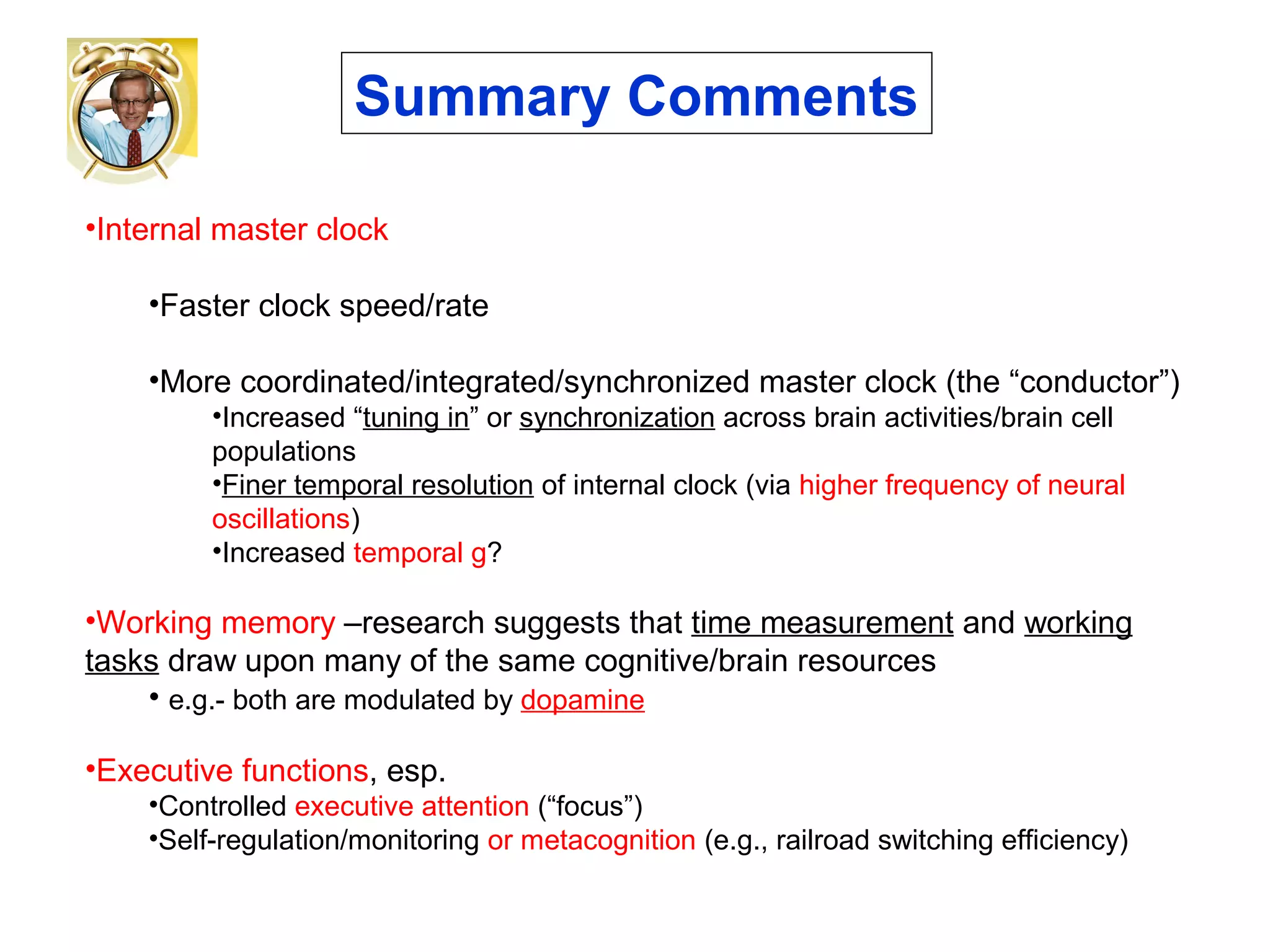
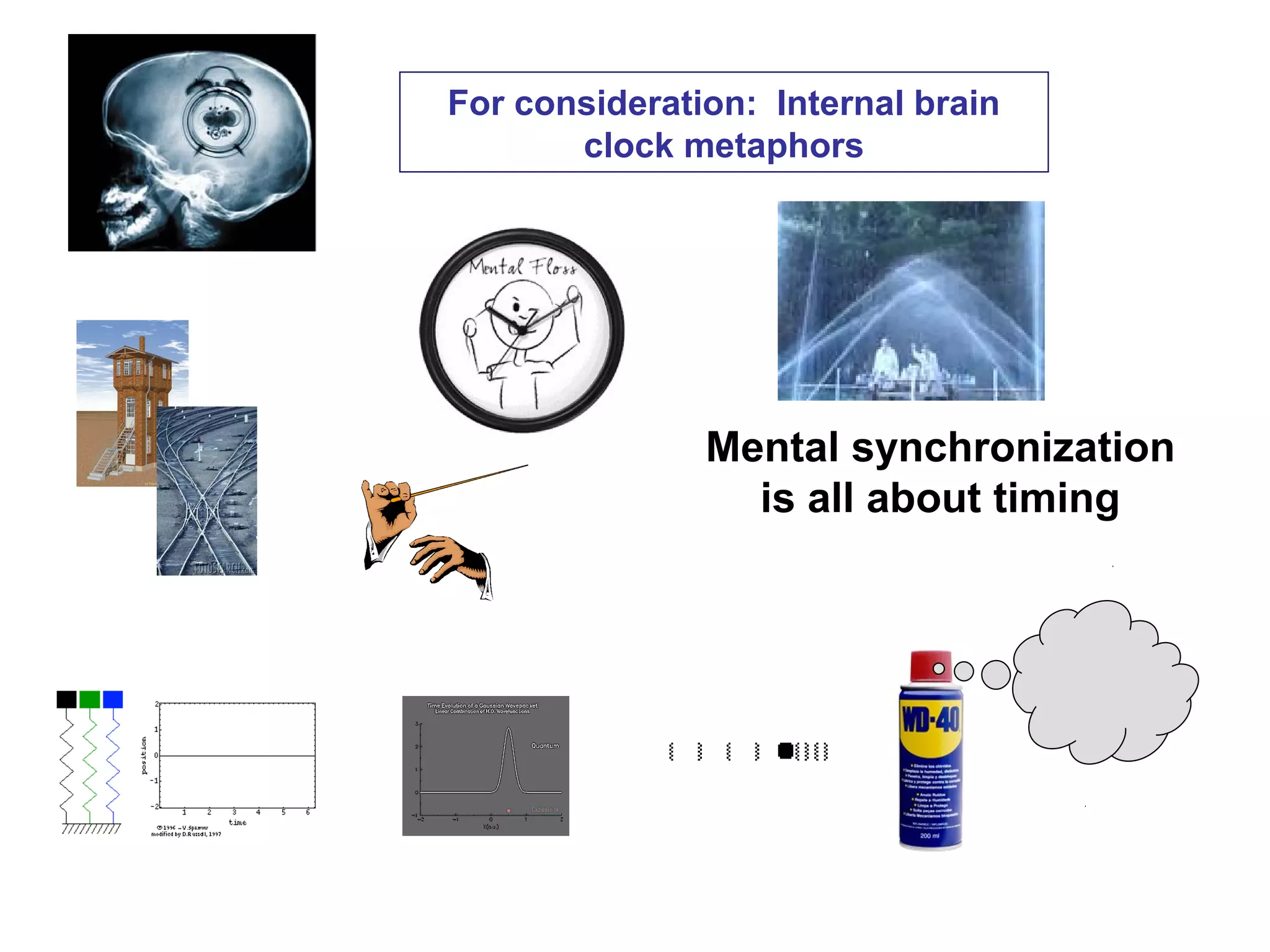

This document discusses contemporary research on the neuroscience of brain-based interval timing and its relevance to learning and rehabilitation. It provides an overview of research showing that the human brain contains an internal clock mechanism for temporal processing. Mental timing abilities have been implicated in various cognitive functions and clinical disorders. Research suggests there are both automatic and cognitively controlled timing systems in the brain. Some studies indicate the internal clock can be modified through experience. The relationship between temporal processing, intelligence, and synchronization-based interventions like Interactive Metronome is explored.


