Harmonized Tariff Schedule
(HTS) and Schedule B Codes for
Computer Software
Harmonized Tariff Classification
• The Harmonized Tariff Schedule for the classification of goods is a
major determinant of customs duties and taxes — and a regulatory
requirement on both import (HTS) and export (Schedule B)
documentation.
• In today's complex trading environment, proper tariff classification
can depend on a myriad of U.S. and international trade laws,
regulations, rulings, and a host of other references. Finding the best
classification can be complicated, especially in the case of
specialized products. A quick glance at recent Tariff Rulings will
show that the classification practices can barely keep up with the
flood of new materials and product ideas now appearing in the
world marketplace. Determining the correct tariff classification for
an item may require technical specifications from your supplier and
advice from your broker as well as extensive research in the HTSUS
schedules, Rulings and other resources.
All imported articles must be classified
• Distinct tariff classification numbers per the harmonized
• Tariff Classification Schedule (“HTS”)HTS contains
approximately 65,000 HTS classification codes
• Finding the correct classification can be extremely difficult
• Many items may be classifiable in one of several potential
categories
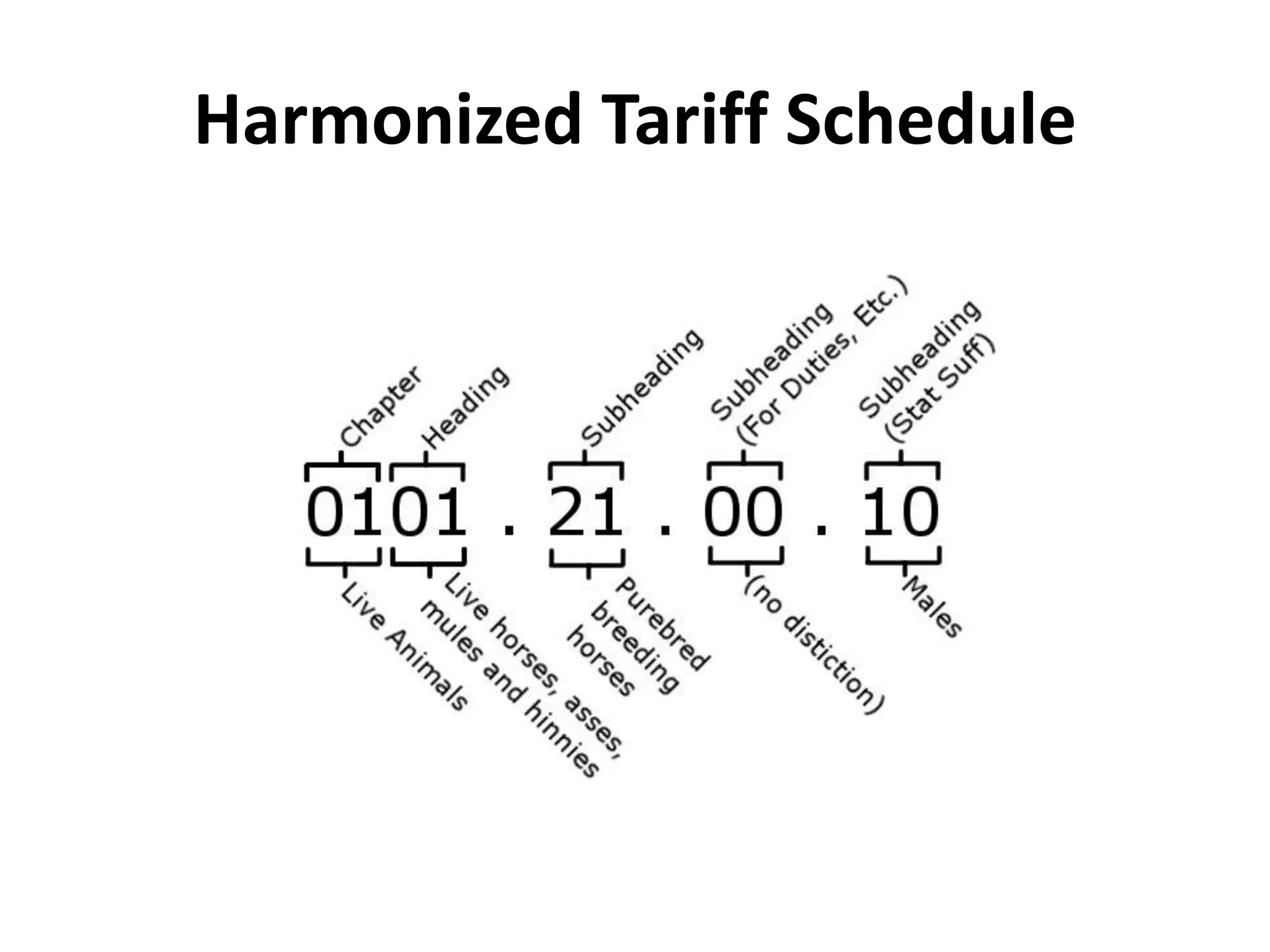
• The Us HTS code is a 10 digit (all numeric) assignment
used to define the imported article
• Proper tariff classification is one of several reasons that
• accurate part descriptions are essential on supplier
invoices
Tariff Classification
Harmonized Tariff Schedule
• Software (excluding software on game cartridges) is classified in
Heading 8524 of the international Harmonized System (HS), the
global classification system used to describe most world trade in
goods.
HS Heading 8524 covers "records, tapes and other recorded media
for sound or other similarly recorded phenomena, including
matrices and masters for the production of records, but excluding
products of Chapter 37 (Chapter 37 Photographic or
Cinematographic Goods, includes photographic paper, all types of
film, i.e., x-ray, and camera and photographic chemicals)." Generally
speaking, software is classified based on the underlying medium
(i.e. optical disk, magnetic tape, floppy disc, etc) on which it is
reproduced.
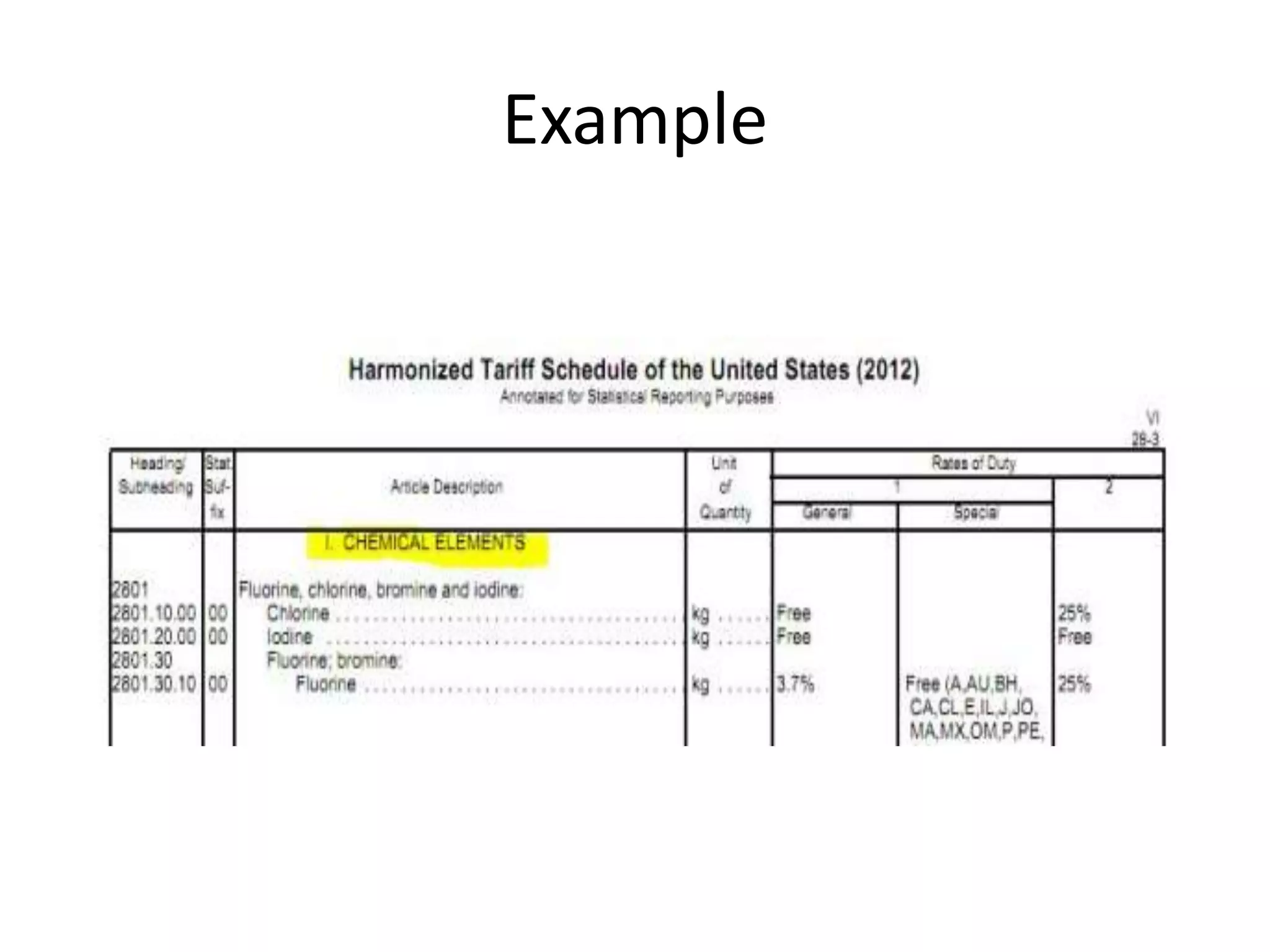
Harmonized Tariff Schedule
Example
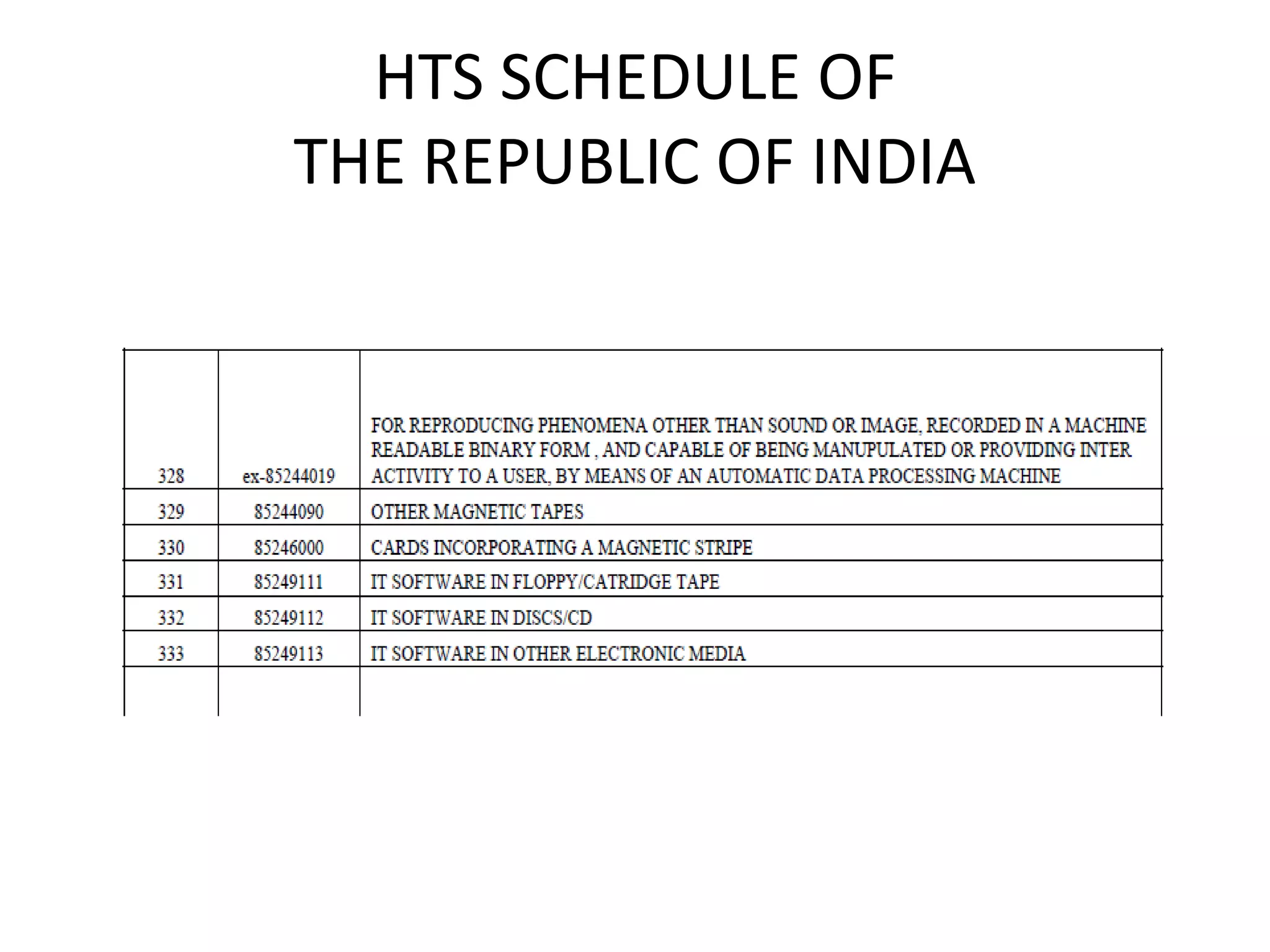
HTS SCHEDULE OF
THE REPUBLIC OF INDIA
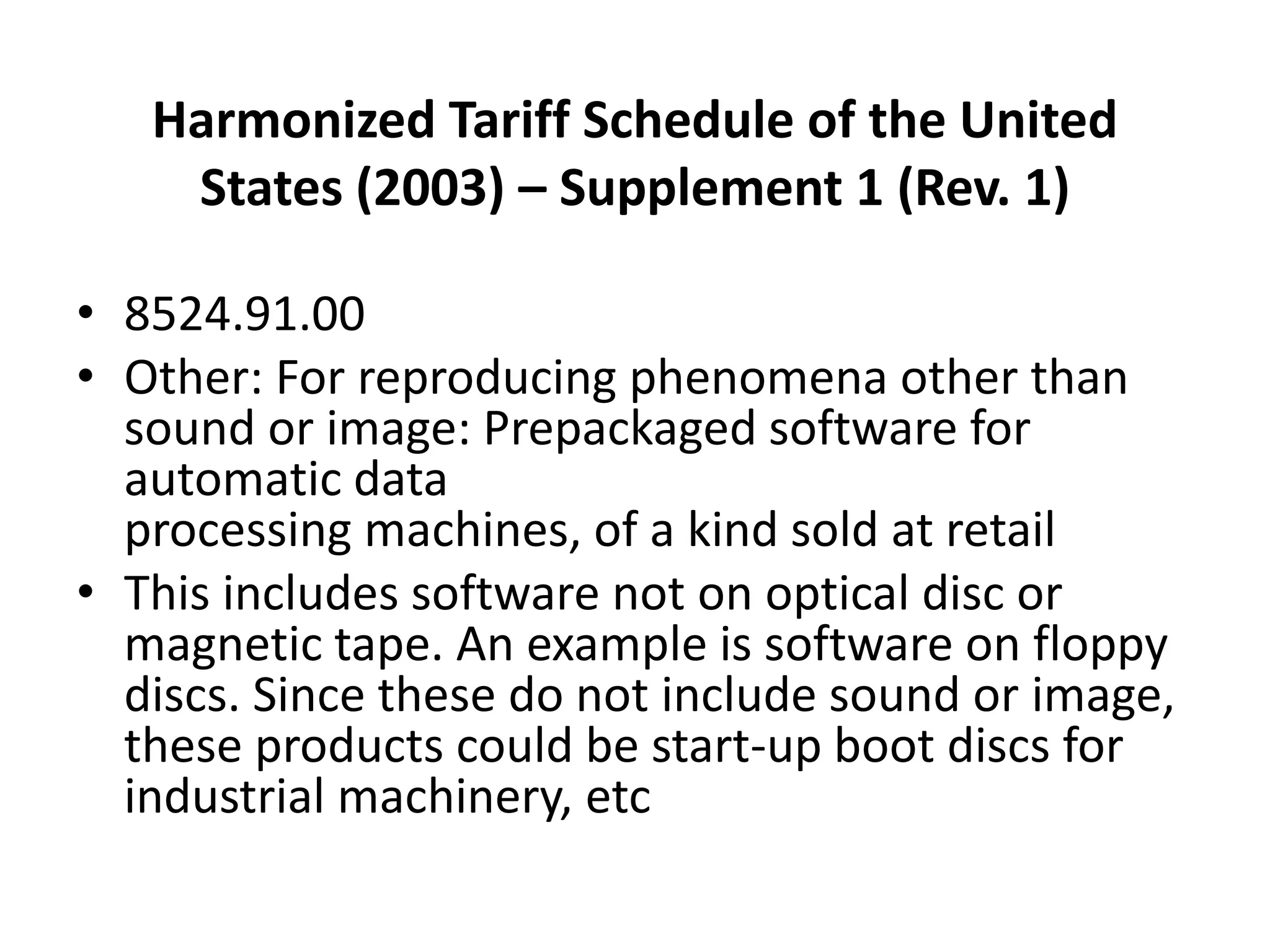
Harmonized Tariff Schedule of the United
States (2003) – Supplement 1 (Rev. 1)
• 8524.91.00
• Other: For reproducing phenomena other than
sound or image: Prepackaged software for
automatic data
processing machines, of a kind sold at retail
• This includes software not on optical disc or
magnetic tape. An example is software on floppy
discs. Since these do not include sound or image,
these products could be start-up boot discs for
industrial machinery, etc

Harmonized tariff schedule (hts) and schedule

  • 1.
    Harmonized Tariff Schedule (HTS)and Schedule B Codes for Computer Software
  • 2.
    Harmonized Tariff Classification •The Harmonized Tariff Schedule for the classification of goods is a major determinant of customs duties and taxes — and a regulatory requirement on both import (HTS) and export (Schedule B) documentation. • In today's complex trading environment, proper tariff classification can depend on a myriad of U.S. and international trade laws, regulations, rulings, and a host of other references. Finding the best classification can be complicated, especially in the case of specialized products. A quick glance at recent Tariff Rulings will show that the classification practices can barely keep up with the flood of new materials and product ideas now appearing in the world marketplace. Determining the correct tariff classification for an item may require technical specifications from your supplier and advice from your broker as well as extensive research in the HTSUS schedules, Rulings and other resources.
  • 3.
    All imported articlesmust be classified • Distinct tariff classification numbers per the harmonized • Tariff Classification Schedule (“HTS”)HTS contains approximately 65,000 HTS classification codes • Finding the correct classification can be extremely difficult • Many items may be classifiable in one of several potential categories • The Us HTS code is a 10 digit (all numeric) assignment used to define the imported article • Proper tariff classification is one of several reasons that • accurate part descriptions are essential on supplier invoices Tariff Classification
  • 4.
    Harmonized Tariff Schedule •Software (excluding software on game cartridges) is classified in Heading 8524 of the international Harmonized System (HS), the global classification system used to describe most world trade in goods. HS Heading 8524 covers "records, tapes and other recorded media for sound or other similarly recorded phenomena, including matrices and masters for the production of records, but excluding products of Chapter 37 (Chapter 37 Photographic or Cinematographic Goods, includes photographic paper, all types of film, i.e., x-ray, and camera and photographic chemicals)." Generally speaking, software is classified based on the underlying medium (i.e. optical disk, magnetic tape, floppy disc, etc) on which it is reproduced.
  • 5.
  • 6.
  • 7.
    HTS SCHEDULE OF THEREPUBLIC OF INDIA
  • 8.
    Harmonized Tariff Scheduleof the United States (2003) – Supplement 1 (Rev. 1) • 8524.91.00 • Other: For reproducing phenomena other than sound or image: Prepackaged software for automatic data processing machines, of a kind sold at retail • This includes software not on optical disc or magnetic tape. An example is software on floppy discs. Since these do not include sound or image, these products could be start-up boot discs for industrial machinery, etc