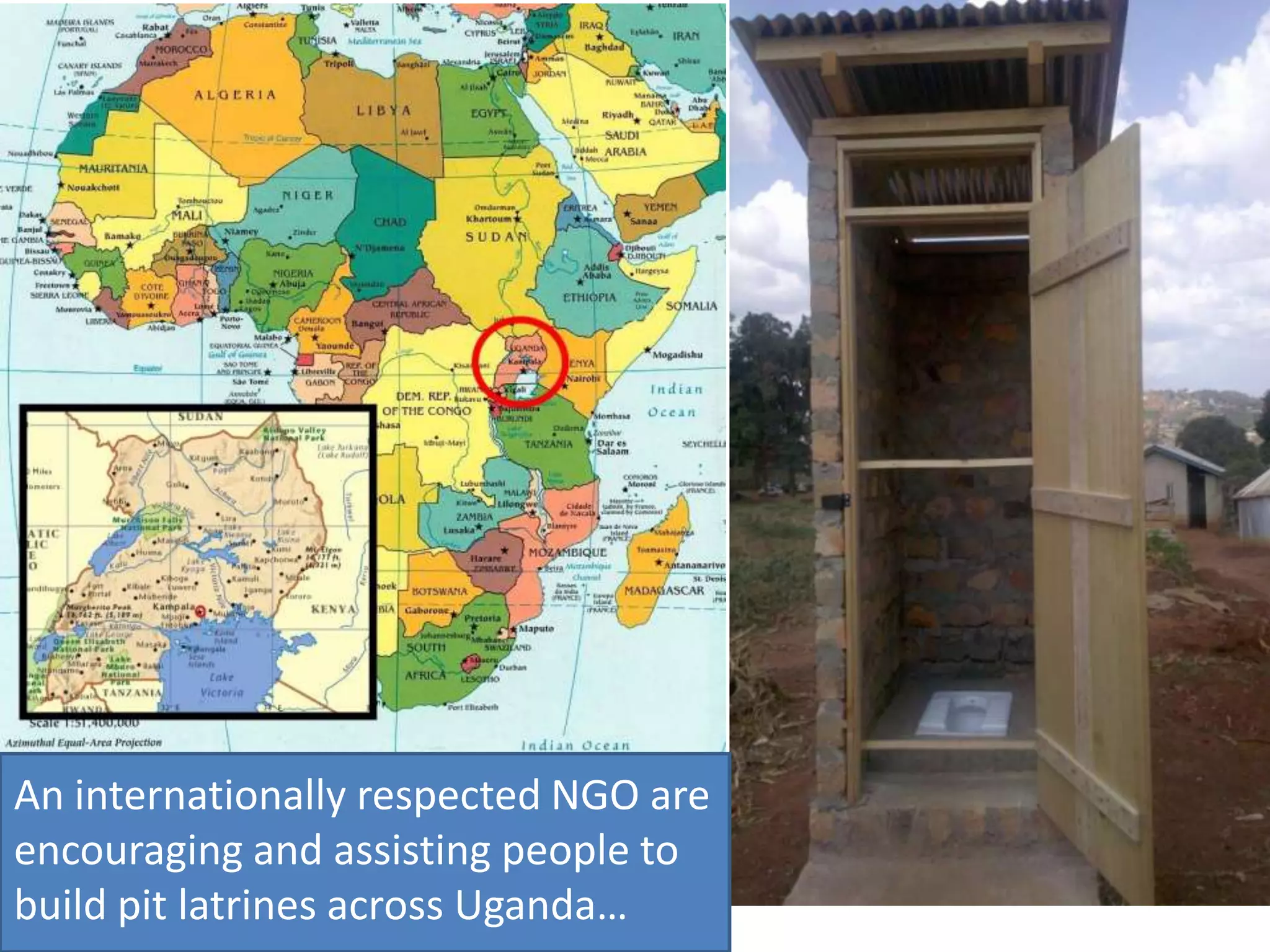
An internationally respected NGO are
encouraging and assisting people to
build pit latrines across Uganda…
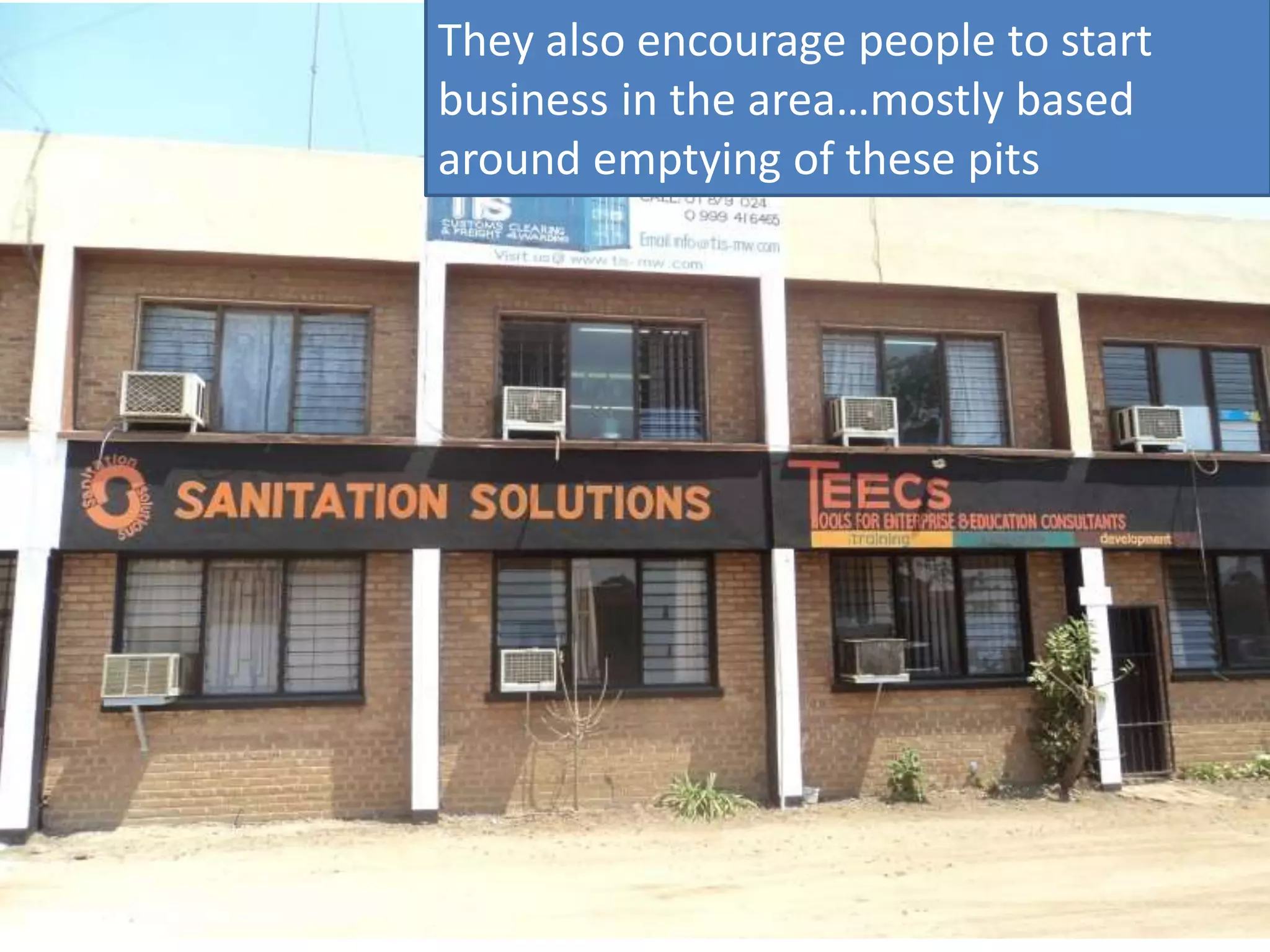
They also encourage people to start
business in the area…mostly based
around emptying of these pits
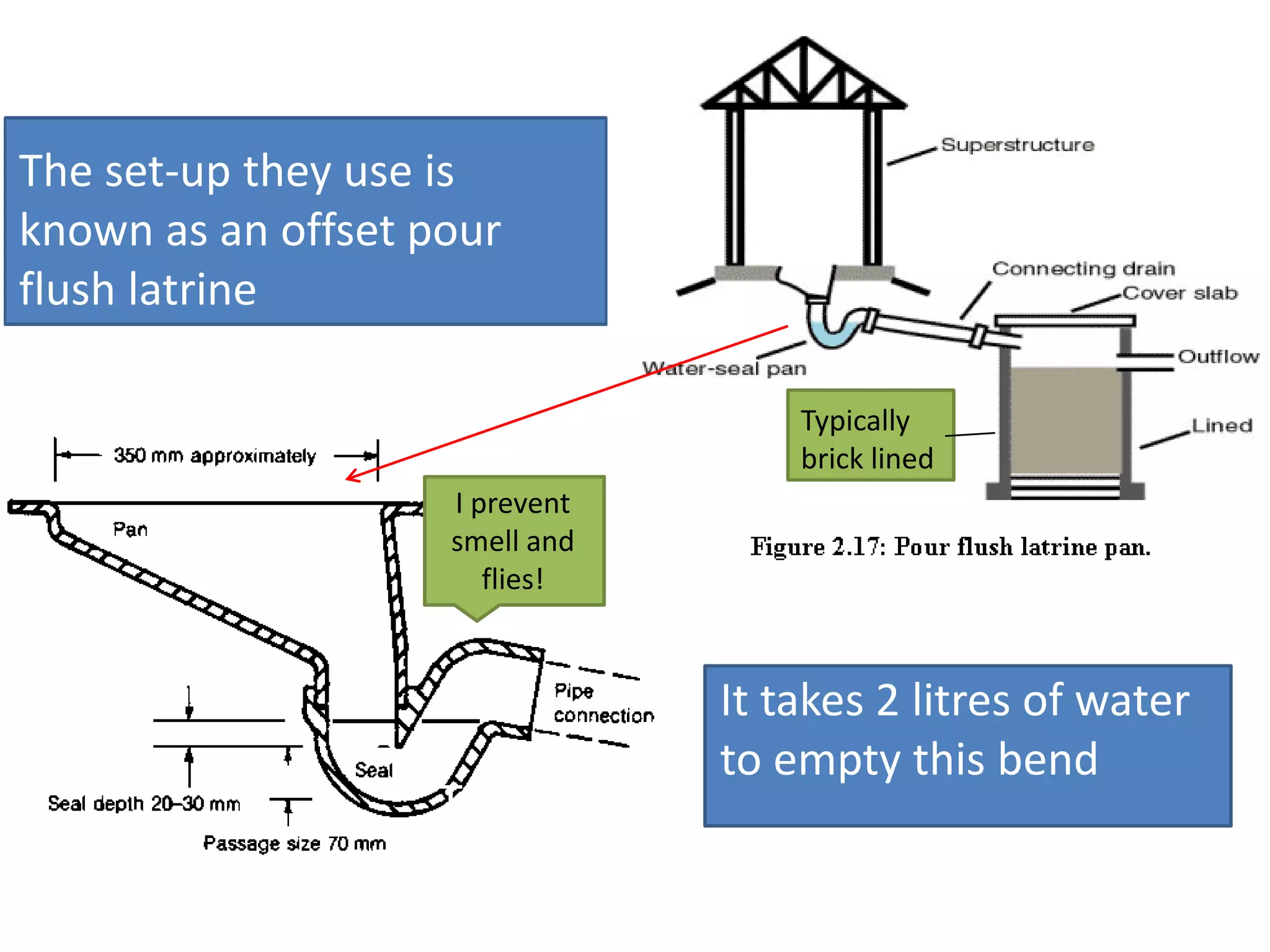
The set-up they use is
known as an offset pour
flush latrine
latrine…
Typically
brick lined
I prevent
smell and
flies!

It takes 2 litres of water
to empty this bend
They try to encourage people to start
sanitation businesses in the
area…mostly based around pit emptying
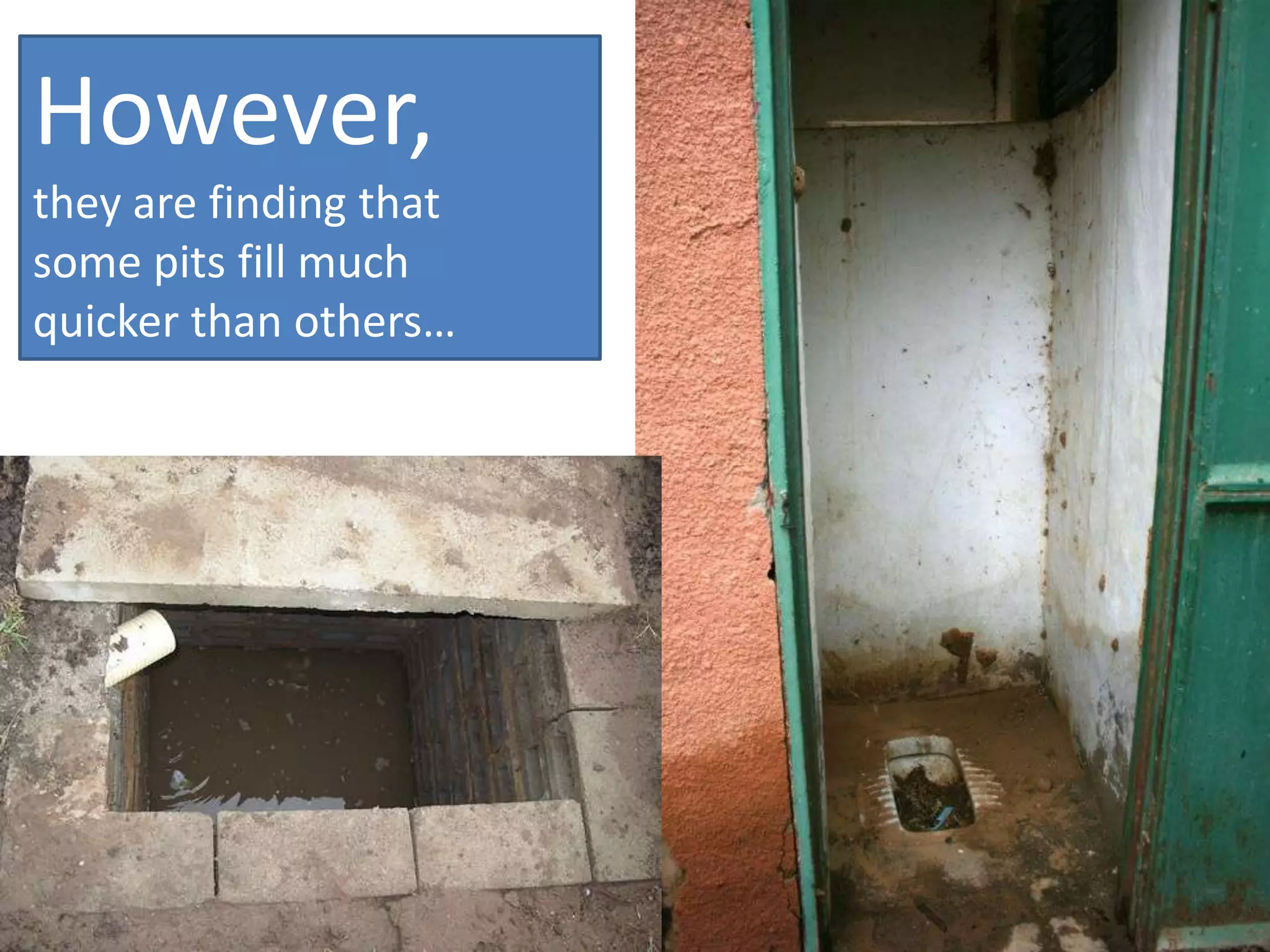
However,
they are finding that
some pits fill much
quicker than others…
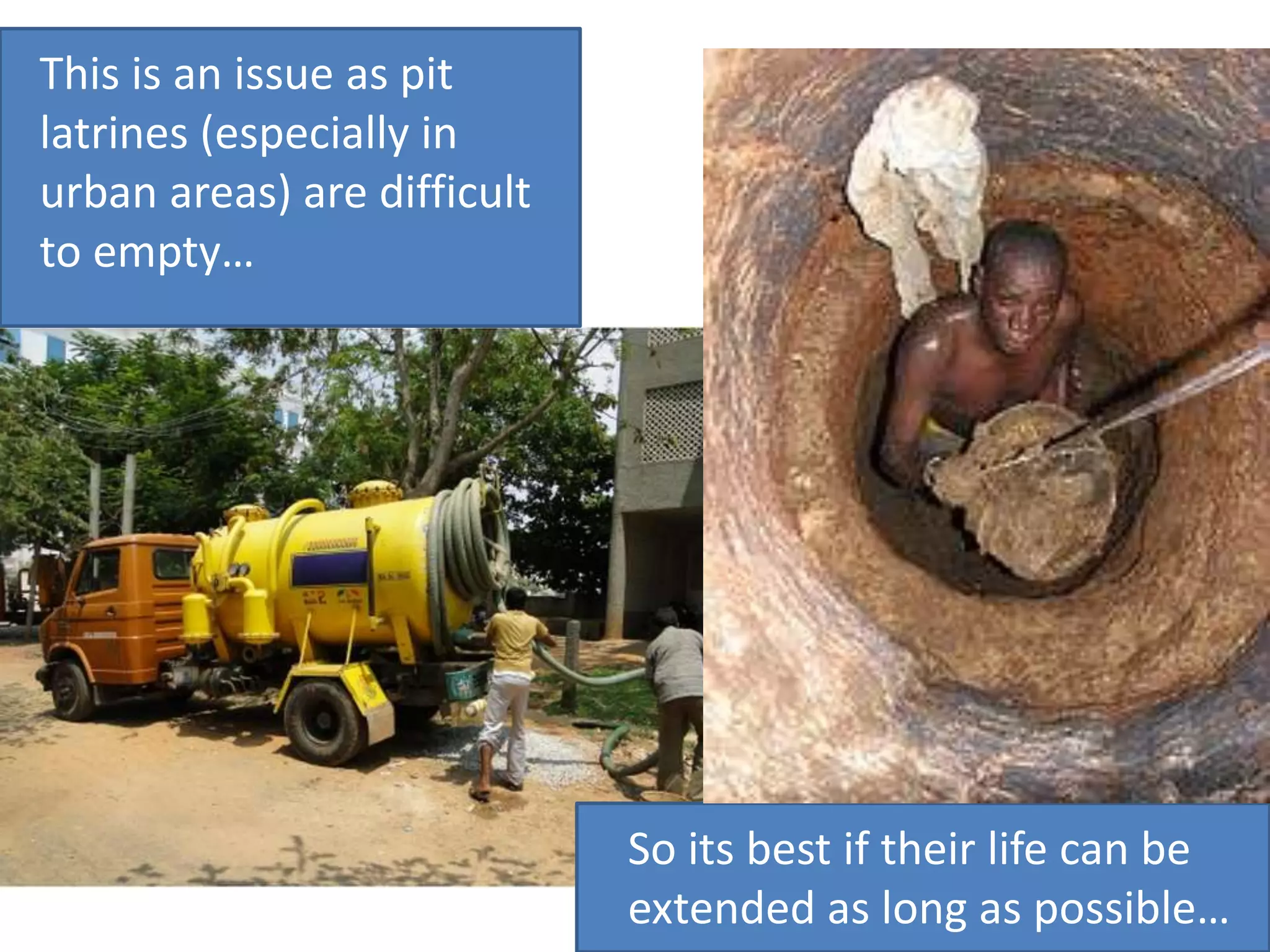
This is an issue as pit
latrines (especially in
urban areas) are difficult
to empty…

So its best if their life can be
extended as long as possible…
What the NGO want to know is…

Why does the pit fill so much quicker in
some areas than others?
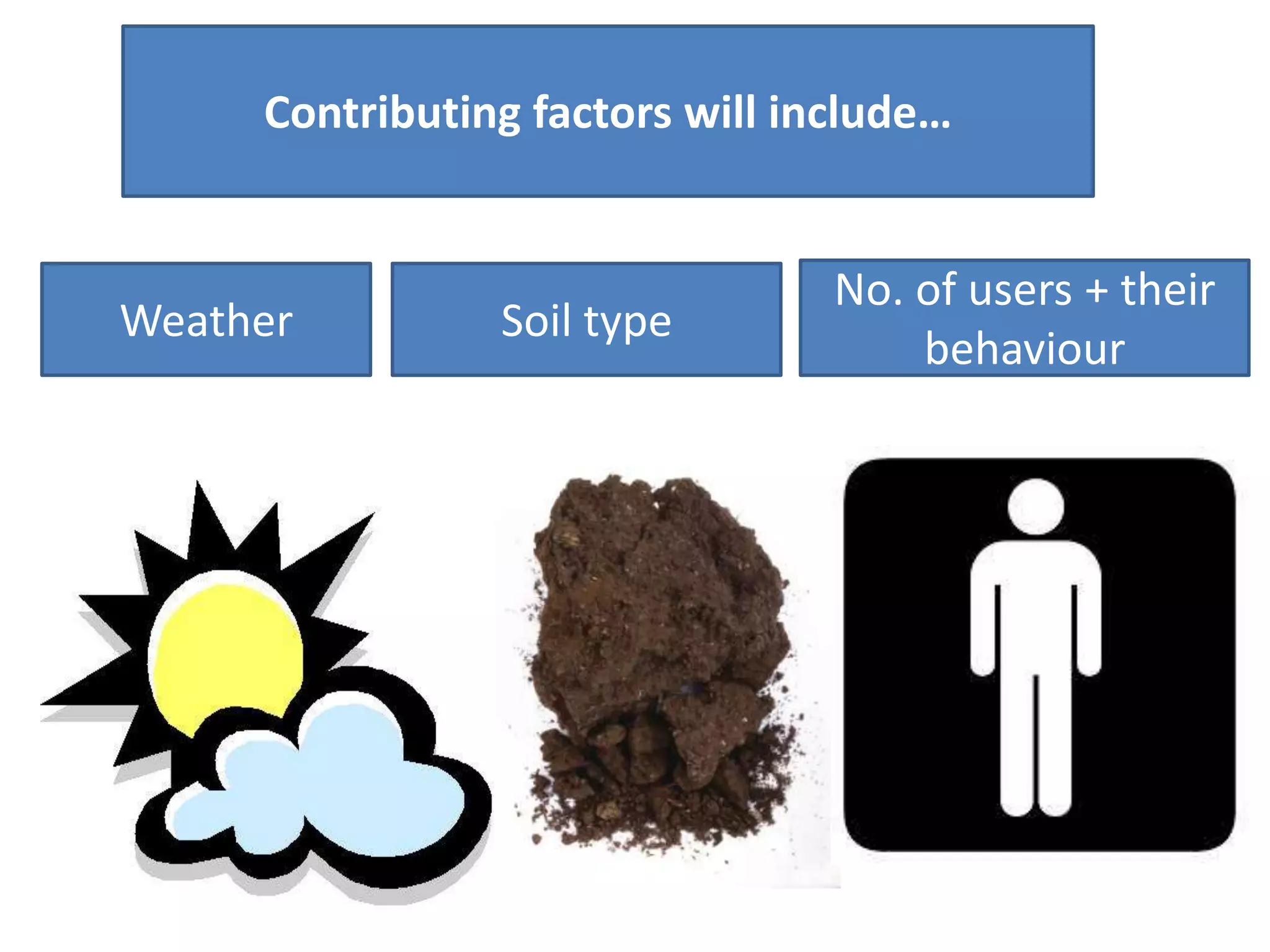
Contributing factors will include…

Weather

Soil type

No. of users + their
behaviour
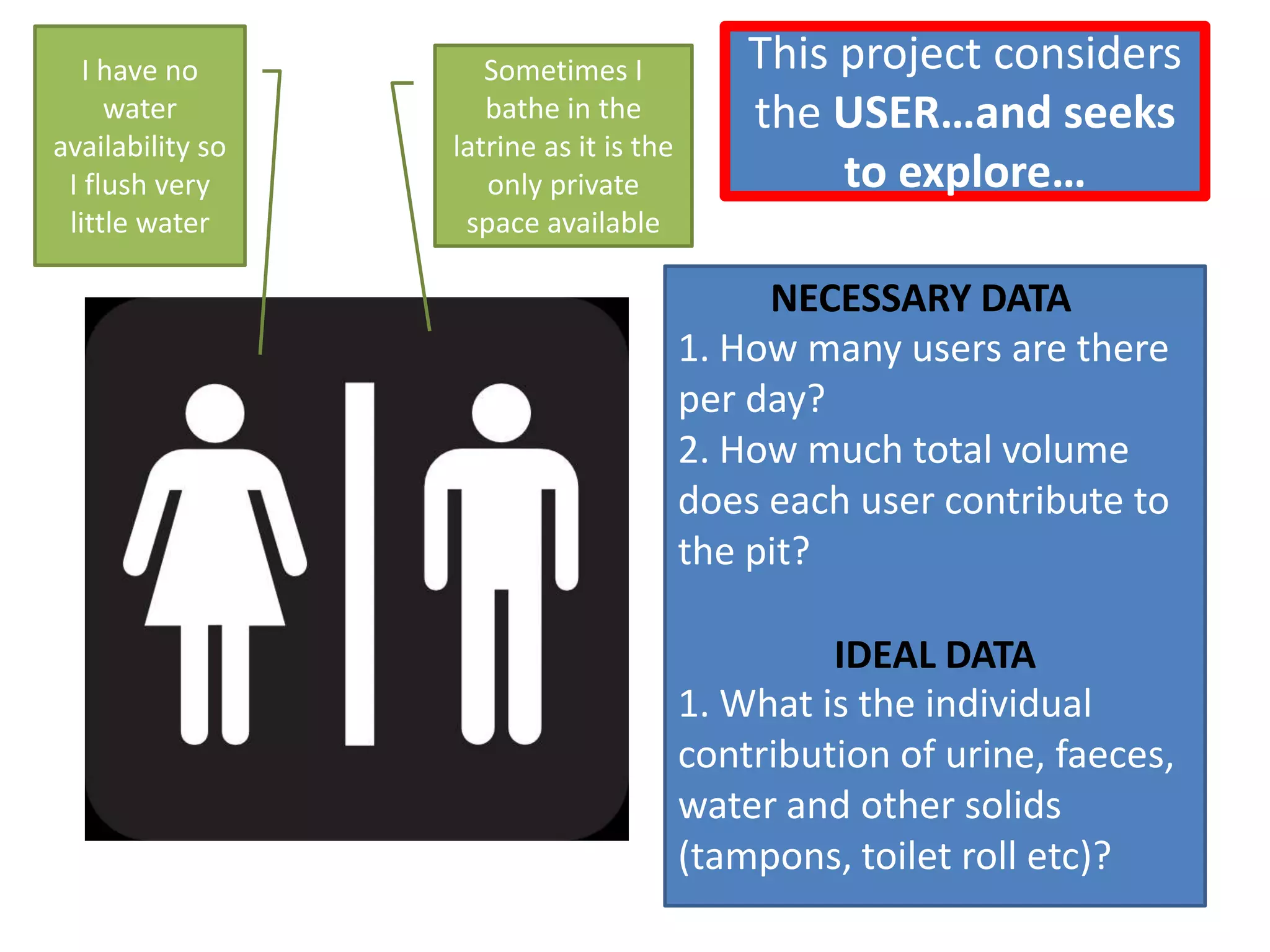
I have no
water
availability so
I flush very
little water

Sometimes I
bathe in the
latrine as it is the
only private
space available

This project considers
the USER…and seeks
to explore…
NECESSARY DATA
1. How many users are there
per day?
2. How much total volume
does each user contribute to
the pit?
IDEAL DATA
1. What is the individual
contribution of urine, faeces,
water and other solids
(tampons, toilet roll etc)?
A ‘device’ needs to be developed that…

•
•
•
•
•
•
•

is robust enough to survive a Uganda pit latrine
is not easily soiled
can operate without mains electricity
can be installed and operated without skilled labour
can be fabricated from basic, locally available material
Is cheap (ideal budget $50 for ‘Necessary data’, $200
for ‘Ideal data’ as described in previous slide)
Is capable of logging data over time (via USB/phone or
computer)
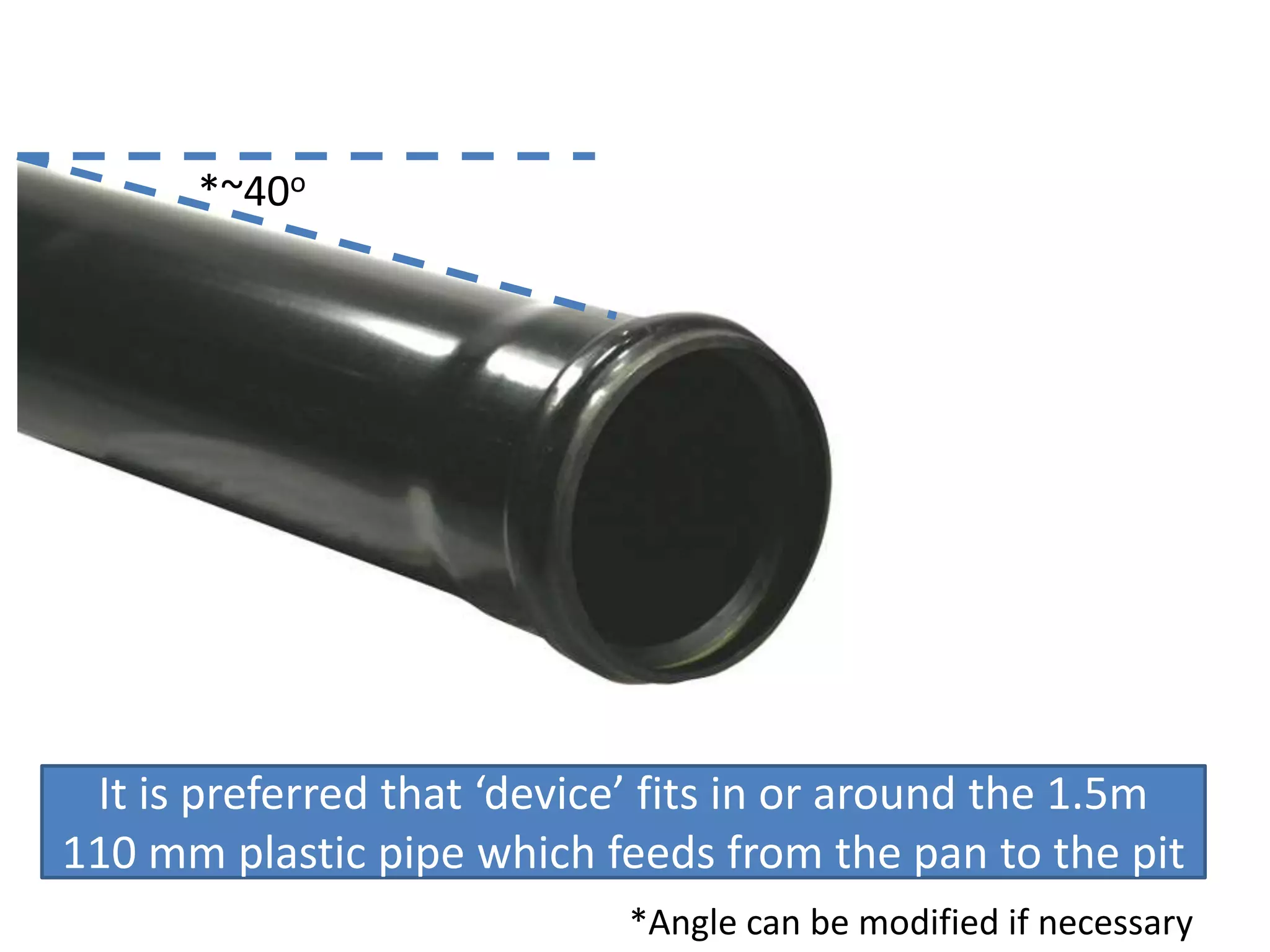
*~40o

It is preferred that ‘device’ fits in or around the 1.5m
110 mm plastic pipe which feeds from the pan to the pit
*Angle can be modified if necessary
IDEALLY…
A $50 SOLUTION WOULD BE DEVELOPED TO BE
INSTALLED ON UPWARDS OF 50 LATRINES FOR BASIC
MONITORING
A $200 SOLUTION WOULD BE DEVELOPED TO BE
INSTALLED AN APPROX 5 LATRINES FOR MORE
ADVANCED MONITORING

Note: definitely just ideally - either of these or something in
between is a help!
Testing media…

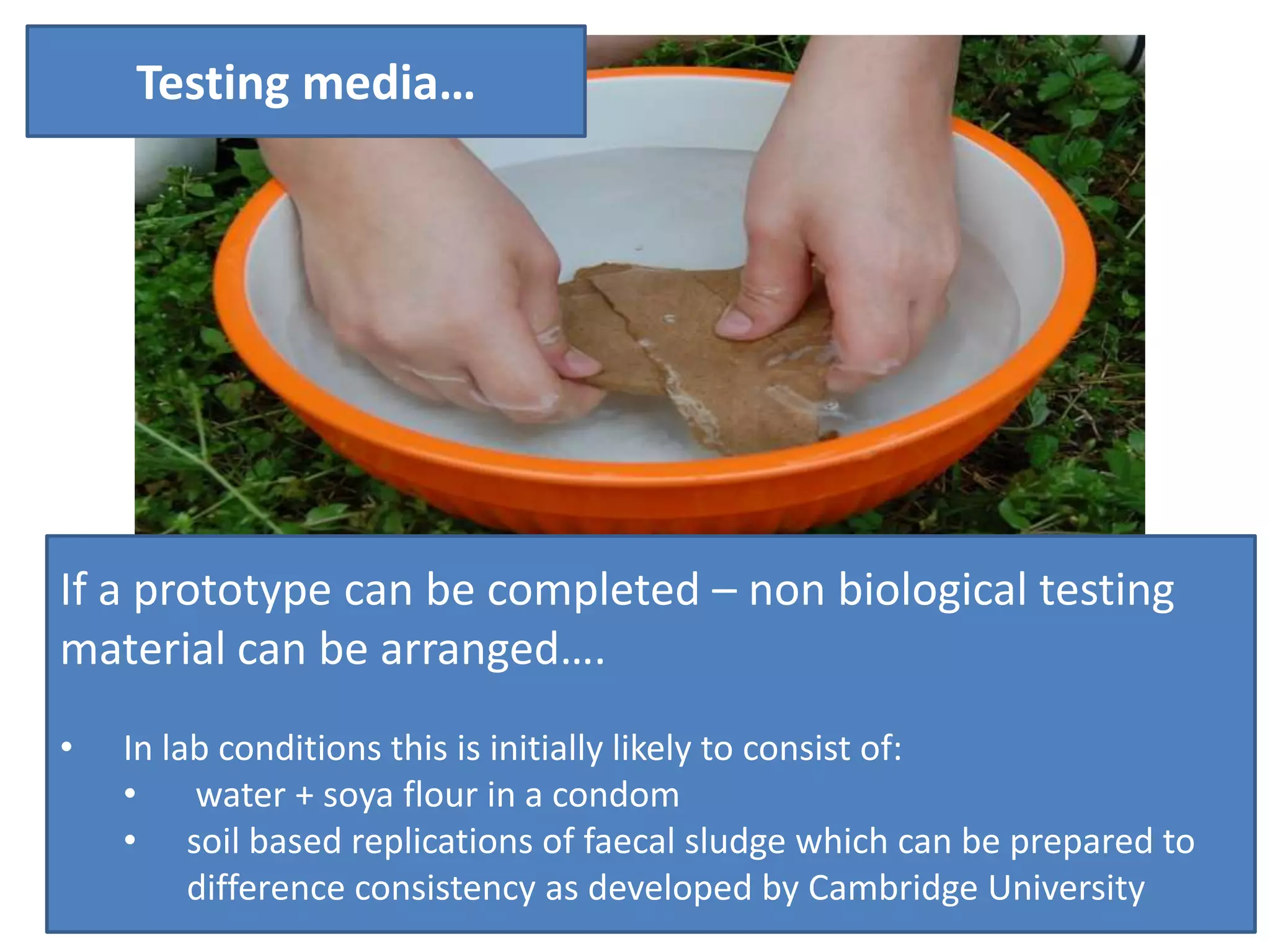
If a prototype can be completed – non biological testing
material can be arranged….
•

In lab conditions this is initially likely to consist of:
•
water + soya flour in a condom
• soil based replications of faecal sludge which can be prepared to
difference consistency as developed by Cambridge University
Work to Date
Nicola Greene is working on this problem based on her links with
Water for People
It is hoped that an initial prototype device will be developed by
February for initial field testing.
Timescale: ASAP! February completion
Prototyping materials budget: £400 (more if its getting somewhere)

Nicola greene msc introduction slideshare

  • 1.
    An internationally respectedNGO are encouraging and assisting people to build pit latrines across Uganda…
  • 2.
    They also encouragepeople to start business in the area…mostly based around emptying of these pits
  • 3.
    The set-up theyuse is known as an offset pour flush latrine latrine… Typically brick lined I prevent smell and flies! It takes 2 litres of water to empty this bend They try to encourage people to start sanitation businesses in the area…mostly based around pit emptying
  • 4.
    However, they are findingthat some pits fill much quicker than others…
  • 5.
    This is anissue as pit latrines (especially in urban areas) are difficult to empty… So its best if their life can be extended as long as possible…
  • 6.
    What the NGOwant to know is… Why does the pit fill so much quicker in some areas than others?
  • 7.
    Contributing factors willinclude… Weather Soil type No. of users + their behaviour
  • 8.
    I have no water availabilityso I flush very little water Sometimes I bathe in the latrine as it is the only private space available This project considers the USER…and seeks to explore… NECESSARY DATA 1. How many users are there per day? 2. How much total volume does each user contribute to the pit? IDEAL DATA 1. What is the individual contribution of urine, faeces, water and other solids (tampons, toilet roll etc)?
  • 9.
    A ‘device’ needsto be developed that… • • • • • • • is robust enough to survive a Uganda pit latrine is not easily soiled can operate without mains electricity can be installed and operated without skilled labour can be fabricated from basic, locally available material Is cheap (ideal budget $50 for ‘Necessary data’, $200 for ‘Ideal data’ as described in previous slide) Is capable of logging data over time (via USB/phone or computer)
  • 10.
    *~40o It is preferredthat ‘device’ fits in or around the 1.5m 110 mm plastic pipe which feeds from the pan to the pit *Angle can be modified if necessary
  • 11.
    IDEALLY… A $50 SOLUTIONWOULD BE DEVELOPED TO BE INSTALLED ON UPWARDS OF 50 LATRINES FOR BASIC MONITORING A $200 SOLUTION WOULD BE DEVELOPED TO BE INSTALLED AN APPROX 5 LATRINES FOR MORE ADVANCED MONITORING Note: definitely just ideally - either of these or something in between is a help!
  • 12.
    Testing media… If aprototype can be completed – non biological testing material can be arranged…. • In lab conditions this is initially likely to consist of: • water + soya flour in a condom • soil based replications of faecal sludge which can be prepared to difference consistency as developed by Cambridge University
  • 13.
    Work to Date NicolaGreene is working on this problem based on her links with Water for People It is hoped that an initial prototype device will be developed by February for initial field testing. Timescale: ASAP! February completion Prototyping materials budget: £400 (more if its getting somewhere)

Editor's Notes

  • #2 Water for People build many pit latrines across Uganda
  • #3 Some fill up much quicker than others
  • #5 Pit latrines are very difficult to empty – so its best to prolong their life for as long as possible
  • #6 A number of factors may influence how fast a pit fills
  • #7 Soil