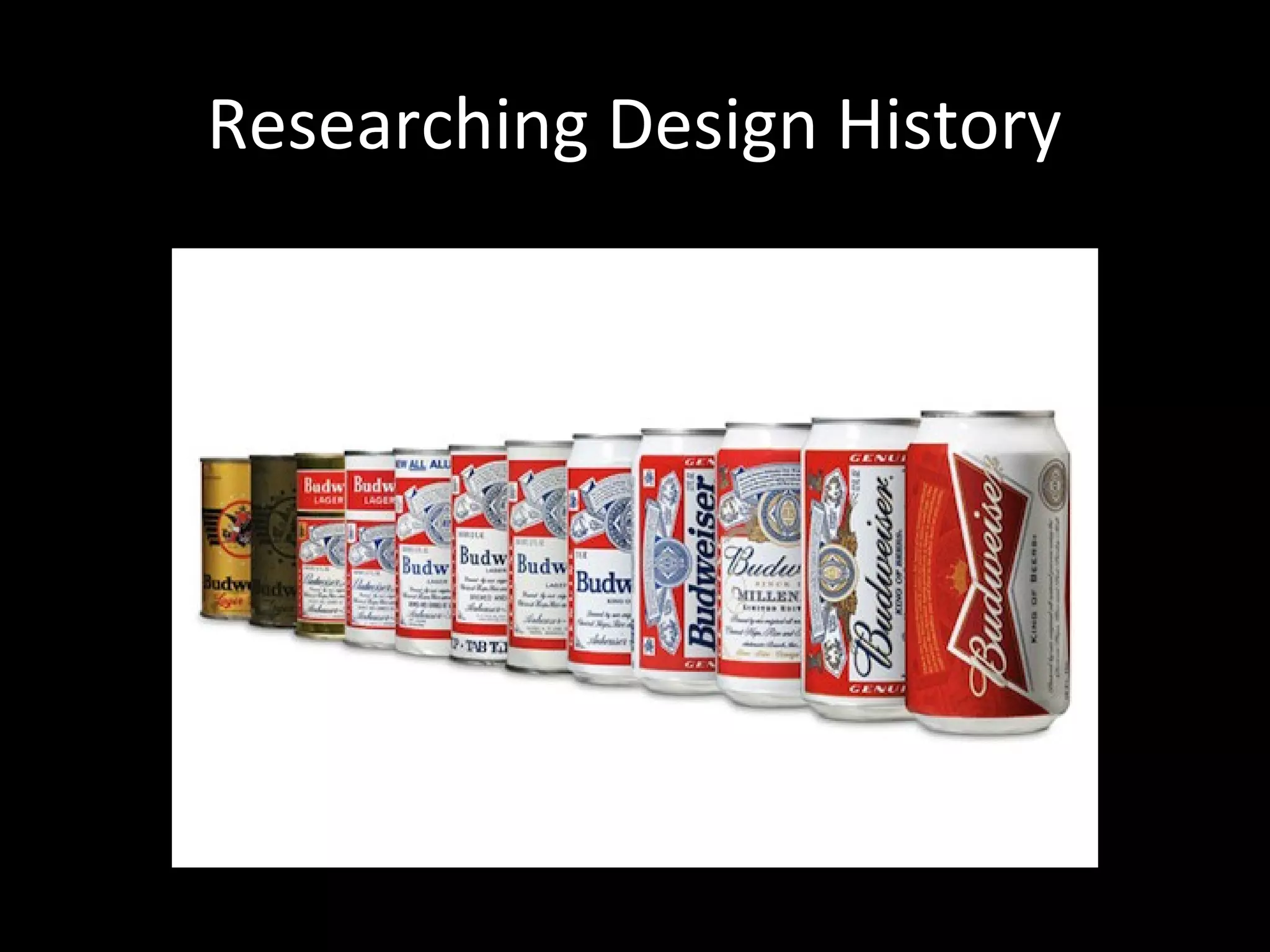
Researching Design HistoryResearching Design History
What is Design HIstory?What is Design HIstory?
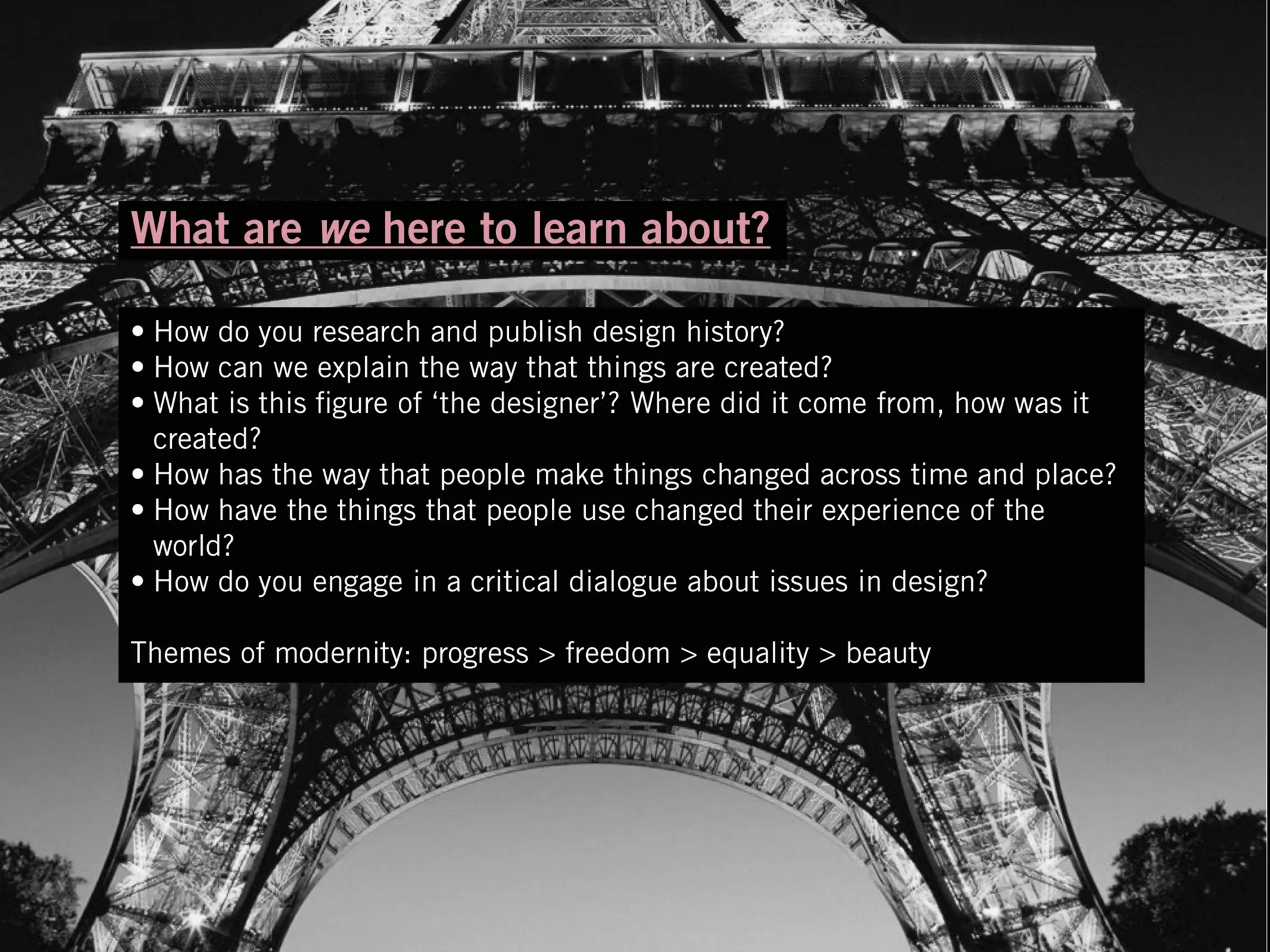
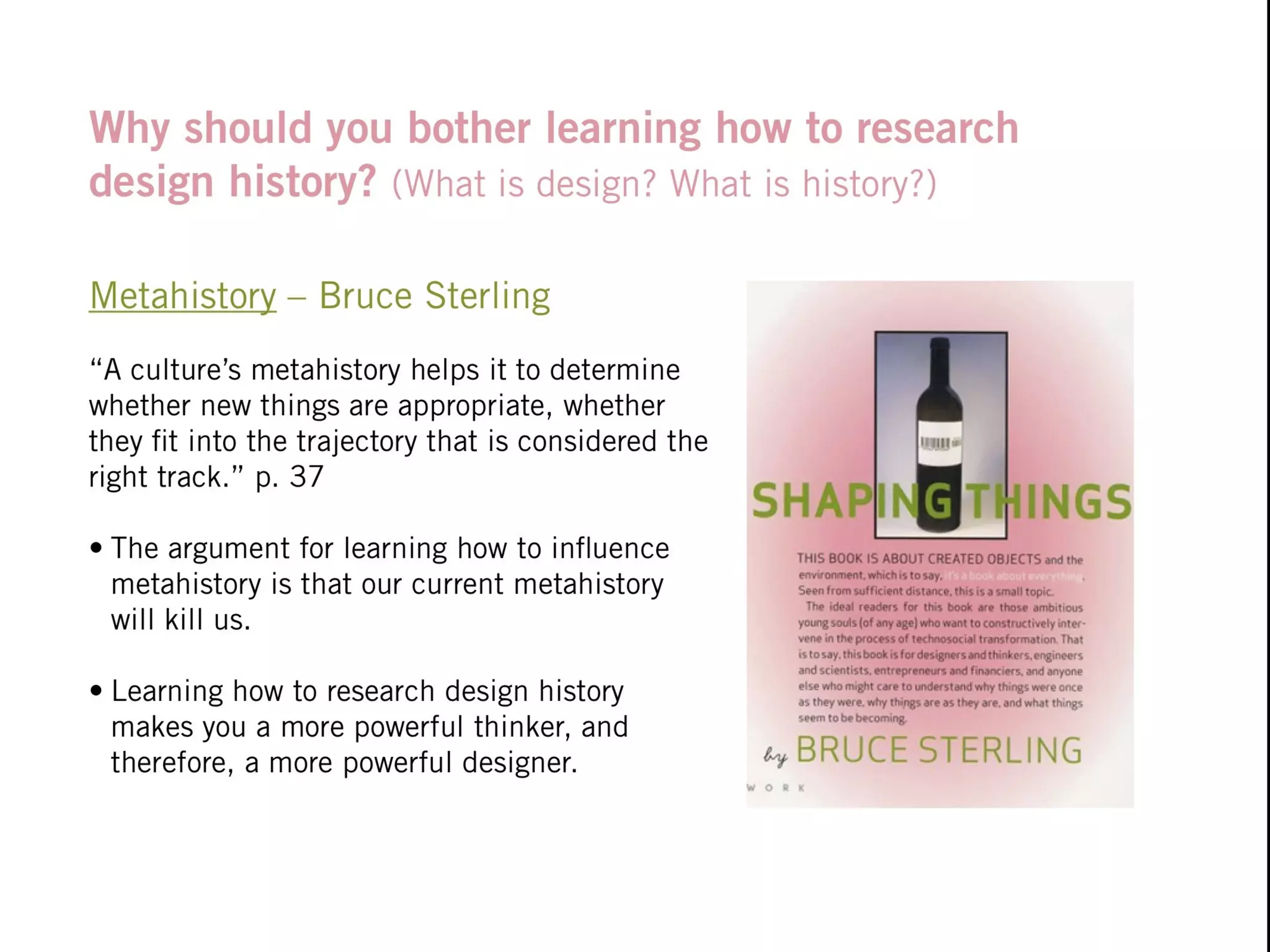
Design history is concerned with:
Architecture, product design, interior design, fashion and textile design, graphic
design and visual communication, animation and
production design, spatial design, performance design, game design
and virtual design worlds……..
The elements of design that have influenced the individual, society and culture
The cultural and societal issues that have influenced design
Recovering lost histories – ie women, common objects, popular
culture etc
We are concerned in this subject with design as a process
rather than a timeline of objects
Design history is not solely concerned with the line up of facts
and the creation of discrete histories
It is about understanding , finding explanations, evaluating the
past and developing skills in critical analysis.
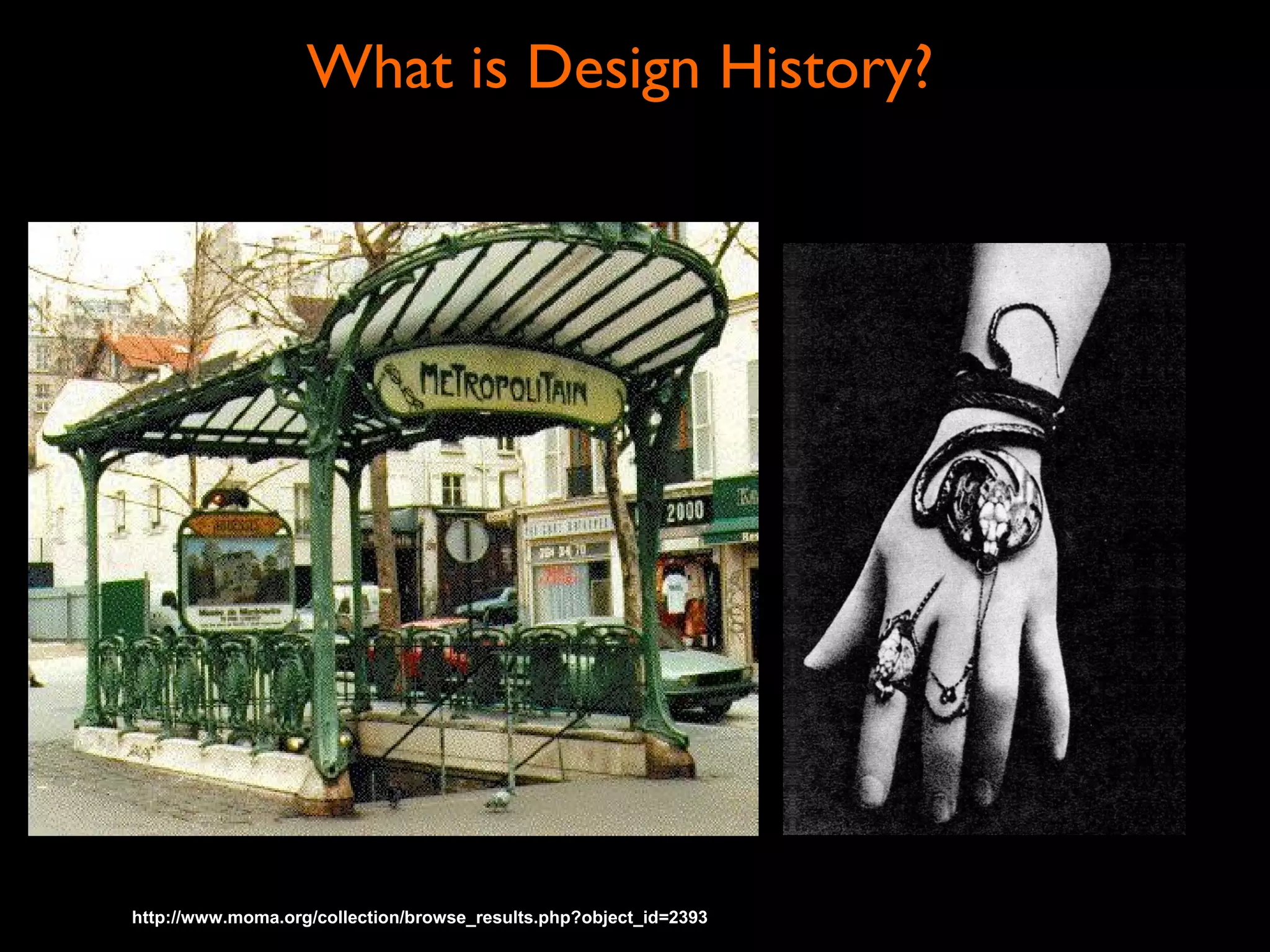
What is Design History?What is Design History?
http://www.moma.org/collection/browse_results.php?object_id=2393
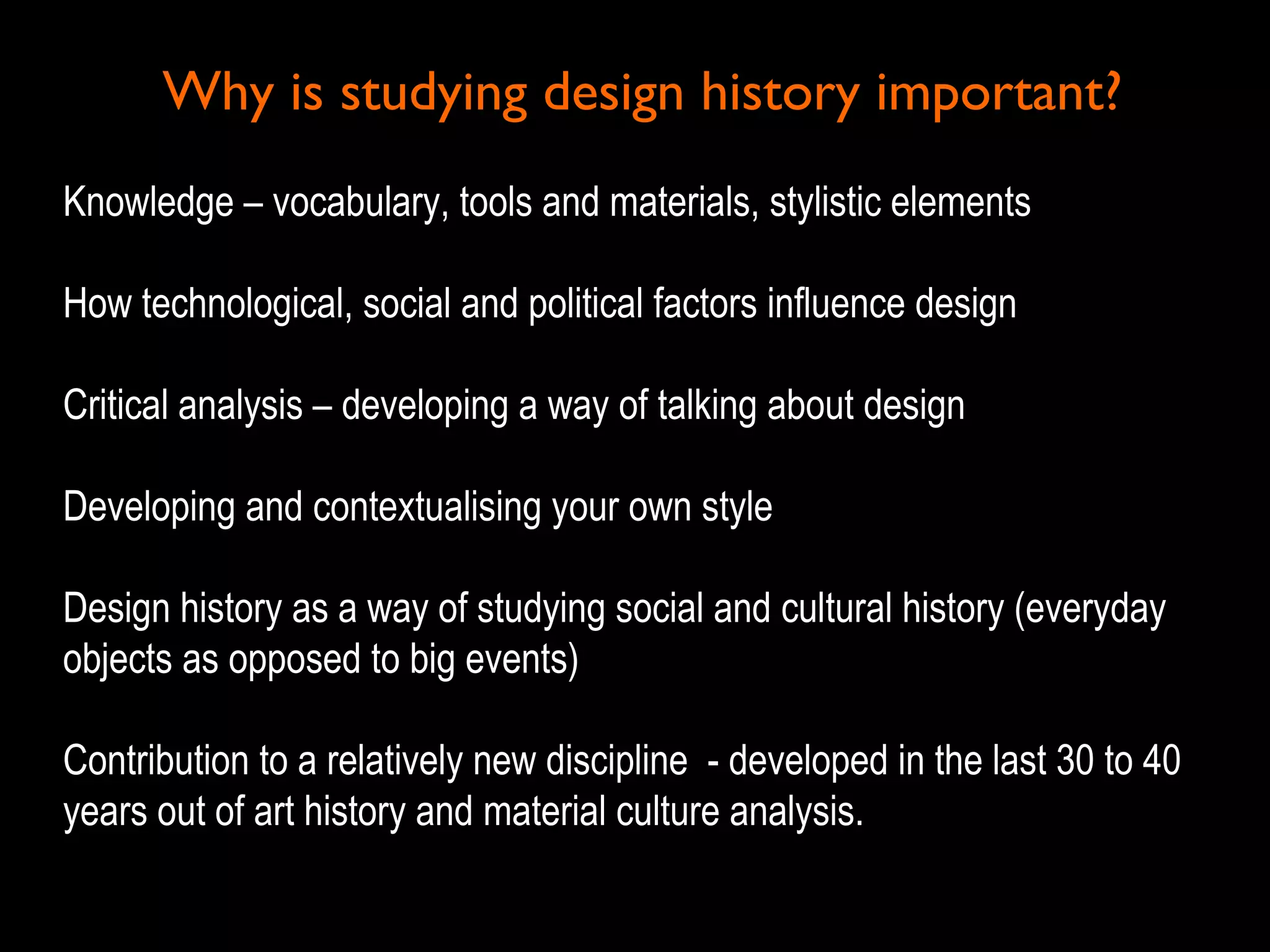
Why is studying design history important?Why is studying design history important?
Knowledge – vocabulary, tools and materials, stylistic elementsKnowledge – vocabulary, tools and materials, stylistic elements
How technological, social and political factors influence designHow technological, social and political factors influence design
Critical analysis – developing a way of talking about designCritical analysis – developing a way of talking about design
Developing and contextualising your own styleDeveloping and contextualising your own style
Design history as a way of studying social and cultural history (everydayDesign history as a way of studying social and cultural history (everyday
objects as opposed to big events)objects as opposed to big events)
Contribution to a relatively new discipline - developed in the last 30 to 40Contribution to a relatively new discipline - developed in the last 30 to 40
years out of art history and material culture analysis.years out of art history and material culture analysis.
20th Century Design Case Studies20th Century Design Case Studies
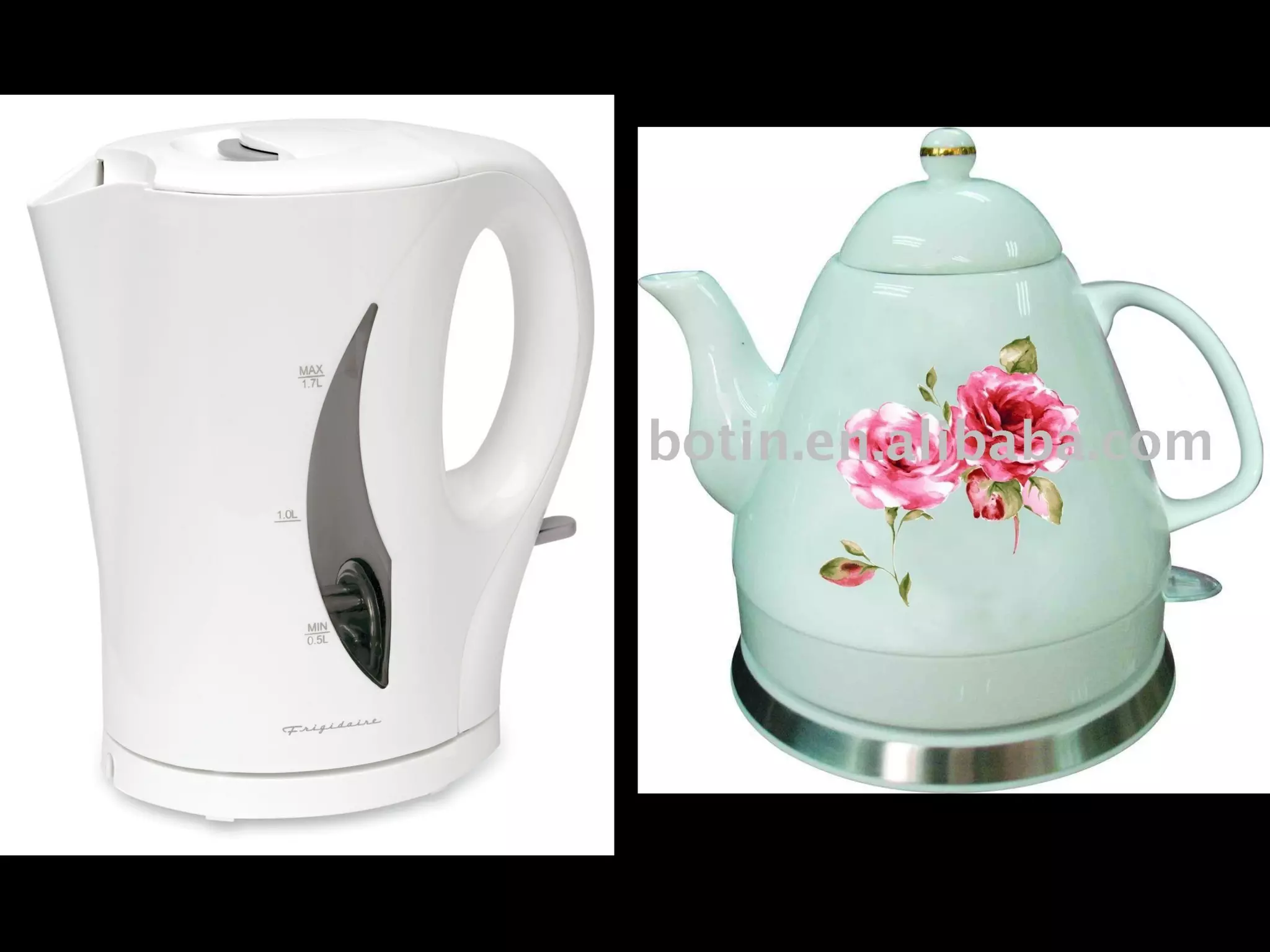
•The electric kettle
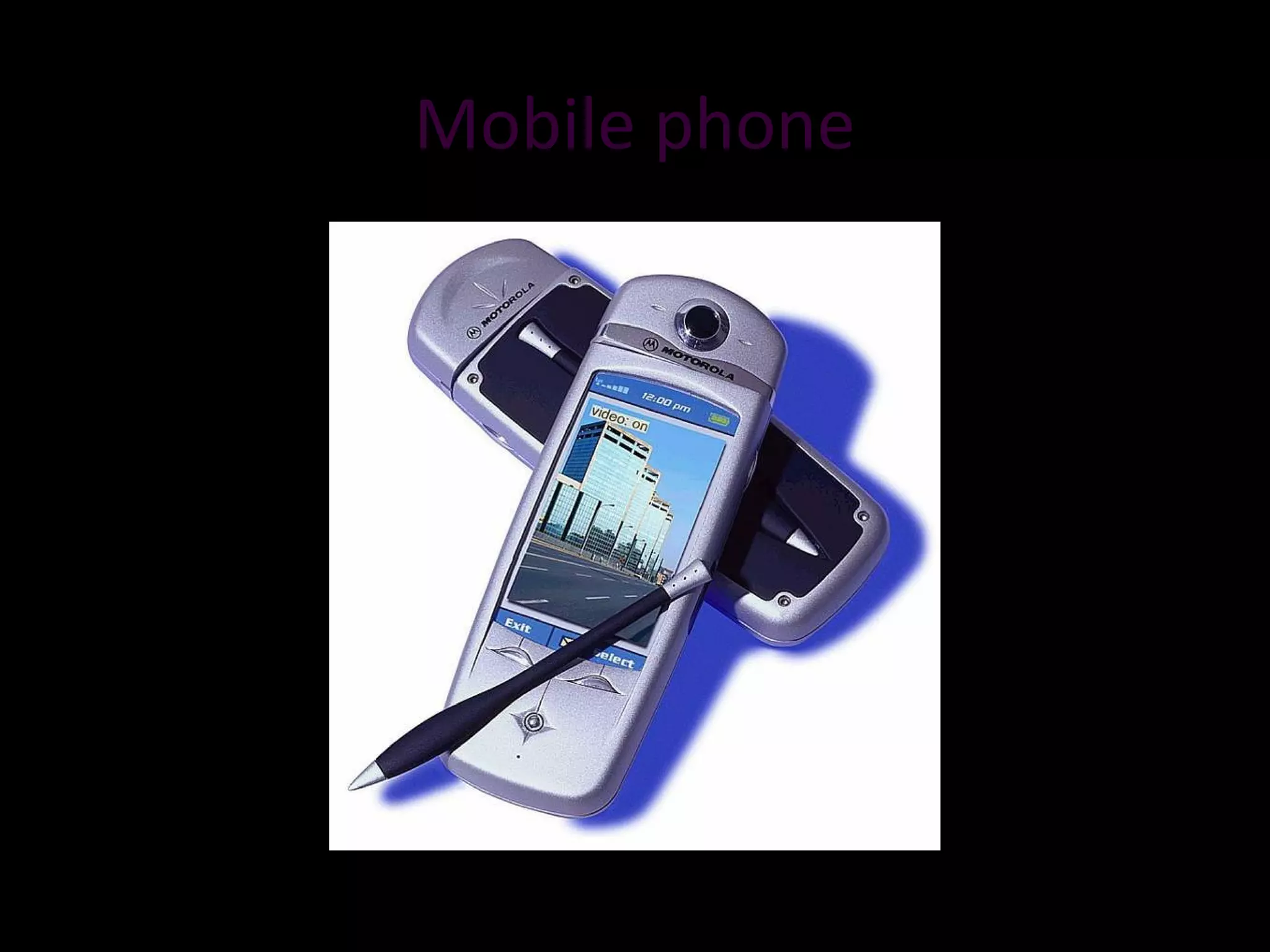
•The mobile phone
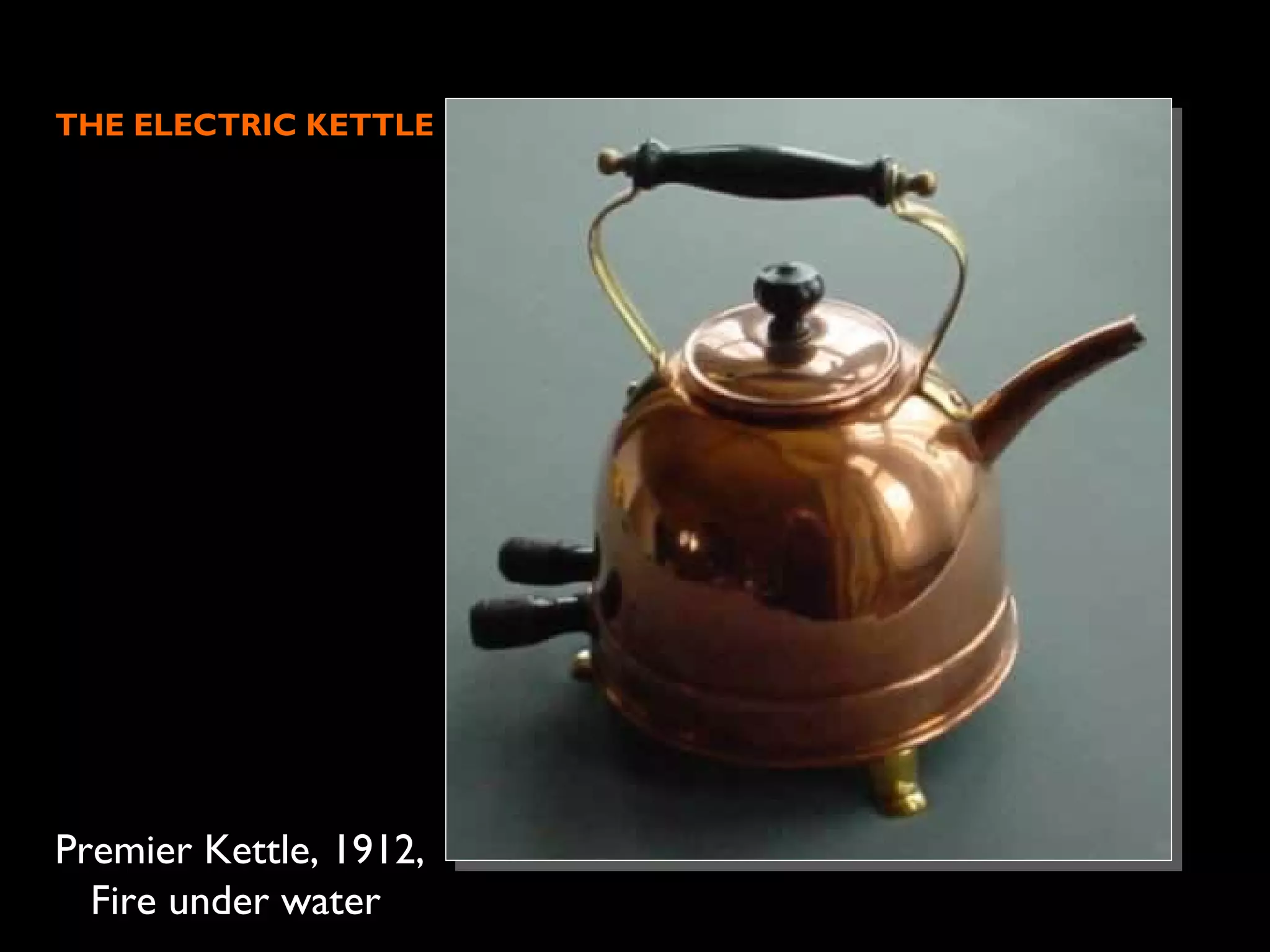
THE ELECTRIC KETTLETHE ELECTRIC KETTLE
Premier Kettle, 1912,
Fire under water
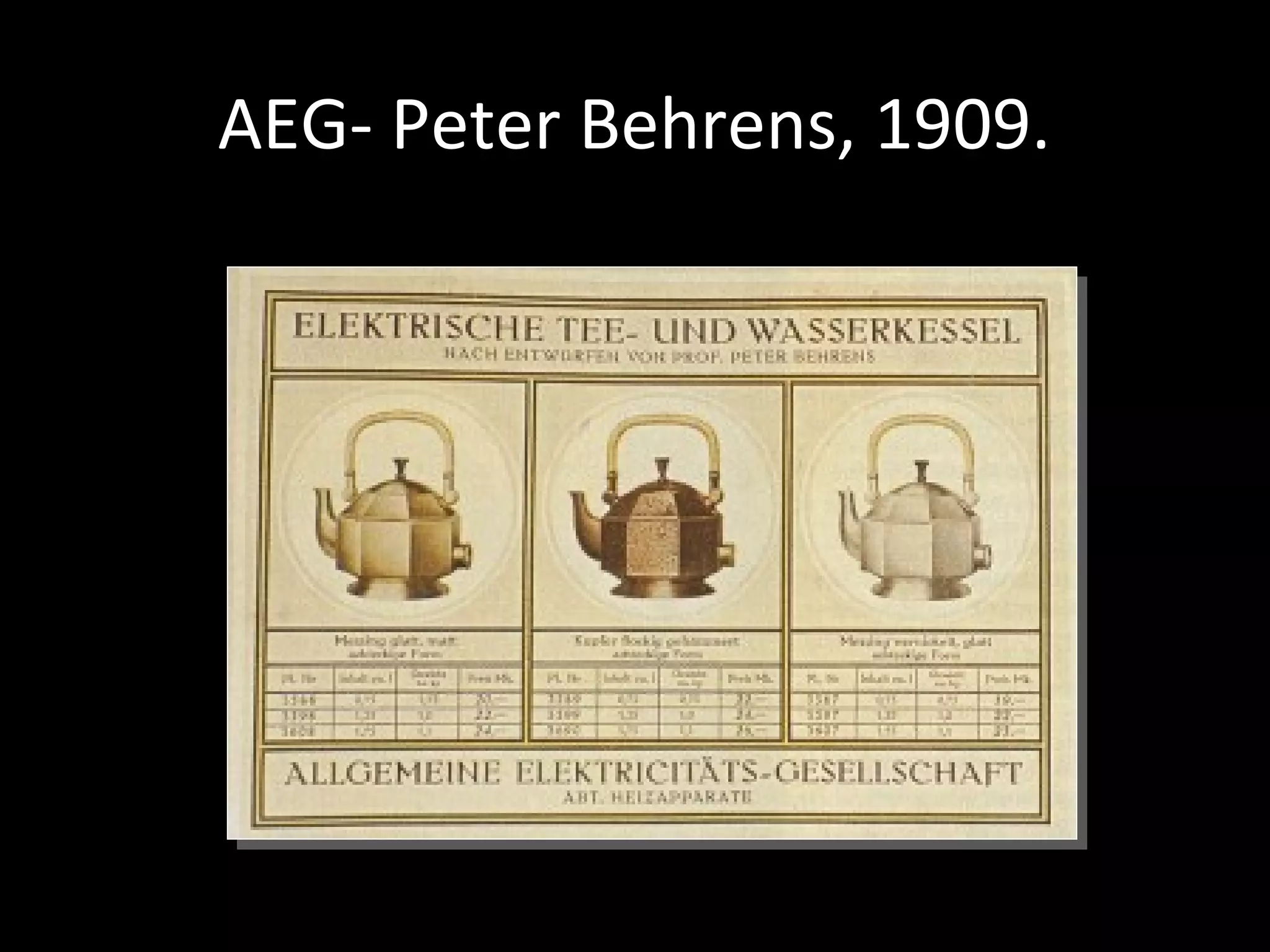
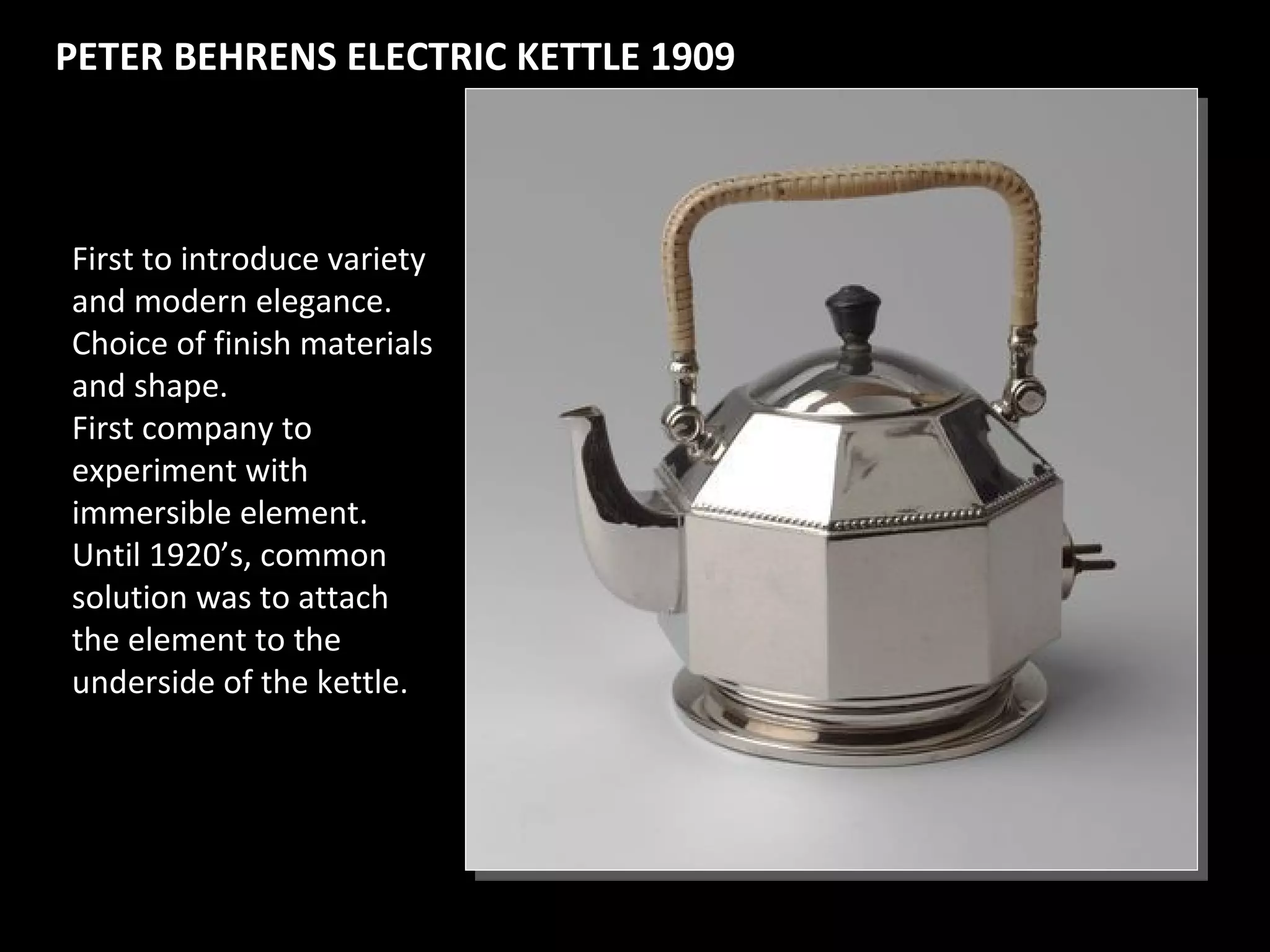
AEG- Peter Behrens, 1909.AEG- Peter Behrens, 1909.
PETER BEHRENS ELECTRIC KETTLE 1909PETER BEHRENS ELECTRIC KETTLE 1909
First to introduce variety
and modern elegance.
Choice of finish materials
and shape.
First company to
experiment with
immersible element.
Until 1920’s, common
solution was to attach
the element to the
underside of the kettle.
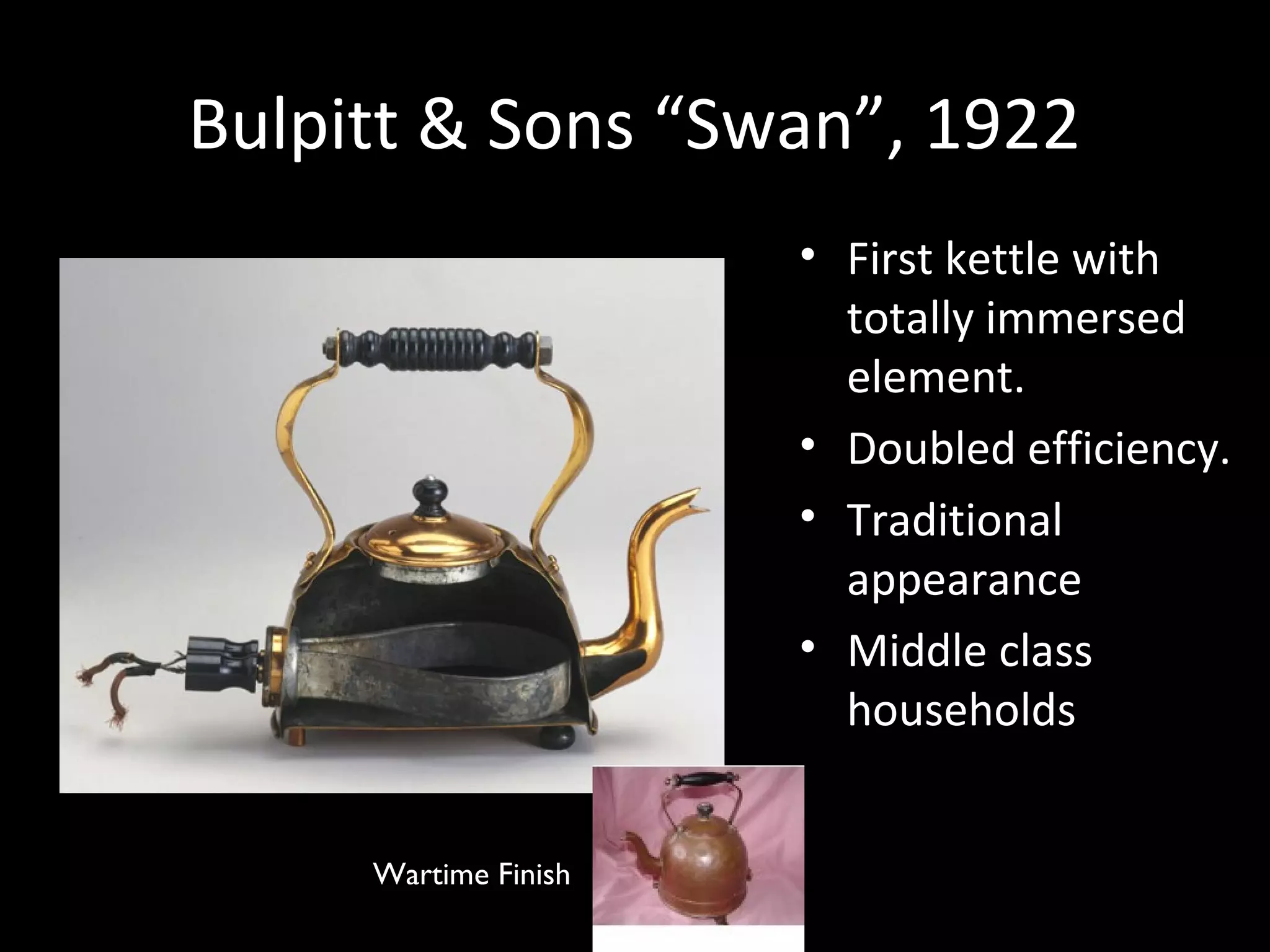
Bulpitt & Sons “Swan”, 1922Bulpitt & Sons “Swan”, 1922
• First kettle with
totally immersed
element.
• Doubled efficiency.
• Traditional
appearance
• Middle class
households
Wartime Finish
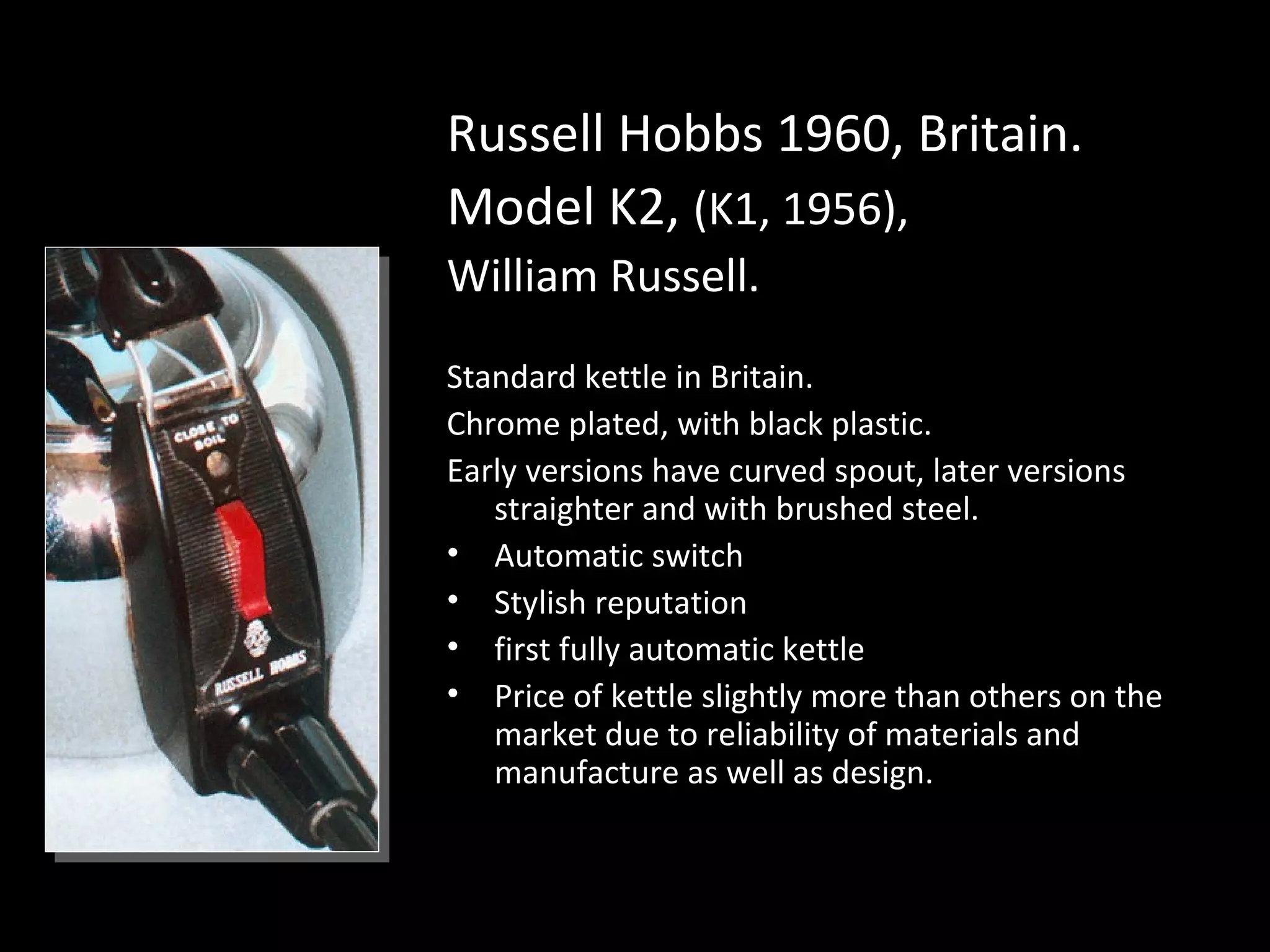
Russell Hobbs 1960, Britain.
Model K2, (K1, 1956),
William Russell.
Standard kettle in Britain.
Chrome plated, with black plastic.
Early versions have curved spout, later versions
straighter and with brushed steel.
• Automatic switch
• Stylish reputation
• first fully automatic kettle
• Price of kettle slightly more than others on the
market due to reliability of materials and
manufacture as well as design.
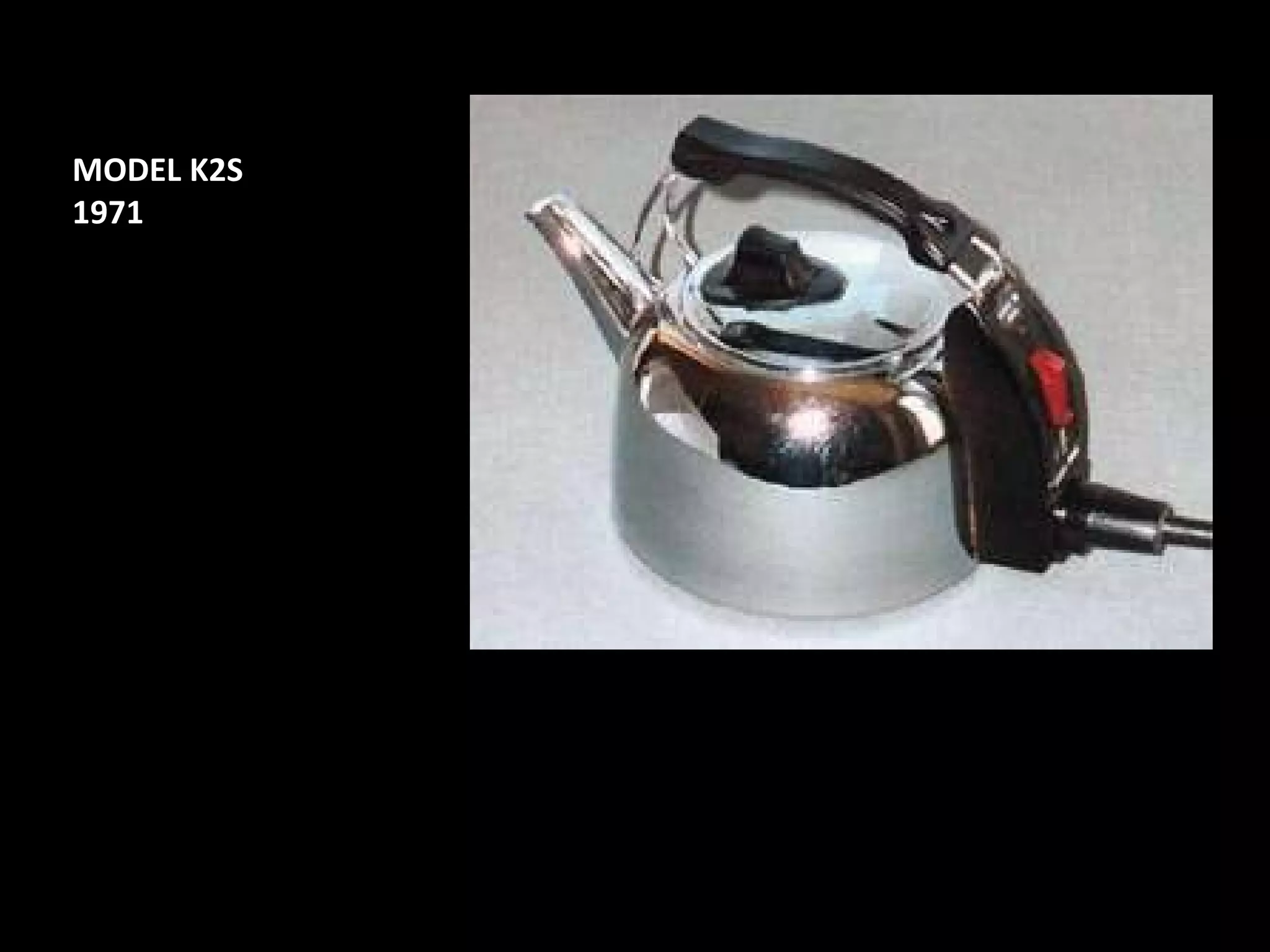
MODEL K2SMODEL K2S
19711971
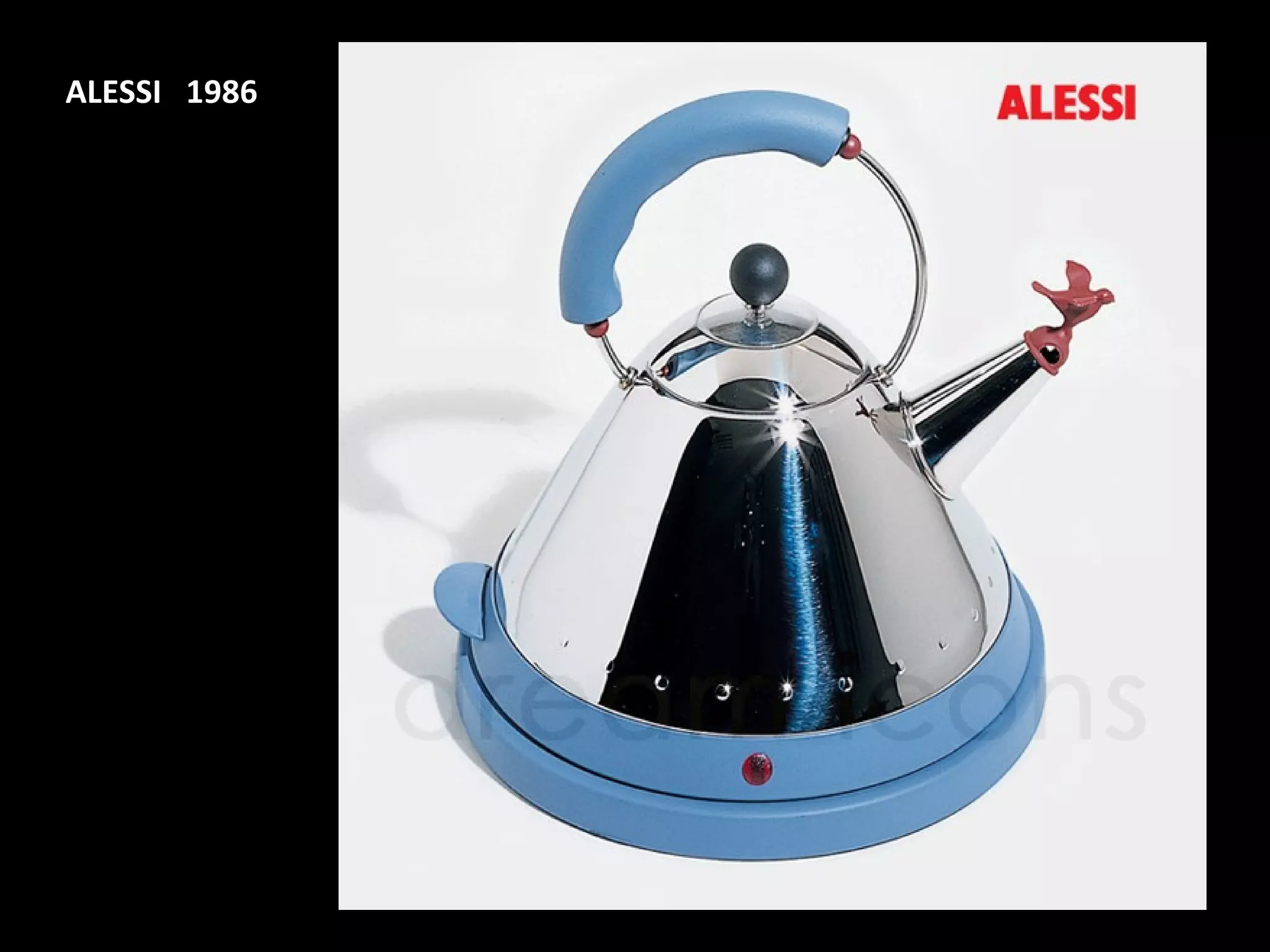
Alessi 1986Alessi 1986ALESSI 1986ALESSI 1986
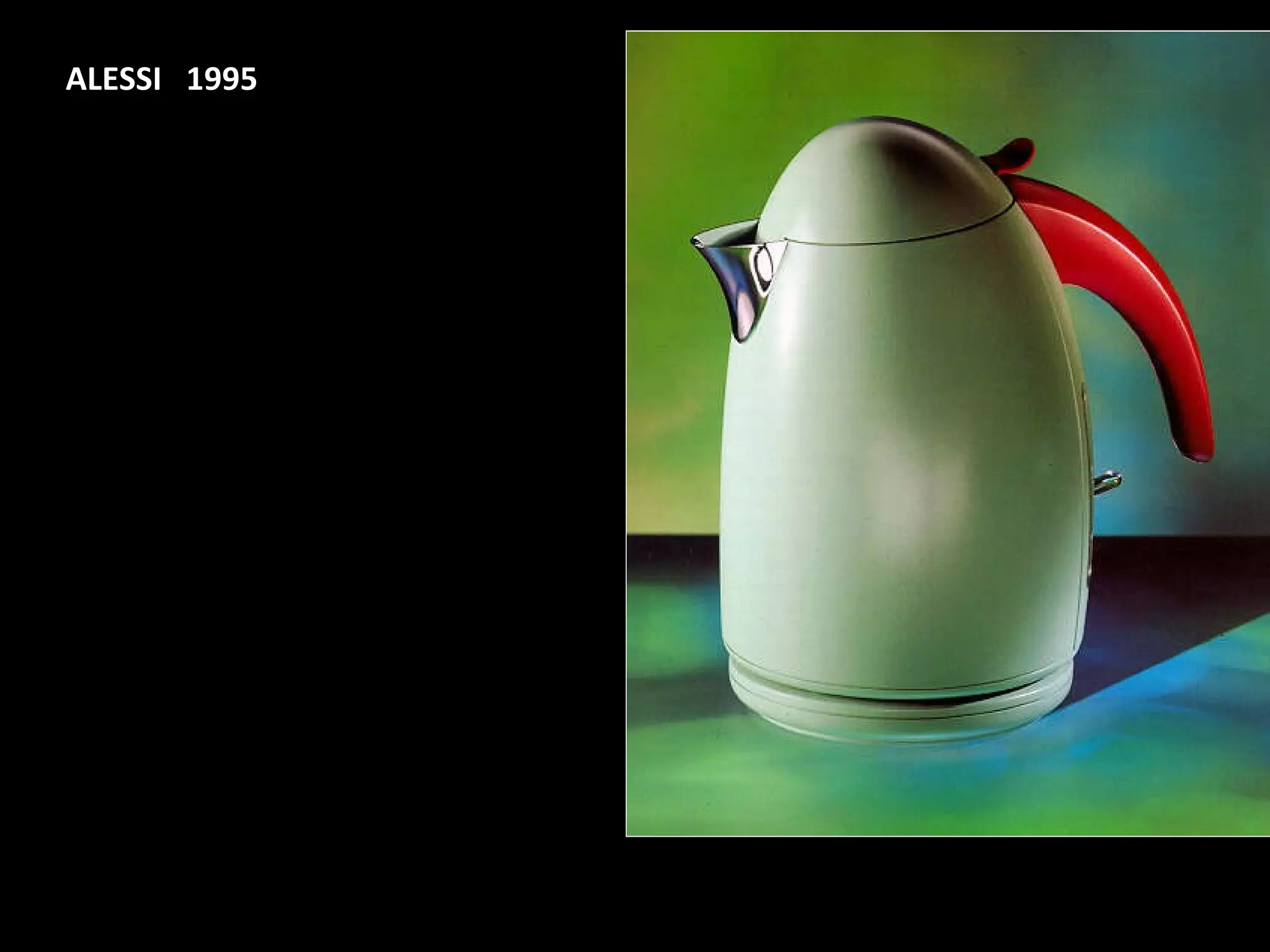
ALESSI 1995ALESSI 1995
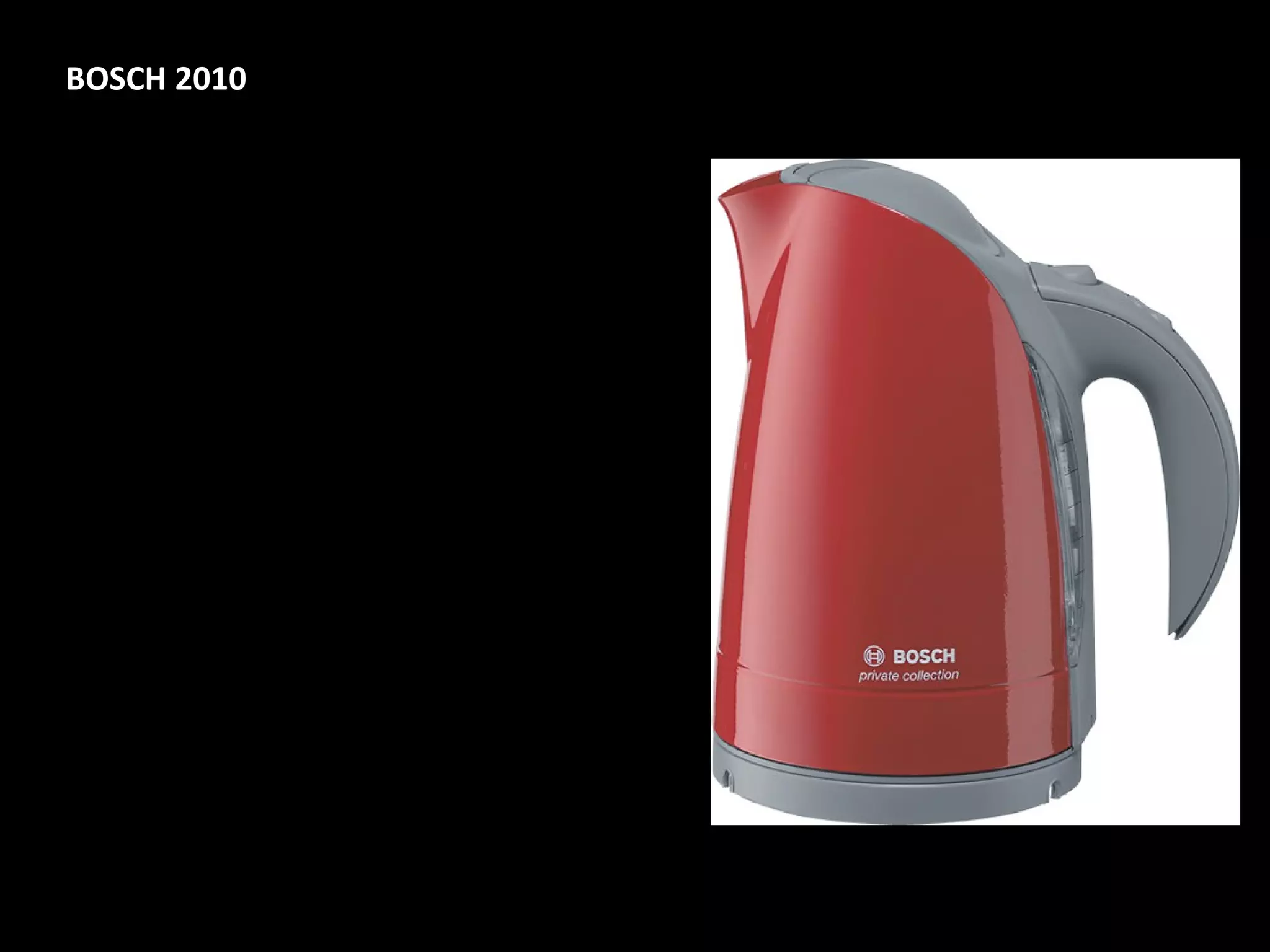
BBOSCHOSCH 20102010
Mobile phoneMobile phone
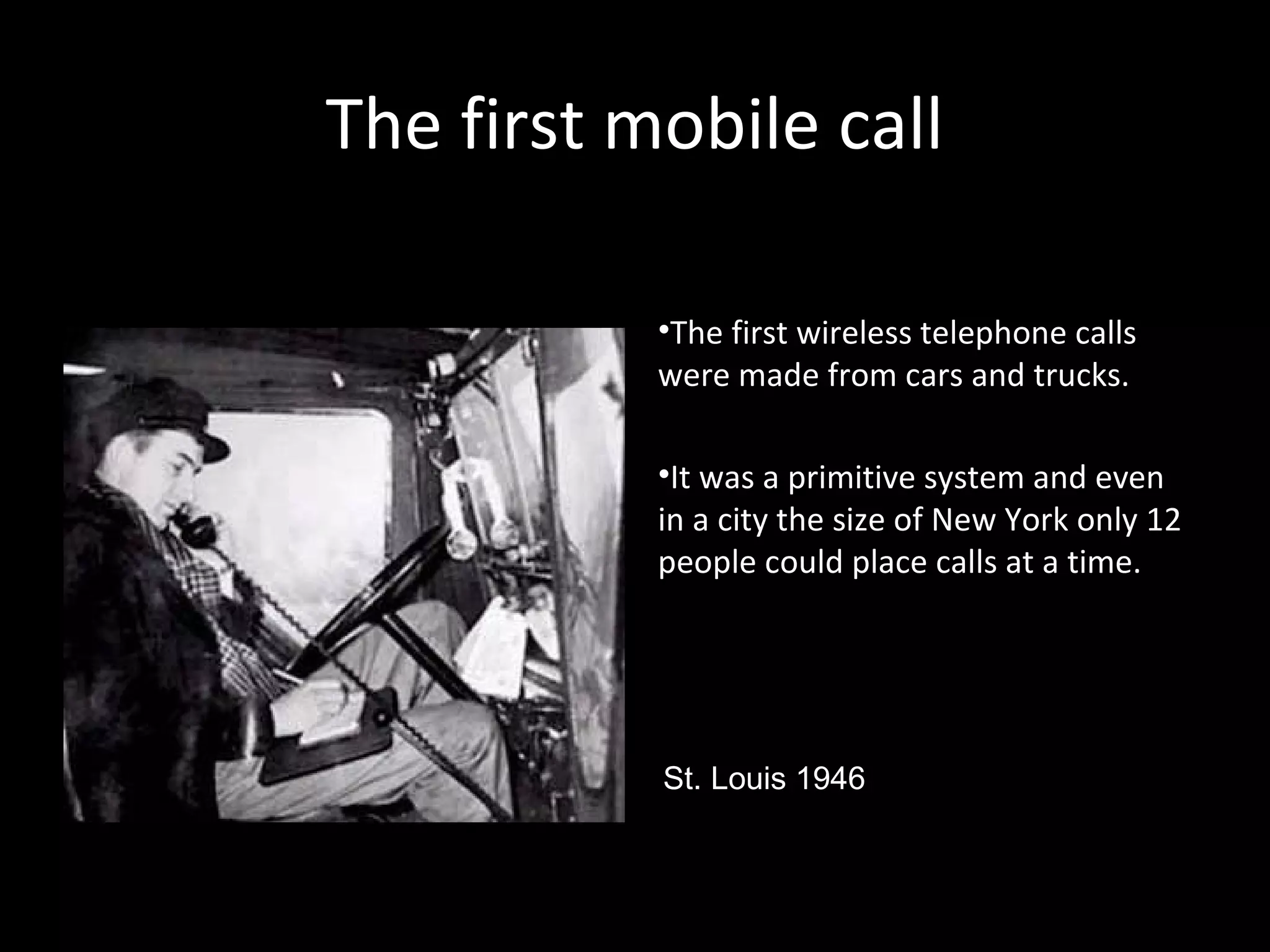
The first mobile callThe first mobile call
•The first wireless telephone calls
were made from cars and trucks.
•It was a primitive system and even
in a city the size of New York only 12
people could place calls at a time.
St. Louis 1946
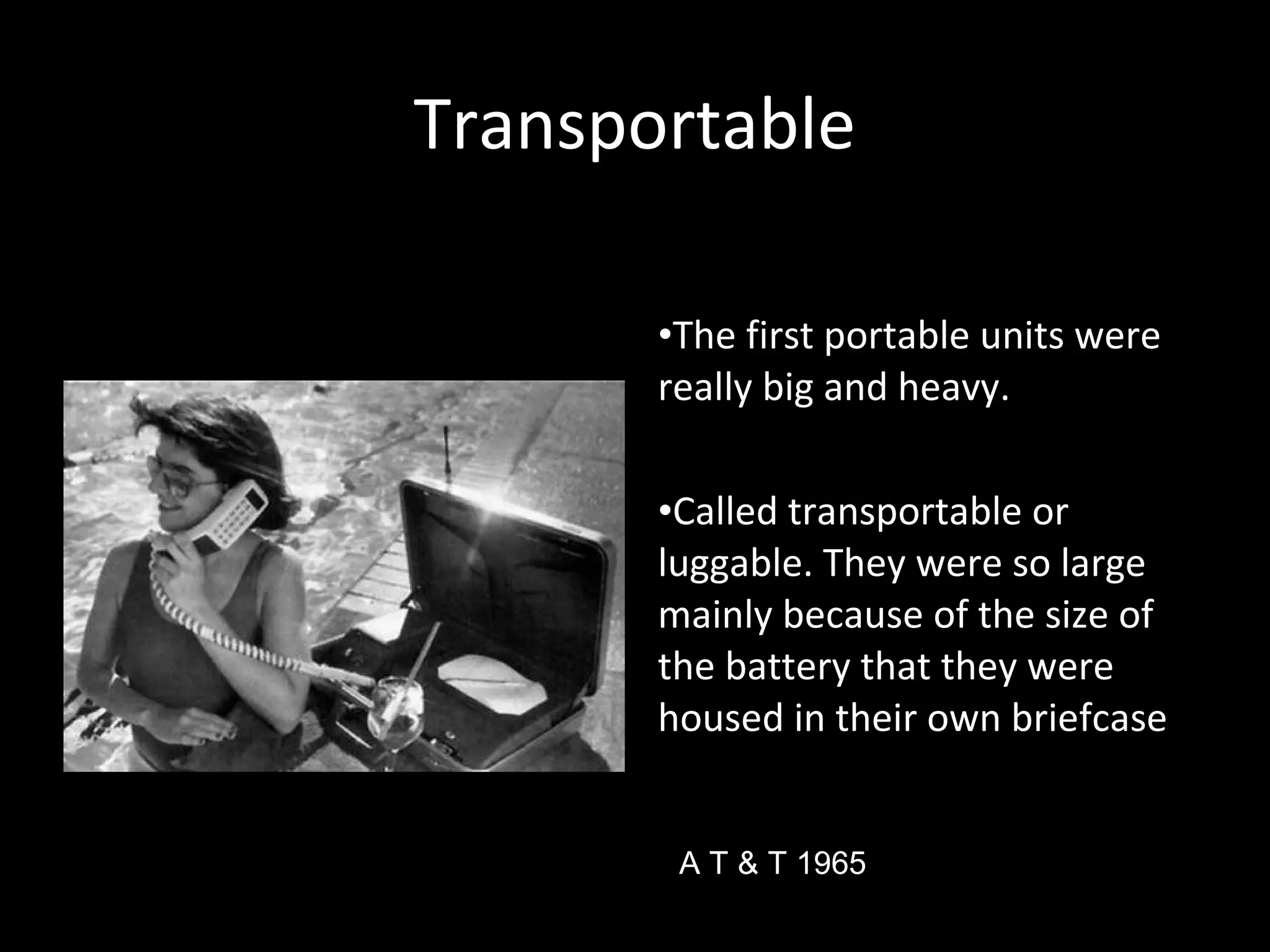
TransportableTransportable
•The first portable units were
really big and heavy.
•Called transportable or
luggable. They were so large
mainly because of the size of
the battery that they were
housed in their own briefcase
A T & T 1965
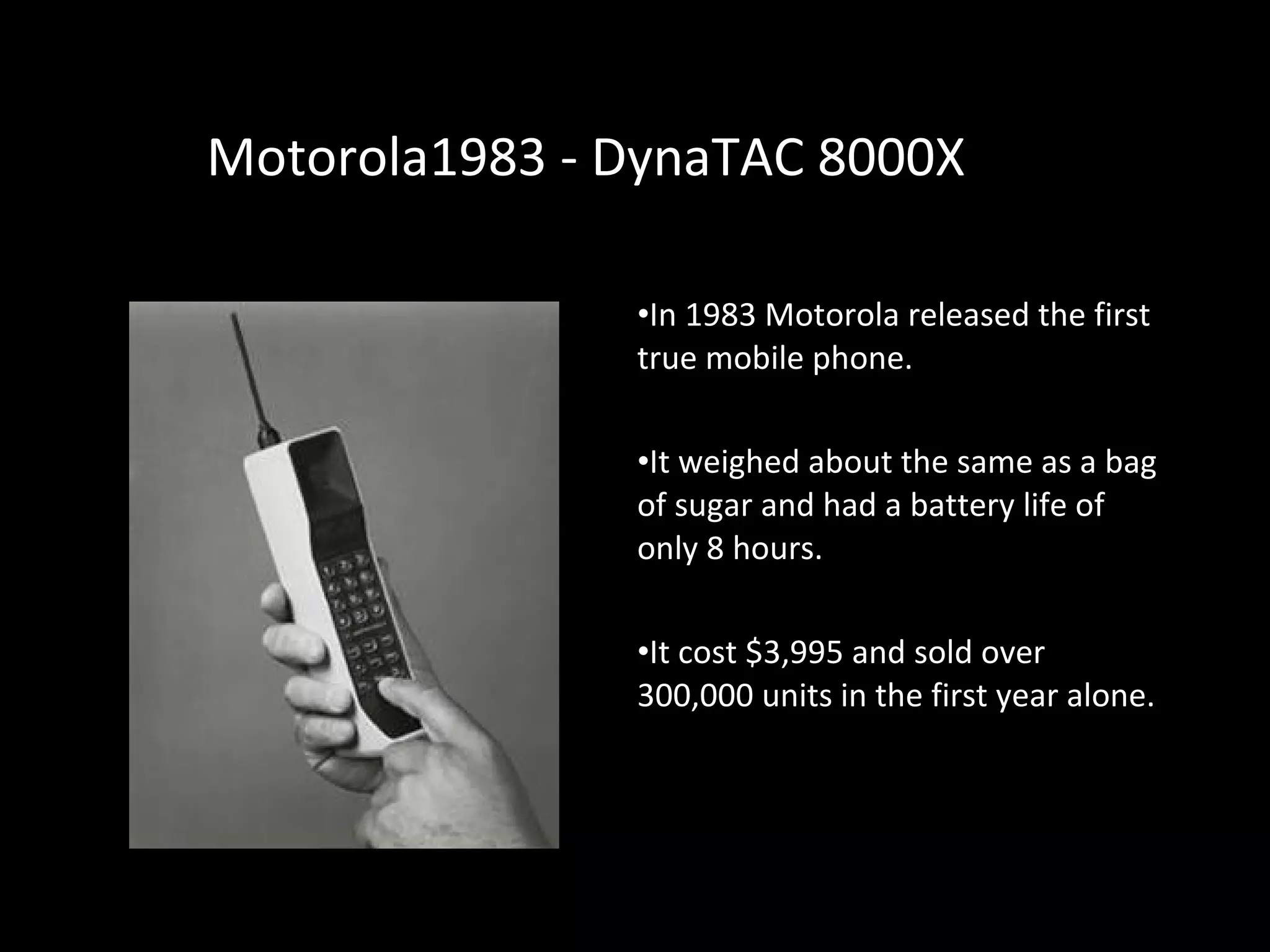
MotorolaMotorola1983 - DynaTAC 8000X1983 - DynaTAC 8000X
•In 1983 Motorola released the first
true mobile phone.
•It weighed about the same as a bag
of sugar and had a battery life of
only 8 hours.
•It cost $3,995 and sold over
300,000 units in the first year alone.
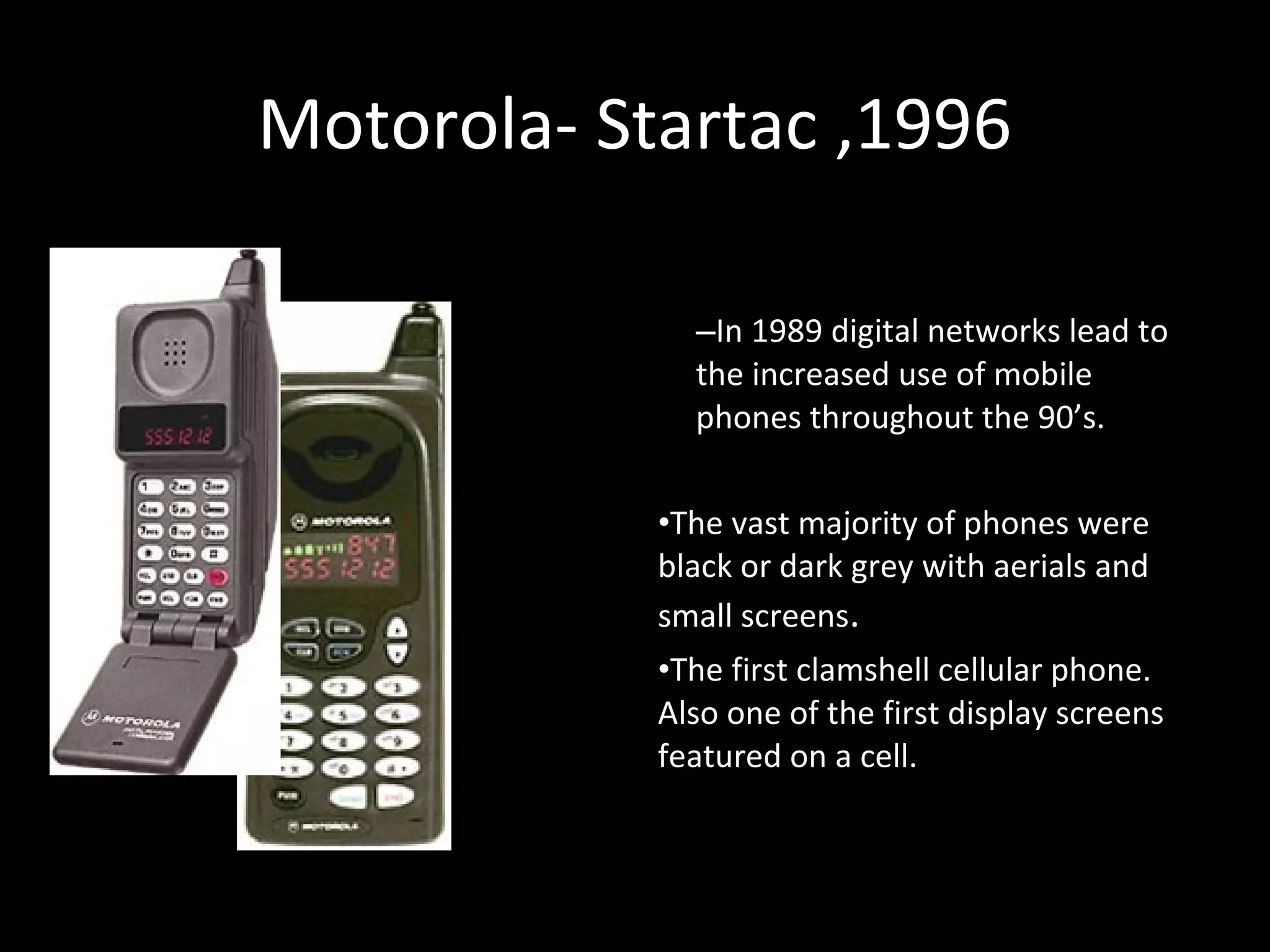
Motorola- Startac ,1996Motorola- Startac ,1996
–In 1989 digital networks lead to
the increased use of mobile
phones throughout the 90’s.
•The vast majority of phones were
black or dark grey with aerials and
small screens.
•The first clamshell cellular phone.
Also one of the first display screens
featured on a cell.
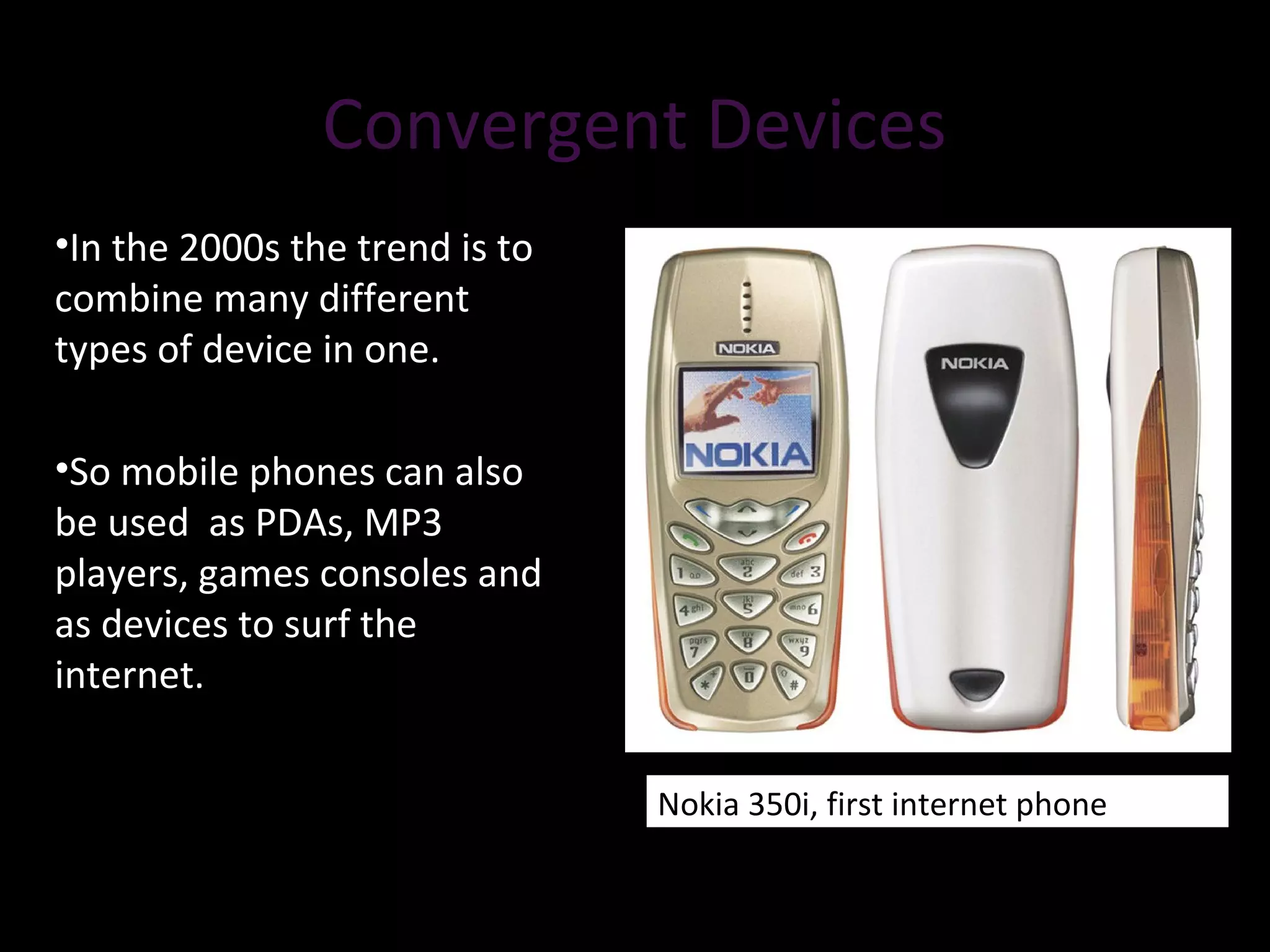
Convergent DevicesConvergent Devices
•In the 2000s the trend is to
combine many different
types of device in one.
•So mobile phones can also
be used as PDAs, MP3
players, games consoles and
as devices to surf the
internet.
Nokia 350i, first internet phone
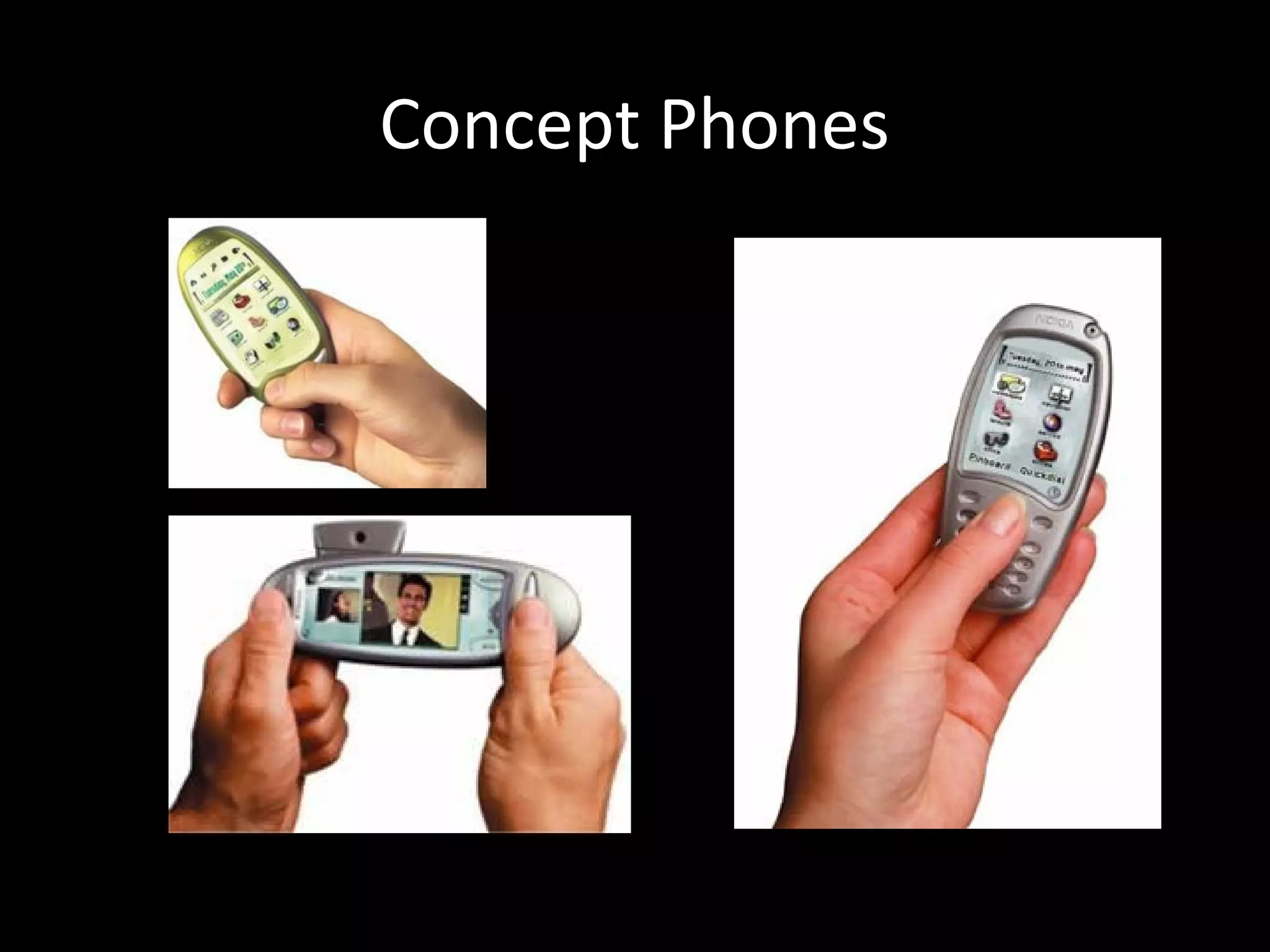
Concept PhonesConcept Phones
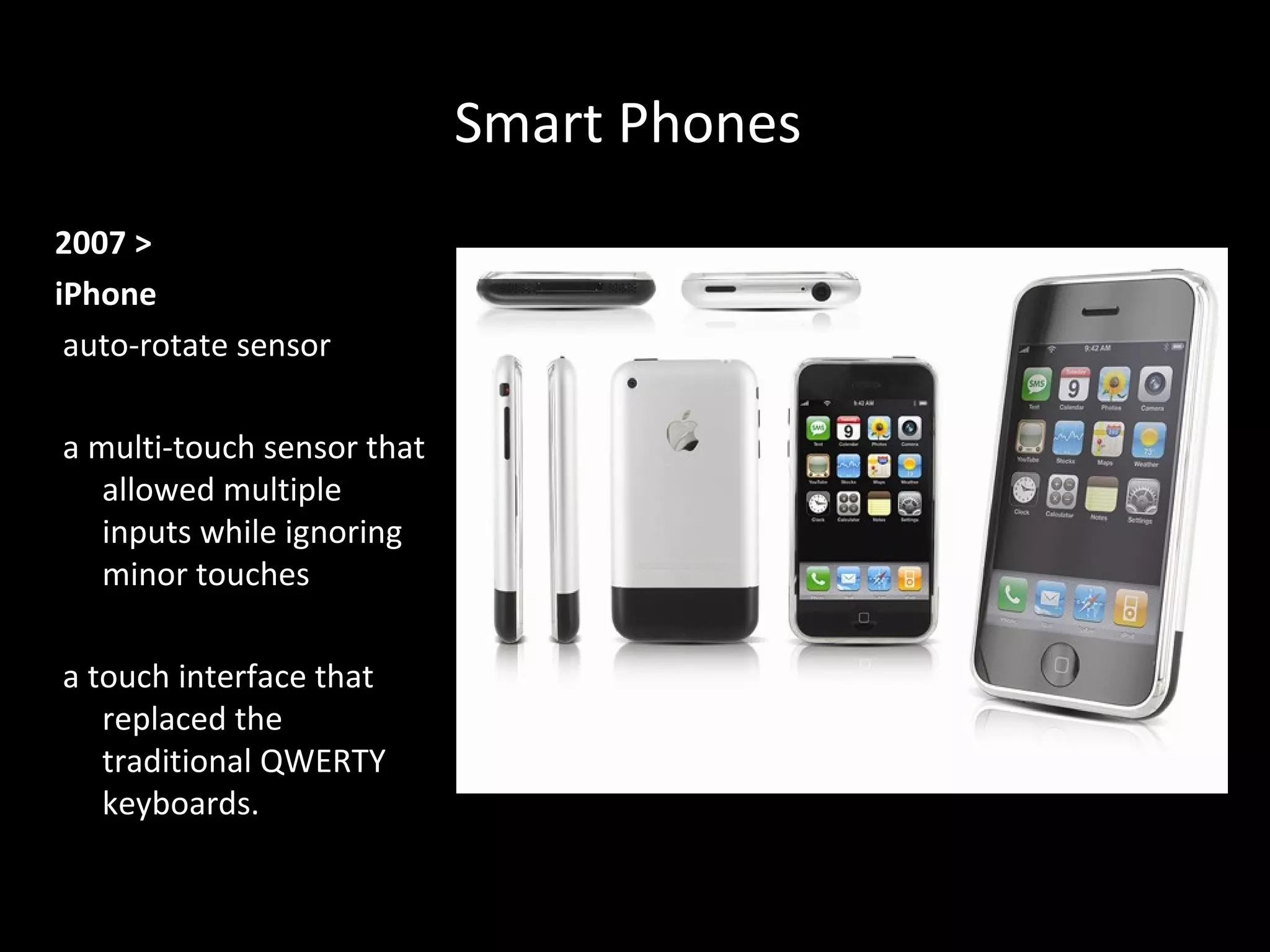
Smart PhonesSmart Phones
2007 >
iPhone
auto-rotate sensor
a multi-touch sensor that
allowed multiple
inputs while ignoring
minor touches
a touch interface that
replaced the
traditional QWERTY
keyboards.
Assignments
GROUP
Explaining Historical Artefacts
(20% weighting)
• 10 minute group presentation
• A2 poster x 2
INDIVIDUAL
Essay Writing (40% weighting)
• 1500 word academic essay
INDIVIDUAL
Design History Research Project
(40% weighting)
• Object catalogue entry
• 1000 word report
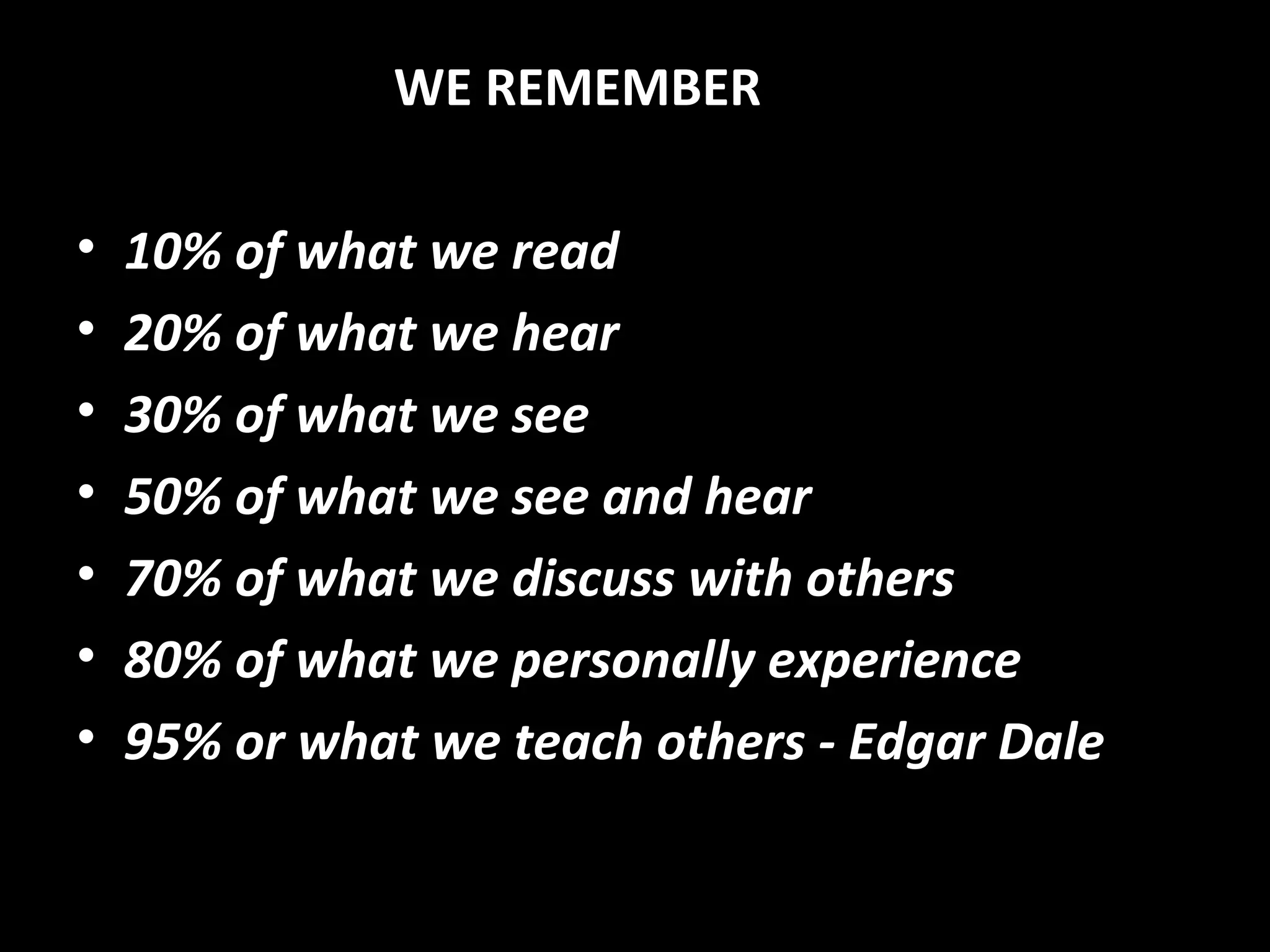
WE REMEMBER
• 10% of what we read
• 20% of what we hear
• 30% of what we see
• 50% of what we see and hear
• 70% of what we discuss with others
• 80% of what we personally experience
• 95% or what we teach others - Edgar Dale
Week 2   what is design h istory

Week 2 what is design h istory

  • 1.
  • 2.
    What is DesignHIstory?What is Design HIstory? Design history is concerned with: Architecture, product design, interior design, fashion and textile design, graphic design and visual communication, animation and production design, spatial design, performance design, game design and virtual design worlds…….. The elements of design that have influenced the individual, society and culture The cultural and societal issues that have influenced design Recovering lost histories – ie women, common objects, popular culture etc
  • 3.
    We are concernedin this subject with design as a process rather than a timeline of objects Design history is not solely concerned with the line up of facts and the creation of discrete histories It is about understanding , finding explanations, evaluating the past and developing skills in critical analysis. What is Design History?What is Design History?
  • 4.
    What is DesignHistory?What is Design History? http://www.moma.org/collection/browse_results.php?object_id=2393
  • 5.
    Why is studyingdesign history important?Why is studying design history important? Knowledge – vocabulary, tools and materials, stylistic elementsKnowledge – vocabulary, tools and materials, stylistic elements How technological, social and political factors influence designHow technological, social and political factors influence design Critical analysis – developing a way of talking about designCritical analysis – developing a way of talking about design Developing and contextualising your own styleDeveloping and contextualising your own style Design history as a way of studying social and cultural history (everydayDesign history as a way of studying social and cultural history (everyday objects as opposed to big events)objects as opposed to big events) Contribution to a relatively new discipline - developed in the last 30 to 40Contribution to a relatively new discipline - developed in the last 30 to 40 years out of art history and material culture analysis.years out of art history and material culture analysis.
  • 6.
    20th Century DesignCase Studies20th Century Design Case Studies •The electric kettle •The mobile phone
  • 7.
    THE ELECTRIC KETTLETHEELECTRIC KETTLE Premier Kettle, 1912, Fire under water
  • 8.
    AEG- Peter Behrens,1909.AEG- Peter Behrens, 1909.
  • 9.
    PETER BEHRENS ELECTRICKETTLE 1909PETER BEHRENS ELECTRIC KETTLE 1909 First to introduce variety and modern elegance. Choice of finish materials and shape. First company to experiment with immersible element. Until 1920’s, common solution was to attach the element to the underside of the kettle.
  • 10.
    Bulpitt & Sons“Swan”, 1922Bulpitt & Sons “Swan”, 1922 • First kettle with totally immersed element. • Doubled efficiency. • Traditional appearance • Middle class households Wartime Finish
  • 11.
    Russell Hobbs 1960,Britain. Model K2, (K1, 1956), William Russell. Standard kettle in Britain. Chrome plated, with black plastic. Early versions have curved spout, later versions straighter and with brushed steel. • Automatic switch • Stylish reputation • first fully automatic kettle • Price of kettle slightly more than others on the market due to reliability of materials and manufacture as well as design.
  • 12.
  • 13.
  • 14.
  • 15.
  • 18.
  • 19.
    The first mobilecallThe first mobile call •The first wireless telephone calls were made from cars and trucks. •It was a primitive system and even in a city the size of New York only 12 people could place calls at a time. St. Louis 1946
  • 20.
    TransportableTransportable •The first portableunits were really big and heavy. •Called transportable or luggable. They were so large mainly because of the size of the battery that they were housed in their own briefcase A T & T 1965
  • 21.
    MotorolaMotorola1983 - DynaTAC8000X1983 - DynaTAC 8000X •In 1983 Motorola released the first true mobile phone. •It weighed about the same as a bag of sugar and had a battery life of only 8 hours. •It cost $3,995 and sold over 300,000 units in the first year alone.
  • 22.
    Motorola- Startac ,1996Motorola-Startac ,1996 –In 1989 digital networks lead to the increased use of mobile phones throughout the 90’s. •The vast majority of phones were black or dark grey with aerials and small screens. •The first clamshell cellular phone. Also one of the first display screens featured on a cell.
  • 23.
    Convergent DevicesConvergent Devices •Inthe 2000s the trend is to combine many different types of device in one. •So mobile phones can also be used as PDAs, MP3 players, games consoles and as devices to surf the internet. Nokia 350i, first internet phone
  • 24.
  • 25.
    Smart PhonesSmart Phones 2007> iPhone auto-rotate sensor a multi-touch sensor that allowed multiple inputs while ignoring minor touches a touch interface that replaced the traditional QWERTY keyboards.
  • 27.
    Assignments GROUP Explaining Historical Artefacts (20%weighting) • 10 minute group presentation • A2 poster x 2 INDIVIDUAL Essay Writing (40% weighting) • 1500 word academic essay INDIVIDUAL Design History Research Project (40% weighting) • Object catalogue entry • 1000 word report
  • 32.
    WE REMEMBER • 10%of what we read • 20% of what we hear • 30% of what we see • 50% of what we see and hear • 70% of what we discuss with others • 80% of what we personally experience • 95% or what we teach others - Edgar Dale