INTERNATIONAL DOCTORS FOR HEALTHIER DRUG POLICIES
Naloxone could save so many lives but is
restricted to so few
Preliminary results of the IDHDP global
naloxone survey
Dr Chris Ford, Clinical Director
Vanessa Huke, Communications Manager
IDHDP
Global Addiction Conference Belgrade
Physicians globally unite for health based drug policy
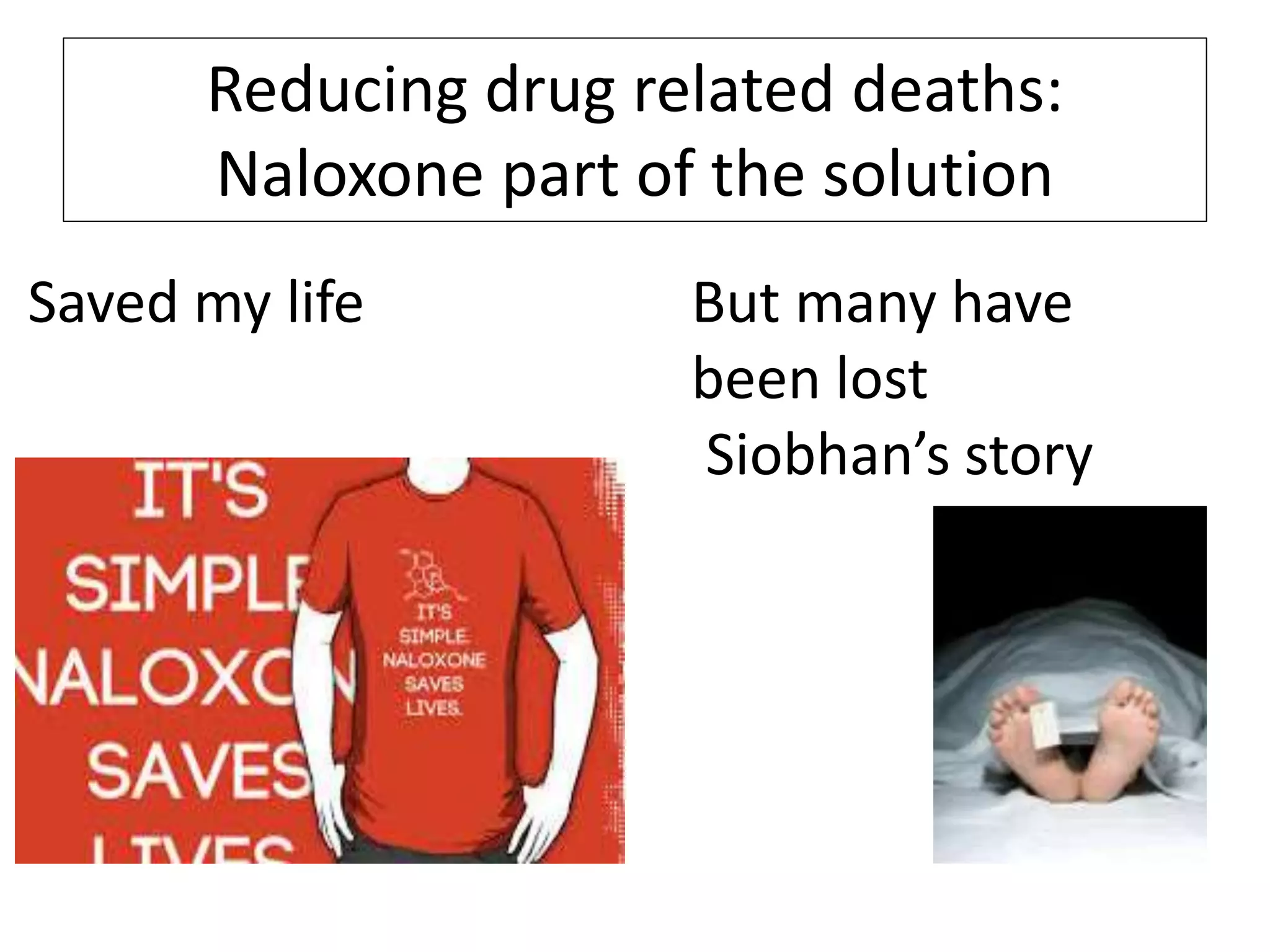
Reducing drug related deaths:
Naloxone part of the solution
Saved my life But many have
been lost
Siobhan’s story
Drug use around the world
Prevalence of use of opioids
worldwide
Why we need naloxone
• 1.3 million users of opioids in Europe
• 27 million users of opioids worldwide (0.6%
world pop)
• 6,100 overdose deaths in Europe in 2012
• 3.5% of all deaths in males under 40 in Europe
• 250,000 overdose deaths world wide in 2010
This represents 2 million years of life lost
Preventing opioid overdoses in Europe EMCDDA, Lisbon,
October 2012 (revised 2014)
What is Naloxone?
• An opioid receptor antagonist
• Reverses opioid (heroin, methadone, prescription
opioids) overdoses
• Safe, cost-effective
• Can be given
– IV, IM, subcutaneous, intranasal
Images from www.noperi.org 2015
Opiate overdose
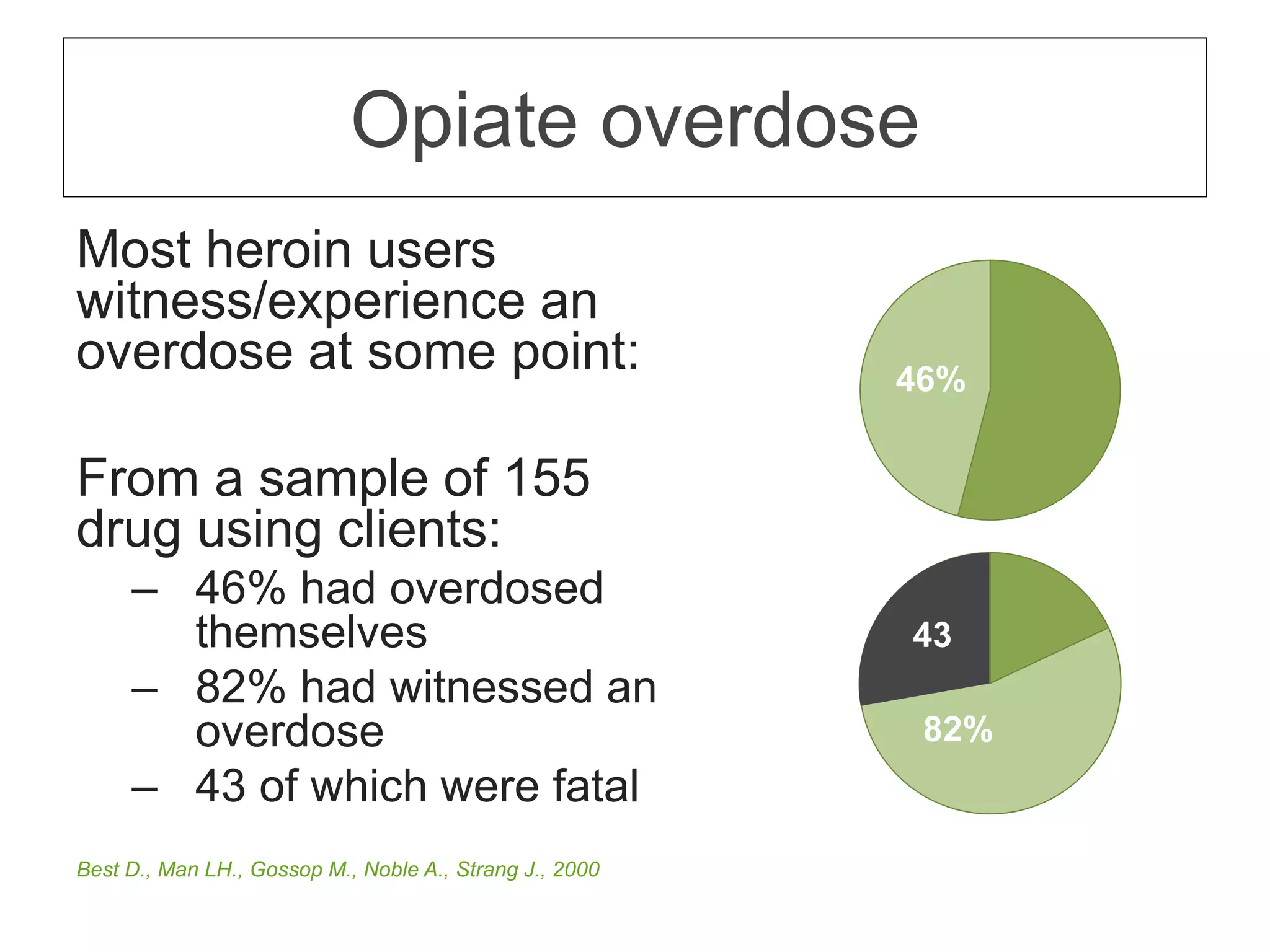
Most heroin users
witness/experience an
overdose at some point:
From a sample of 155
drug using clients:
– 46% had overdosed
themselves
– 82% had witnessed an
overdose
– 43 of which were fatal
46%
82%
43
Best D., Man LH., Gossop M., Noble A., Strang J., 2000
Naloxone is just part of a response
Naloxone is an addition
to a greater set of
overdose interventions,
you should still:
– Check ABC
– Ambulance – call
– Breathing
– reCovery position
– Stay with them
What reduces risk of fatal overdose?
Better response to opiate overdose and
wider access to take home naloxone.
Talking about Naloxone:
United Nations Commission on Narcotic Drugs
UNODC 2012
Resolution 55/7:
“Encourages all Member States …..to share best
practices ………..including the use of opioid
receptor antagonists such as naloxone”
http://www.unodc.org/documents/commissions/CND/Drug_Resolutions/2010-2019/2012/CND_Res-55-7.pdf
Compare England with Scotland & Wales: Shocking rise in number of deaths
registered in 2013
(Office of National Statistics: 2014)
0
200
400
600
800
1000
1200
1400
1600
1800
2000
1993 1994 1995 1996 1997 1998 1999 2000 2001 2002 2003 2004 2005 2006 2007 2008 2009 2010 2011 2012 2013
numberofdrugrelateddeaths
Number of “drug misuse” Deaths 1993-2013
England
Wales
Scotland
Barriers
• Legal restrictions
• Bad policy
• Ignorance
– “Naloxone is a drug of abuse”
– “Naloxone is dangerous”
– “Naloxone will encourage risk taking”
• Lack of Awareness
• Lack of Motivation
– Need local champions
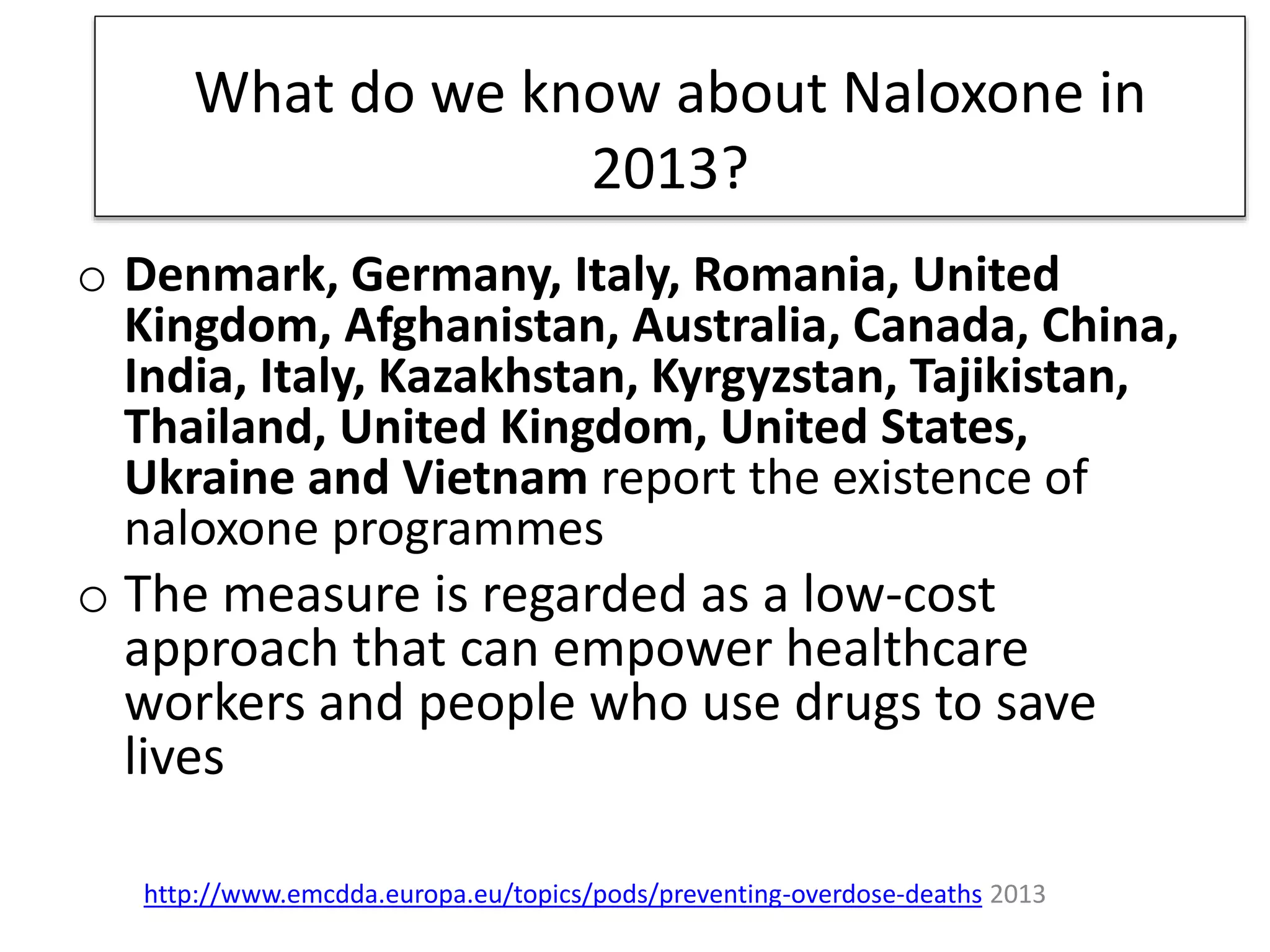
What do we know about Naloxone in
2013?
o Denmark, Germany, Italy, Romania, United
Kingdom, Afghanistan, Australia, Canada, China,
India, Italy, Kazakhstan, Kyrgyzstan, Tajikistan,
Thailand, United Kingdom, United States,
Ukraine and Vietnam report the existence of
naloxone programmes
o The measure is regarded as a low-cost
approach that can empower healthcare
workers and people who use drugs to save
lives
http://www.emcdda.europa.eu/topics/pods/preventing-overdose-deaths 2013
Countries which have Naloxone
Counries with naloxone
Counries without
naloxone
No data
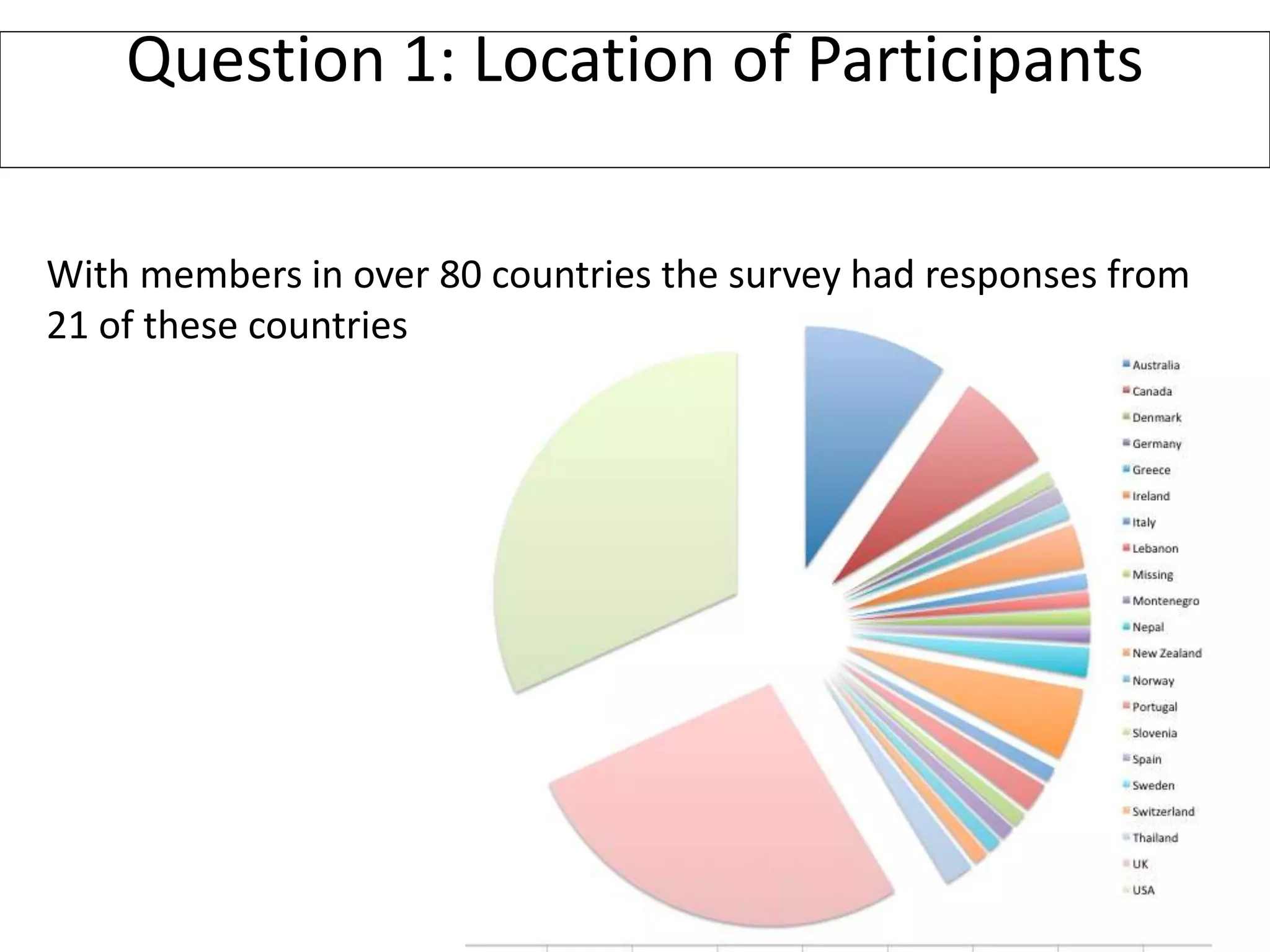
Question 1: Location of Participants
With members in over 80 countries the survey had responses from
21 of these countries
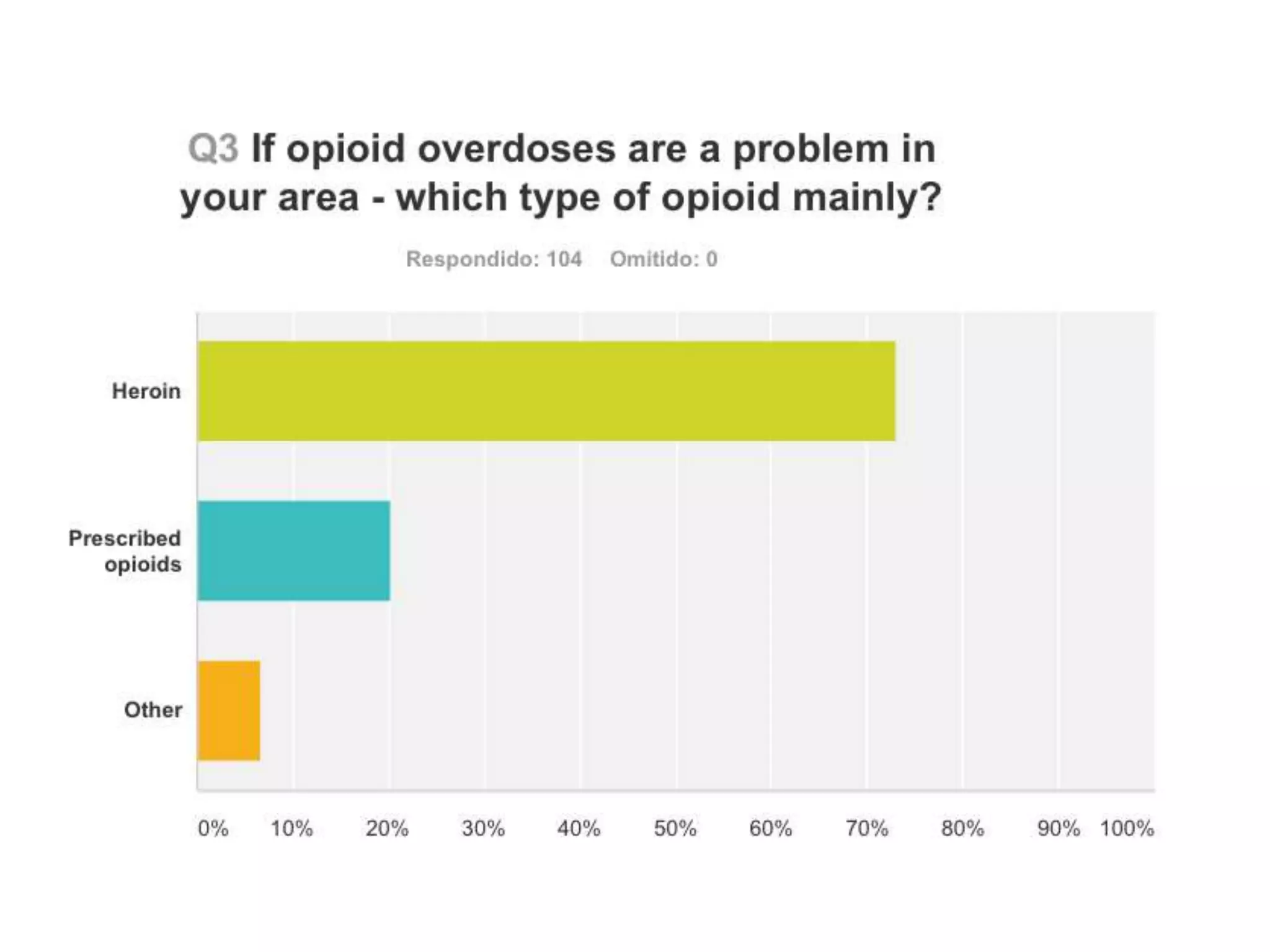
• Q2 Is there a problem with opioid related
overdose in your area?
INTERNATIONAL DOCTORS FOR HEALTHIER DRUG POLICIES
Now - go out and
SAVE SOME NALOXONE
Also complete the survey
Dr Chris Ford & Vanessa Huke
chris.ford@idhdp.com
www.idhdp.com
Physicians globally unite for health based drug policy
INTERNATIONAL DOCTORS FOR HEALTHIER DRUG POLICIES
Tuesday 2nd June @ 1740
“If doctors want to treat addiction - they
should start with the policies”
Why WE ALL need to be involved with the
UNGASS debate
All welcome
FOLLOWED BY IDHDP MEMBERS MEETING @ 1830
Physicians globally unite for health based drug policy

Naloxone survey

  • 1.
    INTERNATIONAL DOCTORS FORHEALTHIER DRUG POLICIES Naloxone could save so many lives but is restricted to so few Preliminary results of the IDHDP global naloxone survey Dr Chris Ford, Clinical Director Vanessa Huke, Communications Manager IDHDP Global Addiction Conference Belgrade Physicians globally unite for health based drug policy
  • 2.
    Reducing drug relateddeaths: Naloxone part of the solution Saved my life But many have been lost Siobhan’s story
  • 3.
    Drug use aroundthe world
  • 4.
    Prevalence of useof opioids worldwide
  • 5.
    Why we neednaloxone • 1.3 million users of opioids in Europe • 27 million users of opioids worldwide (0.6% world pop) • 6,100 overdose deaths in Europe in 2012 • 3.5% of all deaths in males under 40 in Europe • 250,000 overdose deaths world wide in 2010 This represents 2 million years of life lost Preventing opioid overdoses in Europe EMCDDA, Lisbon, October 2012 (revised 2014)
  • 7.
    What is Naloxone? •An opioid receptor antagonist • Reverses opioid (heroin, methadone, prescription opioids) overdoses • Safe, cost-effective • Can be given – IV, IM, subcutaneous, intranasal Images from www.noperi.org 2015
  • 8.
    Opiate overdose Most heroinusers witness/experience an overdose at some point: From a sample of 155 drug using clients: – 46% had overdosed themselves – 82% had witnessed an overdose – 43 of which were fatal 46% 82% 43 Best D., Man LH., Gossop M., Noble A., Strang J., 2000
  • 9.
    Naloxone is justpart of a response Naloxone is an addition to a greater set of overdose interventions, you should still: – Check ABC – Ambulance – call – Breathing – reCovery position – Stay with them
  • 10.
    What reduces riskof fatal overdose? Better response to opiate overdose and wider access to take home naloxone.
  • 11.
    Talking about Naloxone: UnitedNations Commission on Narcotic Drugs UNODC 2012 Resolution 55/7: “Encourages all Member States …..to share best practices ………..including the use of opioid receptor antagonists such as naloxone” http://www.unodc.org/documents/commissions/CND/Drug_Resolutions/2010-2019/2012/CND_Res-55-7.pdf
  • 13.
    Compare England withScotland & Wales: Shocking rise in number of deaths registered in 2013 (Office of National Statistics: 2014) 0 200 400 600 800 1000 1200 1400 1600 1800 2000 1993 1994 1995 1996 1997 1998 1999 2000 2001 2002 2003 2004 2005 2006 2007 2008 2009 2010 2011 2012 2013 numberofdrugrelateddeaths Number of “drug misuse” Deaths 1993-2013 England Wales Scotland
  • 14.
    Barriers • Legal restrictions •Bad policy • Ignorance – “Naloxone is a drug of abuse” – “Naloxone is dangerous” – “Naloxone will encourage risk taking” • Lack of Awareness • Lack of Motivation – Need local champions
  • 15.
    What do weknow about Naloxone in 2013? o Denmark, Germany, Italy, Romania, United Kingdom, Afghanistan, Australia, Canada, China, India, Italy, Kazakhstan, Kyrgyzstan, Tajikistan, Thailand, United Kingdom, United States, Ukraine and Vietnam report the existence of naloxone programmes o The measure is regarded as a low-cost approach that can empower healthcare workers and people who use drugs to save lives http://www.emcdda.europa.eu/topics/pods/preventing-overdose-deaths 2013
  • 16.
    Countries which haveNaloxone Counries with naloxone Counries without naloxone No data
  • 17.
    Question 1: Locationof Participants With members in over 80 countries the survey had responses from 21 of these countries
  • 18.
    • Q2 Isthere a problem with opioid related overdose in your area?
  • 28.
    INTERNATIONAL DOCTORS FORHEALTHIER DRUG POLICIES Now - go out and SAVE SOME NALOXONE Also complete the survey Dr Chris Ford & Vanessa Huke chris.ford@idhdp.com www.idhdp.com Physicians globally unite for health based drug policy
  • 29.
    INTERNATIONAL DOCTORS FORHEALTHIER DRUG POLICIES Tuesday 2nd June @ 1740 “If doctors want to treat addiction - they should start with the policies” Why WE ALL need to be involved with the UNGASS debate All welcome FOLLOWED BY IDHDP MEMBERS MEETING @ 1830 Physicians globally unite for health based drug policy

Editor's Notes

  • #2 1
  • #3 Siobhan’s story
  • #6 Rise in deaths UK = 5th highest rate in EU of deaths/million population. Mortality due to drug-induced deaths in EU, Croatia, Turkey and Norway (European Monitoring committee for Drugs and Drug Addiction 2013)
  • #8 Comment re intranasal
  • #9 The sample of drug using clients was from a study in South London in 2000
  • #10 But don’t forget naloxone is only part – remember A, B and C And D don’t panic Temporarily reverses the effects of an opiate overdose No effect on overdoses resulting from the use of other drugs Short acting - can begin to wear off in 20 mins Overdose can last for 8 hours or more (especially with methadone) Only for use with continued medical support – still need to ring 999 (buys time) No potential for abuse Naloxone precipitates WITHDRAWAL – the individual may want to use again straight away/ become aggressive.
  • #13  WHO recommendation: November 2014 “People likely to witness an opioid overdose should have access to naloxone and be instructed in its administration to enable them to use it for the emergency management of suspected opioid overdose.” http://www.who.int/substance_abuse/publications/management_opioid_overdose/en/
  • #18 New Zealand: 5 Australia: 10 Switzerland: 1 Denmark: 1 USA: 33 United Kingdom: 28 Nepal: 2 Portugal: 2 Spain: 1 Italy: 1 Canada: 7 Lebanon: 1 Ireland: 3 Sweden: 1 Norway: 1 Montenegro: 1 Slovenia: 1 Greece: 1 Germany: 1 Thailand: 2 Missing: 1
  • #29 28
  • #30 29