Allotment (publics): an open data and data driven
 journalism perspective


              Farida Vis and Yana Manyukhina
       University of Leicester | Open Data Manchester


fv12@le.ac.uk                               @flygirltwo
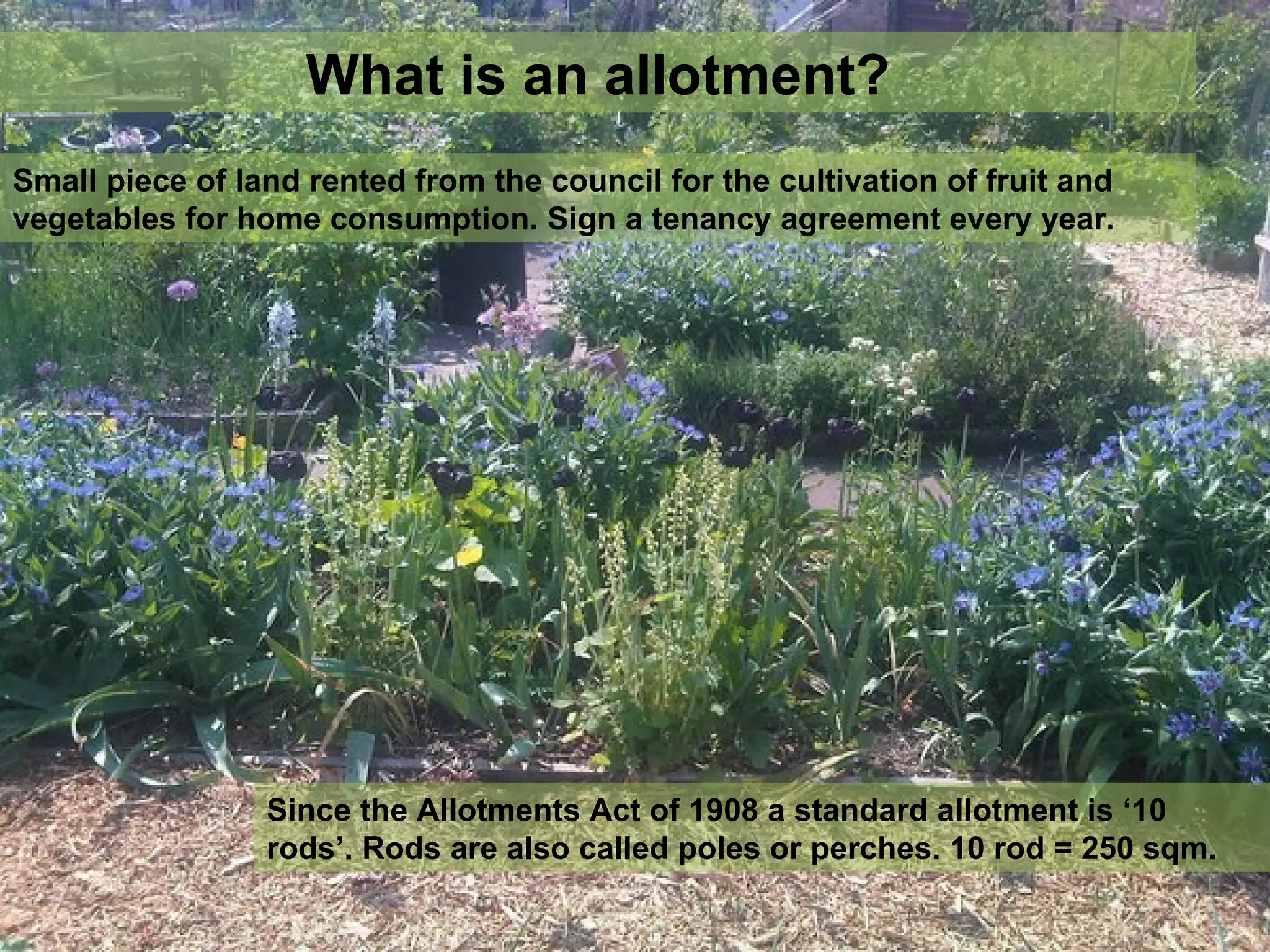
What is an allotment?
Small piece of land rented from the council for the cultivation of fruit and
vegetables for home consumption. Sign a tenancy agreement every year.


                 Since the Allotments Act of 1908 a standard allotment is ‘10
                 rods’. Rods are also called poles or perches. 10 rod = 250 sqm.
Allotment data as ‘really useful’ data

People care about growing vegetables
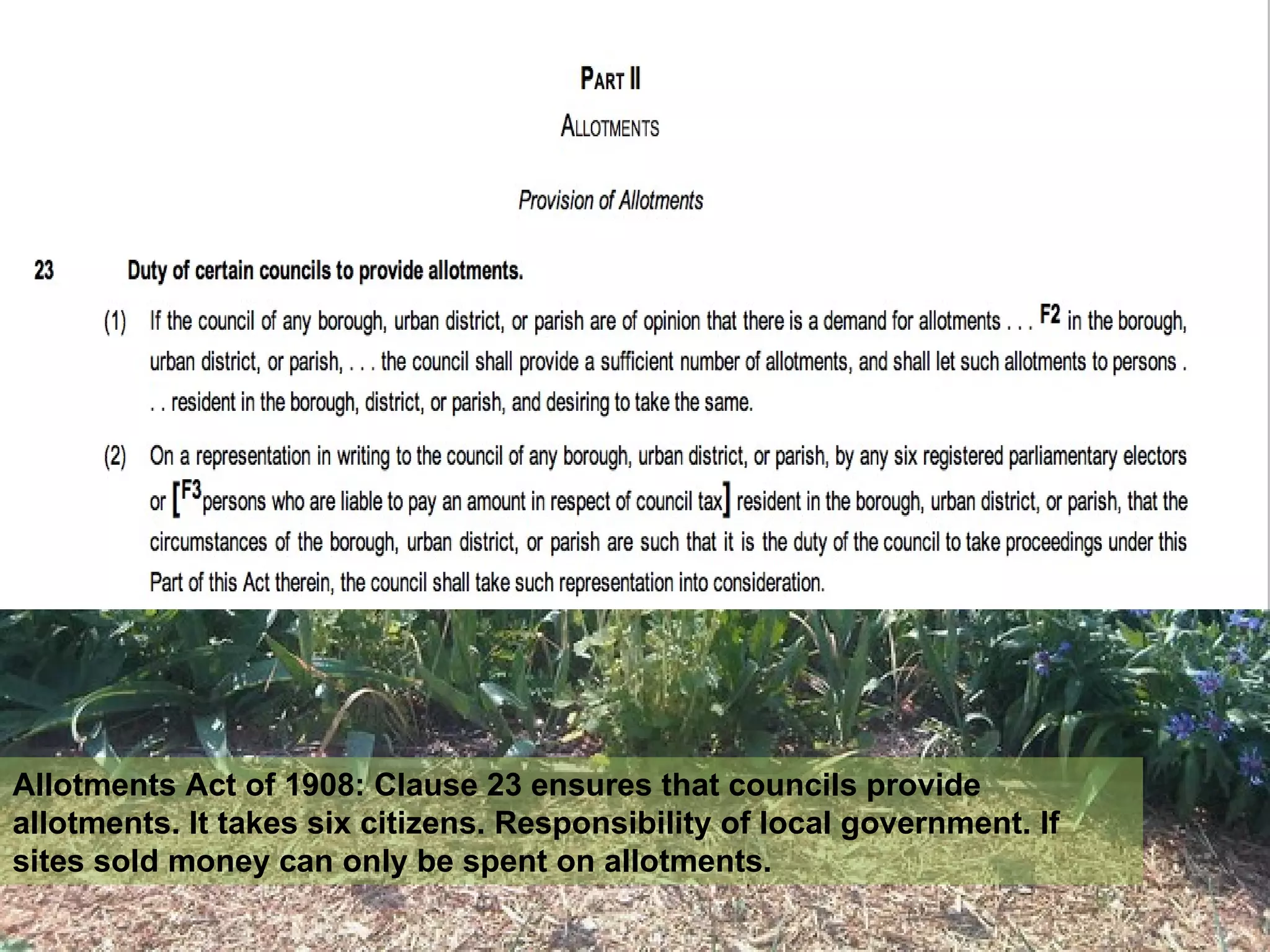
Allotments Act of 1908: Clause 23 ensures that councils provide
allotments. It takes six citizens. Responsibility of local government. If
sites sold money can only be spent on allotments.
Threat to the Allotments Act


Spring 2011, the Department for Communities and Local Government issued a
public consultation on 1294 Statutory Duties pertaining to local authorities to
possibly reduce their number.


These duties included Section 23 of the 1908 Allotments Act, which ensures
local authorities provide allotments, causing some newspapers to suggest that
‘The Good Life’ was now under threat.


The Act remained unchanged however in the summer the government
announced that of the 6,103 responses received nearly half contained a
comment on the Allotments Act.
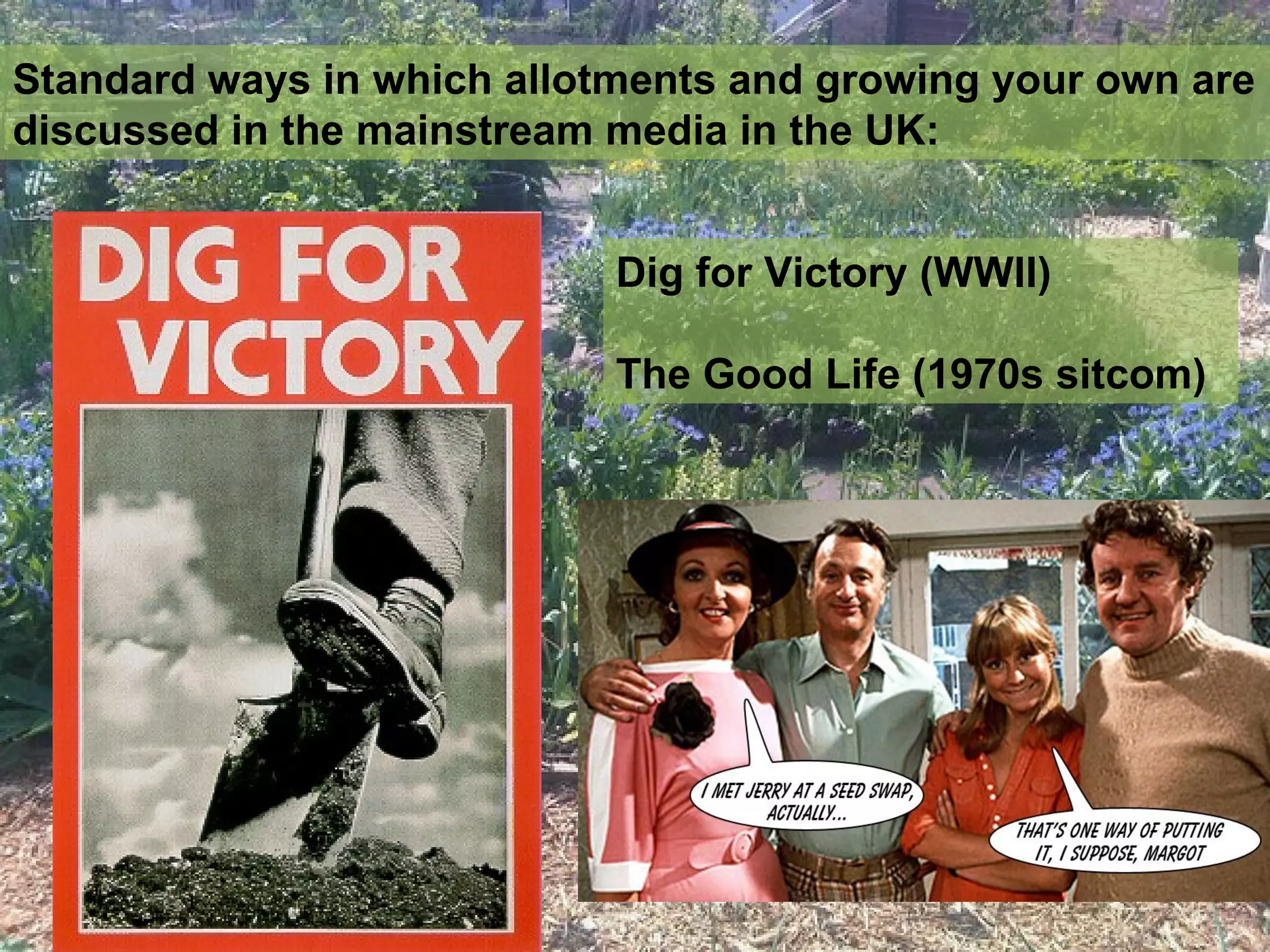
Standard ways in which allotments and growing your own are
discussed in the mainstream media in the UK:


                            Dig for Victory (WWII)

                            The Good Life (1970s sitcom)
Waiting lists: huge demand | tiny supply

In 1940s: 1.4 million allotment plots in the UK.
 Now: 200,000. Cycles of popularity. What do
   you do when everyone wants one again?


Waiting list crisis (our local site): 12 years ago, waiting list was 2 months.
Now: 15 years. Lots of people with children want to grow food with them.

Transition Town West Kirby (TTWK), Margaret Campbell

Grow Your Own | Land Share initiative | guerrilla gardening | alleyway gardens

Recent changes – rent increases, water rates, tenancy agreements
Sources of information on allotments in UK

   National Society for Allotments and
Leisure Gardeners (NSALG) – official body
Allotment Regeneration Initiative (ARI) – official body,
policy documents, mentors and advice


Transition Town West Kirby (TTWK) – waiting lists

Perennial problem: good allotment data. Difficult to get an
overview of what is going on at local/national level.

Evidenced based policy making on allotments difficult
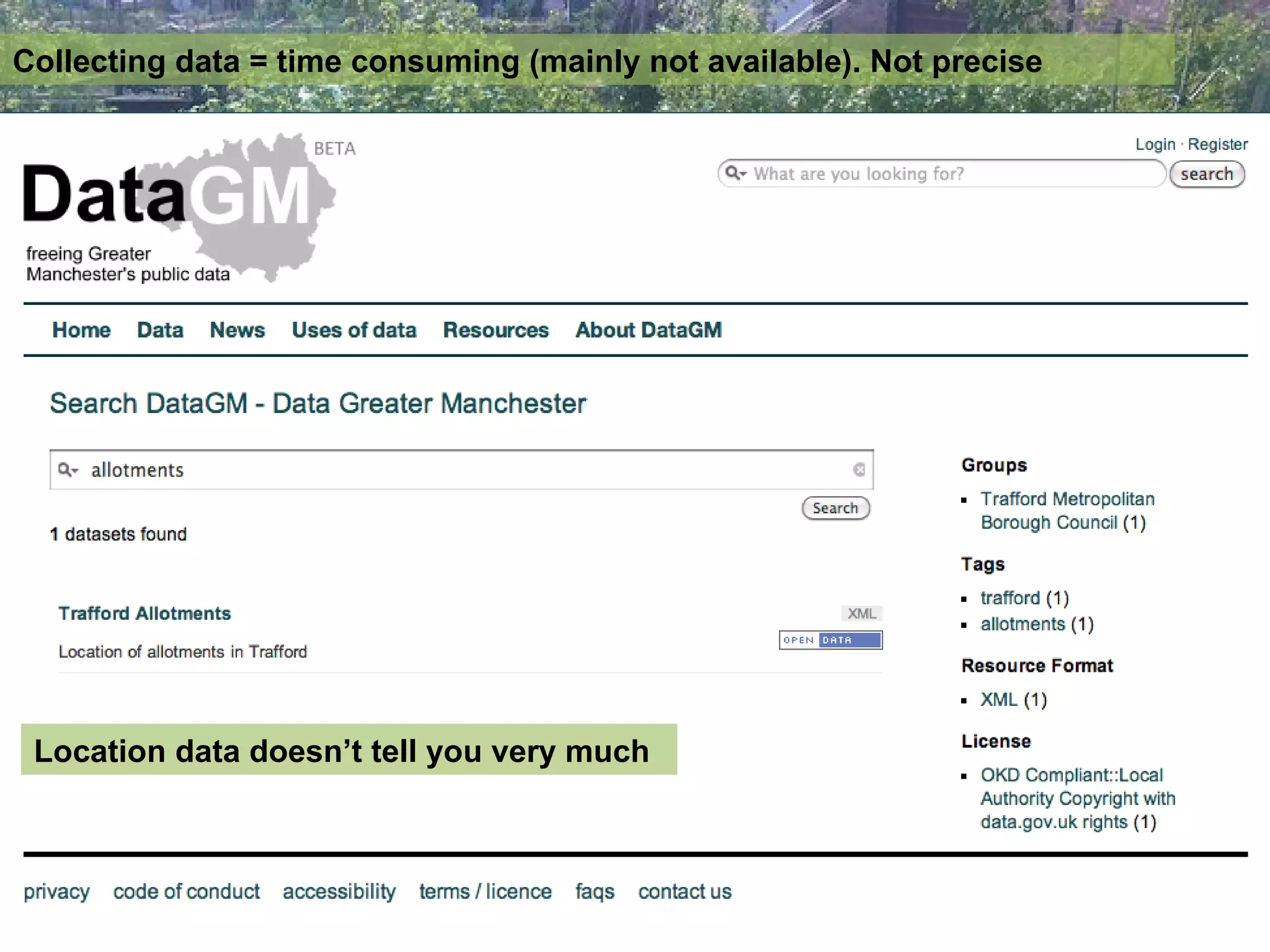
Collecting data = time consuming (mainly not available). Not precise


 Location data doesn’t tell you very much
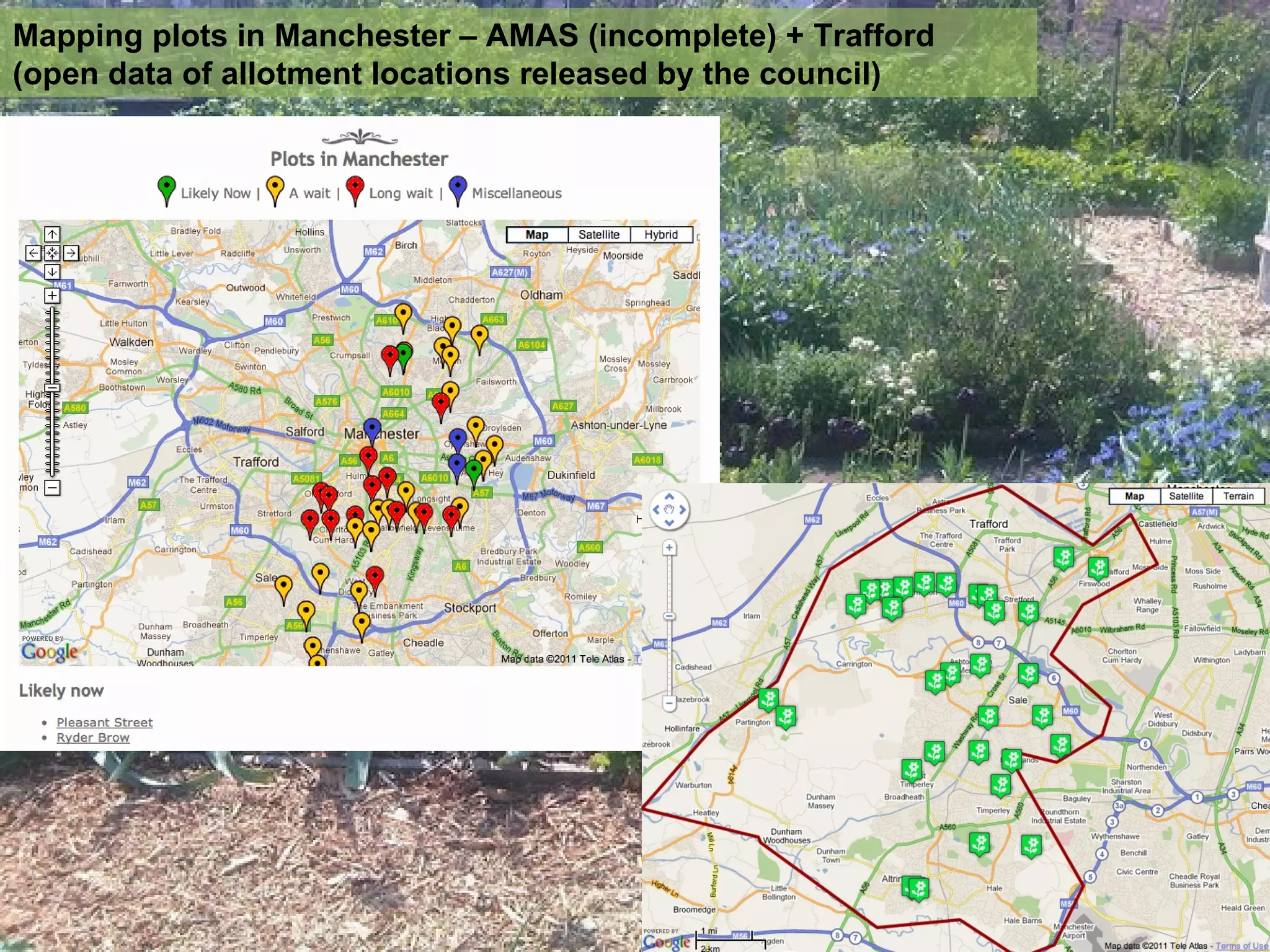
Mapping plots in Manchester – AMAS (incomplete) + Trafford
(open data of allotment locations released by the council)
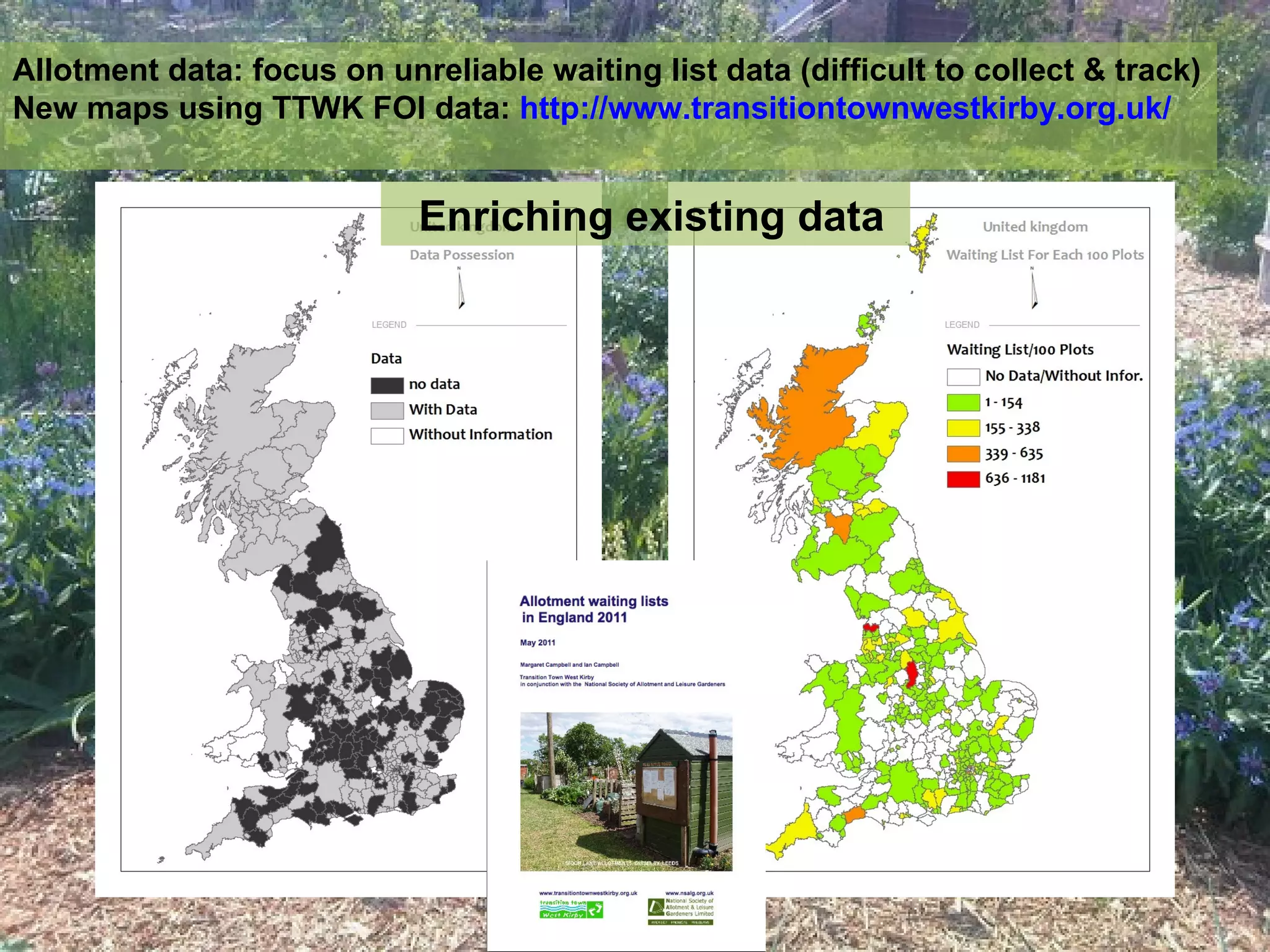
Allotment data: focus on unreliable waiting list data (difficult to collect & track)
New maps using TTWK FOI data: http://www.transitiontownwestkirby.org.uk/


                            Enriching existing data
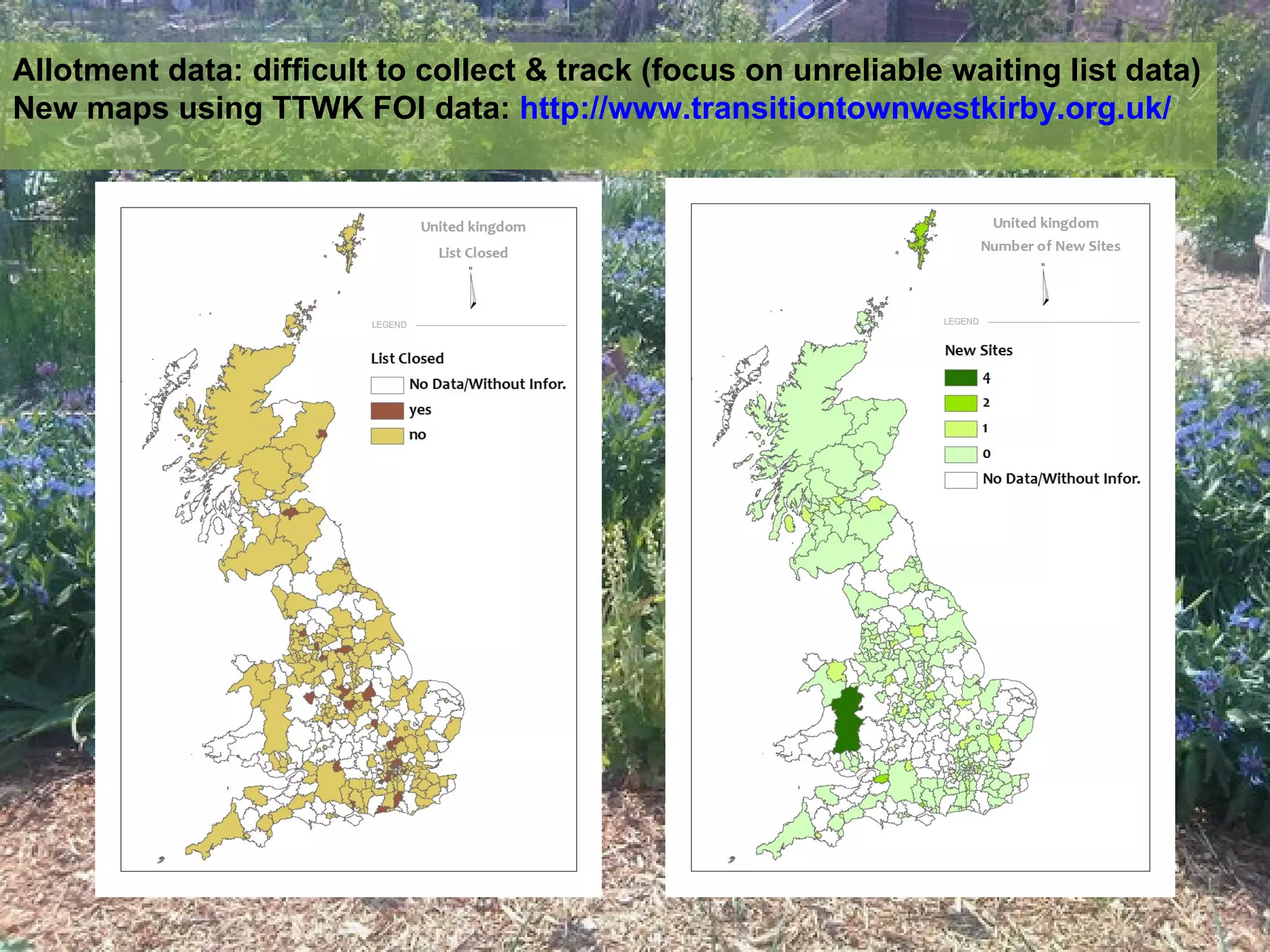
Allotment data: difficult to collect & track (focus on unreliable waiting list data)
New maps using TTWK FOI data: http://www.transitiontownwestkirby.org.uk/
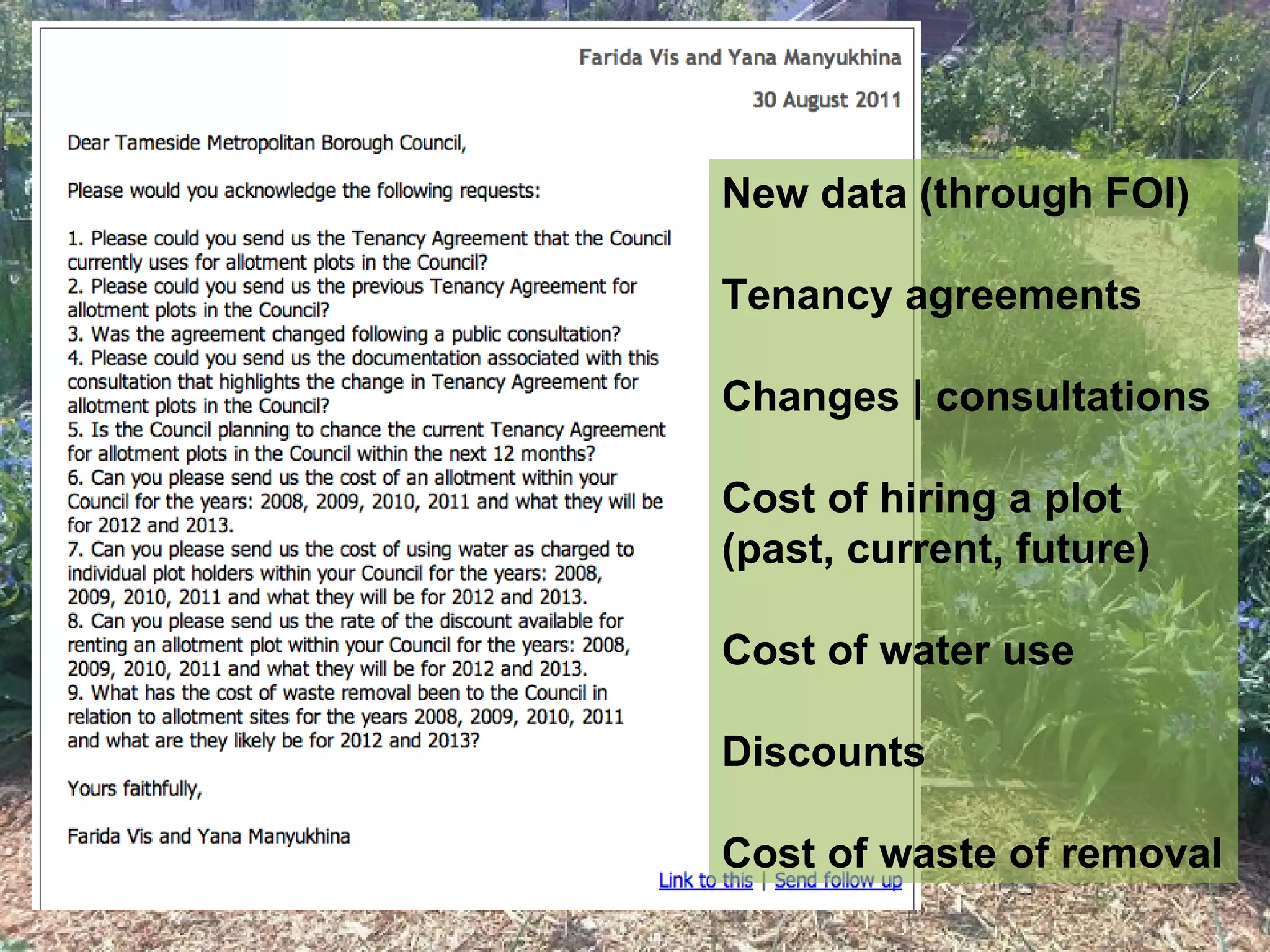
New data (through FOI)

Tenancy agreements

Changes | consultations

Cost of hiring a plot
(past, current, future)

Cost of water use

Discounts

Cost of waste of removal
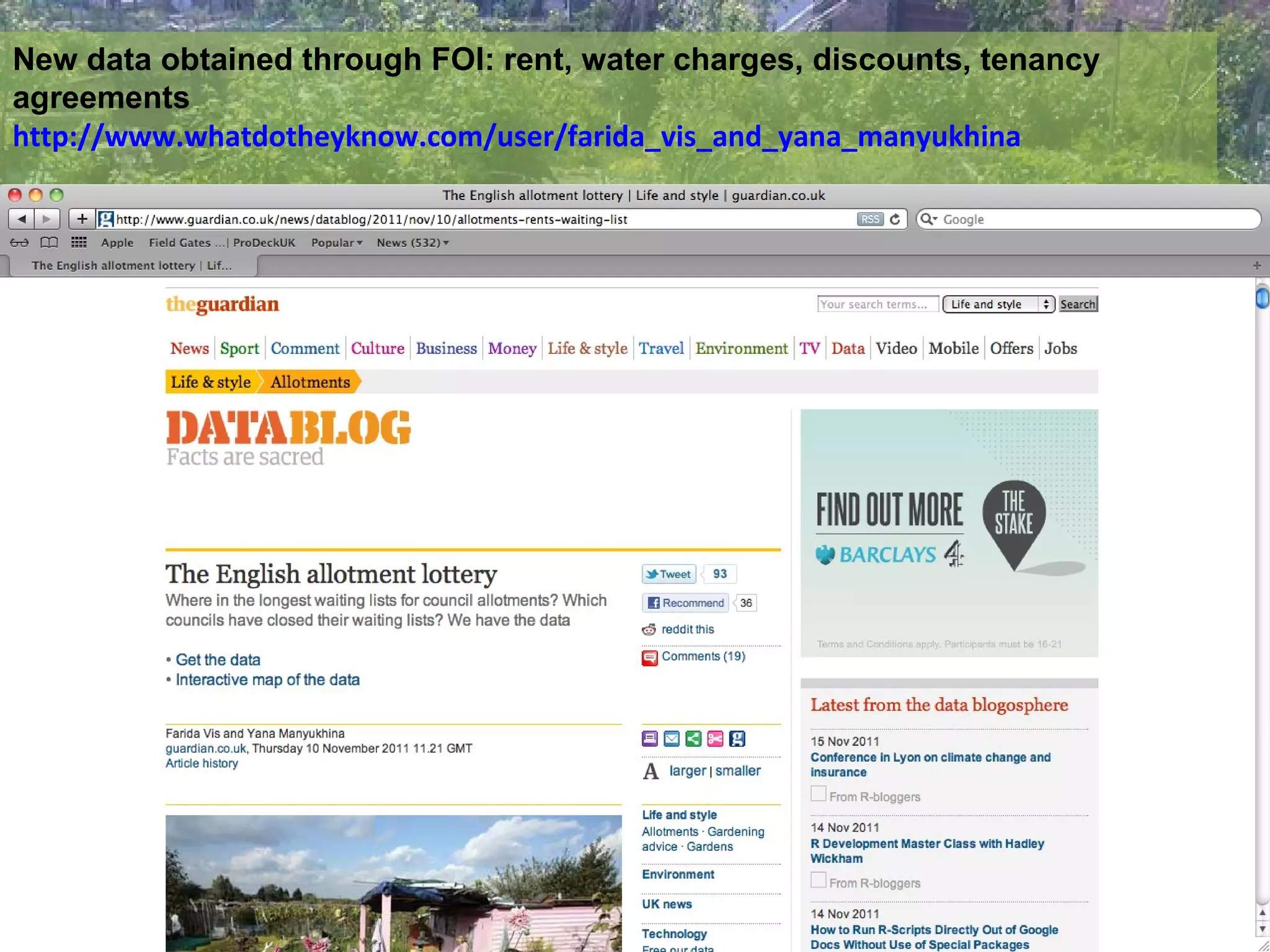
New data obtained through FOI: rent, water charges, discounts, tenancy
agreements
http://www.whatdotheyknow.com/user/farida_vis_and_yana_manyukhina
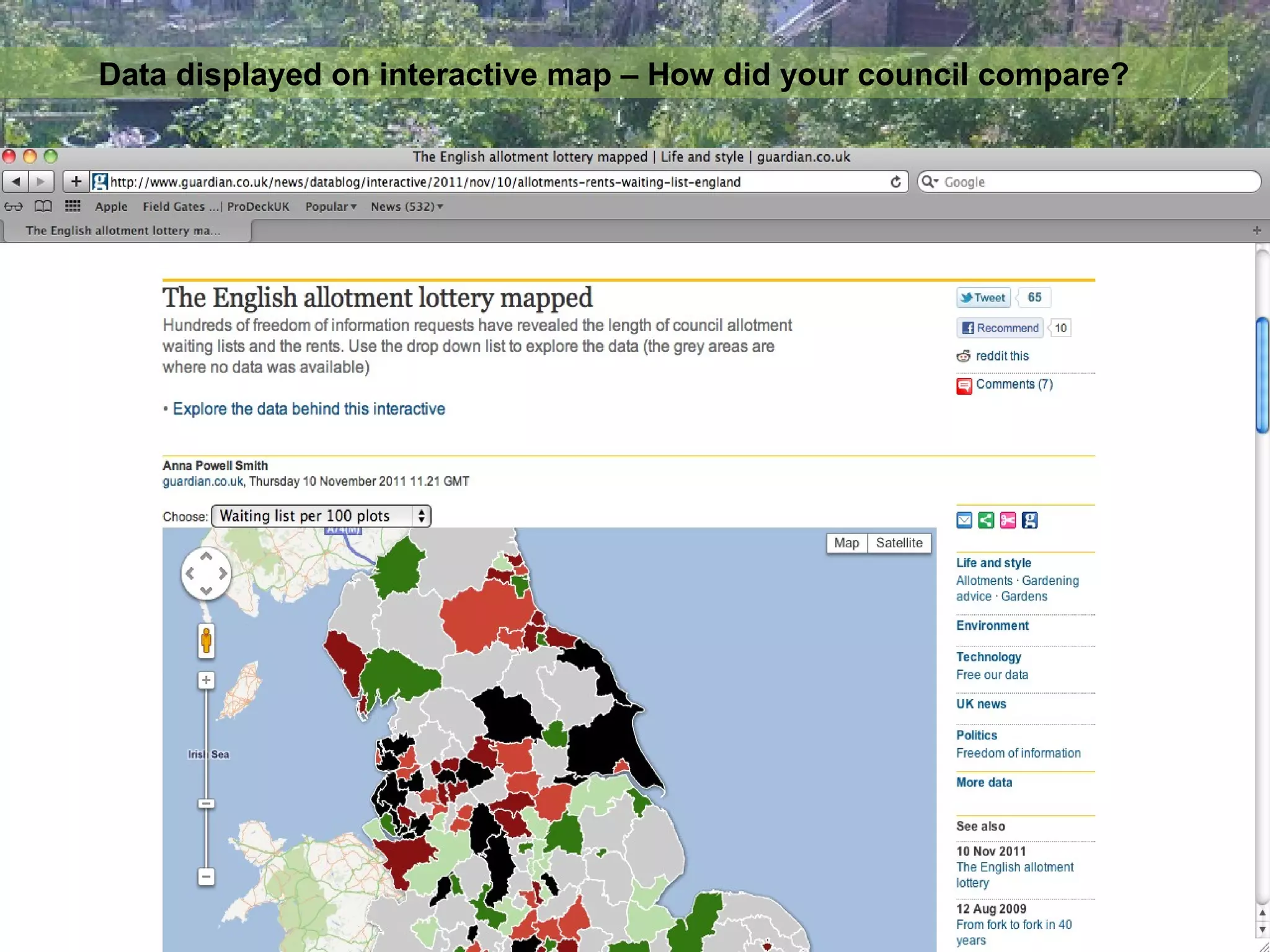
Data displayed on interactive map – How did your council compare?
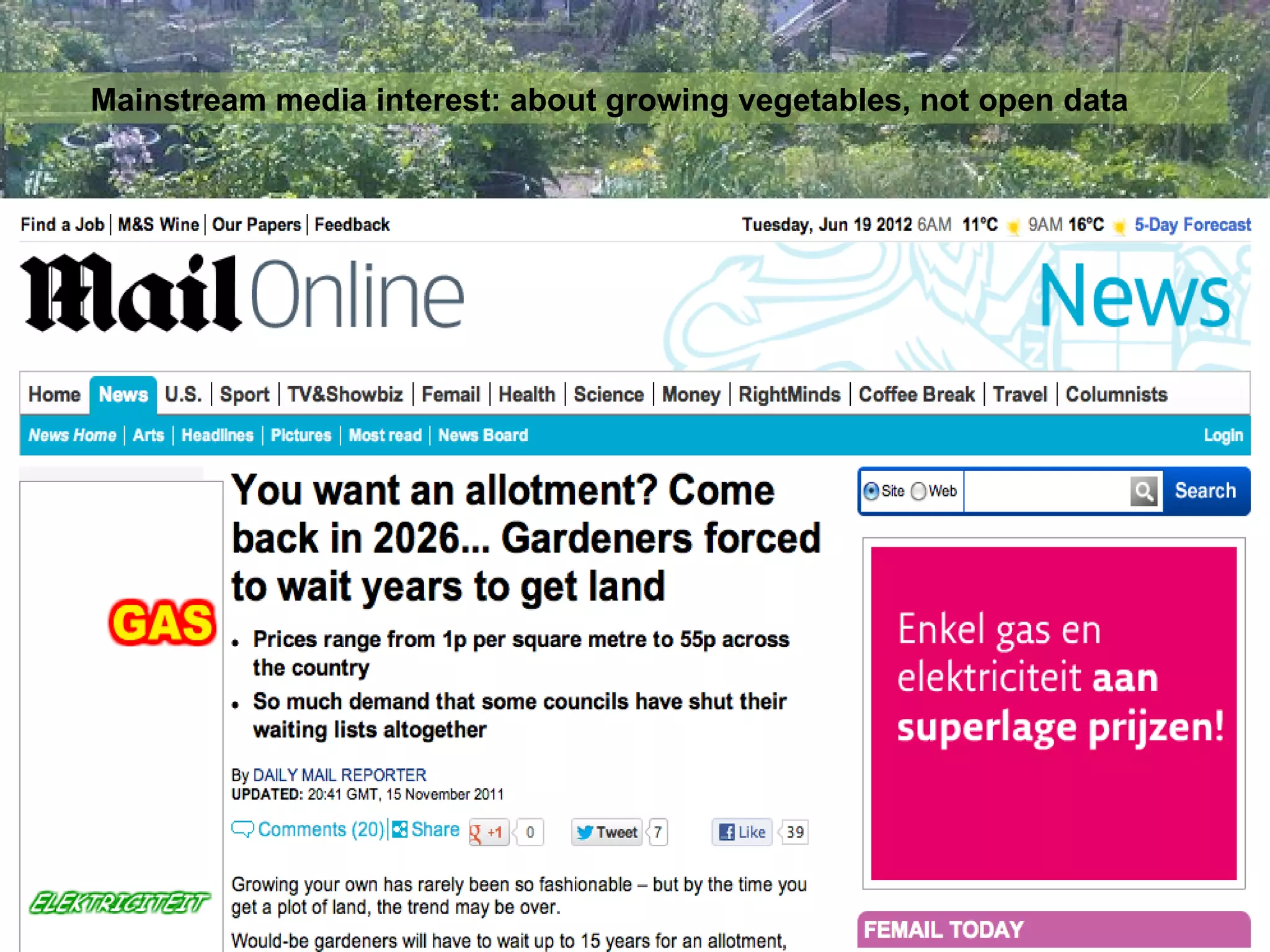
Mainstream media interest: about growing vegetables, not open data
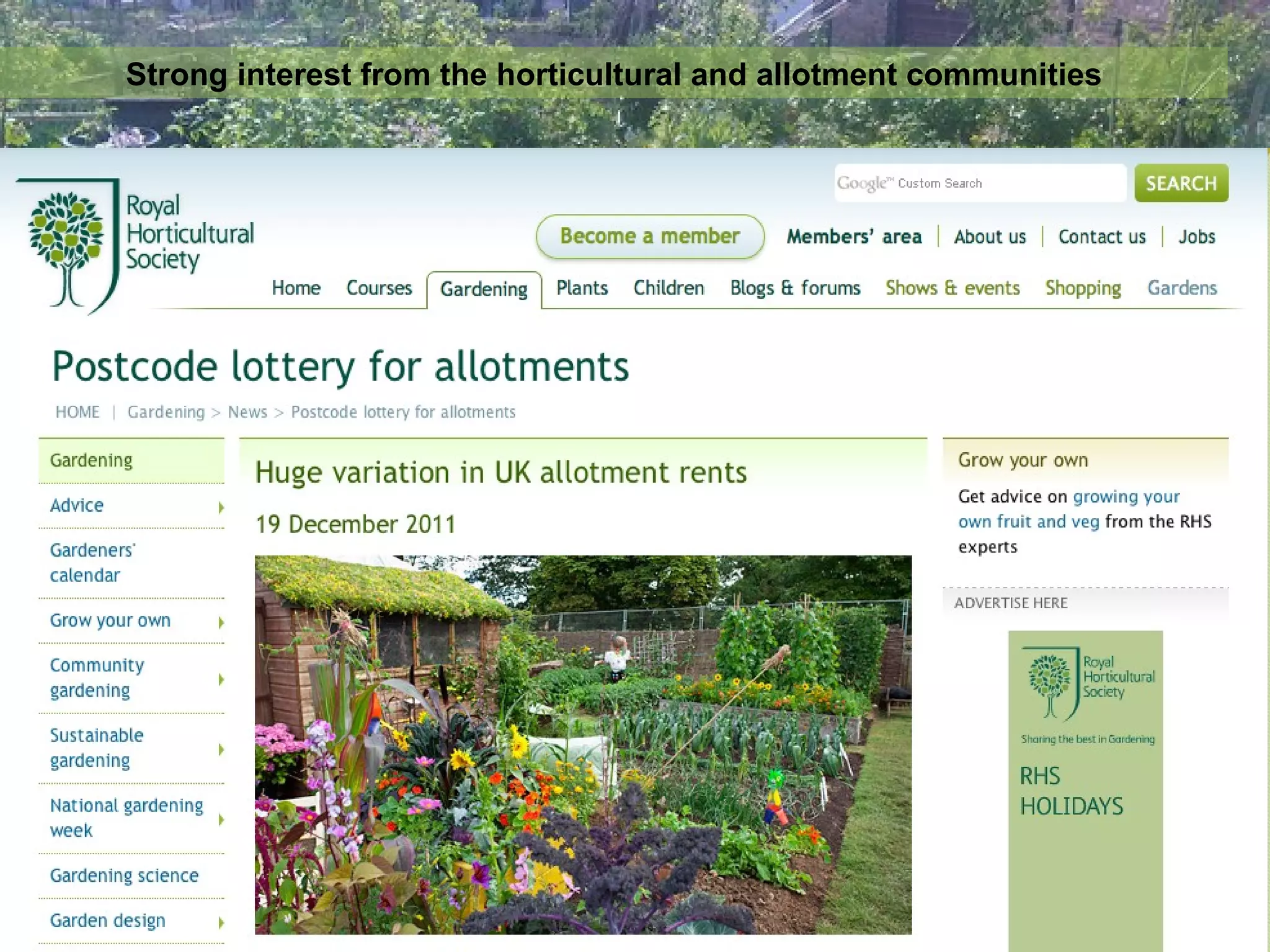
Strong interest from the horticultural and allotment communities
Data for 2011 – all from Transition Town West Kirby. But with new maps.
NB! Does not show how many allotments a council has in total –
only data for which the council had information.

Place with longest waiting list (per 100 people, based on available waiting list
data): Wyre BC has 307 people waiting for 26 plots, that is the equivalent of
1181 people waiting for 100 plots, which make it the highest in England)

Place with shortest (per 100 people, based on available waiting list data): North
East Lincolnshire C has 87 people waiting for 1852 plots, that is the equivalent
of 5 people waiting for 100 plots, which makes it the shortest waiting time in
England.

Councils that have closed their waiting lists altogether - Redditch BC,
Wellingborough BC, North Hertfordshire DC, Enfield, Woking BC, Waltham
Forest, Elmbridge BC, South Derbyshire DC, Slough BC, Lambeth, Telford and
Wrekin BC, Barnet BC, Haringey, Preston CC, Melton BC, Brighton & Hove CC,
Stockport BC, Greenwich, Swindon BC, South Tyneside BC, Eastleigh BC, Bury BC,
Hounslow, Barnsley BC, Mid Sussex DC, Merton, Brent, Hinckley and Bosworth
BC, Arun DC, Islington, Camden
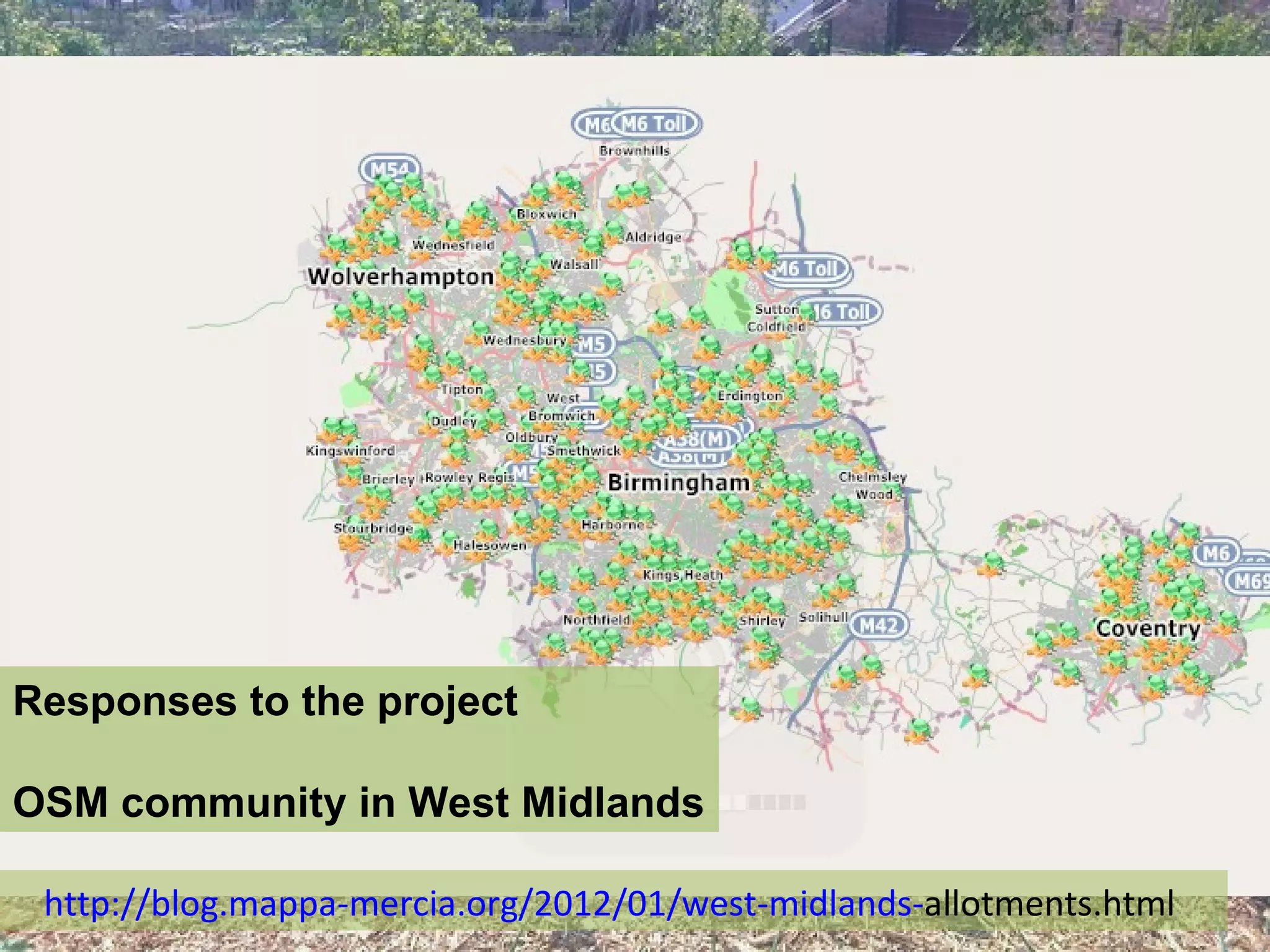
Responses to the project

OSM community in West Midlands

 http://blog.mappa-mercia.org/2012/01/west-midlands-allotments.html
Quite a few responses via email. For example (on old measurements):

… The Rod was phased out as a legal unit of measurement as part of a ten-year
metrication process that began in May 1965 but metrication has often been
ignored and, in many instances, imperial measurements prevail: roads are
measured in miles and yards; we measure our height in feet and inches and
weight in stones and pounds; and it is difficult to change football goal posts from
8 yards x 8 feet to their metric equivalent. Some measurements changed from
imperial to metric and back again: farms have reverted from Hectares to Acres
and office rents from £x per square metre to £y per square foot. Sometimes we
use even older measurements: the length of a cricket pitch between stumps is 1
chain (22 yards) horse races are run over furlongs (220 yards); and, one
peculiarity, railway bridges have a metal plaque on the side of their brick or
stone arches stating x miles and y chains from Victoria, Waterloo, etc. Now, I
work in metric units every day but, in some cases, old measurements are not
transferable: 10 square rods means something, 253

Your research into Allotments is not complete: it concentrates on Councils'
charges and waiting lists. It does not include anything about their history; there
is no reference to Rods, Poles and Perches.
Now what?

    Building national allotment data hub

     Working with local councils – Trafford Council

     Working with engaged/engaging communities


   Finding out what is going on at local/national level
     Contribute to evidenced based policy making

Finding solutions: can more growing spaces be created?
Who has / will give you the data?

      Central Government

       Local Government

         Allotment Officers

       Allotment Associations


        Allotment secretaries

            Plotholders
From September 2012
 re-boot of the project

 Allotmentdata.org
  @allotmentdata
                  @flygirltwo

Allotment (publics): an open data and data driven journalism perspective

  • 1.
    Allotment (publics): anopen data and data driven journalism perspective Farida Vis and Yana Manyukhina University of Leicester | Open Data Manchester fv12@le.ac.uk @flygirltwo
  • 2.
    What is anallotment? Small piece of land rented from the council for the cultivation of fruit and vegetables for home consumption. Sign a tenancy agreement every year. Since the Allotments Act of 1908 a standard allotment is ‘10 rods’. Rods are also called poles or perches. 10 rod = 250 sqm.
  • 3.
    Allotment data as‘really useful’ data People care about growing vegetables
  • 4.
    Allotments Act of1908: Clause 23 ensures that councils provide allotments. It takes six citizens. Responsibility of local government. If sites sold money can only be spent on allotments.
  • 5.
    Threat to theAllotments Act Spring 2011, the Department for Communities and Local Government issued a public consultation on 1294 Statutory Duties pertaining to local authorities to possibly reduce their number. These duties included Section 23 of the 1908 Allotments Act, which ensures local authorities provide allotments, causing some newspapers to suggest that ‘The Good Life’ was now under threat. The Act remained unchanged however in the summer the government announced that of the 6,103 responses received nearly half contained a comment on the Allotments Act.
  • 6.
    Standard ways inwhich allotments and growing your own are discussed in the mainstream media in the UK: Dig for Victory (WWII) The Good Life (1970s sitcom)
  • 7.
    Waiting lists: hugedemand | tiny supply In 1940s: 1.4 million allotment plots in the UK. Now: 200,000. Cycles of popularity. What do you do when everyone wants one again? Waiting list crisis (our local site): 12 years ago, waiting list was 2 months. Now: 15 years. Lots of people with children want to grow food with them. Transition Town West Kirby (TTWK), Margaret Campbell Grow Your Own | Land Share initiative | guerrilla gardening | alleyway gardens Recent changes – rent increases, water rates, tenancy agreements
  • 8.
    Sources of informationon allotments in UK National Society for Allotments and Leisure Gardeners (NSALG) – official body Allotment Regeneration Initiative (ARI) – official body, policy documents, mentors and advice Transition Town West Kirby (TTWK) – waiting lists Perennial problem: good allotment data. Difficult to get an overview of what is going on at local/national level. Evidenced based policy making on allotments difficult
  • 9.
    Collecting data =time consuming (mainly not available). Not precise Location data doesn’t tell you very much
  • 10.
    Mapping plots inManchester – AMAS (incomplete) + Trafford (open data of allotment locations released by the council)
  • 11.
    Allotment data: focuson unreliable waiting list data (difficult to collect & track) New maps using TTWK FOI data: http://www.transitiontownwestkirby.org.uk/ Enriching existing data
  • 12.
    Allotment data: difficultto collect & track (focus on unreliable waiting list data) New maps using TTWK FOI data: http://www.transitiontownwestkirby.org.uk/
  • 13.
    New data (throughFOI) Tenancy agreements Changes | consultations Cost of hiring a plot (past, current, future) Cost of water use Discounts Cost of waste of removal
  • 14.
    New data obtainedthrough FOI: rent, water charges, discounts, tenancy agreements http://www.whatdotheyknow.com/user/farida_vis_and_yana_manyukhina
  • 15.
    Data displayed oninteractive map – How did your council compare?
  • 16.
    Mainstream media interest:about growing vegetables, not open data
  • 17.
    Strong interest fromthe horticultural and allotment communities
  • 18.
    Data for 2011– all from Transition Town West Kirby. But with new maps. NB! Does not show how many allotments a council has in total – only data for which the council had information. Place with longest waiting list (per 100 people, based on available waiting list data): Wyre BC has 307 people waiting for 26 plots, that is the equivalent of 1181 people waiting for 100 plots, which make it the highest in England) Place with shortest (per 100 people, based on available waiting list data): North East Lincolnshire C has 87 people waiting for 1852 plots, that is the equivalent of 5 people waiting for 100 plots, which makes it the shortest waiting time in England. Councils that have closed their waiting lists altogether - Redditch BC, Wellingborough BC, North Hertfordshire DC, Enfield, Woking BC, Waltham Forest, Elmbridge BC, South Derbyshire DC, Slough BC, Lambeth, Telford and Wrekin BC, Barnet BC, Haringey, Preston CC, Melton BC, Brighton & Hove CC, Stockport BC, Greenwich, Swindon BC, South Tyneside BC, Eastleigh BC, Bury BC, Hounslow, Barnsley BC, Mid Sussex DC, Merton, Brent, Hinckley and Bosworth BC, Arun DC, Islington, Camden
  • 19.
    Responses to theproject OSM community in West Midlands http://blog.mappa-mercia.org/2012/01/west-midlands-allotments.html
  • 20.
    Quite a fewresponses via email. For example (on old measurements): … The Rod was phased out as a legal unit of measurement as part of a ten-year metrication process that began in May 1965 but metrication has often been ignored and, in many instances, imperial measurements prevail: roads are measured in miles and yards; we measure our height in feet and inches and weight in stones and pounds; and it is difficult to change football goal posts from 8 yards x 8 feet to their metric equivalent. Some measurements changed from imperial to metric and back again: farms have reverted from Hectares to Acres and office rents from £x per square metre to £y per square foot. Sometimes we use even older measurements: the length of a cricket pitch between stumps is 1 chain (22 yards) horse races are run over furlongs (220 yards); and, one peculiarity, railway bridges have a metal plaque on the side of their brick or stone arches stating x miles and y chains from Victoria, Waterloo, etc. Now, I work in metric units every day but, in some cases, old measurements are not transferable: 10 square rods means something, 253 Your research into Allotments is not complete: it concentrates on Councils' charges and waiting lists. It does not include anything about their history; there is no reference to Rods, Poles and Perches.
  • 21.
    Now what? Building national allotment data hub Working with local councils – Trafford Council Working with engaged/engaging communities Finding out what is going on at local/national level Contribute to evidenced based policy making Finding solutions: can more growing spaces be created?
  • 22.
    Who has /will give you the data? Central Government Local Government Allotment Officers Allotment Associations Allotment secretaries Plotholders
  • 24.
    From September 2012 re-boot of the project Allotmentdata.org @allotmentdata @flygirltwo