
Open Data & Open Science
in Agriculture
Experiences & Opinions
Prof Abukutsa Mary O. ONYANGO. (Ph.D, MKNAS, EBS)
Professor of Horticulture
Department of Horticulture: Jomo Kenyatta University of Agriculture and Technology, Nairobi, Kenya
Abukutsa.mary@gmail.com
Forum on Open Data and Open Science in Agriculture on 15th
JUNE 2015
Effective Communication
& Open Science in Agriculture
is Key to Solving Some of the
Challenges Facing the World
Today
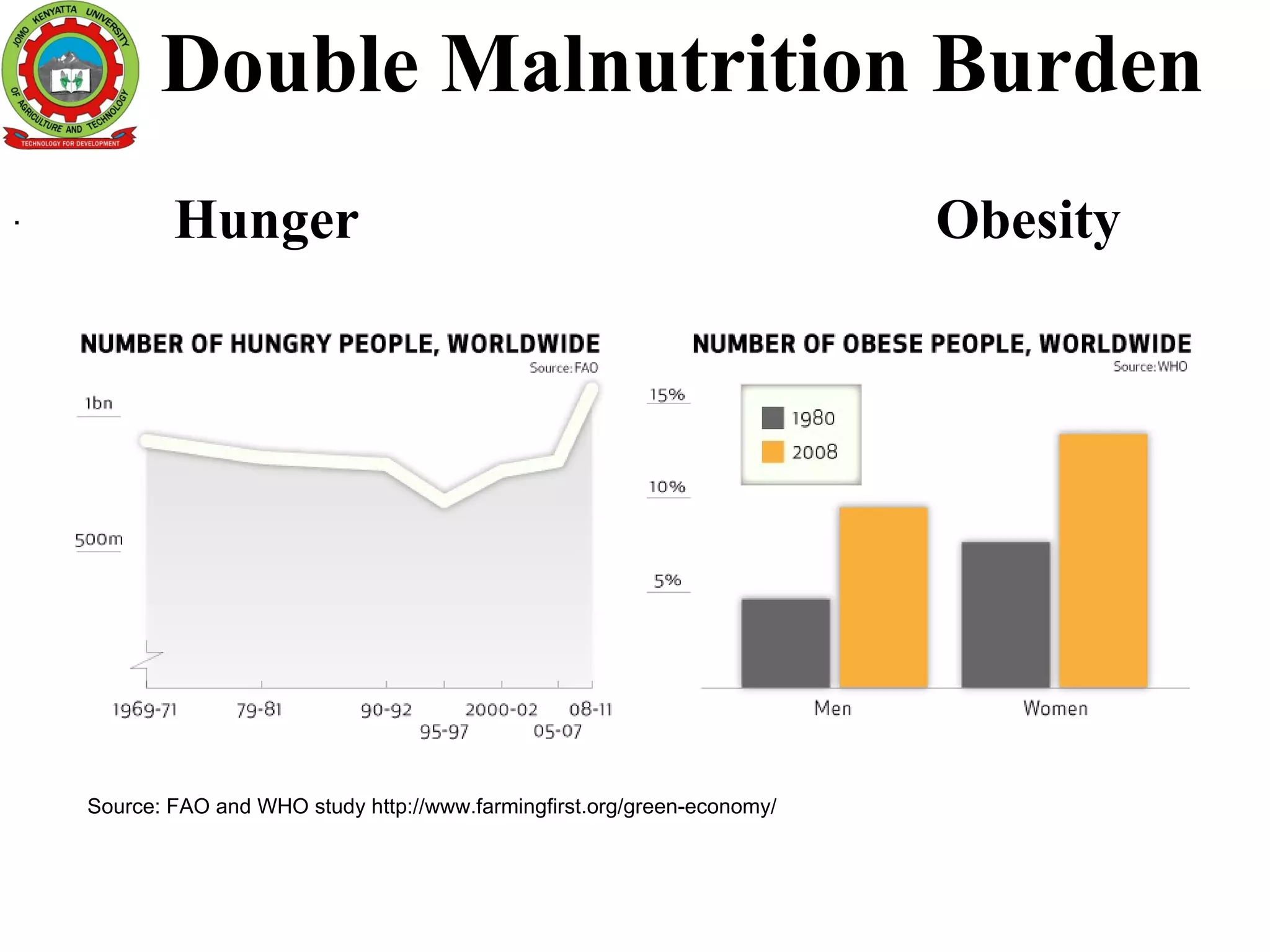
Hunger Obesity
Source: FAO and WHO study http://www.farmingfirst.org/green-economy/
.
Double Malnutrition Burden
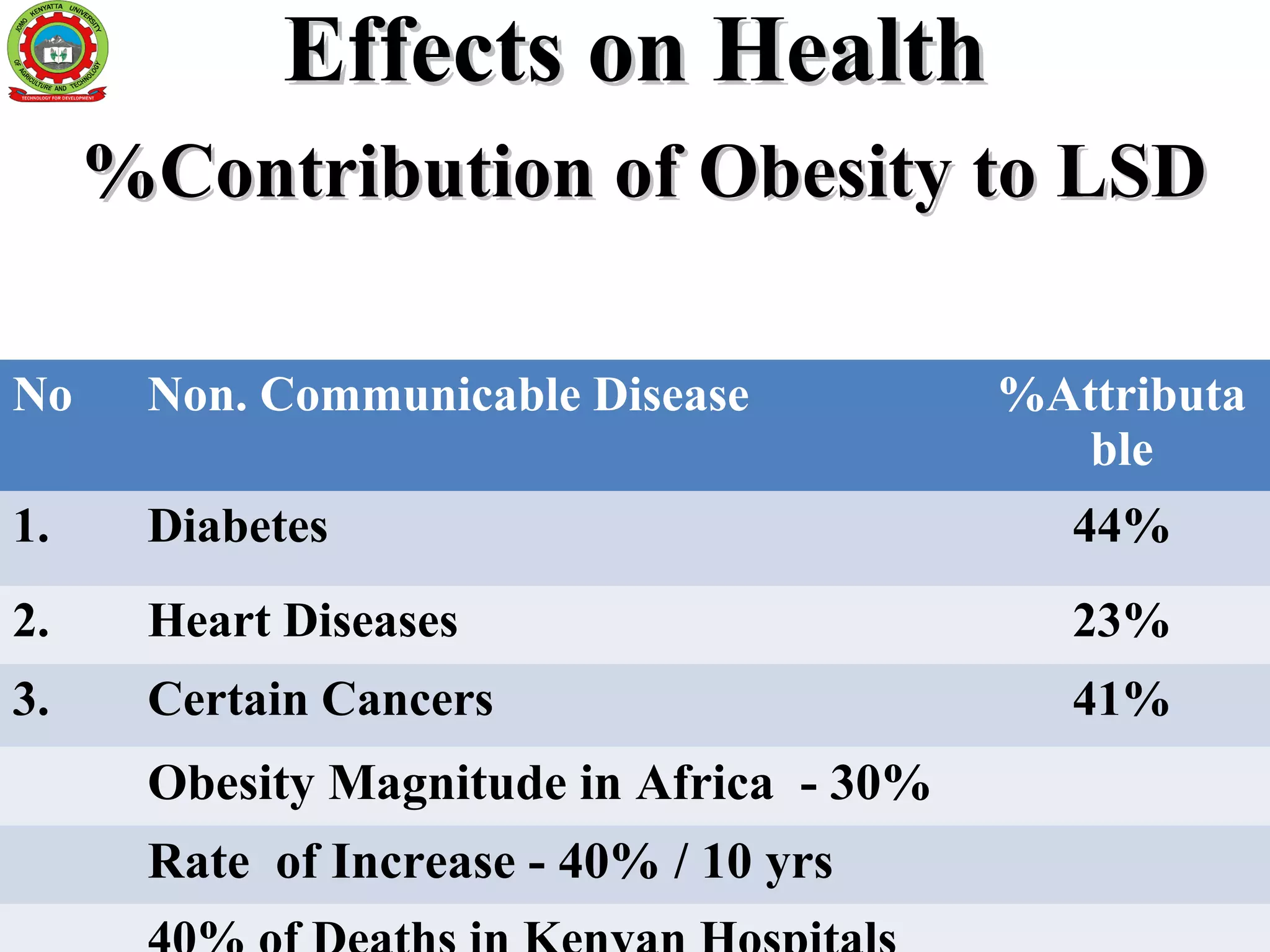
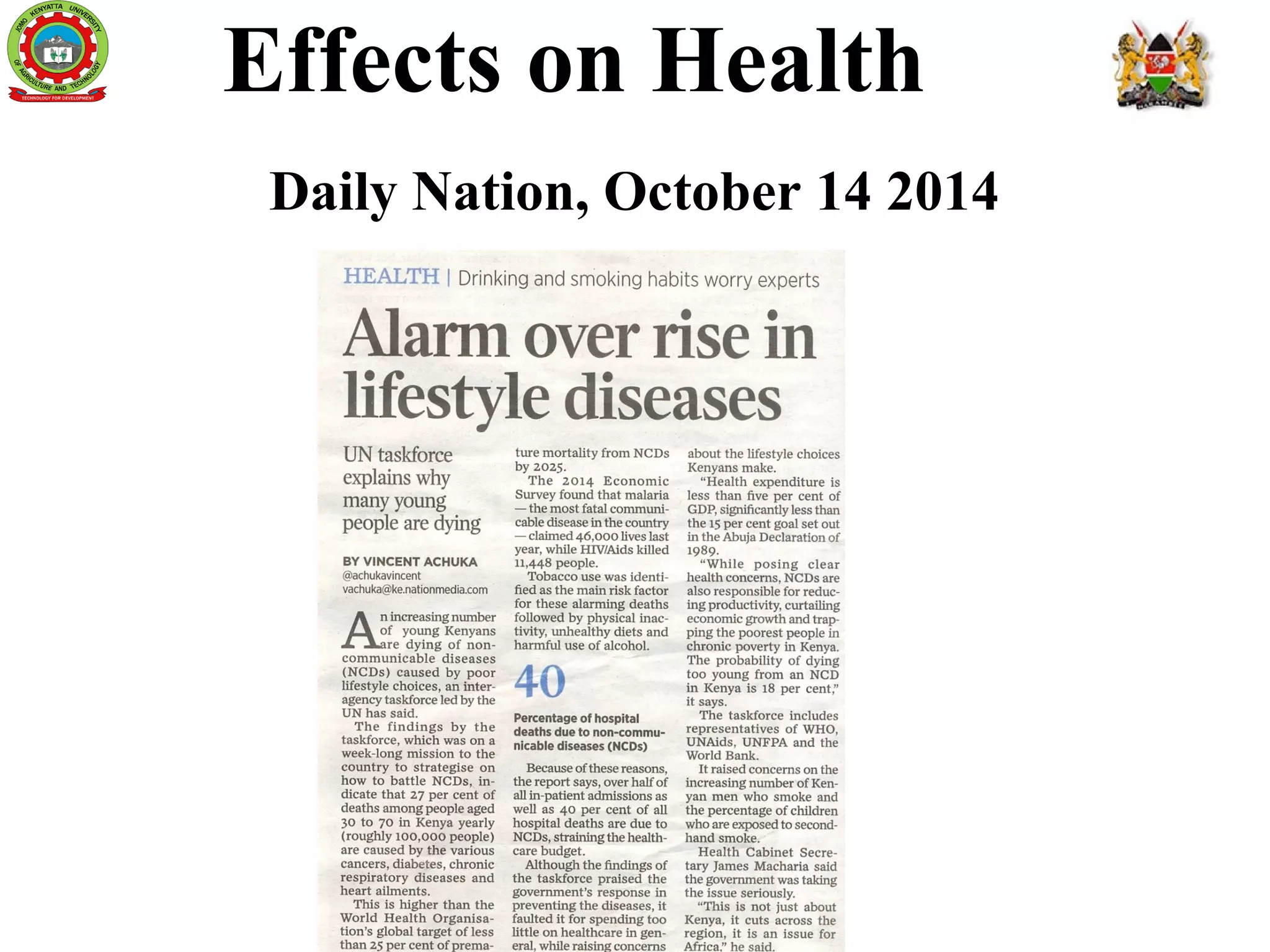
Effects on HealthEffects on Health
%Contribution of Obesity to LSD%Contribution of Obesity to LSD
14) –Medical Doctor
No Non. Communicable Disease %Attributa
ble
1. Diabetes 44%
2. Heart Diseases 23%
3. Certain Cancers 41%
Obesity Magnitude in Africa - 30%
Rate of Increase - 40% / 10 yrs
Effects on Health
Daily Nation, October 14 2014
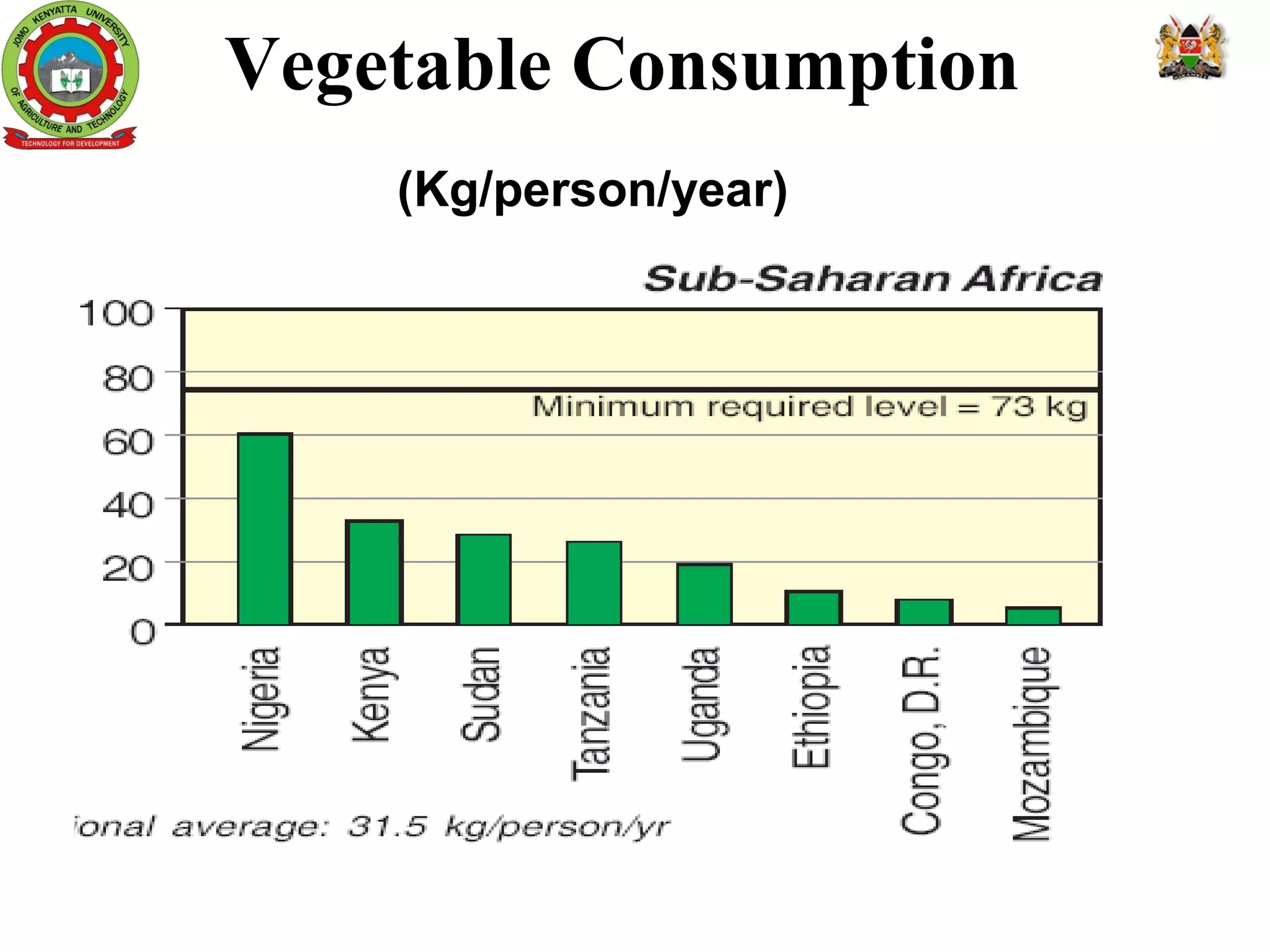
Vegetable Consumption
(Kg/person/year)
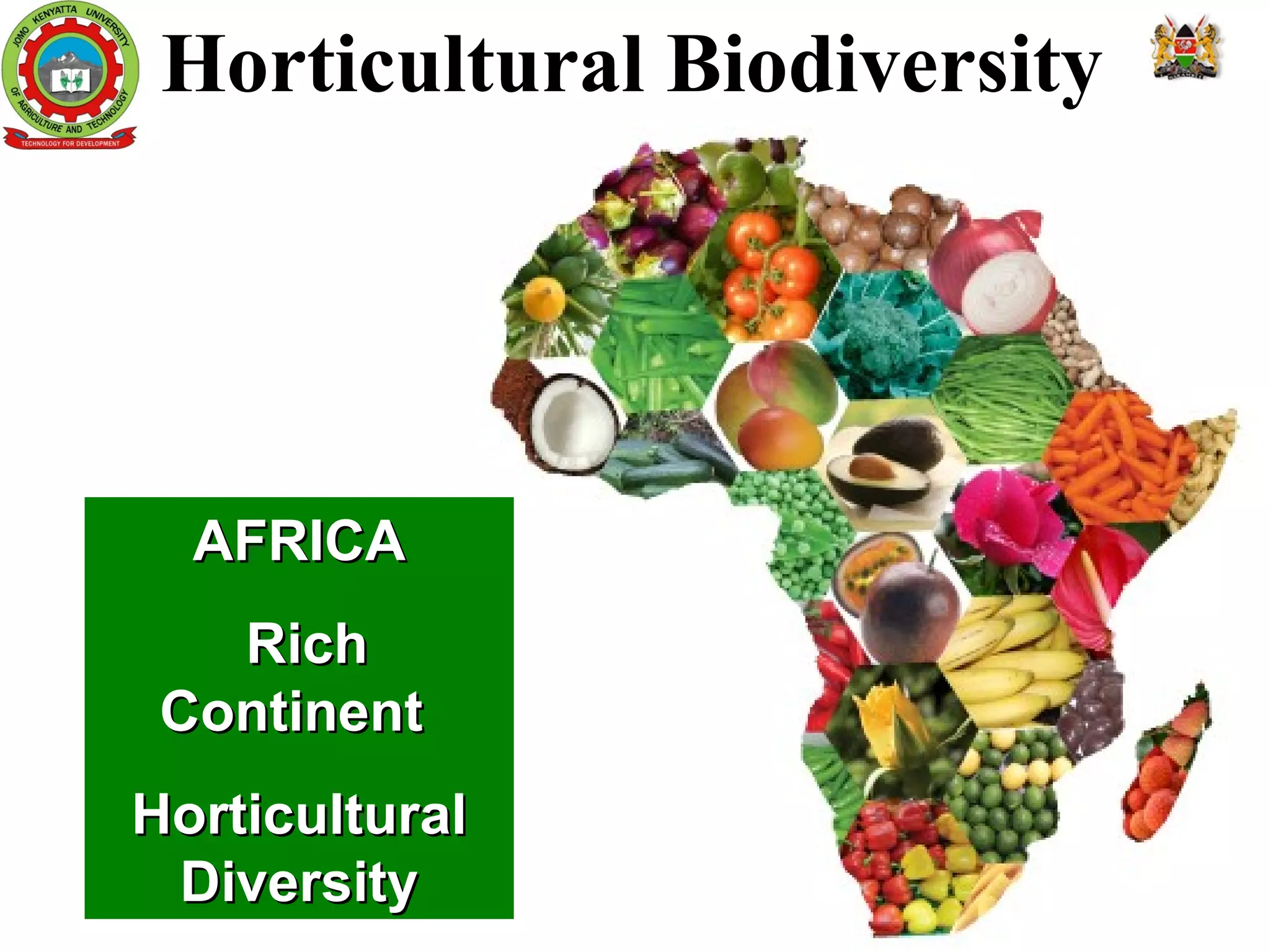
AFRICAAFRICA
RichRich
ContinentContinent
HorticulturalHorticultural
DiversityDiversity
Horticultural Biodiversity
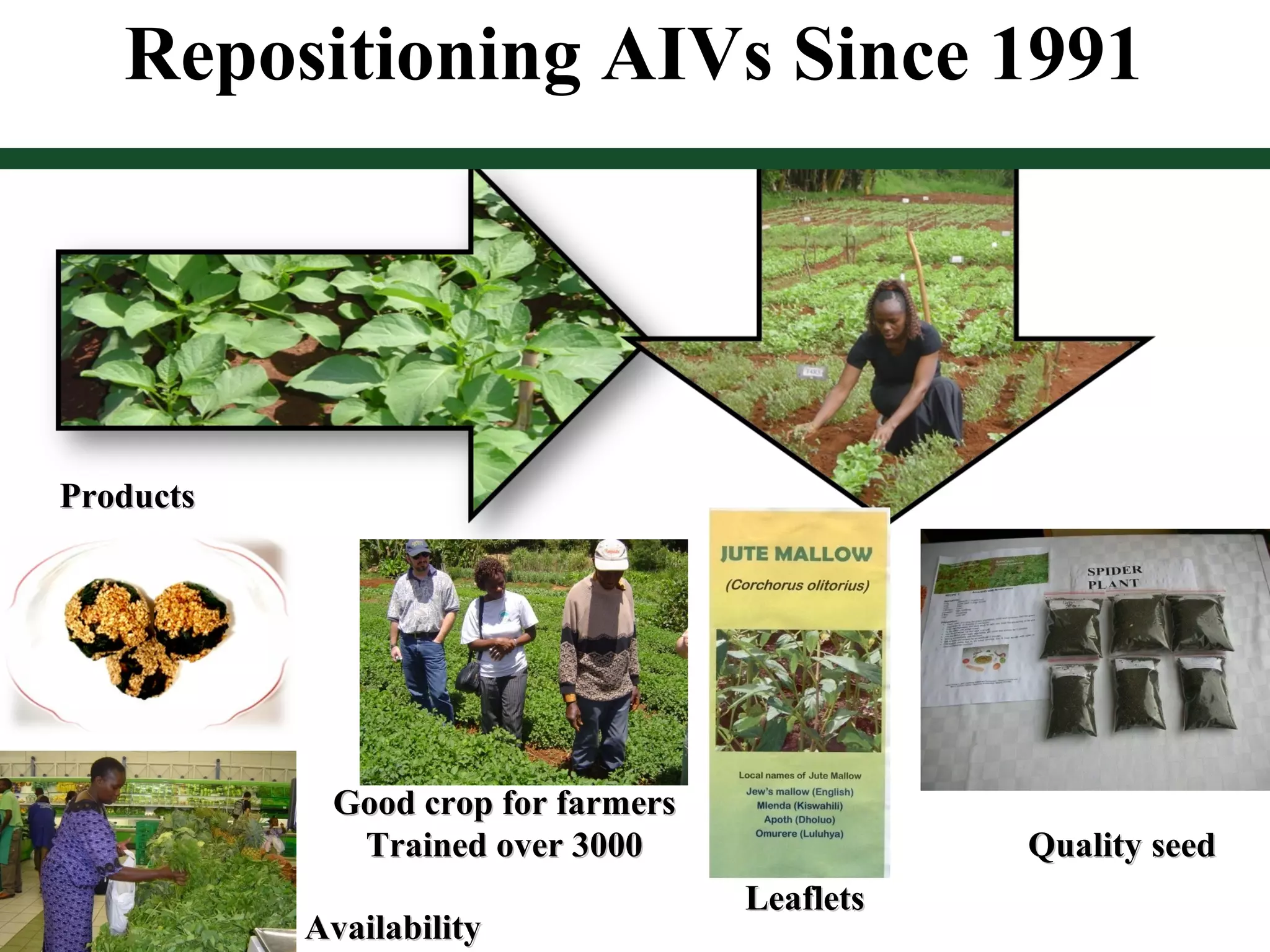
Repositioning AIVs Since 1991
Quality seedQuality seed
LeafletsLeaflets
Good crop for farmersGood crop for farmers
Trained over 3000Trained over 3000
AvailabilityAvailability
ProductsProducts
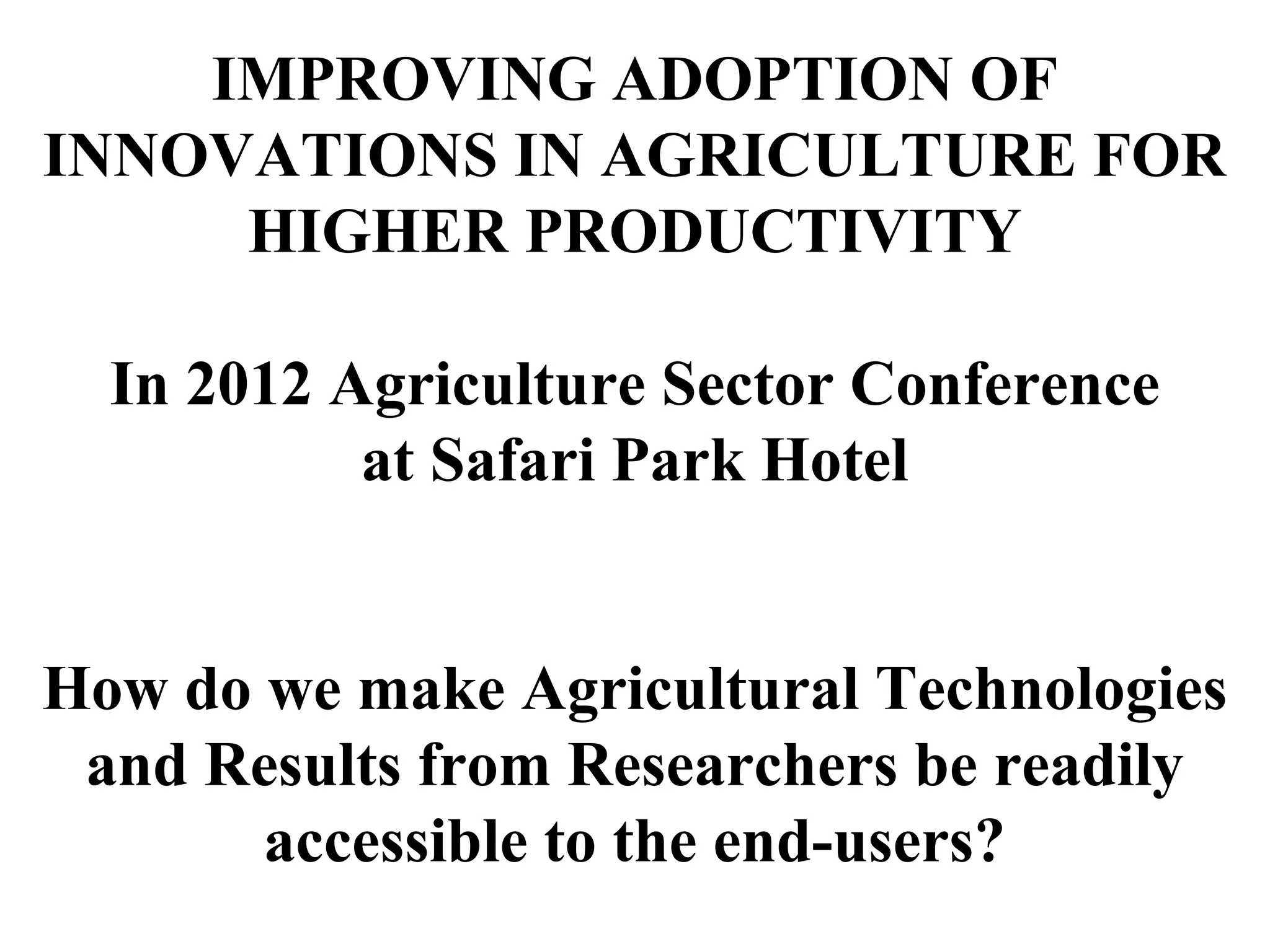
IMPROVING ADOPTION OF
INNOVATIONS IN AGRICULTURE FOR
HIGHER PRODUCTIVITY
In 2012 Agriculture Sector Conference
at Safari Park Hotel
How do we make Agricultural Technologies
and Results from Researchers be readily
accessible to the end-users?
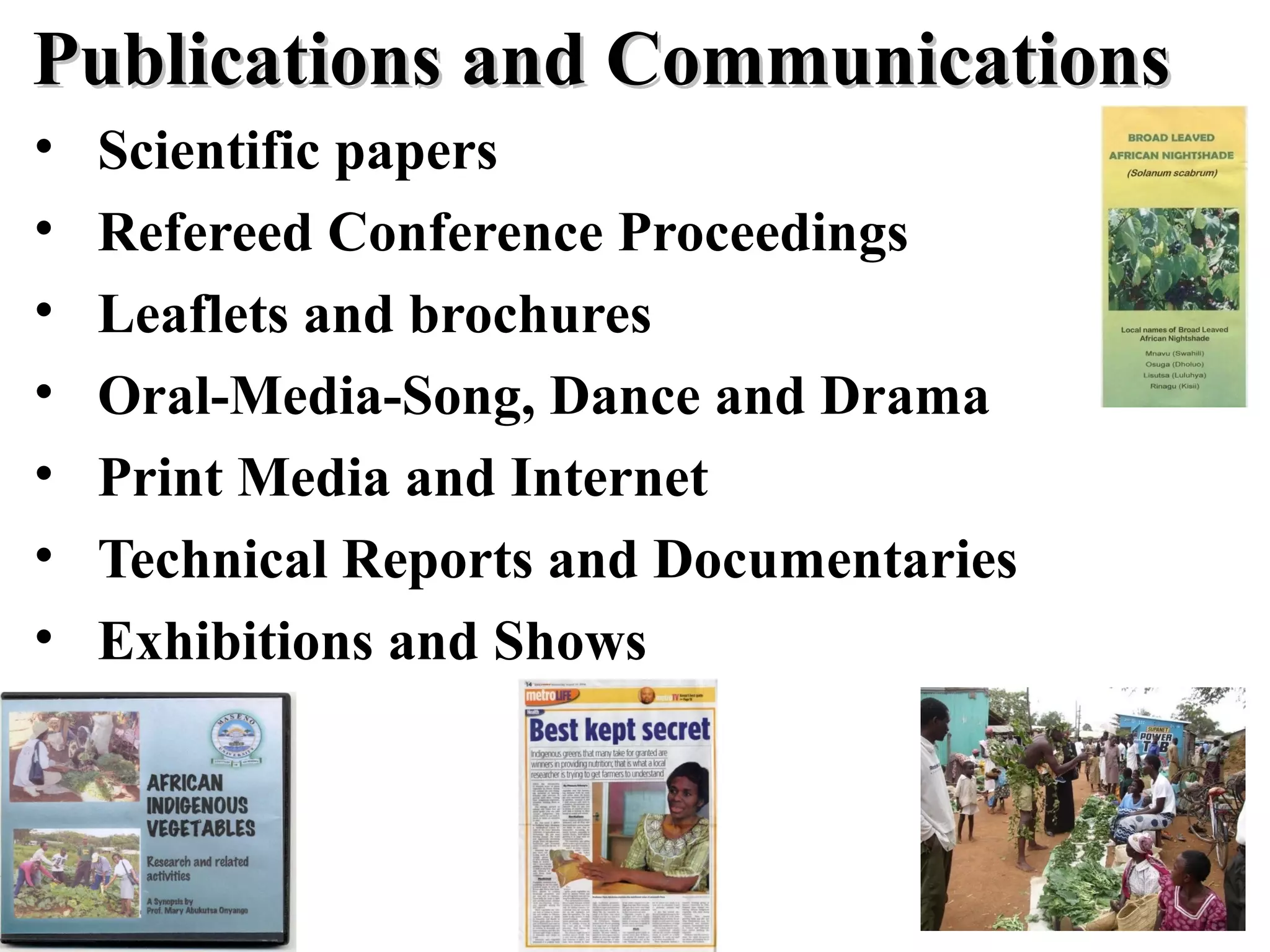
• Scientific papers
• Refereed Conference Proceedings
• Leaflets and brochures
• Oral-Media-Song, Dance and Drama
• Print Media and Internet
• Technical Reports and Documentaries
• Exhibitions and Shows
Publications and CommunicationsPublications and Communications
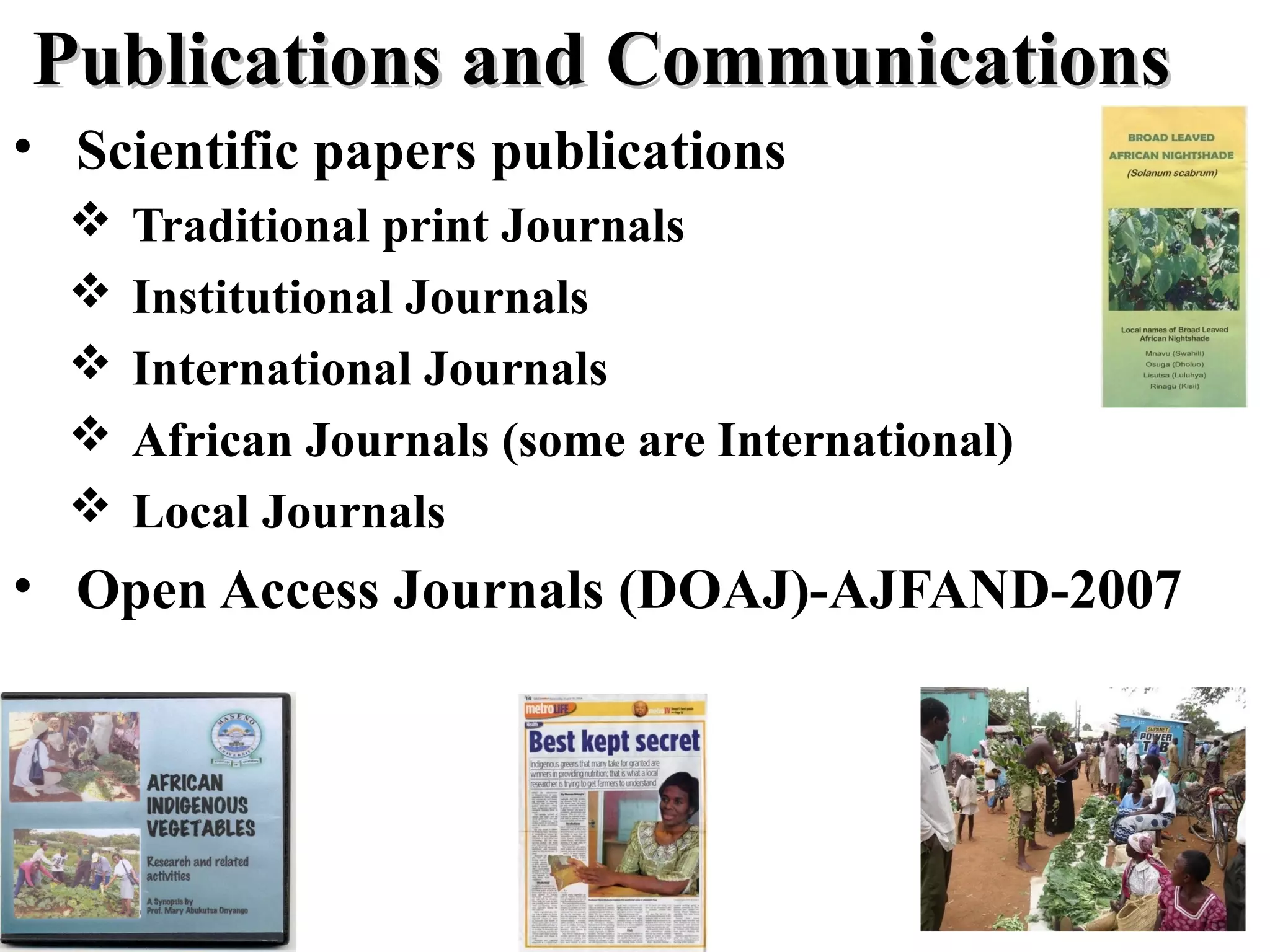
• Scientific papers publications
 Traditional print Journals
 Institutional Journals
 International Journals
 African Journals (some are International)
 Local Journals
• Open Access Journals (DOAJ)-AJFAND-2007
Publications and CommunicationsPublications and Communications
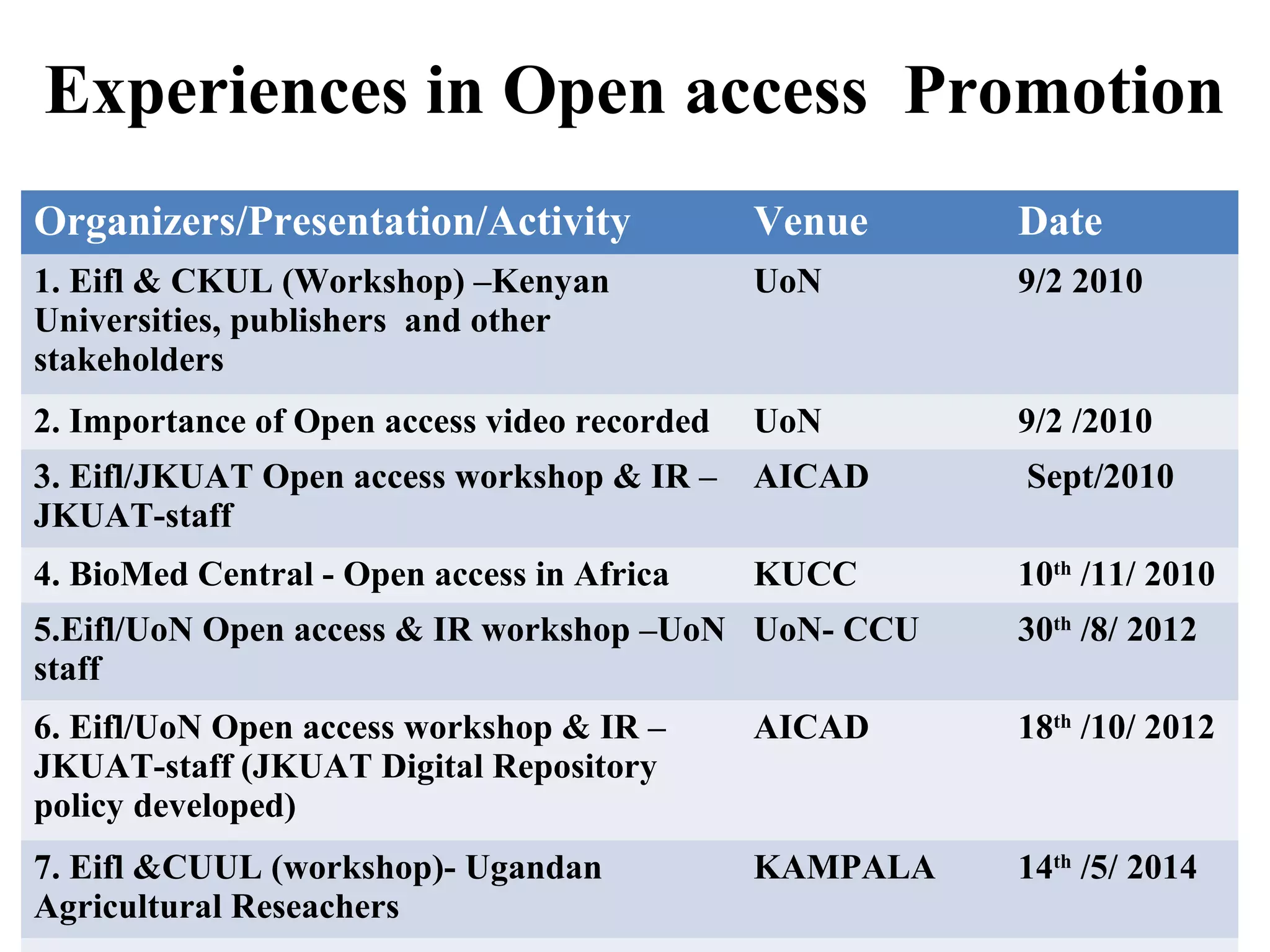
Experiences in Open access Promotion
Organizers/Presentation/Activity Venue Date
1. Eifl & CKUL (Workshop) –Kenyan
Universities, publishers and other
stakeholders
UoN 9/2 2010
2. Importance of Open access video recorded UoN 9/2 /2010
3. Eifl/JKUAT Open access workshop & IR –
JKUAT-staff
AICAD Sept/2010
4. BioMed Central - Open access in Africa KUCC 10th
/11/ 2010
5.Eifl/UoN Open access & IR workshop –UoN
staff
UoN- CCU 30th
/8/ 2012
6. Eifl/UoN Open access workshop & IR –
JKUAT-staff (JKUAT Digital Repository
policy developed)
AICAD 18th
/10/ 2012
7. Eifl &CUUL (workshop)- Ugandan
Agricultural Reseachers
KAMPALA 14th
/5/ 2014
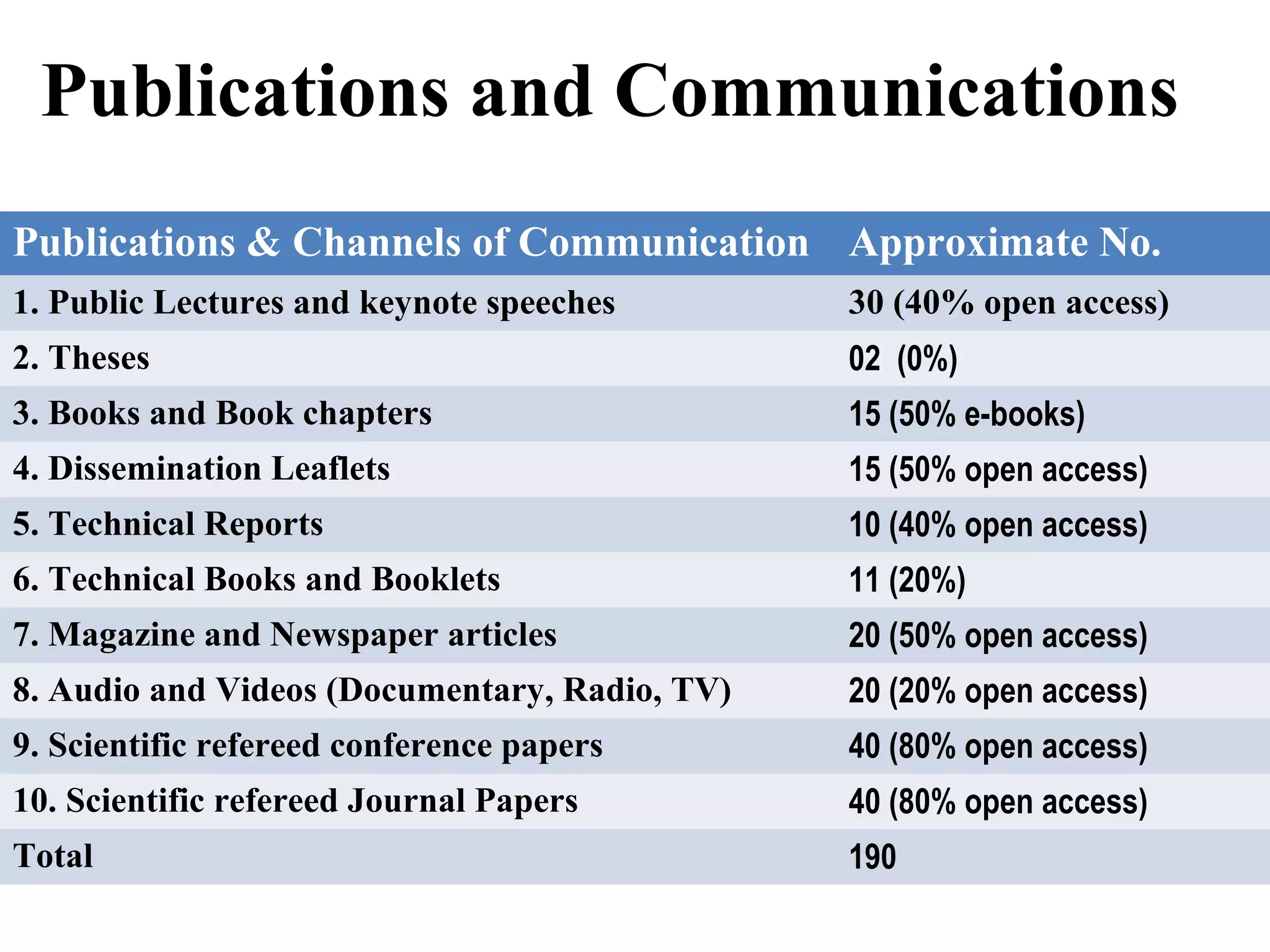
Publications and Communications
Publications & Channels of Communication Approximate No.
1. Public Lectures and keynote speeches 30 (40% open access)
2. Theses 02 (0%)
3. Books and Book chapters 15 (50% e-books)
4. Dissemination Leaflets 15 (50% open access)
5. Technical Reports 10 (40% open access)
6. Technical Books and Booklets 11 (20%)
7. Magazine and Newspaper articles 20 (50% open access)
8. Audio and Videos (Documentary, Radio, TV) 20 (20% open access)
9. Scientific refereed conference papers 40 (80% open access)
10. Scientific refereed Journal Papers 40 (80% open access)
Total 190
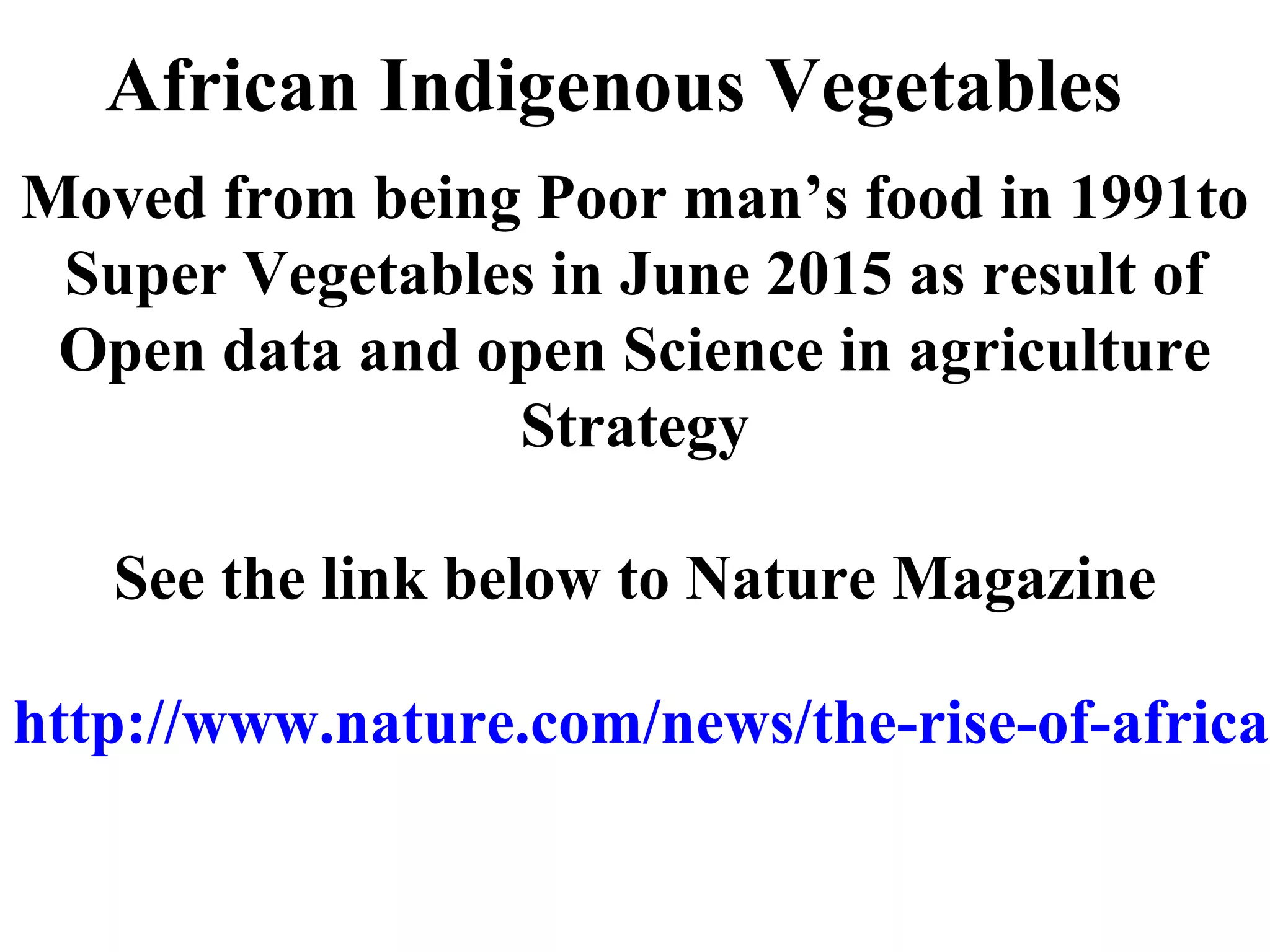
African Indigenous Vegetables
Moved from being Poor man’s food in 1991to
Super Vegetables in June 2015 as result of
Open data and open Science in agriculture
Strategy
See the link below to Nature Magazine
http://www.nature.com/news/the-rise-of-africa-
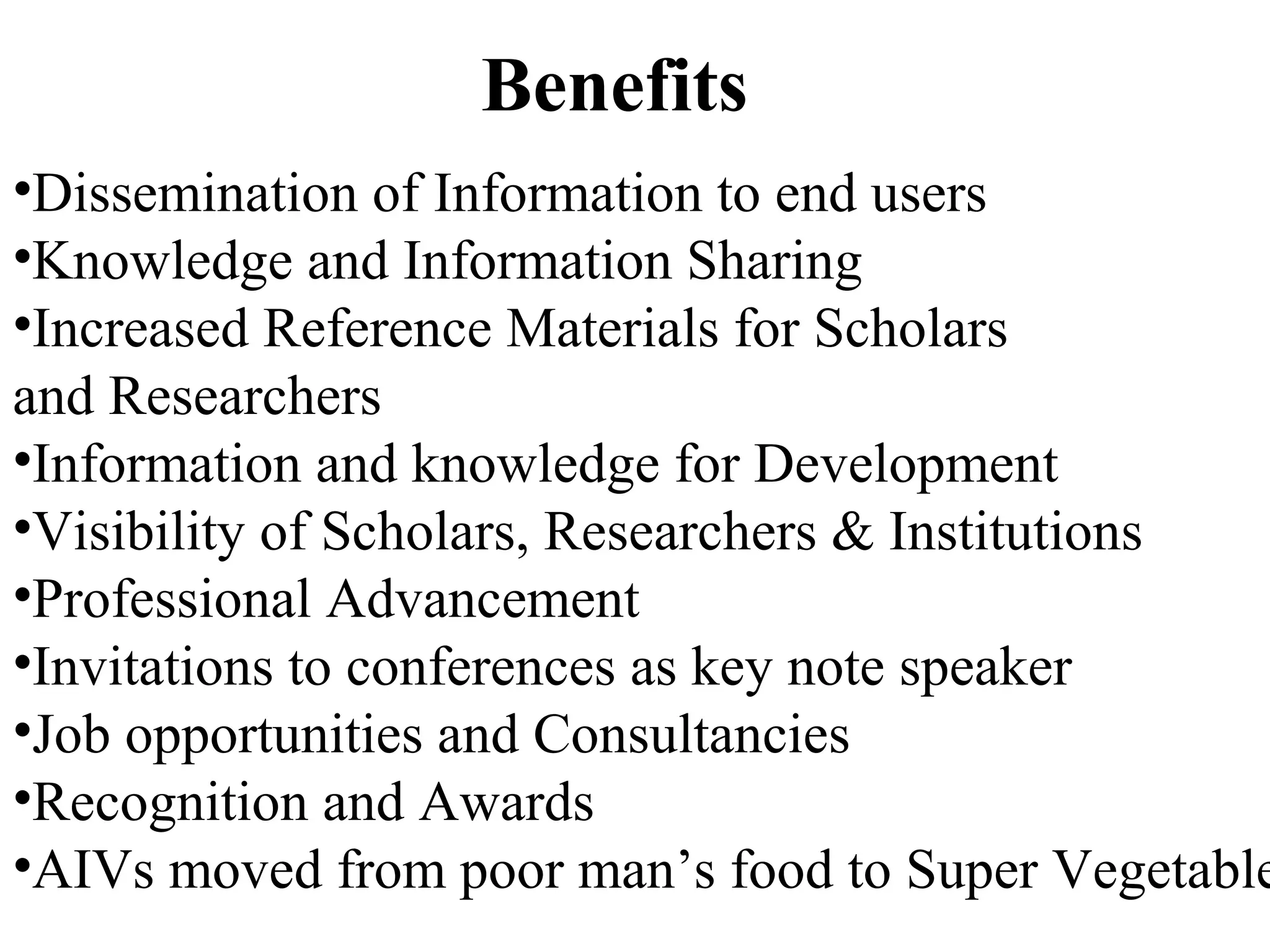
Benefits
•Dissemination of Information to end users
•Knowledge and Information Sharing
•Increased Reference Materials for Scholars
and Researchers
•Information and knowledge for Development
•Visibility of Scholars, Researchers & Institutions
•Professional Advancement
•Invitations to conferences as key note speaker
•Job opportunities and Consultancies
•Recognition and Awards
•AIVs moved from poor man’s food to Super Vegetable
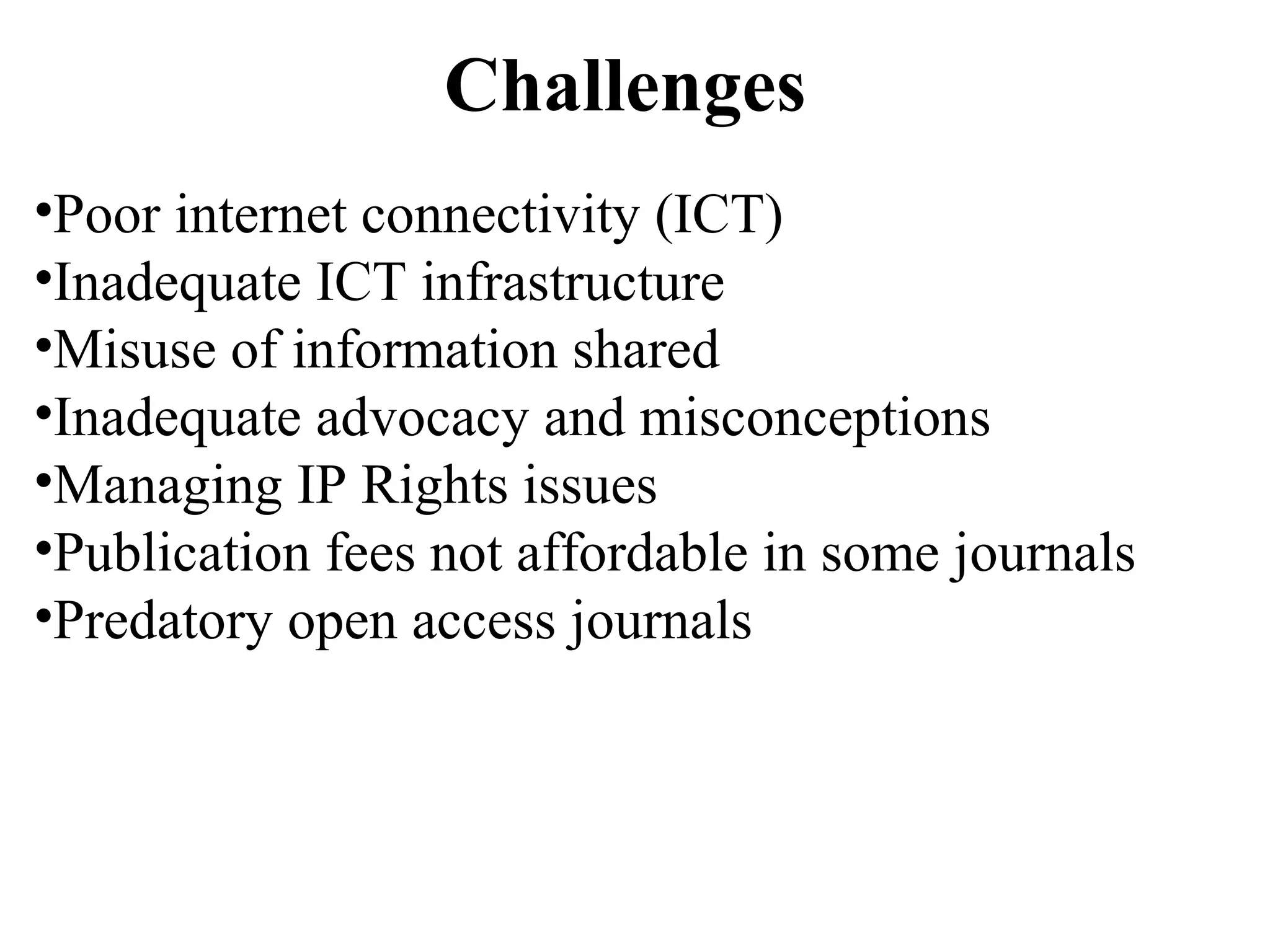
Challenges
•Poor internet connectivity (ICT)
•Inadequate ICT infrastructure
•Misuse of information shared
•Inadequate advocacy and misconceptions
•Managing IP Rights issues
•Publication fees not affordable in some journals
•Predatory open access journals
Conclusions
•Scientific Research findings must be effectively
communicated to the public for impact
•Publications are beneficial to the researcher, readers,
public, governments and even publishers
•Researchers and scholars should make efforts to
publish in open access journals and develop IR
•Researchers should partner with other stakeholders to
repackage information to suit diverse readership
•Deliberate efforts should be made and strategies put
in place to encourage scholars and researchers to
publish in open access
Open Data and Open Science in Agriculture : Experiences and Opinions

Open Data and Open Science in Agriculture : Experiences and Opinions

  • 1.
    Open Data &Open Science in Agriculture Experiences & Opinions Prof Abukutsa Mary O. ONYANGO. (Ph.D, MKNAS, EBS) Professor of Horticulture Department of Horticulture: Jomo Kenyatta University of Agriculture and Technology, Nairobi, Kenya Abukutsa.mary@gmail.com Forum on Open Data and Open Science in Agriculture on 15th JUNE 2015
  • 2.
    Effective Communication & OpenScience in Agriculture is Key to Solving Some of the Challenges Facing the World Today
  • 3.
    Hunger Obesity Source: FAOand WHO study http://www.farmingfirst.org/green-economy/ . Double Malnutrition Burden
  • 4.
    Effects on HealthEffectson Health %Contribution of Obesity to LSD%Contribution of Obesity to LSD 14) –Medical Doctor No Non. Communicable Disease %Attributa ble 1. Diabetes 44% 2. Heart Diseases 23% 3. Certain Cancers 41% Obesity Magnitude in Africa - 30% Rate of Increase - 40% / 10 yrs
  • 5.
    Effects on Health DailyNation, October 14 2014
  • 6.
  • 7.
  • 8.
    Repositioning AIVs Since1991 Quality seedQuality seed LeafletsLeaflets Good crop for farmersGood crop for farmers Trained over 3000Trained over 3000 AvailabilityAvailability ProductsProducts
  • 9.
    IMPROVING ADOPTION OF INNOVATIONSIN AGRICULTURE FOR HIGHER PRODUCTIVITY In 2012 Agriculture Sector Conference at Safari Park Hotel How do we make Agricultural Technologies and Results from Researchers be readily accessible to the end-users?
  • 10.
    • Scientific papers •Refereed Conference Proceedings • Leaflets and brochures • Oral-Media-Song, Dance and Drama • Print Media and Internet • Technical Reports and Documentaries • Exhibitions and Shows Publications and CommunicationsPublications and Communications
  • 11.
    • Scientific paperspublications  Traditional print Journals  Institutional Journals  International Journals  African Journals (some are International)  Local Journals • Open Access Journals (DOAJ)-AJFAND-2007 Publications and CommunicationsPublications and Communications
  • 12.
    Experiences in Openaccess Promotion Organizers/Presentation/Activity Venue Date 1. Eifl & CKUL (Workshop) –Kenyan Universities, publishers and other stakeholders UoN 9/2 2010 2. Importance of Open access video recorded UoN 9/2 /2010 3. Eifl/JKUAT Open access workshop & IR – JKUAT-staff AICAD Sept/2010 4. BioMed Central - Open access in Africa KUCC 10th /11/ 2010 5.Eifl/UoN Open access & IR workshop –UoN staff UoN- CCU 30th /8/ 2012 6. Eifl/UoN Open access workshop & IR – JKUAT-staff (JKUAT Digital Repository policy developed) AICAD 18th /10/ 2012 7. Eifl &CUUL (workshop)- Ugandan Agricultural Reseachers KAMPALA 14th /5/ 2014
  • 13.
    Publications and Communications Publications& Channels of Communication Approximate No. 1. Public Lectures and keynote speeches 30 (40% open access) 2. Theses 02 (0%) 3. Books and Book chapters 15 (50% e-books) 4. Dissemination Leaflets 15 (50% open access) 5. Technical Reports 10 (40% open access) 6. Technical Books and Booklets 11 (20%) 7. Magazine and Newspaper articles 20 (50% open access) 8. Audio and Videos (Documentary, Radio, TV) 20 (20% open access) 9. Scientific refereed conference papers 40 (80% open access) 10. Scientific refereed Journal Papers 40 (80% open access) Total 190
  • 14.
    African Indigenous Vegetables Movedfrom being Poor man’s food in 1991to Super Vegetables in June 2015 as result of Open data and open Science in agriculture Strategy See the link below to Nature Magazine http://www.nature.com/news/the-rise-of-africa-
  • 15.
    Benefits •Dissemination of Informationto end users •Knowledge and Information Sharing •Increased Reference Materials for Scholars and Researchers •Information and knowledge for Development •Visibility of Scholars, Researchers & Institutions •Professional Advancement •Invitations to conferences as key note speaker •Job opportunities and Consultancies •Recognition and Awards •AIVs moved from poor man’s food to Super Vegetable
  • 16.
    Challenges •Poor internet connectivity(ICT) •Inadequate ICT infrastructure •Misuse of information shared •Inadequate advocacy and misconceptions •Managing IP Rights issues •Publication fees not affordable in some journals •Predatory open access journals
  • 17.
    Conclusions •Scientific Research findingsmust be effectively communicated to the public for impact •Publications are beneficial to the researcher, readers, public, governments and even publishers •Researchers and scholars should make efforts to publish in open access journals and develop IR •Researchers should partner with other stakeholders to repackage information to suit diverse readership •Deliberate efforts should be made and strategies put in place to encourage scholars and researchers to publish in open access