Software Construction Lecture 2
3/19/2023 1
LECTURE 2
Engr Huma Ayub Vine
Software Construction Lecture 2
3/19/2023 2
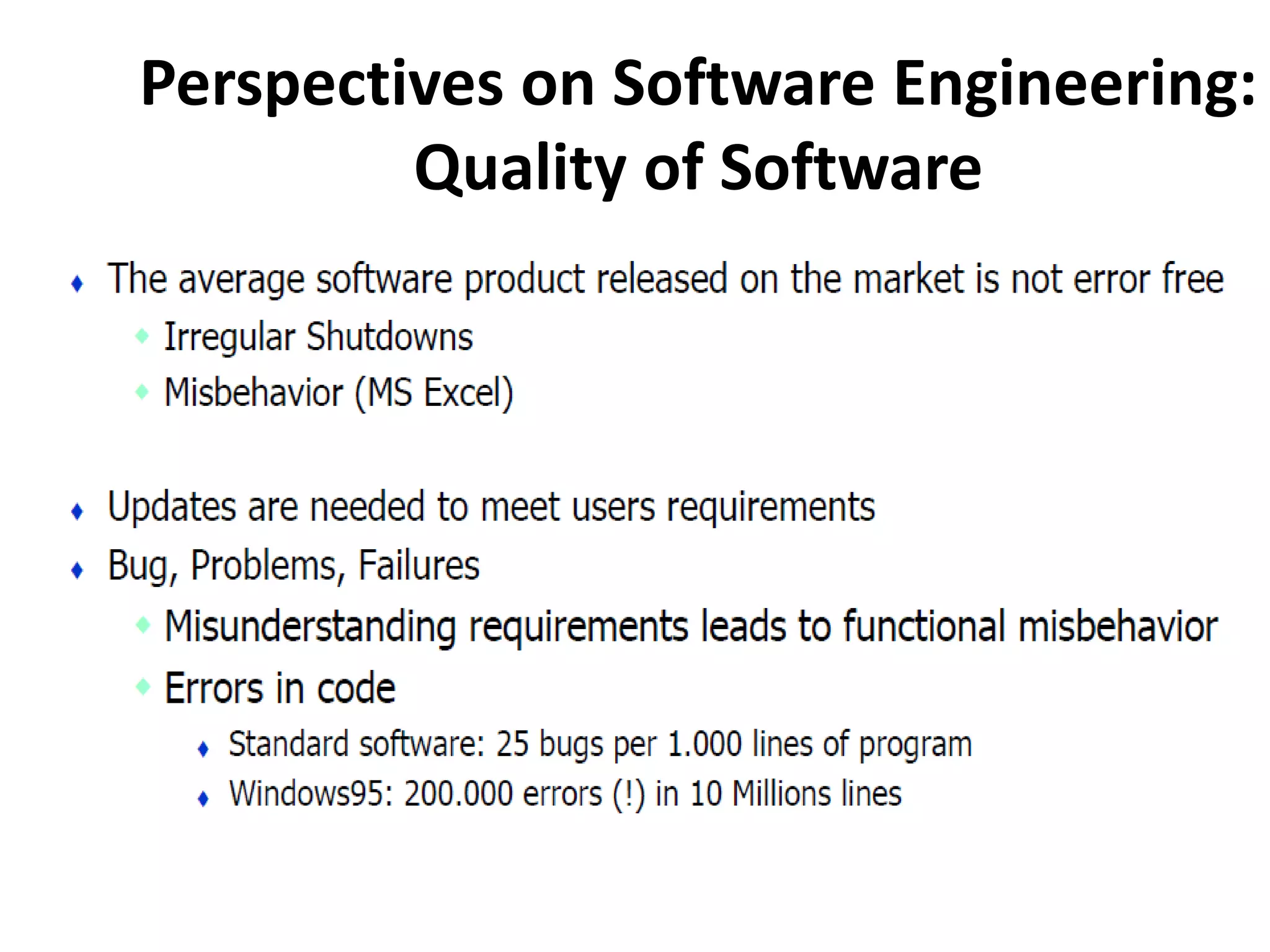
Perspectives on Software Engineering:
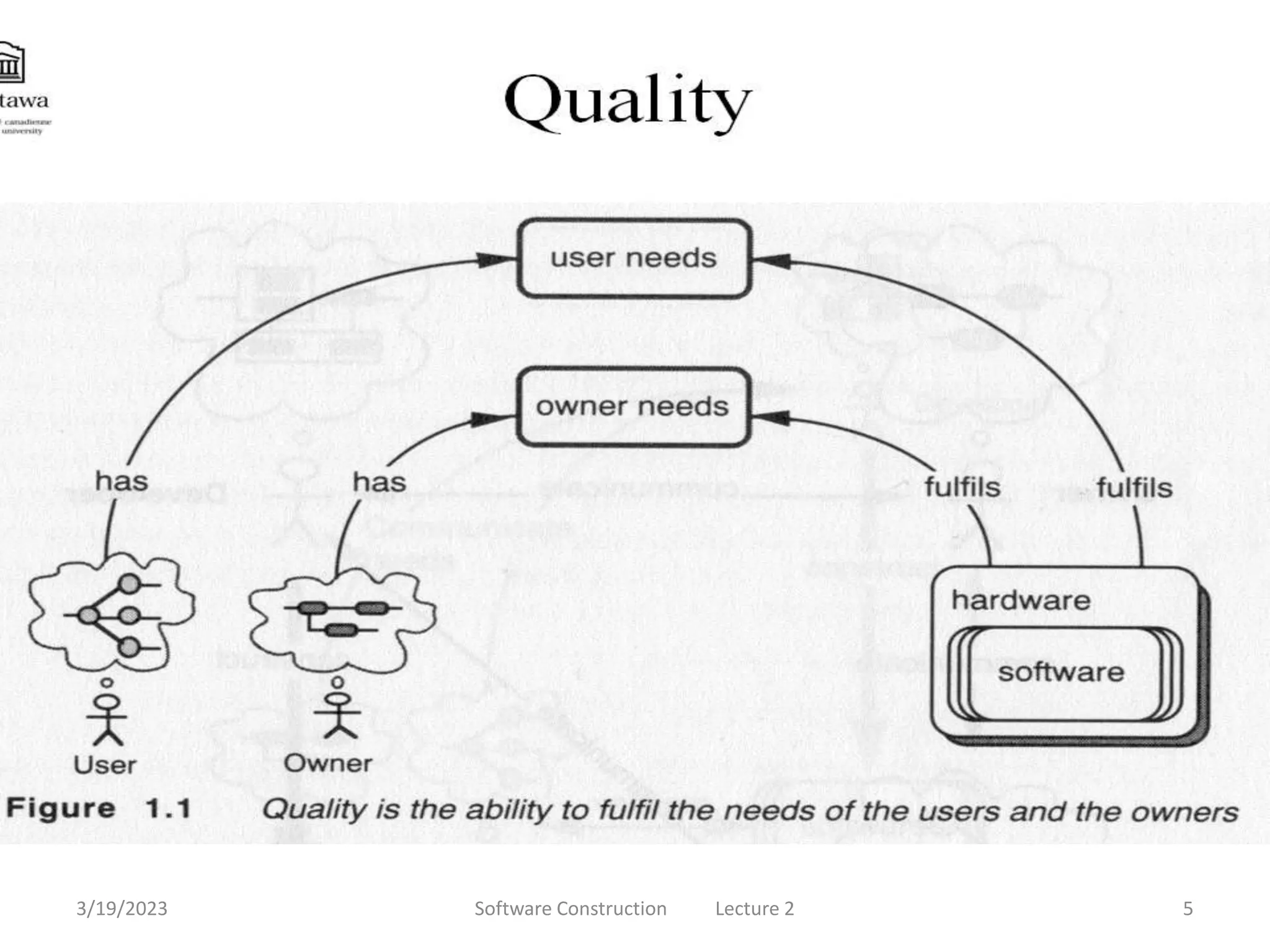
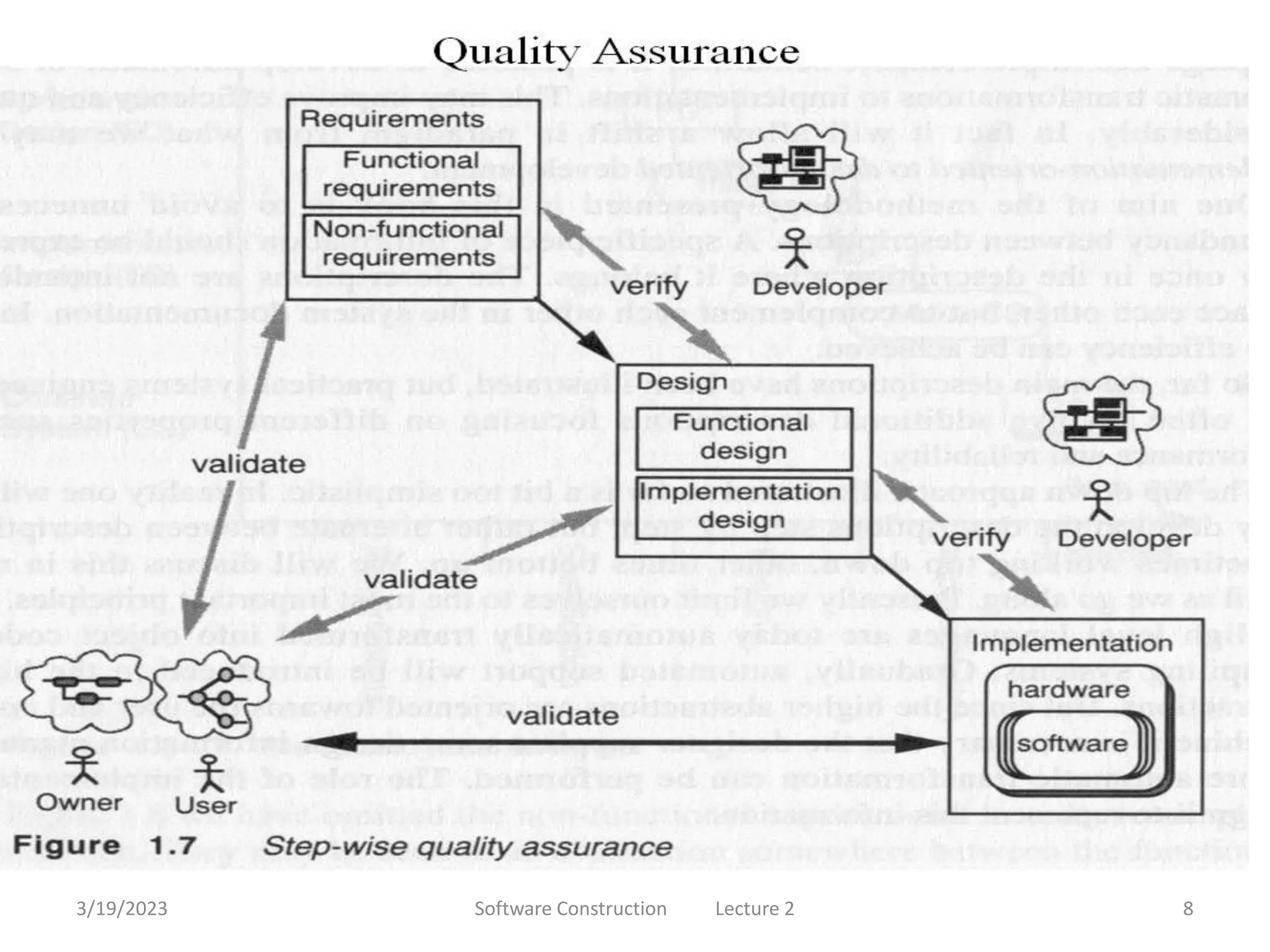
Quality of Software
3/19/2023 Software Construction Lecture 2 4
3/19/2023 Software Construction Lecture 2 5
3/19/2023 Software Construction Lecture 2 6
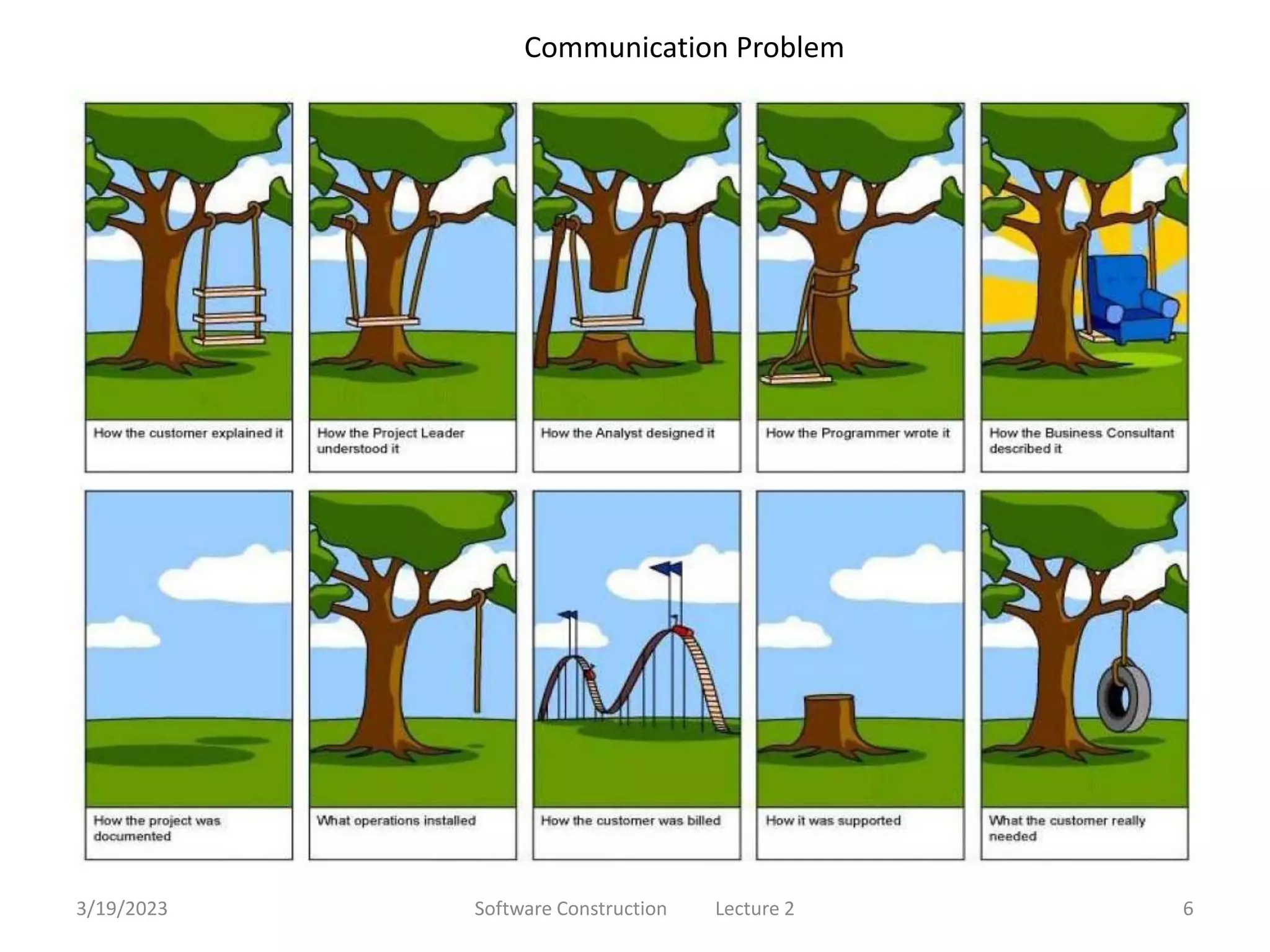
Communication Problem
3/19/2023 Software Construction Lecture 2 7
3/19/2023 Software Construction Lecture 2 8
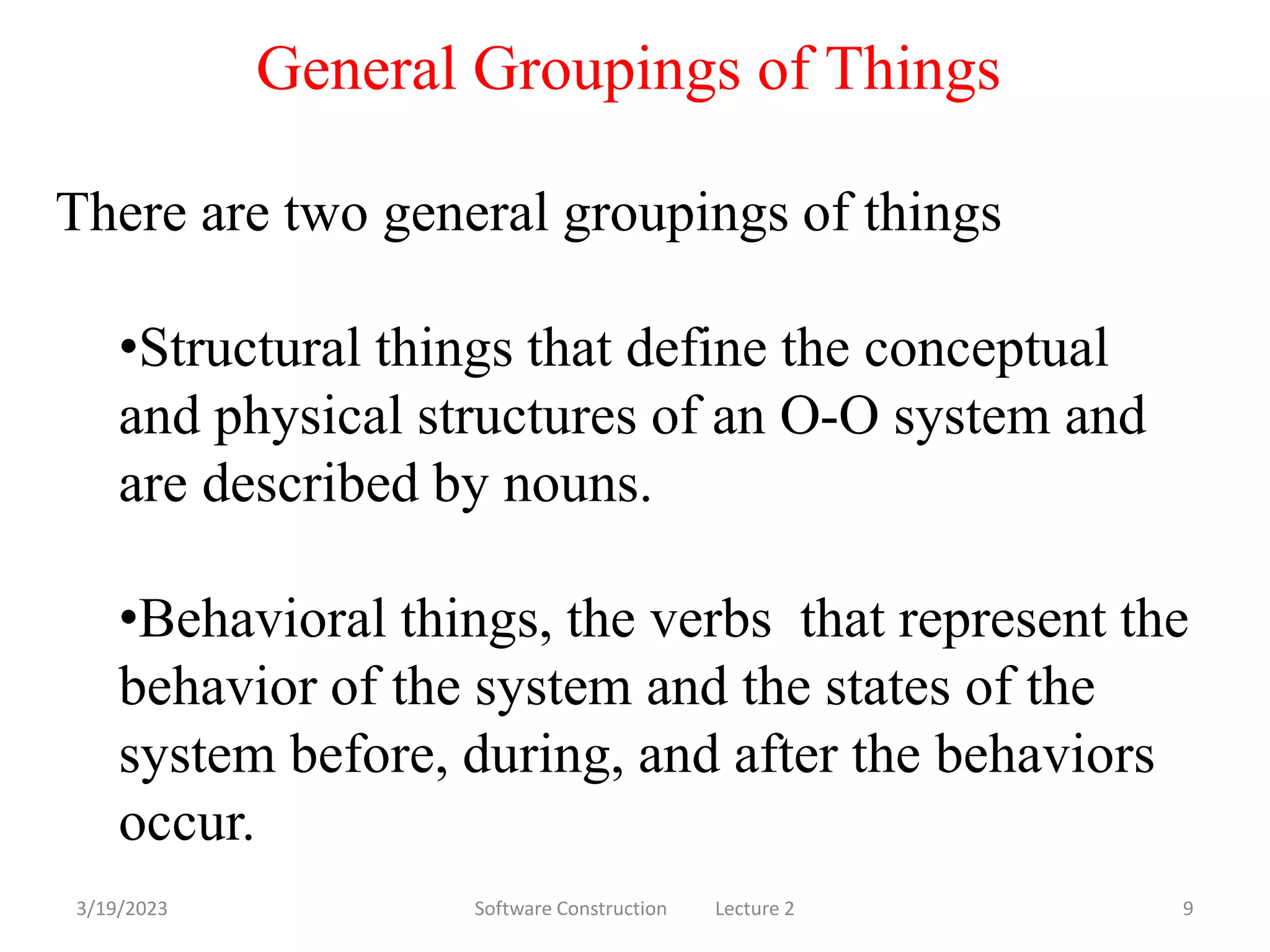
3/19/2023 Software Construction Lecture 2 9
There are two general groupings of things
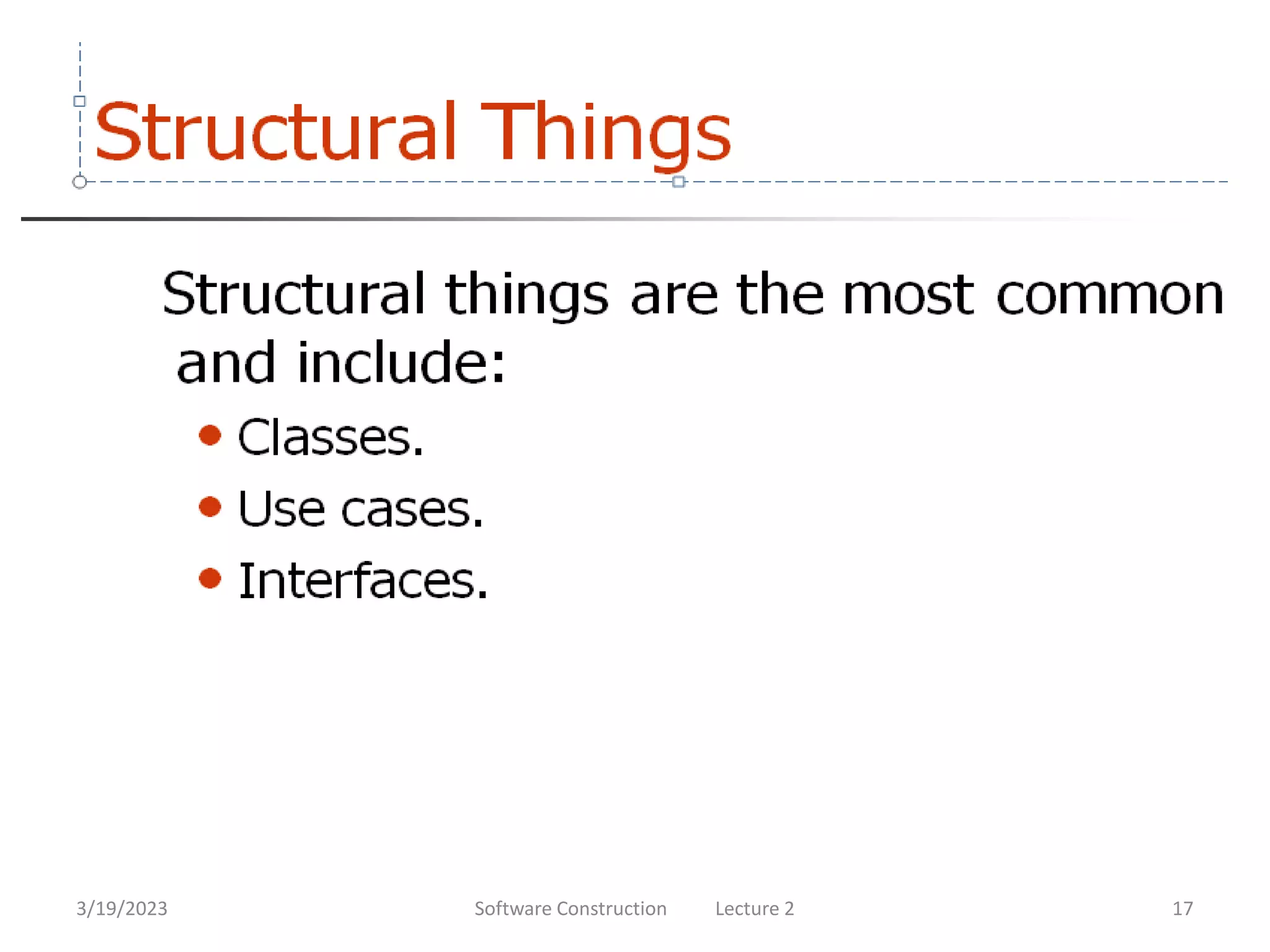
•Structural things that define the conceptual
and physical structures of an O-O system and
are described by nouns.
•Behavioral things, the verbs that represent the
behavior of the system and the states of the
system before, during, and after the behaviors
occur.
General Groupings of Things
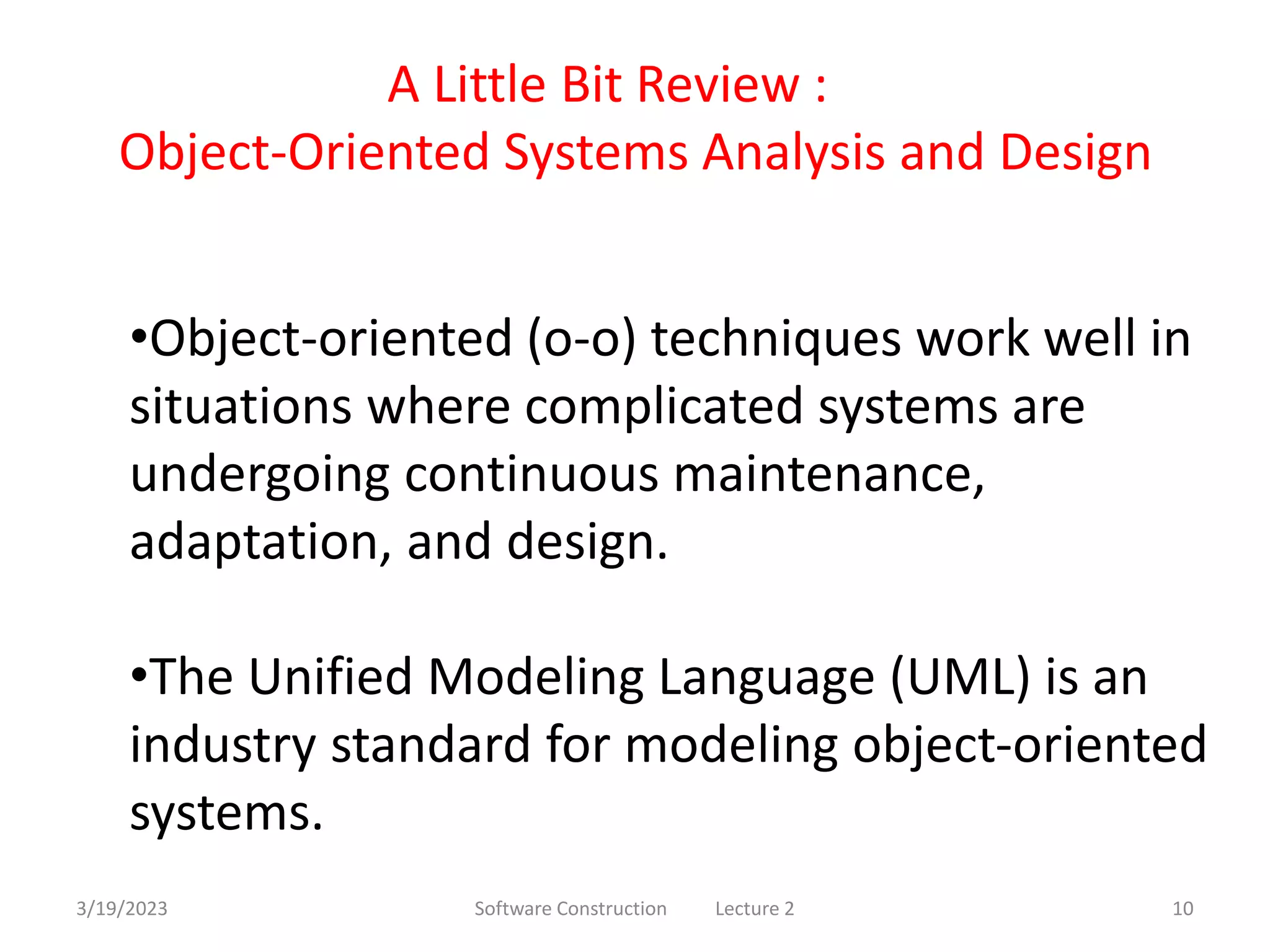
3/19/2023 Software Construction Lecture 2 10
A Little Bit Review :
Object-Oriented Systems Analysis and Design
•Object-oriented (o-o) techniques work well in
situations where complicated systems are
undergoing continuous maintenance,
adaptation, and design.
•The Unified Modeling Language (UML) is an
industry standard for modeling object-oriented
systems.
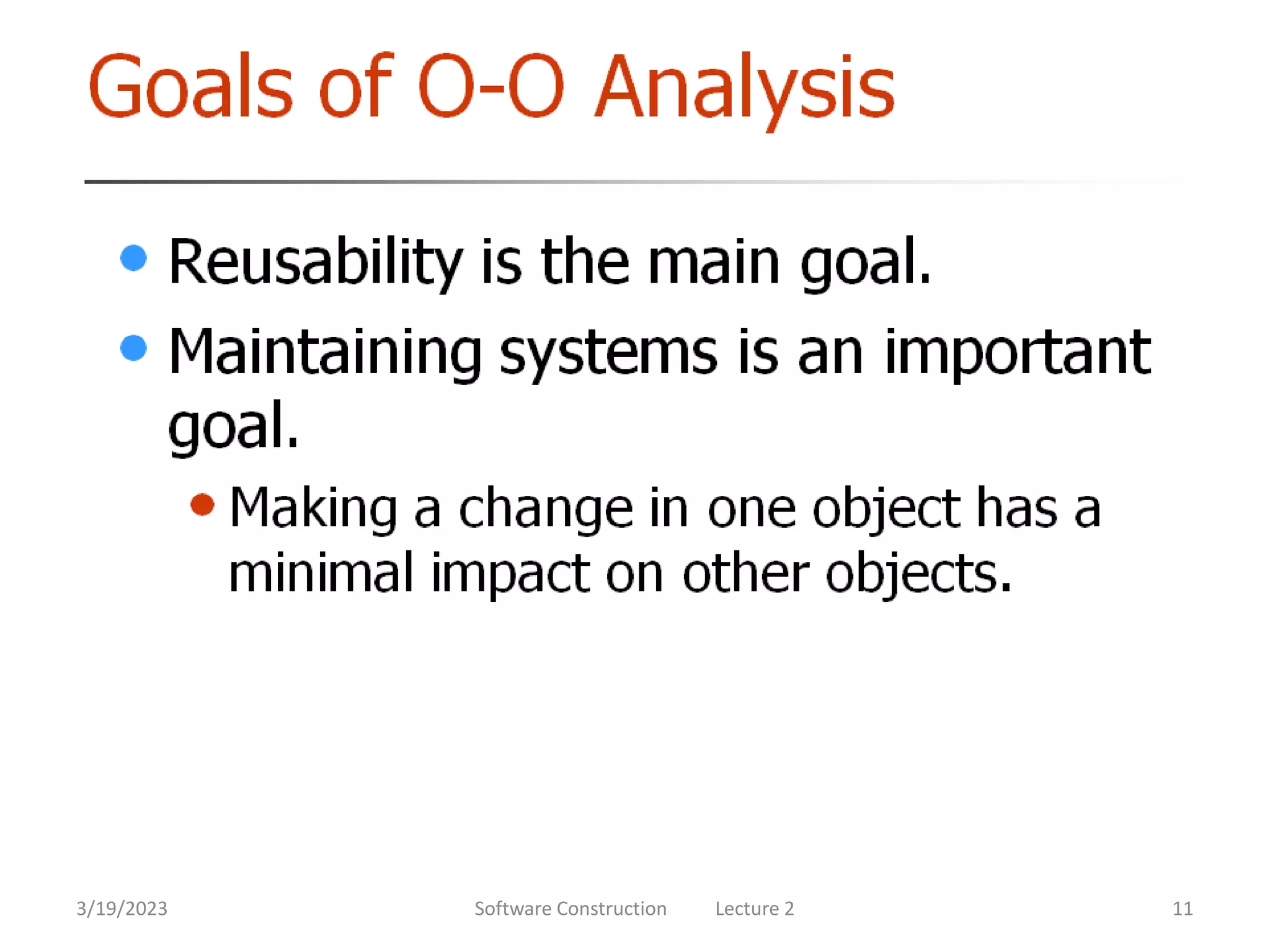
3/19/2023 Software Construction Lecture 2 11
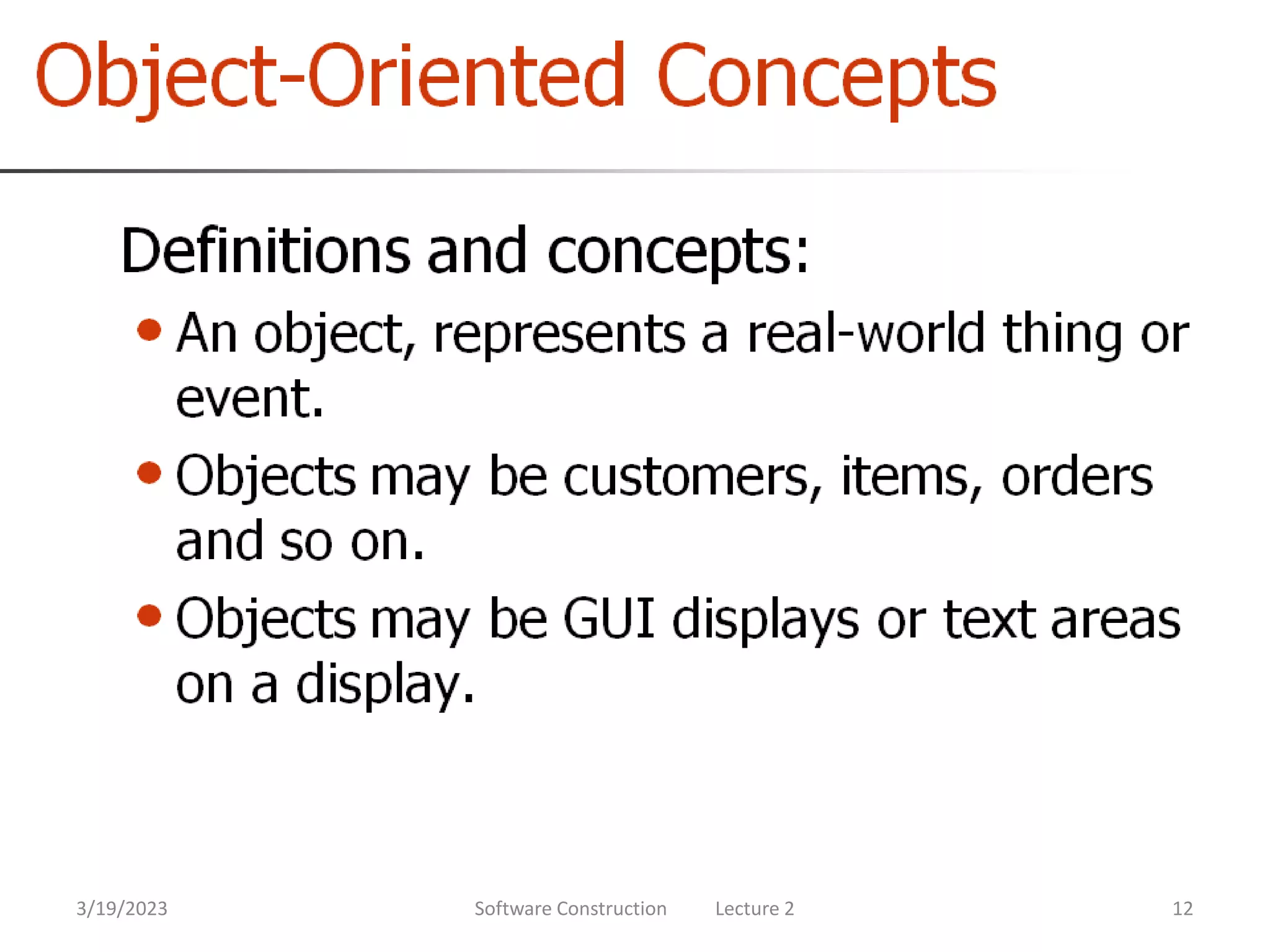
3/19/2023 Software Construction Lecture 2 12
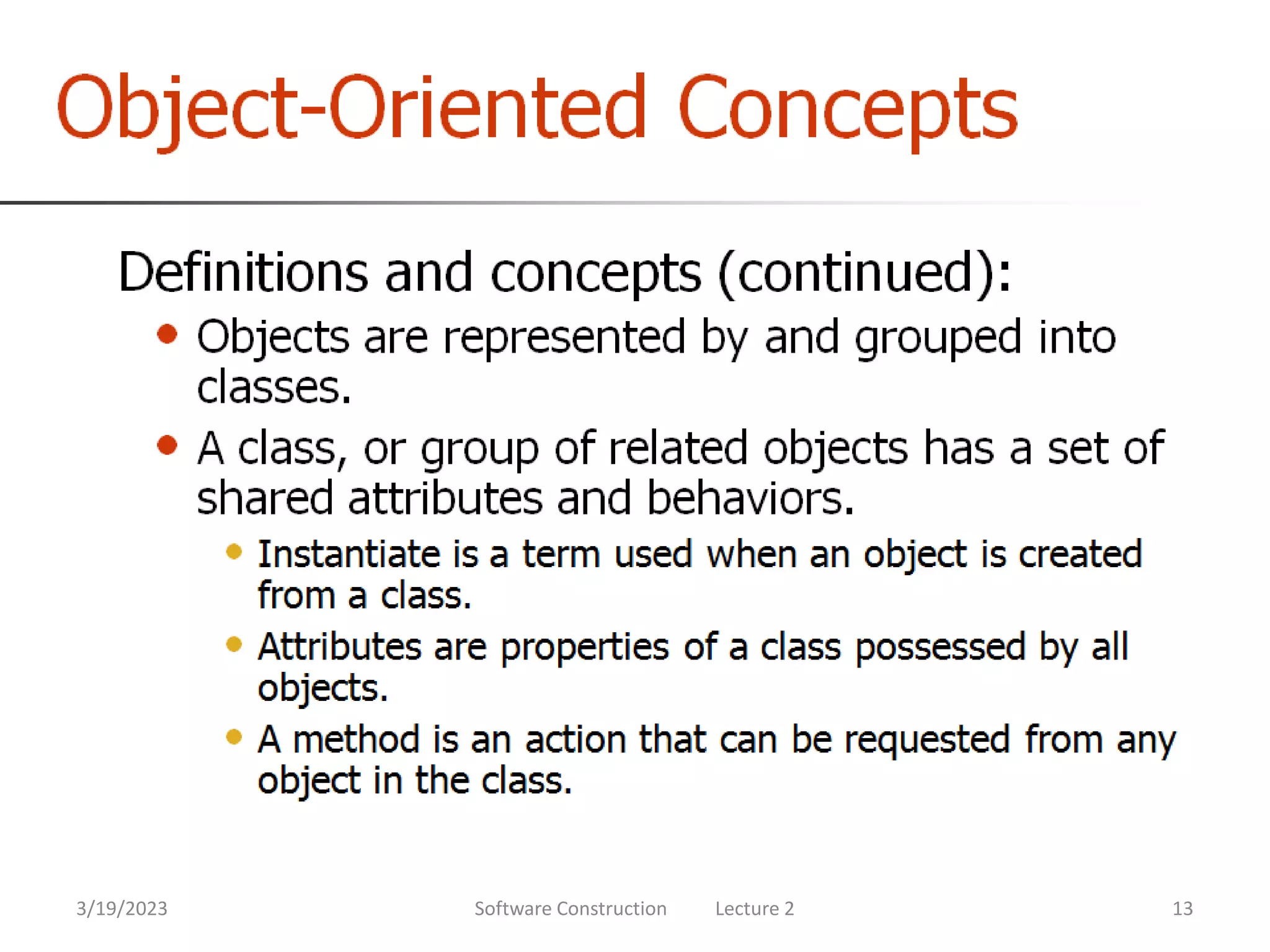
3/19/2023 Software Construction Lecture 2 13
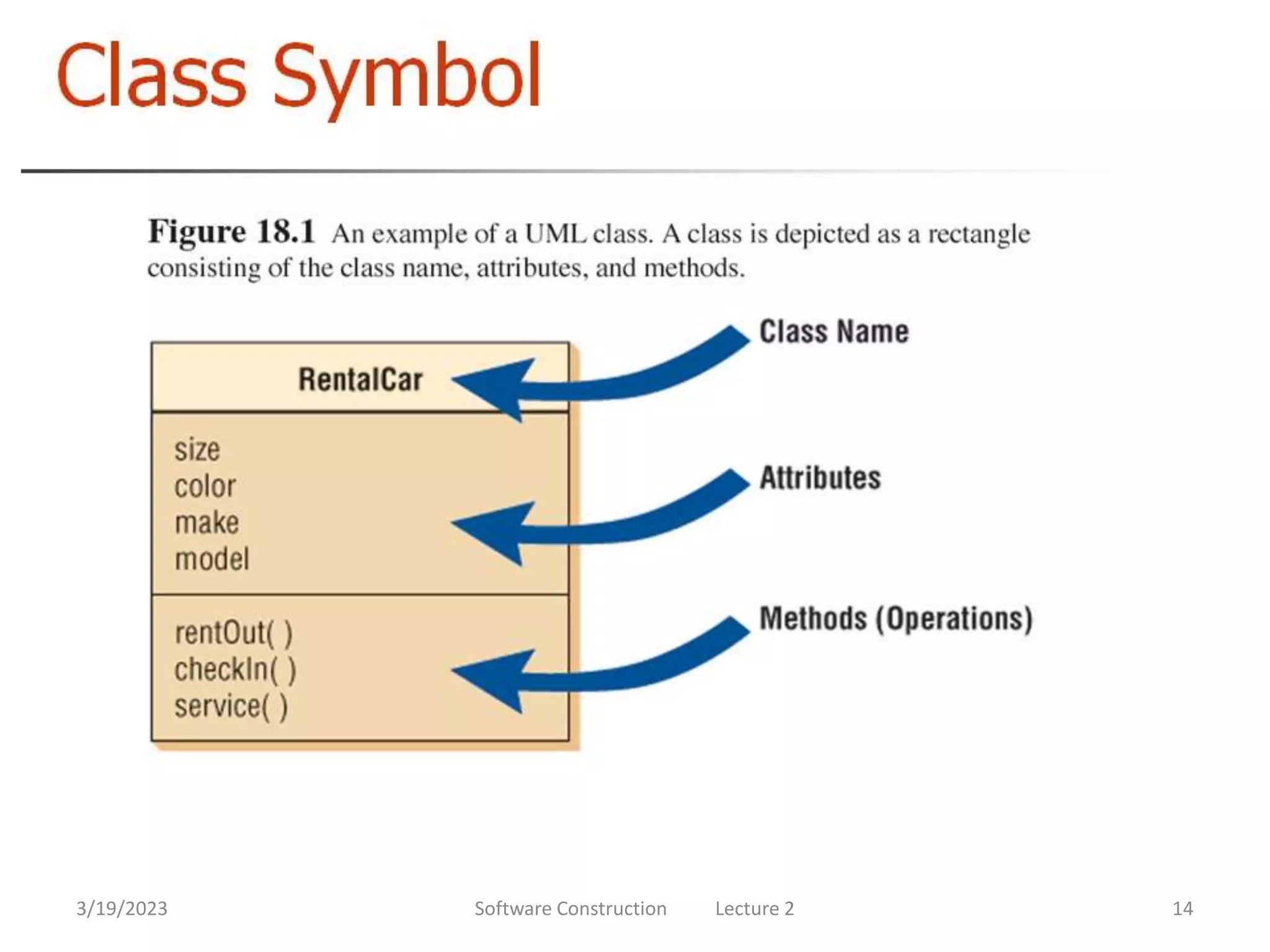
3/19/2023 Software Construction Lecture 2 14
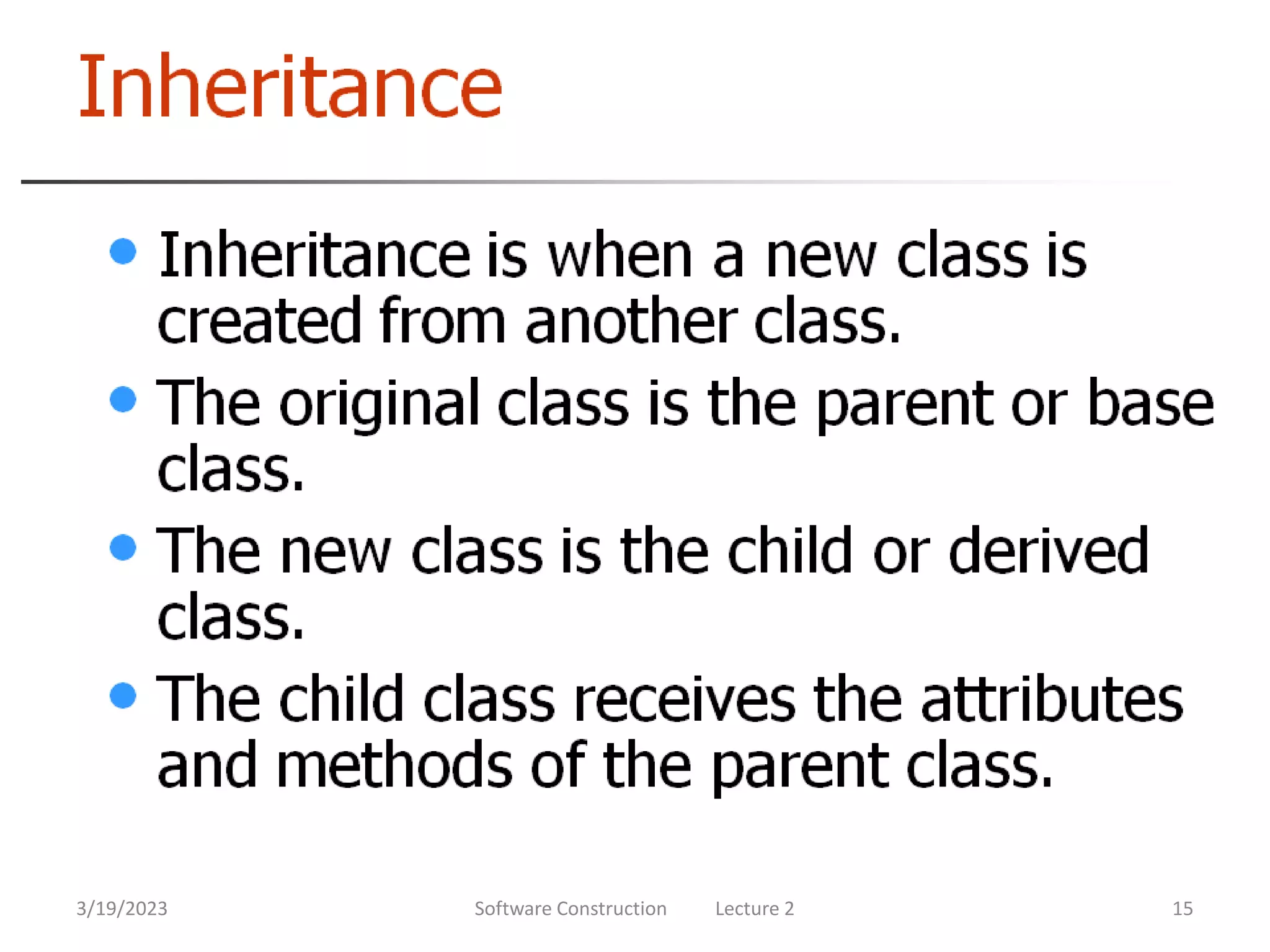
3/19/2023 Software Construction Lecture 2 15
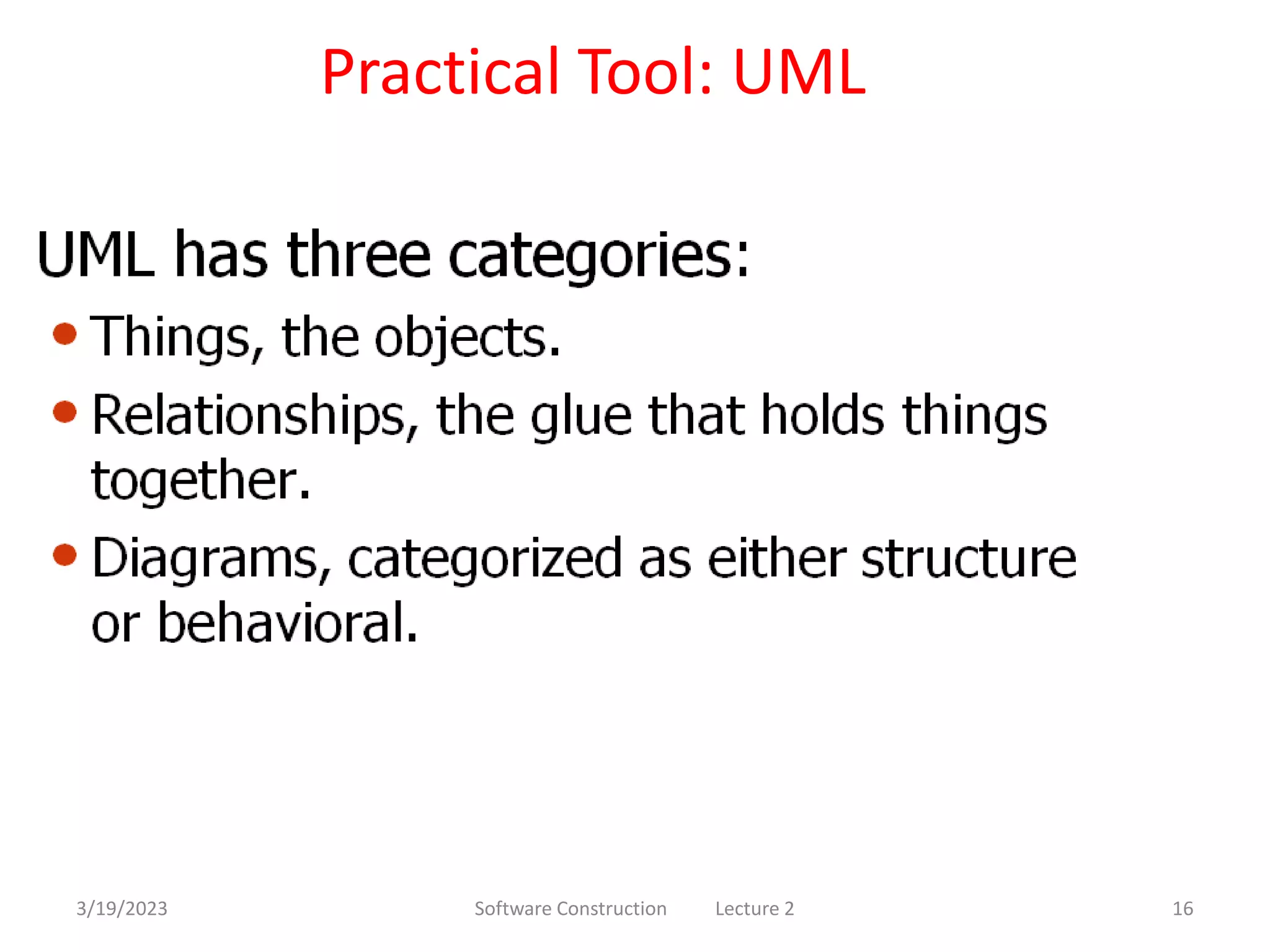
3/19/2023 Software Construction Lecture 2 16
Practical Tool: UML
3/19/2023 Software Construction Lecture 2 17
3/19/2023 Software Construction Lecture 2 18
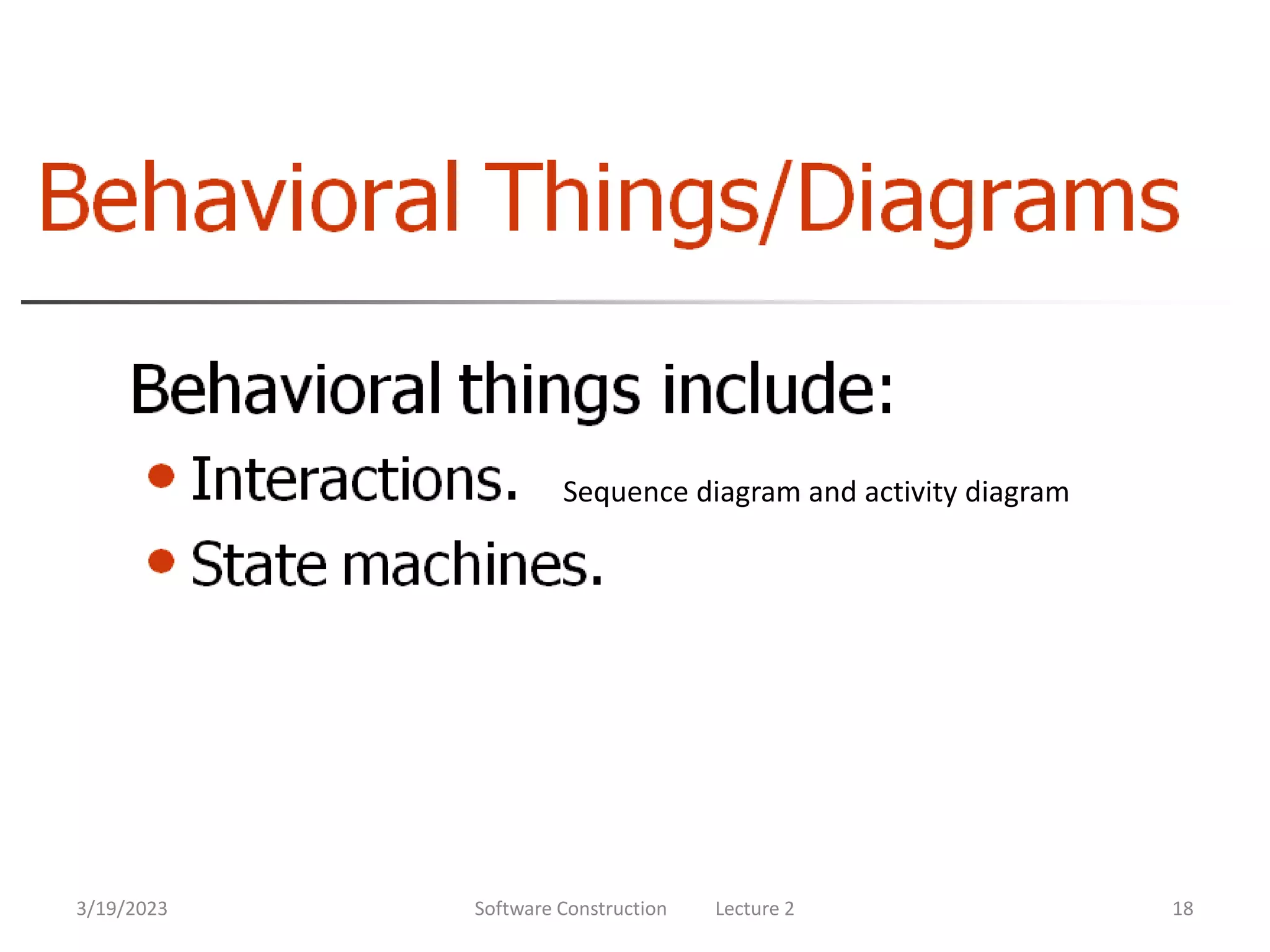
Sequence diagram and activity diagram
3/19/2023 Software Construction Lecture 2 19
3/19/2023 Software Construction Lecture 2 20
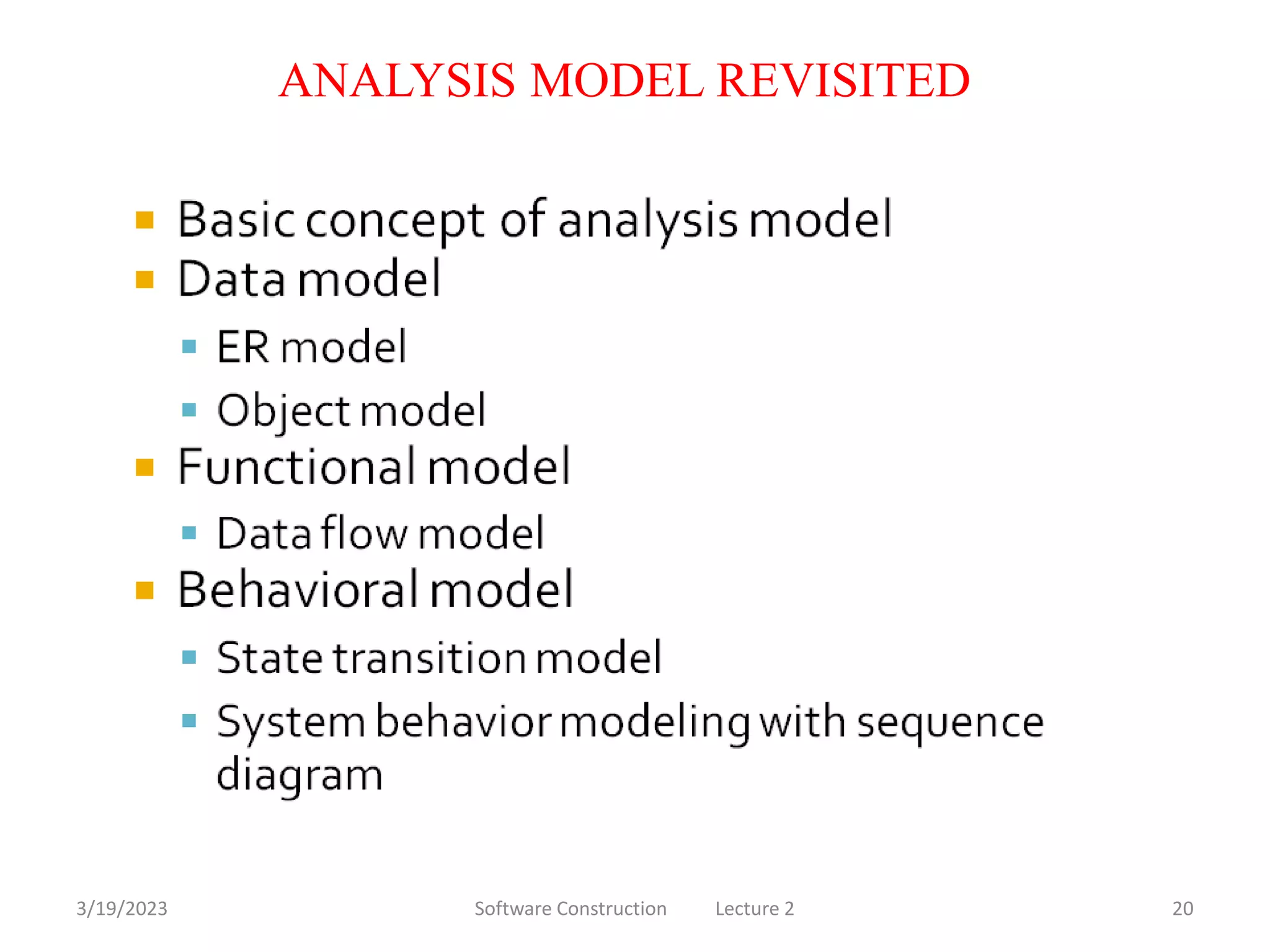
ANALYSIS MODEL REVISITED
3/19/2023 Software Construction Lecture 2 21
Basic concept of Analysis Model
A Primarily step in Software construction
•To describe what the customer require by building a
model using requirement elicited from customer
•To establish a basis for the creation of a software
design
•To define a set of requirements that can be validated
once the software is built, or validate software
requirements using multiple dimensions thereby
increasing probability of finding error
Model
• What is a model?
– a model is a simplification of reality
• Why do we model?
– we build models so that we can better understand the
system we are developing
– we build models of complex systems because we cannot
comprehend such a system in its entirety
– four aims to achieve
• help us to visualize a system
• permit us to specify the structure/behavior of a system
• give us a template that guides us in constructing systems
• document the decisions we have made
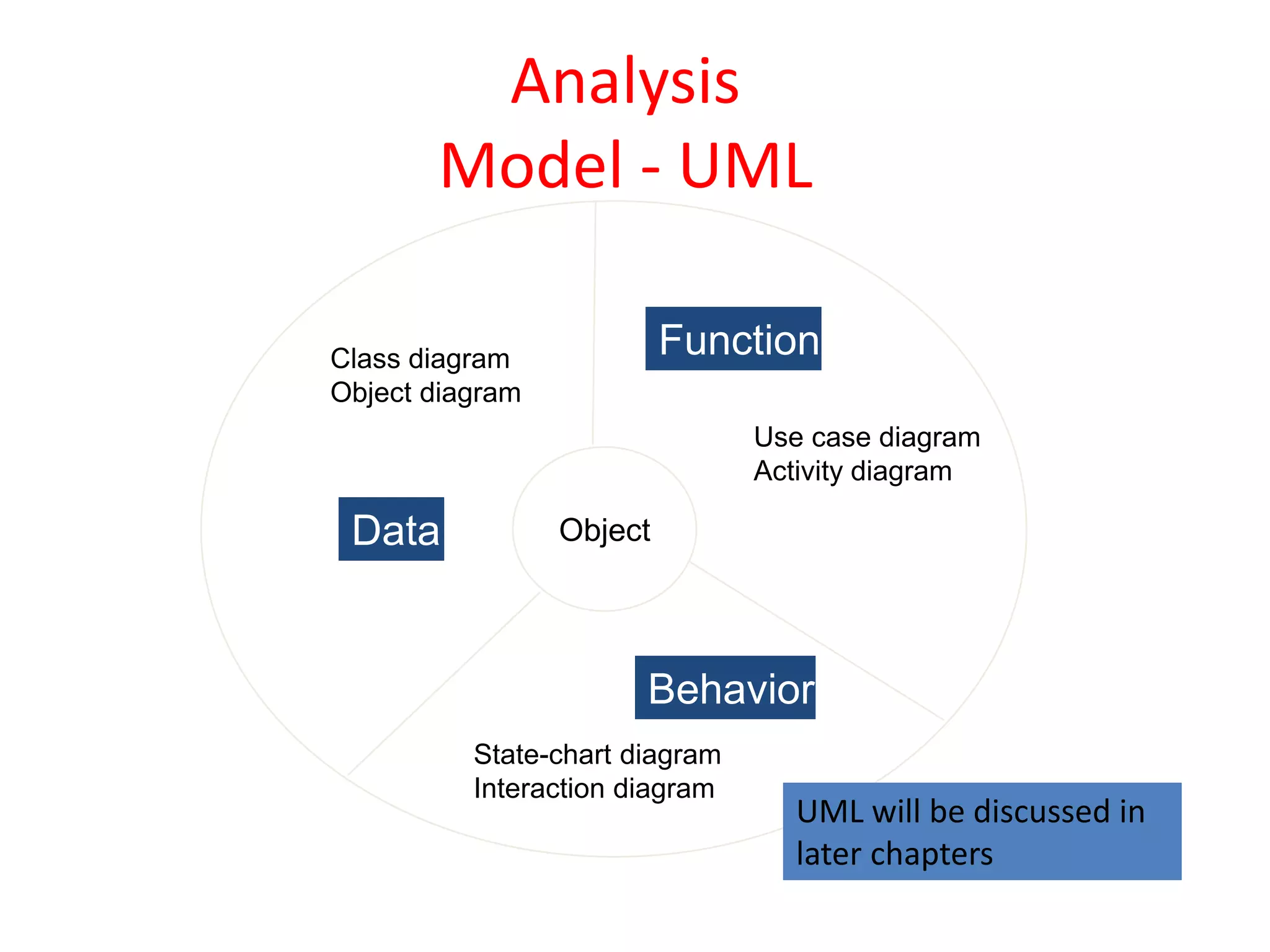
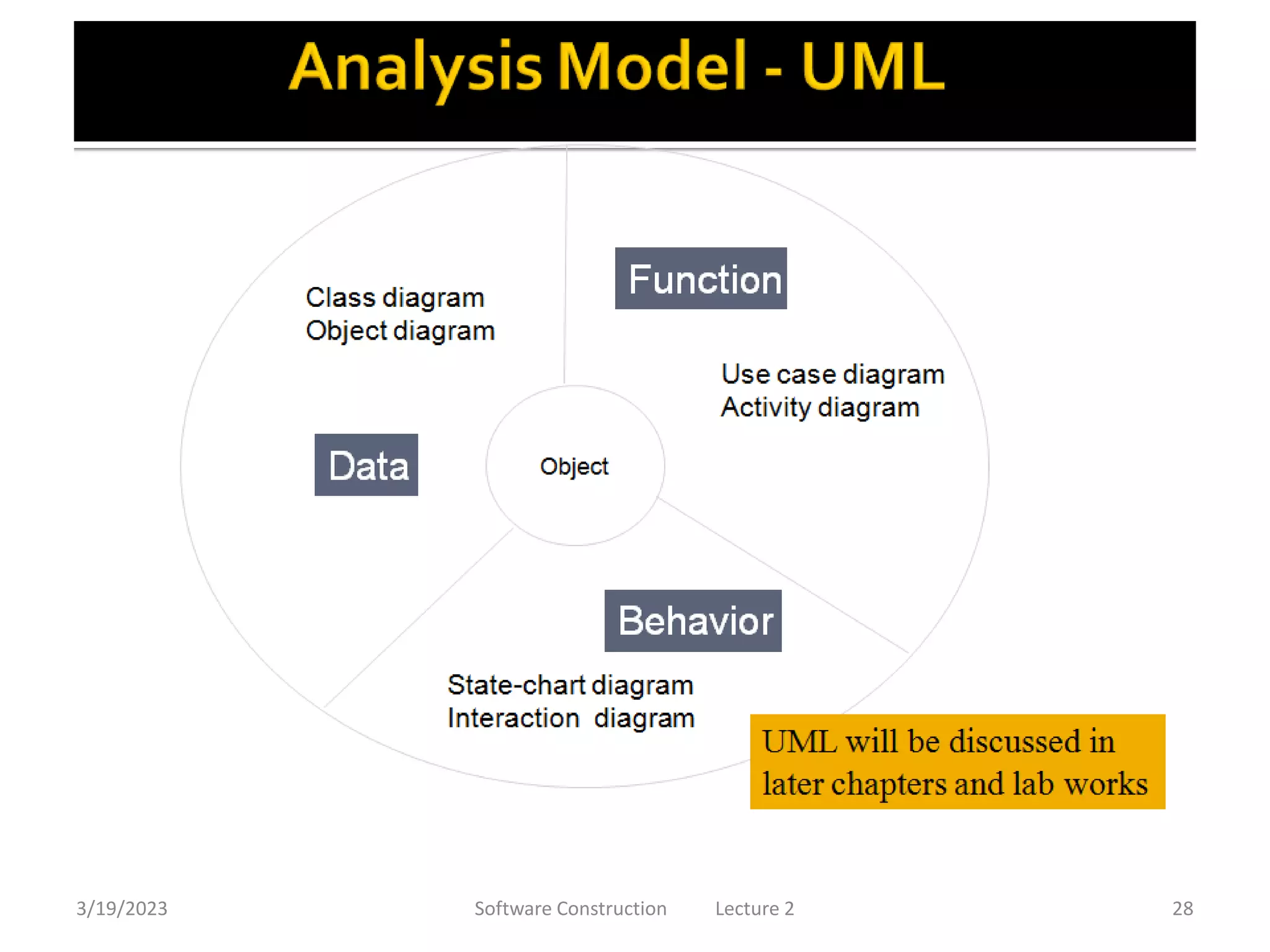
Analysis
Model - UML
Data
Behavior
Function
Object
State-chart diagram
Interaction diagram
Class diagram
Object diagram
Use case diagram
Activity diagram
UML will be discussed in
later chapters
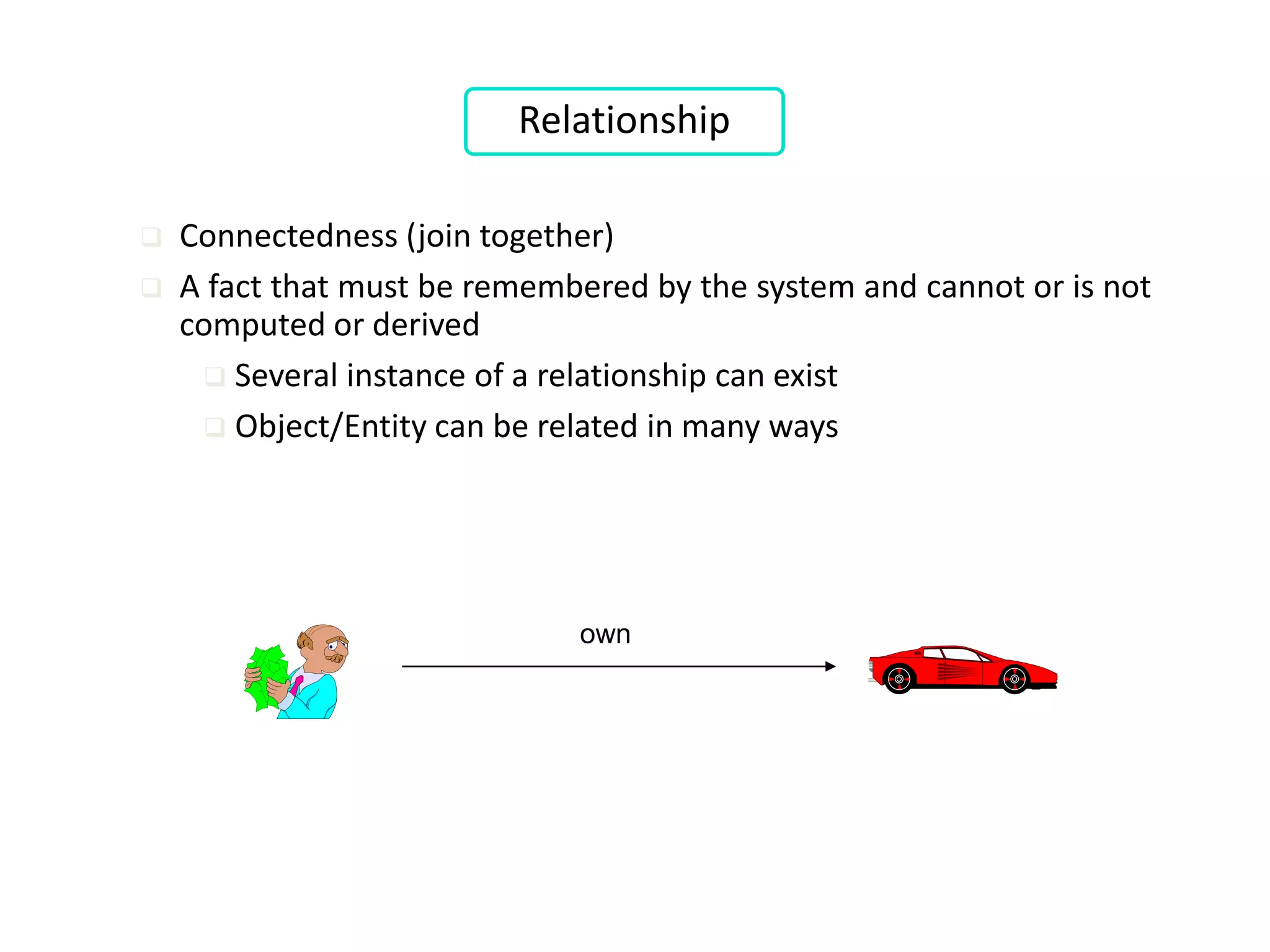
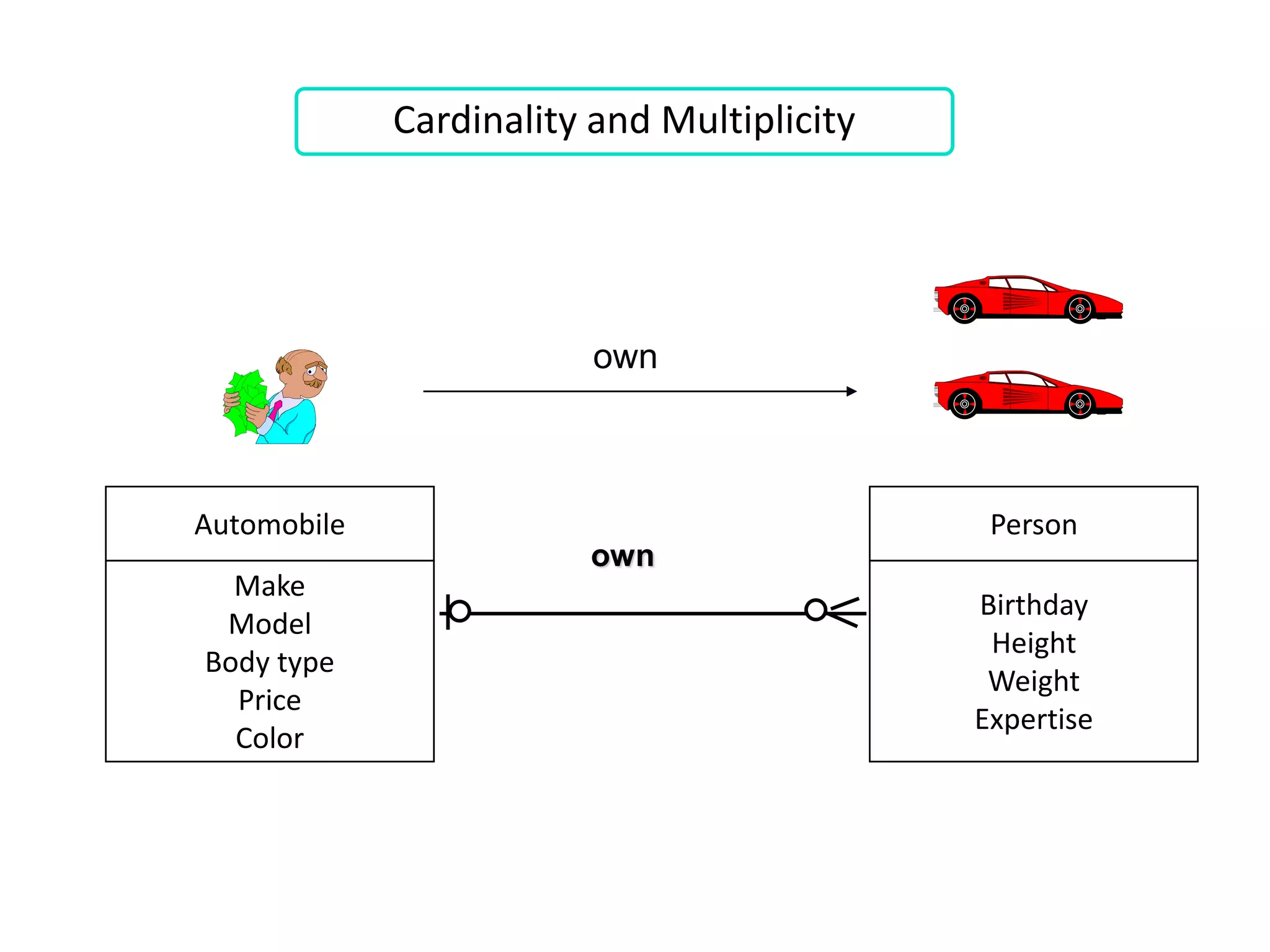
own
Relationship
 Connectedness (join together)
 A fact that must be remembered by the system and cannot or is not
computed or derived
 Several instance of a relationship can exist
 Object/Entity can be related in many ways
Automobile Person
Make
Model
Body type
Price
Color
Birthday
Height
Weight
Expertise
own
own
Cardinality and Multiplicity
3/19/2023 Software Construction Lecture 2 26
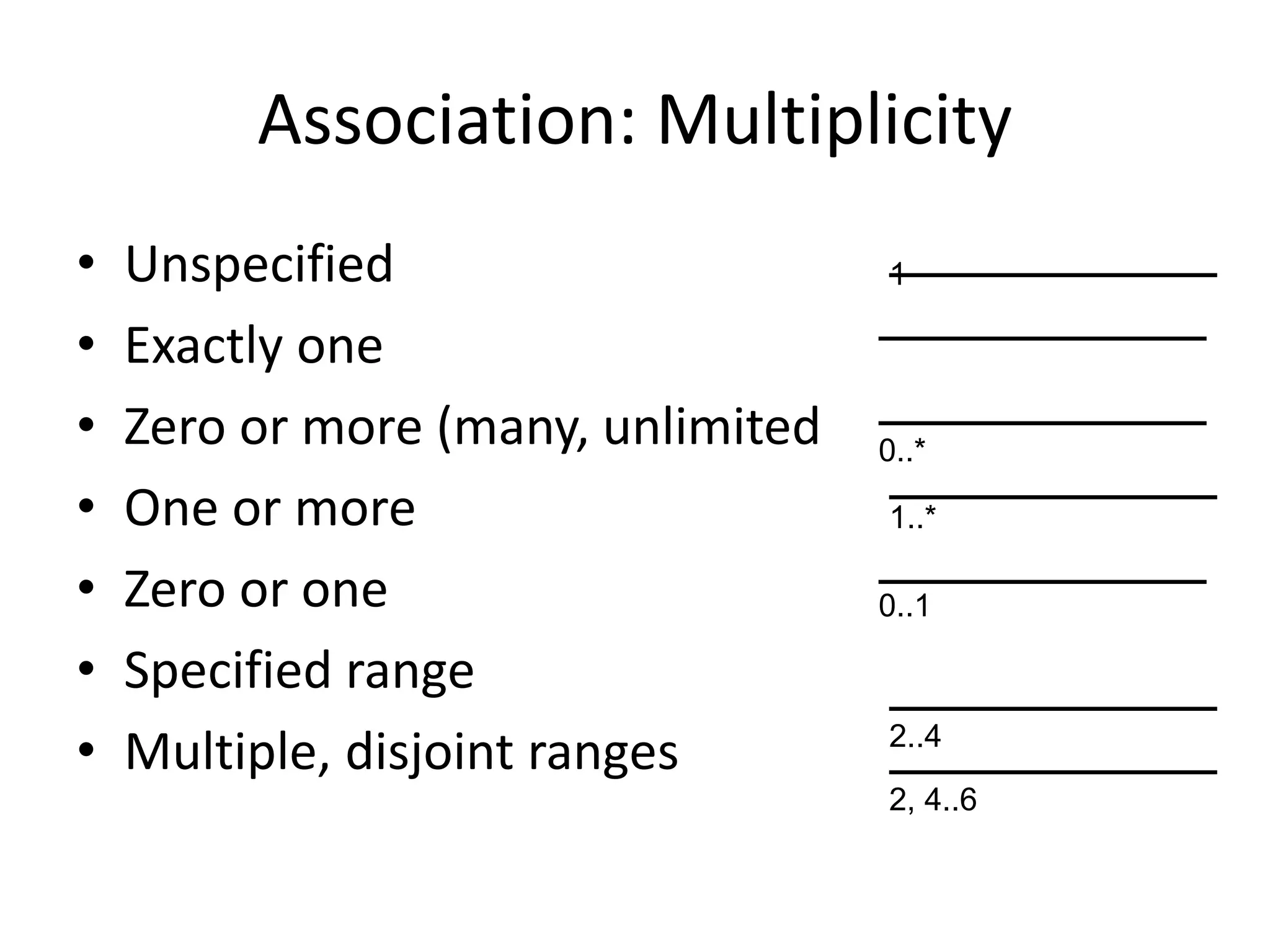
Association: Multiplicity
2..4
0..1
1..*
0..*
1
• Unspecified
• Exactly one
• Zero or more (many, unlimited
• One or more
• Zero or one
• Specified range
• Multiple, disjoint ranges
2, 4..6
3/19/2023 Software Construction Lecture 2 28
3/19/2023 Software Construction Lecture 2 29
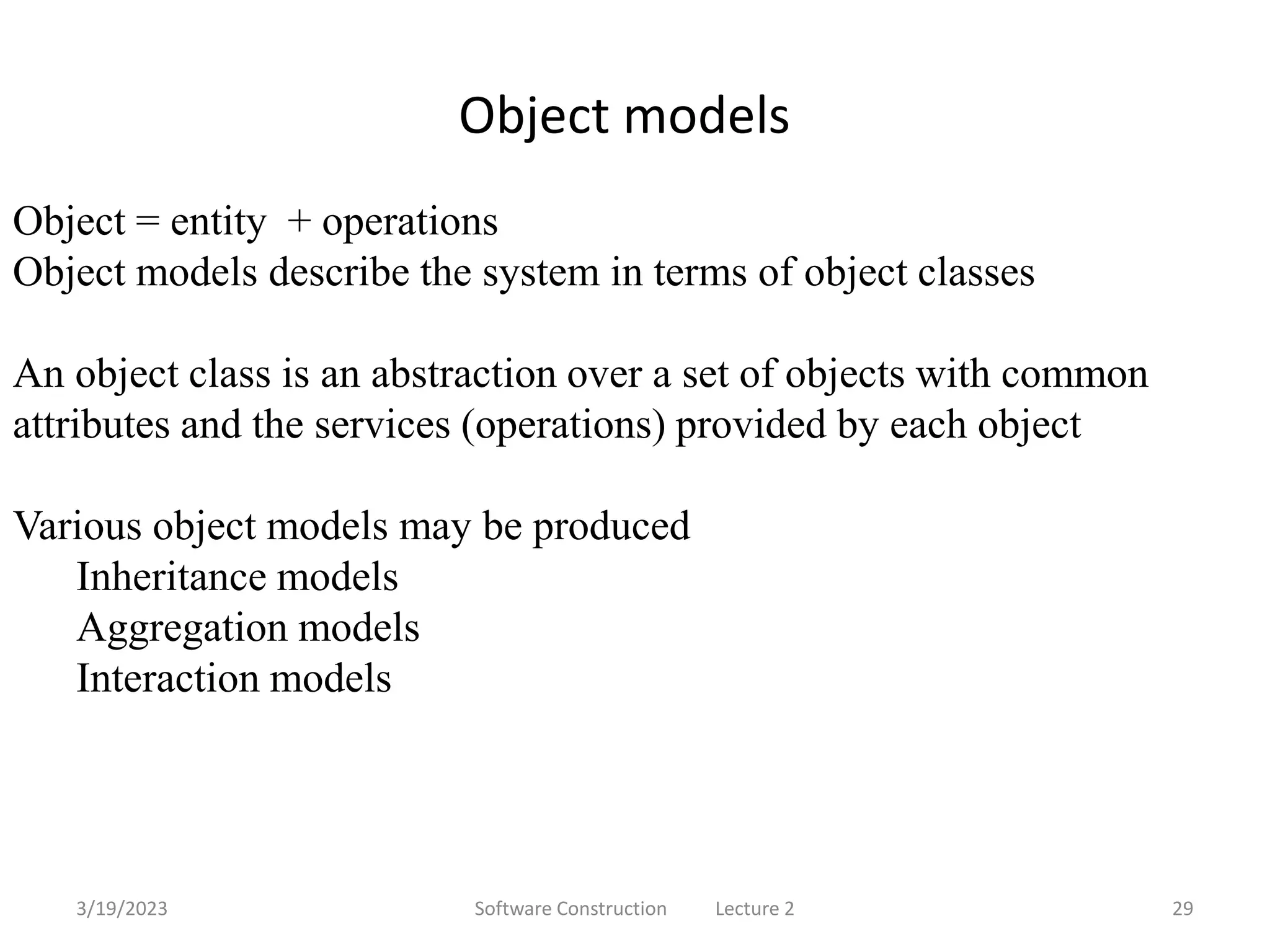
Object models
Object = entity + operations
Object models describe the system in terms of object classes
An object class is an abstraction over a set of objects with common
attributes and the services (operations) provided by each object
Various object models may be produced
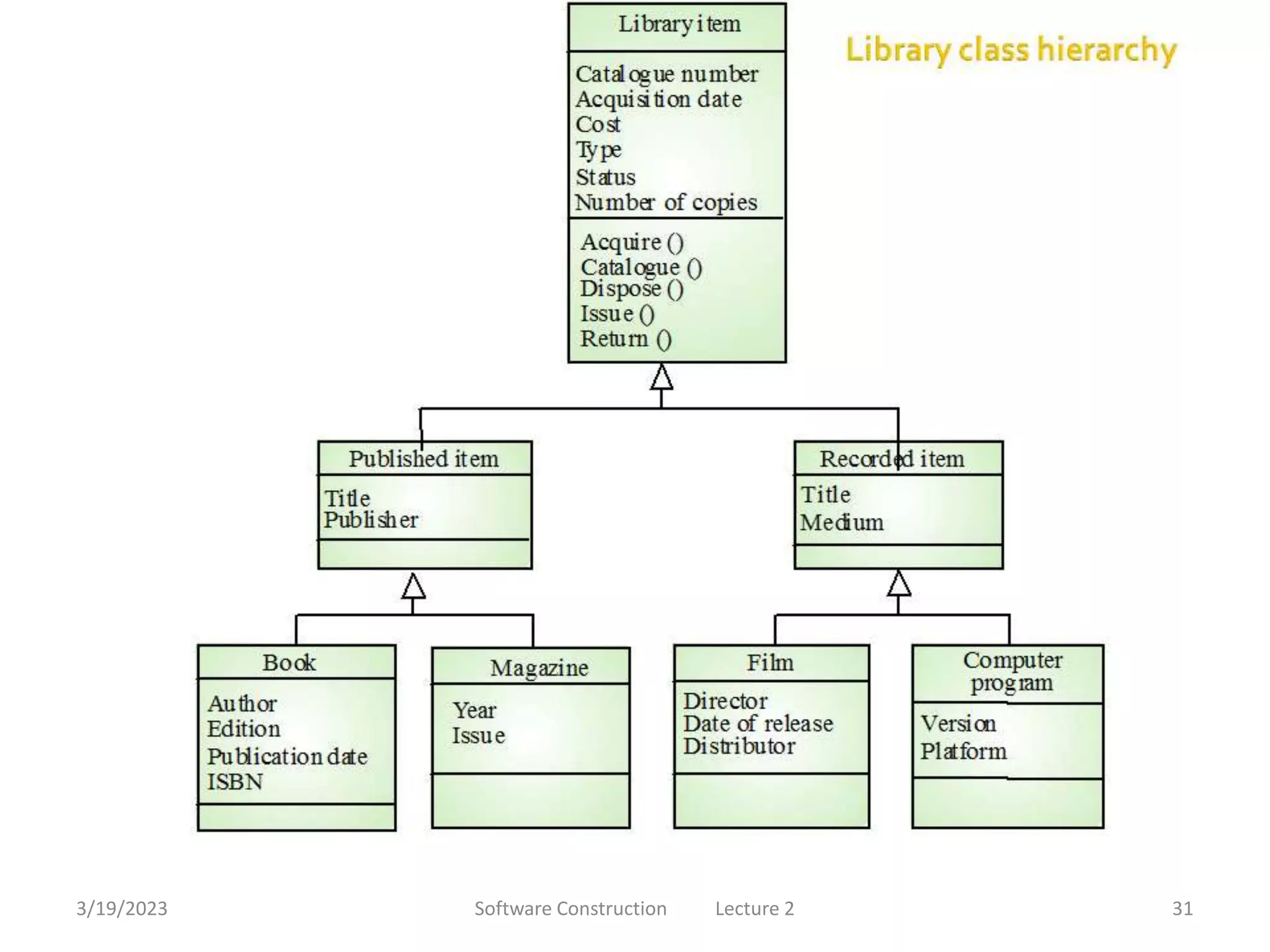
Inheritance models
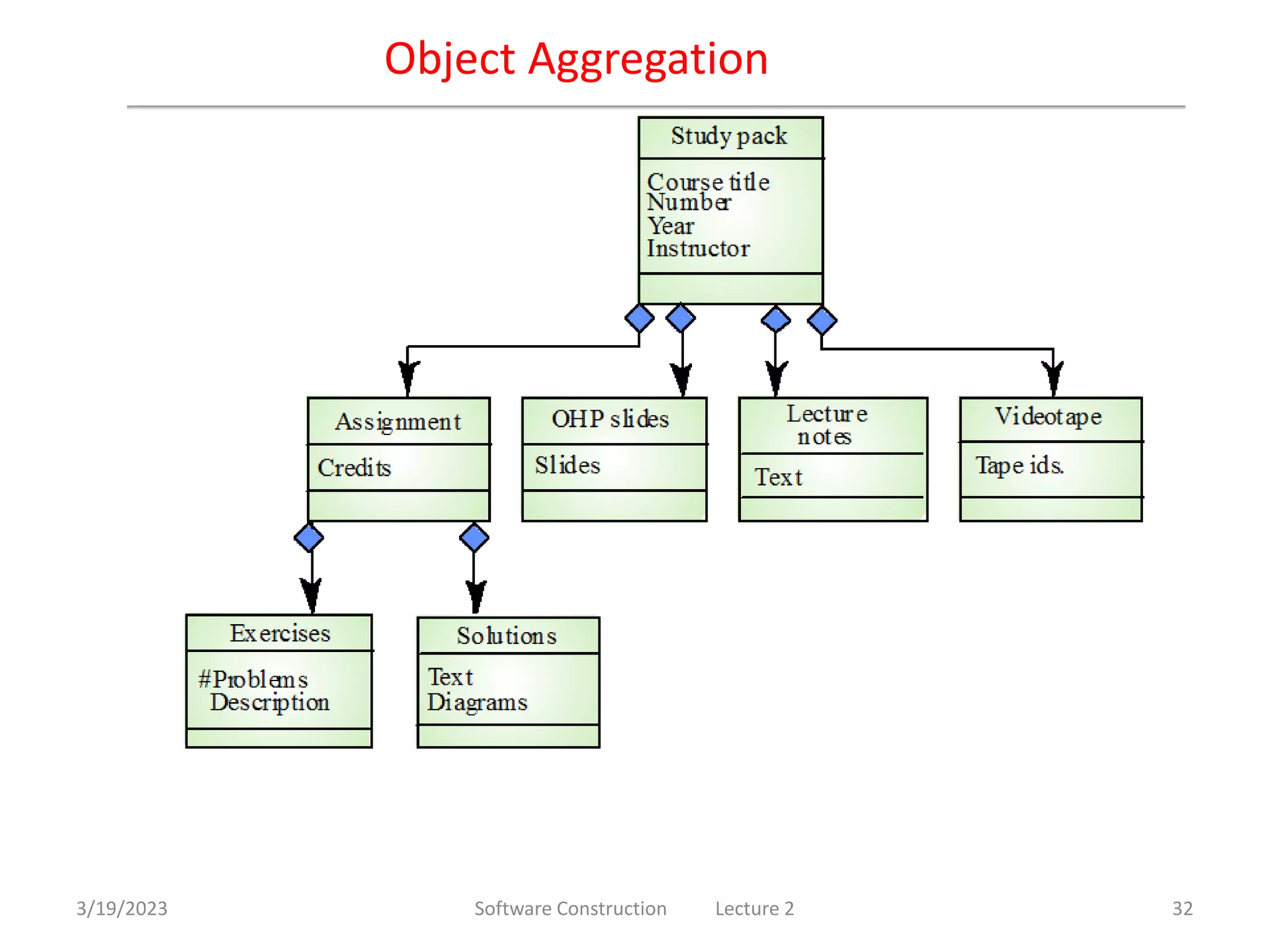
Aggregation models
Interaction models
3/19/2023 Software Construction Lecture 2 30
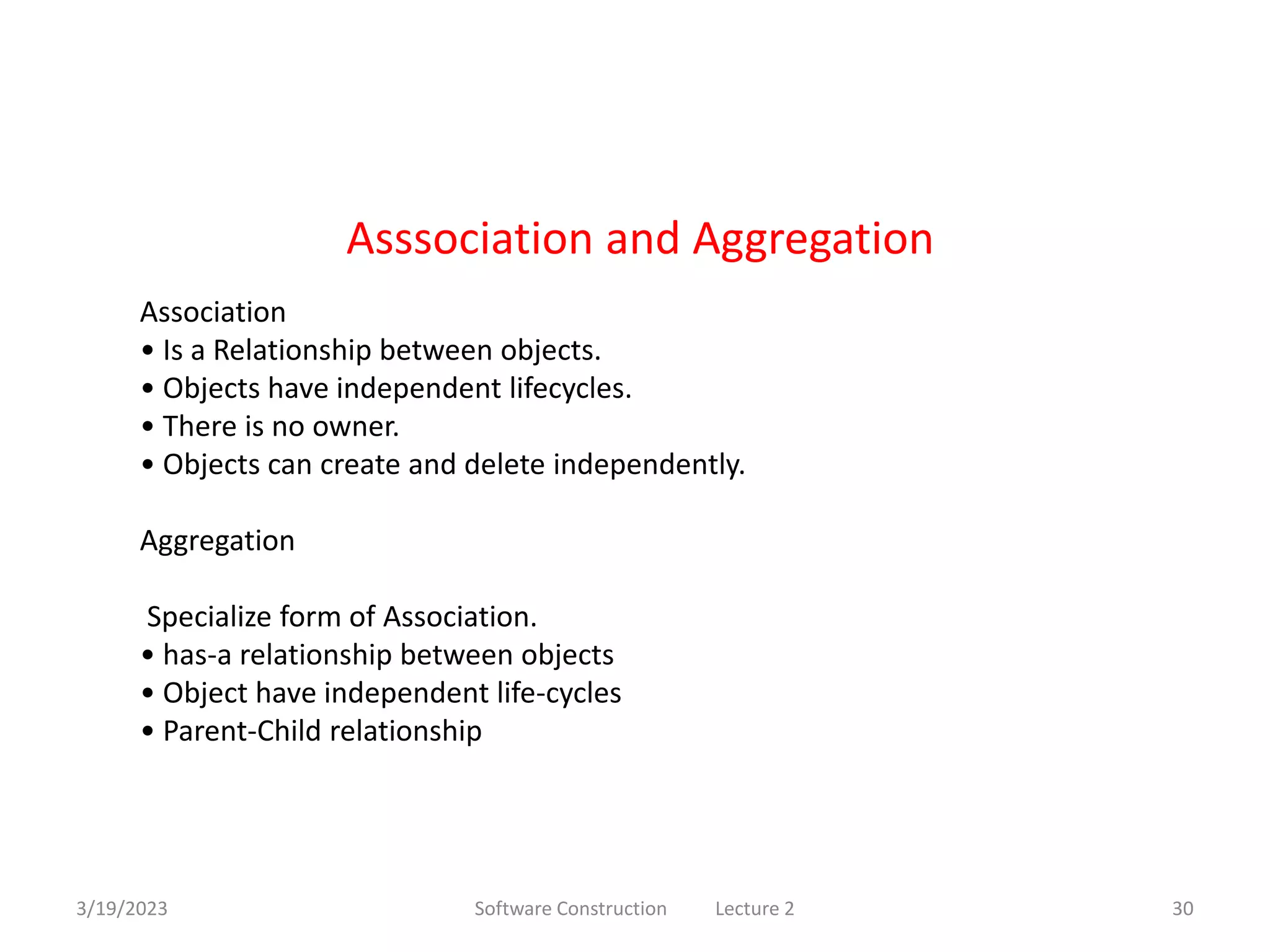
Association
• Is a Relationship between objects.
• Objects have independent lifecycles.
• There is no owner.
• Objects can create and delete independently.
Aggregation
Specialize form of Association.
• has-a relationship between objects
• Object have independent life-cycles
• Parent-Child relationship
Asssociation and Aggregation
3/19/2023 Software Construction Lecture 2 31
3/19/2023 Software Construction Lecture 2 32
Object Aggregation
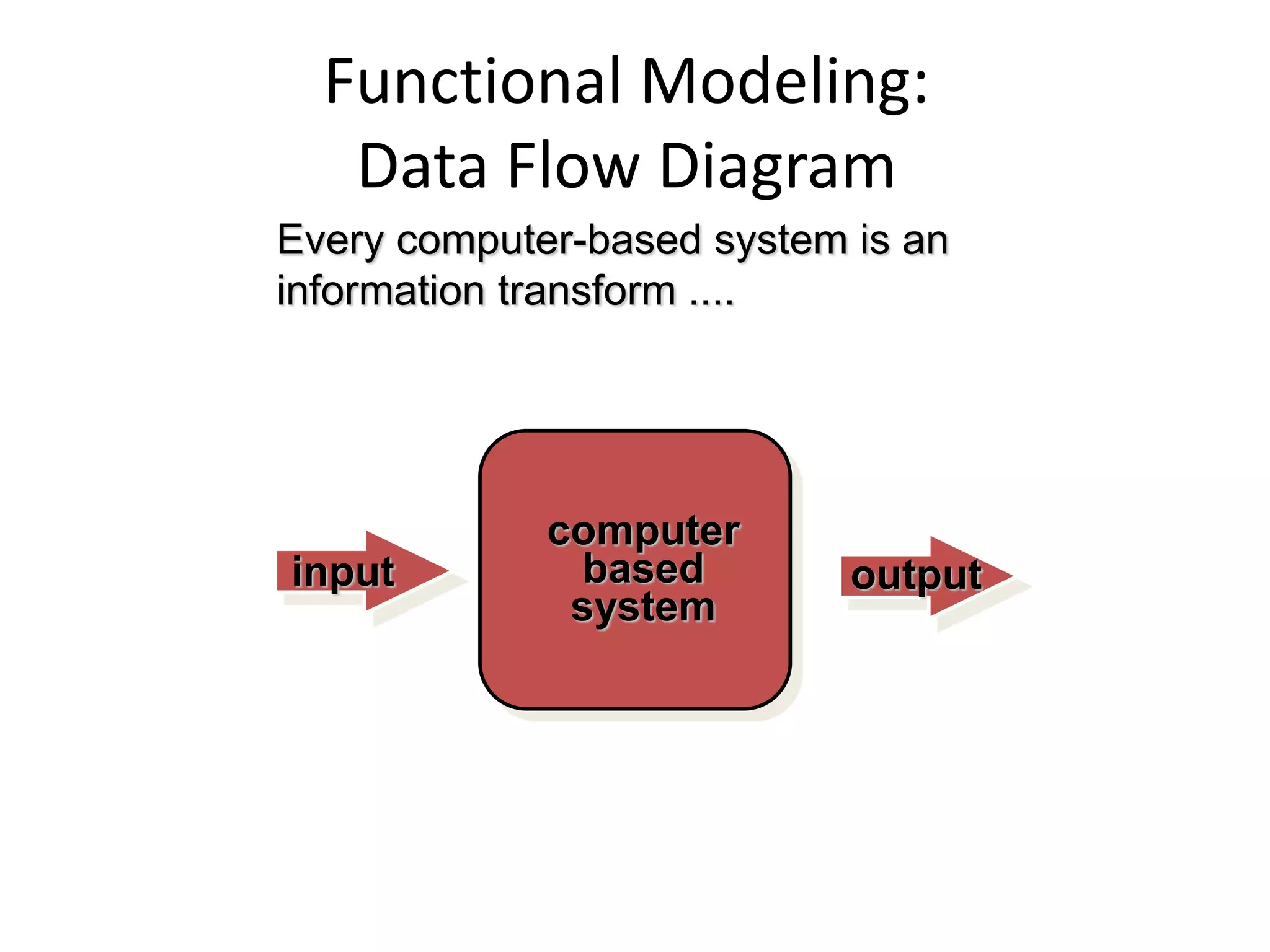
Every computer-based system is an
information transform ....
computer
based
system
input output
Functional Modeling:
Data Flow Diagram
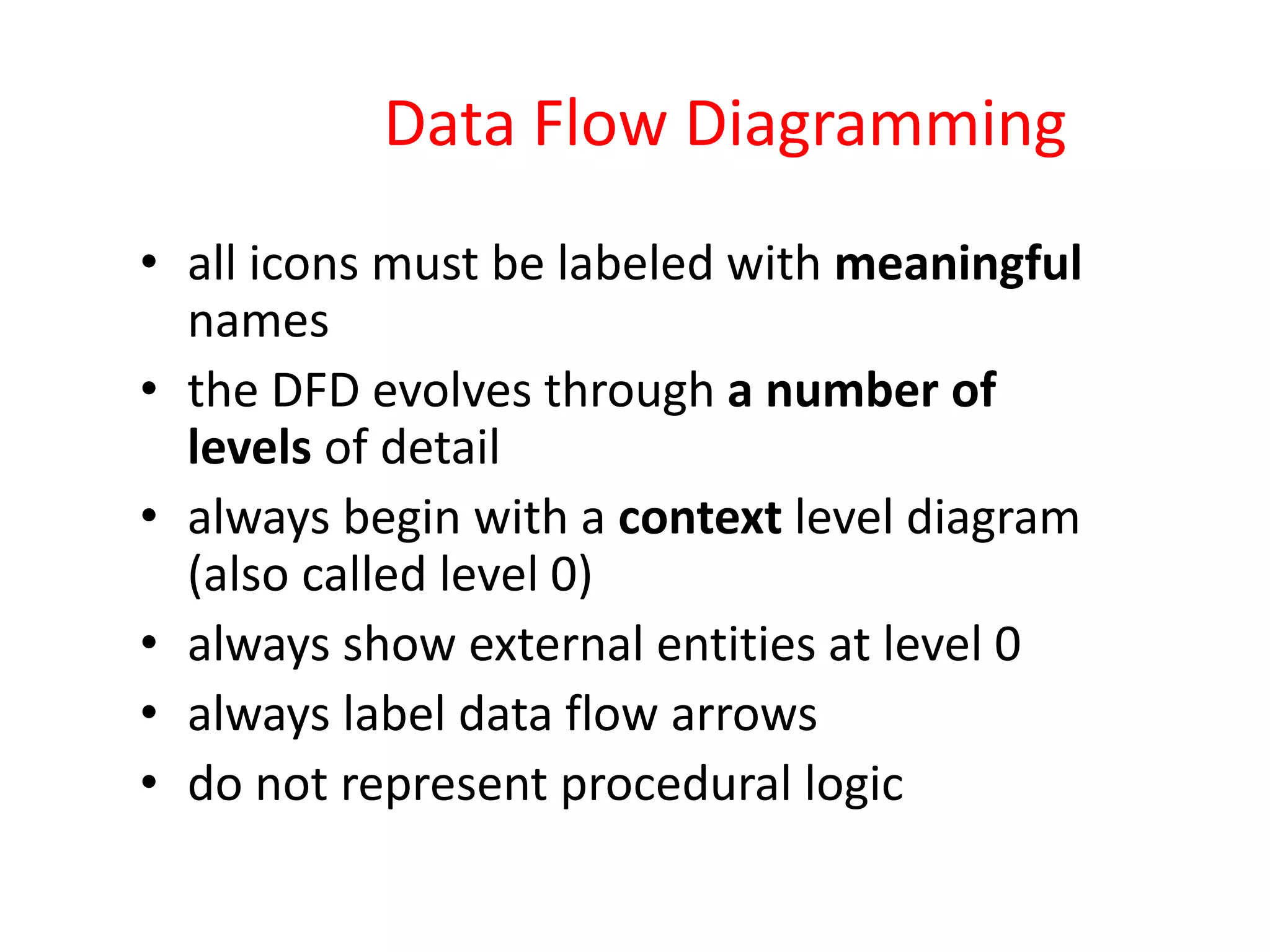
Data Flow Diagramming
• all icons must be labeled with meaningful
names
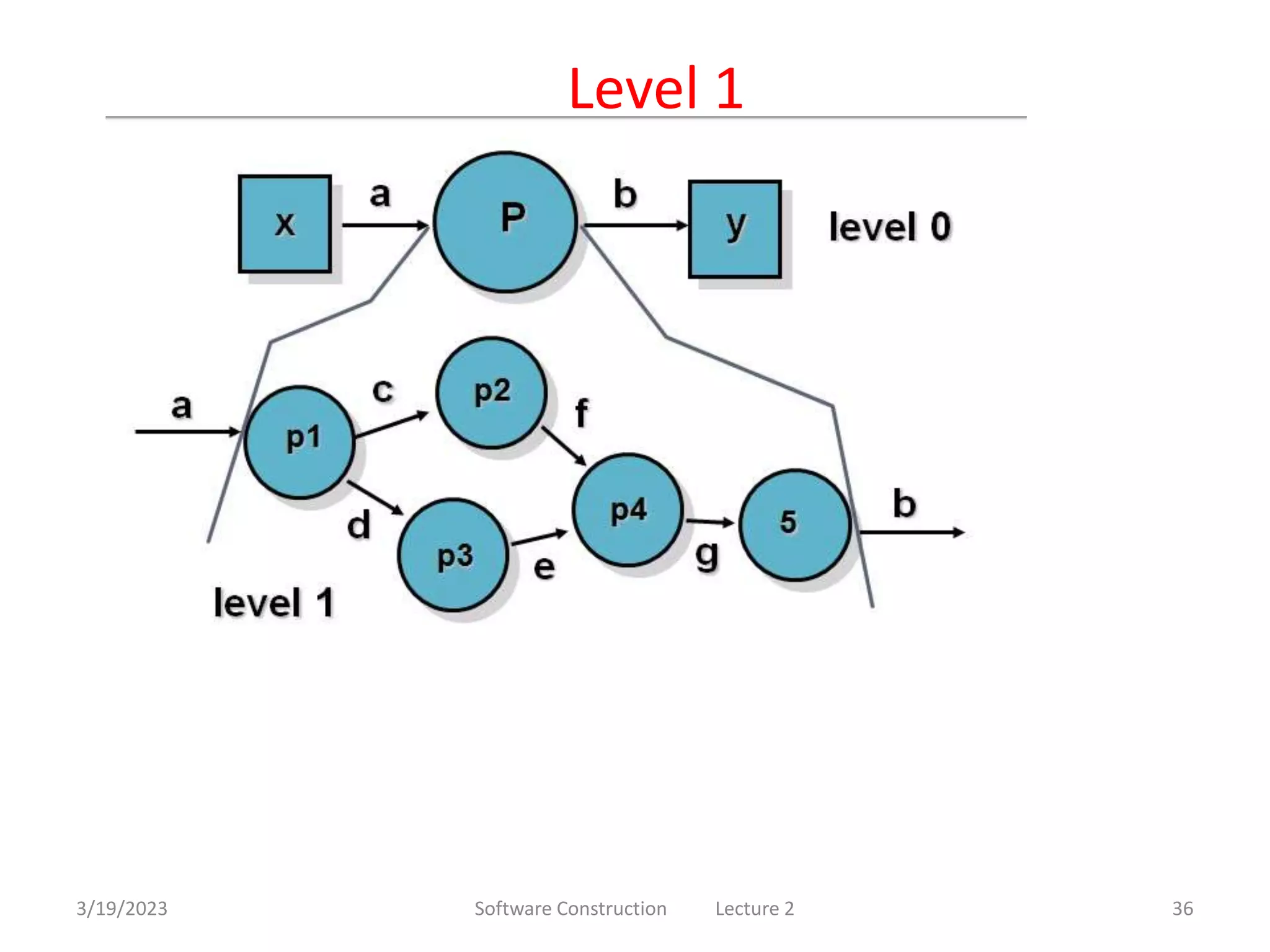
• the DFD evolves through a number of
levels of detail
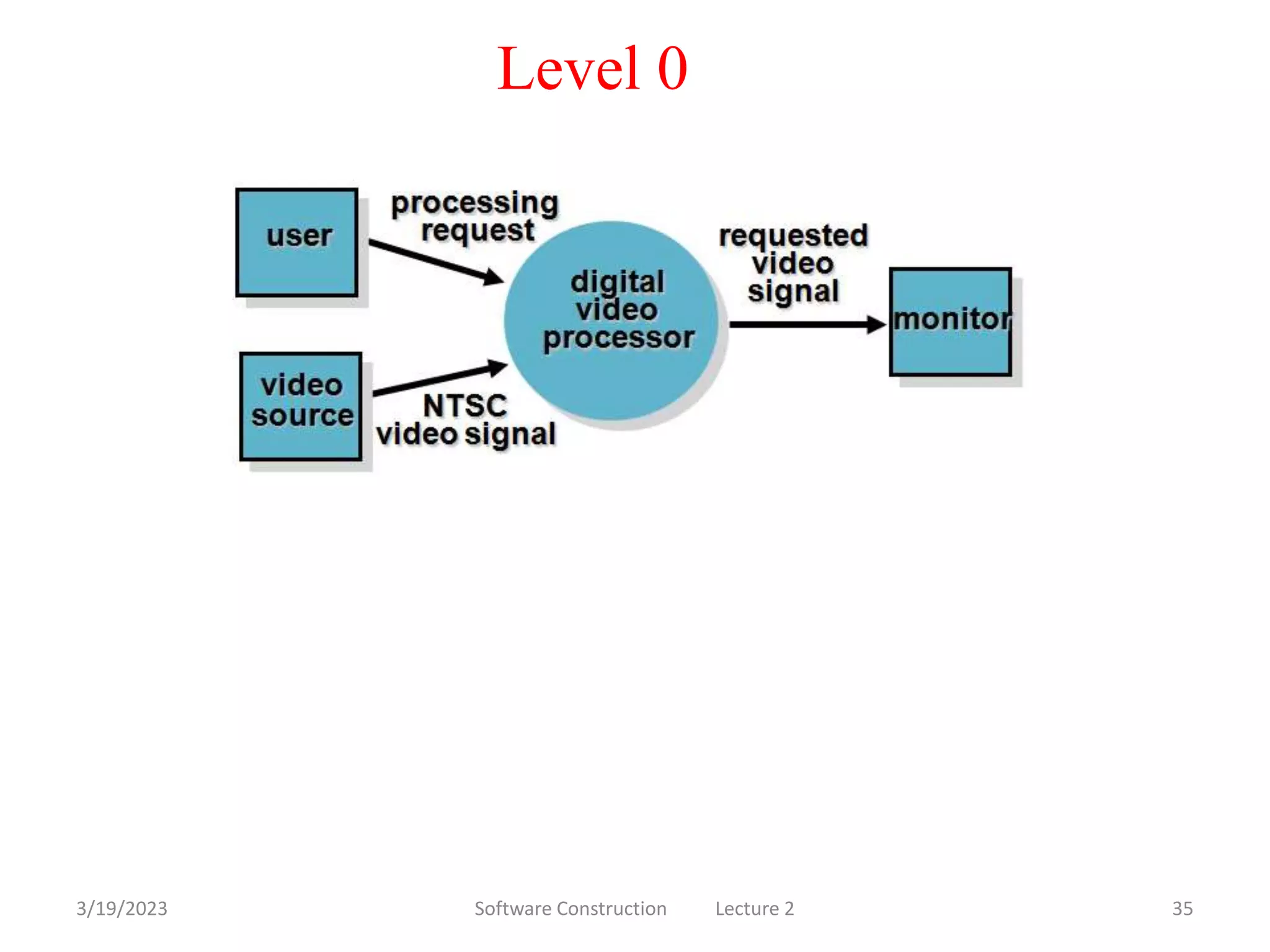
• always begin with a context level diagram
(also called level 0)
• always show external entities at level 0
• always label data flow arrows
• do not represent procedural logic
3/19/2023 Software Construction Lecture 2 35
Level 0
3/19/2023 Software Construction Lecture 2 36
Level 1
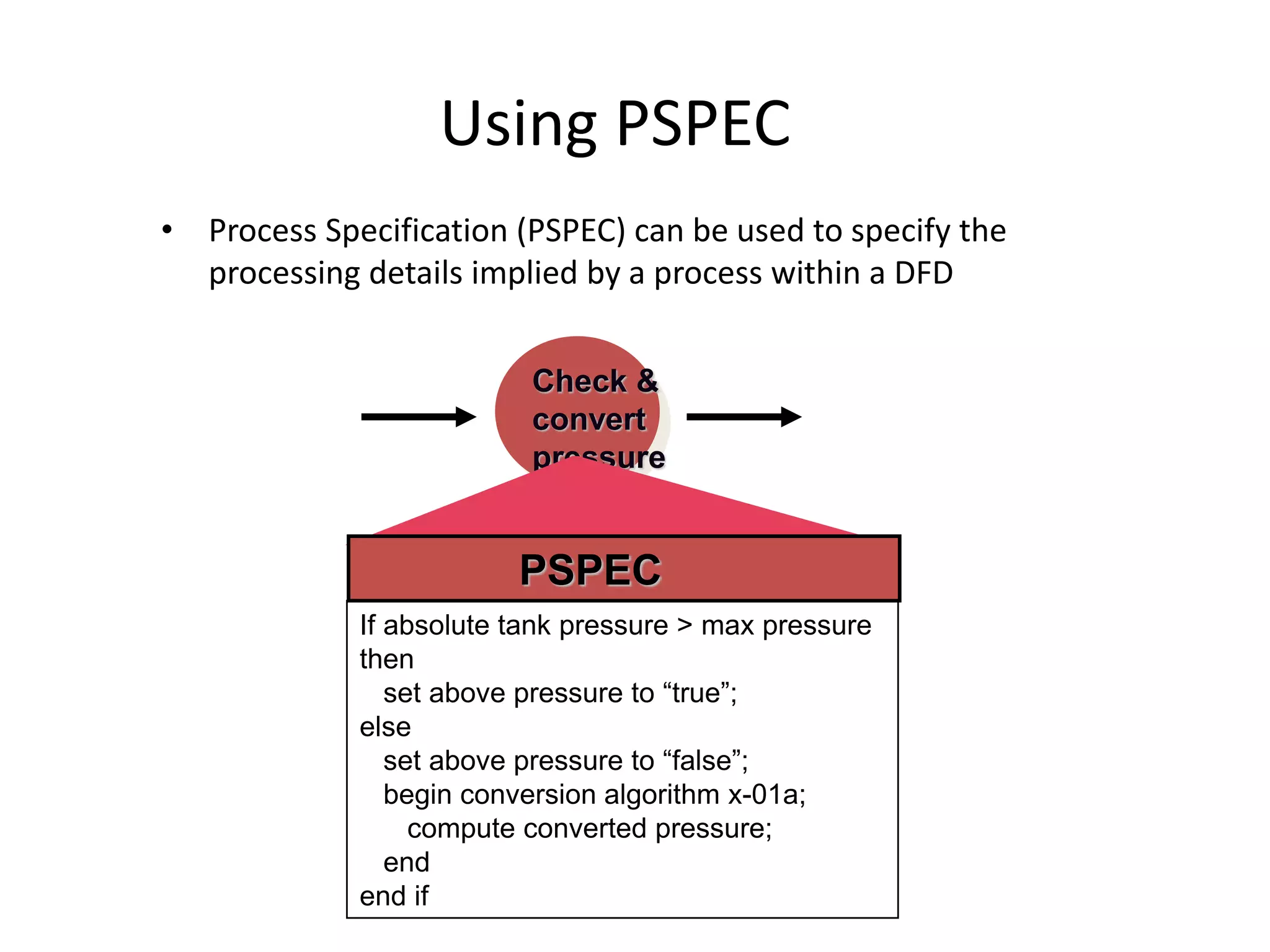
Using PSPEC
• Process Specification (PSPEC) can be used to specify the
processing details implied by a process within a DFD
Check &
convert
pressure
PSPEC
If absolute tank pressure > max pressure
then
set above pressure to “true”;
else
set above pressure to “false”;
begin conversion algorithm x-01a;
compute converted pressure;
end
end if
3/19/2023 Software Construction Lecture 2 38
3/19/2023 Software Construction Lecture 2 39
Basic Concept
3/19/2023 Software Construction Lecture 2 40
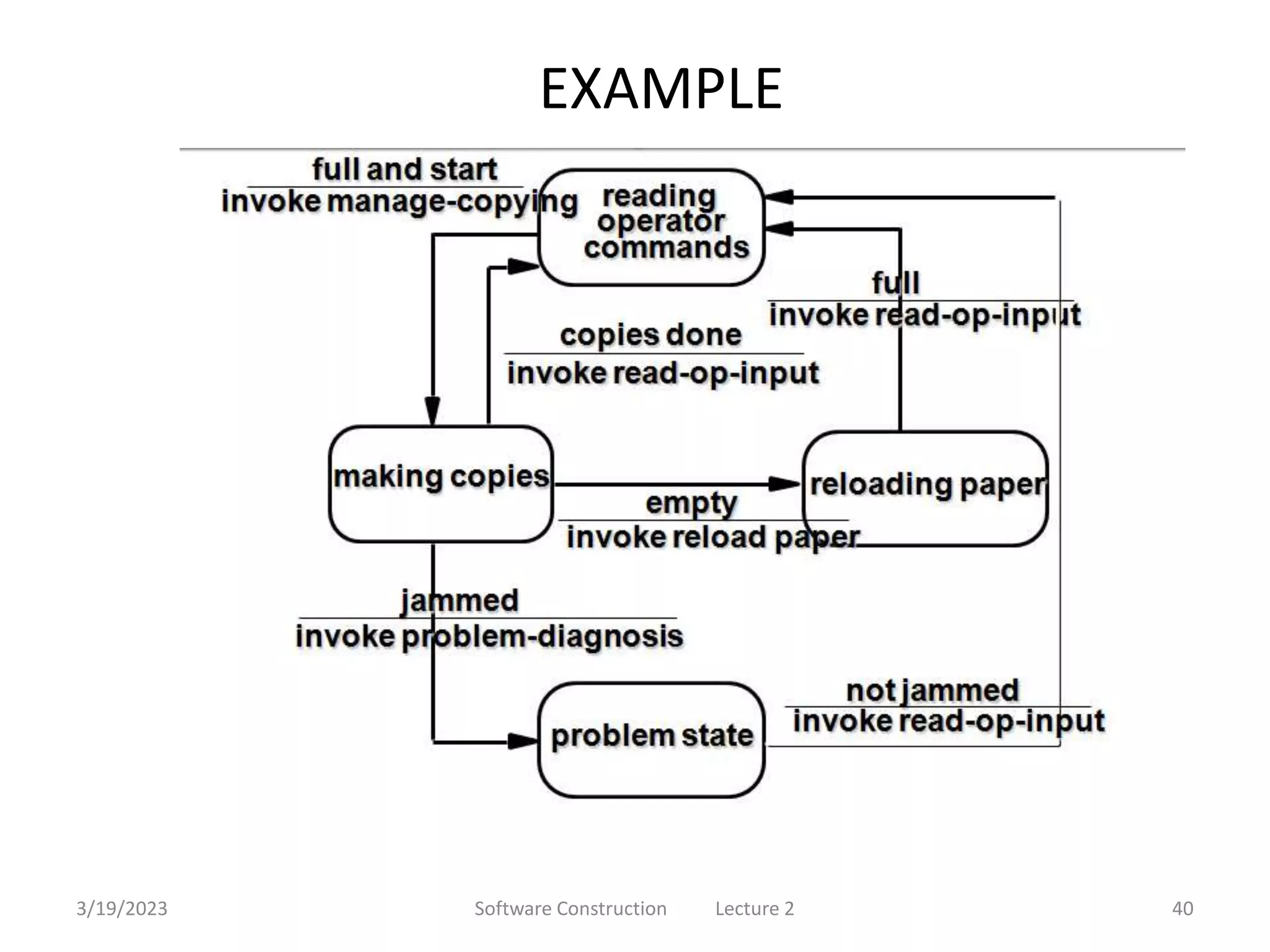
EXAMPLE
3/19/2023 Software Construction Lecture 2 41
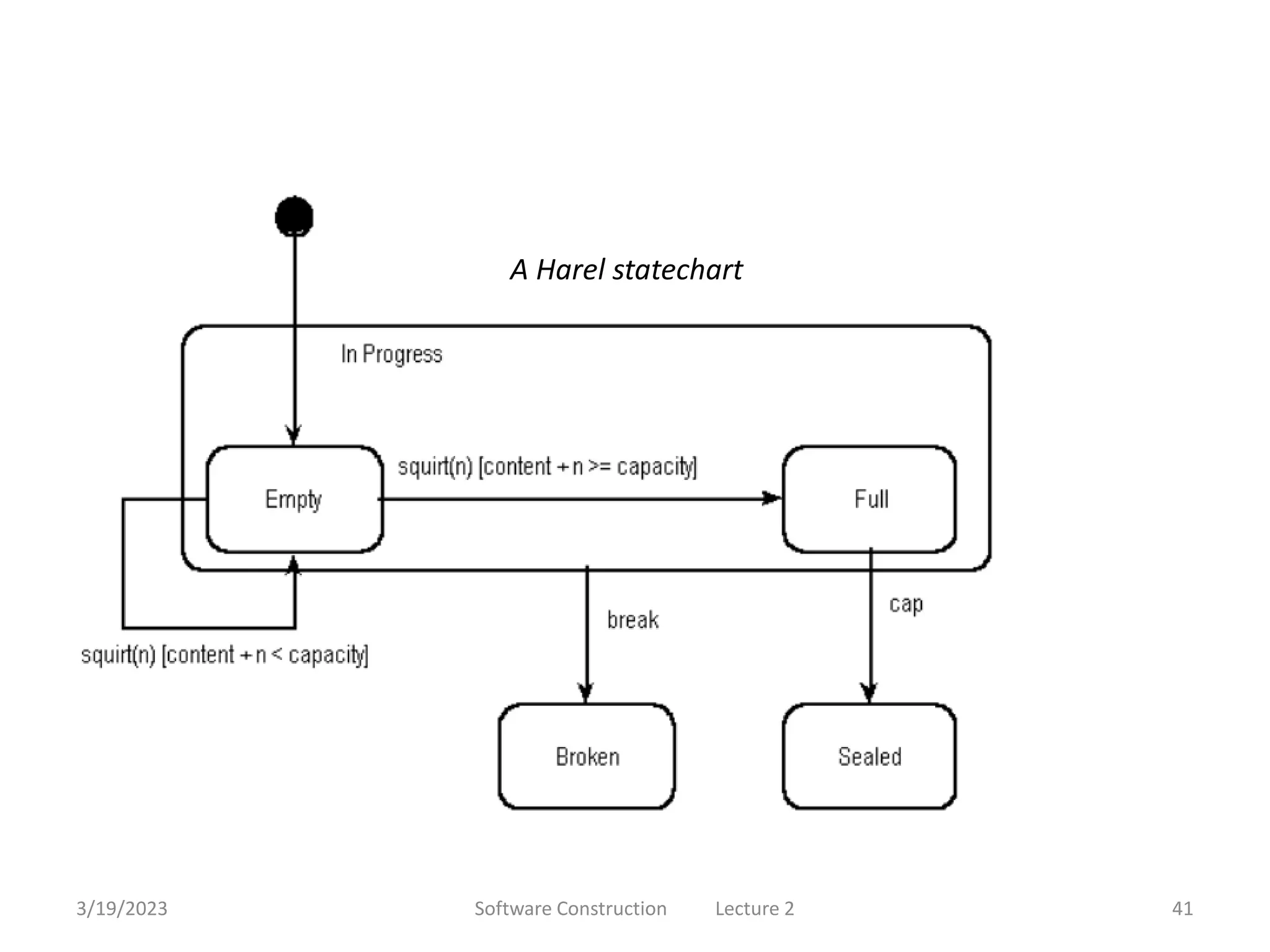
A Harel statechart
3/19/2023 Software Construction Lecture 2 42
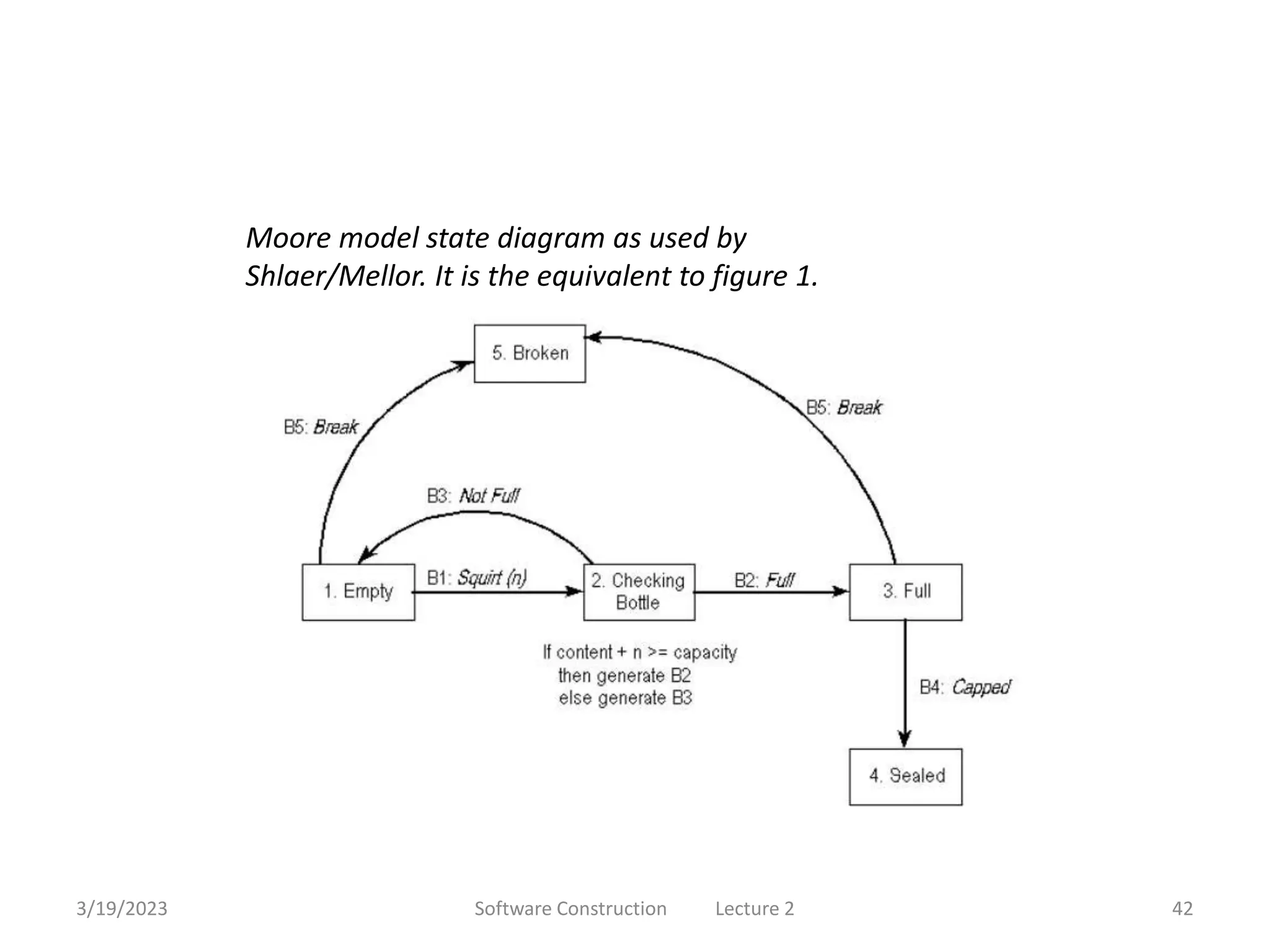
Moore model state diagram as used by
Shlaer/Mellor. It is the equivalent to figure 1.

lecture 2.pptx

Editor's Notes

  • #28 Module 3 - Introduction to Object Orientation