
Presentation
    on
  Android


            Presented By
      Vishav Nath Bansal
         Gurbinder Singh
Aanchal Nohria
Content
• Introduction

• History

• Google Acquistion

• Open Handset Alliance

• Android Version History

• Features

• Uses

• Google play

• Advantages and Disadvantages
Introduction

• Android is a Linux-based operating system

• Primarily      designed    for     mobile   devices   such   as
    smartphones     and     tablet    computers   utilizing   ARM
    processors
• Most embedded applications are for ARM based devices

•   Google TV devices use Intel chips with the x86
    version of Android
• Developed by the Open Handset Alliance, led by Google


• Apps can be downloaded from third-party sites or through
    online stores such as Google Play


•    In June 2012, there were more than 600,000 apps
    available for Android, and the estimated number of
    applications downloaded from Google Play was 20 billion.
• world’s leading smartphone platform at the end of 2010


• Android had a 59% smartphone market share worldwide


• 400 million devices activated and 1 million activations
     per day
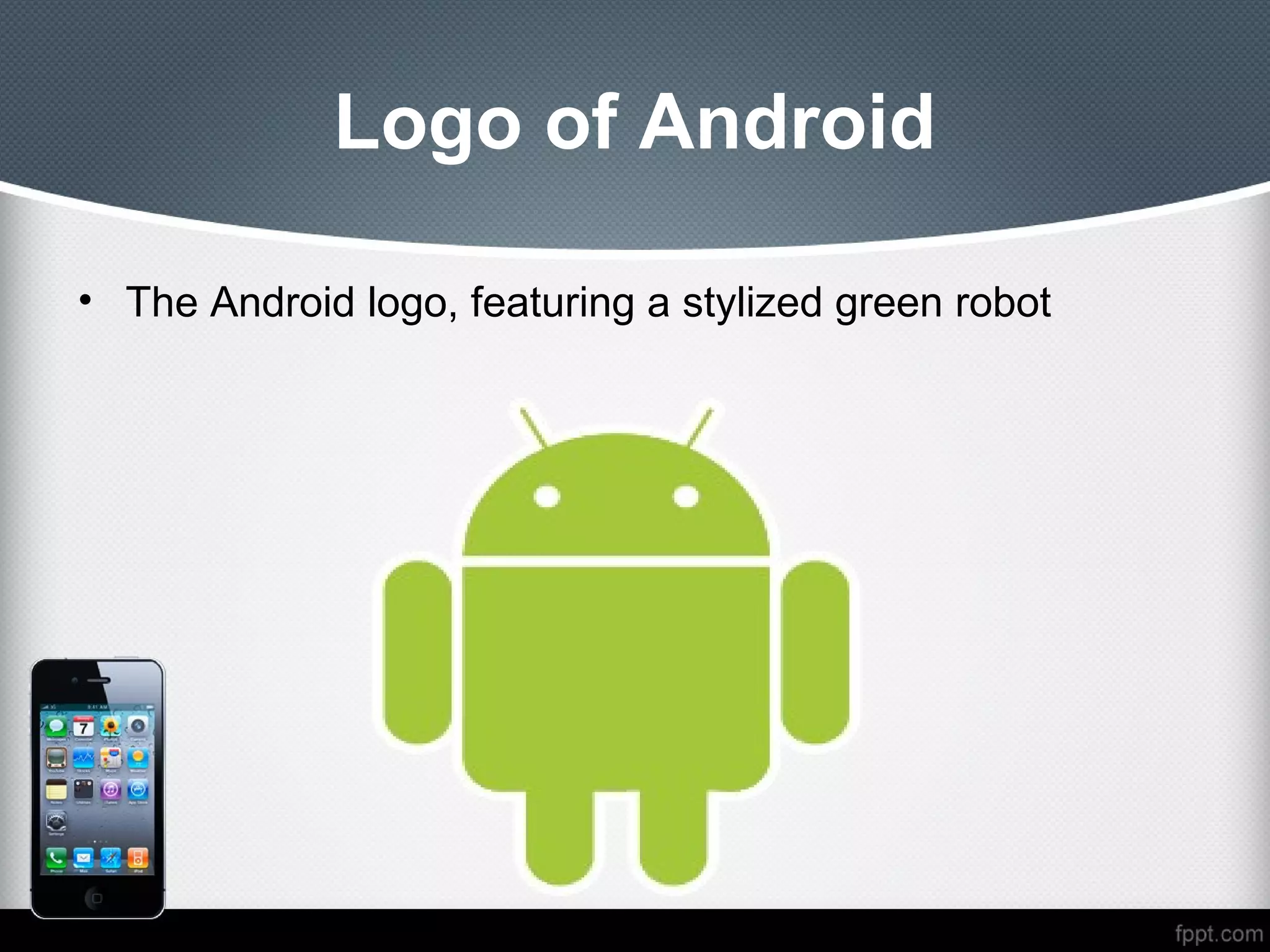
Logo of Android

• The Android logo, featuring a stylized green robot
History


• Founded in Palo Alto, California, United States in
  October 2003 by Andy Rubin (co-founder of Danger),
  Rich Miner (co-founder of Wildfire Communications, Inc.)
Google Acquistion
• Google acquired Android Inc. on August 17, 2005

• Google was planning to enter the mobile phone market
  with this move
• Key employees of Android Inc. stayed at the company
  after the acquisition
• At Google, the team led by Rubin developed a mobile
  device platform powered by the Linux kernel
Open Handset Alliance

• On November 5, 2007, the Open Handset Alliance, a
  group of several companies unveiled itself
• goal of the Open Handset Alliance is to develop open
  standards for mobile devices
• Open Handset Alliance also unveiled their first product,
  Android, a mobile device platform built on the Linux kernl
  version 2.6
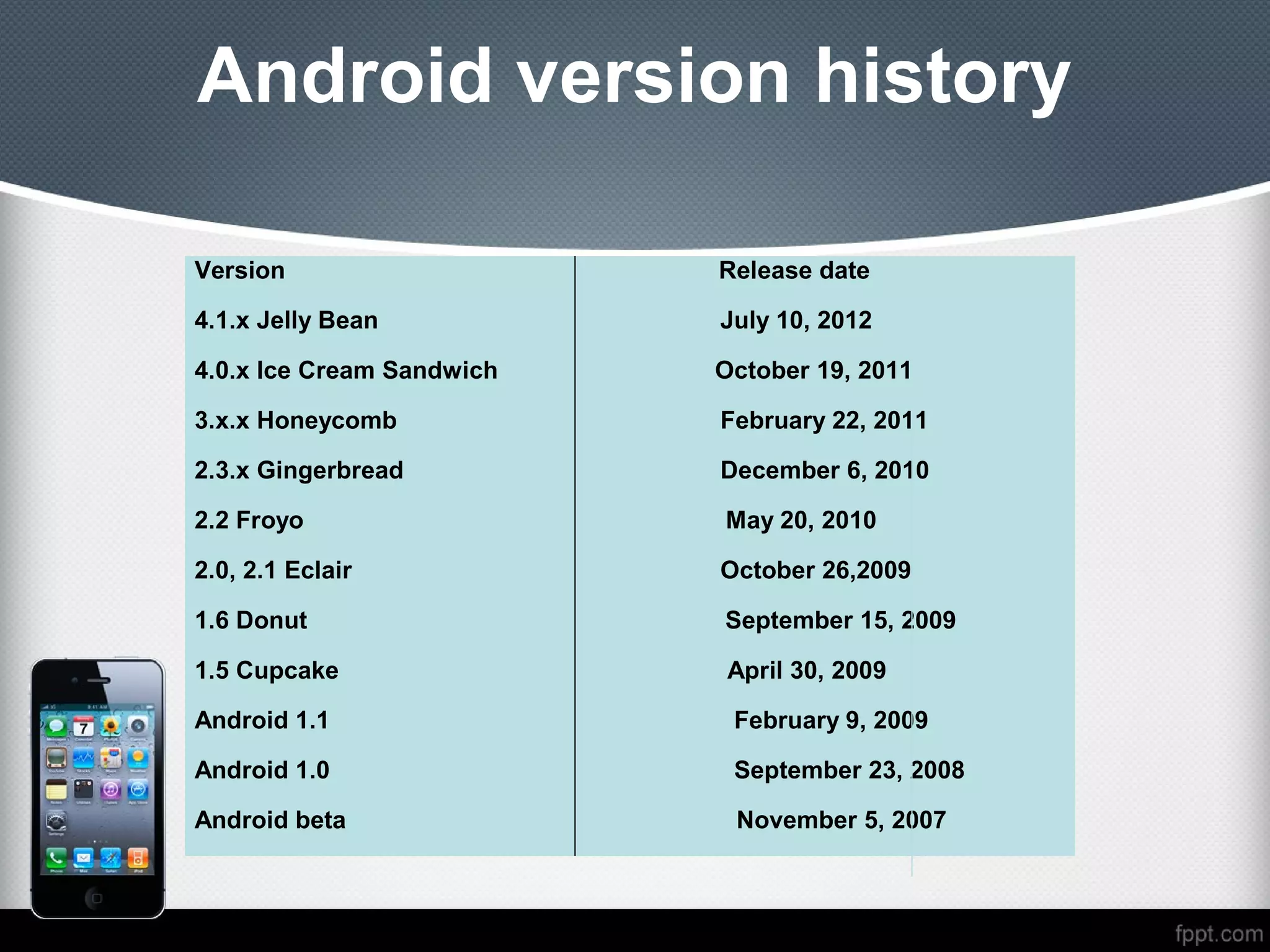
Android version history

Version                    Release date

4.1.x Jelly Bean           July 10, 2012

4.0.x Ice Cream Sandwich   October 19, 2011

3.x.x Honeycomb            February 22, 2011

2.3.x Gingerbread          December 6, 2010

2.2 Froyo                  May 20, 2010

2.0, 2.1 Eclair            October 26,2009

1.6 Donut                  September 15, 2009

1.5 Cupcake                 April 30, 2009

Android 1.1                 February 9, 2009

Android 1.0                 September 23, 2008

Android beta                November 5, 2007
Features

• Handset layouts

• Storage

• Connectivity

• Messaging

• Multiple language support

• Web browser
•Java support

•Media support

•Additional hardware support

•Multi-touch

•Bluetooth
• Multitasking

• Video calling

• Voice based features

• Tethering

• Screen capture

• External storage
Uses

• designed primarily for smartphones, tablets and many
  other   electronics   devices,   including   laptops   and
  netbooks, smartbooks, ebook readers, and smart TVs
• OS has seen special applications on wristwatches,
  headphones, car CD and DVD players, games consoles,
  cameras, portable media players landlines etc
Google Play

• online software store developed by Google for Android
  devices
• application program called "Play Store”

• more than 600,000 apps available for Android

• offers many free applications in the Play Store including
  Google Voice, Google Goggles, Gesture Search, Google
  Translate, Google Shopper, Listen and My Tracks
Advantages
• Multitasking

• Ease of Notification

• Easy access to thousands of applications via the Google
  Android App Market
• Phone options are diverse

• Can install a modified ROM

• Widget
Disadvantages

• Continuous Internet connection

• Advertising

• The lack of compatibility
QUERIES PLEASE


10/18/12                    18

Android Operating System

  • 1.
    Presentation on Android Presented By Vishav Nath Bansal Gurbinder Singh Aanchal Nohria
  • 2.
    Content • Introduction • History •Google Acquistion • Open Handset Alliance • Android Version History • Features • Uses • Google play • Advantages and Disadvantages
  • 3.
    Introduction • Android isa Linux-based operating system • Primarily designed for mobile devices such as smartphones and tablet computers utilizing ARM processors • Most embedded applications are for ARM based devices • Google TV devices use Intel chips with the x86 version of Android
  • 4.
    • Developed bythe Open Handset Alliance, led by Google • Apps can be downloaded from third-party sites or through online stores such as Google Play • In June 2012, there were more than 600,000 apps available for Android, and the estimated number of applications downloaded from Google Play was 20 billion.
  • 5.
    • world’s leadingsmartphone platform at the end of 2010 • Android had a 59% smartphone market share worldwide • 400 million devices activated and 1 million activations per day
  • 6.
    Logo of Android •The Android logo, featuring a stylized green robot
  • 7.
    History • Founded inPalo Alto, California, United States in October 2003 by Andy Rubin (co-founder of Danger), Rich Miner (co-founder of Wildfire Communications, Inc.)
  • 8.
    Google Acquistion • Googleacquired Android Inc. on August 17, 2005 • Google was planning to enter the mobile phone market with this move • Key employees of Android Inc. stayed at the company after the acquisition • At Google, the team led by Rubin developed a mobile device platform powered by the Linux kernel
  • 9.
    Open Handset Alliance •On November 5, 2007, the Open Handset Alliance, a group of several companies unveiled itself • goal of the Open Handset Alliance is to develop open standards for mobile devices • Open Handset Alliance also unveiled their first product, Android, a mobile device platform built on the Linux kernl version 2.6
  • 10.
    Android version history Version Release date 4.1.x Jelly Bean July 10, 2012 4.0.x Ice Cream Sandwich October 19, 2011 3.x.x Honeycomb February 22, 2011 2.3.x Gingerbread December 6, 2010 2.2 Froyo May 20, 2010 2.0, 2.1 Eclair October 26,2009 1.6 Donut September 15, 2009 1.5 Cupcake April 30, 2009 Android 1.1 February 9, 2009 Android 1.0 September 23, 2008 Android beta November 5, 2007
  • 11.
    Features • Handset layouts •Storage • Connectivity • Messaging • Multiple language support • Web browser
  • 12.
    •Java support •Media support •Additionalhardware support •Multi-touch •Bluetooth
  • 13.
    • Multitasking • Videocalling • Voice based features • Tethering • Screen capture • External storage
  • 14.
    Uses • designed primarilyfor smartphones, tablets and many other electronics devices, including laptops and netbooks, smartbooks, ebook readers, and smart TVs • OS has seen special applications on wristwatches, headphones, car CD and DVD players, games consoles, cameras, portable media players landlines etc
  • 15.
    Google Play • onlinesoftware store developed by Google for Android devices • application program called "Play Store” • more than 600,000 apps available for Android • offers many free applications in the Play Store including Google Voice, Google Goggles, Gesture Search, Google Translate, Google Shopper, Listen and My Tracks
  • 16.
    Advantages • Multitasking • Easeof Notification • Easy access to thousands of applications via the Google Android App Market • Phone options are diverse • Can install a modified ROM • Widget
  • 17.
    Disadvantages • Continuous Internetconnection • Advertising • The lack of compatibility
  • 18.