Presentation by
Primary Information Services
www.primaryinfo.com
mailto:primaryinfo@gmail.com
Brontide
butylene
glycol
from Sugar
Manufacturing Process
Green Technology – the best
Brontide is made from plant-based sugars, using fermentation-based
process technology. ... Not only is Brontide the only butylene glycol
made directly from sugars in the world, it conforms to the ISO 16128
definition as a natural ingredient and is also the only butylene glycol
produced in Europe
Most butylene glycol products on the market today are
sourced from petroleum and are made from acetaldehyde, a
carcinogen and mutagen
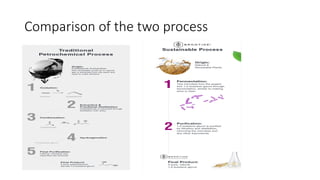
Comparison of the two process
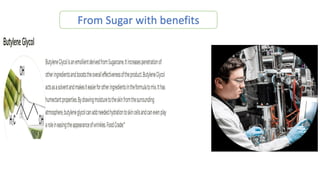
From Sugar with benefits
1,3-Butylene Glycol Market Overview
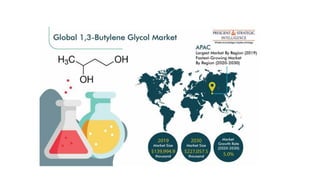
The 1,3-butylene glycol market size stood at
$139,994.9 thousand in 2019, and it is expected to
demonstrate a CAGR of 5.0% during the forecast
period (2020–2030). The growth of the cosmetic
product industry, along with the rising demand for
1,3-butylene glycol in the pharmaceutical sector, is
the major factor driving the 1,3-butylene glycol
industry.
• A bio-engineering company produces Brontide butylene glycol from sustainable
fermentation process technology. The company has recently supplied 600 tons
of Brontide in European market.
• Bio-refining company produced bio-based 1,3 butylene glycol from renewable
resource. And has been certified by USDA for 100% bio-based carbon content.
The company is also COSMOS (Cosmetic Organic and Natural standard)
certified.
• Brontide natural butylene glycol has the potential to reduce global
greenhouse gases by nearly 100,000 tons of carbon dioxide equivalent
(CO2e) per year and eliminate the use of 50,000 tons of acetaldehyde, a
carcinogenic and mutagenic ingredient used in conventional production
methods.
Some of the major expansions and
acquisition in the market
• In June 2019, a Japanese company , announced that it will
expand its production facility of 1,3-butylene glycol
cosmetics grade
• In March 2017, A leading producer of oxo intermediates and
derivatives, has started capacity increase project of 1,3
butylene glycol
• In July 2019, an Indian based bio refinery company received
USDA certified biobased product label for biobased 1,3
butylene glycol
Brontide butylene-glycol - Technology Sources

Brontide butylene-glycol - Technology Sources

  • 1.
    Presentation by Primary InformationServices www.primaryinfo.com mailto:primaryinfo@gmail.com Brontide butylene glycol from Sugar
  • 2.
    Manufacturing Process Green Technology– the best Brontide is made from plant-based sugars, using fermentation-based process technology. ... Not only is Brontide the only butylene glycol made directly from sugars in the world, it conforms to the ISO 16128 definition as a natural ingredient and is also the only butylene glycol produced in Europe Most butylene glycol products on the market today are sourced from petroleum and are made from acetaldehyde, a carcinogen and mutagen
  • 3.
    Comparison of thetwo process
  • 4.
  • 5.
    1,3-Butylene Glycol MarketOverview The 1,3-butylene glycol market size stood at $139,994.9 thousand in 2019, and it is expected to demonstrate a CAGR of 5.0% during the forecast period (2020–2030). The growth of the cosmetic product industry, along with the rising demand for 1,3-butylene glycol in the pharmaceutical sector, is the major factor driving the 1,3-butylene glycol industry.
  • 7.
    • A bio-engineeringcompany produces Brontide butylene glycol from sustainable fermentation process technology. The company has recently supplied 600 tons of Brontide in European market. • Bio-refining company produced bio-based 1,3 butylene glycol from renewable resource. And has been certified by USDA for 100% bio-based carbon content. The company is also COSMOS (Cosmetic Organic and Natural standard) certified. • Brontide natural butylene glycol has the potential to reduce global greenhouse gases by nearly 100,000 tons of carbon dioxide equivalent (CO2e) per year and eliminate the use of 50,000 tons of acetaldehyde, a carcinogenic and mutagenic ingredient used in conventional production methods.
  • 8.
    Some of themajor expansions and acquisition in the market • In June 2019, a Japanese company , announced that it will expand its production facility of 1,3-butylene glycol cosmetics grade • In March 2017, A leading producer of oxo intermediates and derivatives, has started capacity increase project of 1,3 butylene glycol • In July 2019, an Indian based bio refinery company received USDA certified biobased product label for biobased 1,3 butylene glycol