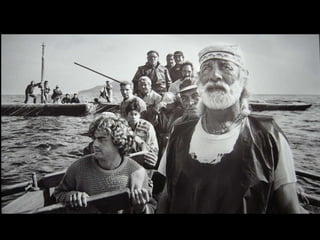
Sebastião Salgado 1
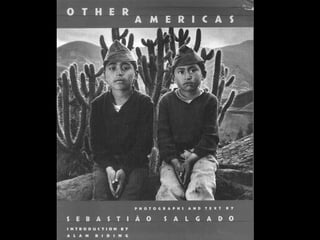
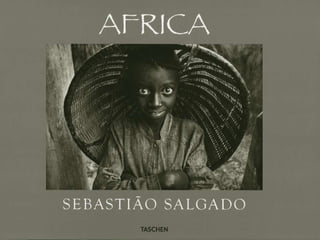
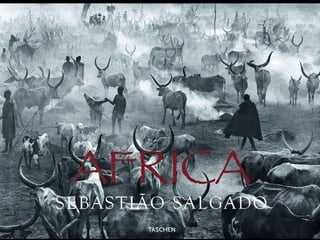
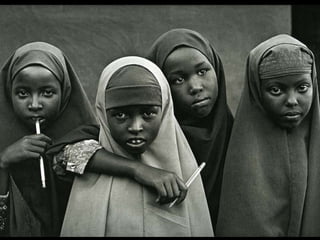
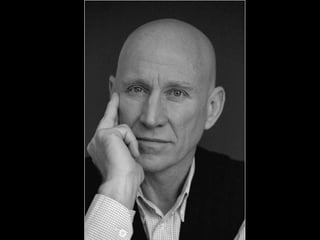
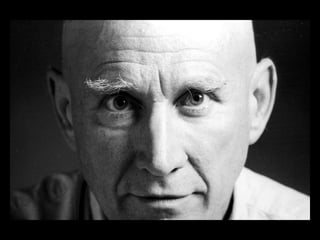
Sebastião Salgado   1/2 Sebastião Salgado was born on February 8th, 1944 in Aimorés, in the state of Minas Gerais, Brazil. He lives in Paris. Having studied economics, Salgado began his career as a professional photographer in 1973 in Paris, working with the photo agencies  Sygma, Gamma, and Magnum Photos  until 1994, when he and Lélia Wanick Salgado formed  Amazonas images , an agency created exclusively for his work. He has travelled in over 100 countries for his photographic projects. Most of these, besides appearing in numerous press publications, have also been presented in books such as  Other Americas  (1986), Sahel: l’homme en détresse  (1986),  Sahel: el fin del camino  (1988),  Workers  (1993),  Terra  (1997),  Migrations and Portraits  (2000), and  Africa  (2007). Touring exhibitions of this work have been, and continue to be, presented throughout the world.  Sebastião Salgado has been awarded numerous major photographic prizes in recognition of his accomplishments. He is a UNICEF Goodwill Ambassador, and an honorary member of the Academy of Arts and Sciences in the United States. 
In 2004, Sebastião Salgado began a project named Genesis , aiming at the presentation of the unblemished faces of nature and humanity. It consists of a series of photographs of landscapes and wildlife, as well as of human communities that continue to live in accordance with their ancestral traditions and cultures. This body of work is conceived as a potential path to humanity’s rediscovery of itself in nature.  Together, Lélia and Sebastião have worked since the 1990’s on the restoration of a small part of the Atlantic Forest in Brazil. In 1998 they succeeded in turning this land into a nature reserve and created the  Instituto Terra . The  Instituto  is dedicated to a mission of reforestation, conservation and environmental education.
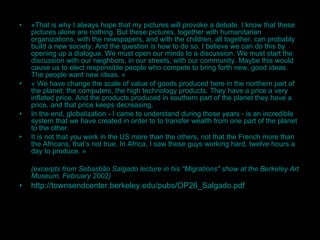
« That is why I  always hope that my pictures will provoke a debate. I know that these pictures alone are nothing. But these pictures, together with humanitarian organizations, with the newspapers, and with the children, all together, can probably build a new society. And the question is how to do so. I believe we can do this by opening up a dialogue. We must open our minds to a discussion. We must start the discussion with our neighbors, in our streets, with our community. Maybe this would cause us to elect responsible people who compete to bring forth new, good ideas. The people want new ideas. » «  We have change the scale of value of goods produced here in the northern part of the planet: the computers, the high technology products. They have a price a very inflated price. And the products produced in southern part of the planet they have a price, and that price keeps decreasing. In the end, globalization - I came to understand during those years - is an incredible system that we have created in order to to transfer wealth from one part of the planet to the other. It is not that you work in the US more than the others, not that the French more than the Africans, that’s not true. In Africa, I saw these guys working hard, twelve hours a day to produce.  » ( excerpts  from  Sebastião Salgado  lecture in his  "Migrations" show at the Berkeley Art Museum , February 2002) http://townsendcenter.berkeley.edu/pubs/OP26_Salgado.pdf
main photographic essays Series of reportages on the global polio eradication campaign done by UNICEF and WHO.   2001 Photographic research on the varying degrees of success of how immigrants have integrated themselves in European Society. Work mainly carried in France, Holland, Germany, Portugal and Italy.   1979 Research on the condition of living of peasants and the cultural resistance of the Indians and their descendants in Latin America. Work mainly carried out from Mexico to Brazil.   1977/84 Work about the devastating effects of the drought in the Sahel region of Africa, working with the humanitarian aid group  Médecins Sans Frontières  (Doctors without Borders).   1984/85   Beginning of Genesis, a series of black-and-white photographs of landscapes, wildlife and human aspects, aiming to depict the unblemished faces of nature and humanity.   2004 Population Movements around the World. 36 photographic investigations on migration, throughout the world. 1994/99 Documentary project on the end of large-scale manual labor, working in 26 countries. 1986/92   On the problems of accommodation and conditions of living in the "4000 Habitations" La Courneuve, suburb of Paris. Work ordered by the Local Council in order to set up a major exhibition exposing this problem.   1978
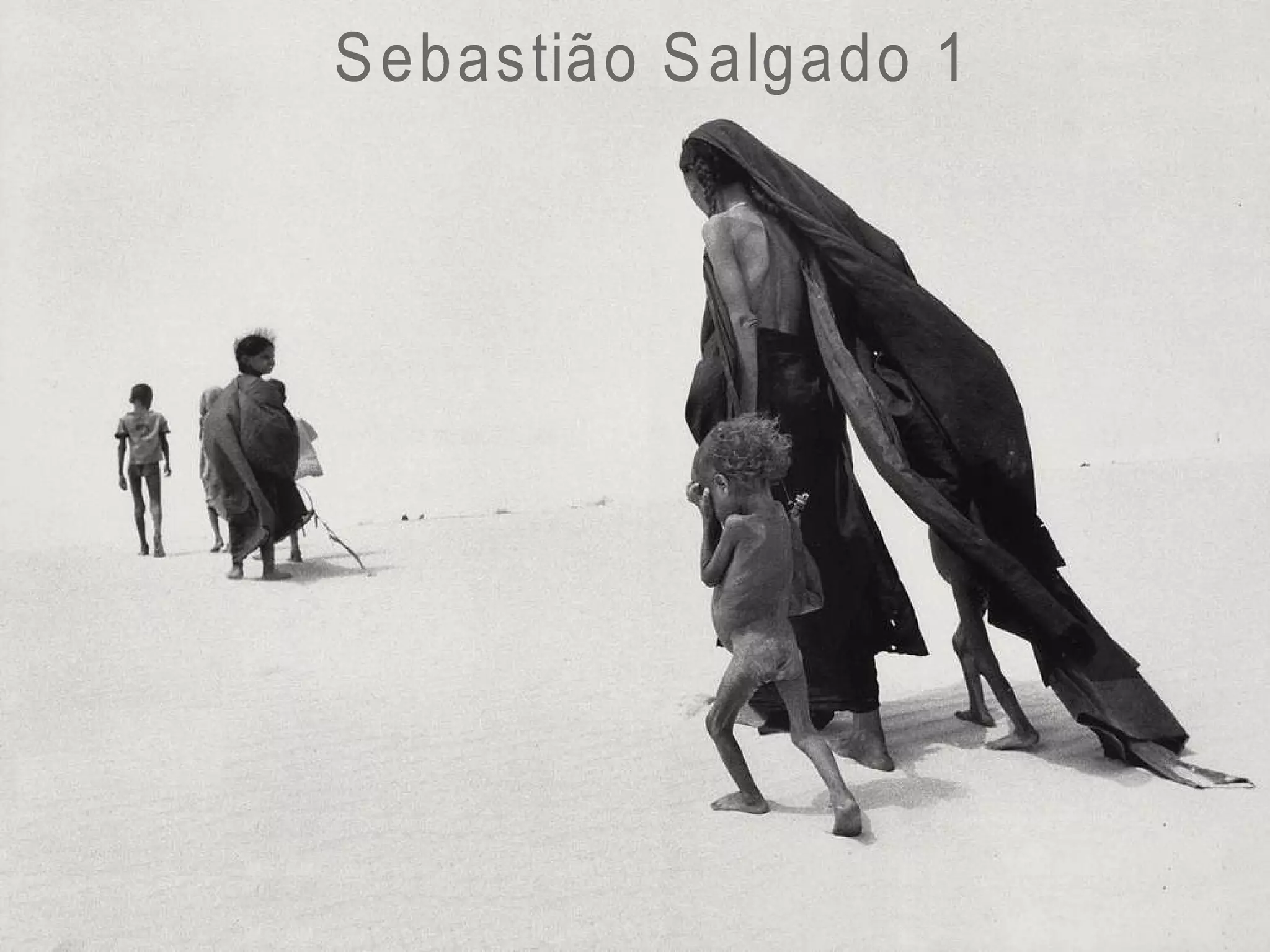
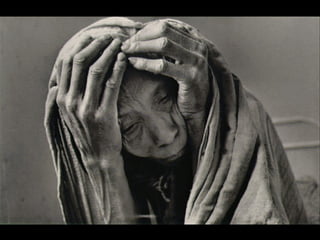
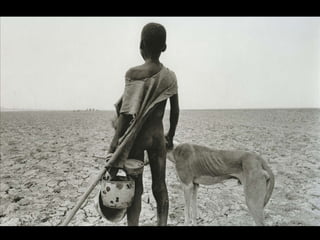
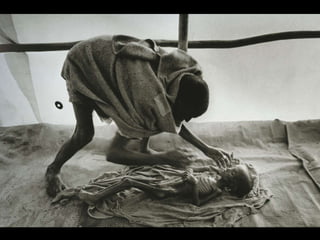
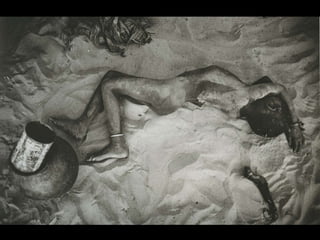
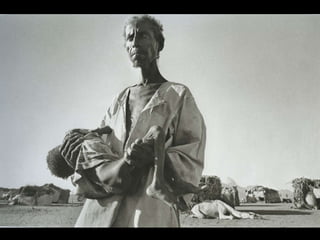
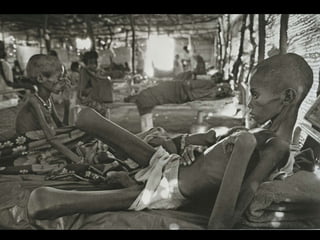
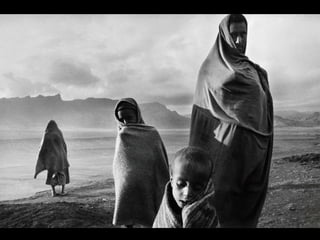
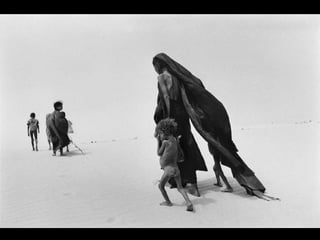
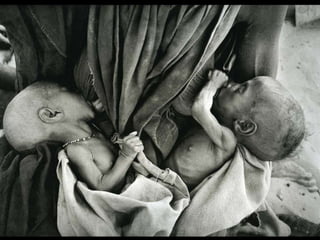
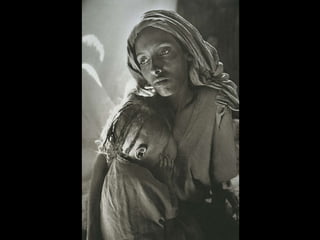
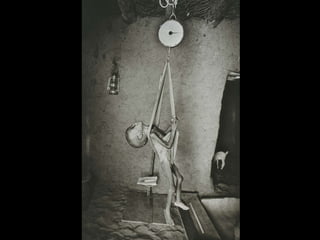
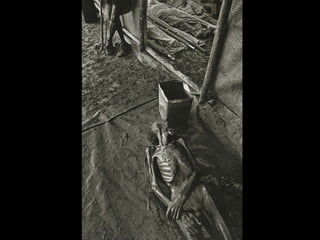
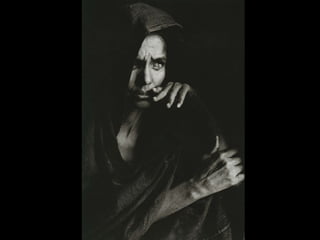
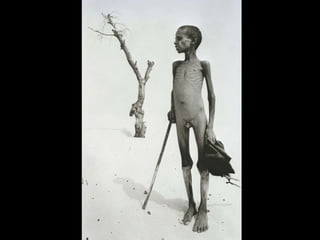
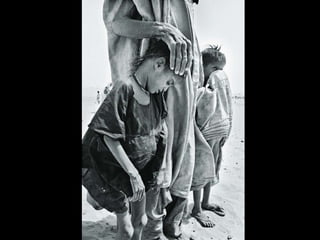
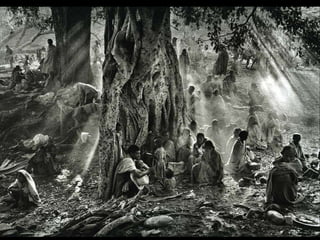
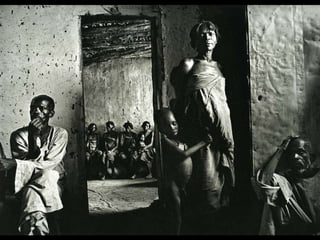
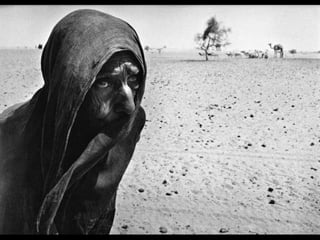
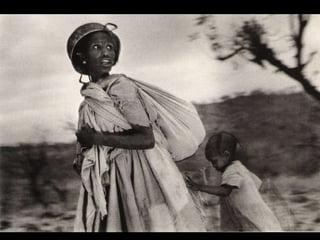
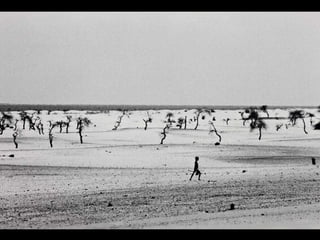
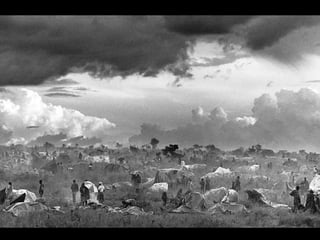
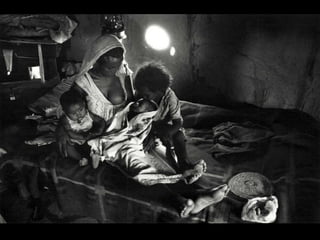
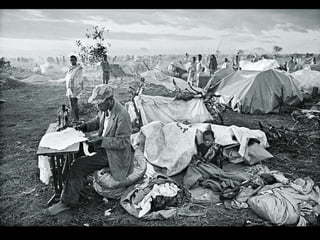
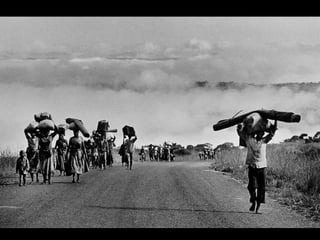
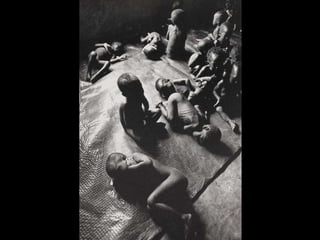
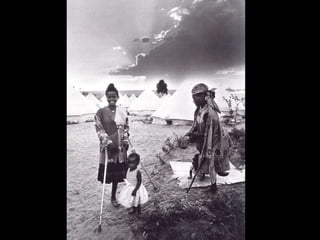
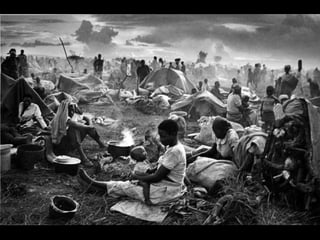
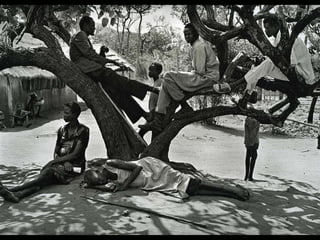
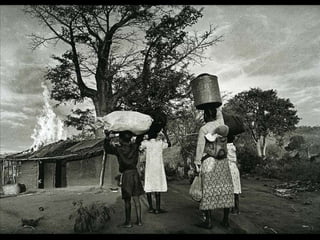
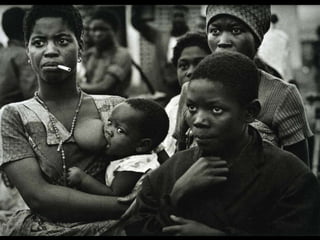
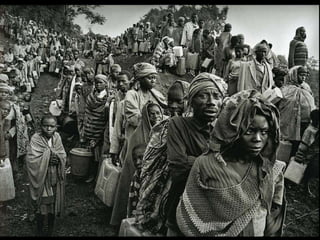
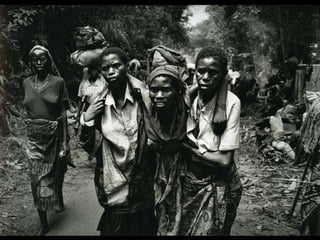
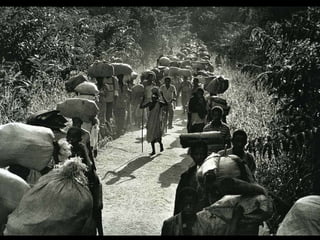
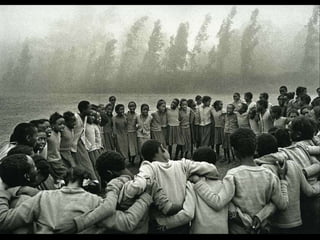
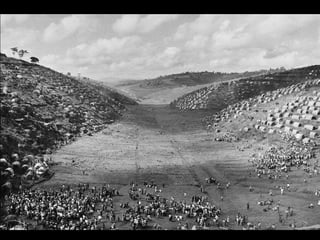
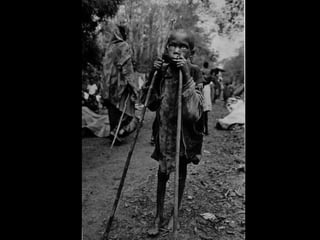
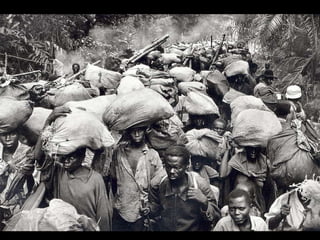
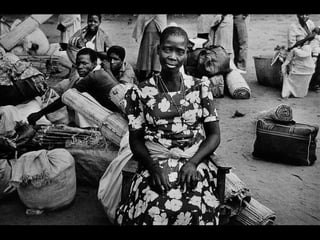
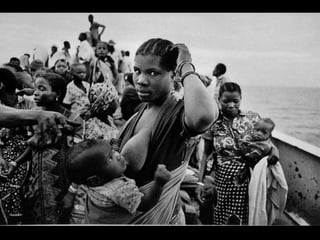
SAHEL   In 1984 and 1985 this part of Africa underwent a drought of catastrophic magnitude, never known before. War was on in several regions, in Chad, in Ethiopia, and, because of the drought or using this natural phenomenon, war amplified the exodus and pushed the populations out of the villages in which they could have hoped to survive.  Sebastião Salgado stayed several months there to photograph the catastrophe in Mali, Chad, Ethiopia, Sudan and Erythrea. He mainly worked with the teams of Médecins sans Frontières (French Doctors without Borders). The images were seen throughout the world, published by the international press. The book  Sahel, l’homme en détresse , published by Prisma Press in 1986, was sold to the profit of MSF in France. In 1988 another book,  Sahel-El fin del camino , was published by Comunidad de Madrid, and sold to the benefit of Spanish MSF. Another book was published in 2004 by University of California Press in the USA,  Sahel, The End of the Road .


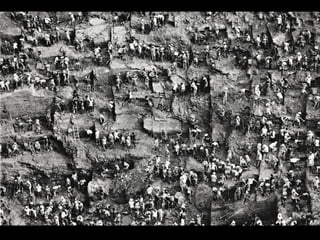
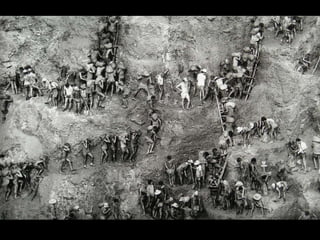
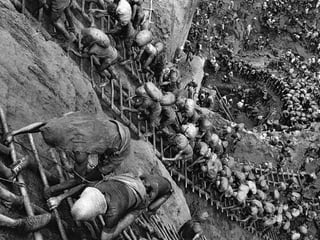
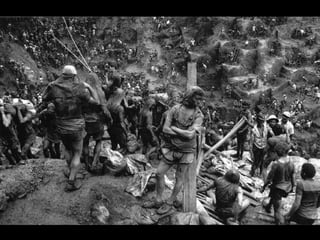
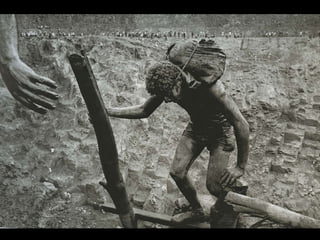
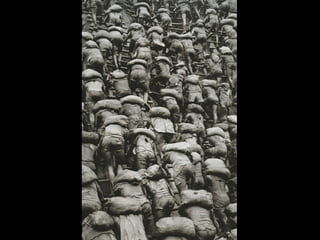
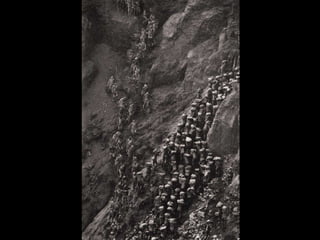
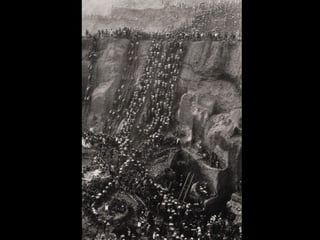
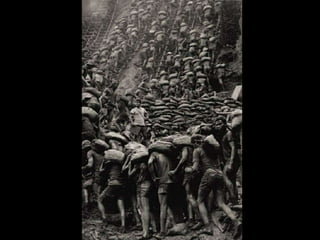
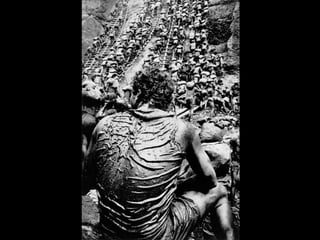
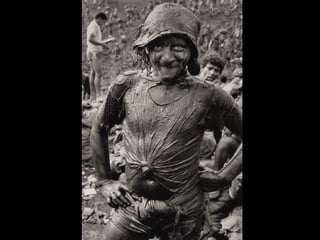
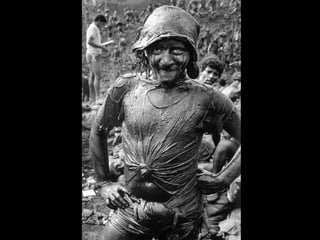
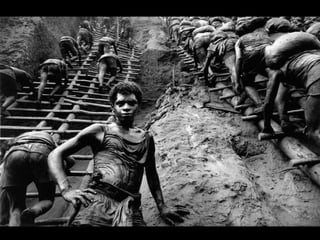
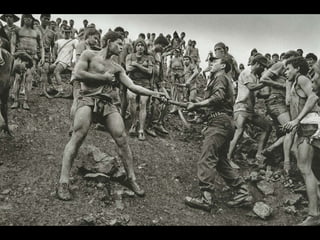
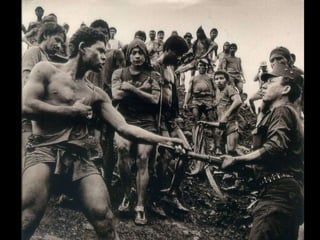
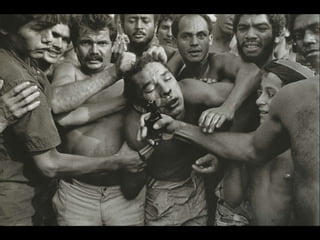
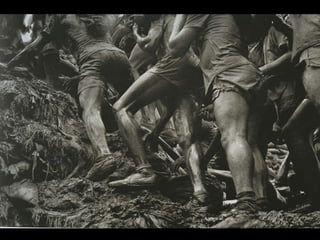
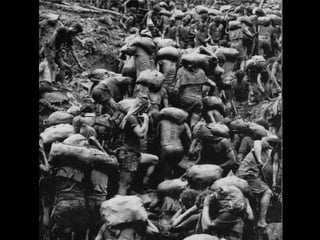
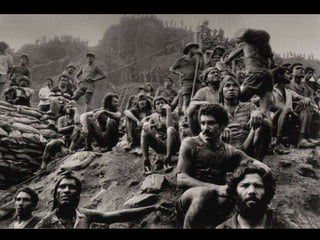
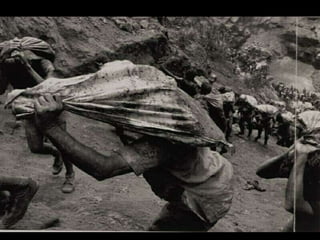
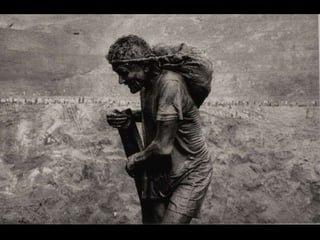
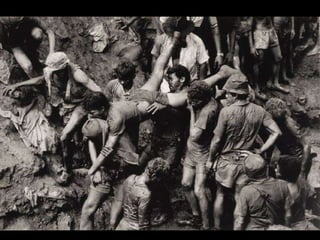
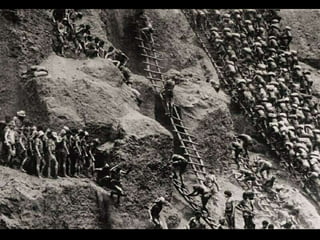
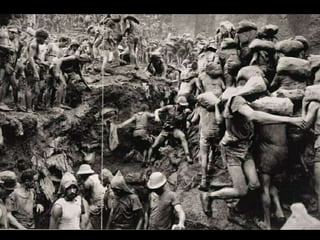
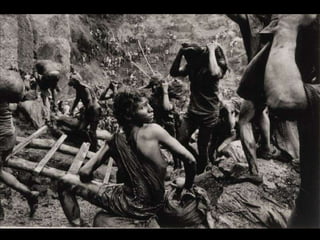
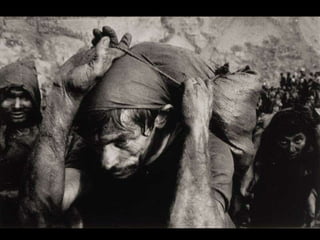
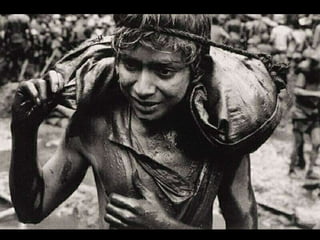
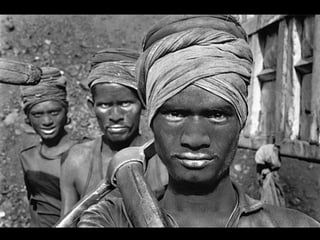
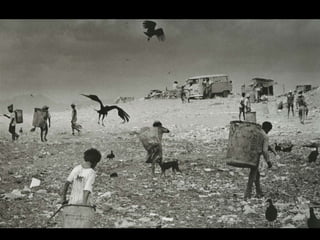
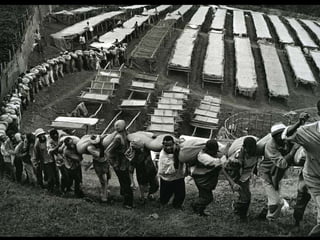
SERRA PELLADA Serra Pelada is an open pit mine, located in Para State in Brazil,now closed. At the peak of activity, dating back 50.000 garimperos tirelessly bags of 50 kg of mud in the hope that one of these hypothetical bags containing gold.  Reporter's global human labor,Sebastião Salgado, Brazilian himself, became known throughout the world the appalling condition of these "men termites. It requires once again the power of photographic evidence as a source of transformation of reality.


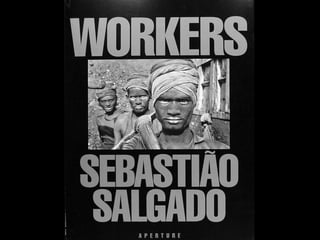
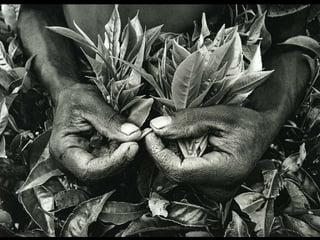
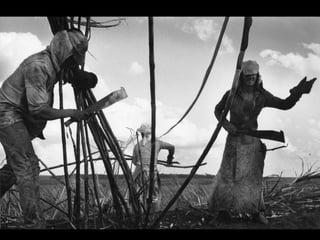
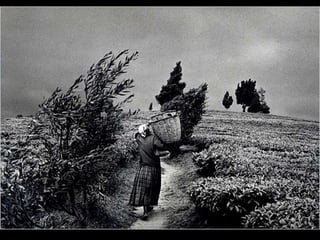
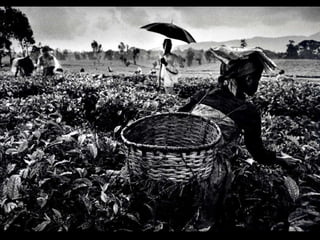
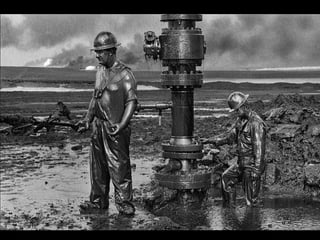
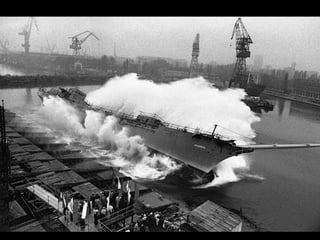
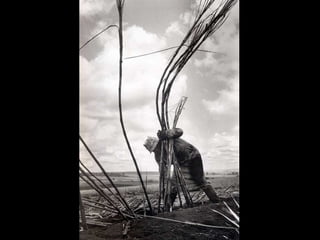
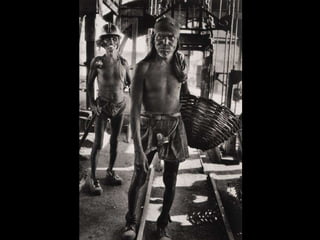
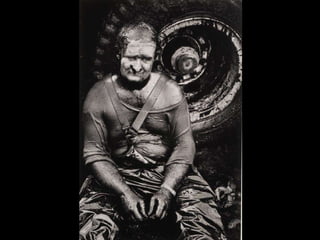
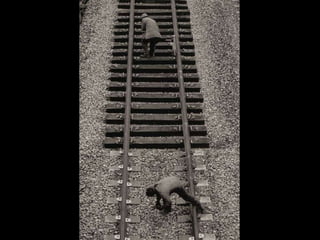
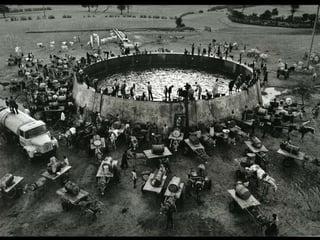
WORKERS   In 1986 Sebastião Salgado began a series of reportages on the theme of manual labor, throughout the different continents. This work was conceived to tell the story of an era. The images offer a visual archaeology of a time that history knows as the Industrial Revolution, a time when men and women work with their hands provided the central axis of the world. The highly industrialized world is racing ahead and stumbling over the future. In reality, this telescoping of time is the result of the work of people throughout the world, although in practice it may benefit few. The developed world produces only for those who can consume-approximately one-fifth of all people. The remaining four-fifths, who could theoretically benefit from surplus production, have no way of becoming consumers. The destiny of men and women is to create a new world, to reveal a new life, to remember that there exists a frontier for everything except dreams. In this way, they adapt, resist, believe, and survive.


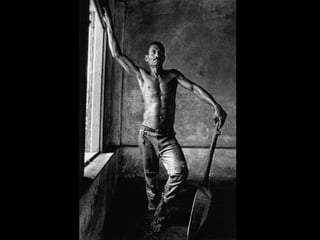
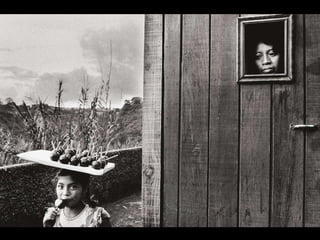
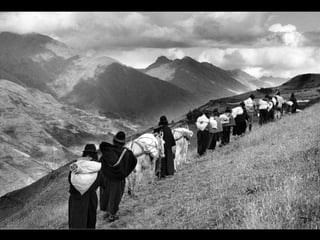
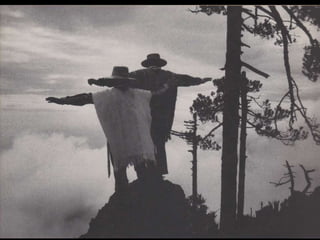
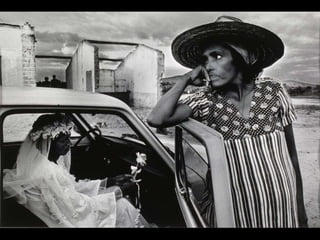
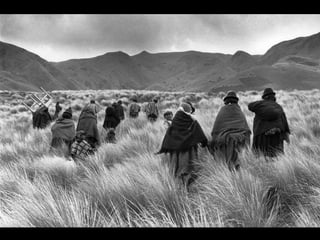
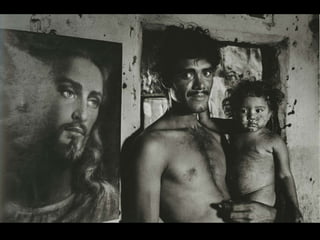
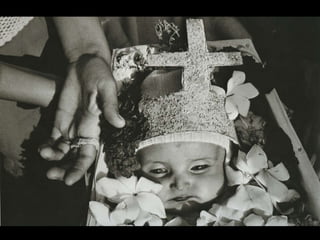
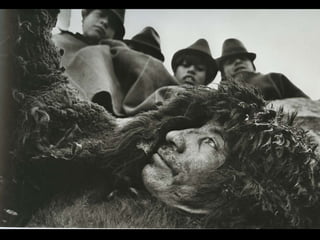
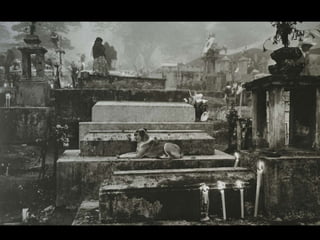
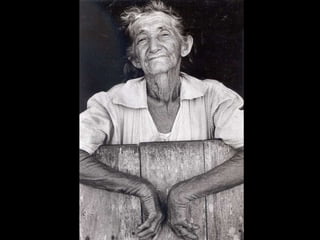
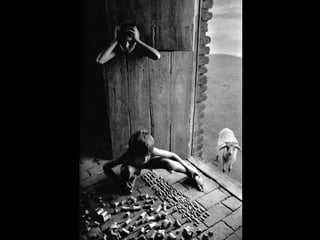
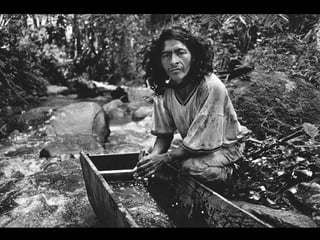
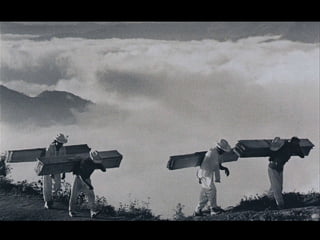
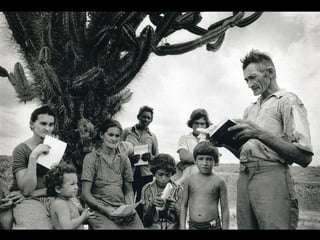
LATIN AMERICA   Between 1977 and 1984, after a few years of photographic adventures in Europe and Africa, Sebastião Salgado made several trips to Latin America, travelling from the torrid coastal lowlands of Northeastern Brazil to the mountains of Chile, to Bolivia, Peru, Ecuador, Guatemala and Mexico, through the indescribable mysticism of the Brazilian sertão, with its leather-clad men and their ferocious fight for survival in the lands so arid, so poor, and so much the spiritual refuge of a whole country. He went through the Sierra Madre with its dense fog, its magical mushrooms and peyotes, he heard stories about its dead so alive in the imagination of the living: that place where it is so difficult to know if we are of this world or another, where death is the inseparable sister of everyday life. The seven years spent making these images were like a trip seven centuries back in time to observe, at a slow, utterly sluggish pace - which marks the passage of time in these regions - the flow of different cultures, so similar in their beliefs, losses and sufferings.


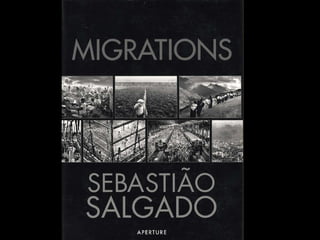
Sebastião Salgado  books  Portoguese -language editions.  Trabalhadores (1996)  ISBN 8571645884 Terra (1997)  ISBN 8420428744 Serra Pelada (1999)  ISBN 2097542700 Outras Américas (1999)  ISBN 8571649030 Retratos de Crianças do Êxodo (2000)  ISBN 8571649359 Exodos (2000)  ISBN 8571649340 O Fim do Pólio (2003)  ISBN 8535903690 Um Incerto Estado de Graça (2004)  ISBN 9722109839 O Berço da Desigualdade  (2005)  ISBN 8576520389 África (2007)  ISBN 3822856223 English-language editions.  An Uncertain Grace  (1992) Workers: An Archaeology of the Industrial Age  (1993), includes photos from 26 countries Terra  (1997) Migrations  (2000), includes photos from 39 countries The Children: Refugees and Migrants  (2000) Sahel: The End of the Road  (2004) Afrika  (2007)
French -language editions. Les Hmongs ,  Médecins sans frontières , Chêne/Hachette, Paris, 1982 Sahel: l'Homme en Détresse , Prisma Presse and Centre National de la Photographie, pour  Médecins sans frontières , France, 1986 Autres Amériques ,  Contrejour , 1986 La Main de l'Homme , Éditions de La Martinière, France, 1993 La mine d'or de Serra Pelada , Galerie Debret, Paris, 1994 Terra , Éditions de La Martinière, France, 1997 Exodus , Éditions de La Martinière, Paris, 2000 L'homme et l'eau , Éditions Terre Bleue, Paris, 2005 Africa , avec Mia Couto et Lélia Wanick Salgado, Tashen France, Paris, 2007 German -language editions. Workers - Arbeiter. Zur Archäologie des Industriezeitalters.  Verlag  Zweitausendeins , Frankfurt am Main 1993, Bildband Terra . Verlag Zweitausendeins, Frankfurt am Main 1997, Bildband Migranten . Verlag Zweitausendeins, Frankfurt am Main 2000, Bildband Kinder der Migration . Verlag Zweitausendeins, Frankfurt am Main 2000, Bildband The End of Polio . Dokumentation der  UNICEF -Kampagne zur Bekämpfung der Kinderlähmung Photo Pocket.  Edition Braus im Wachter Verlag, 2006,  ISBN 978-3-89904-238-2 Afrika .  Taschen Verlag , Köln 2007,  ISBN 978-3-8228-5621-5 , Bildband
Sebastião Salgado   1/2 Copyright  © Amazonas images  Sources http://www.amazonasimages.com/   http://www.google.gr/images   http://www.bing.com/images/search   http://gereltyortonts.wordpress.com/2010/07/23/2939/#more-2939   http://ebe-photo.blogspot.com/2010_04_01_archive.html   http://wayneford.posterous.com/sebastiao-salgados-africa   http://www.hackelbury.co.uk/artists/salgado/salgado_sm.html   http://www.aformi.gr/2010/08/sebastiao-salgado/ http://www.archive.org/download/Salgado/SebastioSalgado.zip http://rapidshare.com/files/72977363/salgadoworkers.rar    http://rapidshare.com/files/73663886/RetratosdelosNinosdelexodo-Salgado.rar http://www.madeinphoto.fr/ http://muzderauli.wordpress.com/2009/07/30/sebastiao-salgado/ http://www.peterfetterman.com/htmls/artists_detail.cfm?artistid=46 http://www.taringa.net/posts/imagenes/1447016/Sebasti_o-Salgado_-Retratos-de-los-Ninos-del-Exodo.html   http://melisaki.tumblr.com/search/sebastiao+salgado   http://www.art2art.org/exhibitions/salgado/ http://www.photography-now.net/sebastiao_salgado/portfolio1.html   http://www.flickr.com/photos/consciencianegra/with/3005551692/ http://ad-forum.is74.ru/AD_forum/showthread.php?t=21929 presentation by sotos

Sebastiao Salgado 1

  • 1.
  • 2.
    Sebastião Salgado 1/2 Sebastião Salgado was born on February 8th, 1944 in Aimorés, in the state of Minas Gerais, Brazil. He lives in Paris. Having studied economics, Salgado began his career as a professional photographer in 1973 in Paris, working with the photo agencies  Sygma, Gamma, and Magnum Photos  until 1994, when he and Lélia Wanick Salgado formed  Amazonas images , an agency created exclusively for his work. He has travelled in over 100 countries for his photographic projects. Most of these, besides appearing in numerous press publications, have also been presented in books such as  Other Americas  (1986), Sahel: l’homme en détresse  (1986),  Sahel: el fin del camino  (1988),  Workers  (1993),  Terra  (1997),  Migrations and Portraits  (2000), and  Africa  (2007). Touring exhibitions of this work have been, and continue to be, presented throughout the world.  Sebastião Salgado has been awarded numerous major photographic prizes in recognition of his accomplishments. He is a UNICEF Goodwill Ambassador, and an honorary member of the Academy of Arts and Sciences in the United States. 
  • 3.
    In 2004, SebastiãoSalgado began a project named Genesis , aiming at the presentation of the unblemished faces of nature and humanity. It consists of a series of photographs of landscapes and wildlife, as well as of human communities that continue to live in accordance with their ancestral traditions and cultures. This body of work is conceived as a potential path to humanity’s rediscovery of itself in nature.  Together, Lélia and Sebastião have worked since the 1990’s on the restoration of a small part of the Atlantic Forest in Brazil. In 1998 they succeeded in turning this land into a nature reserve and created the  Instituto Terra . The  Instituto  is dedicated to a mission of reforestation, conservation and environmental education.
  • 4.
    « That iswhy I always hope that my pictures will provoke a debate. I know that these pictures alone are nothing. But these pictures, together with humanitarian organizations, with the newspapers, and with the children, all together, can probably build a new society. And the question is how to do so. I believe we can do this by opening up a dialogue. We must open our minds to a discussion. We must start the discussion with our neighbors, in our streets, with our community. Maybe this would cause us to elect responsible people who compete to bring forth new, good ideas. The people want new ideas. » « We have change the scale of value of goods produced here in the northern part of the planet: the computers, the high technology products. They have a price a very inflated price. And the products produced in southern part of the planet they have a price, and that price keeps decreasing. In the end, globalization - I came to understand during those years - is an incredible system that we have created in order to to transfer wealth from one part of the planet to the other. It is not that you work in the US more than the others, not that the French more than the Africans, that’s not true. In Africa, I saw these guys working hard, twelve hours a day to produce. » ( excerpts from Sebastião Salgado lecture in his "Migrations" show at the Berkeley Art Museum , February 2002) http://townsendcenter.berkeley.edu/pubs/OP26_Salgado.pdf
  • 5.
    main photographic essaysSeries of reportages on the global polio eradication campaign done by UNICEF and WHO. 2001 Photographic research on the varying degrees of success of how immigrants have integrated themselves in European Society. Work mainly carried in France, Holland, Germany, Portugal and Italy. 1979 Research on the condition of living of peasants and the cultural resistance of the Indians and their descendants in Latin America. Work mainly carried out from Mexico to Brazil. 1977/84 Work about the devastating effects of the drought in the Sahel region of Africa, working with the humanitarian aid group Médecins Sans Frontières (Doctors without Borders). 1984/85 Beginning of Genesis, a series of black-and-white photographs of landscapes, wildlife and human aspects, aiming to depict the unblemished faces of nature and humanity. 2004 Population Movements around the World. 36 photographic investigations on migration, throughout the world. 1994/99 Documentary project on the end of large-scale manual labor, working in 26 countries. 1986/92 On the problems of accommodation and conditions of living in the "4000 Habitations" La Courneuve, suburb of Paris. Work ordered by the Local Council in order to set up a major exhibition exposing this problem. 1978
  • 6.
    SAHEL In 1984 and 1985 this part of Africa underwent a drought of catastrophic magnitude, never known before. War was on in several regions, in Chad, in Ethiopia, and, because of the drought or using this natural phenomenon, war amplified the exodus and pushed the populations out of the villages in which they could have hoped to survive.  Sebastião Salgado stayed several months there to photograph the catastrophe in Mali, Chad, Ethiopia, Sudan and Erythrea. He mainly worked with the teams of Médecins sans Frontières (French Doctors without Borders). The images were seen throughout the world, published by the international press. The book  Sahel, l’homme en détresse , published by Prisma Press in 1986, was sold to the profit of MSF in France. In 1988 another book,  Sahel-El fin del camino , was published by Comunidad de Madrid, and sold to the benefit of Spanish MSF. Another book was published in 2004 by University of California Press in the USA,  Sahel, The End of the Road .
  • 7.
  • 8.
  • 9.
  • 10.
  • 11.
  • 12.
  • 13.
  • 14.
  • 15.
  • 16.
  • 17.
  • 18.
  • 19.
  • 20.
  • 21.
  • 22.
  • 23.
  • 24.
  • 25.
  • 26.
  • 27.
    SERRA PELLADA Serra Pelada is an openpit mine, located in Para State in Brazil,now closed. At the peak of activity, dating back 50.000 garimperos tirelessly bags of 50 kg of mud in the hope that one of these hypothetical bags containing gold.  Reporter's global human labor,Sebastião Salgado, Brazilian himself, became known throughout the world the appalling condition of these "men termites. It requires once again the power of photographic evidence as a source of transformation of reality.
  • 28.
  • 29.
  • 30.
  • 31.
  • 32.
  • 33.
  • 34.
  • 35.
  • 36.
  • 37.
  • 38.
  • 39.
  • 40.
  • 41.
  • 42.
  • 43.
  • 44.
  • 45.
  • 46.
  • 47.
  • 48.
  • 49.
  • 50.
  • 51.
  • 52.
  • 53.
  • 54.
  • 55.
    WORKERS In 1986 Sebastião Salgado began a series of reportages on the theme of manual labor, throughout the different continents. This work was conceived to tell the story of an era. The images offer a visual archaeology of a time that history knows as the Industrial Revolution, a time when men and women work with their hands provided the central axis of the world. The highly industrialized world is racing ahead and stumbling over the future. In reality, this telescoping of time is the result of the work of people throughout the world, although in practice it may benefit few. The developed world produces only for those who can consume-approximately one-fifth of all people. The remaining four-fifths, who could theoretically benefit from surplus production, have no way of becoming consumers. The destiny of men and women is to create a new world, to reveal a new life, to remember that there exists a frontier for everything except dreams. In this way, they adapt, resist, believe, and survive.
  • 56.
  • 57.
  • 58.
  • 59.
  • 60.
  • 61.
  • 62.
  • 63.
  • 64.
  • 65.
  • 66.
  • 67.
  • 68.
  • 69.
  • 70.
  • 71.
    LATIN AMERICA Between 1977 and 1984, after a few years of photographic adventures in Europe and Africa, Sebastião Salgado made several trips to Latin America, travelling from the torrid coastal lowlands of Northeastern Brazil to the mountains of Chile, to Bolivia, Peru, Ecuador, Guatemala and Mexico, through the indescribable mysticism of the Brazilian sertão, with its leather-clad men and their ferocious fight for survival in the lands so arid, so poor, and so much the spiritual refuge of a whole country. He went through the Sierra Madre with its dense fog, its magical mushrooms and peyotes, he heard stories about its dead so alive in the imagination of the living: that place where it is so difficult to know if we are of this world or another, where death is the inseparable sister of everyday life. The seven years spent making these images were like a trip seven centuries back in time to observe, at a slow, utterly sluggish pace - which marks the passage of time in these regions - the flow of different cultures, so similar in their beliefs, losses and sufferings.
  • 72.
  • 73.
  • 74.
  • 75.
  • 76.
  • 77.
  • 78.
  • 79.
  • 80.
  • 81.
  • 82.
  • 83.
  • 84.
  • 85.
  • 86.
  • 87.
  • 88.
  • 89.
  • 90.
  • 91.
  • 92.
  • 93.
  • 94.
  • 95.
  • 96.
  • 97.
  • 98.
  • 99.
  • 100.
  • 101.
  • 102.
  • 103.
  • 104.
  • 105.
  • 106.
  • 107.
  • 108.
  • 109.
  • 110.
  • 111.
  • 112.
  • 113.
  • 114.
  • 115.
  • 116.
  • 117.
  • 118.
  • 119.
  • 120.
  • 121.
  • 122.
  • 123.
  • 124.
  • 125.
  • 126.
  • 127.
  • 128.
  • 129.
  • 130.
  • 131.
  • 132.
  • 133.
  • 134.
  • 135.
  • 136.
  • 137.
  • 138.
  • 139.
  • 140.
  • 141.
  • 142.
  • 143.
  • 144.
  • 145.
  • 146.
  • 147.
  • 148.
  • 149.
  • 150.
  • 151.
  • 152.
  • 153.
  • 154.
  • 155.
  • 156.
  • 157.
  • 158.
  • 159.
  • 160.
  • 161.
  • 162.
    Sebastião Salgado books Portoguese -language editions. Trabalhadores (1996)  ISBN 8571645884 Terra (1997)  ISBN 8420428744 Serra Pelada (1999)  ISBN 2097542700 Outras Américas (1999)  ISBN 8571649030 Retratos de Crianças do Êxodo (2000)  ISBN 8571649359 Exodos (2000)  ISBN 8571649340 O Fim do Pólio (2003)  ISBN 8535903690 Um Incerto Estado de Graça (2004)  ISBN 9722109839 O Berço da Desigualdade  (2005)  ISBN 8576520389 África (2007)  ISBN 3822856223 English-language editions. An Uncertain Grace  (1992) Workers: An Archaeology of the Industrial Age  (1993), includes photos from 26 countries Terra  (1997) Migrations  (2000), includes photos from 39 countries The Children: Refugees and Migrants  (2000) Sahel: The End of the Road  (2004) Afrika  (2007)
  • 163.
    French -language editions.Les Hmongs ,  Médecins sans frontières , Chêne/Hachette, Paris, 1982 Sahel: l'Homme en Détresse , Prisma Presse and Centre National de la Photographie, pour  Médecins sans frontières , France, 1986 Autres Amériques ,  Contrejour , 1986 La Main de l'Homme , Éditions de La Martinière, France, 1993 La mine d'or de Serra Pelada , Galerie Debret, Paris, 1994 Terra , Éditions de La Martinière, France, 1997 Exodus , Éditions de La Martinière, Paris, 2000 L'homme et l'eau , Éditions Terre Bleue, Paris, 2005 Africa , avec Mia Couto et Lélia Wanick Salgado, Tashen France, Paris, 2007 German -language editions. Workers - Arbeiter. Zur Archäologie des Industriezeitalters.  Verlag  Zweitausendeins , Frankfurt am Main 1993, Bildband Terra . Verlag Zweitausendeins, Frankfurt am Main 1997, Bildband Migranten . Verlag Zweitausendeins, Frankfurt am Main 2000, Bildband Kinder der Migration . Verlag Zweitausendeins, Frankfurt am Main 2000, Bildband The End of Polio . Dokumentation der  UNICEF -Kampagne zur Bekämpfung der Kinderlähmung Photo Pocket.  Edition Braus im Wachter Verlag, 2006,  ISBN 978-3-89904-238-2 Afrika .  Taschen Verlag , Köln 2007,  ISBN 978-3-8228-5621-5 , Bildband
  • 164.
    Sebastião Salgado 1/2 Copyright © Amazonas images Sources http://www.amazonasimages.com/ http://www.google.gr/images http://www.bing.com/images/search http://gereltyortonts.wordpress.com/2010/07/23/2939/#more-2939 http://ebe-photo.blogspot.com/2010_04_01_archive.html http://wayneford.posterous.com/sebastiao-salgados-africa http://www.hackelbury.co.uk/artists/salgado/salgado_sm.html http://www.aformi.gr/2010/08/sebastiao-salgado/ http://www.archive.org/download/Salgado/SebastioSalgado.zip http://rapidshare.com/files/72977363/salgadoworkers.rar   http://rapidshare.com/files/73663886/RetratosdelosNinosdelexodo-Salgado.rar http://www.madeinphoto.fr/ http://muzderauli.wordpress.com/2009/07/30/sebastiao-salgado/ http://www.peterfetterman.com/htmls/artists_detail.cfm?artistid=46 http://www.taringa.net/posts/imagenes/1447016/Sebasti_o-Salgado_-Retratos-de-los-Ninos-del-Exodo.html http://melisaki.tumblr.com/search/sebastiao+salgado http://www.art2art.org/exhibitions/salgado/ http://www.photography-now.net/sebastiao_salgado/portfolio1.html http://www.flickr.com/photos/consciencianegra/with/3005551692/ http://ad-forum.is74.ru/AD_forum/showthread.php?t=21929 presentation by sotos

Editor's Notes

  • #5 ownsendcenter.berkeley.edu/pubs/OP26_Salgado.pdf
  • #8 http://4.bp.blogspot.com/-5lMo6sI4jCM/TXJA_hUF1oI/AAAAAAAAG6U/OyKU95H31u4/s1600/sebastiao-salgado-4.gif A malnourished, dehydrated woman in the hospital in Gourma Rharous. Mali . 1985
  • #12 http://4.bp.blogspot.com/_T0Tf-B4Etao/S9APX7xSt_I/AAAAAAAAAgI/KAu5wfedPI4/s1600/003.jpg http://ebe-photo.blogspot.com/2010_04_01_archive.html
  • #13 http://4.bp.blogspot.com/_T0Tf-B4Etao/S9APDT4sOZI/AAAAAAAAAfQ/C4TLSVImZhM/s1600/010.jpg
  • #14 http://s3.amazonaws.com/data.tumblr.com/tumblr_lekczqeKNC1qzfye6o1_1280.jpg?AWSAccessKeyId=AKIAJ6IHWSU3BX3X7X3Q&Expires=1301695273&Signature=mPJY47A27oIXrI4sXTYmEyzTQ5s%3D http://farm2.static.flickr.com/1228/4723284730_a48baa3089_o.jpg Refugees, Korem Camp, Ethiopia, 1984
  • #16 http://ad-forum.is74.ru/gallery/files/501_img035.jpg
  • #17 Korem camp. Ethiopia . 1984
  • #20 Refugee, blinded by sandstorms and eye infections. Mali . 1985
  • #22 http://colunistas.ig.com.br/clarissaschneider/files/2010/10/Sebastiao-Salgado-Africa-3.jpg Above  During the drought that caused famine in Sahel. Shielding their faces from the heat and wind, women and children walk through the desert. Mali, 1985. (©Sebastião Salgado/Amazonas Images/Courtesy of Taschen).
  • #23 http://ad-forum.is74.ru/gallery/files/501_img037.jpg
  • #24 http://ad-forum.is74.ru/gallery/files/501_img0 33 .jpg
  • #25 http://ad-forum.is74.ru/gallery/files/501_img031.jpg
  • #26 http://2.bp.blogspot.com/_6BfXcmq8vyk/TS2E3dThCsI/AAAAAAAACHA/cqv_Q2Rlnn0/s1600/55633.jpg Sebastiào Salgado.  Ethiopie, l'exode. 1984.
  • #27 http://s3.amazonaws.com/data.tumblr.com/tumblr_lfwyz2ijKq1qzfye6o1_1280.jpg?AWSAccessKeyId=AKIAJ6IHWSU3BX3X7X3Q&Expires=1301695982&Signature=qmQnwXnM8QDE8Z3TPAZnZx8wmds%3D http://www.peterfetterman.com/htmls/artists_detail.cfm?artistid=46
  • #29 http://myphillipsdepury.com/xigen/lotimg.aspx?salenum=UK000210&lotnum=343
  • #31 http://www.lefigaro.fr/medias/2009/08/25/20090825PHOWWW00131.jpg
  • #32 http://www.heartfield.org/salgado.jpg
  • #35 http://fotodromo.files.wordpress.com/2010/08/sebastiaosalgadoworkersimage011.jpg Trabajando en las minas de oro de Serra Pelada (Brasil)
  • #38 http://img212.imageshack.us/i/garimpeirostr5.jpg/sr=1
  • #39 http://blog.cancaonova.com/fotosquefalam/files/2009/09/sebastiao-salgado-workers-image-127.jpg
  • #40 http://www.utp.br/eletras/ea/eletras5/Foto_2.jpg
  • #41 http://www.tounouvo.com/uploads/1412-exposition-miniers-d-ici-et-d-ailleurs.jpg
  • #42 http://4.bp.blogspot.com/_T0Tf-B4Etao/S9AORw3Gh9I/AAAAAAAAAeY/fKeXopw-wRg/s1600/014.jpg
  • #43 http://2.bp.blogspot.com/_BaZPDnLguf4/SwPwjkliPbI/AAAAAAAAAMk/mh0gCZtp4B8/s1600/SebastiaoSalgado-Arealman-full.jpg
  • #46 http://www.cuervoblanco.com/galeria/f1.jpg
  • #47 http://blog.cancaonova.com/fotosquefalam/files/2010/01/sebastiao-salgado-workers-image-130.jpg
  • #48 http://blog.cancaonova.com/fotosquefalam/files/2009/11/sebastiao-salgado-workers-image-150.jpg
  • #57 http://www.lindemanns.de/shop/migal/bilder/lima/94059s.jpg
  • #58 http://www.kmspublicidade.com.br/blog/wp-content/uploads/2010/08/Coal-Mine_India.jpg
  • #59 http://ad-forum.is74.ru/gallery/files/501_img0 18 .jpg
  • #60 http://peloprazerdever.files.wordpress.com/2010/04/salgado_sugar1.jpg http://unews.utah.edu/wp-content/uploads/salgado_sugar.jpg
  • #61 http://teaandco.com/wp-content/uploads/2010/04/salgado-plantacion-de-te.jpg
  • #63 http://www.flickr.com/photos/consciencianegra/3005554052/sizes/l/in/photostream/
  • #64 http://www.earthisland.org/eijournal/winter2010/images/1kwordsFull/91-7-82-28.JPG Greater Burhan oilfields, Kuwait. 1991
  • #65 http://www.arts-history.mx/blogs/images/stories/P1170210.JPG Sebastião Salgado,  Aqua Mater , Exposition au Maison du Brasil, Juin 2009, Cité Universitaire, Paris.
  • #66 http://www.maisondubresil.org/Culturel/images/2009%20sebastiao%20salgado.jpg
  • #67 http://www.utp.br/eletras/ea/eletras5/Foto_1.jpg
  • #68 http://homepage.mac.com/cancio/ea/Fotos_Salgado.html
  • #69 http://blog.cancaonova.com/fotosquefalam/files/2009/08/sebastiao-salgado-workers-image-009.jpg
  • #70 http://1.bp.blogspot.com/_oHjCfxlWxmY/S9dtbbxmnKI/AAAAAAAAAIY/NENK46-vIsM/s1600/sebastiao-salgado-workers-image-015.jpg
  • #71 http://blog.cancaonova.com/fotosquefalam/files/2009/12/sebastiao-salgado-workers-image-108.jpg
  • #73 http://www.photoeye.com/auctions/img/1891/Large_H1000xW950.jpg
  • #74 http://s3.amazonaws.com/data.tumblr.com/tumblr_lic4e7CGhj1qzfye6o1_1280.jpg?AWSAccessKeyId=AKIAJ6IHWSU3BX3X7X3Q&Expires=1301695819&Signature=uG4PWH%2FjgUCAXZP4v4KPWuhTCc4%3D The Outskirts of Guatemala City http://melisaki.tumblr.com/search/sebastiao+salgado
  • #75 http://1.bp.blogspot.com/_-JloVxOsxOw/R1HjX82SXbI/AAAAAAAAAdg/AC5Dze-MzqQ/s1600-R/Salgado_press.jpg Chimborazo, Ecuador, 1998
  • #76 http://psychokoinonika.files.wordpress.com/2010/11/sebastiao-salgado.jpg
  • #77 http://lalettredelaphotographie.com/system/photos/99/med_salgado-1988-536-000-jpg.jpg?1288366540
  • #78 http://smithfund.org/wp-content/oqey_gallery/galleries/1982-salgado/galimg/sal8200_ecuador06.jpg
  • #82 http://1.bp.blogspot.com/_T0Tf-B4Etao/S9AN-a0BZjI/AAAAAAAAAdo/8y_uxac1zRY/s1600/023.jpg
  • #83 http://3.bp.blogspot.com/_T0Tf-B4Etao/S9AN-hqupDI/AAAAAAAAAdw/Z9A1f9Eiu5s/s1600/021.jpg
  • #84 http://picsfr.eu/image/79213ad1/
  • #85 http://1.bp.blogspot.com/_YEXBK5VKZ4w/THdFBTPq6hI/AAAAAAAAAJc/Rcqvt9-0Z0k/s1600/SALGADO,+Sebasti%C3%A3o.+Terra+-+p.+58.jpg
  • #86 http://homepage.mac.com/cancio/ea/images/huesos.jpg
  • #87 http://coffeedramatist.files.wordpress.com/2010/06/01020128766200.jpg
  • #88 http://www.deborahkuschner.com/dynamic/images/detail/Sebastiao_Salgado_Wood_Delivery_Men_Eastern_Sierra_Madre_Mexico_120_129.jpg
  • #89 https://www.bulhosa.pt/images/products/00000246518.JPG
  • #90 http://www.artistocratic.com/cgi-bin/libri/Copertine%20Taschen/fo_salgado_africa.jpg
  • #91 http://reblololo.tumblr.com/post/1591006516/melisaki-benako-camp-photo-by-sebastiao http://1.bp.blogspot.com/_D408gUnWMas/TP4wwss741I/AAAAAAAABUE/lnyKsma4tjU/s1600/benako.camp.tanzanya.1994.+by.Sebastiao.Salgado.jpg
  • #92 http://s3.amazonaws.com/data.tumblr.com/tumblr_lgzs8qghDe1qzfye6o1_1280.jpg?AWSAccessKeyId=AKIAJ6IHWSU3BX3X7X3Q&Expires=1301241765&Signature=IGyRcMgRh7gkdDywABX5zImQGwM%3D Okavange Delta, Botswana, Africa photo by Sebastião Salgado, 2007
  • #93 http://www.ciudadviva.gov.co/diciembre07/magazine/1/1big.jpg
  • #94 http://s3.amazonaws.com/files.posterous.com/temp-2010-12-24/huaagcAJbdBdICjaAcoabhveAgxJhGjcaoJthqHserrzvGuIkCApknmxHrGh/fo_salgado_africa_05.jpg.scaled1000.jpg?AWSAccessKeyId=AKIAJFZAE65UYRT34AOQ&Expires=1301127100&Signature=cjymBz98H1GaukXaVTqdAtMU5lM%3D Above  Dinka group at Pagarau cattle camp. Southern Sudan, 2006. (©Sebastião Salgado/Amazonas Images/Courtesy of Taschen).
  • #95 http://res.bigc.edu.cn/shuziyingxiang/file/images/101026/1222143RW.JPG
  • #98 http://static.diario.latercera.com/201102/1178570.jpg
  • #99 http://bigc.sres.bjedu.cn/shuziyingxiang/file/images/101026/122214360S.JPG
  • #100 http://www.flickr.com/photos/consciencianegra/3005553914/sizes/l/in/photostream/
  • #102 http://noravr.blog.lemonde.fr/files/2007/10/9783822856215_1.1193679430.jpg
  • #105 http://emilysview.files.wordpress.com/2010/03/landmines.jpg
  • #106 http://feast.web.unc.edu/files/2010/10/11-Salgado.jpg Rwandan refugee camp with mother and child, Tanzania , 1994
  • #107 http://refugeediaries.files.wordpress.com/2011/04/exodos-2.jpg
  • #108 http://refugeediaries.files.wordpress.com/2011/04/exodos-3.jpg
  • #109 http://ad-forum.is74.ru/gallery/files/501_img040.jpg
  • #110 http://ad-forum.is74.ru/gallery/files/501_img042.jpg
  • #111 http://ad-forum.is74.ru/gallery/files/501_img012.jpg
  • #112 http://ad-forum.is74.ru/gallery/files/501_img030.jpg
  • #113 http://ad-forum.is74.ru/gallery/files/501_img043.jpg
  • #114 http://ad-forum.is74.ru/gallery/files/501_img010.jpg
  • #115 http://ad-forum.is74.ru/gallery/files/501_img024.jpg
  • #116 http://ad-forum.is74.ru/gallery/files/501_img009.jpg
  • #117 http://ad-forum.is74.ru/gallery/files/501_img048.jpg
  • #118 http://ad-forum.is74.ru/gallery/files/501_img045.jpg
  • #119 http://ad-forum.is74.ru/gallery/files/501_img04 4 .jpg
  • #120 http://ad-forum.is74.ru/gallery/files/501_img0 11 .jpg
  • #121 http://ad-forum.is74.ru/gallery/files/501_img0 47 .jpg
  • #122 http://ad-forum.is74.ru/gallery/files/501_img0 29 .jpg
  • #123 http://www.spd.org/contest/R1064Salgado.jpg
  • #125 http://www.photoeye.com/auctions/img/4748/Large_H1000xW950.jpg
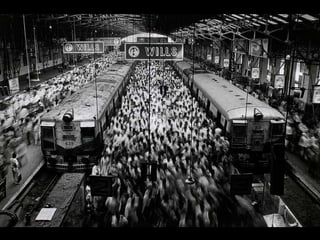
  • #126 http://www.ricecracker.net/files/blog_images/sebasti_o_salgado_church_gate_station_1995.jpg Church Gate Station, Bombay, Inida 1995 © Sebastião Salgado
  • #127 http://www.art2art.org/exhibitions/salgado/95-3-67-31%20LR.jpg
  • #128 http://www.art2art.org/exhibitions/salgado/95-4-255-17%20LR.jpg
  • #129 http://www.art2art.org/exhibitions/salgado/95-7-111-16%20LR.jpg
  • #130 http://www.art2art.org/exhibitions/salgado/96-4-260-11a%20LR.jpg
  • #131 http://s3.amazonaws.com/data.tumblr.com/tumblr_le7wquDFtQ1qzfye6o1_1280.jpg?AWSAccessKeyId=AKIAJ6IHWSU3BX3X7X3Q&Expires=1301696468&Signature=98I4mhePypmAmWjTMs1poMlCTMM%3D The Mosque of Istiqlal
  • #132 http://nonadablog.zip.net/images/salgado3mst.jpg http://2.bp.blogspot.com/_ZFthdB6ovtU/TGdw8COcHuI/AAAAAAAAAYE/V1Xplckz8XI/s1600/sebasti%C3%A3o+s.bmp
  • #133 http://homepage.mac.com/cancio/ea/Fotos_Salgado.html
  • #136 http://emilysview.files.wordpress.com/2010/03/homeless.jpg http://emilysview.wordpress.com/2010/03/
  • #137 http://emilysview.files.wordpress.com/2010/03/bathtime.jpg
  • #138 http://jenniferlucyhale.files.wordpress.com/2010/03/salgado-cityscape.jpg
  • #139 http://www.art2art.org/exhibitions/salgado/97-3-127-13%20LR.jpg
  • #140 http://res.bigc.edu.cn/shuziyingxiang/file/images/101026/12224251157.JPG
  • #141 http://media.photobucket.com/image/sebastiao%20salgado/fredmello/12-exodo1.jpg#!oZZ10QQcurrentZZhttp%3A%2F%2Fmedia.photobucket.com%2Fimage%2Fsebastiao%20salgado%2Futtarayan10%2FSalgadoMBYMahim.jpg%3Fo%3D10
  • #142 http://thephotobook.files.wordpress.com/2009/09/salgado_dhanbad_india_1989.jpg?w=800&h=542
  • #143 http://res.bigc.edu.cn/shuziyingxiang/file/images/101026/12221011262.JPG
  • #144 http://res.bigc.edu.cn/shuziyingxiang/file/images/101026/122201T232.JPG
  • #145 http://res.bigc.edu.cn/shuziyingxiang/file/images/101026/1222RGQ1.jpg
  • #146 http://1.bp.blogspot.com/_MuWNJtJ8XS4/RjVonELdtHI/AAAAAAAAAc8/jSKHKwU8Vxo/s1600/B.%2BSalgado%2B-%2BKisangani,%2BZaire,%2B1997.jpg
  • #147 http://bigc.sres.bjedu.cn/shuziyingxiang/file/images/101026/1221Z422I.JPG
  • #148 http://res.bigc.edu.cn/shuziyingxiang/file/images/101026/1221Z4E62.JPG
  • #149 http://res.bigc.edu.cn/shuziyingxiang/file/images/101026/12221434602.JPG
  • #150 http://3.bp.blogspot.com/-o_DhEfegFfM/Tah8lLI8-kI/AAAAAAAAAdc/sy_3TYeLLeA/s1600/Picture3.png
  • #151 http://refugeediaries.files.wordpress.com/2011/04/exodos-01.jpg
  • #152 http://res.bigc.edu.cn/shuziyingxiang/file/images/101026/1221G355W.JPG
  • #153 http://res.bigc.edu.cn/shuziyingxiang/file/images/101026/1221JQG2.JPG
  • #154 http://rvision.daydreamlabs.com/user/50242801@N03/set/72157624144495625?page=56&per_page=50&size=original
  • #155 http://res.bigc.edu.cn/shuziyingxiang/file/images/101026/12215253616.JPG
  • #156 http://ngmchina.com.cn/bbs/attachments/month_0801/20080123_42eb74f2adc2ab039d39n0WzXIPYf0NM.gif
  • #157 http://www.earthisland.org/journal/index.php/eij/article/toward_the_end_genesis/ Foundation for Child Welfare, São Paulo, Brazil. 1996
  • #158 http://s3.amazonaws.com/data.tumblr.com/tumblr_liq5p1ZFhX1qzfye6o1_1280.jpg?AWSAccessKeyId=AKIAJ6IHWSU3BX3X7X3Q&Expires=1301696576&Signature=cmrUYe2jUyIkfL8RuD4qgWg6enY%3D Thailand, 1987
  • #159 Greater Burhan oilfields, Kuwait. 1991
  • #160 http://www.art2art.org/exhibitions/salgado/95-4-205-12%20LR.jpg