HOME SEED STORAGE 
FOR HAWAI`I’S GARDENERS 
Alvin Y. Yoshinaga 
Center for Conservation Research & Training 
University of Hawai`i-Manoa 
(retired) 
alviny@hawaii.edu 
24 March 2012
HOME SEED STORAGE FOR HAWAI`I’S 
GARDENERS 
SLIDE SHOW: Scientific Principles of Seed Storage 
LECTURE: Practical home seed storage 
Techniques 
Equipment 
DEMONSTRATION: How you can store seeds at home 
TIME FOR QUESTIONS: At the end of the Demonstration 
MORE QUESTIONS? I’ll be here tomorrow
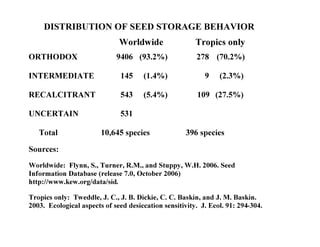
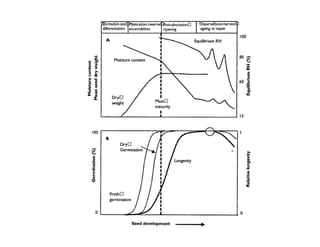
ORTHODOX SEEDS 
(tolerate extreme drying) 
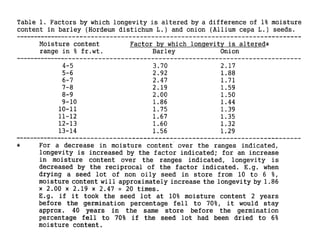
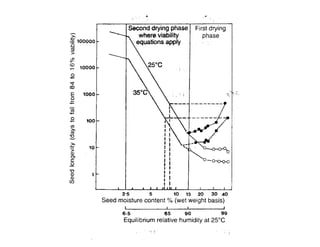
• Tolerate drying to low 
moisture levels (2-5% of wet 
weight) 
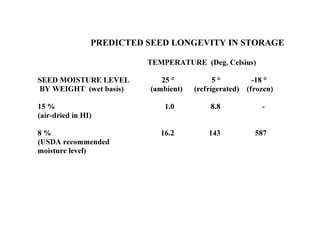
• Longevity increases as 
moisture level decreases 
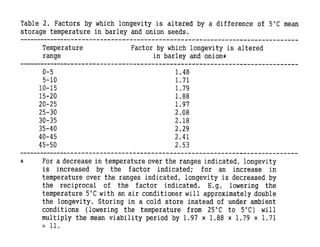
• Tolerate low temperatures, 
can be frozen 
• Longevity increases as 
temperature decreases 
• Often long-lived 
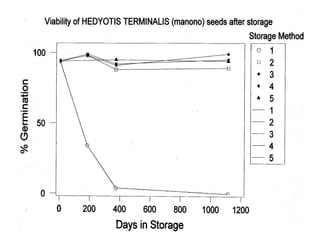
RECALCITRANT SEEDS 
(do not tolerate drying) 
• Intolerant of drying 
• Seeds die if moisture level 
is reduced to less than 
12-31% of wet weight 
• Intolerant of low 
temperatures 
• Lose viability rapidly after 
ripening 
INTERMEDIATE SEEDS 
(tolerate some drying) 
• Tolerate drying, but only down to a critical moisture level 
• Tolerate some low temperatures, but not freezing 
• Short to medium term storage is practical
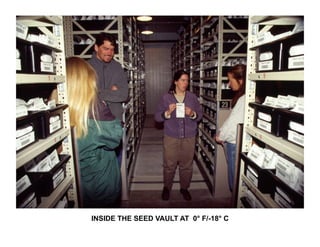
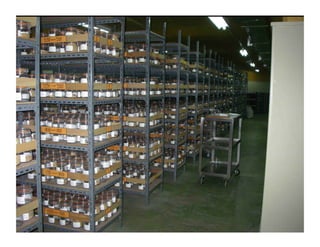
INSIDE THE SEED VAULT AT 0° F/-18° C
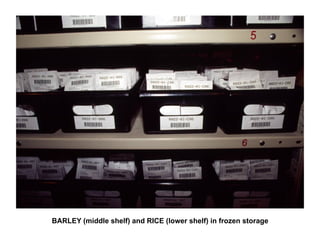
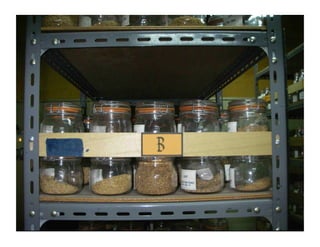
BARLEY (middle shelf) and RICE (lower shelf) in frozen storage
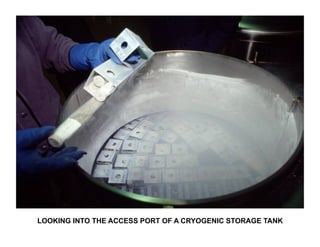
LOOKING INTO THE ACCESS PORT OF A CRYOGENIC STORAGE TANK
The End
HOME SEED STORAGE FOR HAWAI`I’S 
GARDENERS 
SLIDE SHOW: Scientific Principles of Seed Storage 
LECTURE: Practical home seed storage 
Techniques 
Equipment 
DEMONSTRATION: How you can store seeds at home 
TIME FOR QUESTIONS: At the end of the Demonstration 
MORE QUESTIONS? I’ll be here tomorrow
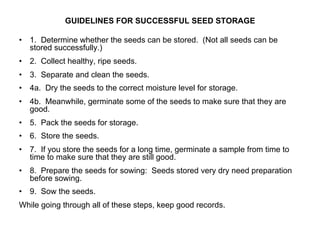
GUIDELINES FOR SUCCESSFUL SEED STORAGE 
• 1. Determine whether the seeds can be stored. (Not all seeds can be 
stored successfully.) 
• 2. Collect healthy, ripe seeds. 
• 3. Separate and clean the seeds. 
• 4a. Dry the seeds to the correct moisture level for storage. 
• 4b. Meanwhile, germinate some of the seeds to make sure that they are 
good. 
• 5. Pack the seeds for storage. 
• 6. Store the seeds. 
• 7. If you store the seeds for a long time, germinate a sample from time to 
time to make sure that they are still good. 
• 8. Prepare the seeds for sowing: Seeds stored very dry need preparation 
before sowing. 
• 9. Sow the seeds. 
While going through all of these steps, keep good records.

Home Seed Storage for Hawaii Gardeners

  • 2.
    HOME SEED STORAGE FOR HAWAI`I’S GARDENERS Alvin Y. Yoshinaga Center for Conservation Research & Training University of Hawai`i-Manoa (retired) alviny@hawaii.edu 24 March 2012
  • 3.
    HOME SEED STORAGEFOR HAWAI`I’S GARDENERS SLIDE SHOW: Scientific Principles of Seed Storage LECTURE: Practical home seed storage Techniques Equipment DEMONSTRATION: How you can store seeds at home TIME FOR QUESTIONS: At the end of the Demonstration MORE QUESTIONS? I’ll be here tomorrow
  • 4.
    ORTHODOX SEEDS (tolerateextreme drying) • Tolerate drying to low moisture levels (2-5% of wet weight) • Longevity increases as moisture level decreases • Tolerate low temperatures, can be frozen • Longevity increases as temperature decreases • Often long-lived RECALCITRANT SEEDS (do not tolerate drying) • Intolerant of drying • Seeds die if moisture level is reduced to less than 12-31% of wet weight • Intolerant of low temperatures • Lose viability rapidly after ripening INTERMEDIATE SEEDS (tolerate some drying) • Tolerate drying, but only down to a critical moisture level • Tolerate some low temperatures, but not freezing • Short to medium term storage is practical
  • 12.
    INSIDE THE SEEDVAULT AT 0° F/-18° C
  • 13.
    BARLEY (middle shelf)and RICE (lower shelf) in frozen storage
  • 14.
    LOOKING INTO THEACCESS PORT OF A CRYOGENIC STORAGE TANK
  • 17.
  • 18.
    HOME SEED STORAGEFOR HAWAI`I’S GARDENERS SLIDE SHOW: Scientific Principles of Seed Storage LECTURE: Practical home seed storage Techniques Equipment DEMONSTRATION: How you can store seeds at home TIME FOR QUESTIONS: At the end of the Demonstration MORE QUESTIONS? I’ll be here tomorrow
  • 19.
    GUIDELINES FOR SUCCESSFULSEED STORAGE • 1. Determine whether the seeds can be stored. (Not all seeds can be stored successfully.) • 2. Collect healthy, ripe seeds. • 3. Separate and clean the seeds. • 4a. Dry the seeds to the correct moisture level for storage. • 4b. Meanwhile, germinate some of the seeds to make sure that they are good. • 5. Pack the seeds for storage. • 6. Store the seeds. • 7. If you store the seeds for a long time, germinate a sample from time to time to make sure that they are still good. • 8. Prepare the seeds for sowing: Seeds stored very dry need preparation before sowing. • 9. Sow the seeds. While going through all of these steps, keep good records.