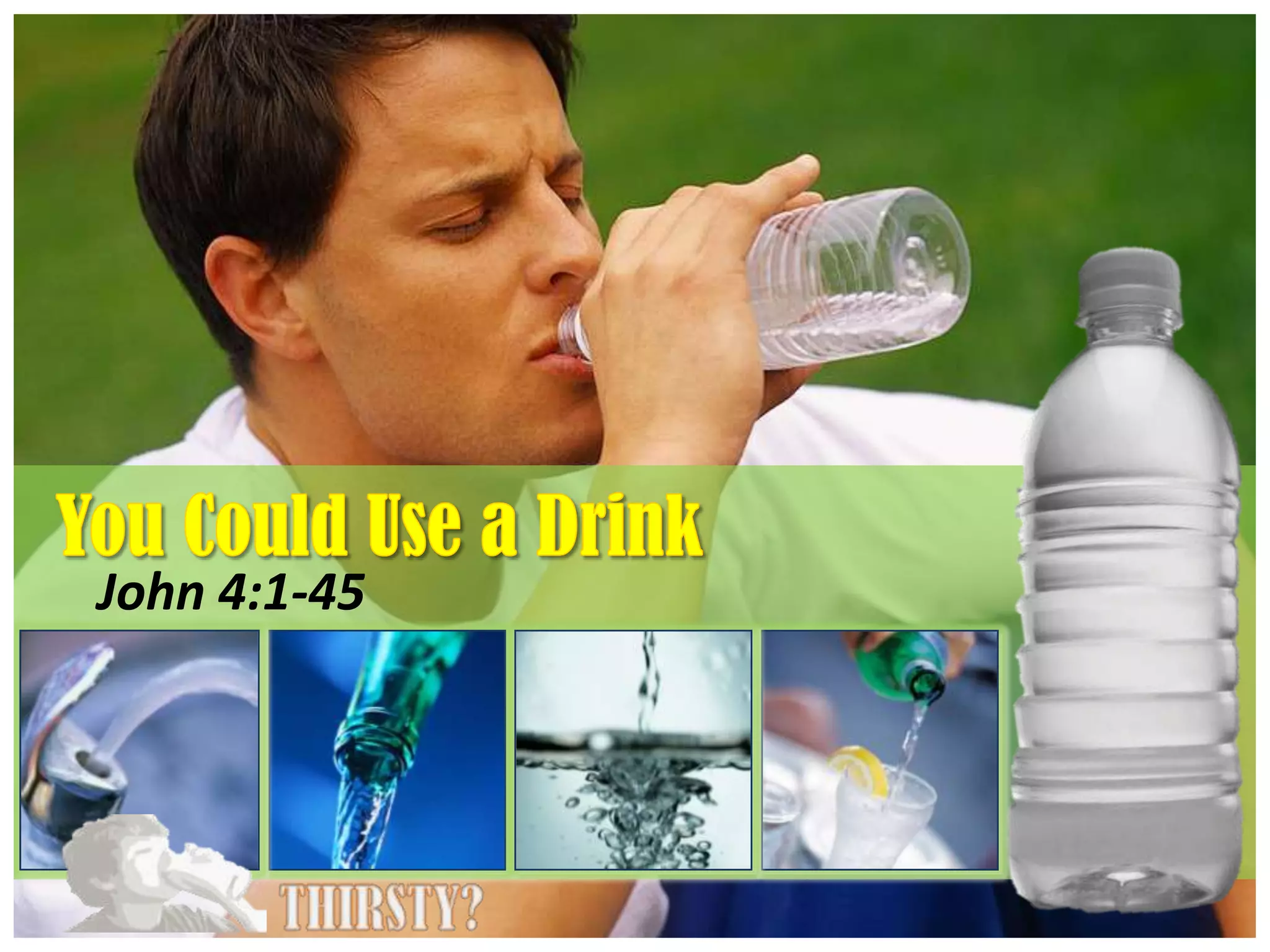
John 4:1-45
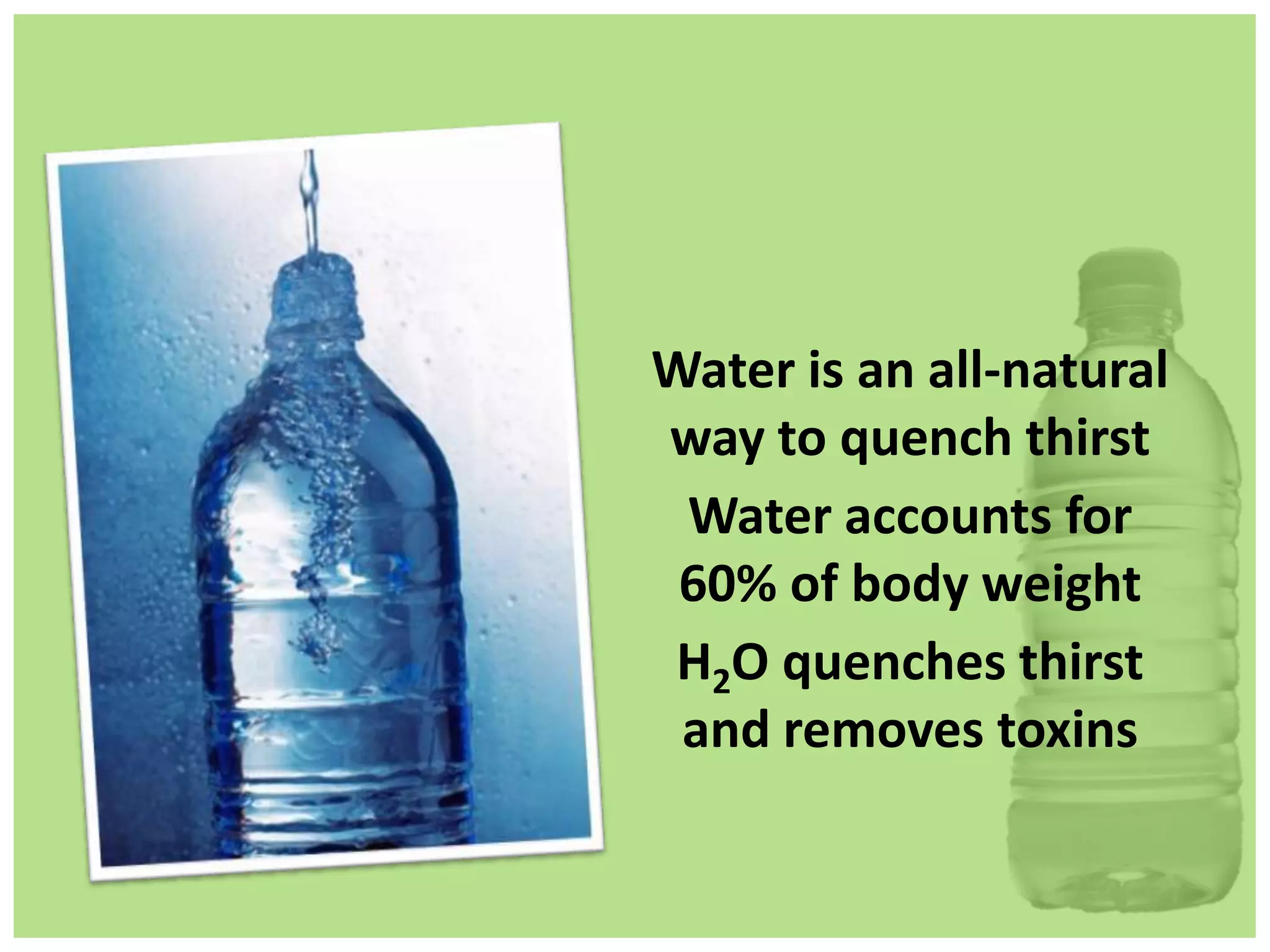
Water is an all-natural
way to quench thirst
Water accounts for
60% of body weight
H2O quenches thirst
and removes toxins
• The Psalms are personal expressions of deep-
seated emotions.
– raw thirstings of the soul, cries of the
heart, cravings of the spirit
– always answered in relationship with God
• The Gospels describe the accounts of real
people finding rest, restoration, and rescue.
– raw thirstings of the soul, cries of the
heart, cravings of the spirit
– always answered in relationship with God
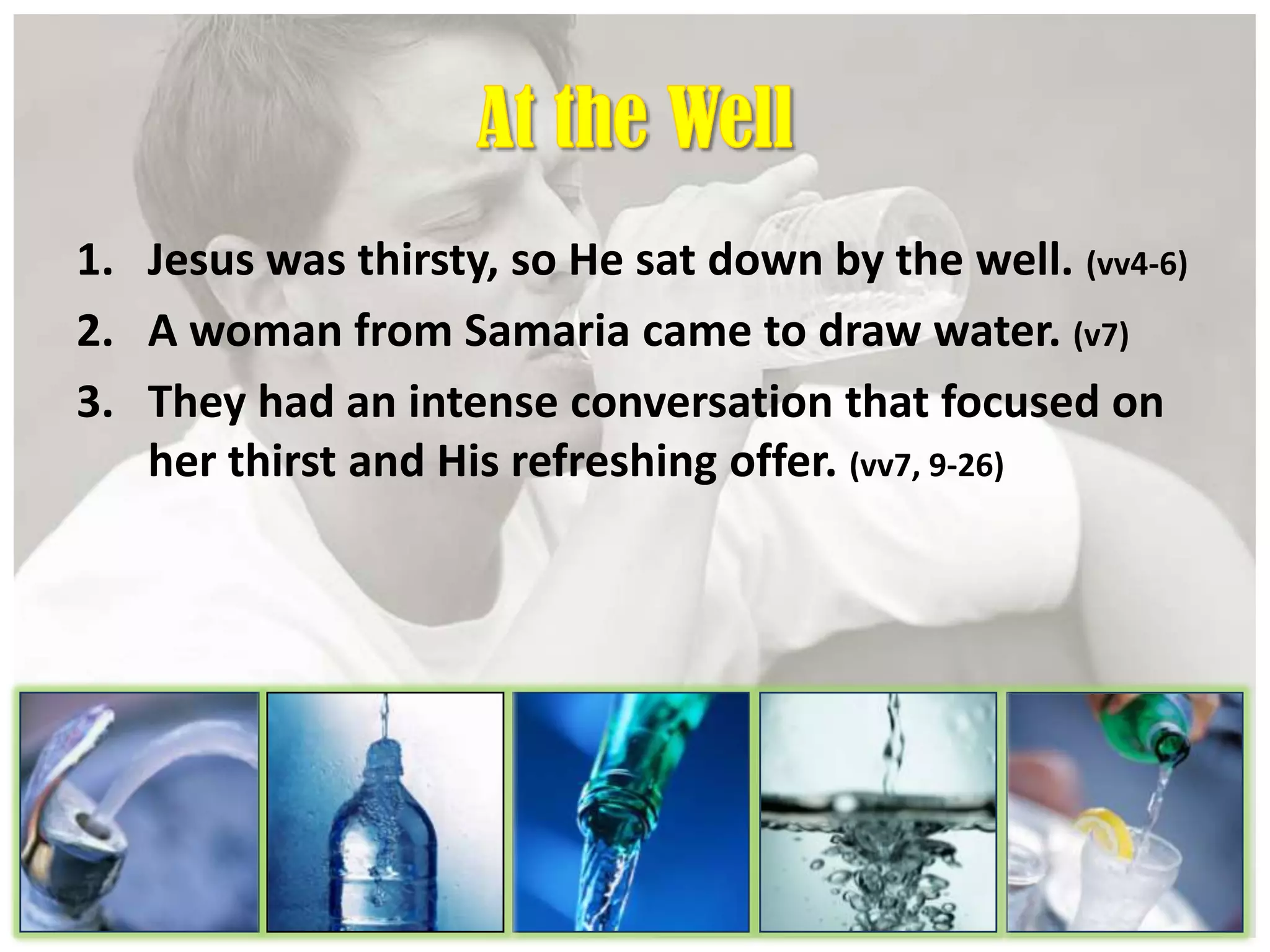
1. Jesus was thirsty, so He sat down by the well. (vv4-6)
2. A woman from Samaria came to draw water. (v7)
3. They had an intense conversation that focused on
her thirst and His refreshing offer. (vv7, 9-26)
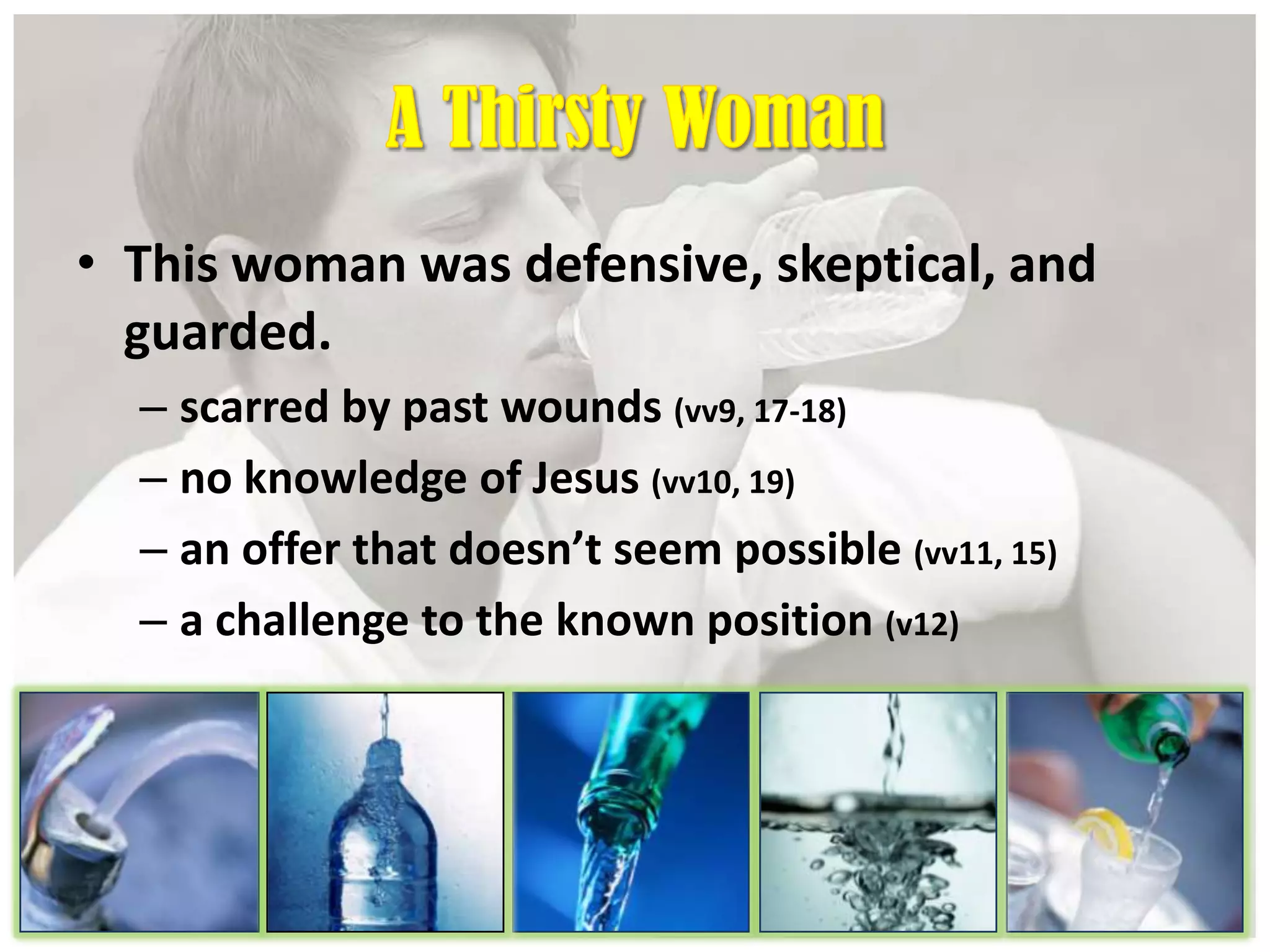
• This woman was defensive, skeptical, and
guarded.
– scarred by past wounds (vv9, 17-18)
– no knowledge of Jesus (vv10, 19)
– an offer that doesn’t seem possible (vv11, 15)
– a challenge to the known position (v12)
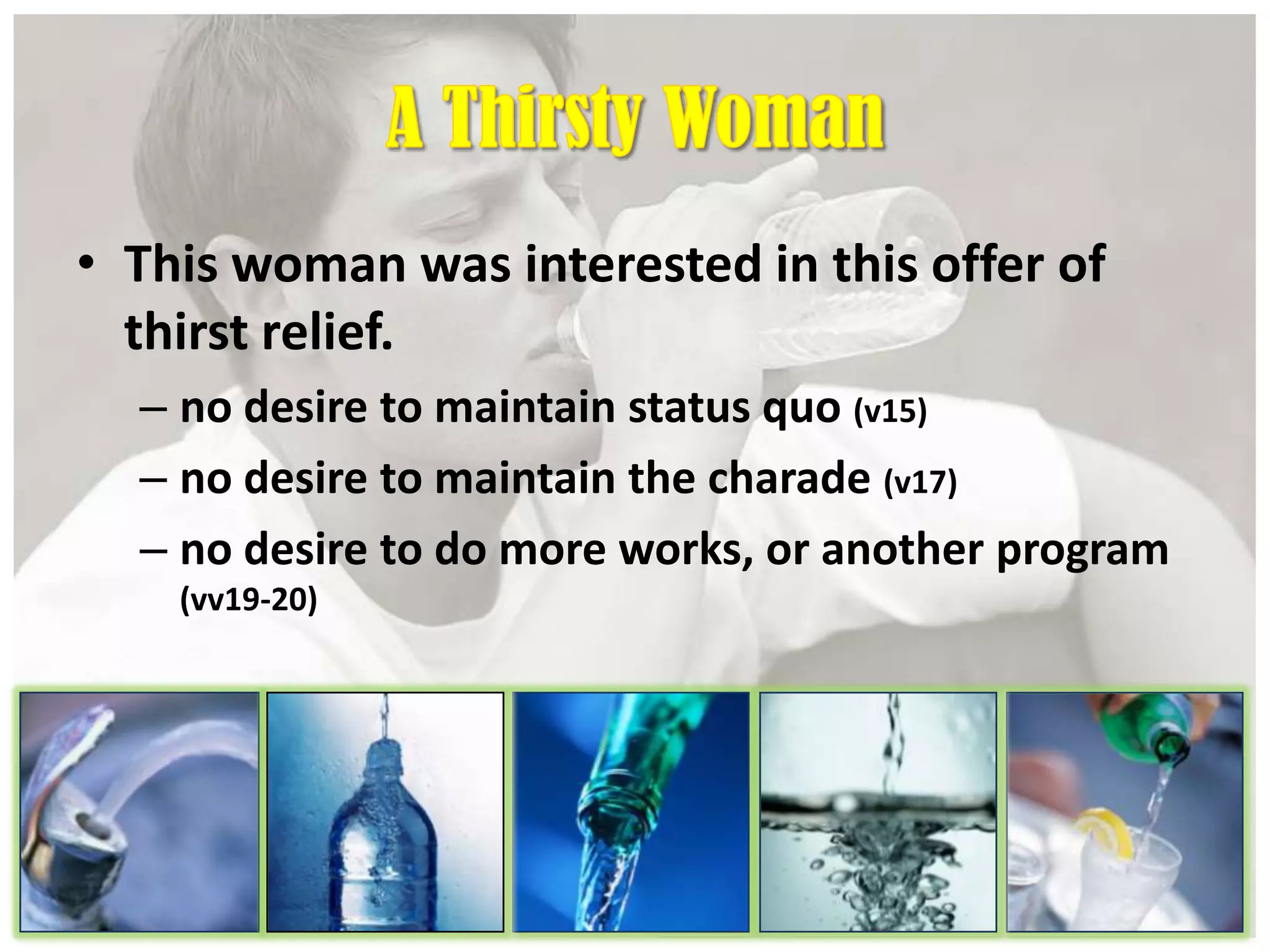
• This woman was interested in this offer of
thirst relief.
– no desire to maintain status quo (v15)
– no desire to maintain the charade (v17)
– no desire to do more works, or another program
(vv19-20)
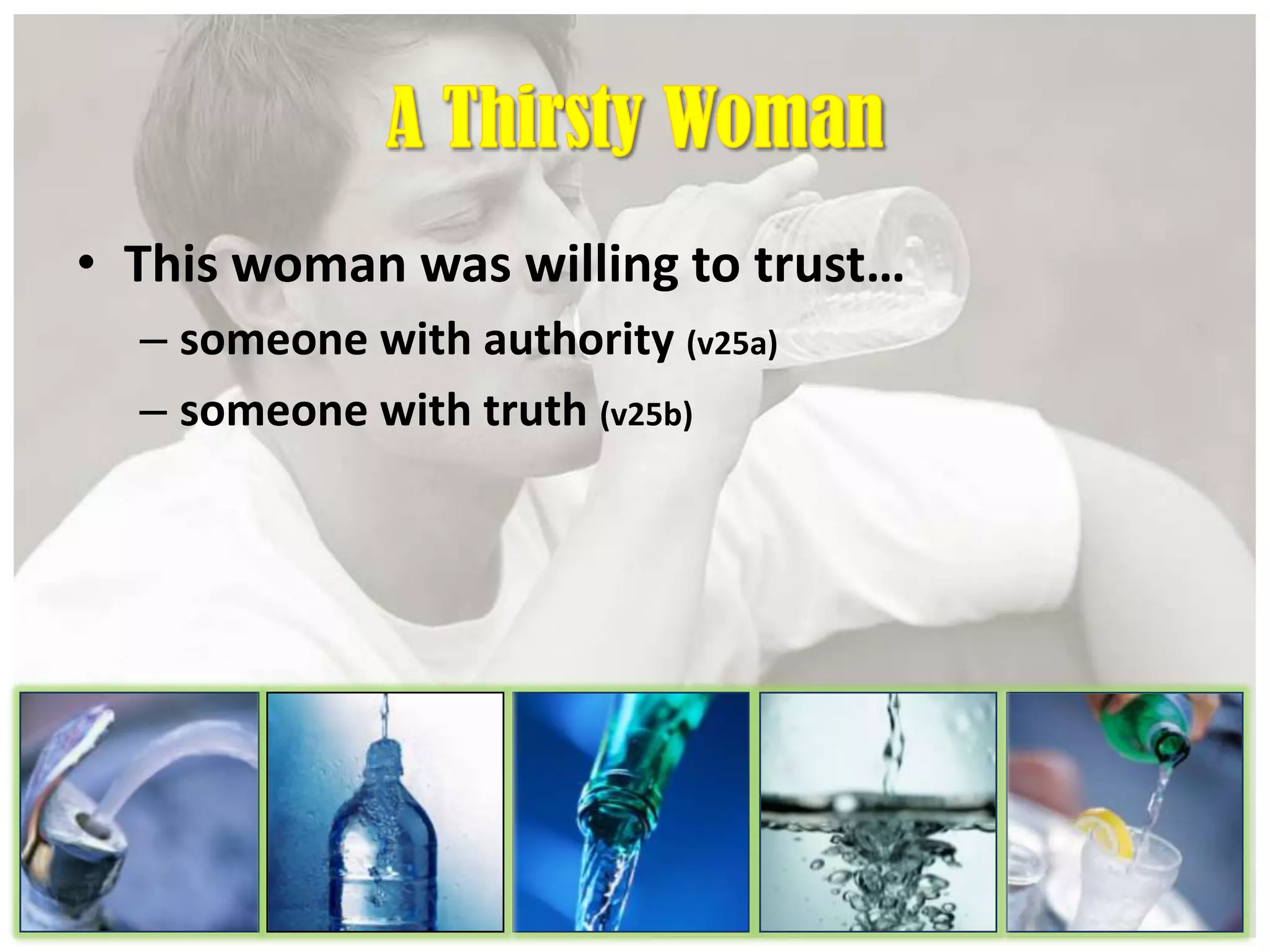
• This woman was willing to trust…
– someone with authority (v25a)
– someone with truth (v25b)
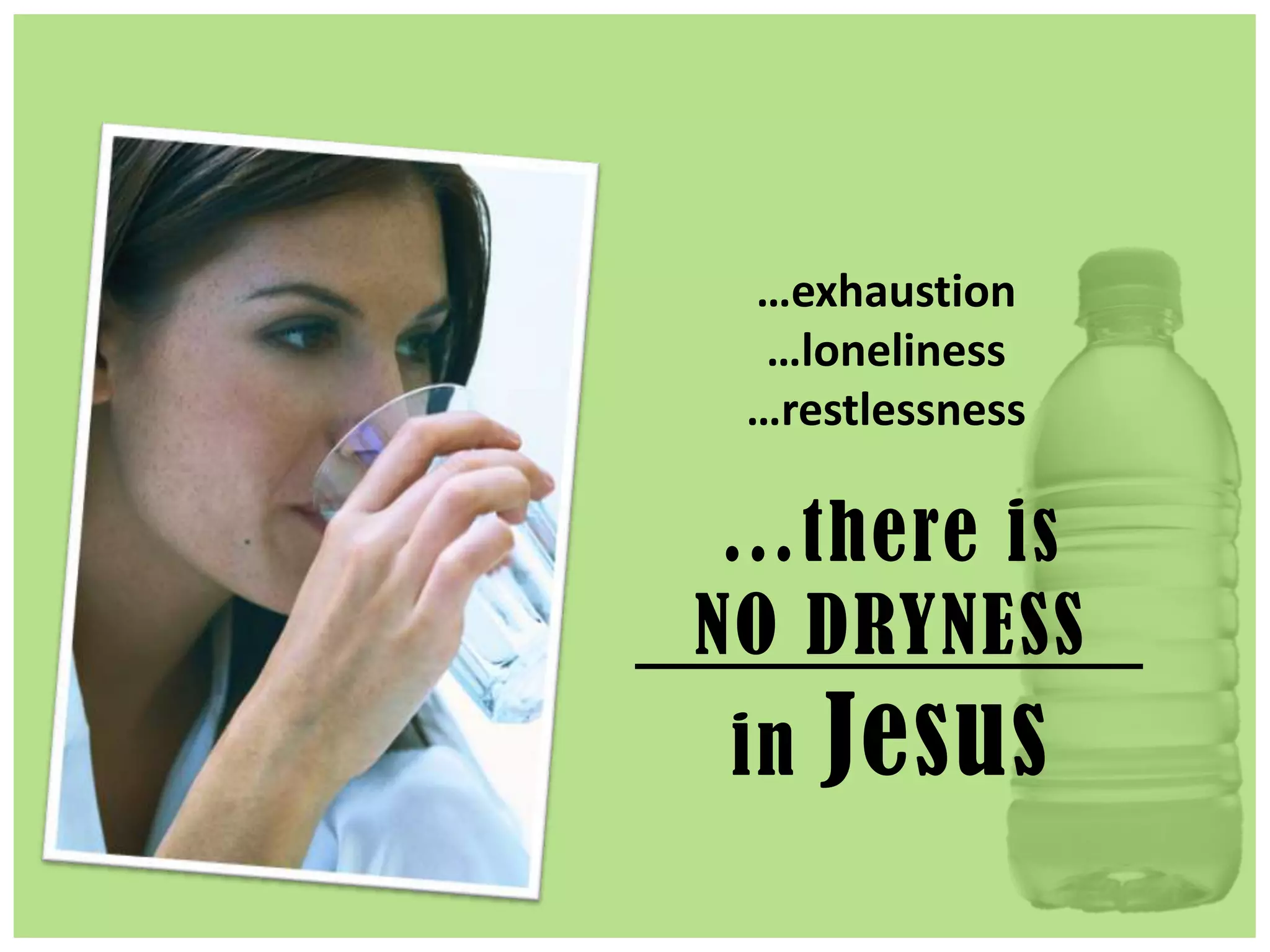
…there is
NO DRYNESS
in Jesus
…exhaustion
…loneliness
…restlessness
4. She was within reach of the Living Water, yet dying
of thirst. (v10)
5. Her thirst was quenched that day.
6. She became a “thirst advocate” in an attempt to
help others find relief. (vv28-30)
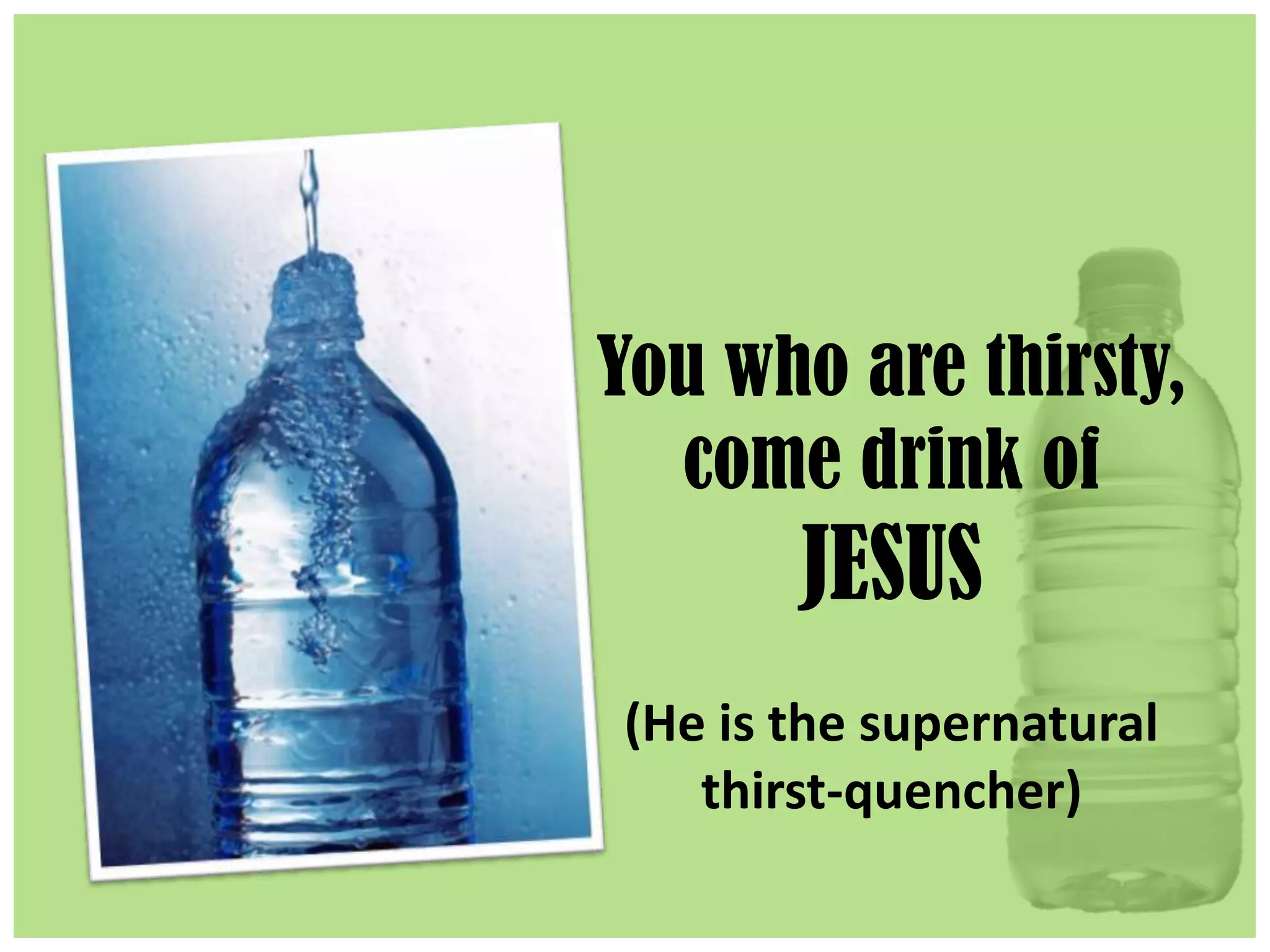
You who are thirsty,
come drink of
JESUS
(He is the supernatural
thirst-quencher)
• Go to places where thirsty people gather.
• Build bridging relationships that foster open
conversation with unlikely people.
• Listen to their stories of thirst.
• Lead them to the water.
• Invite them to drink.

You Could use a Drink

  • 1.
  • 2.
    Water is anall-natural way to quench thirst Water accounts for 60% of body weight H2O quenches thirst and removes toxins
  • 3.
    • The Psalmsare personal expressions of deep- seated emotions. – raw thirstings of the soul, cries of the heart, cravings of the spirit – always answered in relationship with God
  • 4.
    • The Gospelsdescribe the accounts of real people finding rest, restoration, and rescue. – raw thirstings of the soul, cries of the heart, cravings of the spirit – always answered in relationship with God
  • 5.
    1. Jesus wasthirsty, so He sat down by the well. (vv4-6) 2. A woman from Samaria came to draw water. (v7) 3. They had an intense conversation that focused on her thirst and His refreshing offer. (vv7, 9-26)
  • 6.
    • This womanwas defensive, skeptical, and guarded. – scarred by past wounds (vv9, 17-18) – no knowledge of Jesus (vv10, 19) – an offer that doesn’t seem possible (vv11, 15) – a challenge to the known position (v12)
  • 7.
    • This womanwas interested in this offer of thirst relief. – no desire to maintain status quo (v15) – no desire to maintain the charade (v17) – no desire to do more works, or another program (vv19-20)
  • 8.
    • This womanwas willing to trust… – someone with authority (v25a) – someone with truth (v25b)
  • 9.
    …there is NO DRYNESS inJesus …exhaustion …loneliness …restlessness
  • 10.
    4. She waswithin reach of the Living Water, yet dying of thirst. (v10) 5. Her thirst was quenched that day. 6. She became a “thirst advocate” in an attempt to help others find relief. (vv28-30)
  • 11.
    You who arethirsty, come drink of JESUS (He is the supernatural thirst-quencher)
  • 12.
    • Go toplaces where thirsty people gather. • Build bridging relationships that foster open conversation with unlikely people. • Listen to their stories of thirst. • Lead them to the water. • Invite them to drink.