Automatic Application of
Visitors to Evolving
Domain-Specific
Languages
Computer Science Department
University of York1
& Willink Transformations Ltd2.
Adolfo Sánchez-Barbudo Herrera1, Ed Willink2, Richard Paige1, Louis Rose1, Dimitris Kolovos1
(asbh500@york.ac.uk ed@willink.me.uk richard.paige@york.ac.uk, louis.rose@york.ac.uk, dimitris.kolovos@york.ac.uk)
2

Agenda
●
●
●
●
●
●
●

Introduction to Modeling (MDSD, MDE,...)
Model Behaviour
Model Evolution
Visitor Pattern
Visitor Generation Framework (VGF)
VGF for Model Behaviour Evolution
Conclusions
3

Modeling Introduction
●
●
●
●

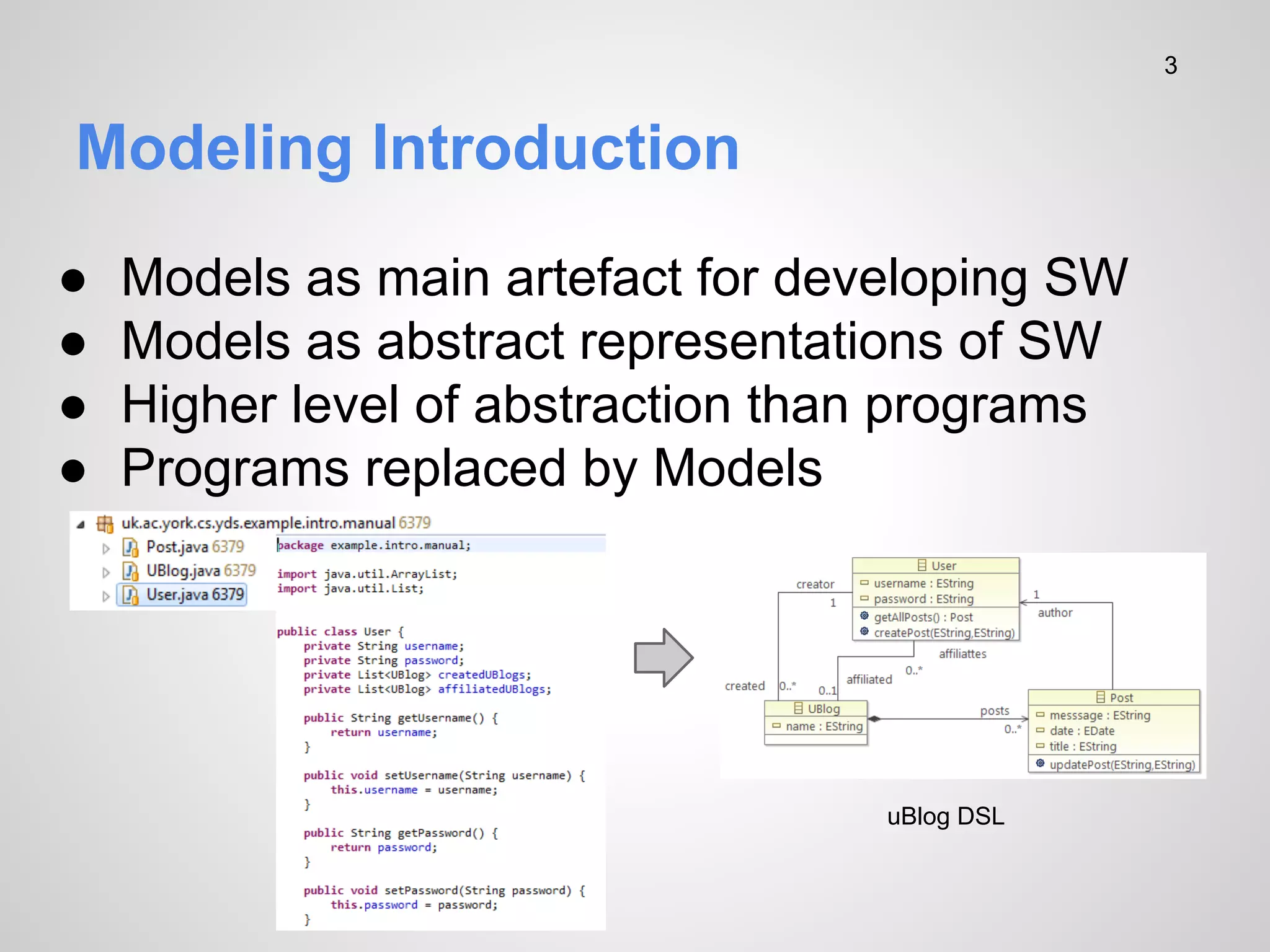
Models as main artefact for developing SW
Models as abstract representations of SW
Higher level of abstraction than programs
Programs replaced by Models

uBlog DSL
4

Modeling Introduction II
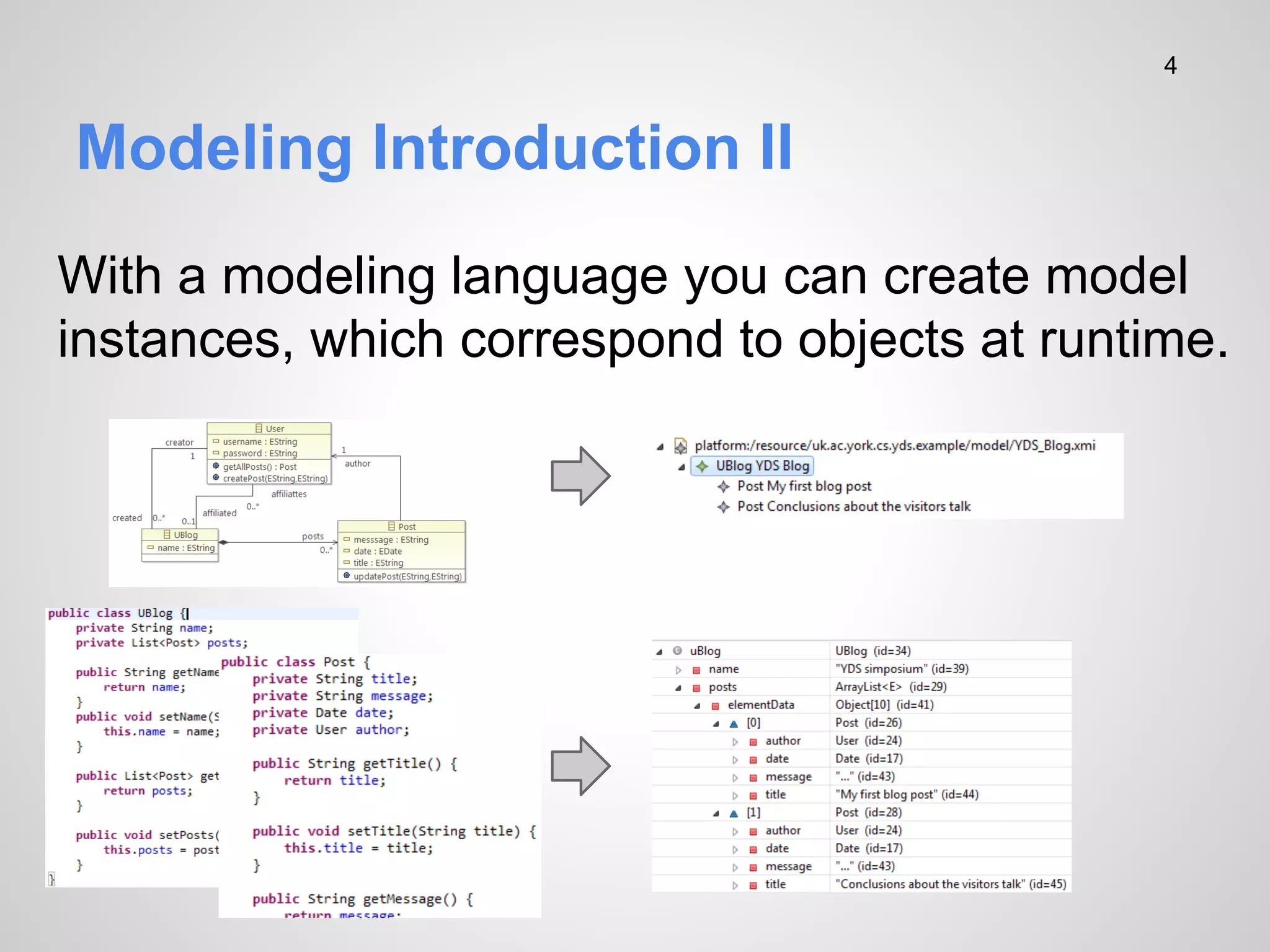
With a modeling language you can create model
instances, which correspond to objects at runtime.
5

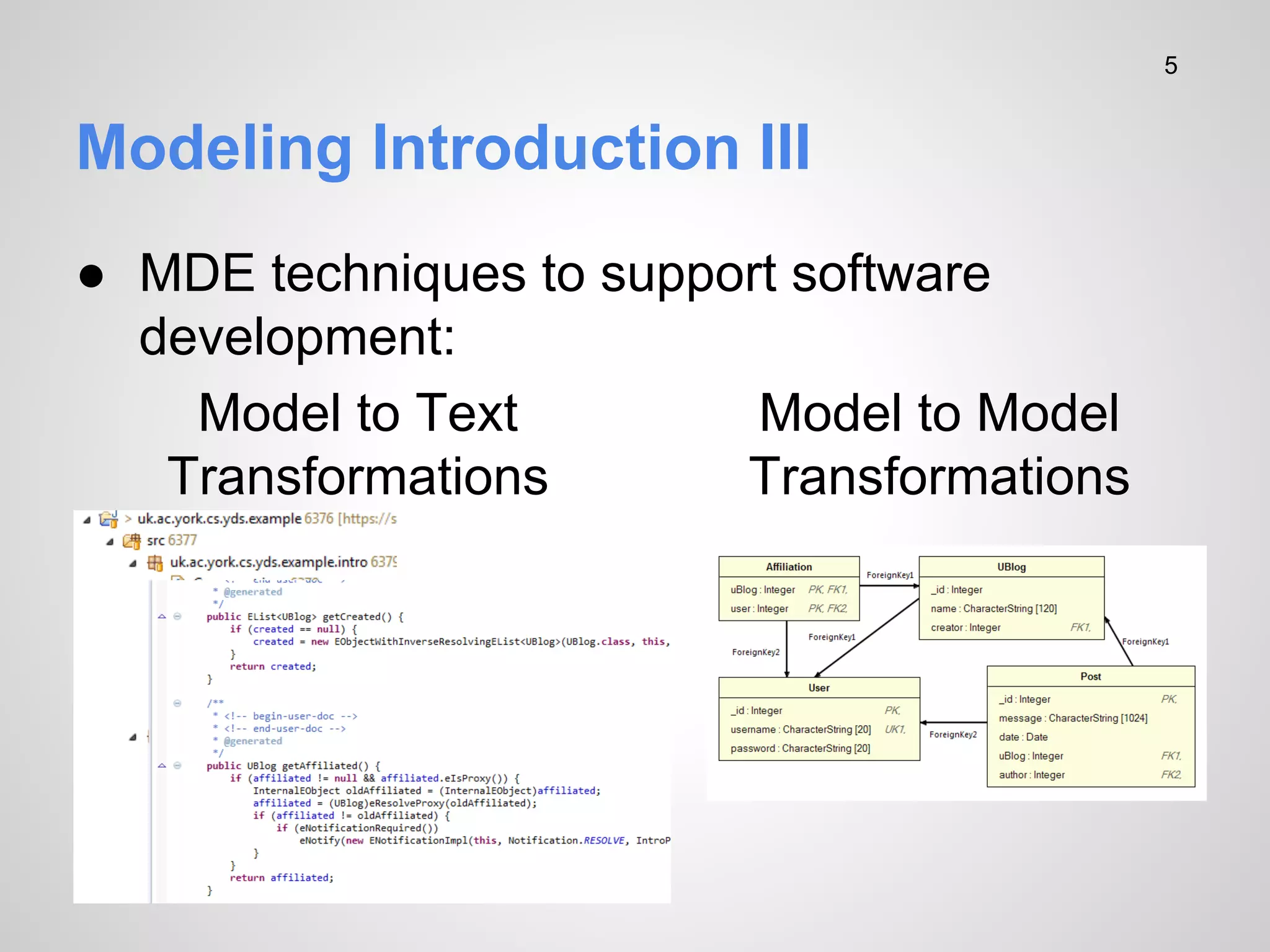
Modeling Introduction III
● MDE techniques to support software
development:
Model to Text
Model to Model
Transformations
Transformations
6

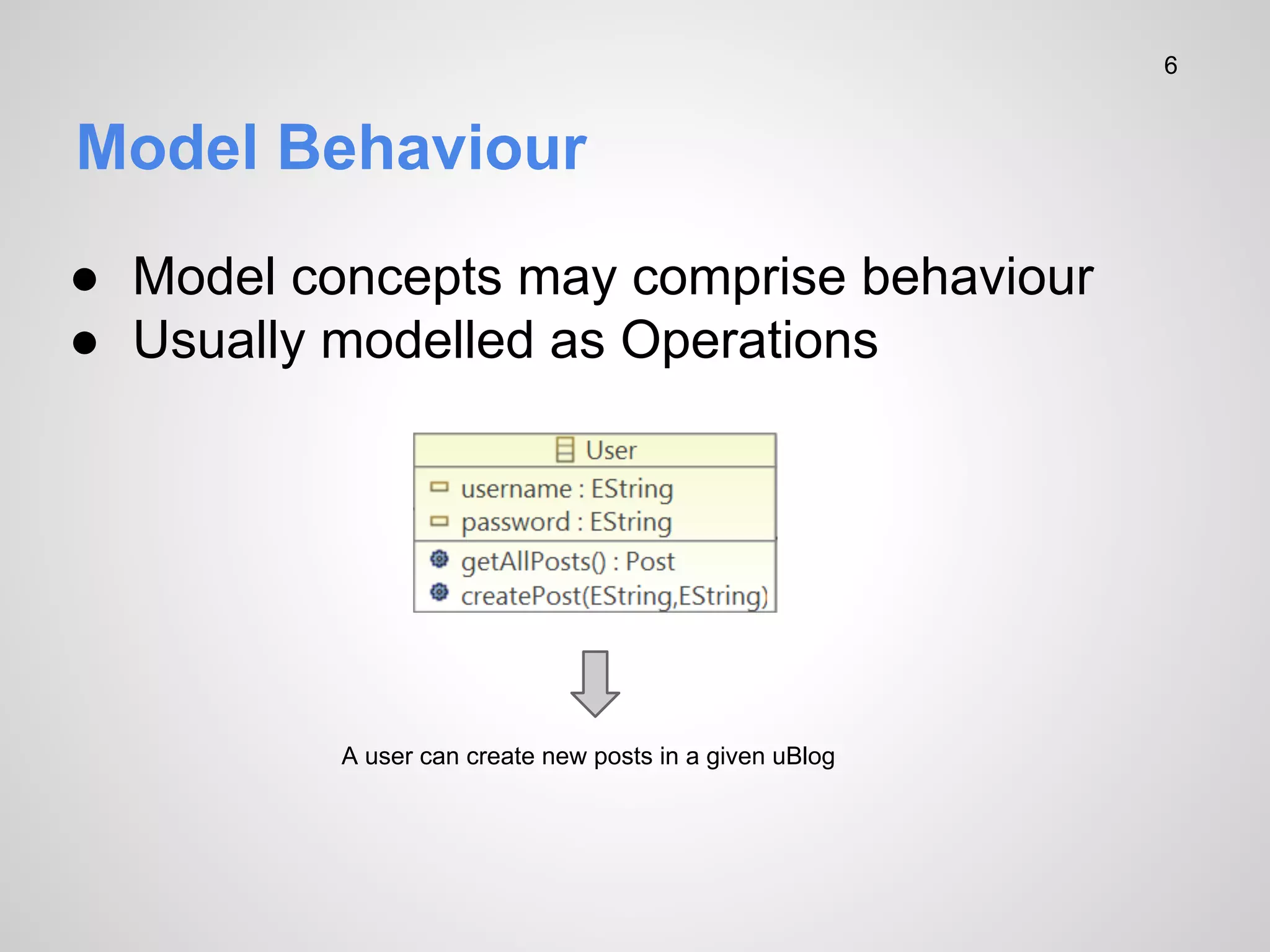
Model Behaviour
● Model concepts may comprise behaviour
● Usually modelled as Operations

A user can create new posts in a given uBlog
7

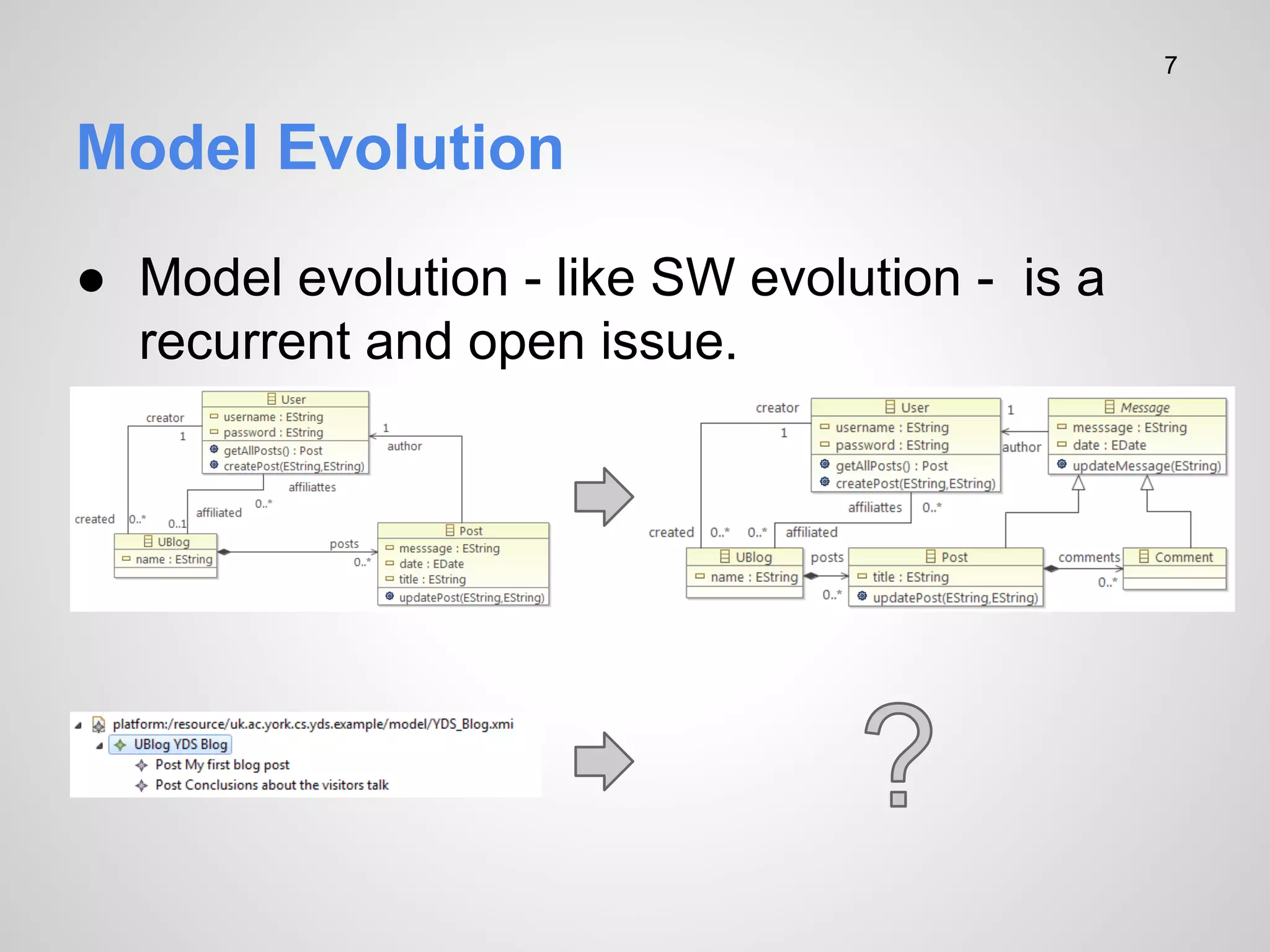
Model Evolution
● Model evolution - like SW evolution - is a
recurrent and open issue.
8

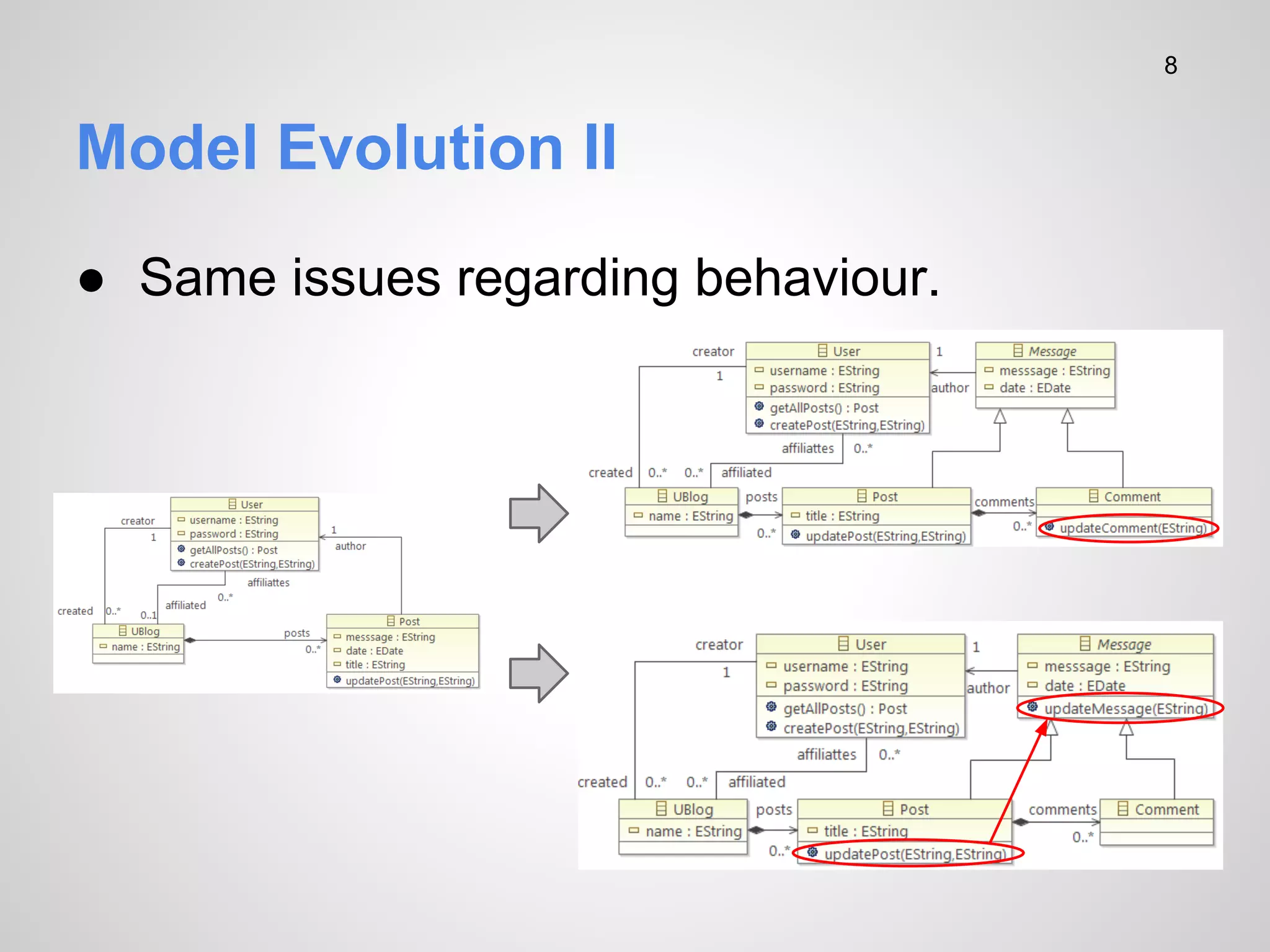
Model Evolution II
● Same issues regarding behaviour.
9

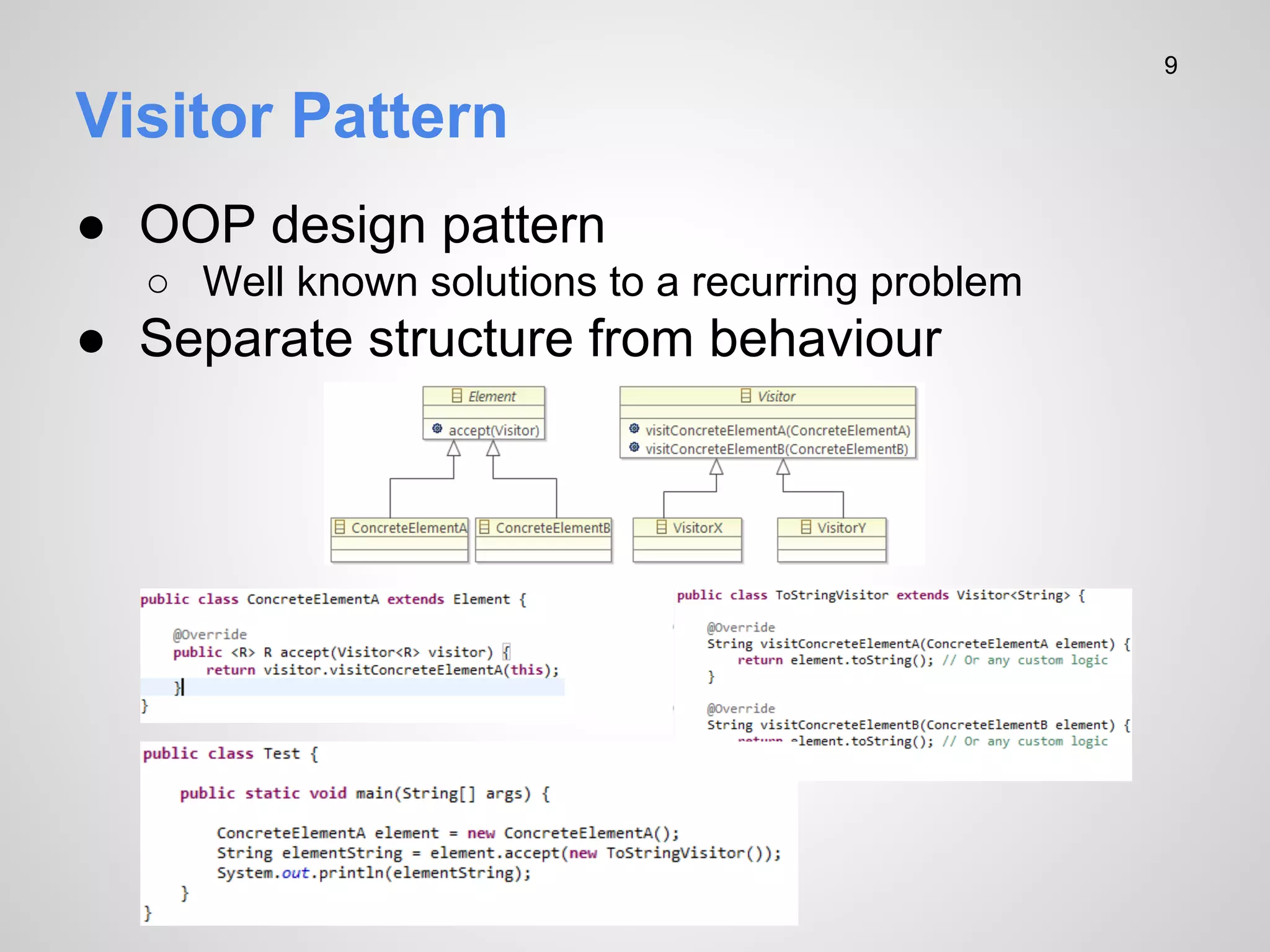
Visitor Pattern
● OOP design pattern
○ Well known solutions to a recurring problem

● Separate structure from behaviour
10

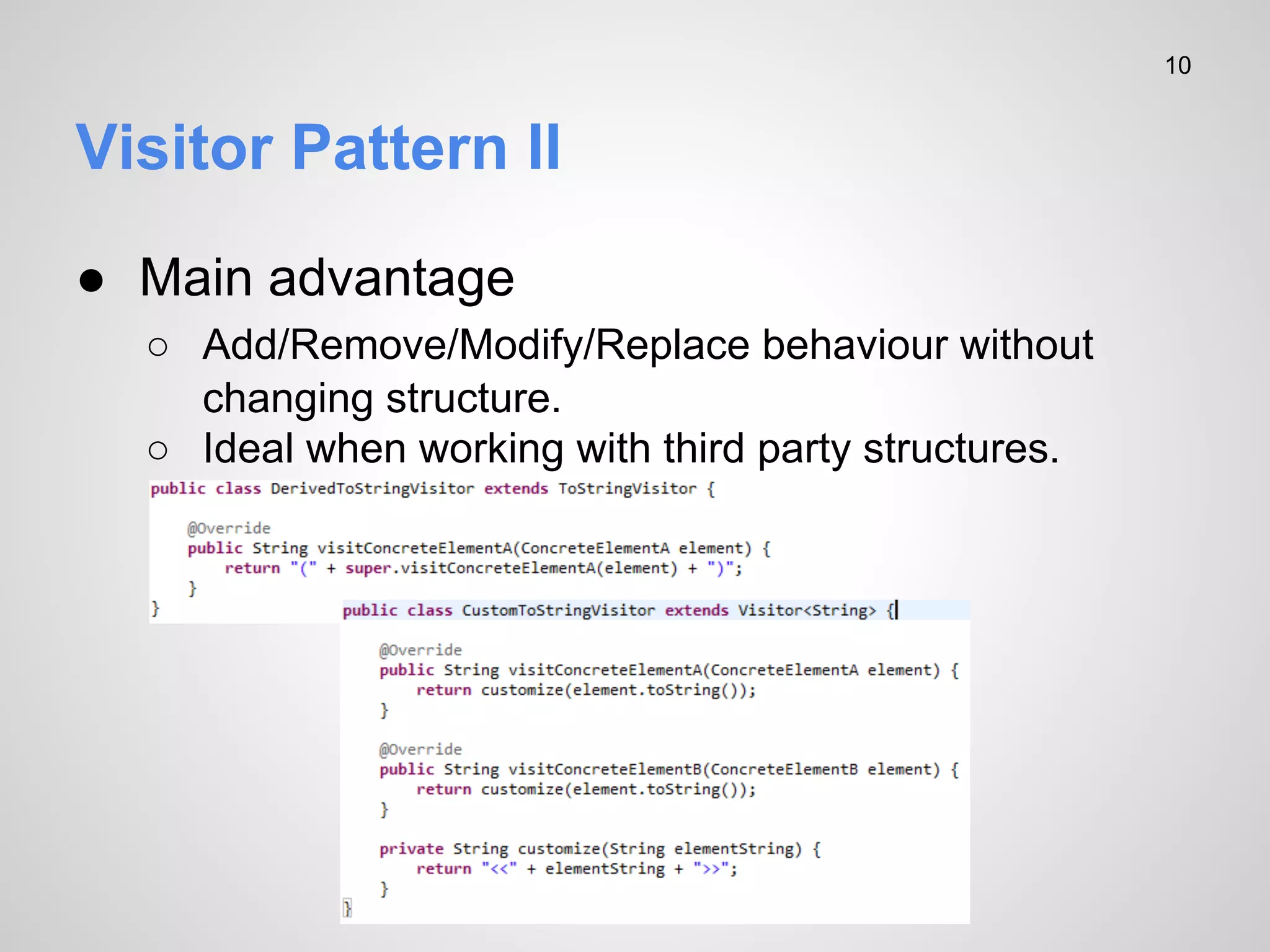
Visitor Pattern II
● Main advantage
○ Add/Remove/Modify/Replace behaviour without
changing structure.
○ Ideal when working with third party structures.
11

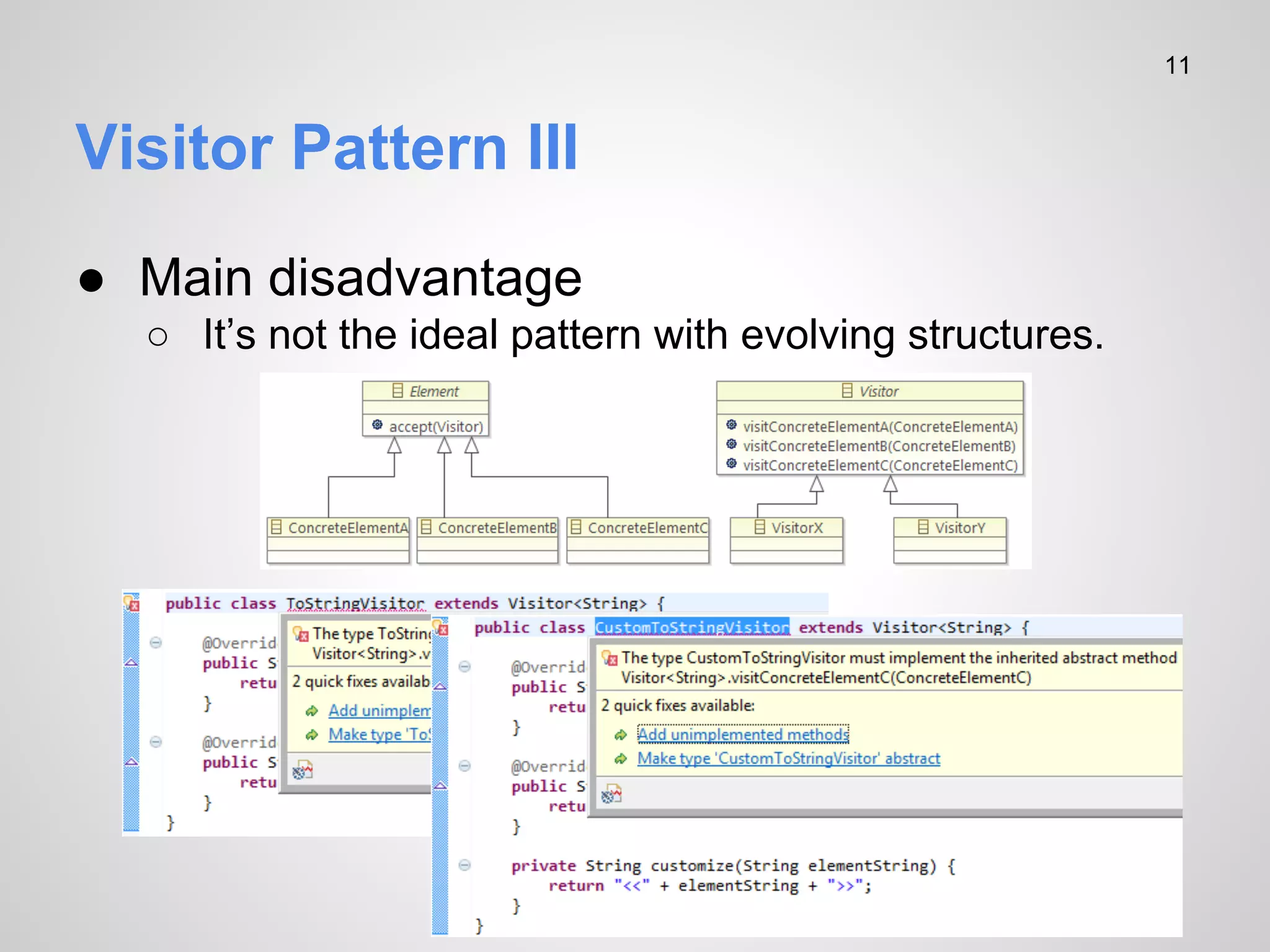
Visitor Pattern III
● Main disadvantage
○ It’s not the ideal pattern with evolving structures.
12

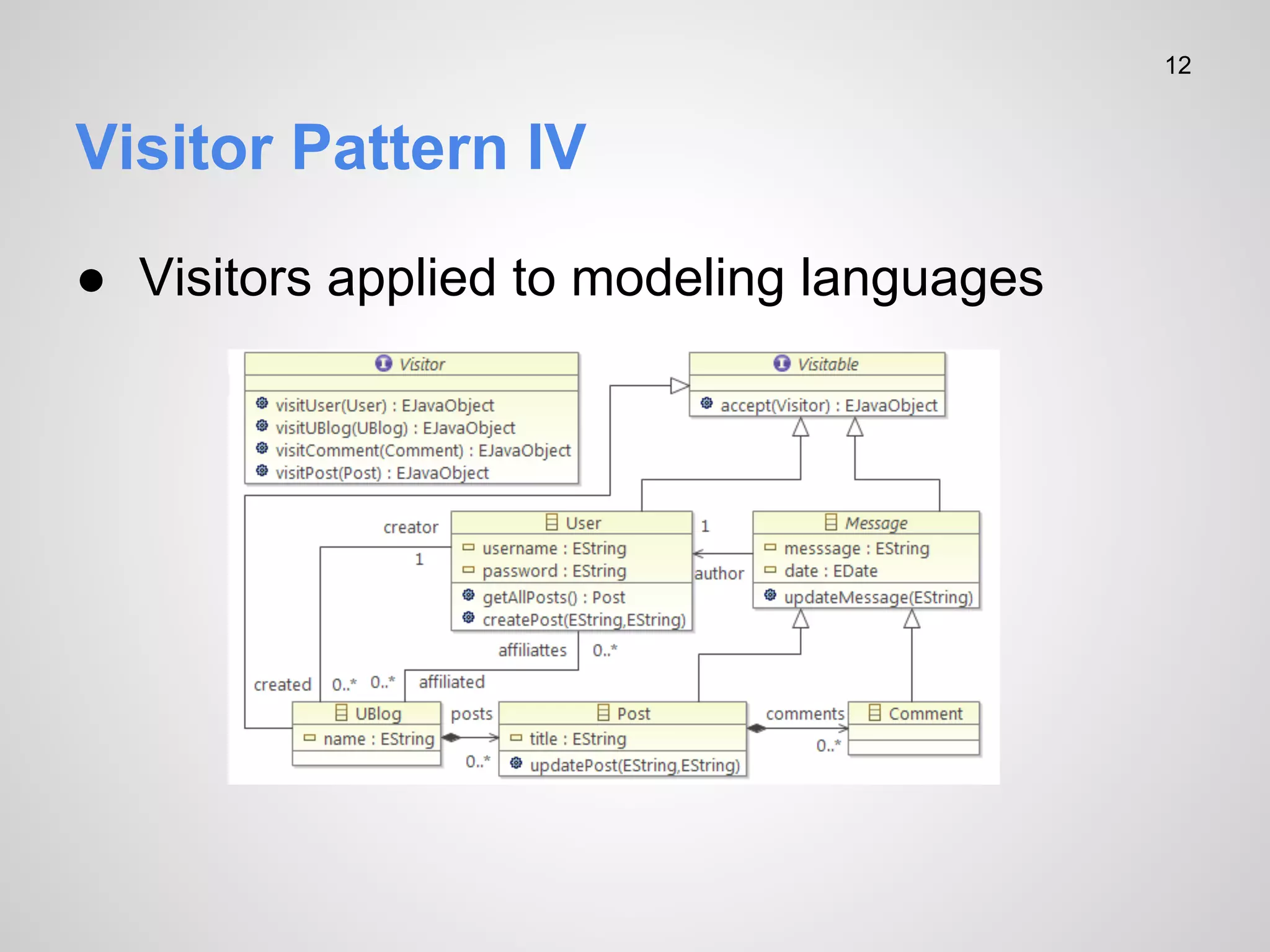
Visitor Pattern IV
● Visitors applied to modeling languages
13

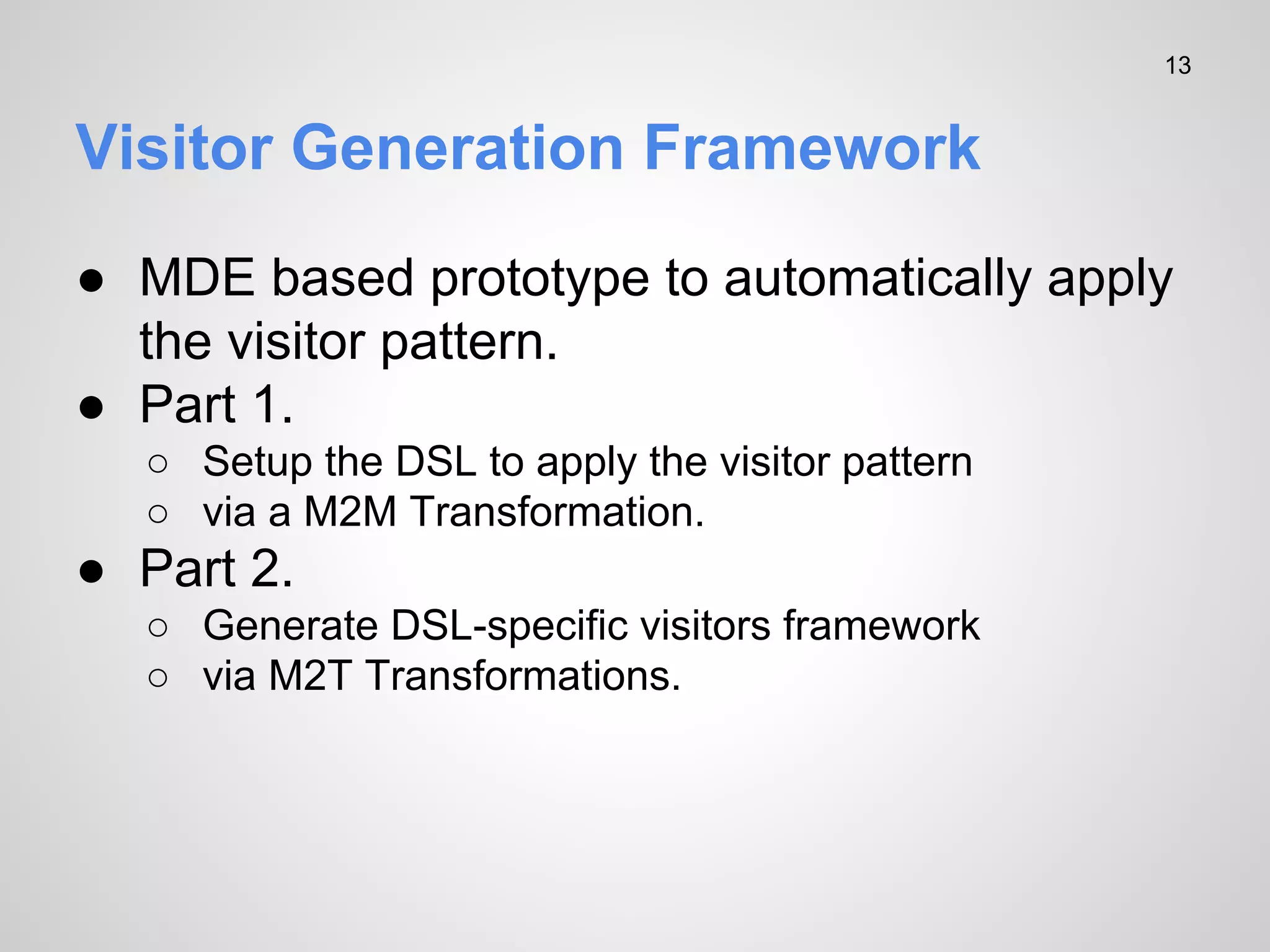
Visitor Generation Framework
● MDE based prototype to automatically apply
the visitor pattern.
● Part 1.
○ Setup the DSL to apply the visitor pattern
○ via a M2M Transformation.

● Part 2.
○ Generate DSL-specific visitors framework
○ via M2T Transformations.
14

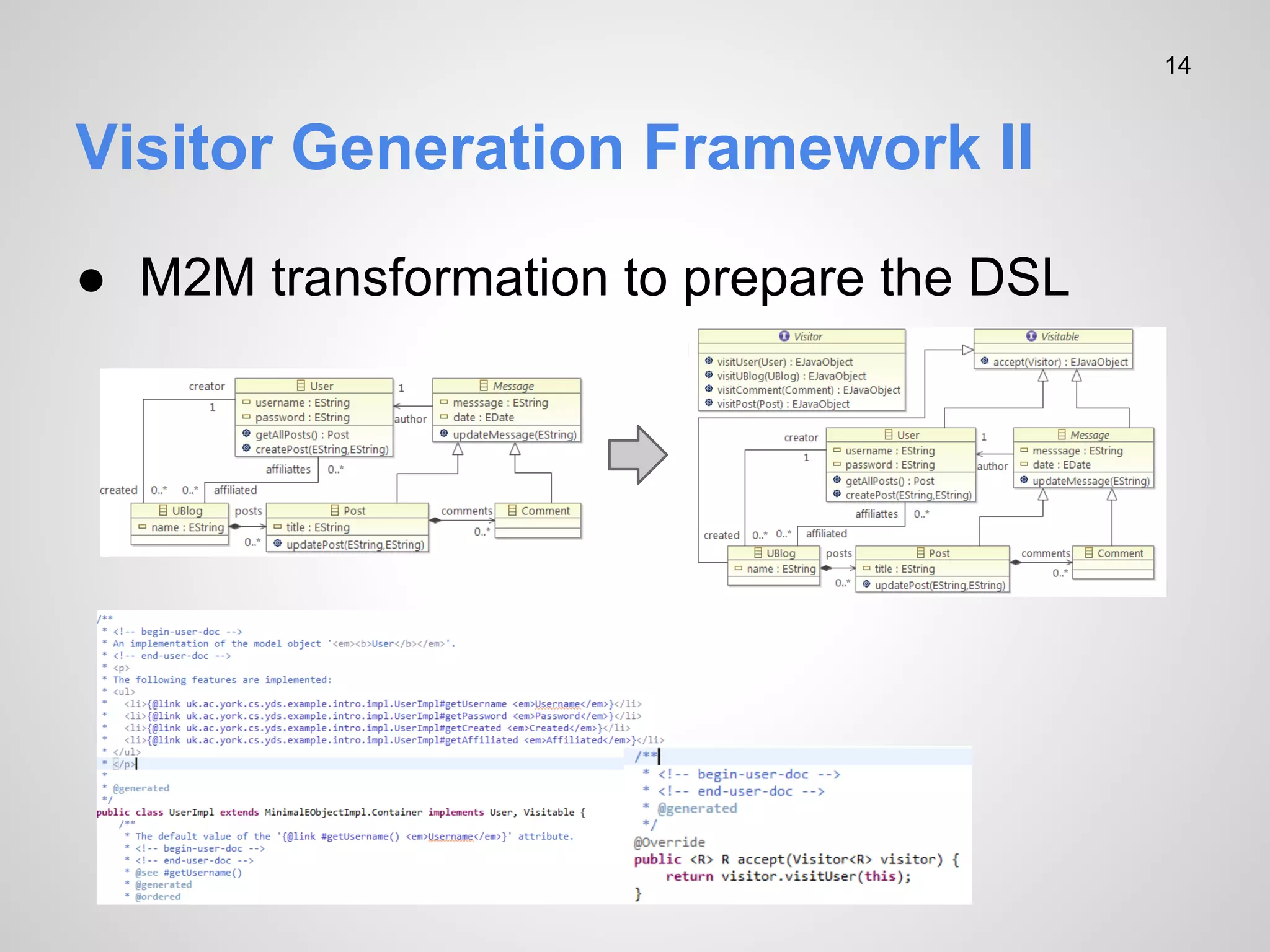
Visitor Generation Framework II
● M2M transformation to prepare the DSL
15

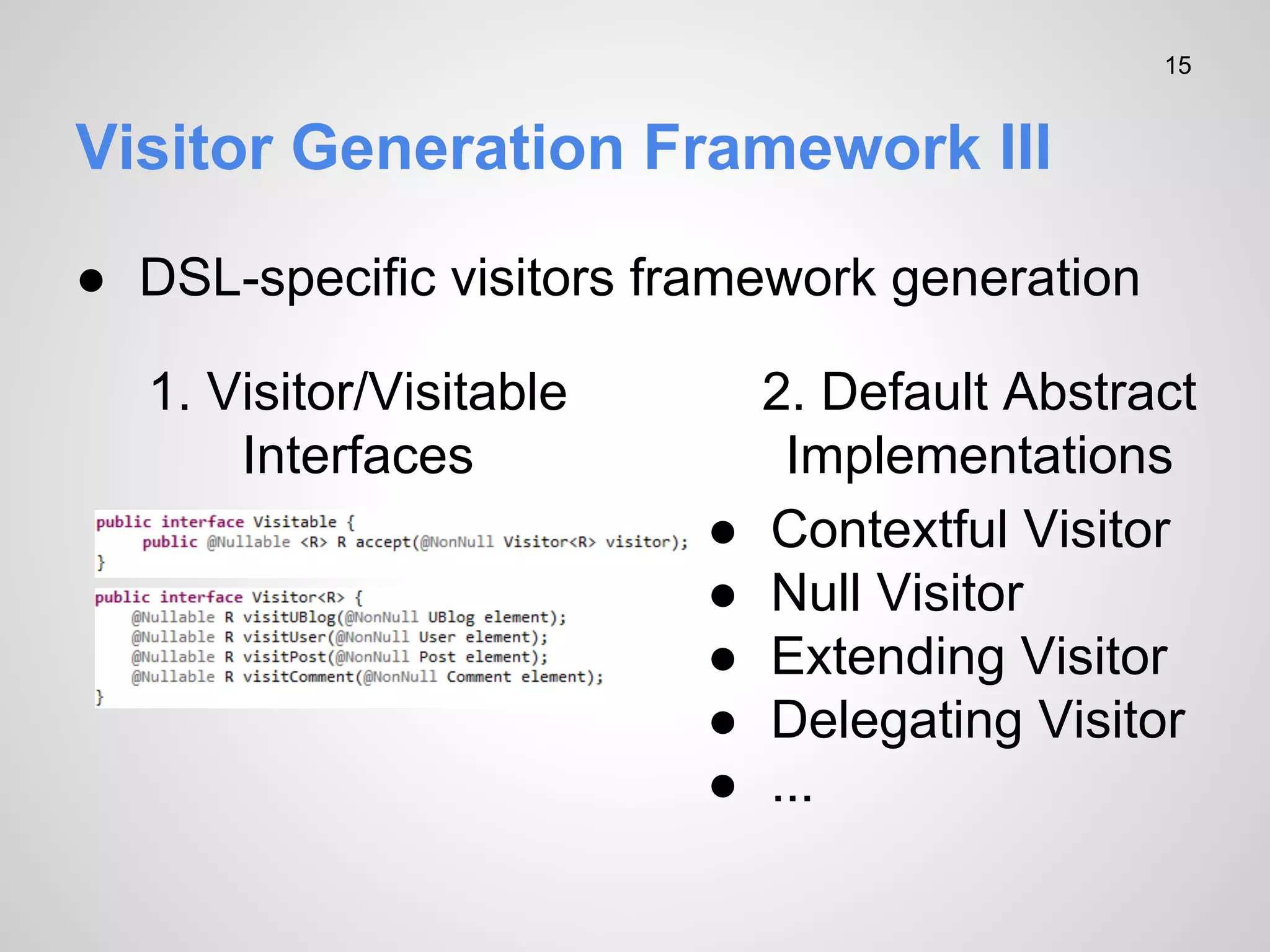
Visitor Generation Framework III
● DSL-specific visitors framework generation
1. Visitor/Visitable
Interfaces
●
●
●
●
●

2. Default Abstract
Implementations
Contextful Visitor
Null Visitor
Extending Visitor
Delegating Visitor
...
16

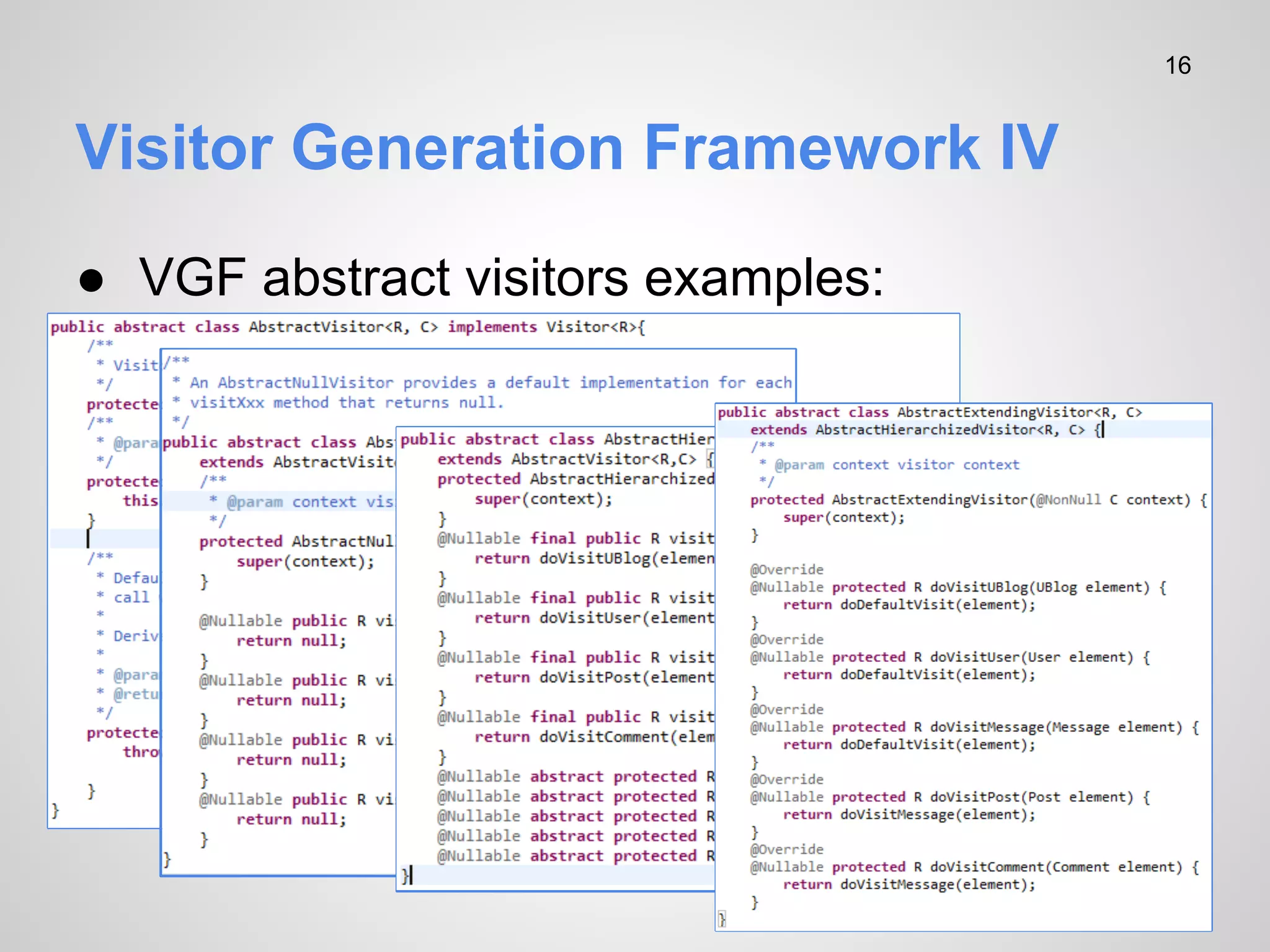
Visitor Generation Framework IV
● VGF abstract visitors examples:
17

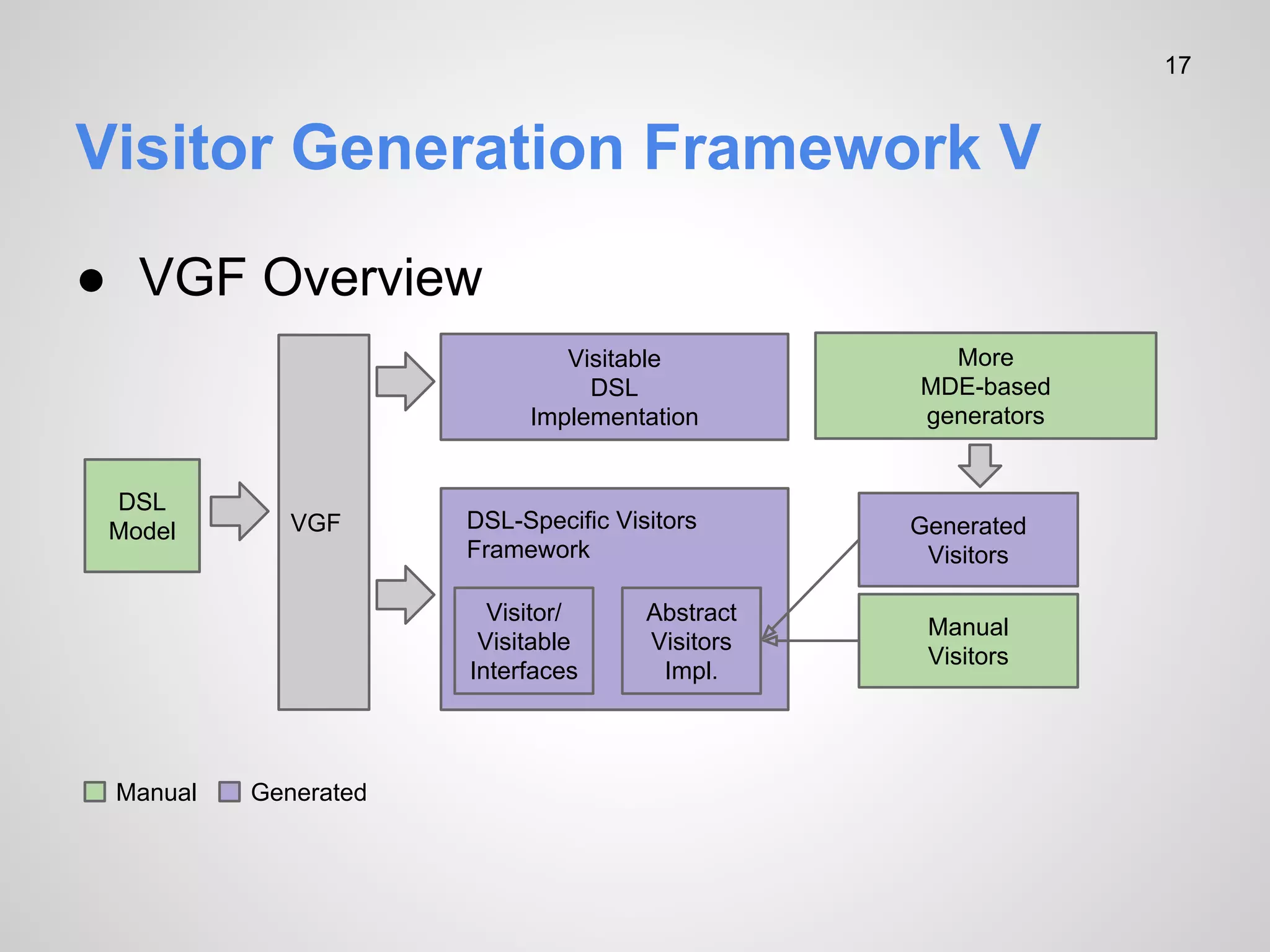
Visitor Generation Framework V
● VGF Overview
Visitable
DSL
Implementation

DSL
Model

VGF

DSL-Specific Visitors
Framework
Visitor/
Visitable
Interfaces

Manual

Generated

Abstract
Visitors
Impl.

More
MDE-based
generators

Generated
Visitors
Manual
Visitors
18

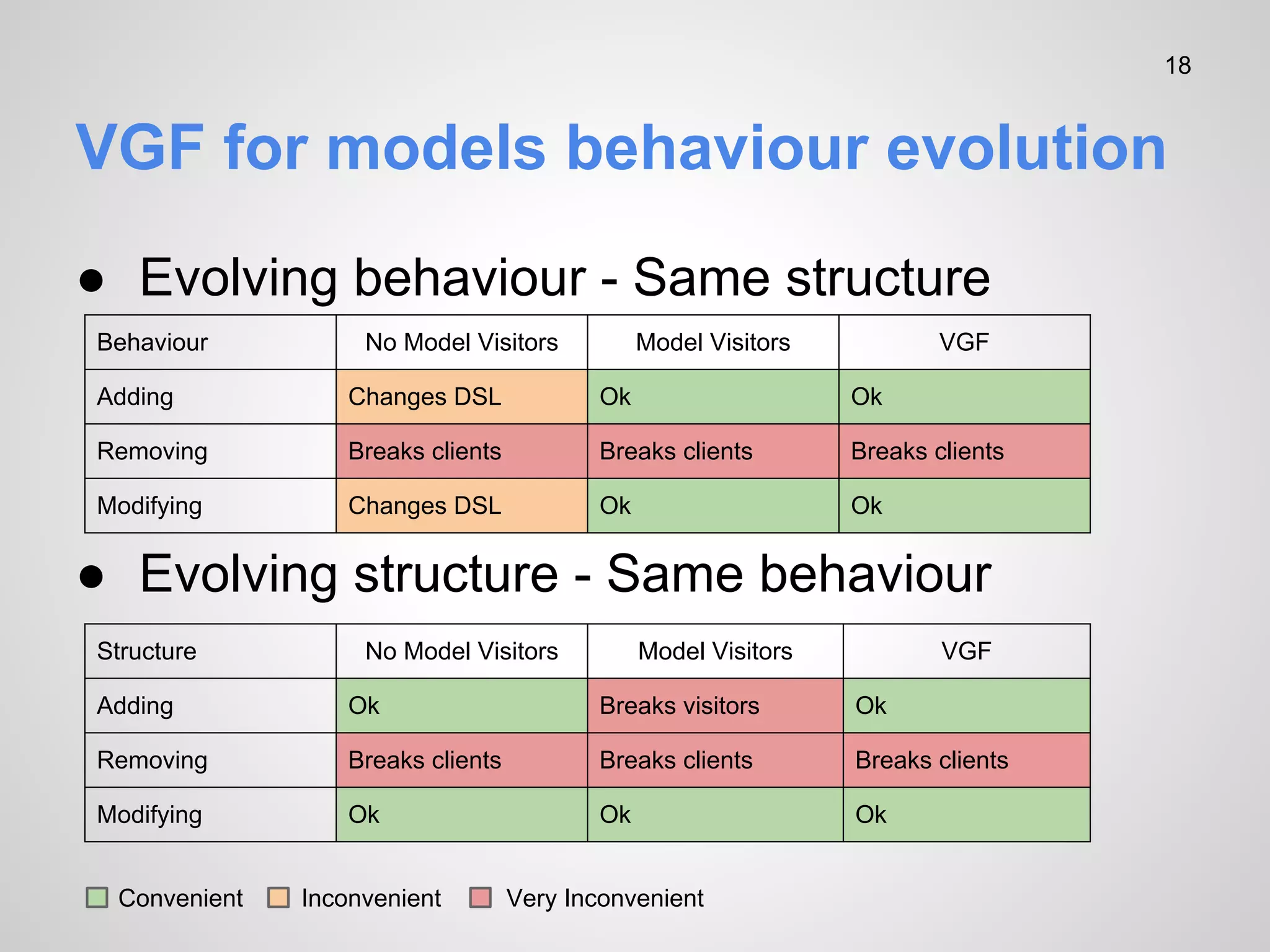
VGF for models behaviour evolution
● Evolving behaviour - Same structure
Behaviour

No Model Visitors

Model Visitors

VGF

Adding

Changes DSL

Ok

Ok

Removing

Breaks clients

Breaks clients

Breaks clients

Modifying

Changes DSL

Ok

Ok

● Evolving structure - Same behaviour
Structure

No Model Visitors

Model Visitors

VGF

Adding

Ok

Breaks visitors

Ok

Removing

Breaks clients

Breaks clients

Breaks clients

Modifying

Ok

Ok

Ok

Convenient

Inconvenient

Very Inconvenient
19

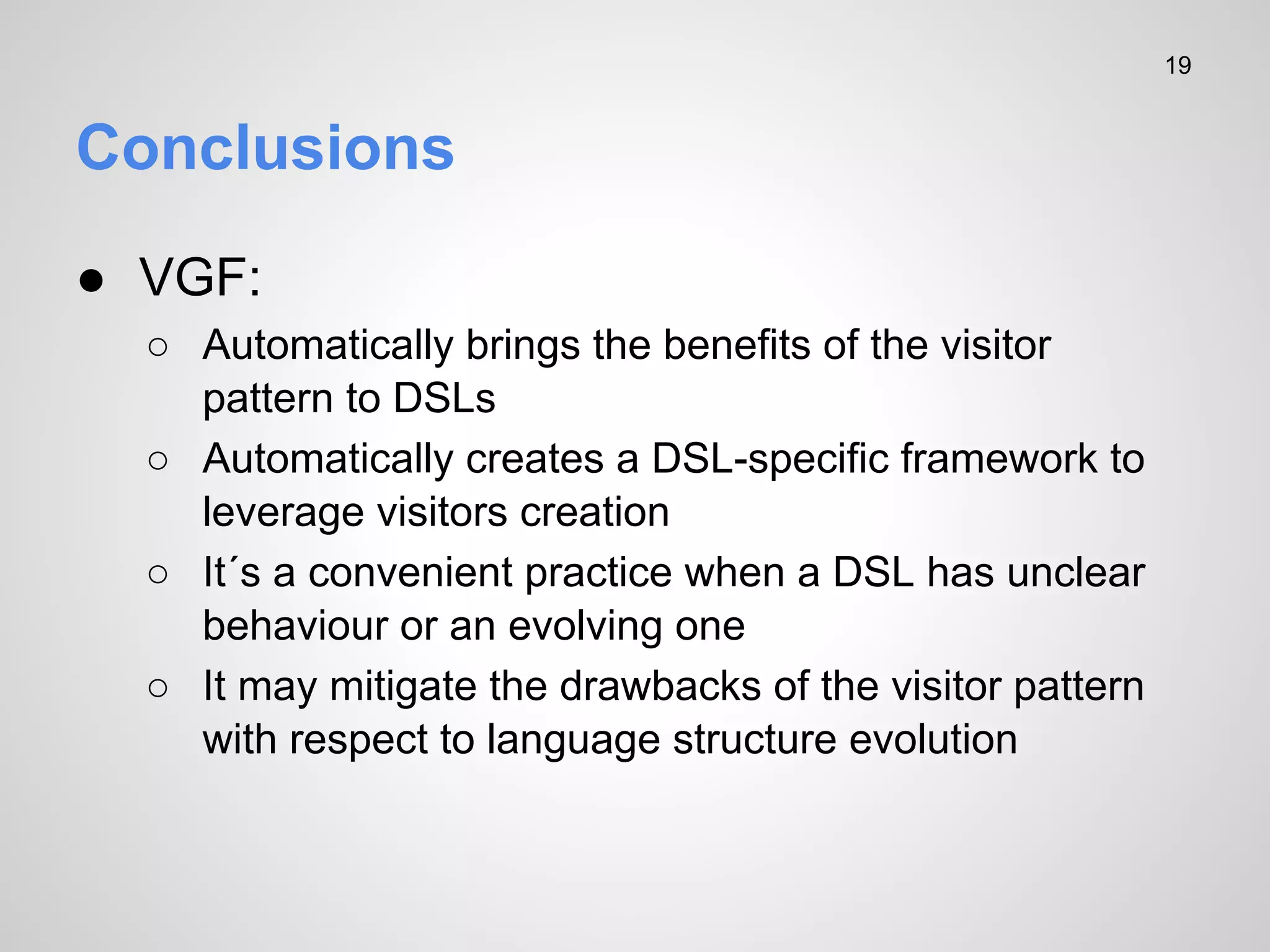
Conclusions
● VGF:
○ Automatically brings the benefits of the visitor
pattern to DSLs
○ Automatically creates a DSL-specific framework to
leverage visitors creation
○ It´s a convenient practice when a DSL has unclear
behaviour or an evolving one
○ It may mitigate the drawbacks of the visitor pattern
with respect to language structure evolution
Thank you very much
Questions ?

doubts, feedback, enquiries, etc. to asbh500@york.ac.uk

Automatic Application of Visitors to Evolving Domain-Specific Languages

  • 1.
    Automatic Application of Visitorsto Evolving Domain-Specific Languages Computer Science Department University of York1 & Willink Transformations Ltd2. Adolfo Sánchez-Barbudo Herrera1, Ed Willink2, Richard Paige1, Louis Rose1, Dimitris Kolovos1 (asbh500@york.ac.uk ed@willink.me.uk richard.paige@york.ac.uk, louis.rose@york.ac.uk, dimitris.kolovos@york.ac.uk)
  • 2.
    2 Agenda ● ● ● ● ● ● ● Introduction to Modeling(MDSD, MDE,...) Model Behaviour Model Evolution Visitor Pattern Visitor Generation Framework (VGF) VGF for Model Behaviour Evolution Conclusions
  • 3.
    3 Modeling Introduction ● ● ● ● Models asmain artefact for developing SW Models as abstract representations of SW Higher level of abstraction than programs Programs replaced by Models uBlog DSL
  • 4.
    4 Modeling Introduction II Witha modeling language you can create model instances, which correspond to objects at runtime.
  • 5.
    5 Modeling Introduction III ●MDE techniques to support software development: Model to Text Model to Model Transformations Transformations
  • 6.
    6 Model Behaviour ● Modelconcepts may comprise behaviour ● Usually modelled as Operations A user can create new posts in a given uBlog
  • 7.
    7 Model Evolution ● Modelevolution - like SW evolution - is a recurrent and open issue.
  • 8.
    8 Model Evolution II ●Same issues regarding behaviour.
  • 9.
    9 Visitor Pattern ● OOPdesign pattern ○ Well known solutions to a recurring problem ● Separate structure from behaviour
  • 10.
    10 Visitor Pattern II ●Main advantage ○ Add/Remove/Modify/Replace behaviour without changing structure. ○ Ideal when working with third party structures.
  • 11.
    11 Visitor Pattern III ●Main disadvantage ○ It’s not the ideal pattern with evolving structures.
  • 12.
    12 Visitor Pattern IV ●Visitors applied to modeling languages
  • 13.
    13 Visitor Generation Framework ●MDE based prototype to automatically apply the visitor pattern. ● Part 1. ○ Setup the DSL to apply the visitor pattern ○ via a M2M Transformation. ● Part 2. ○ Generate DSL-specific visitors framework ○ via M2T Transformations.
  • 14.
    14 Visitor Generation FrameworkII ● M2M transformation to prepare the DSL
  • 15.
    15 Visitor Generation FrameworkIII ● DSL-specific visitors framework generation 1. Visitor/Visitable Interfaces ● ● ● ● ● 2. Default Abstract Implementations Contextful Visitor Null Visitor Extending Visitor Delegating Visitor ...
  • 16.
    16 Visitor Generation FrameworkIV ● VGF abstract visitors examples:
  • 17.
    17 Visitor Generation FrameworkV ● VGF Overview Visitable DSL Implementation DSL Model VGF DSL-Specific Visitors Framework Visitor/ Visitable Interfaces Manual Generated Abstract Visitors Impl. More MDE-based generators Generated Visitors Manual Visitors
  • 18.
    18 VGF for modelsbehaviour evolution ● Evolving behaviour - Same structure Behaviour No Model Visitors Model Visitors VGF Adding Changes DSL Ok Ok Removing Breaks clients Breaks clients Breaks clients Modifying Changes DSL Ok Ok ● Evolving structure - Same behaviour Structure No Model Visitors Model Visitors VGF Adding Ok Breaks visitors Ok Removing Breaks clients Breaks clients Breaks clients Modifying Ok Ok Ok Convenient Inconvenient Very Inconvenient
  • 19.
    19 Conclusions ● VGF: ○ Automaticallybrings the benefits of the visitor pattern to DSLs ○ Automatically creates a DSL-specific framework to leverage visitors creation ○ It´s a convenient practice when a DSL has unclear behaviour or an evolving one ○ It may mitigate the drawbacks of the visitor pattern with respect to language structure evolution
  • 20.
    Thank you verymuch Questions ? doubts, feedback, enquiries, etc. to asbh500@york.ac.uk