Workplace Health
Screening Programs: A
Guide
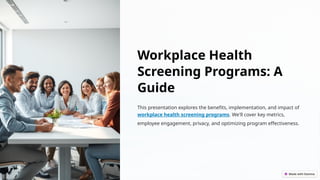
This presentation explores the benefits, implementation, and impact of
workplace health screening programs. We'll cover key metrics,
employee engagement, privacy, and optimizing program effectiveness.
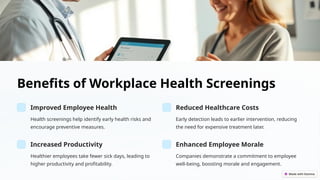
Benefits of Workplace Health Screenings
Improved Employee Health
Health screenings help identify early health risks and
encourage preventive measures.
Reduced Healthcare Costs
Early detection leads to earlier intervention, reducing
the need for expensive treatment later.
Increased Productivity
Healthier employees take fewer sick days, leading to
higher productivity and profitability.
Enhanced Employee Morale
Companies demonstrate a commitment to employee
well-being, boosting morale and engagement.
Key Screening Metrics to Consider
Blood Pressure
Measures cardiovascular
health, a crucial indicator
for overall well-being.
Cholesterol Levels
Reveals potential for heart
disease, allowing for timely
intervention.
Blood Glucose
Levels
Checks for diabetes risk, a
growing health concern in
the workforce.
Body Mass Index
(BMI)
Provides a measure of
weight relative to height,
highlighting potential
weight-related issues.
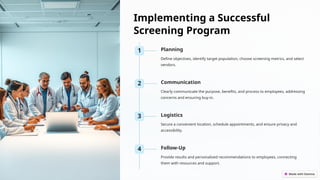
Implementing a Successful
Screening Program
1 Planning
Define objectives, identify target population, choose screening metrics, and select
vendors.
2 Communication
Clearly communicate the purpose, benefits, and process to employees, addressing
concerns and ensuring buy-in.
3 Logistics
Secure a convenient location, schedule appointments, and ensure privacy and
accessibility.
4 Follow-Up
Provide results and personalized recommendations to employees, connecting
them with resources and support.
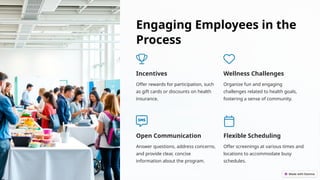
Engaging Employees in the
Process
Incentives
Offer rewards for participation, such
as gift cards or discounts on health
insurance.
Wellness Challenges
Organize fun and engaging
challenges related to health goals,
fostering a sense of community.
Open Communication
Answer questions, address concerns,
and provide clear, concise
information about the program.
Flexible Scheduling
Offer screenings at various times and
locations to accommodate busy
schedules.
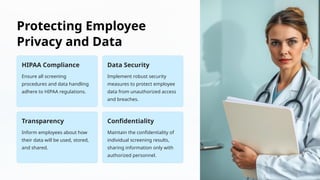
Protecting Employee
Privacy and Data
HIPAA Compliance
Ensure all screening
procedures and data handling
adhere to HIPAA regulations.
Data Security
Implement robust security
measures to protect employee
data from unauthorized access
and breaches.
Transparency
Inform employees about how
their data will be used, stored,
and shared.
Confidentiality
Maintain the confidentiality of
individual screening results,
sharing information only with
authorized personnel.
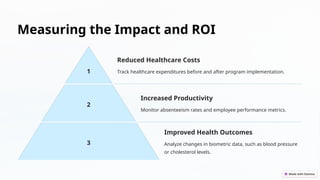
Measuring the Impact and ROI
1
Reduced Healthcare Costs
Track healthcare expenditures before and after program implementation.
2
Increased Productivity
Monitor absenteeism rates and employee performance metrics.
3
Improved Health Outcomes
Analyze changes in biometric data, such as blood pressure
or cholesterol levels.
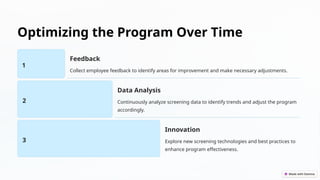
Optimizing the Program Over Time
1
Feedback
Collect employee feedback to identify areas for improvement and make necessary adjustments.
2
Data Analysis
Continuously analyze screening data to identify trends and adjust the program
accordingly.
3
Innovation
Explore new screening technologies and best practices to
enhance program effectiveness.
Contact Us
15 – 604 Edward Ave
Richmond Hill, ON L4C 9Y7
Canada​
​
​
cs@globalhs.com
(416) 571-1270

Workplace-Health-Screening-Programs-A-Guide (1).pptx

  • 1.
    Workplace Health Screening Programs:A Guide This presentation explores the benefits, implementation, and impact of workplace health screening programs. We'll cover key metrics, employee engagement, privacy, and optimizing program effectiveness.
  • 2.
    Benefits of WorkplaceHealth Screenings Improved Employee Health Health screenings help identify early health risks and encourage preventive measures. Reduced Healthcare Costs Early detection leads to earlier intervention, reducing the need for expensive treatment later. Increased Productivity Healthier employees take fewer sick days, leading to higher productivity and profitability. Enhanced Employee Morale Companies demonstrate a commitment to employee well-being, boosting morale and engagement.
  • 3.
    Key Screening Metricsto Consider Blood Pressure Measures cardiovascular health, a crucial indicator for overall well-being. Cholesterol Levels Reveals potential for heart disease, allowing for timely intervention. Blood Glucose Levels Checks for diabetes risk, a growing health concern in the workforce. Body Mass Index (BMI) Provides a measure of weight relative to height, highlighting potential weight-related issues.
  • 4.
    Implementing a Successful ScreeningProgram 1 Planning Define objectives, identify target population, choose screening metrics, and select vendors. 2 Communication Clearly communicate the purpose, benefits, and process to employees, addressing concerns and ensuring buy-in. 3 Logistics Secure a convenient location, schedule appointments, and ensure privacy and accessibility. 4 Follow-Up Provide results and personalized recommendations to employees, connecting them with resources and support.
  • 5.
    Engaging Employees inthe Process Incentives Offer rewards for participation, such as gift cards or discounts on health insurance. Wellness Challenges Organize fun and engaging challenges related to health goals, fostering a sense of community. Open Communication Answer questions, address concerns, and provide clear, concise information about the program. Flexible Scheduling Offer screenings at various times and locations to accommodate busy schedules.
  • 6.
    Protecting Employee Privacy andData HIPAA Compliance Ensure all screening procedures and data handling adhere to HIPAA regulations. Data Security Implement robust security measures to protect employee data from unauthorized access and breaches. Transparency Inform employees about how their data will be used, stored, and shared. Confidentiality Maintain the confidentiality of individual screening results, sharing information only with authorized personnel.
  • 7.
    Measuring the Impactand ROI 1 Reduced Healthcare Costs Track healthcare expenditures before and after program implementation. 2 Increased Productivity Monitor absenteeism rates and employee performance metrics. 3 Improved Health Outcomes Analyze changes in biometric data, such as blood pressure or cholesterol levels.
  • 8.
    Optimizing the ProgramOver Time 1 Feedback Collect employee feedback to identify areas for improvement and make necessary adjustments. 2 Data Analysis Continuously analyze screening data to identify trends and adjust the program accordingly. 3 Innovation Explore new screening technologies and best practices to enhance program effectiveness.
  • 9.
    Contact Us 15 –604 Edward Ave Richmond Hill, ON L4C 9Y7 Canada​ ​ ​ cs@globalhs.com (416) 571-1270