





v
#SEJWebinar
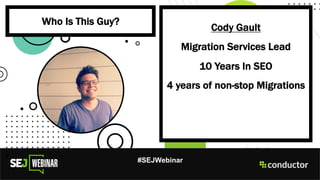
Cody Gault
Migration Services Lead
10 Years In SEO
4 years of non-stop Migrations
Who Is This Guy?
Migrations are scary
#SEJWebinar
#SEJWebinar
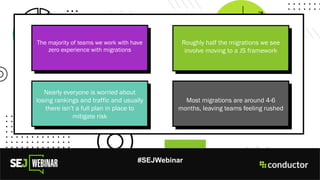
The majority of teams we work with have
zero experience with migrations
Roughly half the migrations we see
involve moving to a JS framework
Nearly everyone is worried about
losing rankings and traffic and usually
there isn’t a full plan in place to
mitigate risk
Most migrations are around 4-6
months, leaving teams feeling rushed
#SEJWebinar
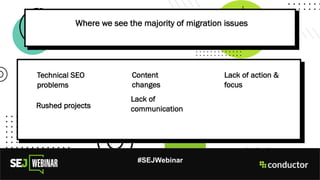
Where we see the majority of migration issues
Technical SEO
problems
Rushed projects
Content
changes
Lack of
communication
Lack of action &
focus
Technical Issues
#SEJWebinar
#SEJWebinar
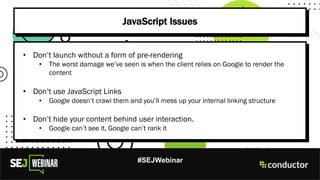
JavaScript Issues
• Don’t launch without a form of pre-rendering
• The worst damage we’ve seen is when the client relies on Google to render the
content
• Don’t use JavaScript Links
• Google doesn’t crawl them and you’ll mess up your internal linking structure
• Don’t hide your content behind user interaction.
• Google can’t see it, Google can’t rank it
#SEJWebinar
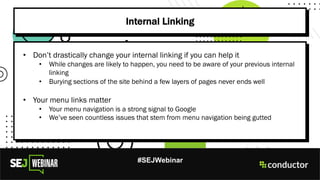
Internal Linking
• Don’t drastically change your internal linking if you can help it
• While changes are likely to happen, you need to be aware of your previous internal
linking
• Burying sections of the site behind a few layers of pages never ends well
• Your menu links matter
• Your menu navigation is a strong signal to Google
• We’ve seen countless issues that stem from menu navigation being gutted
#SEJWebinar
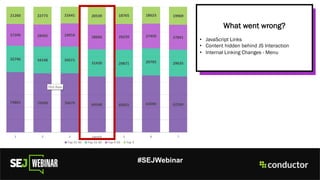
What went wrong?
• JavaScript Links
• Content hidden behind JS Interaction
• Internal Linking Changes - Menu
#SEJWebinar
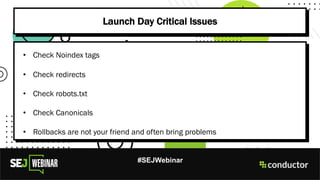
Launch Day Critical Issues
• Check Noindex tags
• Check redirects
• Check robots.txt
• Check Canonicals
• Rollbacks are not your friend and often bring problems
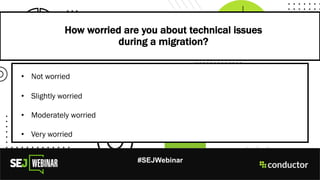
How worried are you about technical issues
during a migration?
#SEJWebinar
• Not worried
• Slightly worried
• Moderately worried
• Very worried
Content Issues
#SEJWebinar
#SEJWebinar
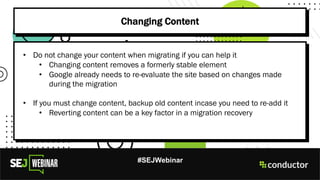
Changing Content
• Do not change your content when migrating if you can help it
• Changing content removes a formerly stable element
• Google already needs to re-evaluate the site based on changes made
during the migration
• If you must change content, backup old content incase you need to re-add it
• Reverting content can be a key factor in a migration recovery
#SEJWebinar
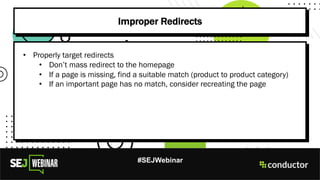
Improper Redirects
• Properly target redirects
• Don’t mass redirect to the homepage
• If a page is missing, find a suitable match (product to product category)
• If an important page has no match, consider recreating the page
#SEJWebinar
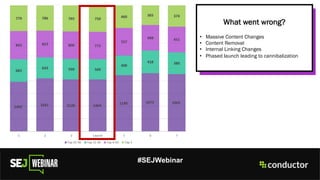
What went wrong?
• Massive Content Changes
• Content Removal
• Internal Linking Changes
• Phased launch leading to cannibalization
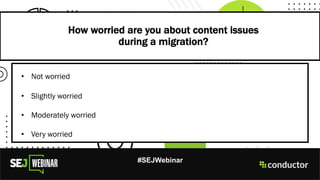
How worried are you about content issues
during a migration?
#SEJWebinar
• Not worried
• Slightly worried
• Moderately worried
• Very worried
Migration Tips
#SEJWebinar
#SEJWebinar
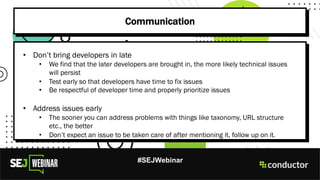
Communication
• Don’t bring developers in late
• We find that the later developers are brought in, the more likely technical issues
will persist
• Test early so that developers have time to fix issues
• Be respectful of developer time and properly prioritize issues
• Address issues early
• The sooner you can address problems with things like taxonomy, URL structure
etc., the better
• Don’t expect an issue to be taken care of after mentioning it, follow up on it.
Migration Tips
#SEJWebinar
#SEJWebinar
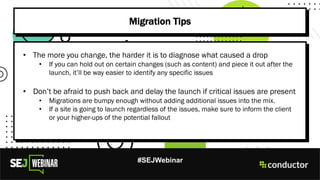
Migration Tips
• The more you change, the harder it is to diagnose what caused a drop
• If you can hold out on certain changes (such as content) and piece it out after the
launch, it’ll be way easier to identify any specific issues
• Don’t be afraid to push back and delay the launch if critical issues are present
• Migrations are bumpy enough without adding additional issues into the mix.
• If a site is going to launch regardless of the issues, make sure to inform the client
or your higher-ups of the potential fallout
#SEJWebinar
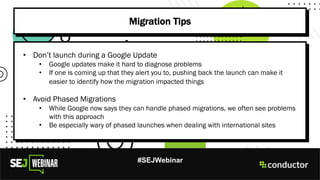
Migration Tips
• Don’t launch during a Google Update
• Google updates make it hard to diagnose problems
• If one is coming up that they alert you to, pushing back the launch can make it
easier to identify how the migration impacted things
• Avoid Phased Migrations
• While Google now says they can handle phased migrations, we often see problems
with this approach
• Be especially wary of phased launches when dealing with international sites
#SEJWebinar
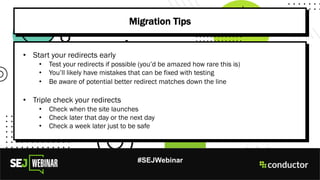
Migration Tips
• Start your redirects early
• Test your redirects if possible (you’d be amazed how rare this is)
• You’ll likely have mistakes that can be fixed with testing
• Be aware of potential better redirect matches down the line
• Triple check your redirects
• Check when the site launches
• Check later that day or the next day
• Check a week later just to be safe
#SEJWebinar
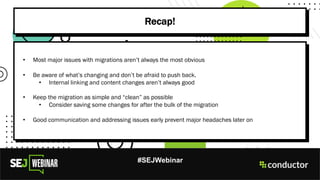
Recap!
• Most major issues with migrations aren’t always the most obvious
• Be aware of what’s changing and don’t be afraid to push back.
• Internal linking and content changes aren’t always good
• Keep the migration as simple and “clean” as possible
• Consider saving some changes for after the bulk of the migration
• Good communication and addressing issues early prevent major headaches later on
Where Site Migrations Go Wrong & Sabotage SEO

Where Site Migrations Go Wrong & Sabotage SEO

  • 2.
    v #SEJWebinar Cody Gault Migration ServicesLead 10 Years In SEO 4 years of non-stop Migrations Who Is This Guy?
  • 3.
  • 4.
    #SEJWebinar The majority ofteams we work with have zero experience with migrations Roughly half the migrations we see involve moving to a JS framework Nearly everyone is worried about losing rankings and traffic and usually there isn’t a full plan in place to mitigate risk Most migrations are around 4-6 months, leaving teams feeling rushed
  • 5.
    #SEJWebinar Where we seethe majority of migration issues Technical SEO problems Rushed projects Content changes Lack of communication Lack of action & focus
  • 6.
  • 7.
    #SEJWebinar JavaScript Issues • Don’tlaunch without a form of pre-rendering • The worst damage we’ve seen is when the client relies on Google to render the content • Don’t use JavaScript Links • Google doesn’t crawl them and you’ll mess up your internal linking structure • Don’t hide your content behind user interaction. • Google can’t see it, Google can’t rank it
  • 8.
    #SEJWebinar Internal Linking • Don’tdrastically change your internal linking if you can help it • While changes are likely to happen, you need to be aware of your previous internal linking • Burying sections of the site behind a few layers of pages never ends well • Your menu links matter • Your menu navigation is a strong signal to Google • We’ve seen countless issues that stem from menu navigation being gutted
  • 9.
    #SEJWebinar What went wrong? •JavaScript Links • Content hidden behind JS Interaction • Internal Linking Changes - Menu
  • 10.
    #SEJWebinar Launch Day CriticalIssues • Check Noindex tags • Check redirects • Check robots.txt • Check Canonicals • Rollbacks are not your friend and often bring problems
  • 11.
    How worried areyou about technical issues during a migration? #SEJWebinar • Not worried • Slightly worried • Moderately worried • Very worried
  • 12.
  • 13.
    #SEJWebinar Changing Content • Donot change your content when migrating if you can help it • Changing content removes a formerly stable element • Google already needs to re-evaluate the site based on changes made during the migration • If you must change content, backup old content incase you need to re-add it • Reverting content can be a key factor in a migration recovery
  • 14.
    #SEJWebinar Improper Redirects • Properlytarget redirects • Don’t mass redirect to the homepage • If a page is missing, find a suitable match (product to product category) • If an important page has no match, consider recreating the page
  • 15.
    #SEJWebinar What went wrong? •Massive Content Changes • Content Removal • Internal Linking Changes • Phased launch leading to cannibalization
  • 16.
    How worried areyou about content issues during a migration? #SEJWebinar • Not worried • Slightly worried • Moderately worried • Very worried
  • 17.
  • 18.
    #SEJWebinar Communication • Don’t bringdevelopers in late • We find that the later developers are brought in, the more likely technical issues will persist • Test early so that developers have time to fix issues • Be respectful of developer time and properly prioritize issues • Address issues early • The sooner you can address problems with things like taxonomy, URL structure etc., the better • Don’t expect an issue to be taken care of after mentioning it, follow up on it.
  • 19.
  • 20.
    #SEJWebinar Migration Tips • Themore you change, the harder it is to diagnose what caused a drop • If you can hold out on certain changes (such as content) and piece it out after the launch, it’ll be way easier to identify any specific issues • Don’t be afraid to push back and delay the launch if critical issues are present • Migrations are bumpy enough without adding additional issues into the mix. • If a site is going to launch regardless of the issues, make sure to inform the client or your higher-ups of the potential fallout
  • 21.
    #SEJWebinar Migration Tips • Don’tlaunch during a Google Update • Google updates make it hard to diagnose problems • If one is coming up that they alert you to, pushing back the launch can make it easier to identify how the migration impacted things • Avoid Phased Migrations • While Google now says they can handle phased migrations, we often see problems with this approach • Be especially wary of phased launches when dealing with international sites
  • 22.
    #SEJWebinar Migration Tips • Startyour redirects early • Test your redirects if possible (you’d be amazed how rare this is) • You’ll likely have mistakes that can be fixed with testing • Be aware of potential better redirect matches down the line • Triple check your redirects • Check when the site launches • Check later that day or the next day • Check a week later just to be safe
  • 23.
    #SEJWebinar Recap! • Most majorissues with migrations aren’t always the most obvious • Be aware of what’s changing and don’t be afraid to push back. • Internal linking and content changes aren’t always good • Keep the migration as simple and “clean” as possible • Consider saving some changes for after the bulk of the migration • Good communication and addressing issues early prevent major headaches later on