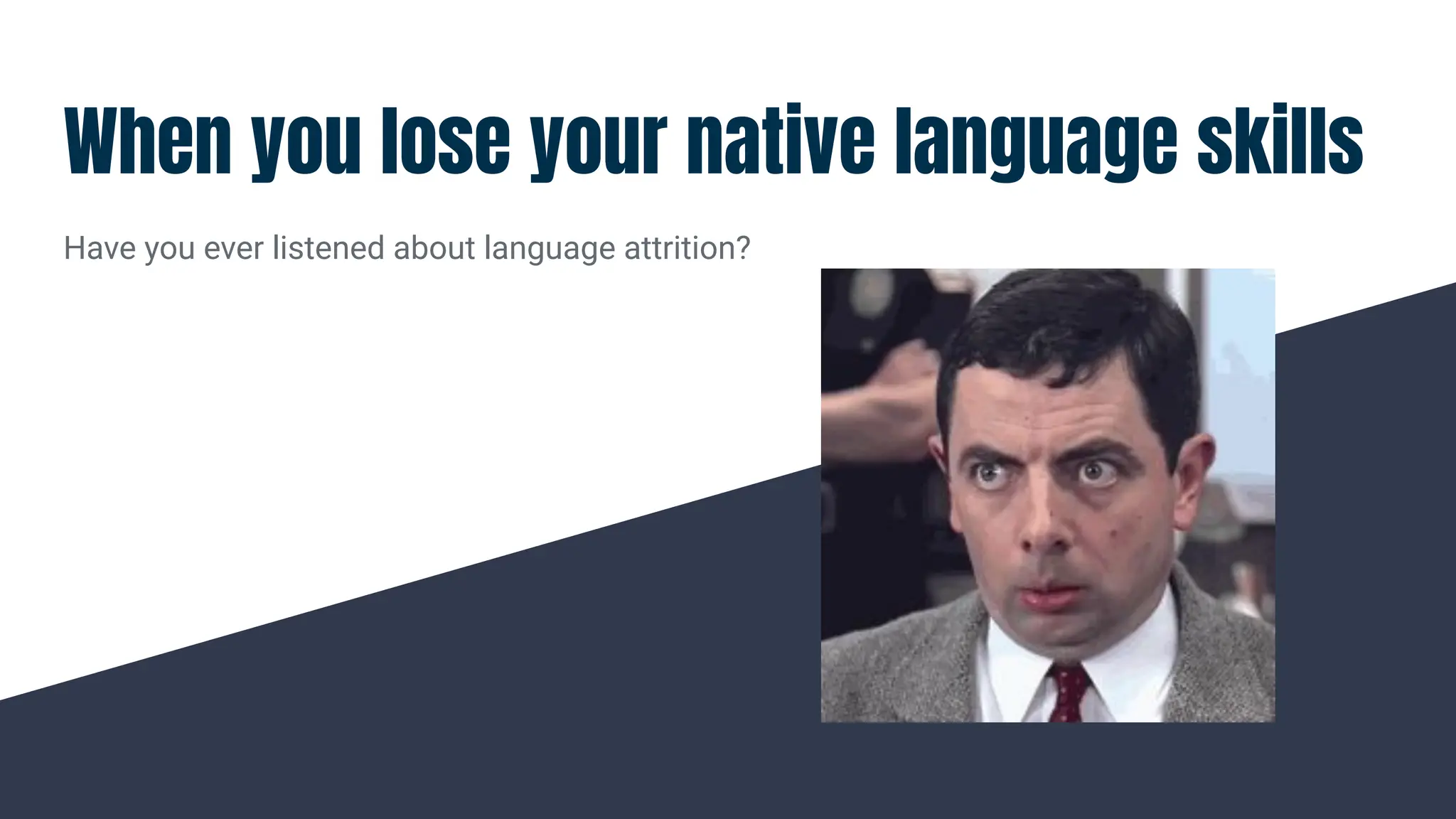
When you lose your native language skills
Have you ever listened about language attrition?
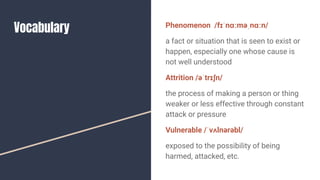
Vocabulary Phenomenon /fɪˈnɑːməˌnɑːn/
a fact or situation that is seen to exist or
happen, especially one whose cause is
not well understood
Attrition /əˈtrɪʃn/
the process of making a person or thing
weaker or less effective through constant
attack or pressure
Vulnerable /ˈvʌlnərəbl/
exposed to the possibility of being
harmed, attacked, etc.
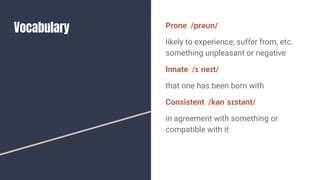
Vocabulary Prone /prəʊn/
likely to experience, suffer from, etc.
something unpleasant or negative
Innate /ɪˈneɪt/
that one has been born with
Consistent /kənˈsɪstənt/
in agreement with something or
compatible with it
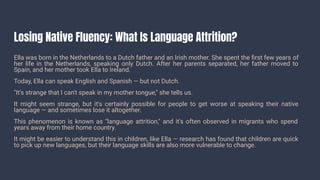
Losing Native Fluency: What Is Language Attrition?
Ella was born in the Netherlands to a Dutch father and an Irish mother. She spent the first few years of
her life in the Netherlands, speaking only Dutch. After her parents separated, her father moved to
Spain, and her mother took Ella to Ireland.
Today, Ella can speak English and Spanish — but not Dutch.
"It's strange that I can't speak in my mother tongue," she tells us.
It might seem strange, but it's certainly possible for people to get worse at speaking their native
language — and sometimes lose it altogether.
This phenomenon is known as "language attrition," and it's often observed in migrants who spend
years away from their home country.
It might be easier to understand this in children, like Ella — research has found that children are quick
to pick up new languages, but their language skills are also more vulnerable to change.
Losing Native Fluency: What Is Language Attrition?
However, language attrition is also observed in adults.
"The minute you start learning another language, the two systems start to compete with each other," Monika Schmid, a
linguist at the University of York, told the BBC.
While there have been cases of adults losing their native language altogether, more often fluency in the native languages
simply decreases, and the speaker becomes more prone to mixing languages.
The degree to which fluency decreases depends on different things, Schmid said. If a person has an innate talent for
languages, they're less likely to lose fluency, for example.
Interestingly, migrants who spend time with others who speak both of their languages could be more prone to losing
fluency in their native language — because they put less effort into keeping those languages separate in their minds,
since both are understood.
Things like negative memories of their home country might even encourage someone to lose their connection to the
language they used there.
But Laura Dominguez from the University of Southampton told the BBC that language attrition isn't a bad thing — it's a
natural process, since people make changes to their language that are consistent with their new realities.
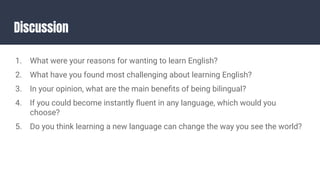
Discussion
1. What were your reasons for wanting to learn English?
2. What have you found most challenging about learning English?
3. In your opinion, what are the main benefits of being bilingual?
4. If you could become instantly fluent in any language, which would you
choose?
5. Do you think learning a new language can change the way you see the world?

When you lose your native language skills.pdf

  • 1.
    When you loseyour native language skills Have you ever listened about language attrition?
  • 2.
    Vocabulary Phenomenon /fɪˈnɑːməˌnɑːn/ afact or situation that is seen to exist or happen, especially one whose cause is not well understood Attrition /əˈtrɪʃn/ the process of making a person or thing weaker or less effective through constant attack or pressure Vulnerable /ˈvʌlnərəbl/ exposed to the possibility of being harmed, attacked, etc.
  • 3.
    Vocabulary Prone /prəʊn/ likelyto experience, suffer from, etc. something unpleasant or negative Innate /ɪˈneɪt/ that one has been born with Consistent /kənˈsɪstənt/ in agreement with something or compatible with it
  • 5.
    Losing Native Fluency:What Is Language Attrition? Ella was born in the Netherlands to a Dutch father and an Irish mother. She spent the first few years of her life in the Netherlands, speaking only Dutch. After her parents separated, her father moved to Spain, and her mother took Ella to Ireland. Today, Ella can speak English and Spanish — but not Dutch. "It's strange that I can't speak in my mother tongue," she tells us. It might seem strange, but it's certainly possible for people to get worse at speaking their native language — and sometimes lose it altogether. This phenomenon is known as "language attrition," and it's often observed in migrants who spend years away from their home country. It might be easier to understand this in children, like Ella — research has found that children are quick to pick up new languages, but their language skills are also more vulnerable to change.
  • 6.
    Losing Native Fluency:What Is Language Attrition? However, language attrition is also observed in adults. "The minute you start learning another language, the two systems start to compete with each other," Monika Schmid, a linguist at the University of York, told the BBC. While there have been cases of adults losing their native language altogether, more often fluency in the native languages simply decreases, and the speaker becomes more prone to mixing languages. The degree to which fluency decreases depends on different things, Schmid said. If a person has an innate talent for languages, they're less likely to lose fluency, for example. Interestingly, migrants who spend time with others who speak both of their languages could be more prone to losing fluency in their native language — because they put less effort into keeping those languages separate in their minds, since both are understood. Things like negative memories of their home country might even encourage someone to lose their connection to the language they used there. But Laura Dominguez from the University of Southampton told the BBC that language attrition isn't a bad thing — it's a natural process, since people make changes to their language that are consistent with their new realities.
  • 7.
    Discussion 1. What wereyour reasons for wanting to learn English? 2. What have you found most challenging about learning English? 3. In your opinion, what are the main benefits of being bilingual? 4. If you could become instantly fluent in any language, which would you choose? 5. Do you think learning a new language can change the way you see the world?