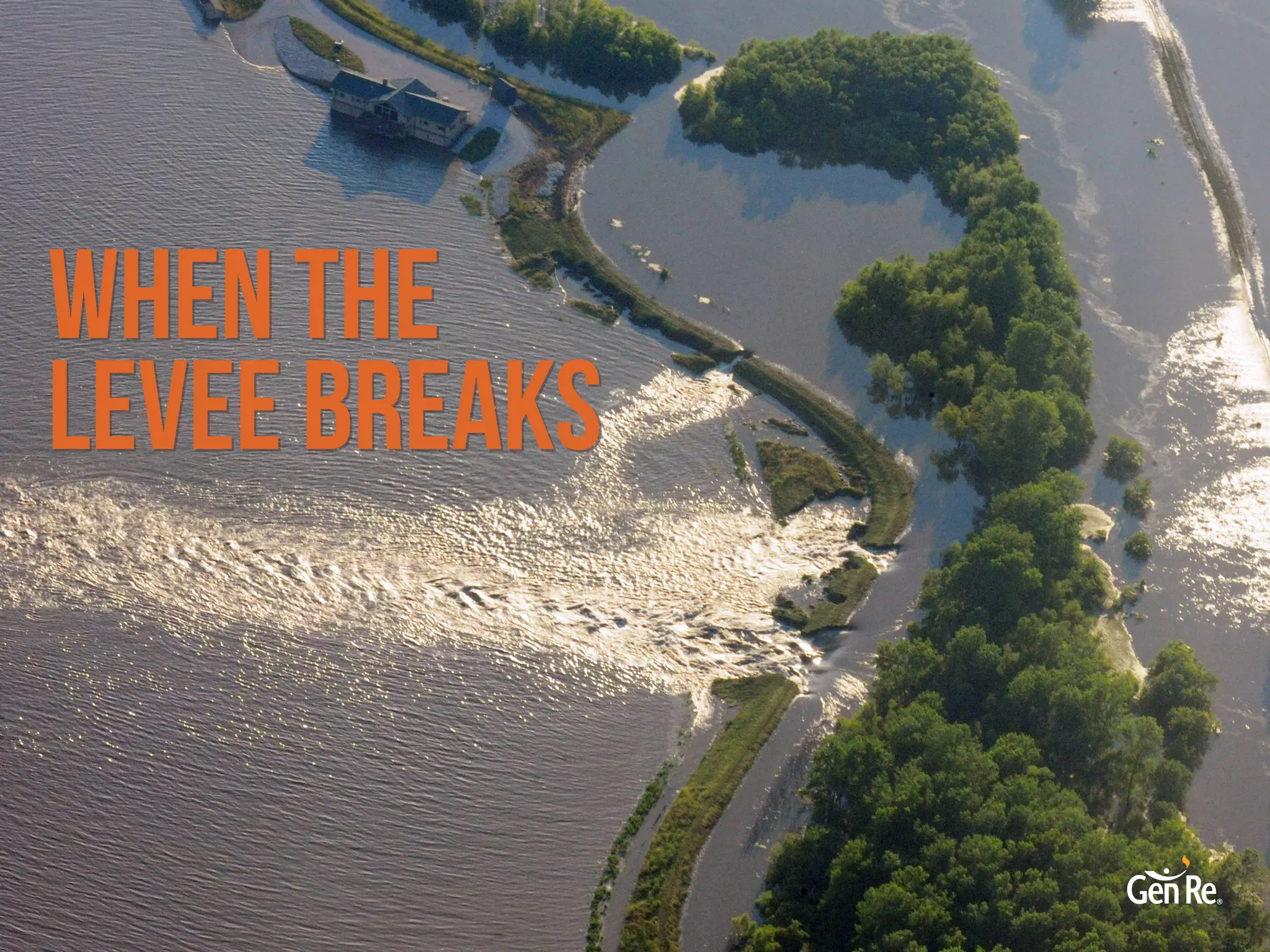
WHEN THE
LEVEE BREAKS
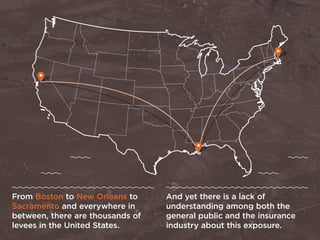
From Boston to New Orleans to
Sacramento and everywhere in
between, there are thousands of
levees in the United States.
And yet there is a lack of
understanding among both the
general public and the insurance
industry about this exposure.
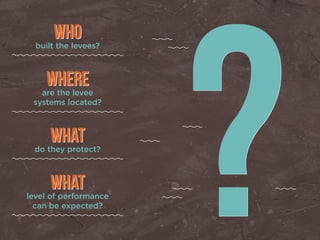
built the levees?
WHO
are the levee
systems located?
WHERE
do they protect?
WHAT
level of performance
can be expected?
WHAT
These are all questions that need
to be addressed at both the e-suite
and desk level. And some of the
answers might surprise you.
Test your levee knowledge with this quick quiz.
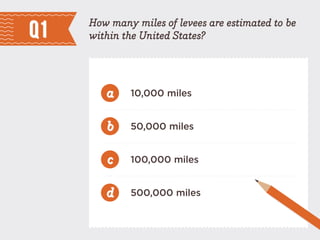
Q1 How many miles of levees are estimated to be
within the United States?
10,000 miles
50,000 miles
100,000 miles
500,000 miles
a
b
c
d
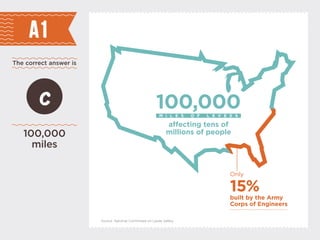
15%
built by the Army
Corps of Engineers
Only
100,000
affecting tens of
millions of people
M I L E S O F L E V E E S
The correct answer is
A1
100,000
miles
c
Source: National Committee on Levee Safety
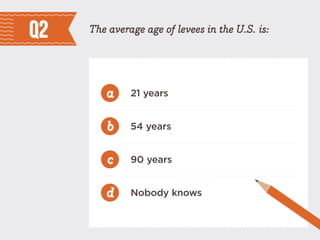
21 years
54 years
90 years
Nobody knows
The average age of levees in the U.S. is:
a
b
c
d
Q2
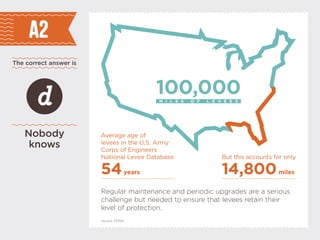
54years 14,800miles
Average age of
levees in the U.S. Army
Corps of Engineers
National Levee Database But this accounts for only
The correct answer is
A2
Nobody
knows
d
Regular maintenance and periodic upgrades are a serious
challenge but needed to ensure that levees retain their
level of protection.
100,000M I L E S O F L E V E E S
Source: FEMA
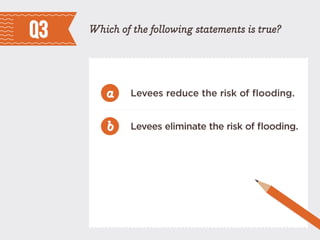
Levees reduce the risk of flooding.
Levees eliminate the risk of flooding.
Which of the following statements is true?
a
b
Q3
The correct answer is
A3
Levees
reduce the
risk of
flooding.
a
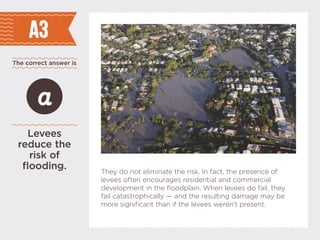
They do not eliminate the risk. In fact, the presence of
levees often encourages residential and commercial
development in the floodplain. When levees do fail, they
fail catastrophically — and the resulting damage may be
more significant than if the levees weren’t present.
Acceptable
Minimally acceptable
Unacceptable
The most recent evaluation of levees in the U.S.
indicates that most of the levees built by the U.S.
Army Corps of Engineers are in what condition?
a
b
c
Q4
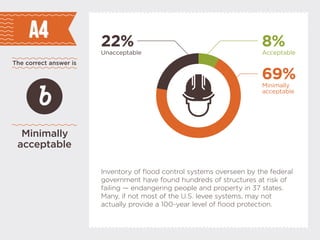
8%
69%
22%
Acceptable
Minimally
acceptable
Unacceptable
The correct answer is
A4
Minimally
acceptable
b
Inventory of flood control systems overseen by the federal
government have found hundreds of structures at risk of
failing — endangering people and property in 37 states.
Many, if not most of the U.S. levee systems, may not
actually provide a 100-year level of flood protection.
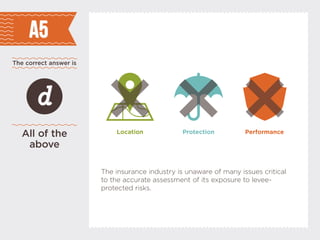
What critical issues affect the ability of the
insurance industry to correctly assess its
exposure to levee-protected risks?
Not knowing the location of
all the levee systems
Not knowing what they protect
Not knowing what level of
performance can be expected
All of the above
a
b
c
d
Q5
The correct answer is
A5
All of the
above
Location Protection Performance
d
The insurance industry is unaware of many issues critical
to the accurate assessment of its exposure to levee-
protected risks.
ME
VT
NH
MA
MN
IA
MO
IL IN OH
KY
WI MI
ND
WA
OR
CA
ID
MT
WY
COUT
AZ
NM
TX LA
FL
MS AL GA
SC
NC
VA
MD DE
NJ
RICT
WV
TN
AR
NV NE
SD
KS
OK
NY
PA
Boston
Washington D.C.
Cincinnati
Nashville
Memphis
Dallas
Mesa
San Jose
Tuscon
Saettle
Portland
El Paso
Fort Worth
PhoenixSan Diego
Long Beach
New Orleans
Tampa
Miami
Oklahoma City
Arlington
Colorado Spring
Fresco
Pittsburgh
Columbus
Indianapolis
St. Louis
Kansas City
Denver
Albuquergue
Las Vegas
Oakland
Los Angeles Anaheim
Santa Ana
Tulsa
Houston
Austin
Wichita
Omaha Toledo
Detroit
Minneapolis
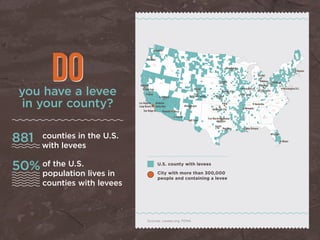
U.S. county with levees
City with more than 300,000
people and containing a levee
counties in the U.S.
with levees
of the U.S.
population lives in
counties with levees
881
50%
you have a levee
in your county?
DO
Sources: Levees.org, FEMA
© 2015 General Re Corporation | This presentation is intended to provide background information for our clients and professional staff.
It is time sensitive and may need to be revised and updated periodically.
Tim Pappas
Brian W. PlatterThere is a lot to know
about levees and Gen Re
can help increase your
level of understanding
regarding this exposure.
To learn more, contact
+1 212 341 8021p
+1 415 393 8425p
e brian.platter@genre.com
in /in/timpappas
in in/brianwplatter
e tpappas@genre.com t @timothy_pappas
t @brian_platter
did you do?
HOW

When The Levee Breaks

  • 1.
  • 2.
    From Boston toNew Orleans to Sacramento and everywhere in between, there are thousands of levees in the United States. And yet there is a lack of understanding among both the general public and the insurance industry about this exposure.
  • 3.
    built the levees? WHO arethe levee systems located? WHERE do they protect? WHAT level of performance can be expected? WHAT
  • 4.
    These are allquestions that need to be addressed at both the e-suite and desk level. And some of the answers might surprise you. Test your levee knowledge with this quick quiz.
  • 5.
    Q1 How manymiles of levees are estimated to be within the United States? 10,000 miles 50,000 miles 100,000 miles 500,000 miles a b c d
  • 6.
    15% built by theArmy Corps of Engineers Only 100,000 affecting tens of millions of people M I L E S O F L E V E E S The correct answer is A1 100,000 miles c Source: National Committee on Levee Safety
  • 7.
    21 years 54 years 90years Nobody knows The average age of levees in the U.S. is: a b c d Q2
  • 8.
    54years 14,800miles Average ageof levees in the U.S. Army Corps of Engineers National Levee Database But this accounts for only The correct answer is A2 Nobody knows d Regular maintenance and periodic upgrades are a serious challenge but needed to ensure that levees retain their level of protection. 100,000M I L E S O F L E V E E S Source: FEMA
  • 9.
    Levees reduce therisk of flooding. Levees eliminate the risk of flooding. Which of the following statements is true? a b Q3
  • 10.
    The correct answeris A3 Levees reduce the risk of flooding. a They do not eliminate the risk. In fact, the presence of levees often encourages residential and commercial development in the floodplain. When levees do fail, they fail catastrophically — and the resulting damage may be more significant than if the levees weren’t present.
  • 11.
    Acceptable Minimally acceptable Unacceptable The mostrecent evaluation of levees in the U.S. indicates that most of the levees built by the U.S. Army Corps of Engineers are in what condition? a b c Q4
  • 12.
    8% 69% 22% Acceptable Minimally acceptable Unacceptable The correct answeris A4 Minimally acceptable b Inventory of flood control systems overseen by the federal government have found hundreds of structures at risk of failing — endangering people and property in 37 states. Many, if not most of the U.S. levee systems, may not actually provide a 100-year level of flood protection.
  • 13.
    What critical issuesaffect the ability of the insurance industry to correctly assess its exposure to levee-protected risks? Not knowing the location of all the levee systems Not knowing what they protect Not knowing what level of performance can be expected All of the above a b c d Q5
  • 14.
    The correct answeris A5 All of the above Location Protection Performance d The insurance industry is unaware of many issues critical to the accurate assessment of its exposure to levee- protected risks.
  • 15.
    ME VT NH MA MN IA MO IL IN OH KY WIMI ND WA OR CA ID MT WY COUT AZ NM TX LA FL MS AL GA SC NC VA MD DE NJ RICT WV TN AR NV NE SD KS OK NY PA Boston Washington D.C. Cincinnati Nashville Memphis Dallas Mesa San Jose Tuscon Saettle Portland El Paso Fort Worth PhoenixSan Diego Long Beach New Orleans Tampa Miami Oklahoma City Arlington Colorado Spring Fresco Pittsburgh Columbus Indianapolis St. Louis Kansas City Denver Albuquergue Las Vegas Oakland Los Angeles Anaheim Santa Ana Tulsa Houston Austin Wichita Omaha Toledo Detroit Minneapolis U.S. county with levees City with more than 300,000 people and containing a levee counties in the U.S. with levees of the U.S. population lives in counties with levees 881 50% you have a levee in your county? DO Sources: Levees.org, FEMA
  • 16.
    © 2015 GeneralRe Corporation | This presentation is intended to provide background information for our clients and professional staff. It is time sensitive and may need to be revised and updated periodically. Tim Pappas Brian W. PlatterThere is a lot to know about levees and Gen Re can help increase your level of understanding regarding this exposure. To learn more, contact +1 212 341 8021p +1 415 393 8425p e brian.platter@genre.com in /in/timpappas in in/brianwplatter e tpappas@genre.com t @timothy_pappas t @brian_platter did you do? HOW