What To Do If Tiny Bumps Form
After Eyelid Surgery
Tiny bumps the size of a grain of rice
can occur along the incision
during the healing process
after eyelid surgery. This is
a normal. It’s due to fibrosis
or focal swelling after any
surgery, since eyelid skin
is quite thin, the lumps are
easily seen and felt.
The most common reason for these
small lumps may be due to lymphatic
fluid retention or a small amount of scar
tissue. The scar tissue in the immediate
post-operative period is usually raised
and feels firm.
All blepharoplasty and eyelid
surgery scars get worse
before they get better.
The scar will mature and soften over
3-4 months. Normally no intervention
is required.
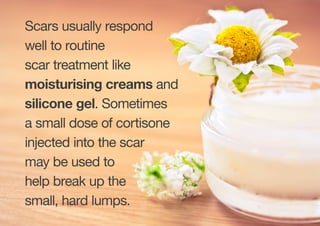
Scars usually respond
well to routine
scar treatment like
moisturising creams and
silicone gel. Sometimes
a small dose of cortisone
injected into the scar
may be used to
help break up the
small, hard lumps.
A suture reaction is when the body
develops a wall of scar around a retained
stitch, particularly around the knot.
It is possible that a lump or granuloma
may form as a reaction to suture material
used in eyelid surgery.
When deep sutures are used to anchor
eyelid tissues to the bone (periosteum),
often a lump is formed. This is commonly
seen following lower eyelid surgery.
If you had a transconjunctival
blepharoplasty with the incision
made inside of the eyelid, it’s
possible that the lump is a reaction
to the ointment that was placed on
your eye during surgery.
The treatment for this is relatively
simple and requires surgical excision.
It can be done in a plastic surgeon’s
practice with minimal to no pain.
It’s possible that the lump could
be:
A fluid-filled cyst (a seroma)
or a hematoma (a collection
of blood):
This will resolve on its own with
time.
That’s if you had fat injected at
the same time of the procedure.
A fat nodule:
This can sometimes develop
after manipulation of the
eyelid during surgery. An
ophthalmologist is equipped to
remove the stye.
A small chalazion or stye:
This is uncommon but a possibility. If the lump
is red, painful and not resolving, it could be a
small localised infection or abscess along your
incision. It should respond to treatment with
warm soaks and antibiotics. If it doesn’t, a small
part of the incision may need to be opened to
allow the area to drain and heal.
A bacterial infection:
Given the various possible explanations
for a hard lump appearing after eyelid
surgery, it’s important to follow up with
your surgeon to determine what type of
lump it actually is and the best course
of action.
Never try to diagnose and treat yourself
as you could put yourself at risk in doing
further damage.
Do you have any questions about
eyelid surgery but are not yet
ready to commit to a one-on-one
consultation?
I invite you to join me for a free information
evening where you can ask me your
questions in an intimate and friendly group
setting. Click on the button below to learn
more about the evening and to reserve your
seat.
Dr Naveen Somia MBBS, PhD, FRACS
+61 2 9387 2110
www.naveensomia.com.au
Visit my blog
www.naveensomia.com.au/myblog
Follow me

What To Do If Tiny Bumps Form After Eyelid Surgery

  • 1.
    What To DoIf Tiny Bumps Form After Eyelid Surgery
  • 2.
    Tiny bumps thesize of a grain of rice can occur along the incision during the healing process after eyelid surgery. This is a normal. It’s due to fibrosis or focal swelling after any surgery, since eyelid skin is quite thin, the lumps are easily seen and felt.
  • 3.
    The most commonreason for these small lumps may be due to lymphatic fluid retention or a small amount of scar tissue. The scar tissue in the immediate post-operative period is usually raised and feels firm.
  • 4.
    All blepharoplasty andeyelid surgery scars get worse before they get better.
  • 5.
    The scar willmature and soften over 3-4 months. Normally no intervention is required.
  • 6.
    Scars usually respond wellto routine scar treatment like moisturising creams and silicone gel. Sometimes a small dose of cortisone injected into the scar may be used to help break up the small, hard lumps.
  • 7.
    A suture reactionis when the body develops a wall of scar around a retained stitch, particularly around the knot. It is possible that a lump or granuloma may form as a reaction to suture material used in eyelid surgery.
  • 8.
    When deep suturesare used to anchor eyelid tissues to the bone (periosteum), often a lump is formed. This is commonly seen following lower eyelid surgery.
  • 9.
    If you hada transconjunctival blepharoplasty with the incision made inside of the eyelid, it’s possible that the lump is a reaction to the ointment that was placed on your eye during surgery.
  • 10.
    The treatment forthis is relatively simple and requires surgical excision. It can be done in a plastic surgeon’s practice with minimal to no pain.
  • 11.
    It’s possible thatthe lump could be:
  • 12.
    A fluid-filled cyst(a seroma) or a hematoma (a collection of blood): This will resolve on its own with time.
  • 13.
    That’s if youhad fat injected at the same time of the procedure. A fat nodule:
  • 14.
    This can sometimesdevelop after manipulation of the eyelid during surgery. An ophthalmologist is equipped to remove the stye. A small chalazion or stye:
  • 15.
    This is uncommonbut a possibility. If the lump is red, painful and not resolving, it could be a small localised infection or abscess along your incision. It should respond to treatment with warm soaks and antibiotics. If it doesn’t, a small part of the incision may need to be opened to allow the area to drain and heal. A bacterial infection:
  • 16.
    Given the variouspossible explanations for a hard lump appearing after eyelid surgery, it’s important to follow up with your surgeon to determine what type of lump it actually is and the best course of action.
  • 17.
    Never try todiagnose and treat yourself as you could put yourself at risk in doing further damage.
  • 18.
    Do you haveany questions about eyelid surgery but are not yet ready to commit to a one-on-one consultation?
  • 19.
    I invite youto join me for a free information evening where you can ask me your questions in an intimate and friendly group setting. Click on the button below to learn more about the evening and to reserve your seat.
  • 20.
    Dr Naveen SomiaMBBS, PhD, FRACS +61 2 9387 2110 www.naveensomia.com.au Visit my blog www.naveensomia.com.au/myblog Follow me