What Makes an Effective Queue System in
Healthcare?
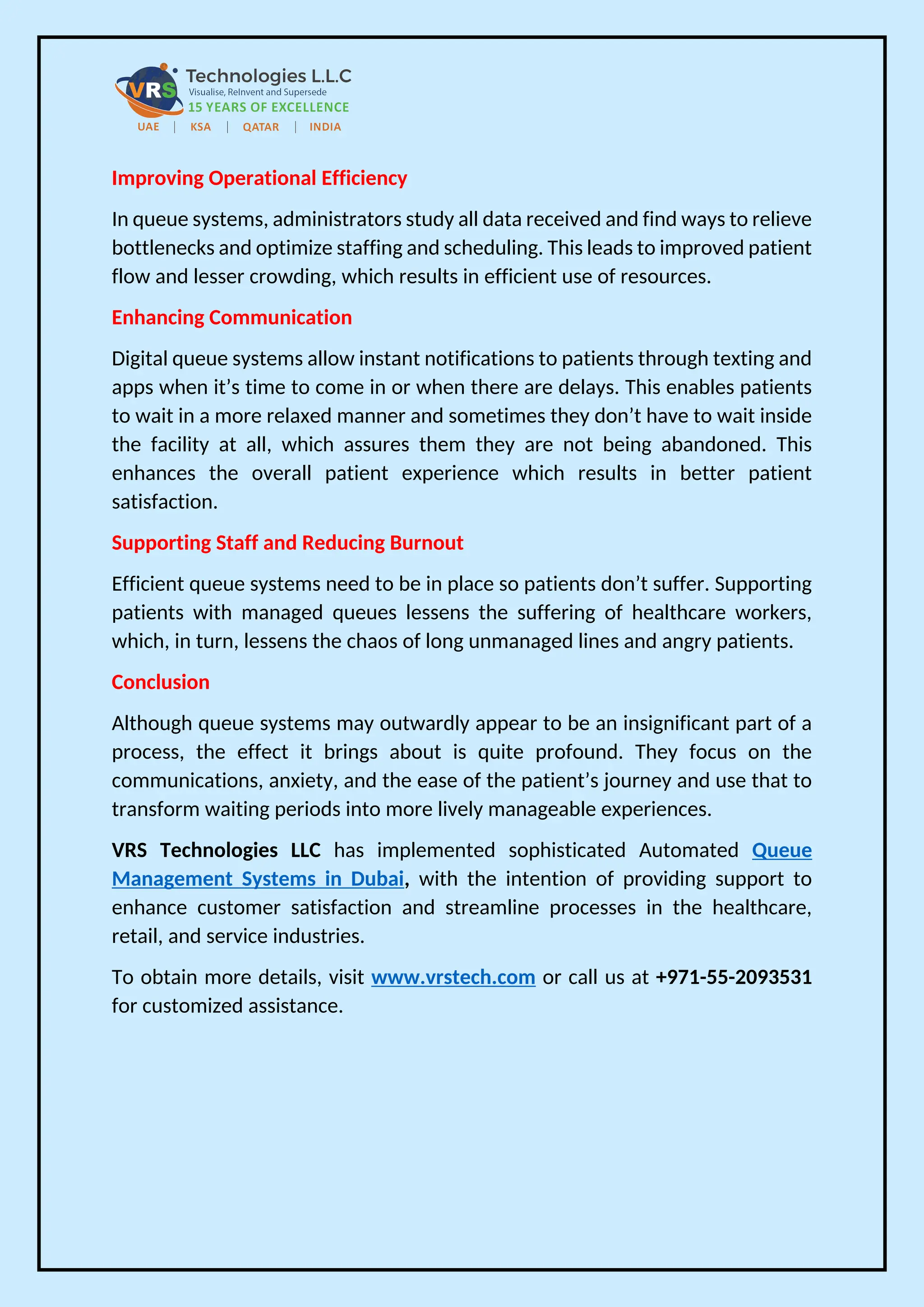
Long wait times have long been a pain point in healthcare settings. Whether it’s
a crowded emergency room, a packed outpatient clinic, or even a pharmacy
line, waiting can negatively impact both the patient experience and the
perceived quality of care. Fortunately, modern queue management systems
are changing the game.
What Is a Queue Management System?
Queueing is the core symptom in a quarantine management system. These
systems segregate a healthcare facility to set up an automated line which leaves
the destination open. How this is done is through the virtual system and Wi-Fi
facility organizing the clinic.
How Queue Systems Can Improve Customer Experience and Reduce
the Effects of Waiting in Healthcare?
Reducing Perceived Wait Time
Long and unnecessary waiting becomes a problem with monitoring of patients.
Systems like these which queue patients based on health concern have the
ability to segregate patients and alleviate the wait time. To a visitor, a superior
service is being offered without the fuss of waiting in line.
Improving Operational Efficiency
In queue systems, administrators study all data received and find ways to relieve
bottlenecks and optimize staffing and scheduling. This leads to improved patient
flow and lesser crowding, which results in efficient use of resources.
Enhancing Communication
Digital queue systems allow instant notifications to patients through texting and
apps when it’s time to come in or when there are delays. This enables patients
to wait in a more relaxed manner and sometimes they don’t have to wait inside
the facility at all, which assures them they are not being abandoned. This
enhances the overall patient experience which results in better patient
satisfaction.
Supporting Staff and Reducing Burnout
Efficient queue systems need to be in place so patients don’t suffer. Supporting
patients with managed queues lessens the suffering of healthcare workers,
which, in turn, lessens the chaos of long unmanaged lines and angry patients.
Conclusion
Although queue systems may outwardly appear to be an insignificant part of a
process, the effect it brings about is quite profound. They focus on the
communications, anxiety, and the ease of the patient’s journey and use that to
transform waiting periods into more lively manageable experiences.
VRS Technologies LLC has implemented sophisticated Automated Queue
Management Systems in Dubai, with the intention of providing support to
enhance customer satisfaction and streamline processes in the healthcare,
retail, and service industries.
To obtain more details, visit www.vrstech.com or call us at +971-55-2093531
for customized assistance.

What Makes an Effective Queue System in Healthcare?

  • 1.
    What Makes anEffective Queue System in Healthcare? Long wait times have long been a pain point in healthcare settings. Whether it’s a crowded emergency room, a packed outpatient clinic, or even a pharmacy line, waiting can negatively impact both the patient experience and the perceived quality of care. Fortunately, modern queue management systems are changing the game. What Is a Queue Management System? Queueing is the core symptom in a quarantine management system. These systems segregate a healthcare facility to set up an automated line which leaves the destination open. How this is done is through the virtual system and Wi-Fi facility organizing the clinic. How Queue Systems Can Improve Customer Experience and Reduce the Effects of Waiting in Healthcare? Reducing Perceived Wait Time Long and unnecessary waiting becomes a problem with monitoring of patients. Systems like these which queue patients based on health concern have the ability to segregate patients and alleviate the wait time. To a visitor, a superior service is being offered without the fuss of waiting in line.
  • 2.
    Improving Operational Efficiency Inqueue systems, administrators study all data received and find ways to relieve bottlenecks and optimize staffing and scheduling. This leads to improved patient flow and lesser crowding, which results in efficient use of resources. Enhancing Communication Digital queue systems allow instant notifications to patients through texting and apps when it’s time to come in or when there are delays. This enables patients to wait in a more relaxed manner and sometimes they don’t have to wait inside the facility at all, which assures them they are not being abandoned. This enhances the overall patient experience which results in better patient satisfaction. Supporting Staff and Reducing Burnout Efficient queue systems need to be in place so patients don’t suffer. Supporting patients with managed queues lessens the suffering of healthcare workers, which, in turn, lessens the chaos of long unmanaged lines and angry patients. Conclusion Although queue systems may outwardly appear to be an insignificant part of a process, the effect it brings about is quite profound. They focus on the communications, anxiety, and the ease of the patient’s journey and use that to transform waiting periods into more lively manageable experiences. VRS Technologies LLC has implemented sophisticated Automated Queue Management Systems in Dubai, with the intention of providing support to enhance customer satisfaction and streamline processes in the healthcare, retail, and service industries. To obtain more details, visit www.vrstech.com or call us at +971-55-2093531 for customized assistance.