What is Training and Development in HRM?
Training and development in Human Resource Management
(HRM) refers to educational activities that enhance employee
knowledge, skills, and capabilities.
The key objectives are:
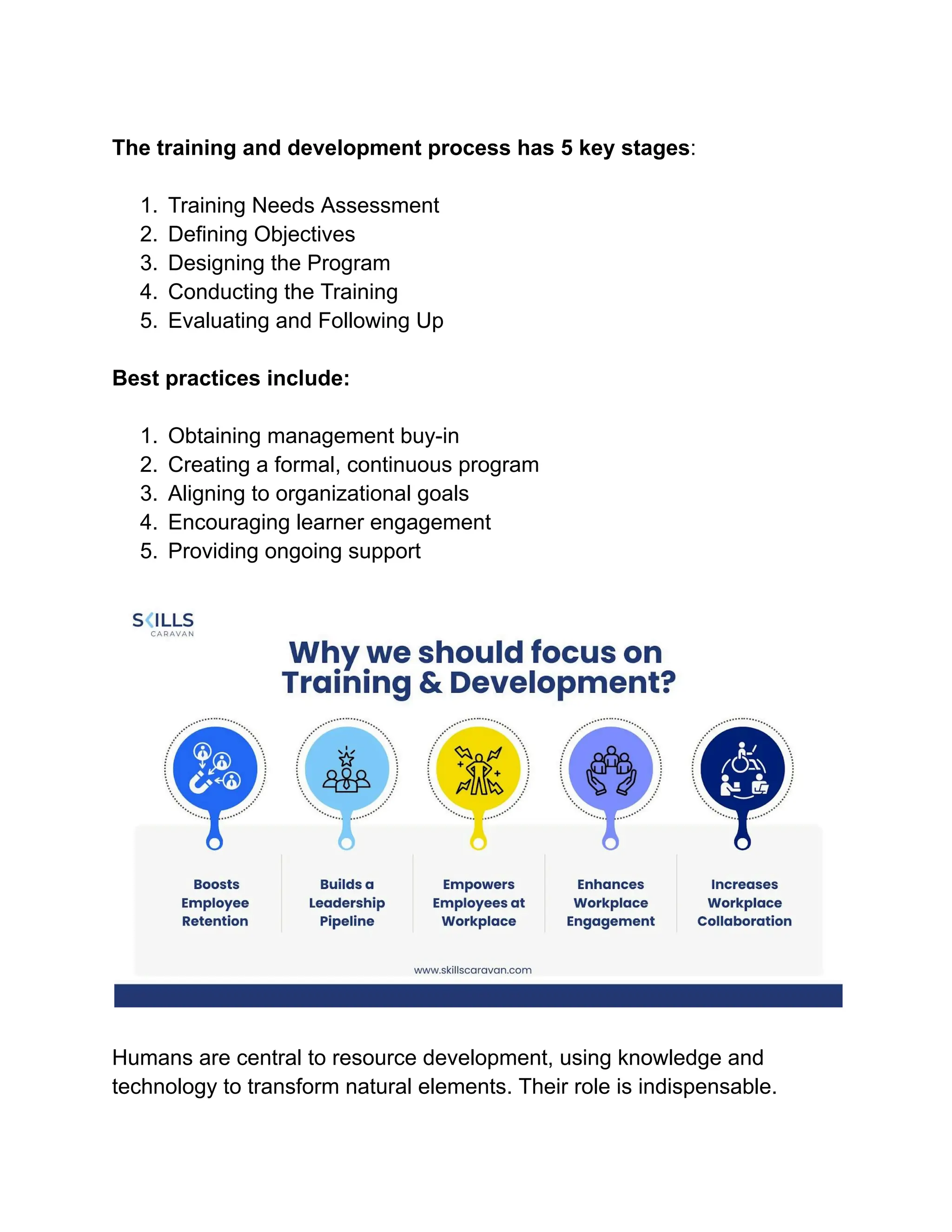
1. Boosting Employee Retention: Providing growth opportunities
increases loyalty and reduces turnover.
2. Building Leadership Pipeline: Identifying and nurturing future leaders
ensures organizational succession.
3. Empowering Employees: Skilled, informed employees feel more
empowered to contribute.
4. Enhancing Engagement: Training programs can address
dissatisfaction and improve overall engagement.
5. Improving Safety: Safety training protects employees and maintains
workflow.
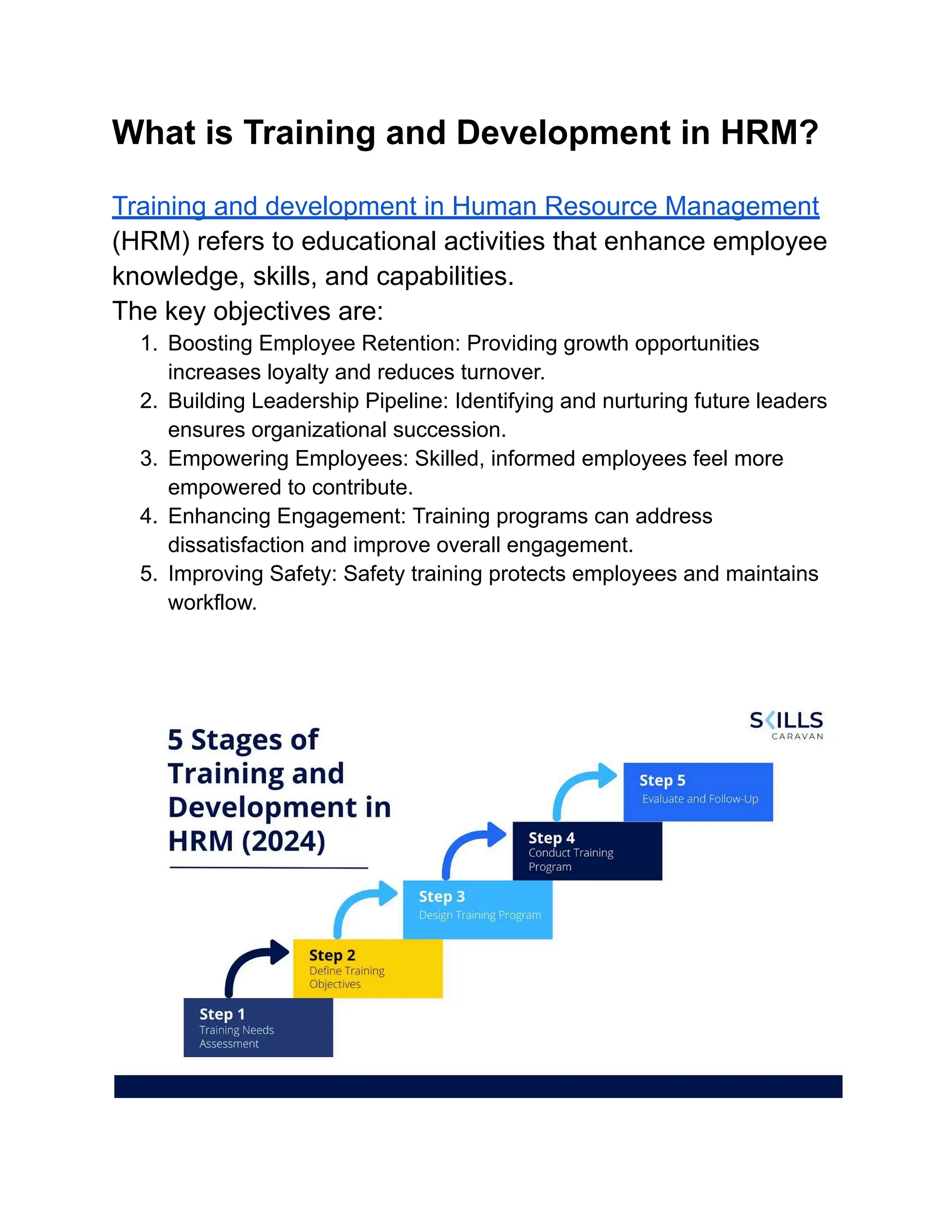
The training and development process has 5 key stages:
1. Training Needs Assessment
2. Defining Objectives
3. Designing the Program
4. Conducting the Training
5. Evaluating and Following Up
Best practices include:
1. Obtaining management buy-in
2. Creating a formal, continuous program
3. Aligning to organizational goals
4. Encouraging learner engagement
5. Providing ongoing support
Humans are central to resource development, using knowledge and
technology to transform natural elements. Their role is indispensable.
What is Training and Development in HRM 1 (1).pdf

What is Training and Development in HRM 1 (1).pdf

  • 1.
    What is Trainingand Development in HRM? Training and development in Human Resource Management (HRM) refers to educational activities that enhance employee knowledge, skills, and capabilities. The key objectives are: 1. Boosting Employee Retention: Providing growth opportunities increases loyalty and reduces turnover. 2. Building Leadership Pipeline: Identifying and nurturing future leaders ensures organizational succession. 3. Empowering Employees: Skilled, informed employees feel more empowered to contribute. 4. Enhancing Engagement: Training programs can address dissatisfaction and improve overall engagement. 5. Improving Safety: Safety training protects employees and maintains workflow.
  • 2.
    The training anddevelopment process has 5 key stages: 1. Training Needs Assessment 2. Defining Objectives 3. Designing the Program 4. Conducting the Training 5. Evaluating and Following Up Best practices include: 1. Obtaining management buy-in 2. Creating a formal, continuous program 3. Aligning to organizational goals 4. Encouraging learner engagement 5. Providing ongoing support Humans are central to resource development, using knowledge and technology to transform natural elements. Their role is indispensable.