UNDERSTANDING HUMAN
RESOURCES: DEFINITION,
EVOLUTION, AND
CONTEMPORARY PRACTICES
INTRODUCTION TO HUMAN
RESOURCES
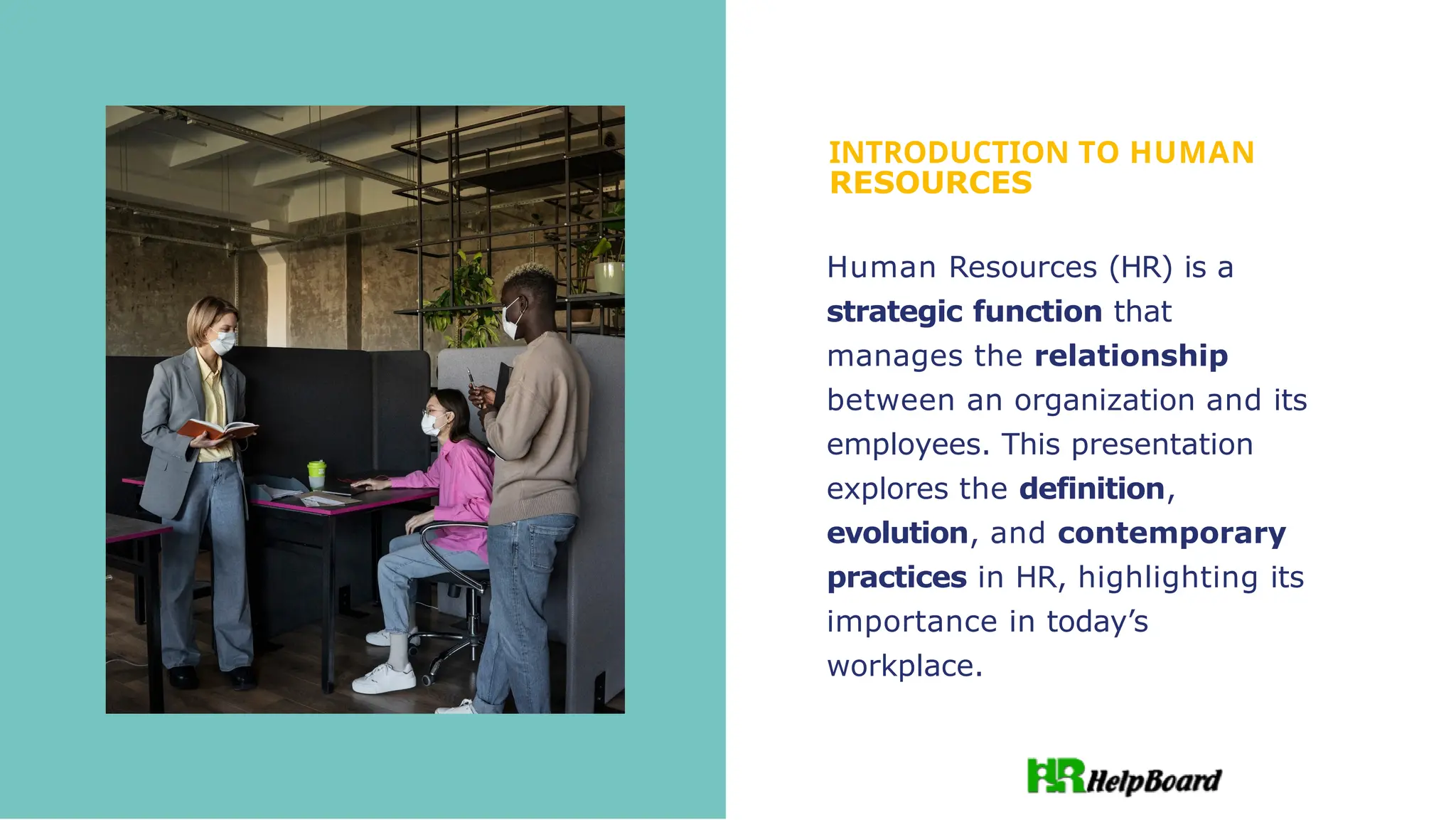
Human Resources (HR) is a
strategic function that
manages the relationship
between an organization and its
employees. This presentation
explores the definition,
evolution, and contemporary
practices in HR, highlighting its
importance in today’s
workplace.
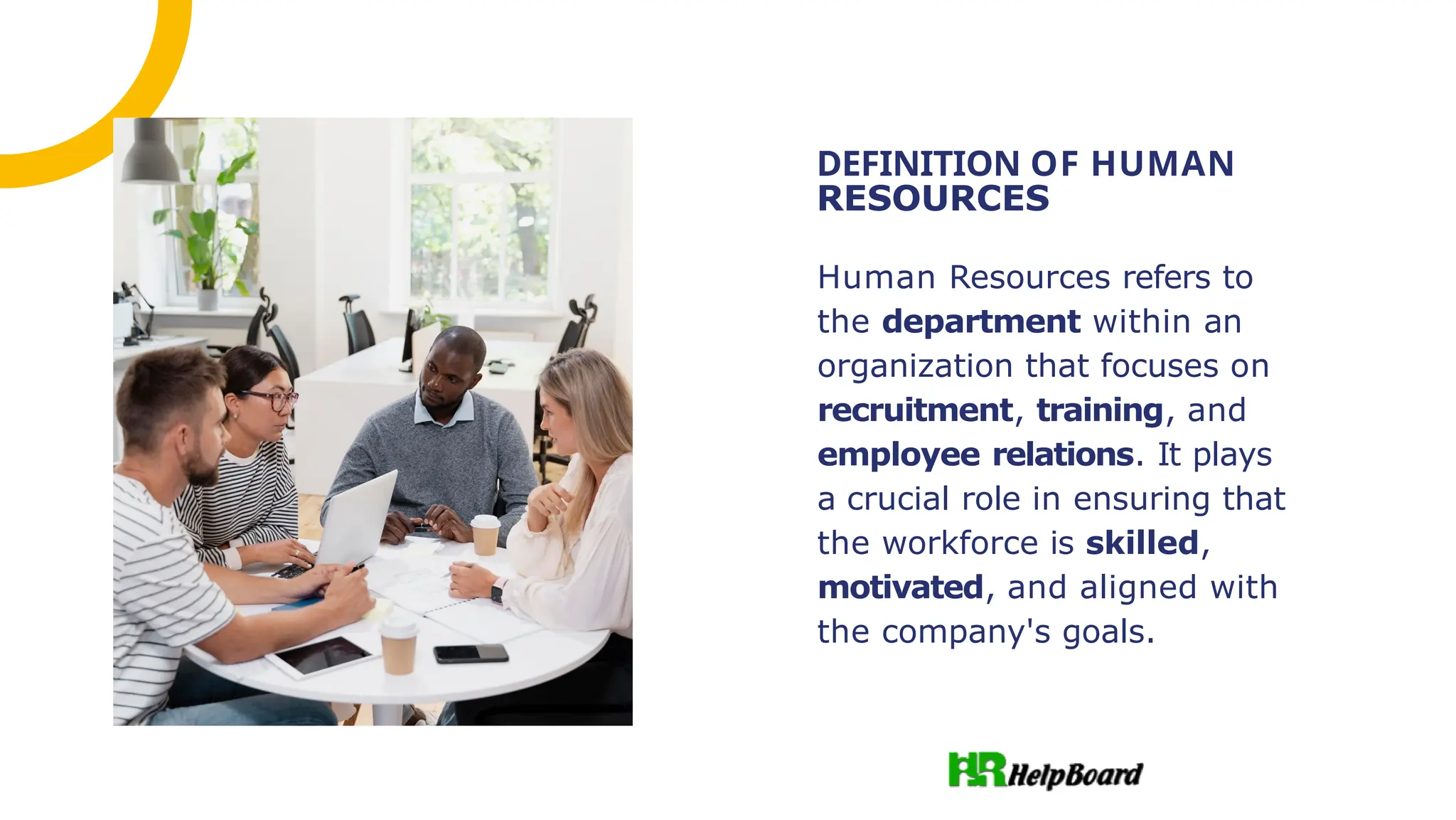
Human Resources refers to
the department within an
organization that focuses on
recruitment, training, and
employee relations. It plays
a crucial role in ensuring that
the workforce is skilled,
motivated, and aligned with
the company's goals.
DEFINITION OF HUMAN
RESOURCES
Historical Evolution of
HR
The evolution of HR has
transitioned from personnel
management to a more strategic
role. Initially focused on
administrative tasks, HR now
emphasizes employee
engagement, organizational
culture, and talent management
to drive business success.
Key Functions of
HR
HR encompasses various key
functions, including
recruitment, onboarding,
performance management,
and employee development.
Each function is vital for building
a productive workforce and
ensuring the organization's long-
term success.
CONTEMPORARY HR
PRACTICES
Modern HR practices focus
on employee well-being,
diversity and inclusion, and
remote work policies. These
practices aim to create a
positive work environment
that fosters innovation and
employee satisfaction.
The Role of Technology in HR
Technology plays a pivotal role
in HR through the use of HR
software, data analytics, and
automation tools. These
innovations enhance effficiency,
decision-making, and improve
the overall employee
experience.
HR faces several
challenges, including
talent retention,
workplace diversity, and
adapting to remote work
trends. Addressing these
challenges is essential for
maintaining a competitive
advantage in the market.
CHALLENGES IN HUMAN
RESOURCES
The future of HR is focused on strategic alignment
with business goals, emphasizing employee-centric
practices. As organizations evolve, HR will continue
to play a critical role in fostering a dynamic and
engaged workforce.
CONCLUSION: THE FUTURE OF
HR
Thanks!
Do you have any
questions?
info@hrhelpboard.com
+91 9899990261
www.hrhelpboard.com

What is Human Resource, HR Definition & Meaning

  • 1.
  • 2.
    INTRODUCTION TO HUMAN RESOURCES HumanResources (HR) is a strategic function that manages the relationship between an organization and its employees. This presentation explores the definition, evolution, and contemporary practices in HR, highlighting its importance in today’s workplace.
  • 3.
    Human Resources refersto the department within an organization that focuses on recruitment, training, and employee relations. It plays a crucial role in ensuring that the workforce is skilled, motivated, and aligned with the company's goals. DEFINITION OF HUMAN RESOURCES
  • 4.
    Historical Evolution of HR Theevolution of HR has transitioned from personnel management to a more strategic role. Initially focused on administrative tasks, HR now emphasizes employee engagement, organizational culture, and talent management to drive business success.
  • 5.
    Key Functions of HR HRencompasses various key functions, including recruitment, onboarding, performance management, and employee development. Each function is vital for building a productive workforce and ensuring the organization's long- term success.
  • 6.
    CONTEMPORARY HR PRACTICES Modern HRpractices focus on employee well-being, diversity and inclusion, and remote work policies. These practices aim to create a positive work environment that fosters innovation and employee satisfaction.
  • 7.
    The Role ofTechnology in HR Technology plays a pivotal role in HR through the use of HR software, data analytics, and automation tools. These innovations enhance effficiency, decision-making, and improve the overall employee experience.
  • 8.
    HR faces several challenges,including talent retention, workplace diversity, and adapting to remote work trends. Addressing these challenges is essential for maintaining a competitive advantage in the market. CHALLENGES IN HUMAN RESOURCES
  • 9.
    The future ofHR is focused on strategic alignment with business goals, emphasizing employee-centric practices. As organizations evolve, HR will continue to play a critical role in fostering a dynamic and engaged workforce. CONCLUSION: THE FUTURE OF HR
  • 10.
    Thanks! Do you haveany questions? info@hrhelpboard.com +91 9899990261 www.hrhelpboard.com