WHAT IS
BIG DATA?
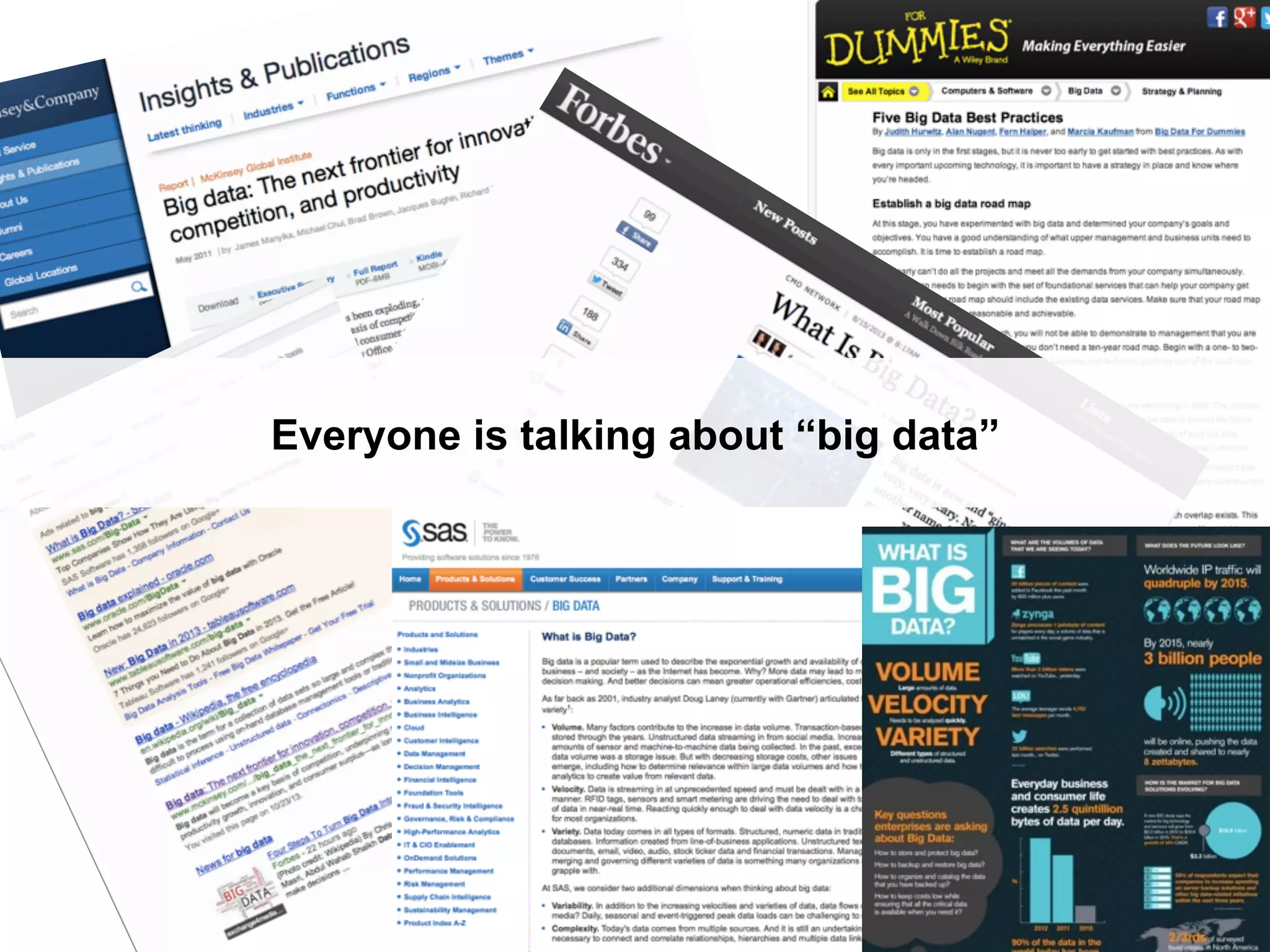
Everyone is talking about “big data”
The amount of data in our world is exploding
Companies capture trillions of bytes of
information about their customers, suppliers and
operations
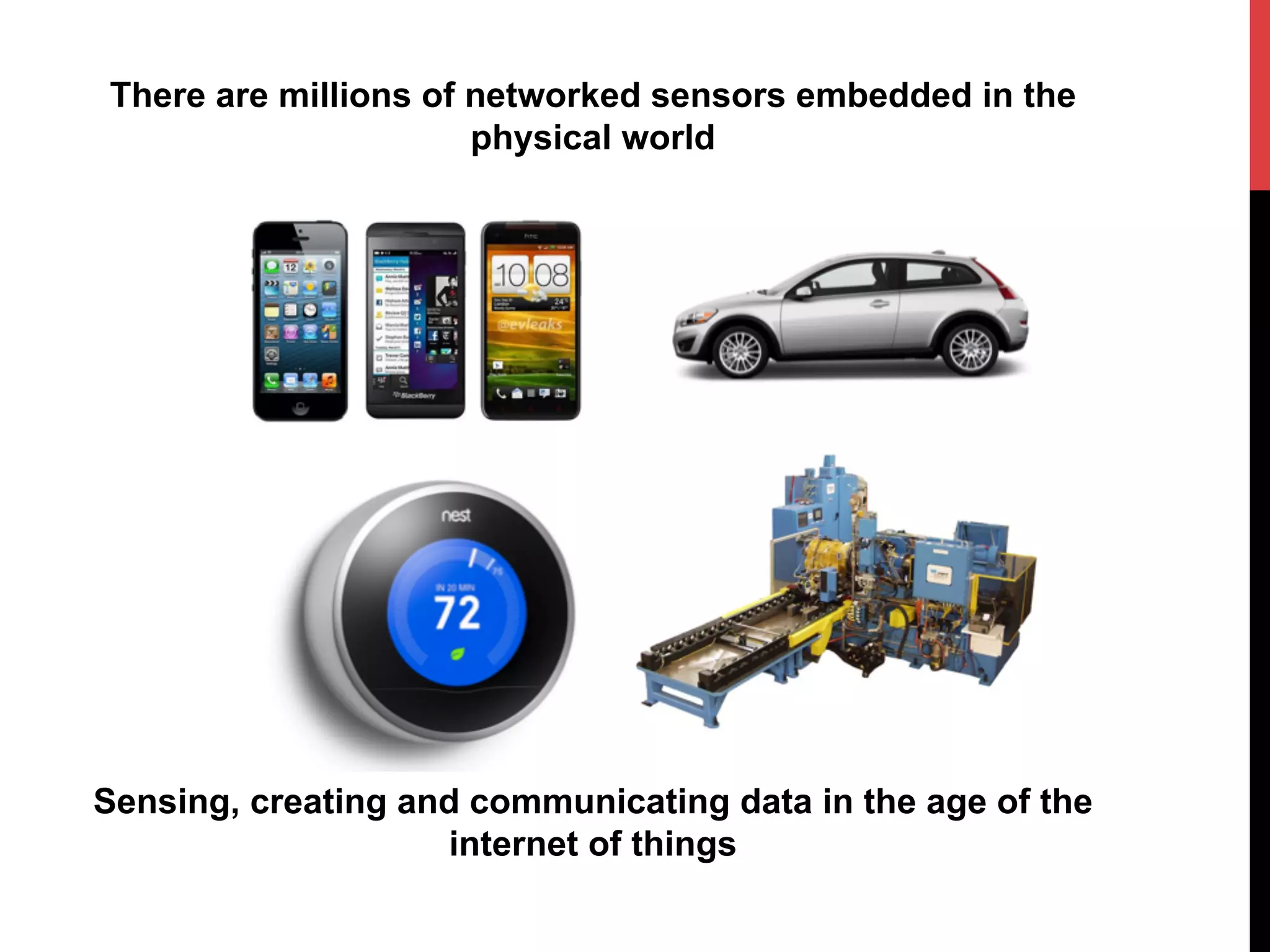
There are millions of networked sensors embedded in the
physical world

Sensing, creating and communicating data in the age of the
internet of things
Multimedia and individuals with smartphones and
social network sites will continue to fuel
exponential growth
SO WHAT IS
BIG DATA?!
DEFINITION
“Large pools of data that can be
captured, communicated, aggregated,
stored and analyzed” McKinsey Global Institute

“A collection of data from traditional
and digital sources inside and outside
your company that represents a
source for ongoing discovery and
analysis” What is Big Data, Lisa Arthur, Forbes
DIGITAL AND
TRADITIONAL

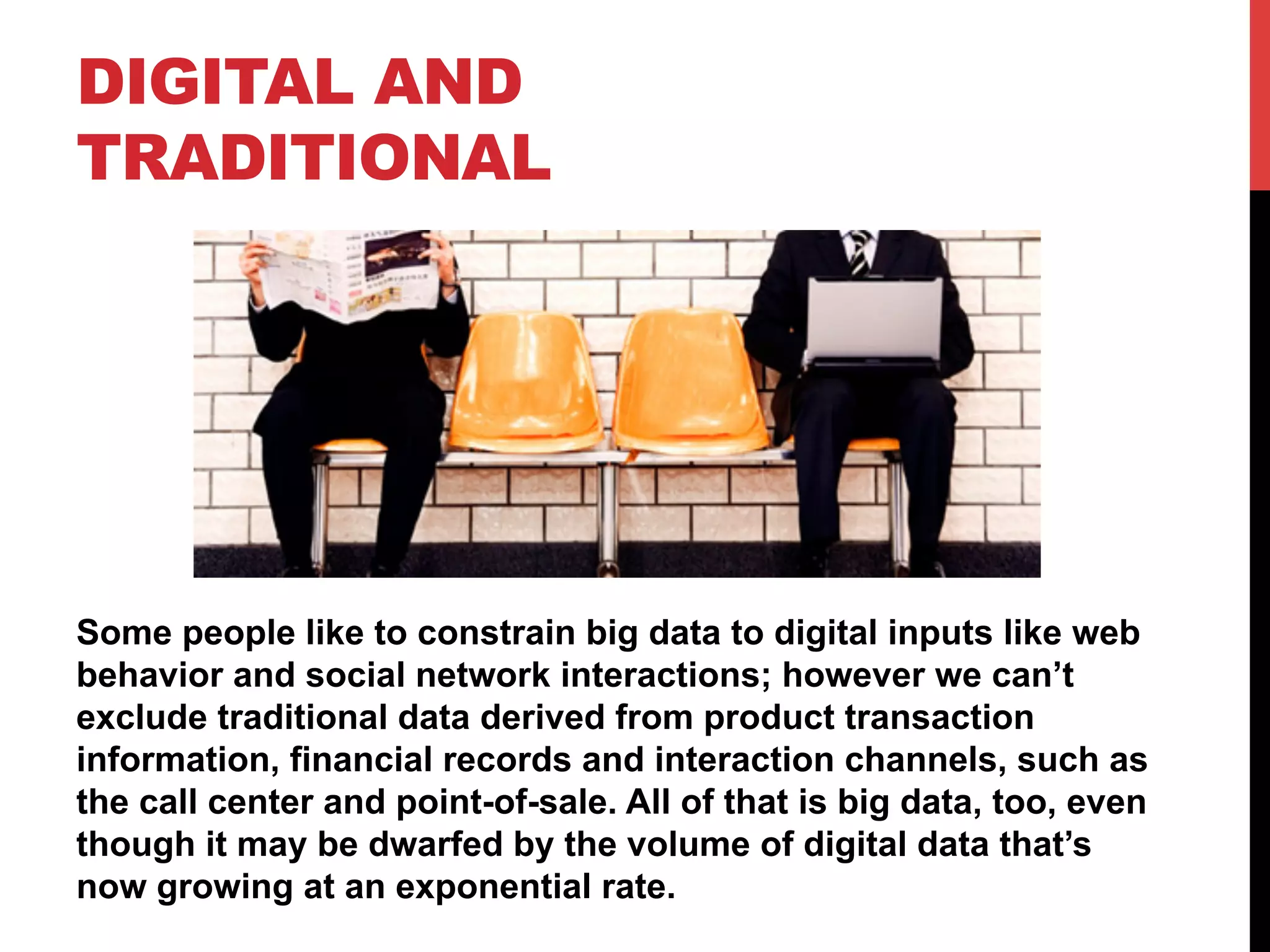
Some people like to constrain big data to digital inputs like web
behavior and social network interactions; however we can’t
exclude traditional data derived from product transaction
information, financial records and interaction channels, such as
the call center and point-of-sale. All of that is big data, too, even
though it may be dwarfed by the volume of digital data that’s
now growing at an exponential rate.
CHARACTERISTICS
Big data enables organizations to store, manage, and
manipulate vast amounts of disparate data at the right speed
and at the right time. To gain the right insights, big data is
typically broken down by three characteristics:
Volume: How much data
Velocity: How fast data is processed
Variety: The various types of data
MEASURES OF BIG
DATA
• 

1 Bit = Binary Digit

• 

8 Bits = 1 Byte

• 

1000 Bytes = 1 Kilobyte

• 

1000 Kilobytes = 1 Megabyte

• 

1000 Megabytes = 1 Gigabyte

• 

1000 Gigabytes = 1 Terabyte

• 

1000 Terabytes = 1 Petabyte

• 

1000 Petabytes = 1 Exabyte

• 

1000 Exabytes = 1 Zettabyte

• 

1000 Zettabytes = 1 Yottabyte

• 

1000 Yottabytes = 1 Brontobyte

• 

1000 Brontobytes = 1 Geopbyte
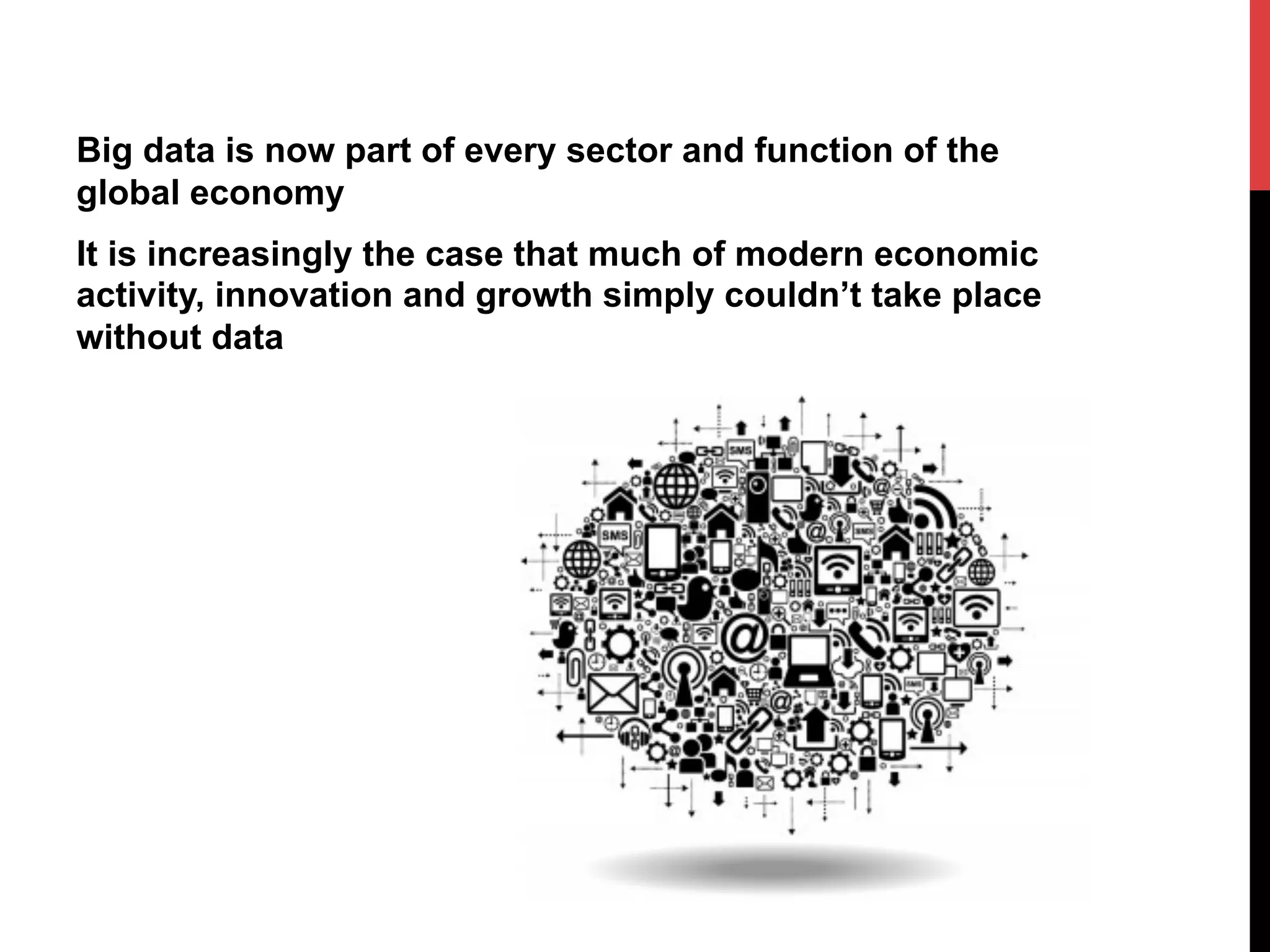
Big data is now part of every sector and function of the
global economy
It is increasingly the case that much of modern economic
activity, innovation and growth simply couldn’t take place
without data
THE QUESTION
What does this phenomenon mean?
Is the proliferation of data simply
evidence of an increasingly
intrusive world?
Or can big data play a useful
economic role?
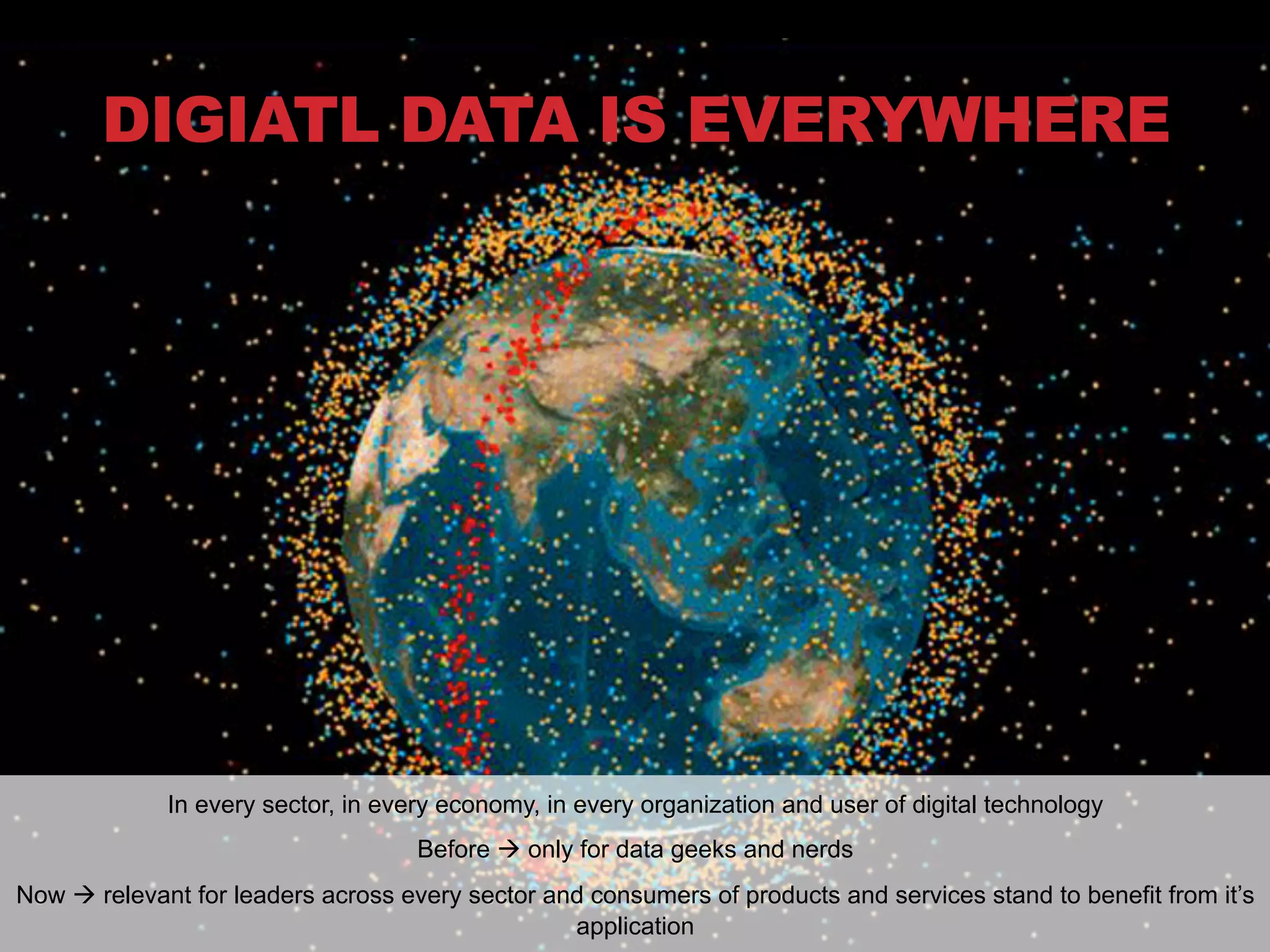
DIGIATL DATA IS EVERYWHERE

In every sector, in every economy, in every organization and user of digital technology
Before à only for data geeks and nerds
Now à relevant for leaders across every sector and consumers of products and services stand to benefit from it’s
application
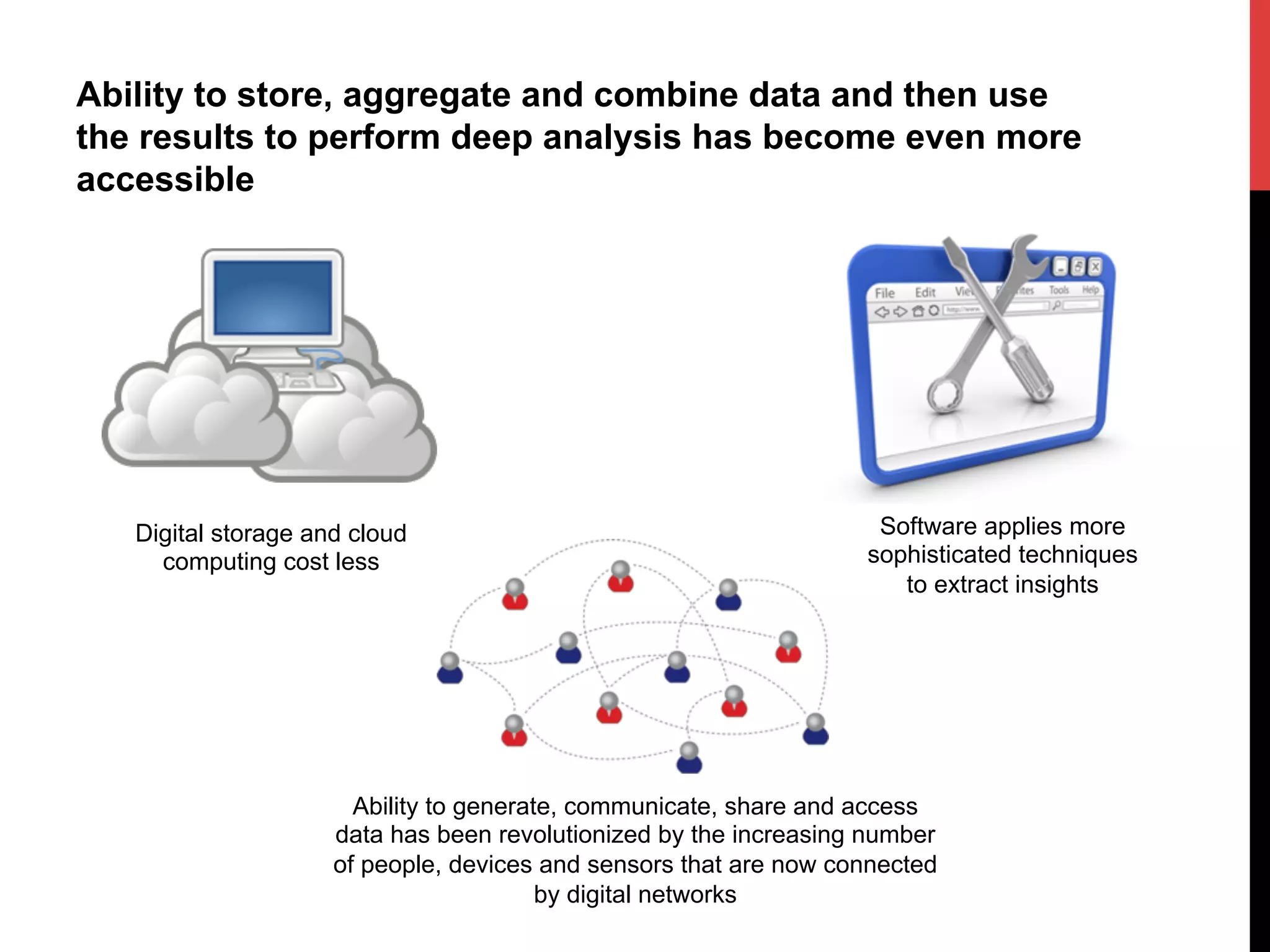
Ability to store, aggregate and combine data and then use
the results to perform deep analysis has become even more
accessible

Digital storage and cloud
computing cost less

Software applies more
sophisticated techniques
to extract insights

Ability to generate, communicate, share and access
data has been revolutionized by the increasing number
of people, devices and sensors that are now connected
by digital networks
HOW DOES BIG DATA
CREATE VALUE?
•  Creates transparency
•  Enables experimentation to discover needs, expose
variability and improve performance
•  Segmenting populations to customize actions
•  Replacing/supporting human decision making with
automated algorithms
•  Innovating new business models, products and services
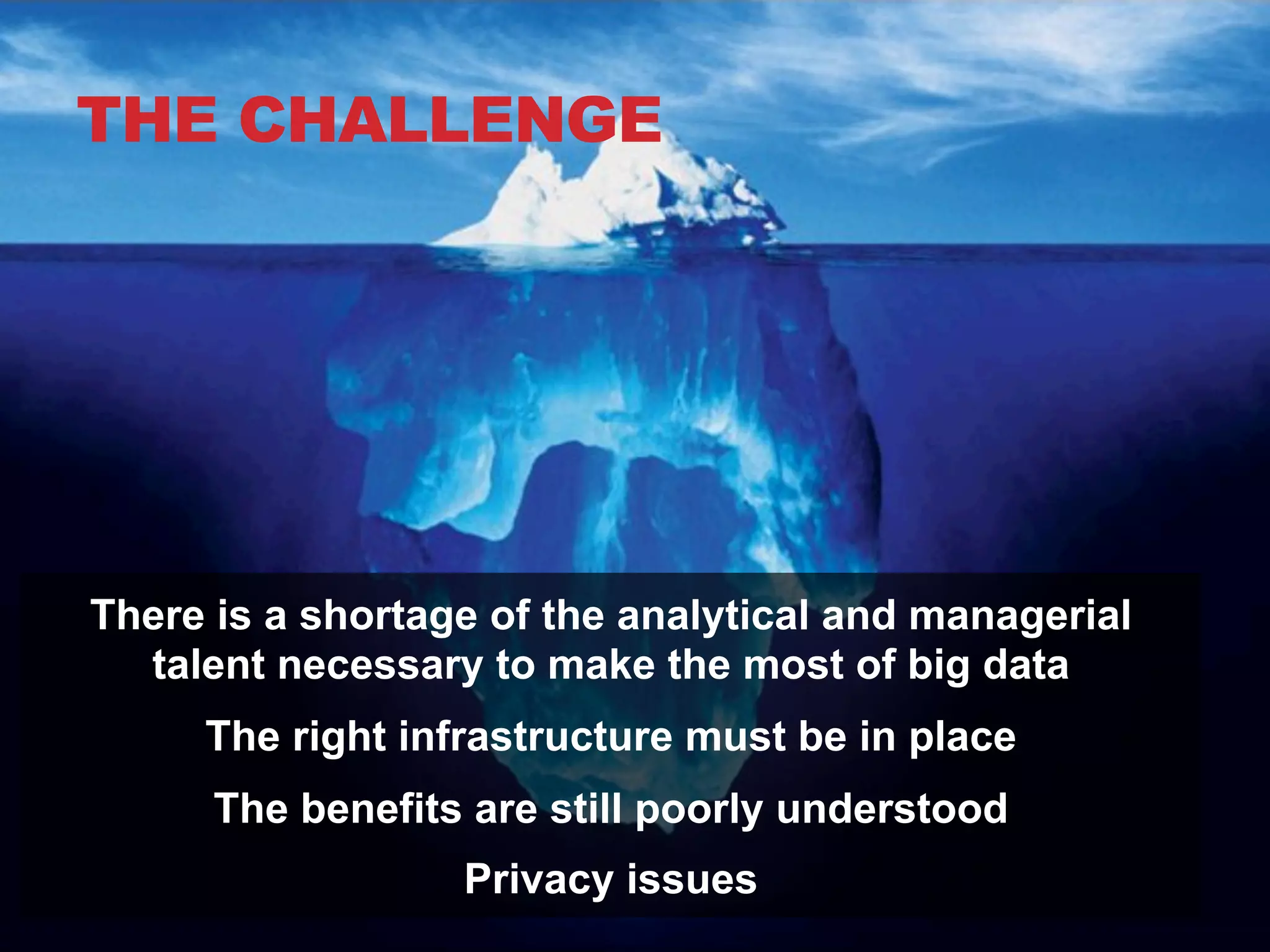
THE CHALLENGE

There is a shortage of the analytical and managerial
talent necessary to make the most of big data
The right infrastructure must be in place
The benefits are still poorly understood
Privacy issues
This is a story that will continue to evolve as
technologies and techniques using big data
develop and data, their uses and their economic
benefits, grow

What is big data?

  • 1.
  • 3.
    Everyone is talkingabout “big data”
  • 4.
    The amount ofdata in our world is exploding Companies capture trillions of bytes of information about their customers, suppliers and operations
  • 5.
    There are millionsof networked sensors embedded in the physical world Sensing, creating and communicating data in the age of the internet of things
  • 6.
    Multimedia and individualswith smartphones and social network sites will continue to fuel exponential growth
  • 7.
  • 8.
    DEFINITION “Large pools ofdata that can be captured, communicated, aggregated, stored and analyzed” McKinsey Global Institute “A collection of data from traditional and digital sources inside and outside your company that represents a source for ongoing discovery and analysis” What is Big Data, Lisa Arthur, Forbes
  • 9.
    DIGITAL AND TRADITIONAL Some peoplelike to constrain big data to digital inputs like web behavior and social network interactions; however we can’t exclude traditional data derived from product transaction information, financial records and interaction channels, such as the call center and point-of-sale. All of that is big data, too, even though it may be dwarfed by the volume of digital data that’s now growing at an exponential rate.
  • 10.
    CHARACTERISTICS Big data enablesorganizations to store, manage, and manipulate vast amounts of disparate data at the right speed and at the right time. To gain the right insights, big data is typically broken down by three characteristics: Volume: How much data Velocity: How fast data is processed Variety: The various types of data
  • 11.
    MEASURES OF BIG DATA •  1Bit = Binary Digit •  8 Bits = 1 Byte •  1000 Bytes = 1 Kilobyte •  1000 Kilobytes = 1 Megabyte •  1000 Megabytes = 1 Gigabyte •  1000 Gigabytes = 1 Terabyte •  1000 Terabytes = 1 Petabyte •  1000 Petabytes = 1 Exabyte •  1000 Exabytes = 1 Zettabyte •  1000 Zettabytes = 1 Yottabyte •  1000 Yottabytes = 1 Brontobyte •  1000 Brontobytes = 1 Geopbyte
  • 12.
    Big data isnow part of every sector and function of the global economy It is increasingly the case that much of modern economic activity, innovation and growth simply couldn’t take place without data
  • 13.
    THE QUESTION What doesthis phenomenon mean? Is the proliferation of data simply evidence of an increasingly intrusive world? Or can big data play a useful economic role?
  • 14.
    DIGIATL DATA ISEVERYWHERE In every sector, in every economy, in every organization and user of digital technology Before à only for data geeks and nerds Now à relevant for leaders across every sector and consumers of products and services stand to benefit from it’s application
  • 15.
    Ability to store,aggregate and combine data and then use the results to perform deep analysis has become even more accessible Digital storage and cloud computing cost less Software applies more sophisticated techniques to extract insights Ability to generate, communicate, share and access data has been revolutionized by the increasing number of people, devices and sensors that are now connected by digital networks
  • 16.
    HOW DOES BIGDATA CREATE VALUE? •  Creates transparency •  Enables experimentation to discover needs, expose variability and improve performance •  Segmenting populations to customize actions •  Replacing/supporting human decision making with automated algorithms •  Innovating new business models, products and services
  • 17.
    THE CHALLENGE There isa shortage of the analytical and managerial talent necessary to make the most of big data The right infrastructure must be in place The benefits are still poorly understood Privacy issues
  • 18.
    This is astory that will continue to evolve as technologies and techniques using big data develop and data, their uses and their economic benefits, grow