READ AND ANNOTATE THE
EXCERPT FROM JOHN L.
O’SULLIVAN’S 1839 PIECE,
“THE GREAT NATION OF
FUTURITY” IN WHICH HE
WRITES ABOUT “MANIFEST
DESTINY”
▪ As you read, underline/circle
language that communicates
how O’Sullivan views the United
States
▪ What language does he use?
▪ Why is he writing this piece?
▪ What do think its purpose was?
▪ How does the piece connect to
John Gast’s painting on the
right?
Westward Expansion
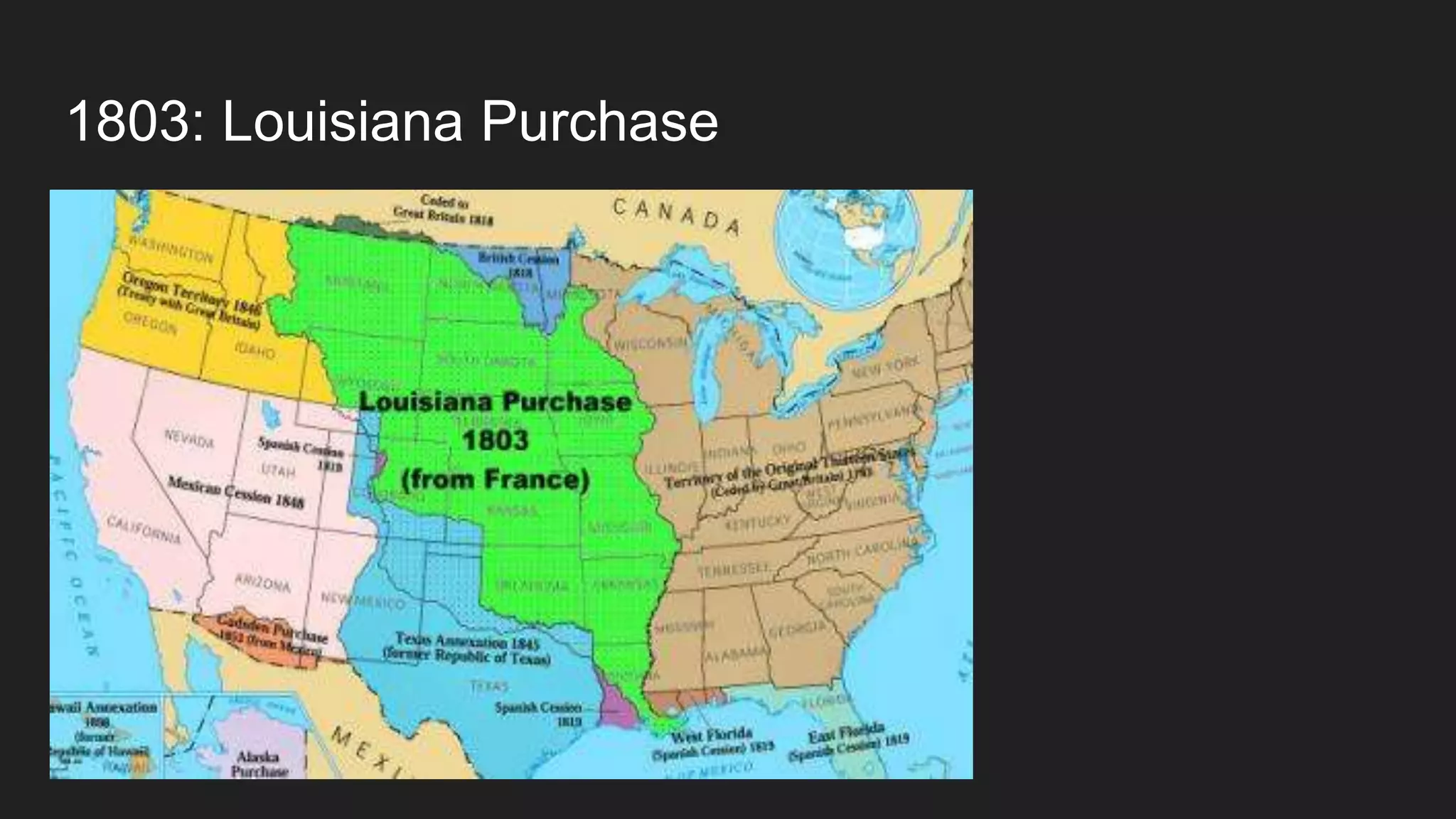
1803: Louisiana Purchase
1804: Lewis and Clark
1820: Missouri Compromise
1830 Indian Removal Act - causes “Trail of Tears”
1836: Texas Independence - “Lone Star Republic”
1845: US annexes Texas
1846-1848: Mexican-American War
1848-1855: California Gold Rush
1847: Mormon establishment at Great Salt Lake
1846-1849: Use of Oregon Trail
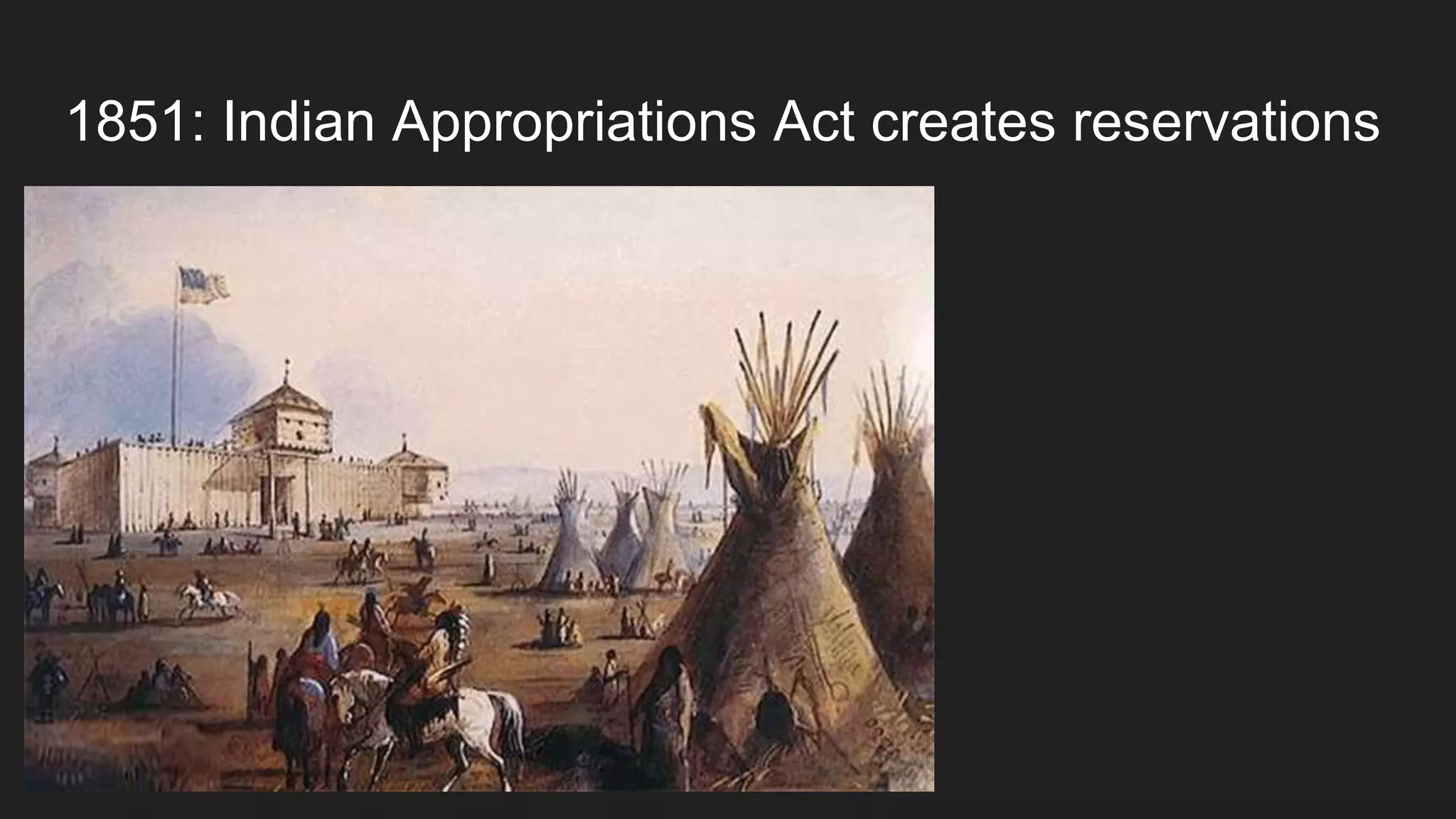
1851: Indian Appropriations Act creates reservations
Now what? Where will slavery be legal in all this new
territory? What will this new land do to the character
of America?

Westward expansion fisher

Editor's Notes

  • #4 § US gained the Louisiana Territory, more than 800,000 square miles of land § US gained control of MS river § Native Americans did not recognize US “rights” to landàongoing conflict and more than 50 wars
  • #5 § sent by Jefferson to explore western part of continent § looking for water route across continent (which they didn’t find), to establish relationships with Native Americans (for access to the fur trade) § observed firsthand the impact of European settlement on Native American culture § expedition shifted the idea of “the West” westwardàcitizens began to settle further inland and view lands west of Mississippi as ripe for expansion
  • #6 § Missouri petitioned Congress to enter as slave state (at a time when Congress was balanced with 11 slave, 11 non-slave states) § MI able to enter as slave state b/c ME entered as free, maintaining the balance But draws the line of free and slave westward - will stay with new turf???
  • #7 § spearheaded by Andrew Jackson as a means to remove all Indian tribes then living east of the Mississippi River § goal of removal was furthered when govt dispossessed the native Americans of their land § “trail of tears” marked migration of Indians; removal was complete by 1844
  • #8 § resulting following a defeat at the Alamo § Anglo settlers were discontent with Mexican rule - also slaveowners but in Mexico where slavery outlawed § Mexican govt regarded annexation as declaration of war; never ratified TX independence
  • #9 § war was over the annexation of TX as a US state in 1845 § tremendously divisive: some saw as bid to add another slave state, some supported even more aggressive expansion into Mexico, some didn’t want to incorporate non-white citizens, some afraid of empire building § US victory in 1848: gained 1.2 million square miles of territory (what would eventually become CA, NV, UT, some of CO, WY, most of AZ and NM) § Land transfer reduced Mexico nearly by half, created lasting sense of resentment towards US
  • #10 § discovery of gold and subsequent “rush” to mine and otherwise capitalize on the discovery brought 300,000 + people to California § established San Francisco as thriving city led to the incorporation of California as a state (in the Compromise of 1850)
  • #11 § Oregon Trail and its many offshoots used by about 400,000 settlers, farmers, miners, ranchers, and business owners and their families. § 1869 – decline b/c transcontinental railroad completed
  • #12 § 10 years after Indian Removal, the govt began moving towards a policy of fencing native Americans within specified reservations to open up the West to expansion/white settlement § Indian Appropriations Act of 1851 was designed to consolidate western tribes on agricultural reservations