WeldingIntroduction.
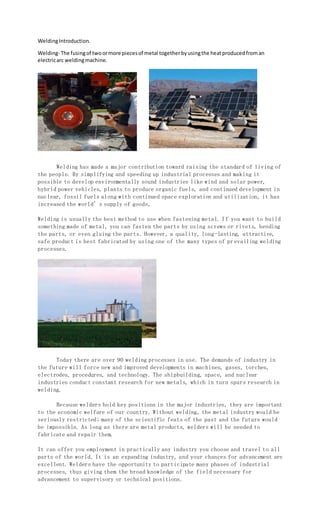
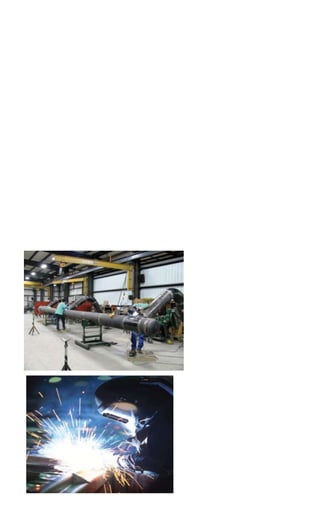
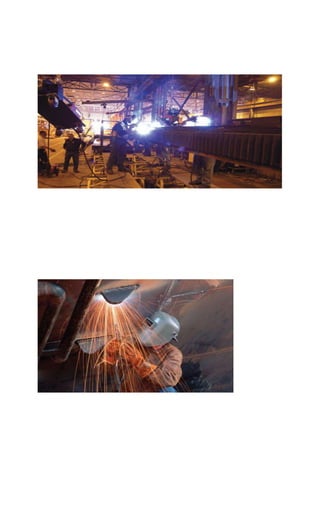
Welding- The fusingof twoormore piecesof metal togetherbyusingthe heatproducedfroman
electricarc weldingmachine.
Welding has made a major contribution toward raising the standard of living of
the people. By simplifying and speeding up industrial processes and making it
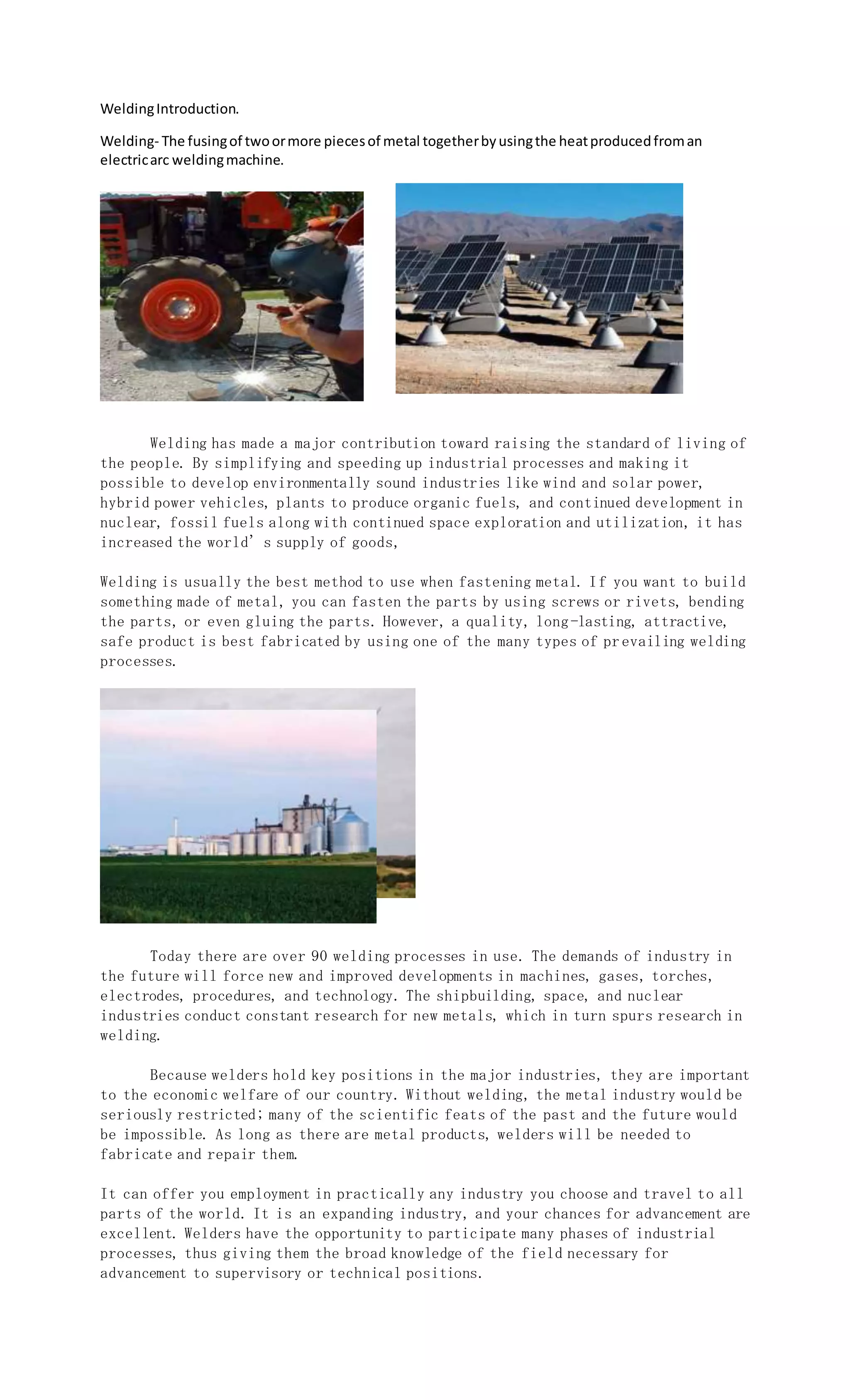
possible to develop environmentally sound industries like wind and solar power,
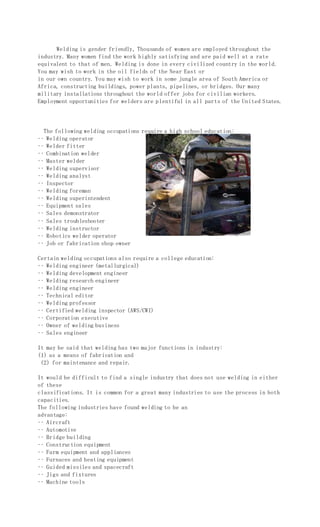
hybrid power vehicles, plants to produce organic fuels, and continued development in
nuclear, fossil fuels along with continued space exploration and utilization, it has
increased the world’s supply of goods,
Welding is usually the best method to use when fastening metal. If you want to build
something made of metal, you can fasten the parts by using screws or rivets, bending
the parts, or even gluing the parts. However, a quality, long-lasting, attractive,
safe product is best fabricated by using one of the many types of prevailing welding
processes.
Today there are over 90 welding processes in use. The demands of industry in
the future will force new and improved developments in machines, gases, torches,
electrodes, procedures, and technology. The shipbuilding, space, and nuclear
industries conduct constant research for new metals, which in turn spurs research in
welding.
Because welders hold key positions in the major industries, they are important
to the economic welfare of our country. Without welding, the metal industry would be
seriously restricted; many of the scientific feats of the past and the future would
be impossible. As long as there are metal products, welders will be needed to
fabricate and repair them.
It can offer you employment in practically any industry you choose and travel to all
parts of the world. It is an expanding industry, and your chances for advancement are
excellent. Welders have the opportunity to participate many phases of industrial
processes, thus giving them the broad knowledge of the field necessary for
advancement to supervisory or technical positions.
Welding is gender friendly, Thousands of women are employed throughout the
industry. Many women find the work highly satisfying and are paid well at a rate
equivalent to that of men. Welding is done in every civilized country in the world.
You may wish to work in the oil fields of the Near East or
in our own country. You may wish to work in some jungle area of South America or
Africa, constructing buildings, power plants, pipelines, or bridges. Our many
military installations throughout the world offer jobs for civilian workers.
Employment opportunities for welders are plentiful in all parts of the United States.
The following welding occupations require a high school education:
•• Welding operator
•• Welder fitter
•• Combination welder
•• Master welder
•• Welding supervisor
•• Welding analyst
•• Inspector
•• Welding foreman
•• Welding superintendent
•• Equipment sales
•• Sales demonstrator
•• Sales troubleshooter
•• Welding instructor
•• Robotics welder operator
•• Job or fabrication shop owner
Certain welding occupations also require a college education:
•• Welding engineer (metallurgical)
•• Welding development engineer
•• Welding research engineer
•• Welding engineer
•• Technical editor
•• Welding professor
•• Certified welding inspector (AWS/CWI)
•• Corporation executive
•• Owner of welding business
•• Sales engineer
It may be said that welding has two major functions in industry:
(1) as a means of fabrication and
(2) for maintenance and repair.
It would be difficult to find a single industry that does not use welding in either
of these
classifications. It is common for a great many industries to use the process in both
capacities.
The following industries have found welding to be an
advantage:
•• Aircraft
•• Automotive
•• Bridge building
•• Construction equipment
•• Farm equipment and appliances
•• Furnaces and heating equipment
•• Guided missiles and spacecraft
•• Jigs and fixtures
•• Machine tools
•• Military equipment
•• Mining equipment
•• Oil drilling and refining equipment
•• Ornamental iron work
•• Piping
•• Quality food service equipment
•• Railroad equipment
•• Residential, commercial, and industrial construction
•• Sheet metal
•• Steel mill equipment
•• Tanks and boilers
•• Tools and dies
•• Watercraft
Occupations
Employment can be found in the many types of businesses that supply project equipment:
1. Stamping
2. Finishing
3. Forming
4. Fabricating
5. Tooling
6. Assembly
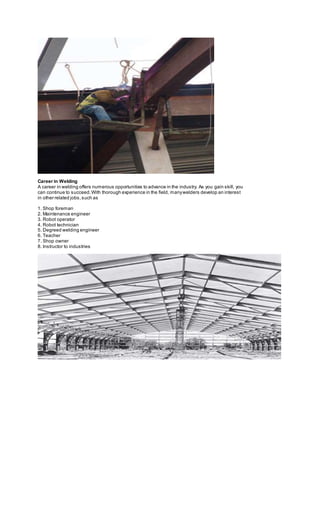
Career in Welding
A career in welding offers numerous opportunities to advance in the industry. As you gain skill, you
can continue to succeed.With thorough experience in the field, manywelders develop an interest
in other related jobs,such as
1. Shop foreman
2. Maintenance engineer
3. Robot operator
4. Robot technician
5. Degreed welding engineer
6. Teacher
7. Shop owner
8. Instructor to industries

Welding introduction

  • 1.
    WeldingIntroduction. Welding- The fusingoftwoormore piecesof metal togetherbyusingthe heatproducedfroman electricarc weldingmachine. Welding has made a major contribution toward raising the standard of living of the people. By simplifying and speeding up industrial processes and making it possible to develop environmentally sound industries like wind and solar power, hybrid power vehicles, plants to produce organic fuels, and continued development in nuclear, fossil fuels along with continued space exploration and utilization, it has increased the world’s supply of goods, Welding is usually the best method to use when fastening metal. If you want to build something made of metal, you can fasten the parts by using screws or rivets, bending the parts, or even gluing the parts. However, a quality, long-lasting, attractive, safe product is best fabricated by using one of the many types of prevailing welding processes. Today there are over 90 welding processes in use. The demands of industry in the future will force new and improved developments in machines, gases, torches, electrodes, procedures, and technology. The shipbuilding, space, and nuclear industries conduct constant research for new metals, which in turn spurs research in welding. Because welders hold key positions in the major industries, they are important to the economic welfare of our country. Without welding, the metal industry would be seriously restricted; many of the scientific feats of the past and the future would be impossible. As long as there are metal products, welders will be needed to fabricate and repair them. It can offer you employment in practically any industry you choose and travel to all parts of the world. It is an expanding industry, and your chances for advancement are excellent. Welders have the opportunity to participate many phases of industrial processes, thus giving them the broad knowledge of the field necessary for advancement to supervisory or technical positions.
  • 2.
    Welding is genderfriendly, Thousands of women are employed throughout the industry. Many women find the work highly satisfying and are paid well at a rate equivalent to that of men. Welding is done in every civilized country in the world. You may wish to work in the oil fields of the Near East or in our own country. You may wish to work in some jungle area of South America or Africa, constructing buildings, power plants, pipelines, or bridges. Our many military installations throughout the world offer jobs for civilian workers. Employment opportunities for welders are plentiful in all parts of the United States. The following welding occupations require a high school education: •• Welding operator •• Welder fitter •• Combination welder •• Master welder •• Welding supervisor •• Welding analyst •• Inspector •• Welding foreman •• Welding superintendent •• Equipment sales •• Sales demonstrator •• Sales troubleshooter •• Welding instructor •• Robotics welder operator •• Job or fabrication shop owner Certain welding occupations also require a college education: •• Welding engineer (metallurgical) •• Welding development engineer •• Welding research engineer •• Welding engineer •• Technical editor •• Welding professor •• Certified welding inspector (AWS/CWI) •• Corporation executive •• Owner of welding business •• Sales engineer It may be said that welding has two major functions in industry: (1) as a means of fabrication and (2) for maintenance and repair. It would be difficult to find a single industry that does not use welding in either of these classifications. It is common for a great many industries to use the process in both capacities. The following industries have found welding to be an advantage: •• Aircraft •• Automotive •• Bridge building •• Construction equipment •• Farm equipment and appliances •• Furnaces and heating equipment •• Guided missiles and spacecraft •• Jigs and fixtures •• Machine tools
  • 3.
    •• Military equipment ••Mining equipment •• Oil drilling and refining equipment •• Ornamental iron work •• Piping •• Quality food service equipment •• Railroad equipment •• Residential, commercial, and industrial construction •• Sheet metal •• Steel mill equipment •• Tanks and boilers •• Tools and dies •• Watercraft Occupations Employment can be found in the many types of businesses that supply project equipment: 1. Stamping 2. Finishing 3. Forming 4. Fabricating 5. Tooling 6. Assembly
  • 6.
    Career in Welding Acareer in welding offers numerous opportunities to advance in the industry. As you gain skill, you can continue to succeed.With thorough experience in the field, manywelders develop an interest in other related jobs,such as 1. Shop foreman 2. Maintenance engineer 3. Robot operator 4. Robot technician 5. Degreed welding engineer 6. Teacher 7. Shop owner 8. Instructor to industries