

HEALTH CARE REFORM: WHAT EMPLOYERS NEED TO KNOWDon McDaniel, Sage Growth Partners, LLCRon Wineholt, Maryland Chamber of CommerceMay 2010
Intractable Healthcare Problems
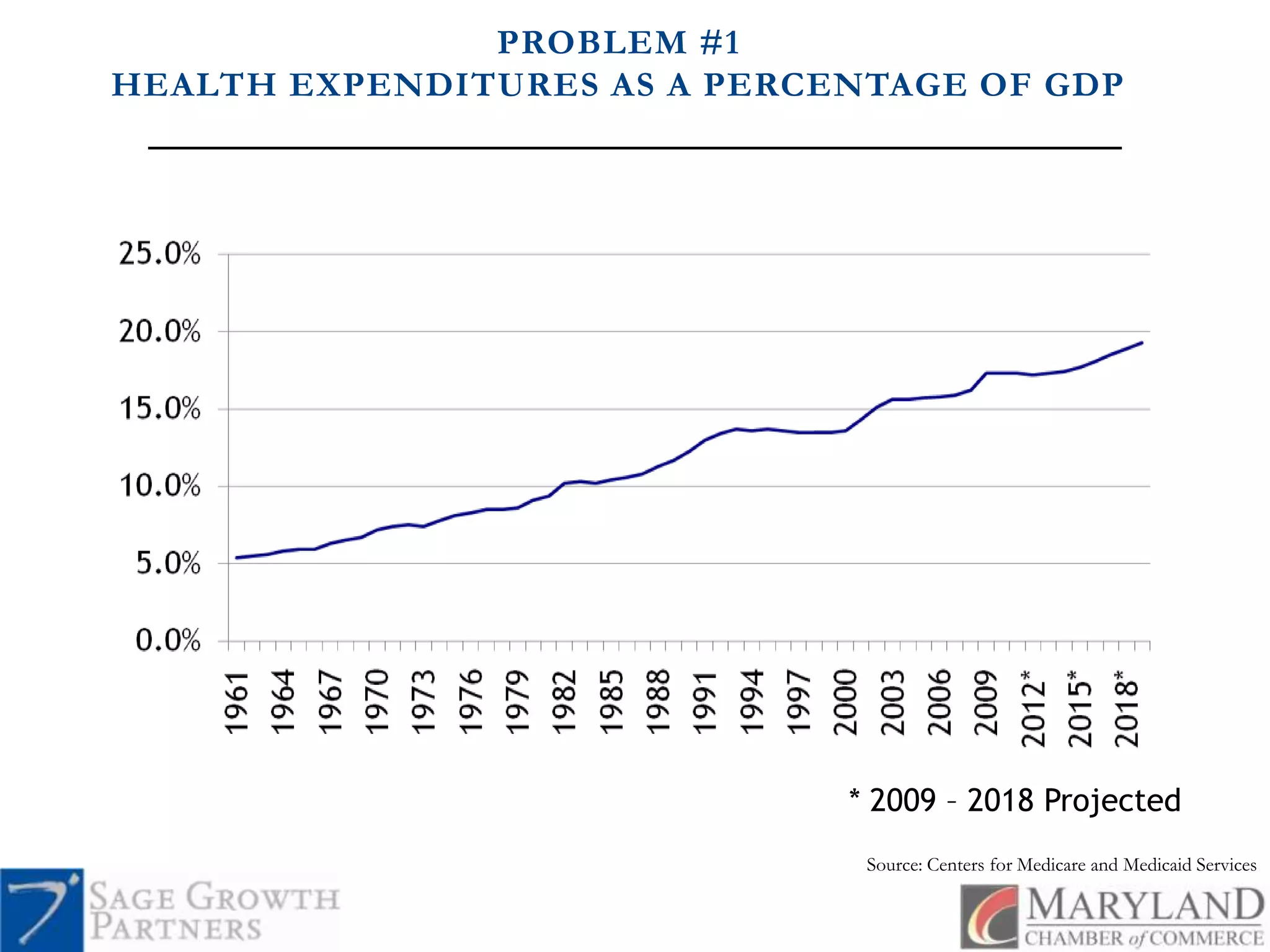
PROBLEM #1HEALTH EXPENDITURES AS A PERCENTAGE OF GDP* 2009 – 2018 ProjectedSource: Centers for Medicare and Medicaid Services
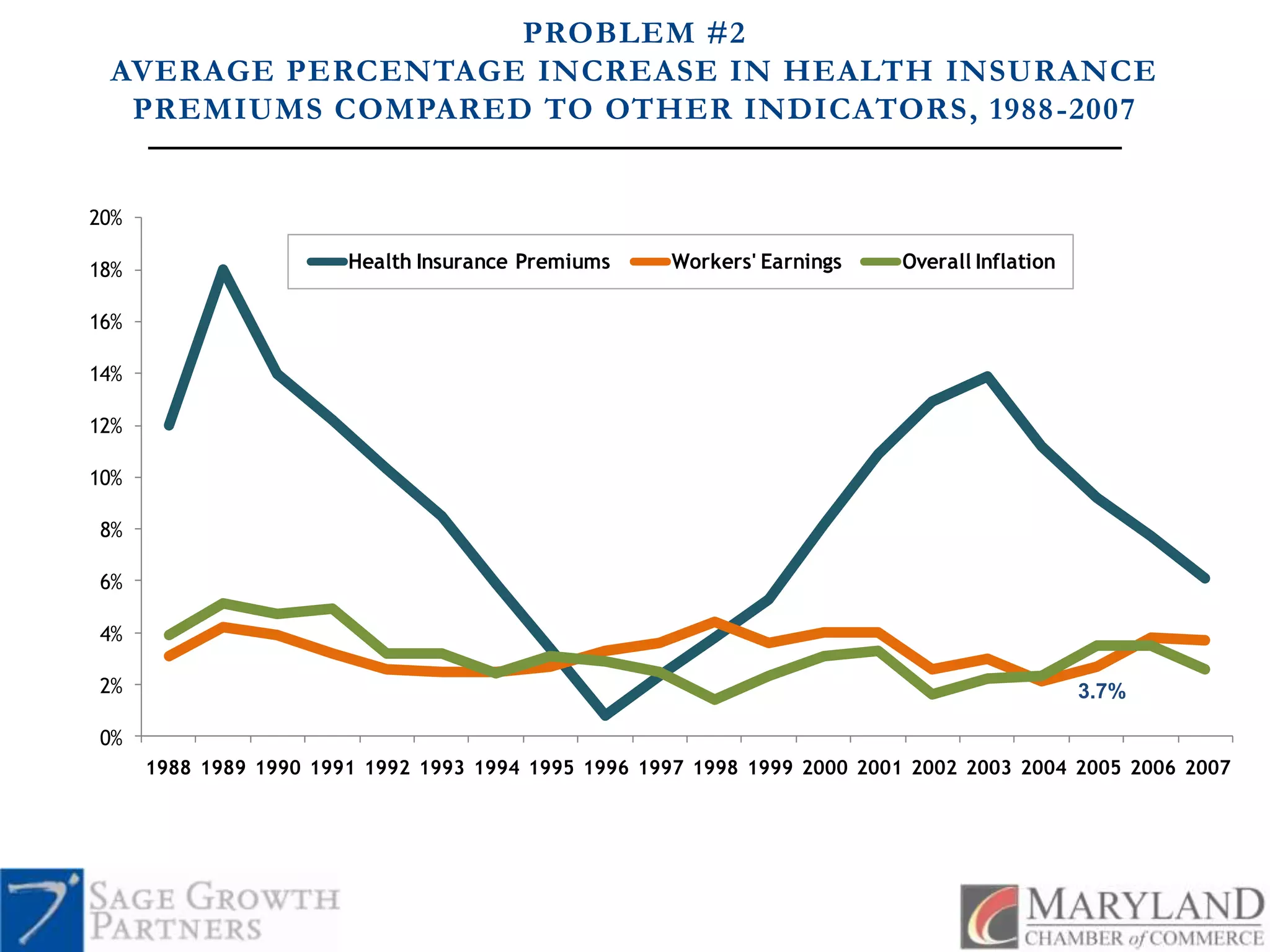
    3.7%PROBLEM #2AVERAGE PERCENTAGE INCREASE IN HEALTH INSURANCE PREMIUMS COMPARED TO OTHER INDICATORS, 1988-2007
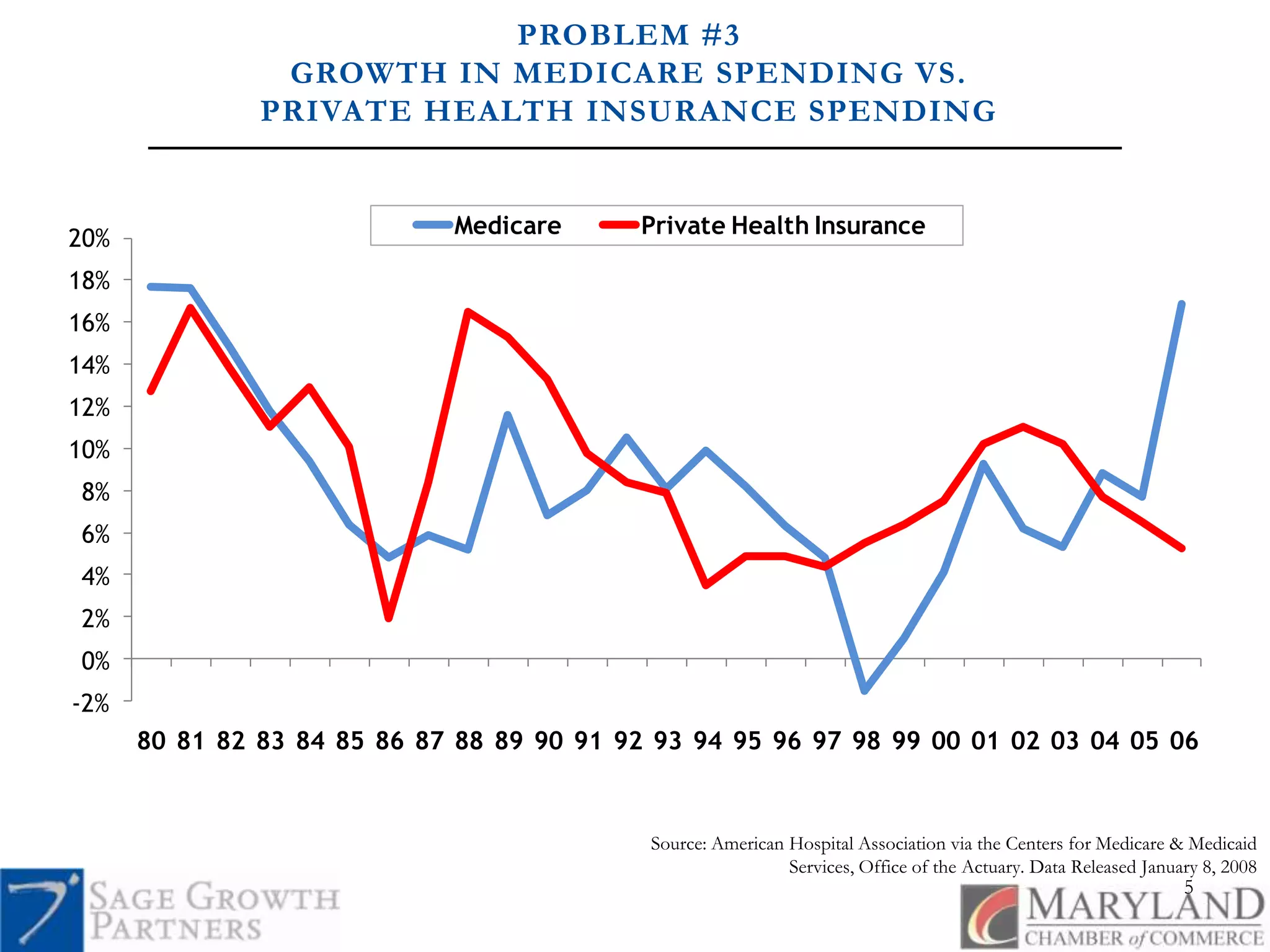
PROBLEM #3GROWTH IN MEDICARE SPENDING VS. PRIVATE HEALTH INSURANCE SPENDINGSource: American Hospital Association via the Centers for Medicare & Medicaid Services, Office of the Actuary. Data Released January 8, 20085
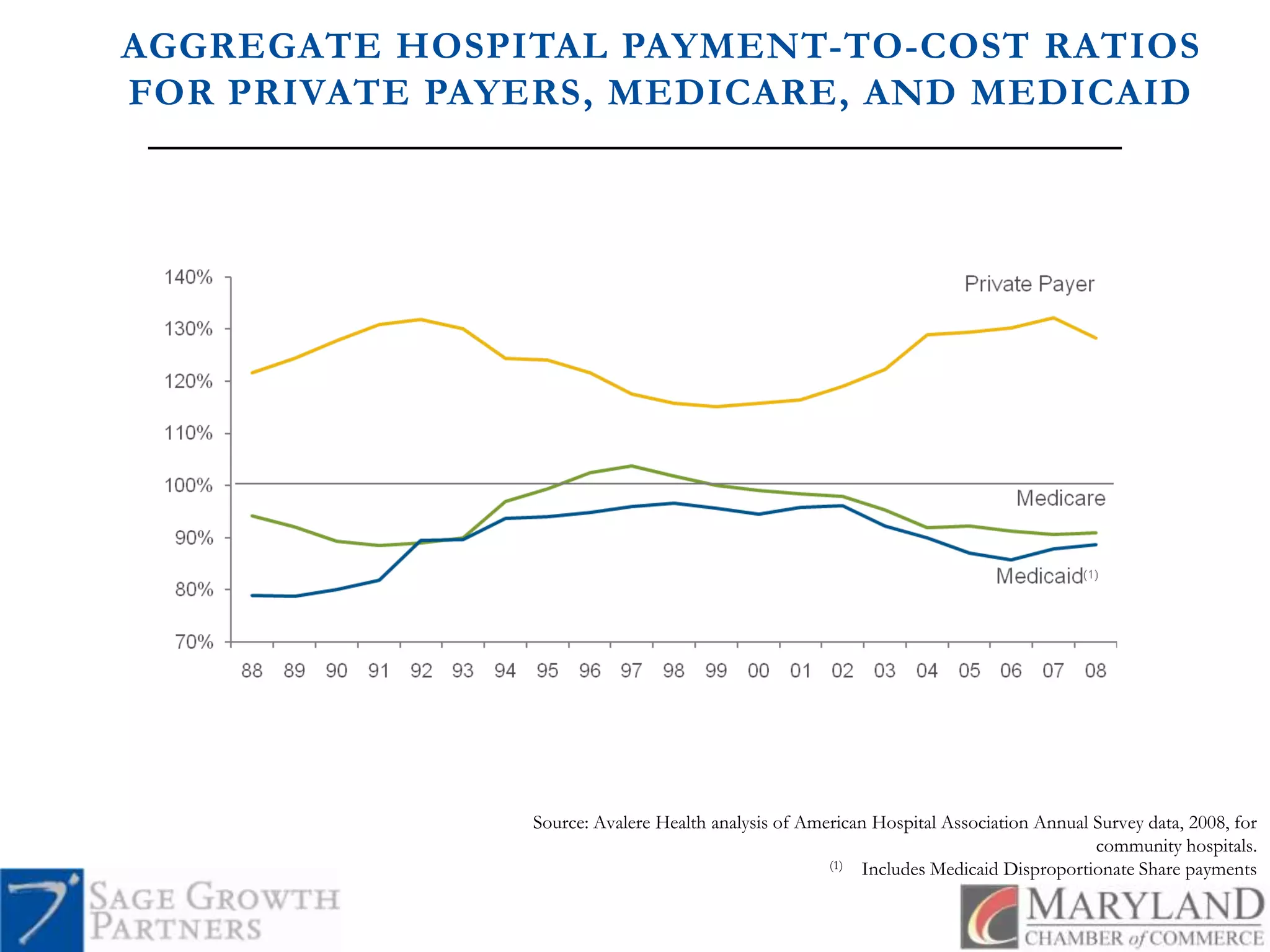
AGGREGATE HOSPITAL PAYMENT-TO-COST RATIOS FOR PRIVATE PAYERS, MEDICARE, AND MEDICAIDSource: Avalere Health analysis of American Hospital Association Annual Survey data, 2008, for community hospitals. (1)	Includes Medicaid Disproportionate Share payments
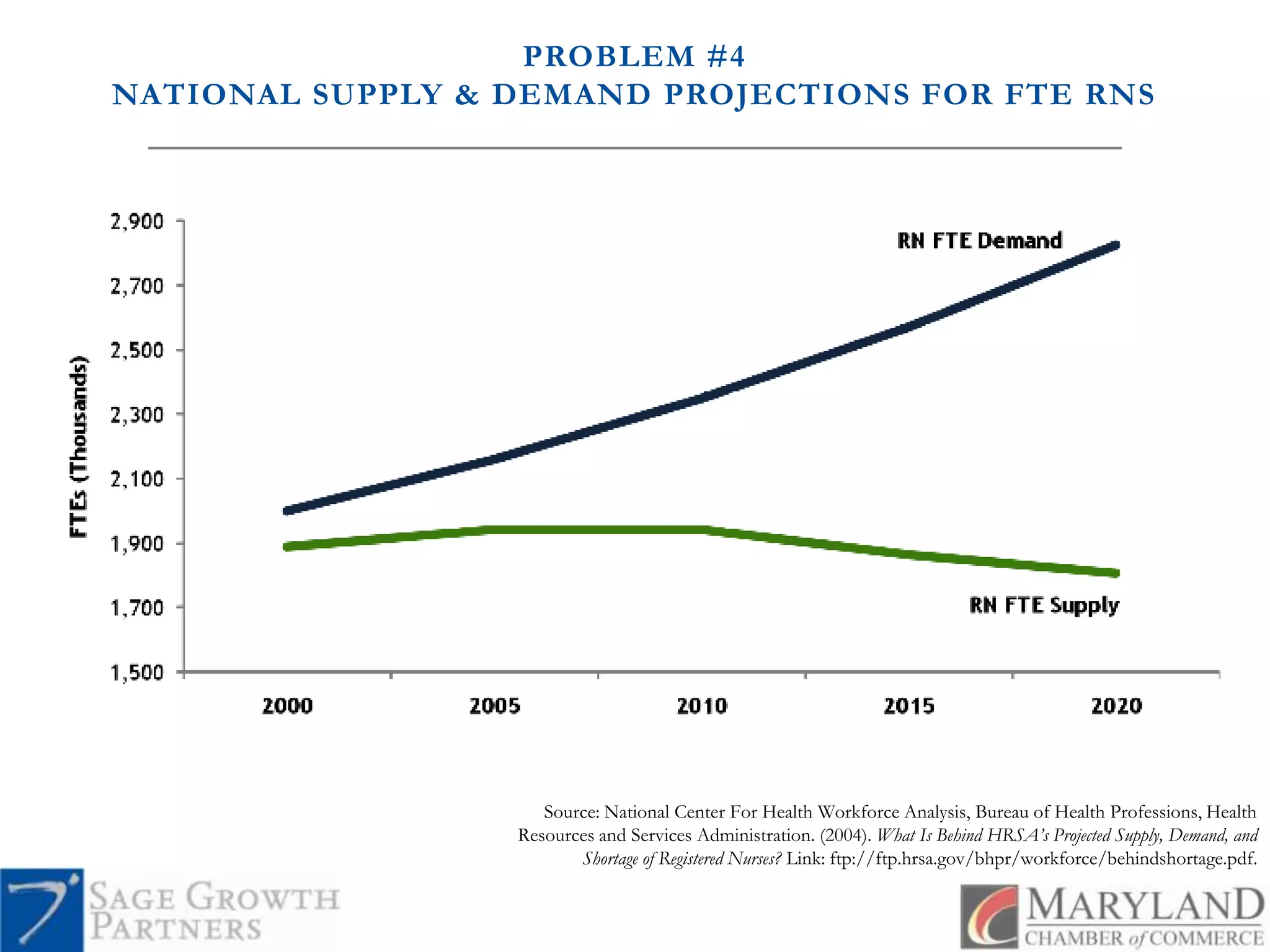
PROBLEM #4NATIONAL SUPPLY & DEMAND PROJECTIONS FOR FTE RNSSource: National Center For Health Workforce Analysis, Bureau of Health Professions, Health Resources and Services Administration. (2004). What Is Behind HRSA’s Projected Supply, Demand, and Shortage of Registered Nurses? Link: ftp://ftp.hrsa.gov/bhpr/workforce/behindshortage.pdf.
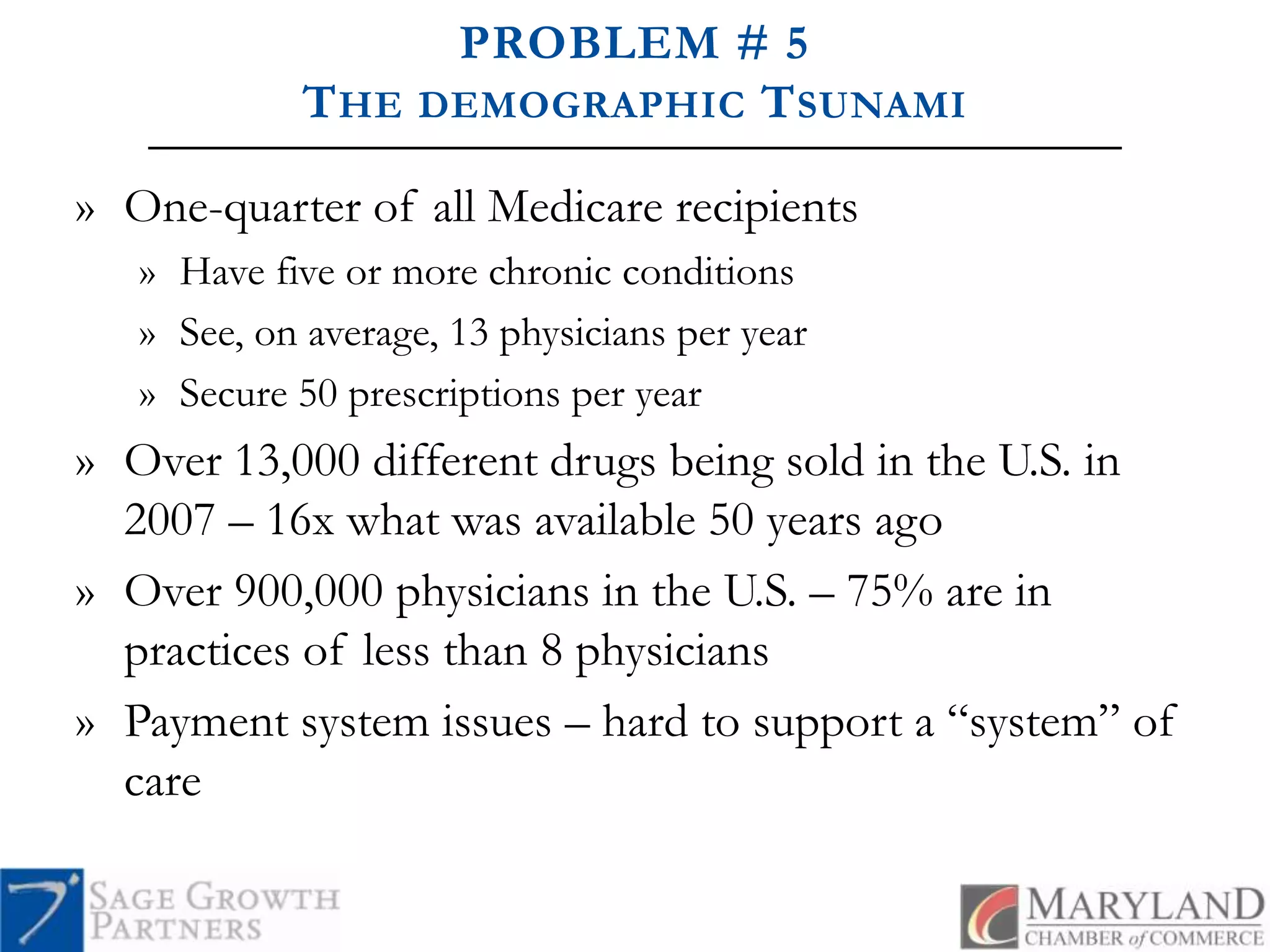
PROBLEM # 5The demographic TsunamiOne-quarter of all Medicare recipientsHave five or more chronic conditionsSee, on average, 13 physicians per yearSecure 50 prescriptions per yearOver 13,000 different drugs being sold in the U.S. in 2007 – 16x what was available 50 years agoOver 900,000 physicians in the U.S. – 75% are in practices of less than 8 physiciansPayment system issues – hard to support a “system” of care
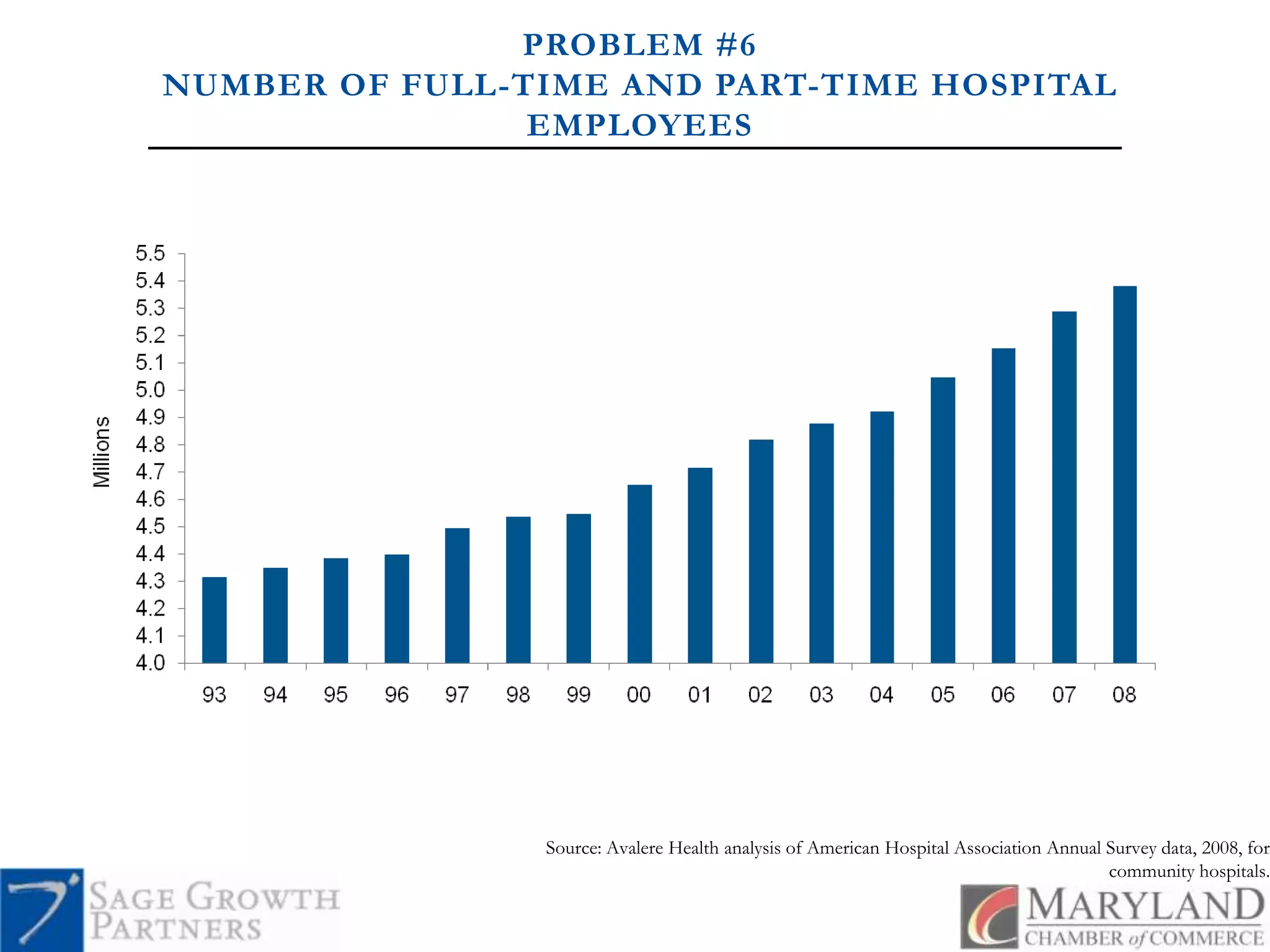
PROBLEM #6NUMBER OF FULL-TIME AND PART-TIME HOSPITAL EMPLOYEESSource: Avalere Health analysis of American Hospital Association Annual Survey data, 2008, for community hospitals.
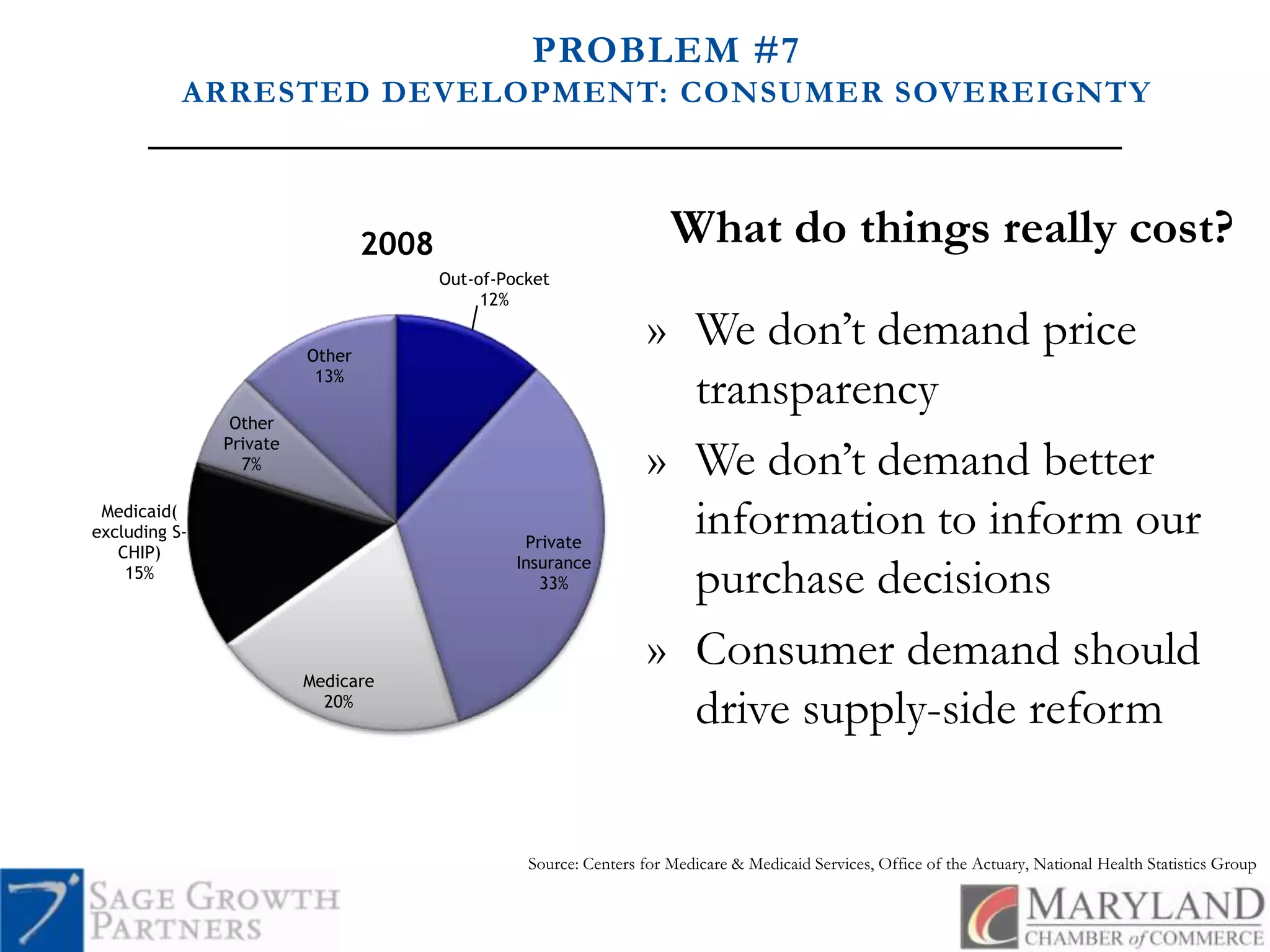
PROBLEM #7ARRESTED DEVELOPMENT: CONSUMER SOVEREIGNTY What do things really cost?We don’t demand price transparencyWe don’t demand better information to inform our purchase decisionsConsumer demand should drive supply-side reformSource: Centers for Medicare & Medicaid Services, Office of the Actuary, National Health Statistics Group
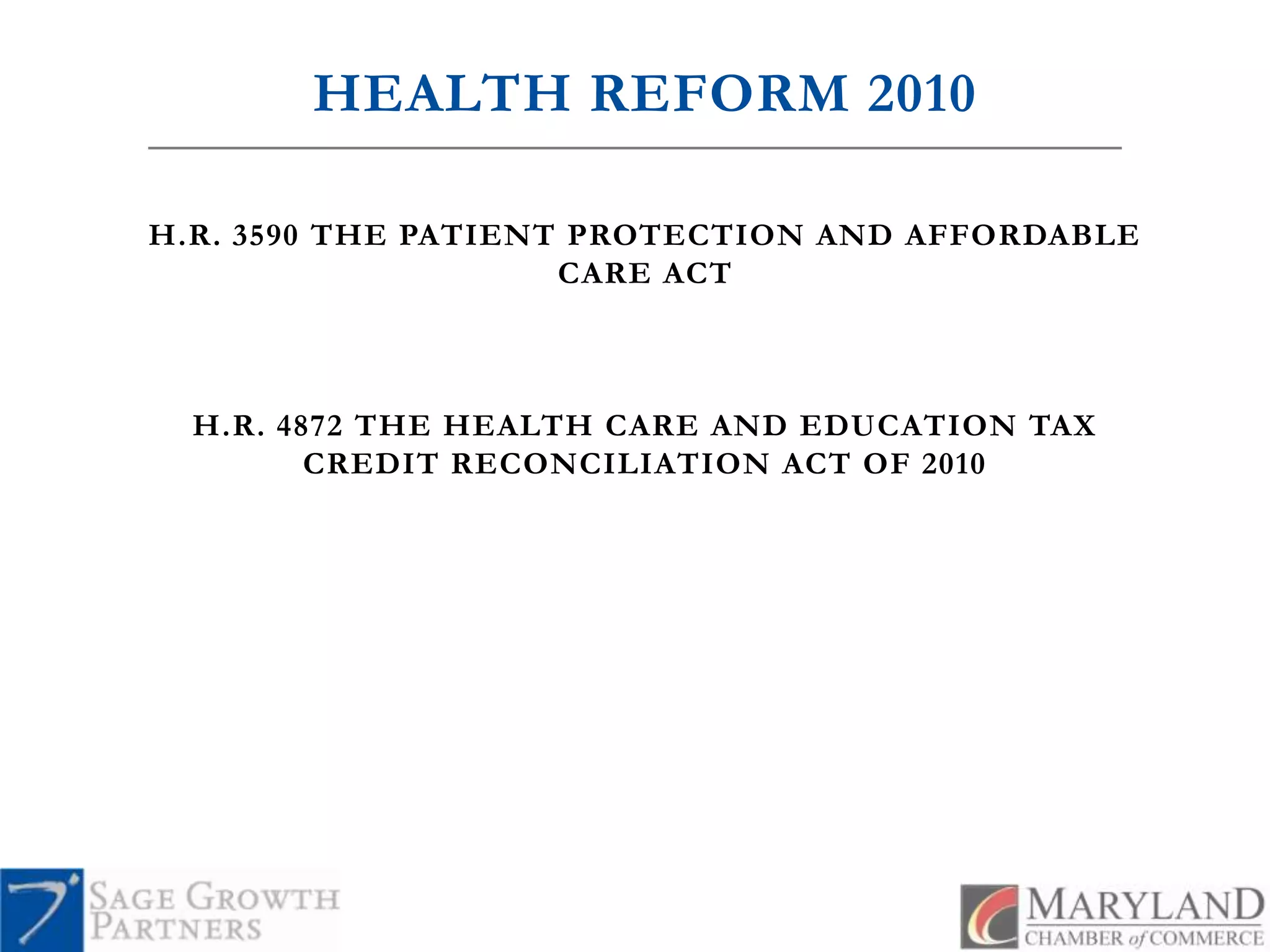
HEALTH REFORM 2010H.R. 3590 THE PATIENT PROTECTION AND AFFORDABLE CARE ACTH.R. 4872 THE HEALTH CARE AND EDUCATION TAX CREDIT RECONCILIATION ACT OF 2010
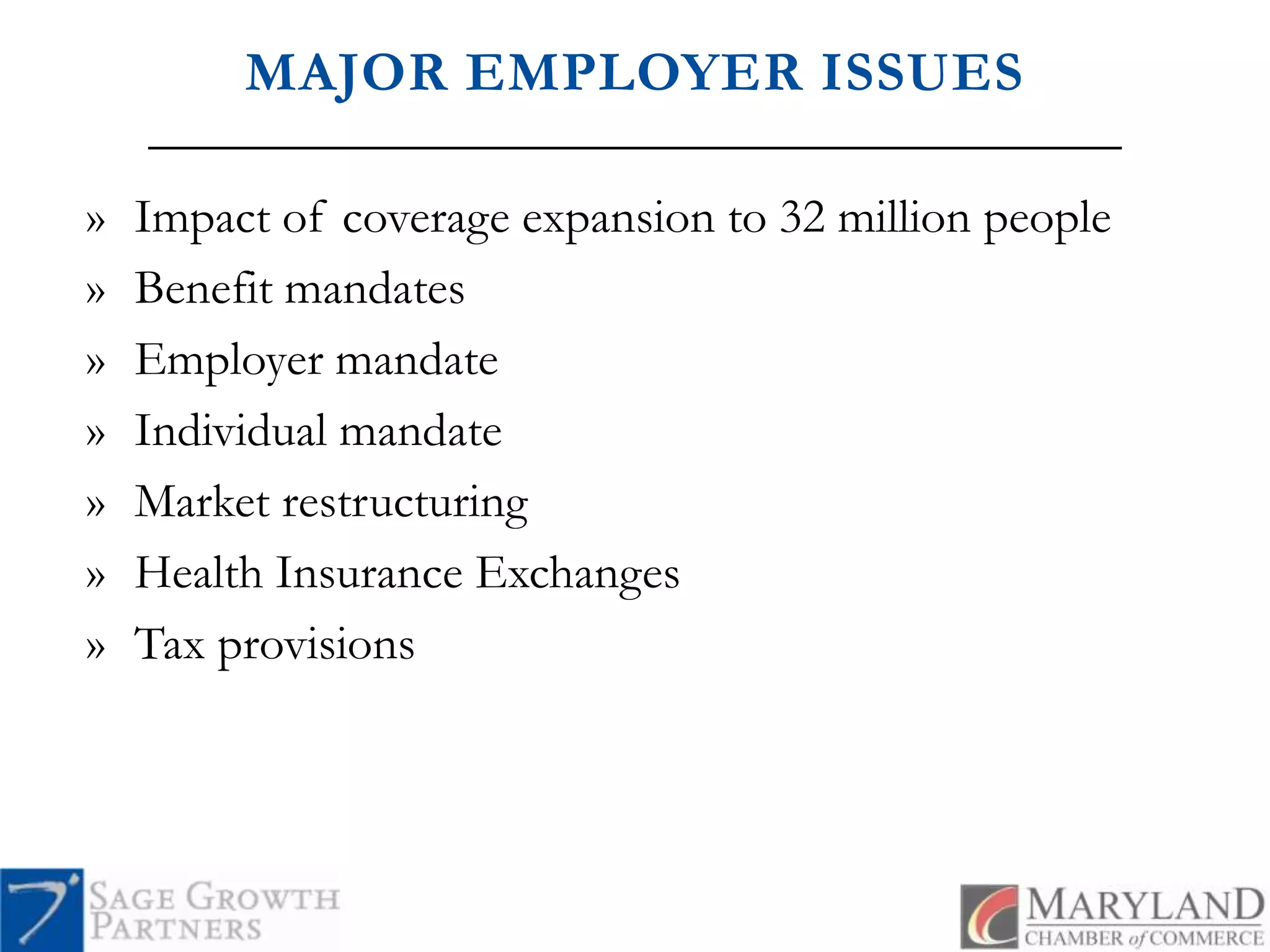
MAJOR EMPLOYER ISSUESImpact of coverage expansion to 32 million people Benefit mandatesEmployer mandateIndividual mandateMarket restructuringHealth Insurance ExchangesTax provisions
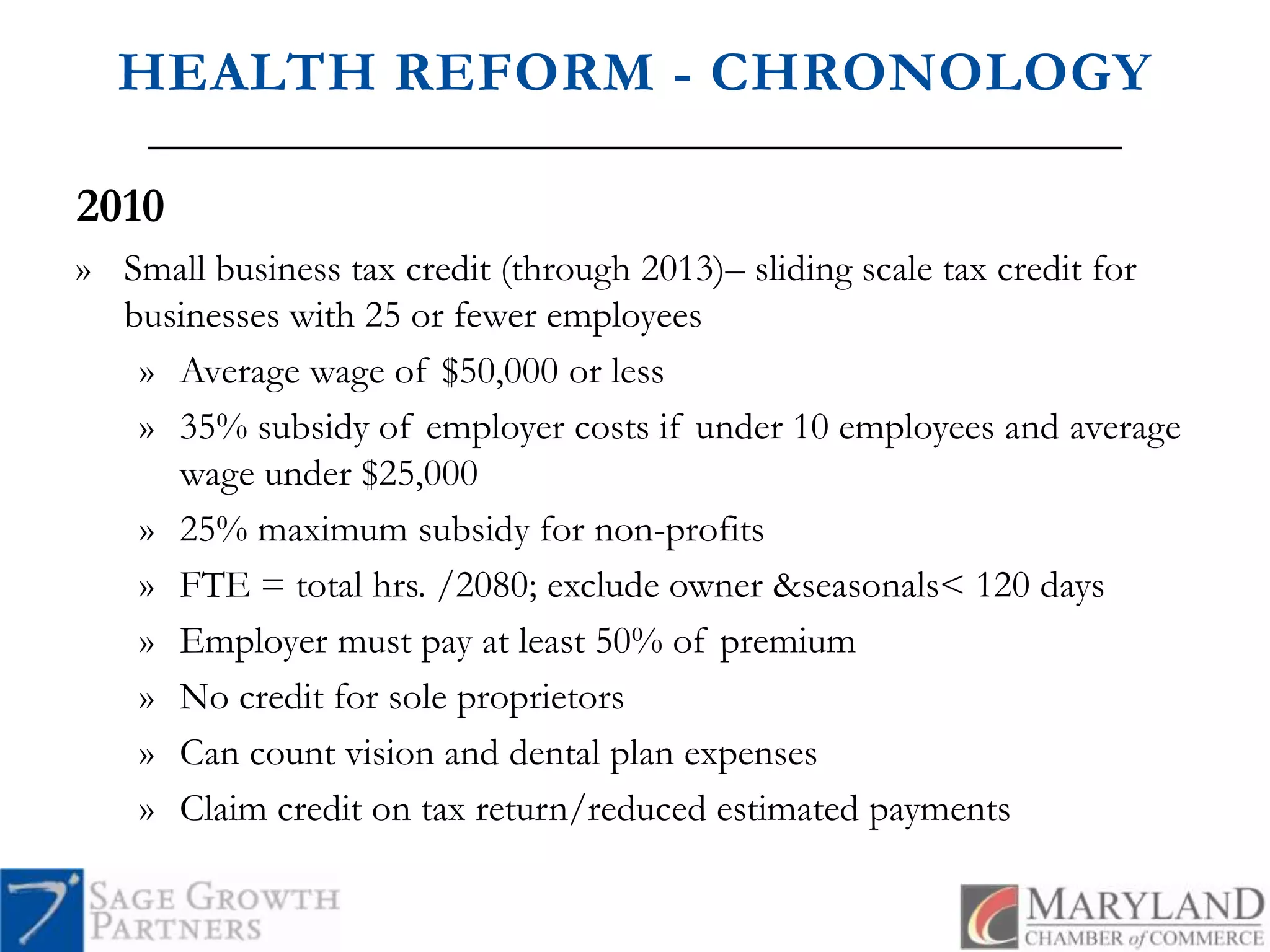
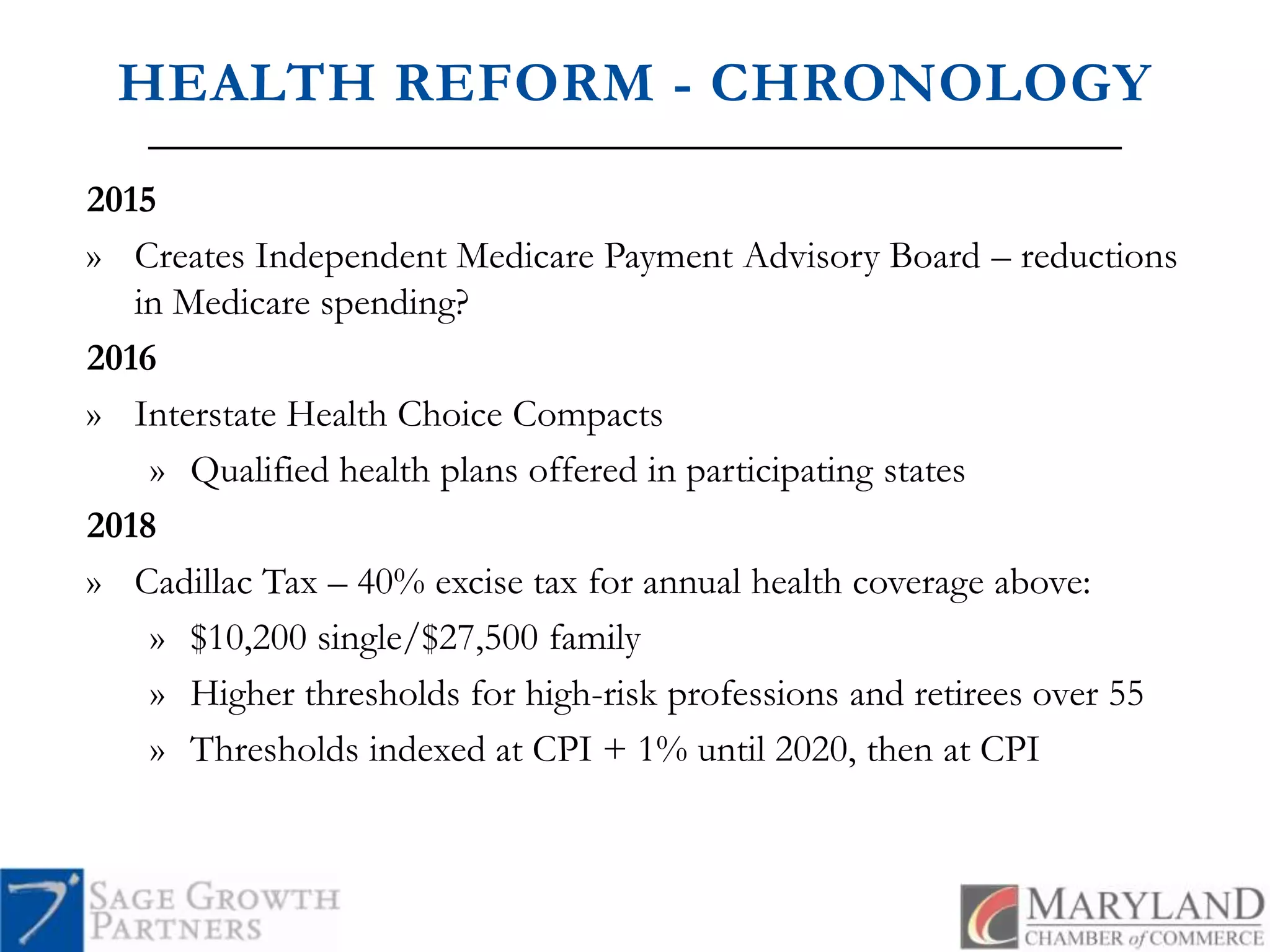
HEALTH REFORM - CHRONOLOGY2010Small business tax credit (through 2013)– sliding scale tax credit for businesses with 25 or fewer employeesAverage wage of $50,000 or less35% subsidy of employer costs if under 10 employees and average wage under $25,00025% maximum subsidy for non-profitsFTE = total hrs. /2080; exclude owner & seasonals < 120 daysEmployer must pay at least 50% of premiumNo credit for sole proprietorsCan count vision and dental plan expensesClaim credit on tax return/reduced estimated payments
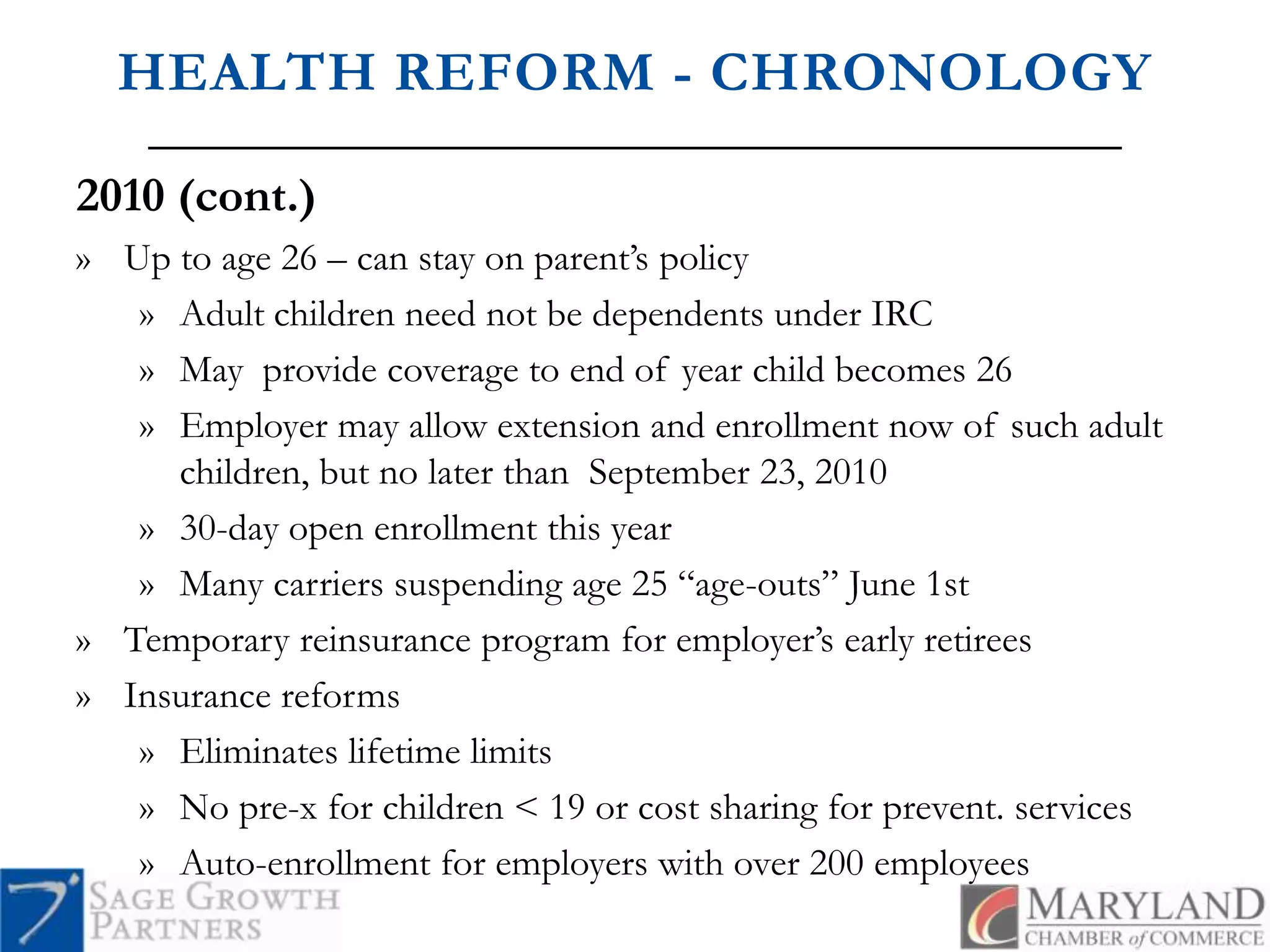
HEALTH REFORM - CHRONOLOGY2010 (cont.)Up to age 26 – can stay on parent’s policyAdult children need not be dependents under IRCMay  provide coverage to end of year child becomes 26Employer may allow extension and enrollment now of such adult children, but no later than  September 23, 201030-day open enrollment this yearMany carriers suspending age 25 “age-outs” June 1stTemporary reinsurance program for employer’s early retireesInsurance reformsEliminates lifetime limitsNo pre-x for children < 19 or cost sharing for prevent. servicesAuto-enrollment for employers with over 200 employees
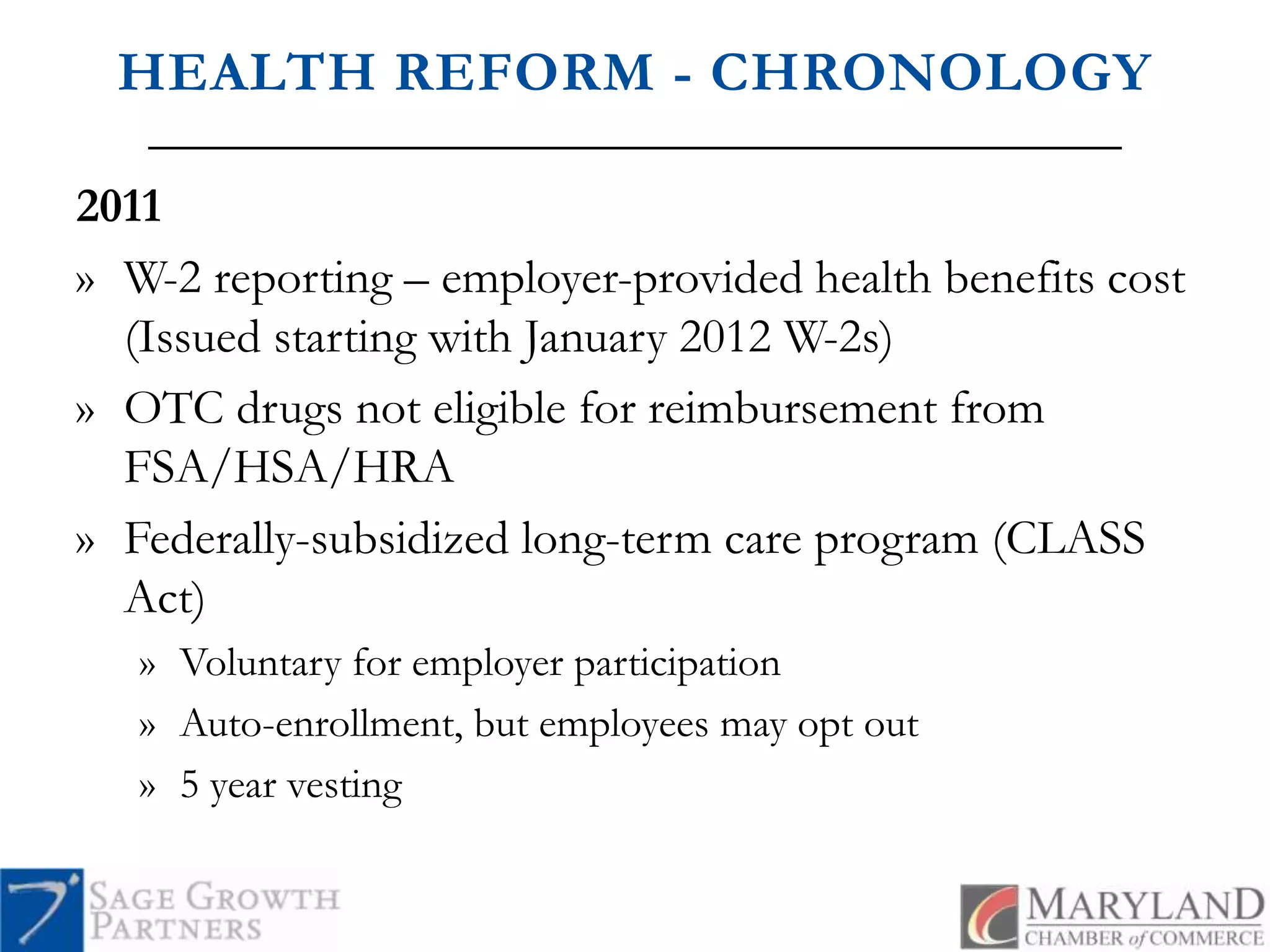
HEALTH REFORM - CHRONOLOGY2011W-2 reporting – employer-provided health benefits cost (Issued starting with January 2012 W-2s)OTC drugs not eligible for reimbursement from FSA/HSA/HRAFederally-subsidized long-term care program (CLASS Act) Voluntary for employer participationAuto-enrollment, but employees may opt out 5 year vesting
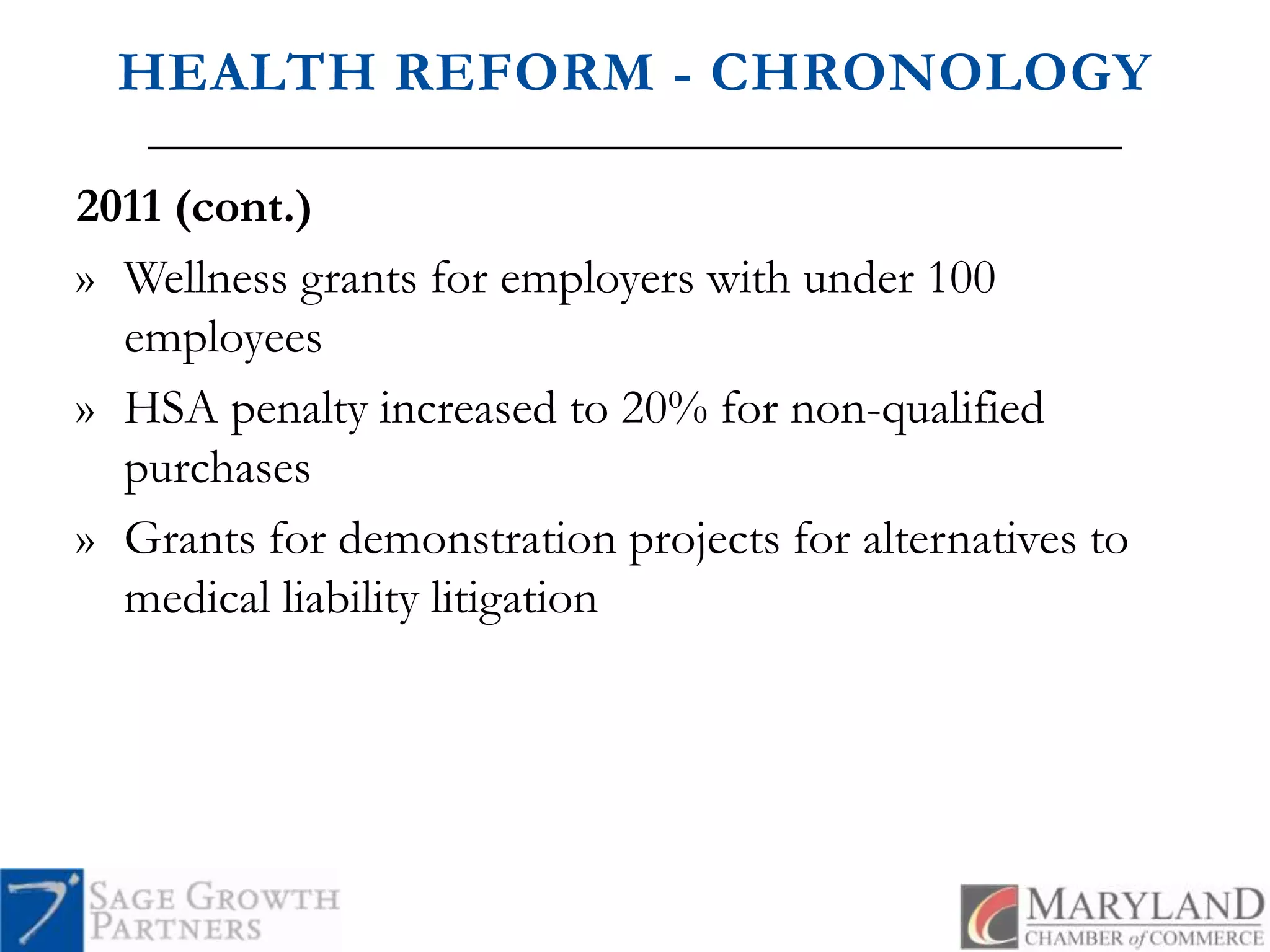
HEALTH REFORM - CHRONOLOGY2011 (cont.)Wellness grants for employers with under 100 employeesHSA penalty increased to 20% for non-qualified purchasesGrants for demonstration projects for alternatives to medical liability litigation
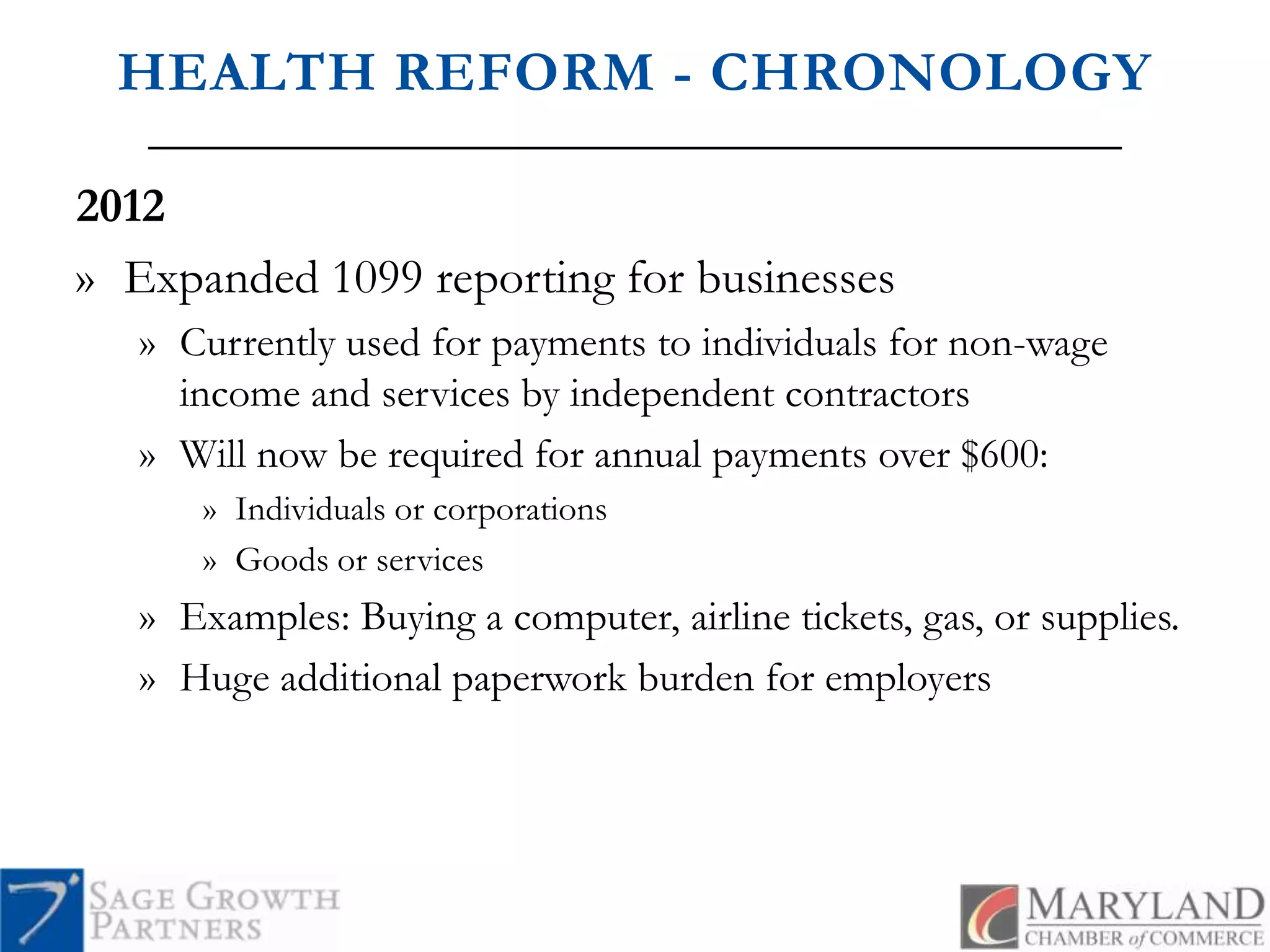
HEALTH REFORM - CHRONOLOGY2012Expanded 1099 reporting for businessesCurrently used for payments to individuals for non-wage income and services by independent contractorsWill now be required for annual payments over $600:Individuals or corporationsGoods or servicesExamples: Buying a computer, airline tickets, gas, or supplies.Huge additional paperwork burden for employers
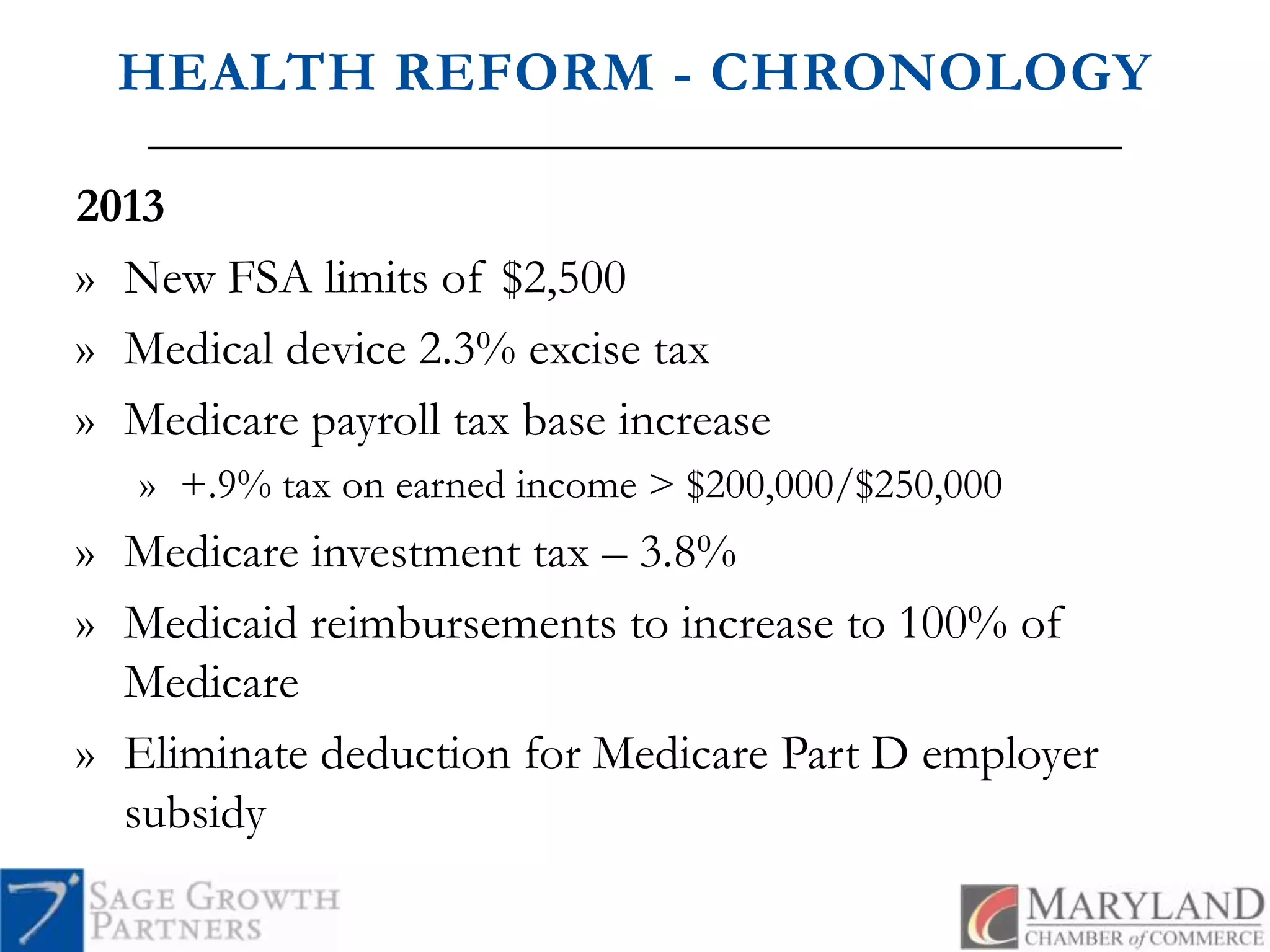
HEALTH REFORM - CHRONOLOGY2013New FSA limits of $2,500Medical device 2.3% excise taxMedicare payroll tax base increase+.9% tax on earned income > $200,000/$250,000Medicare investment tax – 3.8%Medicaid reimbursements to increase to 100% of MedicareEliminate deduction for Medicare Part D employer subsidy
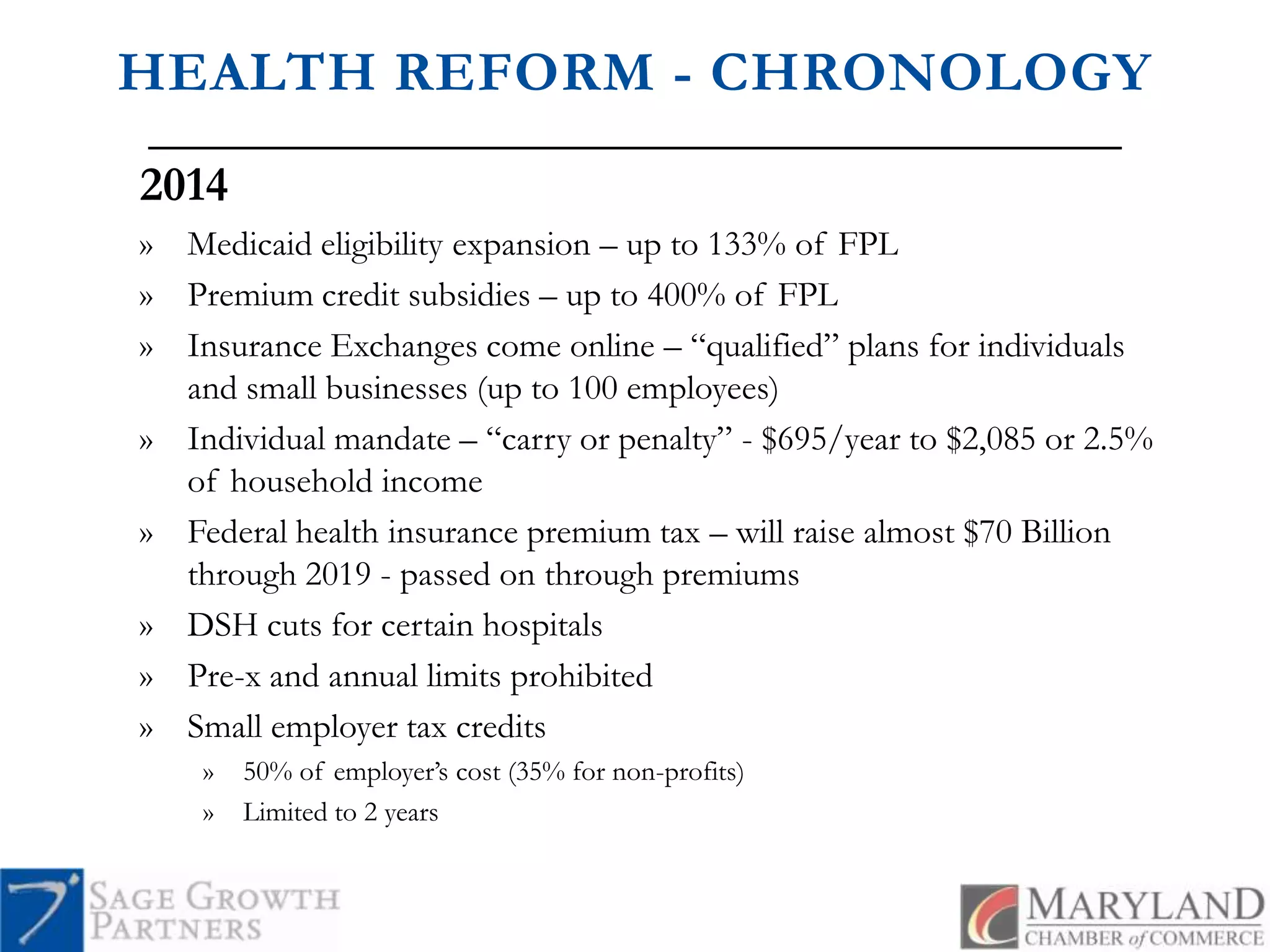
HEALTH REFORM - CHRONOLOGY2014Medicaid eligibility expansion – up to 133% of FPLPremium credit subsidies – up to 400% of FPLInsurance Exchanges come online – “qualified” plans for individuals and small businesses (up to 100 employees)Individual mandate – “carry or penalty” - $695/year to $2,085 or 2.5% of household incomeFederal health insurance premium tax – will raise almost $70 Billion through 2019 - passed on through premiumsDSH cuts for certain hospitalsPre-x and annual limits prohibitedSmall employer tax credits50% of employer’s cost (35% for non-profits)Limited to 2 years
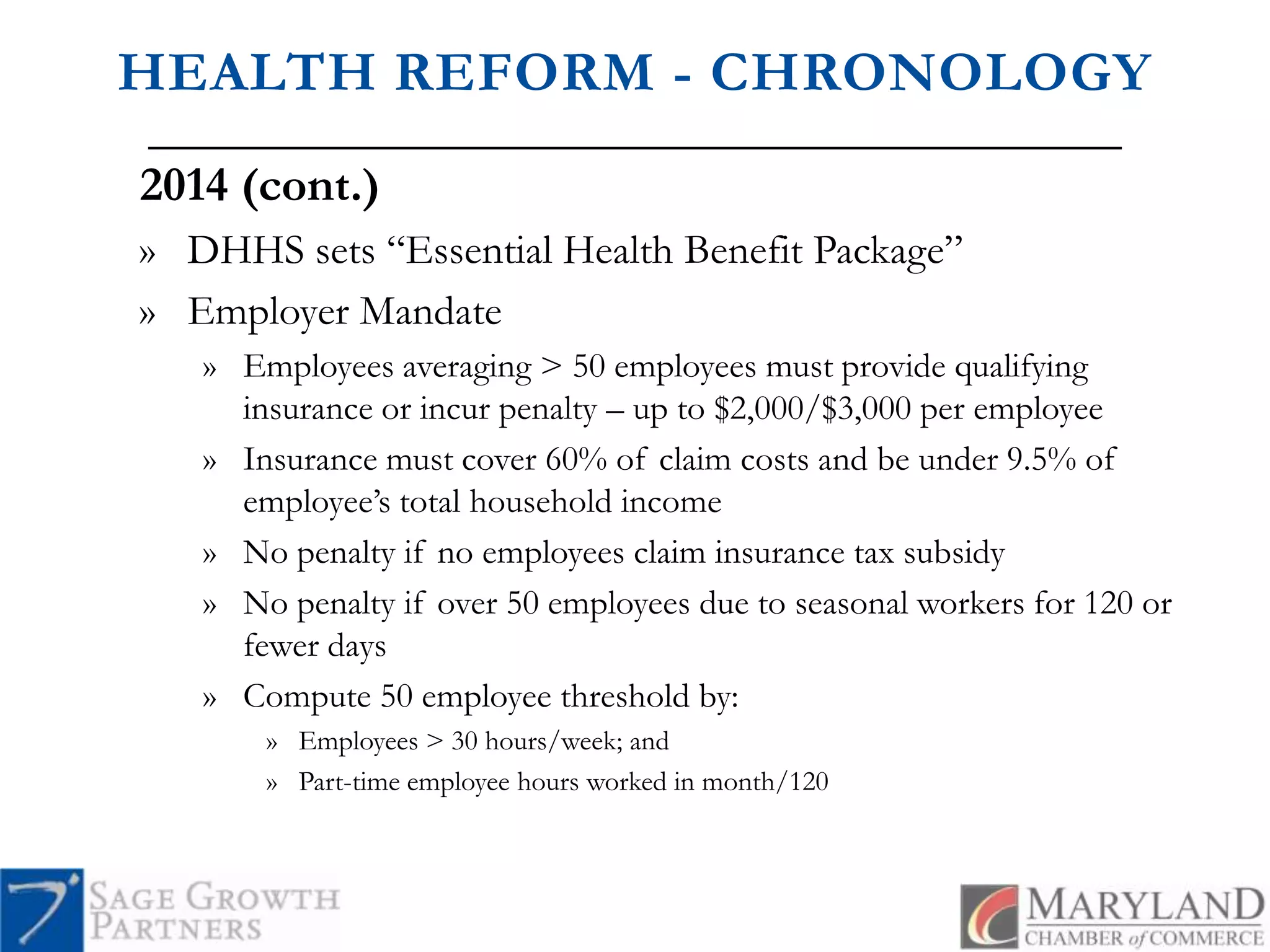
HEALTH REFORM - CHRONOLOGY2014 (cont.)DHHS sets “Essential Health Benefit Package”Employer Mandate Employees averaging > 50 employees must provide qualifying insurance or incur penalty – up to $2,000/$3,000 per employeeInsurance must cover 60% of claim costs and be under 9.5% of employee’s total household incomeNo penalty if no employees claim insurance tax subsidyNo penalty if over 50 employees due to seasonal workers for 120 or fewer daysCompute 50 employee threshold by:Employees > 30 hours/week; andPart-time employee hours worked in month/120
HEALTH REFORM - CHRONOLOGY2015Creates Independent Medicare Payment Advisory Board – reductions in Medicare spending?2016Interstate Health Choice CompactsQualified health plans offered in participating states2018Cadillac Tax – 40% excise tax for annual health coverage above:$10,200 single/$27,500 familyHigher thresholds for high-risk professions and retirees over 55Thresholds indexed at CPI + 1% until 2020, then at CPI
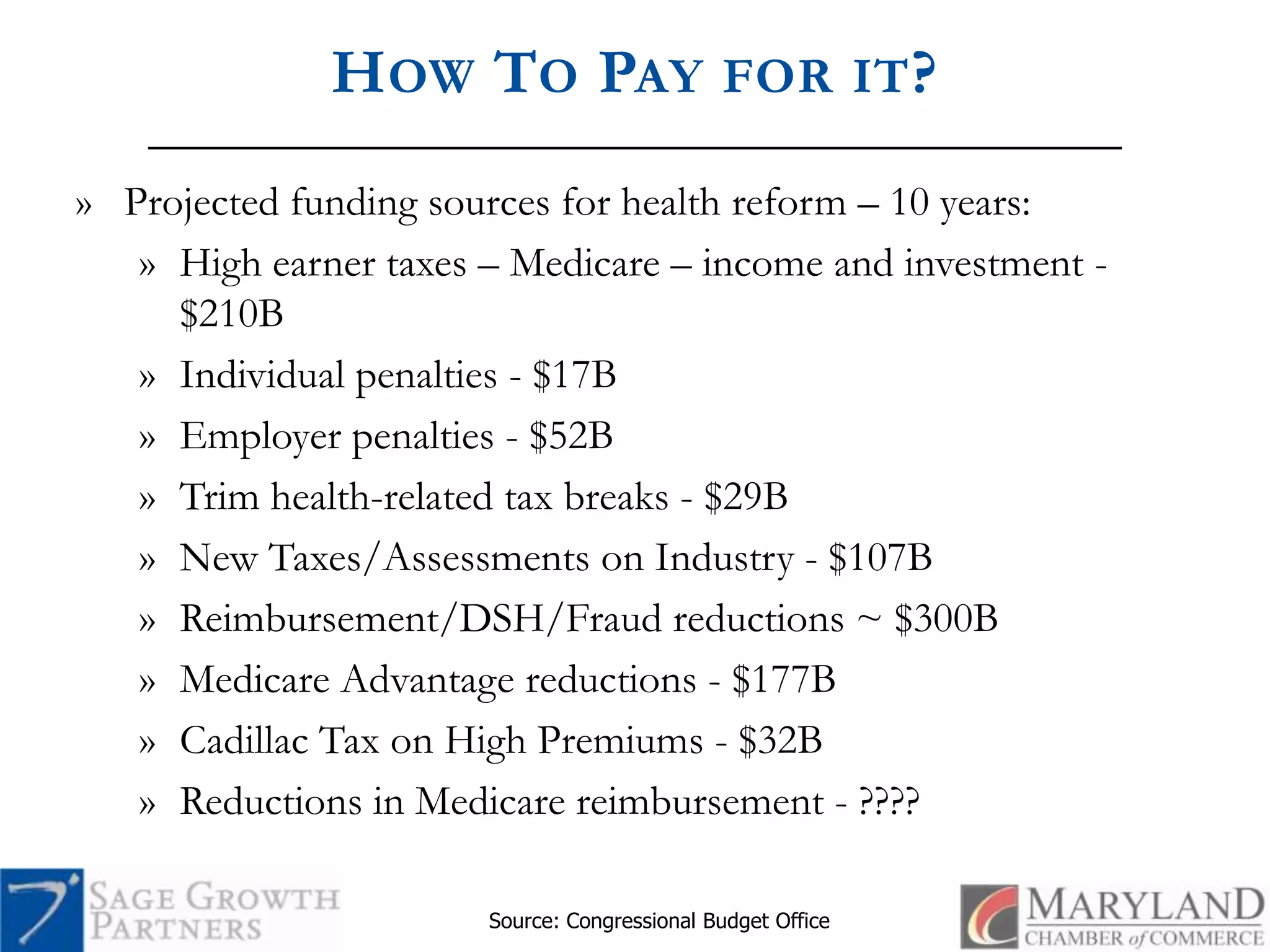
How To Pay for it?Projected funding sources for health reform – 10 years:High earner taxes – Medicare – income and investment - $210BIndividual penalties - $17BEmployer penalties - $52BTrim health-related tax breaks - $29BNew Taxes/Assessments on Industry - $107BReimbursement/DSH/Fraud reductions ~ $300BMedicare Advantage reductions - $177BCadillac Tax on High Premiums - $32BReductions in Medicare reimbursement - ????Source: Congressional Budget Office
BELLWETHER? THE MASSACHUSETTS EXPERIENCE
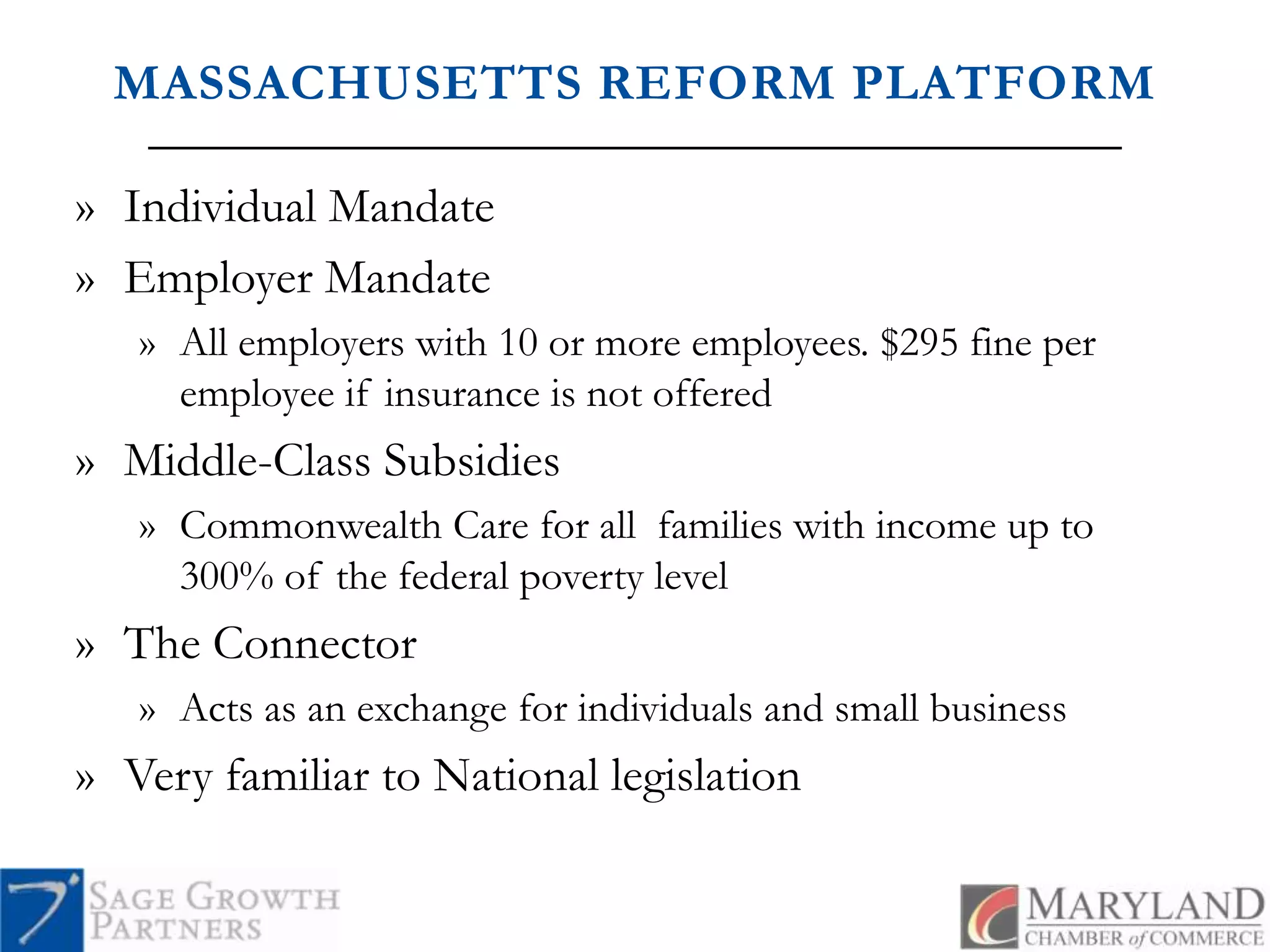
MASSACHUSETTS REFORM PLATFORMIndividual MandateEmployer MandateAll employers with 10 or more employees. $295 fine per employee if insurance is not offeredMiddle-Class SubsidiesCommonwealth Care for all  families with income up to 300% of the federal poverty levelThe ConnectorActs as an exchange for individuals and small businessVery familiar to National legislation
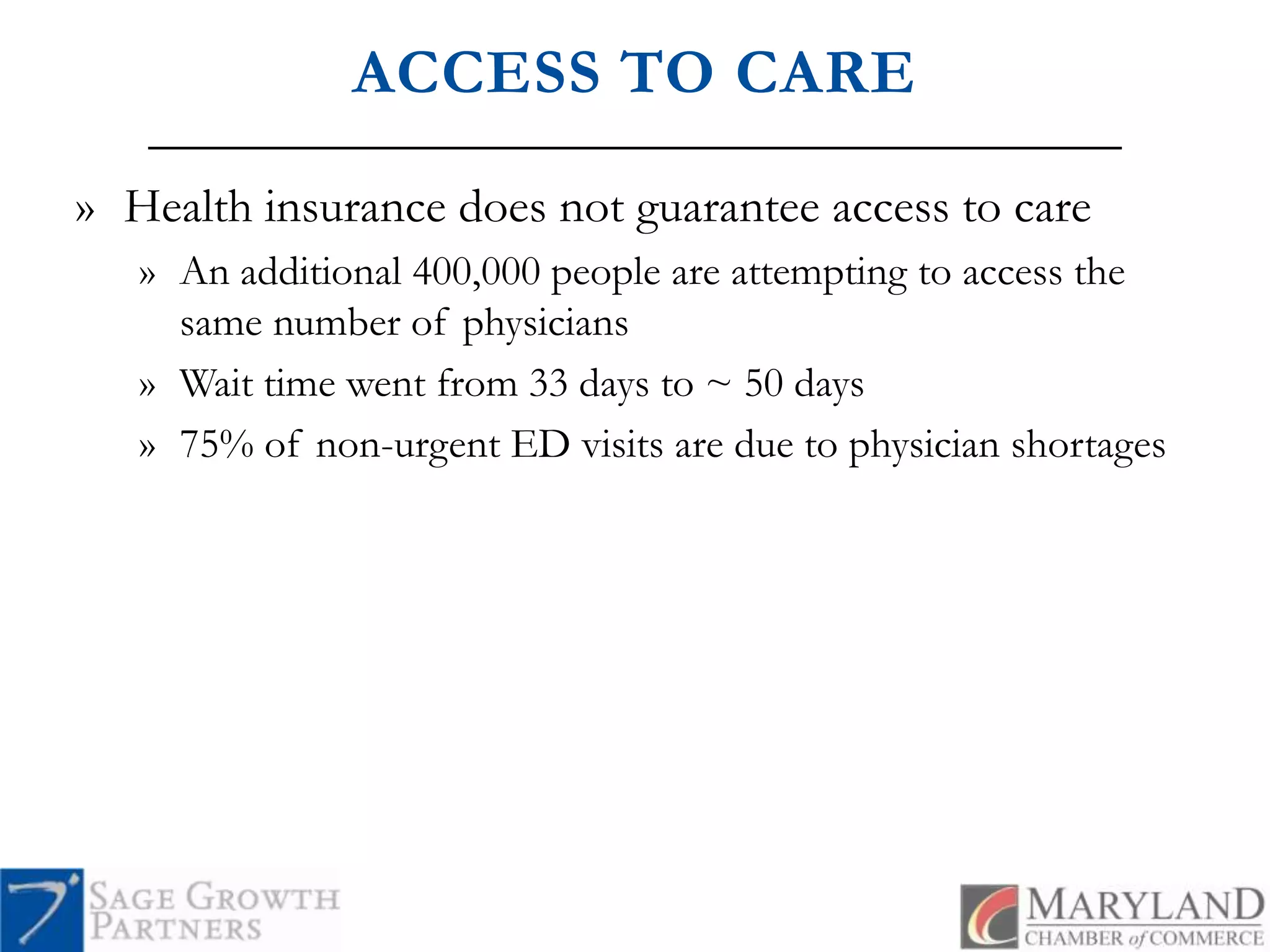
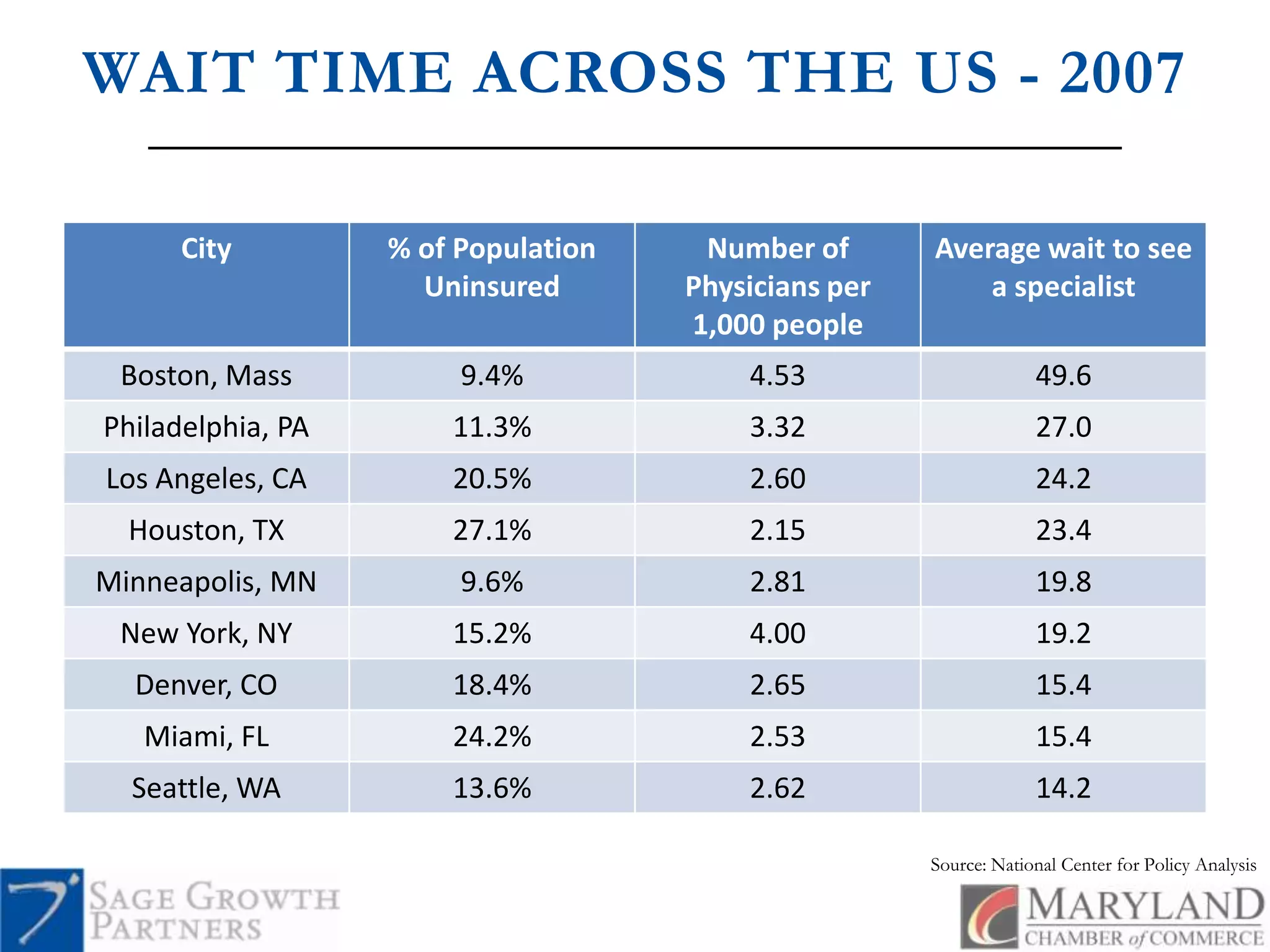
ACCESS TO CAREHealth insurance does not guarantee access to careAn additional 400,000 people are attempting to access the same number of physiciansWait time went from 33 days to ~ 50 days75% of non-urgent ED visits are due to physician shortages
WAIT TIME ACROSS THE US - 2007Source: National Center for Policy Analysis
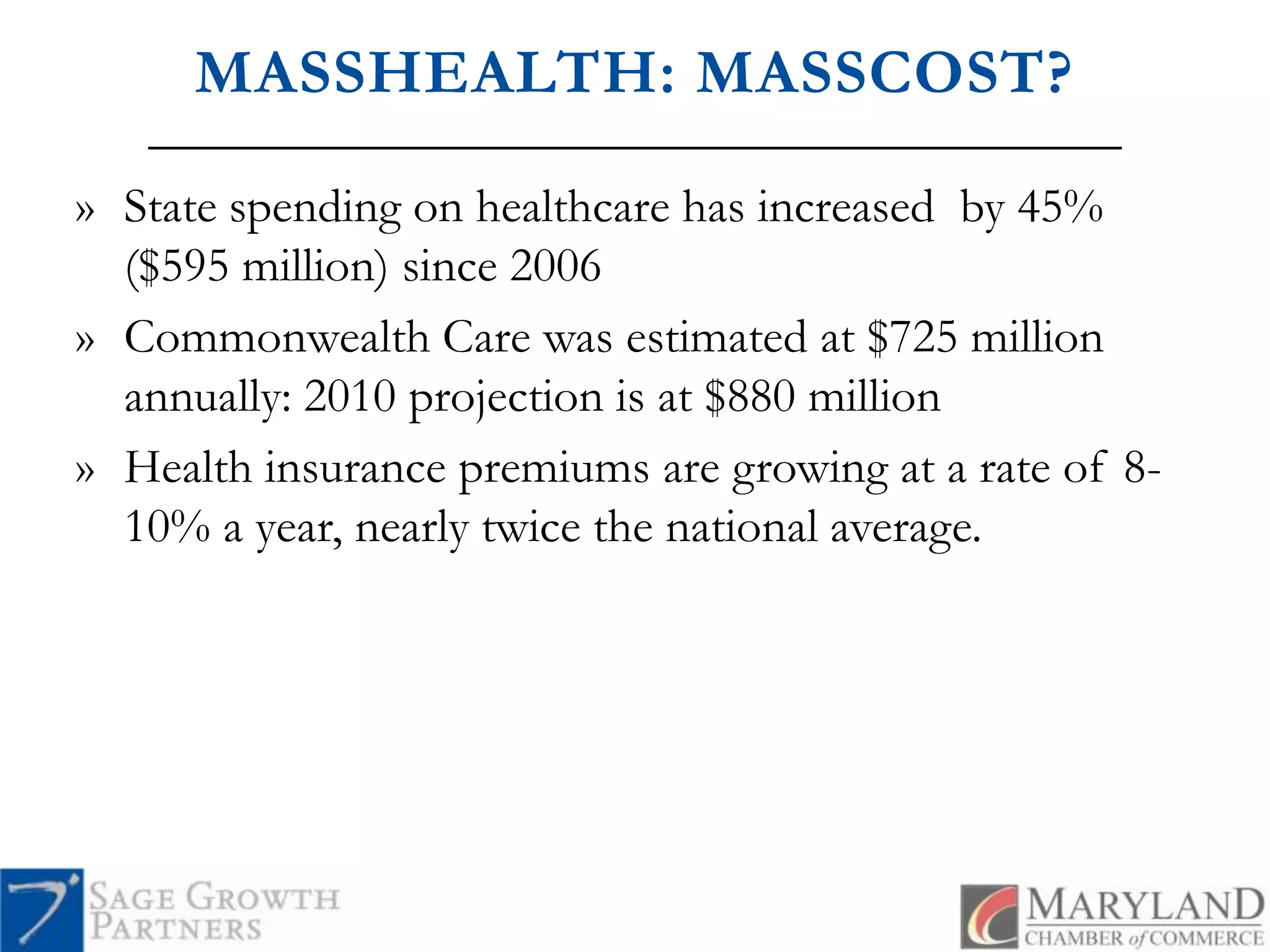
MASSHEALTH: MASSCOST?State spending on healthcare has increased  by 45% ($595 million) since 2006Commonwealth Care was estimated at $725 million annually: 2010 projection is at $880 millionHealth insurance premiums are growing at a rate of 8-10% a year, nearly twice the national average.
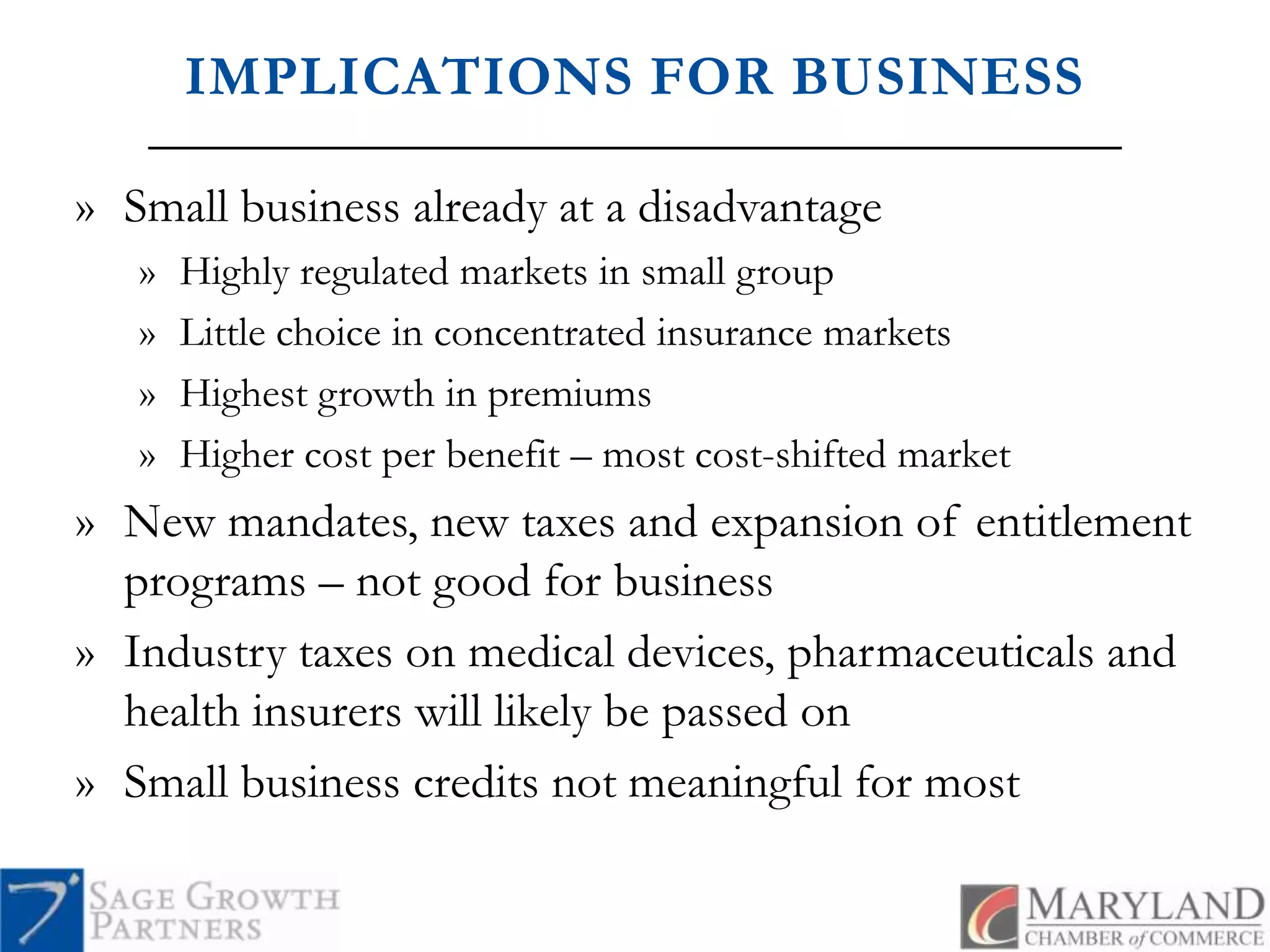
IMPLICATIONS FOR BUSINESSSmall business already at a disadvantageHighly regulated markets in small groupLittle choice in concentrated insurance marketsHighest growth in premiums Higher cost per benefit – most cost-shifted marketNew mandates, new taxes and expansion of entitlement programs – not good for businessIndustry taxes on medical devices, pharmaceuticals and health insurers will likely be passed onSmall business credits not meaningful for most
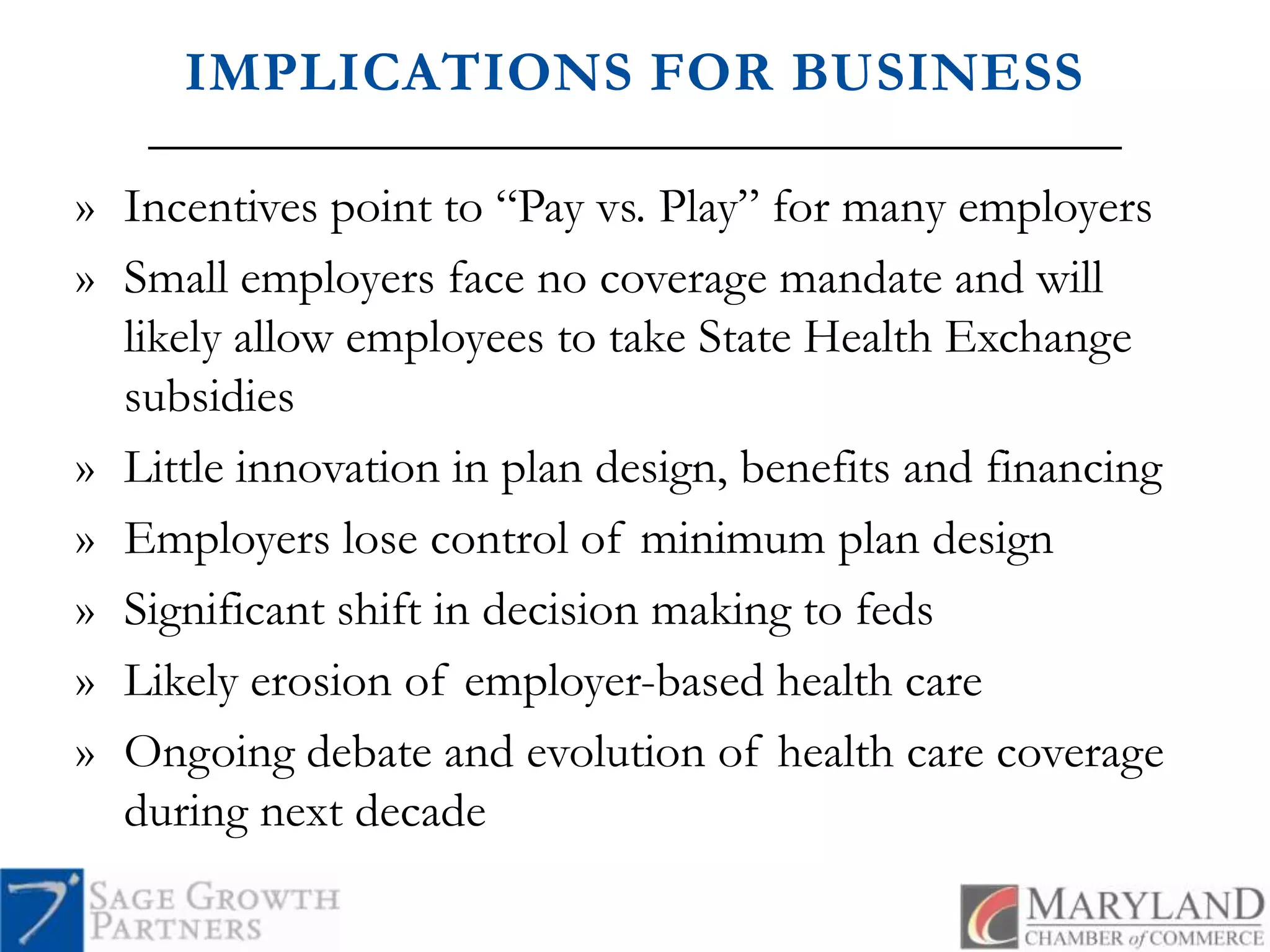
IMPLICATIONS FOR BUSINESSIncentives point to “Pay vs. Play” for many employersSmall employers face no coverage mandate and will likely allow employees to take State Health Exchange subsidies Little innovation in plan design, benefits and financingEmployers lose control of minimum plan designSignificant shift in decision making to fedsLikely erosion of employer-based health careOngoing debate and evolution of health care coverage during next decade
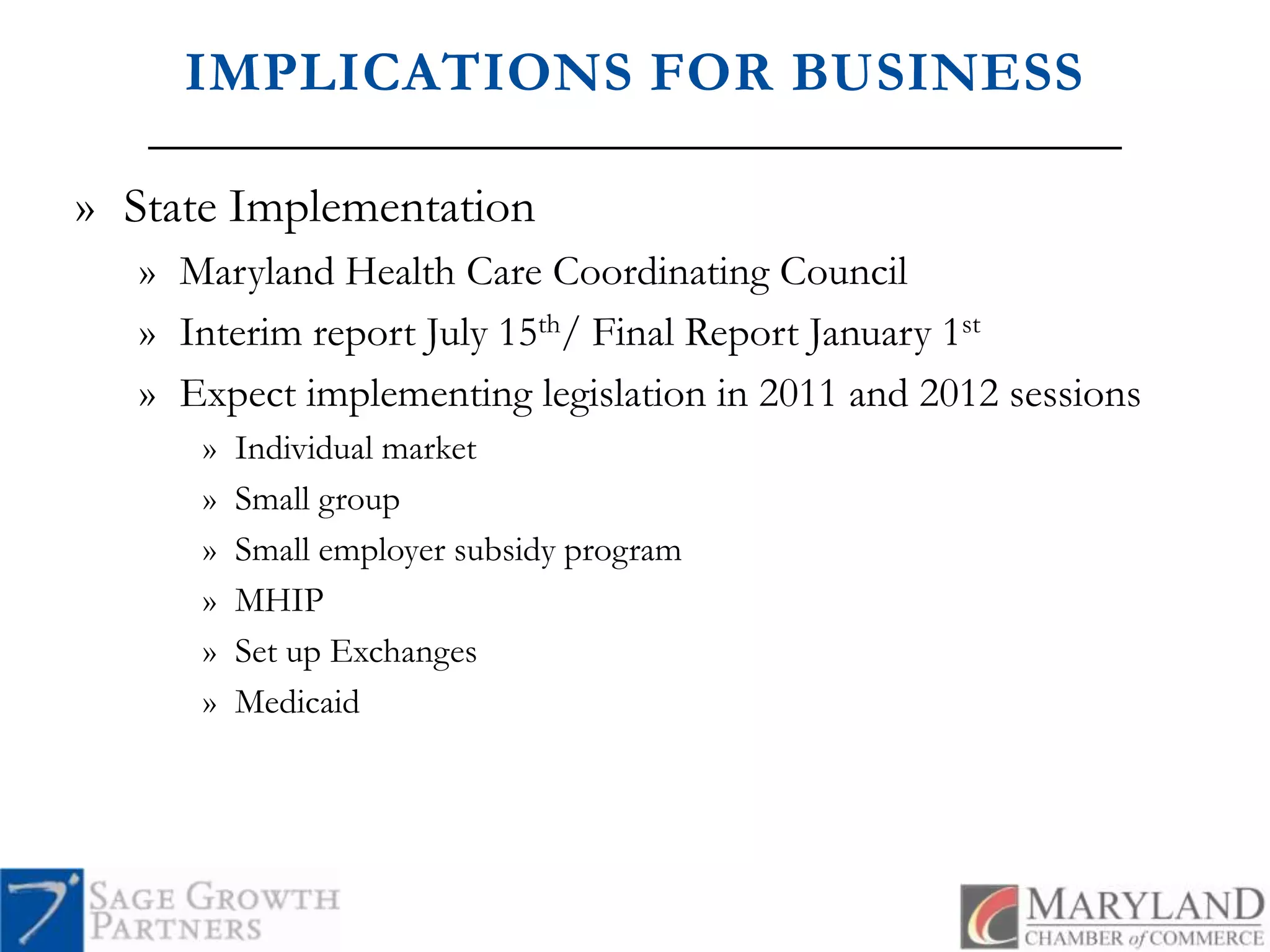
IMPLICATIONS FOR BUSINESSState ImplementationMaryland Health Care Coordinating CouncilInterim report July 15th/ Final Report January 1stExpect implementing legislation in 2011 and 2012 sessionsIndividual marketSmall groupSmall employer subsidy programMHIPSet up ExchangesMedicaid
For More Information, Visit:Sage Growth Partnerswww.sage-growth.com/Maryland Chamber of Commercewww.mdchamber.org

Health Care Reform: What Employers Need to Know

  • 1.
    HEALTH CARE REFORM:WHAT EMPLOYERS NEED TO KNOWDon McDaniel, Sage Growth Partners, LLCRon Wineholt, Maryland Chamber of CommerceMay 2010
  • 2.
  • 3.
    PROBLEM #1HEALTH EXPENDITURESAS A PERCENTAGE OF GDP* 2009 – 2018 ProjectedSource: Centers for Medicare and Medicaid Services
  • 4.
    3.7%PROBLEM #2AVERAGE PERCENTAGE INCREASE IN HEALTH INSURANCE PREMIUMS COMPARED TO OTHER INDICATORS, 1988-2007
  • 5.
    PROBLEM #3GROWTH INMEDICARE SPENDING VS. PRIVATE HEALTH INSURANCE SPENDINGSource: American Hospital Association via the Centers for Medicare & Medicaid Services, Office of the Actuary. Data Released January 8, 20085
  • 6.
    AGGREGATE HOSPITAL PAYMENT-TO-COSTRATIOS FOR PRIVATE PAYERS, MEDICARE, AND MEDICAIDSource: Avalere Health analysis of American Hospital Association Annual Survey data, 2008, for community hospitals. (1) Includes Medicaid Disproportionate Share payments
  • 7.
    PROBLEM #4NATIONAL SUPPLY& DEMAND PROJECTIONS FOR FTE RNSSource: National Center For Health Workforce Analysis, Bureau of Health Professions, Health Resources and Services Administration. (2004). What Is Behind HRSA’s Projected Supply, Demand, and Shortage of Registered Nurses? Link: ftp://ftp.hrsa.gov/bhpr/workforce/behindshortage.pdf.
  • 8.
    PROBLEM # 5Thedemographic TsunamiOne-quarter of all Medicare recipientsHave five or more chronic conditionsSee, on average, 13 physicians per yearSecure 50 prescriptions per yearOver 13,000 different drugs being sold in the U.S. in 2007 – 16x what was available 50 years agoOver 900,000 physicians in the U.S. – 75% are in practices of less than 8 physiciansPayment system issues – hard to support a “system” of care
  • 9.
    PROBLEM #6NUMBER OFFULL-TIME AND PART-TIME HOSPITAL EMPLOYEESSource: Avalere Health analysis of American Hospital Association Annual Survey data, 2008, for community hospitals.
  • 10.
    PROBLEM #7ARRESTED DEVELOPMENT:CONSUMER SOVEREIGNTY What do things really cost?We don’t demand price transparencyWe don’t demand better information to inform our purchase decisionsConsumer demand should drive supply-side reformSource: Centers for Medicare & Medicaid Services, Office of the Actuary, National Health Statistics Group
  • 11.
    HEALTH REFORM 2010H.R.3590 THE PATIENT PROTECTION AND AFFORDABLE CARE ACTH.R. 4872 THE HEALTH CARE AND EDUCATION TAX CREDIT RECONCILIATION ACT OF 2010
  • 12.
    MAJOR EMPLOYER ISSUESImpactof coverage expansion to 32 million people Benefit mandatesEmployer mandateIndividual mandateMarket restructuringHealth Insurance ExchangesTax provisions
  • 13.
    HEALTH REFORM -CHRONOLOGY2010Small business tax credit (through 2013)– sliding scale tax credit for businesses with 25 or fewer employeesAverage wage of $50,000 or less35% subsidy of employer costs if under 10 employees and average wage under $25,00025% maximum subsidy for non-profitsFTE = total hrs. /2080; exclude owner & seasonals < 120 daysEmployer must pay at least 50% of premiumNo credit for sole proprietorsCan count vision and dental plan expensesClaim credit on tax return/reduced estimated payments
  • 14.
    HEALTH REFORM -CHRONOLOGY2010 (cont.)Up to age 26 – can stay on parent’s policyAdult children need not be dependents under IRCMay provide coverage to end of year child becomes 26Employer may allow extension and enrollment now of such adult children, but no later than September 23, 201030-day open enrollment this yearMany carriers suspending age 25 “age-outs” June 1stTemporary reinsurance program for employer’s early retireesInsurance reformsEliminates lifetime limitsNo pre-x for children < 19 or cost sharing for prevent. servicesAuto-enrollment for employers with over 200 employees
  • 15.
    HEALTH REFORM -CHRONOLOGY2011W-2 reporting – employer-provided health benefits cost (Issued starting with January 2012 W-2s)OTC drugs not eligible for reimbursement from FSA/HSA/HRAFederally-subsidized long-term care program (CLASS Act) Voluntary for employer participationAuto-enrollment, but employees may opt out 5 year vesting
  • 16.
    HEALTH REFORM -CHRONOLOGY2011 (cont.)Wellness grants for employers with under 100 employeesHSA penalty increased to 20% for non-qualified purchasesGrants for demonstration projects for alternatives to medical liability litigation
  • 17.
    HEALTH REFORM -CHRONOLOGY2012Expanded 1099 reporting for businessesCurrently used for payments to individuals for non-wage income and services by independent contractorsWill now be required for annual payments over $600:Individuals or corporationsGoods or servicesExamples: Buying a computer, airline tickets, gas, or supplies.Huge additional paperwork burden for employers
  • 18.
    HEALTH REFORM -CHRONOLOGY2013New FSA limits of $2,500Medical device 2.3% excise taxMedicare payroll tax base increase+.9% tax on earned income > $200,000/$250,000Medicare investment tax – 3.8%Medicaid reimbursements to increase to 100% of MedicareEliminate deduction for Medicare Part D employer subsidy
  • 19.
    HEALTH REFORM -CHRONOLOGY2014Medicaid eligibility expansion – up to 133% of FPLPremium credit subsidies – up to 400% of FPLInsurance Exchanges come online – “qualified” plans for individuals and small businesses (up to 100 employees)Individual mandate – “carry or penalty” - $695/year to $2,085 or 2.5% of household incomeFederal health insurance premium tax – will raise almost $70 Billion through 2019 - passed on through premiumsDSH cuts for certain hospitalsPre-x and annual limits prohibitedSmall employer tax credits50% of employer’s cost (35% for non-profits)Limited to 2 years
  • 20.
    HEALTH REFORM -CHRONOLOGY2014 (cont.)DHHS sets “Essential Health Benefit Package”Employer Mandate Employees averaging > 50 employees must provide qualifying insurance or incur penalty – up to $2,000/$3,000 per employeeInsurance must cover 60% of claim costs and be under 9.5% of employee’s total household incomeNo penalty if no employees claim insurance tax subsidyNo penalty if over 50 employees due to seasonal workers for 120 or fewer daysCompute 50 employee threshold by:Employees > 30 hours/week; andPart-time employee hours worked in month/120
  • 21.
    HEALTH REFORM -CHRONOLOGY2015Creates Independent Medicare Payment Advisory Board – reductions in Medicare spending?2016Interstate Health Choice CompactsQualified health plans offered in participating states2018Cadillac Tax – 40% excise tax for annual health coverage above:$10,200 single/$27,500 familyHigher thresholds for high-risk professions and retirees over 55Thresholds indexed at CPI + 1% until 2020, then at CPI
  • 22.
    How To Payfor it?Projected funding sources for health reform – 10 years:High earner taxes – Medicare – income and investment - $210BIndividual penalties - $17BEmployer penalties - $52BTrim health-related tax breaks - $29BNew Taxes/Assessments on Industry - $107BReimbursement/DSH/Fraud reductions ~ $300BMedicare Advantage reductions - $177BCadillac Tax on High Premiums - $32BReductions in Medicare reimbursement - ????Source: Congressional Budget Office
  • 23.
  • 24.
    MASSACHUSETTS REFORM PLATFORMIndividualMandateEmployer MandateAll employers with 10 or more employees. $295 fine per employee if insurance is not offeredMiddle-Class SubsidiesCommonwealth Care for all families with income up to 300% of the federal poverty levelThe ConnectorActs as an exchange for individuals and small businessVery familiar to National legislation
  • 25.
    ACCESS TO CAREHealthinsurance does not guarantee access to careAn additional 400,000 people are attempting to access the same number of physiciansWait time went from 33 days to ~ 50 days75% of non-urgent ED visits are due to physician shortages
  • 26.
    WAIT TIME ACROSSTHE US - 2007Source: National Center for Policy Analysis
  • 27.
    MASSHEALTH: MASSCOST?State spendingon healthcare has increased by 45% ($595 million) since 2006Commonwealth Care was estimated at $725 million annually: 2010 projection is at $880 millionHealth insurance premiums are growing at a rate of 8-10% a year, nearly twice the national average.
  • 28.
    IMPLICATIONS FOR BUSINESSSmallbusiness already at a disadvantageHighly regulated markets in small groupLittle choice in concentrated insurance marketsHighest growth in premiums Higher cost per benefit – most cost-shifted marketNew mandates, new taxes and expansion of entitlement programs – not good for businessIndustry taxes on medical devices, pharmaceuticals and health insurers will likely be passed onSmall business credits not meaningful for most
  • 29.
    IMPLICATIONS FOR BUSINESSIncentivespoint to “Pay vs. Play” for many employersSmall employers face no coverage mandate and will likely allow employees to take State Health Exchange subsidies Little innovation in plan design, benefits and financingEmployers lose control of minimum plan designSignificant shift in decision making to fedsLikely erosion of employer-based health careOngoing debate and evolution of health care coverage during next decade
  • 30.
    IMPLICATIONS FOR BUSINESSStateImplementationMaryland Health Care Coordinating CouncilInterim report July 15th/ Final Report January 1stExpect implementing legislation in 2011 and 2012 sessionsIndividual marketSmall groupSmall employer subsidy programMHIPSet up ExchangesMedicaid
  • 31.
    For More Information,Visit:Sage Growth Partnerswww.sage-growth.com/Maryland Chamber of Commercewww.mdchamber.org