Web Scraping Zomato Data for Price and Popularity Tracking..pptx
Exploring the Advantages of Web Scraping Zomato Data for Price and Popularity Tracking to Optimize Food Delivery Platform Performance and Customer Insights.
Web Scraping Zomato Data for Price and Popularity Tracking..pptx
1.
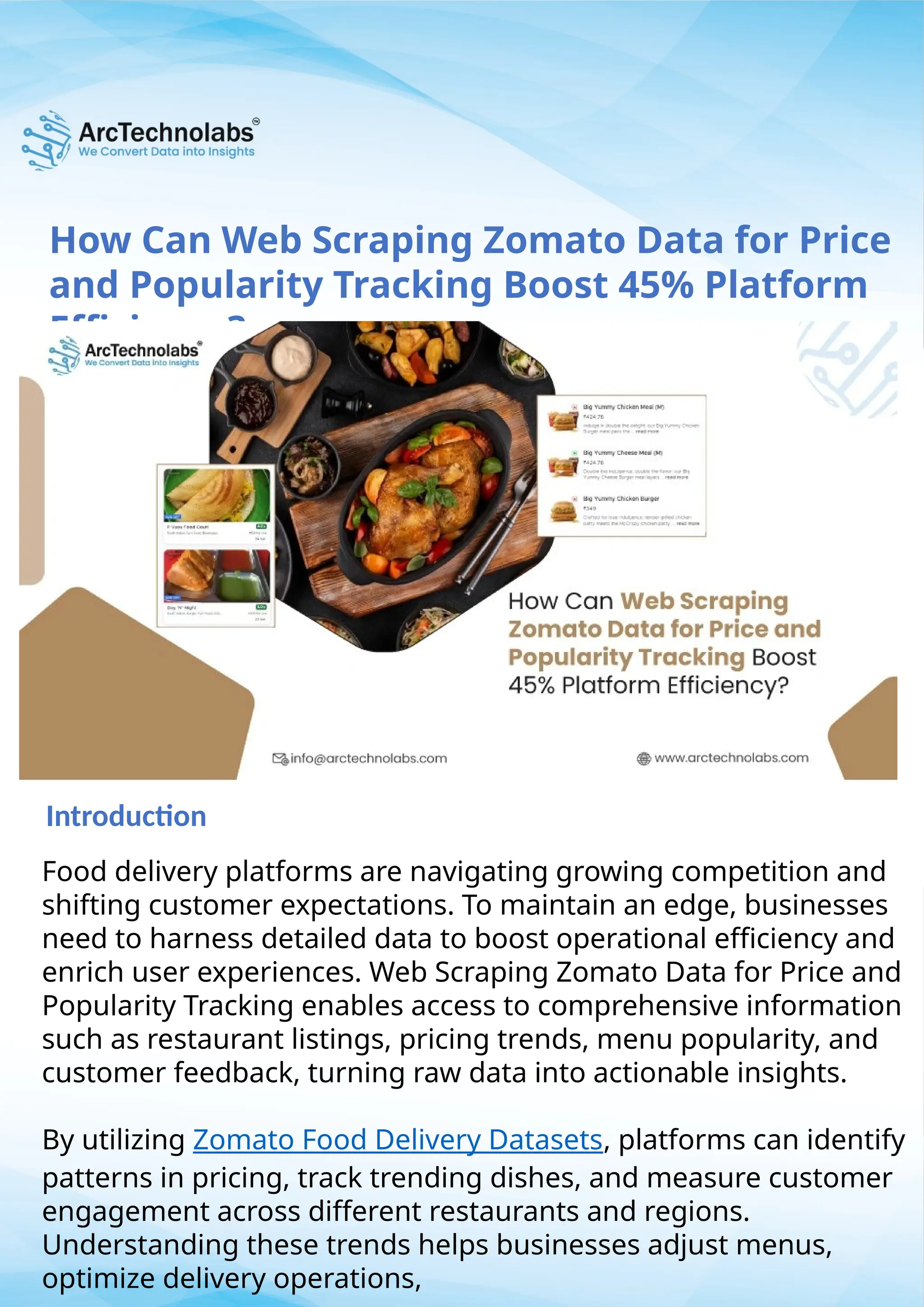
How Can WebScraping Zomato Data for Price
and Popularity Tracking Boost 45% Platform
Efficiency?
Introduction
Food delivery platforms are navigating growing competition and
shifting customer expectations. To maintain an edge, businesses
need to harness detailed data to boost operational efficiency and
enrich user experiences. Web Scraping Zomato Data for Price and
Popularity Tracking enables access to comprehensive information
such as restaurant listings, pricing trends, menu popularity, and
customer feedback, turning raw data into actionable insights.
By utilizing Zomato Food Delivery Datasets, platforms can identify
patterns in pricing, track trending dishes, and measure customer
engagement across different restaurants and regions.
Understanding these trends helps businesses adjust menus,
optimize delivery operations,
2.
and implement targetedmarketing strategies. Accurate data
collection enables predictive decision-making rather than
reactive adjustments, resulting in better platform performance
and improved customer satisfaction.
Structured analysis of restaurant popularity and price variations
allows food delivery platforms to streamline daily operations,
reduce inefficiencies, and maintain competitiveness in a fast-
paced market. With these insights, platforms can focus on high-
demand outlets, enhance delivery times, and ensure that menu
offerings align with customer preferences, ultimately boosting
overall operational efficiency and driving growth.
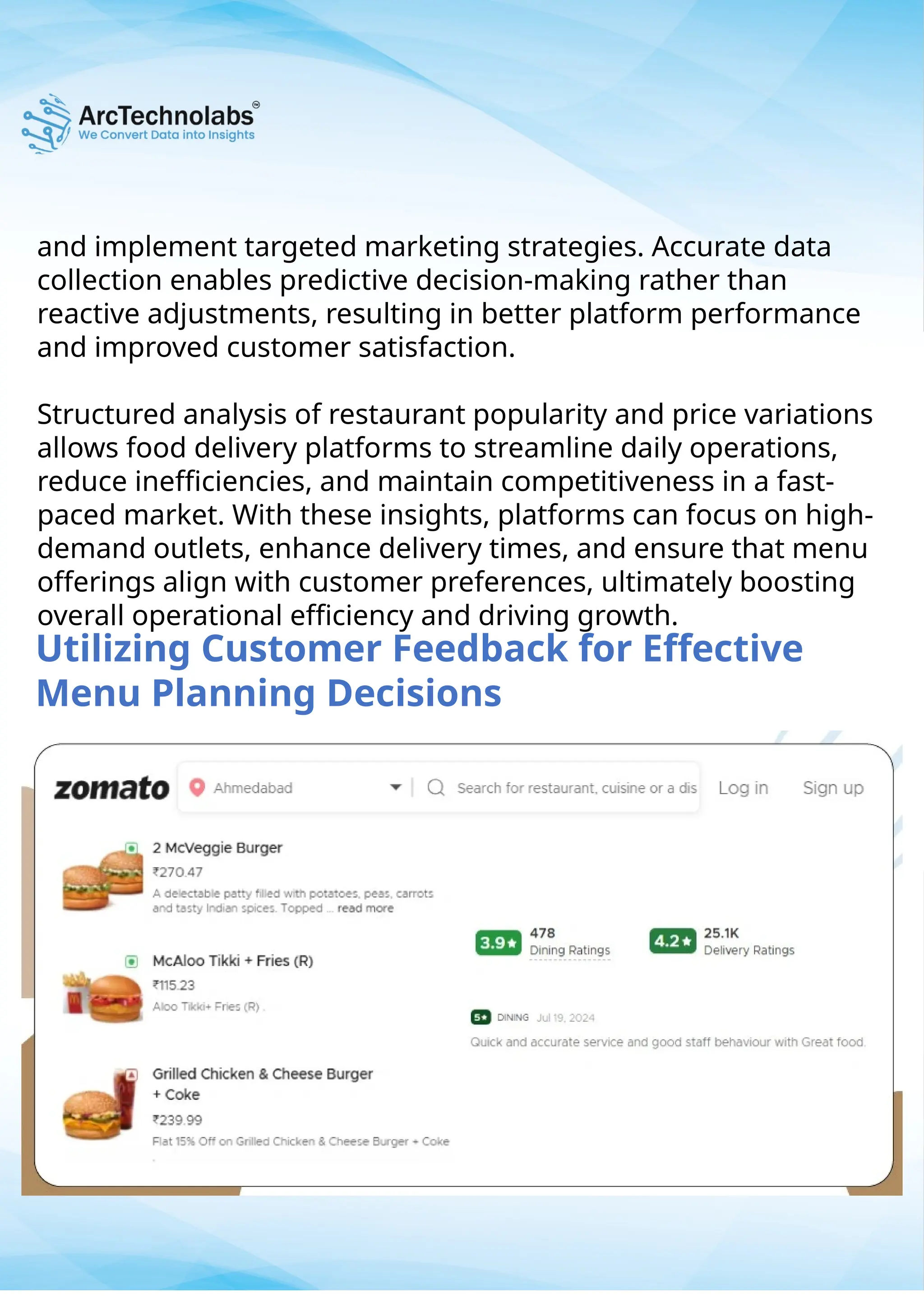
Utilizing Customer Feedback for Effective
Menu Planning Decisions
3.
Analyzing customer opinionsis essential for restaurants aiming
to improve their offerings and maintain high satisfaction. With
Zomato Reviews Datasets, businesses can collect information
about the dishes customers enjoy most, spot recurring
complaints, and make informed adjustments to the menu. By
understanding sentiment trends, restaurants can identify what
works and what needs improvement.
Using Scrape Zomato Restaurant and Ratings Data, companies
can track positive and negative reviews systematically. Positive
feedback highlights popular dishes that could be emphasized in
marketing campaigns, while recurring negative reviews provide
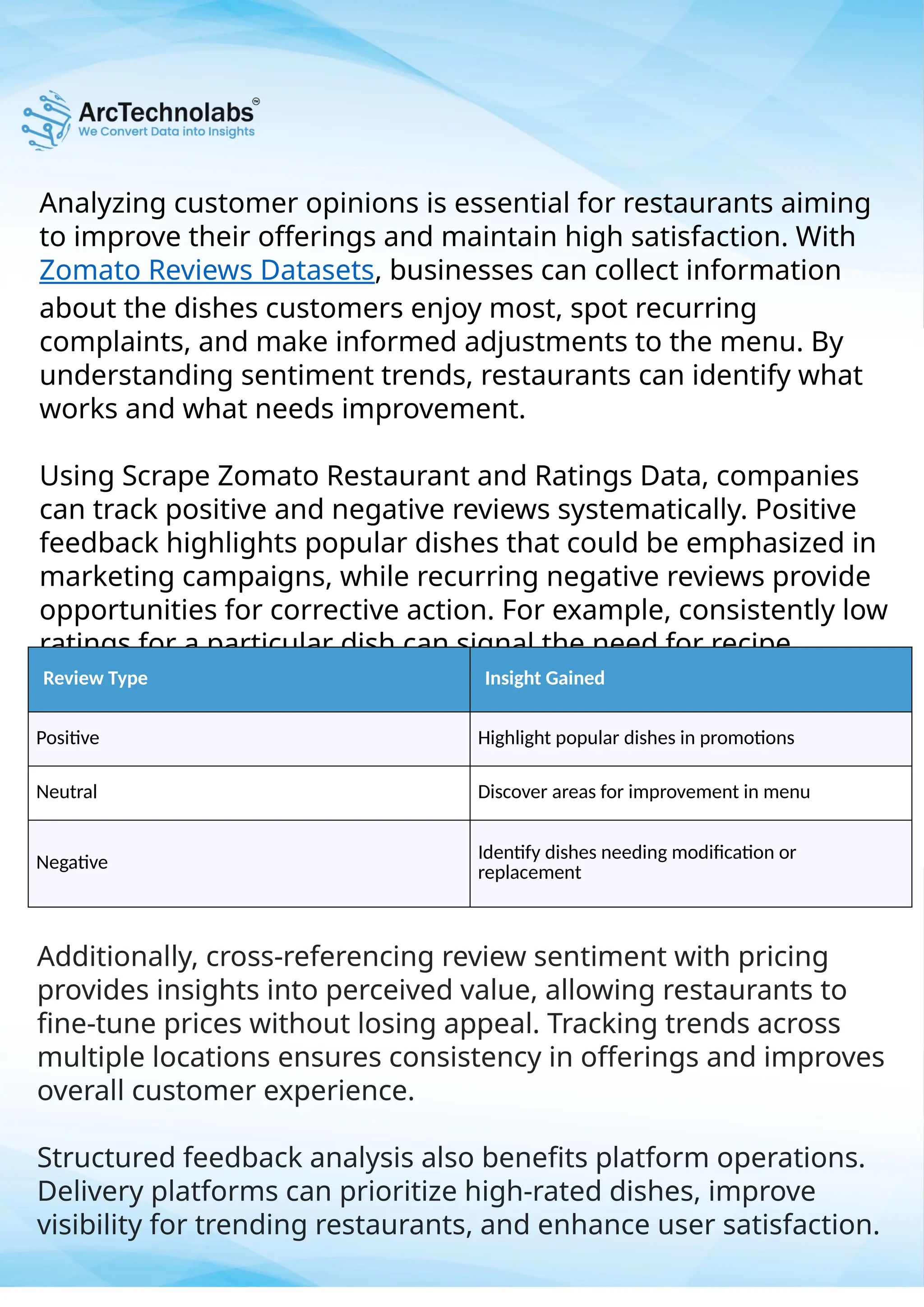
opportunities for corrective action. For example, consistently low
ratings for a particular dish can signal the need for recipe
updates, ingredient changes, or presentation improvements.
Review Type Insight Gained
Positive Highlight popular dishes in promotions
Neutral Discover areas for improvement in menu
Negative Identify dishes needing modification or
replacement
Additionally, cross-referencing review sentiment with pricing
provides insights into perceived value, allowing restaurants to
fine-tune prices without losing appeal. Tracking trends across
multiple locations ensures consistency in offerings and improves
overall customer experience.
Structured feedback analysis also benefits platform operations.
Delivery platforms can prioritize high-rated dishes, improve
visibility for trending restaurants, and enhance user satisfaction.
4.
Accurate data collectionensures real-time adjustments can be
made to menus or promotions, ultimately leading to better
operational outcomes.
By combining review intelligence with menu planning strategies,
restaurants and delivery platforms can create a responsive
environment where offerings evolve according to customer
preferences, ensuring higher engagement and sustained
satisfaction across locations.
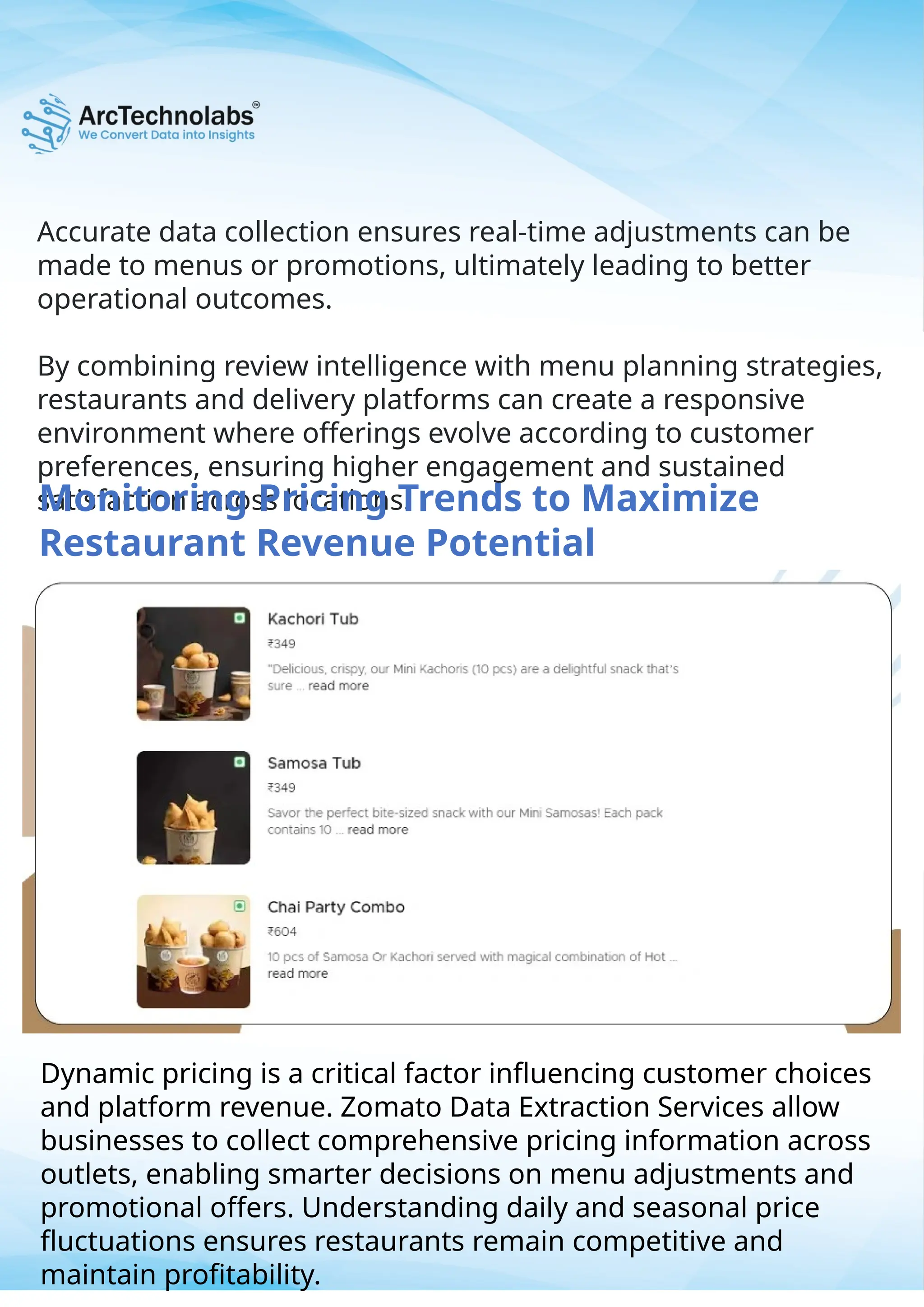
Dynamic pricing is a critical factor influencing customer choices
and platform revenue. Zomato Data Extraction Services allow
businesses to collect comprehensive pricing information across
outlets, enabling smarter decisions on menu adjustments and
promotional offers. Understanding daily and seasonal price
fluctuations ensures restaurants remain competitive and
maintain profitability.
Monitoring Pricing Trends to Maximize
Restaurant Revenue Potential
5.
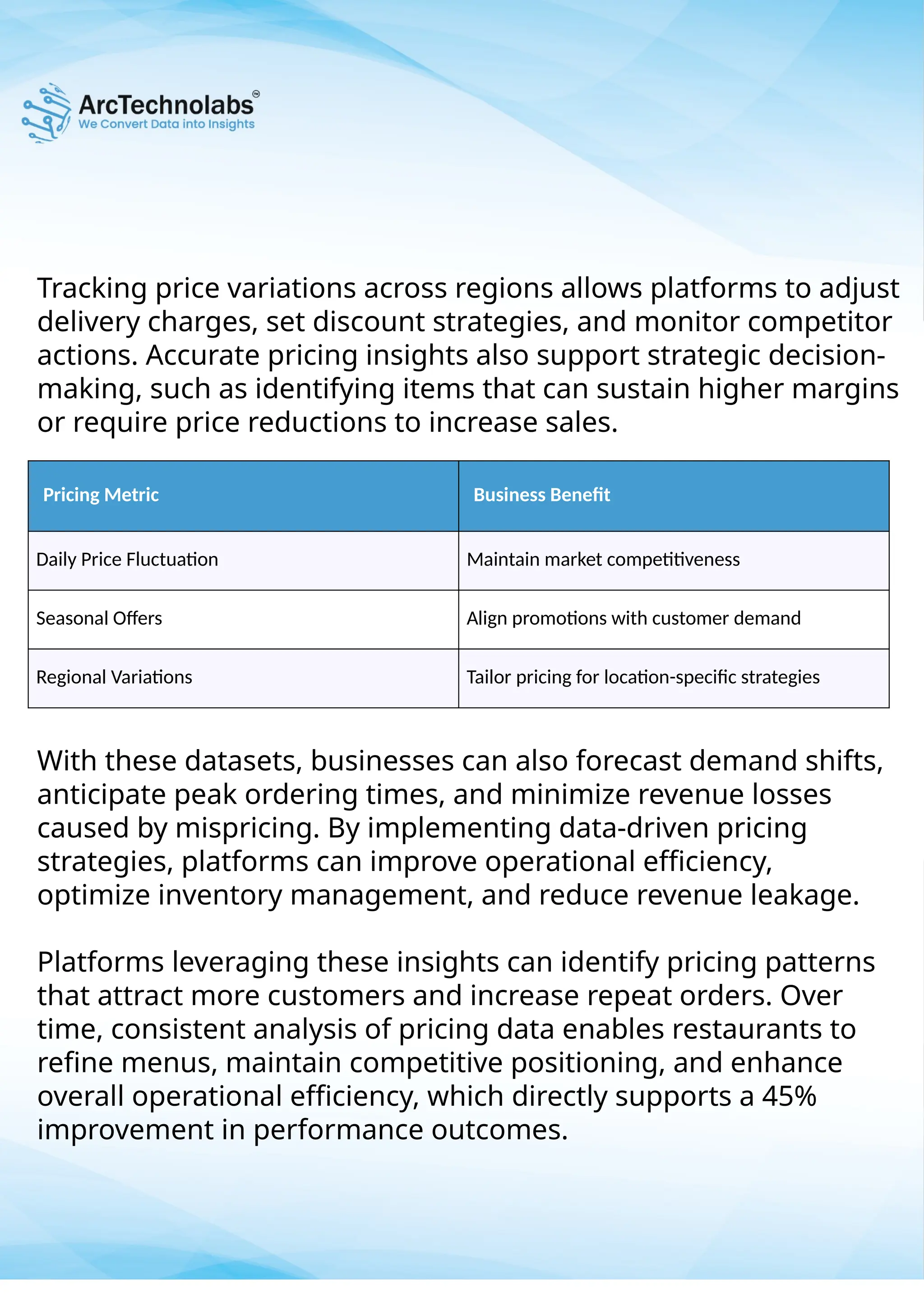
Tracking price variationsacross regions allows platforms to adjust
delivery charges, set discount strategies, and monitor competitor
actions. Accurate pricing insights also support strategic decision-
making, such as identifying items that can sustain higher margins
or require price reductions to increase sales.
With these datasets, businesses can also forecast demand shifts,
anticipate peak ordering times, and minimize revenue losses
caused by mispricing. By implementing data-driven pricing
strategies, platforms can improve operational efficiency,
optimize inventory management, and reduce revenue leakage.
Platforms leveraging these insights can identify pricing patterns
that attract more customers and increase repeat orders. Over
time, consistent analysis of pricing data enables restaurants to
refine menus, maintain competitive positioning, and enhance
overall operational efficiency, which directly supports a 45%
improvement in performance outcomes.
Pricing Metric Business Benefit
Daily Price Fluctuation Maintain market competitiveness
Seasonal Offers Align promotions with customer demand
Regional Variations Tailor pricing for location-specific strategies
6.
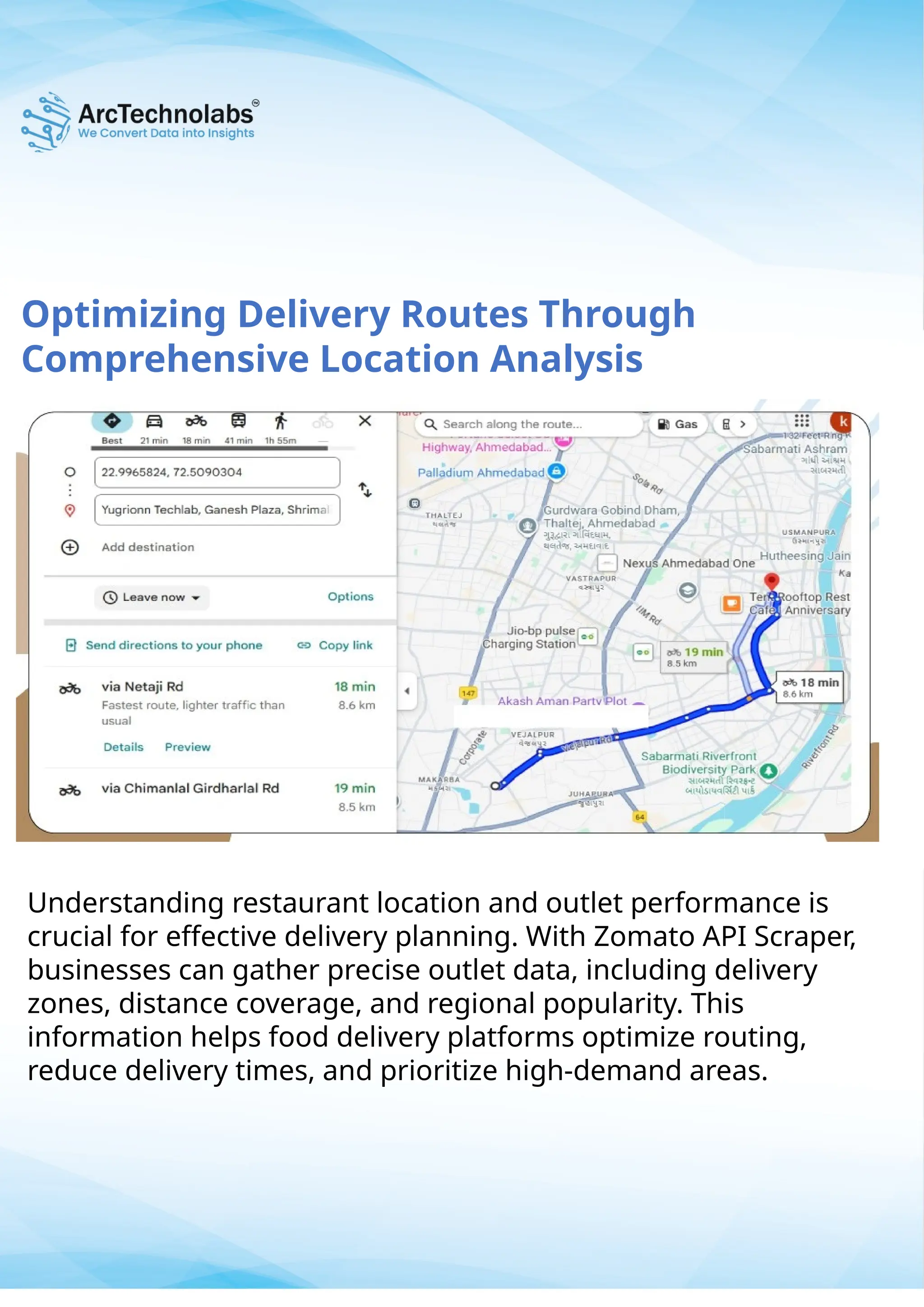
Optimizing Delivery RoutesThrough
Comprehensive Location Analysis
Understanding restaurant location and outlet performance is
crucial for effective delivery planning. With Zomato API Scraper,
businesses can gather precise outlet data, including delivery
zones, distance coverage, and regional popularity. This
information helps food delivery platforms optimize routing,
reduce delivery times, and prioritize high-demand areas.
7.
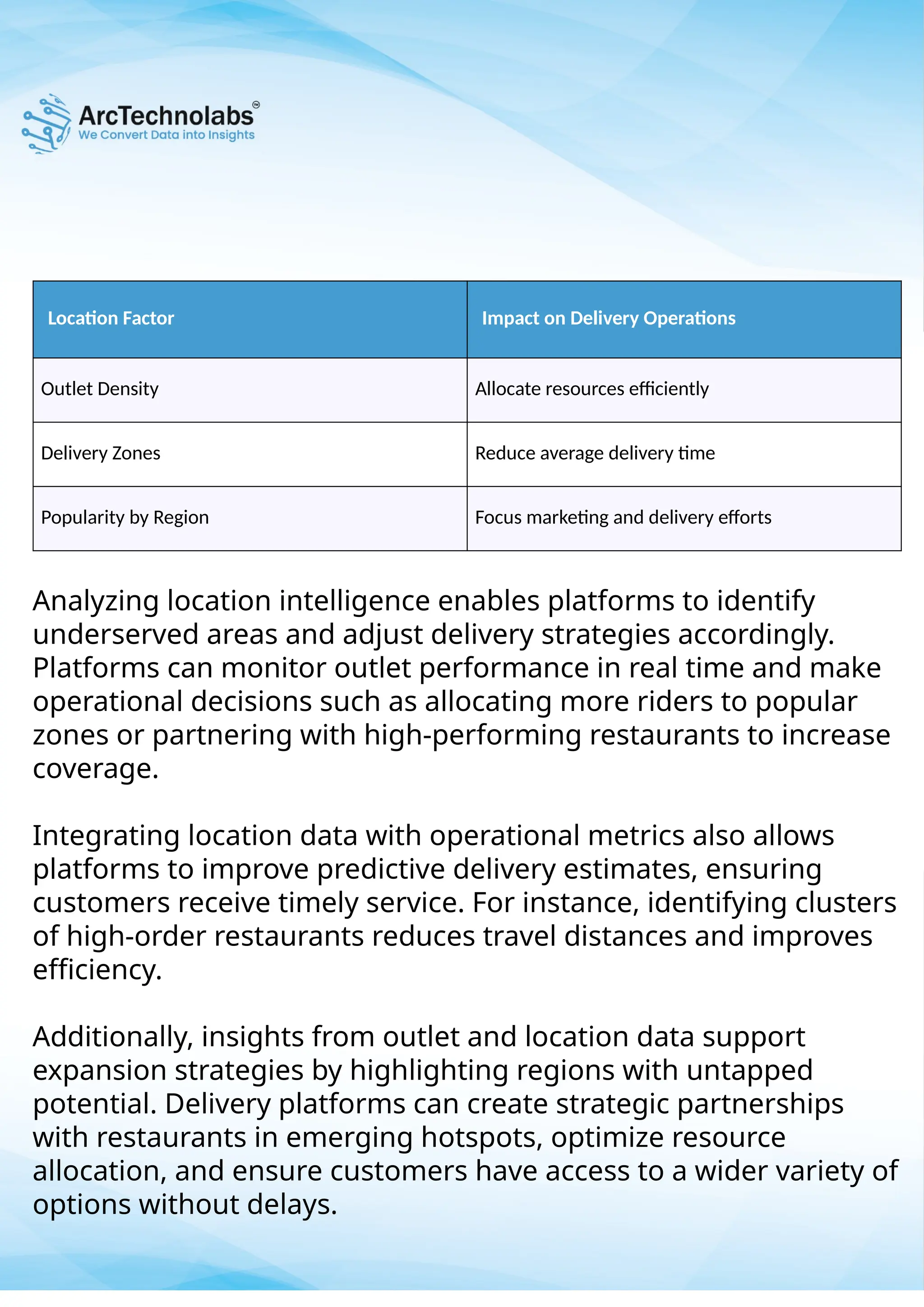
Analyzing location intelligenceenables platforms to identify
underserved areas and adjust delivery strategies accordingly.
Platforms can monitor outlet performance in real time and make
operational decisions such as allocating more riders to popular
zones or partnering with high-performing restaurants to increase
coverage.
Integrating location data with operational metrics also allows
platforms to improve predictive delivery estimates, ensuring
customers receive timely service. For instance, identifying clusters
of high-order restaurants reduces travel distances and improves
efficiency.
Additionally, insights from outlet and location data support
expansion strategies by highlighting regions with untapped
potential. Delivery platforms can create strategic partnerships
with restaurants in emerging hotspots, optimize resource
allocation, and ensure customers have access to a wider variety of
options without delays.
Location Factor Impact on Delivery Operations
Outlet Density Allocate resources efficiently
Delivery Zones Reduce average delivery time
Popularity by Region Focus marketing and delivery efforts
8.
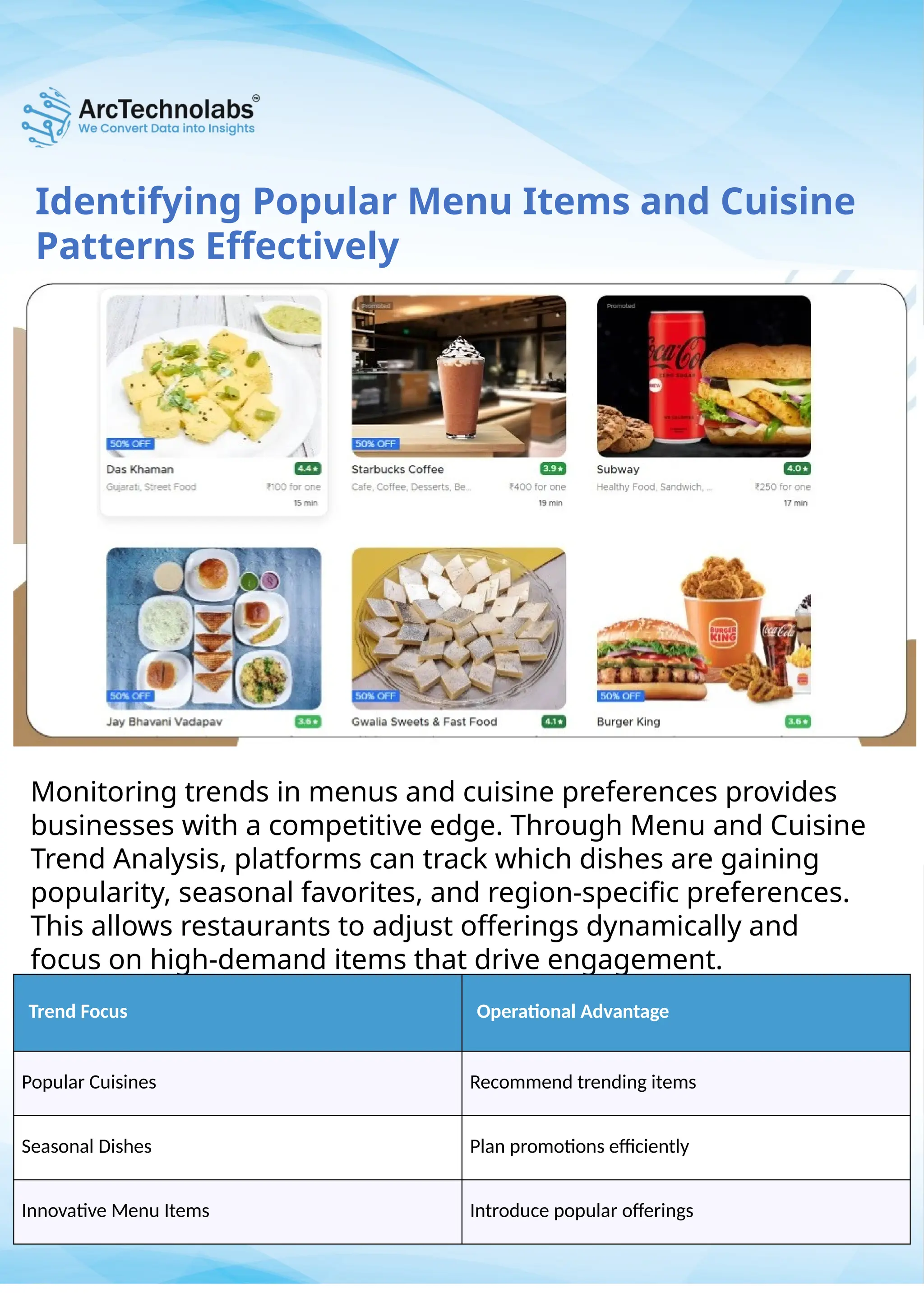
Identifying Popular MenuItems and Cuisine
Patterns Effectively
Monitoring trends in menus and cuisine preferences provides
businesses with a competitive edge. Through Menu and Cuisine
Trend Analysis, platforms can track which dishes are gaining
popularity, seasonal favorites, and region-specific preferences.
This allows restaurants to adjust offerings dynamically and
focus on high-demand items that drive engagement.
Trend Focus Operational Advantage
Popular Cuisines Recommend trending items
Seasonal Dishes Plan promotions efficiently
Innovative Menu Items Introduce popular offerings
9.
Tracking menu trendshelps delivery platforms recommend
dishes effectively, improve search rankings, and target
promotional campaigns. Seasonal insights enable businesses to
align marketing efforts with customer demand, while monitoring
innovative items ensures the platform remains current with
emerging food trends.
Additionally, real-time trend tracking ensures restaurants can
respond quickly to shifts in customer preferences. For instance, if
a particular cuisine or dish suddenly gains traction, platforms can
highlight these offerings to attract more orders and enhance
user satisfaction.
Combining trend insights with operational planning allows
platforms to optimize menus, promote popular items
strategically, and streamline inventory requirements. With
structured data analysis, businesses can reduce waste, improve
efficiency, and increase order volumes, resulting in improved
platform performance and customer engagement across
locations.
Leveraging Dataset Insights to Streamline
Operational Efficiency
10.
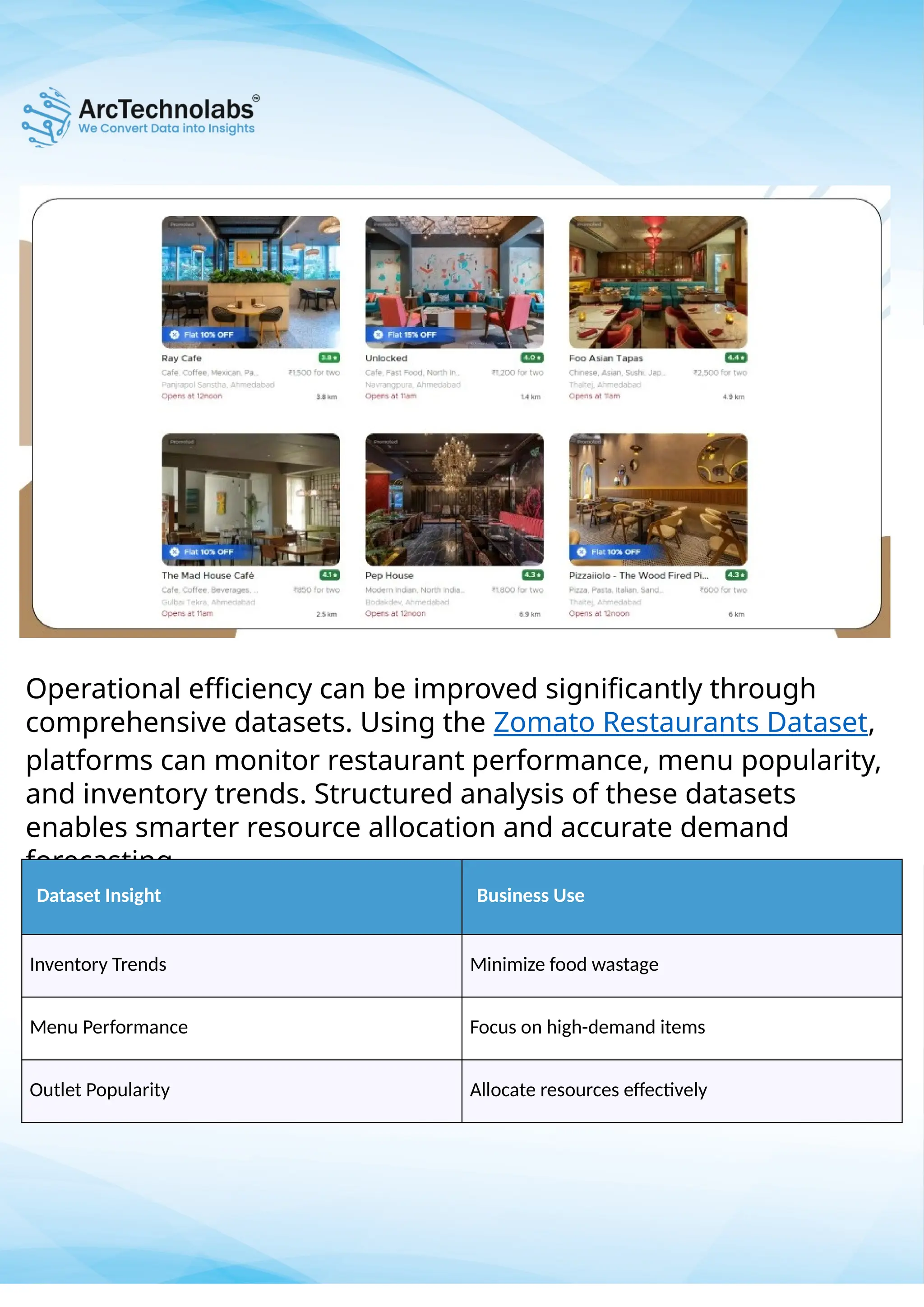
Operational efficiency canbe improved significantly through
comprehensive datasets. Using the Zomato Restaurants Dataset,
platforms can monitor restaurant performance, menu popularity,
and inventory trends. Structured analysis of these datasets
enables smarter resource allocation and accurate demand
forecasting.
Dataset Insight Business Use
Inventory Trends Minimize food wastage
Menu Performance Focus on high-demand items
Outlet Popularity Allocate resources effectively
11.
Monitoring these metricsallows platforms to identify operational
bottlenecks, optimize delivery staffing, and enhance order
accuracy. Datasets help restaurants anticipate demand, prepare
sufficient inventory, and manage peak-hour workloads more
effectively.
Additionally, integrating insights from multiple datasets provides
a holistic view of platform operations. For instance, analyzing
menu popularity alongside outlet performance helps determine
which items should be prioritized for promotions or highlighted in
app recommendations.
Structured dataset analysis ensures decisions are made based on
data rather than assumptions. This approach not only improves
operational efficiency but also enhances customer satisfaction by
reducing delays, improving service reliability, and offering menu
options that align with current demand patterns.
Enhancing Customer Retention Through
Predictive Behavioral Insights
12.
Predictive analytics isessential for understanding customer
behavior and boosting retention. By leveraging Extract Zomato
Outlet and Location Data, platforms can model customer
preferences, regional popularity, and ordering habits. These
insights allow businesses to offer personalized recommendations,
targeted promotions, and strategic incentives that encourage
repeat orders.
Predictive modeling helps platforms anticipate future demand,
optimize delivery schedules, and create promotions that
resonate with different customer segments. Accurate behavioral
predictions lead to improved user engagement, higher loyalty,
and increased average order value.
By combining structured outlet and location data with behavioral
insights, food delivery platforms can maintain a proactive
approach to customer satisfaction. This ensures that restaurants
remain relevant, menus stay aligned with user preferences, and
delivery operations are consistently optimized.
Predictive Factor Customer Benefit
Frequent Orders Deliver personalized offers
High-Rated Dishes Increase visibility for top items
Regional Preferences Tailor recommendations by location
13.
How ArcTechnolabs CanHelp You?
Businesses can optimize their food delivery operations with
intelligent data solutions. Through Web Scraping Zomato Data
for Price and Popularity Tracking, we provide actionable insights
into pricing, restaurant popularity, and menu trends, enabling
platforms to achieve operational efficiency and customer
satisfaction.
Our tailored services include:
• Structured data extraction for seamless integration.
• Monitoring of dynamic pricing across multiple outlets.
• Analysis of restaurant popularity and customer engagement.
• Geographic mapping of outlet performance for delivery
optimization.
• Trend tracking of menus and cuisines for targeted
promotions.
• Predictive insights for personalized customer
recommendations.
With our advanced solutions, businesses can also leverage
Zomato Data Extraction Services to gain a competitive edge and
improve decision-making efficiency, ensuring smarter platform
management and customer retention strategies.
14.
Conclusion
Source:
https://www.arctechnolabs.com/web-scraping-zomato-data-price-populari
ty-tracking.php
Implementing Web ScrapingZomato Data for Price and
Popularity Tracking allows food delivery platforms to make
informed decisions on pricing, menu offerings, and restaurant
visibility. Accurate insights from structured data improve
operational efficiency, reduce delivery delays, and maximize
revenue potential.
Additionally, integrating Zomato API Scraper insights ensures
platforms remain adaptive to evolving customer preferences,
emerging cuisine trends, and outlet performance patterns.
Streamlined data intelligence translates into enhanced user
experiences and sustained platform growth. Contact
ArcTechnolabs today to elevate your food delivery operations
with precision-driven analytics.