NCTE/IRA Standard 8
Students use a variety of technological and
information resources
(e.g., libraries, databases, computer
networks, video) to gather and synthesize
information and to create and
communicate knowledge.
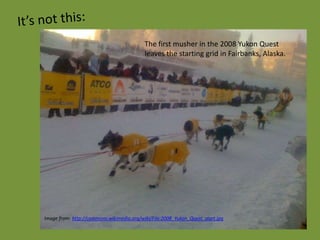
The first musher in the 2008 Yukon Quest
                                           leaves the starting grid in Fairbanks, Alaska.


Image from: http://commons.wikimedia.org/wiki/File:2008_Yukon_Quest_start.jpg
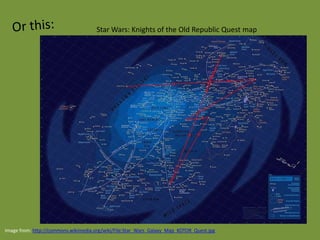
Star Wars: Knights of the Old Republic Quest map


Image from: http://commons.wikimedia.org/wiki/File:Star_Wars_Galaxy_Map_KOTOR_Quest.jpg
From: http://www.mapquest.com/
From: http://www.gameogre.com/reviewdirectory/reviews/Adventure_Quest.php
But this:
“A WebQuest is an inquiry-oriented lesson
format in which most or all the information that
learners work with comes from the web.”
                (WebQuest.org, 2007, “What is a
                            WebQuest?,” para. 1)

Developed by Bernie Dodge at San Diego State
University in 1995, along
with Tom March.
Relatives of WebQuests
   (have been around
longer than computers )

  Scavenger/Treasure
        Hunts

      Pathfinders
WebQuests, Scavenger/Treasure Hunts,
          and Pathfinders
                ALL

   Organize learning opportunities
   Guide students to using sources
 Provide a framework for instruction
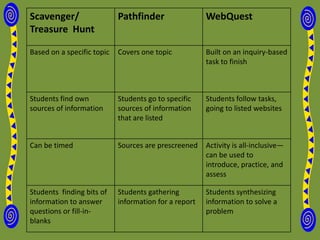
Scavenger/                  Pathfinder                 WebQuest
Treasure Hunt

Based on a specific topic   Covers one topic           Built on an inquiry-based
                                                       task to finish


Students find own           Students go to specific    Students follow tasks,
sources of information      sources of information     going to listed websites
                            that are listed


Can be timed                Sources are prescreened    Activity is all-inclusive—
                                                       can be used to
                                                       introduce, practice, and
                                                       assess

Students finding bits of    Students gathering         Students synthesizing
information to answer       information for a report   information to solve a
questions or fill-in-                                  problem
blanks
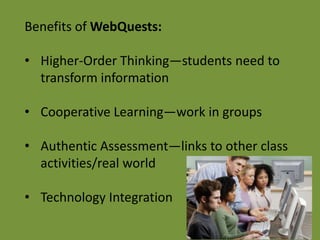
Benefits of WebQuests:

• Higher-Order Thinking—students need to
  transform information

• Cooperative Learning—work in groups

• Authentic Assessment—links to other class
  activities/real world

• Technology Integration
Back to:
NCTE/IRA Standard 8
Students use a variety of technological and information resources
(e.g., libraries, databases, computer networks, video) to gather and synthesize information
and to create and communicate knowledge.


With a WebQuest, students:
• Use a Word document, a wiki, a piece of paper, a
  website, etc. to engage in the WebQuest
• Use any type of resource to learn the content--
  the computer, books from the classroom or
  library, video clips, podcasts, magazines, etc.
• Use technological and traditional sources for the
  final product
NCTE/IRA Standard 8
Students use a variety of technological and information resources
(e.g., libraries, databases, computer networks, video) to gather and synthesize information
and to create and communicate knowledge.


With a WebQuest, students:
• Use websites, online databases, paper
  sources, people, and more to gather information
• Use spreadsheets, graphic
  organizers, worksheets, tables, and more to help
  synthesize information
NCTE/IRA Standard 8
Students use a variety of technological and information resources
(e.g., libraries, databases, computer networks, video) to gather and synthesize information
and to create and communicate knowledge.


With a WebQuest, students:
• Use digital cameras, web cameras, Web 2.0
  tools, Word documents, online drawing
  programs, and more to create knowledge
• Use cell
  phones, Twitter, wikis, websites, blogs, presentati
  ons being recorded, and more to communicate
  knowledge
So . . .

 WebQuests
http://www.youtube.com/watch?v=YIh59qcZdRU
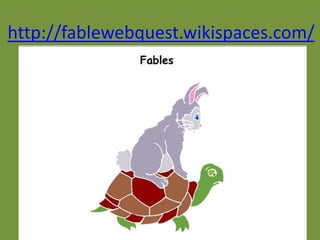
http://fablewebquest.wikispaces.com/
http://animoto.com/play/R1i060UGfzoa3RRp07zbqQ
http://www.youtube.com/watch?v=xQxBI-r4PgY
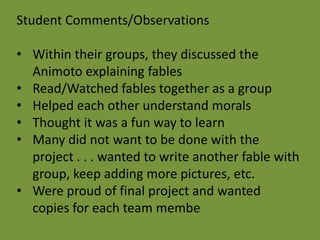
Student Comments/Observations

• Within their groups, they discussed the
  Animoto explaining fables
• Read/Watched fables together as a group
• Helped each other understand morals
• Thought it was a fun way to learn
• Many did not want to be done with the
  project . . . wanted to write another fable with
  group, keep adding more pictures, etc.
• Were proud of final project and wanted
  copies for each team membe
Back to:
NCTE/IRA Standard 8
Students use a variety of technological and information resources
(e.g., libraries, databases, computer networks, video) to gather and synthesize information
and to create and communicate knowledge.


With this WebQuest, students:
• Used a wiki, Animoto, Voki, Aesop Fable
  databases, printer, Word
  document, videos, TuxPaint
NCTE/IRA Standard 8
Students use a variety of technological and information resources
(e.g., libraries, databases, computer networks, video) to gather and synthesize information
and to create and communicate knowledge.


With this WebQuest, students:
• Gathered and synthesized information about
  fables from resources listed on previous page
NCTE/IRA Standard 8
Students use a variety of technological and information resources (e.g., libraries, databases,
computer networks, video) to gather and synthesize information and to create and
communicate knowledge.


With this WebQuest, students:
• Created a fable using paper and pencil, then a
  Word document and TuxPaint
• Communicated knowledge through printed Word
  document and TuxPaint picture
Insights/Outcomes
 • Effective for incorporating group
    collaboration
 • Specific directions help, specific worksheets
    to print
 • Maybe give them a group name, or a
    category to choose from
 • Expect noise
 • Assign groups areas to work in
 • Try to complete within a close timeframe of
    a few days
 • Keep papers for groups
 • One role could be the “printer”
Possible New Questions

• What would differentiated instruction with
  WebQuests look like?
• What other topics would be effective with
  WebQuests?
• What is the approximate grade level for
  students to work on WebQuests within their
  independent groups?
• After how many WebQuests would students
  start to tire of them?
Resources

Internet Scavenger Hunts
Education World Printable Internet Scavenger Hunts

TeacherWeb Computer Lab page

Pathfinders
Internet Public Library Pathfinders

John Newberry Elementary School Pathfinders

Suggested Pathfinders for School Libraries
WebQuests
http://www.bestwebquests.com/

http://internet4classrooms.com/using_quest.htm#collections

http://www.scsk12.org/why_webquests/wbresources.htm

http://www.iss.k12.nc.us/schools/webquests/summer.htm

http://kathyschrock.net/webquests/index.htm

Webquest presentation, December 2011

  • 2.
    NCTE/IRA Standard 8 Studentsuse a variety of technological and information resources (e.g., libraries, databases, computer networks, video) to gather and synthesize information and to create and communicate knowledge.
  • 7.
    The first musherin the 2008 Yukon Quest leaves the starting grid in Fairbanks, Alaska. Image from: http://commons.wikimedia.org/wiki/File:2008_Yukon_Quest_start.jpg
  • 8.
    Star Wars: Knightsof the Old Republic Quest map Image from: http://commons.wikimedia.org/wiki/File:Star_Wars_Galaxy_Map_KOTOR_Quest.jpg
  • 9.
  • 10.
  • 11.
  • 12.
    “A WebQuest isan inquiry-oriented lesson format in which most or all the information that learners work with comes from the web.” (WebQuest.org, 2007, “What is a WebQuest?,” para. 1) Developed by Bernie Dodge at San Diego State University in 1995, along with Tom March.
  • 13.
    Relatives of WebQuests (have been around longer than computers ) Scavenger/Treasure Hunts Pathfinders
  • 14.
    WebQuests, Scavenger/Treasure Hunts, and Pathfinders ALL Organize learning opportunities Guide students to using sources Provide a framework for instruction
  • 15.
    Scavenger/ Pathfinder WebQuest Treasure Hunt Based on a specific topic Covers one topic Built on an inquiry-based task to finish Students find own Students go to specific Students follow tasks, sources of information sources of information going to listed websites that are listed Can be timed Sources are prescreened Activity is all-inclusive— can be used to introduce, practice, and assess Students finding bits of Students gathering Students synthesizing information to answer information for a report information to solve a questions or fill-in- problem blanks
  • 16.
    Benefits of WebQuests: •Higher-Order Thinking—students need to transform information • Cooperative Learning—work in groups • Authentic Assessment—links to other class activities/real world • Technology Integration
  • 17.
    Back to: NCTE/IRA Standard8 Students use a variety of technological and information resources (e.g., libraries, databases, computer networks, video) to gather and synthesize information and to create and communicate knowledge. With a WebQuest, students: • Use a Word document, a wiki, a piece of paper, a website, etc. to engage in the WebQuest • Use any type of resource to learn the content-- the computer, books from the classroom or library, video clips, podcasts, magazines, etc. • Use technological and traditional sources for the final product
  • 18.
    NCTE/IRA Standard 8 Studentsuse a variety of technological and information resources (e.g., libraries, databases, computer networks, video) to gather and synthesize information and to create and communicate knowledge. With a WebQuest, students: • Use websites, online databases, paper sources, people, and more to gather information • Use spreadsheets, graphic organizers, worksheets, tables, and more to help synthesize information
  • 19.
    NCTE/IRA Standard 8 Studentsuse a variety of technological and information resources (e.g., libraries, databases, computer networks, video) to gather and synthesize information and to create and communicate knowledge. With a WebQuest, students: • Use digital cameras, web cameras, Web 2.0 tools, Word documents, online drawing programs, and more to create knowledge • Use cell phones, Twitter, wikis, websites, blogs, presentati ons being recorded, and more to communicate knowledge
  • 20.
    So . .. WebQuests
  • 21.
  • 22.
  • 23.
  • 24.
  • 25.
    Student Comments/Observations • Withintheir groups, they discussed the Animoto explaining fables • Read/Watched fables together as a group • Helped each other understand morals • Thought it was a fun way to learn • Many did not want to be done with the project . . . wanted to write another fable with group, keep adding more pictures, etc. • Were proud of final project and wanted copies for each team membe
  • 26.
    Back to: NCTE/IRA Standard8 Students use a variety of technological and information resources (e.g., libraries, databases, computer networks, video) to gather and synthesize information and to create and communicate knowledge. With this WebQuest, students: • Used a wiki, Animoto, Voki, Aesop Fable databases, printer, Word document, videos, TuxPaint
  • 27.
    NCTE/IRA Standard 8 Studentsuse a variety of technological and information resources (e.g., libraries, databases, computer networks, video) to gather and synthesize information and to create and communicate knowledge. With this WebQuest, students: • Gathered and synthesized information about fables from resources listed on previous page
  • 28.
    NCTE/IRA Standard 8 Studentsuse a variety of technological and information resources (e.g., libraries, databases, computer networks, video) to gather and synthesize information and to create and communicate knowledge. With this WebQuest, students: • Created a fable using paper and pencil, then a Word document and TuxPaint • Communicated knowledge through printed Word document and TuxPaint picture
  • 29.
    Insights/Outcomes • Effectivefor incorporating group collaboration • Specific directions help, specific worksheets to print • Maybe give them a group name, or a category to choose from • Expect noise • Assign groups areas to work in • Try to complete within a close timeframe of a few days • Keep papers for groups • One role could be the “printer”
  • 30.
    Possible New Questions •What would differentiated instruction with WebQuests look like? • What other topics would be effective with WebQuests? • What is the approximate grade level for students to work on WebQuests within their independent groups? • After how many WebQuests would students start to tire of them?
  • 32.
    Resources Internet Scavenger Hunts EducationWorld Printable Internet Scavenger Hunts TeacherWeb Computer Lab page Pathfinders Internet Public Library Pathfinders John Newberry Elementary School Pathfinders Suggested Pathfinders for School Libraries
  • 33.