Types of Weapons & Gases

      By: Gabriel Miller
World War I
• In World War I, chemical warfare became a
  major component of the war.
• It developed more and more all the way
  throughout the 20th century
Types of Gases
• Mustard Gas (also known as sulfur mustard):
  this type of gas caused large blisters on
  exposed skin and in the lungs, therefore
  resulting in long painful death. In its pure
  form, it is colorless and a viscous liquid. In its
  impure form it is yellow-brown and has an
  odor resembling mustard plants
Types of Gases
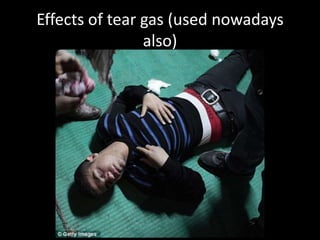
• Tear Gas: this is a non-lethal type of gas,
  unlike mustard gas. It causes temporary
  blindness, tears and extreme pain and affects
  the corneal nerve (cornea is the transparent
  part of the eye on the top).
Deaths/Usage
• Only 4 percent of the deaths in World War I
  were from chemicals. At the time they were
  very limited and not developed enough to
  cause serious damage. However, it was very
  effective when it came to clearing out areas.
  There were no countermeasures to be used,
  because gas masks hadn’t been invented yet.
Phosgene & Chlorine
• Both of these gases are lethal. They were both
  used during the second world war.
Bombs
• In October 1914, German troops fired the first
  fragmentation shells. A frag shell is a shell on
  impact explodes into many pieces shooting
  out pieces of metal (usually) to hit multiple
  targets with a single shell.
Effects of Phosgene during War
Effects of tear gas (used nowadays
                also)
Questions
• 1) What were the effects of Chlorine gas on
  humans?
• 2) What were the effects of Phosgene gas on
  humans
• 3) What other types of bombs were created
  around this time?
• 4) What kind weapons were used to shoot
  these bombs?
• 5) What was another name for World War I,
  relating to chemical warfare?

Weapons & gases

  • 1.
    Types of Weapons& Gases By: Gabriel Miller
  • 2.
    World War I •In World War I, chemical warfare became a major component of the war. • It developed more and more all the way throughout the 20th century
  • 3.
    Types of Gases •Mustard Gas (also known as sulfur mustard): this type of gas caused large blisters on exposed skin and in the lungs, therefore resulting in long painful death. In its pure form, it is colorless and a viscous liquid. In its impure form it is yellow-brown and has an odor resembling mustard plants
  • 4.
    Types of Gases •Tear Gas: this is a non-lethal type of gas, unlike mustard gas. It causes temporary blindness, tears and extreme pain and affects the corneal nerve (cornea is the transparent part of the eye on the top).
  • 5.
    Deaths/Usage • Only 4percent of the deaths in World War I were from chemicals. At the time they were very limited and not developed enough to cause serious damage. However, it was very effective when it came to clearing out areas. There were no countermeasures to be used, because gas masks hadn’t been invented yet.
  • 6.
    Phosgene & Chlorine •Both of these gases are lethal. They were both used during the second world war.
  • 7.
    Bombs • In October1914, German troops fired the first fragmentation shells. A frag shell is a shell on impact explodes into many pieces shooting out pieces of metal (usually) to hit multiple targets with a single shell.
  • 8.
  • 9.
    Effects of teargas (used nowadays also)
  • 10.
    Questions • 1) Whatwere the effects of Chlorine gas on humans? • 2) What were the effects of Phosgene gas on humans • 3) What other types of bombs were created around this time? • 4) What kind weapons were used to shoot these bombs? • 5) What was another name for World War I, relating to chemical warfare?