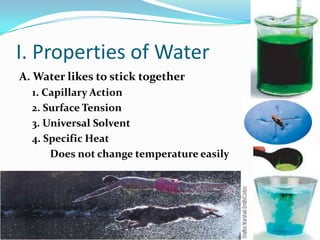
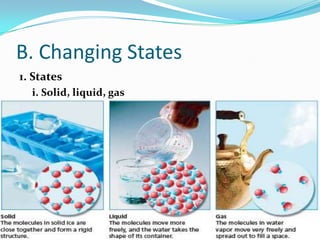
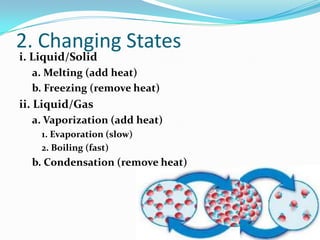
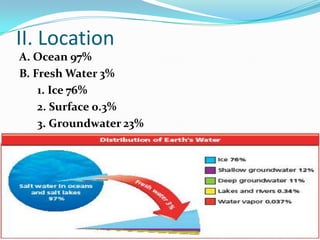
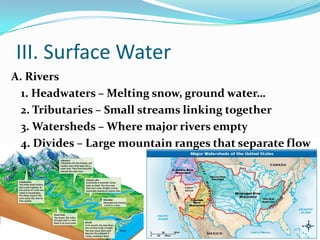
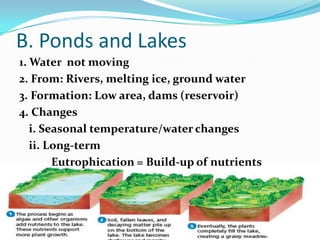
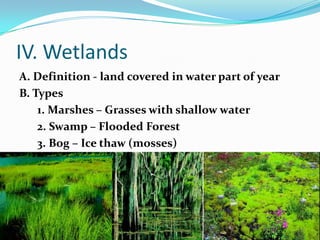
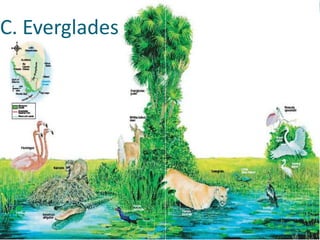
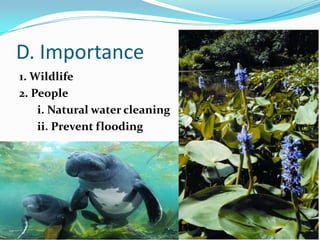
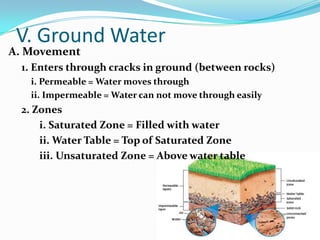
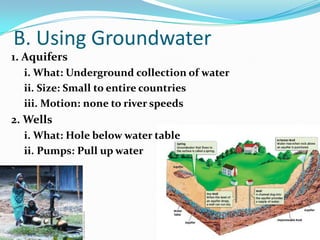
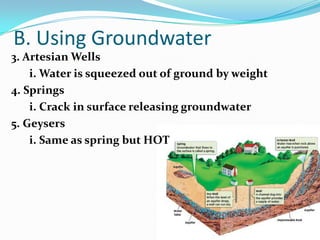
Water has unique properties like surface tension and capillary action that allow it to stick together and dissolve many substances. It can exist in three states - solid, liquid, and gas - and change between them by adding or removing heat through processes like melting, freezing, vaporization, and condensation. Most of Earth's water is ocean water, with only 3% being fresh water found in ice caps, surface water, and underground sources. Surface water sources include rivers, lakes, ponds, wetlands, and the Everglades. Groundwater is stored underground in saturated zones and aquifers and can be accessed through wells, artesian wells, and springs.