TARGETING PARTICULAR GROUPS 
The use of ICF
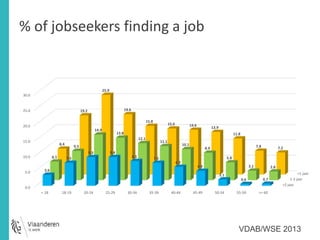
% of jobseekers finding a job 
1-2 jaar 
7.8 7.2 
>2 jaar 
<1 jaar 
30.0 
25.0 
20.0 
15.0 
10.0 
5.0 
0.0 
3.6 
7.5 
14.9 
25.9 
9.3 9.4 
12.1 
15.8 
8.1 7.5 
15.0 14.6 
6.2 
4.9 
2.1 
3.1 2.8 
0.6 0.7 
6.1 
9.5 
13.8 
11.1 
10.1 
8.9 
5.8 
8.4 
19.2 
19.6 
13.9 
11.8 
< 18 18-19 20-24 25-29 30-34 35-39 40-44 45-49 50-54 55-59 >= 60 
VDAB/WSE 2013
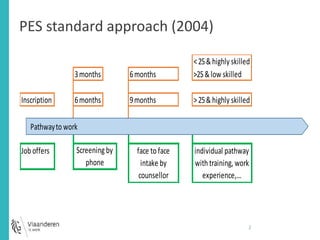
PES standard approach (2004) 
< 25 & highly skilled 
3 months 6 months 
>25 & low skilled 
Inscription 6 months > 25 & highly skilled 
Job offers 
9 months 
Screening by 
phone 
individual pathway 
with training, work 
experience,… 
face to face 
intake by 
counsellor 
Pathway to work 
2
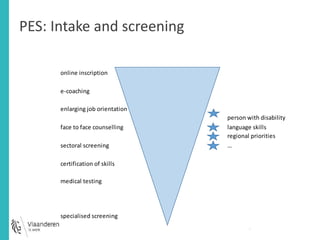
PES: Intake and screening 
3 
online inscription 
e-coaching 
enlarging job orientation 
person with disability 
face to face counselling language skills 
regional priorities 
sectoral screening … 
certification of skills 
medical testing 
specialised screening
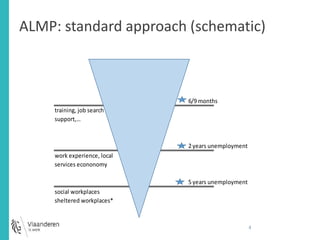
ALMP: standard approach (schematic) 
4 
6/9 months 
2 years unemployment 
training, job search 
support,… 
work experience, local 
services econonomy 
5 years unemployment 
social workplaces 
sheltered workplaces*
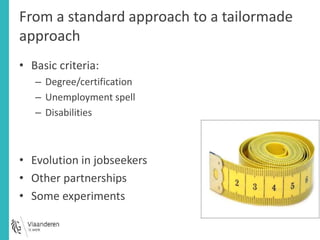
From a standard approach to a tailormade 
approach 
• Basic criteria: 
– Degree/certification 
– Unemployment spell 
– Disabilities 
• Evolution in jobseekers 
• Other partnerships 
• Some experiments
6 
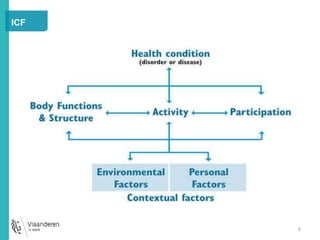
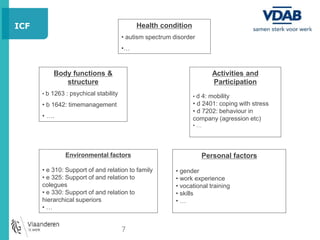
ICF
Health condition 
• autism spectrum disorder 
•… 
Body functions & 
structure 
• b 1263 : psychical stability 
• b 1642: timemanagement 
• …. 
Activities and 
Participation 
• d 4: mobility 
• d 2401: coping with stress 
• d 7202: behaviour in 
company (agression etc) 
• … 
Environmental factors 
• e 310: Support of and relation to family 
• e 325: Support of and relation to 
colegues 
• e 330: Support of and relation to 
hierarchical superiors 
• … 
Personal factors 
• gender 
• work experience 
• vocational training 
• skills 
• … 
ICF 
7
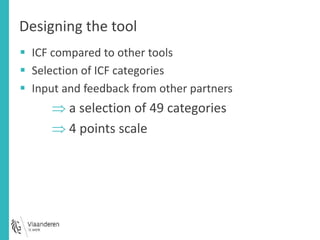
Designing the tool 
 ICF compared to other tools 
 Selection of ICF categories 
 Input and feedback from other partners 
 a selection of 49 categories 
 4 points scale
Research 
 Let’s put the tool to the test! 
 600 surveys in different measures social economy and 
guidance of vulnerable groups (employment, 
unemployment) 
 Training of counsellors and coaches 
 Assessment of participants
10 
Statistisch onderzoek 
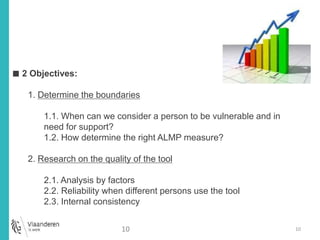
■ 2 Objectives: 
1. Determine the boundaries 
1.1. When can we consider a person to be vulnerable and in 
need for support? 
1.2. How determine the right ALMP measure? 
2. Research on the quality of the tool 
2.1. Analysis by factors 
2.2. Reliability when different persons use the tool 
2.3. Internal consistency 
10
11 
More research 
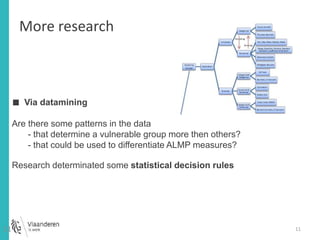
■ Via datamining 
Are there some patterns in the data 
- that determine a vulnerable group more then others? 
- that could be used to differentiate ALMP measures? 
Research determinated some statistical decision rules 
11
Shift from a standard approach to a tailor 
made approach 
 PES and partners 
 Training in ICF 
 Adaptation of intake and screening tools 
 ICT 
 Tool is used in guidance of vulnerable groups and 
screening 
 Tool will be used to determine acces to ALMP 
 Sheltered & social workplaces 
 Local economy initiatives 
 Tool will be used to evaluate use of ALMP
Patricia Vroman 
Policy advisor Target groups & Activation 
Dept Work & Social Economy 
+32 (0)2 553 39 45 
Patricia.vroman@wse.vlaanderen.be

Targeting particular groups - Patricia Vroman

  • 1.
  • 2.
    % of jobseekersfinding a job 1-2 jaar 7.8 7.2 >2 jaar <1 jaar 30.0 25.0 20.0 15.0 10.0 5.0 0.0 3.6 7.5 14.9 25.9 9.3 9.4 12.1 15.8 8.1 7.5 15.0 14.6 6.2 4.9 2.1 3.1 2.8 0.6 0.7 6.1 9.5 13.8 11.1 10.1 8.9 5.8 8.4 19.2 19.6 13.9 11.8 < 18 18-19 20-24 25-29 30-34 35-39 40-44 45-49 50-54 55-59 >= 60 VDAB/WSE 2013
  • 3.
    PES standard approach(2004) < 25 & highly skilled 3 months 6 months >25 & low skilled Inscription 6 months > 25 & highly skilled Job offers 9 months Screening by phone individual pathway with training, work experience,… face to face intake by counsellor Pathway to work 2
  • 4.
    PES: Intake andscreening 3 online inscription e-coaching enlarging job orientation person with disability face to face counselling language skills regional priorities sectoral screening … certification of skills medical testing specialised screening
  • 5.
    ALMP: standard approach(schematic) 4 6/9 months 2 years unemployment training, job search support,… work experience, local services econonomy 5 years unemployment social workplaces sheltered workplaces*
  • 6.
    From a standardapproach to a tailormade approach • Basic criteria: – Degree/certification – Unemployment spell – Disabilities • Evolution in jobseekers • Other partnerships • Some experiments
  • 7.
  • 8.
    Health condition •autism spectrum disorder •… Body functions & structure • b 1263 : psychical stability • b 1642: timemanagement • …. Activities and Participation • d 4: mobility • d 2401: coping with stress • d 7202: behaviour in company (agression etc) • … Environmental factors • e 310: Support of and relation to family • e 325: Support of and relation to colegues • e 330: Support of and relation to hierarchical superiors • … Personal factors • gender • work experience • vocational training • skills • … ICF 7
  • 9.
    Designing the tool  ICF compared to other tools  Selection of ICF categories  Input and feedback from other partners  a selection of 49 categories  4 points scale
  • 10.
    Research  Let’sput the tool to the test!  600 surveys in different measures social economy and guidance of vulnerable groups (employment, unemployment)  Training of counsellors and coaches  Assessment of participants
  • 11.
    10 Statistisch onderzoek ■ 2 Objectives: 1. Determine the boundaries 1.1. When can we consider a person to be vulnerable and in need for support? 1.2. How determine the right ALMP measure? 2. Research on the quality of the tool 2.1. Analysis by factors 2.2. Reliability when different persons use the tool 2.3. Internal consistency 10
  • 12.
    11 More research ■ Via datamining Are there some patterns in the data - that determine a vulnerable group more then others? - that could be used to differentiate ALMP measures? Research determinated some statistical decision rules 11
  • 13.
    Shift from astandard approach to a tailor made approach  PES and partners  Training in ICF  Adaptation of intake and screening tools  ICT  Tool is used in guidance of vulnerable groups and screening  Tool will be used to determine acces to ALMP  Sheltered & social workplaces  Local economy initiatives  Tool will be used to evaluate use of ALMP
  • 14.
    Patricia Vroman Policyadvisor Target groups & Activation Dept Work & Social Economy +32 (0)2 553 39 45 Patricia.vroman@wse.vlaanderen.be