Vegetables
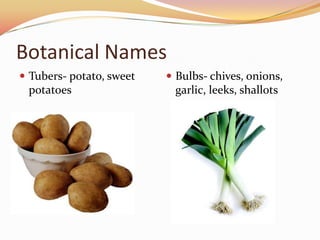
Botanical NamesTubers- potato, sweet potatoesBulbs- chives, onions, garlic, leeks, shallots
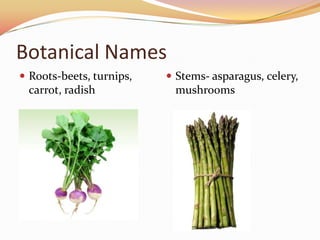
Botanical NamesRoots-beets, turnips, carrot, radishStems- asparagus, celery, mushrooms
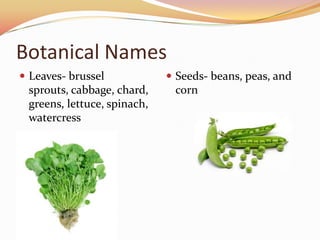
Botanical NamesLeaves- brussel sprouts, cabbage, chard, greens, lettuce, spinach, watercressSeeds- beans, peas, and corn
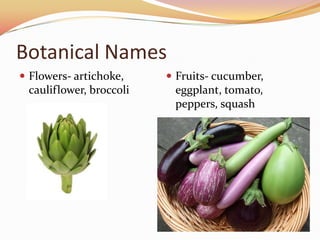
Botanical NamesFlowers- artichoke, cauliflower, broccoliFruits- cucumber, eggplant, tomato, peppers, squash
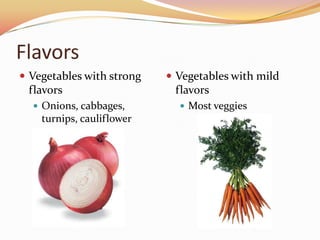
FlavorsVegetables with strong flavorsOnions, cabbages, turnips, cauliflowerVegetables with mild flavorsMost veggies
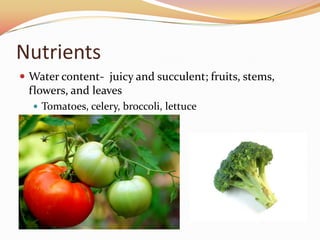
Nutrients Water content-  juicy and succulent; fruits, stems, flowers, and leavesTomatoes, celery, broccoli, lettuce
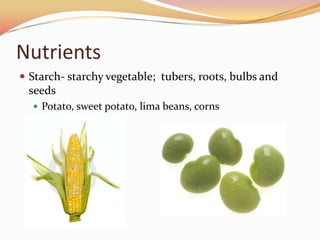
NutrientsStarch- starchy vegetable;  tubers, roots, bulbs and seedsPotato, sweet potato, lima beans, corns
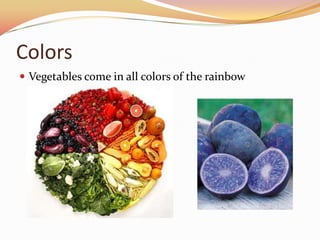
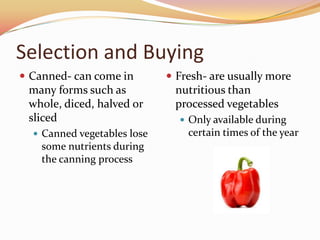
ColorsVegetables come in all colors of the rainbow
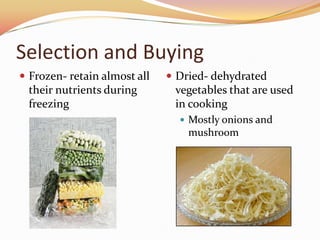
Selection and BuyingCanned- can come in many forms such as whole, diced, halved or slicedCanned vegetables lose some nutrients during the canning process	Fresh- are usually more nutritious than processed vegetablesOnly available during certain times of the year
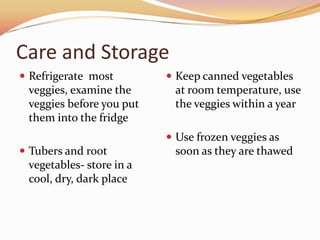
Selection and BuyingFrozen- retain almost all their nutrients during freezingDried- dehydrated vegetables that are used in cookingMostly onions and mushroom
Care and StorageRefrigerate  most veggies, examine the veggies before you put them into the fridgeTubers and root vegetables- store in a cool, dry, dark placeKeep canned vegetables at room temperature, use the veggies within a yearUse frozen veggies as soon as they are thawed
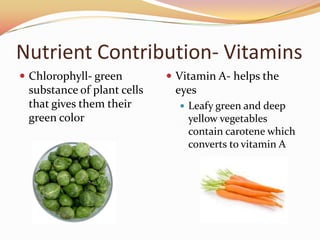
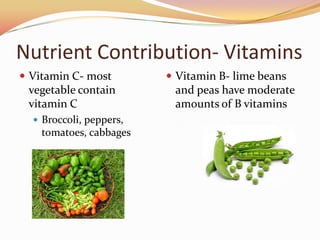
Nutrient Contribution- VitaminsChlorophyll- green substance of plant cells that gives them their green colorVitamin A- helps the eyesLeafy green and deep yellow vegetables contain carotene which converts to vitamin A
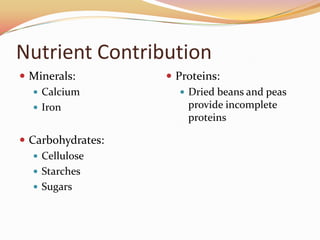
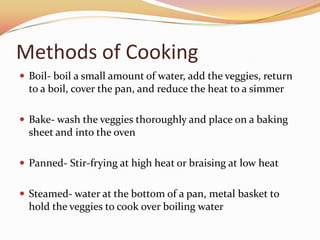
Nutrient Contribution- VitaminsVitamin C- most vegetable contain vitamin CBroccoli, peppers, tomatoes, cabbagesVitamin B- lime beans and peas have moderate amounts of B vitamins
Nutrient ContributionMinerals:Calcium IronCarbohydrates:CelluloseStarches Sugars Proteins:Dried beans and peas provide incomplete proteins
Methods of CookingBoil- boil a small amount of water, add the veggies, return to a boil, cover the pan, and reduce the heat to a simmer
Bake- wash the veggies thoroughly and place on a baking sheet and into the oven
Panned- Stir-frying at high heat or braising at low heat
Steamed- water at the bottom of a pan, metal basket to hold the veggies to cook over boiling waterMethods of CookingFried- pan or deep fry, using batter or crumbsPressure cooked- quick cooking, keeps flavor and colorBroiled- using the oven and high heat, tomatoes or eggplantMicrowave- retains the color, flavor, nutrients and texture
Principles of Cooking1. The goal is to retain color, flavor, nutrients and textureCellulose structure softens and they become less crispStarch absorbs water, swells and becomes more soluble2. Water soluble vitamins from veggies seep out into the cooking liquidVitamins C and BMinerals

Vegetables

  • 1.
  • 2.
    Botanical NamesTubers- potato,sweet potatoesBulbs- chives, onions, garlic, leeks, shallots
  • 3.
    Botanical NamesRoots-beets, turnips,carrot, radishStems- asparagus, celery, mushrooms
  • 4.
    Botanical NamesLeaves- brusselsprouts, cabbage, chard, greens, lettuce, spinach, watercressSeeds- beans, peas, and corn
  • 5.
    Botanical NamesFlowers- artichoke,cauliflower, broccoliFruits- cucumber, eggplant, tomato, peppers, squash
  • 6.
    FlavorsVegetables with strongflavorsOnions, cabbages, turnips, cauliflowerVegetables with mild flavorsMost veggies
  • 7.
    Nutrients Water content- juicy and succulent; fruits, stems, flowers, and leavesTomatoes, celery, broccoli, lettuce
  • 8.
    NutrientsStarch- starchy vegetable; tubers, roots, bulbs and seedsPotato, sweet potato, lima beans, corns
  • 9.
    ColorsVegetables come inall colors of the rainbow
  • 10.
    Selection and BuyingCanned-can come in many forms such as whole, diced, halved or slicedCanned vegetables lose some nutrients during the canning process Fresh- are usually more nutritious than processed vegetablesOnly available during certain times of the year
  • 11.
    Selection and BuyingFrozen-retain almost all their nutrients during freezingDried- dehydrated vegetables that are used in cookingMostly onions and mushroom
  • 12.
    Care and StorageRefrigerate most veggies, examine the veggies before you put them into the fridgeTubers and root vegetables- store in a cool, dry, dark placeKeep canned vegetables at room temperature, use the veggies within a yearUse frozen veggies as soon as they are thawed
  • 13.
    Nutrient Contribution- VitaminsChlorophyll-green substance of plant cells that gives them their green colorVitamin A- helps the eyesLeafy green and deep yellow vegetables contain carotene which converts to vitamin A
  • 14.
    Nutrient Contribution- VitaminsVitaminC- most vegetable contain vitamin CBroccoli, peppers, tomatoes, cabbagesVitamin B- lime beans and peas have moderate amounts of B vitamins
  • 15.
    Nutrient ContributionMinerals:Calcium IronCarbohydrates:CelluloseStarchesSugars Proteins:Dried beans and peas provide incomplete proteins
  • 16.
    Methods of CookingBoil-boil a small amount of water, add the veggies, return to a boil, cover the pan, and reduce the heat to a simmer
  • 17.
    Bake- wash theveggies thoroughly and place on a baking sheet and into the oven
  • 18.
    Panned- Stir-frying athigh heat or braising at low heat
  • 19.
    Steamed- water atthe bottom of a pan, metal basket to hold the veggies to cook over boiling waterMethods of CookingFried- pan or deep fry, using batter or crumbsPressure cooked- quick cooking, keeps flavor and colorBroiled- using the oven and high heat, tomatoes or eggplantMicrowave- retains the color, flavor, nutrients and texture
  • 20.
    Principles of Cooking1.The goal is to retain color, flavor, nutrients and textureCellulose structure softens and they become less crispStarch absorbs water, swells and becomes more soluble2. Water soluble vitamins from veggies seep out into the cooking liquidVitamins C and BMinerals