Objectives:
VARIETY OF SOUPS
ACCORDING TO
ENTERPRISE STANDARDS
SOUPS ARE CLASSIFIED INTO TWO:
CLEAR SOUP
 Is a soup that is made by simmering veggies, & or
meat in a liquid until all the flavors are released.
 Do not use thickening agent/Slurry
THICK SOUP
 Are soups that are thickened using flour,
cornstarch, cream, vegetables and other
ingredients
CLEAR SOUPS
1. CONSOMMÉ
is a type of clear soup made from richly flavored stock, or
bouillon that has been clarified, a process that uses egg whites
to remove fat and sediment.
2. BOUILLON
 a broth made by stewing meat, fish, or vegetables in water.
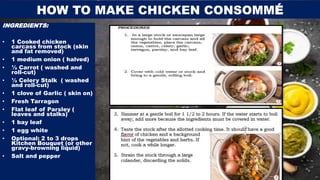
HOW TO MAKE CHICKEN CONSOMMÉ
INGREDIENTS:
• 1 Cooked chicken
carcass from stock (skin
and fat removed)
• 1 medium onion ( halved)
• ½ Carrot ( washed and
roll-cut)
• ½ Celery Stalk ( washed
and roll-cut)
• 1 clove of Garlic ( skin on)
• Fresh Tarragon
• Flat leaf of Parsley (
leaves and stalks)
• 1 bay leaf
• 1 egg white
• Optional: 2 to 3 drops
Kitchen Bouquet (or other
gravy-browning liquid)
• Salt and pepper
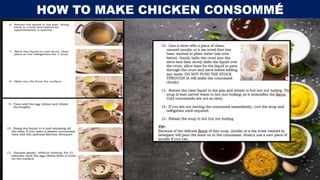
HOW TO MAKE CHICKEN CONSOMMÉ
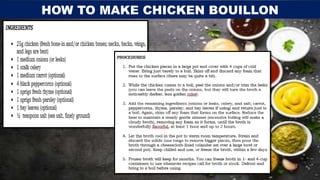
HOW TO MAKE CHICKEN BOUILLON
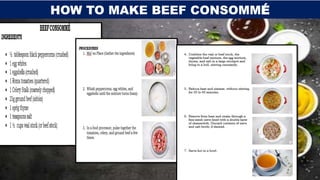
HOW TO MAKE BEEF CONSOMMÉ
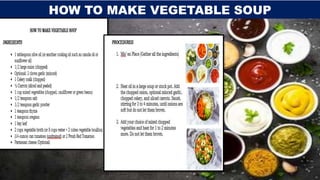
HOW TO MAKE VEGETABLE SOUP
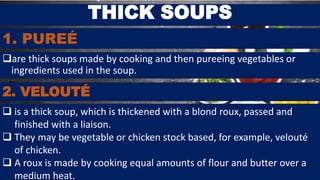
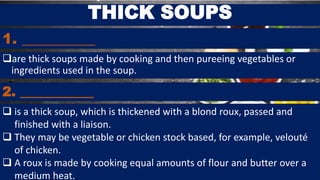
1. PUREÉ
are thick soups made by cooking and then pureeing vegetables or
ingredients used in the soup.
THICK SOUPS
2. VELOUTÉ
 is a thick soup, which is thickened with a blond roux, passed and
finished with a liaison.
 They may be vegetable or chicken stock based, for example, velouté
of chicken.
 A roux is made by cooking equal amounts of flour and butter over a
medium heat.
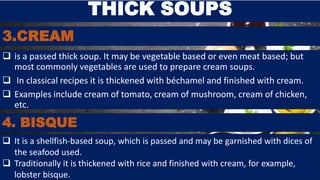
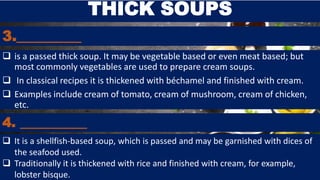
3.CREAM
 is a passed thick soup. It may be vegetable based or even meat based; but
most commonly vegetables are used to prepare cream soups.
 In classical recipes it is thickened with béchamel and finished with cream.
 Examples include cream of tomato, cream of mushroom, cream of chicken,
etc.
THICK SOUPS
4. BISQUE
 It is a shellfish-based soup, which is passed and may be garnished with dices of
the seafood used.
 Traditionally it is thickened with rice and finished with cream, for example,
lobster bisque.
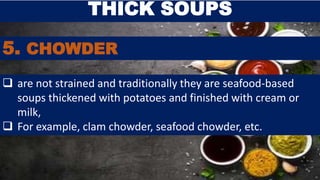
5. CHOWDER
THICK SOUPS
 are not strained and traditionally they are seafood-based
soups thickened with potatoes and finished with cream or
milk,
 For example, clam chowder, seafood chowder, etc.
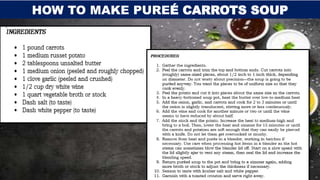
HOW TO MAKE PUREÉ CARROTS SOUP
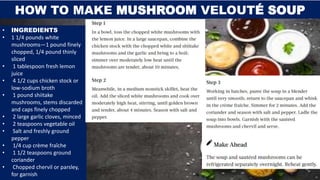
HOW TO MAKE MUSHROOM VELOUTÉ SOUP
• INGREDIENTS
• 1 1/4 pounds white
mushrooms—1 pound finely
chopped, 1/4 pound thinly
sliced
• 1 tablespoon fresh lemon
juice
• 4 1/2 cups chicken stock or
low-sodium broth
• 1 pound shiitake
mushrooms, stems discarded
and caps finely chopped
• 2 large garlic cloves, minced
• 2 teaspoons vegetable oil
• Salt and freshly ground
pepper
• 1/4 cup crème fraîche
• 1 1/2 teaspoons ground
coriander
• Chopped chervil or parsley,
for garnish
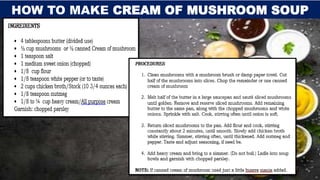
HOW TO MAKE CREAM OF MUSHROOM SOUP
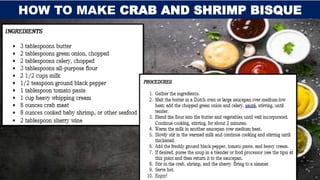
HOW TO MAKE CRAB AND SHRIMP BISQUE
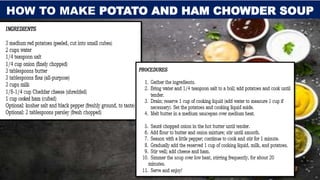
HOW TO MAKE POTATO AND HAM CHOWDER SOUP
SELF-CHECK
DIRECTIONS:
PLEASE GET YOUR BALLPEN AND YOUR NOTEBOOK FOR ANSWERING
SELF-CHECK THEN PROCEED TO THE NEXT TOPIC.
NOTE: DO NOT THROW YOUR ANSWER. KEEP IT!
: REPEAT UNTIL YOU GOT A PERFECT SCORE!
SOUPS ARE CLASSIFIED INTO TWO:
 _____________Is a soup that is made by simmering
veggies, & or meat in a liquid until all the flavors
are released.
 Do not use thickening agent/Slurry
 _____________Are soups that are thickened using
flour, cornstarch, cream, vegetables and other
ingredients
CLEAR SOUPS
1. ____________
is a type of clear soup made from richly flavored stock, or
bouillon that has been clarified, a process that uses egg whites
to remove fat and sediment.
2. ___________
 a broth made by stewing meat, fish, or vegetables in water.
1. __________
are thick soups made by cooking and then pureeing vegetables or
ingredients used in the soup.
THICK SOUPS
2. ___________
 is a thick soup, which is thickened with a blond roux, passed and
finished with a liaison.
 They may be vegetable or chicken stock based, for example, velouté
of chicken.
 A roux is made by cooking equal amounts of flour and butter over a
medium heat.
3._________
 is a passed thick soup. It may be vegetable based or even meat based; but
most commonly vegetables are used to prepare cream soups.
 In classical recipes it is thickened with béchamel and finished with cream.
 Examples include cream of tomato, cream of mushroom, cream of chicken,
etc.
THICK SOUPS
4. __________
 It is a shellfish-based soup, which is passed and may be garnished with dices of
the seafood used.
 Traditionally it is thickened with rice and finished with cream, for example,
lobster bisque.
5. _________
THICK SOUPS
 are not strained and traditionally they are seafood-based
soups thickened with potatoes and finished with cream or
milk,
 For example, clam chowder, seafood chowder, etc.
The right flavour, colour,
consistency of soups and address
temperature related problems
SEVERAL TECHNIQUES IN EVALUATING A
SOUP
 The ingredients must not be overcooked, it must be suitable as a starter for
main meal
 The color must be consistent with the other ingredients for the presentation
 The flavor must compliment each other without any off flavor as it all goes
together.
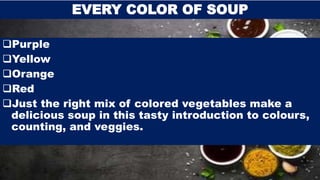
Purple
Yellow
Orange
Red
Just the right mix of colored vegetables make a
delicious soup in this tasty introduction to colours,
counting, and veggies.
EVERY COLOR OF SOUP
Good soups have specific ingredients that make them
good.
They are also cooked a specific way to bring out the
right flavors and textures.
A bad soup has the wrong consistency, flavor,
ingredients or cooking methods. If just one of these is
wrong, an otherwise good soup can fall short.
QUALITIES OF GOOD SOUP
1. GOOD STOCK
Every good soup starts with a good stock.
Meat, meat bones, vegetables and seasonings boil in water to bring
out the flavor.
The resulting water is soup stock.
The type of stock for a soup depends on the type of soup. For
example, if the soup is chicken noodle, it requires a chicken stock. The
type of soup also dictates what seasonings will go in it, such as bay
leaves for chowder.
QUALITIES OF GOOD SOUP
2. PROPER CONSISTENCY
Without the right ingredients and preparation, a soup may have the wrong
thickness and consistency.
Stock is watery when it is complete. Stocks for soups that have watery broths,
such as chicken noodle or minestrone, have the right consistency without
anything extra.
Creamy soups, such as creamy chicken noodle or creamy tomato, need cream
and sometimes butter to give them a creamy consistency. They should be
creamy and smooth, but not too thick.
Thick and creamy soups, such as baked potato soup and chowder, need cream,
butter and flour to give them the right consistency.
3. GOOD FLAVOR
 A good soup always has good flavor. It is not too salty or
overpowering and it does not have uncomplimentary spices.
 A soup that needs a little salt or pepper is not necessarily bad, as
diners can add their own at the table.
 However, a cook can only fix a soup that has too much seasoning in
the kitchen. If it reaches the table in that state, it is a bad soup.
QUALITIES OF GOOD SOUP
4. IDEAL INGREDIENTS
 A good soup has fresh and correct ingredients. Using the wrong
ingredients can make a soup too watery, thick, oily or bland.
 Frozen vegetables can substitute fresh vegetables, but it is not ideal.
Heavy cream is best for creamy soups and chowder. Good soup has
real butter rather than margarine.
 Fresh meat and vegetables goes into good soup stock, not base or
bullion.
QUALITIES OF GOOD SOUP
5. GOOD TEXTURE
The texture of a soup depends on the vegetables and meats in
it. The meat in a good soup is tender.
The vegetables should be soft or al dente, according to taste.
If soup meat is too dry or vegetables too crisp or soft, it
detracts from the overall effect of the soup.
QUALITIES OF GOOD SOUP
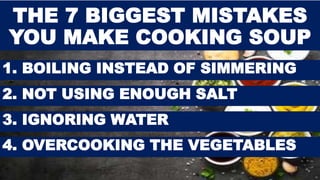
THE 7 BIGGEST MISTAKES
YOU MAKE COOKING SOUP
1. BOILING INSTEAD OF SIMMERING
2. NOT USING ENOUGH SALT
3. IGNORING WATER
4. OVERCOOKING THE VEGETABLES
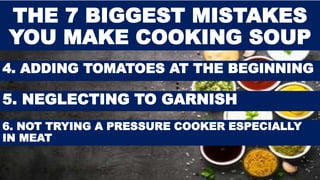
4. ADDING TOMATOES AT THE BEGINNING
THE 7 BIGGEST MISTAKES
YOU MAKE COOKING SOUP
5. NEGLECTING TO GARNISH
6. NOT TRYING A PRESSURE COOKER ESPECIALLY
IN MEAT
SELF-CHECK
DIRECTIONS:
PLEASE GET YOUR BALLPEN AND YOUR NOTEBOOK FOR ANSWERING
SELF-CHECK THEN PROCEED TO THE NEXT TOPIC.
NOTE: DO NOT THROW YOUR ANSWER. KEEP IT!
: REPEAT UNTIL YOU GOT A PERFECT SCORE!
SEVERAL TECHNIQUES IN EVALUATING A
SOUP
 The ingredients must not be_____________, it must be suitable as a starter
for main meal
 The color must be ___________with the other ingredients for the
presentation
 The _________must compliment each other without any off flavor as it all
goes together.
__________
__________
__________
__________
Just the right mix of colored vegetables make a
delicious soup in this tasty introduction to colours,
counting, and veggies.
EVERY COLOR OF SOUP
Good soups have specific _______ that make them
good.
They are also cooked a specific way to bring out the
_________ and textures.
A _________has the wrong consistency, flavor,
ingredients or cooking methods. If just one of these is
wrong, an otherwise good soup can fall short.
QUALITIES OF GOOD SOUP
1. _____________
Every good soup starts with a___________.
Meat, meat bones, vegetables and seasonings boil in water to bring
out the flavor.
The resulting water is soup stock.
The type of stock for a soup depends on the type of soup. For
example, if the soup is chicken noodle, it requires a chicken stock. The
type of soup also dictates what seasonings will go in it, such as bay
leaves for chowder.
QUALITIES OF GOOD SOUP
2. ____________
Without the right ingredients and preparation, a soup may have the wrong
thickness and consistency.
Stock is watery when it is complete. Stocks for soups that have watery broths,
such as chicken noodle or minestrone, have the right consistency without
anything extra.
Creamy soups, such as creamy chicken noodle or creamy tomato, need cream
and sometimes butter to give them a creamy consistency. They should be
creamy and smooth, but not too thick.
Thick and creamy soups, such as baked potato soup and chowder, need cream,
butter and flour to give them the right consistency.
3. ____________
 A _______always has good flavor. It is not too salty or overpowering
and it does not have uncomplimentary spices.
 A soup that needs a little salt or pepper is not necessarily bad, as
diners can add their own at the table.
 However, a cook can only fix a soup that has too much seasoning in
the kitchen. If it reaches the table in that state, it is a bad soup.
QUALITIES OF GOOD SOUP
4. ____________
 A good soup has fresh and correct ingredients. Using the wrong
ingredients can make a soup too watery, thick, oily or bland.
 Frozen vegetables can substitute fresh vegetables, but it is not ideal.
Heavy cream is best for creamy soups and chowder. Good soup has
real butter rather than margarine.
 Fresh meat and vegetables goes into good soup stock, not base or
bullion.
QUALITIES OF GOOD SOUP
5. ______________
The __________depends on the vegetables and meats in it.
The meat in a good soup is tender.
The vegetables should be soft or al dente, according to taste.
If soup meat is too dry or vegetables too crisp or soft, it
detracts from the overall effect of the soup.
QUALITIES OF GOOD SOUP
THE 7 BIGGEST MISTAKES
YOU MAKE COOKING SOUP
1. ______________
2. ______________
3. ______________
4. ______________
4. _____________
THE 7 BIGGEST MISTAKES
YOU MAKE COOKING SOUP
5. ____________
6. NOT TRYING A PRESSURE COOKER ESPECIALLY
IN MEAT
THANK YOU AND
HAVE A NICE
DAY!

Lo 3 prepare soups

  • 2.
  • 3.
    VARIETY OF SOUPS ACCORDINGTO ENTERPRISE STANDARDS
  • 4.
    SOUPS ARE CLASSIFIEDINTO TWO: CLEAR SOUP  Is a soup that is made by simmering veggies, & or meat in a liquid until all the flavors are released.  Do not use thickening agent/Slurry THICK SOUP  Are soups that are thickened using flour, cornstarch, cream, vegetables and other ingredients
  • 5.
    CLEAR SOUPS 1. CONSOMMÉ isa type of clear soup made from richly flavored stock, or bouillon that has been clarified, a process that uses egg whites to remove fat and sediment. 2. BOUILLON  a broth made by stewing meat, fish, or vegetables in water.
  • 6.
    HOW TO MAKECHICKEN CONSOMMÉ INGREDIENTS: • 1 Cooked chicken carcass from stock (skin and fat removed) • 1 medium onion ( halved) • ½ Carrot ( washed and roll-cut) • ½ Celery Stalk ( washed and roll-cut) • 1 clove of Garlic ( skin on) • Fresh Tarragon • Flat leaf of Parsley ( leaves and stalks) • 1 bay leaf • 1 egg white • Optional: 2 to 3 drops Kitchen Bouquet (or other gravy-browning liquid) • Salt and pepper
  • 7.
    HOW TO MAKECHICKEN CONSOMMÉ
  • 8.
    HOW TO MAKECHICKEN BOUILLON
  • 9.
    HOW TO MAKEBEEF CONSOMMÉ
  • 10.
    HOW TO MAKEVEGETABLE SOUP
  • 11.
    1. PUREÉ are thicksoups made by cooking and then pureeing vegetables or ingredients used in the soup. THICK SOUPS 2. VELOUTÉ  is a thick soup, which is thickened with a blond roux, passed and finished with a liaison.  They may be vegetable or chicken stock based, for example, velouté of chicken.  A roux is made by cooking equal amounts of flour and butter over a medium heat.
  • 12.
    3.CREAM  is apassed thick soup. It may be vegetable based or even meat based; but most commonly vegetables are used to prepare cream soups.  In classical recipes it is thickened with béchamel and finished with cream.  Examples include cream of tomato, cream of mushroom, cream of chicken, etc. THICK SOUPS 4. BISQUE  It is a shellfish-based soup, which is passed and may be garnished with dices of the seafood used.  Traditionally it is thickened with rice and finished with cream, for example, lobster bisque.
  • 13.
    5. CHOWDER THICK SOUPS are not strained and traditionally they are seafood-based soups thickened with potatoes and finished with cream or milk,  For example, clam chowder, seafood chowder, etc.
  • 14.
    HOW TO MAKEPUREÉ CARROTS SOUP
  • 15.
    HOW TO MAKEMUSHROOM VELOUTÉ SOUP • INGREDIENTS • 1 1/4 pounds white mushrooms—1 pound finely chopped, 1/4 pound thinly sliced • 1 tablespoon fresh lemon juice • 4 1/2 cups chicken stock or low-sodium broth • 1 pound shiitake mushrooms, stems discarded and caps finely chopped • 2 large garlic cloves, minced • 2 teaspoons vegetable oil • Salt and freshly ground pepper • 1/4 cup crème fraîche • 1 1/2 teaspoons ground coriander • Chopped chervil or parsley, for garnish
  • 16.
    HOW TO MAKECREAM OF MUSHROOM SOUP
  • 17.
    HOW TO MAKECRAB AND SHRIMP BISQUE
  • 18.
    HOW TO MAKEPOTATO AND HAM CHOWDER SOUP
  • 19.
    SELF-CHECK DIRECTIONS: PLEASE GET YOURBALLPEN AND YOUR NOTEBOOK FOR ANSWERING SELF-CHECK THEN PROCEED TO THE NEXT TOPIC. NOTE: DO NOT THROW YOUR ANSWER. KEEP IT! : REPEAT UNTIL YOU GOT A PERFECT SCORE!
  • 20.
    SOUPS ARE CLASSIFIEDINTO TWO:  _____________Is a soup that is made by simmering veggies, & or meat in a liquid until all the flavors are released.  Do not use thickening agent/Slurry  _____________Are soups that are thickened using flour, cornstarch, cream, vegetables and other ingredients
  • 21.
    CLEAR SOUPS 1. ____________ isa type of clear soup made from richly flavored stock, or bouillon that has been clarified, a process that uses egg whites to remove fat and sediment. 2. ___________  a broth made by stewing meat, fish, or vegetables in water.
  • 22.
    1. __________ are thicksoups made by cooking and then pureeing vegetables or ingredients used in the soup. THICK SOUPS 2. ___________  is a thick soup, which is thickened with a blond roux, passed and finished with a liaison.  They may be vegetable or chicken stock based, for example, velouté of chicken.  A roux is made by cooking equal amounts of flour and butter over a medium heat.
  • 23.
    3._________  is apassed thick soup. It may be vegetable based or even meat based; but most commonly vegetables are used to prepare cream soups.  In classical recipes it is thickened with béchamel and finished with cream.  Examples include cream of tomato, cream of mushroom, cream of chicken, etc. THICK SOUPS 4. __________  It is a shellfish-based soup, which is passed and may be garnished with dices of the seafood used.  Traditionally it is thickened with rice and finished with cream, for example, lobster bisque.
  • 24.
    5. _________ THICK SOUPS are not strained and traditionally they are seafood-based soups thickened with potatoes and finished with cream or milk,  For example, clam chowder, seafood chowder, etc.
  • 25.
    The right flavour,colour, consistency of soups and address temperature related problems
  • 26.
    SEVERAL TECHNIQUES INEVALUATING A SOUP  The ingredients must not be overcooked, it must be suitable as a starter for main meal  The color must be consistent with the other ingredients for the presentation  The flavor must compliment each other without any off flavor as it all goes together.
  • 27.
    Purple Yellow Orange Red Just the rightmix of colored vegetables make a delicious soup in this tasty introduction to colours, counting, and veggies. EVERY COLOR OF SOUP
  • 28.
    Good soups havespecific ingredients that make them good. They are also cooked a specific way to bring out the right flavors and textures. A bad soup has the wrong consistency, flavor, ingredients or cooking methods. If just one of these is wrong, an otherwise good soup can fall short. QUALITIES OF GOOD SOUP
  • 29.
    QUALITIES OF GOODSOUP 1. GOOD STOCK Every good soup starts with a good stock. Meat, meat bones, vegetables and seasonings boil in water to bring out the flavor. The resulting water is soup stock. The type of stock for a soup depends on the type of soup. For example, if the soup is chicken noodle, it requires a chicken stock. The type of soup also dictates what seasonings will go in it, such as bay leaves for chowder.
  • 30.
    QUALITIES OF GOODSOUP 2. PROPER CONSISTENCY Without the right ingredients and preparation, a soup may have the wrong thickness and consistency. Stock is watery when it is complete. Stocks for soups that have watery broths, such as chicken noodle or minestrone, have the right consistency without anything extra. Creamy soups, such as creamy chicken noodle or creamy tomato, need cream and sometimes butter to give them a creamy consistency. They should be creamy and smooth, but not too thick. Thick and creamy soups, such as baked potato soup and chowder, need cream, butter and flour to give them the right consistency.
  • 31.
    3. GOOD FLAVOR A good soup always has good flavor. It is not too salty or overpowering and it does not have uncomplimentary spices.  A soup that needs a little salt or pepper is not necessarily bad, as diners can add their own at the table.  However, a cook can only fix a soup that has too much seasoning in the kitchen. If it reaches the table in that state, it is a bad soup. QUALITIES OF GOOD SOUP
  • 32.
    4. IDEAL INGREDIENTS A good soup has fresh and correct ingredients. Using the wrong ingredients can make a soup too watery, thick, oily or bland.  Frozen vegetables can substitute fresh vegetables, but it is not ideal. Heavy cream is best for creamy soups and chowder. Good soup has real butter rather than margarine.  Fresh meat and vegetables goes into good soup stock, not base or bullion. QUALITIES OF GOOD SOUP
  • 33.
    5. GOOD TEXTURE Thetexture of a soup depends on the vegetables and meats in it. The meat in a good soup is tender. The vegetables should be soft or al dente, according to taste. If soup meat is too dry or vegetables too crisp or soft, it detracts from the overall effect of the soup. QUALITIES OF GOOD SOUP
  • 34.
    THE 7 BIGGESTMISTAKES YOU MAKE COOKING SOUP 1. BOILING INSTEAD OF SIMMERING 2. NOT USING ENOUGH SALT 3. IGNORING WATER 4. OVERCOOKING THE VEGETABLES
  • 35.
    4. ADDING TOMATOESAT THE BEGINNING THE 7 BIGGEST MISTAKES YOU MAKE COOKING SOUP 5. NEGLECTING TO GARNISH 6. NOT TRYING A PRESSURE COOKER ESPECIALLY IN MEAT
  • 36.
    SELF-CHECK DIRECTIONS: PLEASE GET YOURBALLPEN AND YOUR NOTEBOOK FOR ANSWERING SELF-CHECK THEN PROCEED TO THE NEXT TOPIC. NOTE: DO NOT THROW YOUR ANSWER. KEEP IT! : REPEAT UNTIL YOU GOT A PERFECT SCORE!
  • 37.
    SEVERAL TECHNIQUES INEVALUATING A SOUP  The ingredients must not be_____________, it must be suitable as a starter for main meal  The color must be ___________with the other ingredients for the presentation  The _________must compliment each other without any off flavor as it all goes together.
  • 38.
    __________ __________ __________ __________ Just the rightmix of colored vegetables make a delicious soup in this tasty introduction to colours, counting, and veggies. EVERY COLOR OF SOUP
  • 39.
    Good soups havespecific _______ that make them good. They are also cooked a specific way to bring out the _________ and textures. A _________has the wrong consistency, flavor, ingredients or cooking methods. If just one of these is wrong, an otherwise good soup can fall short. QUALITIES OF GOOD SOUP
  • 40.
    QUALITIES OF GOODSOUP 1. _____________ Every good soup starts with a___________. Meat, meat bones, vegetables and seasonings boil in water to bring out the flavor. The resulting water is soup stock. The type of stock for a soup depends on the type of soup. For example, if the soup is chicken noodle, it requires a chicken stock. The type of soup also dictates what seasonings will go in it, such as bay leaves for chowder.
  • 41.
    QUALITIES OF GOODSOUP 2. ____________ Without the right ingredients and preparation, a soup may have the wrong thickness and consistency. Stock is watery when it is complete. Stocks for soups that have watery broths, such as chicken noodle or minestrone, have the right consistency without anything extra. Creamy soups, such as creamy chicken noodle or creamy tomato, need cream and sometimes butter to give them a creamy consistency. They should be creamy and smooth, but not too thick. Thick and creamy soups, such as baked potato soup and chowder, need cream, butter and flour to give them the right consistency.
  • 42.
    3. ____________  A_______always has good flavor. It is not too salty or overpowering and it does not have uncomplimentary spices.  A soup that needs a little salt or pepper is not necessarily bad, as diners can add their own at the table.  However, a cook can only fix a soup that has too much seasoning in the kitchen. If it reaches the table in that state, it is a bad soup. QUALITIES OF GOOD SOUP
  • 43.
    4. ____________  Agood soup has fresh and correct ingredients. Using the wrong ingredients can make a soup too watery, thick, oily or bland.  Frozen vegetables can substitute fresh vegetables, but it is not ideal. Heavy cream is best for creamy soups and chowder. Good soup has real butter rather than margarine.  Fresh meat and vegetables goes into good soup stock, not base or bullion. QUALITIES OF GOOD SOUP
  • 44.
    5. ______________ The __________dependson the vegetables and meats in it. The meat in a good soup is tender. The vegetables should be soft or al dente, according to taste. If soup meat is too dry or vegetables too crisp or soft, it detracts from the overall effect of the soup. QUALITIES OF GOOD SOUP
  • 45.
    THE 7 BIGGESTMISTAKES YOU MAKE COOKING SOUP 1. ______________ 2. ______________ 3. ______________ 4. ______________
  • 46.
    4. _____________ THE 7BIGGEST MISTAKES YOU MAKE COOKING SOUP 5. ____________ 6. NOT TRYING A PRESSURE COOKER ESPECIALLY IN MEAT
  • 47.
    THANK YOU AND HAVEA NICE DAY!